Mushrooms · Medicinal mushroom
Hemlock reishi
Ganoderma tsugae · also called Hemlock reishi
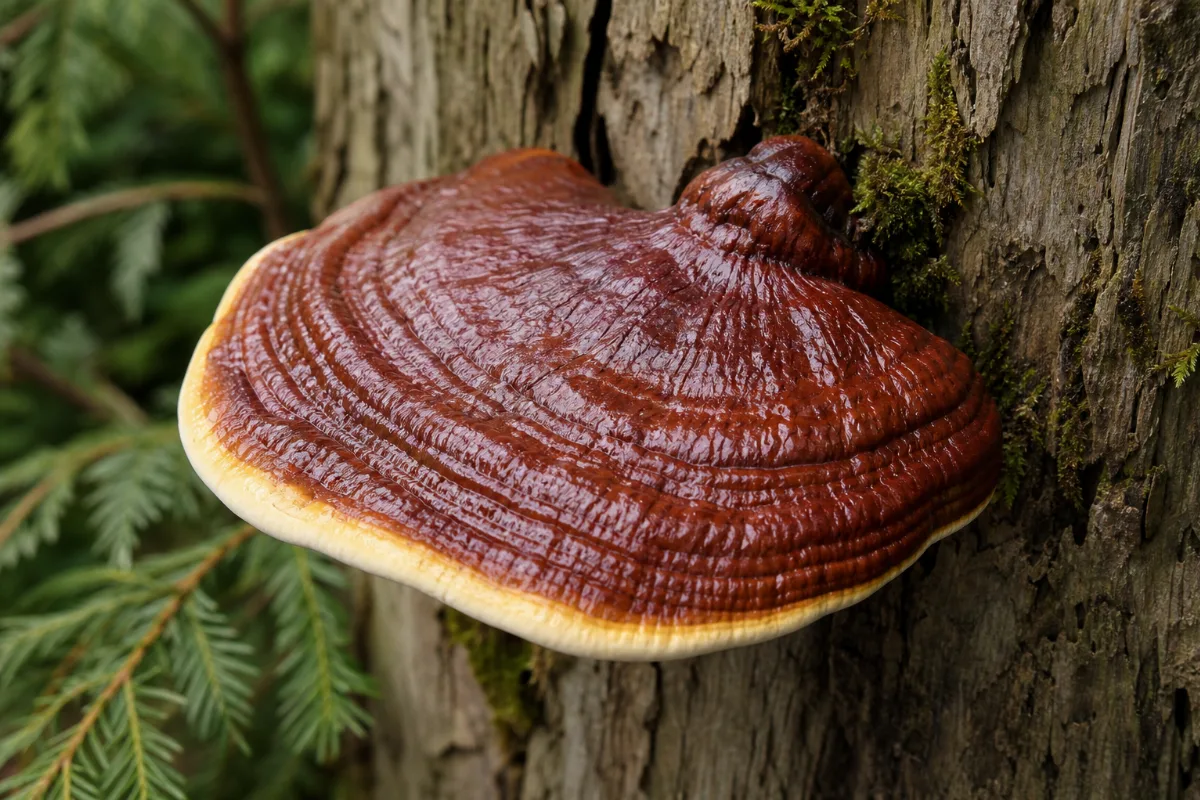
Hemlock reishi is a shiny, woody shelf mushroom, a close relative of reishi. It is used as a tonic in traditional Chinese medicine. Nearly all the research is in cells, rats and mice, and no human trial of this mushroom on its own was found. Wild shiny Ganoderma species are hard to tell apart, so do not pick and use one on a guess.
General information, not medical advice. Last substantive update · Not medically reviewed. A named clinician has not signed off on this page. How this page is made
About Hemlock reishi
Hemlock reishi (Ganoderma tsugae) is a woody mushroom related to reishi. The research is thin: cells, rats and mice, plus chemistry. No human trial of the mushroom alone was found, so benefits are unproven and safety in people is unknown.
What it is
Hemlock reishi is the common name of Ganoderma tsugae Murrill, an accepted species in the fungus family Polyporaceae. It is a shiny, woody conk, and it is a fungus, not a plant.
A 2018 US study found 12 shiny Ganoderma species in US collections, and a 2015 study found 13 in the Ganoderma lucidum complex. Flesh colour, spore shape, location and host tree, and DNA, help tell them apart. NCI says many Ganoderma species are hard to distinguish. We found no source on poisonous look-alikes for this species, which is a gap. Do not eat or make a remedy from a wild conk on a guess. Ask an experienced local mushroom identifier.
A 2021 genome paper calls G. tsugae an endemic medicinal mushroom of north-east China. No paper read shows that it is the same fungus as the hemlock mushroom picked in North America.
Traditional and current uses
A 2025 paper says it is widely used in traditional Chinese medicine for nourishing, countering cold, activating blood circulation and treating rheumatoid arthritis. A 2013 mouse paper says it is grown commercially as a dietary supplement. These are the authors' statements, and no old text was read.
What the research shows
Almost all results are from lab work. Rats and mice showed liver, brain and heart signals; extracts slowed cancer cells in dishes and in mice; isolated compounds blocked an enzyme in the test tube. None of this has been shown in people.
The only human trial that included hemlock reishi tested a four-herb mixture in 58 breast cancer patients having cancer treatment. White blood cells fell less than on placebo, but T cells and natural killer cells did not differ significantly. The result cannot be credited to hemlock reishi.
For a much better studied relative, see the reishi page. Its findings are not assumed for hemlock reishi.
Fruiting body, rice-grown mycelium and extracts are different
The parts of the fungus act differently in the lab: a triterpene fraction and a polysaccharide fraction moved allergy signals in opposite directions. NCI says mycelium grown on grain holds a lot of grain starch (alpha-glucan), while fruiting body extracts are entirely beta-glucan. One mouse study used mushroom grown on rice, which is not the same as a wild conk.
Content also varies: one growing study found that wild and cultivated mushrooms, and different growth stages, differed in minerals and active compounds.
Legal and regulatory status
NCI says the FDA has not approved medicinal mushrooms as a treatment for cancer or any other medical condition, and that supplements need no FDA approval before sale. We found no agency statement specific to Ganoderma tsugae.
At a glance
Traditional uses history, not proof
- A 2025 chemistry paper says it is widely used in traditional Chinese medicine for nourishing, countering cold, activating blood circulation and treating rheumatoid arthritis (the authors' statement).
- A 2013 rat paper says it has traditionally been used for health promotion.
- A 2013 mouse paper says it is commercially cultivated as a dietary supplement.
Studied for research
- Immune and allergy signals in cells, insufficient
- Cancer cells in the lab, insufficient (not a treatment)
- Liver protection in rats and mice, insufficient
- Brain ageing and memory in rats, insufficient
- Heart and blood fats in mice, insufficient
- Uric acid enzyme in the test tube, insufficient
Main compounds
- Triterpenoids such as ganoderic acids and tsugaric acids
- Polysaccharides (sugars) including a glucan and a fucogalactan
- Sterols, organic acids and amino acids
Common forms
- Dried conk (tea, decoction or powder)
- Hot-water or alcohol extracts
- Mycelium grown on rice or grain (a different material)
- Finely milled powder
- Capsules and tinctures
Research links: Memorial Sloan Kettering: Reishi mushroom (about a related species) · NCI: Medicinal mushrooms (PDQ) · Laccate Ganoderma of the United States (abstract) · Four-herb mixture trial with Ganoderma tsugae (abstract) · Rat liver study (abstract) · Reishi liver injury case report (abstract) · Research Library · Genes & Biomarkers Library
What it is and its history
- Accepted scientific name
- Ganoderma tsugae
- Naming authority
- Murrill (GBIF)
- Common names
- Hemlock reishi (English)
- Family or group
- Polyporaceae (a fungus family; shelf and bracket fungi), not a plant
- Classification
- Fungi > Basidiomycota > Agaricomycetes > Polyporales > Polyporaceae > Ganoderma > Ganoderma tsugae
- Native range
- A 2021 genome paper calls G. tsugae an endemic medicinal mushroom of north-east China. A 2018 US study found G. tsugae among 12 shiny Ganoderma species in US collections. No paper read shows these are one and the same fungus.
- Habitat
- A genome paper says wild G. tsugae can use coniferous wood (unlike other Ganoderma). The common name points to hemlock trees; a growing study used larch logs for cultivation.
- What it looks like
- Fruiting body: Shiny (laccate) woody conk. A 2018 US study says flesh colour and features, spore shape and size, location and host tree help to identify the species. Detailed descriptions were not read.
- Cultivation
- Commercially cultivated as a dietary supplement (Kuok 2013 abstract). A 2025 study grew it on larch logs in a pine forest.
- Harvest and processing
- Not checked in the sources read.
- Look-alikes and adulterants
- Name: Other shiny Ganoderma species; Note: A 2018 study found 12 species in US collections, including G. curtisii, G. lucidum in the strict sense, G. oregonense and G. sessile. NCI says many Ganoderma species are difficult to distinguish. Which are harmful, if any, was not found in any source.
- Sustainability and conservation
- Not checked.
Traditional use and history history, not clinical proof
| Tradition or era | Documented use | Source |
|---|---|---|
| Traditional Chinese medicine | A 2025 chemistry paper says G. tsugae is widely used as a traditional Chinese medicine for nourishing, countering cold, activating blood circulation and treating rheumatoid arthritis. This is the authors' statement; no old text was read. | p41176168 |
| Health promotion | A 2013 rat paper says the mushroom has traditionally been used for health promotion. | p23434860 |
| Today | A 2013 mouse paper says G. tsugae has been commercially cultivated as a dietary supplement. | p23610080 |
Traditional use shows how it was used. It does not show that it works or is safe today.
What is inside, and how it may work
What it contains and how those compounds act in cells and animals. Laboratory and animal mechanisms are not proven effects in people.
Main compounds
| Compound | Family | Where it is concentrated | Activity studied | Level of evidence |
|---|---|---|---|---|
| Triterpenoids (including ganoderic acids and tsugaric acids) | lanostane triterpenoid | Fruiting body 47 of 93 compounds identified in fruiting bodies were triterpenoids (amounts not in the abstract) | Heart, allergy-signal and enzyme effects in the lab and in mice. 14 10 12 2 | Laboratory research |
| Acidic polysaccharide GTP-2 (13.059 kDa, glucan backbone) | polysaccharide | Fruiting body Not stated | Lowered blood fats and artery lesions in mice. 18 | Animal research |
| Fucogalactan GTP-a2 (7.056 kDa) | polysaccharide | Fruiting body Not stated | Fewer colon tumours in mice. 19 | Animal research |
| 1,3-beta-D-glucan | polysaccharide | Whole preparation Content was 3.5 times higher in a nano-milled powder than in a hot-water extract | Immune-related sugar; tested only as content here. 3 | Laboratory research |
| Sterols, organic acids and amino acids | mixed | Fruiting body 6 sterols, 18 organic acids, 6 amino acids identified | Listed only. 14 | Chemical analysis |
Mechanisms, receptors and pathways
| Target or pathway | Gene or receptor | What was found | Level |
|---|---|---|---|
| NF-kB signalling | NF-kB | Triterpenoid extract lowered NF-kB activity in cells; polysaccharide extract raised it. 2 | Laboratory research |
| PI3K/Akt and MAPK/ERK pathways | PI3K, Akt, ERK | Extracts blocked these in prostate and HER2 cancer cells. 6 8 | Laboratory research |
| Cell death marker (caspase-6, lamin A/C) | caspase-6 | Lower in livers of exercised rats given the mushroom. 5 | Animal research |
| Antioxidant proteins and BDNF | SOD-1, catalase, BDNF | Higher in the brain of aged rats given an extract. 9 | Animal research |
| Macrophage M1 polarisation | NF-kB, mTOR/PI3K/AKT | Purified sugars shifted mouse macrophages away from the M1 type. 18 19 | Animal research |
| Fas/Fas ligand and oxidative stress | Fas/FasL | Triterpenoids lowered these in injured mouse hearts. 10 | Animal research |
| Xanthine oxidase enzyme | xanthine oxidase | Blocked by isolated compounds in a test tube. 12 | Laboratory research |
Absorption, metabolism and elimination
- Absorption
- Not found in the sources read.
- Distribution
- Not found.
- Metabolism
- Not found.
- Elimination
- Not found.
- Bioavailability
- Not established.
Isolated compounds versus whole extracts
The parts of the fungus act differently in the lab: a triterpene fraction and a polysaccharide fraction moved allergy signals in opposite ways. A rice-grown product, a hot-water extract and a nano-milled powder are different materials, and most animal work used lab extracts or single purified sugars rather than a tea or powder.
Nutritional composition
Hemlock reishi is a woody conk, not a food or a nutrient source, and no nutrition claim is made. One lab paper measured protein and sugars in a cultivated variety, but that is not a dietary role.
6 not enough evidence
What was looked at
The 6 benefits and uses checked for Hemlock reishi, each with how strong the evidence is. Tap one to open it.
- Immune and allergy signalsNot enough evidence
- Cancer cells in the lab (not a treatment)Not enough evidence
- Liver protection (rats and mice only)Not enough evidence
- Brain ageing and memory (rats only)Not enough evidence
- Heart and blood fats (mice only)Not enough evidence
- Uric acid enzyme and skin cells (test tube only)Not enough evidence
Lab markers tracked in the studies
Dying liver cells and a cell-death marker (rat)SOD-1, catalase and BDNF in rat brainHistamine and IL-4 from stimulated cellsWhite blood cell and neutrophil fall during cancer treatment (mixture)Cholesterol, triglycerides, LDL and HDL (ApoE mice)Xanthine oxidase enzyme activity (test tube)
What is Hemlock reishi good for?
The uses people ask about and how strong the evidence is for each. Everything below comes from cells, rats or mice, except one small trial of a four-herb mixture. None is proven in people. Read this together with the Safety tab.
Benefits, one by one
Each card is a research question, not a promise. Tap a goal to filter. Open a card to see the studies, doses and limits.
Immune and allergy signals
Not enough evidenceIn dishes, one part of the mushroom (the triterpenes) calmed allergy-type signals, and another part (the polysaccharides) did not. The only human trial that included this fungus used a four-herb mixture, so it tells us nothing about hemlock reishi on its own.
5 studiesThe papers used many different preparations. No source gives an amoun…
Studies, doses and limits
What the trials found
One small trial (58 breast cancer patients) tested RG-CMH, a mixture of rose geranium and extracts of Ganoderma tsugae, Codonopsis and Angelica. White blood cells fell less than with placebo, but T-cell and natural killer cell differences were not significant. Nothing in it can be credited to hemlock reishi.
Results
Cells in dishes: histamine and IL-4 lowered by the triterpene part only. Human mixture trial: leucocytes fell 31.5% on placebo versus 13.4% on the mixture; neutrophils 35.6% versus 11.0%.
Effect sizes as reported
Cell and mixture results only
Why this rating
No human trial of hemlock reishi alone was found. The cell work is not a human result, and the one trial used a four-herb mixture.
Form and dose studied
The papers used many different preparations. No source gives an amount that can be recommended, and none is advised here.
Who was studied
Cell lines; breast cancer patients having chemotherapy or radiotherapy (mixture)
Limits
Concentrations in dishes are not what a person would reach. The mixture trial is small and was read as an abstract only.
Why researchers looked
Reishi-type mushrooms are best known as immune tonics, so researchers test them on immune cells.
Traditional use
Used as a health tonic in traditional Chinese medicine, according to the authors of a 2025 chemistry paper.
Proposed mechanism Laboratory research
A triterpene-rich extract lowered histamine and the IL-4 and IL-5 signals in mast cells and T cells; a polysaccharide extract did not, and it raised NF-kB activity where the triterpene extract lowered it. Purified sugars from the fruiting body shifted mouse macrophages away from the M1 inflammatory type.
A proposed mechanism does not show that the effect happens in people.
Reishi-type mushrooms may add to the effect of immune-suppressing medicines in theory (MSK, about reishi). Ask a doctor first if you take them.
Cancer cells in the lab (not a treatment)
Not enough evidenceExtracts and purified sugars slowed prostate, HER2-type and colorectal cancer cells and mouse tumours. This is early lab work. No person has been shown to benefit.
3 studiesThe papers used many different preparations. No source gives an amoun…
Studies, doses and limits
What the trials found
No human study of hemlock reishi for cancer was found.
Results
Prostate cancer cells and PC-3 tumours in mice slowed; HER2 cells slowed and drug effect added to; fewer colon tumours in mice given a purified sugar.
Effect sizes as reported
Slowed cancer cells and mouse tumours (no human result)
Why this rating
Cell and mouse work only, in extracts and purified sugars that are not the same as a tea or powder.
Form and dose studied
The papers used many different preparations. No source gives an amount that can be recommended, and none is advised here.
Who was studied
Cell lines and mice
Limits
Lab and animal results often do not carry over to people. Nothing here is advice for anyone with cancer.
Why researchers looked
The Ganoderma family is studied for anti-tumour chemistry, so extracts are tested on cancer cells.
Proposed mechanism Laboratory research
Ethanol extracts blocked the PI3K/Akt and MAPK/ERK pathways in prostate cancer cells; another extract lowered HER2 protein and added to taxol and cisplatin in cells; a purified fucogalactan acted through mTOR/PI3K/AKT in mice with colon tumours.
A proposed mechanism does not show that the effect happens in people.
The lab signals of extra effect with the cancer drugs taxol and cisplatin are a reason to tell the cancer team about any mushroom product.
Liver protection (rats and mice only)
Not enough evidenceRats and mice given hemlock reishi preparations showed less liver damage after exhausting exercise or a liver poison. There is no human study. The nearest human evidence for this kind of mushroom and the liver is a warning, not a benefit.
4 studiesThe papers used many different preparations. No source gives an amoun…
Studies, doses and limits
What the trials found
No human study of hemlock reishi and the liver was found. For reishi (a different species) liver injury has been reported with powders; see the Safety tab.
Results
Rats: fewer TUNEL-positive (dying) liver cells. Mice: improved liver enzymes and less necrosis per the authors; numbers are not in the abstract.
Effect sizes as reported
Protective pattern in animals
Why this rating
Animal results only. One mouse study used a rice-grown fermented product.
Form and dose studied
The papers used many different preparations. No source gives an amount that can be recommended, and none is advised here.
Who was studied
Rats given exhausting runs; mice with carbon tetrachloride liver injury
Limits
Not a human result and not evidence of a liver benefit. Do not read it as one.
Why researchers looked
Mushroom triterpenes are tested for liver protection in animals.
Proposed mechanism Animal research
In rats, fewer liver cells died and a cell-death marker (caspase-6 cleavage of lamin A/C) was lower; in mice, extract from mushroom grown on rice lowered liver injury markers and the proteins NF-kB, IL-1 beta and NRF2.
A proposed mechanism does not show that the effect happens in people.
The only human liver signal for this family is harm: liver injury has been reported with reishi powders (see Safety).
Brain ageing and memory (rats only)
Not enough evidenceAged rats given a lab extract for 25 weeks moved better and did better on memory tests, with higher antioxidant proteins in the brain. No person has been tested.
1 studiesThe papers used many different preparations. No source gives an amoun…
Studies, doses and limits
What the trials found
No human study of hemlock reishi for memory or brain health was found.
Results
Rats aged with D-galactose: improved locomotion and spatial memory; higher SOD-1, catalase and BDNF.
Effect sizes as reported
Better scores in aged rats (no human result)
Why this rating
One rat study with a laboratory solvent extract.
Form and dose studied
The papers used many different preparations. No source gives an amount that can be recommended, and none is advised here.
Who was studied
Rats aged with daily D-galactose
Limits
DMSO is a lab solvent, so the extract is not a food or tea. Rats are not people.
Why researchers looked
Mushroom antioxidants are tested in models of ageing.
Proposed mechanism Animal research
A DMSO extract raised SOD-1, catalase and the growth factor BDNF, and lowered a fat-damage marker (4-HNE), NLRP3 and glycation end products in rat brain.
A proposed mechanism does not show that the effect happens in people.
Heart and blood fats (mice only)
Not enough evidenceMice fed hemlock reishi were protected from chemically induced heart injury, and a purified sugar improved blood fats and artery lesions in mice on a high-fat diet. No person has been tested.
2 studiesThe papers used many different preparations. No source gives an amoun…
Studies, doses and limits
What the trials found
No human study of hemlock reishi and heart health or cholesterol was found. For reishi (a different species) a Cochrane review and a later trial found no benefit for blood fats in diabetes; see the reishi page.
Results
Mice with induced heart injury: less injury. ApoE mice on high-fat diet: lower total cholesterol, triglycerides and LDL, higher HDL, fewer artery lesions.
Effect sizes as reported
Better markers in mice (no human result)
Why this rating
Mouse and cell work. One study used a single purified sugar.
Form and dose studied
The papers used many different preparations. No source gives an amount that can be recommended, and none is advised here.
Who was studied
Mice; heart muscle cells
Limits
Results in mice often do not carry over to people. Nothing here is a reason to change heart medicines.
Why researchers looked
Antioxidant and anti-inflammatory activity make the heart a common target for animal work.
Proposed mechanism Animal research
The triterpenoid fraction (nine ganoderic acids) lowered Fas/Fas ligand signalling, oxidative stress and cell death in heart tissue. A purified acidic polysaccharide lowered NF-kB signalling in macrophages and changed gut bacteria.
A proposed mechanism does not show that the effect happens in people.
Uric acid enzyme and skin cells (test tube only)
Not enough evidenceSingle compounds from the fruiting body blocked the enzyme that makes uric acid, in the test tube. One compound protected skin cells from UV damage. This is chemistry, not a result in people.
1 studiesThe papers used many different preparations. No source gives an amoun…
Studies, doses and limits
What the trials found
No human or animal study was found.
Results
Enzyme blocked in the test tube; a skin-cell protection effect; extra cell killing with cisplatin at low concentrations.
Effect sizes as reported
Enzyme blocked in the test tube
Why this rating
Isolated compounds in a test tube. Nobody has tested whether a tea or powder does this in the body.
Form and dose studied
The papers used many different preparations. No source gives an amount that can be recommended, and none is advised here.
Who was studied
Enzyme assay; skin cells; cancer cell lines
Limits
Not a gout treatment. Do not use it in place of gout medicine.
Why researchers looked
Gout drugs work on this enzyme, so chemists screen natural compounds for it.
Proposed mechanism Laboratory research
Tsugaric acid D and two known compounds blocked xanthine oxidase (IC50 90.2, 116.1 and 181.9 micromolar).
A proposed mechanism does not show that the effect happens in people.
The added effect with cisplatin in cells is a lab signal; tell a cancer team about any mushroom product.
Connections to the rest of health
How Hemlock reishi connects to the rest of our health knowledge graph. Every link says what kind of connection it is. A safety link (for example to the liver) is a warning, not a benefit. A study that merely mentions a topic never creates a benefit link.
Explore every connection: goals, body systems, organs, symptoms, genes
A. Wellness goals
| Connected to | Kind of connection | Evidence status | Context | Studies |
|---|---|---|---|---|
| Immune Support | Preliminary mechanism | Not enough evidence | Immune and allergy signals: In dishes, one part of the mushroom (the triterpenes) calmed allergy-type signals, and another part (the polysaccharides) did not. The only human trial that included this fungus used a four-herb mixture, so it tells us nothing about hemlock reishi on its own. | 2 18 19 21 23 |
| Liver Support | Preliminary mechanism | Not enough evidence | Liver protection (rats and mice only): Rats and mice given hemlock reishi preparations showed less liver damage after exhausting exercise or a liver poison. There is no human study. The nearest human evidence for this kind of mushroom and the liver is a warning, not a benefit. | 5 17 15 4 |
B. Body systems
| Connected to | Kind of connection | Evidence status | Context | Studies |
|---|---|---|---|---|
| Blood clotting | Drug or supplement interaction | Not enough evidence | MSK warns of bleeding with blood thinners; a healthy-volunteer trial found no clotting change. Preparation or compound: Reishi (a different species) |
23 11 |
| Immune System | Biological association | Not enough evidence | Studied for: Immune and allergy signals Studied for: Cancer cells in the lab (not a treatment) | 2 18 19 21 23 6 8 |
| Hepatic System | Biological association | Not enough evidence | Studied for: Liver protection (rats and mice only) | 5 17 15 4 |
| Nervous System | Biological association | Not enough evidence | Studied for: Brain ageing and memory (rats only) | 9 |
| Cardiovascular System | Biological association | Not enough evidence | Studied for: Heart and blood fats (mice only) | 10 18 |
| Musculoskeletal System | Biological association | Not enough evidence | Studied for: Uric acid enzyme and skin cells (test tube only) | 12 |
C. Body parts and organs
I. Biomarkers
| Connected to | Kind of connection | Evidence status | Context | Studies |
|---|---|---|---|---|
| Dying liver cells and a cell-death marker (rat) | Biological association | Not enough evidence | Measured in trials: lowered. A lab change is not the same as a health benefit. | 5 |
| SOD-1, catalase and BDNF in rat brain | Biological association | Not enough evidence | Measured in trials: raised. A lab change is not the same as a health benefit. | 9 |
| Histamine and IL-4 from stimulated cells | Biological association | Not enough evidence | Measured in trials: lowered. A lab change is not the same as a health benefit. | 2 |
| White blood cell and neutrophil fall during cancer treatment (mixture) | Biological association | Not enough evidence | Measured in trials: lowered. A lab change is not the same as a health benefit. | 21 |
| Cholesterol, triglycerides, LDL and HDL (ApoE mice) | Biological association | Not enough evidence | Measured in trials: mixed. A lab change is not the same as a health benefit. | 18 |
| Xanthine oxidase enzyme activity (test tube) | Biological association | Not enough evidence | Measured in trials: lowered. A lab change is not the same as a health benefit. | 12 |
J. Genes, receptors and enzymes
| Connected to | Kind of connection | Evidence status | Context | Studies |
|---|---|---|---|---|
| Xanthine oxidase | Preliminary mechanism | In vitro | Blocked in the test tube. | 12 |
K. Biological pathways
| Connected to | Kind of connection | Evidence status | Context | Studies |
|---|---|---|---|---|
| PI3K/Akt | Preliminary mechanism | In vitro | Blocked in cancer cells by extracts. | 6 8 |
| NF-kB | Preliminary mechanism | In vitro | Changed in opposite directions by triterpene and polysaccharide fractions in cells. | 2 |
| BDNF, SOD-1, catalase | Preliminary mechanism | Animal | Higher in rat brain. | 9 |
L. Active compounds
| Connected to | Kind of connection | Evidence status | Context | Studies |
|---|---|---|---|---|
| Triterpenoids (including ganoderic acids and tsugaric acids) | Biological association | In vitro | Heart, allergy-signal and enzyme effects in the lab and in mice. Preparation or compound: Fruiting body |
14 10 12 2 |
| Acidic polysaccharide GTP-2 (13.059 kDa, glucan backbone) | Biological association | Animal | Lowered blood fats and artery lesions in mice. Preparation or compound: Fruiting body |
18 |
| Fucogalactan GTP-a2 (7.056 kDa) | Biological association | Animal | Fewer colon tumours in mice. Preparation or compound: Fruiting body |
19 |
| 1,3-beta-D-glucan | Biological association | In vitro | Immune-related sugar; tested only as content here. Preparation or compound: Whole preparation |
3 |
| Sterols, organic acids and amino acids | Biological association | Chemical analysis | Listed only. Preparation or compound: Fruiting body |
14 |
Each connection is stored with the ingredient, the connected record, the kind of connection, the evidence status, the supporting studies, the preparation or compound involved, and a review date (last reviewed October 25, 2026).
Evidence at a glance: what changed in 6 lab markers
Tap a number to show only those markers. Counts are markers, not people.
The evidence
The research centre for Hemlock reishi. Every record here was checked against PubMed or the publisher's page; we never list a study we have not verified.
Evidence by outcome
Bars show how many studies we found for each outcome, not how well it works. People are added up across trials only (reviews are not added, to avoid double counting).
How we rate evidence
High certainty
Several well-run trials or reviews agree; further research is unlikely to change the picture much.
Moderate certainty
Good trials point the same way, but some doubt remains.
Low certainty
Small, short or inconsistent trials. The finding could change with better research.
Very low certainty
Very little or very weak human data. Treat as a possibility only.
Mixed findings
Trials or reviews disagree with each other.
Not enough evidence
Not enough human research to say either way.
Evidence against
Good research found no benefit, or found harm.
We take the reviewers' own risk-of-bias and GRADE statements where they exist, and otherwise judge from study size, design, consistency, directness and whether a product matches what is sold. Many publications do not make evidence high. Method note: We read PubMed records and abstracts for 17 papers on Ganoderma tsugae (one four-herb randomised trial, 10 animal or cell studies, and chemistry, genome, taxonomy and growing studies) and 4 on the related reishi (two case reports, one safety trial and one taxonomy study). We re-read the National Cancer Institute and Memorial Sloan Kettering pages and checked the species name in GBIF. Only abstracts were read for papers, so numbers come from abstracts. Certainty ratings are the compiler's own reading.
Study library: every study we checked 24
| Study | Design | People | Product, dose, length | Result |
|---|---|---|---|---|
| Chan 2015 Chemical Composition and Medicinal Value of the New Ganoderma tsugae var. jannieae CBS-120304 Medicinal Higher Basidiomycete Mushroom. Int J Med Mushrooms · PMID 26559860 · DOI |
Chemical analysis fungus and cell line |
Ganoderma tsugae var. jannieae strain CBS-120304 (a newly described variety) | Chemical analysis of fruiting body and mycelium; antioxidant and breast-cancer cell tests fruiting body and mycelium Not shown here (animal or lab amounts are not human amounts) lab test |
Mycelium held more than twice the protein of the fruiting body. Toxic elements (silver, arsenic, cadmium, mercury) were found only in trace amounts in the mycelium and were not detected in the fruiting body of this strain. An ethyl acetate extract of mycelium cut cancer-cell signalling in the lab. Trace toxic metals in mycelium, none detected in fruiting body (one strain) Methods, limits and fundingOutcomes: Nutrient makeup, toxic elements, antioxidant activity Limitations: One cultivated variety, not wild mushrooms. Wild mushrooms can differ. Lab tests only. Funding and conflicts: Not stated in the abstract; not checked further Read: abstract |
| Chen 2015 Triterpenoids and Polysaccharide Fractions of Ganoderma tsugae Exert Different Effects on Antiallergic Activities. Evid Based Complement Alternat Med · PMID 25960757 · DOI |
In vitro study cell line |
Mast cell, T cell and macrophage cell lines; primary CD4 T cells | Triterpenoid extract (Gt-TRE) and polysaccharide extract (Gt-PS) of Ganoderma tsugae Not shown here (animal or lab amounts are not human amounts) cell culture · vs Untreated stimulated cells |
The triterpenoid extract lowered histamine and the allergy-type cytokines IL-4 and IL-5 without changing IL-2 or interferon-gamma. The polysaccharide extract did not lower IL-4 or IL-5 until very high concentrations, and it raised NF-kB activity where the triterpenoid extract lowered it. The authors suggest the triterpenoids may be the part that eases allergic asthma; this was not tested in people or animals. Different effects of the two fractions in cells Methods, limits and fundingOutcomes: Histamine, IL-4, IL-5, IL-2, interferon-gamma, NF-kB activity Limitations: Cells in dishes. Concentrations used are not blood levels in people. Funding and conflicts: Not stated in the abstract; not checked further Read: abstract |
| Chiang 2014 Preparation of nano/submicrometer Ganoderma tsugae and its mutagenic potencies and cytotoxicity. J Agric Food Chem · PMID 25406501 · DOI |
In vitro study bacteria and cell line |
Salmonella Typhimurium tester strains and cultured cells | Nano/submicrometre milled Ganoderma tsugae compared with a hot-water extract Not shown here (animal or lab amounts are not human amounts) lab test · vs Hot-water extract |
Neither the finely milled powder nor the hot-water extract showed mutagenic potential in the bacteria test, and the cell toxicity test also supported safety of both. The milled powder held 3.5 times as much 1,3-beta-D-glucan as the hot-water extract. No mutation signal in two lab tests Methods, limits and fundingOutcomes: Mutation potential and cell toxicity; beta-glucan content Limitations: Two lab tests only. They are not a human safety study. Funding and conflicts: Non-US government research support per the PubMed record; no industry link seen in the abstract Read: abstract |
| Guedikian 2023 Ganoderma lingzhi (Reishi Mushroom)-Induced Acute Liver Injury in the Setting of Alcohol Use: A Case Report and Review of the Literature. Cureus · PMID 37885515 · DOI |
Case report |
1 A 47-year-old man with headache and abdominal pain after reishi powder and alcohol |
Ganoderma lingzhi powder, together with alcohol Not shown here |
Acute hepatitis with significant transaminase rises, managed conservatively with N-acetylcysteine and IV fluids. Two-week follow-up showed complete resolution of symptoms and lab abnormalities. Acute liver injury that fully resolved Methods, limits and fundingOutcomes: Liver enzymes and symptoms Limitations: Alcohol was also involved, so reishi cannot be named as the sole cause; one case. NEAREST EVIDENCE: this concerns reishi (Ganoderma lucidum or lingzhi), not Ganoderma tsugae. Funding and conflicts: Not stated in the abstract Read: abstract |
| Huang 2013 Ganoderma tsugae hepatoprotection against exhaustive exercise-induced liver injury in rats. Molecules · PMID 23434860 · DOI |
Animal study rat |
24 24 male Sprague-Dawley rats |
Ganoderma tsugae preparation fed by mouth (three groups, low, medium, high) Not shown here (animal or lab amounts are not human amounts) 30 days · vs Rats given no mushroom (exercise only) |
Fewer TUNEL-positive (dying) liver cells in rats given the mushroom; cleavage of a cell-death marker (lamin A/C by caspase-6) was lower in the medium and high groups than in the exercise-only group. The authors conclude the mushroom protected the liver from exercise damage in these rats. Fewer dying liver cells in rats (no human result) Methods, limits and fundingOutcomes: Liver cell death after an exhausting treadmill run Limitations: Rats only. Exhaustive running is not a human illness. Preparation not described in the abstract. Funding and conflicts: Non-US government research support per the PubMed record; no industry link seen in the abstract Read: abstract |
| Huang 2019 Chinese Herbal Medicine Ganoderma tsugae Displays Potential Anti-Cancer Efficacy on Metastatic Prostate Cancer Cells. Int J Mol Sci · PMID 31500366 · DOI |
Animal study cell line and mouse |
Metastatic prostate cancer cell lines (PC-3, DU145) and PC-3 tumours grown under the skin of mice | Quality-assured ethanol extract of Ganoderma tsugae (GTEE) Not shown here (animal or lab amounts are not human amounts) cell culture and mouse xenograft · vs Untreated cells and tumours |
The extract slowed growth and spread of the prostate cancer cells, stopped their cell cycle, triggered caspase-dependent cell death and slowed the growth of PC-3 tumours in mice, by blocking the PI3K/Akt and MAPK/ERK pathways. Slowed cancer cells and mouse tumours (no human result) Methods, limits and fundingOutcomes: Cancer cell growth, spread, cell cycle, cell death, tumour growth Limitations: Cell and mouse work. The authors call it preclinical. It says nothing about whether a mushroom helps a person with cancer. Funding and conflicts: Not stated in the abstract; not checked further Read: abstract |
| Jiang 2021 Genome of Ganoderma Species Provides Insights Into the Evolution, Conifers Substrate Utilization, and Terpene Synthesis for Ganoderma tsugae. Front Microbiol · PMID 34603250 · DOI |
Genome study fungus |
Ganoderma tsugae genome | Genome sequencing and comparison with other Ganoderma species fungus Not shown here (animal or lab amounts are not human amounts) |
The authors call G. tsugae an endemic medicinal mushroom of north-east China that, unlike other Ganoderma species, grows on coniferous wood in the wild. G. tsugae split from the common ancestor of G. lingzhi and G. sinense about 21 million years ago. Genome assembled Methods, limits and fundingOutcomes: Genome and gene families Limitations: A genetics paper. It says nothing about safety or effects in people. It describes the Chinese form; this study does not show it is the same fungus as the North American hemlock mushroom. Funding and conflicts: Not stated in the abstract; not checked further Read: abstract |
| Kuo 2013 Ganoderma tsugae Extract Inhibits Growth of HER2-Overexpressing Cancer Cells via Modulation of HER2/PI3K/Akt Signaling Pathway. Evid Based Complement Alternat Med · PMID 23662119 · DOI |
Animal study cell line and mouse |
HER2-overexpressing cancer cell lines and mouse tumours | Quality-assured extract of Ganoderma tsugae (GTE) Not shown here (animal or lab amounts are not human amounts) cell culture and mouse model · vs Untreated cells and tumours |
The extract slowed growth of HER2-overexpressing cancer cells in dishes and in mice, added to the growth-slowing effect of the cancer drugs taxol and cisplatin in these cells, and lowered HER2 protein by changing its gene activity and stability. Slowed cancer cells; added to two chemotherapy drugs in cells Methods, limits and fundingOutcomes: Cancer cell growth, drug effect, HER2 signalling Limitations: Cell and mouse work only. The added effect with chemotherapy drugs is a lab signal that matters for the safety page, not a treatment finding. Funding and conflicts: Not stated in the abstract; not checked further Read: abstract |
| Kuo 2022 Ganoderma tsugae prevents cognitive impairment and attenuates oxidative damage in d-galactose-induced aging in the rat brain. PLoS One · PMID 35390035 · DOI |
Animal study rat |
Long-Evans rats aged artificially with daily D-galactose | DMSO extract of Ganoderma tsugae (GTDE) Not shown here (animal or lab amounts are not human amounts) 25 weeks · vs Aging rats given no extract |
The extract improved movement and spatial memory and learning, protected nerve-cell branching in the hippocampus and cortex, raised SOD-1, catalase and BDNF proteins, and lowered a fat-damage marker (4-HNE), NLRP3 and advanced glycation end products. Better memory scores and brain markers in rats (no human result) Methods, limits and fundingOutcomes: Movement, spatial memory and learning, brain antioxidant proteins, nerve-cell branching Limitations: Rats with chemically induced aging. DMSO is a laboratory solvent, so this is not a food or tea preparation. Funding and conflicts: Non-US government research support per the PubMed record; no industry link seen in the abstract Read: abstract |
| Kuok 2013 The triterpenoids of Ganoderma tsugae prevent stress-induced myocardial injury in mice. Mol Nutr Food Res · PMID 23610080 · DOI |
Animal study mouse and cell line |
Mice challenged with isoproterenol to injure the heart; cultured heart muscle cells | Ganoderma tsugae by mouth, and its triterpenoid fraction (nine ganoderic acids) Not shown here (animal or lab amounts are not human amounts) · vs Mice challenged with isoproterenol only |
Oral G. tsugae protected the mice from isoproterenol-induced heart injury. The triterpenoid fraction reduced Fas/Fas ligand signalling, oxidative stress and cell death, and the ganoderic acids lowered reactive oxygen species in heart muscle cells. Less heart injury in mice (no human result) Methods, limits and fundingOutcomes: Heart injury, oxidative stress, cell death signals Limitations: Mice and cells only. The authors note the mushroom is commercially cultivated as a dietary supplement, which does not show benefit in people. Funding and conflicts: Non-US government research support per the PubMed record; no industry link seen in the abstract Read: abstract |
| Kwok 2005 A prospective, randomized, double-blind, placebo-controlled study of the platelet and global hemostatic effects of Ganoderma lucidum (Ling-Zhi) in healthy volunteers. Anesthesia and Analgesia · PMID 16037156 · DOI |
Controlled trial |
40 40 healthy volunteers (20 reishi, 20 placebo) |
Ganoderma lucidum capsules Not shown here 4 weeks, with checks at 4 and 8 weeks · vs Placebo |
No significant differences between groups and all measurements stayed in the normal range. The authors say reishi for 4 weeks did not impair clotting in healthy volunteers, despite earlier lab reports, and that pre-surgery use is unlikely to raise bleeding risk in otherwise healthy patients. No change in clotting Methods, limits and fundingOutcomes: Clotting tests, fibrinogen, von Willebrand activity, platelet function (PFA-100), thrombelastography Limitations: Healthy volunteers only, one product, 4 weeks; not people on blood thinners or with bleeding disorders. NEAREST EVIDENCE: this concerns reishi (Ganoderma lucidum or lingzhi), not Ganoderma tsugae. Funding and conflicts: Funding not stated in the abstract Read: abstract |
| Lin 2013 Xanthine oxidase inhibitory lanostanoids from Ganoderma tsugae. Fitoterapia · PMID 23769935 · DOI |
In vitro study enzyme and cell line |
Enzyme assay, human skin cells (keratinocytes) and cancer cell tests | Two new lanostane triterpenoids (tsugaric acids D and E) and known compounds isolated from fruiting bodies fruiting body Not shown here (animal or lab amounts are not human amounts) lab test |
Tsugaric acid D and two known compounds blocked xanthine oxidase (the enzyme that makes uric acid) in the test tube, with IC50 values of 90.2, 116.1 and 181.9 micromolar. One known compound protected skin cells from UVB damage. Tsugaric acid D at low concentrations added to the cell-killing effect of cisplatin. Enzyme blocked in the test tube Methods, limits and fundingOutcomes: Xanthine oxidase enzyme activity, skin cell protection from UVB, cisplatin effect on cells Limitations: Isolated single compounds in a test tube or in cells. Not a mushroom product and not tested in animals or people. Funding and conflicts: Non-US government research support per the PubMed record; no industry link seen in the abstract Read: abstract |
| Loyd 2018 Elucidating "lucidum": Distinguishing the diverse laccate Ganoderma species of the United States. PLoS One · PMID 30020945 · DOI |
Taxonomy study fungus |
Over 500 collections of laccate (shiny) Ganoderma from the United States | DNA (ITS, tef1a, rpb1, rpb2) and shape analysis fruiting body collections Not shown here (animal or lab amounts are not human amounts) |
Twelve species were found in US collections, including G. tsugae alongside G. curtisii, G. lucidum sensu stricto, G. oregonense, G. sessile and others. Features such as flesh colour, spore shape, location and host tree help tell them apart. G. lucidum in the strict sense was found only in a few restricted areas, probably introduced by growers. 12 laccate Ganoderma species in the US; G. tsugae is one Methods, limits and fundingOutcomes: Which species grow in the United States Limitations: Taxonomy only. It does not say whether any of these species is safe or poisonous. Funding and conflicts: Not stated in the abstract; not checked further Read: abstract |
| Luo 2025 Analysis of chemical constituents in Ganoderma tsugae murr. By UPLC-Q-TOF-MS/MS. Nat Prod Res · PMID 41176168 · DOI |
Chemical analysis fungus |
Fruiting bodies of Ganoderma tsugae Murr. | Mass-spectrometry analysis (UPLC-Q-TOF-MS/MS) fruiting body Not shown here (animal or lab amounts are not human amounts) |
93 chemical components were identified, including 47 triterpenoids, 18 organic acids, 6 sterols and 6 amino acids. The authors say the species is used in traditional Chinese medicine for nourishing, countering cold, activating blood circulation and treating rheumatoid arthritis. 93 components identified Methods, limits and fundingOutcomes: Chemical makeup Limitations: A list of what is present, not what it does in people. Amounts are not in the abstract. Funding and conflicts: Not stated in the abstract; not checked further Read: abstract |
| Wanmuang 2007 Fatal fulminant hepatitis associated with Ganoderma lucidum (Lingzhi) mushroom powder. Journal of the Medical Association of Thailand · PMID 17621752 |
Case report |
1 A patient in Thailand (the abstract mentions a second patient from Hong Kong, first described in 2004) |
Ganoderma lucidum mushroom powder Not shown here 1 to 2 months of powder use |
Both patients had taken other therapeutic agents and boiled lingzhi for a time without toxic effect. After switching to powder for 1 to 2 months, hepatotoxicity occurred in both. The Thai case was fatal fulminant hepatitis. The authors say the toxic role of lingzhi powder needs close monitoring, especially with other drugs. Fatal liver failure in one case; liver injury in a second Methods, limits and fundingOutcomes: Liver injury Limitations: Two case reports; other drugs were also taken, so reishi cannot be named as the sole cause; frequency unknown. NEAREST EVIDENCE: this concerns reishi (Ganoderma lucidum or lingzhi), not Ganoderma tsugae. Funding and conflicts: Not stated in the abstract Read: abstract |
| Xia 2025 Evaluation of Two Different Treatments for Larch Logs as Substrates to Cultivate Ganoderma tsugae in the Forest. Life (Basel) · PMID 39859979 · DOI |
Cultivation study fungus |
Ganoderma tsugae grown on larch logs in a pine forest, with wild specimens as controls | Comparison of sterilised and non-sterilised logs fruiting body Not shown here (animal or lab amounts are not human amounts) grown to maturity · vs Wild G. tsugae |
Fruiting-body minerals and bioactive compounds differed significantly between growth stages, and the content of wild specimens differed from the cultivated ones. Constituent content differs by stage and by wild or cultivated source Methods, limits and fundingOutcomes: Growth traits and constituent content Limitations: A growing study from north-east China. It shows that content varies; it does not show any health effect. Funding and conflicts: Not stated in the abstract; not checked further Read: abstract |
| Zhang 2022 Hepatoprotective Activity of Ethanol Extract of Rice Solid-State Fermentation of Ganoderma tsugae against CCl(4)-Induced Acute Liver Injury in Mice. Molecules · PMID 36014587 · DOI |
Animal study mouse |
Mice with liver injury caused by carbon tetrachloride (CCl4) | Ethanol extract of Ganoderma tsugae strain G42 grown by solid-state fermentation on rice mycelium grown on rice (not the wild fruiting body) Not shown here (animal or lab amounts are not human amounts) · vs Mice with CCl4 injury and no extract |
The authors report that the extract improved liver enzyme and oxidation measures, reduced liver cell death (necrosis) and inflammatory cell infiltration, and lowered the proteins phospho-NF-kB, IL-1 beta and NRF2. Main compounds found by mass spectrometry were three triterpenoids. Protective pattern in mice (numbers not in the abstract) Methods, limits and fundingOutcomes: Liver enzymes (AST, ALT), oxidation and inflammation markers, liver tissue damage Limitations: Mice only. Made from rice fermentation, a different product from a wild conk. The authors suggest it could become a functional food; that is a hope, not a result in people. Funding and conflicts: Not stated in the abstract; not checked further Read: abstract |
| Zhang 2025 Acidic polysaccharide from Ganoderma tsugae: Structural characterization and antiatherosclerotic related to macrophage polarization. Food Res Int · PMID 40022418 · DOI |
Animal study mouse |
ApoE-deficient mice fed a high-fat diet | Purified acidic polysaccharide GTP-2 from Ganoderma tsugae fruiting body Not shown here (animal or lab amounts are not human amounts) · vs Mice on the high-fat diet without GTP-2 |
GTP-2 improved blood lipids (total cholesterol, triglycerides, LDL lowered; HDL raised), reduced artery lesions and inflammatory cytokines, increased some gut bacteria (Lactobacillus, Akkermansia) and lowered the shift of macrophages to the M1 inflammatory type through NF-kB. Better lipids and fewer artery lesions in mice (no human result) Methods, limits and fundingOutcomes: Blood fats, artery lesions, inflammation signals, gut bacteria Limitations: Mice only. A single purified sugar from the mushroom, not tea or powder. Funding and conflicts: Not stated in the abstract; not checked further Read: abstract |
| Zhang 2025 Structural characteization and anti-colorectal cancer activity of a fucogalactan purified from Ganoderma tsugae. Carbohydr Polym · PMID 39843104 · DOI |
Animal study mouse |
Mice with colitis-associated colorectal cancer (azoxymethane plus dextran sulfate) | Purified fucogalactan GTP-a2 from Ganoderma tsugae fruiting body Not shown here (animal or lab amounts are not human amounts) · vs Mice with induced tumours and no GTP-a2 |
GTP-a2 reduced the number of colorectal tumours in these mice and slowed their growth. It acted through the mTOR/PI3K/AKT pathway, changed Aldh1a3 levels and lowered the shift of macrophages to the M1 type. Fewer tumours in a mouse model (no human result) Methods, limits and fundingOutcomes: Number and growth of colon tumours, cell signalling, macrophage type Limitations: Mice only. A single purified sugar, not a food or supplement. Funding and conflicts: Non-US government research support per the PubMed record; no industry link seen in the abstract Read: abstract |
| Zhou 2015 Global diversity of the Ganoderma lucidum complex (Ganodermataceae, Polyporales) inferred from morphology and multilocus phylogeny. Phytochemistry · PMID 25453909 · DOI |
Taxonomy study fungus |
32 collections of the complex from Asia, Europe and North America | Genetic and shape analysis of fungus collections fruiting body collections Not shown here |
13 species were recovered, in three lineages not defined by geography. G. lucidum, G. oregonense and G. tsugae sat in one clade; G. lingzhi, G. sichuanense and others in another. The authors reject the epitypification of G. sichuanense. 13 species in the complex Methods, limits and fundingOutcomes: Number of species in the G. lucidum complex Limitations: The authors' own naming proposals may be revised; this does not say which species any product contains. NEAREST EVIDENCE: this concerns reishi (Ganoderma lucidum or lingzhi), not Ganoderma tsugae. Funding and conflicts: Non-US government research support per the record Read: abstract |
| Zhuang 2012 Effects of a Chinese medical herbs complex on cellular immunity and toxicity-related conditions of breast cancer patients. Br J Nutr · PMID 21864416 · DOI |
Controlled trial |
58 58 breast cancer patients having chemotherapy or radiotherapy |
RG-CMH, a mixture of rose geranium plus extracts of Ganoderma tsugae, Codonopsis pilosula and Angelica sinensis Not shown here (animal or lab amounts are not human amounts) 6 weeks · vs Placebo |
Leucocytes fell 31.5% in the placebo group and 13.4% in the herb mixture group; neutrophils fell 35.6% versus 11.0%. Differences in T cells, helper T cells, cytotoxic T cells and natural killer cells were not statistically significant. Smaller fall in white blood cells with the four-herb mixture Methods, limits and fundingOutcomes: White blood cell counts and immune cell levels Limitations: The only human trial found that includes Ganoderma tsugae, but it is a four-herb mixture, so no result can be credited to hemlock reishi. Small. Side effects are not reported in the abstract. The trial was not read in full. Funding and conflicts: Not stated in the abstract; not checked further Read: abstract |
| n/a 2024 National Cancer Institute (NCI): Medicinal Mushrooms (PDQ), Health Professional Version (summary updated 6 Nov 2024) n/a · Source |
Authoritative guidance n/a |
n/a | n/a |
Says the East Asian medicinal species is now accepted as Ganoderma sichuanense and differs from the European G. lucidum, though most research is published under G. lucidum. Says the FDA has not approved medicinal mushrooms as a treatment for cancer or any other medical condition; supplements do not need FDA approval before sale, and ingredients may vary a lot from lot to lot with no guarantee that label amounts are present. Says mycelium grown on grain contains large amounts of grain alpha-glucan, while fruiting body extracts are entirely beta-glucan. Says clinical trials in cancer patients show G. lucidum products are generally well tolerated. Describes a Japanese study of a reishi mycelium extract (MAK) in colorectal adenomas and an open-label Ganopoly trial in lung cancer with no significant change in immune measures. Methods, limits and fundingOutcomes: Says the East Asian medicinal species is now accepted as Ganoderma sichuanense and differs from the European G. lucidum, though most research is published under G. lucidum. Says the FDA has not approved medicinal mushrooms as a treatment for cancer or any other medical condition; supplements do not need FDA approval before sale, and ingredients may vary a lot from lot to lot with no guarantee that label amounts are present. Says mycelium grown on grain contains large amounts of grain alpha-glucan, while fruiting body extracts are entirely beta-glucan. Says clinical trials in cancer patients show G. lucidum products are generally well tolerated. Describes a Japanese study of a reishi mycelium extract (MAK) in colorectal adenomas and an open-label Ganopoly trial in lung cancer with no significant change in immune measures. Limitations: Summary for health professionals; secondary source for the trials it describes; written about cancer care. NEAREST EVIDENCE: this concerns reishi (Ganoderma lucidum or lingzhi), not Ganoderma tsugae. Funding and conflicts: Independent public or hospital information source Read: full text (key statements re-checked 2026-10-25) |
| n/a 2026 Memorial Sloan Kettering Cancer Center: Reishi Mushroom (About Herbs, last updated 5 May 2026) n/a · Source |
Authoritative guidance n/a |
n/a | n/a |
Lists possible side effects: nausea, insomnia and liver injury (also dry mouth, constipation, itching and vertigo have been reported). Advises talking to a provider if on blood thinners such as warfarin (bleeding risk), on immunosuppressants (may not be safe), or taking spore powder (can raise the tumour marker CA72-4). For professionals: liver toxicity case reports with powdered reishi, death in one instance; case reports of pseudoparasitosis or chronic diarrhoea, hypereosinophilia with liver nodules, and acute neurotoxicity in a 9-year-old taking several medicinal fungi; may trigger or worsen autoimmune skin disease (cause not established); extracts may prolong INR, PT and APTT; in vitro reishi polysaccharides inhibited CYP2E1, CYP1A2 and CYP3A (clinical relevance unknown). Does not discuss pregnancy, breastfeeding or allergy. Methods, limits and fundingOutcomes: Lists possible side effects: nausea, insomnia and liver injury (also dry mouth, constipation, itching and vertigo have been reported). Advises talking to a provider if on blood thinners such as warfarin (bleeding risk), on immunosuppressants (may not be safe), or taking spore powder (can raise the tumour marker CA72-4). For professionals: liver toxicity case reports with powdered reishi, death in one instance; case reports of pseudoparasitosis or chronic diarrhoea, hypereosinophilia with liver nodules, and acute neurotoxicity in a 9-year-old taking several medicinal fungi; may trigger or worsen autoimmune skin disease (cause not established); extracts may prolong INR, PT and APTT; in vitro reishi polysaccharides inhibited CYP2E1, CYP1A2 and CYP3A (clinical relevance unknown). Does not discuss pregnancy, breastfeeding or allergy. Limitations: A cancer centre's herb information page. Many statements rest on references we did not read. NEAREST EVIDENCE: this concerns reishi (Ganoderma lucidum or lingzhi), not Ganoderma tsugae. Funding and conflicts: Independent public or hospital information source Read: full text (page re-read 2026-10-25) |
| n/a 2026 GBIF Backbone Taxonomy species match: Ganoderma tsugae Murrill (usage key 7241318), checked by API 2026-10-25 n/a · Source |
Database record n/a |
n/a | n/a |
Ganoderma tsugae Murrill is an ACCEPTED species in family Polyporaceae. Methods, limits and fundingOutcomes: Ganoderma tsugae Murrill is an ACCEPTED species in family Polyporaceae, order Polyporales, class Agaricomycetes, phylum Basidiomycota, kingdom Fungi (exact match, confidence 99). Limitations: Naming record only. Index Fungorum was not opened. Funding and conflicts: Independent public information source Read: full text |
What we do not know yet
- No human trial of hemlock reishi on its own was found.
- Nearly all results are from cells, rats and mice using lab extracts or purified sugars.
- It is not known whether the Chinese strains studied are the same fungus as the North American hemlock mushroom.
- No safety data in people, and none for pregnancy, breastfeeding, children or allergy.
- No source on poisonous look-alikes or on contamination of wild-picked or sold material. EMA, LiverTox and LactMed were not searched.
How new research is added
New studies are found by a saved PubMed search and placed in a review queue. A person reads each one before it changes any evidence rating or safety wording. New publications never change ratings automatically.
Lab markers
What changed in blood or saliva tests during trials. A changed number is not the same as feeling or being healthier, and we give no "normal ranges".
Other 6
Dying liver cells and a cell-death marker (rat)
Lowered in trials
TUNEL counts dying cells in tissue. Cleaved lamin A/C by caspase-6 is a marker of cell death.
Not enough evidenceResults and what it means
Why it was measured
Used in animal studies of exercise damage.
Statistical vs. clinical meaning
Animal result.
Safety implication
Not a human measure.
| Study | Result | People | Product |
|---|---|---|---|
| 5 | Fewer TUNEL-positive liver cells with the mushroom; cleaved lamin A/C lower in the medium and high groups than exercise-only rats. | 24 rats | G. tsugae by mouth for 30 days vs none |
SOD-1, catalase and BDNF in rat brain
Raised in trials
Proteins that handle oxidative stress (SOD-1, catalase) and support nerve cells (BDNF).
Not enough evidenceResults and what it means
Why it was measured
Used to judge antioxidant effects in tissue.
Statistical vs. clinical meaning
Animal result with a solvent extract.
Safety implication
Not a human measure.
| Study | Result | People | Product |
|---|---|---|---|
| 9 | SOD-1, catalase and BDNF significantly higher; 4-HNE, NLRP3 and AGEs lower. | Aged Long-Evans rats | DMSO extract for 25 weeks vs none |
Histamine and IL-4 from stimulated cells
Lowered in trials
Histamine is released by mast cells in allergy. IL-4 is a signal that drives allergy-type responses.
Not enough evidenceResults and what it means
Why it was measured
Lab stand-ins for allergy activity.
Statistical vs. clinical meaning
Cell result.
Safety implication
Not a human measure.
| Study | Result | People | Product |
|---|---|---|---|
| 2 | Triterpenoid extract suppressed histamine and IL-4 significantly; the polysaccharide extract did not. | Mast cell and T cell lines; primary CD4 T cells | Triterpene or polysaccharide extracts of G. tsugae |
White blood cell and neutrophil fall during cancer treatment (mixture)
Lowered in trials
White blood cells fight infection; chemotherapy and radiotherapy can lower them.
Not enough evidenceResults and what it means
Why it was measured
A routine blood test during cancer care.
Statistical vs. clinical meaning
Significant fall difference for leucocytes and neutrophils but in a four-herb mixture; cannot be credited to hemlock reishi.
Safety implication
A smaller fall in white cells does not show fewer infections.
| Study | Result | People | Product |
|---|---|---|---|
| 21 | Leucocytes fell 31.5% on placebo vs 13.4% on the mixture; neutrophils 35.6% vs 11.0%; T cell and NK cell differences not significant. | 58 breast cancer patients having chemotherapy or radiotherapy | Four-herb mixture including G. tsugae extract vs placebo, 6 weeks |
Cholesterol, triglycerides, LDL and HDL (ApoE mice)
Mixed results in trials
Blood fats linked to artery disease.
Not enough evidenceResults and what it means
Why it was measured
Used to judge heart effects in mice.
Statistical vs. clinical meaning
Animal result with a purified sugar.
Safety implication
Not a human measure.
| Study | Result | People | Product |
|---|---|---|---|
| 18 | Total cholesterol, triglycerides and LDL lowered; HDL raised, with fewer artery lesions. | ApoE-deficient mice on a high-fat diet | Purified acidic polysaccharide GTP-2 |
Xanthine oxidase enzyme activity (test tube)
Lowered in trials
The enzyme that makes uric acid.
Not enough evidenceResults and what it means
Why it was measured
A drug target in gout.
Statistical vs. clinical meaning
Test-tube result.
Safety implication
Not a human measure.
| Study | Result | People | Product |
|---|---|---|---|
| 12 | Enzyme activity blocked: IC50 90.2 +/- 24.2, 116.1 +/- 3.0 and 181.9 +/- 5.8 micromolar for three compounds. | Enzyme assay | Isolated lanostane triterpenoids |
Safety
What studies and official sources say about side effects, medicines and who should check first. Each point shows what kind of evidence it comes from.
Main points to know 6
- Almost nothing is known about hemlock reishi safety in people. No safety trial and no case report of hemlock reishi in people was found in PubMed or in the sources we read. The only human trial that included it was a four-herb mixture, and its abstract does not report side effects. Not knowing is not the same as safe. No data 21
- Reishi powders have been linked to liver injury. Case reports describe liver injury, one fatal, after reishi (Ganoderma lucidum or lingzhi) powder. These are a different species, and nobody knows whether hemlock reishi does the same. People with liver disease or who drink heavily should ask a doctor before using any reishi-type product. Case report 15 4 23
- Wild hemlock reishi is hard to tell from other shiny Ganoderma. Twelve shiny Ganoderma species grow in the United States, and even specialists use flesh colour, spore shape, location and host tree, and DNA, to tell them apart. NCI also says many Ganoderma species are hard to distinguish. We found no source on poisonous look-alikes for this species, and that is a gap, not a clearance. Do not eat or make remedies from a wild conk on a guess. Ask an experienced local mushroom identifier. Taxonomy record 13 20 22
- Cancer drugs: a lab signal of extra effect. In cells, hemlock reishi extract added to the effect of taxol and cisplatin, and a compound from it added to cisplatin. This is a lab finding, but it is a reason to tell the cancer team about any mushroom product. Laboratory research 8 12
- Reishi cautions that may or may not apply. For reishi, Memorial Sloan Kettering lists nausea, insomnia and liver injury, and advises care with blood thinners and immune-suppressing medicines. None of this has been tested for hemlock reishi, so treat it as a sensible precaution. Authoritative guidance 23 11
- Pregnancy, breastfeeding and children: no data. No source we read covers hemlock reishi in pregnancy, breastfeeding or children. Without data, ask a doctor before using it. No data
Side effects 5
| Effect | How often | Severity and recovery | Evidence |
|---|---|---|---|
| Any side effect of hemlock reishi in people The one trial including G. tsugae (in a four-herb mixture) does not report side effects in its abstract. | Not described in any source read | unknown Not described | No data 21 |
| Liver injury (reishi powder, G. lucidum or lingzhi) Nearest evidence only: this is about reishi (Ganoderma lucidum or lingzhi). It has not been shown for hemlock reishi. | No rate; the cases come from published reports | severe Not described | Case report 15 4 23 |
| Nausea and insomnia (reishi) Nearest evidence only: this is about reishi (Ganoderma lucidum or lingzhi). It has not been shown for hemlock reishi. MSK lists them among reishi side effects. | No rate in the sources read | mild Not described | Authoritative guidance 23 |
| Autoimmune skin disease flare (reishi) Nearest evidence only: this is about reishi (Ganoderma lucidum or lingzhi). It has not been shown for hemlock reishi. | Cause not established | moderate Not described | Authoritative guidance 23 |
| Mutation signal in lab tests Two lab tests with Salmonella strains and a cell toxicity test. This is not a human safety study. | None seen in a bacteria test of a hot-water extract and of a finely milled powder | not applicable Not described | Laboratory research 3 |
Liver
There is no report of liver injury from hemlock reishi. For reishi (Ganoderma lucidum or lingzhi), a Thai report describes fatal fulminant hepatitis after the patient switched from boiled lingzhi to powder, and a 2023 report describes acute hepatitis in a 47-year-old man who took reishi powder and alcohol; he recovered fully in two weeks. In rats and mice hemlock reishi preparations lowered liver damage markers, but that is animal work and does not show liver safety in people. 15 4 5 17
How often. No rate in users could be found for any reishi-type mushroom, and no case is known for hemlock reishi. The LiverTox database was not searched.
Monitoring. No agency monitoring advice was read. Anyone with liver disease, anyone who drinks heavily or takes other medicines that affect the liver should ask a doctor first.
- p17621752.
- p37885515.
This is a safety connection. It is not evidence that Hemlock reishi supports liver health.
Medicines and supplements 6
| With | Why it matters | Importance | Evidence | What to do |
|---|---|---|---|---|
| Blood thinners (warfarin-type) and antiplatelet medicines prescription | Reishi extracts may lengthen clotting tests (MSK). | MSK says reishi can increase bleeding risk. In 40 healthy volunteers, reishi capsules for 4 weeks changed no clotting or platelet measure. Nothing was tested for hemlock reishi. | Authoritative guidance Very low certainty 23 11 | Tell your prescriber or pharmacist before using any reishi-type mushroom. |
| Immunosuppressants (for example after a transplant or for autoimmune disease) prescription | Reishi may enhance immune response (MSK, about reishi). | MSK says reishi may not be safe with immunosuppressants. No trial tested this, and nothing was tested for hemlock reishi. | Pharmacological theory Very low certainty 23 | Ask the prescribing team before using it. |
| Cancer drugs such as taxol and cisplatin prescription | Extract added to growth slowing of cancer cells with these drugs in cells and mice; a purified compound added to cisplatin cell killing. | Lab and mouse signals only. No human interaction study. | Laboratory research Not enough evidence 8 12 | Tell the cancer team about any mushroom product before using it. |
| Medicines cleared by liver enzymes CYP2E1, CYP1A2, CYP3A prescription | In the lab, reishi polysaccharides inhibited these enzymes (MSK). | Clinical relevance unknown, and not tested for hemlock reishi. | Laboratory research Not enough evidence 23 | Ask a pharmacist about your medicines. |
| Alcohol and other liver-stressing substances alcohol | A reishi powder case report involved alcohol. | The 2023 case involved powder plus alcohol; cause cannot be separated. | Case report Very low certainty 4 | Avoid mixing, and ask a doctor if you have liver disease. |
| Blood sugar and blood pressure medicines prescription | No study of hemlock reishi was found; a Cochrane review of reishi found no blood sugar benefit. | No interaction has been shown, but nothing was tested. | No data Not enough evidence | Do not swap a mushroom for any medicine; ask a doctor. |
Who should check first 8
| Situation | Advice | Evidence |
|---|---|---|
| Liver disease or heavy alcohol use | Ask a doctor before using any reishi-type mushroom; liver injury has been reported with reishi powders. | Case report 15 4 |
| Taking blood thinners | Talk to the prescriber first (MSK, about reishi). | Authoritative guidance 23 11 |
| Immunosuppressants or autoimmune disease | Ask the care team first (MSK, about reishi). | Authoritative guidance 23 |
| Pregnancy | No data for hemlock reishi. Ask a doctor first. | No data |
| Breastfeeding | No data for hemlock reishi. Ask a doctor first. | No data |
| Children | No data for hemlock reishi. Ask a doctor first. | No data |
| Past allergy to a mushroom | No data on hemlock reishi allergy. Anyone who reacted to a mushroom should avoid it or ask an allergy doctor. | No data |
| Having cancer treatment | Tell the cancer team about any mushroom product (lab signal of extra effect with some drugs). | Laboratory research 8 12 |
Overdose, product quality and regulators
Summary. No poisoning from hemlock reishi has been described in the sources we read. Lab tests of a hot-water extract and a finely milled powder showed no mutation signal in bacteria.
Animal. The rat and mouse papers were about benefits and do not report toxicity in their abstracts.
Human doses studied. No amount in people can be given. None is advised here.
High dose or long term signals. Unknown; no long-term study was found.
Overdose response. No description found. Seek medical help for the urgent signs below.
Genotoxicity. Two bacteria and cell tests (Chiang 2014) showed no mutagenic potential and no cell toxicity concern for a hot-water extract and a nano-milled powder. Not a human study.
Toxic or hazardous parts. Fungus: the woody conk (fruiting body) and mycelium are the parts studied. No source we read compares toxicity between parts.
Supplements are not approved like medicines. No contamination test of hemlock reishi products or of wild-picked hemlock reishi was found.
Which species is in a product or a basket. NCI says many Ganoderma species are hard to tell apart, and a 2015 genetic study found 13 species in the Ganoderma lucidum complex, G. tsugae among them. A 2018 US study found 12 shiny Ganoderma species in US collections. A label or a pick can be the wrong species. 20 13 22
Fruiting body versus mycelium on grain. NCI says mycelium grown on grain contains large amounts of grain-derived alpha-glucan, while fruiting body extracts are entirely beta-glucan. A rice-grown hemlock reishi product (mouse study) is a different material from the wild conk. 22 17
Lot-to-lot variation. NCI says supplement ingredients may vary a lot and there is no guarantee that label amounts are present. A growing study found that constituent content differed between wild and cultivated hemlock reishi and across growth stages. 22 16
Toxic metals. In one cultivated variety, silver, arsenic, cadmium and mercury were trace in mycelium and not detected in fruiting body. No test of wild-picked mushrooms or of products was read. 1
| Body | Action | Date |
|---|---|---|
| US National Cancer Institute (PDQ) (United States) | States that the FDA has not approved medicinal mushrooms as a treatment for cancer or any other medical condition, that supplements need no FDA approval before sale, and that ingredients may vary between lots with no guarantee label amounts are present. About medicinal mushrooms in general, not hemlock reishi. source | 2024-11-06 |
| Memorial Sloan Kettering Cancer Center (United States) | About reishi (G. lucidum), not hemlock reishi: lists nausea, insomnia and liver injury; advises care with blood thinners, immunosuppressants and spore powder. An information page, not a regulator. source | 2026-05-05 |
When to get medical help
- Yellow skin or eyes, dark urine, pale stools, severe belly pain or heavy itching after using a reishi-type product: stop it and get medical help now.
- Unusual bleeding, black stools or large bruises, especially with blood thinners: get medical help now.
- Swelling of the face or throat, wheeze or trouble breathing: call emergency services.
- Vomiting, belly pain, confusion or other illness after eating any wild mushroom: get medical help or call your local poison centre and keep a sample.
If someone may be poisoned or in a crisis, contact a clinician or emergency service straight away. In the US, Poison Control is 1-800-222-1222.
General information only, not medical advice. Ask a clinician or pharmacist before use, especially with medicines, in pregnancy or with a health condition. See the Natural Remedy Safety guide.
Frequently asked questions
What is hemlock reishi?
Is hemlock reishi the same as reishi?
Are there human studies of hemlock reishi?
No trial of hemlock reishi on its own was found. One small trial gave a four-herb mixture that included a Ganoderma tsugae extract to 58 breast cancer patients, so its result cannot be credited to this mushroom.
Is hemlock reishi safe?
Can it harm the liver?
Does it boost the immune system?
Does it help with cancer?
Can I pick it in the wild and use it?
Does it interact with medicines?
Is it safe in pregnancy, breastfeeding or for children?
No data were found for any of these. Ask a doctor first.
What is the difference between the conk, rice-grown mycelium and extracts?
Has the FDA approved it?
No. NCI says the FDA has not approved medicinal mushrooms for cancer or any other medical condition, and supplements do not need approval before sale.
Explore by health goal
Editorial transparency
- Written by
- AlternativeMed editorial team. Research compiled with AI assistance, then checked against PubMed records.
- Medical review
- None. This page has not been reviewed by a physician or pharmacist.
- First published
- 2026-10-25
- Last substantive update
- 2026-10-25
- How we research
- We read PubMed records and abstracts for 17 papers on Ganoderma tsugae (one four-herb randomised trial, 10 animal or cell studies, and chemistry, genome, taxonomy and growing studies) and 4 on the related reishi (two case reports, one safety trial and one taxonomy study). We re-read the National Cancer Institute and Memorial Sloan Kettering pages and checked the species name in GBIF. Only abstracts were read for papers, so numbers come from abstracts. Certainty ratings are the compiler's own reading.
- How we rate evidence
- See "How we rate evidence" in the Evidence tab.
- Independence
- No product is promoted on this page. No affiliate links are shown. This page is information, not a recommendation to use hemlock reishi.
Sources 24
Each source was opened and checked. Where we read only the abstract, it says so. The small numbers in the text point here.
- Chan JS, et al. Chemical Composition and Medicinal Value of the New Ganoderma tsugae var. jannieae CBS-120304 Medicinal Higher Basidiomycete Mushroom.. Int J Med Mushrooms. 2015. PMID 26559860. DOI 10.1615/intjmedmushrooms.v17.i8.40. (abstract)
- Chen ML, et al. Triterpenoids and Polysaccharide Fractions of Ganoderma tsugae Exert Different Effects on Antiallergic Activities.. Evid Based Complement Alternat Med. 2015. PMID 25960757. DOI 10.1155/2015/754836. (abstract)
- Chiang YH, et al. Preparation of nano/submicrometer Ganoderma tsugae and its mutagenic potencies and cytotoxicity.. J Agric Food Chem. 2014. PMID 25406501. DOI 10.1021/jf503898y. (abstract)
- Guedikian R, Kim B, Singh G, et al. Ganoderma lingzhi (Reishi Mushroom)-Induced Acute Liver Injury in the Setting of Alcohol Use: A Case Report and Review of the Literature.. Cureus. 2023. PMID 37885515. DOI 10.7759/cureus.45953. (abstract)
- Huang CC, et al. Ganoderma tsugae hepatoprotection against exhaustive exercise-induced liver injury in rats.. Molecules. 2013. PMID 23434860. DOI 10.3390/molecules18021741. (abstract)
- Huang WC, et al. Chinese Herbal Medicine Ganoderma tsugae Displays Potential Anti-Cancer Efficacy on Metastatic Prostate Cancer Cells.. Int J Mol Sci. 2019. PMID 31500366. DOI 10.3390/ijms20184418. (abstract)
- Jiang N, et al. Genome of Ganoderma Species Provides Insights Into the Evolution, Conifers Substrate Utilization, and Terpene Synthesis for Ganoderma tsugae.. Front Microbiol. 2021. PMID 34603250. DOI 10.3389/fmicb.2021.724451. (abstract)
- Kuo HP, et al. Ganoderma tsugae Extract Inhibits Growth of HER2-Overexpressing Cancer Cells via Modulation of HER2/PI3K/Akt Signaling Pathway.. Evid Based Complement Alternat Med. 2013. PMID 23662119. DOI 10.1155/2013/219472. (abstract)
- Kuo HC, et al. Ganoderma tsugae prevents cognitive impairment and attenuates oxidative damage in d-galactose-induced aging in the rat brain.. PLoS One. 2022. PMID 35390035. DOI 10.1371/journal.pone.0266331. (abstract)
- Kuok QY, et al. The triterpenoids of Ganoderma tsugae prevent stress-induced myocardial injury in mice.. Mol Nutr Food Res. 2013. PMID 23610080. DOI 10.1002/mnfr.201200704. (abstract)
- Kwok Y, Ng KFJ, Li CCF, et al. A prospective, randomized, double-blind, placebo-controlled study of the platelet and global hemostatic effects of Ganoderma lucidum (Ling-Zhi) in healthy volunteers.. Anesthesia and Analgesia. 2005. PMID 16037156. DOI 10.1213/01.ANE.0000155286.20467.28. (abstract)
- Lin KW, et al. Xanthine oxidase inhibitory lanostanoids from Ganoderma tsugae.. Fitoterapia. 2013. PMID 23769935. DOI 10.1016/j.fitote.2013.06.006. (abstract)
- Loyd AL, et al. Elucidating "lucidum": Distinguishing the diverse laccate Ganoderma species of the United States.. PLoS One. 2018. PMID 30020945. DOI 10.1371/journal.pone.0199738. (abstract)
- Luo J, et al. Analysis of chemical constituents in Ganoderma tsugae murr. By UPLC-Q-TOF-MS/MS.. Nat Prod Res. 2025. PMID 41176168. DOI 10.1080/14786419.2025.2575127. (abstract)
- Wanmuang H, Leopairut J, Kositchaiwat C, et al. Fatal fulminant hepatitis associated with Ganoderma lucidum (Lingzhi) mushroom powder.. Journal of the Medical Association of Thailand. 2007. PMID 17621752. (abstract)
- Xia L, et al. Evaluation of Two Different Treatments for Larch Logs as Substrates to Cultivate Ganoderma tsugae in the Forest.. Life (Basel). 2025. PMID 39859979. DOI 10.3390/life15010039. (abstract)
- Zhang X, et al. Hepatoprotective Activity of Ethanol Extract of Rice Solid-State Fermentation of Ganoderma tsugae against CCl(4)-Induced Acute Liver Injury in Mice.. Molecules. 2022. PMID 36014587. DOI 10.3390/molecules27165347. (abstract)
- Zhang X, et al. Acidic polysaccharide from Ganoderma tsugae: Structural characterization and antiatherosclerotic related to macrophage polarization.. Food Res Int. 2025. PMID 40022418. DOI 10.1016/j.foodres.2025.115913. (abstract)
- Zhang X, et al. Structural characteization and anti-colorectal cancer activity of a fucogalactan purified from Ganoderma tsugae.. Carbohydr Polym. 2025. PMID 39843104. DOI 10.1016/j.carbpol.2024.123203. (abstract)
- Zhou LW, Cao Y, Wu SH, et al. Global diversity of the Ganoderma lucidum complex (Ganodermataceae, Polyporales) inferred from morphology and multilocus phylogeny.. Phytochemistry. 2015. PMID 25453909. DOI 10.1016/j.phytochem.2014.09.023. (abstract)
- Zhuang SR, et al. Effects of a Chinese medical herbs complex on cellular immunity and toxicity-related conditions of breast cancer patients.. Br J Nutr. 2012. PMID 21864416. DOI 10.1017/S000711451100345X. (abstract)
- n/a. National Cancer Institute (NCI): Medicinal Mushrooms (PDQ), Health Professional Version (summary updated 6 Nov 2024). n/a. 2024. (full text (key statements re-checked 2026-10-25))
- n/a. Memorial Sloan Kettering Cancer Center: Reishi Mushroom (About Herbs, last updated 5 May 2026). n/a. 2026. (full text (page re-read 2026-10-25))
- n/a. GBIF Backbone Taxonomy species match: Ganoderma tsugae Murrill (usage key 7241318), checked by API 2026-10-25. n/a. 2026. (full text)


