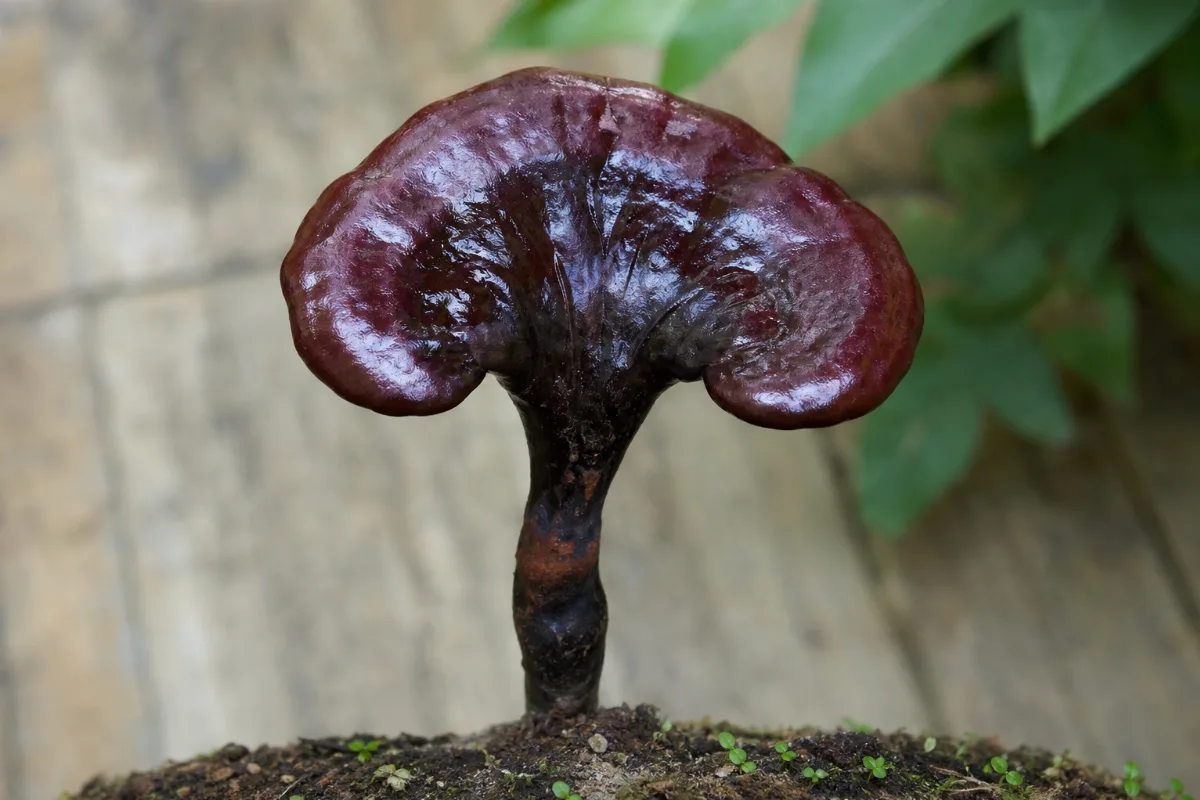
Mushrooms · Medicinal mushroom
Purple reishi
Ganoderma sinense · also called Purple reishi, zi zhi, purple Ling Zhi
Purple reishi is a woody, glossy shelf mushroom used in China beside red reishi. It is studied for immune and cancer-care support, but almost all research is in cells and mice, and no human trial of the mushroom itself was found. One purified tablet made from it is approved in China as an add-on during cancer treatment, which is a drug, not the mushroom. Safety in people is unknown, so ask a doctor before using it.
General information, not medical advice. Last substantive update · Not medically reviewed. A named clinician has not signed off on this page. How this page is made
About Purple reishi
Purple reishi (Ganoderma sinense) is a woody mushroom used in China beside red reishi. The research is thin: purified sugars and compounds in cells, mice and flies. No human trial of the mushroom itself was found, so benefits are unproven and safety in people is unknown.
What it is and how it differs from red reishi
Purple reishi is Ganoderma sinense, an accepted species in the fungus family Polyporaceae. It is a fungus, not a plant. In Chinese it is zi zhi, 'purple Ling Zhi', while red reishi (G. lucidum) is chi zhi.
The two are different. A 2012 study of 32 commercial batches found eight ganoderic acids and four ganoderenic acids in red reishi and none of those triterpenes in the 12 purple reishi batches. So findings about red reishi's triterpenes should not be carried over. Other work did find ganoderic acid M1 to M7 in purple reishi mycelium, which is a different material from the fruiting body.
Many Ganoderma are hard to tell apart (NCI), and one paper says fraudulent inclusion of adulterated Ling Zhi occurs in the market. We found no source on poisonous look-alikes, which is a gap. Do not eat or make a remedy from a wild conk on a guess.
Traditional and current uses
A 2019 review says it has been used in China for about 2,000 years, and a 2025 paper says it is often used as supportive treatment for low white blood cells after chemotherapy or radiotherapy. A 2023 review says the Chinese drug Ganoderma is the dried fruiting body of red or purple reishi. These are the authors' statements, and no old text was read.
The same 2025 paper says three Ganoderma species, including purple reishi, are officially listed by the Chinese government as suitable for health foods.
What the research shows
Almost all results are from lab work. Purified sugars switched on immune cells; sugars and fermentation products slowed cancer cells and mouse tumours; one sugar improved memory scores in mice; single compounds protected cells in dishes. None of this has been shown in people.
A purified polysaccharide tablet was approved in China in 2010 as an add-on for low white blood cells during cancer treatment. A 2017 review of it says the clinical studies could not be found, even by contacting the makers. The tablet is not the mushroom.
In one lung cancer mouse study, plain rice bran gave 76.06% tumour inhibition, so grain used to grow the mushroom had a large effect of its own. The mouse study of a blend with red reishi cannot be credited to purple reishi.
Fruiting body, mycelium on grain, spores and blends are different
NCI says mycelium grown on grain holds a lot of grain starch (alpha-glucan), while fruiting body extracts are entirely beta-glucan. Some purple reishi research used mycelium grown on rice bran, and a spore extract in another study. Blends with red reishi and spore oil exist.
These materials differ in chemistry, so one result cannot be assumed for another. The species on the label also matters.
Legal and regulatory status
Two reviews say a purified Ganoderma sinense polysaccharide tablet was approved in China in 2010 as an add-on drug. That approval covers the tablet only. NCI says the FDA has not approved medicinal mushrooms as a treatment for cancer or any other medical condition, and that supplements need no FDA approval before sale. We found no agency statement specific to the purple reishi mushroom.
At a glance
Traditional uses history, not proof
- A 2019 review says it has been used for 2,000 years in China, where purple Ling Zhi (zi zhi) sits beside red Ling Zhi (the authors' statement).
- A 2025 paper says it is often used as supportive treatment for low white blood cells and bone-marrow damage after chemotherapy or radiotherapy (the authors' statement).
- A 2023 review says the Chinese drug Ganoderma is the dried fruiting body of red or purple reishi (the authors' statement).
Studied for research
- Immune-cell signals in cells, insufficient
- Low white blood cells during cancer treatment (a purified tablet in China), insufficient
- Cancer cells and mouse tumours in the lab, insufficient (not a treatment)
- Memory in a mouse model, insufficient
- Inflammation signals and liver and heart cells in dishes, insufficient
- Ageing in fruit flies, insufficient
Main compounds
- Polysaccharides (sugars) including beta-glucans, a mannoglucan and acidic polysaccharides
- Triterpenoids (such as ganoderic acids M1 to M7 in the mycelium)
- Meroterpenoids such as lingzhiol and applanatumols
Common forms
- Dried conk (tea, decoction or powder)
- Hot-water or alcohol extracts
- Spore extracts and spore oil
- Mycelium grown on rice or grain (a different material)
- Blends with red reishi
- A purified polysaccharide tablet (a drug approved in China, not a supplement)
Research links: Memorial Sloan Kettering: Reishi mushroom (about red reishi) · NCI: Medicinal mushrooms (PDQ) · Review of the Ganoderma sinense polysaccharide tablet (abstract) · Second review: clinical data could not be found (abstract) · Purple versus red reishi chemistry (abstract) · Reishi liver injury case report (abstract) · Research Library · Genes & Biomarkers Library
What it is and its history
- Accepted scientific name
- Ganoderma sinense
- Naming authority
- J.D.Zhao, L.W.Hsu & X.Q.Zhang (GBIF)
- Common names
- Purple reishi (English); Purple Ling Zhi (English); Zi zhi (zizhi) (Chinese (pinyin))
- Family or group
- Polyporaceae (a fungus family; shelf and bracket fungi), not a plant
- Classification
- Fungi > Basidiomycota > Agaricomycetes > Polyporales > Polyporaceae > Ganoderma > Ganoderma sinense
- Native range
- The papers read call it a medicinal fungus of China; one paper cultivated a strain collected from the wild in Vietnam. No distribution source was read.
- Habitat
- Not checked in the sources read.
- What it looks like
- Fruiting body: A woody conk. Detailed descriptions were not read, and no identification help is given here.
- Cultivation
- A 2023 study successfully cultivated a wild-collected strain (GA21) on sawdust and rice-grain substrates. The authors describe commercial potential.
- Harvest and processing
- Not checked in the sources read.
- Look-alikes and adulterants
- Name: Other Ganoderma species, including red reishi (G. lucidum); Note: NCI says many Ganoderma species are difficult to distinguish. A 2012 study found purple and red reishi chemically different, and a 2025 study could tell them from G. tsugae by infrared spectra. No source on poisonous look-alikes was found, which is a gap.
- Sustainability and conservation
- Not checked.
Traditional use and history history, not clinical proof
| Tradition or era | Documented use | Source |
|---|---|---|
| Traditional Chinese medicine | A 2019 review says Ganoderma sinense (zi zhi, 'purple Ling Zhi') has been used for 2,000 years in China, beside red Ling Zhi (G. lucidum). This is the authors' statement; no old text was read. | p31030747 |
| Chinese pharmacopoeia | A 2023 review says the drug Ganoderma is the dried fruiting body of either G. lucidum or G. sinense, used in China for more than 2000 years for cough, asthma, nourishment and strengthening (authors' statement). | p37903715 |
| Supportive care in cancer treatment | A 2025 paper says G. sinense is often used as supportive treatment for low white blood cells and bone-marrow damage after chemotherapy or radiotherapy (authors' statement), and that three Ganoderma species, including G. sinense, are officially listed by the Chinese government as suitable for health foods. | p41220432 |
| Today | A purified G. sinense polysaccharide tablet was approved in China in 2010 as an add-on drug (two reviews). | p31030747 |
Traditional use shows how it was used. It does not show that it works or is safe today.
What is inside, and how it may work
What it contains and how those compounds act in cells and animals. Laboratory and animal mechanisms are not proven effects in people.
Main compounds
| Compound | Family | Where it is concentrated | Activity studied | Level of evidence |
|---|---|---|---|---|
| Triterpenoids (ganoderic acids M1 to M7 and others, from mycelia) | lanostane triterpenoid | Mycelium (this study) Amounts not in the abstract. A 2012 study found none of the red-reishi ganoderic acids it looked for in 12 commercial purple reishi batches. | One compound blocked nitric oxide in mouse cells. 14 2 | Laboratory research |
| Meroterpenoids (applanatumols F, H, I and lingzhiol) | meroterpenoid | Fruiting body Not stated | One compound protected liver and heart cells in dishes. 4 | Laboratory research |
| Beta-glucan WGG (82,200 Da; beta-1,3 backbone, beta-1,6 branches) | polysaccharide | Wuping cultivar fruiting body Extraction rate 0.41 mg/g (basis fresh or dry not stated); purity 98.15% | Activated mouse macrophages in dishes. 11 | Laboratory research |
| Mannoglucan GSBP-2 (11.5 kDa) and GSP70-2 (6.4 kDa, with N-acetylglucosamine) | polysaccharide | Fruiting body Not stated | Slowed breast cancer cells in dishes (and GS70 in mice). 18 3 | Animal research |
| Acidic polysaccharides GSPA60-3 and GSP-2 | polysaccharide | Not stated Not stated | Immune-cell activation through TLR4 (and TLR2) in cells. 21 12 | Laboratory research |
Mechanisms, receptors and pathways
| Target or pathway | Gene or receptor | What was found | Level |
|---|---|---|---|
| Toll-like receptor 4 (TLR4) and TLR2 | TLR4, TLR2 | A polysaccharide was recognised by TLR4, and its effect was lost in TLR4-knockout mouse macrophages; another acted through TLR-2/TLR-4. 12 21 | Laboratory research |
| MAPK / Akt / NF-kB signalling | MAPK, Akt, NF-kB | Part of the immune-cell activation by an acidic polysaccharide. 21 | Laboratory research |
| PI3K/Akt | PI3K, Akt | Linked to cancer-cell death in mice (GS70), to slower breast cancer cell movement, and to liver-cell protection through Nrf2/HO-1. 3 18 4 | Animal research |
| Endoplasmic reticulum stress | ER stress proteins | A spore extract stopped liver cancer cells at the G2/M stage; blocking ER stress weakened it. 10 | Laboratory research |
Absorption, metabolism and elimination
- Absorption
- Not found in the sources read.
- Distribution
- Not found.
- Metabolism
- Not found.
- Elimination
- Not found.
- Bioavailability
- Not established.
Isolated compounds versus whole extracts
Nearly all the results come from purified sugars, isolated compounds or grain-fermentation products, not from tea or powder. A 2012 study found purple and red reishi differ chemically, so red reishi's triterpene findings should not be carried over. NCI notes that mycelium grown on grain holds grain alpha-glucan while fruiting body extracts are all beta-glucan.
Nutritional composition
Purple reishi is a woody conk, not a food or a nutrient source, and no nutrition claim is made. No nutrient table was found.
7 not enough evidence
What was looked at
The 7 benefits and uses checked for Purple reishi, each with how strong the evidence is. Tap one to open it.
- Immune-cell signals (cells and mice)Not enough evidence
- Low white blood cells during cancer treatment (a purified tablet in China)Not enough evidence
- Cancer cells and mouse tumours (lab only, not a treatment)Not enough evidence
- Memory and plaques in a mouse modelNot enough evidence
- Inflammation signals (one compound, in cells)Not enough evidence
- Liver and heart cell protection (one compound, in cells)Not enough evidence
- Healthspan and Huntington model in fruit fliesNot enough evidence
Lab markers tracked in the studies
TNF-alpha, IL-6 and nitric oxide from macrophages (cells)TNF-alpha, IL-10 and TGF-beta from human blood cells (dishes)Tumour growth in miceMemory scores and amyloid-beta plaque (mice)Nitric oxide, TNF-alpha and IL-6 (LPS-stimulated mouse cells)CK, LDH and glutathione (heart-cell injury test)
What is Purple reishi good for?
The uses people ask about and how strong the evidence is for each. Everything below comes from cells, mice or flies, apart from one purified tablet approved in China. None is proven in people for the mushroom itself. Read this together with the Safety tab.
Benefits, one by one
Each card is a research question, not a promise. Tap a goal to filter. Open a card to see the studies, doses and limits.
Immune-cell signals (cells and mice)
Not enough evidencePurified sugars from purple reishi switched on mouse and human immune cells in dishes and raised signals such as TNF-alpha and IL-6. Whether tea, powder or extract does this in a person has not been tested.
6 studiesThe papers used many different preparations. No source gives an amoun…
Studies, doses and limits
What the trials found
No human trial of purple reishi was found. One mouse study used a blend of red and purple reishi plus spore oil, so it cannot be credited to purple reishi.
Results
Cells in dishes: more macrophage growth, eating (phagocytosis) and cytokines (NO, TNF-alpha, IL-6, IL-1 beta). Blend in mice: small but significant gains in natural killer cell and macrophage activity.
Effect sizes as reported
Cell and mouse results only
Why this rating
Dish work with purified sugars, plus one mouse study of a species blend. Nothing shows more protection from infection in people.
Form and dose studied
The papers used many different preparations. No source gives an amount that can be recommended, and none is advised here.
Who was studied
Mouse and human cell lines; mice (blend)
Limits
Concentrations in dishes are not what a person reaches. Purified fractions are not tea or powder. Tiny immune activation can be a risk as well as a benefit for some people.
Why researchers looked
Reishi-type mushrooms are known as immune tonics, and the sugars (polysaccharides) are the part chemists isolate and test on immune cells.
Traditional use
Used in China for about 2,000 years, according to the authors of a 2019 review (their statement; no old text was read).
Proposed mechanism Laboratory research
Purified polysaccharides and a beta-glucan activated macrophages. One, GSP-2, was recognised by the toll-like receptor TLR4, and its effect was lost in mice without TLR4. Another acted through TLR-2/TLR-4 and MAPK/Akt/NF-kB signals. A stalk (stipe) fraction raised TNF-alpha, IL-10 and TGF-beta in human blood cells.
A proposed mechanism does not show that the effect happens in people.
Because these sugars switch immune cells on in dishes, people on immune-suppressing medicine should ask their doctor before using any reishi-type product.
Low white blood cells during cancer treatment (a purified tablet in China)
Not enough evidenceA tablet made from purple reishi sugars was approved in China in 2010 as an add-on for low white blood cell counts caused by chemotherapy or radiotherapy. It is a purified drug, not the mushroom, and two reviews say they could not find the clinical results.
3 studiesThe papers used many different preparations. No source gives an amoun…
Studies, doses and limits
What the trials found
The 2017 review says all the clinical studies of the tablet could not be found, even by contacting the drug makers. No trial of purple reishi tea, powder or extract was found.
Results
Approved as an add-on drug in China in 2010. No trial result was seen.
Effect sizes as reported
Approval only; no effect size could be read
Why this rating
An approval is not a trial result. The reviewers who looked say the clinical data could not be found.
Form and dose studied
The papers used many different preparations. No source gives an amount that can be recommended, and none is advised here.
Who was studied
Cancer patients in China (approval); preclinical models
Limits
Drug approval in one country. The tablet is not the mushroom, and nothing here is advice for anyone having cancer treatment.
Why researchers looked
Purple reishi has been used in China as supportive care for blood-cell loss during cancer treatment, according to a 2025 paper.
Traditional use
A 2025 paper says it is often used as supportive treatment for low white cell counts and bone-marrow damage after chemotherapy or radiotherapy (the authors' statement).
Proposed mechanism Laboratory research
The tablet contains polysaccharides, including beta-glucan. Reviews say basic and preclinical studies showed antitumour, antioxidant and anticytopenia (blood-count-protecting) properties.
A proposed mechanism does not show that the effect happens in people.
Anyone having chemotherapy or radiotherapy should tell the cancer team about any mushroom product first.
Cancer cells and mouse tumours (lab only, not a treatment)
Not enough evidencePurified or fermented sugars from purple reishi slowed breast, lung and liver cancer cells in dishes and breast tumours in mice. This is early lab work. No person has been shown to benefit.
5 studiesThe papers used many different preparations. No source gives an amoun…
Studies, doses and limits
What the trials found
No human study of purple reishi for cancer was found.
Results
Mice: slower 4T1 breast tumour growth (crude polysaccharide GS70). Nude mice with lung tumours: 27.87% to 86.81% inhibition with fermentation products, but plain rice bran gave 76.06%. A blend with red reishi gave 35.31% in mice. Liver cancer cells: IC50 70.14 micrograms/mL for a spore extract.
Effect sizes as reported
Slower tumour growth in mice (no human result)
Why this rating
Cell and mouse work with purified sugars, a grain fermentation product and a species blend.
Form and dose studied
The papers used many different preparations. No source gives an amount that can be recommended, and none is advised here.
Who was studied
Cell lines and mice
Limits
Lab and animal results often do not carry over. The rice bran alone had a big effect in one study, so the mushroom's share is unclear. The spore-extract paper spells the species 'sinensis'; we treat it as the same species.
Why researchers looked
Reishi-type polysaccharides are widely screened for anti-tumour effects.
Proposed mechanism Animal research
A crude polysaccharide caused cell death through the PI3K/AKT pathway in breast tumours in mice; a purified mannoglucan held back breast cancer cell movement in dishes; a spore extract stopped liver cancer cells at the G2/M stage through ER stress.
A proposed mechanism does not show that the effect happens in people.
The cancer-cell signals are a reason to tell any cancer team about a mushroom product. Nothing here is advice for anyone with cancer.
Memory and plaques in a mouse model
Not enough evidenceIn mice given a toxin to mimic Alzheimer-type changes, a purified sugar from purple reishi improved memory scores and lowered amyloid plaque. This is an animal result only.
1 studiesThe papers used many different preparations. No source gives an amoun…
Studies, doses and limits
What the trials found
No human study was found.
Results
GSP1 improved cognition and memory scores and reduced amyloid-beta plaque in AlCl3 and D-galactose mice. GSP2 protected cells but did less.
Effect sizes as reported
Better scores and fewer plaques in mice
Why this rating
One mouse study with a purified polysaccharide in a chemically induced model.
Form and dose studied
The papers used many different preparations. No source gives an amount that can be recommended, and none is advised here.
Who was studied
Nerve cells in dishes; mice
Limits
One paper. A toxin-induced model does not fully match human Alzheimer's disease.
Why researchers looked
Memory and plaque tests in mice are a common first step for natural compounds.
Proposed mechanism Animal research
GSP1 protected nerve cells from toxin damage in dishes and, in mice, changed gut bacteria and short-chain fatty acids, which the authors link to the benefit.
A proposed mechanism does not show that the effect happens in people.
Inflammation signals (one compound, in cells)
Not enough evidenceOne isolated compound from the mycelium of purple reishi strongly blocked nitric oxide and stopped TNF-alpha and IL-6 release in mouse immune cells in dishes. This is chemistry, not a result in people.
1 studiesThe papers used many different preparations. No source gives an amoun…
Studies, doses and limits
What the trials found
No animal or human study was found.
Results
Compound 14: nitric oxide IC50 0.6 +/- 0.1 micromolar; TNF-alpha and IL-6 completely stopped at 10 micromolar.
Effect sizes as reported
One compound blocked inflammation signals in a dish
Why this rating
One isolated compound in mouse cells.
Form and dose studied
The papers used many different preparations. No source gives an amount that can be recommended, and none is advised here.
Who was studied
Mouse cell line
Limits
Mycelium compounds are not the same as those in the fruiting body. Not shown in animals or people.
Why researchers looked
Reishi-type mushrooms are screened for anti-inflammatory compounds.
Proposed mechanism Laboratory research
Lanostane triterpenoids from the mycelium were tested on LPS-stimulated mouse macrophages; compound 14 had an IC50 of 0.6 micromolar for nitric oxide.
A proposed mechanism does not show that the effect happens in people.
Liver and heart cell protection (one compound, in cells)
Not enough evidenceA compound from the fruiting body protected human liver cells from hydrogen-peroxide damage and heart cells from injury after blood flow is cut off and restored, in dishes. It does not show a liver or heart benefit in a person.
2 studiesThe papers used many different preparations. No source gives an amoun…
Studies, doses and limits
What the trials found
No animal or human study was found.
Results
Less liver-cell death and oxidative stress; lower CK and LDH in the heart-cell test.
Effect sizes as reported
Cell protection by one compound (no human result)
Why this rating
One isolated compound in cell tests.
Form and dose studied
The papers used many different preparations. No source gives an amount that can be recommended, and none is advised here.
Who was studied
Human LO2 liver cells; heart-cell injury test
Limits
A cell line is not a liver. For safety of the mushroom in the liver, see the Safety tab: liver injury has been reported for red reishi powder.
Why researchers looked
Antioxidant compounds are tested on liver and heart cells.
Proposed mechanism Laboratory research
Meroterpenoid compound 2a lowered cell death and reactive oxygen and switched on the Nrf2/HO-1 protective pathway through PI3K/Akt in liver cells; in the heart-cell injury test it lowered CK and LDH and raised GSH.
A proposed mechanism does not show that the effect happens in people.
See the Safety tab for liver cautions about reishi-type mushrooms.
Healthspan and Huntington model in fruit flies
Not enough evidenceAn extract of purple reishi improved activity and heart function in ageing fruit flies and protected a fly model of Huntington disease. Flies are not people.
1 studiesThe papers used many different preparations. No source gives an amoun…
Studies, doses and limits
What the trials found
No mammal or human study of this kind was found.
Results
Increased activity during ageing and improved heart function; protection in a Huntington model.
Effect sizes as reported
Better activity and heart function in ageing flies
Why this rating
One fly study, with four herb extracts compared.
Form and dose studied
The papers used many different preparations. No source gives an amount that can be recommended, and none is advised here.
Who was studied
Fruit flies
Limits
Flies only. The abstract does not say whether lifespan changed.
Why researchers looked
Fruit flies age quickly, so they are used to screen traditional extracts.
Proposed mechanism Animal research
The extract gave protection from various insults in flies; the abstract does not give a mechanism for G. sinense.
A proposed mechanism does not show that the effect happens in people.
Connections to the rest of health
How Purple reishi connects to the rest of our health knowledge graph. Every link says what kind of connection it is. A safety link (for example to the liver) is a warning, not a benefit. A study that merely mentions a topic never creates a benefit link.
Explore every connection: goals, body systems, organs, symptoms, genes
A. Wellness goals
| Connected to | Kind of connection | Evidence status | Context | Studies |
|---|---|---|---|---|
| Immune Support | Preliminary mechanism | Not enough evidence | Immune-cell signals (cells and mice): Purified sugars from purple reishi switched on mouse and human immune cells in dishes and raised signals such as TNF-alpha and IL-6. Whether tea, powder or extract does this in a person has not been tested. | 11 21 12 19 17 23 |
| Immune Support | Not enough evidence | Low white blood cells during cancer treatment (a purified tablet in China): A tablet made from purple reishi sugars was approved in China in 2010 as an add-on for low white blood cell counts caused by chemotherapy or radiotherapy. It is a purified drug, not the mushroom, and two reviews say they could not find the clinical results. | 20 7 1 | |
| Memory Support | Preliminary mechanism | Not enough evidence | Memory and plaques in a mouse model: In mice given a toxin to mimic Alzheimer-type changes, a purified sugar from purple reishi improved memory scores and lowered amyloid plaque. This is an animal result only. | 9 |
| Brain Health | Preliminary mechanism | Not enough evidence | Memory and plaques in a mouse model: In mice given a toxin to mimic Alzheimer-type changes, a purified sugar from purple reishi improved memory scores and lowered amyloid plaque. This is an animal result only. | 9 |
| Inflammation Balance | Preliminary mechanism | Not enough evidence | Inflammation signals (one compound, in cells): One isolated compound from the mycelium of purple reishi strongly blocked nitric oxide and stopped TNF-alpha and IL-6 release in mouse immune cells in dishes. This is chemistry, not a result in people. | 14 |
| Liver Support | Preliminary mechanism | Not enough evidence | Liver and heart cell protection (one compound, in cells): A compound from the fruiting body protected human liver cells from hydrogen-peroxide damage and heart cells from injury after blood flow is cut off and restored, in dishes. It does not show a liver or heart benefit in a person. | 4 16 |
| Healthy Aging | Preliminary mechanism | Not enough evidence | Healthspan and Huntington model in fruit flies: An extract of purple reishi improved activity and heart function in ageing fruit flies and protected a fly model of Huntington disease. Flies are not people. | 15 |
B. Body systems
| Connected to | Kind of connection | Evidence status | Context | Studies |
|---|---|---|---|---|
| Blood clotting | Drug or supplement interaction | Not enough evidence | MSK warns of bleeding with blood thinners; a healthy-volunteer trial of red reishi found no clotting change. Preparation or compound: Red reishi (a different species) |
23 8 |
| Immune system | Drug or supplement interaction | Not enough evidence | Switch on immune cells in dishes; relevant to people on immune-suppressing medicine. Preparation or compound: Purple reishi sugars (cells) |
11 19 23 |
| Immune System | Biological association | Not enough evidence | Studied for: Immune-cell signals (cells and mice) Studied for: Low white blood cells during cancer treatment (a purified tablet in China) | 11 21 12 19 17 23 20 7 1 3 18 6 10 14 |
| Nervous System | Biological association | Not enough evidence | Studied for: Memory and plaques in a mouse model Studied for: Healthspan and Huntington model in fruit flies | 9 15 |
| Hepatic System | Biological association | Not enough evidence | Studied for: Liver and heart cell protection (one compound, in cells) | 4 16 |
| Cardiovascular System | Biological association | Not enough evidence | Studied for: Liver and heart cell protection (one compound, in cells) | 4 16 |
C. Body parts and organs
I. Biomarkers
| Connected to | Kind of connection | Evidence status | Context | Studies |
|---|---|---|---|---|
| TNF-alpha, IL-6 and nitric oxide from macrophages (cells) | Biological association | Not enough evidence | Measured in trials: raised. A lab change is not the same as a health benefit. | 11 21 |
| TNF-alpha, IL-10 and TGF-beta from human blood cells (dishes) | Biological association | Not enough evidence | Measured in trials: raised. A lab change is not the same as a health benefit. | 19 |
| Tumour growth in mice | Biological association | Not enough evidence | Measured in trials: lowered. A lab change is not the same as a health benefit. | 17 6 |
| Memory scores and amyloid-beta plaque (mice) | Biological association | Not enough evidence | Measured in trials: improved. A lab change is not the same as a health benefit. | 9 |
| Nitric oxide, TNF-alpha and IL-6 (LPS-stimulated mouse cells) | Biological association | Not enough evidence | Measured in trials: lowered. A lab change is not the same as a health benefit. | 14 |
| CK, LDH and glutathione (heart-cell injury test) | Biological association | Not enough evidence | Measured in trials: improved. A lab change is not the same as a health benefit. | 4 |
J. Genes, receptors and enzymes
K. Biological pathways
L. Active compounds
| Connected to | Kind of connection | Evidence status | Context | Studies |
|---|---|---|---|---|
| Triterpenoids (ganoderic acids M1 to M7 and others, from mycelia) | Biological association | In vitro | One compound blocked nitric oxide in mouse cells. Preparation or compound: Mycelium (this study) |
14 2 |
| Meroterpenoids (applanatumols F, H, I and lingzhiol) | Biological association | In vitro | One compound protected liver and heart cells in dishes. Preparation or compound: Fruiting body |
4 |
| Beta-glucan WGG (82,200 Da; beta-1,3 backbone, beta-1,6 branches) | Biological association | In vitro | Activated mouse macrophages in dishes. Preparation or compound: Wuping cultivar fruiting body |
11 |
| Mannoglucan GSBP-2 (11.5 kDa) and GSP70-2 (6.4 kDa, with N-acetylglucosamine) | Biological association | Animal | Slowed breast cancer cells in dishes (and GS70 in mice). Preparation or compound: Fruiting body |
18 3 |
| Acidic polysaccharides GSPA60-3 and GSP-2 | Biological association | In vitro | Immune-cell activation through TLR4 (and TLR2) in cells. | 21 12 |
Each connection is stored with the ingredient, the connected record, the kind of connection, the evidence status, the supporting studies, the preparation or compound involved, and a review date (last reviewed October 25, 2026).
Evidence at a glance: what changed in 4 lab markers
Tap a number to show only those markers. Counts are markers, not people.
The evidence
The research centre for Purple reishi. Every record here was checked against PubMed or the publisher's page; we never list a study we have not verified.
Evidence by outcome
Bars show how many studies we found for each outcome, not how well it works. People are added up across trials only (reviews are not added, to avoid double counting).
How we rate evidence
High certainty
Several well-run trials or reviews agree; further research is unlikely to change the picture much.
Moderate certainty
Good trials point the same way, but some doubt remains.
Low certainty
Small, short or inconsistent trials. The finding could change with better research.
Very low certainty
Very little or very weak human data. Treat as a possibility only.
Mixed findings
Trials or reviews disagree with each other.
Not enough evidence
Not enough human research to say either way.
Evidence against
Good research found no benefit, or found harm.
We take the reviewers' own risk-of-bias and GRADE statements where they exist, and otherwise judge from study size, design, consistency, directness and whether a product matches what is sold. Many publications do not make evidence high. Method note: We read PubMed records and abstracts for 21 papers on Ganoderma sinense (two reviews of the China-approved tablet, a general review, cell and mouse studies, and chemistry, identification and growing studies) and 3 on the related red reishi (two case reports and one healthy-volunteer trial). We re-read the National Cancer Institute and Memorial Sloan Kettering pages, read the introduction of one open-access paper, and checked the species name in GBIF. Only abstracts were read for papers, so numbers come from abstracts. Certainty ratings are the compiler's own reading.
Study library: every study we checked 24
| Study | Design | People | Product, dose, length | Result |
|---|---|---|---|---|
| Chen 2025 A rapid approach for discriminating Ganoderma species using attenuated total reflectance-Fourier transform infrared (ATR-FTIR) spectroscopy integrated with chemometric analysis and convolutional neural network (CNN). Front Chem · PMID 41220432 · DOI |
Lab analysis n/a |
118 Ganoderma samples from one university collection (78 G. lucidum, 20 G. sinense, 20 G. tsugae) | Infrared spectra of fruiting bodies of three species fruiting body Not shown here (animal or lab amounts are not human amounts) |
The best chemometric model told the three species apart with 98.61% accuracy, and the deep-learning model with 89.84%. The introduction says the three species are officially listed by the Chinese government as suitable for use in health foods, and that fraudulent inclusion of adulterated Ling Zhi occurs in the market. 98.61% (best model) Methods, limits and fundingOutcomes: Species classification accuracy Limitations: A species-identification method, not a health study. Funded by Chinese public grants. Full text partly read; numbers on sample counts come from its methods. Funding and conflicts: Chinese public funders (National Natural Science Foundation of China and a Fujian provincial programme); no industry funder seen Read: abstract |
| Da 2012 Comparison of two officinal Chinese pharmacopoeia species of Ganoderma based on chemical research with multiple technologies and chemometrics analysis. J Chromatogr A · PMID 22226558 · DOI |
Lab analysis n/a |
32 batches of commercial Ganoderma (20 G. lucidum, 12 G. sinense), cultivated in different regions | Aqueous and alcoholic extracts of commercial fruiting bodies fruiting body Not shown here (animal or lab amounts are not human amounts) · vs G. lucidum batches |
In the 20 G. lucidum batches, 8 ganoderic acids and 4 ganoderenic acids were found, and 10 were measured (total 0.249% to 0.690%). None of these triterpenes was found in any of the 12 G. sinense batches. Polysaccharide differences were not directly visible but could be separated by statistics. The authors say the two species are chemically different, and that products should state the species. No ganoderic acids found in 12 G. sinense batches Methods, limits and fundingOutcomes: Polysaccharides and triterpenes Limitations: Small sample of commercial batches. It looked for a defined set of triterpenes; other triterpenes were reported in G. sinense mycelium by another study. Funding and conflicts: Not stated in the abstract; Research Support, Non-U.S. Gov't Read: abstract |
| Feng 2025 Structural feature and antitumor activity of a N-acetylglucosamine containing polysaccharide from Ganoderma sinense. Carbohydr Polym · PMID 40733790 · DOI |
Animal study mouse |
4T1 tumour-bearing BALB/c mice; 4T1 breast cancer cells | Crude polysaccharides (GS50, GS70, GS90, GSB) from water or alkali extracts of G. sinense; purified GSP70-2 (6.4 kDa) Not shown here (animal or lab amounts are not human amounts) · vs Untreated tumour-bearing mice |
GS70 clearly suppressed tumour growth in the mice and caused apoptosis (cell death) through the PI3K/AKT pathway. The purified GSP70-2 slowed 4T1 cell growth and lowered mitochondrial membrane potential. The authors say it could be developed as a potential option for breast cancer. Slower tumour growth in mice (no figure in the abstract) Methods, limits and fundingOutcomes: Tumour growth, apoptosis, PI3K/AKT pathway, 4T1 cell growth Limitations: Mouse and cell work with purified or crude polysaccharides. Not a treatment for any person. Funding and conflicts: Not stated in the abstract; Research Support, Non-U.S. Gov't Read: abstract |
| Gao 2018 Meroterpenoids from Ganoderma sinense protect hepatocytes and cardiomyocytes from oxidative stress induced injuries. Fitoterapia · PMID 30308230 · DOI |
In vitro study n/a |
Human normal liver LO2 cells; a heart-cell ischaemia/reperfusion test | Meroterpenoids (applanatumols F, H, I and lingzhiol) from the 95% ethanol extract of G. sinense fruiting bodies fruiting body Not shown here (animal or lab amounts are not human amounts) cell culture · vs Cells damaged with hydrogen peroxide, untreated |
Compound 2a protected the liver cells from hydrogen-peroxide damage, with less cell death and reactive oxygen, through PI3K/Akt activation of Nrf2/HO-1. In the heart-cell injury test it lowered CK and LDH and raised GSH. Cell protection by one isolated compound Methods, limits and fundingOutcomes: Cell death, reactive oxygen species, mitochondrial potential, Nrf2/HO-1; heart-cell CK, LDH and GSH Limitations: One isolated compound in cells. Does not show a liver or heart benefit in a person. Funding and conflicts: Not stated in the abstract; not checked further Read: abstract |
| Guedikian 2023 Ganoderma lingzhi (Reishi Mushroom)-Induced Acute Liver Injury in the Setting of Alcohol Use: A Case Report and Review of the Literature. Cureus · PMID 37885515 · DOI |
Case report |
A 47-year-old man | Ganoderma lingzhi (reishi) powder with alcohol - NOT purple reishi powder Not shown here (animal or lab amounts are not human amounts) |
Acute hepatitis with large transaminase rises after reishi powder and alcohol, managed with N-acetylcysteine and IV fluids. Labs and symptoms were completely back to normal at two weeks. Full recovery in two weeks Methods, limits and fundingOutcomes: Liver injury Limitations: NEAREST EVIDENCE: about reishi (G. lingzhi), not Ganoderma sinense. Alcohol was also involved. Funding and conflicts: Case report; no funding concerns noted Read: abstract |
| Han 2021 Polysaccharides from Ganoderma Sinense - rice bran fermentation products and their anti-tumor activities on non-small-cell lung cancer. BMC Complement Med Ther · PMID 34112172 · DOI |
Animal study n/a |
H1299 lung cancer cells; nude mice carrying H1299 tumours | Polysaccharides from G. sinense grown on full-fat or defatted rice bran (GSRBPs), compared with rice bran polysaccharide (RBS) mycelium on rice bran (fermentation product) Not shown here (animal or lab amounts are not human amounts) · vs Rice bran polysaccharide (RBS) |
Tumour inhibition ranged from 27.87% to 86.81% across the fermentation products; the best was GS-DRB-11 (86.81%). The plain rice bran polysaccharide alone gave 76.06%, so the rice bran itself had a large effect. In cells, IC50 ranged from 40.62 to 60.63 micrograms/mL. Tumour inhibition 27.87% to 86.81% in mice Methods, limits and fundingOutcomes: Cell growth (IC50); tumour inhibition rate in mice Limitations: The comparator (rice bran alone) also worked, so the mushroom's own share of the effect is unclear. A fermentation product on grain is not the fruiting body. Funding and conflicts: Not stated in the abstract; not checked further Read: abstract |
| Jiang 2017 Overview of Ganoderma sinense polysaccharide-an adjunctive drug used during concurrent Chemo/Radiation therapy for cancer treatment in China. Biomed Pharmacother · PMID 29078264 · DOI |
Narrative review review |
Basic and preclinical studies in Chinese and English | Ganoderma sinense polysaccharide (GSP) tablet Not shown here (animal or lab amounts are not human amounts) |
Translated Chinese-language basic and preclinical studies of the GSP tablet. The authors say all the clinical studies about the GSP tablet could not be found during the search or by contacting the drug makers, and they ask for the clinical results to be made available. No clinical study could be located by the reviewers Methods, limits and fundingOutcomes: Summary of basic and preclinical GSP studies; search for clinical studies Limitations: Review. It says clinical data could not be found, so the tablet's real-world effect cannot be judged from it. Funding and conflicts: Not stated in the abstract; not checked further Read: abstract |
| Kwok 2005 A prospective, randomized, double-blind, placebo-controlled study of the platelet and global hemostatic effects of Ganoderma lucidum (Ling-Zhi) in healthy volunteers. Anesth Analg · PMID 16037156 |
Controlled trial |
40 40 healthy volunteers |
Ganoderma lucidum capsules - NOT purple reishi capsules Not shown here (animal or lab amounts are not human amounts) 4 weeks, followed to 8 weeks · vs Placebo |
No significant differences between the reishi and placebo groups, and all measurements stayed in the normal range after 4 weeks. No change in clotting measures Methods, limits and fundingOutcomes: Clotting tests, platelet function Limitations: NEAREST EVIDENCE: red reishi (G. lucidum) in healthy volunteers, not Ganoderma sinense and not people on blood thinners. Funding and conflicts: Not stated in the abstract; not checked further Read: abstract |
| Li 2026 Ganoderma sinense Polysaccharides Improve Cognition in a Mouse Model of Alzheimer's Disease by Modulating Gut Microbiota and Short-Chain Fatty Acid Metabolism. Curr Alzheimer Res · PMID 42483925 · DOI |
Animal study mouse |
Glutamate-challenged SH-SY5Y nerve cells; mice given AlCl3 and D-galactose | Two purified polysaccharides (GSP1, GSP2) from G. sinense Not shown here (animal or lab amounts are not human amounts) · vs Untreated model mice |
Both polysaccharides protected nerve cells from toxin damage. GSP1 did better: it improved cognition and memory scores and reduced amyloid-beta plaque in the mice, and changed gut bacteria and fatty-acid profiles. Better memory scores and fewer plaques in mice Methods, limits and fundingOutcomes: Cell protection; memory and cognition tests; amyloid-beta plaque; gut bacteria and short-chain fatty acids Limitations: A chemically induced mouse model; one purified sugar. Not a model of human Alzheimer's disease in full. Funding and conflicts: Not stated in the abstract; not checked further Read: abstract |
| Lin 2021 Extract of Ganoderma sinensis spores induces cell cycle arrest of hepatoma cell via endoplasmic reticulum stress. Pharm Biol · PMID 34110966 · DOI |
In vitro study n/a |
Human HepG2 liver cancer cells | Supercritical CO2 extract of sporoderm-broken spores (GSE), as an emulsion spores Not shown here (animal or lab amounts are not human amounts) 24 hours · vs Untreated cells |
GSE slowed HepG2 cell growth (IC50 70.14 micrograms/mL). At 50 and 100 micrograms/mL, 30.8% and 42.2% of cells were stopped at the G2/M stage versus 21.03% in controls, and ER stress proteins rose. A blocker of ER stress reduced the effect. Cell-cycle arrest of liver cancer cells in a dish Methods, limits and fundingOutcomes: Cell growth (IC50); cell structure; cell cycle; ER stress proteins Limitations: Cells in a dish; spore extract. The paper spells the name Ganoderma sinensis with the same authority (Zhao, Xu et Zhang), so we treat it as the same species. This is our reading. Funding and conflicts: Not stated in the abstract; not checked further Read: abstract |
| Lin 2026 Extraction and structural characterization of functional beta-glucan from Wuping Ganoderma sinense and its immunomodulatory activity on mouse Raw 264.7 macrophages. Sci Rep · PMID 42443384 · DOI |
In vitro study n/a |
Mouse RAW 264.7 macrophage cell line | Beta-glucan (WGG) from the Wuping Ganoderma sinense cultivar, ultrasonic-assisted enzymatic extraction Not shown here (animal or lab amounts are not human amounts) cell culture · vs Untreated cells |
Extraction rate 0.41 mg/g, purity 98.15%, molecular weight 8.22 x 10^4 Da, with a beta-(1,3) backbone and beta-(1,6) branches. It promoted growth and phagocytosis of the macrophages and raised NO, TNF-alpha and IL-6 in a concentration-dependent way. Macrophage activation in a dish Methods, limits and fundingOutcomes: Extraction rate, purity, molecular weight, structure; cell proliferation, phagocytosis, NO, TNF-alpha and IL-6 Limitations: Mouse cells in a dish. A purified sugar, not tea or powder. Basis (fresh or dry) of the extraction rate is not stated in the abstract. Funding and conflicts: Not stated in the abstract; not checked further Read: abstract |
| Liu 2019 GSP-2, a polysaccharide extracted from Ganoderma sinense, is a novel toll-like receptor 4 agonist. PLoS One · PMID 31442262 · DOI |
In vitro study n/a |
RAW264.7 cells; primary mouse macrophages (wild-type and TLR4-knockout); human TLR-expressing HEK293 cells | GSP-2, a polysaccharide from Ganoderma sinense Not shown here (animal or lab amounts are not human amounts) cell culture · vs Untreated cells |
GSP-2 was recognised by TLR4 and not by the other toll-like receptors tested. It made TNF-alpha in macrophages from normal mice but not from TLR4-knockout mice, and it raised TNF-alpha, IL-1 beta and IL-6. TLR4-dependent cytokine release in cells Methods, limits and fundingOutcomes: TLR4 expression and activation, MAPK pathway, TNF-alpha, IL-1 beta, IL-6 Limitations: Cells in a dish; one purified polysaccharide. Funding and conflicts: Not stated in the abstract; Research Support, Non-U.S. Gov't Read: abstract |
| Liu 2023 A Comprehensive Review on the Chemical Composition, Pharmacology and Clinical Applications of Ganoderma. Am J Chin Med · PMID 37903715 · DOI |
Narrative review review |
Literature review | Ganoderma (dried fruiting body of G. lucidum or G. sinense) fruiting body Not shown here (animal or lab amounts are not human amounts) |
Says Ganoderma, as a traditional Chinese medicine, is the dried fruiting body of G. lucidum or G. sinense, used in China for more than 2000 years. Says it has antitumour, anti-inflammatory, blood sugar, blood fat and immune effects, and is used clinically for diabetic nephropathy and malignant tumours 'with few side effects and high safety'. The abstract gives no data for that safety statement and covers both species together. Overview only Methods, limits and fundingOutcomes: Chemistry, pharmacology and clinical use Limitations: Broad review covering two species together; the abstract gives no figures. The safety statement is the authors' and is not supported by data in the abstract. Funding and conflicts: Not stated in the abstract; not checked further Read: abstract |
| Teng 2023 Lanostane triterpenoids from mycelia-associated Ganoderma sinense and their anti-inflammatory activity. Phytochemistry · PMID 37734511 · DOI |
In vitro study n/a |
Mouse RAW264.7 macrophages stimulated with LPS | Seven new lanostane triterpenoids (ganoderic acids M1 to M7) and eight known compounds isolated from G. sinense mycelia mycelia Not shown here (animal or lab amounts are not human amounts) cell culture · vs LPS-stimulated cells |
Compound 14 gave the strongest nitric oxide block (IC50 0.6 +/- 0.1 micromolar) and completely stopped TNF-alpha and IL-6 release at 10 micromolar. Some of the compounds were tested. Strong inflammation-signal block by one isolated compound Methods, limits and fundingOutcomes: Nitric oxide, TNF-alpha and IL-6 production Limitations: One isolated compound from mycelium in mouse cells. Not shown in animals or people. Funding and conflicts: Not stated in the abstract; not checked further Read: abstract |
| Teseo 2021 G. sinense and P. notoginseng Extracts Improve Healthspan of Aging Flies and Provide Protection in A Huntington Disease Model. Aging Dis · PMID 33815875 · DOI |
Animal study fruit fly |
Drosophila melanogaster (fruit flies), including a Huntington disease model | Extract of Ganoderma sinense (tested beside extracts of three other herbs) Not shown here (animal or lab amounts are not human amounts) · vs Untreated flies |
Extracts of P. notoginseng and G. sinense increased healthspan of ageing flies, shown by more activity and better heart function, and gave protection in a fly model of Huntington disease. The abstract does not say whether lifespan was changed. Better activity and heart function in ageing flies Methods, limits and fundingOutcomes: Stress resistance, activity during ageing, heart function, Huntington model protection Limitations: Flies only. Four extracts were tested together, with differences between them. Funding and conflicts: Not stated in the abstract; not checked further Read: abstract |
| Wanmuang 2007 Fatal fulminant hepatitis associated with Ganoderma lucidum (Lingzhi) mushroom powder. J Med Assoc Thai · PMID 17621752 |
Case report |
A patient in Thailand (and a Hong Kong patient described in 2004) | Ganoderma lucidum (lingzhi) powder - NOT purple reishi powder Not shown here (animal or lab amounts are not human amounts) 1 to 2 months |
Both patients had taken other therapeutic agents and had earlier used traditionally boiled lingzhi without any toxic effect. After switching to powder for 1 to 2 months, the liver episode occurred. The Thai case was fatal fulminant hepatitis. One fatal case Methods, limits and fundingOutcomes: Liver injury Limitations: NEAREST EVIDENCE: this is about red reishi (G. lucidum), not Ganoderma sinense. Other medicines were also taken, so cause cannot be proven. Funding and conflicts: Case report; no funding concerns noted Read: abstract |
| Wu-Chen 2026 Ganoderma lucidum spore oil with Ganoderma lucidum and Ganoderma sinense extracts (G2SO) shows antitumor and Immunomodulatory effects in mice. Sci Rep · PMID 41491024 · DOI |
Animal study mouse |
BALB/c mice with 4T1 breast tumours; ICR mice for immune tests (30 days by mouth) | G2SO: a formulation of G. lucidum spore oil plus water extracts of G. lucidum and G. sinense fruiting bodies fruiting bodies and spores (combination) Not shown here (animal or lab amounts are not human amounts) 30 days (immune tests) · vs Untreated mice |
Tumour inhibition rate 35.31 +/- 9.51%. Small but statistically significant gains in NK cell cytotoxicity and macrophage phagocytosis, and in antibody production and T-cell growth. Cytokines in cells tended downward, mostly not significant. The authors call the immune effect modest. 35.31% tumour inhibition in mice Methods, limits and fundingOutcomes: 4T1 tumour inhibition; NK cell cytotoxicity; macrophage phagocytosis; antibody and T-cell measures; cytokines in cells Limitations: A blend of two species plus spore oil, so no result can be assigned to purple reishi. Mice only. Funding and conflicts: Tests a named formulation developed as a functional product; funding and conflicts not stated in the abstract and not checked. Treat as possibly industry-linked. Read: abstract |
| Xie 2024 Structural clarification of mannoglucan GSBP-2 from Ganoderma sinense and its effects on triple-negative breast cancer migration and invasion. Int J Biol Macromol · PMID 38688342 · DOI |
In vitro study n/a |
Human MDA-MB-231 breast cancer cells; human umbilical vein endothelial cells | Mannoglucan GSBP-2 (11.5 kDa) purified from crude polysaccharides of G. sinense fruiting bodies fruiting body Not shown here (animal or lab amounts are not human amounts) cell culture · vs Untreated cells |
GSBP-2 selectively held back growth, migration and invasion of the MDA-MB-231 cells, acting through the PI3K/Akt pathway, and also reduced new blood-vessel formation in endothelial cells. A corrigendum to this paper exists and was not read. Slower cancer-cell growth and movement in a dish Methods, limits and fundingOutcomes: Cell growth, migration, invasion, epithelial-mesenchymal transition genes, new-vessel formation Limitations: Cells in a dish; one purified sugar. No animal or human result in the abstract. Funding and conflicts: Not stated in the abstract; not checked further Read: abstract |
| Yue 2013 Immunomodulatory activities of Ganoderma sinense polysaccharides in human immune cells. Nutr Cancer · PMID 23859044 · DOI |
In vitro study n/a |
Human peripheral blood mononuclear cells (PBMC) and monocyte-derived dendritic cells, in dishes | Polysaccharide-enriched fractions of hot-water extract of G. sinense fruiting bodies (whole, cap, stipe) fruiting body: cap and stipe tested separately Not shown here (animal or lab amounts are not human amounts) cell culture · vs Untreated cells |
The polysaccharide-enriched fraction of the hot-water extract (400 micrograms/mL) stimulated PBMC growth. The stipe (stalk) fraction (50 to 400 micrograms/mL) raised TNF-alpha, IL-10 and TGF-beta, increased the CD14+ monocyte share, and raised IL-10 and IL-12 in dendritic cells. The authors suggest it may be a useful adjunct for patients on immunosuppressive chemotherapy; this was not tested in patients. Immune-cell stimulation in human cells in a dish Methods, limits and fundingOutcomes: PBMC growth; TNF-alpha, IL-10, TGF-beta; CD14+ monocytes; IL-10 and IL-12 in dendritic cells Limitations: Human blood cells in a dish, not a human trial. The authors' suggestion about patients is a hypothesis. Funding and conflicts: Not stated in the abstract; Research Support, Non-U.S. Gov't Read: abstract |
| Zhang 2019 Ganoderma sinense polysaccharide: An adjunctive drug used for cancer treatment. Prog Mol Biol Transl Sci · PMID 31030747 · DOI |
Narrative review review |
Literature from Chinese and English databases | Ganoderma sinense polysaccharide (GSP) tablet Not shown here (animal or lab amounts are not human amounts) |
States that the GSP tablet was approved in China in 2010 by the State Food and Drug Administration as an adjunctive drug for leukopenia and blood-forming injury caused by concurrent chemotherapy or radiotherapy. Says basic and preclinical studies showed antitumour, antioxidant, anticytopenia and mushroom-poison detoxification properties. It reviews basic and preclinical work; it does not report a clinical trial in its abstract. Approval of a purified tablet; no trial result in the abstract Methods, limits and fundingOutcomes: Approval and preclinical findings for the GSP tablet Limitations: Review of mostly preclinical work. The abstract gives no trial data. About a purified polysaccharide drug, not the mushroom itself. Funding and conflicts: Not stated in the abstract; authors are from China; not checked further Read: abstract |
| Zhang 2026 Isolation, structural characterization and immunoregulatory activity of a novel acidic polysaccharide from Ganoderma sinense. Int J Biol Macromol · PMID 41786176 · DOI |
In vitro study n/a |
Mouse RAW 264.7 macrophage cell line | Three acidic polysaccharides (GSPA60-1, -2, -3) from G. sinense, extracted with simulated gastric juice Not shown here (animal or lab amounts are not human amounts) cell culture · vs Untreated cells |
GSPA60-3 at 40 micrograms/mL clearly raised phagocytosis and the secretion of NO, iNOS, TNF-alpha, IL-6 and IL-1 beta, working through TLR-2/TLR-4 and MAPK/Akt/NF-kB signals. A corrigendum to this paper exists and was not read. Stronger immune-cell activation than the other two fractions, in a dish Methods, limits and fundingOutcomes: Phagocytosis, NO, iNOS, TNF-alpha, IL-6, IL-1 beta; TLR and MAPK/Akt/NF-kB signalling Limitations: Cells in a dish; purified fractions. The authors suggest it could be a dietary supplement; nothing was tested in animals or people. Funding and conflicts: Not stated in the abstract; not checked further Read: abstract |
| n/a 2024 National Cancer Institute (NCI): Medicinal Mushrooms (PDQ), Health Professional Version (summary updated 6 Nov 2024) n/a · Source |
Authoritative guidance n/a |
n/a | n/a |
Says the FDA has not approved the use of medicinal mushrooms as a treatment for cancer or any other medical condition. Says supplement contents vary from lot to lot and there is no guarantee that label ingredients are present. Says mycelium grown on grain contains large amounts of grain alpha-glucan, while fruiting body extracts are entirely beta-glucan. Says many other Ganoderma species are difficult to distinguish from the medicinal ones. Methods, limits and fundingOutcomes: Says the FDA has not approved the use of medicinal mushrooms as a treatment for cancer or any other medical condition. Says supplement contents vary from lot to lot and there is no guarantee that label ingredients are present. Says mycelium grown on grain contains large amounts of grain alpha-glucan, while fruiting body extracts are entirely beta-glucan. Says many other Ganoderma species are difficult to distinguish from the medicinal ones. Limitations: Summary for health professionals about medicinal mushrooms, mostly reishi (G. lucidum). It does not discuss Ganoderma sinense. Funding and conflicts: Independent public or hospital information source Read: full text (key statements re-read 2026-10-25; latest update shown 11/06/2024) |
| n/a 2026 Memorial Sloan Kettering Cancer Center: Reishi Mushroom (About Herbs, last updated 5 May 2026) n/a · Source |
Authoritative guidance n/a |
n/a | n/a |
Lists possible side effects: nausea, insomnia and liver injury. Advises talking to a provider if on blood thinners such as warfarin (bleeding risk), on immunosuppressants (may not be safe), or taking spore powder (can raise the tumour marker CA72-4). For professionals: liver toxicity case reports with powdered reishi, death in one instance; extracts may trigger or worsen autoimmune skin disease; effects on clotting tests; lab inhibition of some liver enzymes. Methods, limits and fundingOutcomes: Lists possible side effects: nausea, insomnia and liver injury. Advises talking to a provider if on blood thinners such as warfarin (bleeding risk), on immunosuppressants (may not be safe), or taking spore powder (can raise the tumour marker CA72-4). For professionals: liver toxicity case reports with powdered reishi, death in one instance; extracts may trigger or worsen autoimmune skin disease; effects on clotting tests; lab inhibition of some liver enzymes. Limitations: A cancer centre's herb information page about reishi (Ganoderma lucidum). NEAREST EVIDENCE: it does not mention Ganoderma sinense. Funding and conflicts: Independent public or hospital information source Read: full text (page re-read 2026-10-25; says Last Updated Tuesday, May 5, 2026) |
| n/a 2026 GBIF Backbone Taxonomy species match: Ganoderma sinense J.D.Zhao, L.W.Hsu & X.Q.Zhang (usage key 2549654), checked by API 2026-10-25 n/a · Source |
Database record n/a |
n/a | n/a |
Ganoderma sinense J.D.Zhao, L.W.Hsu & X.Q.Zhang is an ACCEPTED species in family Polyporaceae, order Polyporales, class Agaricomycetes, phylum Basidiomycota, kingdom Fungi (exact match, confidence 100). Methods, limits and fundingOutcomes: Ganoderma sinense J.D.Zhao, L.W.Hsu & X.Q.Zhang is an ACCEPTED species in family Polyporaceae, order Polyporales, class Agaricomycetes, phylum Basidiomycota, kingdom Fungi (exact match, confidence 100). Limitations: Naming record only. Index Fungorum was not opened. Funding and conflicts: Independent public or hospital information source Read: full text |
What we do not know yet
- No human trial of purple reishi (the mushroom, tea, powder or extract) was found.
- Two reviews say the clinical data behind the China-approved tablet could not be found.
- Nearly all results are purified sugars, isolated compounds or grain-fermentation products in cells, mice and flies.
- No safety data in people, none for pregnancy, breastfeeding, children or allergy, and no source on look-alikes or on contamination of products.
- EMA, LactMed were not searched, and LiverTox could not be opened.
How new research is added
New studies are found by a saved PubMed search and placed in a review queue. A person reads each one before it changes any evidence rating or safety wording. New publications never change ratings automatically.
Lab markers
What changed in blood or saliva tests during trials. A changed number is not the same as feeling or being healthier, and we give no "normal ranges".
Other 6
TNF-alpha, IL-6 and nitric oxide from macrophages (cells)
Raised in trials
Signals released by immune cells when they switch on.
Not enough evidenceResults and what it means
Why it was measured
Used to judge immune activation in dishes.
Statistical vs. clinical meaning
Cell results only. A rise can mean activation, which is not always a benefit.
Safety implication
Not a human measure.
| Study | Result | People | Product |
|---|---|---|---|
| 11 | Beta-glucan raised NO, TNF-alpha and IL-6 in a concentration-dependent way, and increased phagocytosis. | Mouse RAW 264.7 cells | Purified beta-glucan WGG |
| 21 | GSPA60-3 at 40 micrograms/mL raised phagocytosis and NO, iNOS, TNF-alpha, IL-6 and IL-1 beta. | Mouse RAW 264.7 cells | Acidic polysaccharide GSPA60-3 |
TNF-alpha, IL-10 and TGF-beta from human blood cells (dishes)
Raised in trials
Signals from human white blood cells grown in a dish.
Not enough evidenceResults and what it means
Why it was measured
Used to see if a fraction stimulates human immune cells.
Statistical vs. clinical meaning
Human cells in a dish, not a person.
Safety implication
Not a human measure.
| Study | Result | People | Product |
|---|---|---|---|
| 19 | The stalk (stipe) polysaccharide fraction (50 to 400 micrograms/mL) raised TNF-alpha, IL-10 and TGF-beta and the CD14+ monocyte share. | Human PBMC in dishes | Hot-water extract fraction |
Tumour growth in mice
Lowered in trials
How much a tumour grew compared with untreated mice.
Not enough evidenceResults and what it means
Why it was measured
Standard animal measure for anti-tumour screening.
Statistical vs. clinical meaning
Mouse results; one is a blend and one has a strong rice bran comparator.
Safety implication
Not a human measure.
| Study | Result | People | Product |
|---|---|---|---|
| 17 | Tumour inhibition rate 35.31 +/- 9.51%. | BALB/c mice with 4T1 tumours | G2SO blend with red reishi extract and spore oil |
| 6 | Inhibition 27.87% to 86.81% by fermentation products; rice bran polysaccharide alone 76.06%. | Nude mice with H1299 lung tumours | Polysaccharides from G. sinense grown on rice bran |
Memory scores and amyloid-beta plaque (mice)
Improved in trials
Behaviour tests and plaque counts in mouse brain.
Not enough evidenceResults and what it means
Why it was measured
Used in Alzheimer-type mouse models.
Statistical vs. clinical meaning
One mouse study.
Safety implication
Not a human measure.
| Study | Result | People | Product |
|---|---|---|---|
| 9 | GSP1 improved cognition and memory performance and reduced amyloid-beta plaque deposition. | AlCl3/D-galactose mice | Purified polysaccharide GSP1 |
Nitric oxide, TNF-alpha and IL-6 (LPS-stimulated mouse cells)
Lowered in trials
Inflammation signals released by immune cells.
Not enough evidenceResults and what it means
Why it was measured
Standard dish test for anti-inflammatory compounds.
Statistical vs. clinical meaning
Test-tube result for one compound.
Safety implication
Not a human measure.
| Study | Result | People | Product |
|---|---|---|---|
| 14 | Compound 14 blocked NO production (IC50 0.6 +/- 0.1 micromolar) and completely stopped TNF-alpha and IL-6 at 10 micromolar. | RAW264.7 cells | Isolated lanostane triterpenoid from mycelium |
CK, LDH and glutathione (heart-cell injury test)
Improved in trials
Markers of heart-cell damage (CK, LDH) and an antioxidant (GSH).
Not enough evidenceResults and what it means
Why it was measured
Used in dish models of ischaemia and reperfusion injury.
Statistical vs. clinical meaning
Cell result for one compound.
Safety implication
Not a human measure.
| Study | Result | People | Product |
|---|---|---|---|
| 4 | Pretreatment with compound 2a decreased CK and LDH and increased GSH. | Heart-cell ischaemia/reperfusion test | Isolated meroterpenoid 2a |
Safety
What studies and official sources say about side effects, medicines and who should check first. Each point shows what kind of evidence it comes from.
Main points to know 6
- Almost nothing is known about purple reishi safety in people. No safety trial and no case report naming Ganoderma sinense was found in PubMed or in the sources we read. A 2023 review says Ganoderma has 'few side effects and high safety', but its abstract gives no data and covers red and purple reishi together. Not knowing is not the same as safe. No data 13
- Red reishi powders have been linked to liver injury. Case reports describe liver injury, one fatal, after red reishi (Ganoderma lucidum or lingzhi) powder. This is a different species, and nobody knows whether purple reishi does the same. People with liver disease or who drink heavily should ask a doctor before using any reishi-type product. Case report 16 5 23
- It may switch on immune cells: ask first if you take immune-suppressing medicine. In dishes, sugars from purple reishi switched on mouse and human immune cells. Memorial Sloan Kettering says reishi may not be safe with immunosuppressants. No interaction study was done for purple reishi, so this is a sensible precaution, not a proven harm. Laboratory research 11 19 12 23
- You may not be getting the species on the label. A 2025 paper says fraudulent inclusion of adulterated Ling Zhi occurs in the market. A 2012 study found that purple and red reishi are chemically different (the red reishi acids were not found in 12 purple reishi batches). Products can also be blends with red reishi, spore oil, or mycelium grown on rice, so results and cautions cannot be assigned to one species or form. Lab analysis 1 2 17 22
- Cancer treatment: tell the team about any mushroom product. A purified purple reishi polysaccharide tablet is approved in China as an add-on during chemotherapy or radiotherapy, but this is a drug, and reviewers could not find its clinical data. Spore powder of red reishi can raise the tumour marker CA72-4 and interfere with test results (MSK). Never use a mushroom product in place of cancer care. Authoritative guidance 20 7 23
- Pregnancy, breastfeeding and children: no data. No source we read covers purple reishi in pregnancy, breastfeeding or children. Without data, ask a doctor before using it. No data
Side effects 4
| Effect | How often | Severity and recovery | Evidence |
|---|---|---|---|
| Any side effect of purple reishi in people The 2023 review's 'few side effects' statement has no data in its abstract. | Not described in any source read | unknown Not described | No data 13 |
| Liver injury (red reishi powder, G. lucidum or lingzhi) Nearest evidence only: this is about red reishi (Ganoderma lucidum or lingzhi). It has not been shown for purple reishi. | No rate; the cases come from published reports | severe Not described | Case report 16 5 23 |
| Nausea and insomnia (red reishi) Nearest evidence only: this is about red reishi (Ganoderma lucidum or lingzhi). It has not been shown for purple reishi. MSK lists them among reishi side effects. | No rate in the sources read | mild Not described | Authoritative guidance 23 |
| Autoimmune skin disease flare (red reishi) Nearest evidence only: this is about red reishi (Ganoderma lucidum or lingzhi). It has not been shown for purple reishi. | Cause not established | moderate Not described | Authoritative guidance 23 |
Liver
There is no report of liver injury from purple reishi. For red reishi (Ganoderma lucidum or lingzhi), a Thai report describes fatal fulminant hepatitis after the patient switched from boiled lingzhi to powder, and a 2023 report describes acute hepatitis in a 47-year-old man who took reishi powder and alcohol; he recovered fully in two weeks. In dishes, one compound from purple reishi protected a human liver cell line from hydrogen peroxide, but that is a cell test and does not show liver safety in people. See the reishi page for the full liver picture. 16 5 4
How often. No rate in users could be found for any reishi-type mushroom, and no case is known for purple reishi. The LiverTox database could not be opened (blocked by a bot check).
Monitoring. No agency monitoring advice was read. Anyone with liver disease, anyone who drinks heavily or takes other medicines that affect the liver should ask a doctor first.
- p17621752.
- p37885515.
This is a safety connection. It is not evidence that Purple reishi supports liver health.
Medicines and supplements 6
| With | Why it matters | Importance | Evidence | What to do |
|---|---|---|---|---|
| Blood thinners (warfarin-type) and antiplatelet medicines prescription | Reishi (red) extracts may lengthen clotting tests (MSK). | MSK says reishi can increase bleeding risk. In 40 healthy volunteers, red reishi capsules for 4 weeks changed no clotting or platelet measure. Nothing was tested for purple reishi. | Authoritative guidance Very low certainty 23 8 | Tell your prescriber or pharmacist before using any reishi-type mushroom. |
| Immunosuppressants (for example after a transplant or for autoimmune disease) prescription | Purple reishi sugars switch on immune cells in dishes; MSK says reishi may not be safe with immunosuppressants. | No trial tested this for purple reishi. | Laboratory research Very low certainty 11 19 23 | Ask the prescribing team before using it. |
| Chemotherapy and radiotherapy prescription | A purified purple reishi polysaccharide tablet is used as an add-on in China. Cell and mouse studies also show effects on tumour cells. | No study tested tea, powder or extract of purple reishi alongside cancer treatment. Reviewers could not find clinical data for the tablet. | Authoritative guidance Not enough evidence 20 7 | Tell the cancer team about any mushroom product before using it. |
| Alcohol and other liver-stressing substances alcohol | A red reishi powder case report involved alcohol. | The 2023 case involved powder plus alcohol; cause cannot be separated. | Case report Very low certainty 5 | Avoid mixing, and ask a doctor if you have liver disease. |
| Medicines cleared by liver enzymes (CYP2E1, CYP1A2, CYP3A) prescription | MSK reports lab inhibition of these enzymes by red reishi polysaccharides. | Clinical relevance unknown, and not tested for purple reishi. | Laboratory research Not enough evidence 23 | Ask a pharmacist about your medicines. |
| Blood sugar and blood pressure medicines prescription | No interaction study of purple reishi was found. | Unknown. | No data Not enough evidence | Ask a doctor or pharmacist if you take these medicines. |
Who should check first 7
| Situation | Advice | Evidence |
|---|---|---|
| Liver disease or heavy alcohol use | Ask a doctor before using any reishi-type mushroom; liver injury has been reported with red reishi powders. | Case report 16 5 |
| Taking blood thinners, or surgery planned | Talk to the prescriber or surgical team first (MSK, about red reishi). | Authoritative guidance 23 8 |
| Taking immune-suppressing medicine, or having an autoimmune disease or a transplant | Ask the prescribing team first. | Laboratory research 11 23 |
| Having chemotherapy or radiotherapy | Tell the cancer team about any mushroom product before using it. | Authoritative guidance 20 7 23 |
| Pregnancy or breastfeeding | No data. Ask a doctor first. | No data |
| Children | No data. Ask a doctor first. | No data |
| Known mushroom allergy | No allergy report for purple reishi was found, which does not clear it. Ask a doctor first. | No data |
Overdose, product quality and regulators
Summary. No poisoning from purple reishi has been described in the sources we read, and none of the papers we read tested toxicity in animals or people.
Animal. The mouse and fly papers were about possible benefits; their abstracts do not report toxicity.
Human doses studied. No amount in people can be given. None is advised here.
High dose or long term signals. Unknown; no long-term study was found.
Overdose response. No description found. Seek medical help for the urgent signs below.
Genotoxicity. Not found.
Toxic or hazardous parts. Fungus: the woody conk (fruiting body), the spores and mycelium (often grown on grain) are the materials studied. No source we read compares toxicity between them.
Supplements are not approved like medicines. No contamination test of purple reishi products was found.
Which species is in a product. A 2025 paper says fraudulent inclusion of adulterated Ling Zhi occurs in the market, and a study found 98.61% species identification accuracy from infrared spectra of 118 samples, including 20 of G. sinense. A 2012 study found purple and red reishi chemically different. A label can be wrong or a blend. 1 2
Fruiting body versus mycelium on grain. NCI says mycelium grown on grain contains large amounts of grain alpha-glucan, while fruiting body extracts are entirely beta-glucan. One purple reishi study grew it on rice bran, and plain rice bran also had an anti-tumour effect in mice, so grain products are a different material. 22 6
Blends. One mouse study used a blend of red reishi spore oil with red and purple reishi extracts. Such blends hide which species did what. 17
Lot-to-lot variation. NCI says supplement ingredients vary from lot to lot and there is no guarantee that label amounts are present. 22
Heavy metals and pesticides. No measurement of metals or pesticides in purple reishi products was found.
| Body | Action | Date |
|---|---|---|
| US National Cancer Institute (PDQ) (United States) | States that the FDA has not approved the use of medicinal mushrooms as a treatment for cancer or any other medical condition, and that supplement ingredients may vary between lots with no guarantee label amounts are present. About medicinal mushrooms in general, not purple reishi. source | 2024-11-06 |
| Memorial Sloan Kettering Cancer Center (United States) | About red reishi (G. lucidum), not purple reishi: lists nausea, insomnia and liver injury; advises care with blood thinners, immunosuppressants and spore powder. An information page, not a regulator. source | 2026-05-05 |
| China State Food and Drug Administration (as reported by two reviews) (China) | Two reviews state that a purified Ganoderma sinense polysaccharide (GSP) tablet was approved in 2010 as an add-on drug for low white blood cell counts and blood-forming injury caused by concurrent chemotherapy or radiotherapy. The 2017 review says the clinical studies could not be found. Approval of a purified drug, not of the mushroom. source | 2010 |
When to get medical help
- Yellow skin or eyes, dark urine, pale stools, severe belly pain or heavy itching after using a reishi-type product: stop it and get medical help now.
- Unusual bleeding, black stools or large bruises, especially with blood thinners: get medical help now.
- Swelling of the face or throat, wheeze or trouble breathing: call emergency services.
- Vomiting, belly pain, confusion or other illness after eating any wild mushroom: get medical help or call your local poison centre and keep a sample.
If someone may be poisoned or in a crisis, contact a clinician or emergency service straight away. In the US, Poison Control is 1-800-222-1222.
General information only, not medical advice. Ask a clinician or pharmacist before use, especially with medicines, in pregnancy or with a health condition. See the Natural Remedy Safety guide.
Frequently asked questions
What is purple reishi?
Is purple reishi the same as reishi?
Is it the same as black reishi?
We found no source that defines 'black reishi', and several dark Ganoderma exist. Check the Latin name Ganoderma sinense on any label.
Are there human studies of purple reishi?
Is purple reishi safe?
Can it harm the liver?
Does it boost the immune system?
Does it help with cancer?
What is the tablet approved in China?
Does it interact with medicines?
Is it safe in pregnancy, breastfeeding or for children?
No data were found for any of these. Ask a doctor first.
Can I pick it in the wild and use it?
Be careful. Many Ganoderma are hard to tell apart (NCI), and we found no source on poisonous look-alikes or on safety of wild-picked purple reishi. Do not use a guess. Ask an experienced local identifier.
Explore by health goal
Immune SupportMemory SupportBrain HealthInflammation BalanceLiver SupportHealthy Aging
Editorial transparency
- Written by
- AlternativeMed editorial team. Research compiled with AI assistance, then checked against PubMed records.
- Medical review
- None. This page has not been reviewed by a physician or pharmacist.
- First published
- 2026-10-25
- Last substantive update
- 2026-10-25
- How we research
- We read PubMed records and abstracts for 21 papers on Ganoderma sinense (two reviews of the China-approved tablet, a general review, cell and mouse studies, and chemistry, identification and growing studies) and 3 on the related red reishi (two case reports and one healthy-volunteer trial). We re-read the National Cancer Institute and Memorial Sloan Kettering pages, read the introduction of one open-access paper, and checked the species name in GBIF. Only abstracts were read for papers, so numbers come from abstracts. Certainty ratings are the compiler's own reading.
- How we rate evidence
- See "How we rate evidence" in the Evidence tab.
- Independence
- No product is promoted on this page. No affiliate links are shown. This page is information, not a recommendation to use purple reishi.
Sources 24
Each source was opened and checked. Where we read only the abstract, it says so. The small numbers in the text point here.
- Chen SY, et al. A rapid approach for discriminating Ganoderma species using attenuated total reflectance-Fourier transform infrared (ATR-FTIR) spectroscopy integrated with chemometric analysis and convolutional neural network (CNN).. Front Chem. 2025. PMID 41220432. DOI 10.3389/fchem.2025.1655760. (abstract)
- Da J, et al. Comparison of two officinal Chinese pharmacopoeia species of Ganoderma based on chemical research with multiple technologies and chemometrics analysis.. J Chromatogr A. 2012. PMID 22226558. DOI 10.1016/j.chroma.2011.12.017. (abstract)
- Feng M, et al. Structural feature and antitumor activity of a N-acetylglucosamine containing polysaccharide from Ganoderma sinense.. Carbohydr Polym. 2025. PMID 40733790. DOI 10.1016/j.carbpol.2025.123838. (abstract)
- Gao S, et al. Meroterpenoids from Ganoderma sinense protect hepatocytes and cardiomyocytes from oxidative stress induced injuries.. Fitoterapia. 2018. PMID 30308230. DOI 10.1016/j.fitote.2018.10.009. (abstract)
- Guedikian R, et al. Ganoderma lingzhi (Reishi Mushroom)-Induced Acute Liver Injury in the Setting of Alcohol Use: A Case Report and Review of the Literature.. Cureus. 2023. PMID 37885515. DOI 10.7759/cureus.45953. (abstract)
- Han W, et al. Polysaccharides from Ganoderma Sinense - rice bran fermentation products and their anti-tumor activities on non-small-cell lung cancer.. BMC Complement Med Ther. 2021. PMID 34112172. DOI 10.1186/s12906-021-03346-7. (abstract)
- Jiang Y, et al. Overview of Ganoderma sinense polysaccharide-an adjunctive drug used during concurrent Chemo/Radiation therapy for cancer treatment in China.. Biomed Pharmacother. 2017. PMID 29078264. DOI 10.1016/j.biopha.2017.09.060. (abstract)
- Kwok Y, et al. A prospective, randomized, double-blind, placebo-controlled study of the platelet and global hemostatic effects of Ganoderma lucidum (Ling-Zhi) in healthy volunteers.. Anesth Analg. 2005. PMID 16037156. (abstract)
- Li W, et al. Ganoderma sinense Polysaccharides Improve Cognition in a Mouse Model of Alzheimer's Disease by Modulating Gut Microbiota and Short-Chain Fatty Acid Metabolism.. Curr Alzheimer Res. 2026. PMID 42483925. DOI 10.2174/0115672050473800260622054102. (abstract)
- Lin W, et al. Extract of Ganoderma sinensis spores induces cell cycle arrest of hepatoma cell via endoplasmic reticulum stress.. Pharm Biol. 2021. PMID 34110966. DOI 10.1080/13880209.2021.1931354. (abstract)
- Lin B, et al. Extraction and structural characterization of functional beta-glucan from Wuping Ganoderma sinense and its immunomodulatory activity on mouse Raw 264.7 macrophages.. Sci Rep. 2026. PMID 42443384. DOI 10.1038/s41598-026-61555-x. (abstract)
- Liu KS, et al. GSP-2, a polysaccharide extracted from Ganoderma sinense, is a novel toll-like receptor 4 agonist.. PLoS One. 2019. PMID 31442262. DOI 10.1371/journal.pone.0221636. (abstract)
- Liu C, et al. A Comprehensive Review on the Chemical Composition, Pharmacology and Clinical Applications of Ganoderma.. Am J Chin Med. 2023. PMID 37903715. DOI 10.1142/S0192415X23500878. (abstract)
- Teng L, et al. Lanostane triterpenoids from mycelia-associated Ganoderma sinense and their anti-inflammatory activity.. Phytochemistry. 2023. PMID 37734511. DOI 10.1016/j.phytochem.2023.113870. (abstract)
- Teseo S, et al. G. sinense and P. notoginseng Extracts Improve Healthspan of Aging Flies and Provide Protection in A Huntington Disease Model.. Aging Dis. 2021. PMID 33815875. DOI 10.14336/AD.2020.0714-1. (abstract)
- Wanmuang H, et al. Fatal fulminant hepatitis associated with Ganoderma lucidum (Lingzhi) mushroom powder.. J Med Assoc Thai. 2007. PMID 17621752. (abstract)
- Wu-Chen RA, et al. Ganoderma lucidum spore oil with Ganoderma lucidum and Ganoderma sinense extracts (G2SO) shows antitumor and Immunomodulatory effects in mice.. Sci Rep. 2026. PMID 41491024. DOI 10.1038/s41598-025-34803-9. (abstract)
- Xie Y, et al. Structural clarification of mannoglucan GSBP-2 from Ganoderma sinense and its effects on triple-negative breast cancer migration and invasion.. Int J Biol Macromol. 2024. PMID 38688342. DOI 10.1016/j.ijbiomac.2024.131903. (abstract)
- Yue GG, et al. Immunomodulatory activities of Ganoderma sinense polysaccharides in human immune cells.. Nutr Cancer. 2013. PMID 23859044. DOI 10.1080/01635581.2013.788725. (abstract)
- Zhang Y, et al. Ganoderma sinense polysaccharide: An adjunctive drug used for cancer treatment.. Prog Mol Biol Transl Sci. 2019. PMID 31030747. DOI 10.1016/bs.pmbts.2019.02.008. (abstract)
- Zhang M, et al. Isolation, structural characterization and immunoregulatory activity of a novel acidic polysaccharide from Ganoderma sinense.. Int J Biol Macromol. 2026. PMID 41786176. DOI 10.1016/j.ijbiomac.2026.151196. (abstract)
- n/a. National Cancer Institute (NCI): Medicinal Mushrooms (PDQ), Health Professional Version (summary updated 6 Nov 2024). n/a. 2024. (full text (key statements re-read 2026-10-25; latest update shown 11/06/2024))
- n/a. Memorial Sloan Kettering Cancer Center: Reishi Mushroom (About Herbs, last updated 5 May 2026). n/a. 2026. (full text (page re-read 2026-10-25; says Last Updated Tuesday, May 5, 2026))
- n/a. GBIF Backbone Taxonomy species match: Ganoderma sinense J.D.Zhao, L.W.Hsu & X.Q.Zhang (usage key 2549654), checked by API 2026-10-25. n/a. 2026. (full text)
Where to buy
Check the label first. Whatever you buy, look for these:
- Fruiting body versus mycelium on grain: the label should say which
- The extract type and the beta-glucan amount, if stated
- A third-party testing mark
- Interactions: ask a pharmacist if you take medicines or blood thinners
Talk to a pharmacist or doctor before you start any supplement, especially if you take medicines. See the Safety tab for interactions.
Support our free guides: as an Amazon Associate we earn from qualifying purchases. Full disclosure.


