Mushrooms · Medicinal mushroom
Golden reishi
Ganoderma curtisii · also called Golden reishi
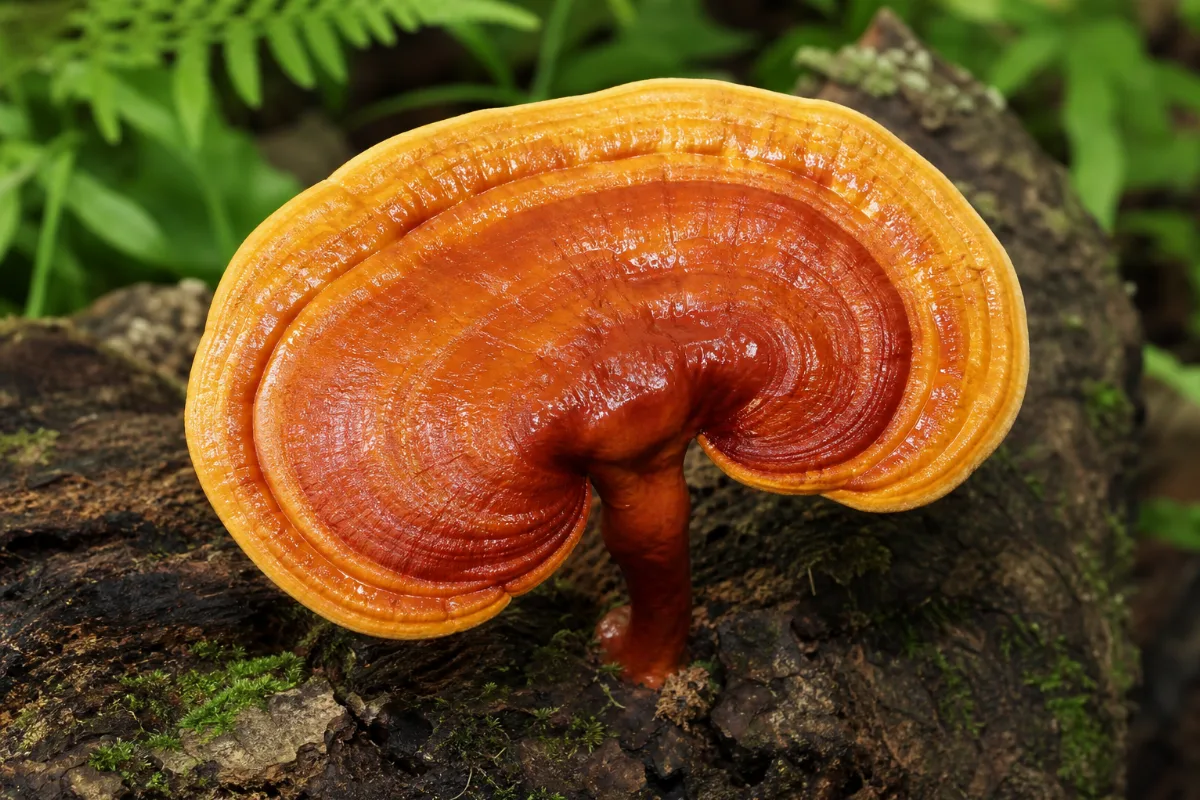
Golden reishi is a shiny, woody shelf mushroom, a relative of reishi. No study in people was found, and the lab work is small. The name covers a group of look-alike species, so a label or a paper may not describe the fungus you hold. Do not pick and use a wild conk on a guess.
General information, not medical advice. Last substantive update · Not medically reviewed. A named clinician has not signed off on this page. How this page is made
About Golden reishi
Golden reishi (Ganoderma curtisii) is a woody mushroom related to reishi. It has not been studied in people, and the lab work is small. The name covers a group of look-alike species, so benefits are unproven and safety in people is unknown.
What it is, and why the name is confusing
Golden reishi is a trade or folk name for Ganoderma curtisii, an accepted species in the fungus family Polyporaceae. It is a shiny, woody conk, and it is a fungus, not a plant. It was first described from the southeastern United States.
A 2025 DNA study found that G. curtisii is not one species but a group. It resolved six lineages, including a new Mexican species, G. mexicurtisii, which many Mexican collections called G. curtisii turned out to be. The same study confirms that G. meredithiae, a form that grows on pines, is the same species as G. curtisii. The naming database GBIF still lists G. meredithiae as its own species.
This matters because a lab paper or a product label may describe a different fungus. A 2018 US study found 12 shiny Ganoderma species in the United States, and DNA, spore shape, location and host tree are needed to separate them. We found no source on poisonous look-alikes, which is a gap. Do not eat or make a remedy from a wild conk on a guess. Ask an experienced local mushroom identifier.
Traditional and current uses
We found no source that describes a traditional use of golden reishi, so none is claimed here. Reishi relatives are much better known, and their history is on the reishi page.
What the research shows
A PubMed search for the name found five records: lab chemistry, cell-dish screening, culture growing and naming studies. None is a study in people, and no animal study was found.
Triterpenes from the fruiting body lowered an inflammation signal in mouse brain-immune cells. Extracts of lab-grown mycelium from Mexican strains slowed human tumour cells and one bacterium in dishes. Extracts also scored on antioxidant tests. These are early screening results and do not show any effect in a person.
The papers may not all describe the same species, because the strains came from China, Mexico and Costa Rica and the group is mixed. For a much better studied relative, see the reishi page. Its findings are not assumed for golden reishi.
Fruiting body, grain-grown mycelium and extracts are different
NCI says Ganoderma products made from mycelium grown on grain contain large amounts of grain starch (alpha-glucan), while fruiting body extracts are entirely beta-glucan. Most golden reishi lab work used lab-grown mycelium or isolated compounds, not a wild conk.
A DNA check of 20 manufactured reishi products and 17 grow-your-own kits found that most products were another species (G. lingzhi) and that other Ganoderma species were present too. Better labelling is needed, the authors said.
Legal and regulatory status
NCI says the FDA has not approved medicinal mushrooms as a treatment for cancer or any other medical condition, and that supplement ingredients may vary a lot from lot to lot. We found no agency statement specific to Ganoderma curtisii.
At a glance
Traditional uses history, not proof
- We found no source that describes a traditional use of this species. Reishi relatives have a long history in Chinese and Japanese medicine, but that history is not shown for golden reishi.
Studied for research
- Inflammation signals in brain-immune cells (cell dish), insufficient
- Cancer cells and a germ in dishes, insufficient (not a treatment)
- Antioxidant scores in the test tube, insufficient
- Immune support and liver (no study of this species), insufficient
Main compounds
- Lanostane triterpenoids, including lucidenic acids
- Beta-glucans and other sugars (amounts not found for this species)
Common forms
- Dried conk (tea or decoction)
- Powder
- Hot-water or alcohol extracts
- Mycelium grown on grain (a different material)
- Grow-your-own kits (a label does not guarantee the species)
Research links: Memorial Sloan Kettering: Reishi mushroom (about a related species) · NCI: Medicinal mushrooms (PDQ) · The Ganoderma curtisii group in the Neotropics (abstract) · Shiny Ganoderma of the United States (abstract) · Triterpenoids from Ganoderma curtisii (abstract) · Reishi liver injury case report (abstract) · Research Library · Genes & Biomarkers Library
What it is and its history
- Accepted scientific name
- Ganoderma curtisii
- Naming authority
- (Berk.) Murrill (GBIF)
- Synonyms
- Ganoderma meredithiae Adask. & Gilb. (treated as a synonym or a pine-decay form by Loyd 2018 and Cabarroi-Hernandez 2025; GBIF still lists it as its own accepted species)
- Common names
- Golden reishi (English)
- Family or group
- Polyporaceae (a fungus family; shelf and bracket fungi), not a plant
- Classification
- Fungi > Basidiomycota > Agaricomycetes > Polyporales > Polyporaceae > Ganoderma > Ganoderma curtisii
- Native range
- A 2025 paper says G. curtisii was originally described from the southeastern United States, most records come from there down to Mexico, and records also exist from Brazil, Costa Rica and Cuba; Loyd 2018 restricted its range to North America.
- Habitat
- A 2025 paper says the American species of this group mainly inhabit oak and pine forests. Loyd 2018 describes the pine-decay form (G. meredithiae) as specializing in pines.
- What it looks like
- Fruiting body: Shiny (laccate) woody conk. Loyd 2018 says context tissue colour and features, spore shape and size, location and host preference help to separate species. The 2025 paper notes close overlap between G. curtisii and the new Mexican species and a likelihood of misidentification.
- Cultivation
- Not described in the sources read. One grow-your-own kit in an earlier summary was said to be labelled G. curtisii; that was not re-checked.
- Harvest and processing
- Not checked in the sources read.
- Look-alikes and adulterants
- Name: Other shiny Ganoderma species; Note: Loyd 2018 found 12 shiny species in US collections, including G. curtisii, G. lucidum in the strict sense, G. oregonense, G. sessile and G. tsugae. The 2025 paper separates the Mexican G. mexicurtisii and notes many Mexican collections called G. curtisii were this other species. We found no source on poisonous look-alikes.
- Sustainability and conservation
- Not checked.
Traditional use and history history, not clinical proof
| Tradition or era | Documented use | Source |
|---|---|---|
| Naming history | Ganoderma curtisii was described from the southeastern United States. For a century, shiny Ganoderma species were lumped together as G. lucidum; molecular work has since separated them (Loyd 2018). Controversy followed as it became clear G. curtisii is a species complex (2025 paper). | p40656813 |
| Traditional use | We found no source that describes a traditional use of Ganoderma curtisii. An earlier summary quoted a 2025 review table listing 'golden reishi' as traditionally said to strengthen spleen function; that table was not re-opened and is not repeated as fact. | p30020945 |
Traditional use shows how it was used. It does not show that it works or is safe today.
What is inside, and how it may work
What it contains and how those compounds act in cells and animals. Laboratory and animal mechanisms are not proven effects in people.
Main compounds
| Compound | Family | Where it is concentrated | Activity studied | Level of evidence |
|---|---|---|---|---|
| Lanostane triterpenoids (including lucidenic acids) | lanostane triterpenoid | Fruiting body 29 triterpenoids isolated from an ethanol extract of fruiting bodies (amounts not in the abstract) | Lowered nitric oxide in mouse brain-immune cells in dishes. 3 1 | Laboratory research |
Mechanisms, receptors and pathways
| Target or pathway | Gene or receptor | What was found | Level |
|---|---|---|---|
| Nitric oxide production in microglia | nitric oxide | Isolated triterpenoids lowered nitric oxide output in stimulated BV-2 cells (IC50 3.65 to 28.04 micromolar). 3 | Laboratory research |
| Growth of tumour cell lines and Staphylococcus aureus | not described | Extracts of lab-grown mycelium slowed growth in culture; how is not stated in the abstract. 10 | Laboratory research |
Absorption, metabolism and elimination
- Absorption
- Not found in the sources read.
- Distribution
- Not found.
- Metabolism
- Not found.
- Elimination
- Not found.
- Bioavailability
- Not established.
Isolated compounds versus whole extracts
The lab work used isolated triterpenoids from the fruiting body and, separately, extracts of lab-grown mycelium. These are different materials from each other and from a wild conk or a powder. NCI says grain-grown mycelium holds a lot of grain starch (alpha-glucan) while fruiting body extracts are entirely beta-glucan.
Nutritional composition
Golden reishi is a woody conk, not a food or a nutrient source, and no nutrition claim is made. No composition table for the fruiting body was found.
5 not enough evidence
What was looked at
The 5 benefits and uses checked for Golden reishi, each with how strong the evidence is. Tap one to open it.
- Inflammation signals in brain-immune cells (cells only)Not enough evidence
- Cancer cells and a germ in dishes (not a treatment)Not enough evidence
- Antioxidant scores in the test tube (not a health effect)Not enough evidence
- Immune support and liver (no study of golden reishi)Not enough evidence
- Lucidenic acids and other bitter compounds (chemistry only)Not enough evidence
Lab markers tracked in the studies
Nitric oxide made by brain-immune cells (cell dish)Tumour cell growth (GI50, cell dish)Staphylococcus aureus growth (MIC, culture)
What is Golden reishi good for?
The uses people ask about and how strong the evidence is for each. Everything below comes from cell dishes or test tubes, and no person has been tested. Read this together with the Safety tab.
Benefits, one by one
Each card is a research question, not a promise. Tap a goal to filter. Open a card to see the studies, doses and limits.
Inflammation signals in brain-immune cells (cells only)
Not enough evidenceTriterpenes (bitter compounds) taken from the fruiting body of Ganoderma curtisii lowered nitric oxide, an inflammation signal, in mouse brain-immune cells in dishes. That is all that is known. No animal or human study of this was found.
2 studiesAlmost nothing has been studied in people. No source gives an amount …
Studies, doses and limits
What the trials found
No human study of golden reishi was found. Nothing was found in animals either.
Results
Cells in dishes: nitric oxide output lowered by the isolated compounds, IC50 3.65 to 28.04 micromolar.
Effect sizes as reported
Cell result only
Why this rating
A cell-dish result with isolated compounds. A dish result often does not carry over to people, and the identity of the fungus is uncertain because G. curtisii is a group of look-alike species.
Form and dose studied
Almost nothing has been studied in people. No source gives an amount that can be recommended, and none is advised here.
Who was studied
Mouse cell line
Limits
Isolated compounds, not the whole mushroom. The abstract does not say how the fungus was identified.
Why researchers looked
Reishi-type mushrooms are known for triterpenes, so chemists test what each compound does to inflammation signals in cells.
Proposed mechanism Laboratory research
Twenty-nine lanostane triterpenoids from an ethanol extract of fruiting bodies reduced nitric oxide made by BV-2 microglia cells after a bacterial toxin. IC50 values ranged from 3.65 to 28.04 micromolar.
A proposed mechanism does not show that the effect happens in people.
See the Safety tab. Nothing about safety in people is known.
Cancer cells and a germ in dishes (not a treatment)
Not enough evidenceExtracts made from lab-grown mycelium of Mexican strains slowed four kinds of human tumour cells and one bacterium in dishes. No person or animal was tested, so this says nothing about treating cancer or infection.
2 studiesAlmost nothing has been studied in people. No source gives an amount …
Studies, doses and limits
What the trials found
No human study of golden reishi was found.
Results
G. curtisii strain GH-16-015: GI50 of 50 ug/mL or less against four tumour cell lines. Strains GH-16-012 and GH-16-015: MIC 500 ug/mL against Staphylococcus aureus.
Effect sizes as reported
Cell and bacterial culture results only
Why this rating
Cell-dish screening of extracts of cultured mycelium from strains whose species name is uncertain. No animal or human data.
Form and dose studied
Almost nothing has been studied in people. No source gives an amount that can be recommended, and none is advised here.
Who was studied
Human tumour cell lines; one bacterium
Limits
Mycelium extracts, not fruiting body. A later paper says many Mexican collections called G. curtisii belong to a different species. Concentrations in dishes are not what a person would reach.
Why researchers looked
Mushroom extracts are screened in the lab for anything that slows cell growth.
Proposed mechanism Laboratory research
Extracts of in vitro cultures slowed tumour cell lines (A549, HBL-100, HeLa, T-47D) and Staphylococcus aureus. How is not described in the abstract.
A proposed mechanism does not show that the effect happens in people.
Not a reason to use a mushroom product in place of cancer care. Tell the cancer team about any mushroom product.
Antioxidant scores in the test tube (not a health effect)
Not enough evidenceIn the lab, extracts of golden reishi mycelium scored on antioxidant tests, and changing the growing conditions changed the scores. A test-tube score says nothing about what happens in a body.
2 studiesAlmost nothing has been studied in people. No source gives an amount …
Studies, doses and limits
What the trials found
No human study of golden reishi was found.
Results
Strain GH-16-012 reduced the Galvinoxyl radical by almost 50%. In the Costa Rican liquid cultures, alkaline pH in the stationary phase and high nitrogen gave higher antioxidant activity (37.87 and 43.13 g/L dry biomass), though not significantly different from other treatments.
Effect sizes as reported
Test-tube scores only
Why this rating
Test-tube scores in cultured mycelium. They do not show an effect in people.
Form and dose studied
Almost nothing has been studied in people. No source gives an amount that can be recommended, and none is advised here.
Limits
The two strains come from different countries and neither is confirmed as the US species; the Costa Rican strain is called Ganoderma sp. in the abstract.
Why researchers looked
Antioxidant tests are cheap and quick, so they are common in mushroom screening.
Proposed mechanism Laboratory research
Radical-scavenging tests (Galvinoxyl) on an extract of strain GH-16-012; and an antioxidant activity score of Costa Rican liquid cultures that rose with alkaline pH and high nitrogen supply.
A proposed mechanism does not show that the effect happens in people.
Immune support and liver (no study of golden reishi)
Not enough evidenceReishi-type mushrooms are sold for immune and liver support. We found no study of golden reishi for either. What is known about reishi cannot be assumed for golden reishi, which is a different fungus.
2 studiesAlmost nothing has been studied in people. No source gives an amount …
Studies, doses and limits
What the trials found
No human study of golden reishi was found. For reishi (a different species) the nearest human evidence on liver is injury case reports, on the Safety tab.
Results
No result for golden reishi.
Why this rating
No study of this species for either use.
Form and dose studied
Almost nothing has been studied in people. No source gives an amount that can be recommended, and none is advised here.
Limits
Findings in reishi (G. lucidum) are not carried over to this fungus. Shiny Ganoderma species are many and differ.
Why researchers looked
Not studied for golden reishi. Reishi (Ganoderma lucidum or lingzhi) is widely marketed for these uses.
Proposed mechanism No data
No mechanism has been shown for golden reishi in immune cells or liver tissue.
A proposed mechanism does not show that the effect happens in people.
Liver injury has been reported with reishi powders; see the Safety tab.
Lucidenic acids and other bitter compounds (chemistry only)
Not enough evidenceGolden reishi is noted for lucidenic acids, a family of bitter triterpenes also found in other reishi-type mushrooms. Their presence does not show a benefit. Work on this family is still early.
2 studiesAlmost nothing has been studied in people. No source gives an amount …
Studies, doses and limits
What the trials found
No human study of golden reishi was found.
Results
Compounds are present; their effects in people are unknown.
Why this rating
Chemistry and review of lab work. The same 2025 paper warns that amounts were not shown for the newer Mexican species and that its medicinal properties need chemical studies to confirm.
Form and dose studied
Almost nothing has been studied in people. No source gives an amount that can be recommended, and none is advised here.
Limits
The review is mainly about G. lucidum. The lucidenic acid papers cited in the 2025 paper were not opened.
Why researchers looked
Chemists look for the compounds behind reishi's reputation.
Proposed mechanism Laboratory research
A 2025 taxonomy paper calls G. curtisii a potential medicinal species because of its lucidenic acids, citing earlier chemistry. A 2023 review of lucidenic acids (mainly from G. lucidum) lists 22 types and says studies are preliminary with several limitations.
A proposed mechanism does not show that the effect happens in people.
Connections to the rest of health
How Golden reishi connects to the rest of our health knowledge graph. Every link says what kind of connection it is. A safety link (for example to the liver) is a warning, not a benefit. A study that merely mentions a topic never creates a benefit link.
Explore every connection: goals, body systems, organs, symptoms, genes
A. Wellness goals
| Connected to | Kind of connection | Evidence status | Context | Studies |
|---|---|---|---|---|
| Immune Support | Not enough evidence | Immune support and liver (no study of golden reishi): Reishi-type mushrooms are sold for immune and liver support. We found no study of golden reishi for either. What is known about reishi cannot be assumed for golden reishi, which is a different fungus. | 14 5 |
B. Body systems
| Connected to | Kind of connection | Evidence status | Context | Studies |
|---|---|---|---|---|
| Blood clotting | Drug or supplement interaction | Not enough evidence | MSK warns of bleeding with blood thinners; a healthy-volunteer trial found no clotting change. Preparation or compound: Reishi (a different species) |
7 4 |
| Nervous System | Biological association | Not enough evidence | Studied for: Inflammation signals in brain-immune cells (cells only) | 3 1 |
| Immune System | Biological association | Not enough evidence | Studied for: Cancer cells and a germ in dishes (not a treatment) Studied for: Immune support and liver (no study of golden reishi) | 10 1 14 5 |
| Hepatic System | Biological association | Not enough evidence | Studied for: Immune support and liver (no study of golden reishi) | 14 5 |
C. Body parts and organs
I. Biomarkers
| Connected to | Kind of connection | Evidence status | Context | Studies |
|---|---|---|---|---|
| Nitric oxide made by brain-immune cells (cell dish) | Biological association | Not enough evidence | Measured in trials: lowered. A lab change is not the same as a health benefit. | 3 |
| Tumour cell growth (GI50, cell dish) | Biological association | Not enough evidence | Measured in trials: lowered. A lab change is not the same as a health benefit. | 10 |
| Staphylococcus aureus growth (MIC, culture) | Biological association | Not enough evidence | Measured in trials: lowered. A lab change is not the same as a health benefit. | 10 |
L. Active compounds
Each connection is stored with the ingredient, the connected record, the kind of connection, the evidence status, the supporting studies, the preparation or compound involved, and a review date (last reviewed October 25, 2026).
Evidence at a glance: what changed in 3 lab markers
Tap a number to show only those markers. Counts are markers, not people.
The evidence
The research centre for Golden reishi. Every record here was checked against PubMed or the publisher's page; we never list a study we have not verified.
Evidence by outcome
Bars show how many studies we found for each outcome, not how well it works. People are added up across trials only (reviews are not added, to avoid double counting).
How we rate evidence
High certainty
Several well-run trials or reviews agree; further research is unlikely to change the picture much.
Moderate certainty
Good trials point the same way, but some doubt remains.
Low certainty
Small, short or inconsistent trials. The finding could change with better research.
Very low certainty
Very little or very weak human data. Treat as a possibility only.
Mixed findings
Trials or reviews disagree with each other.
Not enough evidence
Not enough human research to say either way.
Evidence against
Good research found no benefit, or found harm.
We take the reviewers' own risk-of-bias and GRADE statements where they exist, and otherwise judge from study size, design, consistency, directness and whether a product matches what is sold. Many publications do not make evidence high. Method note: We read the PubMed abstracts for the 5 papers that name Ganoderma curtisii (cell-dish chemistry and screening, culture growing, and two naming studies), 3 more naming or chemistry papers on shiny Ganoderma, and 3 papers on the related reishi (two case reports and one small trial). We re-read the National Cancer Institute and Memorial Sloan Kettering pages and checked the species name in GBIF. Only abstracts were read for papers, so numbers come from abstracts. Certainty ratings are the compiler's own reading.
Study library: every study we checked 15
| Study | Design | People | Product, dose, length | Result |
|---|---|---|---|---|
| Cabarroi-Hernandez 2025 The Ganoderma curtisii lineage (Basidiomycota, Polyporaceae) in the Neotropics: Ganoderma mexicurtisii sp. nov. from pine-oak forests in Mexico. IMA Fungus · PMID 40656813 · DOI |
Taxonomy study fungus |
39 39 collections of the G. curtisii group, 30 of them from four Mexican states, plus type specimens |
n/a Not shown here (animal or lab amounts are not human amounts) |
The group is not one species. Six clades were resolved: G. curtisii, G. myanmarense, G. ravenelii, G. sichuanense, a Ganoderma species from Costa Rica, and a clade of collections previously called G. curtisii from Mexico, described as the new species G. mexicurtisii. G. meredithiae is confirmed as a synonym of G. curtisii. The abstract calls G. curtisii 'a potential medicinal species due to the presence of various lucidenic acids'. G. curtisii is a species group, not one fungus Methods, limits and fundingOutcomes: Relationships between collections (ITS, tef1, rpb1, rpb2 DNA) Limitations: Naming study, not a health study. The 'potential medicinal' wording refers to chemistry cited from earlier work. Funding and conflicts: The authors declare no competing interests Read: abstract (full text read for context) |
| Guedikian 2023 Ganoderma lingzhi (Reishi Mushroom)-Induced Acute Liver Injury in the Setting of Alcohol Use: A Case Report and Review of the Literature. Cureus · PMID 37885515 · DOI |
Case report |
1 A 47-year-old man with headache and abdominal pain |
Reishi mushroom (Ganoderma lingzhi) powder with alcohol Not shown here (animal or lab amounts are not human amounts) |
He had acute hepatitis with significant transaminitis. It was managed with N-acetylcysteine and IV fluids, and at two-week follow-up his symptoms and lab abnormalities had completely resolved. Full recovery at two weeks Methods, limits and fundingOutcomes: Liver tests and symptoms Limitations: One case; alcohol was also taken, so the cause cannot be separated. About reishi (G. lingzhi), not golden reishi. Funding and conflicts: The authors declare no competing interests Read: abstract |
| Jiao 2016 Lanostane triterpenoids from Ganoderma curtisii and their NO production inhibitory activities of LPS-induced microglia. Bioorg Med Chem Lett · PMID 27335254 · DOI |
In vitro study cell line |
BV-2 mouse microglia (brain immune) cells stimulated with a bacterial toxin | 29 lanostane triterpenoids isolated from an ethanol extract of Ganoderma curtisii fruiting bodies Not shown here (animal or lab amounts are not human amounts) cell culture · vs Stimulated, untreated cells |
Twenty-nine triterpenoids were isolated (one new compound). Their IC50 values for blocking nitric oxide output ranged from 3.65 +/- 0.41 to 28.04 +/- 2.81 micromolar. Lower nitric oxide in cells (no human result) Methods, limits and fundingOutcomes: Nitric oxide (NO) output Limitations: Cells in dishes only. The abstract does not say how the fungus was identified, and a later paper shows G. curtisii is a group of look-alike species, so the material may not be the same fungus as the US one. Isolated compounds are not the whole mushroom. Funding and conflicts: Not stated in the abstract; not checked further Read: abstract |
| Kwok 2005 A prospective, randomized, double-blind, placebo-controlled study of the platelet and global hemostatic effects of Ganoderma lucidum (Ling-Zhi) in healthy volunteers. Anesth Analg · PMID 16037156 · DOI |
Controlled trial |
40 40 healthy volunteers |
Ganoderma lucidum capsules (1.5 g daily) Not shown here (animal or lab amounts are not human amounts) 4 weeks · vs Placebo |
There were no significant differences between the 20 taking G. lucidum capsules and the 20 on placebo, and all measurements stayed within the normal range. No change in clotting measures in healthy adults Methods, limits and fundingOutcomes: Clotting tests, fibrinogen, platelet function, thrombelastography Limitations: Small, healthy volunteers only, and G. lucidum, not golden reishi. It does not rule out bleeding effects in people who take blood thinners. Funding and conflicts: Research support, non-US government, per the PubMed record; no industry link seen in the abstract Read: abstract |
| Loyd 2018 Identifying the "Mushroom of Immortality": Assessing the Ganoderma Species Composition in Commercial Reishi Products. Front Microbiol · PMID 30061872 · DOI |
Chemical analysis fungus products |
37 20 manufactured reishi products and 17 grow-your-own kits labelled G. lucidum |
n/a Not shown here (animal or lab amounts are not human amounts) |
Of the manufactured products, 93% were Ganoderma lingzhi, as were almost half of the grow-your-own kits. None of the manufactured products contained G. lucidum sensu stricto. Other species were also detected, including G. applanatum, G. australe, G. gibbosum, G. sessile and G. sinense. The authors say better labelling is needed. The abstract does not name G. curtisii. Labels do not reliably name the species Methods, limits and fundingOutcomes: Which Ganoderma species the DNA shows Limitations: Products were labelled G. lucidum; G. curtisii is not named in the abstract, so this shows only that labels can be wrong. Funding and conflicts: Not stated in the abstract; same group as the 2018 PLoS One paper (University of Florida) Read: abstract |
| Loyd 2018 Elucidating "lucidum": Distinguishing the diverse laccate Ganoderma species of the United States. PLoS One · PMID 30020945 · DOI |
Taxonomy study fungus |
500 Over 500 collections (recent and herbarium) of shiny (laccate) Ganoderma from the United States |
n/a Not shown here (animal or lab amounts are not human amounts) |
Thirteen taxa representing twelve species were found, including G. curtisii, G. lucidum sensu stricto, G. martinicense, G. oregonense, G. polychromum, G. ravenelii, G. sessile, G. tsugae, G. tuberculosum, G. cf. weberianum, G. zonatum and Tomophagus colossus. G. meredithiae was synonymized with G. curtisii and treated as a physiological variant that specializes in decay of pines, proposed as G. curtisii f.sp. meredithiae. Context tissue colour and features, spore shape and size, location and host preference help identification. G. lucidum sensu stricto was found only in restricted areas of northern Utah and California. Twelve look-alike shiny species in the US Methods, limits and fundingOutcomes: Species present, by DNA (ITS, tef1a, rpb1, rpb2) Limitations: Naming study. The number 'over 500' is from the abstract. Funding and conflicts: Funded in part by the F.A. Bartlett Tree Experts Company, which employs the first author (not a mushroom product company); no products to declare per the paper Read: abstract |
| Memorial Sloan Kettering Cancer Center 2026 Memorial Sloan Kettering Cancer Center: Reishi Mushroom (About Herbs), page about Ganoderma lucidum, last updated May 5, 2026 Memorial Sloan Kettering Cancer Center · Source |
Authoritative guidance n/a |
n/a | n/a |
Reishi (G. lucidum) cautions: liver injury, bleeding with blood thinners, immune medicines, CA72-4 tumour marker. Methods, limits and fundingOutcomes: For Ganoderma lucidum (not G. curtisii): side effects may include nausea, insomnia and liver injury; talk to a healthcare provider if on blood thinners (reishi can increase bleeding risk) or immunosuppressants (reishi may not be safe), or if taking reishi spore powder (may raise CA72-4, a tumour marker). Clinician section: in vitro, reishi polysaccharides inhibited CYP2E1, CYP1A2 and CYP3A, with clinical relevance not known; hepatotoxicity with powdered reishi led to death in one instance. Limitations: About G. lucidum, not golden reishi. An information page from a cancer centre, not a regulator. Funding and conflicts: Independent public information source Read: full text |
| National Cancer Institute 2024 National Cancer Institute: Medicinal Mushrooms (PDQ), health professional version, updated November 6, 2024 National Cancer Institute · Source |
Authoritative guidance n/a |
n/a | n/a |
FDA has not approved medicinal mushrooms for any medical condition; products vary; mycelium on grain differs from fruiting body. Methods, limits and fundingOutcomes: States that the FDA has not approved the use of medicinal mushrooms as a treatment for cancer or any other medical condition, and that supplement ingredients may vary considerably from lot to lot with no guarantee that the ingredients on labels are present. Says Ganoderma products from mycelium grown on grain contain large amounts of grain-derived alpha-glucans, while the fruiting body and its extracts are entirely beta-glucan. Limitations: About medicinal mushrooms in general, not golden reishi. Funding and conflicts: Independent public information source Read: full text |
| Rosales-Lopez 2022 Evaluation of the Use of Elicitors for the Production of Antioxidant Compounds in Liquid Cultures of Ganoderma curtisii from Costa Rica. Molecules · PMID 35807510 · DOI |
Chemical analysis fungus culture |
A Costa Rican strain grown in liquid culture | Liquid cultures treated with elicitors (pH changes, peptone, chemical agents) mycelium grown in liquid culture Not shown here (animal or lab amounts are not human amounts) growth phases (weeks) · vs Untreated cultures |
Alkaline pH during the stationary phase and a high supply of nitrogen produced cultures with higher antioxidant activity (37.87 g/L and 43.13 g/L dry biomass), although there were no significant differences from other treatments. Culture conditions changed lab antioxidant scores (not a health effect) Methods, limits and fundingOutcomes: Antioxidant activity and dry biomass Limitations: Test-tube antioxidant scores of cultured mycelium. They are not a health effect. The abstract calls the strain Ganoderma sp.; a 2025 taxonomy paper says Costa Rican specimens tentatively called G. curtisii form their own separate group. Funding and conflicts: The authors declare no conflict of interest Read: abstract |
| Serrano-Marquez 2021 Antiproliferative and antibacterial activity of extracts of Ganoderma strains grown in vitro. Food Sci Biotechnol · PMID 34123467 · DOI |
In vitro study cell line and brine shrimp |
Four human tumour cell lines, Staphylococcus aureus, brine shrimp (Artemia franciscana) | Extracts of in vitro cultures of Mexican Ganoderma strains, including G. curtisii strains GH-16-012, -015 and -023 cultured mycelium (not fruiting body) Not shown here (animal or lab amounts are not human amounts) cell and microbe culture · vs Untreated controls |
G. curtisii strain GH-16-015 reached a GI50 of 50 ug/mL or less against the A549, HBL-100, HeLa and T-47D tumour cell lines. Strains GH-16-012 and GH-16-015 had a MIC of 500 ug/mL against Staphylococcus aureus. Strain GH-16-012 reduced the Galvinoxyl radical by almost 50%. Strain GH-16-023 had the lowest toxicity, with an LC50 of 490.881 ug/mL in brine shrimp. Growth of tumour cells and one bacterium slowed in dishes (no human result) Methods, limits and fundingOutcomes: Cell growth (GI50), bacterial growth (MIC), antioxidant radical tests, brine shrimp toxicity (LC50) Limitations: Cultured mycelium extracts from Mexican strains. A later paper says many Mexican collections called G. curtisii belong to another species, so the strains may not be G. curtisii. Brine shrimp toxicity is a crude screen, not a human safety test. The abstract says the results 'support the potential medicinal effects', which is the authors' view, not a finding in people. Funding and conflicts: The authors declare no conflict of interest Read: abstract |
| Wanmuang 2007 Fatal fulminant hepatitis associated with Ganoderma lucidum (Lingzhi) mushroom powder. J Med Assoc Thai · PMID 17621752 |
Case report |
1 A patient in Thailand (a second, earlier patient in Hong Kong is mentioned) |
Ganoderma lucidum (Lingzhi) mushroom powder Not shown here (animal or lab amounts are not human amounts) 1 to 2 months |
Fatal fulminant hepatitis followed 1 to 2 months of taking lingzhi powder. Both patients had taken other therapeutic agents and had earlier taken traditionally boiled lingzhi without toxic effect. The authors say the toxic role of lingzhi powder needs close monitoring, especially with other drugs. Death in the Thai case Methods, limits and fundingOutcomes: Liver injury Limitations: One case, with other medicines taken. About reishi (G. lucidum), a different species from golden reishi. Funding and conflicts: Not stated Read: abstract |
| Zheng 2023 A Review on the Sources, Structures, and Pharmacological Activities of Lucidenic Acids. Molecules · PMID 36838743 · DOI |
Narrative review cell and animal |
Lab and animal studies of lucidenic acids, mainly from Ganoderma lucidum | n/a Not shown here (animal or lab amounts are not human amounts) |
The review lists 22 types of lucidenic acids and says studies on them are still preliminary and have several limitations, with more in-depth, better designed studies essential. Preliminary lab work on one family of compounds Methods, limits and fundingOutcomes: Sources, structures and effects of lucidenic acids Limitations: Review of mostly lab work, mainly about G. lucidum. The abstract does not name G. curtisii. Funding and conflicts: The authors declare no conflict of interest Read: abstract |
| Zhou 2015 Global diversity of the Ganoderma lucidum complex (Ganodermataceae, Polyporales) inferred from morphology and multilocus phylogeny. Phytochemistry · PMID 25453909 · DOI |
Taxonomy study fungus |
32 32 collections from Asia, Europe and North America |
n/a Not shown here (animal or lab amounts are not human amounts) |
Thirteen species of the Ganoderma lucidum complex were recovered. G. curtisii fell in Clade A with G. flexipes, G. lingzhi, G. multipileum, G. resinaceum, G. sessile, G. sichuanense and G. tropicum, while G. lucidum, G. oregonense and G. tsugae fell in Clade B. The shiny Ganoderma species are many and hard to separate Methods, limits and fundingOutcomes: Species in the complex Limitations: Naming study. Funding and conflicts: Not stated in the abstract; not checked further Read: abstract |
| n/a 2026 PubMed search for "Ganoderma curtisii", run 2026-10-25 (5 records) PubMed · Source |
Database record n/a |
n/a | n/a |
No human study of Ganoderma curtisii was found. Methods, limits and fundingOutcomes: The search returned 5 records: PMIDs 35807510, 34123467, 30676890, 27335254 and 25453909. All five were read as abstracts. None is a study in people. A separate Europe PMC search on 2026-10-23 (human, trial, patient, volunteer terms) also found no human study; that earlier search was carried over from an earlier summary and was not re-run. Limitations: A search of one name cannot find human studies that call the fungus 'Ganoderma lucidum' or 'reishi' without naming G. curtisii. Funding and conflicts: Independent public information source Read: search results and abstracts |
| n/a 2026 GBIF Backbone Taxonomy species match: Ganoderma curtisii (Berk.) Murrill (usage key 2549725) and Ganoderma meredithiae Adask. & Gilb. (usage key 2549613), checked by API 2026-10-25 GBIF · Source |
Database record n/a |
n/a | n/a |
G. curtisii is ACCEPTED in GBIF (key 2549725). GBIF still lists G. meredithiae as a separate accepted species, while the 2018 and 2025 papers treat it as a synonym of G. curtisii. Methods, limits and fundingOutcomes: Ganoderma curtisii (Berk.) Murrill is an ACCEPTED species (exact match) in family Polyporaceae, order Polyporales, class Agaricomycetes, phylum Basidiomycota, kingdom Fungi. Ganoderma meredithiae is also listed as ACCEPTED in GBIF. Limitations: Naming record only. Index Fungorum was not opened. GBIF and the papers differ on G. meredithiae. Funding and conflicts: Independent public information source Read: full text |
What we do not know yet
- No human study of golden reishi was found.
- No animal study was found; all results are from cell dishes and test tubes.
- It is not clear which species each lab paper used, because the name covers a group of look-alike species.
- No safety data in people, and none for pregnancy, breastfeeding, children or allergy.
- No source on poisonous look-alikes, heavy metals or product identity for golden reishi. EMA, LiverTox and LactMed were not searched.
How new research is added
New studies are found by a saved PubMed search and placed in a review queue. A person reads each one before it changes any evidence rating or safety wording. New publications never change ratings automatically.
Lab markers
What changed in blood or saliva tests during trials. A changed number is not the same as feeling or being healthier, and we give no "normal ranges".
Other 3
Nitric oxide made by brain-immune cells (cell dish)
Lowered in trials
Nitric oxide (NO) is a signal molecule made in inflammation. Microglia are the immune cells of the brain.
Not enough evidenceResults and what it means
Why it was measured
A standard lab test for anti-inflammatory activity of compounds.
Statistical vs. clinical meaning
Cell result with isolated compounds.
Safety implication
Not a human measure.
| Study | Result | People | Product |
|---|---|---|---|
| 3 | IC50 values from 3.65 to 28.04 micromolar for the 29 isolated triterpenoids. | BV-2 mouse microglia stimulated with a bacterial toxin | Isolated triterpenoids from G. curtisii fruiting bodies |
Tumour cell growth (GI50, cell dish)
Lowered in trials
GI50 is the extract concentration that slows cell growth by half.
Not enough evidenceResults and what it means
Why it was measured
Used to screen extracts in the lab.
Statistical vs. clinical meaning
Screening result only.
Safety implication
Not a human measure. Not a treatment.
| Study | Result | People | Product |
|---|---|---|---|
| 10 | GI50 of 50 ug/mL or less against A549, HBL-100, HeLa and T-47D tumour cell lines for strain GH-16-015. | Human tumour cell lines | Extract of lab-grown mycelium of Mexican G. curtisii strain |
Staphylococcus aureus growth (MIC, culture)
Lowered in trials
MIC is the lowest concentration that stops visible bacterial growth.
Not enough evidenceResults and what it means
Why it was measured
Used to screen extracts for germ-slowing activity.
Statistical vs. clinical meaning
A high concentration; screening result only.
Safety implication
Not a human measure. Not an infection treatment.
| Study | Result | People | Product |
|---|---|---|---|
| 10 | MIC of 500 ug/mL for strains GH-16-012 and GH-16-015. | Bacterial culture | Extract of lab-grown mycelium |
Safety
What studies and official sources say about side effects, medicines and who should check first. Each point shows what kind of evidence it comes from.
Main points to know 6
- Almost nothing is known about golden reishi safety in people. No safety trial and no case report of golden reishi in people was found. The only safety-type test was a rough brine shrimp screen. Not knowing is not the same as safe. No data 14 10
- Reishi powders have been linked to liver injury. Case reports describe liver injury, one fatal, after reishi (Ganoderma lucidum or lingzhi) powder. That is a different fungus, and nobody knows whether golden reishi does the same. People with liver disease, or who drink heavily, should ask a doctor before any reishi-type product. Case report 11 2 7
- A 'golden reishi' label may not be golden reishi. Ganoderma curtisii is a group of look-alike species, and a DNA check of reishi products found labels that did not match what was inside. A label or a lab paper may not describe the fungus you hold. Taxonomy record 1 5
- Wild shiny Ganoderma are hard to tell apart. Twelve shiny Ganoderma species grow in the United States, and DNA, spore shape, flesh colour, location and host tree are needed to separate them. We found no source on poisonous look-alikes for this species; that is a gap, not a clearance. Do not eat or make a remedy from a wild conk on a guess. Ask an experienced local mushroom identifier. Taxonomy record 6 13
- Reishi cautions that may or may not apply. For reishi, Memorial Sloan Kettering lists nausea, insomnia and liver injury, and advises talking to a healthcare provider if you take blood thinners or immunosuppressants. None of this has been tested for golden reishi, so treat it as a sensible precaution. Authoritative guidance 7 4
- Pregnancy, breastfeeding and children: no data. No source covers golden reishi in pregnancy, breastfeeding or children. Without data, ask a doctor first. No data
Side effects 3
| Effect | How often | Severity and recovery | Evidence |
|---|---|---|---|
| Any side effect of golden reishi in people No human report of any kind was found. | Not described in any source read | unknown Not described | No data 14 |
| Liver injury (reishi powder, G. lucidum or lingzhi) Nearest evidence only: this is about reishi (Ganoderma lucidum or lingzhi). It has not been shown for golden reishi. | No rate; the cases come from published reports | severe Not described for the fatal case; full recovery in two weeks in the 2023 case | Case report 11 2 7 |
| Nausea and insomnia (reishi) Nearest evidence only: this is about reishi (Ganoderma lucidum). It has not been shown for golden reishi. | No rate in the sources read | mild Not described | Authoritative guidance 7 |
Liver
There is no report of liver injury from golden reishi, and no study that looked. For reishi (Ganoderma lucidum or lingzhi), a Thai report describes fatal fulminant hepatitis after the patient switched from boiled lingzhi to powder, and a 2023 report describes acute hepatitis in a 47-year-old man who took reishi powder and alcohol; he recovered fully in two weeks. Memorial Sloan Kettering also reports hepatotoxicity with powdered reishi, leading to death in one instance. 11 2 7
How often. No rate in users could be found for any reishi-type mushroom, and no case is known for golden reishi. The LiverTox database was not searched.
Monitoring. No agency monitoring advice was read. Anyone with liver disease, anyone who drinks heavily, or anyone taking medicines that affect the liver should ask a doctor first.
- p17621752.
- p37885515.
This is a safety connection. It is not evidence that Golden reishi supports liver health.
Medicines and supplements 6
| With | Why it matters | Importance | Evidence | What to do |
|---|---|---|---|---|
| Blood thinners (warfarin-type) and antiplatelet medicines prescription | Reishi extracts may lengthen clotting tests (MSK). | MSK says reishi can increase bleeding risk. In 40 healthy volunteers, G. lucidum capsules for 4 weeks changed no clotting measure. Nothing was tested for golden reishi. | Authoritative guidance Very low certainty 7 4 | Tell your prescriber or pharmacist before using any reishi-type mushroom. |
| Immunosuppressants (for example after a transplant or for autoimmune disease) prescription | Reishi may enhance immune response (MSK, about reishi). | MSK says reishi may not be safe with immunosuppressants. No trial tested this, and nothing was tested for golden reishi. | Pharmacological theory Very low certainty 7 | Ask the prescribing team before using it. |
| Medicines cleared by liver enzymes CYP2E1, CYP1A2 and CYP3A prescription | In the lab, reishi polysaccharides inhibited these enzymes (MSK). | Clinical relevance is not known, and nothing was tested for golden reishi. | Laboratory research Not enough evidence 7 | Ask a pharmacist about your medicines. |
| Cancer treatment and tumour marker tests prescription | MSK says reishi may in theory interact with chemotherapy that relies on free radicals, and that reishi spore powder raised the tumour marker CA72-4. | About reishi (G. lucidum), not golden reishi. Nothing is known for golden reishi. | Authoritative guidance Very low certainty 7 | Tell the cancer team about any mushroom product. |
| Alcohol and other liver-stressing substances alcohol | A reishi powder case report involved alcohol. | The 2023 case involved powder plus alcohol; the cause cannot be separated. | Case report Very low certainty 2 | Avoid mixing, and ask a doctor if you have liver disease. |
| Blood sugar and blood pressure medicines prescription | No study of golden reishi was found. | No interaction has been shown, but nothing was tested. | No data Not enough evidence | Do not swap a mushroom for any medicine; ask a doctor. |
Who should check first 8
| Situation | Advice | Evidence |
|---|---|---|
| Liver disease or heavy alcohol use | Ask a doctor before using any reishi-type mushroom; liver injury has been reported with reishi powders. | Case report 11 2 |
| Taking blood thinners | Talk to the prescriber first (MSK, about reishi). | Authoritative guidance 7 4 |
| Immunosuppressants or autoimmune disease | Ask the care team first (MSK, about reishi). | Authoritative guidance 7 |
| Pregnancy | No data for golden reishi. Ask a doctor first. | No data |
| Breastfeeding | No data for golden reishi. Ask a doctor first. | No data |
| Children | No data for golden reishi. Ask a doctor first. | No data |
| Past allergy to a mushroom | No data on golden reishi allergy. Anyone who reacted to a mushroom should avoid it or ask an allergy doctor. | No data |
| Having cancer treatment or planned surgery | Tell the cancer team or surgeon about any mushroom product (MSK, about reishi). | Authoritative guidance 7 |
Overdose, product quality and regulators
Summary. No poisoning from golden reishi has been described in the sources we read. The only safety-type measurement is a brine shrimp test, which is a crude screen and not a human safety study.
Animal. No animal toxicity study of Ganoderma curtisii was found.
Human doses studied. No amount in people can be given. None is advised here.
High dose or long term signals. Unknown; no long-term study was found.
Overdose response. No description found. Seek medical help for the urgent signs below.
Genotoxicity. Not tested in any source read.
Toxic or hazardous parts. Fungus: the woody conk (fruiting body) and mycelium are the parts studied. No source compares toxicity between parts.
Supplements are not approved like medicines. No contamination test of golden reishi products or of wild-picked golden reishi was found, and no heavy-metal test of the fungus was found.
Which species is in a product or a basket. A 2025 DNA study found the G. curtisii group is six lineages, including a new Mexican species, and that G. meredithiae is the same species as G. curtisii. A 2018 US study found 12 shiny Ganoderma species in US collections. In a 2018 DNA check of 20 manufactured reishi products and 17 grow-your-own kits labelled G. lucidum, 93% of the products and almost half of the kits were G. lingzhi, and other species were also detected. A label or a pick can be the wrong species. 1 6 5 13
Fruiting body versus mycelium on grain. NCI says Ganoderma products made from mycelium grown on grain contain large amounts of grain-derived alpha-glucan, while fruiting body extracts are entirely beta-glucan. Most lab work on golden reishi used lab-grown mycelium, a different material from the wild conk. 8 10 9
Lot-to-lot variation. NCI says supplement ingredients may vary considerably from lot to lot, with no guarantee that label ingredients are present. 8
Toxic metals and wild-grown conks. No heavy-metal test of Ganoderma curtisii was found. Conks grow on wood and take up what is in it, so wild material is untested. 14
| Body | Action | Date |
|---|---|---|
| US National Cancer Institute (PDQ) (United States) | States that the FDA has not approved medicinal mushrooms as a treatment for cancer or any other medical condition, and that supplement ingredients may vary a lot between lots. About medicinal mushrooms in general, not golden reishi. source | 2024-11-06 |
| Memorial Sloan Kettering Cancer Center (United States) | About reishi (G. lucidum), not golden reishi: lists nausea, insomnia and liver injury; advises care with blood thinners, immunosuppressants and spore powder. An information page, not a regulator. source | 2026-05-05 |
When to get medical help
- Yellow skin or eyes, dark urine, pale stools, severe belly pain or heavy itching after using a reishi-type product: stop it and get medical help now.
- Unusual bleeding, black stools or large bruises, especially with blood thinners: get medical help now.
- Swelling of the face or throat, wheeze or trouble breathing: call emergency services.
- Vomiting, belly pain, confusion or other illness after eating any wild mushroom: get medical help or call your local poison centre and keep a sample.
If someone may be poisoned or in a crisis, contact a clinician or emergency service straight away. In the US, Poison Control is 1-800-222-1222.
General information only, not medical advice. Ask a clinician or pharmacist before use, especially with medicines, in pregnancy or with a health condition. See the Natural Remedy Safety guide.
Frequently asked questions
What is golden reishi?
Is golden reishi the same as reishi?
Are there human studies of golden reishi?
No. A PubMed search for the name found five records, all lab or naming work, and none in people.
Is golden reishi safe?
Can it harm the liver?
Does it boost the immune system?
Not shown. No study of golden reishi on immune function was found.
Does it help with cancer?
Why is the name confusing?
Can I pick it in the wild and use it?
Does it interact with medicines?
Is it safe in pregnancy, breastfeeding or for children?
No data were found for any of these. Ask a doctor first.
Explore by health goal
Editorial transparency
- Written by
- AlternativeMed editorial team. Research compiled with AI assistance, then checked against PubMed records.
- Medical review
- None. This page has not been reviewed by a physician or pharmacist.
- First published
- 2026-10-25
- Last substantive update
- 2026-10-25
- How we research
- We read the PubMed abstracts for the 5 papers that name Ganoderma curtisii (cell-dish chemistry and screening, culture growing, and two naming studies), 3 more naming or chemistry papers on shiny Ganoderma, and 3 papers on the related reishi (two case reports and one small trial). We re-read the National Cancer Institute and Memorial Sloan Kettering pages and checked the species name in GBIF. Only abstracts were read for papers, so numbers come from abstracts. Certainty ratings are the compiler's own reading.
- How we rate evidence
- See "How we rate evidence" in the Evidence tab.
- Independence
- No product is promoted on this page. No affiliate links are shown. This page is information, not a recommendation to use golden reishi.
Sources 15
Each source was opened and checked. Where we read only the abstract, it says so. The small numbers in the text point here.
- Cabarroi-Hernandez M, et al. The Ganoderma curtisii lineage (Basidiomycota, Polyporaceae) in the Neotropics: Ganoderma mexicurtisii sp. nov. from pine-oak forests in Mexico.. IMA Fungus. 2025. PMID 40656813. DOI 10.3897/imafungus.16.154828. (abstract (full text read for context))
- Guedikian R, et al. Ganoderma lingzhi (Reishi Mushroom)-Induced Acute Liver Injury in the Setting of Alcohol Use: A Case Report and Review of the Literature.. Cureus. 2023. PMID 37885515. DOI 10.7759/cureus.45953. (abstract)
- Jiao Y, et al. Lanostane triterpenoids from Ganoderma curtisii and their NO production inhibitory activities of LPS-induced microglia.. Bioorg Med Chem Lett. 2016. PMID 27335254. DOI 10.1016/j.bmcl.2016.06.023. (abstract)
- Kwok Y, et al. A prospective, randomized, double-blind, placebo-controlled study of the platelet and global hemostatic effects of Ganoderma lucidum (Ling-Zhi) in healthy volunteers.. Anesth Analg. 2005. PMID 16037156. DOI 10.1213/01.ANE.0000155286.20467.28. (abstract)
- Loyd AL, et al. Identifying the "Mushroom of Immortality": Assessing the Ganoderma Species Composition in Commercial Reishi Products.. Front Microbiol. 2018. PMID 30061872. DOI 10.3389/fmicb.2018.01557. (abstract)
- Loyd AL, et al. Elucidating "lucidum": Distinguishing the diverse laccate Ganoderma species of the United States.. PLoS One. 2018. PMID 30020945. DOI 10.1371/journal.pone.0199738. (abstract)
- Memorial Sloan Kettering Cancer Center. Memorial Sloan Kettering Cancer Center: Reishi Mushroom (About Herbs), page about Ganoderma lucidum, last updated May 5, 2026. Memorial Sloan Kettering Cancer Center. 2026. (full text)
- National Cancer Institute. National Cancer Institute: Medicinal Mushrooms (PDQ), health professional version, updated November 6, 2024. National Cancer Institute. 2024. (full text)
- Rosales-Lopez C, et al. Evaluation of the Use of Elicitors for the Production of Antioxidant Compounds in Liquid Cultures of Ganoderma curtisii from Costa Rica.. Molecules. 2022. PMID 35807510. DOI 10.3390/molecules27134265. (abstract)
- Serrano-Marquez L, et al. Antiproliferative and antibacterial activity of extracts of Ganoderma strains grown in vitro.. Food Sci Biotechnol. 2021. PMID 34123467. DOI 10.1007/s10068-021-00903-1. (abstract)
- Wanmuang H, et al. Fatal fulminant hepatitis associated with Ganoderma lucidum (Lingzhi) mushroom powder.. J Med Assoc Thai. 2007. PMID 17621752. (abstract)
- Zheng C, et al. A Review on the Sources, Structures, and Pharmacological Activities of Lucidenic Acids.. Molecules. 2023. PMID 36838743. DOI 10.3390/molecules28041756. (abstract)
- Zhou LW, et al. Global diversity of the Ganoderma lucidum complex (Ganodermataceae, Polyporales) inferred from morphology and multilocus phylogeny.. Phytochemistry. 2015. PMID 25453909. DOI 10.1016/j.phytochem.2014.09.023. (abstract)
- n/a. PubMed search for "Ganoderma curtisii", run 2026-10-25 (5 records). PubMed. 2026. (search results and abstracts)
- n/a. GBIF Backbone Taxonomy species match: Ganoderma curtisii (Berk.) Murrill (usage key 2549725) and Ganoderma meredithiae Adask. & Gilb. (usage key 2549613), checked by API 2026-10-25. GBIF. 2026. (full text)
Where to buy
Check the label first. Whatever you buy, look for these:
- Fruiting body versus mycelium on grain: the label should say which
- The extract type and the beta-glucan amount, if stated
- A third-party testing mark
- Interactions: ask a pharmacist if you take medicines or blood thinners
Talk to a pharmacist or doctor before you start any supplement, especially if you take medicines. See the Safety tab for interactions.
Support our free guides: as an Amazon Associate we earn from qualifying purchases. Full disclosure.


