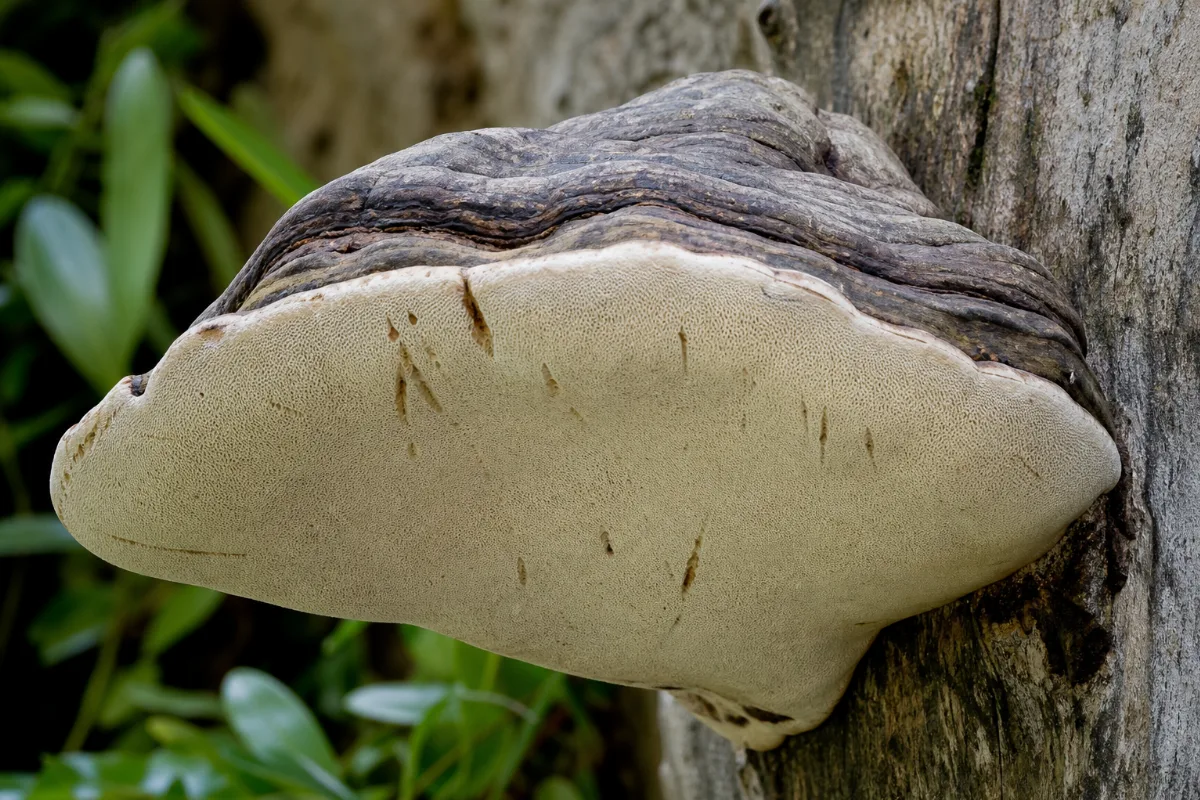
Mushrooms · Medicinal wild polypore
Artist's conk
Ganoderma applanatum · also called Artist's bracket, bianlingzhi (Chinese), old mother fungus
Artist's conk is a hard, woody shelf mushroom that grows on wood and is related to reishi. It is used in traditional Chinese medicine. Nearly all the research is in cells, rats, mice and fish, and no human trial was found. Its spores can cause allergy, and wild conks are not tested products.
General information, not medical advice. Last substantive update · Not medically reviewed. A named clinician has not signed off on this page. How this page is made
About Artist's conk
Artist's conk (Ganoderma applanatum) is a woody mushroom related to reishi. The research is thin: cells, rats, mice, fish and chemistry. No human trial was found, so benefits are unproven and safety in people is unknown. Its spores can cause allergy.
What it is
Artist's conk is the common name of Ganoderma applanatum (Pers.) Pat., an accepted species in the fungus family Polyporaceae. It is a hard, woody bracket, and it is a fungus, not a plant. Fomes applanatus is an older name for it.
Some papers write Ganoderma lipsiense for the same fungus, but a taxonomy database lists that name under a different accepted name. Check the species on any label.
A 2019 paper treats Ganoderma adspersum and Ganoderma lucidum (reishi) as separate species from it. NCI says many Ganoderma species are hard to distinguish. We found no source on poisonous look-alikes, which is a gap. Do not eat or make a remedy from a wild conk on a guess. Ask an experienced local mushroom identifier.
Traditional and current uses
A 2024 review says it is a commonly used Chinese herbal medicine, used as an anti-cancer drug in China and Japan and for pain and other problems. A 2021 rat paper says it is used in West Cameroon for hypertension, diabetes and hepatitis. These are the authors' statements, and no old text was read.
What the research shows
All results are from lab work. Rats and mice showed blood sugar, blood fat, liver, gut and kidney signals; extracts slowed cancer cells in dishes; extracts slowed two enzymes in the test tube. None of this has been shown in people.
A 2026 review says the rat data lean heavily on one research network and calls the sugars biologically plausible but not clinically ready. Obese rats also gained more weight with the sugar extract. Treat the results as questions for future studies, not as advice.
Conk, mycelium and extracts are different
Results apply only to the exact preparation tested: methanol or ethanol extracts, hot-water sugars, chemically modified sugars, or one purified compound. NCI says mycelium grown on grain holds a lot of grain starch (alpha-glucan), while fruiting body extracts are entirely beta-glucan. A tank-grown mycelium extract is not the same as the wild conk.
In the few analyses read, wild Ganoderma held low mercury at the sites tested. That says nothing about other places or sold products.
Legal and regulatory status
NCI says the FDA has not approved medicinal mushrooms as a treatment for cancer or any other medical condition, and that supplements need no FDA approval before sale. We found no agency statement specific to Ganoderma applanatum.
At a glance
Traditional uses history, not proof
- A 2024 review says it is a commonly used Chinese herbal medicine, used as an anti-cancer drug in China and Japan and for pain, rheumatic tuberculosis and other problems (the authors' statement).
- A 2021 rat paper says it is used in West Cameroon for hypertension, diabetes and hepatitis.
- Sources disagree on whether it is edible: one calls it nonedible. This page makes no food claim.
Studied for research
- Blood sugar and blood fats in rats, insufficient
- Liver markers in animals, insufficient
- Antioxidant and enzyme tests in the test tube, insufficient
- Cancer cells in the lab, insufficient (not a treatment)
- Gut inflammation in mice, insufficient
- Calming and pain tests, kidney scarring and chemotherapy side effects in mice, insufficient
Main compounds
- Triterpenoids such as ganoderic and ganoderenic acids
- Polysaccharides (sugars), mainly galactose, glucose and mannose
- Meroterpenoids, steroids and phenolic compounds
Common forms
- Dried conk (tea, decoction or powder)
- Hot-water or alcohol extracts
- Mycelium grown in a tank or on grain (a different material)
- Spores (a common allergen)
Research links: Review: Artist's conk mycology, chemistry and pharmacology (abstract) · Spore allergy: skin test study (abstract) · Rat blood sugar and liver study (abstract) · 2026 chemistry paper on artist's bracket (abstract) · Memorial Sloan Kettering: Reishi mushroom (about a related species) · NCI: Medicinal mushrooms (PDQ) · Research Library · Genes & Biomarkers Library
What it is and its history
- Accepted scientific name
- Ganoderma applanatum
- Naming authority
- (Pers.) Pat. (GBIF)
- Synonyms
- Fomes applanatus (Pers.) Gillet (GBIF synonym); Elfvingia applanata (Pers.) P.Karst. (GBIF synonym); Boletus applanatus Pers. (GBIF synonym); Ganoderma lipsiense (Batsch) G.F.Atk. (used as a synonym in a 2015 chemistry review; GBIF lists it under Polyporus lipsiensis, see notes)
- Common names
- Artist's conk (English); Artist's bracket (English); Flat-ling Ganoderma (bianlingzhi) (Chinese (2024 review)); Old mother fungus (laomujun) (Chinese (2024 review)); Old ox liver (laoniugan) (Chinese (2024 review))
- Family or group
- Polyporaceae (a fungus family; shelf and bracket fungi), not a plant
- Classification
- Fungi > Basidiomycota > Agaricomycetes > Polyporales > Polyporaceae > Ganoderma > Ganoderma applanatum
- Native range
- Not checked in a source read. Papers read here report wild collections from Poland, India and China, and spore studies in Puerto Rico and Ontario, so it is found widely.
- Habitat
- A woody bracket fungus. A 2020 paper calls the genus Ganoderma a wood-degrading mushroom, and the wild collections in the papers read came from forests. No detail on host trees was read.
- What it looks like
- Fruiting body: A hard woody conk (bracket). No description from a source read; the common name refers to its use for drawing. Look-alike detail was not read.
- Cultivation
- Mycelium has been grown in bioreactors and fermenters in several papers. Commercial cultivation of the conk was not checked.
- Harvest and processing
- Not checked in the sources read.
- Look-alikes and adulterants
- Name: Other Ganoderma and bracket fungi; Note: A 2019 paper treats Ganoderma adspersum and G. lucidum as separate species from G. applanatum. NCI says many Ganoderma species are hard to tell apart. No source on poisonous look-alikes was read; that is a gap.
- Sustainability and conservation
- Not checked.
Traditional use and history history, not clinical proof
| Tradition or era | Documented use | Source |
|---|---|---|
| China and Japan | A 2024 review says G. applanatum is a commonly used Chinese herbal medicine, used as an anti-cancer drug in China and Japan, and for rheumatic tuberculosis, pain, clearing heat, eliminating accumulation, stopping bleeding and eliminating phlegm. | p38884263 |
| West Cameroon | A 2021 rat paper says it is used in West Cameroon for hypertension, diabetes and hepatitis, and calls it nonedible. | p34457019 |
| Edible or not | Sources disagree: one paper calls it nonedible and another calls the genus an old food and medicine source. This page makes no food claim. | p32266583 |
Traditional use shows how it was used. It does not show that it works or is safe today.
What is inside, and how it may work
What it contains and how those compounds act in cells and animals. Laboratory and animal mechanisms are not proven effects in people.
Main compounds
| Compound | Family | Where it is concentrated | Activity studied | Level of evidence |
|---|---|---|---|---|
| Triterpenoids (ganoderic and ganoderenic acids, ganoapplanilactone C) | lanostane triterpenoid | Conk (part not stated) Ganoderenic and ganoderic acids about 31 micrograms per gram dry weight in ethanol extracts of one Polish collection | Lipoxygenase slowing in the test tube; lower fat in fatty-liver zebrafish (one compound). 20 7 2 | Laboratory research |
| Polysaccharides (sugars) | polysaccharide | Conk Galactose, glucose and mannose were the main sugars (2019 paper) | Better blood fats and liver markers in rats and mice; less colitis in mice; antioxidant test activity. 3 14 13 5 | Animal research |
| Meroterpenoids and steroids | meroterpenoid and sterol | Conk Not stated here | Named in the 2024 review among the main components. The review recorded 324 compounds in all. 2 1 | Laboratory research |
| Phenolic compounds | phenolic | Conk (methanol extract) Methanol extract was highest in phenolic and flavonoid content of three extracts tested (mouse chemotherapy paper) | Antioxidant tests and a mouse toxicity-protection result. 12 | Animal research |
Mechanisms, receptors and pathways
| Target or pathway | Gene or receptor | What was found | Level |
|---|---|---|---|
| Lipoxygenase and xanthine oxidase | LOX, XO | Slowed by ethanol, methanol and water extracts in the test tube. 20 | Laboratory research |
| Nrf2/Keap1 and TLR4/NF-kB | Nrf2, Keap1, TLR4, NF-kB | A chemically modified polysaccharide changed these pathways in a diabetes model. 25 | Animal research |
| Programmed cell death | Apaf-1, caspase-3, caspase-9, Bax, Bak, NF-kB | Extract changed these in HeLa cells. 10 | Laboratory research |
| AMPK/mTOR | AMPK, mTOR | A purified triterpenoid raised AMPK activity in fatty-liver zebrafish. 7 | Animal research |
| Gut bacteria and gut barrier | gut microbiota | Polysaccharide and ethanol extract changed gut bacteria and repaired the gut barrier in colitis mice. 13 15 | Animal research |
Absorption, metabolism and elimination
- Absorption
- Not found in the sources read.
- Distribution
- Not found.
- Metabolism
- Not found.
- Elimination
- Not found.
- Bioavailability
- Not established.
Isolated compounds versus whole extracts
Results apply only to the exact preparation tested: methanol or ethanol extracts, hot-water polysaccharides, chemically modified sugars, residue left after extraction, mycelium sugars from a bioreactor, or one purified compound. In the colitis study the polysaccharide and the ethanol extract changed gut bacteria in different ways. NCI says mycelium grown on grain differs from the fruiting body.
Nutritional composition
Artist's conk is a hard woody conk, not a food or a nutrient source, and no nutrition claim is made. One Indian paper measured protein, carbohydrate, fibre and minerals in dried wild Ganoderma, including this species.
8 not enough evidence
What was looked at
The 8 benefits and uses checked for Artist's conk, each with how strong the evidence is. Tap one to open it.
- Blood sugar and blood fats (rats)Not enough evidence
- Liver markers (rats, mice and fish)Not enough evidence
- Antioxidant and enzyme tests (test tube)Not enough evidence
- Cancer cells in the labNot enough evidence
- Gut inflammation (mice)Not enough evidence
- Calming, anxiety and pain tests (mice)Not enough evidence
- Kidney scarring (mice)Not enough evidence
- Protection from chemotherapy side effects (mice)Not enough evidence
Lab markers tracked in the studies
Blood glucose and blood fats (rats)Liver enzymes AST, ALT and ALP (mice and rats)Lipoxygenase and xanthine oxidase activity (test tube)Urea, creatinine, TNF-alpha and IL-6 (mice)Mouse behaviour and pain tests
What is Artist's conk good for?
The uses people ask about and how strong the evidence is for each. Everything below comes from cells, rats, mice or fish. None is proven in people. Read this together with the Safety tab.
Benefits, one by one
Each card is a research question, not a promise. Tap a goal to filter. Open a card to see the studies, doses and limits.
Blood sugar and blood fats (rats)
Not enough evidenceRats made diabetic or obese had lower blood sugar and better blood fat numbers after extracts. Obese rats also gained more weight. No person has been tested.
4 studiesThe papers used many different preparations (methanol, ethanol, hot-w…
Studies, doses and limits
What the trials found
No human study of artist's conk and blood sugar or cholesterol was found. For reishi (a different species), see the reishi page.
Results
Diabetic rats (9 days): significant fall in blood glucose, lipid profile and liver enzymes. Obese rats (2 months): lower total cholesterol, triglycerides and LDL, higher HDL, but more body weight from eating more.
Effect sizes as reported
Better markers in rats (no human result)
Why this rating
Rat work only, from a small number of research groups. A 2026 review says most of the data come from a single research network.
Form and dose studied
The papers used many different preparations (methanol, ethanol, hot-water and chemically modified extracts, purified compounds). No source gives an amount that can be recommended, and none is advised here.
Who was studied
Rats made diabetic with a drug; obese rats on a high-fat diet
Limits
Rat studies give no animal numbers in their abstracts. Extracts were different in each study.
Why researchers looked
Researchers test many Ganoderma species for blood sugar and blood fats because reishi has been studied for them.
Traditional use
A 2024 review says it is used as an anti-cancer drug in China and Japan and as a remedy for several other problems, and calls it a commonly used Chinese herbal medicine (the authors' statement; no old text was read).
Proposed mechanism Animal research
Extracts and water-soluble polysaccharides are thought to act partly through the gut and liver. A 2026 review calls this plausible but not proven.
A proposed mechanism does not show that the effect happens in people.
Do not swap a mushroom for diabetes or cholesterol medicines. Ask a doctor first.
Liver markers (rats, mice and fish)
Not enough evidenceIn rats, mice and fish with chemically or diet-caused liver damage, extracts and sugars lowered liver enzymes and damage markers. This has not been tested in people, and a case of liver injury has not been reported for this mushroom.
4 studiesThe papers used many different preparations (methanol, ethanol, hot-w…
Studies, doses and limits
What the trials found
No human study of artist's conk and liver health was found.
Results
CCl4-injured mice: AST, ALT and ALP did not rise as much, MDA and LPO lower, TNF-alpha and IL-6 lower, IL-10 higher. Zebrafish: ganoapplanilactone C lowered fat more than atorvastatin at 5 micromolar. Rats on a liver-cancer model: liver enzymes rose less than in untreated rats.
Effect sizes as reported
Lower liver injury markers in animals
Why this rating
Animal and fish models of chemical or diet damage only. One result is for a single purified compound, not the mushroom.
Form and dose studied
The papers used many different preparations (methanol, ethanol, hot-water and chemically modified extracts, purified compounds). No source gives an amount that can be recommended, and none is advised here.
Who was studied
Mice, rats, zebrafish
Limits
These models do not match a human liver condition. Abstracts give no animal numbers.
Why researchers looked
Liver damage models are a common first test for medicinal mushrooms.
Traditional use
A 2024 review says it is used as an anti-cancer drug in China and Japan and as a remedy for several other problems, and calls it a commonly used Chinese herbal medicine (the authors' statement; no old text was read).
Proposed mechanism Animal research
Polysaccharides raised antioxidant enzymes and lowered inflammation signals in injured mouse livers. One purified triterpenoid, ganoapplanilactone C, lowered fat in the livers of high-fat-diet zebrafish and raised AMPK activity.
A proposed mechanism does not show that the effect happens in people.
The nearest human liver safety reports are for reishi powders (a different species). See the Safety tab.
Antioxidant and enzyme tests (test tube)
Not enough evidenceIn the lab, extracts neutralised test radicals and slowed two enzymes tied to inflammation and uric acid. This is chemistry, not a result in a person.
2 studiesThe papers used many different preparations (methanol, ethanol, hot-w…
Studies, doses and limits
Results
Ethanol extract: ganoderenic and ganoderic acids about 31 micrograms per gram dry weight. Xanthine oxidase IC50 0.71, 1.39 and 2.06 mg dry weight per mL for ethanol, methanol and water extracts.
Effect sizes as reported
Enzymes slowed in the test tube
Why this rating
Test-tube assays only; one wild collection; the authors say animal and human studies are needed.
Form and dose studied
The papers used many different preparations (methanol, ethanol, hot-water and chemically modified extracts, purified compounds). No source gives an amount that can be recommended, and none is advised here.
Who was studied
Enzyme assays
Limits
The amounts used in tubes are not amounts found in a person after eating or drinking anything.
Why researchers looked
These tests are cheap first screens for mushrooms rich in triterpenes and sugars.
Traditional use
A 2024 review says it is used as an anti-cancer drug in China and Japan and as a remedy for several other problems, and calls it a commonly used Chinese herbal medicine (the authors' statement; no old text was read).
Proposed mechanism Laboratory research
Ethanol extracts of a wild Polish collection slowed lipoxygenase (IC50 0.93 mg dry weight per mL) and xanthine oxidase (IC50 0.71 mg per mL for ethanol). Sugars from the mushroom scored high in three of four antioxidant tests against seven other tree mushrooms.
A proposed mechanism does not show that the effect happens in people.
None specific. Do not use a lab result as a reason to take it.
Cancer cells in the lab
Not enough evidenceExtracts killed or slowed several cancer cell lines in dishes. This is not a treatment and no person was tested.
3 studiesThe papers used many different preparations (methanol, ethanol, hot-w…
Studies, doses and limits
What the trials found
No human cancer trial of artist's conk was found. NCI says the FDA has not approved medicinal mushrooms to treat cancer or any other medical condition.
Results
HepG2 liver cancer cells: IC50 95.65 micrograms per mL (methanol extract). HeLa cervical cancer cells: IC50 1.55 mg per mL (subcritical-water extract).
Effect sizes as reported
Cancer cells slowed in dishes
Why this rating
Cells in dishes and rats. No human result.
Form and dose studied
The papers used many different preparations (methanol, ethanol, hot-water and chemically modified extracts, purified compounds). No source gives an amount that can be recommended, and none is advised here.
Who was studied
Cancer cell lines; Wistar rats
Limits
Concentrations in dishes are far above what a person could reach. Abstracts give no animal numbers.
Why researchers looked
Medicinal mushrooms are often screened against cancer cells.
Traditional use
A 2024 review says it is used as an anti-cancer drug in China and Japan and as a remedy for several other problems, and calls it a commonly used Chinese herbal medicine (the authors' statement; no old text was read).
Proposed mechanism Laboratory research
Methanol and water-based extracts triggered signs of programmed cell death in liver, lung, skin and cervical cancer cell lines. One crude extract did not look toxic to normal skin cells (HaCaT).
A proposed mechanism does not show that the effect happens in people.
Anyone with cancer should tell the care team about any mushroom product.
Gut inflammation (mice)
Not enough evidenceIn mice with chemically caused colitis, extracts reduced deaths, weight loss and gut damage and changed gut bacteria. It has not been tested in people with bowel disease.
1 studiesThe papers used many different preparations (methanol, ethanol, hot-w…
Studies, doses and limits
What the trials found
No human study of artist's conk and bowel disease was found.
Results
DSS-colitis mice: less mortality, weight loss, disease score, colon shortening and tissue damage; the gut barrier recovered.
Effect sizes as reported
Better colitis measures in mice
Why this rating
One mouse study with a chemical colitis model.
Form and dose studied
The papers used many different preparations (methanol, ethanol, hot-water and chemically modified extracts, purified compounds). No source gives an amount that can be recommended, and none is advised here.
Who was studied
Mice with chemically induced colitis
Limits
The abstract gives no animal numbers.
Why researchers looked
Mushroom sugars reach the gut, so researchers test their effect on gut inflammation and bacteria.
Traditional use
A 2024 review says it is used as an anti-cancer drug in China and Japan and as a remedy for several other problems, and calls it a commonly used Chinese herbal medicine (the authors' statement; no old text was read).
Proposed mechanism Animal research
The polysaccharide worked in a gut-bacteria-dependent way, and the ethanol extract changed gut bacteria differently. Both lowered Escherichia-Shigella, Enterococcus and Staphylococcus.
A proposed mechanism does not show that the effect happens in people.
Ask a doctor about any bowel disease treatment; a mushroom is not a substitute.
Calming, anxiety and pain tests (mice)
Not enough evidenceMice given extracts moved less, spent more time in "safe" parts of mazes and responded less to pain in standard tests. These tests also pick up sedation, so this is not proof of less anxiety. No person has been tested.
1 studiesThe papers used many different preparations (methanol, ethanol, hot-w…
Studies, doses and limits
What the trials found
No human study of artist's conk for mood, sleep, anxiety or pain was found.
Results
Both extracts at two amounts: significant sedating effect in all four tests, anxiety-reducing signs in two tests, pain-reducing signs in three tests (p < 0.05 to 0.001).
Effect sizes as reported
Calmer, less pain-sensitive mice
Why this rating
One mouse study. The same result can come from sedation.
Form and dose studied
The papers used many different preparations (methanol, ethanol, hot-water and chemically modified extracts, purified compounds). No source gives an amount that can be recommended, and none is advised here.
Who was studied
Mice
Limits
No animal numbers in the abstract. Docking numbers are model scores.
Why researchers looked
Folk use for many problems led researchers to run a standard set of mouse behaviour tests.
Traditional use
A 2024 review says it is used as an anti-cancer drug in China and Japan and as a remedy for several other problems, and calls it a commonly used Chinese herbal medicine (the authors' statement; no old text was read).
Proposed mechanism Animal research
Computer docking suggested three compounds (ganoapplanin, sphaeropsidin D, cytosporone C) bind well to chosen brain receptors. Docking is modelling, not an experiment.
A proposed mechanism does not show that the effect happens in people.
A sedating effect in animals is a reason for caution with sleep aids, alcohol and sedating medicines, but this has not been tested in people.
Kidney scarring (mice)
Not enough evidenceIn 24 mice with kidney scarring caused by a chemical, a crude polysaccharide extract lowered urea, creatinine and inflammation markers. No person has been tested.
1 studiesThe papers used many different preparations (methanol, ethanol, hot-w…
Studies, doses and limits
What the trials found
No human study of artist's conk and kidney health was found.
Results
Four-week mouse study, 24 mice: lower urea, creatinine, TNF-alpha, IL-6, hyaluronic acid and laminin, less collagen in kidney tissue than untreated model mice.
Effect sizes as reported
Less scarring in a mouse model
Why this rating
One small mouse study using a chemical injury model.
Form and dose studied
The papers used many different preparations (methanol, ethanol, hot-water and chemically modified extracts, purified compounds). No source gives an amount that can be recommended, and none is advised here.
Who was studied
24 male BALB/c mice
Limits
Small study; not a human kidney disease.
Why researchers looked
The extract has anti-inflammatory signals, so researchers tested it on early kidney scarring.
Traditional use
A 2024 review says it is used as an anti-cancer drug in China and Japan and as a remedy for several other problems, and calls it a commonly used Chinese herbal medicine (the authors' statement; no old text was read).
Proposed mechanism Animal research
The extract lowered TNF-alpha, IL-6, hyaluronic acid and laminin and kept kidney tissue closer to normal.
A proposed mechanism does not show that the effect happens in people.
Anyone with kidney disease should ask a doctor first; nothing is known about kidney safety in people.
Protection from chemotherapy side effects (mice)
Not enough evidenceIn mice with a lymphoma given the chemotherapy drug doxorubicin, a methanol extract lowered liver and heart damage markers. No person has been tested, and a mushroom should not be added to chemotherapy without the cancer team knowing.
1 studiesThe papers used many different preparations (methanol, ethanol, hot-w…
Studies, doses and limits
What the trials found
No human study of artist's conk with any cancer drug was found.
Results
Doxorubicin plus extract vs doxorubicin alone: lower AST, ALT and LDH, higher glutathione and antioxidant enzymes.
Effect sizes as reported
Lower toxicity markers in mice
Why this rating
One mouse study. It does not show whether the extract changes how the drug works against cancer.
Form and dose studied
The papers used many different preparations (methanol, ethanol, hot-water and chemically modified extracts, purified compounds). No source gives an amount that can be recommended, and none is advised here.
Who was studied
Dalton's lymphoma mice
Limits
No animal numbers in the abstract.
Why researchers looked
Antioxidant mushroom extracts are tested to see whether they ease drug side effects.
Traditional use
A 2024 review says it is used as an anti-cancer drug in China and Japan and as a remedy for several other problems, and calls it a commonly used Chinese herbal medicine (the authors' statement; no old text was read).
Proposed mechanism Animal research
The extract raised glutathione and antioxidant enzymes (GST, catalase, SOD) and lowered AST, ALT and LDH compared with doxorubicin alone.
A proposed mechanism does not show that the effect happens in people.
Tell the cancer team about any mushroom product. Antioxidants can in theory interact with some cancer treatments, and that has not been tested for this mushroom.
Connections to the rest of health
How Artist's conk connects to the rest of our health knowledge graph. Every link says what kind of connection it is. A safety link (for example to the liver) is a warning, not a benefit. A study that merely mentions a topic never creates a benefit link.
Explore every connection: goals, body systems, organs, symptoms, genes
A. Wellness goals
| Connected to | Kind of connection | Evidence status | Context | Studies |
|---|---|---|---|---|
| Blood Sugar Balance | Preliminary mechanism | Not enough evidence | Blood sugar and blood fats (rats): Rats made diabetic or obese had lower blood sugar and better blood fat numbers after extracts. Obese rats also gained more weight. No person has been tested. | 8 14 25 15 |
| Liver Support | Preliminary mechanism | Not enough evidence | Liver markers (rats, mice and fish): In rats, mice and fish with chemically or diet-caused liver damage, extracts and sugars lowered liver enzymes and damage markers. This has not been tested in people, and a case of liver injury has not been reported for this mushroom. | 5 7 16 8 |
| Gut Health | Preliminary mechanism | Not enough evidence | Gut inflammation (mice): In mice with chemically caused colitis, extracts reduced deaths, weight loss and gut damage and changed gut bacteria. It has not been tested in people with bowel disease. | 13 |
| Calm Relaxation | Preliminary mechanism | Not enough evidence | Calming, anxiety and pain tests (mice): Mice given extracts moved less, spent more time in "safe" parts of mazes and responded less to pain in standard tests. These tests also pick up sedation, so this is not proof of less anxiety. No person has been tested. | 9 |
B. Body systems
| Connected to | Kind of connection | Evidence status | Context | Studies |
|---|---|---|---|---|
| Respiratory system (spore allergy) | Adverse effect or risk | Low certainty | Skin prick and IgE reactivity in allergic people; no tea or powder symptoms reported. Preparation or compound: Spore extract of G. applanatum |
17 21 22 |
| Blood clotting | Drug or supplement interaction | Not enough evidence | MSK warns of bleeding with blood thinners; a healthy-volunteer trial found no clotting change. Preparation or compound: Reishi (a different species) |
27 11 |
| Endocrine System | Biological association | Not enough evidence | Studied for: Blood sugar and blood fats (rats) | 8 14 25 15 |
| Hepatic System | Biological association | Not enough evidence | Studied for: Liver markers (rats, mice and fish) Studied for: Protection from chemotherapy side effects (mice) | 5 7 16 8 12 |
| Immune System | Biological association | Not enough evidence | Studied for: Antioxidant and enzyme tests (test tube) Studied for: Cancer cells in the lab | 20 3 16 10 26 |
| Digestive System | Biological association | Not enough evidence | Studied for: Gut inflammation (mice) | 13 |
| Nervous System | Biological association | Not enough evidence | Studied for: Calming, anxiety and pain tests (mice) | 9 |
| Urinary System | Biological association | Not enough evidence | Studied for: Kidney scarring (mice) | 19 |
C. Body parts and organs
I. Biomarkers
| Connected to | Kind of connection | Evidence status | Context | Studies |
|---|---|---|---|---|
| Blood glucose and blood fats (rats) | Biological association | Not enough evidence | Measured in trials: lowered. A lab change is not the same as a health benefit. | 8 14 |
| Liver enzymes AST, ALT and ALP (mice and rats) | Biological association | Not enough evidence | Measured in trials: lowered. A lab change is not the same as a health benefit. | 5 |
| Lipoxygenase and xanthine oxidase activity (test tube) | Biological association | Not enough evidence | Measured in trials: lowered. A lab change is not the same as a health benefit. | 20 |
| Urea, creatinine, TNF-alpha and IL-6 (mice) | Biological association | Not enough evidence | Measured in trials: lowered. A lab change is not the same as a health benefit. | 19 |
| Mouse behaviour and pain tests | Biological association | Not enough evidence | Measured in trials: mixed. A lab change is not the same as a health benefit. | 9 |
J. Genes, receptors and enzymes
| Connected to | Kind of connection | Evidence status | Context | Studies |
|---|---|---|---|---|
| Xanthine oxidase and lipoxygenase | Preliminary mechanism | In vitro | Slowed in the test tube. | 20 |
K. Biological pathways
L. Active compounds
| Connected to | Kind of connection | Evidence status | Context | Studies |
|---|---|---|---|---|
| Triterpenoids (ganoderic and ganoderenic acids, ganoapplanilactone C) | Biological association | In vitro | Lipoxygenase slowing in the test tube; lower fat in fatty-liver zebrafish (one compound). Preparation or compound: Conk (part not stated) |
20 7 2 |
| Polysaccharides (sugars) | Biological association | Animal | Better blood fats and liver markers in rats and mice; less colitis in mice; antioxidant test activity. Preparation or compound: Conk |
3 14 13 5 |
| Meroterpenoids and steroids | Biological association | In vitro | Named in the 2024 review among the main components. The review recorded 324 compounds in all. Preparation or compound: Conk |
2 1 |
| Phenolic compounds | Biological association | Animal | Antioxidant tests and a mouse toxicity-protection result. Preparation or compound: Conk (methanol extract) |
12 |
Each connection is stored with the ingredient, the connected record, the kind of connection, the evidence status, the supporting studies, the preparation or compound involved, and a review date (last reviewed October 25, 2026).
Evidence at a glance: what changed in 5 lab markers
Tap a number to show only those markers. Counts are markers, not people.
The evidence
The research centre for Artist's conk. Every record here was checked against PubMed or the publisher's page; we never list a study we have not verified.
Evidence by outcome
Bars show how many studies we found for each outcome, not how well it works. People are added up across trials only (reviews are not added, to avoid double counting).
How we rate evidence
High certainty
Several well-run trials or reviews agree; further research is unlikely to change the picture much.
Moderate certainty
Good trials point the same way, but some doubt remains.
Low certainty
Small, short or inconsistent trials. The finding could change with better research.
Very low certainty
Very little or very weak human data. Treat as a possibility only.
Mixed findings
Trials or reviews disagree with each other.
Not enough evidence
Not enough human research to say either way.
Evidence against
Good research found no benefit, or found harm.
We take the reviewers' own risk-of-bias and GRADE statements where they exist, and otherwise judge from study size, design, consistency, directness and whether a product matches what is sold. Many publications do not make evidence high. Method note: We read PubMed records and abstracts for 22 papers on Ganoderma applanatum (14 animal, cell or chemistry studies, 3 reviews, 3 spore allergy studies and 2 mercury or mineral analyses) and 3 on the related reishi (two case reports and one clotting trial) as the nearest safety evidence. We re-read the National Cancer Institute and Memorial Sloan Kettering pages and checked the species name in GBIF. Only abstracts were read for papers, so numbers come from abstracts. Certainty ratings are the compiler's own reading.
Study library: every study we checked 28
| Study | Design | People | Product, dose, length | Result |
|---|---|---|---|---|
| Baby 2015 Secondary metabolites from Ganoderma. Phytochemistry · PMID 25975187 · DOI |
Narrative review fungus |
Published chemistry of the genus Ganoderma | n/a various Not shown here (animal or lab amounts are not human amounts) |
The review counts 431 secondary metabolites from various Ganoderma species, mainly lanostane triterpenes (ganoderic acids), meroterpenoids, steroids and others. It lists Ganoderma applanatum among the species studied and writes Ganoderma lipsiense as a synonym of G. applanatum. Methods, limits and fundingOutcomes: Compound groups found in Ganoderma Limitations: Chemistry review; Ganoderma lucidum is the species studied most. It reports no health result. Funding and conflicts: Not stated in the abstract; not checked further Read: abstract |
| Cheng 2024 The Artist's Conk Medicinal Mushroom Ganoderma applanatum (Agaricomycetes): Mycological, Mycochemical, and Pharmacological Properties: A Review. Int J Med Mushrooms · PMID 38884263 · DOI |
Narrative review review of mixed studies |
Published literature on Ganoderma applanatum | Reported extracts and compounds of G. applanatum various Not shown here (animal or lab amounts are not human amounts) |
The review recorded 324 compounds, mainly triterpenoids, meroterpenoids, steroids and polysaccharides. It lists anti-tumour, liver-protective, blood-sugar-lowering, anti-fat, antioxidant and antibacterial activities. It says the mushroom is used as an anti-cancer drug in China and Japan, and that more studies in animals and humans are needed. Narrative summary, no pooled result Methods, limits and fundingOutcomes: Mycology, chemistry and pharmacology of G. applanatum Limitations: A narrative review, not a systematic one. It reports mostly lab and animal work and gives no human trial result. Funding and conflicts: Not stated in the abstract; not checked further Read: abstract |
| Deveci 2019 Structural characterization and determination of biological activities for different polysaccharides extracted from tree mushroom species. J Food Biochem · PMID 31489667 · DOI |
In vitro study fungus extract |
Polysaccharides from eight tree mushrooms, including G. applanatum, G. adspersum and G. lucidum | Extracted polysaccharides (GAP for G. applanatum) Not shown here (animal or lab amounts are not human amounts) laboratory assays · vs Other mushroom polysaccharides |
Galactose, glucose and mannose were the main sugars in all eight. The G. applanatum polysaccharide showed the strongest antioxidant activity in three of the four assays used (CUPRAC, ABTS and DPPH), while a different mushroom led the fourth. Strong antioxidant test result for this mushroom's sugars Methods, limits and fundingOutcomes: Sugar make-up and antioxidant and anticholinesterase tests Limitations: Test-tube chemistry only. Funding and conflicts: Not stated in the abstract; not checked further Read: abstract |
| Falandysz 2020 Mercury in traditionally foraged species of fungi (macromycetes) from the karst area across Yunnan province in China. Appl Microbiol Biotechnol · PMID 32954453 · DOI |
Product analysis fungus |
42 fungus species foraged in Yunnan, China | Dried fungi tested for mercury fruiting bodies Not shown here (animal or lab amounts are not human amounts) |
Mercury in composite samples of polypore fungi was usually below 0.1 mg per kg dry weight. G. applanatum from one site (Nujiang, NW Yunnan) held 0.11 mg per kg, and another polypore 0.24 mg per kg. Boletus-family mushrooms were far higher. Low mercury in this polypore at the sites tested Methods, limits and fundingOutcomes: Mercury content Limitations: One region of China. It says nothing about other places, soils or sold products. Funding and conflicts: Not stated in the abstract; not checked further Read: abstract |
| Gao 2019 The ameliorations of Ganoderma applanatum residue polysaccharides against CCl4 induced liver injury. Int J Biol Macromol · PMID 31295484 · DOI |
Animal study mouse |
Mice with liver injury caused by carbon tetrachloride | Polysaccharides from G. applanatum residue (leftover after extraction) residue after extraction Not shown here (animal or lab amounts are not human amounts) · vs Untreated injured mice |
The residue polysaccharides prevented rises in serum AST, ALT and ALP, raised antioxidant enzymes, lowered MDA and LPO, and lowered TNF-alpha and IL-6 while raising IL-10 in injured mice. Lower liver injury markers in mice Methods, limits and fundingOutcomes: Liver enzymes, antioxidant enzymes, inflammation signals Limitations: A chemical-injury mouse model, not a human liver condition. The abstract gives no animal numbers. Funding and conflicts: Not stated in the abstract; not checked further Read: abstract |
| Guedikian 2023 Ganoderma lingzhi (Reishi Mushroom)-Induced Acute Liver Injury in the Setting of Alcohol Use: A Case Report and Review of the Literature. Cureus · PMID 37885515 · DOI |
Case report |
1 A 47-year-old man with headache and abdominal pain |
Reishi (Ganoderma lingzhi) powder with alcohol Not shown here (animal or lab amounts are not human amounts) |
He had acute hepatitis with high liver enzymes after reishi powder and alcohol. It was managed conservatively with N-acetylcysteine and IV fluids, and two-week follow-up labs showed complete resolution. Full recovery in two weeks Methods, limits and fundingOutcomes: Liver injury Limitations: One case with alcohol also involved, so the cause cannot be separated. NEAREST EVIDENCE: this is about reishi, a different species, and nothing like it was found for artist's conk. Funding and conflicts: Not stated in the abstract Read: abstract |
| Guo 2025 Ganoapplanilactone C from Ganoderma applanatum Ameliorates Metabolic Dysfunction-Associated Steatotic Liver Disease via AMPK/mTOR-Mediated Lipid Regulation in Zebrafish. Antioxidants (Basel) · PMID 40563272 · DOI |
Animal study zebrafish |
Zebrafish fed a high-fat diet | Ganoapplanilactone C, one purified triterpenoid from G. applanatum purified compound Not shown here (animal or lab amounts are not human amounts) · vs Untreated fish; atorvastatin |
Of four main triterpenoids found, ganoapplanilactone C lowered fat most in the high-fat-diet fish, more than atorvastatin at 5 micromolar, and protected liver tissue. It raised AMPK activity. Lower fat in fatty-liver zebrafish Methods, limits and fundingOutcomes: Fat levels, liver tissue, inflammation signals Limitations: Fish and a single purified compound, not the mushroom. No human data. Funding and conflicts: Not stated in the abstract; not checked further Read: abstract |
| Hossain 2021 Ganoderma applanatum mushroom provides new insights into the management of diabetes mellitus, hyperlipidemia, and hepatic degeneration: A comprehensive analysis. Food Sci Nutr · PMID 34401085 · DOI |
Animal study rat |
Rats made diabetic with alloxan | Methanol and aqueous extracts of G. applanatum Not shown here (animal or lab amounts are not human amounts) 9 days · vs Untreated diabetic rats |
Nine days of oral extract gave a significant fall (p < .001) in blood glucose, lipid profile and liver marker enzymes. The docking part of the study scored one compound, myrocin C, highest. Lower markers in diabetic rats Methods, limits and fundingOutcomes: Blood glucose, blood fats, liver enzymes; computer docking Limitations: Rats given a diabetes-inducing drug. The abstract gives no animal numbers. Docking is computer modelling, not an experiment. Funding and conflicts: Not stated in the abstract; not checked further Read: abstract |
| Hossen 2021 CNS anti-depressant, anxiolytic and analgesic effects of Ganoderma applanatum (mushroom) along with ligand-receptor binding screening provide new insights: Multi-disciplinary approaches. Biochem Biophys Rep · PMID 34286108 · DOI |
Animal study mouse |
Mice in behaviour and pain tests | Aqueous (AEGA) and ethanol (EEGA) extracts of G. applanatum Not shown here (animal or lab amounts are not human amounts) · vs Control mice |
Both extracts at two amounts produced a significant sedating (CNS depressant) effect in all four tests, anxiety-reducing signs in two tests, and pain-reducing signs in three tests (p < 0.05 to 0.001). Computer docking scored three compounds as best binders to the chosen receptors. Calmer, less pain-sensitive mice Methods, limits and fundingOutcomes: Open field, rotarod, tail suspension, hole cross, elevated plus maze, hole board, writhing, hot plate and tail immersion tests Limitations: Sedation in mice can look like less anxiety or pain in these tests. No human data, and no animal numbers in the abstract. Funding and conflicts: Not stated in the abstract; not checked further Read: abstract |
| Kiddane 2022 Anticancer and Apoptotic Activity in Cervical Adenocarcinoma HeLa Using Crude Extract of Ganoderma applanatum. Curr Issues Mol Biol · PMID 35723290 · DOI |
In vitro study cell line |
HeLa cervical cancer cells and HaCaT skin cells | Crude extract of G. applanatum made with subcritical water Not shown here (animal or lab amounts are not human amounts) cell culture · vs Untreated cells |
The extract slowed HeLa cell growth (IC50 1.55 mg per mL) and showed no sign of toxicity in HaCaT cells. Genes and proteins linked to programmed cell death changed in a dose-dependent way. A compound called 2(5H)-furanone was proposed as the active part. Cancer cells slowed in dishes Methods, limits and fundingOutcomes: Cell growth, programmed cell death signals Limitations: Cells in dishes. The concentration needed is far above what a person could reach. Funding and conflicts: Not stated in the abstract; not checked further Read: abstract |
| Kwok 2005 A prospective, randomized, double-blind, placebo-controlled study of the platelet and global hemostatic effects of Ganoderma lucidum (Ling-Zhi) in healthy volunteers. Anesth Analg · PMID 16037156 · DOI |
Controlled trial |
40 40 healthy volunteers |
Ganoderma lucidum (reishi) capsules Not shown here (animal or lab amounts are not human amounts) 4 weeks · vs Placebo |
Twenty people took reishi capsules and 20 took placebo daily for 4 weeks. There were no significant differences between groups in clotting, fibrinogen, von Willebrand activity, platelet function or thrombelastography, and all values stayed in the normal range. No change in clotting in healthy volunteers Methods, limits and fundingOutcomes: Clotting tests, fibrinogen, platelet function Limitations: About reishi, not artist's conk. Healthy volunteers only; people on blood thinners were not studied. Funding and conflicts: Not stated in the abstract; not checked further Read: abstract |
| Lalmuansangi 2022 Evaluation of the protective effects of Ganoderma applanatum against doxorubicin-induced toxicity in Dalton's Lymphoma Ascites (DLA) bearing mice. Drug Chem Toxicol · PMID 32854544 · DOI |
Animal study mouse |
Mice carrying a lymphoma and given the chemotherapy drug doxorubicin | Methanol extract of G. applanatum Not shown here (animal or lab amounts are not human amounts) · vs Doxorubicin alone |
Adding the extract to doxorubicin lowered AST, ALT and LDH compared with doxorubicin alone, and raised glutathione and antioxidant enzymes. The methanol extract had the most phenolic and flavonoid compounds of the extracts tested. Lower toxicity markers in mice Methods, limits and fundingOutcomes: Liver and heart toxicity markers (AST, ALT, LDH), antioxidant enzymes Limitations: Mouse study. Whether a mushroom changes how a cancer drug works in people was not tested. Tell the cancer team about any mushroom product. Funding and conflicts: Not stated in the abstract; not checked further Read: abstract |
| Li 2022 Ganoderma applanatum polysaccharides and ethanol extracts promote the recovery of colitis through intestinal barrier protection and gut microbiota modulations. Food Funct · PMID 34935013 · DOI |
Animal study mouse |
Mice with colitis caused by dextran sodium sulfate | Polysaccharides (GAP) and 75% ethanol extract (GAE) of G. applanatum Not shown here (animal or lab amounts are not human amounts) · vs Untreated colitis mice |
Both preparations reduced deaths, weight loss, disease score, colon shortening and tissue damage, and restored the gut barrier. The polysaccharide worked in a gut-bacteria-dependent way, and the two preparations changed gut bacteria differently. Better colitis measures in mice Methods, limits and fundingOutcomes: Survival, weight, colon length, gut tissue, gut bacteria Limitations: Chemically induced colitis in mice. The abstract gives no animal numbers. Funding and conflicts: Not stated in the abstract; not checked further Read: abstract |
| Mfopa 2021 Antidyslipidemic Potential of Water-Soluble Polysaccharides of Ganoderma applanatum in MACAPOS-2-Induced Obese Rats. Evid Based Complement Alternat Med · PMID 34457019 · DOI |
Animal study rat |
Male Wistar rats made obese with a local high-fat diet for four months | Hot-water extracted polysaccharides of G. applanatum Not shown here (animal or lab amounts are not human amounts) 2 months · vs Untreated obese rats |
The polysaccharide extract raised body weight gain by raising food intake. It lowered total cholesterol, triglycerides, LDL cholesterol and the atherogenic index, and raised HDL cholesterol, compared with untreated obese rats. Better blood-fat numbers in obese rats; more weight gain Methods, limits and fundingOutcomes: Body weight, food intake, blood and tissue fats Limitations: Rat study from a research group that a 2026 review says supplies most of the data on this mushroom. Cameroon-based; the abstract describes the mushroom as nonedible. Funding and conflicts: Not stated in the abstract; not checked further Read: abstract |
| Mfopa 2026 Ganoderma applanatum Polysaccharides in Obesity-Associated Dysglycaemia and Liver Injury: Gut-Liver Mechanisms and Translational Gaps. Niger Med J · PMID 42602435 |
Narrative review review of animal studies |
Published preclinical studies of G. applanatum polysaccharides | Water-soluble G. applanatum polysaccharide preparations various Not shown here (animal or lab amounts are not human amounts) |
The review says the evidence is limited and mostly preclinical, with obese-rat studies giving the main data. Defined water-soluble preparations were linked to better glucose tolerance, insulin response, blood fats, oxidative stress markers, liver enzymes and liver tissue damage in animals. It calls the polysaccharides preparation-specific, plausible modulators, not clinically ready therapies, and says the evidence leans on a single research network. Plausible in animals; not ready for people Methods, limits and fundingOutcomes: Glucose, blood fats, liver injury; gut-liver mechanisms Limitations: A narrative review by an author of the main rat studies. No human data. Funding and conflicts: Not stated in the abstract; not checked further Read: abstract |
| Rijia 2025 Unveiling the anticancer potential and toxicity of Ganoderma applanatum wild mushroom derived bioactive compounds: An in vitro, in vivo and in silico evaluation. Bioorg Chem · PMID 39908734 · DOI |
Animal study cell line and rat |
Human cancer cell lines (A431, A549, HepG2); Wistar rats, including a liver-cancer model | Methanol extract of wild G. applanatum Not shown here (animal or lab amounts are not human amounts) · vs Untreated cells and rats; cyclophosphamide in the cancer model |
The extract killed the three cancer cell lines, most strongly HepG2 liver cancer cells (IC50 95.65 micrograms per mL), with signs of programmed cell death. In rats the extract did not significantly change body weight or blood counts, and liver tissue looked normal at most amounts, with mild inflammation at the highest amount. In the rat liver-cancer model the extract reduced liver weight and raised liver enzymes less than in untreated rats. Computer docking picked one compound for further study. Cell-killing in dishes; no clear harm in healthy rats over the study Methods, limits and fundingOutcomes: Cell killing; rat body weight, blood counts, liver tissue; liver enzymes Limitations: Cells and rats only. The abstract gives the highest amount in mg per mL, which looks like a typing slip, so no amount is repeated here. Not a treatment result. Funding and conflicts: Not stated in the abstract; not checked further Read: abstract |
| Rivera-Mariani 2011 Skin test reactivity of allergic subjects to basidiomycetes' crude extracts in a tropical environment. Med Mycol · PMID 21506892 · DOI |
Observational human |
33 33 people with asthma, allergic rhinitis or non-allergic rhinitis in Puerto Rico |
Skin prick test with crude spore extracts of G. applanatum and two other mushrooms spores Not shown here (animal or lab amounts are not human amounts) · vs Commercial extracts |
Thirty percent of the affected people reacted to G. applanatum, compared with 36% to mites and 27% to grass. Among those with asthma, 44% reacted to G. applanatum. Among those with allergic rhinitis, 25% did. About one in three allergic people reacted to the spore extract Methods, limits and fundingOutcomes: Skin prick reactivity Limitations: Small group of people who already had respiratory allergy; not a general population rate. Funding and conflicts: Not stated in the abstract; not checked further Read: abstract |
| Singh 2020 Proximate composition and element contents of selected species of Ganoderma with reference to dietary intakes. Environ Monit Assess · PMID 32266583 · DOI |
Product analysis fungus |
Four Ganoderma species (G. applanatum, G. brownii, G. lucidum, G. philippii) from forests in Uttarakhand, India | Dried wild mushrooms analysed by X-ray fluorescence fruiting bodies Not shown here (animal or lab amounts are not human amounts) |
The mushrooms held 9.29 to 12.4% protein, 75.5 to 80.3% carbohydrate and 1.62 to 2.87% fat, with calcium (5,400 to 19,250 mg per kg) and potassium the main elements. The authors state toxic metals such as aluminium and lead were below the provisional tolerable intakes they used. No toxic-metal signal in these samples Methods, limits and fundingOutcomes: Protein, carbohydrate, fat, ash, fibre and element content Limitations: Wild samples from one Indian region, four species pooled in the summary. Shows nothing about sold products, and the paper frames them as dietary intakes, not remedies. Funding and conflicts: Not stated in the abstract; not checked further Read: abstract |
| Susilo 2022 Effect of crude Ganoderma applanatum polysaccharides as a renoprotective agent against carbon tetrachloride-induced early kidney fibrosis in mice. Vet World · PMID 35698489 · DOI |
Animal study mouse |
24 24 male BALB/c mice with kidney scarring caused by carbon tetrachloride |
Crude polysaccharide extract of G. applanatum Not shown here (animal or lab amounts are not human amounts) 4 weeks · vs Untreated model mice; silymarin |
Mice given the extract had lower urea, creatinine, TNF-alpha, IL-6, hyaluronic acid and laminin than untreated model mice, less kidney tissue damage and less collagen. Less kidney scarring in a mouse model Methods, limits and fundingOutcomes: Urea, creatinine, TNF-alpha, IL-6, scarring markers, kidney tissue Limitations: Small mouse study with a chemical injury. Not a human kidney condition. Funding and conflicts: Not stated in the abstract; not checked further Read: abstract |
| Swieca 2026 Lipoxygenase and Xanthine Oxidase Inhibition and Antioxidant Potential of Fractions Obtained by Multistep Extraction of Artist's Bracket (Ganoderma applanatum (Pers.) Pat.) and Red-Belted Bracket (Fomitopsis pinicola (Sw.) P. Karst.). Antioxidants (Basel) · PMID 42351969 · DOI |
In vitro study fungus extract |
Wild mushroom material extracted in steps; test-tube chemistry | Ethanol, methanol, water and alkaline extracts of artist's bracket Not shown here (animal or lab amounts are not human amounts) laboratory assays · vs Reference enzyme assays |
Ethanol extracts of artist's bracket held mainly ganoderenic and ganoderic acids (about 31 micrograms per gram dry weight). Alkaline and ethanol extracts had the strongest radical-scavenging and reducing activity. Lipoxygenase was slowed only by ethanol extracts (IC50 0.93 mg dry weight per mL). Xanthine oxidase was slowed by ethanol, methanol and water extracts (IC50 0.71, 1.39 and 2.06 mg dry weight per mL). Enzymes slowed in the test tube Methods, limits and fundingOutcomes: Antioxidant tests; lipoxygenase and xanthine oxidase inhibition Limitations: Test-tube chemistry only. It does not show any effect in animals or people. One wild collection. Funding and conflicts: Not stated in the abstract; not checked further Read: abstract |
| Tarlo 1979 Human sensitization to Ganoderma antigen. J Allergy Clin Immunol · PMID 447950 · DOI |
Observational human |
294 294 consecutive children and adults at two chest and allergy clinics in southern Ontario |
Skin prick tests with extracts of G. applanatum bracket and spores bracket fungus and spores Not shown here (animal or lab amounts are not human amounts) · vs Common inhalant allergen extracts |
Twenty-four of 294 patients (8.2%) reacted to Ganoderma antigen. IgE-dependent sensitisation was confirmed by RAST. Ganoderma applanatum spores were the most numerous fungal spores in the air at two Ontario locations over 3 years. 8.2% of clinic patients reacted Methods, limits and fundingOutcomes: Skin prick reactivity; RAST Limitations: Old (1979) study of clinic patients, not the general public. Funding and conflicts: Not stated in the abstract; not checked further Read: abstract |
| Vila-Hereter 2017 Serological Reactivity and Identification of Immunoglobulin E-Binding Polypeptides of Ganoderma applanatum Crude Spore Cytoplasmic Extract in Puerto Rican Subjects. Int Arch Allergy Immunol · PMID 28380479 · DOI |
Observational human |
87 Puerto Rican people: 51 with IgE to common allergens, 14 with none, 22 with no allergy history |
Crude spore extract of G. applanatum used in blood tests basidiospores (spores) Not shown here (animal or lab amounts are not human amounts) · vs Groups compared |
Blood reactivity to the spore extract was significantly higher in the allergic group than in people with no allergy history (p = 0.03). Sixty-five percent of the allergic group showed reactivity to protein bands in a Western blot, mainly 81, 56 and 45 kDa bands. The authors conclude the spores have allergenic parts. IgE reactivity to spores in allergic people Methods, limits and fundingOutcomes: IgE reactivity (ELISA and Western blot) Limitations: Blood tests, not symptoms from eating or inhaling. It is about spores, not tea or extract of the conk. Funding and conflicts: Not stated in the abstract; not checked further Read: abstract |
| Wan-Mohtar WAAQI 2021 Use of Zebrafish Embryo Assay to Evaluate Toxicity and Safety of Bioreactor-Grown Exopolysaccharides and Endopolysaccharides from European Ganoderma applanatum Mycelium for Future Aquaculture Applications. Int J Mol Sci · PMID 33562361 · DOI |
Animal study zebrafish embryo |
Zebrafish embryos | Sugar extracts (EPS and ENS) from mycelium grown in a bioreactor mycelium (not the conk) Not shown here (animal or lab amounts are not human amounts) 24 to 120 hours after fertilisation · vs Normal embryos |
Both extracts were called non-toxic, with LC50 values of 1.41 mg per mL (EPS) and 0.87 mg per mL (ENS). Hatching and malformations were not affected below 1.0 mg per mL, and heart rate did not change. No toxicity signal in fish embryos at low amounts Methods, limits and fundingOutcomes: Death, hatching, malformation, heart rate Limitations: Fish embryos, and the material is bioreactor mycelium, not the wild conk. Not a human safety study. Funding and conflicts: Not stated in the abstract; not checked further Read: abstract |
| Wanmuang 2007 Fatal fulminant hepatitis associated with Ganoderma lucidum (Lingzhi) mushroom powder. J Med Assoc Thai · PMID 17621752 |
Case report |
1 A patient in Thailand (the abstract mentions a second patient from Hong Kong, first described in 2004) |
Ganoderma lucidum (reishi) powder Not shown here (animal or lab amounts are not human amounts) 1 to 2 months of powder |
Both patients had taken other therapeutic agents and boiled lingzhi without toxic effect. After switching to powder for 1 to 2 months, a hepatotoxic episode occurred in both. One case was fatal. Fatal liver failure in one case Methods, limits and fundingOutcomes: Liver injury Limitations: Two case reports; other drugs were also taken, so reishi cannot be named as the sole cause. NEAREST EVIDENCE: this is about reishi (Ganoderma lucidum), a different species, and nothing like it was found for artist's conk. Funding and conflicts: Not stated in the abstract Read: abstract |
| Zhang 2025 The acetylation of Ganoderma applanatum polysaccharides on ameliorating T2DM-induced hepatic and colonic injuries by modulating the Nrf2/keap1-TLR4/NFkB-Bax/Bcl-2 pathways. Int J Biol Macromol · PMID 39828155 · DOI |
Animal study animal |
Animals with type 2 diabetes | Chemically modified (acetylated) polysaccharide of G. applanatum, called A-GAP Not shown here (animal or lab amounts are not human amounts) |
The authors report that the modified polysaccharide eased organ damage in the diabetes model, lowered oxidative stress and inflammation signals, and kept the gut barrier intact. The abstract gives no numbers. Lab and animal signals of less organ damage Methods, limits and fundingOutcomes: Liver and colon damage, oxidative stress, gut barrier Limitations: The compound was chemically changed in the lab, so it is not the natural mushroom. The abstract gives no numbers or animal count. Funding and conflicts: Not stated in the abstract; not checked further Read: abstract |
| n/a 2024 National Cancer Institute (NCI): Medicinal Mushrooms (PDQ), Health Professional Version (summary updated 6 Nov 2024) n/a · Source |
Authoritative guidance n/a |
n/a | Medicinal mushrooms including Ganoderma Not shown here (animal or lab amounts are not human amounts) |
Says the FDA has not approved medicinal mushrooms as a treatment for cancer or any other medical condition, that supplement ingredients may vary a lot from lot to lot, that there is no guarantee label amounts are present, and that Ganoderma products from mycelium grown on grain hold large amounts of grain-derived alpha-glucan while fruiting body extracts are entirely beta-glucan. Methods, limits and fundingOutcomes: Regulatory status, product quality, Ganoderma notes Limitations: A general summary; it has no section on artist's conk. Funding and conflicts: Independent public information source Read: full text |
| n/a 2026 Memorial Sloan Kettering Cancer Center: Reishi Mushroom (About Herbs; last updated 5 May 2026) n/a · Source |
Authoritative guidance n/a |
n/a | Reishi (Ganoderma lucidum) Not shown here (animal or lab amounts are not human amounts) |
Lists nausea, insomnia and liver injury as possible side effects of reishi. Says to talk to a healthcare provider about blood thinners such as warfarin (bleeding risk), immunosuppressants, and reishi spore powder (may raise CA72-4 on test results). Methods, limits and fundingOutcomes: Side effects and cautions for reishi Limitations: This page is about reishi (Ganoderma lucidum), not artist's conk. It is used here only as the nearest authoritative guidance. Funding and conflicts: Independent cancer centre information Read: full text |
| n/a 2026 GBIF Backbone Taxonomy species match: Ganoderma applanatum (Pers.) Pat. (usage key 2549834), checked by API 2026-10-25 n/a · Source |
Database record n/a |
n/a | n/a Not shown here (animal or lab amounts are not human amounts) |
Ganoderma applanatum (Pers.) Pat. is an ACCEPTED species in family Polyporaceae, order Polyporales, class Agaricomycetes, phylum Basidiomycota, kingdom Fungi (exact match). Fomes applanatus (Pers.) Gillet is a SYNONYM that points to it, with many other old names. Ganoderma lipsiense (Batsch) G.F.Atk. is listed in GBIF as a synonym of a different accepted name, Polyporus lipsiensis (Batsch) E.H.L.Krause, not of G. applanatum. Methods, limits and fundingOutcomes: Accepted name and synonyms Limitations: Naming record only. Index Fungorum was not opened. Papers use G. lipsiense and G. applanatum for the same fungus; the databases are not fully aligned. Funding and conflicts: Independent public information source Read: full text |
What we do not know yet
- No human trial of artist's conk was found for any use.
- Nearly all results are from rats, mice, fish and cells using different extracts or one purified compound.
- The rat metabolic data lean on one research network and have not been repeated independently.
- Spore allergy is shown; whether tea, powder or extract of the conk causes allergy is unknown.
- No safety data in pregnancy, breastfeeding, children or long-term use, and no source on poisonous look-alikes.
How new research is added
New studies are found by a saved PubMed search and placed in a review queue. A person reads each one before it changes any evidence rating or safety wording. New publications never change ratings automatically.
Lab markers
What changed in blood or saliva tests during trials. A changed number is not the same as feeling or being healthier, and we give no "normal ranges".
Other 5
Blood glucose and blood fats (rats)
Lowered in trials
Glucose is blood sugar. Blood fats include total cholesterol, triglycerides, LDL and HDL cholesterol.
Not enough evidenceResults and what it means
Why it was measured
Standard animal markers for diabetes and obesity models.
Statistical vs. clinical meaning
Animal markers only.
Safety implication
The weight gain in obese rats is a reminder that blood fat numbers are not the whole picture.
| Study | Result | People | Product |
|---|---|---|---|
| 8 | Blood glucose, lipid profile and liver enzymes fell significantly (p < .001) over nine days of oral extract. | Alloxan-diabetic rats | Methanol and aqueous G. applanatum extracts vs none |
| 14 | Total cholesterol, triglycerides, LDL and atherogenic index fell and HDL rose; body weight gain rose because the rats ate more. | Obese rats | Hot-water polysaccharides for two months vs none |
Liver enzymes AST, ALT and ALP (mice and rats)
Lowered in trials
Enzymes that leak into blood when liver cells are damaged; lower is better.
Not enough evidenceResults and what it means
Why it was measured
A standard sign of liver injury in animal studies.
Statistical vs. clinical meaning
Animal result.
Safety implication
Not a human measure.
| Study | Result | People | Product |
|---|---|---|---|
| 5 | Residue polysaccharides prevented rises in AST, ALT and ALP and lowered MDA and LPO in injured mice. | Mice with carbon-tetrachloride liver injury | G. applanatum residue polysaccharides vs none |
Lipoxygenase and xanthine oxidase activity (test tube)
Lowered in trials
Lipoxygenase takes part in inflammation. Xanthine oxidase makes uric acid. IC50 is the amount that slows an enzyme by half.
Not enough evidenceResults and what it means
Why it was measured
Lab screens for anti-inflammatory and uric-acid-lowering potential.
Statistical vs. clinical meaning
Test-tube result.
Safety implication
Not a human measure; no gout or inflammation claim is made.
| Study | Result | People | Product |
|---|---|---|---|
| 20 | IC50 for lipoxygenase 0.93 mg dry weight per mL (ethanol extract only); xanthine oxidase 0.71, 1.39 and 2.06 mg per mL for ethanol, methanol and water extracts. | Enzyme assays | Artist's bracket extracts |
Urea, creatinine, TNF-alpha and IL-6 (mice)
Lowered in trials
Urea and creatinine rise in blood when kidneys are damaged. TNF-alpha and IL-6 are inflammation signals.
Not enough evidenceResults and what it means
Why it was measured
Standard animal markers for kidney injury.
Statistical vs. clinical meaning
Animal result.
Safety implication
Not a human measure.
| Study | Result | People | Product |
|---|---|---|---|
| 19 | Lower urea, creatinine, TNF-alpha and IL-6 than untreated model mice. | 24 male BALB/c mice with CCl4-induced early kidney fibrosis | Crude G. applanatum polysaccharides for 4 weeks vs none |
Mouse behaviour and pain tests
Mixed results in trials
Standard tests such as the elevated plus maze, tail suspension, hot plate and writhing test.
Not enough evidenceResults and what it means
Why it was measured
Screens for calming and pain-reducing signs in mice.
Statistical vs. clinical meaning
Animal screening result; sedation can mimic the other signs.
Safety implication
A possible sedating effect has not been checked in people.
| Study | Result | People | Product |
|---|---|---|---|
| 9 | Significant results in sedation, anxiety and pain tests (p < 0.05 to 0.001) at both amounts. | Mice | Aqueous and ethanol extracts vs control |
Safety
What studies and official sources say about side effects, medicines and who should check first. Each point shows what kind of evidence it comes from.
Main points to know 6
- Almost nothing is known about artist's conk safety in people. No safety trial, case report or regulator statement about artist's conk in people was found in PubMed or the sources we read. That means safety is unknown, not that it is safe. The only data are rat and fish-embryo toxicity tests and a few mineral and metal analyses. No data 16 23
- The spores can trigger allergy. In skin and blood tests, about 30% of 33 people with asthma or rhinitis in Puerto Rico reacted to a G. applanatum spore extract, and 8.2% of 294 clinic patients in Ontario did in an older study. The spores are common in the air. People with asthma or hay fever may react to spores of this mushroom. These tests used spore extracts, not tea or powdered conk. Observational human 17 21 22
- Wild conks are hard to identify. This is a wild shelf fungus, and no product is tested for you. Shiny Ganoderma and other bracket fungi can look alike. We found no source on poisonous look-alikes for this species, which is a gap, not a clearance. Do not eat or make a remedy from a wild conk on a guess. Ask an experienced local mushroom identifier. Taxonomy record 26 3
- Reishi powders have been linked to liver injury. Case reports describe liver injury, one fatal, after reishi (Ganoderma lucidum or lingzhi) powder. These concern a different species, and no such case was found for artist's conk. They are a reason for caution with any Ganoderma powder, especially with alcohol or liver disease. Case report 24 6 27
- Reishi cautions that may or may not apply. For reishi, Memorial Sloan Kettering lists nausea, insomnia and liver injury, and advises care with blood thinners and immune-suppressing medicines. None of this has been tested for artist's conk, so treat it as a sensible precaution. Authoritative guidance 27 11
- Pregnancy, breastfeeding and children: no data. No source we read covers artist's conk in pregnancy, breastfeeding or children. Without data, ask a doctor before using it. No data
Side effects 6
| Effect | How often | Severity and recovery | Evidence |
|---|---|---|---|
| Any side effect of artist's conk in people No human trial or case report was found. | Not described in any source read | unknown Not described | No data |
| Respiratory allergy to spores (asthma, rhinitis) Sensitisation to spore extracts was shown by skin prick and blood tests. These studies did not report symptoms from tea, powder or extract. | 30% of 33 allergic people in a Puerto Rican skin test study; 24 of 294 (8.2%) clinic patients in an Ontario study | moderate Not described | Observational human 17 21 22 |
| Liver injury (reishi powder, G. lucidum or lingzhi) Nearest evidence only: this is about reishi (Ganoderma lucidum or lingzhi), a related but different mushroom. It has not been shown for artist's conk. | No rate; the cases come from published reports | severe One death; one full recovery in two weeks | Case report 24 6 |
| Nausea and insomnia (reishi) Nearest evidence only: this is about reishi (Ganoderma lucidum or lingzhi), a related but different mushroom. It has not been shown for artist's conk. | No rate in the sources read | mild Not described | Authoritative guidance 27 |
| Mild liver tissue inflammation in rats at the highest amount tested A rat result, not a human safety finding. | Seen at the highest amount in a rat study | mild Not described | Animal research 16 |
| Sedation (calming effect) A mouse result. Not shown in people. | Seen in mice at two amounts | unknown Not described | Animal research 9 |
Liver
There is no report of liver injury from artist's conk. For reishi (Ganoderma lucidum or lingzhi), a Thai report describes fatal fulminant hepatitis after powder use, and a 2023 case describes acute hepatitis after reishi powder with alcohol, which resolved in two weeks. Both involved other substances. In rats, an artist's conk extract showed normal liver tissue at most amounts and mild inflammation at the highest amount, and reduced liver enzymes in a liver-cancer model. Rat results do not predict people. 24 6 16 27
How often. No rate in users could be found for any Ganoderma mushroom, and no case is known for artist's conk. The LiverTox database was not searched.
Monitoring. No agency monitoring advice was read. Anyone with liver disease, anyone who drinks heavily or takes other medicines that affect the liver should ask a doctor first.
- p17621752.
- p37885515.
This is a safety connection. It is not evidence that Artist's conk supports liver health.
Medicines and supplements 6
| With | Why it matters | Importance | Evidence | What to do |
|---|---|---|---|---|
| Blood thinners (warfarin-type) and antiplatelet medicines prescription | MSK says reishi can increase bleeding risk; this was not tested for artist's conk. | In 40 healthy volunteers, reishi (G. lucidum) capsules for 4 weeks changed no clotting or platelet measure. Nothing was tested for artist's conk or in people on blood thinners. | Authoritative guidance Very low certainty 27 11 | Tell your prescriber or pharmacist before using any Ganoderma mushroom. |
| Immunosuppressants (for example after a transplant or for autoimmune disease) prescription | MSK says reishi may enhance immune response; this is theory for a related mushroom. | MSK says reishi may not be safe with immunosuppressants. No trial tested this, and nothing was tested for artist's conk. | Pharmacological theory Very low certainty 27 | Ask the prescribing team before using it. |
| Cancer drugs (chemotherapy) prescription | In mice, an extract lowered toxicity markers from doxorubicin and raised antioxidant enzymes. | Mouse signal only. Whether an antioxidant mushroom changes how a cancer drug works in people is unknown. | Animal research Not enough evidence 12 | Tell the cancer team about any mushroom product before using it. |
| Blood sugar medicines prescription | Extracts lowered blood glucose in diabetic rats. | No human interaction has been tested, and nothing is shown in people. | Animal research Not enough evidence 8 | Do not swap a mushroom for any medicine; ask a doctor or pharmacist. |
| Sedating medicines, sleep aids and alcohol prescription | A sedating effect was seen in mice. | Not studied in people, so any additive effect is unknown. | Animal research Not enough evidence 9 | Ask a pharmacist if you take sedating medicines. |
| Alcohol and other liver-stressing substances alcohol | A reishi powder case report involved alcohol. | The 2023 reishi case involved powder plus alcohol; the cause cannot be separated. | Case report Very low certainty 6 | Avoid mixing, and ask a doctor if you have liver disease. |
Who should check first 9
| Situation | Advice | Evidence |
|---|---|---|
| Asthma, hay fever or other respiratory allergy | Spores of this mushroom triggered skin and blood reactions in allergic people. If you have asthma, avoid breathing spore dust and ask an allergy doctor. | Observational human 17 21 22 |
| Liver disease or heavy alcohol use | Ask a doctor before using any Ganoderma mushroom; liver injury has been reported with reishi powders. | Case report 24 6 |
| Taking blood thinners | Talk to the prescriber first (MSK, about reishi). | Authoritative guidance 27 11 |
| Taking immunosuppressants or having an autoimmune disease | Ask the prescribing team first (MSK, about reishi). | Authoritative guidance 27 |
| Pregnancy | No data for artist's conk. Ask a doctor first. | No data |
| Breastfeeding | No data for artist's conk. Ask a doctor first. | No data |
| Children | No data for artist's conk. Ask a doctor first. | No data |
| Having cancer treatment | Tell the cancer team about any mushroom product. | Animal research 12 |
| Past reaction to a mushroom or mould | No data on food allergy to this mushroom. Anyone who reacted to a mushroom should avoid it or ask an allergy doctor. | No data |
Overdose, product quality and regulators
Summary. No poisoning from artist's conk has been described in the sources we read. In rats, a methanol extract did not significantly change body weight or blood counts, with mild liver inflammation at the highest amount. Sugar extracts from mycelium were called non-toxic to zebrafish embryos at low amounts.
Animal. Rat study (p39908734): no significant change in body weight or blood counts, normal liver tissue at most amounts, mild inflammation at the highest amount. Zebrafish embryos (p33562361): LC50 1.41 mg per mL for the exo-sugar extract and 0.87 mg per mL for the endo-sugar extract; no hatching delay or malformation below 1.0 mg per mL.
Human doses studied. No amount in people can be given. None is advised here.
High dose or long term signals. Unknown in people; mild liver inflammation at the highest rat amount.
Overdose response. No description found. Seek medical help for the urgent signs below.
Genotoxicity. No genotoxicity test was read.
Toxic or hazardous parts. Fungus: the woody conk (fruiting body), spores and mycelium are the parts studied. No source we read compares toxicity between parts.
Mushroom supplements are not approved like medicines, and a wild conk is not a tested product. Mushrooms can take up metals from their surroundings. In the few analyses read, this polypore held low mercury and no toxic-metal signal at the sites tested.
Which species is in a product or a basket. Papers use Ganoderma applanatum and Ganoderma lipsiense for the same fungus, while GBIF lists lipsiense under a different accepted name. A paper on tree mushrooms lists G. adspersum as a separate species. Naming confusion can lead to the wrong mushroom in a product. 28 1 3
Fruiting body versus mycelium on grain. NCI says Ganoderma products made from mycelium grown on grain hold large amounts of grain-derived alpha-glucan, while fruiting body extracts are entirely beta-glucan. A bioreactor mycelium extract is not the same as the wild conk. 26 23
Lot-to-lot variation. NCI says supplement ingredients may vary a lot and there is no guarantee that label amounts are present. 26
Mercury. G. applanatum from one Yunnan site held 0.11 mg per kg dry weight of mercury, and polypores were usually below 0.1 mg per kg. This is one region only. 4
Aluminium, lead and minerals. In wild Ganoderma from Uttarakhand, India, the authors report aluminium and lead below the tolerable intakes they used. No test of sold artist's conk products or of wild-picked mushrooms near roads or factories was read. 18
| Body | Action | Date |
|---|---|---|
| US National Cancer Institute (PDQ) (United States) | States that the FDA has not approved the use of medicinal mushrooms as a treatment for cancer or any other medical condition, and that supplements do not need FDA approval before sale and ingredients may vary from lot to lot. source | 2024-11-06 |
| Memorial Sloan Kettering Cancer Center (United States) | About reishi (G. lucidum), not artist's conk: lists nausea, insomnia and liver injury; advises care with blood thinners, immunosuppressants and spore powder. source | 2026-05-05 |
When to get medical help
- Yellow skin or eyes, dark urine, pale stools, severe belly pain or heavy itching after using a Ganoderma product: stop it and get medical help now.
- Wheeze, chest tightness or trouble breathing after contact with mushroom spore dust or a product: get medical help; call emergency services if it is severe.
- Swelling of the face or throat, hives or fainting: call emergency services.
- Unusual bleeding, black stools or large bruises, especially with blood thinners: get medical help now.
- Vomiting, belly pain, confusion or other illness after eating any wild mushroom: get medical help or call your local poison centre and keep a sample.
If someone may be poisoned or in a crisis, contact a clinician or emergency service straight away. In the US, Poison Control is 1-800-222-1222.
General information only, not medical advice. Ask a clinician or pharmacist before use, especially with medicines, in pregnancy or with a health condition. See the Natural Remedy Safety guide.
Frequently asked questions
What is artist's conk?
Is artist's conk the same as reishi?
Are there human studies of artist's conk?
Does artist's conk lower blood sugar or cholesterol?
Can artist's conk treat cancer?
Is artist's conk safe?
Can the spores cause allergy?
They can. In skin and blood tests, about 30% of 33 people with asthma or rhinitis in Puerto Rico reacted to a spore extract, and 8.2% of 294 clinic patients in Ontario did in an older study. The spores are common in the air. These tests were of spores, not tea or powder, and they did not report symptoms from using the conk.
Can artist's conk harm the liver?
Does it interact with medicines?
Is it safe in pregnancy, breastfeeding or for children?
No data exist. Without data, ask a doctor before using it in pregnancy, while breastfeeding, or for a child.
Can I pick and use a wild artist's conk?
Do not do it on a guess. Shiny and bracket-type Ganoderma can look alike, and papers disagree on names. We found no source on poisonous look-alikes, which is a gap, not a clearance. A wild conk is not a tested product. Ask an experienced local mushroom identifier, and get medical help after any illness from a wild mushroom.
Explore by health goal
Editorial transparency
- Written by
- AlternativeMed editorial team. Research compiled with AI assistance, then checked against PubMed records.
- Medical review
- None. This page has not been reviewed by a physician or pharmacist.
- First published
- 2026-10-25
- Last substantive update
- 2026-10-25
- How we research
- We read PubMed records and abstracts for 22 papers on Ganoderma applanatum (14 animal, cell or chemistry studies, 3 reviews, 3 spore allergy studies and 2 mercury or mineral analyses) and 3 on the related reishi (two case reports and one clotting trial) as the nearest safety evidence. We re-read the National Cancer Institute and Memorial Sloan Kettering pages and checked the species name in GBIF. Only abstracts were read for papers, so numbers come from abstracts. Certainty ratings are the compiler's own reading.
- How we rate evidence
- See "How we rate evidence" in the Evidence tab.
- Independence
- No product is promoted on this page. No affiliate links are shown. This page is information, not a recommendation to use artist's conk.
Sources 28
Each source was opened and checked. Where we read only the abstract, it says so. The small numbers in the text point here.
- Baby S, et al. Secondary metabolites from Ganoderma.. Phytochemistry. 2015. PMID 25975187. DOI 10.1016/j.phytochem.2015.03.010. (abstract)
- Cheng M, et al. The Artist's Conk Medicinal Mushroom Ganoderma applanatum (Agaricomycetes): Mycological, Mycochemical, and Pharmacological Properties: A Review.. Int J Med Mushrooms. 2024. PMID 38884263. DOI 10.1615/IntJMedMushrooms.2024053900. (abstract)
- Deveci E, et al. Structural characterization and determination of biological activities for different polysaccharides extracted from tree mushroom species.. J Food Biochem. 2019. PMID 31489667. DOI 10.1111/jfbc.12965. (abstract)
- Falandysz J, et al. Mercury in traditionally foraged species of fungi (macromycetes) from the karst area across Yunnan province in China.. Appl Microbiol Biotechnol. 2020. PMID 32954453. DOI 10.1007/s00253-020-10876-6. (abstract)
- Gao Z, et al. The ameliorations of Ganoderma applanatum residue polysaccharides against CCl4 induced liver injury.. Int J Biol Macromol. 2019. PMID 31295484. DOI 10.1016/j.ijbiomac.2019.07.044. (abstract)
- Guedikian R, et al. Ganoderma lingzhi (Reishi Mushroom)-Induced Acute Liver Injury in the Setting of Alcohol Use: A Case Report and Review of the Literature.. Cureus. 2023. PMID 37885515. DOI 10.7759/cureus.45953. (abstract)
- Guo Y, et al. Ganoapplanilactone C from Ganoderma applanatum Ameliorates Metabolic Dysfunction-Associated Steatotic Liver Disease via AMPK/mTOR-Mediated Lipid Regulation in Zebrafish.. Antioxidants (Basel). 2025. PMID 40563272. DOI 10.3390/antiox14060637. (abstract)
- Hossain MS, et al. Ganoderma applanatum mushroom provides new insights into the management of diabetes mellitus, hyperlipidemia, and hepatic degeneration: A comprehensive analysis.. Food Sci Nutr. 2021. PMID 34401085. DOI 10.1002/fsn3.2407. (abstract)
- Hossen SMM, et al. CNS anti-depressant, anxiolytic and analgesic effects of Ganoderma applanatum (mushroom) along with ligand-receptor binding screening provide new insights: Multi-disciplinary approaches.. Biochem Biophys Rep. 2021. PMID 34286108. DOI 10.1016/j.bbrep.2021.101062. (abstract)
- Kiddane AT, et al. Anticancer and Apoptotic Activity in Cervical Adenocarcinoma HeLa Using Crude Extract of Ganoderma applanatum.. Curr Issues Mol Biol. 2022. PMID 35723290. DOI 10.3390/cimb44030067. (abstract)
- Kwok Y, et al. A prospective, randomized, double-blind, placebo-controlled study of the platelet and global hemostatic effects of Ganoderma lucidum (Ling-Zhi) in healthy volunteers.. Anesth Analg. 2005. PMID 16037156. DOI 10.1213/01.ANE.0000155286.20467.28. (abstract)
- Lalmuansangi C, et al. Evaluation of the protective effects of Ganoderma applanatum against doxorubicin-induced toxicity in Dalton's Lymphoma Ascites (DLA) bearing mice.. Drug Chem Toxicol. 2022. PMID 32854544. DOI 10.1080/01480545.2020.1812630. (abstract)
- Li M, et al. Ganoderma applanatum polysaccharides and ethanol extracts promote the recovery of colitis through intestinal barrier protection and gut microbiota modulations.. Food Funct. 2022. PMID 34935013. DOI 10.1039/d1fo03677g. (abstract)
- Mfopa A, et al. Antidyslipidemic Potential of Water-Soluble Polysaccharides of Ganoderma applanatum in MACAPOS-2-Induced Obese Rats.. Evid Based Complement Alternat Med. 2021. PMID 34457019. DOI 10.1155/2021/2452057. (abstract)
- Mfopa A, et al. Ganoderma applanatum Polysaccharides in Obesity-Associated Dysglycaemia and Liver Injury: Gut-Liver Mechanisms and Translational Gaps.. Niger Med J. 2026. PMID 42602435. (abstract)
- Rijia A, et al. Unveiling the anticancer potential and toxicity of Ganoderma applanatum wild mushroom derived bioactive compounds: An in vitro, in vivo and in silico evaluation.. Bioorg Chem. 2025. PMID 39908734. DOI 10.1016/j.bioorg.2025.108233. (abstract)
- Rivera-Mariani FE, et al. Skin test reactivity of allergic subjects to basidiomycetes' crude extracts in a tropical environment.. Med Mycol. 2011. PMID 21506892. DOI 10.3109/13693786.2011.574238. (abstract)
- Singh R, et al. Proximate composition and element contents of selected species of Ganoderma with reference to dietary intakes.. Environ Monit Assess. 2020. PMID 32266583. DOI 10.1007/s10661-020-08249-7. (abstract)
- Susilo RJK, et al. Effect of crude Ganoderma applanatum polysaccharides as a renoprotective agent against carbon tetrachloride-induced early kidney fibrosis in mice.. Vet World. 2022. PMID 35698489. DOI 10.14202/vetworld.2022.1022-1030. (abstract)
- Swieca M, et al. Lipoxygenase and Xanthine Oxidase Inhibition and Antioxidant Potential of Fractions Obtained by Multistep Extraction of Artist's Bracket (Ganoderma applanatum (Pers.) Pat.) and Red-Belted Bracket (Fomitopsis pinicola (Sw.) P. Karst.).. Antioxidants (Basel). 2026. PMID 42351969. DOI 10.3390/antiox15060663. (abstract)
- Tarlo SM, et al. Human sensitization to Ganoderma antigen.. J Allergy Clin Immunol. 1979. PMID 447950. DOI 10.1016/0091-6749(79)90082-4. (abstract)
- Vila-Hereter F, et al. Serological Reactivity and Identification of Immunoglobulin E-Binding Polypeptides of Ganoderma applanatum Crude Spore Cytoplasmic Extract in Puerto Rican Subjects.. Int Arch Allergy Immunol. 2017. PMID 28380479. DOI 10.1159/000455254. (abstract)
- Wan-Mohtar WAAQI, et al. Use of Zebrafish Embryo Assay to Evaluate Toxicity and Safety of Bioreactor-Grown Exopolysaccharides and Endopolysaccharides from European Ganoderma applanatum Mycelium for Future Aquaculture Applications.. Int J Mol Sci. 2021. PMID 33562361. DOI 10.3390/ijms22041675. (abstract)
- Wanmuang H, et al. Fatal fulminant hepatitis associated with Ganoderma lucidum (Lingzhi) mushroom powder.. J Med Assoc Thai. 2007. PMID 17621752. (abstract)
- Zhang Y, et al. The acetylation of Ganoderma applanatum polysaccharides on ameliorating T2DM-induced hepatic and colonic injuries by modulating the Nrf2/keap1-TLR4/NFkB-Bax/Bcl-2 pathways.. Int J Biol Macromol. 2025. PMID 39828155. DOI 10.1016/j.ijbiomac.2025.140055. (abstract)
- n/a. National Cancer Institute (NCI): Medicinal Mushrooms (PDQ), Health Professional Version (summary updated 6 Nov 2024). n/a. 2024. (full text)
- n/a. Memorial Sloan Kettering Cancer Center: Reishi Mushroom (About Herbs; last updated 5 May 2026). n/a. 2026. (full text)
- n/a. GBIF Backbone Taxonomy species match: Ganoderma applanatum (Pers.) Pat. (usage key 2549834), checked by API 2026-10-25. n/a. 2026. (full text)


