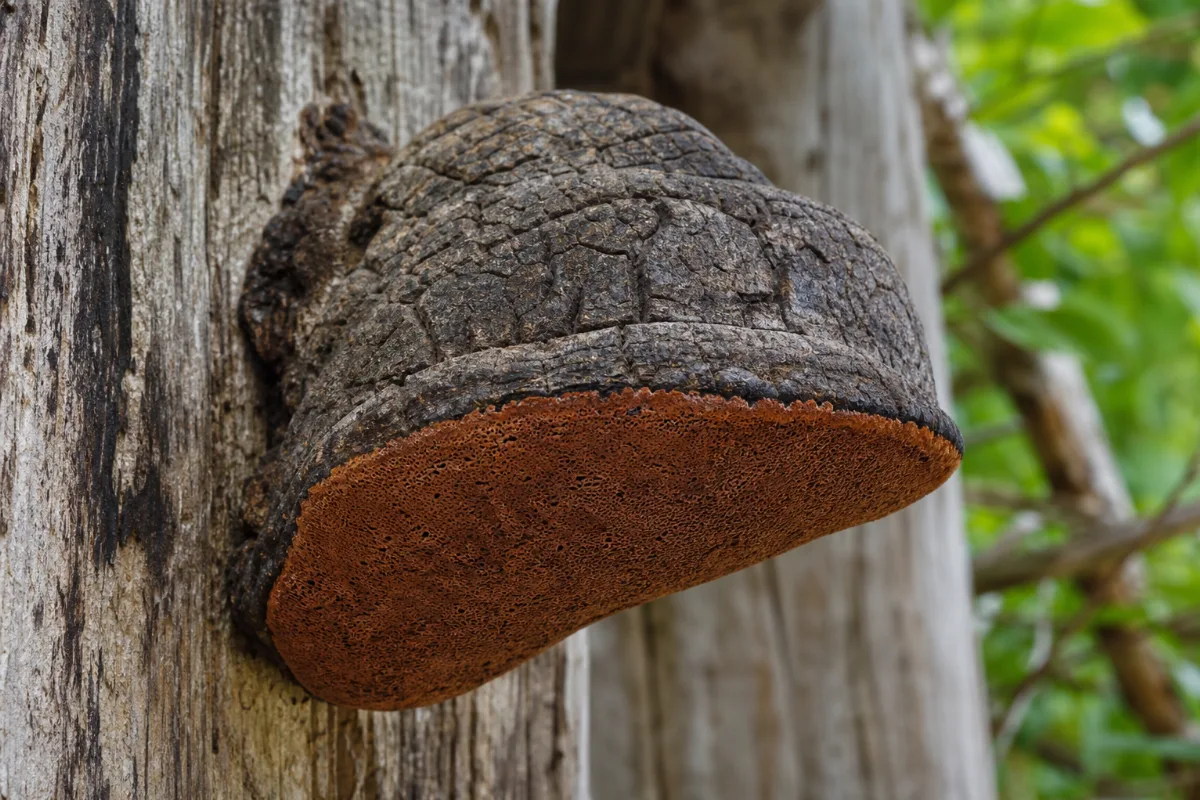
Mushrooms · Medicinal wild polypore
False Tinder Conk
Phellinus igniarius · also called Willow bracket, fire sponge (names from our earlier summary, not confirmed in a source we opened)
False tinder conk is a hard, woody tree fungus used in traditional Chinese medicine, where it is often called sanghuang. There is one small 8-week trial, in people who had finished chemotherapy for colorectal cancer, and it raised some immune blood readings. Everything else is lab or animal work, and nothing shows it prevents or treats disease. The name is muddled with other fungi, and almost no safety data exist.
General information, not medical advice. Last substantive update · Not medically reviewed. A named clinician has not signed off on this page. How this page is made
About False Tinder Conk
False tinder conk (Phellinus igniarius) is a hard, woody tree fungus used in traditional Chinese medicine. Human research is one 8-week trial in colorectal cancer patients after chemotherapy, where some immune blood readings rose. Most other papers are lab and animal work. There are almost no safety data, and the name is easily confused with other fungi.
What it is, and a naming warning
Phellinus igniarius is an accepted species in the fungus family Hymenochaetaceae (GBIF). The genus Phellinus has been split, and many former Phellinus species now sit in other genera.
The 2026 trial calls its material Sanghuang (Phellinus igniarius). The name sanghuang is also used for other fungi, so results for one name should not be applied to another. See our Phellinus and sanghuang page for that muddle.
Traditional and current uses
It is used in traditional Chinese medicine as a tonic with immune effects. Today, a few Chinese groups are testing hot-water decoctions in people and purified extracts in animals.
The human evidence is one trial, and its sample, length and lab-marker outcomes mean it can suggest a question, not answer it.
At a glance
Traditional uses history, not proof
- Used in traditional Chinese medicine, where the 2026 trial describes it as an herb with immune-modulating effects (Zhang 2026).
- A 2025 paper says it has been used in China for centuries (J Ethnopharmacol abstract).
Studied for research
- Immune-cell blood markers after colorectal cancer chemotherapy, very low
- Self-rated quality of life in the same trial, very low
- Uric acid in mice and rats, insufficient (animal only)
- Antioxidant activity in test tubes and cells, insufficient (lab only)
Main compounds
- Terpenoids
- Polysaccharides (glucans)
- Sterols and phenolic compounds
Common forms
- Hot-water decoction of dried conk slices (the form in the one human trial)
- Lab extracts in methanol or ethanol-water
- Mycelium grown in liquid culture (used in lab work, not the same as the conk)
Research links: The 8-week trial (PubMed) · GBIF record for Phellinus igniarius · Lab study with skin-cell and arsenic findings (PubMed) · Research Library · Genes & Biomarkers Library
What it is and its history
- Accepted scientific name
- Phellinus igniarius
- Naming authority
- (L.) Quel. (GBIF)
- Synonyms
- Fomes igniarius (L.) Fr. (GBIF synonym); Boletus igniarius L. (GBIF synonym); Fomes igniarius f. salicis Bondartsev (GBIF synonym)
- Common names
- False tinder conk (English); Willow bracket (English); Fire sponge (English)
- Family or group
- Hymenochaetaceae (a fungus family of woody bracket fungi), not a plant
- Classification
- Fungi > Basidiomycota > Agaricomycetes > Hymenochaetales > Hymenochaetaceae > Phellinus > Phellinus igniarius
- Native range
- Not checked.
- Habitat
- Swiderski 2025 describes the genus Phellinus sensu lato as mostly wood-living fungi that act as decomposers and tree pathogens. Specimens in that study came from willow or rowan host trees in Poland.
- What it looks like
- Fruiting body: A hard, woody bracket. No description was taken from a source for this page and it should not be used to identify wild fungi.
- Cultivation
- The trial used dried conk slices. Lab work also grows the mycelium in liquid culture (Boateng 2024). Commercial cultivation was not checked.
- Harvest and processing
- Not checked.
- Look-alikes and adulterants
- Name: Other Phellinus and similar woody conks; Note: The genus Phellinus sensu lato holds about 220 species and has been split (Swiderski 2025). Several woody conks look alike and no look-alike guidance was read.; Name: Sanghuang fungi (Sanghuangporus species) and Phellinus linteus; Note: Different fungi that are often sold under similar names. See the Phellinus and sanghuang page for that naming confusion.
- Sustainability and conservation
- Not checked.
Traditional use and history history, not clinical proof
| Tradition or era | Documented use | Source |
|---|---|---|
| Traditional Chinese medicine | The 2026 trial's introduction describes Phellinus igniarius (Sanghuang) as a traditional Chinese herb with immune-modulating effects. The Journal of Ethnopharmacology abstract says it has been used in China for centuries. No older primary source was read. | p42698582 |
Traditional use shows how it was used. It does not show that it works or is safe today.
What is inside, and how it may work
What it contains and how those compounds act in cells and animals. Laboratory and animal mechanisms are not proven effects in people.
Main compounds
| Compound | Family | Where it is concentrated | Activity studied | Level of evidence |
|---|---|---|---|---|
| Terpenoids | terpenoid | Fruiting body 7.078 mg per g in the best extraction conditions of one Chinese sample (colour-test method; sterols may also react). | The extract scavenged test radicals and lowered oxidative stress markers in mouse cells. 4 | Laboratory research |
| Polysaccharides (glucans) | polysaccharide | Fruiting body and mycelium Not given as a typical figure; yields depended on the method. | Antioxidant in test tubes and lowered uric acid in mice and rats (purified extracts). 1 2 6 | Animal research |
| Sterols and phenolic compounds | sterol | Fruiting body In one methanol extract GC-MS found ergosterol and total sterols as small shares of the signal. | Not tested for effects in the sources read. 5 | Laboratory research |
Mechanisms, receptors and pathways
| Target or pathway | Gene or receptor | What was found | Level |
|---|---|---|---|
| T-helper cell balance (Th1/Th2) | IL-2, IFN-gamma, IL-4, IL-10, TNF-alpha | In the trial, Th1 signals rose and Th2 and inflammation signals fell. The authors propose this as the mechanism; it was not tested. 7 | Human observational markers |
| Uric acid production (xanthine oxidase) and bile acids | Xanthine oxidase, PPAR-alpha | In mice a polysaccharide lowered liver xanthine oxidase; the authors link this to the bile acid TUDCA. 2 | Animal research |
| Oxidative stress | SOD, catalase, glutathione peroxidase | A terpenoid extract raised antioxidant enzyme activity in mouse cells. 4 | Laboratory research |
Absorption, metabolism and elimination
- Absorption
- Not found for people. A rat study of 12 compounds exists but its abstract was not read.
- Distribution
- Not found.
- Metabolism
- Not found.
- Elimination
- Not found.
- Bioavailability
- Not established.
Isolated compounds versus whole extracts
The human trial used a hot-water decoction of the dried conk. Most animal work used purified polysaccharides, and lab work used methanol, ethanol-water or mycelium extracts. These are different preparations, so results from one should not be applied to another.
Nutritional composition
This is a hard, woody conk. No source we read describes it as a food, and no nutrient claim is made.
2 very low certainty4 not enough evidence
What was looked at
The 6 benefits and uses checked for False Tinder Conk, each with how strong the evidence is. Tap one to open it.
- Immune markers after colorectal cancer chemotherapyVery low certainty
- Cancer outcomes (tumour, survival)Not enough evidence
- Quality of life and chemotherapy symptomsVery low certainty
- Uric acid and goutNot enough evidence
- Antioxidant activityNot enough evidence
- Antibacterial activity in the labNot enough evidence
Lab markers tracked in the studies
CD4+/CD8+ T-cell ratioNatural killer (NK) cell percentageTh1 and Th2 cytokines (IL-2, IFN-gamma, IL-4, IL-10, TNF-alpha)Serum uric acidOxidative stress markers in cells (ROS, SOD, catalase, MDA)
What is False Tinder Conk good for?
The uses people ask about and how strong the human evidence is for each. None is proven. Read this together with the Safety tab.
Benefits, one by one
Each card is a research question, not a promise. Tap a goal to filter. Open a card to see the studies, doses and limits.
Immune markers after colorectal cancer chemotherapy
Very low certaintyOne 8-week trial of 198 people who had finished chemotherapy for colorectal cancer found higher immune-cell readings with a hot-water decoction of the dried conk than with placebo. These were blood tests. The trial did not measure infections, cancer coming back or survival.
1 studiesA hot-water decoction of dried conk slices labelled Phellinus igniari…
Studies, doses and limits
What the trials found
One randomised, placebo-controlled trial in three centres in China: 132 people took the decoction, 33 placebo and 33 a thymalfasin injection (a prescription immune medicine), for 8 weeks.
Results
Against placebo at week 8, the decoction group had a higher CD4+/CD8+ ratio (p < 0.001) and a higher natural killer cell percentage (p < 0.05). Th1 cytokines (IL-2, IFN-gamma) rose and IL-4, IL-10 and TNF-alpha fell (p < 0.05). The paper's abstract gives p-values; the sizes of the changes were in figures that we did not record.
Effect sizes as reported
Statistically higher immune-cell readings; size not recorded here
Why this rating
A single trial of 8 weeks, in a narrow group of people chosen for low readings, with lab markers rather than health outcomes. The taste of the decoction may have revealed who got placebo. The paper's acknowledgements thank two companies for drug sponsorship.
Form and dose studied
A hot-water decoction of dried conk slices labelled Phellinus igniarius (Sanghuang). The label name is not the same as the usual species called sanghuang, so the identity of the material matters.
Who was studied
Adults with colorectal cancer who had finished surgery and chemotherapy and had a CD4+/CD8+ ratio below 1.4
Limits
No counts of infections, cancer recurrence or survival. Eight weeks only. People with severe immune disorders, recent immune-modulating medicines, pregnancy or breastfeeding were not included, so nothing is known for them.
Why researchers looked
Chemotherapy can lower immune-cell counts, and the conk is traditionally thought to support the body's defences. The trial tested whether a decoction could lift low readings.
Traditional use
Used in traditional Chinese medicine; the 2026 trial calls the material Sanghuang and describes it as a traditional Chinese herb with immune effects (Zhang 2026).
Proposed mechanism Pharmacological theory
Authors suggest the decoction shifts the balance of T-helper cell signals (Th1 up, Th2 down). Compounds were not measured in the trial, so the cause is unknown.
A proposed mechanism does not show that the effect happens in people.
Immune-active products may not suit people with autoimmune disease or on immune-suppressing medicines. Tell your cancer team about any mushroom product.
Cancer outcomes (tumour, survival)
Not enough evidenceNo human study shows that false tinder conk treats cancer or lengthens life. The only human trial found looked at immune blood tests after chemotherapy, not at cancer outcomes.
1 studiesNot applicable
Studies, doses and limits
What the trials found
The trial above did not measure tumour response, recurrence or survival, and says longer follow-up is needed.
Why this rating
No human data on tumour, recurrence or survival.
Who was studied
People who have had colorectal cancer chemotherapy (immune markers only)
Limits
Do not use this page to replace or delay cancer treatment.
Why researchers looked
Lab and animal papers on this fungus often mention tumour cells, which is why it is promoted alongside cancer care.
Traditional use
Promoted in Chinese medicine as a general tonic; the sources read do not describe a specific cancer use.
Proposed mechanism Laboratory research
Lab findings in cells and animals were not read in detail for this page.
A proposed mechanism does not show that the effect happens in people.
Ask your cancer team before adding any mushroom product.
Quality of life and chemotherapy symptoms
Very low certaintyIn the same trial, people on the decoction rated their quality of life better than people on placebo, and reported less nausea and vomiting, appetite loss, fatigue, insomnia and constipation. These are self-rated and the taste may have shown who was on placebo.
1 studiesDecoction of dried conk slices
Studies, doses and limits
What the trials found
Part of the single 8-week trial of 198 people (EORTC QLQ-C30 questionnaire).
Results
Quality of life scores were better than placebo at week 8 (p < 0.05). Nausea and vomiting, appetite loss, fatigue, insomnia and constipation were reported less often in the decoction group than in placebo (p < 0.05).
Effect sizes as reported
Better self-rated scores; size not recorded here
Why this rating
Self-reported outcomes in one trial; the paper says the decoction's taste may have affected blinding, which can inflate such scores.
Form and dose studied
Decoction of dried conk slices
Who was studied
Adults after colorectal cancer chemotherapy
Limits
One trial, 8 weeks, no replication.
Why researchers looked
Secondary outcome of the colorectal cancer trial.
Traditional use
Used in traditional Chinese medicine; the 2026 trial calls the material Sanghuang and describes it as a traditional Chinese herb with immune effects (Zhang 2026).
Proposed mechanism Pharmacological theory
Not tested in the trial.
A proposed mechanism does not show that the effect happens in people.
Fewer reported complaints than placebo in this trial does not prove it is safe for everyone.
Uric acid and gout
Not enough evidenceMouse and rat studies of purified polysaccharides from the fungus found lower uric acid and less urate deposit in joints. No human study was found, so it is not known whether it helps gout.
2 studiesPurified polysaccharide, not the whole conk
Studies, doses and limits
Results
Mice: lower serum uric acid, creatinine, BUN, AST, ALT and cholesterol versus untreated model mice. Rats: lower uric acid, creatinine, xanthine oxidase and adenosine deaminase, less kidney damage and fewer urate deposits in joints.
Effect sizes as reported
Lower uric acid in animals
Why this rating
Animal studies with purified polysaccharide extracts only; two authors of the rat paper work for a company.
Form and dose studied
Purified polysaccharide, not the whole conk
Who was studied
Mice and rats
Limits
Models of high uric acid are not the same as gout in people. Animal results often do not carry over.
Why researchers looked
Chinese lab groups have tested the fungus in uric-acid models.
Traditional use
The fungus has been used in Chinese medicine; the abstracts say it is thought to improve metabolic balance.
Proposed mechanism Animal research
In mice the polysaccharide lowered liver xanthine oxidase activity, and the authors link this to changes in bile acids (TUDCA). In rats the gut bacteria changed too.
A proposed mechanism does not show that the effect happens in people.
Do not stop gout medicine or change treatment because of animal results.
Antioxidant activity
Not enough evidenceExtracts and polysaccharide fractions of the fungus neutralised test chemicals in the lab, and a terpenoid extract protected mouse cells from damage in a dish. No human antioxidant outcome has been measured.
2 studiesEthanol-water extract of fruiting body; polysaccharides from liquid-c…
Studies, doses and limits
Results
Dose-dependent radical scavenging for the terpenoid extract; polysaccharide fractions from mycelium scavenged superoxide better than two plant polysaccharides used for comparison (13.8% and 15.1%) at 0.40 mg/mL.
Effect sizes as reported
Test-tube and cell results only
Why this rating
Lab work. A test-tube antioxidant result does not show a health effect.
Form and dose studied
Ethanol-water extract of fruiting body; polysaccharides from liquid-culture mycelium
Limits
The extract company authors declared no role of the company in the study.
Why researchers looked
Lab work often tests antioxidant strength because it is a cheap first test.
Traditional use
Not described in the sources read.
Proposed mechanism Laboratory research
In mouse macrophage cells, a terpenoid-rich ethanol-water extract lowered reactive oxygen species and raised the activity of antioxidant enzymes (superoxide dismutase, catalase, glutathione peroxidase).
A proposed mechanism does not show that the effect happens in people.
Not a safety finding.
Antibacterial activity in the lab
Not enough evidenceA methanol extract of the conk slowed the growth of some bacteria in dishes. It also harmed human skin cells at higher concentrations, so this is a lab finding and not a use.
1 studiesMethanol extract of fruiting body
Studies, doses and limits
Results
The methanol extract of Phellinus igniarius was most active against Staphylococcus aureus (MIC 6.3 mg/mL), with weaker activity against S. epidermidis and Candida albicans (MIC 25 mg/mL each).
Effect sizes as reported
Bacterial growth slowed in dishes
Why this rating
Methanol extracts in a dish; the same extract lowered human skin cell viability at higher concentrations.
Form and dose studied
Methanol extract of fruiting body
Limits
Not a food-safe preparation.
Why researchers looked
Lab screening of many Phellinus species.
Traditional use
Not described.
Proposed mechanism Laboratory research
Not explained in the abstract.
A proposed mechanism does not show that the effect happens in people.
Do not put extracts on wounds or skin.
Connections to the rest of health
How False Tinder Conk connects to the rest of our health knowledge graph. Every link says what kind of connection it is. A safety link (for example to the liver) is a warning, not a benefit. A study that merely mentions a topic never creates a benefit link.
Explore every connection: goals, body systems, organs, symptoms, genes
A. Wellness goals
| Connected to | Kind of connection | Evidence status | Context | Studies |
|---|---|---|---|---|
| Immune Support | Potential benefit | Very low certainty | Immune markers after colorectal cancer chemotherapy: One 8-week trial of 198 people who had finished chemotherapy for colorectal cancer found higher immune-cell readings with a hot-water decoction of the dried conk than with placebo. These were blood tests. The trial did not measure infections, cancer coming back or survival. | 7 |
B. Body systems
| Connected to | Kind of connection | Evidence status | Context | Studies |
|---|---|---|---|---|
| Immune System | Biological association | Very low certainty | Studied for: Immune markers after colorectal cancer chemotherapy Studied for: Cancer outcomes (tumour, survival) | 7 |
| Bones Joints Muscles | Biological association | Not enough evidence | Studied for: Uric acid and gout | 2 6 |
| Whole Body | Biological association | Not enough evidence | Studied for: Antioxidant activity | 4 1 |
| Skin Hair Beauty | Biological association | Not enough evidence | Studied for: Antibacterial activity in the lab | 5 |
C. Body parts and organs
| Connected to | Kind of connection | Evidence status | Context | Studies |
|---|---|---|---|---|
| Immune system | Very low certainty | Higher CD4+/CD8+ ratio and NK cell percentage in one 8-week trial. Preparation or compound: Decoction of dried conk slices |
7 |
I. Biomarkers
| Connected to | Kind of connection | Evidence status | Context | Studies |
|---|---|---|---|---|
| CD4+/CD8+ T-cell ratio | Biological association | Very low certainty | Measured in trials: raised. A lab change is not the same as a health benefit. | 7 |
| Natural killer (NK) cell percentage | Biological association | Very low certainty | Measured in trials: raised. A lab change is not the same as a health benefit. | 7 |
| Th1 and Th2 cytokines (IL-2, IFN-gamma, IL-4, IL-10, TNF-alpha) | Biological association | Very low certainty | Measured in trials: mixed. A lab change is not the same as a health benefit. | 7 |
| Serum uric acid | Biological association | Not enough evidence | Measured in trials: lowered. A lab change is not the same as a health benefit. | 2 6 |
| Oxidative stress markers in cells (ROS, SOD, catalase, MDA) | Biological association | Not enough evidence | Measured in trials: mixed. A lab change is not the same as a health benefit. | 4 |
K. Biological pathways
| Connected to | Kind of connection | Evidence status | Context | Studies |
|---|---|---|---|---|
| IL-2 and IFN-gamma (Th1 signals) | Preliminary mechanism | Human observational markers | Rose in the trial's decoction group. | 7 |
L. Active compounds
| Connected to | Kind of connection | Evidence status | Context | Studies |
|---|---|---|---|---|
| Terpenoids | Biological association | In vitro | The extract scavenged test radicals and lowered oxidative stress markers in mouse cells. Preparation or compound: Fruiting body |
4 |
| Polysaccharides (glucans) | Biological association | Animal | Antioxidant in test tubes and lowered uric acid in mice and rats (purified extracts). Preparation or compound: Fruiting body and mycelium |
1 2 6 |
| Sterols and phenolic compounds | Biological association | In vitro | Not tested for effects in the sources read. Preparation or compound: Fruiting body |
5 |
Each connection is stored with the ingredient, the connected record, the kind of connection, the evidence status, the supporting studies, the preparation or compound involved, and a review date (last reviewed October 25, 2026).
Evidence at a glance: what changed in 5 lab markers
Tap a number to show only those markers. Counts are markers, not people.
The evidence
The research centre for False Tinder Conk. Every record here was checked against PubMed or the publisher's page; we never list a study we have not verified.
Evidence by outcome
Bars show how many studies we found for each outcome, not how well it works. People are added up across trials only (reviews are not added, to avoid double counting).
How we rate evidence
High certainty
Several well-run trials or reviews agree; further research is unlikely to change the picture much.
Moderate certainty
Good trials point the same way, but some doubt remains.
Low certainty
Small, short or inconsistent trials. The finding could change with better research.
Very low certainty
Very little or very weak human data. Treat as a possibility only.
Mixed findings
Trials or reviews disagree with each other.
Not enough evidence
Not enough human research to say either way.
Evidence against
Good research found no benefit, or found harm.
We take the reviewers' own risk-of-bias and GRADE statements where they exist, and otherwise judge from study size, design, consistency, directness and whether a product matches what is sold. Many publications do not make evidence high. Method note: We read PubMed records and abstracts for 7 papers (one randomised trial whose full text we also read, one case-report letter where only the record was available, two animal studies and three laboratory studies), plus the GBIF species record. Regulator pages (FDA, EMA, WHO, LiverTox, LactMed) were not read. Where our sources disagree, we state only what they agree on.
Study library: every study we checked 8
| Study | Design | People | Product, dose, length | Result |
|---|---|---|---|---|
| Boateng 2024 Water-Soluble Intracellular Polysaccharides (IPSW-2 to 4) from Phellinus igniarius Mycelia: Fractionation, Structural Elucidation, and Antioxidant Activity. Foods · PMID 39593997 · DOI |
Laboratory study lab |
Polysaccharides separated from liquid-culture mycelium | Purified polysaccharide fractions from mycelium Mycelium (liquid culture) Not shown here · vs Other plant polysaccharides in the same test |
The purified fractions were glucans. At 0.40 mg/mL the fractions scavenged superoxide anions better than two plant polysaccharides used as comparisons (13.8% and 15.1%). Test-tube antioxidant activity Methods, limits and fundingOutcomes: Structure of the polysaccharides; superoxide scavenging in a test tube Limitations: Test-tube work on mycelium grown in a vat. Mycelium is not the same as the woody conk used in the human trial. No human data. Funding and conflicts: One author works for a testing company and states there is no conflict; others declare none. Read: abstract |
| Gan 2025 Polysaccharide extracted from Phellinus igniarius attenuated hyperuricemia by modulating bile acid metabolism and inhibiting uric acid synthesis in adenine/potassium oxonate-treated mice. Journal of Ethnopharmacology · PMID 39837359 · DOI |
Animal study animal |
Male C57BL/6 mice with high uric acid induced by adenine and potassium oxonate for 14 days | Polysaccharide extracted from the fungus (PPI) Not shown here 14 days · vs Untreated model mice |
Compared with untreated model mice, the polysaccharide lowered serum uric acid, creatinine, blood urea nitrogen, AST, ALT and total cholesterol, and lowered liver xanthine oxidase activity. The authors link this to bile acid changes (TUDCA) seen in mice and liver cells. Lower uric acid in mice Methods, limits and fundingOutcomes: Serum uric acid, kidney and liver markers; xanthine oxidase; bile acids Limitations: Mice given a purified extract; not the conk or a decoction; no human data. Funding and conflicts: Authors declare no competing interests. Read: abstract |
| Jin 2011 Exacerbation of pemphigus following Phellinus linteus ingestion. Journal of the European Academy of Dermatology and Venereology · PMID 20561124 · DOI |
Case report |
1 One reported patient with pemphigus (a blistering autoimmune skin disease) |
Phellinus linteus (a different fungus from Phellinus igniarius) Not shown here |
The title reports worsening of pemphigus after ingestion of Phellinus linteus. This is a letter with no abstract in PubMed, so nothing beyond the title was read. Single case report Methods, limits and fundingOutcomes: Worsening of pemphigus after eating the mushroom Limitations: Title and PubMed record only. A different species (Phellinus linteus, now usually placed in other genera), so it is not direct evidence about Phellinus igniarius. One case cannot show cause. Funding and conflicts: Not read Read: title/record only |
| Li 2026 Optimization of Extraction of Total Terpenoids from Phellinus igniarius Using Response Surface Methodology and Evaluation of Their Antioxidant Activity. Molecules · PMID 42280231 · DOI |
Laboratory study lab |
Fruiting-body extract tested in test tubes and in mouse macrophage cells (RAW 264.7) | Ethanol-water terpenoid extract (PITT) Fruiting body Not shown here Cell pre-treatment · vs Untreated cells |
The best extraction conditions gave a total terpenoid content of 7.078 mg per g. The extract scavenged test radicals (DPPH, ABTS, hydroxyl) in a dose-dependent way. In mouse cells stressed with hydrogen peroxide it lowered reactive oxygen species and malondialdehyde and raised the activity of superoxide dismutase, catalase and glutathione peroxidase. Antioxidant activity in a dish Methods, limits and fundingOutcomes: Extraction yield; radical-scavenging tests; oxidative stress markers in cells Limitations: Test-tube and cell work only. No human antioxidant outcome. The terpenoid content method is a colour test. Funding and conflicts: Two authors are employees of Anhui Yanhuang Biotechnology Co., Ltd.; the paper says the company had no role in the study. Read: abstract and full text (PMC) |
| Swiderski 2025 Bioactive Properties of Selected European Phellinus Species: A Comprehensive Study. International Journal of Molecular Sciences · PMID 40869334 · DOI |
Laboratory study lab |
30 30 fruiting-body samples of 22 Phellinus species from Poland, North Macedonia, Portugal, Kosovo and Italy; identity confirmed by shape and genetic tests |
Methanol extracts of fruiting bodies (not a food or supplement form) Fruiting body Not shown here 24-hour cell exposure · vs Untreated cells |
Phellinus igniarius was one of three species picked for further work. Its methanol extract was most active against Staphylococcus aureus (MIC 6.3 mg/mL). In human skin cells (HaCaT) it lowered cell viability by about 9%, 43% and 69% at 100, 400 and 800 micrograms per mL. The extracts contained arsenic at about 1 to 2 mg per kg of extract. Lab activity against bacteria and skin cells; arsenic found in extracts Methods, limits and fundingOutcomes: Antimicrobial and antioxidant tests; chemical profile; element content; effect on human skin cells (HaCaT) in a dish Limitations: Extracts in a dish, not people. Methanol is not a food-safe solvent. Says nothing about effects or safety when eaten or drunk as a decoction. Funding and conflicts: Authors declare no conflicts of interest. Read: abstract and full text (PMC) |
| Wang 2025 Protective effects of polysaccharide SH-P-1-1 isolated from Phellinus igniarius on hyperuricemia and gout via intestinal microecosystem regulation. Frontiers in Nutrition · PMID 41487664 · DOI |
Animal study animal |
Rat models of high uric acid and gout | Polysaccharide SH-P-1-1 isolated from the fungus Not shown here · vs Untreated model rats |
In model rats the polysaccharide lowered uric acid and creatinine, lowered xanthine oxidase and adenosine deaminase activity, eased kidney damage and reduced urate deposits in joints. It also changed the balance of gut bacteria. Lower uric acid and less urate deposit in rats Methods, limits and fundingOutcomes: Uric acid, creatinine, enzymes, kidney damage, joint urate deposits, gut bacteria Limitations: Rat model and a purified extract; no human data. Funding and conflicts: Two authors are employees of Anhui Yanhuang Biotechnology Co., Ltd.; the paper says the work was done without commercial or financial relationships. Read: abstract |
| Zhang 2026 A prospective clinical study on the effectiveness of Phellinus igniarius decoction in treating immune dysfunction in colorectal cancer patients following chemotherapy. Journal of Traditional and Complementary Medicine · PMID 42698582 · DOI |
Randomised controlled trial |
198 198 adults who had finished chemotherapy for colorectal cancer and had a low CD4+/CD8+ ratio (below 1.4); three centres in China |
Hot-water decoction of dried slices labelled Sanghuang (Phellinus igniarius) Dried conk slices Not shown here 8 weeks · vs Matched placebo decoction (33 people) and a thymalfasin injection arm (33 people) |
Randomised 1:4:1 to placebo (33), decoction (132) or thymalfasin (33). At week 8 the decoction group had a higher CD4+/CD8+ ratio than placebo (p < 0.001) and a higher NK cell percentage than placebo (p < 0.05). Th1 cytokines IL-2 and IFN-gamma rose and IL-4, IL-10 and TNF-alpha fell (p < 0.05). Quality of life scores were better (p < 0.05). Nausea and vomiting, appetite loss, fatigue, insomnia and constipation were reported less often in the decoction group than in the placebo group (p < 0.05); other adverse events did not differ and most were grade 1 to 2. Higher immune-cell lab readings and better self-rated quality of life than placebo after 8 weeks Methods, limits and fundingOutcomes: CD4+/CD8+ ratio, natural killer (NK) cell percentage, Th1/Th2 cytokines; quality of life (EORTC QLQ-C30); adverse events Limitations: Lab markers only; no infection, recurrence or survival outcome; 8 weeks. Small placebo group. The paper says the distinct taste of the decoction may have let people guess their group, which weakens the self-rated scores. Only people with a low CD4+/CD8+ ratio were enrolled. The paper itself calls the study sample small for subgroups and did not measure the active compounds. People with severe immune disorders, recent immune-modulating medicines, pregnancy or breastfeeding were excluded. Funding and conflicts: Public research grants (Anhui Province) per the paper; authors declare no competing interests, and the acknowledgements thank two companies for drug sponsorship and technical support. Read: full text (PMC) and abstract |
| n/a 2026 GBIF Backbone Taxonomy: Phellinus igniarius (L.) Quel., species record (API checked 2026-10-25) n/a · Source |
Taxonomy record n/a |
n/a | n/a Not shown here |
GBIF key 2520862 lists Phellinus igniarius (L.) Quel. as an ACCEPTED species in the family Hymenochaetaceae (order Hymenochaetales). Its synonyms include Boletus igniarius L., Fomes igniarius (L.) Fr. and Fomes igniarius f. salicis Bondartsev. Methods, limits and fundingOutcomes: Accepted name, family and synonyms Limitations: A database record, not a paper. GBIF reflects its own sources; Index Fungorum (the other main fungal name database) could not be read. Funding and conflicts: Public database Read: API record |
What we do not know yet
- Only one human trial, 8 weeks, with lab-marker outcomes.
- No human data on safety in pregnancy, children, liver or kidney disease, or long term.
- No wild look-alike or edibility source was read.
- The relationship between the Phellinus igniarius and sanghuang names is unclear in the sources we read.
How new research is added
New studies are found by a saved PubMed search and placed in a review queue. A person reads each one before it changes any evidence rating or safety wording. New publications never change ratings automatically.
Lab markers
What changed in blood or saliva tests during trials. A changed number is not the same as feeling or being healthier, and we give no "normal ranges".
Other 5
CD4+/CD8+ T-cell ratio
Raised in trials
A blood measure comparing two types of T cell. Low values were used to pick people for the trial. It shows how the immune system is set up, not whether you are protected from infection.
Very low certaintyResults and what it means
Why it was measured
Often used as a stand-in for immune recovery after chemotherapy.
Statistical vs. clinical meaning
A statistically significant lab change from one trial; the clinical meaning is unknown.
Safety implication
A higher ratio does not show better protection. People with autoimmune disease or on immune-suppressing medicines should ask their doctor first.
| Study | Result | People | Product |
|---|---|---|---|
| 7 | Higher than placebo at week 8 (p < 0.001). | 198 adults after colorectal cancer chemotherapy | Decoction of dried Phellinus igniarius (Sanghuang) slices |
Natural killer (NK) cell percentage
Raised in trials
The share of white blood cells that are natural killer cells, a type of immune cell.
Very low certaintyResults and what it means
Why it was measured
A lab marker used to follow immune function.
Statistical vs. clinical meaning
A modest-looking statistical difference (p < 0.05) in a single trial.
Safety implication
No safety signal from the marker itself; see the Safety tab.
| Study | Result | People | Product |
|---|---|---|---|
| 7 | Rose from baseline and was higher than placebo at week 8 (p < 0.05). | 198 adults after colorectal cancer chemotherapy | Decoction of dried Phellinus igniarius (Sanghuang) slices |
Th1 and Th2 cytokines (IL-2, IFN-gamma, IL-4, IL-10, TNF-alpha)
Mixed results in trials
Small signalling proteins made by immune cells. Th1 signals (IL-2, IFN-gamma) are linked with cell-based defence; IL-4 and IL-10 are Th2 signals and TNF-alpha is an inflammation signal.
Very low certaintyResults and what it means
Why it was measured
Used to see whether the immune balance moves.
Statistical vs. clinical meaning
Statistically significant changes in one trial; what they mean for health is not known.
Safety implication
Changing immune balance may matter in autoimmune disease.
| Study | Result | People | Product |
|---|---|---|---|
| 7 | IL-2 and IFN-gamma rose, and IL-4, IL-10 and TNF-alpha fell, in the decoction group (p < 0.05). | 198 adults after colorectal cancer chemotherapy | Decoction of dried Phellinus igniarius (Sanghuang) slices |
Serum uric acid
Lowered in trials
The amount of uric acid in the blood. High levels can lead to gout and kidney problems.
Not enough evidenceResults and what it means
Why it was measured
The main outcome in the animal studies.
Statistical vs. clinical meaning
Animal result only.
Safety implication
None for people from these studies.
| Study | Result | People | Product |
|---|---|---|---|
| 2 | Lower than in untreated model mice after 14 days of a polysaccharide extract. | Mice with induced high uric acid | Polysaccharide extracted from Phellinus igniarius |
| 6 | Lower in rats given polysaccharide SH-P-1-1. | Rats with induced high uric acid and gout | Polysaccharide SH-P-1-1 from Phellinus igniarius |
Oxidative stress markers in cells (ROS, SOD, catalase, MDA)
Mixed results in trials
Measures of damaging oxygen chemicals and the enzymes that clear them, taken from cells in a dish.
Not enough evidenceResults and what it means
Why it was measured
A common lab test for antioxidant effects.
Statistical vs. clinical meaning
Cell result only.
Safety implication
None.
| Study | Result | People | Product |
|---|---|---|---|
| 4 | Reactive oxygen species and malondialdehyde fell, and antioxidant enzyme activity rose, in mouse cells pre-treated with the terpenoid extract. | RAW 264.7 mouse macrophage cells | Terpenoid-rich ethanol-water extract of Phellinus igniarius |
Safety
What studies and official sources say about side effects, medicines and who should check first. Each point shows what kind of evidence it comes from.
Main points to know 4
- Very little human safety data. The only human trial found ran for 8 weeks in adults after colorectal cancer chemotherapy. Most adverse events were mild (grade 1 to 2) and nausea, vomiting, appetite loss, fatigue, insomnia and constipation were reported less often than with placebo. Nothing was found on pregnancy, breastfeeding, children, liver or kidney disease, surgery or long-term use. Controlled trial 7
- Immune effects may matter for some people. The trial excluded people with severe immune disorders and anyone who had used immune-modulating medicines in the previous 3 months. A related fungus, Phellinus linteus, was reported in a single letter to worsen pemphigus, an autoimmune skin disease. That report is about a different species and one patient, so it is a warning flag and not a proven link. Case report 7 3
- Wild woody conks cannot be identified from a description. None of the sources we read cover look-alike fungi or wild-picking safety for this species. Do not collect, brew or eat a wild conk because of a description online. Many woody bracket fungi look alike, and the name itself has been split and shuffled between genera. Gap 8
- Cell and element findings in a lab extract. A methanol extract of the fruiting body lowered survival of human skin cells in a dish (about 9%, 43% and 69% at 100, 400 and 800 micrograms per mL), and extracts contained arsenic at about 1 to 2 mg per kg. This is a dish test on a solvent extract, not a result for a decoction, but it is a reason that quality and source matter. Laboratory research 5
Side effects 3
| Effect | How often | Severity and recovery | Evidence |
|---|---|---|---|
| Nausea, vomiting, appetite loss, fatigue, insomnia, constipation These are also common chemotherapy complaints, so they may reflect chemotherapy recovery rather than the decoction. | Reported less often in the decoction group than placebo in the trial (p < 0.05); rates are in a table we did not record | mild Not described as lasting | Controlled trial 7 |
| Other adverse events (for example anaemia, rash) Most events were grade 1 to 2. The trial lasted only 8 weeks. | No difference between groups in the trial | mild Not described | Controlled trial 7 |
| Worsening of pemphigus (with Phellinus linteus, a different species) Title and record only; not about Phellinus igniarius. | One case report | unknown Not read | Case report 3 |
Liver
No liver injury report for Phellinus igniarius was found in the sources read. The trial excluded people without normal organ function. Mouse studies of a purified polysaccharide reported lower liver enzymes (AST, ALT) in mice with induced high uric acid, which is not evidence about people. LiverTox was not checked. 7 2
How often. Unknown. Absence of reports is not proof of safety.
Monitoring. No agency monitoring advice was found. People with liver disease should ask their doctor.
This is a safety connection. It is not evidence that False Tinder Conk supports liver health.
Medicines and supplements 4
| With | Why it matters | Importance | Evidence | What to do |
|---|---|---|---|---|
| Autoimmune disease and its treatment condition | The conk may shift immune signals; one case report links a related fungus with worse pemphigus. | Unproven; single case report of a different species, and trial exclusions. | Case report Very low certainty 3 7 | Ask your doctor before using it if you have an autoimmune condition. |
| Immune-suppressing medicines (for example after a transplant) prescription | In theory an immune-active product could work against them. | No source read tested this. The trial excluded recent immune-modulating medicines. | Theoretical Not enough evidence 7 | Ask a doctor or pharmacist first. |
| Chemotherapy and other cancer treatment prescription | In the trial people took the decoction after chemotherapy had finished. Use during chemotherapy was not tested. | No interaction study was found. | Theoretical Not enough evidence 7 | Tell your cancer team about any mushroom product before and during treatment. |
| Blood thinners, diabetes medicines and blood pressure medicines prescription | No source read reports an effect, and none tested one. | Unknown. | Theoretical Not enough evidence | Ask a doctor or pharmacist if you take regular medicines. |
Who should check first 5
| Situation | Advice | Evidence |
|---|---|---|
| Autoimmune disease or immune-suppressing medicines | Ask a doctor first. People like this were excluded from the trial. | Controlled trial 7 |
| Pregnancy and breastfeeding | Avoid unless a doctor agrees. Pregnant and breastfeeding women were excluded from the trial and no safety data were found. | Gap 7 |
| Children | No data. Do not give to children. | Gap |
| Allergy to mushrooms or to Chinese herbal products | Avoid. People with hypersensitivity to traditional Chinese medicine components were excluded from the trial. | Controlled trial 7 |
| Kidney or liver disease, or before surgery | No data. Ask your doctor. | Gap |
Overdose, product quality and regulators
Summary. No poisoning from Phellinus igniarius is described in the sources read. The only human data are one 8-week trial. Dish tests show a methanol extract can lower the survival of skin cells at higher concentrations.
Animal. Not reviewed in depth. Animal studies we read tested purified polysaccharides for uric acid and did not report toxicity as the main outcome.
Human doses studied. Only one trial. This page does not give amounts and none are advised.
High dose or long term signals. Long-term safety is not known; the trial lasted 8 weeks.
Overdose response. No overdose description was found. Get medical help for the urgent signs below.
Genotoxicity. Not read.
Toxic or hazardous parts. Fungus: the woody fruiting body (conk) and lab-grown mycelium are studied. They differ chemically, and no source compared their safety.
Extracts of wild conks held arsenic in one lab study. Products are not held to the same rules as approved medicines.
Arsenic and elements in extracts. Methanol extracts of three Phellinus-group fungi, including P. igniarius, contained arsenic at about 1 to 2 mg per kg of extract. The specimens were wild-collected fruiting bodies. 5
Which fungus is in the product. The trial calls its material Sanghuang (Phellinus igniarius), but the name sanghuang is also used for other fungi (see the Phellinus and sanghuang page). GBIF lists Phellinus igniarius as a separate accepted species. A label name may not tell you which fungus is inside. 7 8
Fruiting body versus mycelium. Lab polysaccharide work used mycelium grown in a vat, while the human trial used dried conk slices. Their make-up differs. 1 7
| Body | Action | Date |
|---|
When to get medical help
- Swelling of the face or throat, wheeze or trouble breathing after a mushroom product: call emergency services.
- New blisters or sores on skin or in the mouth, especially if you have an autoimmune skin condition: stop it and see a doctor.
- Yellow skin or eyes, dark urine or severe belly pain: stop it and get medical help now.
- Fever or signs of infection during or after chemotherapy: contact your cancer team now.
If someone may be poisoned or in a crisis, contact a clinician or emergency service straight away. In the US, Poison Control is 1-800-222-1222.
General information only, not medical advice. Ask a clinician or pharmacist before use, especially with medicines, in pregnancy or with a health condition. See the Natural Remedy Safety guide.
Frequently asked questions
What is false tinder conk?
Is the name the same as sanghuang or Phellinus linteus?
Does it help the immune system?
One 8-week trial in people who had finished chemotherapy for colorectal cancer found higher CD4+/CD8+ ratio and NK cell percentage than placebo. These are lab markers. The trial did not measure infections, and it has not been repeated.
Does it treat or prevent cancer?
No. No human study measured tumour response, recurrence or survival. Do not use it in place of cancer treatment. Tell your cancer team about any mushroom product.
Does it lower uric acid or help gout?
What side effects were seen?
In the one 8-week trial most adverse events were mild, and nausea, vomiting, appetite loss, fatigue, insomnia and constipation were reported less often than with placebo. Long-term effects are not known.
Is it safe in pregnancy or breastfeeding, or for children?
No data were found. Pregnant and breastfeeding women were excluded from the trial. Avoid unless a doctor agrees, and do not give to children.
Can it interact with medicines?
Is it safe to pick and use a wild conk?
We cannot say. None of the sources we read cover look-alike fungi or wild-picking safety. Do not collect or brew a woody conk based on an online description.
Do studies use the woody conk or lab-grown mycelium?
Are the animal and lab results useful for people?
Explore by health goal
Editorial transparency
- Written by
- AlternativeMed editorial team. Research compiled with AI assistance, then checked against PubMed records.
- Medical review
- None. This page has not been reviewed by a physician or pharmacist.
- First published
- 2026-10-25
- Last substantive update
- 2026-10-25
- How we research
- We read PubMed records and abstracts for 7 papers (one randomised trial whose full text we also read, one case-report letter where only the record was available, two animal studies and three laboratory studies), plus the GBIF species record. Regulator pages (FDA, EMA, WHO, LiverTox, LactMed) were not read. Where our sources disagree, we state only what they agree on.
- How we rate evidence
- See "How we rate evidence" in the Evidence tab.
- Independence
- No product is promoted on this page. No affiliate links are shown. This page is information, not a recommendation to use false tinder conk.
Sources 8
Each source was opened and checked. Where we read only the abstract, it says so. The small numbers in the text point here.
- Boateng ID, Yang X. Water-Soluble Intracellular Polysaccharides (IPSW-2 to 4) from Phellinus igniarius Mycelia: Fractionation, Structural Elucidation, and Antioxidant Activity.. Foods. 2024. PMID 39593997. DOI 10.3390/foods13223581. (abstract)
- Gan Y, Zeng Y, Huang J, et al. Polysaccharide extracted from Phellinus igniarius attenuated hyperuricemia by modulating bile acid metabolism and inhibiting uric acid synthesis in adenine/potassium oxonate-treated mice.. Journal of Ethnopharmacology. 2025. PMID 39837359. DOI 10.1016/j.jep.2025.119365. (abstract)
- Jin SP, Hong JS, Chung JH. Exacerbation of pemphigus following Phellinus linteus ingestion.. Journal of the European Academy of Dermatology and Venereology. 2011. PMID 20561124. DOI 10.1111/j.1468-3083.2010.03746.x. (title/record only)
- Li L, Wang Z, Hao J, et al. Optimization of Extraction of Total Terpenoids from Phellinus igniarius Using Response Surface Methodology and Evaluation of Their Antioxidant Activity.. Molecules. 2026. PMID 42280231. DOI 10.3390/molecules31111929. (abstract and full text (PMC))
- Swiderski G, Kalinowska M, Zapora E, et al. Bioactive Properties of Selected European Phellinus Species: A Comprehensive Study.. International Journal of Molecular Sciences. 2025. PMID 40869334. DOI 10.3390/ijms26168013. (abstract and full text (PMC))
- Wang Y, Qian X, Chen L, et al. Protective effects of polysaccharide SH-P-1-1 isolated from Phellinus igniarius on hyperuricemia and gout via intestinal microecosystem regulation.. Frontiers in Nutrition. 2025. PMID 41487664. DOI 10.3389/fnut.2025.1717561. (abstract)
- Zhang H, Li W, Hu D, Hu W, Wang T, Xu P, Li P. A prospective clinical study on the effectiveness of Phellinus igniarius decoction in treating immune dysfunction in colorectal cancer patients following chemotherapy.. Journal of Traditional and Complementary Medicine. 2026. PMID 42698582. DOI 10.1016/j.jtcme.2026.05.002. (full text (PMC) and abstract)
- n/a. GBIF Backbone Taxonomy: Phellinus igniarius (L.) Quel., species record (API checked 2026-10-25). n/a. 2026. (API record)


