Mushrooms · Medicinal mushroom
Phellinus and Sanghuang
Phellinus linteus (older name; GBIF synonym of Tropicoporus linteus) and Sanghuangporus species · also called Sanghuang, meshima, meshimakobu, song gen (names from the project's earlier summary)
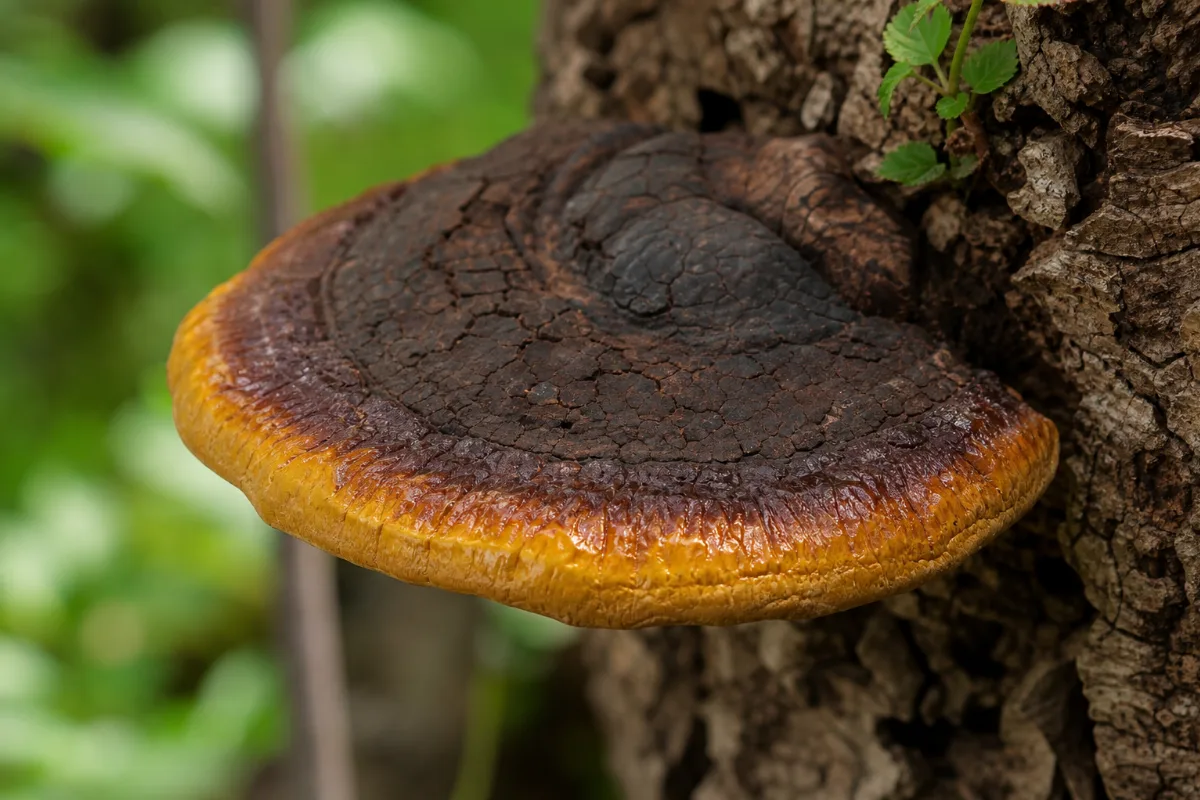
Phellinus and sanghuang are hard, yellow-brown woody mushrooms that grow on trees such as mulberry. They are used as tonics in East Asia and sold as extracts and teas. Human research is very small: one 8-week trial moved an immune lab marker, and cancer data are limited. One case report links it to worsening of an autoimmune skin disease. The names are also muddled, so a label may not tell you which fungus is inside.
General information, not medical advice. Last substantive update · Not medically reviewed. A named clinician has not signed off on this page. How this page is made
About Phellinus and Sanghuang
Phellinus and sanghuang are hard woody mushrooms used as tonics in East Asia. The names are confused: products sold as Phellinus linteus may be a different fungus. Human research is limited to two small immune-marker trials, one retrospective cancer comparison and a combination product trial, so benefits are unproven. A case report links it to worsening autoimmune skin disease, and we found no data on pregnancy, children, long-term use or medicine interactions.
What it is, and why the names are confused
These are woody bracket fungi in the family Hymenochaetaceae. They are hard, yellow-brown and grow on trees such as mulberry. They are not eaten like normal mushrooms; slices are simmered in water or made into extracts.
The sources disagree about names. For a long time sanghuang was called Phellinus linteus. A 2022 review says a 1998 study found that Phellinus linteus is a species from Central America, not Asia, and that the true sanghuang on mulberry is now called Sanghuangporus sanghuang. GBIF takes another route and lists Phellinus linteus as a synonym of Tropicoporus linteus. A 2020 paper confirmed that its own sanghuang strain was Sanghuangporus sanghuang, not Phellinus linteus.
The 2022 review also says the word sanghuang now covers several genera of yellow-brown, hard fungi, and that some researchers think the sanghuang of old Chinese texts might be a different fungus again. So the label Phellinus linteus on a product or in a study may not mean the same fungus.
Traditional and current uses
MSK says it is used in traditional Asian medicine, often mixed with other mushrooms such as reishi and maitake, and promoted as an add-on during cancer treatment. It also lists traditional uses for bleeding, stopping bleeding and menstrual disorders.
Today it is sold as extracts, capsules and teas for immune support. A 2024 review calls these mushrooms a group with a long history of oral use in East Asia.
What the research shows
Two 2022 Korean trials tested an extract in healthy adults for 8 weeks. The larger one (98 people) found higher natural killer cell activity than placebo, a lab marker, while antibodies and cytokines did not change significantly. The 30-person pilot showed only trends. Neither measured infections.
A Korean hospital looked back at 407 people after pancreatic cancer surgery. Those who took Phellinus linteus (103 people) lived longer on average, but after adjustment the result was borderline (hazard ratio 0.614, 95% CI 0.376 to 1.002). People chose whether to take it, so the study cannot show cause. A 2004 case report described one man with prostate cancer who responded. MSK says human studies are very limited.
A 4-week trial in 72 smokers tested a sanghuang and danshen combination and found small improvements in vessel stiffness and blood pressure. Most other findings come from cells and animals.
Fruiting body, mycelium and extracts are different
Products include sliced woody conks simmered in water, hot-water extracts, mycelium or fermented extract capsules, and purified polysaccharides. The 2022 review says strain, source and extraction method change the structure and activity of the polysaccharides.
The 2022 trial report does not clearly say whether its extract came from the fruiting body or the mycelium. We found no source on the contents of mycelium-on-grain products for this mushroom. Results from one product should not be applied to another.
Legal and regulatory status
MSK describes it as promoted for cancer care and says well-designed trials are needed. We did not read statements from EMA, WHO or FDA. A search for LiverTox and LactMed entries found none, but those pages were not opened. Do not assume that no official statement exists.
At a glance
Traditional uses history, not proof
- Used in traditional medicine in Asia, often mixed with other medicinal mushrooms such as reishi and maitake (MSK).
- Promoted as an add-on during cancer treatment (MSK).
- Traditional uses listed by MSK include bleeding, stopping bleeding and menstrual disorders.
- A 2024 review describes a long history of oral use in East Asia as a health tonic.
Studied for research
- Immune-cell activity markers in healthy adults, very low
- Support alongside cancer care, insufficient (survival link borderline, not randomised)
- Blood vessel stiffness and blood pressure (sanghuang plus danshen product), very low
- Inflammation, antioxidant, blood sugar and liver effects, insufficient (cells and animals only)
Main compounds
- Polysaccharides and polysaccharide-protein complexes
- Hispidin, a yellow polyphenol pigment
- Other polyphenols, triterpenoids and flavonoids
Common forms
- Dried slices of the woody fruiting body, simmered in water
- Hot-water or other extracts
- Mycelium or fermented extract capsules
- Purified polysaccharide extracts
Research links: Memorial Sloan Kettering: Phellinus linteus · Immune trial in healthy adults (abstract) · Pancreatic cancer cohort (abstract) · Pemphigus case report (record) · Review of sanghuang names and polysaccharides · GBIF record for Tropicoporus linteus · Research Library · Genes & Biomarkers Library
What it is and its history
- Accepted scientific name
- A group of look-alike woody fungi: Sanghuangporus species (sanghuang) and Tropicoporus linteus (the GBIF accepted name for what was called Phellinus linteus)
- Naming authority
- Sanghuangporus: Sheng H.Wu, L.W.Zhou & Y.C.Dai; Tropicoporus linteus: (Berk. & M.A.Curtis) L.W.Zhou & Y.C.Dai (GBIF)
- Synonyms
- Phellinus linteus (Berk. & M.A.Curtis) Teng, a GBIF synonym of Tropicoporus linteus; Inonotus linteus, a GBIF synonym of Tropicoporus linteus; Phellinus baumii and Inonotus baumii (older names used for the Asian sanghuang; S. baumii is accepted in GBIF)
- Common names
- Sanghuang (Chinese); Meshima (Japanese); Meshimakobu (Japanese); Song gen (Chinese)
- Family or group
- Hymenochaetaceae (a fungus family of hard, woody bracket fungi), not a plant
- Classification
- Fungi > Hymenochaetaceae > Sanghuangporus; Tropicoporus > Sanghuangporus sanghuang; S. baumii; S. vaninii; Tropicoporus linteus
- Native range
- The 2022 review says a 1998 study found Phellinus linteus to be a species of Central America, not Asia; Sanghuangporus species are widely spread from cold temperate to tropical zones.
- Habitat
- Woody bracket fungi on living trees. The 2022 review says S. sanghuang only grows on mulberry (Morus); MSK says Phellinus linteus grows on mulberry trees.
- What it looks like
- Fruiting body: Hard, woody, yellow-brown fruiting bodies (2022 review); MSK calls it a yellow, bitter-tasting mushroom.
- Cultivation
- Wild material is scarce, and cultivated conks, mycelium in liquid culture and fermentation products are used (summary-only; the 2020 paper grew mycelium in a 20-ton bioreactor).
- Harvest and processing
- Hot water, ethanol and other extraction methods are described in the 2024 review.
- Look-alikes and adulterants
- Name: Phellinus igniarius (false tinder conk); Note: A separate accepted species (GBIF) that some older scholars proposed as the name for sanghuang.; Name: Inonotus hispidus (shaggy bracket); Note: The 2022 review says some researchers think the sanghuang of ancient materia medica might be this species.
- Sustainability and conservation
- Not checked.
Traditional use and history history, not clinical proof
| Tradition or era | Documented use | Source |
|---|---|---|
| East Asia, traditional medicine | MSK says it is used in traditional medicine in Asia, often mixed with other medicinal mushrooms such as reishi and maitake, and promoted as an adjunct in cancer care. It also lists traditional uses for hemorrhage, hemostasis and menstrual disorders. The 2024 review says these mushrooms have a long history of oral use in East Asia as a way to improve health. | s-msk-phellinus |
| Naming history (scientific) | The 2022 review says Phellinus linteus was long believed to be the name for sanghuang (Teng, 1939). A 1998 study found P. linteus to be a Central American species, not Asian, and the Asian species was then called P. baumii. In 2012 the true sanghuang growing on mulberry was described as Inonotus sanghuang, and in 2016 the genus Sanghuangporus was proposed. The review counts 15 Sanghuangporus species and says the general term sanghuang now covers several genera of yellow-brown, hard fungi in the family Hymenochaetaceae. | p35992671 |
Traditional use shows how it was used. It does not show that it works or is safe today.
What is inside, and how it may work
What it contains and how those compounds act in cells and animals. Laboratory and animal mechanisms are not proven effects in people.
Main compounds
| Compound | Family | Where it is concentrated | Activity studied | Level of evidence |
|---|---|---|---|---|
| Polysaccharides and polysaccharide-protein complexes | polysaccharide | Fruiting body, mycelium and culture broth Not verified; the 2022 review says structure and activity differ by strain, source and extraction. | Immune-modulating, antioxidant and other effects in cells and animals. 9 10 | Laboratory research |
| Hispidin PubChem 54685921 | styrylpyrone polyphenol (yellow pigment) | Mycelium and fruiting body 3 mg per g in one S. sanghuang mycelium batch from a 20-ton bioreactor (Li 2020). Not measured in products on the market. | Antioxidant and other effects in the lab (cells, bacteria, animals). 5 13 7 | Laboratory research |
| Inotilone, other polyphenols, triterpenoids and flavonoids | mixed | Fruiting body and mycelium Not verified. | MSK says inotilone from Phellinus linteus showed anti-inflammatory activity in animal work; the 2024 review lists antioxidant and anti-inflammatory effects of the polyphenol, triterpenoid and flavonoid groups. 10 7 | Animal research |
Mechanisms, receptors and pathways
| Target or pathway | Gene or receptor | What was found | Level |
|---|---|---|---|
| Immune cells | Not specified | Polysaccharide-protein complexes from Phellinus linteus showed immune-modulating effects in cells, and a polysaccharide extract enhanced several immune cell types in non-obese diabetic mice (MSK). 10 | Animal research |
| Cancer cell growth in dishes | Bcl-2, cyclin B1, p21, caspases (as listed by MSK) | Extracts slowed the growth of several human cancer cell lines and increased cell death signals in colon cancer cells (MSK). Not shown in people. 10 | Laboratory research |
| Inflammation signalling | NF-kB, COX-2 (as listed by MSK) | The compound inotilone lowered inflammation signals and raised antioxidant enzymes in animal work (MSK). 10 | Animal research |
Absorption, metabolism and elimination
- Absorption
- Not found in the sources read.
- Distribution
- Not found in the sources read.
- Metabolism
- Not found in the sources read.
- Elimination
- Not found in the sources read.
- Bioavailability
- Not established.
Isolated compounds versus whole extracts
Products differ: sliced conk simmered in hot water, extracts, mycelium grown in liquid culture, and purified polysaccharides. The 2022 review says strain, source and extraction method change the structure and activity of the polysaccharides, so results from one product do not carry to another.
Nutritional composition
A hard, woody bracket fungus used as slices for hot-water preparations or as extracts, not as an everyday food. No open nutrient analysis (such as a USDA entry) was found.
3 very low certainty3 not enough evidence
What was looked at
The 6 benefits and uses checked for Phellinus and Sanghuang, each with how strong the evidence is. Tap one to open it.
- Immune system markersVery low certainty
- Support alongside cancer careNot enough evidence
- Blood vessel stiffness and blood pressure (combination product)Very low certainty
- Anti-inflammatory and antioxidant effects (lab and animal only)Not enough evidence
- Blood sugar, liver, lung and nerve protection (lab and animal only)Not enough evidence
- Immune markers after chemotherapy (a different species)Very low certainty
Lab markers tracked in the studies
Natural killer (NK) cell activityOverall survival (months)Pulse wave velocitySystolic blood pressure
What is Phellinus and Sanghuang good for?
The uses people ask about and how strong the human evidence is for each. None is proven. Read this together with the Safety tab.
Benefits, one by one
Each card is a research question, not a promise. Tap a goal to filter. Open a card to see the studies, doses and limits.
Immune system markers
Very low certaintyIn one 8-week trial of 98 healthy adults, a Phellinus linteus extract was linked to higher natural killer (NK) cell activity, a lab marker. A smaller 30-person pilot showed only trends. Neither trial measured infections.
3 studiesBoth trials used capsules of an extract (the fungus part is not clear…
Studies, doses and limits
What the trials found
The 98-person trial found higher NK cell activity than placebo, but blood cytokines and antibodies did not change significantly. The 30-person pilot reported non-significant trends. Earlier full-text reading (summary-only) found the NK difference significant at only one of three test ratios.
Results
Trial 1: NK cell activity higher than placebo (P < .05 in the abstract); secondary markers not significantly different. Pilot: NK activity and IL-6 tended to improve in one group.
Effect sizes as reported
A lab marker moved in healthy adults; no illness outcome was measured
Why this rating
One mid-sized trial with a lab-marker result that was only partly significant, and one tiny pilot with trends. The product's species and part are not clearly stated.
Form and dose studied
Both trials used capsules of an extract (the fungus part is not clearly stated). No amounts are given here.
Who was studied
Healthy adults in Korea
Limits
Immune markers are not proof of fewer infections or better health. Only 8 weeks. Results may not carry over to other species or products that carry the same label.
Why researchers looked
East Asian traditions use these woody mushrooms as tonics, and lab work on their polysaccharides suggests effects on immune cells. A Korean team ran a trial to support the use of the extract in supplements.
Traditional use
MSK says it is used in traditional Asian medicine, often mixed with other mushrooms such as reishi and maitake.
Proposed mechanism Laboratory research
Polysaccharide-protein complexes in Phellinus linteus showed immune-modulating effects in cells and animals (MSK).
A proposed mechanism does not show that the effect happens in people.
No extract-related effects on liver or kidney tests were seen in the larger trial. Long-term safety is not known, and a case report links the mushroom to worsening of an autoimmune skin disease.
Support alongside cancer care
Not enough evidenceNot a cancer treatment. One Korean hospital review of 407 people after pancreatic cancer surgery linked Phellinus linteus use to longer survival, but the link was borderline once other differences were adjusted for, and people chose whether to take it.
3 studiesProduct, part and amount were not stated in the abstract.
Studies, doses and limits
What the trials found
The retrospective cohort compared 103 people who took Phellinus linteus with 304 who did not. Mean overall survival was longer unadjusted, but after adjustment the hazard ratio was 0.614 (95% CI 0.376 to 1.002, P = .051). A 2004 case report described one man with prostate cancer who responded. MSK says human studies are very limited.
Results
Overall survival 47.0 versus 35.0 months unadjusted (P < .001); adjusted HR 0.614 (0.376 to 1.002).
Effect sizes as reported
Borderline after adjustment; cannot show cause
Why this rating
Retrospective, non-randomised data where patients chose the mushroom, plus single case reports. No randomised trial of cancer outcomes was found.
Form and dose studied
Product, part and amount were not stated in the abstract.
Who was studied
People after pancreatic cancer surgery on chemotherapy (Korea)
Limits
Cannot show that the mushroom caused longer survival. Benefit was not seen in people on one chemotherapy regimen (FOLFIRINOX). Case reports cannot show a cause. Only abstracts were read.
Why researchers looked
It is promoted in parts of Asia as an add-on during cancer treatment, and lab studies show effects on cancer cells in dishes.
Traditional use
MSK says it is promoted as an adjunctive treatment during cancer therapy.
Proposed mechanism Laboratory research
Extracts reduced the growth of several human cancer cell lines in dishes, and MSK describes chemosensitising effects in pancreatic and colon cancer cells (MSK).
A proposed mechanism does not show that the effect happens in people.
Tell the cancer team about any mushroom product. Interactions with chemotherapy were not found in the sources read.
Blood vessel stiffness and blood pressure (combination product)
Very low certaintyOne 4-week trial in 72 healthy smokers tested a combination of sanghuang and danshen and reported small improvements in vessel stiffness and blood pressure. It does not show what sanghuang alone does.
1 studiesA combination of sanghuang and danshen bioactives. No amounts are giv…
Studies, doses and limits
What the trials found
Compared with placebo, pulse wave velocity improved (P = 0.0497), systolic blood pressure fell at three sites (P from 0.0008 to 0.0066) and eNOS activation rose.
Results
Pulse wave velocity P = 0.0497; systolic BP P = 0.0008 (peripheral), 0.0046 (brachial), 0.0066 (ankle).
Effect sizes as reported
Small improvements in markers; the abstract gives P values, not effect sizes here
Why this rating
One 4-week trial in healthy smokers with a two-ingredient product, a borderline main result and no information on funding in the abstract.
Form and dose studied
A combination of sanghuang and danshen bioactives. No amounts are given here.
Who was studied
Healthy chronic smokers
Limits
Combination product, so the effect cannot be given to sanghuang alone. Short. Healthy people. Not shown to prevent heart disease.
Why researchers looked
Smoking stiffens blood vessels, and the team wanted to test whether plant bioactives could help.
Traditional use
Not part of the traditional uses listed by MSK (hemorrhage, hemostasis and menstrual disorders).
Proposed mechanism In silico
The authors mapped blood markers and product compounds in a computer network model and linked them to blood vessel dilation genes. This is a model, not proof.
A proposed mechanism does not show that the effect happens in people.
Blood pressure medicines were not tested. Ask a doctor or pharmacist if you take any.
Anti-inflammatory and antioxidant effects (lab and animal only)
Not enough evidenceExtracts and isolated compounds such as hispidin and inotilone reduced inflammatory signals and scavenged free radicals in cells and animals. No human trial of inflammation outcomes was found.
4 studiesNot applicable.
Studies, doses and limits
Results
Cell and animal findings only.
Why this rating
Lab and animal work only; no human trial of these outcomes.
Who was studied
Cells and animals
Limits
Results in dishes and animals often do not carry over to people. Content of these compounds varies between products and is not standardised.
Why researchers looked
Hispidin and other polyphenols are the yellow pigments of these fungi.
Traditional use
MSK lists inflammation among purported uses.
Proposed mechanism Laboratory research
Cell and animal studies cited by MSK and reviews report lower inflammation signals and higher antioxidant enzymes. Not shown in people.
A proposed mechanism does not show that the effect happens in people.
None specific.
Blood sugar, liver, lung and nerve protection (lab and animal only)
Not enough evidenceReviews list effects on sugar-handling enzymes and protection of the liver, lungs and nerves in mice, rats and cells. No human trial of these outcomes was found.
2 studiesNot applicable.
Studies, doses and limits
Results
Animal and cell findings only.
Why this rating
Reviews describe cell and animal work; the authors say structure and activity depend on strain, source and extraction, and that clinical testing is still needed.
Who was studied
Cells and animals
Limits
No human evidence. Results do not transfer between species or products.
Why researchers looked
Polysaccharides from fruiting bodies, mycelium and culture broth are tested for many effects.
Traditional use
Not a traditional use listed by MSK.
Proposed mechanism Animal research
Reviews describe polysaccharide effects in cells and some mouse studies.
A proposed mechanism does not show that the effect happens in people.
Do not use this fungus in place of diabetes or liver medicines.
Immune markers after chemotherapy (a different species)
Very low certaintyA 2026 trial of 198 colorectal cancer patients tested a decoction of Phellinus igniarius, a different species, and reported higher CD4+ cells and NK percentage. We did not re-open it and it does not describe Phellinus linteus or Sanghuangporus products.
1 studiesA decoction of a different species.
Studies, doses and limits
What the trials found
Figures come from the project's earlier summary of the abstract (summary-only).
Results
Higher CD4+ cells and NK percentage over 8 weeks (summary-only, unconfirmed).
Effect sizes as reported
Not given here
Why this rating
Different species, a decoction, lab markers, and only the earlier summary of the abstract.
Form and dose studied
A decoction of a different species.
Who was studied
People with colorectal cancer after chemotherapy
Limits
Shows how varied the species behind these names are. Not a statement about the products on this page.
Why researchers looked
Woody Phellinus fungi are used as tonics in East Asian medicine.
Proposed mechanism Unknown
Not described in the summary we hold.
A proposed mechanism does not show that the effect happens in people.
Tell the cancer team about any mushroom product.
Connections to the rest of health
How Phellinus and Sanghuang connects to the rest of our health knowledge graph. Every link says what kind of connection it is. A safety link (for example to the liver) is a warning, not a benefit. A study that merely mentions a topic never creates a benefit link.
Explore every connection: goals, body systems, organs, symptoms, genes
A. Wellness goals
| Connected to | Kind of connection | Evidence status | Context | Studies |
|---|---|---|---|---|
| Immune Support | Preliminary mechanism | Very low certainty | Immune system markers: In one 8-week trial of 98 healthy adults, a Phellinus linteus extract was linked to higher natural killer (NK) cell activity, a lab marker. A smaller 30-person pilot showed only trends. Neither trial measured infections. | 3 4 10 |
| Inflammation Balance | Preliminary mechanism | Not enough evidence | Anti-inflammatory and antioxidant effects (lab and animal only): Extracts and isolated compounds such as hispidin and inotilone reduced inflammatory signals and scavenged free radicals in cells and animals. No human trial of inflammation outcomes was found. | 7 9 5 10 |
B. Body systems
| Connected to | Kind of connection | Evidence status | Context | Studies |
|---|---|---|---|---|
| Immune system | Potential benefit | Very low certainty | Higher NK cell activity in one 8-week trial of healthy adults; pilot showed trends only. Preparation or compound: Phellinus linteus extract capsules |
3 4 |
| Blood vessels and blood pressure | Potential benefit | Very low certainty | One 4-week trial in 72 healthy smokers. Preparation or compound: Sanghuang plus danshen combination |
6 |
| Immune System | Biological association | Very low certainty | Studied for: Immune system markers Studied for: Support alongside cancer care | 3 4 10 2 8 11 |
| Cardiovascular System | Biological association | Very low certainty | Studied for: Blood vessel stiffness and blood pressure (combination product) | 6 |
E. Health conditions
| Connected to | Kind of connection | Evidence status | Context | Studies |
|---|---|---|---|---|
| Pemphigus | Adverse effect or risk | Very low certainty | One case report of worsening after use. Preparation or compound: Phellinus linteus (product not described) |
1 10 |
| Pancreatic cancer (after surgery) | Potential benefit | Not enough evidence | Retrospective cohort of 407 people; borderline after adjustment. Preparation or compound: Phellinus linteus (product not stated) |
2 10 |
| Pregnancy and breastfeeding | Contraindication | Not enough evidence | No safety data found. Preparation or compound: All Phellinus and sanghuang products |
10 |
I. Biomarkers
| Connected to | Kind of connection | Evidence status | Context | Studies |
|---|---|---|---|---|
| Natural killer (NK) cell activity | Biological association | Very low certainty | Measured in trials: raised. A lab change is not the same as a health benefit. | 3 4 |
| Overall survival (months) | Biological association | Not enough evidence | Measured in trials: raised. A lab change is not the same as a health benefit. | 2 |
| Pulse wave velocity | Biological association | Very low certainty | Measured in trials: lowered. A lab change is not the same as a health benefit. | 6 |
| Systolic blood pressure | Biological association | Very low certainty | Measured in trials: lowered. A lab change is not the same as a health benefit. | 6 |
K. Biological pathways
| Connected to | Kind of connection | Evidence status | Context | Studies |
|---|---|---|---|---|
| Cell death and growth-arrest signals (Bcl-2, cyclin B1, p21, caspases) | Preliminary mechanism | In vitro | Changed in human colon cancer cell lines treated with extracts, as listed by MSK. | 10 |
L. Active compounds
| Connected to | Kind of connection | Evidence status | Context | Studies |
|---|---|---|---|---|
| Polysaccharides and polysaccharide-protein complexes | Biological association | In vitro | Immune-modulating, antioxidant and other effects in cells and animals. Preparation or compound: Fruiting body, mycelium and culture broth |
9 10 |
| Hispidin | Biological association | In vitro | Antioxidant and other effects in the lab (cells, bacteria, animals). Preparation or compound: Mycelium and fruiting body |
5 13 7 |
| Inotilone, other polyphenols, triterpenoids and flavonoids | Biological association | Animal | MSK says inotilone from Phellinus linteus showed anti-inflammatory activity in animal work; the 2024 review lists antioxidant and anti-inflammatory effects of the polyphenol, triterpenoid and flavonoid groups. Preparation or compound: Fruiting body and mycelium |
10 7 |
Each connection is stored with the ingredient, the connected record, the kind of connection, the evidence status, the supporting studies, the preparation or compound involved, and a review date (last reviewed October 25, 2026).
Evidence at a glance: what changed in 4 lab markers
Tap a number to show only those markers. Counts are markers, not people.
The evidence
The research centre for Phellinus and Sanghuang. Every record here was checked against PubMed or the publisher's page; we never list a study we have not verified.
Evidence by outcome
Bars show how many studies we found for each outcome, not how well it works. People are added up across trials only (reviews are not added, to avoid double counting).
How we rate evidence
High certainty
Several well-run trials or reviews agree; further research is unlikely to change the picture much.
Moderate certainty
Good trials point the same way, but some doubt remains.
Low certainty
Small, short or inconsistent trials. The finding could change with better research.
Very low certainty
Very little or very weak human data. Treat as a possibility only.
Mixed findings
Trials or reviews disagree with each other.
Not enough evidence
Not enough human research to say either way.
Evidence against
Good research found no benefit, or found harm.
We take the reviewers' own risk-of-bias and GRADE statements where they exist, and otherwise judge from study size, design, consistency, directness and whether a product matches what is sold. Many publications do not make evidence high. Method note: We read PubMed records and abstracts for 9 papers (two trials in healthy adults, one retrospective cohort, one combination-product trial, two case reports, two reviews and one lab and mouse safety study), read the Memorial Sloan Kettering page in full, part of the full text of one 2022 review, and checked names in GBIF and hispidin in PubChem. One trial of a different species is summary-only from an earlier read. EMA, WHO, FDA, Index Fungorum and NCBI Taxonomy were not read. Certainty ratings are the compiler's own reading.
Study library: every study we checked 13
| Study | Design | People | Product, dose, length | Result |
|---|---|---|---|---|
| Jin 2011 Exacerbation of pemphigus following Phellinus linteus ingestion. Journal of the European Academy of Dermatology and Venereology · PMID 20561124 · DOI |
Case report |
1 One person with pemphigus (an autoimmune blistering skin disease) |
Phellinus linteus (product not described in the record) Not shown here |
The record is a letter without an abstract; its title reports worsening of pemphigus after Phellinus linteus ingestion. Memorial Sloan Kettering describes it as a case report of worsening of the autoimmune skin condition. One case of worsening Methods, limits and fundingOutcomes: Worsening of pemphigus after use Limitations: A single case, no abstract in the record. We read only the title and the MSK description; cause and frequency are unknown. Funding and conflicts: Not stated. Read: title only |
| Kim 2025 Perioperative Clinical Usage of Phellinus Linteus as a Nutraceutical for Non-FOLFIRINOX-Based Postoperative Adjuvant Chemotherapy for Resected Pancreatic Cancer: A Retrospective Cohort Study. Integrative Cancer Therapies · PMID 40590265 · DOI |
Cohort retrospective |
407 407 people who had pancreatic cancer surgery and chemotherapy at one Korean hospital (2012-2022); 103 took Phellinus linteus, 304 did not |
Phellinus linteus (product, part and amount not stated in the abstract) Not shown here Taken after surgery and continued through chemotherapy · vs People who did not take it |
Mean overall survival was 47.0 versus 35.0 months (P < .001) before adjustment. After adjustment the link was borderline (HR 0.614, 95% CI 0.376 to 1.002, P = .051). Recurrence-free survival was borderline (P = .053). In people on FOLFIRINOX there was no benefit; in other regimens overall survival was 43.9 versus 35.0 months (P = .021). Longer survival in the group that chose to take it, borderline after adjustment (Adjusted HR 0.614 (0.376 to 1.002)) Methods, limits and fundingOutcomes: Overall survival and recurrence-free survival Limitations: Retrospective and not randomised: people chose whether to take it, so other differences may explain the result. Product and amount not stated in the abstract. Only the abstract was read. Funding and conflicts: No conflicts of interest declared; research support from a non-US government source per the record. Read: abstract |
| Ku 2022 Effects of Phellinus linteus extract on immunity improvement: A CONSORT-randomized, double-blinded, placebo-controlled trial. Medicine (Baltimore) · PMID 36042633 · DOI |
Controlled trial |
98 98 healthy adults in Korea |
Phellinus linteus extract capsules (product called a fermented or mycelium extract; the part is not clearly stated) not clearly stated Not shown here 8 weeks · vs Placebo (dextrin) |
NK cell activity was higher with the extract than with placebo (P < .05 in the abstract). Secondary outcomes did not change significantly, though the authors describe a tendency to improve. No extract-related effects on liver or kidney tests were seen. Earlier full-text reading (summary-only here) found the NK difference was significant at only one of three test ratios and that cytokines and antibodies did not differ. Higher NK cell activity (a lab marker) in healthy adults Methods, limits and fundingOutcomes: Natural killer (NK) cell activity (main); blood cytokines and antibodies (secondary); liver and kidney safety tests Limitations: A lab marker in healthy people, not infections or illness. Only 8 weeks. The report does not clearly name the fungus part or the exact species behind the 'Phellinus linteus' label. Funding and conflicts: Funding not stated in the abstract; the authors declared no conflicts of interest in the record. Read: abstract |
| Ku 2022 Efficacy of Phellinus linteus extract on immunity enhancement: A CONSORT-randomized, double-blind, placebo-controlled pilot trial. Medicine (Baltimore) · PMID 36221338 · DOI |
Controlled trial |
30 30 participants in three groups of 10 |
Phellinus linteus extract capsules (two strengths) Not shown here 8 weeks · vs Placebo (dextrin) |
NK cell activity and interleukin-6 'tended to improve' in the lower-strength group compared with placebo; antibody levels did not change significantly. No safety problems were found. Non-significant trends only Methods, limits and fundingOutcomes: NK cell activity and cytokines; safety checks Limitations: Ten people per group, a pilot. The authors report trends, not clear differences. Funding and conflicts: Funding not stated in the abstract; the authors declared no conflicts of interest in the record. Read: abstract |
| Li 2020 Optimized production and safety evaluation of hispidin-enriched Sanghuangporus sanghuang mycelia. Food Science & Nutrition · PMID 32328252 · DOI |
Animal and lab lab-animal |
Laboratory growth experiments plus cell and mouse safety tests | Sanghuangporus sanghuang mycelium grown in liquid culture mycelium Not shown here · vs Negative control |
States that the correct name of the true sanghuang strains is Sanghuangporus sanghuang, not P. linteus. Hispidin reached 3 mg per g in a 20-ton bioreactor. Ames test, chromosome test, acute oral toxicity and mouse bone marrow micronucleus tests showed no significant difference from the negative control. Very low toxicity in laboratory and mouse tests Methods, limits and fundingOutcomes: Hispidin yield; genotoxicity and oral toxicity Limitations: Laboratory and mouse work on one mycelium product, not human safety. Abstract read; full text read earlier (summary-only). Funding and conflicts: Funding not read. Read: abstract |
| Lim 2019 Synergistic Effects of Sanghuang-Danshen Bioactives on Arterial Stiffness in a Randomized Clinical Trial of Healthy Smokers: An Integrative Approach to in silico Network Analysis. Nutrients · PMID 30621047 · DOI |
Controlled trial |
72 72 healthy chronic smokers |
A combination of sanghuang and danshen (Salvia miltiorrhiza) bioactives Not shown here 4 weeks · vs Placebo |
Compared with placebo, the combination improved pulse wave velocity (P = 0.0497), lowered systolic blood pressure at three sites (P between 0.0008 and 0.0066) and raised eNOS activation. Small improvements in vessel and blood pressure markers with a two-ingredient product Methods, limits and fundingOutcomes: Pulse wave velocity (arterial stiffness), blood pressure, endothelial nitric oxide synthase activation Limitations: A combination product, so the effect cannot be given to sanghuang alone. The pulse wave result was borderline. Healthy smokers only, 4 weeks. Funding and any industry link were not in the abstract. Funding and conflicts: Funding not stated in the abstract. Read: abstract |
| Lu 2024 Research Progress of Bioactive Components in Sanghuangporus spp. Molecules · PMID 38542832 · DOI |
Narrative review review |
Review of laboratory, animal and some clinical literature on Sanghuangporus species | Sanghuangporus species (fruiting bodies and mycelia) fruiting body and mycelium Not shown here |
Says the genus should be classified as Sanghuangporus rather than Phellinus or Inonotus. Lists polysaccharides, polyphenols, triterpenoids and flavonoids. Describes anti-inflammatory, antioxidant, antitumour and immune effects and several other health effects, and says toxicity studies (in mice) point to safety. Descriptive review; mostly cells and animals Methods, limits and fundingOutcomes: Components, extraction methods, activities and toxicity Limitations: A narrative review, not a systematic one. The effects it lists come mainly from laboratory and animal work. Only the abstract was read this time; the full text was read earlier (summary-only). Funding and conflicts: Authors declared no conflicts of interest. Read: abstract |
| Shibata 2004 Dramatic remission of hormone refractory prostate cancer achieved with extract of the mushroom, Phellinus linteus. Urologia Internationalis · PMID 15331908 |
Case report |
1 One man with hormone-refractory prostate cancer and bone metastasis |
Extract of Phellinus linteus (product not described in the abstract) Not shown here |
The abstract describes one patient with fast-progressing bone spread who showed a 'dramatic response' after taking the extract. One reported response Methods, limits and fundingOutcomes: Clinical response Limitations: A single case from 2004. It cannot show the mushroom caused the response and other treatment details were not in the abstract. Funding and conflicts: Not stated in the abstract. Read: abstract |
| Wang 2022 Current advances and potential trends of the polysaccharides derived from medicinal mushrooms sanghuang. Frontiers in Microbiology · PMID 35992671 · DOI |
Narrative review review |
Review of sanghuang polysaccharides (fruiting bodies, cultured mycelia and fermentation broth) | Sanghuang polysaccharides fruiting body, mycelium, broth Not shown here |
Its naming section says Phellinus linteus was long believed to be the name for sanghuang, that a 1998 study found P. linteus to be a Central American species rather than Asian, and that the true sanghuang growing on mulberry (Morus) is now named Sanghuangporus sanghuang. It says different strains, sources and extraction methods give clear differences in structure and activity, and that safety and clinical testing are still needed. Review; activities listed are mostly from cells and animals Methods, limits and fundingOutcomes: Naming history, extraction, structures and bioactivities of sanghuang polysaccharides Limitations: A narrative review. The name history is the authors' account. First part of the full text read, plus the Europe PMC abstract. Funding and conflicts: Funding and conflicts not read. Read: full text (partly) |
| n/a 2022 Memorial Sloan Kettering Cancer Center: Phellinus linteus (About Herbs, last updated 4 February 2022) n/a · Source |
Authoritative guidance n/a |
n/a | n/a |
Describes Phellinus linteus as a yellow, bitter-tasting mushroom that grows on mulberry trees, used in Asian traditional medicine, often mixed with other mushrooms such as reishi and maitake, and promoted as an adjunct in cancer care. Says studies in humans are very limited, that preliminary pancreatic-cancer data suggest it may help adherence to adjuvant chemotherapy, and that well-designed trials are needed. Lists the only adverse reaction as one case report of worsening pemphigus. Most mechanism evidence cited is from cell lines and animals. Methods, limits and fundingOutcomes: Describes Phellinus linteus as a yellow, bitter-tasting mushroom that grows on mulberry trees, used in Asian traditional medicine, often mixed with other mushrooms such as reishi and maitake, and promoted as an adjunct in cancer care. Says studies in humans are very limited, that preliminary pancreatic-cancer data suggest it may help adherence to adjuvant chemotherapy, and that well-designed trials are needed. Lists the only adverse reaction as one case report of worsening pemphigus. Most mechanism evidence cited is from cell lines and animals. Limitations: A summary for professionals; secondary source for the studies it cites. The dosage section is behind a login and was not read. Funding and conflicts: Independent public or hospital information source Read: full text |
| n/a 2026 Phellinus igniarius decoction for immune dysfunction in colorectal cancer patients after chemotherapy (J Tradit Complement Med, abstract only) Journal of Traditional and Complementary Medicine · Source |
Controlled trial |
198 198 colorectal cancer patients after chemotherapy (figures taken from the earlier summary) |
Decoction of Phellinus igniarius (a different species) Not shown here 8 weeks · vs Control group |
The earlier summary records higher CD4+ cells and NK percentage over 8 weeks. This was not re-opened in this round. Higher immune cell percentages (lab markers) Methods, limits and fundingOutcomes: Immune cell percentages (CD4+ cells, NK percentage) Limitations: Different species (P. igniarius), not P. linteus or Sanghuangporus. Summary-only: we did not re-read it, so treat the figures as unconfirmed. Funding and conflicts: Not read. Read: summary-only |
| n/a 2026 GBIF Backbone Taxonomy: species match for Phellinus linteus, Tropicoporus linteus and Sanghuangporus species (API checked 2026-10-25) n/a · Source |
Taxonomy record n/a |
n/a | n/a |
GBIF lists Phellinus linteus (Berk. & M.A.Curtis) Teng as a SYNONYM of Tropicoporus linteus (key 7519086, accepted). Inonotus linteus is also a synonym of it. Sanghuangporus sanghuang (key 7409216), S. baumii (7501549) and S. vaninii (7715824) are accepted species. All sit in the family Hymenochaetaceae. Phellinus igniarius (2520862) is a separate accepted species. Methods, limits and fundingOutcomes: GBIF lists Phellinus linteus (Berk. & M.A.Curtis) Teng as a SYNONYM of Tropicoporus linteus (key 7519086, accepted). Inonotus linteus is also a synonym of it. Sanghuangporus sanghuang (key 7409216), S. baumii (7501549) and S. vaninii (7715824) are accepted species. All sit in the family Hymenochaetaceae. Phellinus igniarius (2520862) is a separate accepted species. Limitations: A database record, not a paper. GBIF reflects its own sources, and other authorities (for example Index Fungorum) were not read. Funding and conflicts: Independent public or hospital information source Read: API record |
| n/a 2026 PubChem compound record: hispidin (CID 54685921), checked by API 2026-10-25 n/a · Source |
Database record n/a |
n/a | n/a |
Hispidin: formula C13H10O5; IUPAC name 6-[(E)-2-(3,4-dihydroxyphenyl)ethenyl]-4-hydroxypyran-2-one. Methods, limits and fundingOutcomes: Hispidin: formula C13H10O5; IUPAC name 6-[(E)-2-(3,4-dihydroxyphenyl)ethenyl]-4-hydroxypyran-2-one. Limitations: A chemical database record; it says nothing about content in products or effects in people. Funding and conflicts: Public database Read: API record |
What we do not know yet
- No randomised trial measures infections, illness or cancer survival; immune results are lab markers.
- The trials do not clearly say which fungus part or exact species the extract came from.
- No safety data for pregnancy, breastfeeding, children, long-term use or medicine interactions.
- Naming differs between GBIF, reviews and product labels, so results may not carry from one product to another.
- EMA, WHO and FDA statements were not read; no test for metals or pesticides in products was found.
How new research is added
New studies are found by a saved PubMed search and placed in a review queue. A person reads each one before it changes any evidence rating or safety wording. New publications never change ratings automatically.
Lab markers
What changed in blood or saliva tests during trials. A changed number is not the same as feeling or being healthier, and we give no "normal ranges".
Other 4
Natural killer (NK) cell activity
Raised in trials
A lab test of how strongly a type of white blood cell kills target cells in a test tube. It is a stand-in measure for one part of the immune system, not a measure of protection from illness.
Very low certaintyResults and what it means
Why it was measured
It was the main outcome of the larger trial.
Statistical vs. clinical meaning
Statistically significant in one trial, partly; trends in the pilot.
Safety implication
A higher marker does not mean better health. People with autoimmune disease or on immune-suppressing medicines should ask their doctor.
| Study | Result | People | Product |
|---|---|---|---|
| 3 | Higher with the extract than with placebo (P < .05 in the abstract); earlier full-text reading found this at one of three test ratios. | 98 healthy adults | Phellinus linteus extract capsules for 8 weeks |
| 4 | Tended to improve in the lower-strength group; not statistically significant. | 30 participants | Phellinus linteus extract capsules for 8 weeks |
Overall survival (months)
Raised in trials
How long people live after a starting point, here after pancreatic cancer surgery.
Not enough evidenceResults and what it means
Why it was measured
The main outcome of the pancreatic cancer cohort.
Statistical vs. clinical meaning
Borderline after adjustment. A retrospective comparison cannot show cause.
Safety implication
Not a treatment. The cancer team should know about any product used.
| Study | Result | People | Product |
|---|---|---|---|
| 2 | Mean 47.0 versus 35.0 months before adjustment; adjusted HR 0.614 (95% CI 0.376 to 1.002, P = .051). | 407 people after pancreatic cancer surgery | Phellinus linteus taken after surgery versus not taken (people chose) |
Pulse wave velocity
Lowered in trials
How fast the pulse travels along an artery. Stiffer arteries carry it faster.
Very low certaintySystolic blood pressure
Lowered in trials
The upper blood pressure number, measured when the heart pumps.
Very low certaintyResults and what it means
Why it was measured
A standard heart and circulation measure.
Statistical vs. clinical meaning
Statistically significant in one short trial of a combination.
Safety implication
People on blood pressure medicine should ask a doctor or pharmacist.
| Study | Result | People | Product |
|---|---|---|---|
| 6 | Lower than placebo at peripheral, brachial and ankle sites (P from 0.0008 to 0.0066). | 72 healthy smokers | Sanghuang-danshen combination for 4 weeks |
Safety
What studies and official sources say about side effects, medicines and who should check first. Each point shows what kind of evidence it comes from.
Main points to know 4
- A case report links it to worsening of an autoimmune skin disease. One published letter describes pemphigus, an autoimmune blistering skin disease, getting worse after Phellinus linteus use. MSK lists this as the only adverse reaction it knows of. It is a single case, so how often it happens is unknown. People with autoimmune disease should ask their doctor before using it. Case report 1 10
- Safety beyond 8 weeks, in pregnancy, in children and with medicines is unknown. The 98-person trial found no extract-related effects on liver or kidney tests over 8 weeks in healthy adults. Mouse and cell tests of one mycelium product found very low toxicity. We found no data on long-term use, pregnancy, breastfeeding, children or drug interactions. Absence of data is not proof of safety. Controlled trial 3 5 9
- The label may not tell you which fungus is inside. Products sold as Phellinus linteus, sanghuang or meshima may contain different species. Reviews say the name Phellinus linteus was long used for sanghuang but belongs to another species, and results do not carry from one species or part to another. Taxonomy record 9 5 12
- Tell the cancer team about any mushroom product. It is promoted as an add-on in cancer care, but MSK says human studies are very limited. It is not a treatment, and it should not replace or delay medical care. Authoritative guidance 10 2
Side effects 2
| Effect | How often | Severity and recovery | Evidence |
|---|---|---|---|
| Worsening of pemphigus (autoimmune blistering skin disease) One case; MSK lists it as the only adverse reaction. | Not established | moderate Not described in the sources read | Case report 1 10 |
| No extract-related liver or kidney test changes A short trial in healthy adults cannot rule out rarer or later effects. | Over 8 weeks in 98 healthy adults; the earlier full-text reading found 23.5% reported some event, similar in both groups (summary-only) | none seen Not applicable | Controlled trial 3 4 |
Liver
No liver injury reports were found for Phellinus linteus or Sanghuangporus products in the sources read. The 8-week trial saw no extract-related change in liver tests, and a search of the NCBI Bookshelf found no LiverTox entry for Phellinus or Sanghuangporus. 3
How often. Not known. Absence of reports is not proof of safety, especially for long use.
Monitoring. No agency monitoring advice was read. Anyone with liver disease should ask a doctor first.
This is a safety connection. It is not evidence that Phellinus and Sanghuang supports liver health.
Medicines and supplements 4
| With | Why it matters | Importance | Evidence | What to do |
|---|---|---|---|---|
| Autoimmune disease and its treatment condition | The mushroom has immune-modulating effects in lab work; one case report links it to pemphigus worsening. | A single case report; not a proven interaction. | Case report Very low certainty 1 10 | Ask your doctor before using it if you have an autoimmune condition. |
| Immune-suppressing medicines (for example after a transplant) prescription | In theory, an immune-stimulating product could work against them. | No source read describes this for Phellinus or Sanghuangporus. | Theoretical Not enough evidence 10 | Ask a doctor or pharmacist first. |
| Chemotherapy prescription | People in the Korean cohort took it alongside chemotherapy and MSK describes chemosensitising effects in dishes. | No interaction study was found. The cohort abstract did not report adverse events. | Observational Not enough evidence 2 10 | Tell the cancer team about any mushroom product before and during treatment. |
| Blood thinners, diabetes medicines and blood pressure medicines prescription | Some lab and animal work mentions sugar-enzyme and blood-vessel effects. | No interaction data found for these medicines. | Theoretical Not enough evidence 9 6 | Ask a doctor or pharmacist if you take any of these. |
Who should check first 3
Overdose, product quality and regulators
Summary. Poisoning from Phellinus or Sanghuangporus has not been described in the sources read. Mouse and cell tests of one hispidin-enriched mycelium product found very low toxicity, and a review says toxicity studies point to safety. These are not human data.
Animal. Ames test, chromosome aberration test, acute oral toxicity and mouse micronucleus test of one Sanghuangporus sanghuang mycelium product showed no significant difference from controls (Li 2020).
Human doses studied. Trials ran 4 to 8 weeks. This page gives no amounts.
High dose or long term signals. Long-term safety is not known.
Overdose response. No overdose description was found. Seek medical help if you feel unwell after using a product.
Genotoxicity. No significant genotoxicity in the standard tests of one mycelium product (Li 2020). Other products were not tested.
Toxic or hazardous parts. Fungus: the woody fruiting body is not eaten like a food mushroom; it is simmered or extracted. No poisonous part was described in the sources read.
No test of heavy metals, pesticides, mould toxins or radioactivity in Phellinus or sanghuang products was found. The main quality risk in the sources is that the label may not match the species or the fungus part.
Which species is in the product. The name Phellinus linteus is a GBIF synonym of Tropicoporus linteus, while a 2020 paper confirmed its own sanghuang strain as Sanghuangporus sanghuang. A 2022 review says different strains, sources and extraction methods give clear differences in structure and activity. 12 5 9
Fruiting body or mycelium. The 2022 trial report does not clearly say whether its extract came from the fruiting body or the mycelium. No source about the contents of mycelium-on-grain Phellinus products was found. 3
Wild collecting and look-alikes. Many woody bracket fungi in the family Hymenochaetaceae look similar. No source we read describes poisonous look-alikes, but a review says sanghuang is tied to host trees such as mulberry, so identification matters. Wild material was not tested for metals or radioactivity. 9 12
| Body | Action | Date |
|---|---|---|
| Memorial Sloan Kettering Cancer Center (About Herbs) (United States) | Describes Phellinus linteus as promoted for cancer care, says human studies are very limited and well-designed trials are needed, and lists one adverse reaction: a case of worsening pemphigus. source | 2022-02-04 |
When to get medical help
- New or worsening blisters, sores or itching of the skin or mouth, especially if you have an autoimmune condition
- Hives, swelling of the lips or face, or trouble breathing after taking a product
- Yellow skin or eyes, dark urine or severe belly pain
If someone may be poisoned or in a crisis, contact a clinician or emergency service straight away. In the US, Poison Control is 1-800-222-1222.
General information only, not medical advice. Ask a clinician or pharmacist before use, especially with medicines, in pregnancy or with a health condition. See the Natural Remedy Safety guide.
Frequently asked questions
What is Phellinus, and what is sanghuang?
Is Phellinus linteus the same as sanghuang?
Not always. A 2022 review says the name Phellinus linteus was long used for sanghuang, but belongs to a species from Central America, and that the true sanghuang on mulberry is Sanghuangporus sanghuang. GBIF lists Phellinus linteus as a synonym of Tropicoporus linteus. Because sources disagree, a product labelled Phellinus linteus may not be the fungus used in a given study.
Why do the names keep changing?
Genetic and shape studies have moved these fungi between genera several times. The 2022 review traces the names from Phellinus to Inonotus and then to a new genus, Sanghuangporus, proposed in 2016. It counts 15 Sanghuangporus species and says some researchers think ancient texts may mean a different fungus.
Does it boost the immune system?
One 8-week trial in 98 healthy adults found higher natural killer cell activity than placebo, but antibodies and cytokines did not change significantly, and a 30-person pilot showed only trends. This is a lab marker, not fewer infections. If you take immune-suppressing medicines, ask your doctor first.
Does it help with cancer?
It is not a cancer treatment. A Korean hospital comparison of 407 people after pancreatic cancer surgery linked use to longer survival, but the result was borderline after adjustment and people chose whether to take it. MSK says human studies are very limited. Tell your cancer team about any mushroom product.
Is it safe?
Can it make an autoimmune disease worse?
Is it safe in pregnancy, breastfeeding or for children?
Does it interact with medicines?
Can I pick it in the wild?
What should I check on a product label?
Explore by health goal
Editorial transparency
- Written by
- AlternativeMed editorial team. Research compiled with AI assistance, then checked against PubMed records.
- Medical review
- None. This page has not been reviewed by a physician or pharmacist.
- First published
- 2026-10-25
- Last substantive update
- 2026-10-25
- How we research
- We read PubMed records and abstracts for 9 papers (two trials in healthy adults, one retrospective cohort, one combination-product trial, two case reports, two reviews and one lab and mouse safety study), read the Memorial Sloan Kettering page in full, part of the full text of one 2022 review, and checked names in GBIF and hispidin in PubChem. One trial of a different species is summary-only from an earlier read. EMA, WHO, FDA, Index Fungorum and NCBI Taxonomy were not read. Certainty ratings are the compiler's own reading.
- How we rate evidence
- See "How we rate evidence" in the Evidence tab.
- Independence
- No product is promoted on this page. No affiliate links are shown. This page is information, not a recommendation to use these mushrooms.
Sources 13
Each source was opened and checked. Where we read only the abstract, it says so. The small numbers in the text point here.
- Jin SP, Hong JS, Chung JH. Exacerbation of pemphigus following Phellinus linteus ingestion.. Journal of the European Academy of Dermatology and Venereology. 2011. PMID 20561124. DOI 10.1111/j.1468-3083.2010.03746.x. (title only)
- Kim J, Hong SS, Kim SH, Hwang HK, Kang CM. Perioperative Clinical Usage of Phellinus Linteus as a Nutraceutical for Non-FOLFIRINOX-Based Postoperative Adjuvant Chemotherapy for Resected Pancreatic Cancer: A Retrospective Cohort Study.. Integrative Cancer Therapies. 2025. PMID 40590265. DOI 10.1177/15347354251353499. (abstract)
- Ku YH, Kang JH, Lee H. Effects of Phellinus linteus extract on immunity improvement: A CONSORT-randomized, double-blinded, placebo-controlled trial.. Medicine (Baltimore). 2022. PMID 36042633. DOI 10.1097/MD.0000000000030226. (abstract)
- Ku YH, Kang JH. Efficacy of Phellinus linteus extract on immunity enhancement: A CONSORT-randomized, double-blind, placebo-controlled pilot trial.. Medicine (Baltimore). 2022. PMID 36221338. DOI 10.1097/MD.0000000000030829. (abstract)
- Li IC, Chen CC, Sheu SJ, Huang IH, Chen CC. Optimized production and safety evaluation of hispidin-enriched Sanghuangporus sanghuang mycelia.. Food Science & Nutrition. 2020. PMID 32328252. DOI 10.1002/fsn3.1469. (abstract)
- Lim Y, Song TJ, Hwang W, Kim JY, Lee D, Kim YJ, Kwon O. Synergistic Effects of Sanghuang-Danshen Bioactives on Arterial Stiffness in a Randomized Clinical Trial of Healthy Smokers: An Integrative Approach to in silico Network Analysis.. Nutrients. 2019. PMID 30621047. DOI 10.3390/nu11010108. (abstract)
- Lu J, Su M, Zhou X, Li D, Niu X, Wang Y. Research Progress of Bioactive Components in Sanghuangporus spp.. Molecules. 2024. PMID 38542832. DOI 10.3390/molecules29061195. (abstract)
- Shibata Y, Kurita S, Okugi H, Yamanaka H. Dramatic remission of hormone refractory prostate cancer achieved with extract of the mushroom, Phellinus linteus.. Urologia Internationalis. 2004. PMID 15331908. (abstract)
- Wang H, Ma JX, Zhou M, Si J, Cui BK. Current advances and potential trends of the polysaccharides derived from medicinal mushrooms sanghuang.. Frontiers in Microbiology. 2022. PMID 35992671. DOI 10.3389/fmicb.2022.965934. (full text (partly))
- n/a. Memorial Sloan Kettering Cancer Center: Phellinus linteus (About Herbs, last updated 4 February 2022). n/a. 2022. (full text)
- n/a. Phellinus igniarius decoction for immune dysfunction in colorectal cancer patients after chemotherapy (J Tradit Complement Med, abstract only). Journal of Traditional and Complementary Medicine. 2026. (summary-only)
- n/a. GBIF Backbone Taxonomy: species match for Phellinus linteus, Tropicoporus linteus and Sanghuangporus species (API checked 2026-10-25). n/a. 2026. (API record)
- n/a. PubChem compound record: hispidin (CID 54685921), checked by API 2026-10-25. n/a. 2026. (API record)
Where to buy
Check the label first. Whatever you buy, look for these:
- Fruiting body versus mycelium on grain: the label should say which
- The extract type and the beta-glucan amount, if stated
- A third-party testing mark
- Interactions: ask a pharmacist if you take medicines or blood thinners
Talk to a pharmacist or doctor before you start any supplement, especially if you take medicines. See the Safety tab for interactions.
Support our free guides: as an Amazon Associate we earn from qualifying purchases. Full disclosure.


