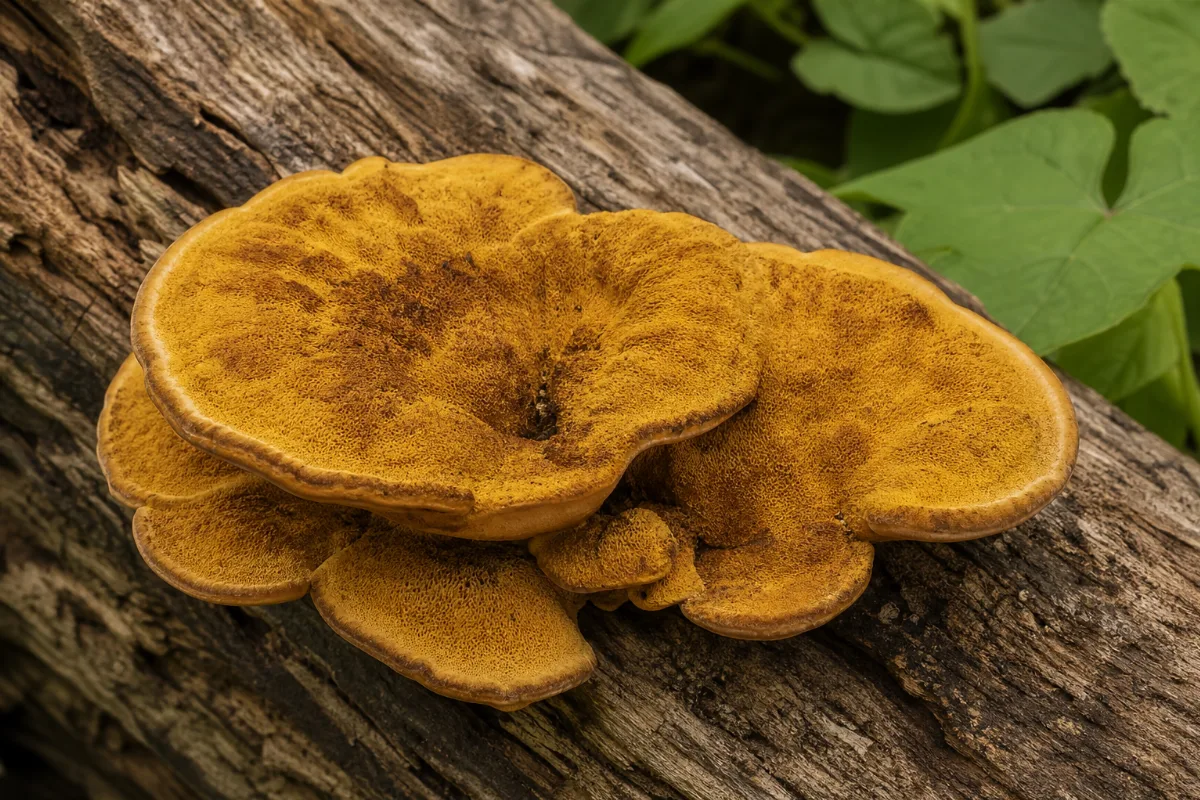
Mushrooms · Medicinal wild polypore
Mustard yellow polypore
Phellinus gilvus (also written Fuscoporia gilva) · also called Mustard yellow polypore; "mulberry Sanghuang" in some Chinese papers (a trade-style name)
Mustard yellow polypore is a hard, woody fungus that grows on trees. It belongs to the group of sanghuang mushrooms used in East Asian traditional medicine. Everything we found about it comes from test tubes, cells and animals; no study in people was found. The names in this group are muddled, so a label may not say which fungus is inside. Do not pick wild fungi for use as a remedy.
General information, not medical advice. Last substantive update · Not medically reviewed. A named clinician has not signed off on this page. How this page is made
About Mustard yellow polypore
Mustard yellow polypore (Phellinus gilvus) is a woody bracket fungus in the sanghuang group. Only lab and animal research exists: antioxidant tests, cancer cells in dishes, piglet feeding and rat studies. No study in people was found, so we cannot say it helps or harms anyone. Its name is also muddled, which makes labels unreliable.
What it is, and the name problem
Mustard yellow polypore is a hard, wood-rotting bracket fungus. GBIF accepts the name Phellinus gilvus and lists Fuscoporia gilva as a synonym; some recent sources use Fuscoporia gilva as the current name. We could not read Index Fungorum to settle it.
Some Chinese papers call a mulberry strain "mulberry Sanghuang". That is a trade-style description, not a separate species. A 2024 genetic paper says one strain labelled Phellinus gilvus fits Sanghuangporus vaninii. A label saying only Phellinus or sanghuang does not tell you which fungus is inside.
Traditional use
A 2020 genome paper calls P. gilvus a species of Sanghuang, a group used in Chinese traditional medicine. A piglet paper says the Phellinus genus is widely used in Asia for stomach and bowel problems, bleeding and tumours. These statements are about groups of fungi. We found no source for a specific traditional use of P. gilvus itself, and traditional use is not proof that something works.
What the research shows
Antioxidant tests: an ethanol extract of one Colombian collection had the lowest ABTS value of nine wild fungi (36.8 mg/L) and the second-lowest DPPH value (293.5 mg/L). These are chemistry tests, not results in a body.
Cancer cells: a genome paper found the fruiting body worked better than the mycelium against liver cancer cells in a dish, and an isolated phenol slowed mouse melanoma cells. Piglets: 72 piglets fed mycelium for 28 days gained weight like those given an antibiotic and had fewer E. coli. Rats: a polysaccharide extract protected poisoned liver and helped diabetic skin wounds. A blood-sugar test of the extract and isolated compounds was not promising.
None of this shows that taking the fungus changes health in people.
Forms and sourcing
Studies used the dried fruiting body (the woody bracket), mycelium from liquid culture and several solvent extracts. They are not interchangeable: the fruiting body was richer in phenylpropanoids and more active in cell work than the mycelium. We found no standardised consumer product of this species, and no test of heavy metals or other contaminants in it.
As a food
It is a tough woody bracket, and we found no source describing it as a food. One analysis of wild Colombian fruiting bodies found about 32% fibre and 8% protein by dry weight. That does not make it a nutritional food.
At a glance
Traditional uses history, not proof
- A 2020 genome paper calls P. gilvus a species of Sanghuang, a group with long medicinal use in China (Huo 2020).
- A piglet paper says the Phellinus genus is widely used in Asia for stomach and bowel problems, bleeding and tumours (Sun 2020).
- No source describing a specific traditional use of P. gilvus itself was found; traditional use is not proof of benefit.
Studied for research
- Antioxidant activity in the laboratory, insufficient
- Cancer cells in dishes, insufficient
- Inflammation signals in cells, insufficient
- Germs and moulds in dishes, insufficient
- Immune markers and growth in piglets, very low
- Liver protection in poisoned rats, very low
- Wound healing in diabetic rats, very low
- Blood sugar chemistry, against (not promising)
- Food and nutrition, insufficient
Main compounds
- Protocatechualdehyde, a main phenol
- Phenylpropanoids (richer in the fruiting body)
- Lanostane triterpenoids such as gilvsins A to D
Common forms
- Dried fruiting body (the woody bracket)
- Mycelium grown in liquid culture
- Ethanol, ethyl acetate, methanol and water extracts used in labs
- No standard consumer product was found
Research links: GBIF: Phellinus gilvus · Whole-genome paper (abstract) · Piglet feeding study (abstract) · Sanghuang mitogenome naming paper (abstract) · Colombian wild fungi analysis (open access) · 2026 bioactivity study (abstract) · Research Library · Genes & Biomarkers Library
What it is and its history
- Accepted scientific name
- Phellinus gilvus
- Naming authority
- (Schwein.) Pat. (GBIF)
- Synonyms
- Fuscoporia gilva (Schwein.) T.Wagner & M.Fisch. (a synonym in GBIF; used as the current name in some databases and recent papers, not checked in Index Fungorum)
- Common names
- Mustard yellow polypore (English); Mulberry Sanghuang (a trade-style name used in some Chinese papers) (English)
- Family or group
- Hymenochaetaceae (a fungus family of wood-rotting bracket fungi), not a plant
- Classification
- Fungi > Basidiomycota > Agaricomycetes > Hymenochaetales > Hymenochaetaceae > Phellinus > Phellinus gilvus
- Native range
- Not checked in the sources read.
- Habitat
- A wood-rotting bracket fungus; studies collected it in Colombia, Sonora (Mexico) and China, and mention it growing on mulberry.
- What it looks like
- Fruiting body: A woody, yellow-brown bracket (conk) on trees; the studies read here do not give a detailed description.
- Cultivation
- Mycelium was grown in liquid culture for the piglet study; no standard consumer cultivation or product was found.
- Harvest and processing
- Not checked in the sources read.
- Look-alikes and adulterants
- Name: Other sanghuang-group and Phellinus fungi (for example Sanghuangporus vaninii, Phellinus linteus, Porodaedalea and Inonotus species); Note: A 2024 mitogenome paper says such look-alikes were wrongly used as Sanghuang and that a strain labelled P. gilvus S12 fits Sanghuangporus vaninii. Do not identify wild fungi from a photo or an app.
- Sustainability and conservation
- Not checked.
Traditional use and history history, not clinical proof
| Tradition or era | Documented use | Source |
|---|---|---|
| China, the sanghuang group | The Huo 2020 abstract says P. gilvus is a species of Sanghuang that has been "well-documented for various medicinal uses". No tradition specific to P. gilvus itself was confirmed. | p32455007 |
| China, Sanghuang in old medical writing | The 2024 mitogenome paper says Sanghuang is recognised in ancient medical literature, but that look-alike fungi were wrongly used in its place in folk medicine. | p39037499 |
| Asia, Phellinus genus | The PeerJ piglet paper says Phellinus is widely used in Asia for gastroenteric dysfunction, bleeding and tumours. This is about the genus as a whole. Traditional use is not proof of benefit. | p32377455 |
Traditional use shows how it was used. It does not show that it works or is safe today.
What is inside, and how it may work
What it contains and how those compounds act in cells and animals. Laboratory and animal mechanisms are not proven effects in people.
Main compounds
| Compound | Family | Where it is concentrated | Activity studied | Level of evidence |
|---|---|---|---|---|
| Protocatechualdehyde (PCA) | phenolic aldehyde | Not stated in the abstracts | Described as the main phenolic component; lowered inflammation signals and killed mouse melanoma cells in dishes. 3 11 | Laboratory research |
| Phenylpropanoids | phenolic | Fruiting body (richer than mycelium) | Called key anti-cancer components in cell work. 6 | Laboratory research |
| Gilvsins A to D and other lanostane triterpenoids | triterpenoid | Fruiting body | Isolated and described; no useful blood-sugar activity found. 7 | Laboratory research |
| Polysaccharides, quinones and triterpenes (broad groups) | mixed | Not stated | Found in a 2026 metabolic profile; polysaccharide extracts protected rat livers and wounds in animal work. 9 8 2 | Animal research |
Mechanisms, receptors and pathways
| Target or pathway | Gene or receptor | What was found | Level |
|---|---|---|---|
| Cell division and cell death | G0/G1 cell cycle checkpoint; p53 signalling (RNA analysis) | Protocatechualdehyde stopped the cell cycle at G0/G1 and promoted cell death in mouse melanoma cells in a dish; the RNA analysis showed the p53 pathway enhanced. 11 | Laboratory research |
| Inflammation signalling in macrophages | Nitric oxide, COX-2 | An ethyl acetate extract lowered LPS-triggered nitric oxide and COX-2 messenger RNA in mouse macrophage cells. 3 | Laboratory research |
| Innate immune markers in pigs | MPO, IL-1 beta, TNF-alpha | Mycelium in feed raised these blood markers in weaned piglets; the authors read this as stronger innate immunity. 10 | Animal research |
| Liver antioxidant defence | SOD, catalase, glutathione peroxidase | A polysaccharide extract raised liver antioxidant enzymes in poisoned rats. 8 | Animal research |
Absorption, metabolism and elimination
- Absorption
- Not found.
- Distribution
- Not found.
- Metabolism
- Not found.
- Elimination
- Not found.
- Bioavailability
- Not established.
Isolated compounds versus whole extracts
Fruiting body and mycelium are not the same: the genome paper found the fruiting body richer in phenylpropanoids and more active against liver cancer cells in dishes. Studies used ethanol, ethyl acetate, methanol, hexane and water extracts, so results apply to the extract tested only.
Nutritional composition
P. gilvus is a hard, woody bracket, not a food or a nutrient source. In one Colombian dry-basis analysis about a third of the weight was fibre.
3 very low certainty5 not enough evidence1 evidence against
What was looked at
The 9 benefits and uses checked for Mustard yellow polypore, each with how strong the evidence is. Tap one to open it.
- Antioxidant activity in the laboratoryNot enough evidence
- Inflammation signals in cellsNot enough evidence
- Cancer cells in dishesNot enough evidence
- Immune markers and growth in pigletsVery low certainty
- Germs and moulds in dishesNot enough evidence
- Liver protection in ratsVery low certainty
- Wound healing in diabetic ratsVery low certainty
- Blood sugar chemistryEvidence against
- Food and nutritionNot enough evidence
Lab markers tracked in the studies
ABTS and DPPH radical-scavenging IC50Blood MPO, IL-1 beta and TNF-alpha (piglets)ALT, AST and ALP (liver enzymes), rats
What is Mustard yellow polypore good for?
The uses people ask about and how strong the evidence is for each. All of it is lab or animal work.
Benefits, one by one
Each card is a research question, not a promise. Tap a goal to filter. Open a card to see the studies, doses and limits.
Antioxidant activity in the laboratory
Not enough evidenceExtracts of wild fruiting bodies neutralised lab radicals in test-tube assays. This is a chemical test, not a result in a body.
3 studiesStudies used solvent extracts of dried fruiting bodies.
Studies, doses and limits
What the trials found
No human trial of P. gilvus was found in PubMed or Europe PMC searches on 2026-10-25.
Results
70% ethanol extract of one Colombian collection: ABTS IC50 36.8 mg/L (lowest of nine fungi) and DPPH IC50 293.5 mg/L (second lowest). A Mexican study found the most phenols and best antioxidant ranking of three Phellinus species. In a cell study, an ethyl acetate extract was the most active fraction.
Effect sizes as reported
Strong lab radical scavenging; no effect on health shown
Why this rating
Test-tube chemistry only. Radical-scavenging tests do not show a benefit in a body.
Form and dose studied
Studies used solvent extracts of dried fruiting bodies.
Limits
Single collections; chemical tests are not measures of health; extract types differ.
Why researchers looked
Mushrooms in the sanghuang group are often tested for antioxidant chemistry, and phenols are easy to measure.
Traditional use
Not documented for this species itself.
Proposed mechanism Laboratory research
Phenolic compounds such as protocatechualdehyde can neutralise radicals in test tubes.
A proposed mechanism does not show that the effect happens in people.
Nothing is known about safety in people.
Inflammation signals in cells
Not enough evidenceAn ethyl acetate extract and its main phenol lowered inflammation signals in mouse immune cells after a bacterial trigger.
1 studiesEthyl acetate extract; protocatechualdehyde.
Studies, doses and limits
What the trials found
No human trial of P. gilvus was found in PubMed or Europe PMC searches on 2026-10-25.
Results
Ethyl acetate extract lowered LPS-triggered nitric oxide and COX-2 messenger RNA in mouse macrophage cells.
Effect sizes as reported
Cell-dish effect; size not given in the abstract
Why this rating
One cell-line study with an abstract that calls its link to the compound a supposition.
Form and dose studied
Ethyl acetate extract; protocatechualdehyde.
Limits
Mouse cells in a dish; no animal or human test in this paper.
Why researchers looked
Inflammation chemistry is a standard first test for fungal extracts.
Traditional use
Not documented for this species itself.
Proposed mechanism Laboratory research
Lowered nitric oxide and COX-2 gene signal in RAW264.7 macrophage cells.
A proposed mechanism does not show that the effect happens in people.
Nothing is known about safety in people.
Cancer cells in dishes
Not enough evidenceCompounds and extracts slowed or killed cancer cells in dishes. No animal or human cancer test was found. Cell results often do not carry over to people.
2 studiesFruiting body and mycelium extracts; isolated protocatechualdehyde.
Studies, doses and limits
What the trials found
No human trial of P. gilvus was found in PubMed or Europe PMC searches on 2026-10-25.
Results
Fruiting body extract inhibited human liver cancer cells more than mycelium extract. Protocatechualdehyde lowered viability, stopped the cell cycle at G0/G1 and promoted cell death in mouse melanoma cells.
Effect sizes as reported
Cell-dish activity only
Why this rating
Cell lines only, one isolated compound in one study, no animal or human data.
Form and dose studied
Fruiting body and mycelium extracts; isolated protocatechualdehyde.
Limits
Cells in dishes; a dish effect says nothing about swallowed material or about people with cancer.
Why researchers looked
Sanghuang-group fungi are tested for anti-cancer compounds because of their traditional reputation.
Traditional use
The wider Phellinus group is described as used for tumours in Asia (PeerJ background); no tradition specific to P. gilvus was found.
Proposed mechanism Laboratory research
Phenylpropanoids and protocatechualdehyde are thought to act on cell division and cell death in lab work.
A proposed mechanism does not show that the effect happens in people.
Do not replace cancer treatment with this fungus; tell the care team about any product.
Immune markers and growth in piglets
Very low certaintyIn 72 weaned piglets, feed with P. gilvus mycelium gave weight gain like an antibiotic additive and fewer E. coli in the stool. Inflammation-related blood markers also rose.
1 studiesLiquid-culture mycelium mixed into feed.
Studies, doses and limits
What the trials found
No human trial of P. gilvus was found in PubMed or Europe PMC searches on 2026-10-25.
Results
Weight gain did not differ between mycelium and antibiotic groups; MPO, IL-1 beta and TNF-alpha were higher with mycelium than with the antibiotic; E. coli counts fell with both.
Effect sizes as reported
Growth like an antibiotic; higher inflammatory markers
Why this rating
One animal study of 72 piglets for 28 days; no human data; the effect on a pig does not apply to a person.
Form and dose studied
Liquid-culture mycelium mixed into feed.
Who was studied
Weaned piglets
Limits
Funding not stated; the interpretation of higher inflammatory markers is the authors' own.
Why researchers looked
Researchers looked for an alternative to antibiotics in pig feed.
Traditional use
The wider Phellinus group is described as used in Asia for stomach and bowel problems, bleeding and tumours (PeerJ background).
Proposed mechanism Animal research
Mycelium may raise innate immune signals; the authors read the rise in MPO, IL-1 beta and TNF-alpha as better innate immunity.
A proposed mechanism does not show that the effect happens in people.
A rise in inflammatory markers could be harmful for people with autoimmune disease or a transplant; this is a precaution, not a finding in people.
Germs and moulds in dishes
Not enough evidenceSolvent fractions slowed several bacteria and moulds in dishes. Test-tube result only.
2 studiesSolvent fractions and ethanol:water extracts of fruiting bodies.
Studies, doses and limits
What the trials found
No human trial of P. gilvus was found in PubMed or Europe PMC searches on 2026-10-25.
Results
Hexane fraction slowed Staphylococcus aureus and Bacillus subtilis; ethyl acetate fraction slowed Candida albicans, Aspergillus niger and A. flavus. The Colombian study reports its nine extracts all slowed three moulds at the strengths tested.
Effect sizes as reported
Zones of growth inhibition in dishes
Why this rating
Dish tests only; no test in living animals or people.
Form and dose studied
Solvent fractions and ethanol:water extracts of fruiting bodies.
Limits
Bacteria and moulds in dishes are not infections in people.
Why researchers looked
Wood-rotting fungi make compounds that may slow microbes, so fractions are screened.
Traditional use
Not documented for this species itself.
Proposed mechanism Laboratory research
Quinones, triterpenes and polysaccharides were found in the extract profile, but the active compounds are not confirmed.
A proposed mechanism does not show that the effect happens in people.
A fungus extract is not a substitute for antibiotics or antifungal medicines.
Liver protection in rats
Very low certaintyA water extract of polysaccharides protected rat livers from a chemical poison. This is an animal result.
1 studiesAqueous polysaccharide extract (PGP).
Studies, doses and limits
What the trials found
No human trial of P. gilvus was found in PubMed or Europe PMC searches on 2026-10-25.
Results
Pre-treatment lowered the raised ALT, AST and ALP, lowered liver malondialdehyde, raised antioxidant enzymes and eased the tissue damage in carbon-tetrachloride rats.
Effect sizes as reported
Lower liver injury markers in poisoned rats
Why this rating
One rat study using a chemical poison; no human liver data and no safety data in people.
Form and dose studied
Aqueous polysaccharide extract (PGP).
Who was studied
Sprague Dawley rats
Limits
Group sizes not in the abstract; carbon tetrachloride injury differs from human liver disease.
Why researchers looked
Fungal polysaccharides are tested for liver protection in poisoned animals.
Traditional use
Not documented for this species itself.
Proposed mechanism Animal research
Higher antioxidant enzymes and lower liver fat peroxidation in the rat liver.
A proposed mechanism does not show that the effect happens in people.
No source describes the liver safety of P. gilvus in people. Do not take it for liver disease.
Wound healing in diabetic rats
Very low certaintyPolysaccharides applied to skin wounds in diabetic rats closed the wounds faster. No human test.
1 studiesPolysaccharides applied directly to wounds.
Studies, doses and limits
What the trials found
No human trial of P. gilvus was found in PubMed or Europe PMC searches on 2026-10-25.
Results
Treated wounds had reduced contraction and complete re-epithelialisation compared with untreated wounds (p < 0.05).
Effect sizes as reported
Faster skin closure in rats
Why this rating
One short rat study of 5 days of treatment; no human skin test.
Form and dose studied
Polysaccharides applied directly to wounds.
Who was studied
Streptozotocin-diabetic rats
Limits
Group sizes not in the abstract; a 2005 paper.
Why researchers looked
Diabetic rats heal slowly, so they are a common test model.
Traditional use
Not documented for this species itself.
Proposed mechanism Animal research
Not stated in the abstract.
A proposed mechanism does not show that the effect happens in people.
Never put an untested fungus preparation on a diabetic wound; ask a clinician about wound care.
Blood sugar chemistry
Evidence againstA chemistry paper tested the crude extract and isolated triterpenoids for blood-sugar-lowering activity. The authors called the result not promising.
1 studiesCrude extract and isolated triterpenoids.
Studies, doses and limits
What the trials found
No human trial of P. gilvus was found in PubMed or Europe PMC searches on 2026-10-25.
Results
The authors report that hypoglycaemic activity of the crude extract and compounds was not promising for further investigation.
Effect sizes as reported
No useful activity found
Why this rating
The only blood-sugar test we found was negative in the authors' own words.
Form and dose studied
Crude extract and isolated triterpenoids.
Limits
Few details in the abstract.
Why researchers looked
Triterpenoids were isolated and tested for activity.
Traditional use
Not documented for this species itself.
Proposed mechanism Laboratory research
Not applicable; no useful activity found.
A proposed mechanism does not show that the effect happens in people.
Nothing is known about safety in people.
Food and nutrition
Not enough evidenceIt is a hard woody bracket and no source describing it as a food was found. One analysis gives its composition, which is mostly tough fibre.
1 studiesDried wild fruiting body.
Studies, doses and limits
What the trials found
No human trial of P. gilvus was found in PubMed or Europe PMC searches on 2026-10-25.
Results
Dry-basis values for one wild Colombian collection: protein 7.8%, total fibre 31.6%, ether extract (fat) 8.5%, ash 3.0%, copper 15.8 mg/kg, zinc 27.0 mg/kg (Table 2, open full text).
Effect sizes as reported
Descriptive values for one collection
Why this rating
Values come from one collection in one place and say nothing about benefit.
Form and dose studied
Dried wild fruiting body.
Limits
One collection; heavy metals and other contaminants were not reported for this species in the sources read.
Why researchers looked
The Colombian study measured the nutrition of nine wild fungi.
Traditional use
No food use of P. gilvus was found.
Proposed mechanism Analytical
Not applicable.
A proposed mechanism does not show that the effect happens in people.
Do not eat wild fungi you cannot identify with certainty.
Connections to the rest of health
How Mustard yellow polypore connects to the rest of our health knowledge graph. Every link says what kind of connection it is. A safety link (for example to the liver) is a warning, not a benefit. A study that merely mentions a topic never creates a benefit link.
Explore every connection: goals, body systems, organs, symptoms, genes
A. Wellness goals
| Connected to | Kind of connection | Evidence status | Context | Studies |
|---|---|---|---|---|
| Immune Support | Very low certainty | Immune markers and growth in piglets: In 72 weaned piglets, feed with P. gilvus mycelium gave weight gain like an antibiotic additive and fewer E. coli in the stool. Inflammation-related blood markers also rose. | 10 |
B. Body systems
| Connected to | Kind of connection | Evidence status | Context | Studies |
|---|---|---|---|---|
| Immune system | Very low certainty | Inflammatory blood markers rose in piglets; no human data. Preparation or compound: Liquid-culture mycelium in piglet feed |
10 | |
| Immune System | Biological association | Very low certainty | Studied for: Immune markers and growth in piglets | 10 |
| Hepatic System | Biological association | Very low certainty | Studied for: Liver protection in rats | 8 |
| Integumentary System | Biological association | Very low certainty | Studied for: Wound healing in diabetic rats | 2 |
I. Biomarkers
| Connected to | Kind of connection | Evidence status | Context | Studies |
|---|---|---|---|---|
| ABTS and DPPH radical-scavenging IC50 | Biological association | Not enough evidence | Measured in trials: lowered (stronger scavenging). A lab change is not the same as a health benefit. | 4 |
| Blood MPO, IL-1 beta and TNF-alpha (piglets) | Biological association | Very low certainty | Measured in trials: raised. A lab change is not the same as a health benefit. | 10 |
| ALT, AST and ALP (liver enzymes), rats | Biological association | Very low certainty | Measured in trials: lowered. A lab change is not the same as a health benefit. | 8 |
K. Biological pathways
| Connected to | Kind of connection | Evidence status | Context | Studies |
|---|---|---|---|---|
| p53 signalling | Preliminary mechanism | In vitro | Enhanced in mouse melanoma cells after protocatechualdehyde in RNA analysis. | 11 |
L. Active compounds
| Connected to | Kind of connection | Evidence status | Context | Studies |
|---|---|---|---|---|
| Protocatechualdehyde (PCA) | Biological association | In vitro | Described as the main phenolic component; lowered inflammation signals and killed mouse melanoma cells in dishes. | 3 11 |
| Phenylpropanoids | Biological association | In vitro | Called key anti-cancer components in cell work. Preparation or compound: Fruiting body (richer than mycelium) |
6 |
| Gilvsins A to D and other lanostane triterpenoids | Biological association | In vitro | Isolated and described; no useful blood-sugar activity found. Preparation or compound: Fruiting body |
7 |
| Polysaccharides, quinones and triterpenes (broad groups) | Biological association | Animal | Found in a 2026 metabolic profile; polysaccharide extracts protected rat livers and wounds in animal work. | 9 8 2 |
Each connection is stored with the ingredient, the connected record, the kind of connection, the evidence status, the supporting studies, the preparation or compound involved, and a review date (last reviewed October 25, 2026).
Evidence at a glance: what changed in 2 lab markers
Tap a number to show only those markers. Counts are markers, not people.
The evidence
The research centre for Mustard yellow polypore. Every record here was checked against PubMed or the publisher's page; we never list a study we have not verified.
Evidence by outcome
Bars show how many studies we found for each outcome, not how well it works. People are added up across trials only (reviews are not added, to avoid double counting).
How we rate evidence
High certainty
Several well-run trials or reviews agree; further research is unlikely to change the picture much.
Moderate certainty
Good trials point the same way, but some doubt remains.
Low certainty
Small, short or inconsistent trials. The finding could change with better research.
Very low certainty
Very little or very weak human data. Treat as a possibility only.
Mixed findings
Trials or reviews disagree with each other.
Not enough evidence
Not enough human research to say either way.
Evidence against
Good research found no benefit, or found harm.
We take the reviewers' own risk-of-bias and GRADE statements where they exist, and otherwise judge from study size, design, consistency, directness and whether a product matches what is sold. Many publications do not make evidence high. Method note: We searched PubMed and Europe PMC for the species name and read the abstracts of 11 papers, plus the open full text of the Colombian study for the figures quoted. The taxonomy was checked in GBIF. Index Fungorum could not be read, and no regulator page for this species was found. Certainty ratings are the compiler's own reading. All findings are lab or animal work; none is from people. No study is cited that we could not verify.
Study library: every study we checked 12
| Study | Design | People | Product, dose, length | Result |
|---|---|---|---|---|
| Ayala-Zavala 2012 Antioxidant and antifungal potential of methanol extracts of Phellinus spp. from Sonora, Mexico. Revista Iberoamericana de Micologia · PMID 22100531 · DOI |
Lab study fungus (in vitro) |
Three Phellinus species from Sonora, Mexico (P. gilvus, P. rimosus, P. badius) | Methanol extracts of the fungi Not shown here · vs Other two Phellinus species |
P. gilvus had the most phenols (49.31 mg gallic acid equivalents per g) and flavonoids (30.58 mg quercetin equivalents per g) and the best antioxidant ranking of the three. All three extracts slowed growth of Alternaria alternata. Best antioxidant ranking of three Phellinus species in lab tests Methods, limits and fundingOutcomes: Total phenols, flavonoids, antioxidant tests, growth of the plant mould Alternaria alternata Limitations: Test-tube study of one batch per species; a plant mould, not a human infection. Funding and conflicts: Research support, non-US government (per record) Read: abstract |
| Bae 2005 Polysaccharides isolated from Phellinus gilvus enhances dermal wound healing in streptozotocin-induced diabetic rats. Journal of Veterinary Science · PMID 15933438 |
Animal trial rat |
Diabetic rats (induced with streptozotocin) with 6 mm skin wounds | Polysaccharides isolated from P. gilvus, applied to wounds Not shown here 5 days of twice-daily application · vs Untreated wounds |
Treated wounds showed significantly reduced wound contraction and complete re-epithelialisation compared with non-treated wounds (p < 0.05). Faster skin closure in diabetic rats Methods, limits and fundingOutcomes: Wound contraction and re-epithelialisation Limitations: Rat study; a few days; no human test. Group sizes not in the abstract. Funding and conflicts: Research support, non-US government (per record) Read: abstract |
| Chang 2011 In vitro antioxidant and anti-inflammatory activities of protocatechualdehyde isolated from Phellinus gilvus. Journal of Nutritional Science and Vitaminology · PMID 21512301 · DOI |
Lab study fungus (in vitro) |
Solvent extracts of P. gilvus tested on mouse macrophage cells (RAW264.7) and in a radical-scavenging test | Ethyl acetate extract of P. gilvus and its main phenolic, protocatechualdehyde (PCA) Not shown here · vs Other solvent extracts |
The ethyl acetate extract was the most active fraction: strong radical scavenging and lower LPS-triggered nitric oxide and COX-2 messenger RNA in the cells. Six major compounds were found and PCA was "supposed" to be the main phenolic behind these effects. The authors say further lab and animal work is under way. Lab antioxidant and anti-inflammatory signals in cells Methods, limits and fundingOutcomes: DPPH radical scavenging; nitric oxide and COX-2 gene signal after LPS in cells Limitations: Cell and test-tube work only; the link to PCA is a supposition in the abstract. Funding and conflicts: Research support, non-US government (per record) Read: abstract |
| Davila Giraldo 2023 Nutritional Value and Antioxidant, Antimicrobial and Cytotoxic Activity of Wild Macrofungi. Microorganisms · PMID 37317132 · DOI |
Lab study fungus (in vitro) |
Nine species of wild fungi collected in Ibague, Tolima, Colombia; P. gilvus was one | 70% ethanol (ethanol:water 70:30) extract of wild fruiting bodies, dried fruiting body Not shown here · vs Other eight wild fungi in the same study; a Trolox reference |
In the full text, P. gilvus had the lowest ABTS IC50 of the nine (36.8 mg/L, n = 7) and the second-lowest DPPH IC50 (293.5 mg/L; Ganoderma australe was lower at 88.3). Dry-basis analysis of P. gilvus: protein 7.8%, total fibre 31.6%, ether extract (fat) 8.5%, ash 3.0%, copper 15.8 mg/kg and zinc 27.0 mg/kg (read from Tables 2 and 5 in the open full text; unit headings in Table 2 are read as shown). The abstract names other species as the best antimicrobials. Strong lab radical scavenging for one collection of wild fruiting bodies Methods, limits and fundingOutcomes: Protein, fibre, fat, ash and minerals; radical-scavenging (ABTS, DPPH); antimicrobial tests; leukocyte cell viability Limitations: One collection from one place; n not stated for the nutrient table; chemical tests, not a body. The funding lists a Colombian government and World Bank project on beta-glucans. The journal reference here follows PubMed (Microorganisms 2023;11(5):1158). Funding and conflicts: Alianza Colombia Cientifica (Colombian government and World Bank) project listed as grant Read: abstract and full text (open access) |
| Feng 2024 Distinguishing Sanghuangporus from sanghuang-related fungi: a comparative and phylogenetic analysis based on mitogenomes. Applied Microbiology and Biotechnology · PMID 39037499 · DOI |
Taxonomy study fungus |
Mitochondrial genomes of Sanghuang and sanghuang-like fungi | Genetic comparison Not shown here |
The authors say various look-alike fungi (mainly Porodaedalea, Phellinus and Inonotus) were wrongly used as Sanghuang in folk medicine, and that the mitogenomes give strong evidence for reclassifying one strain named Phellinus gilvus S12 as Sanghuangporus vaninii. Strain names in the sanghuang group can be wrong Methods, limits and fundingOutcomes: Whether Sanghuangporus species form a distinct group; naming of sanghuang-like fungi Limitations: About one strain labelled P. gilvus; does not show how common mislabelling is in products. Funding and conflicts: Chinese government and provincial research programmes (per record) Read: abstract |
| Huo 2020 Whole-genome sequence of Phellinus gilvus (mulberry Sanghuang) reveals its unique medicinal values. Journal of Advanced Research · PMID 32455007 · DOI |
Lab study fungus (in vitro) |
P. gilvus genome and liver cancer cell lines | P. gilvus fruiting body and mycelium extracts fruiting body and mycelium Not shown here · vs Mycelium versus fruiting body |
The authors sequenced a 41.11 Mb genome, said phenylpropanoids are the key anti-cancer components, and reported that the fruiting body inhibited liver cancer cells in a dish more effectively than the mycelium. The fruiting body was rich in phenylpropanoids. Cell-dish activity against liver cancer cells; fruiting body stronger than mycelium Methods, limits and fundingOutcomes: Genome sequence; effect of extracts on hepatocellular carcinoma cells; chemical profile (HR-ESI-MS) Limitations: Cell lines only. Names the species "Phellinus gilvus (Schwein.) Pat" and calls it a sanghuang species; later mitochondrial work questions some strain names. Funding and conflicts: Funding not stated in the abstract Read: abstract |
| Liu 2009 Lanostane-triterpenoids from the fungus Phellinus gilvus. Phytochemistry · PMID 19261312 · DOI |
Lab study fungus (in vitro) |
Chemical isolation from P. gilvus fruiting bodies | Triterpenoids (gilvsins A to D) and two known compounds; crude extract tested for blood-sugar-lowering activity fruiting body Not shown here |
Gilvsins A to D were isolated and described, along with 24-methylenelanost-8-ene-3beta,22-diol and 5alpha-ergosta-7,22-diene-3-one. The authors tested blood-sugar-lowering activity of the crude extract and compounds and found it "not promising for further investigation". Chemistry reported; no useful blood-sugar activity Methods, limits and fundingOutcomes: Compounds isolated; hypoglycaemic activity of extract and compounds Limitations: Chemistry paper; the blood-sugar test details are not in the abstract. Funding and conflicts: Research support, non-US government (per record) Read: abstract |
| Park 2009 Hepatoprotective Effects of Polysaccharides Isolated from Phellinus gilvus Against Carbon Tetrachloride-induced Liver Injury in Rats. Toxicological Research · PMID 32038816 · DOI |
Animal trial rat |
Sprague Dawley rats given carbon tetrachloride (CCl4) to injure the liver, in 5 groups | Aqueous polysaccharide extract of P. gilvus (PGP) given before CCl4 Not shown here · vs Normal control and CCl4-only control |
PGP pre-treatment lowered the CCl4-raised ALT, AST and ALP, lowered liver malondialdehyde in a dose-dependent way, raised liver antioxidant enzymes and eased the tissue damage seen under the microscope. Protected rat livers from a chemical poison Methods, limits and fundingOutcomes: Liver enzymes (ALT, AST, ALP), liver lipid peroxide, antioxidant enzymes, liver tissue appearance Limitations: Rat study with a chemical liver poison; says nothing about people. Group sizes not in the abstract. Funding and conflicts: Funding not stated in the abstract Read: abstract |
| Sharif 2026 Bioactivity assessment and metabolic profiling of Phellinus gilvus. A pathway to novel therapeutics. Food Science and Biotechnology · PMID 42534725 · DOI |
Lab study fungus (in vitro) |
Solvent fractions of P. gilvus tested on bacteria, moulds, cells and red blood cells in dishes | P. gilvus extract fractions (hexane, ethyl acetate and others) Not shown here · vs Bacteria and fungi in dishes |
The hexane fraction slowed Staphylococcus aureus and Bacillus subtilis; the ethyl acetate fraction slowed Candida albicans, Aspergillus niger and A. flavus. Most extracts had antioxidant activity, up to 78% for the ethyl acetate fraction. The authors say cell toxicity and haemolysis were within an acceptable range and "confirmed the safety profile for the fractions". The profile showed polysaccharides, quinones and triterpenes. Lab activity against some microbes; says nothing about use in people Methods, limits and fundingOutcomes: Antibacterial, antifungal and antioxidant activity; cell toxicity and red blood cell breakage (haemolysis) Limitations: Test-tube study. Identity of the specimen and the exact toxicity figures are not in the abstract. The safety wording is the authors' own and does not apply to eating or taking the fungus. Funding and conflicts: Funding not stated in the abstract Read: abstract |
| Sun 2020 Impact of Phellinus gilvus mycelia on growth, immunity and fecal microbiota in weaned piglets. PeerJ · PMID 32377455 · DOI |
Animal trial pig |
72 72 crossbred weaned piglets, 4 pens per group with 6 piglets per pen |
P. gilvus mycelia mixed into feed mycelium (liquid culture) Not shown here 28 days · vs Basal diet (control) and an antibiotic growth promoter (aureomycin and kitasamycin) |
Daily weight gain was higher with mycelium and with the antibiotic than control, with no significant difference between them. Both raised serum MPO, IL-1 beta and TNF-alpha compared with control, and the mycelium group was significantly higher than the antibiotic group. Faecal E. coli counts fell with both. Gut bacteria changed only slightly with mycelium (more Alloprevotella). Piglet growth like an antibiotic additive; higher inflammatory blood markers Methods, limits and fundingOutcomes: Weight gain, feed intake, blood IgG, IL-1 beta, TNF-alpha and MPO, faecal E. coli counts, gut bacteria Limitations: Animal study. The authors read the rise in markers as better innate immunity; a rise in inflammatory markers could also be read as inflammation. Not tested in people. Funding and conflicts: Funding not stated in the abstract Read: abstract |
| Zhong 2020 Phellinus gilvus-derived protocatechualdehyde induces G0/G1 phase arrest and apoptosis in murine B16-F10 cells. Molecular Medicine Reports · PMID 31894337 · DOI |
Lab study mouse cell line |
Mouse melanoma cell line B16-F10 | Protocatechualdehyde (PCA), a phenol from P. gilvus Not shown here · vs Untreated cells |
PCA lowered cell viability, stopped the cell cycle at G0/G1 and promoted cell death in mouse melanoma cells. Gene activity changes included more histone-modification genes and fewer DNA repair and replication genes. Cell-dish anti-cancer signal for one isolated compound Methods, limits and fundingOutcomes: Cell viability, cell cycle, cell death, gene activity Limitations: Mouse cells in a dish; an isolated compound, not the whole fungus; no animal or human test. Funding and conflicts: Funding not stated in the abstract Read: abstract |
| n/a 2026 GBIF Backbone Taxonomy: Phellinus gilvus (Schwein.) Pat. and Fuscoporia gilva (Schwein.) T.Wagner & M.Fisch. GBIF API (checked 2026-10-25) · Source |
Taxonomy record n/a |
n/a | n/a Not shown here |
GBIF returned Phellinus gilvus (key 2520519) as ACCEPTED in family Hymenochaetaceae, order Hymenochaetales, and returned Fuscoporia gilva (key 2520543) as a SYNONYM of it. Naming record only Methods, limits and fundingOutcomes: Accepted name and synonym status Limitations: GBIF is one database. Other databases and recent papers may use Fuscoporia gilva as the current name; Index Fungorum could not be read (blocked), so that was not checked. Funding and conflicts: Open database Read: record read via API |
What we do not know yet
- No human trial, case report or cohort was found.
- Which strain and species were tested is not always clear, and strain names in the sanghuang group can be wrong.
- No animal cancer study of the fungus was found.
- No safety, interaction, contamination or pregnancy data.
- The accepted name differs between databases; Index Fungorum was not checked.
How new research is added
New studies are found by a saved PubMed search and placed in a review queue. A person reads each one before it changes any evidence rating or safety wording.
Lab markers
What changed in blood or saliva tests during trials. A changed number is not the same as feeling or being healthier, and we give no "normal ranges".
Other 3
ABTS and DPPH radical-scavenging IC50
Lowered (stronger scavenging) in trials
The concentration of an extract needed to neutralise half of a lab chemical radical. Lower means a stronger test-tube effect.
Not enough evidenceResults and what it means
Why it was measured
A cheap chemical test of antioxidant chemistry.
Statistical vs. clinical meaning
A lab chemistry value; not a health outcome.
Safety implication
None known; not tested in people.
| Study | Result | People | Product |
|---|---|---|---|
| 4 | ABTS IC50 36.8 mg/L and DPPH IC50 293.5 mg/L (mean, n = 7) | One Colombian collection of wild P. gilvus fruiting bodies | 70% ethanol extract |
Blood MPO, IL-1 beta and TNF-alpha (piglets)
Raised in trials
Markers of innate immune and inflammatory activity measured in blood.
Very low certaintyResults and what it means
Why it was measured
Used to judge immune activity in the piglet study.
Statistical vs. clinical meaning
Statistically significant in pigs; whether it is helpful or a sign of inflammation is open.
Safety implication
A rise in inflammatory markers is a reason for caution in autoimmune disease or after a transplant.
| Study | Result | People | Product |
|---|---|---|---|
| 10 | All three were higher with mycelium and with the antibiotic than control, and higher with mycelium than with the antibiotic (p < 0.05) | 72 weaned piglets | Mycelium in feed versus antibiotic versus control, 28 days |
ALT, AST and ALP (liver enzymes), rats
Lowered in trials
Blood enzymes that rise when the liver is injured.
Very low certaintyResults and what it means
Why it was measured
Standard markers of liver injury in the rat model.
Statistical vs. clinical meaning
Significant in rats; no human data.
Safety implication
No human liver safety data exist for P. gilvus.
| Study | Result | People | Product |
|---|---|---|---|
| 8 | The raised ALT, AST and ALP in CCl4 rats were significantly lowered by pre-treatment | Sprague Dawley rats given CCl4 | P. gilvus polysaccharide extract before CCl4 |
Safety
What studies and official sources say about side effects, medicines and who should check first. Each point shows what kind of evidence it comes from.
Main points to know 4
- No human safety data were found. No trial, case report or cohort of mustard yellow polypore (Phellinus gilvus) in people was found, so its effects, side effects and interactions in people are unknown. Lack of a report is not proof of safety. Absence of evidence 10 9
- Wild woody fungi are not safe to pick and use from a photo. Mustard yellow polypore is a hard, wood-rotting bracket that has look-alikes in the same family. A 2024 genetic paper says look-alike fungi were wrongly used as Sanghuang in folk medicine and that one strain labelled Phellinus gilvus fits another species. Do not identify wild fungi from a photo or an app. Taxonomy study 5 12
- A rise in inflammatory markers was seen in piglets. In piglets, feed with the mycelium raised blood inflammatory markers (MPO, IL-1 beta, TNF-alpha) more than an antibiotic did. The authors read it as stronger innate immunity. In people with autoimmune disease or a transplant, immune-active fungi are a reason to ask a doctor first. This is a precaution, not a finding in people. Animal study 10
- Lab toxicity checks are minimal. A 2026 lab study says cell toxicity and red blood cell breakage were within an acceptable range for its fractions. This is an abstract-only reading and says nothing about swallowing the fungus. Laboratory research 9
Side effects 1
| Effect | How often | Severity and recovery | Evidence |
|---|---|---|---|
| No adverse effects in people have been reported In piglets, the studied feed gave weight gain like an antibiotic; no ill effects are described in the abstract, but side effects were not the study aim. | No human use was found, so no rate exists | unknown unknown | Absence of evidence 10 |
Liver
No report of liver injury from P. gilvus was found. A rat study used a polysaccharide extract to protect against a chemical liver poison, but that does not show safety in people. LiverTox was not found to have an entry for this species. 8
How often. No rate in users can be given because no human use was found.
Monitoring. No monitoring advice from an agency was found. Anyone with liver disease should ask a doctor before using any fungus product.
This is a safety connection. It is not evidence that Mustard yellow polypore supports liver health.
Medicines and supplements 3
| With | Why it matters | Importance | Evidence | What to do |
|---|---|---|---|---|
| Immune-suppressing medicines (for example after a transplant) and medicines for autoimmune disease prescription | In piglets, the mycelium raised innate immune and inflammatory blood markers. | Unknown in people. Theoretical caution only. | Theory from animal Not enough evidence 10 | Tell your doctor or pharmacist about any Phellinus or sanghuang product. |
| Cancer treatment (chemotherapy, radiotherapy, immunotherapy) prescription | Cell-dish anti-cancer and immune effects have been described; no interaction study exists. | Unknown. No data on whether it helps or interferes. | Absence of evidence Not enough evidence 6 11 | Tell the cancer care team about any fungus product before using it. |
| Antibiotics, antifungals, blood thinners and diabetes medicines prescription | No interaction data for P. gilvus were found; lab antimicrobial and blood-sugar tests exist but are not interaction studies. | Unknown. | Absence of evidence Not enough evidence 9 7 | Ask a pharmacist before combining any fungus product with medicines. |
Who should check first 5
| Situation | Advice | Evidence |
|---|---|---|
| Pregnancy and breastfeeding | No data were found. Avoid it, or ask a clinician. | Absence of evidence |
| Children | No data were found. Not suitable to give to children. | Absence of evidence |
| Autoimmune disease, organ transplant or immune-suppressing medicines | Ask a doctor first; immune-active fungi are a theoretical concern. | Theory from animal 10 |
| Cancer treatment | Do not replace treatment; tell the care team about any product. | Absence of evidence 6 |
| Liver disease | No human liver data exist; ask a doctor first. | Absence of evidence 8 |
Overdose, product quality and regulators
Summary. No poisoning from P. gilvus has been described in the sources read, and no human exposure was found. The fungus is a hard wood-rotting bracket, and no source describes it as a food.
Animal. In piglets, a mycelium feed for 28 days gave growth like an antibiotic; no deaths or illness are described in the abstract. A rat study used the polysaccharide extract against a chemical poison and does not test toxicity of the extract itself.
High dose or long term signals. Not studied.
Overdose response. No description found. For any suspected poisoning, get urgent medical help.
Genotoxicity. Not found.
Toxic or hazardous parts. Fungus: the fruiting body and cultured mycelium were used in studies. No comparison of toxicity between parts was found.
No test of heavy metals, pesticides or mould toxins in P. gilvus products was found. Wild fungi can take up metals from where they grow, but no species-specific measurement was read.
Which species is really inside. A 2024 genetic paper says various look-alike fungi were used as Sanghuang and that one strain named Phellinus gilvus fits Sanghuangporus vaninii. A label saying only Phellinus or sanghuang does not tell you whether this species is inside. 5
Naming of this species. GBIF accepts Phellinus gilvus and lists Fuscoporia gilva as a synonym; some recent literature uses Fuscoporia gilva as the current name. Index Fungorum could not be read. 12
Fruiting body versus mycelium. Cell studies found that the fruiting body was more active than the mycelium against liver cancer cells, so the two forms are not interchangeable. 6
| Body | Action | Date |
|---|
When to get medical help
- Yellow skin or eyes, dark urine or severe belly pain after any fungus product: stop it and get medical help now.
- Swelling of the face or throat, trouble breathing or a widespread rash: get emergency help.
- If you ate a wild fungus and feel sick, call poison control or emergency services and keep a sample if you can.
If someone may be poisoned or in a crisis, contact a clinician or emergency service straight away. In the US, Poison Control is 1-800-222-1222.
General information only, not medical advice. Ask a clinician or pharmacist before use, especially with medicines, in pregnancy or with a health condition. See the Natural Remedy Safety guide.
Frequently asked questions
What is mustard yellow polypore?
Is it the same as Fuscoporia gilva?
GBIF accepts Phellinus gilvus and lists Fuscoporia gilva as a synonym. Some databases and recent papers use Fuscoporia gilva as the current name. They describe the same fungus. We could not read Index Fungorum to check.
Is it the same as sanghuang?
Is there any research in people?
Does it help with cancer or the immune system?
Is it safe?
Can you eat it?
It is a tough woody bracket, and we found no source describing it as a food. One analysis found about a third of its dry weight was fibre.
Can I pick it in the wild and use it?
No. Wild fungi cannot be identified safely from text, photos or an app, and look-alike fungi in the same group have been mixed up in folk medicine. Do not collect wood-rotting brackets for use as medicine.
Does it interact with medicines?
No interaction study exists. As a precaution, tell your doctor or pharmacist about any Phellinus or sanghuang product, especially with cancer treatment, autoimmune disease or a transplant.
Is it safe in pregnancy or for children?
No data were found, so avoid it or ask a clinician.
Is the fruiting body the same as the mycelium?
No. In cell work the fruiting body had more phenylpropanoids and worked better against liver cancer cells than the mycelium. Studies used different forms and extracts, so results apply only to the form tested.
Where can I read about the better-studied cousins?
See the Phellinus and sanghuang pages for the genus, and Korean sanghuang for a related species. Human research on those is small but exists.
Explore by health goal
Editorial transparency
- Written by
- AlternativeMed editorial team. Research compiled with AI assistance, then checked against PubMed records.
- Medical review
- None. This page has not been reviewed by a physician or pharmacist.
- First published
- 2026-10-25
- Last substantive update
- 2026-10-25
- How we research
- We searched PubMed and Europe PMC for the species name and read the abstracts of 11 papers, plus the open full text of the Colombian study for the figures quoted. The taxonomy was checked in GBIF. Index Fungorum could not be read, and no regulator page for this species was found. Certainty ratings are the compiler's own reading. All findings are lab or animal work; none is from people. No study is cited that we could not verify.
- How we rate evidence
- See "How we rate evidence" in the Evidence tab.
- Independence
- No product is promoted on this page. No affiliate links are shown, and none will be added.
Sources 12
Each source was opened and checked. Where we read only the abstract, it says so. The small numbers in the text point here.
- Ayala-Zavala JF, et al. Antioxidant and antifungal potential of methanol extracts of Phellinus spp. from Sonora, Mexico.. Revista Iberoamericana de Micologia. 2012. PMID 22100531. DOI 10.1016/j.riam.2011.09.004. (abstract)
- Bae JS, et al. Polysaccharides isolated from Phellinus gilvus enhances dermal wound healing in streptozotocin-induced diabetic rats.. Journal of Veterinary Science. 2005. PMID 15933438. (abstract)
- Chang ZQ, et al. In vitro antioxidant and anti-inflammatory activities of protocatechualdehyde isolated from Phellinus gilvus.. Journal of Nutritional Science and Vitaminology. 2011. PMID 21512301. DOI 10.3177/jnsv.57.118. (abstract)
- Davila Giraldo LR, et al. Nutritional Value and Antioxidant, Antimicrobial and Cytotoxic Activity of Wild Macrofungi.. Microorganisms. 2023. PMID 37317132. DOI 10.3390/microorganisms11051158. (abstract and full text (open access))
- Feng XL, et al. Distinguishing Sanghuangporus from sanghuang-related fungi: a comparative and phylogenetic analysis based on mitogenomes.. Applied Microbiology and Biotechnology. 2024. PMID 39037499. DOI 10.1007/s00253-024-13207-1. (abstract)
- Huo J, et al. Whole-genome sequence of Phellinus gilvus (mulberry Sanghuang) reveals its unique medicinal values.. Journal of Advanced Research. 2020. PMID 32455007. DOI 10.1016/j.jare.2020.04.011. (abstract)
- Liu HK, et al. Lanostane-triterpenoids from the fungus Phellinus gilvus.. Phytochemistry. 2009. PMID 19261312. DOI 10.1016/j.phytochem.2009.01.015. (abstract)
- Park SC, et al. Hepatoprotective Effects of Polysaccharides Isolated from Phellinus gilvus Against Carbon Tetrachloride-induced Liver Injury in Rats.. Toxicological Research. 2009. PMID 32038816. DOI 10.5487/TR.2009.25.1.029. (abstract)
- Sharif M, et al. Bioactivity assessment and metabolic profiling of Phellinus gilvus. A pathway to novel therapeutics.. Food Science and Biotechnology. 2026. PMID 42534725. DOI 10.1007/s10068-026-02199-5. (abstract)
- Sun Y, et al. Impact of Phellinus gilvus mycelia on growth, immunity and fecal microbiota in weaned piglets.. PeerJ. 2020. PMID 32377455. DOI 10.7717/peerj.9067. (abstract)
- Zhong S, et al. Phellinus gilvus-derived protocatechualdehyde induces G0/G1 phase arrest and apoptosis in murine B16-F10 cells.. Molecular Medicine Reports. 2020. PMID 31894337. DOI 10.3892/mmr.2019.10896. (abstract)
- n/a. GBIF Backbone Taxonomy: Phellinus gilvus (Schwein.) Pat. and Fuscoporia gilva (Schwein.) T.Wagner & M.Fisch.. GBIF API (checked 2026-10-25). 2026. (record read via API)


