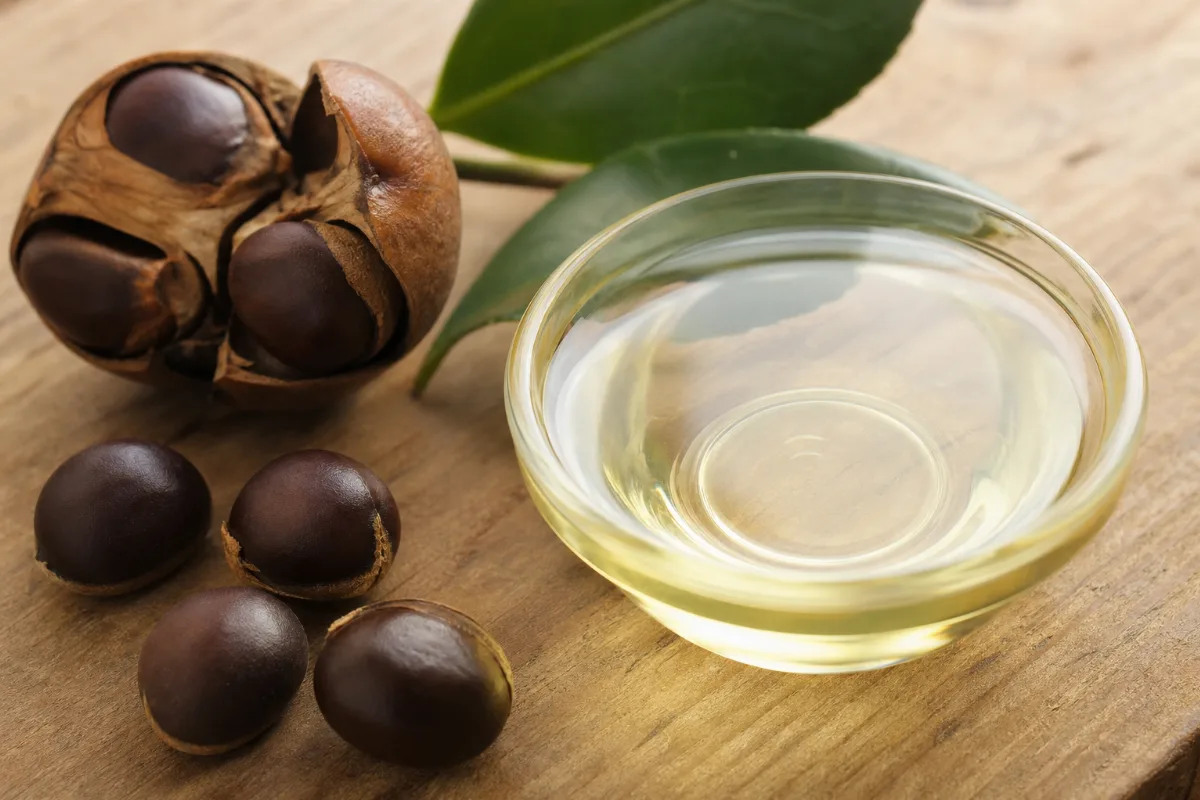
Natural Oils & Butters · Carrier oil
Camellia Oil (Tsubaki)
Camellia oleifera Abel. (seed oil); tsubaki oil is traditionally Camellia japonica L. · also called Camellia seed oil, tea seed oil (oil-tea camellia), tsubaki oil, "Oriental olive oil" (one review's name). Not the same as tea tree oil.
Camellia oil is pressed from the seeds of Camellia trees, mainly Camellia oleifera in China and Camellia japonica (tsubaki) in Japan. It is used for cooking, skin and hair. Human research is small: two cooking-oil trials in women, and one hospital skin study where the oil was used with a device. Eczema and dry-skin results are from mice only. Labels do not always say which species is in the bottle, and cheaper oils can be mixed in.
General information, not medical advice. Last substantive update · Not medically reviewed. A named clinician has not signed off on this page. How this page is made
About Camellia Oil (Tsubaki)
Camellia oil is a seed oil used for cooking, skin and hair. The human research is small and mostly compares it with soybean oil, not with no oil. Eczema and dry-skin results are from mice. No serious harm was found, but allergy, pregnancy and medicine interactions have not been studied. Labels may not name the species, and the oil can be mixed with cheaper oils.
What it is
Camellia oil is pressed from the seeds of Camellia oleifera (GBIF accepts this name), grown in China as 'oil tea'. Japanese tsubaki oil is traditionally from Camellia japonica. Seed oils from other Camellia species, even the tea plant, are also pressed.
It is rich in monounsaturated fat like olive oil, mainly oleic acid, with some linoleic acid, squalene and vitamin E. It is not tea tree oil, which is a different plant.
How it is used
The human studies cover oil eaten as the cooking oil, and oil applied to the skin of hospital patients. Lab studies cover hair fibres. Many skin and hair products mix it with other ingredients, so their results are not results for the plain oil.
What the research shows
The best human evidence is two small trials in women using camellia oil as the cooking oil. In 90 women, weight did not differ between camellia, olive and soybean oil; the liver enzyme AST fell more than with soybean oil. In 50 women with high cholesterol, some oxidative stress and inflammation markers fell compared with soybean oil.
For skin, one hospital study used the oil with a device, and the oil's own effect is unclear. Eczema, dry-skin and artery results are from mice. Reviews list more benefits, mostly from cell and animal work.
Rules and labels
No regulator statement on camellia oil was read for this profile. Look for the plant name on the label (for example Camellia oleifera seed oil) rather than just 'camellia oil', and ask the maker which species is used if allergy matters.
At a glance
Traditional uses history, not proof
- Aged Camellia oleifera oil is described as a folk remedy for eczema-like skin by the Gannan Hakka people in China (mouse-study authors, not independently verified).
- Used as an edible oil, called 'Oriental olive oil' in a 2026 review.
- Used in cosmetics and skin products (review authors).
Studied for research
- Skin inflammation from incontinence in intensive care (oil plus device), very low
- Eczema-like skin (mice only), insufficient
- Dry skin (mice and cells only), insufficient
- Hair fibre strength (lab test), insufficient
- Weight, blood fats and liver enzyme when used as cooking oil, low
- Oxidative stress and inflammation markers in women with high cholesterol, low
- Artery plaque (mice only), insufficient
Main compounds
- Oleic acid (monounsaturated fat)
- Linoleic acid (omega-6)
- Squalene
- Vitamin E (alpha- and gamma-tocopherol)
- Catechin and epicatechin
Common forms
- Pressed or refined seed oil (food or skin)
- Aged traditional oil (folk use)
- Skin products and hair oils containing the oil
Research links: Feeding trial of camellia seed, olive and soybean oil (abstract) · Camellia oil and oxidative stress in women (abstract) · Incontinence skin inflammation in intensive care (abstract) · Mouse eczema study with aged oil (abstract) · Review of camellia oil quality and mislabelling (abstract) · Detecting added oils in camellia oil (abstract) · Research Library · Genes & Biomarkers Library
What it is and its history
- Accepted scientific name
- Camellia oleifera (main commercial source) and Camellia japonica (traditional source of tsubaki oil)
- Naming authority
- Abel. (C. oleifera); L. (C. japonica)
- Common names
- Camellia oil (English); Camellia seed oil (English); Tea seed oil (oil-tea camellia) (English (research and trade name)); Oriental olive oil (English (name used by a 2026 review for C. oleifera oil)); Tsubaki oil (Japanese name for camellia oil)
- Family or group
- Theaceae (the tea family)
- Classification
- Plantae > Tracheophyta > Magnoliopsida > Ericales > Theaceae > Camellia > Camellia oleifera / Camellia japonica
- Native range
- Not checked in the sources read (the studies are from China, Taiwan, Thailand and Korea).
- Habitat
- Not checked.
- What it looks like
- Roots: Not checked.; Stems: Not checked.; Leaves: Not checked.; Flowers: Not checked.; Fruit: The seeds are pressed for the oil. Camellia japonica seeds taste extremely bitter when chewed (Kim 2026).
- Cultivation
- Camellia oleifera is grown for its seed oil in China (several studies call it 'oil tea').
- Harvest and processing
- Oil can be pressed mechanically or extracted with solvents, and refined; the sources read describe aqueous, enzyme-assisted, ultrasound and microwave methods in the lab. Refining changes the contaminant profile (higher short-chain PFAS in highly refined oils).
- Look-alikes and adulterants
- Name: Oils from other Camellia species; Note: Camellia japonica, Camellia sinensis and others are pressed too; the species is often not on the label.; Name: Tea tree oil (Melaleuca); Note: A different plant and an essential oil, not related to camellia oil.; Name: Cheaper oils mixed in; Note: Soybean, rapeseed, corn or peanut oil can be added to camellia oil (lab test, 2026).
- Sustainability and conservation
- Not checked.
Traditional use and history history, not clinical proof
| Tradition or era | Documented use | Source |
|---|---|---|
| Folk medicine of the Gannan Hakka people, China | Aged Camellia oleifera oil is described by the authors of a 2024 mouse study as an effective empirical plant oil used by the Gannan Hakka people to ease eczema-like skin symptoms. This is the authors' statement; they say no scientific study had confirmed it before their own. | p39697554 |
| Edible oil use | A 2026 review calls Camellia oleifera oil 'Oriental olive oil' and says it is used in foods, supplements and cosmetics. A 2016 trial authors describe camellia oil as commonly used as an adjuvant in medicine. Neither claim was verified independently. | p40540300 |
Traditional use shows how it was used. It does not show that it works or is safe today.
What is inside, and how it may work
What it contains and how those compounds act in cells and animals. Laboratory and animal mechanisms are not proven effects in people.
Main compounds
| Compound | Family | Where it is concentrated | Activity studied | Level of evidence |
|---|---|---|---|---|
| Oleic acid PubChem 445639 | monounsaturated fatty acid (omega-9) | Seed oil One of the three most abundant fatty acids in aged C. oleifera oil (mouse-study paper); the oil is described as MUFA-rich. | Computer docking suggested it binds filaggrin; a monounsaturated fat like olive oil's. 10 12 | In silico |
| Linoleic acid (as trilinolein) PubChem 5280450 | omega-6 polyunsaturated fatty acid | Seed oil Triolein and trilinolein are the main triglycerides (xerosis paper). | An essential fat; contributes to the oil's oxidation tendency. 8 | Lab |
| Squalene PubChem 638072 | triterpene hydrocarbon | Seed oil Named as a bioactive in camellia oil. | Listed with vitamin E as a skin-relevant constituent. 8 13 | Lab |
| Alpha-tocopherol (vitamin E) PubChem 14985 | tocopherol | Seed oil Present; lost during heat oxidation (heating study). | Antioxidant that protects the oil. 8 15 | Lab |
| Gamma-tocopherol PubChem 92729 | tocopherol | Seed oil Named as a bioactive in the oil. | Antioxidant. 8 | Lab |
| (+)-Catechin PubChem 9064 | flavan-3-ol | Seed oil Named as a main anti-eczema constituent in a mouse paper; content not given in the abstract. | Blocked JAK1 in the lab (IC50 about 1126 nM) and eased eczema-like skin in mice. 2 | Animal research |
| Epicatechin PubChem 72276 | flavan-3-ol | Seed oil As above. | Blocked JAK1 in the lab (IC50 about 3531 nM) and eased eczema-like skin in mice. 2 | Animal research |
| Denatonium | quaternary ammonium bitterant | Camellia japonica seed and seed cake (not shown in oil) About 3 g per kg dry weight in cotyledons and 2 g per kg in seed cake. | Extremely bitter; suggested seed defence. 6 | Lab |
Mechanisms, receptors and pathways
| Target or pathway | Gene or receptor | What was found | Level |
|---|---|---|---|
| Skin barrier (filaggrin) | FLG (filaggrin) | Camellia oil raised filaggrin in two mouse models of eczema-like and dry skin. Docking suggested its main fatty acids bind filaggrin. Animal and computer findings. 5 8 10 | Animal research |
| JAK1 / STAT inflammation | JAK1 | Catechin and epicatechin from camellia oil blocked JAK1 in the lab and eased eczema-like skin in mice. This was shown for the isolated compounds. 2 | Animal research |
| Hair fatty layer | n/a | Triglycerides of Camellia oleifera, coconut and safflower oils entered the lipid-rich cell membrane complex of hair fibres in the lab. 9 | Laboratory research |
| Fat quality (monounsaturated fat) | n/a | Trial authors suggest the monounsaturated fat in camellia and olive oil may explain their better results than soybean oil. Not tested. 12 | Theory |
Absorption, metabolism and elimination
- Absorption
- Not described in the sources read.
- Distribution
- Not described in the sources read.
- Metabolism
- Not described in the sources read.
- Elimination
- Not described in the sources read.
- Bioavailability
- Not described in the sources read.
Isolated compounds versus whole extracts
Whole oil, aged traditional oil, an oil-based drink, and isolated compounds such as catechin are different things. Results for pure catechin in mice do not show what the oil does. Results for one Camellia species should not be carried over to another.
Nutritional composition
Camellia oil is a food oil rich in monounsaturated fat, with smaller amounts of polyunsaturated fat, vitamin E forms, squalene and plant sterols, according to reviews. It is called 'Oriental olive oil' in one review. Like all oils it is calorie-dense.
2 low certainty1 very low certainty5 not enough evidence
What was looked at
The 8 benefits and uses checked for Camellia Oil (Tsubaki), each with how strong the evidence is. Tap one to open it.
- Skin inflammation from incontinence (intensive care patients)Very low certainty
- Eczema-like skin inflammation (mouse studies only)Not enough evidence
- Dry skin (mouse and cell studies only)Not enough evidence
- Hair fibre strength (lab test on hair fibres)Not enough evidence
- Weight, blood fats and liver enzymes (compared with soybean oil)Low certainty
- Oxidative stress and inflammation markers in women with high cholesterolLow certainty
- Artery plaque and blood fats (mouse study only)Not enough evidence
- Reviews that list many other benefits (cell and animal work)Not enough evidence
Lab markers tracked in the studies
Filaggrin (skin-barrier protein)Blood IgE and IL-4 (allergy-type signals)Onset and healing time of incontinence-related skin inflammationOxidative stress markers (malondialdehyde and oxidised LDL)hs-CRP (inflammation marker)Liver enzyme AST and body weight
What is Camellia Oil (Tsubaki) good for?
What the research shows for each use, and how strong it is. None of it is proven. Read the Safety tab too.
Benefits, one by one
Each card is a research question, not a promise. Tap a goal to filter. Open a card to see the studies, doses and limits.
Skin inflammation from incontinence (intensive care patients)
Very low certaintyOne hospital study of 204 high-risk intensive care patients compared camellia oil, with or without a special fecal catheter, against zinc oxide ointment. Patients with the catheter plus camellia oil had the skin problem later and healed sooner. Because the oil was combined with a device, the oil's own effect is not clear.
1 studiesCamellia oil applied to the skin; the amount and the species are not …
Studies, doses and limits
What the trials found
A controlled study of 204 high-risk patients in four treatment groups. The abstract does not say whether patients were randomised or masked.
Results
Groups differed in how often the skin problem appeared (p<0.001), onset time, severity, cost and healing time. The catheter plus oil group was best on onset and healing time (p<0.001). No result for the oil-only group is given in the abstract.
Effect sizes as reported
p-values only; no numbers in the abstract.
Why this rating
One study in one hospital, the oil was part of a combination, design details and numbers are missing from the abstract, and the comparison was zinc oxide ointment, not placebo.
Form and dose studied
Camellia oil applied to the skin; the amount and the species are not given here.
Who was studied
Adult intensive care patients with incontinence
Limits
Combination with a device. No randomisation stated. Skin care in hospital is not the same as home use.
Why researchers looked
Skin that is wet from stool or urine breaks down easily. Nurses in China looked for a cheap skin protector.
Traditional use
Aged camellia oil is described as a folk remedy of the Gannan Hakka people in China for eczema-like skin problems (mouse-study authors).
Proposed mechanism Preclinical theory
Not described in the abstract. Mouse studies suggest fatty acids in the oil may help the skin barrier (see eczema-like skin below).
A proposed mechanism does not show that the effect happens in people.
Camellia oil from different Camellia species is sold under similar names, and the studies do not always say which. No source read describes allergy to the oil, but that is not the same as proof it is safe for everyone. See the Safety tab.
Eczema-like skin inflammation (mouse studies only)
Not enough evidenceThree mouse studies found that camellia oil, or catechins found in it, eased eczema-like skin signs caused by a chemical. No trial in people with eczema was found. These results are animal and lab findings only.
3 studiesCamellia oil or isolated compounds applied to mouse skin.
Studies, doses and limits
Results
In DNCB-induced eczema-like mice, camellia oil reduced ear thickness, scratching, inflammatory cells and blood IgE and IL-4, and raised filaggrin. Pure catechin and epicatechin from the oil also eased signs in mice.
Effect sizes as reported
No numbers in the abstracts for the whole oil.
Why this rating
Mouse studies only; the chemical-induced model does not match human eczema well; no human trial.
Form and dose studied
Camellia oil or isolated compounds applied to mouse skin.
Who was studied
Mice
Limits
Animal results often do not carry over to people. The 'aged' oil in one study is a traditional product.
Why researchers looked
Camellia oil is rich in oleic acid and other fatty acids, and researchers wondered whether it repairs the skin barrier.
Traditional use
Aged camellia oil is described as a folk remedy of the Gannan Hakka people in China for eczema-like skin problems (mouse-study authors).
Proposed mechanism Animal research
Proposed by the authors: fatty acids may bind filaggrin, a skin-barrier protein, and the oil raised filaggrin in mice. Catechin and epicatechin blocked the JAK1 enzyme in the lab.
A proposed mechanism does not show that the effect happens in people.
Camellia oil from different Camellia species is sold under similar names, and the studies do not always say which. No source read describes allergy to the oil, but that is not the same as proof it is safe for everyone. See the Safety tab.
Dry skin (mouse and cell studies only)
Not enough evidenceIn mice with chemically induced dry skin, camellia oil improved the skin and raised filaggrin. Cell tests pointed to better skin-cell growth and maturation. No human study of dry skin was found.
1 studiesCamellia oil applied to mouse skin.
Studies, doses and limits
Results
Better dry-skin signs in mice, thinner abnormal skin layer, more filaggrin.
Effect sizes as reported
No numbers in the abstract.
Why this rating
One mouse and cell study; no human trial.
Form and dose studied
Camellia oil applied to mouse skin.
Who was studied
Mice and skin cells
Limits
Animal and cell work. The abstract does not give numbers.
Why researchers looked
Camellia oil contains squalene and vitamin E forms as well as oleic-type fats, and is often used in skin products.
Traditional use
No traditional use is described in the sources read for this specific use.
Proposed mechanism Animal research
Gene and protein tests in mice and skin cells linked the oil to skin-cell growth, movement and maturation. This is a lab finding.
A proposed mechanism does not show that the effect happens in people.
Camellia oil from different Camellia species is sold under similar names, and the studies do not always say which. No source read describes allergy to the oil, but that is not the same as proof it is safe for everyone. See the Safety tab.
Hair fibre strength (lab test on hair fibres)
Not enough evidenceA lab study tested coconut, Camellia oleifera and safflower oils on hair fibres. All soaked into the fatty layer between hair cells and made single fibres more resistant to fatigue. No study measured hair loss, shine or softness in people.
1 studiesPlant oils applied to hair fibres.
Studies, doses and limits
Results
All three oils improved single-fibre fatigue strength. The abstract does not give a separate result for Camellia oleifera oil.
Effect sizes as reported
No numbers in the abstract.
Why this rating
Lab test on fibres, not on people; the abstract does not separate the camellia oil result.
Form and dose studied
Plant oils applied to hair fibres.
Who was studied
Hair fibres
Limits
Not tested on living hair or scalps; several authors work for Procter & Gamble.
Why researchers looked
Cosmetic scientists wanted to know whether plant oils can get inside hair instead of only coating it.
Traditional use
No traditional use of the oil on hair is described in the sources read.
Proposed mechanism Laboratory
The oils' triglycerides entered the lipid-rich cell membrane complex of hair and may stop tiny cracks from spreading (authors' proposal).
A proposed mechanism does not show that the effect happens in people.
Camellia oil from different Camellia species is sold under similar names, and the studies do not always say which. No source read describes allergy to the oil, but that is not the same as proof it is safe for everyone. See the Safety tab.
Weight, blood fats and liver enzymes (compared with soybean oil)
Low certaintyA 3-month feeding trial in 90 Chinese women at high heart risk found no difference in weight between camellia seed oil, olive oil and soybean oil as the cooking oil. The camellia group had a larger fall in the liver enzyme AST than the soybean group. The trial did not test camellia oil against no oil.
1 studiesCamellia seed oil used as the cooking oil in provided meals; amount n…
Studies, doses and limits
What the trials found
One randomised, double-blind controlled-feeding trial of 90 women for 3 months (30 per group).
Results
No significant weight difference between groups (camellia group -0.72 kg, 95% CI -1.38 to -0.07). Larger AST fall with camellia oil than soybean oil (p=0.02). Slight HDL rise with olive oil (p=0.03).
Effect sizes as reported
Weight: no group difference. AST: p=0.02 versus soybean oil (secondary outcome).
Why this rating
One randomised trial, but 90 women only, secondary outcomes, compared with soybean oil rather than no oil, and abstract shows no group difference on the main outcome.
Form and dose studied
Camellia seed oil used as the cooking oil in provided meals; amount not given here.
Who was studied
Middle-aged and elderly Chinese women at high cardiovascular risk
Limits
Single country, women only, 3 months. Did not report LDL cholesterol in the abstract.
Why researchers looked
Camellia oil is mostly monounsaturated fat, like olive oil, and researchers asked whether swapping it for a polyunsaturated oil changes heart-risk measures.
Traditional use
Called 'Oriental olive oil' in a review of its use as an edible oil in China (review authors).
Proposed mechanism Pharmacological theory
Not tested. The authors point to monounsaturated fat (MUFA) as a possible reason olive and camellia oil looked better than soybean oil.
A proposed mechanism does not show that the effect happens in people.
Camellia oil is a food oil in the studies, eaten as the cooking oil. No source read reports harms from it in these trials, but the abstracts do not report side effects. See the Safety tab.
Oxidative stress and inflammation markers in women with high cholesterol
Low certaintyA small single-blind trial in 50 Thai women with high cholesterol found that eating food cooked with camellia oil for 8 weeks lowered some blood markers of oxidative stress and inflammation compared with soybean oil. These are blood markers, not heart attacks or strokes.
1 studiesCamellia oil in cooked meals; amount not given here.
Studies, doses and limits
What the trials found
One randomised, single-blind trial of 50 women for 8 weeks.
Results
Malondialdehyde fell 11.2% (p<0.001), oxidised LDL fell 8.7% (p<0.001) and hs-CRP fell 12.3% (p<0.001) versus soybean oil. Glutathione, TNF-alpha and IL-6 were not different.
Effect sizes as reported
Three of six markers improved; three showed no difference.
Why this rating
Single-blind, small, women only, 8 weeks, versus soybean oil, blood markers only, one research group.
Form and dose studied
Camellia oil in cooked meals; amount not given here.
Who was studied
Women with hypercholesterolaemia in Thailand
Limits
No no-oil group. The abstract does not report cholesterol or side effects.
Why researchers looked
Camellia oil contains monounsaturated fat, vitamin E and plant compounds that could lower oxidative damage to fats in the blood.
Traditional use
No traditional use is described for this specific use in the sources read.
Proposed mechanism Pharmacological theory
Proposed by the authors: the oil's antioxidants and monounsaturated fat may lower oxidation. Not tested directly.
A proposed mechanism does not show that the effect happens in people.
Camellia oil is a food oil in the studies, eaten as the cooking oil. No source read reports harms from it in these trials, but the abstracts do not report side effects. See the Safety tab.
Artery plaque and blood fats (mouse study only)
Not enough evidenceIn mice bred to get clogged arteries, camellia oil and a camellia oil drink reduced artery plaque and lowered blood fats. No human trial of plaque was found.
1 studiesCamellia oil or a camellia oil emulsion fed to mice.
Studies, doses and limits
Results
Less plaque, and lower total cholesterol, triglycerides and LDL cholesterol (p<0.05), in high-fat-fed ApoE-knockout mice.
Effect sizes as reported
Numbers not given in the abstract beyond p<0.05.
Why this rating
Mouse study only, in a model made to get artery disease.
Form and dose studied
Camellia oil or a camellia oil emulsion fed to mice.
Who was studied
ApoE-knockout mice
Limits
Animal results often do not carry over to people.
Why researchers looked
The oil is rich in oleic acid and plant compounds that may affect cholesterol handling.
Traditional use
No traditional use is described in the sources read.
Proposed mechanism Animal research
A metabolic profile in mice linked the effect to lipid pathways. This is an animal finding.
A proposed mechanism does not show that the effect happens in people.
Camellia oil is a food oil in the studies, eaten as the cooking oil. No source read reports harms from it in these trials, but the abstracts do not report side effects. See the Safety tab.
Reviews that list many other benefits (cell and animal work)
Not enough evidenceTwo 2026 reviews summarise lab, animal and a few human studies. They say the oil may help blood lipids, blood pressure, blood sugar, liver, brain, gut and kidneys in models. They are narrative reviews of mostly cell and animal work, so these claims are not counted as human benefits.
2 studiesNot applicable.
Studies, doses and limits
What the trials found
Narrative reviews only; no pooled human analysis.
Results
The reviews describe effects in models. Neither abstract rates the strength of human evidence.
Why this rating
Narrative reviews with mostly cell and animal evidence; the abstracts do not grade certainty.
Who was studied
Mostly cells and animals
Limits
The reviews are not a source of proven benefits.
Why researchers looked
Producers and researchers in China want to know what else the oil may do.
Traditional use
Described by a review as 'Oriental olive oil', used as an edible oil.
Proposed mechanism Review
Mechanisms are described as still under-explored by the reviews themselves.
A proposed mechanism does not show that the effect happens in people.
Camellia oil is a food oil in the studies, eaten as the cooking oil. No source read reports harms from it in these trials, but the abstracts do not report side effects. See the Safety tab.
Connections to the rest of health
How Camellia Oil (Tsubaki) connects to the rest of our health knowledge graph. Every link says what kind of connection it is. A safety link (for example to the liver) is a warning, not a benefit. A study that merely mentions a topic never creates a benefit link.
Explore every connection: goals, body systems, organs, symptoms, genes
A. Wellness goals
| Connected to | Kind of connection | Evidence status | Context | Studies |
|---|---|---|---|---|
| Healthy Skin | Very low certainty | Skin inflammation from incontinence (intensive care patients): One hospital study of 204 high-risk intensive care patients compared camellia oil, with or without a special fecal catheter, against zinc oxide ointment. Patients with the catheter plus camellia oil had the skin problem later and healed sooner. Because the oil was combined with a device, the oil's own effect is not clear. | 7 | |
| Healthy Skin | Not enough evidence | Eczema-like skin inflammation (mouse studies only): Three mouse studies found that camellia oil, or catechins found in it, eased eczema-like skin signs caused by a chemical. No trial in people with eczema was found. These results are animal and lab findings only. Dry skin (mouse and cell studies only): In mice with chemically induced dry skin, camellia oil improved the skin and raised filaggrin. Cell tests pointed to better skin-cell growth and maturation. No human study of dry skin was found. | 10 5 2 8 | |
| Healthy Skin | Not enough evidence | Hair fibre strength (lab test on hair fibres): A lab study tested coconut, Camellia oleifera and safflower oils on hair fibres. All soaked into the fatty layer between hair cells and made single fibres more resistant to fatigue. No study measured hair loss, shine or softness in people. | 9 | |
| Heart Health | Low certainty | Weight, blood fats and liver enzymes (compared with soybean oil): A 3-month feeding trial in 90 Chinese women at high heart risk found no difference in weight between camellia seed oil, olive oil and soybean oil as the cooking oil. The camellia group had a larger fall in the liver enzyme AST than the soybean group. The trial did not test camellia oil against no oil. Oxidative stress and inflammation markers in women with high cholesterol: A small single-blind trial in 50 Thai women with high cholesterol found that eating food cooked with camellia oil for 8 weeks lowered some blood markers of oxidative stress and inflammation compared with soybean oil. These are blood markers, not heart attacks or strokes. | 12 1 | |
| Metabolic Health | Low certainty | Weight, blood fats and liver enzymes (compared with soybean oil): A 3-month feeding trial in 90 Chinese women at high heart risk found no difference in weight between camellia seed oil, olive oil and soybean oil as the cooking oil. The camellia group had a larger fall in the liver enzyme AST than the soybean group. The trial did not test camellia oil against no oil. | 12 | |
| Inflammation Balance | Low certainty | Oxidative stress and inflammation markers in women with high cholesterol: A small single-blind trial in 50 Thai women with high cholesterol found that eating food cooked with camellia oil for 8 weeks lowered some blood markers of oxidative stress and inflammation compared with soybean oil. These are blood markers, not heart attacks or strokes. | 1 | |
| Heart Health | Not enough evidence | Artery plaque and blood fats (mouse study only): In mice bred to get clogged arteries, camellia oil and a camellia oil drink reduced artery plaque and lowered blood fats. No human trial of plaque was found. | 14 | |
| Cholesterol Balance | Not enough evidence | Artery plaque and blood fats (mouse study only): In mice bred to get clogged arteries, camellia oil and a camellia oil drink reduced artery plaque and lowered blood fats. No human trial of plaque was found. | 14 |
B. Body systems
| Connected to | Kind of connection | Evidence status | Context | Studies |
|---|---|---|---|---|
| Skin Hair Beauty | Biological association | Very low certainty | Studied for: Skin inflammation from incontinence (intensive care patients) Studied for: Eczema-like skin inflammation (mouse studies only) | 7 10 5 2 8 9 |
| Cardiovascular System | Biological association | Low certainty | Studied for: Weight, blood fats and liver enzymes (compared with soybean oil) Studied for: Oxidative stress and inflammation markers in women with high cholesterol | 12 1 14 |
C. Body parts and organs
| Connected to | Kind of connection | Evidence status | Context | Studies |
|---|---|---|---|---|
| Skin | Adverse effect or risk | Not enough evidence | No allergy or irritation report was found; skin safety is not well studied. Preparation or compound: Oil on skin |
|
| Skin | Not enough evidence | Mouse eczema and dry-skin studies and one hospital skin study. Preparation or compound: Camellia oil on skin |
10 8 7 |
I. Biomarkers
| Connected to | Kind of connection | Evidence status | Context | Studies |
|---|---|---|---|---|
| Filaggrin (skin-barrier protein) | Biological association | Not enough evidence | Measured in trials: raised. A lab change is not the same as a health benefit. | 5 8 |
| Blood IgE and IL-4 (allergy-type signals) | Biological association | Not enough evidence | Measured in trials: lowered. A lab change is not the same as a health benefit. | 5 10 |
| Onset and healing time of incontinence-related skin inflammation | Biological association | Very low certainty | Measured in trials: improved. A lab change is not the same as a health benefit. | 7 |
| Oxidative stress markers (malondialdehyde and oxidised LDL) | Biological association | Low certainty | Measured in trials: lowered. A lab change is not the same as a health benefit. | 1 |
| hs-CRP (inflammation marker) | Biological association | Low certainty | Measured in trials: lowered. A lab change is not the same as a health benefit. | 1 |
| Liver enzyme AST and body weight | Biological association | Low certainty | Measured in trials: mixed. A lab change is not the same as a health benefit. | 12 |
J. Genes, receptors and enzymes
L. Active compounds
| Connected to | Kind of connection | Evidence status | Context | Studies |
|---|---|---|---|---|
| Oleic acid | Biological association | In silico | Computer docking suggested it binds filaggrin; a monounsaturated fat like olive oil's. Preparation or compound: Seed oil |
10 12 |
| Linoleic acid (as trilinolein) | Biological association | Lab | An essential fat; contributes to the oil's oxidation tendency. Preparation or compound: Seed oil |
8 |
| Squalene | Biological association | Lab | Listed with vitamin E as a skin-relevant constituent. Preparation or compound: Seed oil |
8 13 |
| Alpha-tocopherol (vitamin E) | Biological association | Lab | Antioxidant that protects the oil. Preparation or compound: Seed oil |
8 15 |
| Gamma-tocopherol | Biological association | Lab | Antioxidant. Preparation or compound: Seed oil |
8 |
| (+)-Catechin | Biological association | Animal | Blocked JAK1 in the lab (IC50 about 1126 nM) and eased eczema-like skin in mice. Preparation or compound: Seed oil |
2 |
| Epicatechin | Biological association | Animal | Blocked JAK1 in the lab (IC50 about 3531 nM) and eased eczema-like skin in mice. Preparation or compound: Seed oil |
2 |
| Denatonium | Biological association | Lab | Extremely bitter; suggested seed defence. Preparation or compound: Camellia japonica seed and seed cake (not shown in oil) |
6 |
Each connection is stored with the ingredient, the connected record, the kind of connection, the evidence status, the supporting studies, the preparation or compound involved, and a review date (last reviewed October 25, 2026).
Evidence at a glance: what changed in 5 lab markers
Tap a number to show only those markers. Counts are markers, not people.
The evidence
The research centre for Camellia Oil (Tsubaki). Every record here was checked against PubMed or the publisher's page; we never list a study we have not verified.
Evidence by outcome
Bars show how many studies we found for each outcome, not how well it works. People are added up across trials only (reviews are not added, to avoid double counting).
How we rate evidence
High certainty
Several well-run trials or reviews agree; further research is unlikely to change the picture much.
Moderate certainty
Good trials point the same way, but some doubt remains.
Low certainty
Small, short or inconsistent trials. The finding could change with better research.
Very low certainty
Very little or very weak human data. Treat as a possibility only.
Mixed findings
Trials or reviews disagree with each other.
Not enough evidence
Not enough human research to say either way.
Evidence against
Good research found no benefit, or found harm.
We take the reviewers' own risk-of-bias and GRADE statements where they exist, and otherwise judge from study size, design, consistency, directness and whether a product matches what is sold. Many publications do not make evidence high. Method note: We read PubMed abstracts of 16 papers, checked the species names in GBIF and compounds in PubChem. Only abstracts were read. Certainty ratings are the compiler's own reading. Funding is not stated in most abstracts. No study is cited that we could not verify.
Study library: every study we checked 18
| Study | Design | People | Product, dose, length | Result |
|---|---|---|---|---|
| Bumrungpert 2016 Camellia Oil-Enriched Diet Attenuates Oxidative Stress and Inflammatory Markers in Hypercholesterolemic Subjects. J Med Food · PMID 27627703 |
Controlled trial |
50 50 women with high cholesterol in Thailand |
Diets cooked with camellia oil versus diets cooked with soybean oil oil used in cooking (species not stated in the abstract) Not given here 8 weeks · vs Soybean oil (25 women each group) |
Compared with soybean oil, camellia oil lowered malondialdehyde by 11.2% (p<0.001), oxidised LDL by 8.7% (p<0.001) and hs-CRP by 12.3% (p<0.001). Glutathione, TNF-alpha and IL-6 did not differ. Lower oxidative stress and one inflammation marker (hs-CRP) versus soybean oil. Three other markers showed no difference. Methods, limits and fundingOutcomes: Oxidative stress markers (malondialdehyde, glutathione), oxidised LDL cholesterol, inflammation markers (hs-CRP, TNF-alpha, IL-6) Limitations: Single-blind, 50 women, 8 weeks. Compared with soybean oil, not with a no-oil group. These are blood markers, not heart attacks or strokes. Only women. The abstract does not report cholesterol levels themselves. Funding and conflicts: Funding and conflicts of interest are not stated in the abstract. Read: abstract |
| Chen 2026 Screening of active constituents in camellia oil against atopic dermatitis via molecular docking and experimental validation: elucidation of the underlying molecular mechanism. Inflammopharmacology · PMID 41579317 |
Animal research mouse |
Enzyme tests in the lab and mice with DNCB-induced eczema-like skin | Compounds found in camellia oil: (+)-catechin hydrate and epicatechin, applied to skin, versus ruxolitinib cream isolated compounds, not the whole oil Not given here · vs 1.5% ruxolitinib cream |
Computer screening picked candidate compounds. In lab enzyme tests, catechin and epicatechin blocked JAK1 (IC50 about 1126 and 3531 nM) while the other candidates blocked PDE4 only weakly. Both compounds eased eczema-like signs and itch in mice and lowered TSLP, IL-4 and IL-13. Pure compounds helped mice. This does not show that the whole oil does the same in people. Methods, limits and fundingOutcomes: JAK1 and PDE4 enzyme inhibition; skin lesions, itch and inflammatory signals in mice Limitations: Tests used the isolated compounds, not the oil. Mouse and enzyme work only. Funding and conflicts: Authors declare no competing interests. Read: abstract |
| Feng 2026 Contamination profiles of legacy and emerging per- and polyfluoroalkyl substances in various vegetable oils collected in Chinese markets. J Environ Sci (China) · PMID 42822973 |
Product analysis product |
96 96 samples of 11 types of vegetable oil from Chinese markets |
Vegetable oils analysed for 37 PFAS ('forever chemicals') bottled oils, including camellia oil · vs Other oil types |
Total PFAS ranged from below detection to 1454 pg/g across oils. Sunflower, camellia and sesame oil had higher total PFAS than other oils. Highly refined oils had more short-chain and newer PFAS than less refined oils. All estimated daily intakes of PFAS through oils for the Chinese population were below tolerable levels. Camellia oil was among the oils with higher PFAS, but estimated intakes were below tolerable levels. Methods, limits and fundingOutcomes: Concentrations of 37 PFAS compounds and estimated daily intake Limitations: A market survey of 96 samples across 11 oil types; the abstract does not give camellia-only figures. Conclusions are about the Chinese population's average intake. Funding and conflicts: Declared in the paper: no competing interests. Read: abstract |
| Hsu 2024 Characterization of Seven Species of Camellia Oil: Oil Content, Volatile Compounds, and Oxidative Stability. Foods · PMID 39200538 |
Lab analysis product |
Seeds of seven Camellia species (C. japonica, C. furfuracea, C. laufoshanensis, C. formosensis, C. oleifera, C. brevistyla, C. sinensis) | Seed oils pressed and solvent-extracted seed oil 6 months of storage · vs Commercial Camellia species |
Seeds of C. furfuracea, C. japonica and C. laufoshanensis had high oil content and suited mechanical pressing, with yields as high as or higher than the commercial species. Their oils were as stable as or more stable than commercial species' oils and stayed relatively stable after six months. Several Camellia species, including Camellia japonica and the tea plant Camellia sinensis, yield seed oils; they differ in oil content and stability. Methods, limits and fundingOutcomes: Oil content, flavour volatiles and oxidative stability Limitations: A lab study of oil quality, not health. Funding and conflicts: Authors declare no conflicts of interest. Read: abstract |
| Jiao 2025 Restorative effects of camellia oil on the skin-barrier function in a model of DNCB-induced atopic dermatitis. Eur J Histochem · PMID 39836107 |
Animal research mouse |
Mice with eczema-like skin inflammation caused by DNCB (four groups: control, model, moisturiser, camellia oil) | Camellia oil applied to the skin versus a moisturising cream oil applied to skin (species not stated in the abstract) Not given here · vs Moisturising cream as positive control; untreated model group |
Camellia oil and the moisturiser both reduced skin inflammation, ear thickness and scratching compared with untreated model mice. Camellia oil reduced inflammatory cells and swelling in skin tissue and raised filaggrin, a skin-barrier protein. Better signs in mice, similar in direction to the moisturiser. No people were studied. Methods, limits and fundingOutcomes: Skin lesions, ear thickness, scratching, tissue changes, blood IgE, IL-4 and IFN-gamma, filaggrin Limitations: Mouse study only. The abstract does not say how much each treatment changed the results. Funding and conflicts: Authors declare no conflict of interest. Read: abstract |
| Kim 2026 Denatonium in Camellia japonica seeds: A synthetic bitterant found in nature. Food Chem X · PMID 42840763 |
Lab analysis plant |
Camellia japonica seeds, sprouts and oil-removed seed cake (lab samples) | Seed tissue analysed by LC-MS/MS seed, sprout and seed cake (not the pressed oil) · vs Denatonium benzoate standard |
Chewing the seeds gave exceptional bitterness. Denatonium was found in the radicle, plumule, cotyledons and seed cake, at about 3 g per kg dry weight in cotyledons and 2 g per kg in seed cake. The authors suggest it is a chemical defence of the seed. Camellia japonica seed tissue holds a very bitter compound. Whether the pressed oil holds any was not reported in the abstract. Methods, limits and fundingOutcomes: Presence and amount of denatonium, a very bitter compound Limitations: The abstract does not test the oil or say how much, if any, ends up in it. It does not describe harm to people. Funding and conflicts: Declared in the paper: no competing interests. Read: abstract |
| Li 2025 Efficacy of Double-Pocket Fecal Catheter System Combined With Camellia Oil Application in the Prevention and Treatment of Irritant Contact Dermatitis Due to Incontinence Among Patients in the Intensive Care Unit. Adv Skin Wound Care · PMID 41082395 |
Controlled clinical study |
204 204 high-risk intensive care patients (of 248 admitted) at one hospital in China, 2022 to 2023 |
Camellia oil applied to the skin, alone or with a double-pocket fecal catheter, versus zinc oxide ointment (alone or with the catheter) oil applied to skin (species not stated in the abstract) Not given here · vs Zinc oxide ointment (control group) |
The four groups differed in how often the skin problem appeared (p<0.001) and in onset time, severity, nursing efficiency, cost and healing time. The group using the catheter plus camellia oil did best on onset and healing time (p<0.001 versus the others). The abstract does not give the results of the camellia oil-only group separately. Catheter plus camellia oil did better than the other three groups; the share of the benefit due to the oil alone is not shown. Methods, limits and fundingOutcomes: Rate, time of onset, severity, healing time and daily cost of incontinence-related irritant skin inflammation Limitations: The abstract does not say patients were randomised or blinded. The best result came from a combination with a device, so the oil's own effect cannot be separated. Group sizes and numbers are not in the abstract. Compared with zinc oxide ointment, not with a plain-oil placebo. Funding and conflicts: Funding and conflicts of interest are not stated in the abstract. Read: abstract |
| Li 2026 Multi-omics analysis of transcriptomics and proteomics to provide mechanistic insights into the effects of camellia oil in alleviating xerosis cutis. Biochem Biophys Rep · PMID 42819367 |
Animal research mouse |
Mice with dry skin (xerosis) caused by acetone, ether and water, plus skin cells in a dish | Camellia oil oil (species not stated in the abstract) Not given here |
The oil is mostly triolein and trilinolein, with squalene, alpha-tocopherol and gamma-tocopherol. In mice it improved dry-skin lesions, reduced abnormal thickening of the skin's outer layer and raised filaggrin. Gene and protein tests and cell experiments linked this to skin-cell growth, movement and maturation. Better dry-skin signs in mice and cell tests. No people were studied. Methods, limits and fundingOutcomes: Skin lesions, skin thickness, filaggrin, gene and protein changes, cell tests; oil make-up Limitations: Mouse and cell study. The abstract lacks numbers. The authors work at an enterprise research institute for natural functional products (a company-linked institute); funding is not stated in the abstract. Funding and conflicts: Funding and conflicts of interest are not stated in the abstract. Read: abstract |
| Marsh 2024 Penetration of oils into hair. Int J Cosmet Sci · PMID 38922913 |
Laboratory lab |
Hair fibres tested in the lab | Triglyceride plant oils: coconut oil, Camellia oleifera oil and safflower seed oil seed oils applied to hair fibres Not given here |
All oils soaked into the fatty layer that holds hair cells together, and all improved the fatigue strength of single hair fibres. Oils with shorter or unsaturated fatty acids soaked in more. Lab benefit to the strength of single hair fibres. Not a test on people's hair or on shine or softness. Methods, limits and fundingOutcomes: How far the oils soak into hair; hair fibre fatigue strength Limitations: Lab work on hair fibres; the abstract does not give results for Camellia oleifera oil separately. Industry-linked: several authors work for The Procter & Gamble Company; funding is not stated in the abstract. Funding and conflicts: Funding and conflicts of interest are not stated in the abstract. Read: abstract |
| Ouyang 2024 Can aged Camellia oleifera Abel oil truly be used to treat atopic dermatitis? Front Pharmacol · PMID 39697554 |
Animal research mouse |
Mice with eczema-like skin inflammation caused by the chemical DNCB | Aged Camellia oleifera Abel seed oil, a folk remedy of the Gannan Hakka people in China seed oil (applied to skin) Not given here · vs Untreated model mice (not stated in detail) |
The oil improved eczema-like signs in mice, including inflammatory markers and skin tissue. 41 compounds were tentatively identified, mostly fatty acids (oleic, hexadecanoic and octadecanoic acid). Computer docking suggested these fatty acids bind filaggrin, a skin-barrier protein. Better signs in mice. No people were studied. Methods, limits and fundingOutcomes: Ear thickness and weight; blood IgE, IL-4, IFN-gamma and TNF-alpha; skin tissue; oil make-up; computer docking to filaggrin Limitations: Mouse study only. The 'aged' oil is a traditional product that may differ from shop oil. Docking is a computer prediction. Funding and conflicts: Authors declare no commercial or financial conflicts of interest. Read: abstract |
| Shi 2026 Rapid identification of binary and ternary adulteration in camellia oil by CRISPR/Cas12a assay. Food Chem · PMID 42105559 |
Lab analysis product |
Camellia oil adulterated in the lab with other vegetable oils | Camellia oil mixed with soybean, rapeseed, corn or peanut oil oils · vs Gas chromatography |
A DNA-based test found added soybean, rapeseed, corn and peanut oil at 5% (w/w) or more by naked-eye readout within 40 minutes, with 100% accuracy compared with gas chromatography. The authors say adulteration is a serious threat to consumer health and food safety. Mixing camellia oil with cheaper oils is a known problem, and tests exist to catch it. Methods, limits and fundingOutcomes: Detection of cheaper oils added to camellia oil Limitations: A method paper: it does not say how often market camellia oil is adulterated. Funding and conflicts: Declared in the paper: no competing interests. Read: abstract |
| Wu 2022 Effects of n-6 PUFA-rich soybean oil, MUFA-rich olive oil and camellia seed oil on weight and cardiometabolic profiles among Chinese women: a 3-month double-blind randomized controlled-feeding trial. Food Funct · PMID 35389391 |
Controlled trial |
90 90 middle-aged and elderly Chinese women at high cardiovascular risk |
Camellia seed oil as the cooking oil in provided lunches and dinners, versus olive oil and soybean oil seed oil (eaten as cooking oil; species not stated in the abstract) Not given here 3 months · vs Soybean oil and olive oil groups (30 women each) |
Body weight did not differ significantly between the three groups (camellia group mean change -0.72 kg, 95% CI -1.38 to -0.07). The olive oil group had a slight rise in HDL cholesterol (p=0.03). The camellia oil group had a larger fall in the liver enzyme AST than the soybean oil group (p=0.02). The authors concluded the two monounsaturated-fat oils looked more favourable than soybean oil. No weight difference between groups. Small secondary differences versus soybean oil (AST, p=0.02). (Camellia group weight change -0.72 kg (95% CI -1.38 to -0.07)) Methods, limits and fundingOutcomes: Body weight (main); blood cholesterol, liver enzymes and other cardiometabolic measures Limitations: Compared with another oil, not with no added oil. Weight was the main outcome and showed no group difference; the AST finding is a secondary outcome and could be chance. Only women at high risk, Chinese diet. The abstract does not report LDL cholesterol results. Funding and conflicts: Funding and conflicts of interest are not stated in the abstract. Read: abstract |
| Xu 2026 Camellia oleifera oil: unveiling health benefits and exploring novel applications. Crit Rev Food Sci Nutr · PMID 40540300 |
Narrative review n/a |
Reviews of Camellia oleifera oil research (mostly cell and animal work) | Camellia oleifera oil seed oil Not given here |
The review says the oil is rich in unsaturated fatty acids, polyphenols, phytosterols, squalene and vitamin E, and that research indicates help with blood lipids and blood pressure, plus liver, brain, gut and kidney effects in models. It also lists use in foods, supplements and cosmetics and says mechanistic gaps remain. A broad narrative summary, not a pooled analysis of trials. Methods, limits and fundingOutcomes: Summary of composition, extraction and reported health effects Limitations: Narrative review: no systematic search method or certainty rating is stated in the abstract. Many of the cited effects are from cell and animal work. Not used as proof of human benefit here. Funding and conflicts: Funding and conflicts of interest are not stated in the abstract. Read: abstract |
| Zhang 2026 Development of camellia oil-based beverage and its anti-atherosclerotic effects in ApoE(-/-) mice. Front Nutr · PMID 42643381 |
Animal research mouse |
ApoE-knockout mice fed a high-fat diet (a mouse model of clogged arteries) | A milky camellia oil drink (emulsion) and unprocessed camellia oil oil (species not stated in the abstract) Not given here 8 weeks |
Both the drink and the plain oil reduced artery plaque in mice, to a similar degree. The drink lowered total cholesterol, triglycerides and LDL cholesterol (p<0.05). Less plaque and lower blood fats in mice. No people were studied. Methods, limits and fundingOutcomes: Artery plaque (Oil Red O staining), blood lipids, metabolic profile Limitations: Mouse study only. A drink was developed to cover the oil's strong flavour. Funding and conflicts: Authors declare no commercial or financial relationships. Read: abstract |
| Zhao 2026 Optimizing oxidative stability of Camellia oleifera seed oil: Multimodal analysis of antioxidant efficacy, tocopherol loss, benzo[a]pyrene suppression, and kinetic mechanisms. Food Chem · PMID 41475196 |
Lab analysis product |
Camellia oleifera seed oil heated in the lab for 15 days | Four antioxidant additives (PG, TBHQ, BHT, vitamin E) added to the oil seed oil 15 days of oxidation · vs Oil with different antioxidants |
The authors state the oil is highly susceptible to heat-driven oxidation because of its high unsaturated fat content, with nutrient loss and formation of carcinogenic benzo[a]pyrene. TBHQ and PG kept more tocopherol and had the least BaP (about 1.4 micrograms per kg after 15 days). Oxidised, heated oil loses vitamin E and can form BaP. Added antioxidants slowed this in the lab. Methods, limits and fundingOutcomes: Oxidation, tocopherol loss, and formation of benzo[a]pyrene (BaP, a carcinogen) Limitations: A lab study of food-industry additives, not a test of home use or of health effects. Funding and conflicts: Declared in the paper: no competing interests. Read: abstract |
| Zhong 2026 Systematic review of camellia oil: from preparation, quality control, bioactive substances, authenticity identification to comprehensive application. Food Chem · PMID 41505985 |
Review n/a |
Reviews of camellia oil research on extraction, quality, composition and uses | Camellia oil seed oil Not given here |
The review says the oil has bioactive compounds with effects on blood lipids, blood pressure and blood sugar, but that extraction, refining, standardisation and regulation are unresolved. It says the oil's high price makes mislabelling common and that the biological mechanisms are under-explored, even though activity is shown in cell and animal studies. A review of preparation and quality plus lab bioactivity, not a review of human trials. Methods, limits and fundingOutcomes: Summary of extraction, refining, quality, authenticity and bioactivity Limitations: Although titled 'systematic', the abstract describes a broad review of production and quality. Health claims rest mostly on cell and animal work. Funding and conflicts: Authors declare no competing interests. Read: abstract |
| n/a 2026 GBIF Backbone Taxonomy API match for "Camellia oleifera" (strict), retrieved 2026-10-25 n/a · Source |
Database record n/a |
n/a | n/a |
Accepted name Camellia oleifera Abel., family Theaceae, key 8307542. Methods, limits and fundingOutcomes: Accepted name and family. Limitations: A taxonomy database record, not a research study. Read: api |
| n/a 2026 GBIF Backbone Taxonomy API match for "Camellia japonica" (strict), retrieved 2026-10-25 n/a · Source |
Database record n/a |
n/a | n/a |
Accepted name Camellia japonica L., family Theaceae, key 3189636. Methods, limits and fundingOutcomes: Accepted name and family. Limitations: A taxonomy database record, not a research study. Read: api |
What we do not know yet
- What the evidence supports: low certainty for oxidative stress markers and for weight and liver enzyme versus soybean oil, very low for one hospital skin study, insufficient for eczema, dry skin, hair and artery plaque (animal or lab only).
- No randomised trial of the oil alone on any skin condition, and no trial against no-oil.
- No data on allergy, pregnancy, breastfeeding, babies, pets or medicine interactions.
- Regulator statements (FDA, EU, CIR) and LiverTox were not read. The traditional Japanese tsubaki use was not verified.
How new research is added
New studies are found by a saved PubMed search and placed in a review queue. A person reads each one before it changes any rating or safety wording.
Lab markers
What changed in blood or saliva tests during trials. A changed number is not the same as feeling or being healthier, and we give no "normal ranges".
Other 6
Filaggrin (skin-barrier protein)
Raised in trials
A protein that helps the outer skin layer hold water and block irritants. Low levels are linked to dry, eczema-prone skin.
Not enough evidenceResults and what it means
Why it was measured
Researchers use it as a sign that the skin barrier is being repaired.
Statistical vs. clinical meaning
Animal results only.
Safety implication
None reported in the abstracts.
Blood IgE and IL-4 (allergy-type signals)
Lowered in trials
Immune signals that are high in allergic and eczema-type skin inflammation.
Not enough evidenceResults and what it means
Why it was measured
Used to judge how strong the allergic-type inflammation is in the mouse model.
Statistical vs. clinical meaning
Animal results only; no numbers in the abstracts.
Safety implication
None reported in the abstracts.
| Study | Result | People | Product |
|---|---|---|---|
| 5 | Eczema-like mice had higher IgE and IL-4; camellia oil and a moisturiser reduced skin inflammation. The abstract does not give the values. | Mice | Camellia oil or moisturising cream on the skin |
| 10 | Aged camellia oil improved inflammatory factors including IgE, IL-4, IFN-gamma and TNF-alpha in mice. | Mice | Aged Camellia oleifera oil on the skin |
Onset and healing time of incontinence-related skin inflammation
Improved in trials
How soon the skin problem appears and how long it takes to heal in patients with incontinence.
Very low certaintyResults and what it means
Why it was measured
These are the outcomes patients and nurses care about.
Statistical vs. clinical meaning
One hospital study; the oil was combined with a device.
Safety implication
No harms are reported in the abstract.
| Study | Result | People | Product |
|---|---|---|---|
| 7 | Best onset time and healing time in the group using the catheter plus camellia oil (p<0.001). No numbers in the abstract. | High-risk intensive care patients | Camellia oil plus double-pocket fecal catheter versus zinc oxide ointment groups |
Oxidative stress markers (malondialdehyde and oxidised LDL)
Lowered in trials
Blood signs of damage to fats by reactive oxygen. Oxidised LDL is thought to play a role in clogged arteries.
Low certaintyResults and what it means
Why it was measured
A way to see whether a food changes oxidation without waiting years for heart events.
Statistical vs. clinical meaning
A blood marker, not a disease outcome. One small single-blind trial.
Safety implication
None reported in the abstract.
| Study | Result | People | Product |
|---|---|---|---|
| 1 | Malondialdehyde fell 11.2% and oxidised LDL fell 8.7% (both p<0.001) versus soybean oil. | 50 women with high cholesterol | Meals cooked with camellia oil versus soybean oil, 8 weeks |
hs-CRP (inflammation marker)
Lowered in trials
A blood protein that rises with general inflammation.
Low certaintyResults and what it means
Why it was measured
Often used as a rough marker of inflammation linked to heart risk.
Statistical vs. clinical meaning
Mixed: one marker fell, two did not differ.
Safety implication
None reported in the abstract.
| Study | Result | People | Product |
|---|---|---|---|
| 1 | hs-CRP fell 12.3% (p<0.001) versus soybean oil; TNF-alpha (p=0.079) and IL-6 (p=0.660) did not differ. | 50 women with high cholesterol | Meals cooked with camellia oil versus soybean oil, 8 weeks |
Liver enzyme AST and body weight
Mixed results in trials
AST is a liver-related enzyme in the blood. Body weight was the main outcome of the trial.
Low certaintyResults and what it means
Why it was measured
Body weight was the trial's main outcome; AST was a secondary measure of liver and metabolic health.
Statistical vs. clinical meaning
Main outcome showed no difference; AST is a secondary outcome.
Safety implication
No harms reported in the abstract.
| Study | Result | People | Product |
|---|---|---|---|
| 12 | No significant weight difference between the three oil groups. AST fell more with camellia oil than soybean oil (p=0.02). | 90 women at high cardiovascular risk | Camellia seed oil versus olive oil versus soybean oil as cooking oil, 3 months |
Safety
What studies and official sources say about side effects, medicines and who should check first. Each point shows what kind of evidence it comes from.
Main points to know 4
- The label may not tell you which Camellia species or which oil you are buying. Seed oils from several Camellia species are sold as camellia oil, including Camellia oleifera, Camellia japonica (tsubaki) and, in some lab work, even the tea plant Camellia sinensis. Most of the human studies do not name the species. A 2026 review says the oil's high price makes mislabelling common, and a 2026 lab test can detect soybean, rapeseed, corn or peanut oil mixed in at 5% or more. Our reading: this matters most for people with a seed or nut allergy, because a cheaper oil such as peanut oil could be in the bottle. Systematic review 16 11 4
- No serious harm from camellia oil was found, but safety research is thin. None of the three human studies listed in the abstracts reports side effects, and none looked for them closely. No case report of allergy, liver injury or poisoning from the oil was found in the sources read. That is not the same as proof of safety, and nothing was found for pregnancy, breastfeeding, babies or medicine interactions. Insufficient 12 1 7
- The seeds of Camellia japonica contain a very bitter compound. A 2026 lab paper found denatonium, an intensely bitter compound, in Camellia japonica seed tissue and seed cake. The authors say chewing the seeds was exceptionally bitter. The abstract does not say whether the pressed oil contains any, and does not report harm to people. Lab analysis 6
- Heated or old oil oxidises. Camellia oil is rich in unsaturated fat, and a 2026 lab study says it is very prone to heat-driven oxidation, with loss of vitamin E and formation of the carcinogen benzo[a]pyrene. Oxidation also affects shelf life in lab tests on stability. Lab analysis 15 4
Side effects 2
| Effect | How often | Severity and recovery | Evidence |
|---|---|---|---|
| No side effects reported in the trial abstracts The abstracts of the two feeding trials and the hospital skin study do not mention adverse events, which is different from showing there were none. | Not stated | Not stated Not stated | Controlled trial 12 1 7 |
| Allergic reaction (contact skin allergy or food allergy) to camellia oil A search of PubMed for allergy, contact dermatitis and safety with camellia oil found no case report or study. This does not rule out allergy. | No case found in the sources read | Not known Not known | Insufficient |
Liver
No source read describes liver injury from camellia oil. LiverTox was not searched. In one feeding trial the liver enzyme AST fell more with camellia oil than with soybean oil, but the trial was not designed to test liver safety. 12
How often. Not known.
This is a safety connection. It is not evidence that Camellia Oil (Tsubaki) supports liver health.
Medicines and supplements 2
| With | Why it matters | Importance | Evidence | What to do |
|---|---|---|---|---|
| Prescription and over-the-counter medicines prescription | No interaction mechanism was described in the sources read. | None documented in the sources read. | Insufficient Not enough evidence | Tell your pharmacist or doctor how you use it, as for any supplement or food oil. |
| Medicines for cholesterol, blood pressure or blood sugar prescription | Reviews say the oil may affect blood lipids, blood pressure and blood sugar in models, so an added effect is theoretically possible. No interaction study was found. | Not known. | Theoretical Not enough evidence 13 16 | Ask your pharmacist or doctor before eating large amounts as a health measure. |
Who should check first 6
| Situation | Advice | Evidence |
|---|---|---|
| Allergy to nuts, peanuts, seeds or tea plant products, or an earlier skin reaction to oils | Ask an allergist first. Check the label for the species, and test a small skin patch before wider use; stop if there is rash, swelling or itching. | Expert opinion 11 |
| Pregnancy | Not described in the sources read. Ask a clinician before using it as a supplement. | Insufficient |
| Breastfeeding | Not described in the sources read. Ask a clinician. | Insufficient |
| Babies and children | No study in babies or children was found. Ask a paediatrician before using it on a baby's skin. | Insufficient |
| Broken, weeping or infected skin, and pressure sores | Oil is not a substitute for medical care. The hospital study used it with nursing care and a device, not alone. | Controlled trial 7 |
| Pets | Not described in the sources read. | Insufficient |
Overdose, product quality and regulators
Summary. No toxic dose or poisoning from camellia oil is described in the sources read.
Animal. Not reviewed. Mouse studies in this profile tested benefits, not toxicity.
Human doses studied. Trials of the oil eaten as cooking oil (8 weeks and 3 months) and oil on the skin of hospital patients are listed; the amounts are in the papers and are not repeated here.
High dose or long term signals. Not found in the sources read.
Overdose response. Not described in the sources read.
Genotoxicity. Not read.
Toxic or hazardous parts. The seeds are used for the oil. Camellia japonica seeds contain denatonium, an extremely bitter compound; whether the oil carries it was not reported in the abstract. Tea-seed saponins in the seed cake were not assessed here.
Quality is not guaranteed by the words 'camellia oil'. Mixing with cheaper oils, oxidation and trace pollutants have been reported.
Adulteration with cheaper oils. A 2026 review says high price makes mislabelling common. A lab test detected soybean, rapeseed, corn and peanut oil added at 5% or more. 16 11
PFAS ('forever chemicals'). In a survey of 96 Chinese market oils, camellia, sunflower and sesame oil had higher total PFAS than other oils; estimated intakes through oils were below tolerable levels. Highly refined oils had more short-chain and emerging PFAS. 3
Benzo[a]pyrene from heat damage. Lab heating of camellia seed oil for 15 days formed benzo[a]pyrene, a carcinogen; added antioxidants kept it to about 1.4 micrograms per kg. 15
Oxidative stability differs by species. Seed oils from several Camellia species differed in volatile compounds and oxidative stability in lab tests, and stayed fairly stable after six months of storage for three of them. 4
Pesticides and mould toxins. Not found for camellia oil in the sources read.
| Body | Action | Date |
|---|
When to get medical help
- Swelling of the lips, tongue or face, wheezing, or trouble breathing after eating or using camellia oil: call emergency services now.
- Skin that becomes very red, hot, painful or oozing, or a fever with a skin problem: see a doctor the same day.
- A rash that spreads or keeps coming back after use: stop using the oil and ask a pharmacist or doctor.
Stop using the product and contact a clinician or emergency service. In the US, Poison Control is 1-800-222-1222.
General information only, not medical advice. Ask a clinician or pharmacist before use, especially with medicines, in pregnancy or with a health condition. See the Natural Remedy Safety guide.
Frequently asked questions
Is camellia oil the same as tsubaki oil?
Is it the same as tea tree oil?
No. Tea tree oil is an essential oil from a different plant (Melaleuca). Camellia oil is a seed oil from the Camellia genus, the same genus as the tea plant.
Does camellia oil help eczema?
Does it help dry skin?
Only mouse and cell studies were found. In mice with dry skin the oil improved the skin and raised filaggrin. No human study of dry skin was found.
Is it good for hair?
A lab study found Camellia oleifera, coconut and safflower oils soaked into hair fibres and made single fibres stronger against fatigue. It was not tested on people's hair, and the abstract does not give a separate result for camellia oil.
Does it lower cholesterol?
Is it as good as olive oil?
The 90-woman trial did not name a winner between them. Both are rich in monounsaturated fat, and both looked more favourable than soybean oil on some secondary measures. Weight did not differ between camellia and olive oil.
Can it be adulterated or mislabelled?
Does it go rancid or form harmful compounds when heated?
Is it safe in pregnancy or for babies?
Not studied in the sources read. That is not the same as safe. Ask a doctor or pharmacist.
Can it cause an allergic reaction?
Does it contain PFAS?
In a survey of 96 Chinese market oils, camellia, sunflower and sesame oil had higher total PFAS than other oils. Estimated intakes through oils were below tolerable levels.
Explore by health goal
Healthy SkinHeart HealthMetabolic HealthInflammation BalanceCholesterol Balance
Editorial transparency
- Written by
- AlternativeMed editorial team. Research compiled with AI assistance, then checked against PubMed records.
- Medical review
- None. This page has not been reviewed by a physician or pharmacist.
- First published
- 2026-10-25
- Last substantive update
- 2026-10-25
- How we research
- We read PubMed abstracts of 16 papers, checked the species names in GBIF and compounds in PubChem. Only abstracts were read. Certainty ratings are the compiler's own reading. Funding is not stated in most abstracts. No study is cited that we could not verify.
- How we rate evidence
- See "How we rate evidence" in the Evidence tab.
- Independence
- No product is promoted on this page. No affiliate links are shown.
Sources 18
Each source was opened and checked. Where we read only the abstract, it says so. The small numbers in the text point here.
- Bumrungpert A, Pavadhgul P, Kalpravidh RW. Camellia Oil-Enriched Diet Attenuates Oxidative Stress and Inflammatory Markers in Hypercholesterolemic Subjects.. J Med Food. 2016. PMID 27627703. (abstract)
- Chen X, Shen Q, Zhou R et al. Screening of active constituents in camellia oil against atopic dermatitis via molecular docking and experimental validation: elucidation of the underlying molecular mechanism.. Inflammopharmacology. 2026. PMID 41579317. (abstract)
- Feng W, Lu Y, Hu Y et al. Contamination profiles of legacy and emerging per- and polyfluoroalkyl substances in various vegetable oils collected in Chinese markets.. J Environ Sci (China). 2026. PMID 42822973. (abstract)
- Hsu FL, Chen YJ, Hsu CK et al. Characterization of Seven Species of Camellia Oil: Oil Content, Volatile Compounds, and Oxidative Stability.. Foods. 2024. PMID 39200538. (abstract)
- Jiao S, Deng L, Niu M et al. Restorative effects of camellia oil on the skin-barrier function in a model of DNCB-induced atopic dermatitis.. Eur J Histochem. 2025. PMID 39836107. (abstract)
- Kim JH, Cho C, Yang H. Denatonium in Camellia japonica seeds: A synthetic bitterant found in nature.. Food Chem X. 2026. PMID 42840763. (abstract)
- Li Q, Wang C, Wang F et al. Efficacy of Double-Pocket Fecal Catheter System Combined With Camellia Oil Application in the Prevention and Treatment of Irritant Contact Dermatitis Due to Incontinence Among Patients in the Intensive Care Unit.. Adv Skin Wound Care. 2025. PMID 41082395. (abstract)
- Li A, Jiang Q, Fang TH et al. Multi-omics analysis of transcriptomics and proteomics to provide mechanistic insights into the effects of camellia oil in alleviating xerosis cutis.. Biochem Biophys Rep. 2026. PMID 42819367. (abstract)
- Marsh JM, Whitaker S, Felts T et al. Penetration of oils into hair.. Int J Cosmet Sci. 2024. PMID 38922913. (abstract)
- Ouyang XL, Yuan ZL, Chen XB et al. Can aged Camellia oleifera Abel oil truly be used to treat atopic dermatitis?. Front Pharmacol. 2024. PMID 39697554. (abstract)
- Shi T, Dai T, Zhou J et al. Rapid identification of binary and ternary adulteration in camellia oil by CRISPR/Cas12a assay.. Food Chem. 2026. PMID 42105559. (abstract)
- Wu MY, Du MH, Wen H et al. Effects of n-6 PUFA-rich soybean oil, MUFA-rich olive oil and camellia seed oil on weight and cardiometabolic profiles among Chinese women: a 3-month double-blind randomized controlled-feeding trial.. Food Funct. 2022. PMID 35389391. (abstract)
- Xu P, Cai Y, Chen K et al. Camellia oleifera oil: unveiling health benefits and exploring novel applications.. Crit Rev Food Sci Nutr. 2026. PMID 40540300. (abstract)
- Zhang W, Yang N, Wen B et al. Development of camellia oil-based beverage and its anti-atherosclerotic effects in ApoE(-/-) mice.. Front Nutr. 2026. PMID 42643381. (abstract)
- Zhao X, Zhang H, Wang S et al. Optimizing oxidative stability of Camellia oleifera seed oil: Multimodal analysis of antioxidant efficacy, tocopherol loss, benzo[a]pyrene suppression, and kinetic mechanisms.. Food Chem. 2026. PMID 41475196. (abstract)
- Zhong J, Zhang J, Liu J et al. Systematic review of camellia oil: from preparation, quality control, bioactive substances, authenticity identification to comprehensive application.. Food Chem. 2026. PMID 41505985. (abstract)
- n/a. GBIF Backbone Taxonomy API match for "Camellia oleifera" (strict), retrieved 2026-10-25. n/a. 2026. (api)
- n/a. GBIF Backbone Taxonomy API match for "Camellia japonica" (strict), retrieved 2026-10-25. n/a. 2026. (api)
Where to buy
Check the label first. Whatever you buy, look for these:
- 100% pure with no added fragrance or fillers
- Cold-pressed or unrefined if you want the most natural form
- For skin use, do a small patch test first
- Cosmetic or food grade, matched to how you will use it
Talk to a pharmacist or doctor before you start any supplement, especially if you take medicines. See the Safety tab for interactions.
Support our free guides: as an Amazon Associate we earn from qualifying purchases. Full disclosure.


