Salts & Minerals · Mineral
Zinc oxide
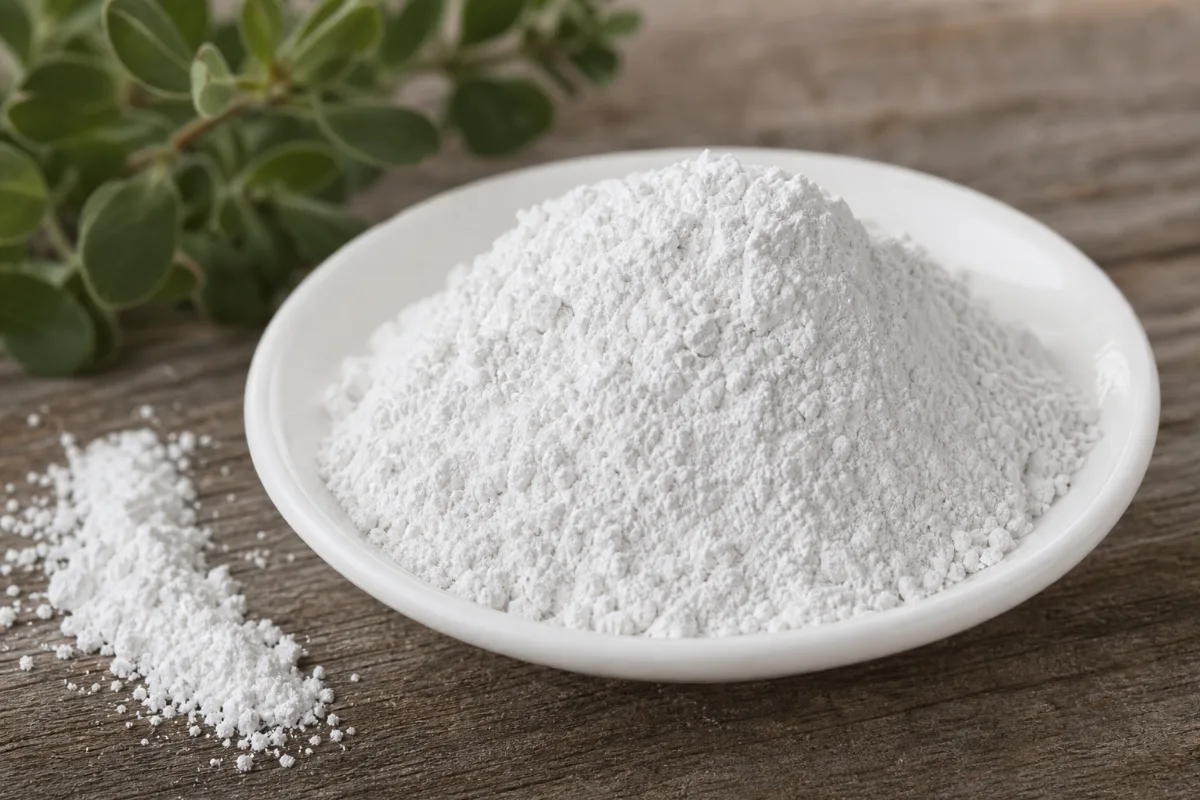
Zinc oxide (ZnO) · also called ZnO, zinc white, nano zinc oxide
Zinc oxide is a white mineral powder used in diaper creams, skin ointments and mineral sunscreens. The diaper rash trials we found are small and mixed, and regulators have judged it acceptable in finished sunscreens. The key caution: do not breathe in zinc oxide fumes, sprays or fine powder, and homemade sunscreens made from the powder give little protection.
General information, not medical advice. Last substantive update · Not medically reviewed. A named clinician has not signed off on this page. How this page is made
About Zinc oxide
Zinc oxide is a white mineral powder. It is a common ingredient in diaper creams, skin ointments and mineral sunscreens. Regulators in the US and EU have judged it acceptable in finished sunscreens, and US rules list it as a skin protectant. The diaper rash trials are few and small, wound and acne uses are unproven, and a little zinc passes through intact skin. Do not breathe in fumes, sprays or fine powder, and do not rely on a homemade sunscreen made from the powder.
What it is
Zinc oxide (ZnO) is an inorganic compound of zinc and oxygen. The FDA says it is largely insoluble in water and biological fluids. In sunscreens it is used because it reflects UVA light. Larger particles leave a white look, so some products use very small nano particles, of about 1 to 100 nanometres.
The FDA also says zinc oxide is used in non-sunscreen ointments, pastes and lotions for skin disorders for its protective, astringent and antiseptic properties. Zinc is also a nutrient the body needs, but this page is about zinc oxide as a skin material, not as a supplement.
How it is used
In diaper creams and barrier ointments it forms a protective layer on the skin. US rules for over-the-counter skin protectants list zinc oxide in a band of 1 to 25 percent. In sunscreens it is one of the allowed active ingredients, at up to 25 percent in the FDA and EU opinions. These are product rules, not advice for any one person. Powders, sprays and homemade mixes are not covered by those rules.
What the research shows
Diaper rash: a 2026 review of six studies found that results depended on the product and study design, with high heterogeneity, and said zinc oxide paste was effective in newborns. Its reported statistics do not match each other, so we do not rely on its pooled number. In a 2026 trial of 42 infants, zinc oxide ointment was in both groups; adding breast milk cleared lesions faster (2.52 versus 3.28 days, p = 0.012). In another 2026 trial, zinc oxide cream was 1.43 times more effective than olive oil, which was not statistically significant (p = 0.192). Poison Control says scientific data showing that diaper rash products like these work are absent.
Sunscreen and the skin: the FDA proposed in 2019, and the EU committee judged in 2012, that zinc oxide at up to 25 percent is acceptable on skin. In 20 volunteers, a tracer showed a very small amount of zinc reached the blood. A lab study on skin found dissolved zinc, not particles, reached the living layer, below a harmful level. A 2026 review by researchers who did much of this imaging work reports the skin is a strong barrier and that particles can collect in furrows and hair follicles.
Other uses: in 60 older adults, a herbal preparation beat a zinc oxide and petroleum jelly ointment for incontinence-related skin damage. A 2025 review of zinc oxide nanoparticle dressings for wounds does not say how many studies were in people. For acne, a 2026 review calls for better trials. We read no human acne trial.
Health-body statements
US FDA (proposal dated 26 February 2019): sunscreens with up to 25 percent zinc oxide would be generally recognized as safe and effective. This is a proposal; the later final status was not checked. FDA (current rule 21 CFR 347.10): lists zinc oxide as a skin protectant active ingredient in a band of 1 to 25 percent. FDA consumer page (content current as of 16 October 2026): lists zinc oxide among sunscreen active ingredients, says sunscreen is not recommended for infants under six months, and says it has asked industry for safety data on sunscreen ingredients.
EU Scientific Committee on Consumer Safety (2012): nano zinc oxide of defined qualities, and non-nano zinc oxide, at up to 25 percent as a UV filter pose no risk of harm after skin use; sprays with nano zinc oxide cannot be considered safe. Current EU rules were not checked.
At a glance
Traditional uses history, not proof
- Used in barrier creams, ointments and pastes for skin, including diaper creams (Poison Control; FDA 2019 proposal).
- Used as an active ingredient in mineral sunscreens (FDA).
- Other uses, such as cosmetics and industry, exist but are not covered by the sources read.
Studied for research
- Diaper rash and skin-protectant ointments, low
- Mineral sunscreen filter (regulator review), moderate
- Skin absorption of zinc oxide particles, mixed
- Incontinence-related skin irritation, low
- Wound and burn dressings (nanoparticle), very low
- Acne pastes, insufficient
- Homemade sunscreen with zinc oxide, evidence against
Main compounds
- Zinc oxide (ZnO), largely insoluble in water and body fluids
- Zinc ions (Zn2+), formed when a small part dissolves
- Nano zinc oxide, very small particles used in some sunscreens
Common forms
- Skin protectant ointments, pastes and creams
- Finished mineral sunscreens (lotion, cream, stick)
- Loose powder, which should not be breathed in; sprays are of particular concern for the lungs
Research links: FDA: Sunscreen, how to help protect your skin · Federal Register: FDA proposed sunscreen rule (2019) · EU SCCS: zinc oxide (nano form), public summary · Poison Control: Are diaper rash products dangerous? · Diaper dermatitis barrier preparations review (abstract) · Metal fume fever review (abstract) · Research Library · Genes & Biomarkers Library
What it is and its history
- Accepted scientific name
- Zinc oxide (ZnO), an inorganic mineral compound
- Synonyms
- ZnO; zinc white; nano zinc oxide; non-nano zinc oxide
- Common names
- Zinc oxide (English); Zinc white (English); Nano zinc oxide (English)
- Family or group
- Inorganic oxide; a zinc compound
- Harvest and processing
- Not described in the sources read. The FDA's 2019 proposal says zinc oxide is made in larger particles (over about 100 nm), which look white, and in smaller nanoscale particles to reduce the white look.
- Look-alikes and adulterants
- Name: Zinc (the dietary mineral); Note: Zinc is the element the body needs in small amounts; zinc oxide is one compound of it. The nutrient and supplement side is not covered here.; Name: Talcum powder; Note: Poison Control warns talcum powder can be fatal if inhaled by children. It is a different material and not a zinc oxide finding.; Name: Titanium dioxide; Note: The other mineral sunscreen filter the FDA proposed as safe and effective at up to 25 percent in 2019.
Photographs
Traditional use and history history, not clinical proof
| Tradition or era | Documented use | Source |
|---|---|---|
| Regulation of sunscreen and skin protectants | The FDA proposed in 1998 that zinc oxide was safe and effective as a sunscreen ingredient, and proposed it again in 2019 for up to 25 percent. The FDA also says zinc oxide is used in ointments, pastes and lotions for skin disorders for protective, astringent and antiseptic properties. | s-fr-2019-sunscreen |
| Earlier history of the compound | No source read gives the older history of zinc oxide or its first medical use. Any such history is NOT verified here. | s-fr-2019-sunscreen |
Traditional use shows how it was used. It does not show that it works or is safe today.
What is inside, and how it may work
What it contains and how those compounds act in cells and animals. Laboratory and animal mechanisms are not proven effects in people.
Main compounds
| Compound | Family | Where it is concentrated | Activity studied | Level of evidence |
|---|---|---|---|---|
| Zinc oxide PubChem 3007857 | inorganic oxide | Up to 25 percent in sunscreens (FDA proposal 2019; EU opinion 2012); 1 to 25 percent in US skin protectant products (21 CFR 347.10). Information only. | Reflects UVA light and forms a barrier on the skin. Largely insoluble in water and biological fluids, with a small amount dissolving to zinc ions. 15 14 13 | Authoritative guidance |
| Zinc ion (Zn2+) PubChem 32051 | metal ion | A small proportion of zinc oxide dissolves to zinc ions in a formulation or on skin (EU committee). | The form in which any absorbed zinc is thought to move through skin; the body already holds about 2.0 to 2.5 grams of zinc (FDA 2019 proposal). 13 15 9 | Authoritative guidance |
Mechanisms, receptors and pathways
| Target or pathway | Gene or receptor | What was found | Level |
|---|---|---|---|
| UV light blocking | Not applicable | The FDA says zinc oxide is used in sunscreens because it reflects UVA wavelengths, which helps give broad-spectrum protection. 15 | Authoritative guidance |
| Skin barrier | Not applicable | Poison Control says diaper creams, many with zinc oxide, form a protective barrier on the skin. The FDA describes zinc oxide as largely insoluble in body fluids, so it stays mostly on the skin. 12 15 | Authoritative guidance |
| Dissolving to zinc ions in skin | Not applicable | A lab study on excised human skin found that dissolved zinc, not particles, reached the living layer of the skin, at levels below those harmful to skin cells. The authors of a 2026 review say nanoparticles are broken down to zinc ions that are absorbed and excreted in urine, and can collect in furrows and hair follicles. 9 7 | Laboratory research |
Isolated compounds versus whole extracts
Zinc oxide in a sunscreen or ointment is a finished product with other ingredients, and the regulator opinions cover products with stated qualities. Powder alone, a home mix or a spray is not the same thing. The EU committee notes that coatings and absorption enhancers could change how far particles pass through skin.
Nutritional composition
Zinc is an essential nutrient (FDA 2019 proposal). This page is about zinc oxide as a skin and industrial material. Whether skin products supply meaningful zinc to the body was not covered by the sources read; the EU committee found the amount absorbed small compared with the body's zinc pool.
1 moderate certainty1 mixed findings2 low certainty1 very low certainty1 not enough evidence1 evidence against
What was looked at
The 7 benefits and uses checked for Zinc oxide, each with how strong the evidence is. Tap one to open it.
- Diaper rash and skin-protectant ointmentsLow certainty
- Mineral sunscreen filter (UV protection)Moderate certainty
- Does zinc oxide pass through the skin?Mixed findings
- Incontinence-related skin irritation in older adultsLow certainty
- Wound and burn healing (zinc oxide nanoparticle dressings)Very low certainty
- Acne and blemish pastesNot enough evidence
- Homemade sunscreen with zinc oxide: claim checkEvidence against
Lab markers tracked in the studies
Diaper dermatitis severity scoreTracer zinc in blood after sunscreenIncontinence-associated dermatitis severity
What is Zinc oxide good for?
The uses and claims people ask about, and how strong the evidence is for each. Most of the support for zinc oxide comes from regulators and from small trials where it was the comparison. Read it together with the safety section.
Benefits, one by one
Each card is a research question, not a promise. Tap a goal to filter. Open a card to see the studies, doses and limits.
Diaper rash and skin-protectant ointments
Low certaintyZinc oxide is a common ingredient in barrier creams and ointments put on the skin, for example on a baby's diaper area. US rules list it as an allowed skin protectant ingredient. The trials on diaper rash are few, small and mixed. Zinc oxide is usually the comparison treatment, not the one being tested.
6 studiesLabelled over-the-counter ointments, pastes and creams. The US skin p…
Studies, doses and limits
What the trials found
A 2026 systematic review pulled together six studies of barrier products for diaper rash. It found results depended on the product and study design, with high heterogeneity, and said zinc oxide paste was effective in newborns. A 2026 trial of 42 infants had zinc oxide ointment in both groups, so it tested an add-on, not zinc oxide itself. A 2026 trial in infants aged 1 to 6 months found zinc oxide cream was not statistically better than olive oil. Poison Control says that for diaper rash products like these, scientific data showing they work are absent.
Results
In the 42-infant trial, with zinc oxide alone 66.6% recovered fully, 19.1% partly and 14.3% did not respond within 7 days; adding breast milk cleared lesions faster (2.52 versus 3.28 days, p = 0.012). In the bee-product trial, zinc oxide cream was 1.43 times more effective than olive oil, which was not statistically significant (p = 0.192).
Effect sizes as reported
No pooled effect size for zinc oxide alone can be trusted. The review's own statistics do not match each other.
Why this rating
A few small trials with different comparators, a systematic review with high heterogeneity and inconsistent statistics, and no trial that tests zinc oxide against no treatment. The regulator listing is not a trial result.
Form and dose studied
Labelled over-the-counter ointments, pastes and creams. The US skin protectant rule lists a concentration band for zinc oxide of 1 to 25 percent (information only, not a recommendation). No amount is advised here.
Who was studied
Infants with diaper dermatitis (small trials).
Limits
Short trials of 7 days or less, small numbers, zinc oxide usually used as the comparison. The 2026 review's pooled number is not relied on because its p-value does not fit its confidence interval.
Why researchers looked
Diaper rash is a very common skin problem in babies, mostly from moisture and friction. Barrier creams are used to keep wet skin from breaking down.
Traditional use
The FDA's 2019 sunscreen proposal says zinc oxide is also used in non-sunscreen ointments, pastes and lotions for various skin disorders for its protective, astringent and antiseptic properties. No source read gives the history of this use.
Proposed mechanism Authoritative guidance
Poison Control says diaper creams form a protective barrier on the skin. The FDA describes zinc oxide as insoluble in water and largely insoluble in body fluids, so it stays on the skin.
A proposed mechanism does not show that the effect happens in people.
Keep creams out of reach of babies and pets, and ask a doctor about a rash that does not clear. See the Safety tab.
Mineral sunscreen filter (UV protection)
Moderate certaintyZinc oxide is one of the active ingredients listed for sunscreens. It sits on the skin and helps block ultraviolet light. Regulators have looked at its safety on skin and found it acceptable in finished, labelled sunscreens. This is about whole products, not zinc oxide powder on its own.
3 studiesFinished, labelled sunscreens only. A powder mixed into a lotion at h…
Studies, doses and limits
What the trials found
No sunburn or skin cancer trial was read for this profile. The support is regulator review. In February 2019 the FDA proposed that sunscreens with up to 25 percent zinc oxide would be generally recognized as safe and effective (GRASE), including nanoscale zinc oxide. The EU's safety committee (SCCS, 2012) judged nano zinc oxide up to 25 percent as a UV filter to pose no risk of harm after skin use, for particles with stated qualities, and said the same for non-nano zinc oxide. The FDA's consumer page lists zinc oxide among sunscreen active ingredients and advises broad spectrum SPF 15 or higher together with shade and clothing.
Results
Regulator conclusions, not measured sun protection results. The FDA proposal is from 2019 and the SCCS opinion from 2012. Their final status today was not checked.
Why this rating
Two regulators reviewed safety and effectiveness, but we read no trial of sunburn protection, and the FDA position read is a 2019 proposal.
Form and dose studied
Finished, labelled sunscreens only. A powder mixed into a lotion at home has no known SPF; see the homemade sunscreen entry.
Who was studied
Adults and children over six months; the FDA says sunscreen is not recommended for infants under six months and to ask a doctor first.
Limits
Regulator documents, not trials. The EU opinion covers nano zinc oxide of defined size and coating, and says spray products with nano zinc oxide cannot be considered safe.
Why researchers looked
Sunscreen is used to prevent sunburn. Regulators checked whether zinc oxide, including very small nanoparticles, is safe to wear on skin.
Traditional use
The FDA's 2019 proposal recalls an earlier FDA proposal from 1998 that zinc oxide was safe and effective as a sunscreen ingredient.
Proposed mechanism Authoritative guidance
The FDA's 2019 proposal says zinc oxide is used in sunscreens because it reflects UVA wavelengths, which helps give broad-spectrum protection. Larger particles leave a white look; smaller (nano) particles reduce it.
A proposed mechanism does not show that the effect happens in people.
Do not breathe in sprays or powders. Infants under six months should be kept out of the sun rather than given sunscreen, unless a doctor says otherwise.
Does zinc oxide pass through the skin?
Mixed findingsThis is a safety question rather than a benefit. Regulators and researchers say the particles stay mostly in the top layers of the skin, but a small amount of zinc does get through, probably as dissolved zinc rather than as particles. The amounts reported are small next to the zinc already in the body.
5 studiesSunscreens with nano or larger zinc oxide. No amounts advised.
Studies, doses and limits
What the trials found
In 20 volunteers using sunscreen outdoors for five days, the zinc tracer in blood was about one-thousandth of the total zinc in blood, though levels rose in all of them. A 2026 review by researchers who did much of this imaging work reports that skin is a strong barrier to nano zinc oxide, that particles can build up in furrows and hair follicles, and that dissolved zinc is absorbed and passes in urine. A lab study on excised human skin found dissolved zinc reached the living layer, at a level below that harmful to skin cells. The EU committee found no indication that nanoparticles pass through the skin. The FDA's 2019 proposal came to a similar view.
Results
Gulson 2010 (20 volunteers): small increases of tracer zinc in blood and urine, about one-thousandth of blood zinc after five days. Khabir 2021 (excised skin): added zinc in the living layer 1.0 microgram per mL against 4.3 micrograms per mL of the body's own zinc; the 21 to 31 micrograms per mL that harmed skin cells in the lab was not reached.
Why this rating
Regulators and lab studies lean one way, but the human study showed small absorption in everyone and could not tell particles from dissolved zinc. The 2026 review is from the group that did much of the work. Intact skin only.
Form and dose studied
Sunscreens with nano or larger zinc oxide. No amounts advised.
Who was studied
Healthy adult volunteers and lab skin samples. Broken or sunburnt skin was not covered in the abstracts read.
Limits
Small number of volunteers, short periods, intact skin, one review that is not independent.
Why researchers looked
Nano zinc oxide is used in sunscreens to avoid a white look, so people asked whether the tiny particles could get into the body.
Proposed mechanism Laboratory research
Researchers report that zinc oxide nanoparticles dissolve to zinc ions, which can cross into the living layer of the skin. The particles can also collect in skin furrows and hair follicles (a reservoir effect).
A proposed mechanism does not show that the effect happens in people.
The EU committee said a fresh review could be needed if a product has coatings or enhancers that help particles go through skin.
Incontinence-related skin irritation in older adults
Low certaintyOne small trial in older adults in intensive care compared a zinc oxide and petroleum jelly ointment with a herbal preparation. The herbal preparation did better. This does not show whether zinc oxide works or fails by itself.
1 studiesA zinc oxide and petroleum jelly ointment; no amount advised here.
Studies, doses and limits
What the trials found
One randomized trial of 60 older adults over 7 days. Both groups had the same structured nursing care program. The control group also had a zinc oxide and petroleum jelly mix; the other group had a Centella asiatica and aloe vera preparation.
Results
The herbal group had lower risk scores, lower severity and higher skin moisture than the zinc oxide group (all p < 0.001). Skin pH was also lower in the herbal group.
Effect sizes as reported
Zinc oxide served as the comparison, so there is no measure of its effect against doing nothing.
Why this rating
One small trial, 7 days, intensive-care setting. Zinc oxide was the control, in a mixture with petroleum jelly.
Form and dose studied
A zinc oxide and petroleum jelly ointment; no amount advised here.
Who was studied
60 older adults in intensive or semi-intensive care units.
Limits
Short, small, a combined product, and a trial registry entry (TCTR20240910009). The abstract does not state funding.
Why researchers looked
Skin that is often wet from incontinence can become inflamed and damaged, so barrier products are common in nursing care.
Traditional use
No traditional use is described in the sources read.
Proposed mechanism Pharmacological theory
Not described in the abstract.
A proposed mechanism does not show that the effect happens in people.
Ask the care team before using any ointment on broken skin.
Wound and burn healing (zinc oxide nanoparticle dressings)
Very low certaintyA 2025 review reports that dressings loaded with zinc oxide nanoparticles helped wounds heal better than dressings without them. The abstract does not say how much of this is from people and how much from animals and lab work, and it is about engineered dressings, not a cream or a powder.
1 studiesEngineered nanoparticle dressings. Not applicable to powder or ointme…
Studies, doses and limits
What the trials found
A 2025 systematic review of zinc oxide nanoparticle dressings for mechanical wounds, diabetic ulcers and burns. The abstract does not state how many studies were included or whether they were in people.
Results
Zinc oxide-loaded dressings did better than non-zinc oxide materials at helping tissue regenerate at appropriate concentrations.
Effect sizes as reported
No effect sizes in the abstract.
Why this rating
The abstract gives no numbers or study counts, and a lab or animal basis cannot be ruled out. It is not a test of home use of zinc oxide.
Form and dose studied
Engineered nanoparticle dressings. Not applicable to powder or ointment from a shop.
Who was studied
Mixed or unstated.
Limits
Unclear human evidence, engineered products, no safety data in the abstract.
Why researchers looked
Zinc is needed for the body's repair processes, and lab work has suggested zinc oxide has antibacterial and anti-inflammatory properties.
Traditional use
No traditional use is described in the sources read.
Proposed mechanism Laboratory research
The review says these materials have antibacterial and anti-inflammatory properties; the abstract does not give the evidence behind this.
A proposed mechanism does not show that the effect happens in people.
Do not put powders or home mixes on open wounds. Ask a clinician about wound care.
Acne and blemish pastes
Not enough evidenceA 2026 review says metal oxide nanoparticles, including nano zinc oxide, might be useful add-ons for mild to moderate acne in the future, but that standard methods, safety testing and well-powered clinical trials are still needed. We read no human trial, and a review of lab-made products is not evidence for a home paste.
1 studiesEngineered nanoparticle gels and similar. Not a powder paste.
Studies, doses and limits
What the trials found
No human trial of zinc oxide for acne was read. The review covers engineered nanoparticle products.
Results
No results from people in the abstract.
Why this rating
A review of formulations, with no trial results in the abstract.
Form and dose studied
Engineered nanoparticle gels and similar. Not a powder paste.
Limits
The review calls for standard recipes, toxicology testing and proper trials.
Why researchers looked
Acne treatments often irritate the skin or are slow, so researchers look for gentler options.
Traditional use
No traditional use is described in the sources read.
Proposed mechanism Pharmacological theory
The review describes anti-inflammatory, antioxidant and light-driven effects of nanoparticles in hair follicles; the abstract does not give the evidence for each.
A proposed mechanism does not show that the effect happens in people.
Do not make pastes from powder for the face. See a clinician for acne that does not clear.
Homemade sunscreen with zinc oxide: claim check
Evidence againstA 2026 systematic review found that homemade sunscreens offer little to no sun protection when compared with commercial products, and that social media is full of strong, unverified claims. The abstract says the FDA states there is no verified formula for working out the SPF from the amount of zinc oxide in online recipes.
2 studiesDo not make sunscreen from zinc oxide powder at home.
Studies, doses and limits
What the trials found
A 2026 systematic review of studies on social media claims and on comparisons of homemade recipes with commercial products.
Results
Studies that compared the ingredients of homemade and commercial sunscreens found homemade ones give little to no protection.
Effect sizes as reported
Little to no protection.
Why this rating
The review found little to no protection from homemade recipes and warns of a risk of more UV damage.
Form and dose studied
Do not make sunscreen from zinc oxide powder at home.
Limits
The abstract does not say how many studies were included.
Why researchers looked
Many people try recipes because they distrust commercial products or like the word natural.
Traditional use
Homemade sunscreen has become popular over the last decade, largely through social media, according to the review.
Proposed mechanism Authoritative guidance
A powder mixed into a lotion does not spread evenly or have a tested SPF, according to the review's account of the FDA position.
A proposed mechanism does not show that the effect happens in people.
Use a labelled sunscreen as the FDA advises, with shade and clothing.
Connections to the rest of health
How Zinc oxide connects to the rest of our health knowledge graph. Every link says what kind of connection it is. A safety link (for example to the liver) is a warning, not a benefit. A study that merely mentions a topic never creates a benefit link.
Explore every connection: goals, body systems, organs, symptoms, genes
A. Wellness goals
| Connected to | Kind of connection | Evidence status | Context | Studies |
|---|---|---|---|---|
| Healthy Skin | Traditional use | Low certainty | Diaper rash and skin-protectant ointments: Zinc oxide is a common ingredient in barrier creams and ointments put on the skin, for example on a baby's diaper area. US rules list it as an allowed skin protectant ingredient. The trials on diaper rash are few, small and mixed. Zinc oxide is usually the comparison treatment, not the one being tested. | 3 17 2 14 15 12 |
| Healthy Skin | Potential benefit | Moderate certainty | Mineral sunscreen filter (UV protection): Zinc oxide is one of the active ingredients listed for sunscreens. It sits on the skin and helps block ultraviolet light. Regulators have looked at its safety on skin and found it acceptable in finished, labelled sunscreens. This is about whole products, not zinc oxide powder on its own. | 15 13 16 |
| Healthy Skin | Biological association | Mixed findings | Does zinc oxide pass through the skin?: This is a safety question rather than a benefit. Regulators and researchers say the particles stay mostly in the top layers of the skin, but a small amount of zinc does get through, probably as dissolved zinc rather than as particles. The amounts reported are small next to the zinc already in the body. | 6 9 7 13 15 |
| Healthy Skin | Low certainty | Incontinence-related skin irritation in older adults: One small trial in older adults in intensive care compared a zinc oxide and petroleum jelly ointment with a herbal preparation. The herbal preparation did better. This does not show whether zinc oxide works or fails by itself. | 4 | |
| Healthy Skin | Very low certainty | Wound and burn healing (zinc oxide nanoparticle dressings): A 2025 review reports that dressings loaded with zinc oxide nanoparticles helped wounds heal better than dressings without them. The abstract does not say how much of this is from people and how much from animals and lab work, and it is about engineered dressings, not a cream or a powder. Acne and blemish pastes: A 2026 review says metal oxide nanoparticles, including nano zinc oxide, might be useful add-ons for mild to moderate acne in the future, but that standard methods, safety testing and well-powered clinical trials are still needed. We read no human trial, and a review of lab-made products is not evidence for a home paste. | 18 10 8 16 |
B. Body systems
| Connected to | Kind of connection | Evidence status | Context | Studies |
|---|---|---|---|---|
| Respiratory system | Adverse effect or risk | Moderate certainty | Metal fume fever from fume; lung effects from inhaled nano zinc oxide. Preparation or compound: Zinc oxide fume or nano spray |
1 13 |
| Integumentary system (skin) | Adverse effect or risk | Low certainty | Infants have a greater risk of sunscreen rash; homemade versions give little protection. Preparation or compound: Sunscreen with zinc oxide |
16 8 |
| Integumentary system (skin) | Potential benefit | Low certainty | Used on skin as a barrier and sunscreen filter; trial evidence in diaper rash is mixed. Preparation or compound: Zinc oxide skin products |
3 17 15 |
| Skin Hair Beauty | Biological association | Low certainty | Studied for: Diaper rash and skin-protectant ointments Studied for: Mineral sunscreen filter (UV protection) | 3 17 2 14 15 12 13 16 6 9 7 4 18 10 8 |
| Integumentary System | Biological association | Low certainty | Studied for: Diaper rash and skin-protectant ointments Studied for: Mineral sunscreen filter (UV protection) | 3 17 2 14 15 12 13 16 6 9 7 4 18 10 8 |
E. Health conditions
| Connected to | Kind of connection | Evidence status | Context | Studies |
|---|---|---|---|---|
| Acne vulgaris | Not enough evidence | A review calls for human trials; none was read. Preparation or compound: Nano zinc oxide |
10 |
I. Biomarkers
| Connected to | Kind of connection | Evidence status | Context | Studies |
|---|---|---|---|---|
| Diaper dermatitis severity score | Biological association | Low certainty | Measured in trials: lowered. A lab change is not the same as a health benefit. | 17 2 |
| Tracer zinc in blood after sunscreen | Biological association | Low certainty | Measured in trials: raised (slightly). A lab change is not the same as a health benefit. | 6 |
| Incontinence-associated dermatitis severity | Biological association | Low certainty | Measured in trials: lowered. A lab change is not the same as a health benefit. | 4 |
K. Biological pathways
L. Active compounds
| Connected to | Kind of connection | Evidence status | Context | Studies |
|---|---|---|---|---|
| Zinc oxide | Biological association | Authoritative guidance | Reflects UVA light and forms a barrier on the skin. Largely insoluble in water and biological fluids, with a small amount dissolving to zinc ions. | 15 14 13 |
| Zinc ion (Zn2+) | Biological association | Authoritative guidance | The form in which any absorbed zinc is thought to move through skin; the body already holds about 2.0 to 2.5 grams of zinc (FDA 2019 proposal). | 13 15 9 |
Each connection is stored with the ingredient, the connected record, the kind of connection, the evidence status, the supporting studies, the preparation or compound involved, and a review date (last reviewed October 25, 2026).
Evidence at a glance: what changed in 2 lab markers
Tap a number to show only those markers. Counts are markers, not people.
The evidence
The research centre for Zinc oxide. Every record here was checked against PubMed or the publisher's page; we never list a study we have not verified.
Evidence by outcome
Bars show how many studies we found for each outcome, not how well it works. People are added up across trials only (reviews are not added, to avoid double counting).
How we rate evidence
High certainty
Several well-run trials or reviews agree; further research is unlikely to change the picture much.
Moderate certainty
Good trials point the same way, but some doubt remains.
Low certainty
Small, short or inconsistent trials. The finding could change with better research.
Very low certainty
Very little or very weak human data. Treat as a possibility only.
Mixed findings
Trials or reviews disagree with each other.
Not enough evidence
Not enough human research to say either way.
Evidence against
Good research found no benefit, or found harm.
We take the reviewers' own risk-of-bias and GRADE statements where they exist, and otherwise judge from study size, design, consistency, directness and whether a product matches what is sold. Many publications do not make evidence high. Method note: We searched PubMed and Europe PMC for zinc oxide and diaper rash, sunscreen, skin absorption, wounds, acne and fume exposure, read the abstracts of 12 papers, and read the FDA, EU safety committee, Poison Control and veterinary pages as text. We checked PubChem for the chemical identifiers. Certainty ratings are the compiler's own reading. Several sources are regulator documents or abstracts only. One review of skin imaging is by the group that did much of the work. No study is cited that we could not verify.
Study library: every study we checked 18
| Study | Design | People | Product, dose, length | Result |
|---|---|---|---|---|
| Ahsan 2009 Metal fume fever: a review of the literature and cases reported to the Louisiana Poison Control Center Journal of the Louisiana State Medical Society · PMID 20108830 |
Narrative review |
Review of metal fume fever plus cases reported to a poison centre over two years | Fumes of metal oxides, especially zinc oxide, from welding or cutting metal |
Metal fume fever comes from breathing volatile metal oxides, especially zinc, made when metal is welded or cut. It starts within a few hours. Symptoms are fever, chills, cough, shortness of breath, headache, muscle aches and malaise. It is self-limiting and usually clears within 24 hours; a short-lived tolerance to zinc oxide fumes disappears after one to two days away. Descriptive (n/a) Methods, limits and fundingOutcomes: Symptoms and course of metal fume fever Limitations: A review and case series from one state. It is about industrial fumes, not skin products. Funding and conflicts: Not stated in the abstract. Read: abstract |
| Aksoy 2026 Evaluation of the efficacy of local application of bee products in the care of diaper dermatitis in infants: A randomized controlled trial Journal of Pediatric Nursing · PMID 41579432 · DOI |
Controlled trial |
Infants aged 1 to 6 months with mild diaper dermatitis in Turkey (Mediterranean region), recruited from three family health centres and a hospital clinic | Barrier cream 2 = zinc oxide cream; compared with a propolis, beeswax, queen bee larvae and vegetable oil cream (barrier cream 1) and olive oil Days 1 to 3 reported in the abstract · vs Olive oil and the bee-product cream |
The bee-product cream gave lower severity scores on days 1 to 3 than the zinc oxide cream and olive oil; on day 2 it was significantly lower (p = .012). Compared with olive oil, the bee-product cream was 2.54 times more effective (p = .004) and the zinc oxide cream 1.43 times more effective, which was not statistically significant (p = .192). Zinc oxide cream versus olive oil: not statistically significant (Not given in the abstract) Methods, limits and fundingOutcomes: Daily diaper dermatitis severity score Limitations: The number of infants is not in the abstract. Mild rash only, short follow-up. The trial was designed to test a bee-product cream, with zinc oxide as a comparison. Funding and conflicts: Not stated in the abstract. Read: abstract |
| Alkhamis 2026 Clinical Effectiveness of Barrier Preparations in the Management of Diaper Dermatitis: A Systematic Review and Meta-Analysis Cureus · PMID 41769510 · DOI |
Systematic review |
6 studies (4 randomized trials and 2 cohort studies) of barrier preparations for diaper dermatitis in infants and young children | Barrier preparations, including zinc oxide paste (mineral) · vs Placebo or other treatments |
Six studies were included. In about four studies the pooled odds ratio for dermatitis was reported as 0.77 (95% CI 0.37 to 1.61) with p = 0.0002 and high heterogeneity (I2 = 79%). The abstract says zinc oxide paste was effective in managing diaper dermatitis in newborns, clotrimazole had low rates of dermatitis, and diaper cream or moisturizer with soap helped prevent nappy rash. One study found no benefit from petroleum jelly. The authors conclude that effectiveness depends on the preparation and study design and that more research is needed. Mixed; depends on product and study design (OR 0.77 (0.37 to 1.61), I2 79%) Methods, limits and fundingOutcomes: Incidence and severity of diaper dermatitis Limitations: The reported p-value (0.0002) does not match a confidence interval that includes 1, so the pooled number is not relied on here. Zinc oxide is only one of several preparations, and the abstract gives no separate effect size for it. Small, varied studies. Funding and conflicts: Not stated in the abstract. Read: abstract |
| Chaisomsee 2026 Care of incontinence-associated dermatitis in older adults: A randomized controlled trial comparing zinc oxide-petroleum jelly and centella asiatica-aloe vera preparations International Journal of Nursing Studies Advances · PMID 42751070 · DOI |
Controlled trial |
60 60 older adults in intensive and semi-intensive care units with, or at risk of, incontinence-associated dermatitis |
Zinc oxide mixed with petroleum jelly (control) plus a structured nursing care program; the other group had Centella asiatica and aloe vera herbal formulation plus the same program 7 days · vs Herbal formulation (Centella asiatica and Aloe vera) |
The herbal group had lower risk scores, lower severity, lower skin pH and higher skin moisture than the zinc oxide and petroleum jelly group (all p < 0.001). The authors conclude that the herbal formulation with the nursing program reduced risk and severity. Herbal formulation did better than zinc oxide plus petroleum jelly (Not given in the abstract) Methods, limits and fundingOutcomes: Risk and severity of incontinence-associated dermatitis, skin pH, skin moisture Limitations: Small, 7 days, intensive-care setting. Zinc oxide was the comparison treatment, in a mix with petroleum jelly. The trial cannot show whether zinc oxide works compared with no treatment. Funding and conflicts: Not stated in the abstract. Registration: TCTR20240910009 Read: abstract |
| Granados-Soler 2026 Ultraviolet Light-Induced Skin Cancer and the Safety of Sunscreen Use in Pets-An Important but Under Researched Aspect of Companion Animal Health Veterinary Sciences · PMID 42514615 · DOI |
Narrative review review (dogs and cats) |
Review of UV-related skin cancer and sunscreen safety in dogs and cats | Sunscreens, including those with non-nanoparticle zinc oxide |
The review says sunscreens with non-nanoparticle zinc oxide appear safe for dogs and cats when swallowing is prevented or kept to a minimum. The safety of organic UV filters is unclear. Safety data for titanium dioxide, if swallowed by pets, are scarce. It says much more research is needed. Qualitative (n/a) Methods, limits and fundingOutcomes: Safety of sunscreen ingredients in dogs and cats Limitations: A review for pets. Human sunscreen is not designed for animals to lick. Funding and conflicts: Not stated in the abstract. Read: abstract |
| Gulson 2010 Small amounts of zinc from zinc oxide particles in sunscreens applied outdoors are absorbed through human skin Toxicological Sciences · PMID 20705894 · DOI |
Human exposure study |
20 20 volunteers using sunscreen outdoors for five consecutive days |
Sunscreen with 19-nanometre zinc oxide (nano) or with zinc oxide larger than 100 nanometres (bulk), labelled with a stable zinc isotope 5 consecutive days; blood and urine followed for 6 days after · vs Bulk versus nano sunscreen |
The overwhelming majority of the applied tracer zinc was not absorbed, but blood and urine of all volunteers showed small increases. The tracer in blood after the 5 days was about one-thousandth of the total zinc in the blood. Levels in females on the nano sunscreen seemed higher than in males on nano and in everyone on bulk sunscreen. The authors say it is not known whether the zinc was absorbed as particles, as dissolved zinc, or both. Small tracer increases in blood and urine (n/a) Methods, limits and fundingOutcomes: Tracer zinc (zinc-68) in blood and urine Limitations: 20 people, 5 days. The abstract does not say whether the sunscreen was randomized or how the groups were formed. Cannot tell particles from dissolved zinc. Funding and conflicts: Not stated in the abstract. Read: abstract |
| Henriques Ribeiro Machado 2026 Multiphoton Tomography of Micro- and Nanocosmetics in Human Skin: In vivo Studies in Volunteers and Patients with ex vivo Validation Skin Pharmacology and Physiology · PMID 42348512 · DOI |
Narrative review review |
Review of the authors' own imaging studies of nano zinc oxide and other nanoparticles in human skin | Nano zinc oxide and other nanoparticles, applied to human skin |
The authors say the skin is a remarkable physical barrier to zinc oxide nanoparticles. They say nanoparticles are broken down to zinc ions, which are absorbed into the living layer of the skin and excreted in urine, so urinary zinc isotope tests can mislead. Their imaging also shows nanoparticles can collect in skin furrows and hair follicles and be hard to wash out, which they call a reservoir effect. They conclude that nano zinc oxide is generally safe on human skin in the conditions they studied. Qualitative (n/a) Methods, limits and fundingOutcomes: Skin absorption, distribution and safety of nano zinc oxide Limitations: A review by the research group that did much of the work it describes, so it is not independent. Intact skin. No numbers in the abstract. Funding and conflicts: Not stated in the abstract. The authors review their own work. Read: abstract (Europe PMC; PubMed has no abstract) |
| Kaftan 2026 The Rise in Homemade Sunscreen Trends and Future Impacts on Skin Cancer Risk: Systematic Review JMIR Dermatology · PMID 42398033 · DOI |
Systematic review review |
Studies of social-media content about homemade sunscreens and studies comparing homemade recipes with commercial products | Homemade sunscreen recipes (many using zinc oxide) · vs Commercial sunscreens |
One study of social media found many strong, unverified claims about homemade sunscreens. Studies comparing the ingredients of homemade and commercial products found that homemade sunscreens offer little to no sun protection. The abstract says the FDA states there is no verified formula to work out the SPF from the amount of zinc oxide used in online recipes. Homemade recipes: little to no protection (n/a) Methods, limits and fundingOutcomes: Social media claims; sun protection of homemade versus commercial sunscreens Limitations: The abstract does not say how many studies were included. A small body of evidence. Funding and conflicts: Not stated in the abstract. Read: abstract |
| Khabir 2021 Human Epidermal Zinc Concentrations after Topical Application of ZnO Nanoparticles in Sunscreens International Journal of Molecular Sciences · PMID 34830253 · DOI |
Lab ex vivo lab/ex vivo |
Excised human skin and human keratinocyte cells in the lab | Sunscreen with zinc oxide nanoparticles labelled with zinc-67 · vs Untreated skin |
The particles stayed on the surface or in the top layers of the outer skin. Dissolved zinc, not particles, reached the living layer. The added zinc in the living layer (1.0 plus or minus 0.3 micrograms per mL) was lower than the body's own zinc there (4.3 plus or minus 0.7), and the total was well below the 21 to 31 micrograms per mL that harmed keratinocytes in the lab. The authors say this supports the safety of these sunscreens on intact skin. Lab finding (Not applicable) Methods, limits and fundingOutcomes: Where the particles and zinc ended up in the skin; zinc level that harms skin cells Limitations: Excised skin and cells, not living people. Intact skin only. Funding and conflicts: Not stated in the abstract. Read: abstract |
| Nair 2026 Metal oxide nanoparticles for acne vulgaris: mechanisms, synthesis, formulation, and translational prospects RSC Advances · PMID 42682944 · DOI |
Narrative review review |
Review of metal oxide nanoparticles (zinc oxide, titanium dioxide, copper oxide and others) for acne | Metal oxide nanoparticles including nano zinc oxide |
The review says metal oxide nanoparticles are promising add-ons and possible alternatives for mild to moderate acne and maintenance therapy, but only if made with standard methods, tested with agreed toxicology frameworks and proven in properly powered clinical trials. It describes particle size, aggregation, charge and coating as affecting how the particles behave in the skin. No effect size; a review of formulation science (n/a) Methods, limits and fundingOutcomes: Mechanisms, formulations, safety and regulatory aspects for acne Limitations: The abstract does not report human trial results. It is about engineered nanoparticle products, not a powder or home paste. Funding and conflicts: Not stated in the abstract. Read: abstract |
| Pet Poison Helpline (via VCA Animal Hospitals) 2026 Zinc Poisoning in Pets vcahospitals.com · Source |
Veterinary guidance n/a |
n/a | n/a |
Diaper rash creams and sunscreen may contain large amounts of zinc. A one-time ingestion of zinc oxide cream typically causes only stomach upset in a pet; repeated ingestion over days to weeks can cause poisoning, especially with more concentrated products, including a low red blood cell count (anemia). Contact a veterinarian or Pet Poison Helpline (1-800-213-6680) if you suspect a pet has eaten a zinc-containing product. Methods, limits and fundingOutcomes: Regulator or reference statement Limitations: Veterinary advice for pets. It gives no figures for zinc oxide creams. Funding and conflicts: Public body or non-profit; no commercial funding stated. Read: full-text |
| Poison Control (National Capital Poison Center) n.d. Are Diaper Rash Products Dangerous? poison.org · Source |
Poison centre guidance n/a |
n/a | n/a |
Diaper rash products usually will not harm a child who swallows a small amount. A lick or swallow of zinc oxide or lanolin cream is not dangerous; larger amounts can cause nausea, vomiting and diarrhea, which is unusual and usually stops without treatment. Many diaper creams contain zinc oxide. The page says that, for products such as these, scientific data showing that they are effective are absent. It warns that talcum powder, not zinc oxide, can be fatal if inhaled and can damage the lungs of children. For anything a child swallows that is meant for the skin: Poison Control 1-800-222-1222 (US). Methods, limits and fundingOutcomes: Regulator or reference statement Limitations: The page is about diaper products in general and has no publication date. Its inhalation warning is about talcum powder, not zinc oxide. Funding and conflicts: Public body or non-profit; no commercial funding stated. Read: full-text |
| Scientific Committee on Consumer Safety (SCCS) 2012 Zinc oxide (nano form): opinion of the EU Scientific Committee on Consumer Safety, public summary ec.europa.eu · Source |
Regulatory opinion n/a |
n/a | n/a |
The committee found no indication that zinc oxide nanoparticles pass through the skin, though some zinc was absorbed, most likely as dissolved zinc ions. It judged that nano zinc oxide up to 25 percent as a UV filter, with the particle characteristics set out in the opinion, poses no risk of harm after skin application, and judged non-nano zinc oxide safe at up to 25 percent as well. It said the use of nano zinc oxide in spray products cannot be considered safe because of serious lung effects seen after inhaling the particles, and that cosmetic products that could lead to inhaling zinc oxide particles are of concern. Accidental swallowing from lip and sun products was considered low exposure. It said a re-evaluation may be needed if coatings or enhancers promote skin penetration, and that the genotoxicity evidence was not conclusive. Methods, limits and fundingOutcomes: Regulator or reference statement Limitations: A 2012 opinion about nano zinc oxide with specified qualities. Current EU rules were not checked. The Spanish-language summary page with English text was read. Funding and conflicts: Public body or non-profit; no commercial funding stated. Read: full-text |
| US Food and Drug Administration (Code of Federal Regulations) current 21 CFR 347.10: Skin protectant active ingredients eCFR · Source |
Regulatory text n/a |
n/a | n/a |
The US rule on over-the-counter skin protectant drug products lists zinc oxide as an allowed active ingredient within a stated concentration band of 1 to 25 percent. Methods, limits and fundingOutcomes: Regulator or reference statement Limitations: The rule names the allowed ingredients; it is not a test of effectiveness. Only the ingredient list and the zinc oxide band were read. Funding and conflicts: Public body or non-profit; no commercial funding stated. Read: full-text of the section |
| US Food and Drug Administration 2019 Sunscreen Drug Products for Over-the-Counter Human Use (proposed rule, Federal Register) Federal Register, 26 February 2019 · Source |
Regulatory proposal n/a |
n/a | n/a |
FDA proposed that sunscreens with up to 25 percent zinc oxide would be generally recognized as safe and effective (GRASE). It said this rested on evidence that zinc oxide, including nanoscale particles of about 1 to 100 nm, does not penetrate into or through human skin to any great extent, and that any tiny amount absorbed would break into zinc and oxygen ions. It noted that zinc oxide is largely insoluble in water and biological fluids, and that studies show it stays mainly in the upper skin layers, with some entry into skin folds and hair follicles. It did not propose separate conditions for nanoscale zinc oxide. It also describes zinc oxide as used in non-sunscreen ointments, pastes and lotions for skin disorders. It recalls an earlier 1998 FDA proposal that zinc oxide was GRASE. Methods, limits and fundingOutcomes: Regulator or reference statement Limitations: This is a 2019 proposal. The later final status of the sunscreen rules was not read for this profile. Funding and conflicts: Public body or non-profit; no commercial funding stated. Read: full-text (relevant sections) |
| US Food and Drug Administration 2026 Sunscreen: How to Help Protect Your Skin from the Sun (FDA consumer page) fda.gov · Source |
Regulatory guidance n/a |
n/a | n/a |
Lists zinc oxide among commonly used sunscreen active ingredients. Recommends broad spectrum sunscreen with SPF 15 or higher together with shade and clothing. Says sunscreen is not recommended for infants under six months, to ask a doctor, and that infants are at greater risk of side effects such as a rash. Says there is evidence that at least some sunscreen active ingredients are absorbed through the skin and that FDA has asked industry for safety data. Spray sunscreens can be flammable. In the United States sunscreens are regulated as drugs. Page content current as of 16 October 2026. Methods, limits and fundingOutcomes: Regulator or reference statement Limitations: A general sunscreen page; it does not discuss zinc oxide on its own, nanoparticles or GRASE status. Funding and conflicts: Public body or non-profit; no commercial funding stated. Read: full-text |
| Veysizadeh 2026 Topical Breast Milk plus Zinc Oxide Versus Zinc Oxide Alone for Diaper Rash in Infants Under 1 Year: A Randomized Clinical Trial Breastfeeding Medicine · PMID 41204732 · DOI |
Controlled trial |
42 42 infants under 1 year with diaper dermatitis, treated at one children's hospital in 2022 to 2023 |
25% zinc oxide ointment (control) or 25% zinc oxide plus topical breast milk Not given as an amount; ointment strength 25% as stated 7 consecutive days · vs Zinc oxide ointment alone |
Both groups used zinc oxide ointment. With zinc oxide alone, 66.6% recovered completely, 19.1% partly and 14.3% did not respond. With breast milk added, 61.9% recovered completely, 38.1% partly and none failed to respond. Lesions cleared faster with breast milk added (2.52 plus or minus 0.67 days against 3.28 plus or minus 1.14 days, p = 0.012). Breast milk added to zinc oxide cleared lesions about 0.8 days faster (Not given in the abstract) Methods, limits and fundingOutcomes: Daily severity score (Buckley Diaper Dermatitis Severity Scale) and recovery Limitations: Small trial at one hospital. Zinc oxide was in both groups, so it does not test whether zinc oxide works compared with no treatment. 7 days only. Funding and conflicts: Not stated in the abstract. Read: abstract |
| Xiao 2025 Zinc oxide nanoparticles for skin wound healing: A systematic review from the perspective of disease types Materials Today Bio · PMID 40977836 · DOI |
Systematic review review (mixed or unstated) |
Studies of zinc oxide nanoparticle dressings for mechanical wounds, diabetic ulcers and burns (the abstract does not say how many studies or whether they were in people or animals) | Zinc oxide nanoparticle-loaded dressings · vs Non-zinc oxide materials |
The review says zinc oxide-loaded dressings did better than non-zinc oxide materials at helping tissue regenerate when used at appropriate concentrations, and that the materials have antibacterial and anti-inflammatory properties. It summarises how this might work for mechanical wounds, diabetic ulcers and burns. Qualitative (n/a) Methods, limits and fundingOutcomes: Wound healing and tissue regeneration; antibacterial and anti-inflammatory properties Limitations: The abstract does not give the number or type of studies, so we cannot tell how much is lab or animal work. About engineered nanoparticle dressings, not ointments or powders. Funding and conflicts: Not stated in the abstract. Read: abstract |
What we do not know yet
- What the evidence supports: regulators accept zinc oxide in finished sunscreens and skin protectants; diaper rash trials are small and mixed; acne, wound and homemade sunscreen claims are unsupported.
- No trial compares zinc oxide against no treatment for diaper rash, and no sunburn or skin cancer trial was read.
- The final status of the FDA's 2019 sunscreen proposal and current EU rules were not checked.
- Pregnancy, breastfeeding, allergy, medicine interactions and contamination of zinc oxide powder were not covered by the sources read.
- The toxic effects of swallowing zinc as a supplement were not covered.
How new research is added
New studies are found by a saved PubMed search and are placed in a review queue. A person reads each one before it changes any evidence rating or safety wording. New publications never change ratings automatically.
Lab markers
What changed in blood or saliva tests during trials. A changed number is not the same as feeling or being healthier, and we give no "normal ranges".
Other 3
Diaper dermatitis severity score
Lowered in trials
A scored rating of redness and damage of the skin in the diaper area, checked by a clinician or trained observer.
Low certaintyResults and what it means
Why it was measured
To see whether a cream makes the rash better, and how quickly.
Statistical vs. clinical meaning
Small, short trials. Zinc oxide was the comparison, not the tested product.
Safety implication
None reported in the abstracts read.
| Study | Result | People | Product |
|---|---|---|---|
| 17 | Lesions cleared in 2.52 plus or minus 0.67 days with zinc oxide plus breast milk against 3.28 plus or minus 1.14 days with zinc oxide alone (p = 0.012). | 42 infants under 1 year | 25% zinc oxide ointment with or without breast milk, 7 days |
| 2 | Zinc oxide cream was 1.43 times more effective than olive oil, not statistically significant (p = 0.192). | Infants aged 1 to 6 months with mild diaper dermatitis | Zinc oxide cream versus olive oil and a bee-product cream |
Tracer zinc in blood after sunscreen
Raised (slightly) in trials
A rare, harmless zinc isotope built into the zinc oxide so researchers can tell sunscreen zinc from the zinc already in the body.
Low certaintyResults and what it means
Why it was measured
To see whether zinc from sunscreen gets into the blood.
Statistical vs. clinical meaning
Shows some zinc is absorbed, in tiny amounts. Does not show whether it was particles or dissolved zinc.
Safety implication
The authors do not report harm in the abstract.
| Study | Result | People | Product |
|---|---|---|---|
| 6 | Small increases of tracer zinc in blood and urine in all volunteers; about one-thousandth of total blood zinc after 5 days. | 20 volunteers | Nano or bulk zinc oxide sunscreen for 5 days outdoors |
Incontinence-associated dermatitis severity
Lowered in trials
A scored rating of skin damage in people whose skin is exposed to urine or stool.
Low certaintyResults and what it means
Why it was measured
To compare skin care products in a nursing setting.
Statistical vs. clinical meaning
One small trial. Zinc oxide was the comparison.
Safety implication
None reported in the abstract.
| Study | Result | People | Product |
|---|---|---|---|
| 4 | Severity was lower with the herbal formulation than with zinc oxide plus petroleum jelly (p < 0.001). | 60 older adults in intensive or semi-intensive care | Zinc oxide with petroleum jelly versus Centella asiatica and aloe vera, 7 days |
Safety
What studies and official sources say about side effects, medicines and who should check first. Each point shows what kind of evidence it comes from.
Main points to know 5
- Do not breathe in zinc oxide fumes, sprays or fine powder. Breathing in zinc oxide fume from welding or cutting zinc-coated metal causes metal fume fever: fever, chills, cough, shortness of breath, headache and aches within a few hours, usually gone in about 24 hours. The EU safety committee said that nano zinc oxide in spray products cannot be considered safe because inhaling the particles caused serious lung effects, and that any cosmetic that could lead to inhaling zinc oxide particles is of concern. Poison Control's warning about fatal inhalation is about talcum powder, not zinc oxide. Authoritative guidance 1 13 12
- Swallowing: a lick of cream is not dangerous, but keep it away from children and pets. Poison Control says a lick or swallow of zinc oxide or lanolin cream is not dangerous to a child, and larger amounts can cause nausea, vomiting and diarrhea, which is unusual and usually stops without treatment. Call Poison Control (US 1-800-222-1222) if a child swallows something meant for the skin. For pets, repeated swallowing over days to weeks of zinc oxide creams can cause poisoning, including anemia. We do not advise swallowing zinc oxide. Authoritative guidance 12 11 5
- Sunscreen is not recommended for babies under six months. The FDA says sunscreen is not recommended for infants under six months, that they should be kept out of the sun between 10 a.m. and 2 p.m. and covered with clothing, and that parents should ask a doctor first. It says infants are at greater risk than adults of sunscreen side effects, such as a rash. Authoritative guidance 16
- Homemade zinc oxide sunscreens give little protection. A 2026 systematic review found that homemade sunscreens offer little to no sun protection compared with commercial products. The abstract says the FDA states there is no verified formula for working out the SPF from the amount of zinc oxide in online recipes. A sunburn from a false sense of safety is the real risk. Systematic review 8 16
- A little zinc does pass through intact skin. Regulators and lab studies say zinc oxide particles stay mostly in the top skin layers, but a small amount of zinc gets through as dissolved zinc. In a 20-person study the tracer zinc in blood was about one-thousandth of the zinc normally there. The EU committee said the zinc absorbed is small beside the body's zinc pool, and that a new review could be needed if coatings or enhancers push particles through the skin. Authoritative guidance 6 9 13 15
Side effects 5
| Effect | How often | Severity and recovery | Evidence |
|---|---|---|---|
| Metal fume fever after breathing zinc oxide fume This is an industrial hazard from heated zinc-coated metals, not from skin creams. | Not established | moderate Self-limiting; typically resolves within 24 hours, then a short-lived tolerance fades after one to two days away from the fumes. | Narrative review 1 |
| Lung effects from inhaling nano zinc oxide The EU committee reported serious local lung effects in the data it reviewed and said sprays cannot be considered safe. It also notes that no toxic effects were seen at similar doses in a human volunteer inhalation study of nano and fine zinc oxide. The details of those studies were not read. | Not established | moderate Not described in the public summary. | Authoritative guidance 13 |
| Nausea, vomiting and diarrhea after swallowing a large amount of zinc oxide or lanolin cream Poison Control describes diaper creams. Pure powder swallowed in large amounts was not described in the sources read. | Unusual, and usually stops without treatment (Poison Control). | mild Usually stops without treatment. | Authoritative guidance 12 |
| Skin rash from sunscreen, mainly in babies The FDA says infants are at greater risk than adults of sunscreen side effects, such as a rash. It does not single out zinc oxide. | Not established | mild Not described. | Authoritative guidance 16 |
| Poisoning in pets that repeatedly swallow zinc oxide cream A single swallow typically causes only stomach upset. Repeated swallowing over days to weeks can cause poisoning with anemia. | Not established | serious Most pets that swallow zinc ointment once recover fully with supportive care (VCA). | Authoritative guidance 11 5 |
Medicines and supplements 2
| With | Why it matters | Importance | Evidence | What to do |
|---|---|---|---|---|
| Other ingredients in the same skin product (coatings, penetration enhancers) other | Some coatings or enhancers can help particles pass through the skin. | The EU committee said a new safety review may be needed for products with coatings or absorption enhancers that promote penetration of zinc oxide particles, nano or not. | Authoritative guidance Low certainty 13 | Use finished products as labelled. Ask a pharmacist if you use several skin medicines on the same area. |
| Medicines taken by mouth or other drugs prescription | No interaction described in the sources read. | No source read describes an interaction of skin-applied zinc oxide with a medicine. This is not proof that none exists. | Gap Not enough evidence 13 | Ask a pharmacist if you take regular medicines and use zinc oxide on large areas of skin. |
Who should check first 6
| Situation | Advice | Evidence |
|---|---|---|
| Babies under six months and sunscreen | The FDA says sunscreen is not recommended for babies under six months. Keep them out of strong sun, covered with clothing, and ask a doctor first. | Authoritative guidance 16 |
| Babies and young children: keep creams and powders out of reach | Poison Control says to keep diaper rash products where infants cannot reach them, to replace the cap straight away, and to ask a pediatrician or dermatologist about any rash that persists or produces bumpy or broken skin. | Authoritative guidance 12 |
| Pregnancy and breastfeeding | No source read describes zinc oxide skin products in pregnancy or breastfeeding. Ask a midwife, doctor or pharmacist. | Gap 13 |
| Broken, sunburnt or very inflamed skin | The sources read studied intact skin for absorption. No source read covers open wounds or burns with zinc oxide products. Ask a clinician. | Gap 9 |
| Work with welding, galvanized metal or zinc fumes | Metal fume fever comes from breathing the fume. Follow workplace controls and get medical help for breathing trouble. | Narrative review 1 |
| Pets | Keep zinc oxide creams and sunscreens away from pets and call a vet or Pet Poison Helpline (1-800-213-6680) if a pet eats a product. | Authoritative guidance 11 |
Overdose, product quality and regulators
Summary. For skin products the main concerns found in the sources are breathing in fumes, sprays or dust, swallowing by children and pets, and a false sense of protection from homemade sunscreen. A small amount of zinc is absorbed through intact skin. Zinc is also a nutrient the body needs, and the toxic effects of swallowing it as a supplement were not covered in the sources read.
Animal. VCA and a 2026 review describe pets: one swallow of zinc oxide cream causes stomach upset, and repeated swallowing can cause anemia.
Human doses studied. The EU committee used a human oral no-effect level from a 10-week study in women, and noted that clinical signs begin at about three times that level. No amounts are advised here.
High dose or long term signals. The EU committee said the evidence on genotoxicity of zinc oxide is not conclusive but that nano zinc oxide in cosmetics should not pose a risk to the consumer without significant systemic exposure.
Overdose response. If a child swallows a skin product, call Poison Control (US 1-800-222-1222) or use the online tool. For pets call a vet or Pet Poison Helpline (1-800-213-6680).
Genotoxicity. The EU committee called the evidence on zinc oxide genotoxicity not conclusive (2012). Details were not read.
No source read measured heavy metals or other contaminants in zinc oxide products. Quality and grade of the powder were not covered. The clearest quality problem found is homemade sunscreen with no tested SPF.
Homemade recipes. A 2026 systematic review found that homemade sunscreens offer little to no sun protection, and that the FDA says there is no verified way to work out SPF from the amount of zinc oxide used. 8
Particle size and coatings. The EU opinion applies only to nano zinc oxide with stated size, purity and coatings, at up to 25 percent as a UV filter. It does not cover other materials. 13
Spray sunscreens. The FDA says some spray sunscreens can be flammable. The EU committee said nano zinc oxide in sprays cannot be considered safe because of lung effects. 16 13
| Body | Action | Date |
|---|---|---|
| US Food and Drug Administration (FDA), sunscreen proposal (United States) | In February 2019 the FDA proposed that sunscreens with up to 25 percent zinc oxide would be generally recognized as safe and effective (GRASE). It said zinc oxide, including nanoscale particles, does not penetrate into or through human skin to any great extent, and that any tiny amount absorbed would not cause adverse effects. It did not set separate conditions for nanoscale zinc oxide. It recalls a 1998 proposal that zinc oxide was GRASE. source | 2019-02-26 |
| US FDA, skin protectant rule (21 CFR 347.10) (United States) | Lists zinc oxide as an allowed skin protectant active ingredient in a band of 1 to 25 percent. source | current |
| US FDA, consumer page on sunscreen (United States) | Lists zinc oxide among commonly used sunscreen active ingredients, advises broad spectrum SPF 15 or higher with other sun protection, says sunscreen is not recommended for infants under six months, and says some active ingredients are absorbed and that it has asked industry for safety data. source | 2026-10-16 |
| Scientific Committee on Consumer Safety (SCCS), European Commission (European Union) | Judged nano zinc oxide of defined qualities at up to 25 percent as a UV filter, and non-nano zinc oxide at up to 25 percent, as posing no risk of adverse effects after skin application. Said nano zinc oxide in sprays cannot be considered safe because of lung effects, and that cosmetics that could lead to inhalation of zinc oxide particles are of concern. source | 2012 |
| Poison Control (US poison centre) (United States) | Says diaper rash products usually will not harm a child who swallows a small amount, that a lick or swallow of zinc oxide or lanolin cream is not dangerous, and gives 1-800-222-1222 for help. source | n.d. |
When to get medical help
- A child who has swallowed a skin product and keeps vomiting, is very sleepy or has trouble breathing: call Poison Control (US 1-800-222-1222) or your local emergency number.
- Trouble breathing, a tight chest or a worsening cough after breathing in fumes, spray or dust: get medical help now.
- Fever, chills and aches within hours of breathing metal fumes: tell a clinician about the exposure (usually passes within about a day, but breathing trouble is urgent).
- A pet that has eaten a zinc-containing cream or product: call a vet or Pet Poison Helpline (1-800-213-6680).
Stop using the product and contact a clinician or emergency service. In the US, Poison Control is 1-800-222-1222.
General information only, not medical advice. Ask a clinician or pharmacist before use, especially with medicines, in pregnancy or with a health condition. See the Natural Remedy Safety guide.
Frequently asked questions
What is zinc oxide?
It is a white mineral powder made of zinc and oxygen. It is a common ingredient in diaper creams, skin ointments and mineral sunscreens. The FDA says it is largely insoluble in water, so it mostly stays on the skin. Zinc is also a nutrient, but this page is about the skin and industrial material.
Does zinc oxide help diaper rash?
The evidence is thin. A 2026 review of six studies found results depended on the product and said zinc oxide paste was effective in newborns, but its statistics do not match. In recent infant trials zinc oxide was the comparison treatment, not the one being tested, and one found it was not significantly better than olive oil. Poison Control says data showing diaper rash products work are absent. Ask a pediatric clinician about a rash that does not clear.
Is zinc oxide sunscreen safe?
Regulators say it is acceptable in finished sunscreens. The FDA proposed in 2019 that sunscreens with up to 25 percent zinc oxide are generally recognized as safe and effective, and the EU safety committee judged it safe for skin use in 2012. Both are older documents, and the EU committee said sprays with nano zinc oxide cannot be considered safe. Use a labelled product as directed.
Does nano zinc oxide go through the skin?
Mostly not. Regulators and lab work say particles stay in the top skin layers, with some in furrows and hair follicles, but a small amount of zinc gets through as dissolved zinc. In a 20-person study, tracer zinc in the blood after five days was about one-thousandth of the zinc normally there. The EU committee said that a fresh review could be needed if coatings or enhancers push particles through skin.
Can I make sunscreen with zinc oxide powder?
Research says no. A 2026 systematic review found homemade sunscreens offer little to no protection compared with commercial ones, and the FDA says there is no verified way to work out SPF from the amount of zinc oxide used. Breathing in the powder while mixing is also a concern. Use a labelled sunscreen with shade and clothing.
Does zinc oxide help acne or heal wounds?
Not shown. A 2026 review says nanoparticle products may become add-ons for mild to moderate acne but calls for better trials, and we read no human acne trial. A 2025 review of zinc oxide nanoparticle dressings is about engineered products, and its abstract does not say how many studies were in people. Do not put powders or home mixes on open wounds or broken skin.
Is it safe to breathe in zinc oxide powder or spray?
No. Breathing zinc oxide fume from welding or cutting zinc-coated metal causes metal fume fever, with fever, chills and cough within hours. The EU safety committee said nano zinc oxide in sprays cannot be considered safe because of lung effects, and cosmetics that could lead to inhalation are of concern. Get medical help for trouble breathing.
What if a child swallows zinc oxide cream?
Poison Control says a lick or swallow of zinc oxide cream is not dangerous to a child, and larger amounts can cause nausea, vomiting and diarrhea, which usually stops without treatment. If a child swallows a skin product, call Poison Control (US 1-800-222-1222) or your local emergency number. Keep creams out of reach.
Is zinc oxide safe for babies?
The FDA says sunscreen is not recommended for infants under six months and to ask a doctor, and that infants are at greater risk of sunscreen side effects such as a rash. Diaper creams with zinc oxide are common, but data showing they work are limited. Keep products away from babies' hands and mouths, and ask a pediatric clinician about a rash that does not clear.
Is zinc oxide safe in pregnancy or while breastfeeding?
We did not find a source on this. Ask a midwife, doctor or pharmacist before using zinc oxide products over large areas.
Is zinc oxide dangerous to pets?
It can be if a pet eats it repeatedly. VCA says one swallow of zinc oxide cream typically causes only stomach upset, but repeated swallowing over days to weeks can cause poisoning with anemia. A 2026 review says non-nano zinc oxide sunscreens appear safe for dogs and cats when swallowing is prevented. Call a vet or Pet Poison Helpline (1-800-213-6680) if a pet eats a product.
Is zinc oxide the same as the zinc in supplements?
No. Zinc oxide is one compound of the element zinc, used mainly on the skin or in industry. Whether skin products add meaningful zinc to the body was not covered by the sources read; the EU committee found the zinc absorbed small compared with the body's zinc pool. Zinc as a nutrient is covered on its own page.
Explore by health goal
Editorial transparency
- Written by
- AlternativeMed editorial team. Research compiled with AI assistance, then checked against PubMed records.
- Medical review
- None. This page has not been reviewed by a physician or pharmacist.
- First published
- 2026-10-25
- Last substantive update
- 2026-10-25
- How we research
- We searched PubMed and Europe PMC for zinc oxide and diaper rash, sunscreen, skin absorption, wounds, acne and fume exposure, read the abstracts of 12 papers, and read the FDA, EU safety committee, Poison Control and veterinary pages as text. We checked PubChem for the chemical identifiers. Certainty ratings are the compiler's own reading. Several sources are regulator documents or abstracts only. One review of skin imaging is by the group that did much of the work. No study is cited that we could not verify.
- How we rate evidence
- See "How we rate evidence" in the Evidence tab.
- Independence
- No product is promoted on this page. No affiliate links are shown. This page is information, not a recommendation to buy or use any product.
Sources 18
Each source was opened and checked. Where we read only the abstract, it says so. The small numbers in the text point here.
- Ahsan SA, Lackovic M, Katner A, Palermo C. Metal fume fever: a review of the literature and cases reported to the Louisiana Poison Control Center. Journal of the Louisiana State Medical Society. 2009. PMID 20108830. (abstract)
- Aksoy B, Kahriman I, Değer O, Atayoğlu AT. Evaluation of the efficacy of local application of bee products in the care of diaper dermatitis in infants: A randomized controlled trial. Journal of Pediatric Nursing. 2026. PMID 41579432. DOI 10.1016/j.pedn.2026.01.014. (abstract)
- Alkhamis ZZ, Bhagchandani M, Idris M, et al. Clinical Effectiveness of Barrier Preparations in the Management of Diaper Dermatitis: A Systematic Review and Meta-Analysis. Cureus. 2026. PMID 41769510. DOI 10.7759/cureus.102379. (abstract)
- Chaisomsee S, Banharak S, Sommana C, et al. Care of incontinence-associated dermatitis in older adults: A randomized controlled trial comparing zinc oxide-petroleum jelly and centella asiatica-aloe vera preparations. International Journal of Nursing Studies Advances. 2026. PMID 42751070. DOI 10.1016/j.ijnsa.2026.100666. (abstract)
- Granados-Soler JL, Story MM, Allavena R. Ultraviolet Light-Induced Skin Cancer and the Safety of Sunscreen Use in Pets-An Important but Under Researched Aspect of Companion Animal Health. Veterinary Sciences. 2026. PMID 42514615. DOI 10.3390/vetsci13070605. (abstract)
- Gulson B, McCall M, Korsch M, et al. Small amounts of zinc from zinc oxide particles in sunscreens applied outdoors are absorbed through human skin. Toxicological Sciences. 2010. PMID 20705894. DOI 10.1093/toxsci/kfq243. (abstract)
- Henriques Ribeiro Machado AC, Mohammed Y, Roberts MS, et al. Multiphoton Tomography of Micro- and Nanocosmetics in Human Skin: In vivo Studies in Volunteers and Patients with ex vivo Validation. Skin Pharmacology and Physiology. 2026. PMID 42348512. DOI 10.1159/000553032. (abstract (Europe PMC; PubMed has no abstract))
- Kaftan G, Panillo M, Maxon L, et al. The Rise in Homemade Sunscreen Trends and Future Impacts on Skin Cancer Risk: Systematic Review. JMIR Dermatology. 2026. PMID 42398033. DOI 10.2196/84694. (abstract)
- Khabir Z, Holmes AM, Lai YJ, et al. Human Epidermal Zinc Concentrations after Topical Application of ZnO Nanoparticles in Sunscreens. International Journal of Molecular Sciences. 2021. PMID 34830253. DOI 10.3390/ijms222212372. (abstract)
- Nair A, S M S, Rai SD, et al. Metal oxide nanoparticles for acne vulgaris: mechanisms, synthesis, formulation, and translational prospects. RSC Advances. 2026. PMID 42682944. DOI 10.1039/d6ra04926e. (abstract)
- Pet Poison Helpline (via VCA Animal Hospitals). Zinc Poisoning in Pets. vcahospitals.com. 2026. (full-text)
- Poison Control (National Capital Poison Center). Are Diaper Rash Products Dangerous?. poison.org. n.d.. (full-text)
- Scientific Committee on Consumer Safety (SCCS), European Commission. Zinc oxide (nano form): opinion of the EU Scientific Committee on Consumer Safety, public summary. ec.europa.eu. 2012. (full-text)
- US Food and Drug Administration (Code of Federal Regulations). 21 CFR 347.10: Skin protectant active ingredients. eCFR. current. (full-text of the section)
- US Food and Drug Administration. Sunscreen Drug Products for Over-the-Counter Human Use (proposed rule, Federal Register). Federal Register, 26 February 2019. 2019. (full-text (relevant sections))
- US Food and Drug Administration. Sunscreen: How to Help Protect Your Skin from the Sun (FDA consumer page). fda.gov. 2026. (full-text)
- Veysizadeh M, Aghaei P, Eftekhari K, et al. Topical Breast Milk plus Zinc Oxide Versus Zinc Oxide Alone for Diaper Rash in Infants Under 1 Year: A Randomized Clinical Trial. Breastfeeding Medicine. 2026. PMID 41204732. DOI 10.1177/15568253251393704. (abstract)
- Xiao D, Huang Y, Fang Z, et al. Zinc oxide nanoparticles for skin wound healing: A systematic review from the perspective of disease types. Materials Today Bio. 2025. PMID 40977836. DOI 10.1016/j.mtbio.2025.102221. (abstract)
Where to buy
Check the label first. Whatever you buy, look for these:
- Whether it is iodized if you rely on salt for iodine
- The origin and purity statement
- Food grade versus bath or cosmetic grade
- Sodium amount, which matters for blood pressure
Talk to a pharmacist or doctor before you start any supplement, especially if you take medicines. See the Safety tab for interactions.
Support our free guides: as an Amazon Associate we earn from qualifying purchases. Full disclosure.


