Natural Oils & Butters · Wax
Lanolin
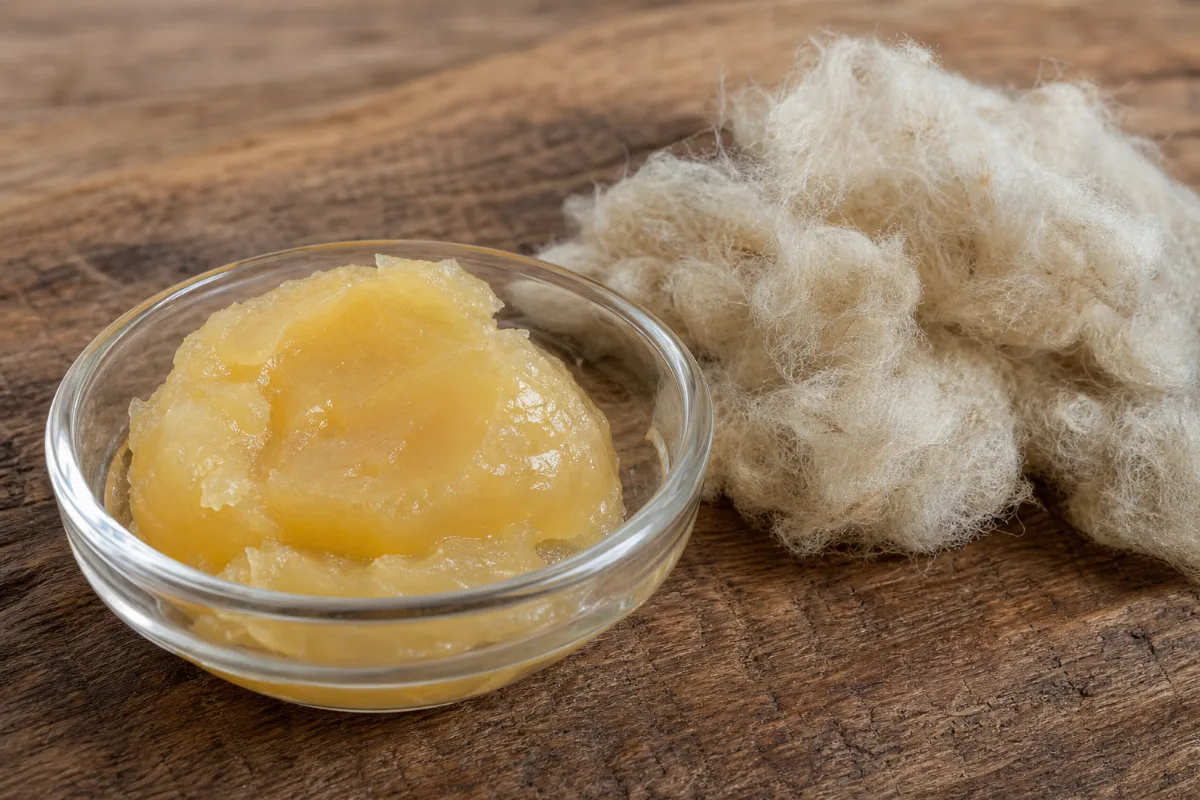
Ovis aries L. (sheep wool wax) · also called Wool wax, wool grease, wool fat. Lanolin alcohol and Amerchol L101 are related ingredients.
Lanolin is a wax taken from sheep's wool, so it is not vegan. It is mainly studied on sore nipples while breastfeeding, where the Cochrane review found not enough evidence to recommend it, while a newer meta-analysis was more positive. Lanolin is a known cause of skin allergy, and quality depends on how well it is refined. Ask a doctor, pharmacist or midwife if you have eczema, leg ulcers or a past reaction.
General information, not medical advice. Last substantive update · Not medically reviewed. A named clinician has not signed off on this page. How this page is made
About Lanolin
Lanolin is a wax from sheep's wool, used in nipple balms and skin ointments. It is not vegan. Research on sore nipples is mixed and mostly small, and a known risk is contact allergy. A purer grade has fewer pesticide residues and less free lanolin alcohol.
What it is
Lanolin is a complex mixture of high molecular weight esters, aliphatic alcohols, sterols, fatty acids and hydrocarbons taken from sheep's wool (Ovis aries). It has been refined since 1882 and is widely used in cosmetics and medicines.
How it is used
It is sold as nipple balm, hand and lip creams, ointments and a base for other products. FDA lists lanolin, 12.5 to 50 percent, among allowed skin protectant ingredients in US over-the-counter products.
What the research shows
The Cochrane review of painful nipples (4 trials, 656 women) found insufficient evidence for lanolin and said applying nothing or breast milk may be as good in the short term. A 2024 meta-analysis of 11 studies was more positive, a 2024 review of 19 trials with unclear to high risk of bias called the evidence imprecise, and a 2026 meta-analysis of 4 trials found no significant difference from breast milk.
Dry skin and premature baby results each come from one older trial.
Patch tests and the lanolin paradox
Doctors test with lanolin alcohol and Amerchol L101. Using both finds more cases (one Dutch clinic found 28.6% positive to at least one derivative, in a selected group). In a small trial, 12 people with a positive test used lanolin creams for 4 weeks without reaction on healthy skin, so a positive test does not always mean a rash. Lanolin was the American Contact Dermatitis Society's 2023 Allergen of the Year.
At a glance
Traditional uses history, not proof
- Skin softener. One review says the ancient Greeks used it for moisturising; this was not independently verified.
Studied for research
- Painful or cracked nipples while breastfeeding, mixed
- Preventing sore nipples, very low
- Against breast milk on nipples, very low
- Dry foot skin, very low
- Premature babies' skin in hospital (a lanolin and olive oil cream), low
- Skin water loss, insufficient
Main compounds
- Wax esters (high molecular weight)
- Aliphatic alcohols and sterols (free lanolin alcohols)
- Fatty acids and hydrocarbons
Common forms
- Crude wool wax
- Refined lanolin and highly purified anhydrous (HPA) lanolin
- Lanolin alcohol and Amerchol L101 (patch test materials)
- Creams, ointments and balms containing lanolin
Research links: Cochrane review: interventions for painful nipples (abstract) · North American Contact Dermatitis Group lanolin allergy data (abstract) · Lanolin lab study of pesticide residues (abstract) · Lanolin versus breast milk meta-analysis (abstract) · US eCFR skin protectant ingredients (section 347.10) · Research Library · Genes & Biomarkers Library
What it is and its history
- Accepted scientific name
- Ovis aries
- Naming authority
- Linnaeus, 1758
- Common names
- Lanolin (English); Wool wax (English); Wool grease (English); Wool alcohol (lanolin alcohol) (English)
- Family or group
- Bovidae (the sheep family)
- Classification
- Animalia > Chordata > Mammalia > Artiodactyla > Bovidae > Ovis > Ovis aries
- Harvest and processing
- Crude wool wax is refined into lanolin; purification of crude lanolin into lanolin wax began in 1882 according to a review. Higher refinement lowers pesticide residues and free lanolin alcohols.
- Look-alikes and adulterants
- Name: Lanolin alcohols and Amerchol L101; Note: Ingredients made from lanolin; used as patch test materials.; Name: Plant butters and oils; Note: Not wool-based. Coconut oil was compared with lanolin in one small study.; Name: Wool itself; Note: The fleece is a different material from the wax taken from it.
Traditional use and history history, not clinical proof
| Tradition or era | Documented use | Source |
|---|---|---|
| Ancient and 19th-century use | One review says the ancient Greeks used the fatty substance from sheep's fleece for moisturising and skin protection, and industrial production was developed in Germany in the 19th century. The ancient claim was not independently verified. | p39768261 |
| Refining and allergy debate | Crude lanolin has been purified into lanolin wax and derivatives since 1882. Doubts about its allergenicity began in the 1920s and remain. | p36917502 |
| Modern recognition | Lanolin was named the 2023 American Contact Dermatitis Society Allergen of the Year. | p37820332 |
Traditional use shows how it was used. It does not show that it works or is safe today.
What is inside, and how it may work
What it contains and how those compounds act in cells and animals. Laboratory and animal mechanisms are not proven effects in people.
Main compounds
| Compound | Family | Where it is concentrated | Activity studied | Level of evidence |
|---|---|---|---|---|
| Esters of high molecular weight | wax esters | Sheep wool wax | Main bulk of the mixture per a review; exact makeup not given in the abstract. 7 | Review |
| Free lanolin alcohols (FLA) | aliphatic alcohols and sterols | Sheep wool wax 0.61% in one highly purified nipple cream and 2.76% in another | Linked with allergy; lowered by refinement. 3 7 | Product analysis |
| Fatty acids and hydrocarbons | lipids | Sheep wool wax | Named as components in a review; no amounts read. 7 | Review |
Mechanisms, receptors and pathways
| Target or pathway | Gene or receptor | What was found | Level |
|---|---|---|---|
| Skin moisture layer | n/a | Authors say lanolin lubricates intact skin, improves the lipid barrier and maintains moisture. This is a review statement, not a measurement. 12 | Review statement |
| Contact allergy (delayed skin allergy) | n/a | Lanolin alcohol and Amerchol L101 are used to detect lanolin allergy; many patients react to only one of the two, so both are used. 11 6 | Human data |
Absorption, metabolism and elimination
- Absorption
- Not described in the sources read.
- Distribution
- Not described.
- Metabolism
- Not described.
- Elimination
- Not described.
- Bioavailability
- Not described.
Isolated compounds versus whole extracts
Highly purified anhydrous lanolin, lanolin alcohols, Amerchol L101 and lanolin mixed into creams are different materials. Allergy tests use the alcohols and Amerchol.
Nutritional composition
Lanolin is not a food. The sources read describe it only on the skin or nipples.
1 mixed findings1 low certainty3 very low certainty1 not enough evidence
What was looked at
The 6 benefits and uses checked for Lanolin, each with how strong the evidence is. Tap one to open it.
- Painful or cracked nipples while breastfeeding (treatment)Mixed findings
- Preventing sore nipples before they startVery low certainty
- Compared with your own breast milk on the nipplesVery low certainty
- Dry, rough skin (xerosis)Very low certainty
- Skin of premature babies (hospital study)Low certainty
- Skin barrier and moisture lossNot enough evidence
Lab markers tracked in the studies
Nipple pain scoreNipple damage and healing scoreDry skin (xerosis) scoreSkin inflammation score (premature babies)
What is Lanolin good for?
What the human research shows for each use, and how strong it is. None of it is proven. Read the Safety tab too.
Benefits, one by one
Each card is a research question, not a promise. Tap a goal to filter. Open a card to see the studies, doses and limits.
Painful or cracked nipples while breastfeeding (treatment)
Mixed findingsResults are mixed. The Cochrane review (4 trials, 656 women) found not enough evidence to recommend lanolin or any other treatment, and nipple pain usually eased to mild within about 7 to 10 days whatever was used. A 2024 meta-analysis of 11 studies said lanolin reduced pain and trauma, but its abstract gives no numbers or certainty rating.
3 studiesHighly purified lanolin in a thin layer in the trials; amounts are no…
Studies, doses and limits
What the trials found
Cochrane review 2014 (4 trials, 656 women); 2024 meta-analysis of 11 studies (1,495 women); 2024 review of 19 trials with unclear to high risk of bias that calls the evidence imprecise.
Results
Cochrane: no clear difference in pain between lanolin and nothing in one trial; expressed breast milk gave lower pain than lanolin at 4 to 5 days but not later. Shetty 2024: lanolin reduced pain and trauma (no numbers in the abstract). Nozimoto 2024: evidence imprecise; zero adverse events in both groups in the one lanolin trial reporting them.
Effect sizes as reported
Cochrane GRADE for nipple pain: low. Other reviews give no usable effect sizes in their abstracts.
Why this rating
The newest meta-analysis is positive, the Cochrane review and a 2024 review of 19 trials are not, and the trials are small with different designs.
Form and dose studied
Highly purified lanolin in a thin layer in the trials; amounts are not given here.
Who was studied
Breastfeeding women after birth.
Limits
Most trials are small and not blinded. The positive meta-analysis abstract has no numbers. Allergy to lanolin is possible (see Safety).
Why researchers looked
Sore nipples are a common reason women stop breastfeeding. Highly purified lanolin is the best-known nipple ointment, so it has been tested many times.
Traditional use
Lanolin has been used on skin since ancient times according to one review (not independently verified).
Proposed mechanism Pharmacological theory
Proposed, not proven: a greasy layer keeps the skin moist and may protect it between feeds.
A proposed mechanism does not show that the effect happens in people.
Lanolin is an animal-derived wax (from sheep wool), so it is not vegan. Some people are allergic to it. See the Safety tab.
Preventing sore nipples before they start
Very low certaintyLittle support. One small trial (66 women) found no difference in nipple pain or trauma between lanolin plus breastfeeding education and education alone. A very small early study of 27 finishers found coconut oil did better than purified lanolin. The 2024 meta-analysis calls lanolin a helpful preventive, with no numbers in its abstract.
3 studiesLanolin used as an ointment; amounts not given here.
Studies, doses and limits
What the trials found
One 66-woman open randomized trial; one very small randomized study with high drop-out; one meta-analysis abstract.
Results
Pain p = 0.61 and nipple lesions p = 0.21 between groups in the 66-woman trial. In the coconut oil comparison, coconut oil was better (p < 0.001) among 27 who finished.
Effect sizes as reported
No effect sizes in the abstracts.
Why this rating
Small trials, one open-label, one with only 27 of 47 finishing, and results pointing both ways.
Form and dose studied
Lanolin used as an ointment; amounts not given here.
Who was studied
Pregnant or newly breastfeeding women.
Limits
In the first, lanolin was combined with education, so its own effect cannot be separated. In the second, lanolin was the comparison arm.
Why researchers looked
Researchers asked if starting lanolin early could stop nipple damage.
Traditional use
Lanolin has been used on skin since ancient times according to one review (not independently verified).
Proposed mechanism Pharmacological theory
Not established.
A proposed mechanism does not show that the effect happens in people.
Lanolin is an animal-derived wax (from sheep wool), so it is not vegan. Some people are allergic to it. See the Safety tab.
Compared with your own breast milk on the nipples
Very low certaintyTwo trials and three reviews disagree. A 206-woman trial found lanolin and human milk equally effective. A 180-woman trial found highly purified lanolin did better over 7 days. A 2026 meta-analysis of 4 trials (711 women) found no significant difference, with very low certainty.
3 studiesHighly purified lanolin versus expressed milk.
Studies, doses and limits
What the trials found
Two randomized trials (206 and 180 women) and a 2026 meta-analysis of four trials.
Results
Trial 1 (206 women): both groups improved without a significant gap; more lanolin mothers breastfed exclusively at day 3 (p = .026). Trial 2 (180 women): pain p < 0.001 and trauma p = 0.025 better with lanolin. Meta-analysis: pain MD 0.13 (95% CI -3.20 to 3.46), cracks MD -0.43 (-1.12 to 0.25).
Effect sizes as reported
Meta-analysis shows no significant difference.
Why this rating
The meta-analysis itself rates certainty very low (risk of bias, inconsistency, imprecision).
Form and dose studied
Highly purified lanolin versus expressed milk.
Who was studied
Breastfeeding women with sore nipples.
Limits
Short follow-up (7 to 10 days); trials not clearly masked; the two trials point different ways.
Why researchers looked
Breast milk is free and always at hand, so researchers compared it with lanolin.
Traditional use
Lanolin has been used on skin since ancient times according to one review (not independently verified).
Proposed mechanism Pharmacological theory
Not established.
A proposed mechanism does not show that the effect happens in people.
Lanolin is an animal-derived wax (from sheep wool), so it is not vegan. Some people are allergic to it. See the Safety tab.
Dry, rough skin (xerosis)
Very low certaintyOne older trial of 92 adults with foot dry skin found pure lanolin and a 12% ammonium lactate cream both improved dry skin, with no difference between them. Many dropped out. Reviews say plain moisturisers generally help dry skin but give no result for lanolin alone.
3 studiesPure lanolin twice daily in the trial; amounts not given here.
Studies, doses and limits
What the trials found
One double-blind trial (2003). Two 2025 reviews of basic moisturisers list lanolin among many ingredients searched.
Results
Both treatments improved scores at 2 and 4 weeks; no significant gap. 41 of 92 were excluded from analysis (25 lost to follow-up).
Effect sizes as reported
No effect sizes in the abstract.
Why this rating
One old trial with no do-nothing group and many drop-outs.
Form and dose studied
Pure lanolin twice daily in the trial; amounts not given here.
Who was studied
Adults with moderate to severe foot dry skin.
Limits
No placebo group; reviews give no lanolin-only result; allergy to lanolin is a risk, more so on broken or inflamed skin.
Why researchers looked
Lanolin is a classic skin softener, so it was tested on very dry skin.
Traditional use
Lanolin has been used on skin since ancient times according to one review (not independently verified).
Proposed mechanism Pharmacological theory
Proposed in a review: it lubricates skin and holds moisture on intact skin.
A proposed mechanism does not show that the effect happens in people.
Lanolin is an animal-derived wax (from sheep wool), so it is not vegan. Some people are allergic to it. See the Safety tab.
Skin of premature babies (hospital study)
Low certaintyIn 173 premature babies in a hospital unit, daily 70% lanolin / 30% olive oil cream gave less skin inflammation than a standard emollient cream, and both beat no treatment. This was nurse-given care, in a mixed cream. It is not advice for home use.
1 studiesA 70% lanolin and 30% olive oil cream applied daily by staff; not a h…
Studies, doses and limits
What the trials found
One randomized trial (2008).
Results
Skin scores were better with the olive oil/lanolin cream than with emollient cream, and both better than control (p < 0.001 in weeks 2 to 4).
Effect sizes as reported
No effect sizes in the abstract.
Why this rating
One reasonably large randomized trial, but not repeated, a mixed product, and a hospital setting.
Form and dose studied
A 70% lanolin and 30% olive oil cream applied daily by staff; not a home recipe.
Who was studied
Premature babies, 25 to 36 weeks, in intensive care.
Limits
Not lanolin alone; one trial; funding not stated; the abstract does not report lanolin allergy or other harms.
Why researchers looked
Very premature babies have fragile skin, and teams wanted to know which cream protects it.
Traditional use
Lanolin has been used on skin since ancient times according to one review (not independently verified).
Proposed mechanism Pharmacological theory
Not established.
A proposed mechanism does not show that the effect happens in people.
Lanolin is an animal-derived wax (from sheep wool), so it is not vegan. Some people are allergic to it. See the Safety tab.
Skin barrier and moisture loss
Not enough evidenceNo trial in the sources read measured water loss through skin for lanolin alone. Reviews say lanolin lubricates intact skin and supports moisture, which is an authors' statement, not a trial result.
2 studiesNot applicable
Studies, doses and limits
What the trials found
No lanolin-specific measurement found; reviews only.
Results
Not measured in the sources read.
Why this rating
No lanolin-only data on skin water loss were read.
Who was studied
General skin-care use
Limits
A review statement, not a measurement.
Why researchers looked
People use lanolin as a seal against dry air.
Traditional use
Lanolin has been used on skin since ancient times according to one review (not independently verified).
Proposed mechanism Pharmacological theory
Authors' statement: oily layer reduces water loss.
A proposed mechanism does not show that the effect happens in people.
Lanolin is an animal-derived wax (from sheep wool), so it is not vegan. Some people are allergic to it. See the Safety tab.
Connections to the rest of health
How Lanolin connects to the rest of our health knowledge graph. Every link says what kind of connection it is. A safety link (for example to the liver) is a warning, not a benefit. A study that merely mentions a topic never creates a benefit link.
Explore every connection: goals, body systems, organs, symptoms, genes
A. Wellness goals
| Connected to | Kind of connection | Evidence status | Context | Studies |
|---|---|---|---|---|
| Womens Wellness | Mixed findings | Painful or cracked nipples while breastfeeding (treatment): Results are mixed. The Cochrane review (4 trials, 656 women) found not enough evidence to recommend lanolin or any other treatment, and nipple pain usually eased to mild within about 7 to 10 days whatever was used. A 2024 meta-analysis of 11 studies said lanolin reduced pain and trauma, but its abstract gives no numbers or certainty rating. | 5 18 14 | |
| Pain Relief | Mixed findings | Painful or cracked nipples while breastfeeding (treatment): Results are mixed. The Cochrane review (4 trials, 656 women) found not enough evidence to recommend lanolin or any other treatment, and nipple pain usually eased to mild within about 7 to 10 days whatever was used. A 2024 meta-analysis of 11 studies said lanolin reduced pain and trauma, but its abstract gives no numbers or certainty rating. | 5 18 14 | |
| Womens Wellness | Very low certainty | Preventing sore nipples before they start: Little support. One small trial (66 women) found no difference in nipple pain or trauma between lanolin plus breastfeeding education and education alone. A very small early study of 27 finishers found coconut oil did better than purified lanolin. The 2024 meta-analysis calls lanolin a helpful preventive, with no numbers in its abstract. Compared with your own breast milk on the nipples: Two trials and three reviews disagree. A 206-woman trial found lanolin and human milk equally effective. A 180-woman trial found highly purified lanolin did better over 7 days. A 2026 meta-analysis of 4 trials (711 women) found no significant difference, with very low certainty. | 15 17 18 16 13 2 | |
| Healthy Skin | Very low certainty | Dry, rough skin (xerosis): One older trial of 92 adults with foot dry skin found pure lanolin and a 12% ammonium lactate cream both improved dry skin, with no difference between them. Many dropped out. Reviews say plain moisturisers generally help dry skin but give no result for lanolin alone. | 8 20 12 | |
| Healthy Skin | Low certainty | Skin of premature babies (hospital study): In 173 premature babies in a hospital unit, daily 70% lanolin / 30% olive oil cream gave less skin inflammation than a standard emollient cream, and both beat no treatment. This was nurse-given care, in a mixed cream. It is not advice for home use. | 10 | |
| Healthy Skin | Not enough evidence | Skin barrier and moisture loss: No trial in the sources read measured water loss through skin for lanolin alone. Reviews say lanolin lubricates intact skin and supports moisture, which is an authors' statement, not a trial result. | 12 20 |
B. Body systems
| Connected to | Kind of connection | Evidence status | Context | Studies |
|---|---|---|---|---|
| Reproductive System | Biological association | Mixed findings | Studied for: Painful or cracked nipples while breastfeeding (treatment) Studied for: Preventing sore nipples before they start | 5 18 14 15 17 16 13 2 |
| Integumentary System | Biological association | Mixed findings | Studied for: Painful or cracked nipples while breastfeeding (treatment) Studied for: Preventing sore nipples before they start | 5 18 14 15 17 16 13 2 8 20 12 10 |
C. Body parts and organs
E. Health conditions
| Connected to | Kind of connection | Evidence status | Context | Studies |
|---|---|---|---|---|
| Contact dermatitis | Adverse effect or risk | Moderate certainty | Common patch-test allergen; 2023 ACDS Allergen of the Year. Preparation or compound: Lanolin alcohol and Amerchol L101 |
9 11 |
| Sore nipples while breastfeeding | Mixed findings | Cochrane insufficient; later meta-analyses disagree. Preparation or compound: Lanolin on nipples |
5 18 |
I. Biomarkers
| Connected to | Kind of connection | Evidence status | Context | Studies |
|---|---|---|---|---|
| Nipple pain score | Biological association | Mixed findings | Measured in trials: mixed. A lab change is not the same as a health benefit. | 16 13 5 |
| Nipple damage and healing score | Biological association | Very low certainty | Measured in trials: mixed. A lab change is not the same as a health benefit. | 13 15 2 |
| Dry skin (xerosis) score | Biological association | Very low certainty | Measured in trials: improved. A lab change is not the same as a health benefit. | 8 |
| Skin inflammation score (premature babies) | Biological association | Low certainty | Measured in trials: improved. A lab change is not the same as a health benefit. | 10 |
L. Active compounds
| Connected to | Kind of connection | Evidence status | Context | Studies |
|---|---|---|---|---|
| Esters of high molecular weight | Biological association | Review | Main bulk of the mixture per a review; exact makeup not given in the abstract. Preparation or compound: Sheep wool wax |
7 |
| Free lanolin alcohols (FLA) | Biological association | Product analysis | Linked with allergy; lowered by refinement. Preparation or compound: Sheep wool wax |
3 7 |
| Fatty acids and hydrocarbons | Biological association | Review | Named as components in a review; no amounts read. Preparation or compound: Sheep wool wax |
7 |
Each connection is stored with the ingredient, the connected record, the kind of connection, the evidence status, the supporting studies, the preparation or compound involved, and a review date (last reviewed October 25, 2026).
Evidence at a glance: what changed in 2 lab markers
Tap a number to show only those markers. Counts are markers, not people.
The evidence
The research centre for Lanolin. Every record here was checked against PubMed or the publisher's page; we never list a study we have not verified.
Evidence by outcome
Bars show how many studies we found for each outcome, not how well it works. People are added up across trials only (reviews are not added, to avoid double counting).
How we rate evidence
High certainty
Several well-run trials or reviews agree; further research is unlikely to change the picture much.
Moderate certainty
Good trials point the same way, but some doubt remains.
Low certainty
Small, short or inconsistent trials. The finding could change with better research.
Very low certainty
Very little or very weak human data. Treat as a possibility only.
Mixed findings
Trials or reviews disagree with each other.
Not enough evidence
Not enough human research to say either way.
Evidence against
Good research found no benefit, or found harm.
We take the reviewers' own risk-of-bias and GRADE statements where they exist, and otherwise judge from study size, design, consistency, directness and whether a product matches what is sold. Many publications do not make evidence high. Method note: We read PubMed abstracts of 19 papers, one letter title only, and the US eCFR section on skin protectants in full text, and checked the animal name in GBIF and NCBI Taxonomy. Only abstracts were read for papers. Certainty ratings are the compiler's own reading. Funding is not stated in most abstracts; one lab study tested named brands and may have industry links that are not stated. No study is cited that we could not verify.
Study library: every study we checked 23
| Study | Design | People | Product, dose, length | Result |
|---|---|---|---|---|
| Alley 2026 Letter: From Fleece to Grease: Lanolin Demonstrates Minimal Cross-Reactivity with Cetyl, Stearyl, and Cetearyl Alcohols. Dermatitis · PMID 42473287 · DOI |
Letter n/a |
Letter (title only read) | Lanolin and cetyl, stearyl, cetearyl alcohols wool wax (applied to skin) Not given here |
Only the title was available: it states lanolin shows minimal cross-reactivity with cetyl, stearyl and cetearyl alcohols. No abstract. n/a Methods, limits and fundingOutcomes: Cross-reactivity Limitations: Title only; the details were not read. Funding and conflicts: Funding and conflicts of interest are not stated in the abstract. Read: title |
| Barja-Ore 2026 Efficacy and Safety of Topical Application of Breast Milk Compared with Lanolin for Reducing Nipple Cracks and Pain in Breastfeeding Mothers: A Systematic Review and Meta-Analysis of Randomized Clinical Trials. Breastfeed Med · PMID 42488966 · DOI |
Systematic review |
711 Breastfeeding mothers (4 trials) |
Lanolin versus breast milk on the nipples wool wax (applied to skin) Not given here · vs Breast milk |
No significant difference between breast milk and lanolin for cracks (MD -0.43, 95% CI -1.12 to 0.25) or pain (MD 0.13, 95% CI -3.20 to 3.46). GRADE certainty: very low (risk of bias, inconsistency, imprecision). No significant difference Methods, limits and fundingOutcomes: Nipple cracks; nipple pain Limitations: Very low certainty; the trials differ. Funding and conflicts: Funding and conflicts of interest are not stated in the abstract. Read: abstract |
| Bourdillon 2023 Multi-residue analysis of certain lanolin nipple care products for trace contaminants. BMC Chem · PMID 36849952 · DOI |
Product analysis n/a |
Two lanolin nipple creams and two lanolin ingredients | Lab testing for 178 pesticide residues and free lanolin alcohols (FLA) wool wax (applied to skin) Not given here |
Purity followed the level of refinement; lanolin meeting the Ph. Eur. monograph was purest. One nipple cream (HPA Lanolin) had 0.61% FLA and no detectable pesticide residues. The other (PURELAN) had 2.76% FLA and several pesticide residues, low and within permitted limits. The authors say higher refinement cuts both pesticides and free alcohols, which lowers allergy risk. One cream no residues; one low residues within limits Methods, limits and fundingOutcomes: Pesticide residues; free lanolin alcohol levels Limitations: Only four samples. Products tested are named brands; the abstract does not state who funded it or whether the authors work for a manufacturer, so an industry link is possible and unverified. Funding and conflicts: Not stated in the abstract; possible industry link not checked. Read: abstract |
| Cegolon 2024 Sensitization to Lanolin in North-Eastern Italy, 1997-2021: Prevalence, Risk Factors and the Impact of Occupation. Life (Basel) · PMID 39202659 · DOI |
Observational |
30269 Outpatients patch tested in north-east Italy |
Patch tests (European baseline and extended series) wool wax (applied to skin) Not given here 1997 to 2021 |
Overall positive ratio 1.64% (501 of 30,629 tests). Higher in men (aOR 1.34) and in people with leg dermatitis aged 49-60 (aOR 2.34) or over 60 (aOR 4.21). Female house painters were more likely to test positive; the authors point to lanolin-containing varnishes at work. Rates varied over time and by centre. 1.64% positive Methods, limits and fundingOutcomes: Patch-test positive ratio and risk factors Limitations: Clinic patients; the authors say the variability keeps the relevance debated. Funding and conflicts: Funding and conflicts of interest are not stated in the abstract. Read: abstract |
| Dennis 2014 Interventions for treating painful nipples among breastfeeding women. Cochrane Database Syst Rev · PMID 25506813 · DOI |
Systematic review |
656 Breastfeeding women with painful nipples (4 trials) |
Lanolin alone or with breast shells, versus usual care, expressed breast milk, glycerine gel dressings or an all-purpose ointment wool wax (applied to skin) Not given here Up to about 7 days in the trials · vs Usual care or other treatments |
Four trials of good methodological quality (656 women). One trial found no clear difference in nipple pain between lanolin and nothing. Expressed breast milk gave lower pain than lanolin at four to five days, not at six to seven days. Overall there was insufficient evidence to recommend any treatment. For most women pain fell to mild levels after about 7 to 10 days whatever was used. GRADE for nipple pain: low. No pooled benefit of lanolin shown Methods, limits and fundingOutcomes: Nipple pain; nipple trauma; infection; breastfeeding duration Limitations: Search ended 30 September 2014; only four trials with different designs; single small trials for most comparisons. Funding and conflicts: Research support is non-industry per the record type; no further detail in the abstract. Read: abstract |
| Fransen 2018 Contact allergy to lanolin: temporal changes in prevalence and association with atopic dermatitis. Contact Dermatitis · PMID 28940210 · DOI |
Observational |
9577 Consecutively patch tested dermatitis patients, Denmark, 2004-2015 |
Lanolin alcohols 30% and Amerchol L-101 50% patch tests wool wax (applied to skin) Not given here 12 years |
Prevalence rose from 0.45% in 2004 to 1.81% in 2015. Weak links with atopic dermatitis were found for lanolin and lanolin alcohols. Only 29 of 108 positive patients reacted to both markers. 0.45% rising to 1.81% Methods, limits and fundingOutcomes: Prevalence over time; link with atopic dermatitis Limitations: Retrospective; clinic patients. Funding and conflicts: Funding and conflicts of interest are not stated in the abstract. Read: abstract |
| Jenkins 2023 Lanolin. Dermatitis · PMID 36917502 · DOI |
Narrative review n/a |
Review | Lanolin: composition, history and allergy wool wax (applied to skin) Not given here |
Lanolin is a complex mixture of high molecular weight esters, aliphatic alcohols, sterols, fatty acids and hydrocarbons. Purification of crude lanolin into lanolin wax began in 1882. Doubts about allergy began in the 1920s. The authors call it a weak sensitizer, with contact allergy reportedly 0.4% in the European population, but higher in atopic dermatitis, stasis dermatitis, leg ulcers and perianal or genital dermatitis, and in children and the elderly. Patch testing on normal skin can miss allergy in diseased skin, and some patch-test-positive people tolerate lanolin on normal skin. n/a Methods, limits and fundingOutcomes: Composition; allergenicity; patch testing Limitations: Narrative review. Funding and conflicts: Funding and conflicts of interest are not stated in the abstract. Read: abstract |
| Jennings 2003 A double-blind clinical trial comparing the efficacy and safety of pure lanolin versus ammonium lactate 12% cream for the treatment of moderate to severe foot xerosis. Cutis · PMID 12553635 |
Controlled trial |
92 Adults with moderate to severe dry skin on the feet |
Pure lanolin applied twice daily wool wax (applied to skin) Not given here 4 weeks · vs Ammonium lactate 12% cream |
Dry-skin scores improved with both products at 2 and 4 weeks, with no statistically significant difference between them. 41 of 92 were excluded from analysis (25 lost to follow-up). One person left for an adverse event after visit 1. Both improved; no difference between products Methods, limits and fundingOutcomes: Xerosis score at 1, 2 and 4 weeks Limitations: Old trial; no do-nothing group; many dropped out; the abstract does not state the adverse event. Funding and conflicts: Record lists non-US-government research support; no company named in the abstract. Read: abstract |
| Johnson 2023 Lanolin: The 2023 American Contact Dermatitis Society Allergen of the Year. Cutis · PMID 37820332 · DOI |
Narrative review n/a |
Review | Lanolin and contact allergy wool wax (applied to skin) Not given here |
Lanolin was named the 2023 Allergen of the Year by the American Contact Dermatitis Society. It is thought to be a rare sensitizer in people with healthy skin; people with chronic inflammatory skin conditions are at higher risk. The right patch test form is disputed. n/a Methods, limits and fundingOutcomes: Contact allergy to lanolin Limitations: Narrative review; the abstract has no numbers. Funding and conflicts: Funding and conflicts of interest are not stated in the abstract. Read: abstract |
| Kiechl-Kohlendorfer 2008 The effect of daily treatment with an olive oil/lanolin emollient on skin integrity in preterm infants: a randomized controlled trial. Pediatr Dermatol · PMID 18429773 · DOI |
Controlled trial |
173 Preterm infants (25-36 weeks) in a neonatal intensive care unit |
Olive oil cream (70% lanolin, 30% olive oil) wool wax (applied to skin) Not given here Up to 4 weeks · vs Water-in-oil emollient cream (Bepanthen) and an untreated control group |
Infants given the olive oil/lanolin cream had less dermatitis than infants given the emollient cream, and both did better than the control group (p < 0.001 in weeks 2 to 4). Lower dermatitis score than emollient cream and than no treatment Methods, limits and fundingOutcomes: Skin score reflecting dermatitis, weeks 1 to 4 Limitations: Hospital setting under nurse care; mixed cream, not lanolin alone; funding not stated in the abstract. Funding and conflicts: Funding and conflicts of interest are not stated in the abstract. Read: abstract |
| Knijp 2019 Diagnosing lanolin contact allergy with lanolin alcohol and Amerchol L101. Contact Dermatitis · PMID 30624788 · DOI |
Observational |
594 Dermatitis patients patch tested 2016-2017 (Netherlands) |
Patch tests with lanolin alcohol, Amerchol L101 and other lanolin derivatives wool wax (applied to skin) Not given here 2016 to 2017 |
28.6% had a positive test to at least one lanolin derivative. Lanolin alcohol was positive in 14.7% and Amerchol L101 in 15.0%. Adding Amerchol L101 to lanolin alcohol found significantly more cases (OR 1.79). The authors give prior prevalence in dermatitis patients as 1.2% to 6.9%. 28.6% positive to at least one derivative in this group Methods, limits and fundingOutcomes: Positive patch tests Limitations: Selected patients, already suspected; figures are not general-population rates. Funding and conflicts: Funding and conflicts of interest are not stated in the abstract. Read: abstract |
| Lis 2024 Hypersensitivity to Lanolin: An Old-New Problem. Life (Basel) · PMID 39768261 · DOI |
Narrative review n/a |
Review | Lanolin hypersensitivity wool wax (applied to skin) Not given here |
Lanolin is a fatty substance from sheep's fleece, used for moisturising since the ancient Greeks, with industrial production developed in Germany in the 19th century. On intact skin it lubricates and supports moisture; on damaged skin it can cause contact allergy. The author says most data are retrospective patch-test analyses or case reports and that standardised studies are lacking, so the question stays unresolved. n/a Methods, limits and fundingOutcomes: Hypersensitivity; history Limitations: Narrative review. Funding and conflicts: Funding and conflicts of interest are not stated in the abstract. Read: abstract |
| Mariani Neto 2018 Comparative Study of the Use of HPA Lanolin and Breast Milk for Treating Pain Associated with Nipple Trauma. Rev Bras Ginecol Obstet · PMID 30372779 · DOI |
Controlled trial |
180 Women after birth with nipple pain and trauma |
Highly purified anhydrous (HPA) lanolin wool wax (applied to skin) Not given here 7 days · vs Own expressed breast milk |
Pain improved between the second and third assessment with HPA lanolin but not with breast milk (p < 0.001). Trauma improved more with HPA lanolin (p = 0.025). The authors say HPA lanolin did better over 7 days. Better pain and trauma scores with lanolin than milk over 7 days Methods, limits and fundingOutcomes: Pain and nipple trauma at 48 hours and 7 days Limitations: Not described as blinded in the abstract; a brief 7-day follow-up. Funding and conflicts: Funding and conflicts of interest are not stated in the abstract. Read: abstract |
| Nozimoto 2024 Nonpharmacological Interventions for Treating Breastfeeding Nipple Pain: Systematic Review and Meta-Analysis. Breastfeed Med · PMID 38837198 · DOI |
Systematic review |
Breastfeeding women with painful nipples (19 trials) | Topical non-drug treatments including lanolin wool wax (applied to skin) Not given here · vs Breast milk, placebo and others |
Nineteen trials with unclear to high risk of bias. For lanolin versus breast milk: pain mean difference -1.80 (95% CI -2.43 to -1.17; 1 trial, 180 women), wound healing 0.10 (-0.26 to -0.46), and zero adverse events in both groups. The authors call the evidence imprecise and say better trials are needed. Pain MD -1.80 (95% CI -2.43 to -1.17), one trial; certainty uncertain Methods, limits and fundingOutcomes: Pain; healing; adverse events Limitations: The abstract does not say which arm the pain difference favours. One trial per comparison. Funding and conflicts: Not stated in the abstract; the review used GRADE. Read: abstract |
| Oliveira 2021 Lanolin and prenatal health education for prevention of nipple pain and trauma: Randomized clinical trial. Enferm Clin · PMID 33277168 · DOI |
Controlled trial |
66 Pregnant women in primary care, Brazil |
Lanolin plus breastfeeding education wool wax (applied to skin) Not given here Measured on postpartum day 8 · vs Standard education |
No significant differences between groups for pain (p = 0.61), nipple lesions (p = 0.21) or technique. 59.1% had no nipple trauma in either group. The authors say it is unclear whether lanolin plus education helps. No difference Methods, limits and fundingOutcomes: Nipple pain; nipple trauma; breastfeeding technique Limitations: Open (not blinded); small; lanolin was combined with education. Funding and conflicts: Registered RBR-7tvhq8; funding not stated in the abstract. Read: abstract |
| Peric 2023 Comparison of Lanolin and Human Milk Treatment of Painful and Damaged Nipples: A Randomized Control Trial. J Hum Lact · PMID 36401521 · DOI |
Controlled trial |
206 First-time mothers with painful, damaged nipples |
Lanolin on nipples wool wax (applied to skin) Not given here First 10 days after birth · vs Human milk |
Both groups had a non-significant fall in pain and better healing at 7 days. The lanolin group breastfed exclusively more often at 3 days (p = .026); no other secondary difference. The authors conclude both were equally effective. No significant difference in pain or healing Methods, limits and fundingOutcomes: Nipple pain (McGill short form); nipple healing; breastfeeding exclusivity Limitations: Single-blind; only one secondary result differed; amount used is not given here. Funding and conflicts: Registered NCT04153513; funding not stated in the abstract. Read: abstract |
| Riley 2026 Effectiveness of Highly Purified Anhydrous Lanolin Versus Extra-Virgin Coconut Oil in Preventing Subacute Lactation Mastitis. J Hum Lact · PMID 42668412 · DOI |
Controlled trial |
27 Breastfeeding women in a US hospital (97 agreed, 47 enrolled, 27 finished) |
HPA lanolin (standard care arm) wool wax (applied to skin) Not given here 6 weeks · vs Extra-virgin coconut oil |
With high drop-out, the authors report coconut oil was better than HPA lanolin at preventing nipple trauma and cracking (p < 0.001). They call it early work. Coconut oil better than lanolin in a very small study Methods, limits and fundingOutcomes: Nipple tenderness and pain scales Limitations: Only 27 of 47 enrolled finished; early work; lanolin was the comparison arm. Funding and conflicts: Funding and conflicts of interest are not stated in the abstract. Read: abstract |
| Shetty 2024 Effectiveness of the Application of Lanolin, Aloe Vera, and Peppermint on Nipple Pain and Nipple Trauma in Lactating Mothers: A Systematic Review and Meta-Analysis. Matern Child Health J · PMID 39436586 · DOI |
Systematic review |
1495 Lactating mothers (11 studies) |
Lanolin, aloe vera or peppermint on the nipples wool wax (applied to skin) Not given here |
The abstract says lanolin significantly reduced nipple pain and nipple trauma, and peppermint reduced nipple trauma. It gives no numbers, no risk-of-bias rating and no GRADE. Reported as significant; no numbers in the abstract Methods, limits and fundingOutcomes: Nipple pain; nipple trauma Limitations: Abstract has no effect sizes or certainty rating. It disagrees with the older Cochrane review, and mixes lanolin with other products. Funding and conflicts: Funding and conflicts of interest are not stated in the abstract. Read: abstract |
| Silverberg 2022 Lanolin Allergic Reactions: North American Contact Dermatitis Group Experience, 2001 to 2018. Dermatitis · PMID 35481824 · DOI |
Observational |
43691 Patients patch tested by the North American Contact Dermatitis Group, 2001 to 2018 |
Patch tests with lanolin alcohol 30% or Amerchol L-101 50% in petrolatum wool wax (applied to skin) Not given here 2001 to 2018 |
1431 (3.3%) had a positive reaction and 1238 (2.8%) were currently relevant. The rate was 4.63% in 2011-2018. Most were weak (+, 52%); 18% were ++ and 6% +++. Common sites were hands (20.7%), generalized (19.6%) and face (17.0%). Rates were higher in children (4.5%) than adults (3.2%). Allergic patients were more likely to have a history of eczema or hay fever. Sources were mainly personal care products and medicines; only 2.24% of positives were linked to work. 3.3% positive overall, 4.63% in 2011-2018 Methods, limits and fundingOutcomes: Positive patch test reactions and relevance Limitations: Patients sent to a specialist clinic, so rates are higher than in the general public. Retrospective. Funding and conflicts: Funding and conflicts of interest are not stated in the abstract. Read: abstract |
| Szepietowski 2025 Basic Emollients for Xerosis Cutis Not Associated With Atopic Dermatitis: A Review of Clinical Studies. Int J Dermatol · PMID 40444760 · DOI |
Narrative review n/a |
Dry skin from various causes | Basic emollients (lanolin was one of many ingredients searched) wool wax (applied to skin) Not given here |
The authors say most basic emollients are safe and effective for dry skin from ageing, kidney disease, psoriasis, ichthyosis and diabetes. The abstract gives no result for lanolin alone. n/a Methods, limits and fundingOutcomes: Dry skin Limitations: Part of a journal supplement; the abstract does not say who funded it; no lanolin-specific result. Funding and conflicts: Funding and conflicts of interest are not stated in the abstract. Read: abstract |
| Uldahl 2021 Clinical relevance of positive patch test reactions to lanolin: A ROAT study. Contact Dermatitis · PMID 32844454 · DOI |
Controlled trial |
26 12 people allergic to Amerchol L101 and 14 controls |
Two lanolin-containing creams, twice daily, on intact skin and on skin with detergent-induced irritation wool wax (applied to skin) Not given here 4 weeks · vs Lanolin-free cream base |
None of the participants had a reaction on intact skin, and all healed on the irritated skin. The authors conclude lanolin-containing emollients did not cause or worsen dermatitis in volunteers who tested positive to Amerchol L101. No reactions in 12 patch-test-positive people Methods, limits and fundingOutcomes: Skin reactions in a repeated open application test Limitations: Only 12 allergic volunteers; short; two specific creams; not proof for everyone. Funding and conflicts: Funding not stated in the abstract. Read: abstract |
| n/a 2025 US eCFR Title 21 Part 347.10 Skin protectant active ingredients (version dated 2025-01-01) n/a · Source |
Authoritative guidance n/a |
n/a | n/a |
Section 347.10(k): Lanolin, 12.5 to 50 percent, among the active ingredients allowed in skin protectant products. Methods, limits and fundingOutcomes: Lists lanolin among permitted skin protectant active ingredients. Limitations: Concerns over-the-counter skin protectant drug products in the US, not nipple products or cosmetics in other countries. Read: full-text |
| n/a 2026 GBIF Backbone Taxonomy: Ovis aries Linnaeus, 1758 (accepted name) n/a · Source |
Authoritative guidance n/a |
n/a | n/a |
Accepted: Ovis aries Linnaeus, 1758, key 2441110, family Bovidae, order Artiodactyla. Methods, limits and fundingOutcomes: Accepted scientific name and family. Limitations: A database record. Read: api |
What we do not know yet
- What the evidence supports: mixed for sore nipple treatment, very low for prevention, comparison with breast milk and dry skin, low for premature baby skin in one hospital trial, insufficient for skin water loss.
- No large masked trial against nothing for nipple pain.
- No data read on babies swallowing traces, or on wool allergy.
- LactMed, European rules and the numeric pesticide limits were not checked.
How new research is added
New studies are found by a saved PubMed search and placed in a review queue. A person reads each one before it changes any rating or safety wording.
Lab markers
What changed in blood or saliva tests during trials. A changed number is not the same as feeling or being healthier, and we give no "normal ranges".
Other 4
Nipple pain score
Mixed results in trials
A rating, such as a numeric scale or the McGill questionnaire, of how much the nipples hurt.
Mixed findingsResults and what it means
Why it was measured
The main outcome in nipple care trials.
Statistical vs. clinical meaning
Disagreement between trials and reviews.
Safety implication
Pain scales are self-reported; most women improve in 7 to 10 days regardless.
| Study | Result | People | Product |
|---|---|---|---|
| 16 | Pain fell without a significant gap between lanolin and human milk at 7 days. | 206 first-time mothers | Lanolin versus human milk |
| 13 | Pain improved more with HPA lanolin than with breast milk between assessments (p < 0.001). | 180 women after birth | HPA lanolin versus breast milk, 7 days |
| 5 | Low-quality evidence; no clear gain over nothing; milk lower at 4 to 5 days. | Review of 4 trials, 656 women | Lanolin, milk, dressings and others |
Nipple damage and healing score
Mixed results in trials
A score for cracks, extent and depth of nipple damage.
Very low certaintyResults and what it means
Why it was measured
Shows if the skin is actually healing.
Statistical vs. clinical meaning
Mixed or null.
Safety implication
No harm signal for infants was reported in these abstracts, but they did not look for it.
| Study | Result | People | Product |
|---|---|---|---|
| 13 | Trauma improved more with HPA lanolin than breast milk (p = 0.025). | 180 women | HPA lanolin versus breast milk |
| 15 | No difference in nipple lesions (p = 0.21). | 66 pregnant women | Lanolin plus education versus education |
| 2 | No significant difference in cracks versus milk (MD -0.43, 95% CI -1.12 to 0.25); very low certainty. | 711 women, 4 trials | Lanolin versus milk |
Dry skin (xerosis) score
Improved in trials
A clinician's rating of scaling, roughness and dryness.
Very low certaintyResults and what it means
Why it was measured
Standard way to judge dry skin treatments.
Statistical vs. clinical meaning
Improvement without a do-nothing group.
Safety implication
One person left the study for an adverse event; the nature is not stated.
| Study | Result | People | Product |
|---|---|---|---|
| 8 | Scores improved with both pure lanolin and ammonium lactate 12% at 2 and 4 weeks; no difference. | 92 adults enrolled, 51 analysed | Pure lanolin twice daily, 4 weeks |
Skin inflammation score (premature babies)
Improved in trials
A nurse-rated score of redness and skin damage.
Low certaintyResults and what it means
Why it was measured
Shows skin integrity in fragile infants.
Statistical vs. clinical meaning
Statistically clear in one trial.
Safety implication
Harms not reported in the abstract.
| Study | Result | People | Product |
|---|---|---|---|
| 10 | Lower scores with olive oil/lanolin cream than with emollient cream or no treatment (p < 0.001, weeks 2 to 4). | 173 premature infants | 70% lanolin / 30% olive oil cream, up to 4 weeks |
Safety
What studies and official sources say about side effects, medicines and who should check first. Each point shows what kind of evidence it comes from.
Main points to know 3
- Lanolin can cause contact allergy (Amerchol and lanolin alcohols). Lanolin is a recognised cause of allergic contact dermatitis. In North American patch-test clinics (2001 to 2018, 43,691 patients) 3.3% reacted to lanolin alcohol or Amerchol L-101, and 4.63% in 2011 to 2018. That group was sent to specialists, so the rate in the general public is lower: a review puts it at about 0.4% in Europe. Risk is higher with eczema, leg ulcers, leg or anal-genital dermatitis, and in children and older adults. Observational 19 7 9
- Not vegan. Lanolin is a wax from sheep's fleece, so it is an animal product and not vegan or plant-based. Authoritative guidance 12 23
- Purity and pesticide residues depend on refinement. Raw wool wax can carry pesticides picked up from the environment. Highly refined lanolin that meets the USP or Ph. Eur. monograph is purer and has less free lanolin alcohol, which also lowers allergy risk. In one lab test of two nipple creams, one had no detectable residues out of 178 pesticides checked, and the other had low residues within permitted limits. Product analysis 3
Side effects 3
| Effect | How often | Severity and recovery | Evidence |
|---|---|---|---|
| Allergic contact dermatitis (itchy, red, sometimes blistering rash where lanolin touched the skin) Hands, face and widespread rashes were the most common sites. Sources were mainly personal care products and medicines. | 3.3% of 43,691 patch-tested patients (NACDG, 2001-2018); 1.64% in 30,629 Italian tests; 0.45% rising to 1.81% in Danish clinic patients. Rates in the general public are lower (about 0.4% in Europe, per a review). | Mostly mild: 52% of positives were weak (+), 18% ++, 6% +++ Usually clears when the product is stopped (not stated in the abstracts) | Observational 19 4 6 7 |
| Reaction on broken or inflamed skin Reviews say lanolin soothes intact skin yet can trigger allergy on damaged skin, the so-called lanolin paradox. Patch testing on normal skin can miss it. | Not quantified | Varies Not stated | Review 12 7 |
| Allergic reaction in babies and children Children in that data had more eczema and were already at a clinic. | 4.5% of children versus 3.2% of adults in NACDG patch-test data | Not stated Not stated | Observational 19 |
Liver
No source read describes liver injury from lanolin on the skin. LiverTox was not searched for this page.
How often. Not known.
This is a safety connection. It is not evidence that Lanolin supports liver health.
Medicines and supplements 3
| With | Why it matters | Importance | Evidence | What to do |
|---|---|---|---|---|
| Prescription and over-the-counter medicines prescription | No interaction mechanism was described in the sources read. | None documented in the sources read. | Insufficient Not enough evidence | Tell your pharmacist what you use, as for any product. |
| Other allergens (cetyl, stearyl and cetearyl alcohols) allergen | A 2026 letter says lanolin shows minimal cross-reactivity with these alcohols. Only the title could be read. | Unknown in detail. | Letter Not enough evidence 1 | If you have a patch-test result, ask your dermatologist which products to avoid. |
| Skin treatments on broken or inflamed skin topical | Lanolin is a recognised allergen and the risk is higher on damaged skin. | Possible rash. | Review Low certainty 7 12 | Use a small test patch and ask a clinician for leg ulcers or eczema. |
Who should check first 3
| Situation | Advice | Evidence |
|---|---|---|
| Known lanolin or Amerchol allergy, or a positive patch test to lanolin alcohol | Avoid lanolin products and check labels for lanolin, lanolin alcohol, wool wax or wool alcohol. In one small trial, 12 patch-test-positive people used lanolin creams for 4 weeks on healthy skin without reaction, but that does not make it safe for everyone. Ask a dermatologist. | Randomized trial 21 7 |
| Eczema, leg ulcers, stasis dermatitis or anal-genital dermatitis | Higher risk of lanolin allergy. Ask a clinician before using on these areas. | Review 7 9 |
| Vegan or plant-only choices | Lanolin comes from sheep wool; choose a plant-based option if that matters to you. | Authoritative guidance 12 |
Overdose, product quality and regulators
Summary. No poisoning from lanolin on the skin is described in the sources read. FDA lists lanolin among permitted skin protectant active ingredients.
Animal. Not reviewed.
Human doses studied. Nipple trials and a dry-skin trial used lanolin on the skin; amounts are in the papers and are not given here.
High dose or long term signals. Not found in the sources read.
Overdose response. Not described.
Genotoxicity. Not read.
Quality depends on refinement. Pesticides can build up in raw wool wax, and highly purified grades remove most of them.
Pesticide residue limits. A lab study screened four lanolin samples for 178 pesticides. The Ph. Eur. grade was purest. One nipple cream had no detectable residues. Another had several residues, all low and within permitted limits, and still met the relevant monographs. The numeric limits themselves were not read. 3
Free lanolin alcohols. Free lanolin alcohol (FLA) was 0.61% in one nipple cream and 2.76% in another. The authors say more refinement lowers FLA and the allergy risk. 3
| Body | Action | Date |
|---|---|---|
| US Food and Drug Administration (eCFR 21 CFR 347.10) (United States) | Lists lanolin, 12.5 to 50 percent, among skin protectant active ingredients allowed in over-the-counter skin protectant products. source | 2025-01-01 |
| American Contact Dermatitis Society (United States) | Named lanolin its Allergen of the Year for 2023. source | 2023 |
When to get medical help
- Swelling of the lips, tongue or face, wheezing, or trouble breathing after using a product: get urgent medical help.
- Spreading rash, blistering or weeping skin after using lanolin: stop and get medical advice.
- Fever, or a hot, red, painful area on the breast: see a doctor or midwife.
Stop using the product and contact a clinician or emergency service. In the US, Poison Control is 1-800-222-1222.
General information only, not medical advice. Ask a clinician or pharmacist before use, especially with medicines, in pregnancy or with a health condition. See the Natural Remedy Safety guide.
Frequently asked questions
Is lanolin allergy the same as wool allergy?
The sources read describe lanolin contact allergy, found by patch tests with lanolin alcohol and Amerchol L101. They do not cover wool allergy, so ask a dermatologist if unsure.
How common is lanolin allergy?
Who is at higher risk?
Does lanolin help sore nipples?
Is lanolin better than breast milk on nipples?
Does it contain pesticides?
It can. Raw wool wax may carry them, and refining removes most. In a lab study, one nipple cream had no detectable residue among 178 pesticides tested, and another had low residues within permitted limits.
What does the word 'purified' or 'HPA' mean?
HPA means highly purified anhydrous lanolin. The lab study found that higher refinement lowers pesticides and free lanolin alcohols, and that grades meeting the USP or Ph. Eur. standard are purest.
Does lanolin help dry skin?
One older trial of 92 adults with dry foot skin found pure lanolin and a 12% ammonium lactate cream both helped, with no difference between them and many drop-outs.
Is it safe for babies and in pregnancy?
Can I use it if I am allergic?
Does it interact with medicines?
No interaction was found in the sources read, which is not proof there is none. Tell your pharmacist what you use.
Explore by health goal
Editorial transparency
- Written by
- AlternativeMed editorial team. Research compiled with AI assistance, then checked against PubMed records.
- Medical review
- None. This page has not been reviewed by a physician or pharmacist.
- First published
- 2026-10-25
- Last substantive update
- 2026-10-25
- How we research
- We read PubMed abstracts of 19 papers, one letter title only, and the US eCFR section on skin protectants in full text, and checked the animal name in GBIF and NCBI Taxonomy. Only abstracts were read for papers. Certainty ratings are the compiler's own reading. Funding is not stated in most abstracts; one lab study tested named brands and may have industry links that are not stated. No study is cited that we could not verify.
- How we rate evidence
- See "How we rate evidence" in the Evidence tab.
- Independence
- No product is promoted on this page. No affiliate links are shown.
Sources 23
Each source was opened and checked. Where we read only the abstract, it says so. The small numbers in the text point here.
- Alley DR, Abi H, Hylwa S. Letter: From Fleece to Grease: Lanolin Demonstrates Minimal Cross-Reactivity with Cetyl, Stearyl, and Cetearyl Alcohols.. Dermatitis. 2026. PMID 42473287. DOI 10.1177/17103568261470201. (title)
- Barja-Ore J, Vargas-Fernandez R, Comande D. Efficacy and Safety of Topical Application of Breast Milk Compared with Lanolin for Reducing Nipple Cracks and Pain in Breastfeeding Mothers: A Systematic Review and Meta-Analysis of Randomized Clinical Trials.. Breastfeed Med. 2026. PMID 42488966. DOI 10.1177/15568253261470292. (abstract)
- Bourdillon K, McCausland T, McCabe M. Multi-residue analysis of certain lanolin nipple care products for trace contaminants.. BMC Chem. 2023. PMID 36849952. DOI 10.1186/s13065-023-00919-0. (abstract)
- Cegolon L, Larese Filon F, North-East Research Group on Contact Dermatitis. Sensitization to Lanolin in North-Eastern Italy, 1997-2021: Prevalence, Risk Factors and the Impact of Occupation.. Life (Basel). 2024. PMID 39202659. DOI 10.3390/life14080916. (abstract)
- Dennis CL, Jackson K, Watson J. Interventions for treating painful nipples among breastfeeding women.. Cochrane Database Syst Rev. 2014. PMID 25506813. DOI 10.1002/14651858.CD007366.pub2. (abstract)
- Fransen M, Overgaard LEK, Johansen JD. Contact allergy to lanolin: temporal changes in prevalence and association with atopic dermatitis.. Contact Dermatitis. 2018. PMID 28940210. DOI 10.1111/cod.12872. (abstract)
- Jenkins BA, Belsito DV. Lanolin.. Dermatitis. 2023. PMID 36917502. DOI 10.1089/derm.2022.0002. (abstract)
- Jennings MB, Alfieri DM, Parker ER. A double-blind clinical trial comparing the efficacy and safety of pure lanolin versus ammonium lactate 12% cream for the treatment of moderate to severe foot xerosis.. Cutis. 2003. PMID 12553635. (abstract)
- Johnson H, Norman T, Adler BL. Lanolin: The 2023 American Contact Dermatitis Society Allergen of the Year.. Cutis. 2023. PMID 37820332. DOI 10.12788/cutis.0825. (abstract)
- Kiechl-Kohlendorfer U, Berger C, Inzinger R. The effect of daily treatment with an olive oil/lanolin emollient on skin integrity in preterm infants: a randomized controlled trial.. Pediatr Dermatol. 2008. PMID 18429773. DOI 10.1111/j.1525-1470.2008.00627.x. (abstract)
- Knijp J, Bruynzeel DP, Rustemeyer T. Diagnosing lanolin contact allergy with lanolin alcohol and Amerchol L101.. Contact Dermatitis. 2019. PMID 30624788. DOI 10.1111/cod.13210. (abstract)
- Lis K. Hypersensitivity to Lanolin: An Old-New Problem.. Life (Basel). 2024. PMID 39768261. DOI 10.3390/life14121553. (abstract)
- Mariani Neto C, de Albuquerque RS, de Souza SC. Comparative Study of the Use of HPA Lanolin and Breast Milk for Treating Pain Associated with Nipple Trauma.. Rev Bras Ginecol Obstet. 2018. PMID 30372779. DOI 10.1055/s-0038-1675180. (abstract)
- Nozimoto INP, da Silva BA, Bandeira MD. Nonpharmacological Interventions for Treating Breastfeeding Nipple Pain: Systematic Review and Meta-Analysis.. Breastfeed Med. 2024. PMID 38837198. DOI 10.1089/bfm.2024.0043. (abstract)
- Oliveira FS, Vieira F, Guimaraes JV. Lanolin and prenatal health education for prevention of nipple pain and trauma: Randomized clinical trial.. Enferm Clin. 2021. PMID 33277168. DOI 10.1016/j.enfcli.2020.10.030. (abstract)
- Peric O, Pavicic Bosnjak A, Mabic M. Comparison of Lanolin and Human Milk Treatment of Painful and Damaged Nipples: A Randomized Control Trial.. J Hum Lact. 2023. PMID 36401521. DOI 10.1177/08903344221135793. (abstract)
- Riley SG, Cesario S. Effectiveness of Highly Purified Anhydrous Lanolin Versus Extra-Virgin Coconut Oil in Preventing Subacute Lactation Mastitis.. J Hum Lact. 2026. PMID 42668412. DOI 10.1177/08903344261458636. (abstract)
- Shetty AP, Halemani K, Issac A. Effectiveness of the Application of Lanolin, Aloe Vera, and Peppermint on Nipple Pain and Nipple Trauma in Lactating Mothers: A Systematic Review and Meta-Analysis.. Matern Child Health J. 2024. PMID 39436586. DOI 10.1007/s10995-024-04006-1. (abstract)
- Silverberg JI, Patel N, Warshaw EM. Lanolin Allergic Reactions: North American Contact Dermatitis Group Experience, 2001 to 2018.. Dermatitis. 2022. PMID 35481824. DOI 10.1097/DER.0000000000000871. (abstract)
- Szepietowski JC, Tadini G. Basic Emollients for Xerosis Cutis Not Associated With Atopic Dermatitis: A Review of Clinical Studies.. Int J Dermatol. 2025. PMID 40444760. DOI 10.1111/ijd.17794. (abstract)
- Uldahl A, Engfeldt M, Svedman C. Clinical relevance of positive patch test reactions to lanolin: A ROAT study.. Contact Dermatitis. 2021. PMID 32844454. DOI 10.1111/cod.13689. (abstract)
- n/a. US eCFR Title 21 Part 347.10 Skin protectant active ingredients (version dated 2025-01-01). n/a. 2025. (full-text)
- n/a. GBIF Backbone Taxonomy: Ovis aries Linnaeus, 1758 (accepted name). n/a. 2026. (api)
Where to buy
Check the label first. Whatever you buy, look for these:
- 100% pure with no added fragrance or fillers
- Cold-pressed or unrefined if you want the most natural form
- For skin use, do a small patch test first
- Cosmetic or food grade, matched to how you will use it
Talk to a pharmacist or doctor before you start any supplement, especially if you take medicines. See the Safety tab for interactions.
Support our free guides: as an Amazon Associate we earn from qualifying purchases. Full disclosure.


