Natural Oils & Butters · Butter
Mango Butter
Mangifera indica L. (seed kernel fat) · also called Mango kernel fat, mango seed butter
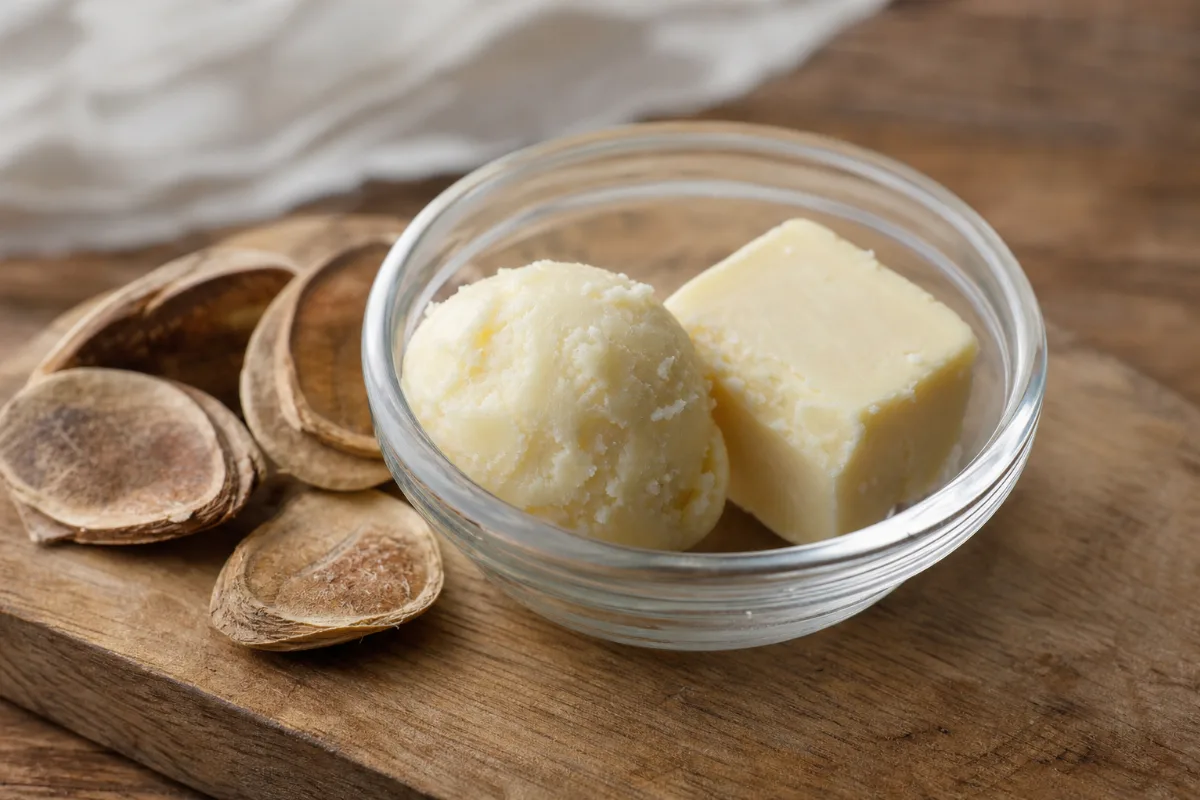
Mango butter is the firm fat taken from the seed kernel of the mango, not the fruit. It is used in creams, balms and lip care, and in food as a cocoa butter alternative. Human research is very thin: one tiny 2008 report on cracked skin. The main caution is for people sensitised to poison ivy or allergic to mango, pistachio or cashew.
General information, not medical advice. Last substantive update · Not medically reviewed. A named clinician has not signed off on this page. How this page is made
About Mango Butter
Mango butter is the fat from the seed kernel of the mango tree (Mangifera indica). It is firm at room temperature and used in body butters, balms and lip care. The human research is one small 2008 report. Everything else is lab, animal or food-technology work. Take care if you are allergic to mango or sensitive to poison ivy.
What it is
The butter is the fat of the mango kernel, the seed inside the hard stone. GBIF accepts the name Mangifera indica L. The kernel is a by-product of mango processing. Whole kernels hold about 6 to 15% fat on a dry basis.
In one lab sample the main fatty acids were oleic (about 36%), palmitic (about 29%) and stearic (about 25%). A review says a large share of the fat is one molecule type (28.9 to 65%), the same kind that gives cocoa butter its melt.
How it is used and what the research shows
It is used as a firm, softening ingredient in creams, balms and foot care. The only human report is a 2008 case-study report of a foot cream made with mango butter, where all volunteers had worn and cracked skin repaired. It gave no numbers, did not say how many people took part, and the cream held other ingredients.
Other work is lab or animal work: faster healing in rat wounds, a test-tube anti-inflammatory screen, and gels where mango butter changed the texture. No trial covers eczema, stretch marks, scars or hair.
Cocoa butter alternative
Food scientists have tested mango kernel fat as a partial stand-in for cocoa butter. One study replaced 80 per cent of a dark chocolate preparation. Another found chocolate made with 20 to 80 g per 100 g replaced was softer than the control. This says nothing about health, and cosmetic butter is not made to be eaten.
Quality and storage
Mango kernel fat is described as fairly stable to oxidation in lab tests. But long, hot drying of the kernels breaks the fat down into free fatty acids, which is why makers refine it. In a lab check of oil from four Bangladeshi mango varieties, aflatoxin and metal levels were below the limits the authors cited. That does not cover every product. No source gives a shelf life for a jar at home.
At a glance
Traditional uses history, not proof
- No traditional use of the kernel fat on skin or hair is described in the sources read. Review authors say mango seeds are usually treated as processing waste.
Studied for research
- Cracked or worn skin (foot cream), very low
- Softening the skin (emollient), insufficient
- Wound healing in rats, insufficient
- Anti-inflammatory activity in a test tube, insufficient
- Cocoa butter substitute in chocolate (food use, no health outcome)
Main compounds
- Oleic acid
- Palmitic acid
- Stearic acid
- Stearic-oleic-stearic fat molecules (SOS)
- Sterols, tocopherol and squalene (minor)
Common forms
- Unrefined butter
- Refined butter
- Kernel fat fractions for food
- Creams and balms made with it
Research links: 2008 report on a mango butter foot cream (abstract) · Review of mango kernel fat (abstract) · Mango and urushiol cross-reaction (abstract) · Review of mango allergy (abstract) · Research Library · Genes & Biomarkers Library
What it is and its history
- Accepted scientific name
- Mangifera indica
- Naming authority
- L.
- Common names
- Mango butter (English); Mango kernel fat (English); Mango seed butter (English)
- Family or group
- Anacardiaceae (the cashew family, which also holds pistachio, poison ivy and lacquer trees)
- Classification
- Plantae > Tracheophyta > Magnoliopsida > Sapindales > Anacardiaceae > Mangifera > Mangifera indica
- Native range
- Not checked in the sources read.
- Habitat
- Not checked.
- What it looks like
- Roots: Not checked.; Stems: Not checked.; Leaves: Not checked.; Flowers: Not checked.; Fruit: The kernel (seed) of the mango is the part the butter comes from. Reviews call mango peels and seeds large processing co-products.
- Cultivation
- Kernels come from mango processing. Fat content varied between cultivars (5.4 to 11.9% of the kernel in one study of seven cultivars).
- Harvest and processing
- Kernels are dried, then the fat is extracted with solvents or supercritical carbon dioxide, and often refined or fractionated. Hot, long drying breaks the fat down (Jin 2019).
- Look-alikes and adulterants
- Name: Cocoa butter; Note: A similar firm fat used as a model in food studies; a different plant (not Anacardiaceae).; Name: Cashew, pistachio, poison ivy; Note: Relatives in the same plant family, linked to allergy cross-reactions.
- Sustainability and conservation
- Not checked.
Photographs
Traditional use and history history, not clinical proof
| Tradition or era | Documented use | Source |
|---|---|---|
| Industry by-product | Review authors say mango seeds are traditionally treated as processing waste and discarded. No traditional use of the kernel fat on skin or hair is described in the sources read. | p33336987 |
Traditional use shows how it was used. It does not show that it works or is safe today.
What is inside, and how it may work
What it contains and how those compounds act in cells and animals. Laboratory and animal mechanisms are not proven effects in people.
Main compounds
| Compound | Family | Where it is concentrated | Activity studied | Level of evidence |
|---|---|---|---|---|
| Stearic acid PubChem 5281 | saturated fatty acid | Kernel fat 25.397% of the fatty acids in one Nigerian sample. | Gives firmness. No activity on skin shown. 1 14 | Laboratory |
| Oleic acid PubChem 445639 | monounsaturated fatty acid | Kernel fat 35.715% in the same sample. | Softens the feel of the fat. No skin effect shown. 1 14 | Laboratory |
| Palmitic acid PubChem 985 | saturated fatty acid | Kernel fat 29.365% in the same sample. | Fat building block. 1 14 | Laboratory |
| 1,3-Distearoyl-2-oleoylglycerol (SOS) PubChem 13183956 | triglyceride | Kernel fat 28.9 to 65.0% of the fat, depending on the sample (review). | The fat molecule that gives a cocoa-butter-like melt. 9 14 | Laboratory |
| Sterols, tocopherol and squalene PubChem 638072 | minor fat-soluble compounds | Kernel fat Named as natural antioxidants in the review; amounts not in the abstract. (CID shown is squalene; alpha-tocopherol is 14985.) | Described as antioxidants in the review. No skin effect shown. 9 14 | Laboratory |
| Mango resorcinols (heptadecadienyl- and heptadecenylresorcinol) | alkyl resorcinols | Mango (part not stated in the abstract); described mainly in the peel in a case report Not measured in the butter in any source read. | Skin allergens that cross-react with urushiol in sensitised people. 17 20 | Human patch test |
Mechanisms, receptors and pathways
| Target or pathway | Gene or receptor | What was found | Level |
|---|---|---|---|
| Emollient layer | n/a | A 2025 review says emollients work through the physical properties of their non-active ingredients. This is a general idea, not shown for mango butter. 19 | Theory |
| Delayed (type IV) contact allergy | T cells | A case report says reactions to mango after poison ivy sensitisation are T-cell driven, from overlap between urushiol and mango resorcinols. 20 17 | Human case report |
| IgE food allergy | Man i 1, Man i 2, Man i 4 | Three major mango allergen proteins are named in a review: a chitinase, a Bet v 1-related protein and profilin. 21 | Human review |
| Albumin denaturation screen | n/a | Mango seed butter slowed protein damage in a test tube, like indomethacin. Test-tube only. 1 | Laboratory research |
Absorption, metabolism and elimination
- Absorption
- Not described in the sources read.
- Distribution
- Not described.
- Metabolism
- Not described.
- Elimination
- Not described.
- Bioavailability
- Not described. A lab gel study found mango butter increased passage of a test drug through a membrane.
Isolated compounds versus whole extracts
Raw butter, refined butter, fractions for food, and creams or balms that blend several fats are different products. Extraction method changes the fat: solvents gave higher yields, supercritical CO2 oil was richer in saturated fat. The 2008 cream result belongs to a mixed cream, not plain butter.
Nutritional composition
The whole kernel holds 6 to 15.2% fat on a dry weight basis, with protein, carbohydrate and polyphenols. Cosmetic butter is not assessed here as a food.
1 very low certainty5 not enough evidence
What was looked at
The 6 benefits and uses checked for Mango Butter, each with how strong the evidence is. Tap one to open it.
- Cracked or worn skin (foot cream)Very low certainty
- Softening and moisturising the skin (emollient use)Not enough evidence
- Wound healing (rats only)Not enough evidence
- Anti-inflammatory activity (test tube only)Not enough evidence
- Changing the texture of balms and gels (lab)Not enough evidence
- Cocoa butter substitute in chocolate (food use)Not enough evidence
Lab markers tracked in the studies
Repair of cracked skinWound healing response (rats)Albumin denaturation (test tube)
What is Mango Butter good for?
What the research shows for each use, and how strong it is. Almost none of it is human research, and none of it is proof. Read the Safety tab too.
Benefits, one by one
Each card is a research question, not a promise. Tap a goal to filter. Open a card to see the studies, doses and limits.
Cracked or worn skin (foot cream)
Very low certaintyOne small 2008 report tested a foot cream made with mango butter in human volunteers. The authors say all of them had complete repair of worn and cracked skin. It was described as case studies, the abstract gives no numbers, and the cream held other ingredients. No proper trial was found.
1 studiesFoot cream made with mango butter; the other ingredients and the amou…
Studies, doses and limits
What the trials found
Clinical case studies with human volunteers (number not given) of a foot care cream made with mango butter, compared qualitatively, plus rat wound tests.
Results
Complete repair of worn and cracked skin in all human volunteers, according to the abstract. No measurements or numbers are given.
Effect sizes as reported
No effect sizes in the abstract.
Why this rating
Tiny, uncontrolled case studies from 2008 with no numbers, written by the people who developed the cream. No repeat or independent trial found.
Form and dose studied
Foot cream made with mango butter; the other ingredients and the amount are in the paper and not given here.
Who was studied
Healthy human volunteers with worn or cracked foot skin (details not in the abstract).
Limits
No comparison group or blinding described. The cream is a mix, so mango butter alone is not tested.
Why researchers looked
Mango butter is a firm fat rich in stearic and oleic acid, so makers tried it as a skin-softening ingredient in creams.
Traditional use
No traditional use of the kernel fat on skin or hair is described in the sources read.
Proposed mechanism Pharmacological theory
Suggested by the authors: a fat-based emollient layer protects skin. This was not tested as a cause.
A proposed mechanism does not show that the effect happens in people.
Mango skin, sap and peel can cause a rash in people already sensitised to poison ivy or lacquer. No source read tests the butter for this. Mango and pistachio seed allergens can cross-react. See the Safety tab.
Softening and moisturising the skin (emollient use)
Not enough evidenceMango butter is sold as a firm, melt-on-the-skin moisturiser. That use rests on what the fat is made of, not on trials of the butter on skin. A 2025 review of basic emollients for dry skin in eczema does not list mango butter among the ingredients it covers.
3 studiesButter, balm or cream ingredient. Amounts are not given.
Studies, doses and limits
What the trials found
No trial of mango butter alone on dry skin, eczema, stretch marks, scars or hair was found. A 2025 review of clinical studies of basic emollients (glycerol, urea, petrolatum, plant oils and others) found most were safe and effective for dry skin in atopic dermatitis; mango butter is not in its ingredient list.
Effect sizes as reported
No effect sizes.
Why this rating
No human study of the butter alone. The evidence for other emollients does not carry over automatically.
Form and dose studied
Butter, balm or cream ingredient. Amounts are not given.
Limits
Composition data come from lab studies. Cocoa butter, a similar fat, is covered on its own page.
Why researchers looked
Mango butter is rich in oleic, palmitic and stearic acids and has a firm texture, so it is used like other plant butters in creams and balms.
Traditional use
No traditional use of the kernel fat on skin or hair is described in the sources read.
Proposed mechanism Pharmacological theory
Reviews of dry-skin treatment say emollients work through the physical properties of their non-active ingredients. This is a general idea about emollients, not shown for mango butter.
A proposed mechanism does not show that the effect happens in people.
A patch test on a small area first is sensible. See the Safety tab.
Wound healing (rats only)
Not enough evidenceThe same 2008 paper reports that a mango butter foot cream gave a significant healing response in two rat wound models. This is animal work. It does not show that the butter heals wounds in people.
1 studiesFoot care cream with mango butter; amounts not given here.
Studies, doses and limits
Results
Significant healing response in rat excision and incision wound models, according to the abstract.
Effect sizes as reported
No numbers in the abstract.
Why this rating
Animal study only, mixed cream, abstract gives no numbers.
Form and dose studied
Foot care cream with mango butter; amounts not given here.
Who was studied
Rats.
Limits
Not a human result. Do not use butter on open wounds on the strength of this.
Why researchers looked
Researchers tested whether a fat-based cream could help skin repair after injury.
Traditional use
No traditional use of the kernel fat is described in the sources read.
Proposed mechanism Animal study
Not explained in the abstract.
A proposed mechanism does not show that the effect happens in people.
Animal results do not show the same in people.
Anti-inflammatory activity (test tube only)
Not enough evidenceA Nigerian lab study found that mango seed butter and a cream made from it reduced albumin denaturation in a test tube in a dose-dependent way, similar to the drug indomethacin. This is a chemistry test, not an effect on skin or in people.
1 studiesHexane-extracted seed butter and a cream made from it.
Studies, doses and limits
Results
Both the butter and the cream had dose-dependent effects similar to indomethacin, especially at lower butter amounts (authors' wording).
Effect sizes as reported
No effect sizes read.
Why this rating
Test-tube screen with no animals or people.
Form and dose studied
Hexane-extracted seed butter and a cream made from it.
Limits
Does not show any effect on inflammation in skin.
Why researchers looked
Albumin denaturation is a quick lab screen used to look for possible anti-inflammatory activity.
Traditional use
No traditional use is described in the sources read.
Proposed mechanism Laboratory research
Lab screen only; no mechanism established.
A proposed mechanism does not show that the effect happens in people.
A test-tube measure is not a skin result.
Changing the texture of balms and gels (lab)
Not enough evidenceA 2024 lab study found that adding mango butter to beeswax and Moringa seed oil gels changed how firm they were and increased how much of a test drug passed through. This is product chemistry, not a health result.
1 studiesGels made in the lab.
Studies, doses and limits
Results
The abstract says mango butter increased drug permeation and changed the oleogel properties. It calls the lab antibacterial result excellent. No numbers given.
Why this rating
Lab gels only.
Form and dose studied
Gels made in the lab.
Limits
No skin testing and no people.
Why researchers looked
Makers want gels and balms with the right texture and a controlled release of ingredients.
Proposed mechanism Laboratory research
Changes in the crystal network of the gel, as the paper describes.
A proposed mechanism does not show that the effect happens in people.
Lab gels, not skin products tested on people.
Cocoa butter substitute in chocolate (food use)
Not enough evidenceFood scientists have tested mango kernel fat as a partial stand-in for cocoa butter. In lab and chocolate tests, it behaved much like cocoa butter. This says nothing about health.
4 studiesRefined or fractionated kernel fat for the food industry.
Studies, doses and limits
What the trials found
No health trial. Taste and texture tests are described in food papers.
Results
One study said mango kernel fat could replace 80 per cent of a dark chocolate preparation; another found chocolate with 20 to 80 g per 100 g replaced was softer and suggested up to 60 g per 100 g could be used in hot climates. Our earlier summary says EU chocolate rules allow it up to 5% of the product; we could not re-read that law.
Effect sizes as reported
Hardness 3.80 N versus 4.42 N for control chocolate in one study.
Why this rating
Food technology studies. No health outcome was measured.
Form and dose studied
Refined or fractionated kernel fat for the food industry.
Limits
Cosmetic mango butter is not made to be eaten. See the Safety tab.
Why researchers looked
Cocoa butter is costly and mango kernels are a by-product.
Traditional use
The kernel is a mango processing by-product that is often discarded (review authors).
Proposed mechanism Laboratory
Similar fatty acids (palmitic, oleic, stearic) and a firm, melting texture.
A proposed mechanism does not show that the effect happens in people.
This is a food use, not a health benefit.
Connections to the rest of health
How Mango Butter connects to the rest of our health knowledge graph. Every link says what kind of connection it is. A safety link (for example to the liver) is a warning, not a benefit. A study that merely mentions a topic never creates a benefit link.
Explore every connection: goals, body systems, organs, symptoms, genes
A. Wellness goals
| Connected to | Kind of connection | Evidence status | Context | Studies |
|---|---|---|---|---|
| Healthy Skin | Preliminary mechanism | Very low certainty | Cracked or worn skin (foot cream): One small 2008 report tested a foot cream made with mango butter in human volunteers. The authors say all of them had complete repair of worn and cracked skin. It was described as case studies, the abstract gives no numbers, and the cream held other ingredients. No proper trial was found. Softening and moisturising the skin (emollient use): Mango butter is sold as a firm, melt-on-the-skin moisturiser. That use rests on what the fat is made of, not on trials of the butter on skin. A 2025 review of basic emollients for dry skin in eczema does not list mango butter among the ingredients it covers. | 12 1 19 9 |
B. Body systems
C. Body parts and organs
| Connected to | Kind of connection | Evidence status | Context | Studies |
|---|---|---|---|---|
| Skin | Adverse effect or risk | Not enough evidence | Cross-reaction with poison ivy chemicals in sensitised people. Preparation or compound: Mango fruit, peel and sap (not the butter) |
17 7 20 |
| Skin | Biological association | Very low certainty | One small 2008 report on cracked skin. Preparation or compound: Foot cream with mango butter |
12 |
E. Health conditions
| Connected to | Kind of connection | Evidence status | Context | Studies |
|---|---|---|---|---|
| Food allergy (mango, cashew, pistachio) | Adverse effect or risk | Not enough evidence | Shared allergens between mango and other Anacardiaceae seeds and nuts. Preparation or compound: Mango proteins |
5 21 22 |
I. Biomarkers
| Connected to | Kind of connection | Evidence status | Context | Studies |
|---|---|---|---|---|
| Repair of cracked skin | Biological association | Very low certainty | Measured in trials: improved. A lab change is not the same as a health benefit. | 12 |
| Wound healing response (rats) | Biological association | Not enough evidence | Measured in trials: improved. A lab change is not the same as a health benefit. | 12 |
| Albumin denaturation (test tube) | Biological association | Not enough evidence | Measured in trials: lowered. A lab change is not the same as a health benefit. | 1 |
K. Biological pathways
| Connected to | Kind of connection | Evidence status | Context | Studies |
|---|---|---|---|---|
| Man i 1 (chitinase), Man i 2 (Bet v 1-related), Man i 4 (profilin) | Preliminary mechanism | Human review | Major mango allergen proteins linked to IgE allergy. | 21 |
L. Active compounds
| Connected to | Kind of connection | Evidence status | Context | Studies |
|---|---|---|---|---|
| Stearic acid | Biological association | Laboratory | Gives firmness. No activity on skin shown. Preparation or compound: Kernel fat |
1 14 |
| Oleic acid | Biological association | Laboratory | Softens the feel of the fat. No skin effect shown. Preparation or compound: Kernel fat |
1 14 |
| Palmitic acid | Biological association | Laboratory | Fat building block. Preparation or compound: Kernel fat |
1 14 |
| 1,3-Distearoyl-2-oleoylglycerol (SOS) | Biological association | Laboratory | The fat molecule that gives a cocoa-butter-like melt. Preparation or compound: Kernel fat |
9 14 |
| Sterols, tocopherol and squalene | Biological association | Laboratory | Described as antioxidants in the review. No skin effect shown. Preparation or compound: Kernel fat |
9 14 |
| Mango resorcinols (heptadecadienyl- and heptadecenylresorcinol) | Biological association | Human patch test | Skin allergens that cross-react with urushiol in sensitised people. Preparation or compound: Mango (part not stated in the abstract); described mainly in the peel in a case report |
17 20 |
Each connection is stored with the ingredient, the connected record, the kind of connection, the evidence status, the supporting studies, the preparation or compound involved, and a review date (last reviewed October 25, 2026).
Evidence at a glance: what changed in 1 lab markers
Tap a number to show only those markers. Counts are markers, not people.
The evidence
The research centre for Mango Butter. Every record here was checked against PubMed or the publisher's page; we never list a study we have not verified.
Evidence by outcome
Bars show how many studies we found for each outcome, not how well it works. People are added up across trials only (reviews are not added, to avoid double counting).
How we rate evidence
High certainty
Several well-run trials or reviews agree; further research is unlikely to change the picture much.
Moderate certainty
Good trials point the same way, but some doubt remains.
Low certainty
Small, short or inconsistent trials. The finding could change with better research.
Very low certainty
Very little or very weak human data. Treat as a possibility only.
Mixed findings
Trials or reviews disagree with each other.
Not enough evidence
Not enough human research to say either way.
Evidence against
Good research found no benefit, or found harm.
We take the reviewers' own risk-of-bias and GRADE statements where they exist, and otherwise judge from study size, design, consistency, directness and whether a product matches what is sold. Many publications do not make evidence high. Method note: We read the PubMed abstracts of 17 papers, a journal article page and a journal abstract page, and checked the plant name in GBIF and compounds in PubChem. One EU law could not be reopened and is marked as not re-verified. Certainty ratings are the compiler's own reading. Funding is not stated in most abstracts.
Study library: every study we checked 22
| Study | Design | People | Product, dose, length | Result |
|---|---|---|---|---|
| Aliyu Characterization, Chemical Composition and Cream Formulation from the Seed Butter of Mangifera indica L. (The Chemist, vol. 95 no. 1) The Chemist (Journal of the American Institute of Chemists) · Source |
Laboratory analysis n/a |
n/a (lab study) | Mango seed butter and a cream made from it Seed butter, hexane extraction Dose-dependent lab test · vs Indomethacin (standard) |
Main fatty acids: oleic acid 35.715%, palmitic acid 29.365%, stearic acid 25.397% and docosadienoic acid 11.905%. Both the butter and the cream had dose-dependent effects in the albumin test, similar to indomethacin, especially at lower butter amounts. n/a Methods, limits and fundingOutcomes: Fatty acid makeup by GC-MS; albumin denaturation test (a test-tube measure of anti-inflammatory potential) Limitations: Test-tube chemistry only. No people, no skin. A journal page, not a PubMed-indexed paper. Funding and conflicts are not stated on the page. Funding and conflicts: Not stated on the page. Read: full-text (abstract and introduction) |
| Awolu 2019 Quantitative and qualitative characterization of mango kernel seed oil extracted using supercritical CO2 and solvent extraction techniques. Heliyon · PMID 31890978 |
Laboratory analysis n/a |
n/a (lab extraction) | Mango kernel seed oil from supercritical CO2 or solvent extraction Seed kernel |
Solvent extraction gave higher yields (8.02 to 19.88%) than supercritical CO2 (2.5 to 3.6%). The CO2 oil was higher in saturated fat (47.01%). The main unsaturated and saturated fatty acids were oleic and stearic acid. n/a Methods, limits and fundingOutcomes: Yield, melting behaviour and fatty acids Limitations: Lab chemistry only. Funding and conflicts: Funding and conflicts of interest are not stated in the abstract. Read: abstract |
| Burnett 2017 Safety Assessment of Plant-Derived Fatty Acid Oils. Int J Toxicol · PMID 29243540 |
Expert panel safety review n/a |
n/a (review of lab, animal and use data) | 244 plant-derived fatty acid oils as used in cosmetics Various |
The Cosmetic Ingredient Review Expert Panel concluded that the 244 plant-derived fatty acid oils are safe as used in cosmetics. The abstract does not name mango butter. n/a Methods, limits and fundingOutcomes: Safety of cosmetic oils, with a focus on effects on skin Limitations: We read the abstract only. It does not list the 244 oils, so we cannot confirm what the full report says about mango butter. A panel safety conclusion, not a trial. Funding and conflicts: Not stated in the abstract. The authors are staff and members of the Cosmetic Ingredient Review panel. Read: abstract |
| European Parliament and Council 2000 Directive 2000/36/EC relating to cocoa and chocolate products (Annex II, vegetable fats other than cocoa butter) Official Journal of the European Communities · Source |
Authoritative guidance n/a |
n/a | n/a |
Our earlier summary says the Annex lists mango kernel fat among six allowed vegetable fats (with illipe, palm oil, sal, shea and kokum gurgi), up to 5% of the finished product. We could not open the EUR-Lex text again on 2026-10-25, so this is not re-verified. n/a Methods, limits and fundingOutcomes: Lists vegetable fats allowed in chocolate besides cocoa butter Limitations: Food law only, not a health statement. Not re-read in this build. Funding and conflicts: n/a Read: summary-only |
| Fernandez 1995 Allergy to pistachio: crossreactivity between pistachio nut and other Anacardiaceae. Clin Exp Allergy · PMID 8821307 |
Case report |
2 Two children allergic to pistachio nut |
Pistachio, cashew, mango seed and mango pulp extracts (skin tests, blood tests) Nut, seed and pulp |
Skin tests were positive for pistachio and cashew in both children and for mango seed in one. Blood-test inhibition showed shared allergen features between pistachio nut and mango seed, but not mango pulp. n/a Methods, limits and fundingOutcomes: Skin tests, specific IgE and cross-reactivity Limitations: Two patients, 1995, tested seed extracts, not mango butter. Funding and conflicts: Funding and conflicts of interest are not stated in the abstract. Read: abstract |
| GBIF 2026 GBIF Backbone Taxonomy species match for Mangifera indica GBIF API · Source |
Database record n/a |
n/a | n/a |
Accepted name Mangifera indica L., key 3190638, family Anacardiaceae, order Sapindales. NCBI Taxonomy lists the species as taxonomy id 29780. n/a Methods, limits and fundingOutcomes: Accepted scientific name and family Limitations: Names only. Funding and conflicts: n/a Read: full-text (API record) |
| Hershko 2005 Exploring the mango-poison ivy connection: the riddle of discriminative plant dermatitis. Contact Dermatitis · PMID 15701120 |
Case series |
17 17 American summer camp workers picking mangoes in Israel |
Contact with mangoes while picking Mango fruit (peel and sap not separated in the abstract) · vs Israeli co-workers never exposed to poison ivy or oak |
All 17 developed a rash of varying severity. All had past poison ivy or oak contact or lived where those plants grow, and none recalled earlier mango contact. None of their Israeli companions who had never met poison ivy or oak got the rash. n/a Methods, limits and fundingOutcomes: Rash after mango picking Limitations: A small report in one setting. It is about handling the fruit, not the kernel butter. Funding and conflicts: Funding and conflicts of interest are not stated in the abstract. Read: abstract |
| Indu 2024 Effect of mango butter on the physicochemical properties of beeswax-Moringa seed oil-based oleogels for topical application. Drug Dev Ind Pharm · PMID 38526993 |
Laboratory analysis n/a |
n/a (lab gels) | Mango butter added to beeswax and Moringa seed oil gels Seed kernel fat · vs Gels without mango butter |
Adding mango butter increased drug permeation and changed the physical properties of the gels. The authors call the in-vitro microbial result excellent. n/a Methods, limits and fundingOutcomes: Gel structure, drug release and in-vitro antibacterial tests Limitations: Lab gels only. No skin testing or people. The abstract gives no numbers. Funding and conflicts: Funding and conflicts of interest are not stated in the abstract. Read: abstract |
| Jin 2019 Mango kernel fat fractions as potential healthy food ingredients: A review. Crit Rev Food Sci Nutr · PMID 29337601 |
Narrative review n/a |
n/a (review of fat chemistry) | Mango kernel fat and its fractions Seed kernel fat |
Mango kernel fat has 28.9 to 65.0% of one fat molecule (1,3-distearoyl-2-oleoyl-glycerol) and an oxidative stability index of 58.8 to 85.2 hours at 110 degrees C. It contains sterols, tocopherol and squalene. Long, hot drying of the kernels splits the fat and leaves free fatty acids, which the authors say limits its use. They suggest moderate refining, fractionation and interesterification. n/a Methods, limits and fundingOutcomes: Composition, physical properties and possible health benefits as described in the literature Limitations: A narrative review of fat chemistry. The abstract names possible health benefits but gives no human data. Funding and conflicts: Funding and conflicts of interest are not stated in the abstract. Read: abstract |
| Kaur 2022 Potential cocoa butter substitute derived from mango seed kernel. Food Chem · PMID 34628118 |
Laboratory analysis n/a |
n/a (food science) | Mango seed kernel fat in dark chocolate preparation Seed kernel fat Up to 80% substitution (as stated) · vs Cocoa butter |
The mango kernel fat had palmitic, oleic and stearic acids like cocoa butter, and could substitute 80 per cent of the dark chocolate preparation according to the authors. n/a Methods, limits and fundingOutcomes: Fat chemistry, texture, taste and rancidity Limitations: Food technology, not a health study. Funding and conflicts: Funding and conflicts of interest are not stated in the abstract. Read: abstract |
| Lieb 2019 Fatty acids, triacylglycerols, and thermal behaviour of various mango (Mangifera indica L.) kernel fats. Food Res Int · PMID 30716977 |
Laboratory analysis n/a |
Kernel fats from seven mango cultivars from Latin America and Thailand | Mango kernel fat Seed kernel |
Total lipid ranged from 5.4 to 11.9% of the kernel. Cultivar changed the melting point and firmness: Maha Chanook fat was firmest, Falan fat had more polyunsaturated fat and melted at lower temperatures. The authors say the kernels are a source of liquid to semi-solid edible fats for food and cosmetics. n/a Methods, limits and fundingOutcomes: Fatty acids, triglycerides, melting and crystal behaviour Limitations: Lab chemistry only. Funding and conflicts: Funding and conflicts of interest are not stated in the abstract. Read: abstract |
| Mandawgade 2008 Formulation and evaluation of exotic fat based cosmeceuticals for skin repair. Indian J Pharm Sci · PMID 20046792 |
Case series and animal human and rat |
Human volunteers (number not given in the abstract); rats with excision and incision wounds | Foot care cream made with mango butter (other ingredients not given) Seed kernel fat Not given in the abstract Not given in the abstract · vs Qualitative comparison (details not given) |
The abstract says the clinical case studies showed complete repair of worn and cracked skin in all the human volunteers. The cream also showed a significant healing response in both rat wound models. No numbers in the abstract. Methods, limits and fundingOutcomes: Repair of worn and cracked skin (clinical case studies); wound healing in rats Limitations: Small, described as case studies, number of volunteers not stated, no blinding or placebo group described in the abstract. The cream held other ingredients, so the result is not for mango butter alone. The authors work in pharmaceutical formulation and write that the work supports commercial use. Funding and conflicts: Funding and conflicts of interest are not stated in the abstract. Read: abstract |
| Mwaurah 2020 Physicochemical characteristics, bioactive compounds and industrial applications of mango kernel and its products: A review. Compr Rev Food Sci Food Saf · PMID 33336987 |
Systematic review n/a |
n/a (review of mango kernel chemistry) | Mango kernel and products such as kernel butter, oil and flour Seed kernel |
The kernel holds 6 to 15.2% fat on a dry weight basis, plus protein, carbohydrate and phytochemicals such as tocopherols, phytosterols and polyphenols. The authors say mango peels and seeds are large processing co-products that are usually discarded as waste. n/a Methods, limits and fundingOutcomes: Composition and possible uses of mango kernel Limitations: Reviews the whole kernel, not only the butter. The abstract reports lab activity of phytochemicals, not skin or health results in people. Funding and conflicts: Funding and conflicts of interest are not stated in the abstract. Read: abstract |
| NCBI PubChem 2026 PubChem compound records (name lookups, 2026-10-25) PubChem API · Source |
Database record n/a |
n/a | n/a |
Stearic acid CID 5281, oleic acid CID 445639, palmitic acid CID 985, squalene CID 638072, alpha-tocopherol CID 14985, 1,3-distearoyl-2-oleoylglycerol CID 13183956. n/a Methods, limits and fundingOutcomes: Compound identifiers Limitations: Identifiers only. Funding and conflicts: n/a Read: full-text (API record) |
| Naeem 2019 Mango Seed Kernel Fat as a Cocoa Butter Substitute Suitable for the Tropics. J Food Sci · PMID 31116426 |
Laboratory analysis n/a |
n/a (food science) | Mango seed kernel fat from three Pakistani cultivars, then in chocolate Seed kernel fat 20 to 80 g per 100 g of cocoa butter replaced 0, 30 and 60 days of storage at 30 degrees C · vs Control chocolate with cocoa butter |
Chocolate made with the mango fat was softer (3.80 N versus 4.42 N for the control). Oxidative stability and antioxidant potential of the chocolate increased with more substitution and longer storage. The authors say up to 60 g per 100 g could be used. n/a Methods, limits and fundingOutcomes: Fat properties, antioxidant activity, chocolate hardness, colour and oxidation over storage Limitations: Food technology, not a health study. Three cultivars from one country. Funding and conflicts: Funding and conflicts of interest are not stated in the abstract. Read: abstract |
| Nahar 2017 Characterization of seed kernel oil of Bangladeshi mango and its evaluation as cosmetic ingredient Bangladesh Journal of Scientific and Industrial Research 52(1) · Source |
Laboratory analysis n/a |
4 Kernel oils of four Bangladeshi mango varieties (Langra, Gopalbhog, Khirshapat, Amrupaly) |
Extracted mango kernel oil Seed kernel · vs Limits from the CIR panel, Indian Standard, European Community and US FDA |
Aflatoxin B1 was 1.45809 ppb and total aflatoxins 5.14761 ppb, below the limits the authors cite (2 ppb for B1, European Community; 20 ppb total, US FDA). Arsenic was 0.034 ppm and lead 0.45 ppm, below the Indian Standard for mango kernel fat that the authors cite (0.5 and 5.0 ppm). n/a Methods, limits and fundingOutcomes: Aflatoxin, arsenic and lead; fatty acids and physical properties Limitations: Four varieties from one country, extracted in the lab. Says nothing about shop products. The abstract page does not state funding. Funding and conflicts: Not stated on the page. Read: abstract-page |
| Oka 2004 A study of cross-reactions between mango contact allergens and urushiol. Contact Dermatitis · PMID 15606656 |
Patch test study |
8 Two people with mango dermatitis and six people with lacquer dermatitis |
Two mango resorcinol compounds (heptadecadienylresorcinol and heptadecenylresorcinol) in petrolatum, and urushiol Compounds extracted from Philippine mango (part not stated in the abstract) 0.05% in petrolatum Patch test |
Both mango-dermatitis patients reacted to the first compound; one reacted weakly to the second and also to urushiol (the poison ivy chemical). Of six lacquer-allergy patients who reacted to urushiol, five reacted to the first compound and two reacted, more slowly, to the second. n/a Methods, limits and fundingOutcomes: Skin patch-test reactions Limitations: Very small. Tested isolated compounds, not mango butter. The abstract does not say which part of the mango they came from. Funding and conflicts: Funding and conflicts of interest are not stated in the abstract. Read: abstract |
| Sagiri 2014 Mango butter emulsion gels as cocoa butter equivalents: physical, thermal, and mechanical analyses. J Agric Food Chem · PMID 25363450 |
Laboratory analysis n/a |
n/a (lab emulsion gels) | Gelatin water-in-fat emulsion gels made with mango butter or cocoa butter Seed kernel fat · vs Cocoa butter gels |
The physical, thermal and mechanical properties of the mango butter gels were comparable to cocoa butter gels. The authors suggest mango butter gels may be usable as cocoa butter equivalents, on the basis of preliminary studies. n/a Methods, limits and fundingOutcomes: Physical, thermal and mechanical properties Limitations: Food and pharmaceutical technology, not a health study. Funding and conflicts: Funding and conflicts of interest are not stated in the abstract. Read: abstract |
| Wollenberg 2025 Basic Emollients for Xerosis Cutis in Atopic Dermatitis: A Review of Clinical Studies. Int J Dermatol · PMID 40265493 |
Narrative review |
People with atopic dermatitis and dry skin (xerosis) | Basic emollients with ingredients such as glycerol, urea, petrolatum, plant oils |
Most basic emollient formulations were safe and effective at improving objective and subjective measures of dry skin in atopic dermatitis. The ingredient list in the abstract does not include mango butter. n/a Methods, limits and fundingOutcomes: Dry skin outcomes in clinical studies of basic emollients Limitations: Mango butter is not among the ingredients the review lists, so the review says nothing about it. The authors report fees from many drug and skin-care companies. Funding and conflicts: Authors declare ties with several pharmaceutical and skin-care companies; one reports support from Pierre Fabre for this manuscript. Read: abstract |
| Yoo 2019 Mango Dermatitis After Urushiol Sensitization. Clin Pract Cases Emerg Med · PMID 31763588 |
Case report |
1 One otherwise healthy man with a remote history of poison ivy exposure |
Mango fruit Mango fruit |
Prior poison ivy or oak exposure appears to be a risk factor for delayed (type IV) reactions to mango. The authors say the cross-sensitisation comes from an overlap between urushiol and a 5-resorcinol found mostly in mango peels. They describe a man who had a delayed but significant reaction. n/a Methods, limits and fundingOutcomes: Delayed skin reaction to mango Limitations: One case report. About the fruit, not the butter. Funding and conflicts: The authors disclosed no conflicts. Read: abstract |
| Zhao 2024 A comprehensive review on mango allergy: Clinical relevance, causative allergens, cross-reactivity, influence of processing techniques, and management strategies. Compr Rev Food Sci Food Saf · PMID 38343296 |
Narrative review |
People with mango allergy (review) | Mango as food Fruit |
Certain mango proteins can trigger reactions from mild oral allergy syndrome to life-threatening anaphylaxis. Three major allergens are Man i 1 (a chitinase), Man i 2 (a Bet v 1-related protein) and Man i 4 (profilin). Processing can reduce but has not removed allergen reactivity. The review discusses cross-reactivity with other fruits, vegetables, pollen and seeds. n/a Methods, limits and fundingOutcomes: Allergens, symptoms, cross-reactivity, effect of processing Limitations: A review of mango as food. The abstract does not say whether kernel butter holds these proteins. Funding and conflicts: Funding and conflicts of interest are not stated in the abstract. Read: abstract |
| Zhao 2026 Identification of Mango Cross-Reactive Allergens and Cross-Reactive Linear Epitopes Using Serum from Patients with Mango Allergy. Int J Mol Sci · PMID 42278202 |
Laboratory analysis human serum |
Blood serum from people with mango allergy (number not read) | Mango allergen proteins and food proteins |
Serum from mango-allergic patients showed IgE-binding cross-reactivity with peanut, wheat, cashew, pistachio and hazelnut, particularly wheat and hazelnut, which the authors say was not reported before. n/a Methods, limits and fundingOutcomes: IgE binding between mango allergens and other food proteins Limitations: Blood-serum lab work. It does not show reactions in people eating or using any product. Funding and conflicts: Funding and conflicts of interest are not stated in the abstract. Read: abstract |
What we do not know yet
- What the evidence supports: very low certainty for cracked skin, insufficient for everything else.
- No controlled trial on dry skin, eczema, stretch marks, scars, lips or hair, and no comparison with other butters.
- No report of a rash from the butter, and none ruling it out. Whether it holds allergen proteins or mango resorcinols is not reported in the sources read.
- No data on pregnancy, breastfeeding, babies or children.
How new research is added
New studies are found by a saved PubMed search and placed in a review queue. A person reads each one before it changes any rating or safety wording.
Lab markers
What changed in blood or saliva tests during trials. A changed number is not the same as feeling or being healthier, and we give no "normal ranges".
Other 3
Repair of cracked skin
Improved in trials
Whether worn or cracked skin looks healed after using the product.
Very low certaintyResults and what it means
Why it was measured
The main outcome in the one human report of a mango butter cream.
Statistical vs. clinical meaning
Described as case studies; no statistics reported in the abstract.
Safety implication
No side effects are reported in the abstract.
| Study | Result | People | Product |
|---|---|---|---|
| 12 | Complete repair in all volunteers, as stated in the abstract. No numbers given. | Human volunteers (number not given) | Foot care cream made with mango butter |
Wound healing response (rats)
Improved in trials
How well experimental cuts heal in rats.
Not enough evidenceResults and what it means
Why it was measured
A standard animal model used to screen creams.
Statistical vs. clinical meaning
Animal result only.
Safety implication
None reported.
| Study | Result | People | Product |
|---|---|---|---|
| 12 | Significant healing response in excision and incision models; no numbers in the abstract. | Rats | Foot care cream with mango butter |
Albumin denaturation (test tube)
Lowered in trials
A lab screen: how much heat damages a protein in a tube. Less damage is used as a clue to anti-inflammatory activity.
Not enough evidenceResults and what it means
Why it was measured
A cheap screening test used in early product work.
Statistical vs. clinical meaning
Not a skin or human result.
Safety implication
None.
| Study | Result | People | Product |
|---|---|---|---|
| 1 | Dose-dependent effects similar to indomethacin, especially at lower butter amounts. | n/a (test tube) | Mango seed butter and cream |
Safety
What studies and official sources say about side effects, medicines and who should check first. Each point shows what kind of evidence it comes from.
Main points to know 4
- People sensitised to poison ivy, poison oak or lacquer may react to mango. Patch tests, a camp-worker report and a case report show rashes from mango fruit, peel and sap in people already sensitised to urushiol (the poison ivy chemical). Mango resorcinol compounds cross-react with urushiol. No source read tests the kernel butter for this, and none rules it out. Case series and patch test study 17 7 20
- Mango, pistachio and cashew allergy may overlap. A 1995 report of two children allergic to pistachio found a positive skin test to mango seed in one and shared allergen features between pistachio and mango seed. A 2026 lab study found IgE cross-reactivity between mango allergens and cashew, pistachio, peanut, wheat and hazelnut. A 2024 review says mango allergy runs from oral itching to anaphylaxis. No source says whether the refined butter holds these proteins. Case report and laboratory 5 22 21
- Cosmetic oils as a group are judged safe as used in cosmetics. The Cosmetic Ingredient Review panel concluded that 244 plant fatty acid oils are safe as used in cosmetics. The abstract does not name mango butter, so we cannot confirm what the full report says about it. Expert panel review 3
- It is not a medicine. The only human data are one tiny 2008 report on cracked skin. Nothing shows mango butter treats eczema, scars, stretch marks or wounds. Evidence summary 12
Side effects 2
| Effect | How often | Severity and recovery | Evidence |
|---|---|---|---|
| Allergic contact dermatitis (itchy, red, blistering rash) from mango fruit, peel or sap About the fruit, not kernel butter. No report of a rash from the butter was found in the sources read. | All 17 American camp workers with past poison ivy or oak contact developed a rash while picking mangoes (one setting); not known for the butter | varies; reported as mild to significant Not stated | Case series 7 20 |
| Food-allergy reactions to mango (oral allergy syndrome up to anaphylaxis) Describes eating mango. Whether skin use of the butter can trigger it is not described. | Not given in the abstract | mild to life-threatening Not stated | Review 21 |
Liver
No source read describes liver injury from mango butter. LiverTox was not searched for this page.
How often. Not known.
This is a safety connection. It is not evidence that Mango Butter supports liver health.
Medicines and supplements 2
| With | Why it matters | Importance | Evidence | What to do |
|---|---|---|---|---|
| Prescription and over-the-counter medicines prescription | No interaction mechanism was described in the sources read. | None documented in the sources read. | Insufficient Not enough evidence | Tell your pharmacist or doctor which skin products you use, as for any product. |
| Other skin products and medicated creams topical | A fat layer can change how other creams stay on the skin; the sources read do not study this for mango butter. A lab study found mango butter increased passage of a test drug through a gel membrane. | Not known in people. | Laboratory Not enough evidence 8 | Ask a pharmacist before layering it over medicated creams. |
Who should check first 4
| Situation | Advice | Evidence |
|---|---|---|
| Past rash from poison ivy, poison oak, sumac, lacquer, mango skin or cashew shell oil | Ask a dermatologist or doctor first. If you try it, test a small patch and stop at once if there is itching, redness or blisters. This caution comes from related plants, not from a report about the butter. | Patch test study and case report 17 20 |
| Known allergy to mango, pistachio, cashew or tree nuts | Ask an allergist before using or eating it. The sources read do not show whether the refined butter holds allergen proteins. | Case report and review 5 21 22 |
| Pregnancy, breastfeeding, babies and young children | No source read describes use in these groups. Ask a doctor or pharmacist. | Insufficient |
| Open wounds, burns or infected skin | Rat results are not proof for people. Ask a doctor about wounds rather than treating them with a butter. | Expert caution 12 |
Overdose, product quality and regulators
Summary. No poisoning, toxic dose or overdose from mango butter is described in the sources read.
Animal. Not reviewed for toxicity. The rat work in the 2008 paper tested wound healing only.
Human doses studied. No dosing data are given here.
High dose or long term signals. Not found in the sources read.
Overdose response. Not described.
Genotoxicity. Not read.
Toxic or hazardous parts. The rash-causing resorcinol compounds are described mainly in mango peel (case report) and in extracts of mango. The butter comes from the seed kernel; no source read measured these compounds in the butter.
Quality depends on how the kernels were dried and processed. Only one small lab check of contaminants was found.
Aflatoxin and metals in kernel oil. In oil from four Bangladeshi mango varieties, aflatoxin B1 was 1.45809 ppb and total aflatoxins 5.14761 ppb, below the limits the authors cite. Arsenic was 0.034 ppm and lead 0.45 ppm, below the Indian Standard values they cite. This does not cover shop products. 16
Breakdown from hot drying. Long, hot drying of kernels splits the fat and leaves free fatty acids, which limits food use unless the fat is refined. 9
Solvents used to extract the fat. Labs extract kernel fat with hexane, petroleum ether, ethanol, acetone or supercritical carbon dioxide. We did not find a source on solvent traces in the butter. 2
Cosmetic versus food grade. No source read says a cosmetic butter is made or tested to be eaten. Food use of kernel fat in the studies came from food-industry processing. 10
| Body | Action | Date |
|---|---|---|
| Cosmetic Ingredient Review Expert Panel (USA) (United States) | Concluded that 244 plant-derived fatty acid oils are safe as used in cosmetics. The abstract does not name mango butter. source | 2017-11 |
When to get medical help
- Swelling of the lips, tongue or face, wheezing, throat tightness or trouble breathing after eating or using it: call emergency services.
- A rash that spreads quickly, blisters, or is near the eyes or mouth: stop using it and see a doctor.
Stop using the product and contact a clinician or emergency service. In the US, Poison Control is 1-800-222-1222.
General information only, not medical advice. Ask a clinician or pharmacist before use, especially with medicines, in pregnancy or with a health condition. See the Natural Remedy Safety guide.
Frequently asked questions
Is mango butter safe if I am allergic to mango?
Is mango butter related to poison ivy?
The mango tree is in the same plant family as poison ivy. In people already sensitised to poison ivy, oak or lacquer, mango fruit, peel and sap have caused rashes, and mango compounds reacted in patch tests. The sources read do not describe this for the kernel butter, so treat it as a caution, not a proven problem.
Can I use it if I am allergic to cashews or pistachios?
Ask an allergist first. A 1995 report of two children allergic to pistachio found shared allergen features between pistachio and mango seed, and a 2026 lab study found IgE cross-reactivity between mango allergens and cashew and pistachio. No source says whether the refined butter holds these proteins.
Does mango butter heal cracked skin or stretch marks?
Only one tiny 2008 report says a mixed foot cream with mango butter repaired cracked skin. We found no trial for stretch marks, scars or eczema.
Is it good for eczema or very dry skin?
Not shown. We found no trial of mango butter in eczema. A 2025 review of basic emollients for dry skin in eczema does not list it. Talk to a doctor about eczema.
Is mango butter the same as mango fruit or mango oil?
Will mango butter clog my pores?
We found no study of mango butter and acne or blocked pores, so we cannot say. Claims on labels are not backed by the sources we read.
Can mango butter replace cocoa butter?
Is it safe to use while pregnant or breastfeeding, or on babies?
No source we read describes use in pregnancy, breastfeeding, babies or children. Ask a doctor or pharmacist.
Is it a safe cosmetic ingredient?
A panel of experts concluded that 244 plant fatty acid oils are safe as used in cosmetics. Its abstract does not name mango butter, so we cannot confirm what it says about this one.
How do I know if it has gone off?
Lab work shows kernel fat is fairly stable, but long hot drying of the kernels can break the fat down. No source gives a home shelf life. Stop using it if it smells sharp, stale or like paint.
Does it reduce inflammation?
Only in a test tube. A lab screen found mango seed butter slowed protein damage like indomethacin. No study shows it calms inflammation in skin or in people.
Explore by health goal
Editorial transparency
- Written by
- AlternativeMed editorial team. Research compiled with AI assistance, then checked against PubMed records.
- Medical review
- None. This page has not been reviewed by a physician or pharmacist.
- First published
- 2026-10-25
- Last substantive update
- 2026-10-25
- How we research
- We read the PubMed abstracts of 17 papers, a journal article page and a journal abstract page, and checked the plant name in GBIF and compounds in PubChem. One EU law could not be reopened and is marked as not re-verified. Certainty ratings are the compiler's own reading. Funding is not stated in most abstracts.
- How we rate evidence
- See "How we rate evidence" in the Evidence tab.
- Independence
- No product is promoted on this page. No affiliate links are shown.
Sources 22
Each source was opened and checked. Where we read only the abstract, it says so. The small numbers in the text point here.
- Aliyu AJ, Ibrahim SO, Abdulmumeen K, Atolani O. Characterization, Chemical Composition and Cream Formulation from the Seed Butter of Mangifera indica L. (The Chemist, vol. 95 no. 1). The Chemist (Journal of the American Institute of Chemists). . (full-text (abstract and introduction))
- Awolu OO, Manohar B. Quantitative and qualitative characterization of mango kernel seed oil extracted using supercritical CO2 and solvent extraction techniques.. Heliyon. 2019. PMID 31890978. (abstract)
- Burnett CL, Fiume MM, Bergfeld WF et al. Safety Assessment of Plant-Derived Fatty Acid Oils.. Int J Toxicol. 2017. PMID 29243540. (abstract)
- European Parliament and Council. Directive 2000/36/EC relating to cocoa and chocolate products (Annex II, vegetable fats other than cocoa butter). Official Journal of the European Communities. 2000. (summary-only)
- Fernandez C, Fiandor A, Martinez-Garate A, Martinez Quesada J. Allergy to pistachio: crossreactivity between pistachio nut and other Anacardiaceae.. Clin Exp Allergy. 1995. PMID 8821307. (abstract)
- GBIF. GBIF Backbone Taxonomy species match for Mangifera indica. GBIF API. 2026. (full-text (API record))
- Hershko K, Weinberg I, Ingber A. Exploring the mango-poison ivy connection: the riddle of discriminative plant dermatitis.. Contact Dermatitis. 2005. PMID 15701120. (abstract)
- Indu GK, Habibullah S, Kumar Shaw T et al. Effect of mango butter on the physicochemical properties of beeswax-Moringa seed oil-based oleogels for topical application.. Drug Dev Ind Pharm. 2024. PMID 38526993. (abstract)
- Jin J, Jin Q, Akoh CC, Wang X. Mango kernel fat fractions as potential healthy food ingredients: A review.. Crit Rev Food Sci Nutr. 2019. PMID 29337601. (abstract)
- Kaur G, Kaur D, Kansal SK et al. Potential cocoa butter substitute derived from mango seed kernel.. Food Chem. 2022. PMID 34628118. (abstract)
- Lieb VM, Schuster LK, Kronmuller A et al. Fatty acids, triacylglycerols, and thermal behaviour of various mango (Mangifera indica L.) kernel fats.. Food Res Int. 2019. PMID 30716977. (abstract)
- Mandawgade SD, Patravale VB. Formulation and evaluation of exotic fat based cosmeceuticals for skin repair.. Indian J Pharm Sci. 2008. PMID 20046792. (abstract)
- Mwaurah PW, Kumar S, Kumar N et al. Physicochemical characteristics, bioactive compounds and industrial applications of mango kernel and its products: A review.. Compr Rev Food Sci Food Saf. 2020. PMID 33336987. (abstract)
- NCBI PubChem. PubChem compound records (name lookups, 2026-10-25). PubChem API. 2026. (full-text (API record))
- Naeem A, Shabbir MA, Khan MR et al. Mango Seed Kernel Fat as a Cocoa Butter Substitute Suitable for the Tropics.. J Food Sci. 2019. PMID 31116426. (abstract)
- Nahar MK, Lisa SA, Nada K, Begum M. Characterization of seed kernel oil of Bangladeshi mango and its evaluation as cosmetic ingredient. Bangladesh Journal of Scientific and Industrial Research 52(1). 2017. (abstract-page)
- Oka K, Saito F, Yasuhara T, Sugimoto A. A study of cross-reactions between mango contact allergens and urushiol.. Contact Dermatitis. 2004. PMID 15606656. (abstract)
- Sagiri SS, Sharma V, Basak P, Pal K. Mango butter emulsion gels as cocoa butter equivalents: physical, thermal, and mechanical analyses.. J Agric Food Chem. 2014. PMID 25363450. (abstract)
- Wollenberg A, Barbarot S, Torrelo A. Basic Emollients for Xerosis Cutis in Atopic Dermatitis: A Review of Clinical Studies.. Int J Dermatol. 2025. PMID 40265493. (abstract)
- Yoo MJ, Carius BM. Mango Dermatitis After Urushiol Sensitization.. Clin Pract Cases Emerg Med. 2019. PMID 31763588. (abstract)
- Zhao J, Camus-Ela M, Zhang L et al. A comprehensive review on mango allergy: Clinical relevance, causative allergens, cross-reactivity, influence of processing techniques, and management strategies.. Compr Rev Food Sci Food Saf. 2024. PMID 38343296. (abstract)
- Zhao W, Guo H, Cong Y. Identification of Mango Cross-Reactive Allergens and Cross-Reactive Linear Epitopes Using Serum from Patients with Mango Allergy.. Int J Mol Sci. 2026. PMID 42278202. (abstract)
Where to buy
Check the label first. Whatever you buy, look for these:
- 100% pure with no added fragrance or fillers
- Cold-pressed or unrefined if you want the most natural form
- For skin use, do a small patch test first
- Cosmetic or food grade, matched to how you will use it
Talk to a pharmacist or doctor before you start any supplement, especially if you take medicines. See the Safety tab for interactions.
Support our free guides: as an Amazon Associate we earn from qualifying purchases. Full disclosure.


