Natural Oils & Butters · Butter
Murumuru Butter
Astrocaryum murumuru Mart. (seed butter) · also called Murumuru fat, muru-muru butter, Astrocaryum murumuru seed butter.
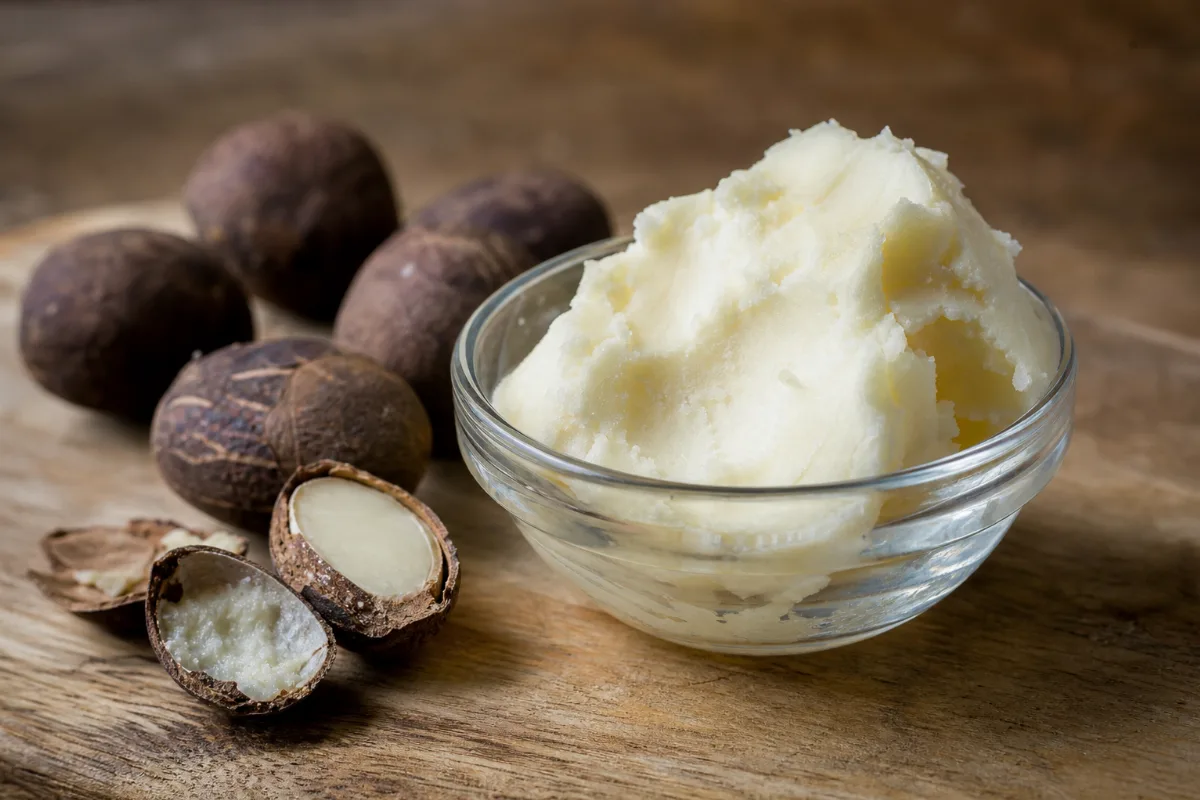
Murumuru butter is a firm fat pressed from the seeds of an Amazon palm. It is mostly lauric and myristic acid, the same kind of fat found in coconut oil. It is used in skin and hair products. We found no human trial of it on skin, hair or acne, only lab studies of its makeup. Patch test first, and do not assume it is the same as coconut oil.
General information, not medical advice. Last substantive update · Not medically reviewed. A named clinician has not signed off on this page. How this page is made
About Murumuru Butter
Murumuru butter is a solid seed fat from an Amazon palm, used in skin and hair products. It is mostly saturated lauric and myristic acid. The research is lab chemistry only. There is no human trial, so it is best seen as a cosmetic fat with unproven claims.
What it is
Murumuru butter is the fat from the seeds (kernels) of Astrocaryum murumuru Mart., a palm in the Arecaceae family. GBIF accepts this name. It is a seed fat, not a fruit-pulp oil.
In a Colombian Amazon sample the fat was about 64% lauric acid and 27% myristic acid, with only saturated acids in its main profile, so it is solid at room temperature. Brazilian work found it mostly triglycerides, yellowish, and rich in beta- and gamma-tocopherols (forms of vitamin E). Numbers vary by tree, place and batch.
How it is used
It is used as a softening fat in creams, balms, soaps and hair products. Palm seeds in general store medium-chain fats like these.
The Colombian authors suggest its makeup suits cosmetics better than food. Eating it is not studied.
What the research shows
There is no good evidence on murumuru butter for dry skin, eczema, acne, scars, stretch marks, hair growth or ageing. No human study of the butter itself was found.
Lab findings only: chemistry of the fat, antioxidant results in cultured liver cells after a lab process, and toxic engineered particles. These do not show it helps skin or hair.
Claims checked
"Murumuru is like coconut oil for hair": both are rich in lauric acid, but the hair study tested coconut oil only. That result does not carry over.
"Non-comedogenic" or "will clog pores": we found no source that rates murumuru either way, and rabbit-ear lists are weak predictors.
"Sustainable and fair-trade": we found no murumuru-specific data on harvest or on benefits to Amazon communities. A general study found trade partnerships and processing did not reliably improve community well-being or forest outcomes, and a review says many palms are threatened by unrestrained exploitation. Treat labels as the seller's claim.
Quality, refining and storage
Studies describe crude and refined murumuru fat. The crude fat carried calcium, iron, magnesium and phosphorus, which speed oxidation, and the authors suggest refining could improve stability.
In one Colombian sample the acid value was among the highest of six oils, which the authors link to breakdown of the fat. Keep the jar closed and cool, and stop using it if it smells sharp, sour or like old paint. Shelf life of shop products was not tested.
At a glance
Traditional uses history, not proof
- The Colombian study read calls murumuru a "traditionally used species" of the Colombian Amazon but does not say what for. No specific traditional use was found.
Studied for research
- Softening and moisturising skin, insufficient
- Hair care, insufficient (only coconut oil was tested)
- Clogged pores and acne-prone skin, insufficient
- Antioxidant effects in liver cells (lab only), insufficient
- Carrier for vitamins in lab particles (lab only), insufficient
Main compounds
- Lauric acid (about 64% in one Colombian sample)
- Myristic acid (about 27% in that sample)
- Beta-sitosterol (plant sterol)
- Beta- and gamma-tocopherol (vitamin E forms)
Common forms
- Crude (unrefined) butter pressed from seeds
- Refined butter
- Ingredient in creams, balms, soaps and hair products
Research links: Oils and fats of six Colombian Amazon species, including murumuru (full text) · Murumuru fat, cupuassu fat and pracaxi oil (abstract) · Safety assessment of 244 plant oils in cosmetics, CIR (abstract page) · Murumuru butter particles toxic to cells (abstract) · Re-evaluation of comedogenicity (abstract) · Research Library · Genes & Biomarkers Library
What it is and its history
- Accepted scientific name
- Astrocaryum murumuru
- Naming authority
- Mart.
- Common names
- Murumuru (Portuguese/Spanish (Amazon)); Muru-muru (Spelling used in one paper); Murumuru butter (English); Astrocaryum murumuru seed butter (English (label name))
- Family or group
- Arecaceae (the palm family)
- Classification
- Plantae > Tracheophyta > Liliopsida > Arecales > Arecaceae > Astrocaryum > Astrocaryum murumuru
- Native range
- Amazon region. The papers read describe samples from the Colombian Amazon and from Brazilian studies.
- Habitat
- Not checked.
- What it looks like
- Roots: Not checked.; Stems: Not checked.; Leaves: Not checked.; Flowers: Not checked.; Fruit: The butter comes from the seed (kernel) of the fruit, not the fruit pulp (Lozano-Garzon et al.).
- Cultivation
- Not described in the sources read.
- Harvest and processing
- In the Colombian study the butter was pressed mechanically from seeds with an expeller press. The sources read do not say how commercial butters are made, so it is not known how many are cold-pressed, refined or blended.
- Look-alikes and adulterants
- Name: Other Astrocaryum species, babassu and coconut fats; Note: Other palm seed fats are also rich in lauric acid, but each has its own makeup. The Colombian paper says the six oils it studied are "noninterchangeable".
- Sustainability and conservation
- No murumuru-specific status was read. A 2024 review says many palms are threatened by unrestrained exploitation but does not name murumuru in its abstract.
Traditional use and history history, not clinical proof
| Tradition or era | Documented use | Source |
|---|---|---|
| Colombian Amazon, as described by researchers | The Colombian paper calls murumuru one of the "traditionally used species" of the Colombian Amazon with potential for pharmaceutical, food and cosmetic industries. It does not say what the traditional use was. | p37371565 |
| Local communities and harvest | No source read describes how murumuru seeds are collected or whether harvest is sustainable. A study of forest-product trade in the Amazon found that processing and company partnerships do not reliably improve community well-being or forest outcomes; it does not name murumuru. Fair-trade or sustainability labels on a product should be treated as the seller's claim. | p22912787 |
Traditional use shows how it was used. It does not show that it works or is safe today.
What is inside, and how it may work
What it contains and how those compounds act in cells and animals. Laboratory and animal mechanisms are not proven effects in people.
Main compounds
| Compound | Family | Where it is concentrated | Activity studied | Level of evidence |
|---|---|---|---|---|
| Lauric acid | saturated medium-chain fatty acid (C12) | Seed butter About 64% of fatty acids in one Colombian sample (relative %). | Main fat; makes the butter firm. No health activity shown for the butter. 8 13 | Lab |
| Myristic acid | saturated fatty acid (C14) | Seed butter About 27% in the same sample. | Second main fat. No health activity shown for the butter. 8 | Lab |
| Beta-sitosterol | plant sterol | Seed butter The main plant sterol in the Colombian sample. | Composition only. 8 | Lab |
| Beta- and gamma-tocopherol (vitamin E forms) | tocopherols | Seed butter High levels reported in Brazilian murumuru fat. | Composition only; may help the fat resist oxidation. 14 | Lab |
Mechanisms, receptors and pathways
| Target or pathway | Gene or receptor | What was found | Level |
|---|---|---|---|
| Fat structure (saturated, short-chain) | n/a | The high lauric and myristic acid content explains why the butter is solid and has a very low iodine value. No mechanism for skin or hair benefit was tested. 8 | Lab |
| Oxidation behaviour | n/a | Crude fat carried metals that speed oxidation, yet its high saturation gave it higher activation energy (better resistance) than pracaxi oil. The authors suggest refining to lower the metals. 14 | Lab |
Absorption, metabolism and elimination
- Absorption
- Not described.
- Distribution
- Not described.
- Metabolism
- Not described.
- Elimination
- Not described.
- Bioavailability
- Not described. In a lab digestion model of engineered particles, about 42% of beta-carotene was accessible (not plain butter).
Isolated compounds versus whole extracts
Crude butter, refined butter, interesterified lab fats and engineered nanoparticles are different materials. Findings for one do not carry over to the others.
Nutritional composition
Murumuru butter is mostly saturated fat. It is described as a cosmetic ingredient in the sources read; its use as food is not studied here.
5 not enough evidence
What was looked at
The 5 benefits and uses checked for Murumuru Butter, each with how strong the evidence is. Tap one to open it.
What is Murumuru Butter good for?
What the research shows for each use, and how strong it is. None of it is proven for murumuru butter. Read the Safety tab too.
Benefits, one by one
Each card is a research question, not a promise. Tap a goal to filter. Open a card to see the studies, doses and limits.
Softening and moisturising skin
Not enough evidenceNo trial in people has tested murumuru butter on skin, dry skin or eczema. It is used as a softening fat because it is a solid, mostly saturated plant fat. A review says Amazonian oils are described as emollient and moisturizing, but its abstract does not name murumuru.
4 studiesSolid butter; as an ingredient in creams, balms and soaps. No amounts…
Studies, doses and limits
Results
No human result. Lab chemistry: one Colombian sample was about 64% lauric acid and 27% myristic acid; the authors thought its makeup suited cosmetics better than food.
Why this rating
No human trial. Only composition and general statements.
Form and dose studied
Solid butter; as an ingredient in creams, balms and soaps. No amounts are given here.
Who was studied
No human group studied.
Limits
Statements about Amazonian oils in general are not results for murumuru. Safety "as used in cosmetics" is not a test of benefit.
Why researchers looked
Its fat makeup (mostly lauric and myristic acid) makes it firm at room temperature, so it is of interest for creams and balms.
Traditional use
No traditional use of murumuru butter is described in the sources read. One paper calls murumuru a "traditionally used species" of the Colombian Amazon but does not say for what.
Proposed mechanism Pharmacological theory
Proposed, not tested: a solid fat can sit on the skin surface and slow water loss. No study of murumuru butter measured this.
A proposed mechanism does not show that the effect happens in people.
Patch test first. No skin allergy data on murumuru butter were found. See the Safety tab.
Hair care
Not enough evidenceNo hair study of murumuru butter was found. A lab hair study tested coconut oil, a different fat that is also rich in lauric acid, and found less protein loss from hair. That result belongs to coconut oil and does not carry over to murumuru.
2 studiesNot applicable.
Studies, doses and limits
Results
Coconut oil reduced protein loss from damaged and undamaged hair; sunflower and mineral oil did not. Murumuru was not tested.
Why this rating
No murumuru hair study. The related coconut oil result is lab-only and from a company with an interest.
Who was studied
Hair samples.
Limits
Different fat. Company-linked authors. Lab combing tests, not people.
Why researchers looked
Murumuru is often compared with coconut oil because both are rich in lauric acid.
Traditional use
No traditional hair use of murumuru is described in the sources read.
Proposed mechanism Authors suggestion
The coconut oil study authors suggest lauric acid is small and straight enough to enter the hair shaft. Not tested for murumuru.
A proposed mechanism does not show that the effect happens in people.
Not enough information; patch test first.
Clogged pores and acne-prone skin
Not enough evidenceNo source rates murumuru butter for pore clogging, and no acne study was found. Old "comedogenic" lists came from rabbit-ear tests. A small human test of six people found that finished products made with comedogenic ingredients were not necessarily comedogenic.
2 studiesNot applicable.
Studies, doses and limits
What the trials found
A 2006 test of six people on finished products (not murumuru) and a 1984 rabbit-ear report (not murumuru).
Results
The 2006 authors concluded finished products using comedogenic ingredients are not necessarily comedogenic. The 1984 authors called the rabbit ear not an ideal model.
Why this rating
No data for murumuru; the older rating method is weak.
Who was studied
Six people prone to blocked follicles (2006).
Limits
Murumuru not tested. Very small human study.
Why researchers looked
Many users ask if a heavy butter will cause breakouts.
Proposed mechanism None
Not applicable: no murumuru data.
A proposed mechanism does not show that the effect happens in people.
Whether it blocks pores is not known. People with acne-prone skin can patch test.
Antioxidant effects in liver cells (lab)
Not enough evidenceIn cultured human liver cells, murumuru fat kept its antioxidant compounds after a lab process that rearranges its fats, and the products changed the cells' own antioxidant enzymes. This is a dish result and says nothing about skin or people.
2 studiesNot applicable.
Studies, doses and limits
Results
Antioxidant capacity was preserved after the process; endogenous antioxidant enzymes were modulated in HepG2 cells. No numbers read (abstract only).
Why this rating
Cell line only, with a processed fat that plain butter does not undergo.
Who was studied
Cultured cells.
Limits
Liver cancer cell line; processed lipids; abstract only.
Why researchers looked
Murumuru fat holds vitamin E forms (beta/gamma-tocopherols) and plant sterols, so researchers asked if they survive processing.
Proposed mechanism Laboratory research
Reported by the authors: minor bioactive compounds are preserved after enzyme interesterification and modulate HepG2 antioxidant enzymes. Not shown in people.
A proposed mechanism does not show that the effect happens in people.
Lab findings only. Nothing here supports eating or applying the butter for health.
Carrier for vitamins and drugs (lab particles)
Not enough evidenceMurumuru butter has been used to build tiny fat particles that carry beta-carotene and vitamin E. In simulated digestion about 42% of the beta-carotene was released in a usable form, but the particles were toxic to two cell lines. The authors blame the surfactants and the very small size.
1 studiesNot applicable.
Studies, doses and limits
Results
Particle diameter about 35 nm; beta-carotene bioaccessibility about 42% in the dynamic digestion system; the particles were toxic to Caco-2 and HepG2 cells.
Why this rating
Engineering and cell study only.
Who was studied
Cultured cells.
Limits
Not plain butter. Does not describe skin use.
Why researchers looked
Solid plant butters can be used as the fat core of delivery particles for food and drug ingredients.
Proposed mechanism Laboratory research
Engineering use of the fat as a carrier; toxicity probably from the soap-like surfactants and very small particle size, as the authors suggest.
A proposed mechanism does not show that the effect happens in people.
The particles in this study were toxic to cultured cells. This is not plain butter, but it is a reason not to assume lab uses are harmless.
Connections to the rest of health
How Murumuru Butter connects to the rest of our health knowledge graph. Every link says what kind of connection it is. A safety link (for example to the liver) is a warning, not a benefit. A study that merely mentions a topic never creates a benefit link.
Explore every connection: goals, body systems, organs, symptoms, genes
A. Wellness goals
| Connected to | Kind of connection | Evidence status | Context | Studies |
|---|---|---|---|---|
| Healthy Skin | Not enough evidence | Softening and moisturising skin: No trial in people has tested murumuru butter on skin, dry skin or eczema. It is used as a softening fat because it is a solid, mostly saturated plant fat. A review says Amazonian oils are described as emollient and moisturizing, but its abstract does not name murumuru. Clogged pores and acne-prone skin: No source rates murumuru butter for pore clogging, and no acne study was found. Old "comedogenic" lists came from rabbit-ear tests. A small human test of six people found that finished products made with comedogenic ingredients were not necessarily comedogenic. | 8 14 11 2 3 5 | |
| Hair Support | Not enough evidence | Hair care: No hair study of murumuru butter was found. A lab hair study tested coconut oil, a different fat that is also rich in lauric acid, and found less protein loss from hair. That result belongs to coconut oil and does not carry over to murumuru. | 12 8 |
B. Body systems
C. Body parts and organs
| Connected to | Kind of connection | Evidence status | Context | Studies |
|---|---|---|---|---|
| Skin | Adverse effect or risk | Not enough evidence | No allergy or irritation report for murumuru butter found; patch test advised. Preparation or compound: Murumuru butter on skin |
|
| Skin | Biological association | Not enough evidence | Cosmetic use; no human trial found. Preparation or compound: Murumuru butter on skin |
8 |
L. Active compounds
| Connected to | Kind of connection | Evidence status | Context | Studies |
|---|---|---|---|---|
| Lauric acid | Biological association | Lab | Main fat; makes the butter firm. No health activity shown for the butter. Preparation or compound: Seed butter |
8 13 |
| Myristic acid | Biological association | Lab | Second main fat. No health activity shown for the butter. Preparation or compound: Seed butter |
8 |
| Beta-sitosterol | Biological association | Lab | Composition only. Preparation or compound: Seed butter |
8 |
| Beta- and gamma-tocopherol (vitamin E forms) | Biological association | Lab | Composition only; may help the fat resist oxidation. Preparation or compound: Seed butter |
14 |
Each connection is stored with the ingredient, the connected record, the kind of connection, the evidence status, the supporting studies, the preparation or compound involved, and a review date (last reviewed October 25, 2026).
Evidence at a glance: what the research found for 5 outcomes
Each outcome below is one thing researchers measured. Certainty is how far the evidence can be trusted, not how well it works. The full studies are on the next tab.
The evidence
The research centre for Murumuru Butter. Every record here was checked against PubMed or the publisher's page; we never list a study we have not verified.
Evidence by outcome
Bars show how many studies we found for each outcome, not how well it works. People are added up across trials only (reviews are not added, to avoid double counting).
How we rate evidence
High certainty
Several well-run trials or reviews agree; further research is unlikely to change the picture much.
Moderate certainty
Good trials point the same way, but some doubt remains.
Low certainty
Small, short or inconsistent trials. The finding could change with better research.
Very low certainty
Very little or very weak human data. Treat as a possibility only.
Mixed findings
Trials or reviews disagree with each other.
Not enough evidence
Not enough human research to say either way.
Evidence against
Good research found no benefit, or found harm.
We take the reviewers' own risk-of-bias and GRADE statements where they exist, and otherwise judge from study size, design, consistency, directness and whether a product matches what is sold. Many publications do not make evidence high. Method note: We read PubMed abstracts of 15 papers (one in full text), the CIR safety abstract page, and checked the plant name in GBIF. Certainty ratings are the compiler's own reading. Funding is not stated in most abstracts. No study is cited that we could not verify.
Study library: every study we checked 17
| Study | Design | People | Product, dose, length | Result |
|---|---|---|---|---|
| Almukainzi 2022 Quality and safety investigation of commonly used topical cosmetic preparations. Sci Rep · PMID 36316522 · DOI |
Product analysis n/a |
21 21 everyday cosmetic products from different brands (none is murumuru butter) |
Sunblock, creams, shampoo, makeup, toothpaste and others Not given here |
14 products had microbial contamination (Staphylococcus aureus and Bacillus species most often). Most showed metal impurities. This is a Saudi Arabian sample of everyday products. General cosmetic quality warning only. Methods, limits and fundingOutcomes: Microbes and metal impurities Limitations: 21 products; not murumuru; one country. Funding and conflicts: The authors declare no competing interests. Read: abstract |
| Burnett 2017 Safety Assessment of Plant-Derived Fatty Acid Oils (Cosmetic Ingredient Review Expert Panel) Int J Toxicol 36(3 suppl):51S-129S · Source · DOI |
Authoritative guidance n/a |
n/a | Not applicable |
The Cosmetic Ingredient Review Expert Panel concluded the 244 plant-derived fatty acid oils are safe as used in cosmetics. The panel noted that many are edible and have low systemic toxicity, so the review focused on skin effects. Methods, limits and fundingOutcomes: Safety of 244 plant-derived fatty acid oils as used in cosmetics Limitations: Only the abstract (via Penn State Pure) was read. It does not name murumuru, and the full report could not be opened, so it is not confirmed that murumuru butter is one of the 244. Funding and conflicts: Not stated in the abstract page. The Cosmetic Ingredient Review is an industry-supported panel. Read: abstract |
| Draelos 2006 A re-evaluation of the comedogenicity concept. J Am Acad Dermatol · PMID 16488305 · DOI |
Human trial |
6 Six people prone to blocked follicles on the upper back |
Finished cosmetic products containing ingredients rated comedogenic finished products on patches Not given here 4 weeks, patches 3 times a week |
The authors conclude that finished products using comedogenic ingredients are not necessarily comedogenic. Qualitative conclusion only. Methods, limits and fundingOutcomes: Follicles and microcomedones per square inch (skin biopsies) Limitations: Six people, a finite number of products. Murumuru was not tested. Funding and conflicts: Not stated in the abstract. Read: abstract |
| Falcao 2017 Antioxidant Potential and Modulatory Effects of Restructured Lipids from the Amazonian Palms on Liver Cells. Food Technol Biotechnol · PMID 29540989 · DOI |
Laboratory research in-vitro |
Cultured human liver cancer cells (HepG2) | Buriti oil and murumuru fat, before and after lipase interesterification seed fat Not given here |
Minor bioactive compounds and antioxidant capacity were preserved after the enzyme process, and the restructured lipids modulated the cells' own antioxidant enzymes. Cell result only. Methods, limits and fundingOutcomes: Antioxidant capacity; HepG2 antioxidant enzymes Limitations: Cell line, not people. Used a lab process (interesterification) that plain butter does not undergo. Abstract only. Funding and conflicts: Not stated in the abstract. Read: abstract |
| Fulton JE Jr 1984 Comedogenicity of current therapeutic products, cosmetics, and ingredients in the rabbit ear. J Am Acad Dermatol · PMID 6229554 · DOI |
Animal test animal |
Rabbit ear assay of products and ingredients | Cosmetic ingredients and products (murumuru not named in the abstract) applied to rabbit ear Not given here |
The authors call the rabbit ear "not an ideal animal model but the best we have" and list ingredient offenders such as isopropyl myristate and some dyes and lanolins. Many finished products were comedogenic. Animal test, 1984. Methods, limits and fundingOutcomes: Comedone-like changes in the rabbit ear Limitations: Animal model with no murumuru data; the abstract itself calls it not ideal. Funding and conflicts: Not stated in the abstract. Read: abstract |
| Gomes 2019 Beta-carotene and alpha-tocopherol coencapsulated in nanostructured lipid carriers of murumuru (Astrocaryum murumuru) butter produced by phase inversion temperature method: characterisation, dynamic in vitro digestion and cell viability study. J Microencapsul · PMID 30836027 · DOI |
Laboratory research in-vitro |
Lab-made nanoparticles on Caco-2 and HepG2 cells | Murumuru butter made into 35 nm particles with two surfactants (Span 80, Cremophor RH40) seed butter Not given here |
Beta-carotene bioaccessibility in the simulated digestion was about 42%. The particles were toxic to both cell lines. The authors link the toxicity probably to the surfactant type and the very small size. Particles toxic to cells in a dish. Methods, limits and fundingOutcomes: Particle size and stability, simulated digestion, cell viability Limitations: Cell study of an engineered particle, not plain butter. Does not show how butter behaves on skin or in people. Funding and conflicts: Not stated in the abstract. Read: abstract |
| Guerin 2020 Palm seed and fruit lipid composition: phylogenetic and ecological perspectives. Ann Bot · PMID 31665224 · DOI |
Lab analysis lab |
Seeds of 174 palm species and fruits of 144 species | Palm seed and fruit lipids (murumuru is not named in the abstract) seed, fruit Not given here |
Medium-chain fatty acids predominated in the seeds of most palm species. Species with the most fat-rich seeds belonged to the tribe Cocoseae. Family-wide pattern only; says nothing about murumuru butter on people. Methods, limits and fundingOutcomes: Oil content and fatty acid composition across the palm family Limitations: Abstract only. The abstract does not name murumuru. Funding and conflicts: Not stated in the abstract. Read: abstract |
| Lozano-Garzón 2023 Comprehensive Characterization of Oils and Fats of Six Species from the Colombian Amazon Region with Industrial Potential. Biomolecules · PMID 37371565 · DOI |
Lab analysis lab |
One expeller-pressed murumuru butter sample from the Colombian Amazon (Guaviare), with five other oils | Murumuru butter (Astrocaryum murumuru), expeller-pressed seed (kernel) Not given here |
Murumuru was the only solid fat of the six and had only saturated fatty acids in its main profile: lauric acid about 64% and myristic acid about 27% (relative %). Its iodine value was the lowest of the six, and beta-sitosterol was its main plant sterol. The authors grouped it as better suited to cosmetics than food. Its acid value was among the highest of the six, which they link to hydrolysis and oxidation. Composition only; no health outcome measured. Methods, limits and fundingOutcomes: Quality indices, fatty acids, phytosterols, tocopherols, density, refractive index Limitations: One sample from one place and season (October 2019). Lab chemistry only. Stored at 4 C before analysis. Funding and conflicts: The paper says the funders had no role in the design, analysis or writing. Read: full-text |
| Martins 2024 Neotropical palms: from their conservation to economic potential. Front Plant Sci · PMID 39649810 · DOI |
Systematic review n/a |
Neotropical palms (murumuru is not named in the abstract) | Palm conservation and economic use Not given here |
The authors say many palm species are threatened with extinction by unrestrained exploitation, and urge conservation measures. General palm statement; not about murumuru. Methods, limits and fundingOutcomes: Palm conservation status and economic potential Limitations: Abstract only; murumuru not named. Funding and conflicts: The authors declare no competing interests. Read: abstract |
| Morsello 2012 The effects of processing non-timber forest products and trade partnerships on people's well-being and forest conservation in Amazonian societies. PLoS One · PMID 22912787 · DOI |
Observational n/a |
Seven communities in five Amazonian societies (Brazil and Bolivia) | Non-timber forest product trade (murumuru is not named in the abstract) Not given here |
Processing products and having trade partnerships were not a "silver bullet". Partnerships alone were most often linked with better income and food indicators. Processing alone was linked with worse economic indicators and more hunting. General Amazon trade finding; not about murumuru. Methods, limits and fundingOutcomes: Well-being and forest conservation indicators Limitations: Seven communities; murumuru not named. Funding and conflicts: The authors declare no competing interests. Read: abstract |
| Mosquera Narvaez 2022 A Review of Potential Use of Amazonian Oils in the Synthesis of Organogels for Cosmetic Application. Molecules · PMID 35566084 · DOI |
Narrative review n/a |
Amazonian vegetable oils (murumuru is not named in the abstract) | Amazonian oils for cosmetic gels seed, fruit Not given here |
The abstract says several studies have shown Amazonian oils bring emollient, moisturizing and nourishing effects to skin. It does not name murumuru or give human trial results. Narrative statement; not a murumuru result. Methods, limits and fundingOutcomes: Summary of Amazonian oils and their use in cosmetic organogels Limitations: Abstract only; murumuru not named; no pooled data. Funding and conflicts: The authors declare no conflict of interest. Read: abstract |
| Rele 2003 Effect of mineral oil, sunflower oil, and coconut oil on prevention of hair damage. J Cosmet Sci · PMID 12715094 |
Lab test n/a |
Hair samples; lab combing tests | Coconut oil, sunflower oil and mineral oil (not murumuru) oil applied to hair Not given here |
Coconut oil was the only one of the three that reduced protein loss from damaged and undamaged hair. Sunflower and mineral oil did not. The authors link this to lauric acid. Coconut oil only; not murumuru. Methods, limits and fundingOutcomes: Protein loss from hair Limitations: Tested coconut oil, not murumuru. The authors work for Marico Industries, a company that sells coconut oil hair products; funding is not stated in the abstract. Funding and conflicts: Authors are at a company that makes coconut oil hair products; funding not stated. Read: abstract |
| Serra 2019 Alternative sources of oils and fats from Amazonian plants: Fatty acids, methyl tocols, total carotenoids and chemical composition. Food Res Int · PMID 30716906 · DOI |
Lab analysis lab |
Twelve Amazonian oils and fats, including muru-muru fat | Muru-muru fat seed Not given here |
The abstract names muru-muru fat among the saturated fats rich in lauric acid (with babassu oil). Other fats were rich in myristic or palmitic acid. Composition only; no health outcome measured. Methods, limits and fundingOutcomes: Fatty acids, vitamin E forms, carotenoids, chemical indices Limitations: Abstract only. Lab chemistry; no health outcome. Funding and conflicts: Not stated in the abstract. Read: abstract |
| Souza 2024 Comprehensive analysis of Amazonian oil and fats with different fatty composition: Murumuru fat (Astrocaryum murumuru), cupuassu fat (Theobroma grandiflorum), and pracaxi oil (Pentaclethera macroloba). Food Res Int · PMID 39614543 · DOI |
Lab analysis lab |
Murumuru fat, cupuassu fat and pracaxi oil samples | Murumuru fat (crude) seed Not given here |
The fats were mostly yellow with high total fat, mostly triacylglycerols, low water and low acid value. Murumuru fat and pracaxi oil had high levels of beta/gamma-tocopherols. Murumuru and cupuassu fats had high levels of calcium, iron, magnesium and phosphorus, which speed oxidation, but still showed higher activation energy than pracaxi oil because they are more saturated. The authors suggest refining crude murumuru and cupuassu fats to lower the metals and improve stability. Composition and stability only; no health outcome measured. Methods, limits and fundingOutcomes: Colour, lipid content, triacylglycerols, water, acid value, tocopherols, metals, oxidation behaviour Limitations: Lab chemistry on a few samples. Abstract only was read, so exact percentages are not quoted. Funding and conflicts: The paper declares no competing interests. Read: abstract |
| Stutius 2010 Characterizing the relationship between sesame, coconut, and nut allergy in children. Pediatr Allergy Immunol · PMID 21073539 · DOI |
Retrospective chart review |
231 Children who had skin prick tests: 191 for sesame, 40 for coconut |
Skin prick tests to sesame and coconut Not given here |
Children with peanut or tree nut sensitization were more likely to be sensitized to sesame (odds ratios 6.7 and 10.5) but not to coconut. Coconut sensitization was not linked to peanut or tree nut sensitization in this small group. Methods, limits and fundingOutcomes: Sensitization to sesame or coconut in children with peanut or tree nut allergy Limitations: Small retrospective review (40 children tested for coconut). Murumuru was not tested. Funding and conflicts: Not stated in the abstract. Read: abstract |
| Teixeira 2022 Emerging Lipids from Arecaceae Palm Fruits in Brazil. Molecules · PMID 35807433 · DOI |
Narrative review n/a |
Oils and fats from 13 Brazilian palm fruits | Palm pulp and kernel oils and fats (murumuru is not named in the abstract) fruit pulp, kernel Not given here |
Myristic, caprylic, capric and lauric acids are the main saturated fatty acids of these palm fats. The authors say the palms have potential for sustainable exploitation but few studies exist and more are needed. Review of composition; no health outcome. Methods, limits and fundingOutcomes: Composition, properties and possible uses of palm oils Limitations: Abstract only; murumuru not named. Funding and conflicts: The authors declare no conflict of interest. Read: abstract |
| n/a 2026 GBIF Backbone Taxonomy: Astrocaryum murumuru Mart. GBIF species match API · Source |
Database record plant |
n/a | Not applicable |
GBIF matched "Astrocaryum murumuru" exactly: accepted species, authority Mart., family Arecaceae (palm family), order Arecales, species key 2738081. Methods, limits and fundingOutcomes: Accepted name and classification Limitations: Taxonomy only. Read: full-text |
What we do not know yet
- What the evidence supports: insufficient for every use. No human trial of murumuru butter exists in the sources read.
- No data on skin allergy, comedogenicity, pregnancy, breastfeeding, babies, pets or eating it.
- No murumuru-specific source on traditional use, harvest or Amazon communities.
- CIR inclusion of murumuru is unconfirmed; EU and other regulators were not checked.
How new research is added
New studies are found by a saved PubMed search and placed in a review queue. A person reads each one before it changes any rating or safety wording.
Lab markers
What changed in blood or saliva tests during trials. A changed number is not the same as feeling or being healthier, and we give no "normal ranges".
Safety
What studies and official sources say about side effects, medicines and who should check first. Each point shows what kind of evidence it comes from.
Main points to know 4
- No human safety data for murumuru butter itself. No patch-test study, case report of skin allergy, or poisoning report for murumuru butter was found in the sources read. "No data" is not the same as "proven safe". Insufficient
- Safety review of cosmetic plant oils does not confirm murumuru. In 2017 the Cosmetic Ingredient Review panel concluded 244 plant-derived fatty acid oils are safe as used in cosmetics. The abstract read does not name murumuru, so it is not confirmed that murumuru is one of them. The panel is industry-supported. Authoritative guidance 2
- Lab particles made from murumuru butter were toxic to cells. Tiny particles built from murumuru butter with soap-like surfactants were toxic to two cell lines. The authors blame the surfactants and the very small size. This is not plain butter on skin. Laboratory research 6
- Patch test first, and not for food use. The Colombian study suggests the butter suits cosmetics better than food. Eating is not studied. Test a small area of skin first and stop if there is redness, itching or swelling. Expert opinion 8
Side effects 1
| Effect | How often | Severity and recovery | Evidence |
|---|---|---|---|
| Skin reaction (irritation or allergy) No case report or patch-test study for murumuru butter was found. Any plant fat can cause a reaction in some people. | Not known | Not known Not known | Insufficient |
Liver
No source read describes liver injury from murumuru butter. LiverTox was not checked.
How often. Not known.
This is a safety connection. It is not evidence that Murumuru Butter supports liver health.
Medicines and supplements 2
| With | Why it matters | Importance | Evidence | What to do |
|---|---|---|---|---|
| Prescription and over-the-counter medicines prescription | No interaction mechanism was described in the sources read. | None documented in the sources read. Skin application is not studied for absorption of other products. | Insufficient Not enough evidence | Tell your pharmacist what you use on your skin if you also use medicated creams. |
| Other skin products other-topical | Not studied. | Not known. | Insufficient Not enough evidence | Introduce one new product at a time so a reaction can be traced. |
Who should check first 2
| Situation | Advice | Evidence |
|---|---|---|
| Earlier skin reaction to plant butters, oils, coconut or palm products | Ask a doctor or allergist first and patch test a small area. A small review of children found coconut sensitization was not linked to peanut or tree nut sensitization (only 40 children tested for coconut); murumuru was not tested, so it cannot settle the question for one person. | Observational 15 |
| Broken, weeping or very inflamed skin | Ask a doctor or pharmacist before putting any new fat on it. No source covers this for murumuru. | Expert opinion |
Overdose, product quality and regulators
Summary. No toxic dose or poisoning from murumuru butter is described in the sources read. Eating it is not studied.
Animal. Not reviewed.
High dose or long term signals. Not found in the sources read.
Overdose response. Not described.
Genotoxicity. Not read.
Toxic or hazardous parts. The butter comes from the seeds (kernels). No toxicity of other plant parts is described in the sources read.
Quality is not guaranteed by the word "butter" on a label. Lab studies show crude murumuru fat carries metals such as calcium, iron, magnesium and phosphorus, which speed rancidity, and one sample had one of the higher acid values of its group.
Metals that speed rancidity in crude fat. Crude murumuru and cupuassu fats showed high calcium, iron, magnesium and phosphorus. The authors say extra refining could lower the metals and improve stability. 14
Acid value and possible rancidity. In the Colombian sample, murumuru, andiroba and asai had the highest acid values, which the authors take to suggest triglyceride breakdown and oxidation. The Brazilian samples had low acid values. 8 14
Everyday cosmetics in general. In one Saudi study, 14 of 21 everyday cosmetics had microbial contamination and most had metal impurities. None was murumuru butter. 1
| Body | Action | Date |
|---|---|---|
| Cosmetic Ingredient Review (industry-supported expert panel, USA) (United States) | 2017 safety assessment of 244 plant-derived fatty acid oils: concluded safe as used in cosmetics. Murumuru butter is not named in the abstract read. source | 2017-11-01 |
When to get medical help
- Swelling of the lips, tongue or face, wheezing, or trouble breathing after contact: get emergency help.
- A spreading, blistering or very painful skin rash: stop using it and see a doctor.
- If a child or pet has eaten a large amount, call a poison control centre or a vet.
Stop using the product and contact a clinician or emergency service. In the US, Poison Control is 1-800-222-1222.
General information only, not medical advice. Ask a clinician or pharmacist before use, especially with medicines, in pregnancy or with a health condition. See the Natural Remedy Safety guide.
Frequently asked questions
What is murumuru butter?
Does murumuru butter work for hair?
We found no hair study of murumuru. A lab hair test found coconut oil, a different fat that is also rich in lauric acid, reduced protein loss from hair. Its authors work for a coconut oil hair company, and the result does not show the same for murumuru.
Is murumuru butter comedogenic?
Is murumuru butter safe for skin?
No patch-test or allergy study of murumuru butter was found. A 2017 panel found 244 plant oils safe as used in cosmetics, but the abstract does not name murumuru. A patch test is sensible.
Is it the same as coconut oil?
Is murumuru butter a nut allergen?
We found no source on this. One small review of children found coconut sensitization was not linked to peanut or tree nut sensitization, but only 40 children were tested for coconut and murumuru was not tested. Ask an allergist if you have a nut allergy.
Does it moisturise or heal dry skin or eczema?
No trial in people has tested it for dry skin or eczema. A review says Amazonian oils are described as emollient, but it does not name murumuru.
Can I eat it?
Eating murumuru butter is not studied in the sources read. The Colombian authors suggest it suits cosmetics better than food. Ask a doctor or pharmacist.
Is it safe in pregnancy, for babies or for pets?
No source read covers pregnancy, breastfeeding, babies or pets. Ask a doctor, pharmacist or vet.
Is murumuru butter sustainable?
We found no murumuru-specific source on how seeds are collected or on Amazon communities. A general study found trade partnerships and processing did not reliably improve community well-being or forest outcomes, and a palm review says many palms are threatened by unrestrained exploitation. Treat sustainability labels as unverified.
Why do lab studies mention toxicity?
Particles built from murumuru butter with surfactants were toxic to two cell lines. The authors blame the surfactants and the tiny size. It does not describe plain butter on skin, but it shows lab results do not prove safety.
Explore by health goal
Editorial transparency
- Written by
- AlternativeMed editorial team. Research compiled with AI assistance, then checked against PubMed records.
- Medical review
- None. This page has not been reviewed by a physician or pharmacist.
- First published
- 2026-10-25
- Last substantive update
- 2026-10-25
- How we research
- We read PubMed abstracts of 15 papers (one in full text), the CIR safety abstract page, and checked the plant name in GBIF. Certainty ratings are the compiler's own reading. Funding is not stated in most abstracts. No study is cited that we could not verify.
- How we rate evidence
- See "How we rate evidence" in the Evidence tab.
- Independence
- No product is promoted on this page. No affiliate links are shown.
Sources 17
Each source was opened and checked. Where we read only the abstract, it says so. The small numbers in the text point here.
- Almukainzi M, Alotaibi L, Abdulwahab A et al. Quality and safety investigation of commonly used topical cosmetic preparations.. Sci Rep. 2022. PMID 36316522. DOI 10.1038/s41598-022-21771-7. (abstract)
- Burnett CL, Fiume MM, Bergfeld WF et al. Safety Assessment of Plant-Derived Fatty Acid Oils (Cosmetic Ingredient Review Expert Panel). Int J Toxicol 36(3 suppl):51S-129S. 2017. DOI 10.1177/1091581817740569. (abstract)
- Draelos ZD, DiNardo JC. A re-evaluation of the comedogenicity concept.. J Am Acad Dermatol. 2006. PMID 16488305. DOI 10.1016/j.jaad.2005.11.1058. (abstract)
- Falcao AO, Speranza P, Ueta T et al. Antioxidant Potential and Modulatory Effects of Restructured Lipids from the Amazonian Palms on Liver Cells.. Food Technol Biotechnol. 2017. PMID 29540989. DOI 10.17113/ftb.55.04.17.5157. (abstract)
- Fulton JE Jr, Pay SR, Fulton JE 3rd. Comedogenicity of current therapeutic products, cosmetics, and ingredients in the rabbit ear.. J Am Acad Dermatol. 1984. PMID 6229554. DOI 10.1016/s0190-9622(84)80050-x. (abstract)
- Gomes GVL, Sola MR, Rochetti AL et al. Beta-carotene and alpha-tocopherol coencapsulated in nanostructured lipid carriers of murumuru (Astrocaryum murumuru) butter produced by phase inversion temperature method: characterisation, dynamic in vitro digestion and cell viability study.. J Microencapsul. 2019. PMID 30836027. DOI 10.1080/02652048.2019.1585982. (abstract)
- Guerin C, Serret J, Montufar R et al. Palm seed and fruit lipid composition: phylogenetic and ecological perspectives.. Ann Bot. 2020. PMID 31665224. DOI 10.1093/aob/mcz175. (abstract)
- Lozano-Garzón K, Orduz-Díaz LL, Guerrero-Perilla C et al. Comprehensive Characterization of Oils and Fats of Six Species from the Colombian Amazon Region with Industrial Potential.. Biomolecules. 2023. PMID 37371565. DOI 10.3390/biom13060985. (full-text)
- Martins KKM, Vianna SA, Francisconi AF et al. Neotropical palms: from their conservation to economic potential.. Front Plant Sci. 2024. PMID 39649810. DOI 10.3389/fpls.2024.1487297. (abstract)
- Morsello C, Ruiz-Mallen I, Diaz MD et al. The effects of processing non-timber forest products and trade partnerships on people's well-being and forest conservation in Amazonian societies.. PLoS One. 2012. PMID 22912787. DOI 10.1371/journal.pone.0043055. (abstract)
- Mosquera Narvaez LE, Ferreira LMMC, Sanches S et al. A Review of Potential Use of Amazonian Oils in the Synthesis of Organogels for Cosmetic Application.. Molecules. 2022. PMID 35566084. DOI 10.3390/molecules27092733. (abstract)
- Rele AS, Mohile RB. Effect of mineral oil, sunflower oil, and coconut oil on prevention of hair damage.. J Cosmet Sci. 2003. PMID 12715094. (abstract)
- Serra JL, Rodrigues AMDC, de Freitas RA et al. Alternative sources of oils and fats from Amazonian plants: Fatty acids, methyl tocols, total carotenoids and chemical composition.. Food Res Int. 2019. PMID 30716906. DOI 10.1016/j.foodres.2018.12.028. (abstract)
- Souza PT, Pereira GSL, Almeida RF et al. Comprehensive analysis of Amazonian oil and fats with different fatty composition: Murumuru fat (Astrocaryum murumuru), cupuassu fat (Theobroma grandiflorum), and pracaxi oil (Pentaclethera macroloba).. Food Res Int. 2024. PMID 39614543. DOI 10.1016/j.foodres.2024.115022. (abstract)
- Stutius LM, Sheehan WJ, Rangsithienchai P et al. Characterizing the relationship between sesame, coconut, and nut allergy in children.. Pediatr Allergy Immunol. 2010. PMID 21073539. DOI 10.1111/j.1399-3038.2010.00997.x. (abstract)
- Teixeira GL, Ibanez E, Block JM. Emerging Lipids from Arecaceae Palm Fruits in Brazil.. Molecules. 2022. PMID 35807433. DOI 10.3390/molecules27134188. (abstract)
- n/a. GBIF Backbone Taxonomy: Astrocaryum murumuru Mart.. GBIF species match API. 2026. (full-text)
Where to buy
Check the label first. Whatever you buy, look for these:
- 100% pure with no added fragrance or fillers
- Cold-pressed or unrefined if you want the most natural form
- For skin use, do a small patch test first
- Cosmetic or food grade, matched to how you will use it
Talk to a pharmacist or doctor before you start any supplement, especially if you take medicines. See the Safety tab for interactions.
Support our free guides: as an Amazon Associate we earn from qualifying purchases. Full disclosure.


