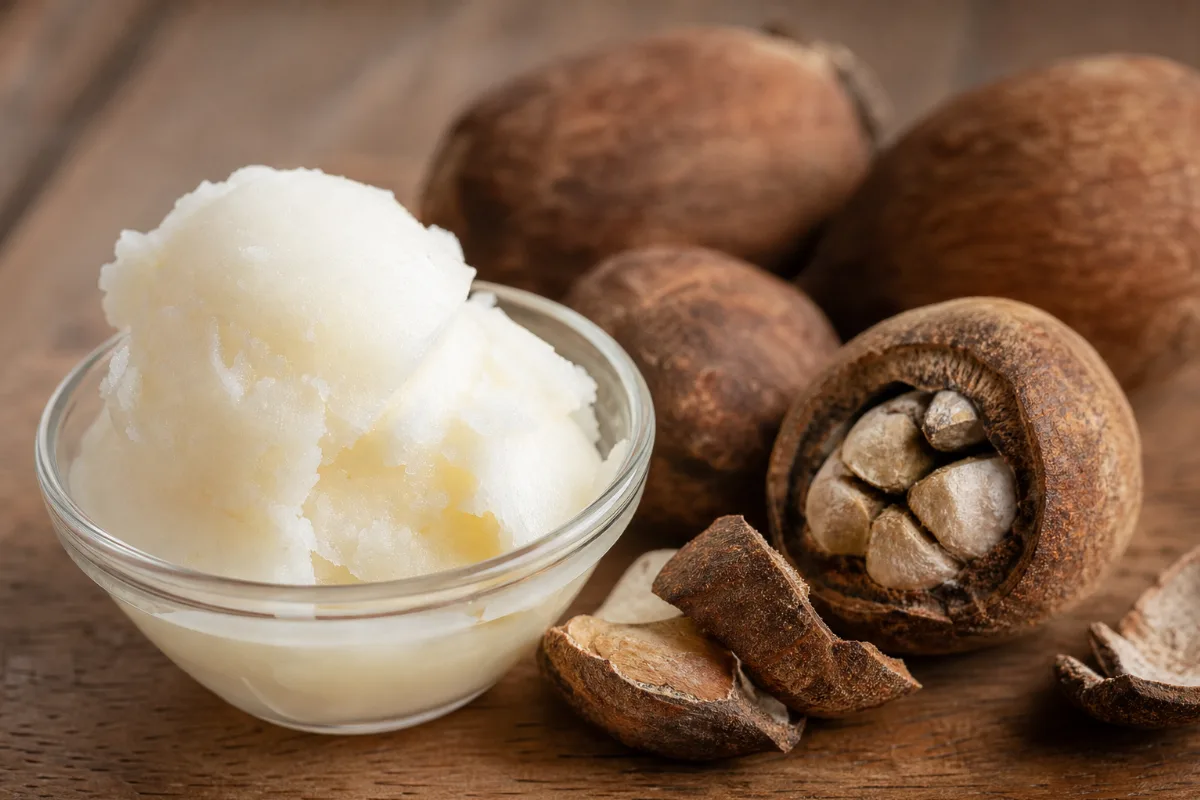
Natural Oils & Butters · Carrier oil
Babassu Oil
Attalea speciosa Mart. (older name Orbignya phalerata) · also called Babassu, babaçu, babassu nut oil. Not the same as coconut oil.
Babassu oil is pressed from the kernels of a large Brazilian palm. It is mostly saturated fat, rich in lauric acid, and is used in skin products. We found no human trial of it on skin or hair; what exists is lab and animal work and one small 1988 diet study of a processed fraction. Do a patch test first, because nothing is known about skin allergy.
General information, not medical advice. Last substantive update · Not medically reviewed. A named clinician has not signed off on this page. How this page is made
About Babassu Oil
Babassu oil is a lauric-acid-rich palm kernel oil from Brazil. It is used in skin products and has a long folk use for wounds in nut breaker communities. Research is lab and animal work, plus one small 1988 diet study. It is best seen as a plain oil with some early signals, not a treatment.
What it is
Babassu oil is pressed from the small kernels inside the hard woody fruit of the babassu palm. GBIF accepts the name Attalea speciosa; the older name Orbignya phalerata is a synonym. Papers also use a related species, Attalea glassmanii, so results from one may not apply to another.
Like coconut oil, it is mostly saturated fat. Lauric acid is the main fatty acid, about 43 to 55% in the samples read, with myristic acid next at about 12 to 16%. Numbers vary with the sample and the lab. It melts at about 23 C (73 F), so it can be a soft solid in a cool room and a clear liquid in a warm one.
How it is used
It is sold as a skin-care ingredient and appears in research as a base for creams and lotions. One lab study built a cream with babassu oil and high amounts of sunscreens; the protection came from the sunscreens. Many lab formulas also contain strong surfactants or other oils, so their results are not results for plain oil.
No study was found on hair, massage or lip balm use. It is also used as a food oil in some Brazilian communities. For other oils see the related pages.
Where the knowledge comes from
Babassu breakers, mostly women in Northeast Brazil, collect the fruit, crack it open by hand and press the kernels. About 300,000 people depend on the harvest for income. Scientists describe the wound and skin use of the oil as coming from these communities, and several papers tested it because of that use.
In a survey in Maranhao, 16% of the nut breaker women used the oil for wound healing, and more used the starchy mesocarp flour and a residue. A 2026 study of 58 breakers in two communities found that their ability to cope with environmental change rests on their organisation and traditional knowledge. Traditional use is not proof that the oil works.
What the research shows
Human evidence: one 1988 crossover diet study in 10 patients with stagnant loop syndrome used a babassu-derived medium-chain fat (MCT) and found less stool fat than on soy oil and butter. Nothing else in humans was found.
Animal and lab work: faster wound closing in an unnamed animal and mouse cells, less mouse ear swelling, fewer blood vessel leaks in two hamster studies, and effects on endometriosis cells in a dish. Funding is not stated in most of these abstracts.
A review of botanical skin oils notes that compounds from oils can reach the blood after use on the skin or by mouth, so safety needs checking. It does not discuss babassu.
Quality, storage and labels
Babassu oil has little unsaturated fat, which helps against rancidity. In one lab study the cold-pressed oil was stable to oxidation and its pressed oils were within Codex limits. These are single samples, not shop shelf-life tests.
Keep it cool, dark and closed, and throw it away if it smells sharp or off. Look for the Latin name on the label. The Cosmetic Ingredient Review panel found 244 plant-derived fatty acid oils safe as used in cosmetics, but its abstract does not list them, so we cannot confirm that babassu is among them.
At a glance
Traditional uses history, not proof
- Women in babassu nut breaker communities in Brazil use the oil for cooking, as fuel and mostly as a medicine for skin wounds and inflammation (Santos 2020 abstract).
- In a survey in Maranhao, the oil was used for wound healing by 16% and for leukorrhea by 8% of the nut breaker women; mesocarp flour and a residue were used more often (Souza 2011).
- Families in some communities of African descent use the unrefined oil and nuts as a main source of food energy (Barbosa 2012 abstract).
Studied for research
- Skin wound healing (cells and animals), insufficient
- Skin inflammation (mouse ear swelling), insufficient
- Base for creams and sun-protection claims (lab product test), insufficient
- Fat absorption in stagnant loop syndrome (swallowed MCT fraction, 10 patients), very low
- Blood vessel leaks (hamsters), insufficient
- Endometriosis cells in a dish, insufficient
Main compounds
- Lauric acid, the main fatty acid (about 43 to 55% in samples)
- Myristic acid
- Capric and caprylic acids (medium-chain fats)
- Oleic acid, the main unsaturated fat, in small amounts
Common forms
- Pressed kernel oil (cold-pressed or expeller)
- Refined oil
- Ingredient in creams and soaps
- Lab-made microemulsions and nanoemulsions (research formulas, not shop products)
- A medium-chain (MCT) fraction made from the oil, used in one 1988 diet study
Research links: Wound healing and anti-inflammatory activity of babassu oil (abstract) · Anti-inflammatory activity and a microemulsion (abstract) · Babassu-derived MCT oil in stagnant loop syndrome, 1988 (abstract) · Rat study on babassu oil in pregnancy and nursing (abstract) · Ethnopharmacological use among babassu nut breakers (abstract) · FDA allergen labeling Q&A (coconut and other tree nuts) · Research Library · Genes & Biomarkers Library
What it is and its history
- Accepted scientific name
- Attalea speciosa
- Naming authority
- Mart.
- Synonyms
- Orbignya phalerata Mart.
- Common names
- Babassu oil (English); Babaçu oil (Portuguese spelling); Babassu nut oil (English)
- Family or group
- Arecaceae (the palm family)
- Classification
- Plantae > Tracheophyta > Liliopsida > Arecales > Arecaceae > Attalea > Attalea speciosa
- Native range
- Brazil. The Santos 2020 abstract calls it endemic to Brazil and found mainly on the borders of the Amazon forest; Ferrari 2015 says Maranhao produces almost 80% of the national output.
- Habitat
- Humid tropical areas, often in burned or degraded landscapes (Ferrari 2015).
- What it looks like
- Roots: Not checked.; Stems: Not checked.; Leaves: Not checked.; Flowers: Not checked.; Fruit: The fruit has an outer husk (epicarp), a starchy mesocarp, a hard woody shell (endocarp) and small kernels. Kernels were 3.6 to 6.9% of the fruit weight and 65% lipid in one study (Ferrari 2015).
- Cultivation
- Mostly wild-harvested by extractive communities (Lima 2026; Santos 2020).
- Harvest and processing
- Women "babassu breakers" collect the fruit and break it open by hand; the kernels are then pressed, with a hydraulic cold press or a continuous press (expeller), and the oil is filtered (Ferrari 2015). A domestic cold-press machine was used in another study (Melo 2019).
- Look-alikes and adulterants
- Name: Coconut oil; Note: A different palm. Both are rich in lauric acid (Ferrari 2015 names coconut, palm kernel and babassu as the richest common sources).; Name: Indaia (Attalea dubia) and Attalea glassmanii oils; Note: Related palms in the same genus; results from them are not always the same.; Name: Babassu mesocarp flour and press cake; Note: Other parts and by-products of the fruit, not the oil.
- Sustainability and conservation
- Not checked.
Traditional use and history history, not clinical proof
| Tradition or era | Documented use | Source |
|---|---|---|
| Babassu nut breaker communities, Northeast Brazil | Santos 2020 says that among communities of coconut-breaker women the oil is used in cooking, as fuel and mostly as a medicine for skin wounds and inflammation. Reis 2017 adds vulvovaginitis. The nut harvest is an important source of income for more than 300,000 people (Santos 2020; Ferrari 2015; Nascimento 2014). | p33029179 |
| Survey in Maranhao | Among the nut breaker women surveyed, the oil was used for wound healing by 16% and for leukorrhea by 8%; mesocarp flour and a residue called borra were used more often. | p20832463 |
| Food energy in communities of African descent | Barbosa 2012 says families in several communities of African descent use the milk, unrefined oil and nuts as a main source of food energy. | p23158555 |
| Climate and livelihoods today | In a 2026 study of 58 nut breakers in two communities, adaptive strategies depended on social organisation, networks and traditional knowledge. | p42464345 |
Traditional use shows how it was used. It does not show that it works or is safe today.
What is inside, and how it may work
What it contains and how those compounds act in cells and animals. Laboratory and animal mechanisms are not proven effects in people.
Main compounds
| Compound | Family | Where it is concentrated | Activity studied | Level of evidence |
|---|---|---|---|---|
| Lauric acid PubChem 3893 | saturated fatty acid (C12) | Kernel oil About 42.6 to 45.2% (Ferrari 2015), about 47.4% (Melo 2019) and 54.7% (Ferreira 2012) of the fatty acids in different samples. | Reduced mouse ear swelling in one study. 12 3 7 4 | Animal research |
| Myristic acid PubChem 11005 | saturated fatty acid (C14) | Kernel oil About 11.8 to 15.6% in the samples read. | Measured in oils; no outcome tied to it. 3 7 4 | Laboratory |
| Capric acid PubChem 2969 | medium-chain saturated fatty acid (C10) | Kernel oil About 4.3 to 9.6% in the samples read. | Part of the medium-chain fat fraction. 3 4 | Laboratory |
| Caprylic acid PubChem 379 | medium-chain saturated fatty acid (C8) | Kernel oil 9.2% in one sample (Ferreira 2012). | Part of the medium-chain fat fraction. 4 | Laboratory |
| Oleic acid PubChem 445639 | monounsaturated fatty acid (C18:1) | Kernel oil About 6.5 to 18% depending on the sample. | Main unsaturated fat in the oil. 3 7 4 | Laboratory |
| Unidentified compound C31H60NO8 | not identified | Unrefined nut oil of Attalea glassmanii Found in the babassu-type oil, not in olive oil. | The authors ask whether it explains the effect on blood vessel leakage; not tested. 14 | Animal research |
Mechanisms, receptors and pathways
| Target or pathway | Gene or receptor | What was found | Level |
|---|---|---|---|
| Wound cells and inflammation signals | IFN-gamma, IL-6, nitric oxide | In mouse cells the oil raised fibroblast migration, lowered nitric oxide from stimulated macrophages and raised interferon-gamma and IL-6. In animals it increased collagen and blood vessels in wounds. 13 | Laboratory research |
| Eicosanoid pathway and bioactive amines | n/a | The authors say the oil and lauric acid reduced mouse ear swelling through these routes. 12 | Animal research |
| Small blood vessel leakage | n/a | Swallowed oil reduced leaks after blocked-then-restored flow in hamsters. 1 14 | Animal research |
| Inflammatory signals in womb-lining cells | IL-1, TNF-alpha, MCP-1, IL-10 | A nanoemulsion with the oil lowered IL-1, TNF-alpha and MCP-1 and raised IL-10 in cultured cells. 15 | Laboratory research |
Absorption, metabolism and elimination
- Absorption
- In 10 patients with stagnant loop syndrome a babassu-derived MCT diet left less fat in the stool than a long-chain diet.
- Distribution
- Not described.
- Metabolism
- Not described.
- Elimination
- Not described.
- Bioavailability
- Not described for any ingredient of the oil.
Isolated compounds versus whole extracts
Plain pressed oil, its main fatty acid (lauric acid), medium-chain fat (MCT) fractions, lab microemulsions and nanoemulsions, creams with added sunscreens, and the starchy mesocarp flour are different products. Results for one should not be carried to another.
Nutritional composition
Babassu oil is mostly saturated fat (about 78 to 86% in the lab samples read), with lauric acid the main fatty acid. A rat paper describes it as low in essential fatty acids. It is used as food energy in some Brazilian communities.
1 very low certainty5 not enough evidence
What was looked at
The 6 benefits and uses checked for Babassu Oil, each with how strong the evidence is. Tap one to open it.
- Skin wound healing (cells and animals)Not enough evidence
- Skin inflammation (mice)Not enough evidence
- Use as a base for creams, and sun protection claimsNot enough evidence
- Fat absorption in stagnant loop syndrome (swallowed MCT fraction)Very low certainty
- Leaky small blood vessels after interrupted blood flow (hamsters)Not enough evidence
- Endometriosis cells in a dishNot enough evidence
Lab markers tracked in the studies
Ear swelling (mouse)Wound collagen, fibroblasts and new blood vessels (animal)Fat lost in the stoolBlood vessel leaks after blocked-then-restored flow (hamster)IL-1, TNF-alpha, MCP-1 and IL-10 in cultured cells
What is Babassu Oil good for?
The uses people ask about and how strong the evidence is for each. All are from cells, animals or lab tests, except one very small 1988 diet study.
Benefits, one by one
Each card is a research question, not a promise. Tap a goal to filter. Open a card to see the studies, doses and limits.
Skin wound healing (cells and animals)
Not enough evidenceIn a dish and in animals, babassu oil sped up closing of a wound and built more new tissue. No one has tested it on wounds in people. The use comes from babassu nut breaker communities in Brazil, and the researchers say their results support that folk use.
2 studiesUnrefined or pressed kernel oil applied in the lab; the amounts are i…
Studies, doses and limits
Results
In mouse skin cells the oil increased fibroblast migration and lowered nitric oxide from stimulated immune cells. In a full-thickness wound model it sped healing, with more fibroblasts, blood vessels and collagen, and more inflammatory cells at the wound. The authors say the results support the folk use.
Effect sizes as reported
No numbers in the abstract.
Why this rating
Cells and an unnamed animal only; no controlled human trial; the abstract gives no numbers.
Form and dose studied
Unrefined or pressed kernel oil applied in the lab; the amounts are in the paper and are not given here.
Who was studied
Cell lines and animals.
Limits
The animal is not named in the abstract. Healing in animals does not show healing in people, and deep or long-lasting wounds need a clinician.
Why researchers looked
The folk use for wounds was described by researchers working with babassu breaker communities, so scientists tested it in the lab.
Traditional use
Women in babassu nut breaker communities in Brazil use the oil for cooking, as fuel and mostly as a medicine for skin wounds and inflammation (Santos 2020 abstract).
Proposed mechanism In vitro and animal
Proposed from the lab results: more fibroblast movement, more blood vessels and collagen, and changes in inflammatory signals. Not tested in people.
A proposed mechanism does not show that the effect happens in people.
No human trial of the oil on skin was found. Do a patch test first and ask an allergy clinician if you have a coconut, nut or palm allergy. See the Safety tab.
Skin inflammation (mice)
Not enough evidenceIn mice, babassu oil and its main fat, lauric acid, reduced ear swelling caused by irritants. A lab-made cream-like mix (a microemulsion) worked much more strongly than the plain oil. This does not show that it calms inflamed skin in people.
2 studiesPlain oil and a lab microemulsion with strong surfactants and propyle…
Studies, doses and limits
Results
Mouse ear swelling was reduced by the oil and by lauric acid after five different irritants. The microemulsion made with the oil was markedly more active. In a second paper, the oil lowered ear thickness, skin thickening and myeloperoxidase in a chronic ear-swelling model.
Effect sizes as reported
No numbers in the abstract.
Why this rating
Mouse ear tests only, short and caused by single irritants; no human trial.
Form and dose studied
Plain oil and a lab microemulsion with strong surfactants and propylene glycol.
Who was studied
Mice.
Limits
Mouse ear swelling is not a skin disease. The strong effect of the mix may come from how it is made, not from the oil.
Why researchers looked
The oil is used in folk medicine for skin inflammation, so researchers tested it on swollen mouse ears.
Traditional use
Women in babassu nut breaker communities in Brazil use the oil for cooking, as fuel and mostly as a medicine for skin wounds and inflammation (Santos 2020 abstract).
Proposed mechanism Animal research
The authors say it acted through the eicosanoid pathway and bioactive amines. Mouse work, not tested in people.
A proposed mechanism does not show that the effect happens in people.
No human trial of the oil on skin was found. Do a patch test first and ask an allergy clinician if you have a coconut, nut or palm allergy. See the Safety tab.
Use as a base for creams, and sun protection claims
Not enough evidenceA cream made with babassu oil stayed stable for 30 days in a lab and tested as high sun protection in a lab method. The protection came from the high amounts of sunscreens added to the cream, so it says nothing about the oil on its own. It does not show how the cream feels or works on people.
1 studiesA lab-made emulsion with babassu nut oil and high concentrations of s…
Studies, doses and limits
Results
In a lab test the cream held its look and smell and did not break in a centrifuge test. In vitro occlusion was 34.2 (SD 2.8) and in vitro SPF 39 (SD 1.6) at the start and 38 (SD 2.9) after 30 days.
Effect sizes as reported
SPF 39 +/- 1.6 (day 0); 38 +/- 2.9 (day 30), in vitro.
Why this rating
Bench test of one product design with added sunscreens; no people were tested.
Form and dose studied
A lab-made emulsion with babassu nut oil and high concentrations of sunscreens.
Who was studied
No people.
Limits
The sun protection came from the sunscreens. A correction was published for this paper (PubMed 35532475) and was not read. Oil on its own is not a sunscreen.
Why researchers looked
The oil is a lauric-rich fat that melts near room temperature, so formulators tried it as an oil phase for creams.
Traditional use
Women in babassu nut breaker communities in Brazil use the oil for cooking, as fuel and mostly as a medicine for skin wounds and inflammation (Santos 2020 abstract).
Proposed mechanism Theoretical
Not a health mechanism. The authors suggest lauric and myristic acids may add antiviral, bacteria-killing or anti-inflammatory activity; this was not tested.
A proposed mechanism does not show that the effect happens in people.
No human trial of the oil on skin was found. Do a patch test first and ask an allergy clinician if you have a coconut, nut or palm allergy. See the Safety tab.
Fat absorption in stagnant loop syndrome (swallowed MCT fraction)
Very low certaintyThis is the only human study found. In 10 patients with a gut condition that causes fat malabsorption, a diet with babassu-derived medium-chain fat (MCT) left less fat in the stool than a diet with soy oil and butter. It is a 1988 study, of a processed fraction, in a medical setting. It is not a reason to swallow the oil.
1 studiesMCT oil from babassu added to the diet under supervision; amounts are…
Studies, doses and limits
What the trials found
A one-week-per-diet crossover study in 10 patients with stagnant loop syndrome.
Results
Stool fat was 48.6 g/day (SD 19.8) on the long-chain diet and 26.6 g/day (SD 13.8) on the diet with babacu MCT oil (p < 0.001). The authors suggest MCT oil may be used as a calorie source in nutritional recovery in this syndrome.
Effect sizes as reported
Mean difference 22.0 g/day, p < 0.001.
Why this rating
Only 10 people, one week per diet, from 1988; an MCT fraction not whole oil; patients with a serious gut condition; no repeat study.
Form and dose studied
MCT oil from babassu added to the diet under supervision; amounts are in the paper and are not given here.
Who was studied
Ten patients with stagnant loop syndrome.
Limits
Cannot be applied to healthy people or to the cosmetic oil. Done in a clinic with diet control.
Why researchers looked
Medium-chain fats are absorbed differently from long-chain fats, and the authors wanted a calorie source for patients who lose fat in the stool.
Traditional use
The nut and its oil are eaten as food energy in some Brazilian communities (Barbosa 2012 abstract).
Proposed mechanism Pharmacological theory
Medium-chain fats are absorbed more directly than long-chain fats, as the authors suggest. This was not tested in the study.
A proposed mechanism does not show that the effect happens in people.
The oil is mostly saturated fat. No source supports swallowing it as a remedy. Ask a doctor or pharmacist before swallowing it as a supplement.
Leaky small blood vessels after interrupted blood flow (hamsters)
Not enough evidenceIn two hamster experiments, animals fed babassu oil for 14 days had fewer leaks from small blood vessels after blood flow was blocked and restored than animals fed olive oil or mineral oil. This is an animal result. It has not been tried in people.
2 studiesUnrefined babassu nut oil swallowed twice a day for 14 days; amounts …
Studies, doses and limits
Results
Hamster cheek-pouch tests: fewer leaks at the middle and highest oil amounts than olive oil (2020) or mineral oil (2012), p < 0.001. In the 2012 paper there was no difference in white-cell sticking or in TNF-alpha, IL-1 or IL-6. The 2020 paper found no change in liver fat.
Effect sizes as reported
p < 0.001 for fewer leaks; no effect sizes.
Why this rating
Animal only, swallowed, different comparison oils, one used a related species (Attalea glassmanii).
Form and dose studied
Unrefined babassu nut oil swallowed twice a day for 14 days; amounts left out.
Who was studied
Male hamsters.
Limits
Not skin and not human. Mineral oil is not a food, which makes a comparison with it hard to read.
Why researchers looked
The researchers wanted to know if a lauric-rich oil changes how the smallest blood vessels behave after injury.
Traditional use
Women in babassu nut breaker communities in Brazil use the oil for cooking, as fuel and mostly as a medicine for skin wounds and inflammation (Santos 2020 abstract).
Proposed mechanism Animal research
Unknown. One paper found an unidentified compound (C31H60NO8) in the babassu oil and not in olive oil and suggests it might be involved; this was not tested.
A proposed mechanism does not show that the effect happens in people.
Animal results are not a safety test for people. Ask a doctor or pharmacist before swallowing it.
Endometriosis cells in a dish
Not enough evidenceA lab-made nanoemulsion containing babassu oil (alone or with copaiba oil resin) lowered the survival and growth of human endometriosis cells in a dish and shifted inflammatory signals. It is cell work with a mix of ingredients, and it does not show any effect in a patient.
1 studiesA nanoemulsion made with babassu oil (SNEDDS-18), with or without cop…
Studies, doses and limits
Results
After 48 hours both nanoemulsions lowered cell survival and growth, especially in cells from lesions. After 24 hours IL-1, TNF-alpha and MCP-1 fell and IL-10 rose. Normal womb-lining cells were also tested.
Effect sizes as reported
No numbers in the abstract.
Why this rating
Cells in a dish, a lab-made mix, a second plant product, no animals or people.
Form and dose studied
A nanoemulsion made with babassu oil (SNEDDS-18), with or without copaiba oil resin.
Who was studied
Cells from biopsies.
Limits
The effect on cells cannot be separated from the other ingredients. Killing cells in a dish is not a treatment.
Why researchers looked
Current endometriosis drugs have side effects, so researchers looked at plant products in cell cultures.
Traditional use
Babassu oil is used in folk medicine for vulvovaginitis and leukorrhea in breaker communities (Reis 2017, Souza 2011 abstracts).
Proposed mechanism Laboratory research
The authors report changes in IL-1, TNF-alpha, MCP-1 and IL-10 signals. Cell work only.
A proposed mechanism does not show that the effect happens in people.
Do not use as a treatment for womb or pelvic conditions. Ask a doctor.
Connections to the rest of health
How Babassu Oil connects to the rest of our health knowledge graph. Every link says what kind of connection it is. A safety link (for example to the liver) is a warning, not a benefit. A study that merely mentions a topic never creates a benefit link.
Explore every connection: goals, body systems, organs, symptoms, genes
A. Wellness goals
| Connected to | Kind of connection | Evidence status | Context | Studies |
|---|---|---|---|---|
| Healthy Skin | Not enough evidence | Skin wound healing (cells and animals): In a dish and in animals, babassu oil sped up closing of a wound and built more new tissue. No one has tested it on wounds in people. The use comes from babassu nut breaker communities in Brazil, and the researchers say their results support that folk use. Skin inflammation (mice): In mice, babassu oil and its main fat, lauric acid, reduced ear swelling caused by irritants. A lab-made cream-like mix (a microemulsion) worked much more strongly than the plain oil. This does not show that it calms inflamed skin in people. | 13 16 12 17 |
B. Body systems
| Connected to | Kind of connection | Evidence status | Context | Studies |
|---|---|---|---|---|
| Skin Hair Beauty | Biological association | Not enough evidence | Studied for: Skin wound healing (cells and animals) Studied for: Skin inflammation (mice) | 13 16 12 17 |
| Digestive System | Biological association | Very low certainty | Studied for: Fat absorption in stagnant loop syndrome (swallowed MCT fraction) | 11 |
| Cardiovascular System | Biological association | Not enough evidence | Studied for: Leaky small blood vessels after interrupted blood flow (hamsters) | 14 1 |
| Reproductive System | Biological association | Not enough evidence | Studied for: Endometriosis cells in a dish | 15 |
C. Body parts and organs
| Connected to | Kind of connection | Evidence status | Context | Studies |
|---|---|---|---|---|
| Skin | Adverse effect or risk | Not enough evidence | No allergy or irritation report found; no human skin study. Preparation or compound: Kernel oil on skin |
|
| Skin | Not enough evidence | Wound and ear-swelling work in cells and animals only. Preparation or compound: Kernel oil on skin |
13 12 | |
| Gut (fat absorption) | Very low certainty | One 1988 study of 10 patients with stagnant loop syndrome. Preparation or compound: Babassu-derived MCT fraction in the diet |
11 |
E. Health conditions
| Connected to | Kind of connection | Evidence status | Context | Studies |
|---|---|---|---|---|
| Pregnancy and breastfeeding | Adverse effect or risk | Not enough evidence | A rat study raised caution; no human data. Preparation or compound: Babassu oil in the diet (rats) |
10 |
I. Biomarkers
| Connected to | Kind of connection | Evidence status | Context | Studies |
|---|---|---|---|---|
| Ear swelling (mouse) | Biological association | Not enough evidence | Measured in trials: reduced. A lab change is not the same as a health benefit. | 12 13 |
| Wound collagen, fibroblasts and new blood vessels (animal) | Biological association | Not enough evidence | Measured in trials: increased. A lab change is not the same as a health benefit. | 13 |
| Fat lost in the stool | Biological association | Very low certainty | Measured in trials: reduced. A lab change is not the same as a health benefit. | 11 |
| Blood vessel leaks after blocked-then-restored flow (hamster) | Biological association | Not enough evidence | Measured in trials: reduced. A lab change is not the same as a health benefit. | 1 14 |
| IL-1, TNF-alpha, MCP-1 and IL-10 in cultured cells | Biological association | Not enough evidence | Measured in trials: mixed. A lab change is not the same as a health benefit. | 15 |
K. Biological pathways
| Connected to | Kind of connection | Evidence status | Context | Studies |
|---|---|---|---|---|
| Eicosanoid pathway | Preliminary mechanism | Animal | Authors say babassu oil and lauric acid acted through it in mouse ear swelling. | 12 |
L. Active compounds
| Connected to | Kind of connection | Evidence status | Context | Studies |
|---|---|---|---|---|
| Lauric acid | Biological association | Animal | Reduced mouse ear swelling in one study. Preparation or compound: Kernel oil |
12 3 7 4 |
| Myristic acid | Biological association | Laboratory | Measured in oils; no outcome tied to it. Preparation or compound: Kernel oil |
3 7 4 |
| Capric acid | Biological association | Laboratory | Part of the medium-chain fat fraction. Preparation or compound: Kernel oil |
3 4 |
| Caprylic acid | Biological association | Laboratory | Part of the medium-chain fat fraction. Preparation or compound: Kernel oil |
4 |
| Oleic acid | Biological association | Laboratory | Main unsaturated fat in the oil. Preparation or compound: Kernel oil |
3 7 4 |
| Unidentified compound C31H60NO8 | Biological association | Animal | The authors ask whether it explains the effect on blood vessel leakage; not tested. Preparation or compound: Unrefined nut oil of Attalea glassmanii |
14 |
Each connection is stored with the ingredient, the connected record, the kind of connection, the evidence status, the supporting studies, the preparation or compound involved, and a review date (last reviewed October 25, 2026).
Evidence at a glance: what changed in 1 lab markers
Tap a number to show only those markers. Counts are markers, not people.
The evidence
The research centre for Babassu Oil. Every record here was checked against PubMed or the publisher's page; we never list a study we have not verified.
Evidence by outcome
Bars show how many studies we found for each outcome, not how well it works. People are added up across trials only (reviews are not added, to avoid double counting).
How we rate evidence
High certainty
Several well-run trials or reviews agree; further research is unlikely to change the picture much.
Moderate certainty
Good trials point the same way, but some doubt remains.
Low certainty
Small, short or inconsistent trials. The finding could change with better research.
Very low certainty
Very little or very weak human data. Treat as a possibility only.
Mixed findings
Trials or reviews disagree with each other.
Not enough evidence
Not enough human research to say either way.
Evidence against
Good research found no benefit, or found harm.
We take the reviewers' own risk-of-bias and GRADE statements where they exist, and otherwise judge from study size, design, consistency, directness and whether a product matches what is sold. Many publications do not make evidence high. Method note: We read the abstracts of 17 PubMed papers, the FDA allergen Q&A and one lab paper in full text, checked the plant name in GBIF and NCBI Taxonomy and the fatty acids in PubChem. For most papers only the abstract was read. Certainty ratings are the compiler's own reading. Funding is not stated in most abstracts. No study is cited that we could not verify.
Study library: every study we checked 19
| Study | Design | People | Product, dose, length | Result |
|---|---|---|---|---|
| Barbosa Mdo 2012 Effects of babassu nut oil on ischemia/reperfusion-induced leukocyte adhesion and macromolecular leakage in the microcirculation: observation in the hamster cheek pouch. Lipids Health Dis · PMID 23158555 · DOI |
Animal experiment hamster |
Male hamsters, cheek-pouch microscopy | Unrefined babassu nut oil, swallowed nut oil Three amounts; left out here 14 days, twice a day · vs Mineral oil |
Leakage was lower with babassu oil than with mineral oil at the middle and highest amounts (P < 0.001), and histamine-caused leakage was less pronounced. No differences in white-cell sticking or in TNF-alpha, IL-1 and IL-6. P < 0.001 for leakage; no effect sizes in the abstract. Methods, limits and fundingOutcomes: Blood vessel leakage and white-cell sticking after blocked-then-restored blood flow or histamine; TNF-alpha, IL-1 and IL-6 Limitations: Animal only. Compared with mineral oil, which is not a food. The authors call the oil a possible secure source of food energy; that is their view, not a safety test in people. Funding and conflicts: Funding and conflicts of interest are not stated in the abstract. Read: abstract |
| Burnett 2017 Safety Assessment of Plant-Derived Fatty Acid Oils. Int J Toxicol · PMID 29243540 · DOI |
Safety review panel n/a |
Expert panel review of 244 plant-derived fatty acid oils used in cosmetics | Plant-derived fatty acid oils in cosmetics oils |
The panel concluded the 244 oils are safe as used in cosmetics, noting that many are edible and have low systemic toxicity. n/a Methods, limits and fundingOutcomes: Safety of use in cosmetics, with a focus on effects on the skin Limitations: We read only the abstract, so we cannot confirm that babassu is one of the 244. The conclusion covers products as used in cosmetics, not every use. Funding and conflicts: The panel is the Cosmetic Ingredient Review; funding is not stated in the abstract. Read: abstract |
| Ferrari 2015 Obtention and characterization of coconut babassu derivatives Scientia Agricola · Source · DOI |
Laboratory analysis n/a |
Babassu (Orbignya sp.) coconuts collected in Goias and Sao Paulo, Brazil, harvest 2012; no people | Kernel oil pressed with a hydraulic (cold) press and a continuous press kernel |
Kernels were 65% lipid. Saturated fatty acids were 78 to 82% of the oil and unsaturated 17 to 20%. Lauric acid ran about 42.6 to 45.2% and myristic about 14.1 to 14.5% in the four oils. Melting points were 22.9 to 23.85 C. Peroxide values were 0.66 to 1.16 meq O2/kg and free fatty acids 0.81 to 1.29%. The authors say all oils were within Codex limits for consumption without refining and that cold-pressed oil from fruit dried at 75 C had lower peroxide and free fatty acids. The paper says babassu activities generate about 300,000 jobs, from collection by "babassu breakers" to the refinery. Methods, limits and fundingOutcomes: Fractions of the fruit, oil quality, fatty acids, melting point and biodiesel Limitations: Main aim was biodiesel and use of the whole fruit. Samples from two Brazilian states, one harvest year. Funding and conflicts: Not read. Read: full-text |
| Ferreira 2012 A comparison of the physicochemical properties and fatty acid composition of indaiá (Attalea dubia) and Babassu (Orbignya phalerata) oils. ScientificWorldJournal · PMID 22593692 · DOI |
Laboratory analysis n/a |
Oils analysed in a lab: indaia (Attalea dubia) seed oil compared with babassu (Orbignya phalerata) oil | Babassu oil bought from a local market in Brazil kernel oil |
Babassu oil fatty acids were: lauric 54.7%, myristic 11.8%, capric 9.6%, caprylic 9.2%, palmitic 4.8%, oleic 6.5%, stearic 2.05%, caproic 3.3% and linoleic 0.9%. Total unsaturated fat was 9.45%. No peroxide was detected. n/a Methods, limits and fundingOutcomes: Fatty acids, iodine, acid, peroxide and saponification values Limitations: One purchased sample, a decade or more ago. The paper cites an earlier source for its babassu comparison data, so we treat the babassu figures as indicative. Read: full text. Funding and conflicts: Funding and conflicts of interest are not stated in the abstract. Read: full-text |
| Lima 2024 Bioactive compounds and benefits of by-products of Amazon babassu oil production: potential for dietary supplement, biomedical and food applications. Food Funct · PMID 38814112 · DOI |
Narrative review n/a |
Review of by-products of babassu oil production (mesocarp flour and others) | Babassu mesocarp flour and other by-products (not the oil) mesocarp and others |
The review describes lab work on antioxidant, antimicrobial, antiparasitic, anti-inflammatory, antithrombotic, immunomodulatory and anticancer effects of the mesocarp flour, with a starch-rich fraction. It says toxicological concerns and gaps are discussed. n/a Methods, limits and fundingOutcomes: Phytochemicals and reported effects of by-products Limitations: About the starchy by-product, not the oil. The abstract gives no toxicity details. Funding and conflicts: Funding and conflicts of interest are not stated in the abstract. Read: abstract |
| Lima 2026 Environmental change, risk perception, and adaptation: a study with extractivists of the Babaçu palm (Attalea speciosa Mart. ex Spreng) in an ecotonal environment in Northeastern Brazil. J Ethnobiol Ethnomed · PMID 42464345 · DOI |
Mixed methods survey |
58 Babacu extractivists (nut breakers) in two rural communities, Alegria and Sardinha, Northeast Brazil |
Not an oil study: how communities cope with climate and environmental change |
Adaptive strategies depended less on a person's own risk perception and more on social organisation, community networks and traditional knowledge. The Sardinha community used a wider range of strategies. The authors say policies that recognise traditional knowledge and strengthen community organisation are essential. n/a Methods, limits and fundingOutcomes: Risk perception and adaptive strategies Limitations: About livelihoods and climate, not health. Two communities only. Funding and conflicts: Funding and conflicts of interest are not stated in the abstract. Read: abstract |
| Melo 2019 First Study on the Oxidative Stability and Elemental Analysis of Babassu (Attalea speciosa) Edible Oil Produced in Brazil Using a Domestic Extraction Machine. Molecules · PMID 31766411 · DOI |
Laboratory analysis n/a |
Babassu (Attalea speciosa) kernel oil pressed with a domestic cold-press machine, Brazil | Cold-pressed babassu edible oil kernel oil |
Saturated fatty acids were about 86.42%, with lauric about 47.40%, myristic 15.64% and oleic about 11.28%. Peroxide value, Rancimat and thermal tests indicated the oil is stable to oxidation. Sodium, potassium, calcium, magnesium, phosphorus, iron, manganese, chromium, selenium, aluminium and zinc were found, at levels below the tolerable upper intake levels for adults. n/a Methods, limits and fundingOutcomes: Fatty acids, oxidation stability, mineral and trace element content Limitations: One kind of press and one set of samples. The element levels compare with adult intake limits for food, not with use on skin. Funding and conflicts: Funding and conflicts of interest are not stated in the abstract. Read: abstract |
| Moore 2020 The Enigma of Bioactivity and Toxicity of Botanical Oils for Skin Care. Front Pharmacol · PMID 32547393 · DOI |
Narrative review n/a |
Review of more than 70 vegetable oils used on skin | Botanical oils for skin care in general oils |
The authors group the oils by fatty acid profile and note that active compounds from oils can enter the body and reach measurable blood levels after use on skin or by mouth, so hazards need monitoring. n/a Methods, limits and fundingOutcomes: Link between fatty-acid make-up, skin effects and toxicity Limitations: A general review. The abstract does not mention babassu. Funding and conflicts: Funding and conflicts of interest are not stated in the abstract. Read: abstract |
| Nascimento Mdo 2014 Eco-epidemiologic study of emerging fungi related to the work of babaçu coconut breakers in the State of Maranhão, Brazil. Rev Soc Bras Med Trop · PMID 24603741 · DOI |
Observational field study |
80 Women who break babacu coconuts for work in Esperantinopolis, Maranhao, Brazil; 150 homes visited, 80 patients sampled; soil and palm samples |
Not an oil study: fungi on the fruit, soil and the women fruit |
Aspergillus niger was the commonest fungus on the coconut (66.7%) and in soil (53.8%). Fungal growth was found in the eye lining of 76.3% of the women, and onychomycosis (nail fungus) in 44% (11 of 25). Percentages as given in the abstract. Methods, limits and fundingOutcomes: Fungi from eyes, nails, skin lesions, soil and the coconuts Limitations: Describes the work with the whole fruit and the soil, not use of the oil. It does not say the oil causes infection. Funding and conflicts: Funding and conflicts of interest are not stated in the abstract. Read: abstract |
| Noya AGAFC 2026 Early and long-term effects of Babassu (Orbignya phalerata) oil consumption on reflex ontogeny, somatic maturation and cortical electrical activity in rats. Nutr Neurosci · PMID 41627943 · DOI |
Animal experiment rat |
90 Wistar rat mothers (diet in pregnancy and nursing) and their pups: 64 in adolescence groups, 26 in adulthood groups |
Diet containing babassu oil (low in essential fatty acids) versus soybean oil diet oil Diet amounts not given in the abstract Pregnancy and nursing, then continued or switched after weaning · vs Soybean oil diet |
Pups of mothers fed the babassu diet reached some reflexes (palmar grasp, cliff avoidance, negative geotaxis) and body milestones (ear unfolding, tooth eruption, eye and ear opening) later than controls (p < 0.05). Anxiety-like behaviour did not differ. Brain spreading-depression speed differed from controls and was not reversed by switching diets. The authors suggest eating babassu oil in pregnancy and nursing should be viewed with caution. p < 0.05 for delays; p < 0.001 for spreading-depression speed. Methods, limits and fundingOutcomes: Reflex and body development milestones, anxiety-like behaviour, brain electrical response (cortical spreading depression) Limitations: Rats on a diet in which babassu oil replaced the usual oil, so the effect may come from missing essential fatty acids and not from the oil itself. Not a human study. Group sizes are the totals given for the age groups. Funding and conflicts: Funding and conflicts of interest are not stated in the abstract. Read: abstract |
| Pereira Filho 1988 [Absorption of medium chain triglycerides in patients with blind loop syndrome]. Arq Gastroenterol · PMID 3255274 |
Crossover diet study |
10 Ten patients with stagnant (blind) loop syndrome, who had fat malabsorption; clinic setting in Brazil |
MCT oil from babacu (babassu), a medium-chain fat fraction added to the diet oil fraction Not repeated here One week per diet · vs Diet with long-chain fats (soy oil and butter) |
Stool fat was 48.6 g/day (SD 19.8) on the long-chain diet and 26.6 g/day (SD 13.8) on the babassu-derived MCT diet (p < 0.001). The authors say MCT was better absorbed and may serve as a calorie source in nutritional recovery in this syndrome. Mean difference 22.0 g/day, p < 0.001. Methods, limits and fundingOutcomes: Fat lost in the stool over the last three days of each diet Limitations: Ten patients, one week each, from 1988. A medium-chain fraction (MCT) is not whole babassu oil, and the abstract does not say how it was made. Patients with a serious gut condition under care; not healthy people. Funding and conflicts: Funding and conflicts of interest are not stated in the abstract. Read: abstract |
| Reis MYFA 2017 Anti-Inflammatory Activity of Babassu Oil and Development of a Microemulsion System for Topical Delivery. Evid Based Complement Alternat Med · PMID 29430254 · DOI |
Animal and formulation mouse |
Mice (ear swelling); lab-made microemulsion | Babassu oil and lauric acid; a microemulsion made with babassu oil kernel oil |
Babassu oil and lauric acid reduced ear swelling in mice, and the authors say this was through the eicosanoid pathway and bioactive amines. The microemulsion (12.2% oil) worked markedly better than plain oil. No numbers in the abstract. Methods, limits and fundingOutcomes: Ear swelling caused by five different irritants; physical tests of the microemulsion Limitations: Mouse ear swelling is a short test of a single irritant, not a skin disease. The microemulsion also held strong surfactants and propylene glycol, so it is not plain oil. Funding and conflicts: Funding and conflicts of interest are not stated in the abstract. Read: abstract |
| Santos 2020 In Vitro and In Vivo Wound Healing and Anti-Inflammatory Activities of Babassu Oil (Attalea speciosa Mart. Ex Spreng., Arecaceae). Evid Based Complement Alternat Med · PMID 33029179 · DOI |
In vitro and animal animal-and-cells |
Mouse fibroblast and macrophage cells; animals in a wound model and a chronic ear-swelling model (the abstract does not name the animal) | Babassu oil (Attalea speciosa) kernel oil |
In cells, the oil increased fibroblast migration, lowered nitric oxide from stimulated macrophages and raised interferon-gamma and interleukin-6. In the wound model it sped healing, with more fibroblasts, blood vessels and collagen. It also drew more inflammatory cells to the wound. In the chronic ear model it reduced ear thickness, skin thickening and myeloperoxidase. No numbers in the abstract. Methods, limits and fundingOutcomes: Cell migration, nitric oxide, cytokines; wound healing (fibroblasts, blood vessels, collagen); ear thickness, skin thickening and myeloperoxidase Limitations: Cells and animals only. The animal is not named in the abstract. Not a human study. Funding and conflicts: Funding and conflicts of interest are not stated in the abstract. Read: abstract |
| Silva 2020 Babassu (Attalea glassmanii Zona) Nut Oil Is More Effective than Olive Oil for Treating Ischemia-Reperfusion Injury. Evid Based Complement Alternat Med · PMID 33029162 · DOI |
Animal experiment hamster |
Male hamsters (Mesocricetus auratus), cheek-pouch microscopy | Unrefined nut oil of Attalea glassmanii (a related babassu species), swallowed nut oil Three amounts; left out here 14 days, twice a day · vs Extra virgin olive oil; mineral oil |
Fewer leaks with babassu oil than with olive oil at the middle and highest amounts, with a dose-response pattern (p < 0.001). Liver tissue showed no change in fat deposits in any group. An unidentified compound (C31H60NO8) was found in the babassu oil and not in olive oil. p < 0.001 for dose-response; no effect sizes in the abstract. Methods, limits and fundingOutcomes: Leaks from small blood vessels after blocked-then-restored blood flow, with and without histamine; liver tissue Limitations: Animal only, swallowed, and a different Attalea species (A. glassmanii). It tests blood vessel leakage, not skin or any illness. Funding and conflicts: Funding and conflicts of interest are not stated in the abstract. Read: abstract |
| Silva 2022 Copaiba Oil Resin Exerts an Additive Effect to Babassu Oil on Behavioral Changes in Human Endometriotic Cell Cultures. Pharmaceuticals (Basel) · PMID 36422544 · DOI |
Laboratory research human-cells |
Cultured human womb-lining cells from biopsies, with and without endometriosis, and cells from endometriosis lesions | Nanoemulsion made with babassu nut oil (SNEDDS-18), with and without copaiba oil resin kernel oil |
After 48 hours both nanoemulsions lowered cell survival and growth, especially in lesion cells. After 24 hours IL-1, TNF-alpha and MCP-1 fell and IL-10 rose. No numbers in the abstract. Methods, limits and fundingOutcomes: Cell survival, shape, growth and inflammatory signals Limitations: Cells in a dish with a lab-made nanoemulsion, mixed with a second plant product. It cannot be separated from the other ingredients and says nothing about treating endometriosis in a person. Funding and conflicts: Funding and conflicts of interest are not stated in the abstract. Read: abstract |
| Souza 2011 Ethnopharmacological use of babassu (Orbignya phalerata Mart) in communities of babassu nut breakers in Maranhão, Brazil. J Ethnopharmacol · PMID 20832463 · DOI |
Survey |
Women babassu nut breakers in Medio Mearim, Esperantinopolis, Maranhao, Brazil (number not given in the abstract) | Babassu products and by-products, as used by the community mesocarp, residue (borra), oil |
Mesocarp flour was used by 90% for gastritis and inflammation and by 77% for leukorrhea. The residue was mainly used for wounds (60%). The oil was used for wound healing by 16% and for leukorrhea by 8%. Most apply the products on the skin. 82% of the women had a household income below US$ 280. Percentages as given in the abstract. Methods, limits and fundingOutcomes: How often and for what the breakers use babassu products Limitations: A survey of what people do, not whether it works. It is one community. The oil was used by fewer women than the mesocarp flour or the residue. Funding and conflicts: Funding and conflicts of interest are not stated in the abstract. Read: abstract |
| da Silva 2020 Development and characterization of a babassu nut oil-based moisturizing cosmetic emulsion with a high sun protection factor. RSC Adv · PMID 35519748 · DOI |
Laboratory product test n/a |
A lab-made cream; no people | Cream (emulsion) made with babassu nut oil plus high amounts of added sunscreens kernel oil |
The cream stayed stable through the centrifuge test and 30 days of storage. The best in-vitro occlusion value was 34.2 (SD 2.8) and in-vitro SPF was 39 (SD 1.6) at the start and 38 (SD 2.9) at 30 days, classed as high protection under European and Brazilian rules. SPF 39 +/- 1.6 (day 0); 38 +/- 2.9 (day 30), in vitro. Methods, limits and fundingOutcomes: Stability for 30 days at three temperatures, occlusion in a lab test, and sun protection factor by a lab method Limitations: Product testing on a bench. The sun protection came from the added sunscreens, so it says nothing about the oil on its own. A correction notice was later published for this paper (PubMed 35532475); we did not read it. Funding and conflicts: Funding and conflicts of interest are not stated in the abstract. Read: abstract |
| n/a 2025 FDA: Frequently asked questions on food allergen labeling (Q&A entries dated 2025/03/26 on coconut and other tree nuts) n/a · Source |
Authoritative guidance n/a |
n/a | n/a |
FDA says coconut is no longer listed in the Tree Nut List in the 5th edition of its Food Allergen Q&A guidance. Other nuts no longer considered major food allergens include palm nut, pili nut and shea nut. Such nuts must still be listed in the ingredient list by common or usual name when added as ingredients, unless an exemption applies. Methods, limits and fundingOutcomes: Which tree nuts count as major food allergens in US labelling Limitations: About food labelling in the United States, not about babassu oil and not about skin products. It does not say whether babassu is a "palm nut" in this list. Read: full-text |
| n/a 2026 GBIF Backbone Taxonomy API match for "Attalea speciosa" and "Orbignya phalerata", retrieved 2026-10-25 n/a · Source |
Database record n/a |
n/a | n/a |
Attalea speciosa Mart. is ACCEPTED (key 2732877, family Arecaceae). Orbignya phalerata Mart. is a SYNONYM of it. NCBI Taxonomy lists Attalea speciosa as tax id 145700 with the GenBank common name babassu. Methods, limits and fundingOutcomes: Accepted scientific name and synonyms Limitations: A name database, not a source about the oil. Read: api |
What we do not know yet
- What the evidence supports: very low certainty for fat absorption in one tiny 1988 study; insufficient for wounds, skin inflammation, cream base, blood vessel leaks and cell work.
- No human trial of whole babassu oil on skin, hair or any condition.
- No data on skin allergy, coconut or palm allergy cross-over, pregnancy in people, babies, pets or medicine interactions.
- Rules in the EU, Canada and Brazil, LiverTox and shelf life on shop shelves were not checked.
How new research is added
New studies are found by a saved PubMed search and placed in a review queue. A person reads each one before it changes any rating or safety wording.
Lab markers
What changed in blood or saliva tests during trials. A changed number is not the same as feeling or being healthier, and we give no "normal ranges".
Other 5
Ear swelling (mouse)
Reduced in trials
Thickness or weight of a mouse ear after an irritant is applied.
Not enough evidenceResults and what it means
Why it was measured
A quick lab test for anti-inflammatory activity in skin.
Statistical vs. clinical meaning
Animal result only; it cannot be read as a result in people.
Safety implication
None reported in the abstracts.
| Study | Result | People | Product |
|---|---|---|---|
| 12 | Less swelling with babassu oil and lauric acid after five irritants; stronger with the microemulsion. No numbers in the abstract. | Mice | Babassu oil, lauric acid or a babassu microemulsion on the ear |
| 13 | Lower ear thickness, skin thickening and myeloperoxidase in a chronic ear-swelling model. No numbers in the abstract. | Animals (not named in the abstract) | Babassu oil on the ear |
Wound collagen, fibroblasts and new blood vessels (animal)
Increased in trials
Signs of new tissue in a healing wound seen under the microscope.
Not enough evidenceResults and what it means
Why it was measured
Shows how fast a wound is rebuilding.
Statistical vs. clinical meaning
Animal result only.
Safety implication
More inflammatory cells also arrived at the wound.
| Study | Result | People | Product |
|---|---|---|---|
| 13 | More fibroblasts, blood vessels and collagen in the wounds after babassu oil. No numbers in the abstract. | Animals in a full-thickness splinted wound model | Babassu oil on the wound |
Fat lost in the stool
Reduced in trials
Grams of fat in stool per day over three days.
Very low certaintyResults and what it means
Why it was measured
A direct measure of fat malabsorption.
Statistical vs. clinical meaning
Large difference in a small crossover study of a processed fraction.
Safety implication
Side effects are not reported in the abstract.
| Study | Result | People | Product |
|---|---|---|---|
| 11 | 26.6 g/day on babacu MCT versus 48.6 g/day on long-chain fats (p < 0.001). | 10 patients with stagnant loop syndrome | Diet with babassu-derived MCT oil versus soy oil and butter, one week each |
Blood vessel leaks after blocked-then-restored flow (hamster)
Reduced in trials
Number of leaks of tracer from small veins in the hamster cheek pouch.
Not enough evidenceResults and what it means
Why it was measured
A model of damage when blood flow returns after being blocked.
Statistical vs. clinical meaning
Animal result only.
Safety implication
No liver fat change in the 2020 paper.
IL-1, TNF-alpha, MCP-1 and IL-10 in cultured cells
Mixed results in trials
Inflammatory signals released by cells in a dish.
Not enough evidenceResults and what it means
Why it was measured
Shows if a product changes inflammatory signalling in cells.
Statistical vs. clinical meaning
Cell result only.
Safety implication
Also lowered survival of cells.
| Study | Result | People | Product |
|---|---|---|---|
| 15 | IL-1, TNF-alpha and MCP-1 fell and IL-10 rose after 24 hours. No numbers in the abstract. | Human womb-lining cells from biopsies | Babassu nanoemulsion with or without copaiba oil resin |
Safety
What studies and official sources say about side effects, medicines and who should check first. Each point shows what kind of evidence it comes from.
Main points to know 7
- No human trial of the oil on skin, so skin safety is unknown. We found no human trial of babassu oil on skin, hair, lips or in the mouth. What exists is lab and animal work. No report of skin allergy to babassu oil was found either, and no source says whether people with coconut allergy react to it. That is not the same as safe. Do a small patch test on a spot of skin first, and stop if there is redness, itching, swelling or a rash. Insufficient 12 13
- Babassu is not coconut, and allergy cross-over is unknown. Babassu oil comes from Attalea speciosa, a different palm from the coconut palm. The FDA says coconut is no longer on its tree nut list for major allergens (March 2025), and its list of nuts no longer considered major allergens also names palm nut. That is about US food labelling. It does not say that babassu is safe for people with a coconut, tree nut or palm allergy. If you have a serious allergy, ask an allergy clinician first. Authoritative guidance 18
- Rat study: caution in pregnancy and nursing. In a 2026 rat experiment, mothers fed a diet with babassu oil in place of soybean oil had pups with later reflex and body milestones, and different brain electrical responses that were not reversed by switching diets. The authors suggest babassu oil in pregnancy and nursing should be considered with caution. The oil is low in essential fatty acids, so the result may come from what the diet lacked. It is a rat study. No human data on pregnancy or breastfeeding were found. Ask a doctor or midwife before swallowing it. Animal research 10
- Do not use it as a wound treatment. Animal and cell work shows faster closing of wounds, but this is not tested in people. Deep, dirty, infected or slow-healing wounds need a clinician. Fungal infections are common among the women who break the fruit by hand, which the authors link to their exposure to soil and the fruit, not to the oil. Any open wound is also a place where an unfamiliar product can cause trouble. Mixed 13 9
- Mostly saturated fat, and swallowing is not backed by evidence. Lab analyses find that babassu oil is mostly saturated fat (about 78 to 86%), with lauric acid the main fatty acid. No source read supports swallowing it as a remedy. The hamster studies were not safety tests for people. A 1988 study gave a babassu-derived medium-chain fat to 10 patients with a gut condition under a clinic diet. If you take it by mouth, ask a doctor or pharmacist first. Laboratory 7 3 11
- Quality, rancidity and labels. In one lab study, pressed oils were within Codex limits for consumption without refining, and the cold-pressed oil had the lowest peroxide. Babassu oil has little unsaturated fat (about 9 to 20% in the samples read), which helps against going off, but these are single lab samples, not shelf-life tests. Smell and colour change tell you an oil has turned. Look for the Latin name on the label, because some labels name a different species or a blend. Product analysis 7 3 4
- Little is known about babies, children, pets and medicines. The sources read do not describe babassu oil for babies, children or pets, or any medicine interaction. Absence of reports is not proof of safety. Ask a paediatrician, a vet or a pharmacist. Insufficient
Side effects 4
| Effect | How often | Severity and recovery | Evidence |
|---|---|---|---|
| Skin allergy or irritation from the oil No babassu-specific report was found; patch test as for any new oil. | No report found | unknown Not stated | Insufficient |
| Slower development in rat pups whose mothers ate a babassu-oil diet Rats; may reflect low essential fatty acids in the diet. | Group differences at p < 0.05 | not applicable (animal) Brain response not reversed by switching diets | Animal research 10 |
| Fungal infections and eye or nail fungus in women who break the fruit by hand Linked by authors to constant exposure to soil and the fruit, not to the oil. | Eye lining growth 76.3%; nail fungus 44% (11 of 25) | mild to moderate Not stated | Observational 9 |
| Side effects of swallowed babassu-derived MCT oil in a one-week diet study 10 patients. | Not reported in the abstract | not stated not stated | Case series 11 |
Liver
No source read describes liver injury from babassu oil. In a 14-day hamster study, liver tissue showed no change in fat deposits in any group. LiverTox was not searched. 14
How often. Not known.
This is a safety connection. It is not evidence that Babassu Oil supports liver health.
Medicines and supplements 2
| With | Why it matters | Importance | Evidence | What to do |
|---|---|---|---|---|
| Prescription and over-the-counter medicines prescription | No interaction mechanism was described in the sources read. | None documented in the sources read. | Insufficient Not enough evidence | Tell your pharmacist you use it, as for any supplement. |
| Other skin products and strong surfactant mixes topical | Lab microemulsions and nanoemulsions with babassu oil also contain strong surfactants, propylene glycol or other plant oils. | Results for those mixes cannot be applied to plain oil. | Laboratory Low certainty 12 15 | Read labels, and patch test any product with several ingredients. |
Who should check first 5
| Situation | Advice | Evidence |
|---|---|---|
| Allergy to coconut, tree nuts, palm products, or an earlier skin reaction to oils | Ask an allergy clinician before use. Patch test a small spot and stop if there is a rash, swelling or itching. | Authoritative guidance 18 |
| Pregnancy and breastfeeding (swallowing the oil) | A rat study raised caution and no human data were found. Ask a doctor or midwife first. | Animal research 10 |
| Babies and children | Not described in the sources read. Ask a paediatrician before using it on babies or giving it to children. | Insufficient |
| Pets | Not described in the sources read. Ask a vet before using it on or near a cat or dog. | Insufficient |
| Open, deep, infected or slow-healing wounds | See a clinician. The lab and animal results do not show the oil heals wounds in people. | Animal research 13 |
Overdose, product quality and regulators
Summary. No toxic dose or poisoning from babassu oil is described in the sources read. Two 14-day hamster studies and a rat diet study are the only safety-related animal work found.
Animal. Hamsters swallowed the oil twice a day for 14 days with no liver fat change in one study. Rat mothers fed a babassu-oil diet had pups with development delays.
Human doses studied. A 1988 study gave a babassu-derived medium-chain fat for one week to 10 patients; amounts in the paper are not repeated here.
High dose or long term signals. Not found in people.
Overdose response. Not described.
Genotoxicity. Not read.
Toxic or hazardous parts. The oil is pressed from the kernels inside the hard woody fruit. A review of by-products (mesocarp flour and others) says it discusses toxicological concerns, but the abstract gives no details, so nothing is stated about them here.
Oil quality depends on the pressing and the fruit. Single lab samples looked good for oxidation and elements, but no source tested shop products for contaminants.
Oxidation (rancidity). A cold-pressed sample was stable to oxidation by three tests; the Ferrari paper found all pressed oils within Codex limits. 7 3
Elements and metals. In one cold-pressed sample sodium, potassium, calcium, magnesium, phosphorus, iron, manganese, chromium, selenium, aluminium and zinc were found, at levels below adult tolerable upper intake levels. 7
Fungi on the fruit. Aspergillus niger was found on 66.7% of babacu coconuts and in 53.8% of soil samples in one field study. The oil was not tested. 9
Peroxide in fresh oil. No peroxide was detected in a purchased babassu oil sample. 4
| Body | Action | Date |
|---|---|---|
| Cosmetic Ingredient Review Expert Panel (United States) | Concluded in 2017 that 244 plant-derived fatty acid oils are safe as used in cosmetics, with a focus on effects on the skin. source | 2017-12-01 |
| US Food and Drug Administration (United States) | Coconut is no longer listed in the Tree Nut List of major food allergens (5th edition Q&A guidance). Other nuts no longer considered major allergens include palm nut. These nuts must still be listed in the ingredients when added as ingredients, unless an exemption applies. source | 2025-03-26 |
When to get medical help
- Swelling of the lips, tongue or face, wheezing or trouble breathing after using or eating babassu oil: call emergency services now.
- A spreading rash, hives or blistering after using it: stop and get medical advice.
- A wound that becomes more red, hot, painful or swollen, or you have a fever: see a doctor. Do not rely on an oil.
- A child or pet that has swallowed a large amount and vomits or seems unwell: call your poison control centre, doctor or vet.
Stop using the product and contact a clinician or emergency service. In the US, Poison Control is 1-800-222-1222.
General information only, not medical advice. Ask a clinician or pharmacist before use, especially with medicines, in pregnancy or with a health condition. See the Natural Remedy Safety guide.
Frequently asked questions
Is babassu oil the same as coconut oil?
Is babassu oil good for skin?
Does it heal wounds?
Is it good for hair?
No study of babassu oil on hair was found.
Is babassu oil a sunscreen?
No. A lab cream with babassu oil tested as high SPF only because of the high amounts of sunscreens added to it. The oil on its own was not tested for sun protection.
Will it clog my pores?
No source we read tested babassu oil on pores or acne. Published comedogenic rating tables are weak guides anyway.
Can people with coconut allergy use it?
We found no source that answers this. Babassu is a different palm, but that does not make it safe for people with allergies. Ask an allergy clinician and patch test.
Is it safe in pregnancy, for babies or for pets?
A 2026 rat study raised caution about a babassu-oil diet in pregnancy and nursing. No human, baby or pet data were found. Ask a doctor, paediatrician or vet.
Is it safe to eat or swallow?
Does it melt, and how should I store it?
Who produces babassu oil?
Does it interact with medicines?
No interaction was found in the sources read, which is not proof there is none. Tell your pharmacist you use it.
Explore by health goal
Editorial transparency
- Written by
- AlternativeMed editorial team. Research compiled with AI assistance, then checked against PubMed records.
- Medical review
- None. This page has not been reviewed by a physician or pharmacist.
- First published
- 2026-10-25
- Last substantive update
- 2026-10-25
- How we research
- We read the abstracts of 17 PubMed papers, the FDA allergen Q&A and one lab paper in full text, checked the plant name in GBIF and NCBI Taxonomy and the fatty acids in PubChem. For most papers only the abstract was read. Certainty ratings are the compiler's own reading. Funding is not stated in most abstracts. No study is cited that we could not verify.
- How we rate evidence
- See "How we rate evidence" in the Evidence tab.
- Independence
- No product is promoted on this page. No affiliate links are shown.
Sources 19
Each source was opened and checked. Where we read only the abstract, it says so. The small numbers in the text point here.
- Barbosa Mdo C, Bouskela E, Cyrino FZ et al. Effects of babassu nut oil on ischemia/reperfusion-induced leukocyte adhesion and macromolecular leakage in the microcirculation: observation in the hamster cheek pouch.. Lipids Health Dis. 2012. PMID 23158555. DOI 10.1186/1476-511X-11-158. (abstract)
- Burnett CL, Fiume MM, Bergfeld WF et al. Safety Assessment of Plant-Derived Fatty Acid Oils.. Int J Toxicol. 2017. PMID 29243540. DOI 10.1177/1091581817740569. (abstract)
- Ferrari RA, Soler MP. Obtention and characterization of coconut babassu derivatives. Scientia Agricola. 2015. DOI 10.1590/0103-9016-2014-0278. (full-text)
- Ferreira BS, Faza LP, Le Hyaric M. A comparison of the physicochemical properties and fatty acid composition of indaiá (Attalea dubia) and Babassu (Orbignya phalerata) oils.. ScientificWorldJournal. 2012. PMID 22593692. DOI 10.1100/2012/532374. (full-text)
- Lima RC, Carvalho APA, Almeida AECC et al. Bioactive compounds and benefits of by-products of Amazon babassu oil production: potential for dietary supplement, biomedical and food applications.. Food Funct. 2024. PMID 38814112. DOI 10.1039/d4fo01594k. (abstract)
- Lima JS, Campos JLA, do Nascimento ALB. Environmental change, risk perception, and adaptation: a study with extractivists of the Babaçu palm (Attalea speciosa Mart. ex Spreng) in an ecotonal environment in Northeastern Brazil.. J Ethnobiol Ethnomed. 2026. PMID 42464345. DOI 10.1186/s13002-026-00933-1. (abstract)
- Melo E, Michels F, Arakaki D et al. First Study on the Oxidative Stability and Elemental Analysis of Babassu (Attalea speciosa) Edible Oil Produced in Brazil Using a Domestic Extraction Machine.. Molecules. 2019. PMID 31766411. DOI 10.3390/molecules24234235. (abstract)
- Moore EM, Wagner C, Komarnytsky S. The Enigma of Bioactivity and Toxicity of Botanical Oils for Skin Care.. Front Pharmacol. 2020. PMID 32547393. DOI 10.3389/fphar.2020.00785. (abstract)
- Nascimento Mdo D, Leitão VM, Neto Silva MA et al. Eco-epidemiologic study of emerging fungi related to the work of babaçu coconut breakers in the State of Maranhão, Brazil.. Rev Soc Bras Med Trop. 2014. PMID 24603741. DOI 10.1590/0037-8682-0237-2013. (abstract)
- Noya AGAFC, Melo IMDSG, Oliveira MLF et al. Early and long-term effects of Babassu (Orbignya phalerata) oil consumption on reflex ontogeny, somatic maturation and cortical electrical activity in rats.. Nutr Neurosci. 2026. PMID 41627943. DOI 10.1080/1028415X.2026.2622989. (abstract)
- Pereira Filho RA, Sevá-Pereira A, de Magalhães AF. [Absorption of medium chain triglycerides in patients with blind loop syndrome].. Arq Gastroenterol. 1988. PMID 3255274. (abstract)
- Reis MYFA, Dos Santos SM, Silva DR et al. Anti-Inflammatory Activity of Babassu Oil and Development of a Microemulsion System for Topical Delivery.. Evid Based Complement Alternat Med. 2017. PMID 29430254. DOI 10.1155/2017/3647801. (abstract)
- Santos JAA, da Silva JW, Dos Santos SM et al. In Vitro and In Vivo Wound Healing and Anti-Inflammatory Activities of Babassu Oil (Attalea speciosa Mart. Ex Spreng., Arecaceae).. Evid Based Complement Alternat Med. 2020. PMID 33029179. DOI 10.1155/2020/8858291. (abstract)
- Silva FF, Balthazar DS, Hellmann T et al. Babassu (Attalea glassmanii Zona) Nut Oil Is More Effective than Olive Oil for Treating Ischemia-Reperfusion Injury.. Evid Based Complement Alternat Med. 2020. PMID 33029162. DOI 10.1155/2020/2525871. (abstract)
- Silva JHD, Abreu LCL, Ferrari R et al. Copaiba Oil Resin Exerts an Additive Effect to Babassu Oil on Behavioral Changes in Human Endometriotic Cell Cultures.. Pharmaceuticals (Basel). 2022. PMID 36422544. DOI 10.3390/ph15111414. (abstract)
- Souza MH, Monteiro CA, Figueredo PM et al. Ethnopharmacological use of babassu (Orbignya phalerata Mart) in communities of babassu nut breakers in Maranhão, Brazil.. J Ethnopharmacol. 2011. PMID 20832463. DOI 10.1016/j.jep.2010.08.056. (abstract)
- da Silva MJF, Rodrigues AM, Vieira IRS et al. Development and characterization of a babassu nut oil-based moisturizing cosmetic emulsion with a high sun protection factor.. RSC Adv. 2020. PMID 35519748. DOI 10.1039/d0ra00647e. (abstract)
- n/a. FDA: Frequently asked questions on food allergen labeling (Q&A entries dated 2025/03/26 on coconut and other tree nuts). n/a. 2025. (full-text)
- n/a. GBIF Backbone Taxonomy API match for "Attalea speciosa" and "Orbignya phalerata", retrieved 2026-10-25. n/a. 2026. (api)
Where to buy
Check the label first. Whatever you buy, look for these:
- 100% pure with no added fragrance or fillers
- Cold-pressed or unrefined if you want the most natural form
- For skin use, do a small patch test first
- Cosmetic or food grade, matched to how you will use it
Talk to a pharmacist or doctor before you start any supplement, especially if you take medicines. See the Safety tab for interactions.
Support our free guides: as an Amazon Associate we earn from qualifying purchases. Full disclosure.


