Psychedelic Therapy · Poisonous plant
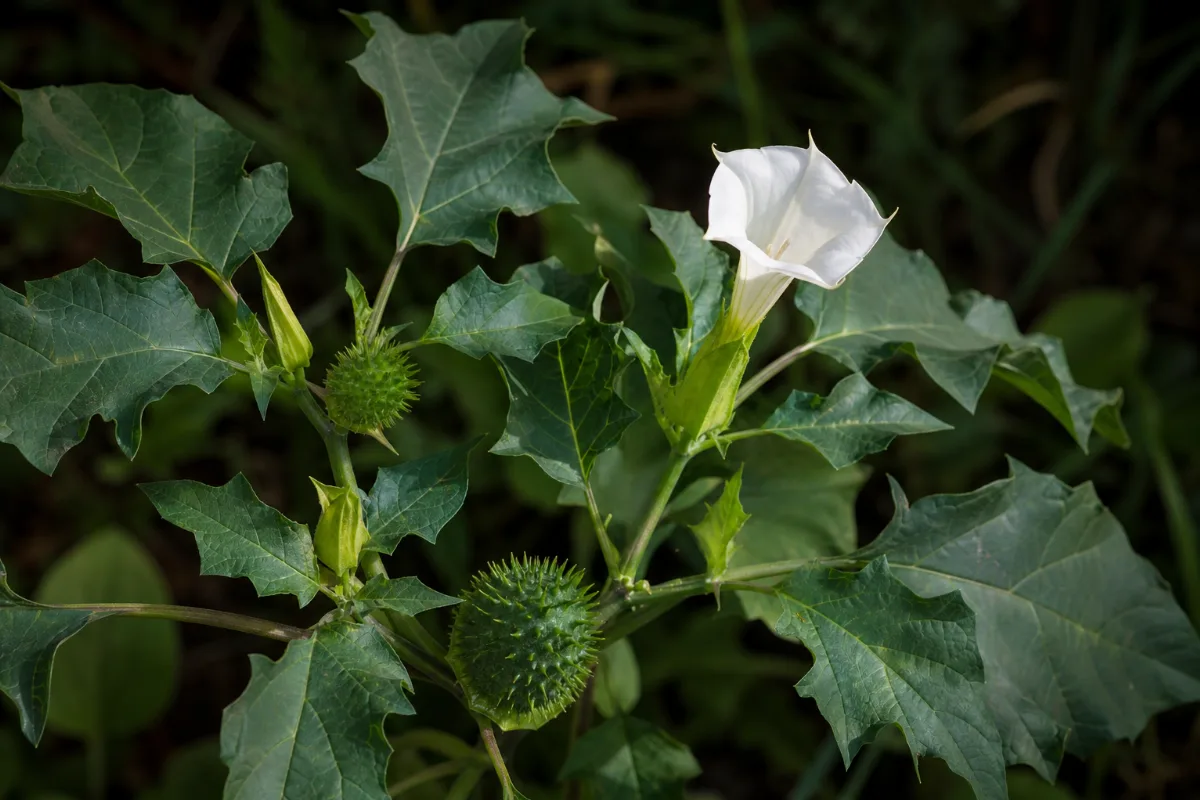
Jimsonweed (Datura stramonium)
Datura stramonium · also called Jimsonweed, thorn apple, Angel's trumpet, loco seed
Jimsonweed is a poisonous weed, not a psychedelic. All parts contain atropine, hyoscyamine and scopolamine, which cause delirium, hallucinations, a racing heart and sometimes seizures. People have died, and children and teenagers are often the ones poisoned. No safe amount is known. If anyone may have swallowed any part, call poison control or emergency services at once.
General information, not medical advice. Last substantive update · Not medically reviewed. A named clinician has not signed off on this page. How this page is made
About Jimsonweed (Datura stramonium)
Jimsonweed (Datura stramonium) is a poisonous nightshade weed. It is a deliriant, not a psychedelic. Poisoning causes delirium, hallucinations, fast heartbeat, dilated pupils and sometimes seizures and death.
Danger first
Every part of the plant contains atropine, hyoscyamine and scopolamine. They cause an anticholinergic syndrome with confusion, hallucinations and agitation. Hospital stays are common and deaths are documented.
In Uganda in 2019, relief food contaminated with the seeds caused 293 suspected cases and 5 deaths. In 47 children in India, 15 needed intensive care and 1 died.
No safe amount is known: alkaloid levels differ from plant to plant. This page gives no use information.
Emergency signs and who to call
Confusion, hallucinations, very wide pupils, a racing heart, hot dry flushed skin, seizures or collapse after swallowing any part are emergencies. In the US call Poison Control on 1-800-222-1222 or 911. In the UK call 999. Elsewhere use your national emergency number.
Do not wait for symptoms and do not make the person vomit unless told to. If you can, bring the plant or a photo so it can be identified.
Lookalikes, children and gardens
A family ate young Datura leaves thinking they were black nightshade and needed intensive care. Reviews list mistaken identity, crop contamination and children as the main accidental routes.
Children are poisoned often. Remove the weed from yards and gardens, and keep seeds out of reach.
History and traditions
The genus is used as a traditional medicine in China and elsewhere. Anticholinergic nightshades have long been medicines, poisons and recreational drugs in Europe. A 2025 commentary describes ceremonial use in India. Tradition is not proof of safety, and this page does not describe how anyone used it.
At a glance
Traditional uses history, not proof
- Used as a traditional medicine in China and elsewhere (2022 review).
- Described in traditional and ceremonial contexts in India (2025 commentary; needs cultural review).
- Long history in Europe as a medicine, poison and recreational drug (2021 survey).
Studied for research
- No human benefit established; lab and animal research only, insufficient
Main compounds
- Atropine
- Hyoscyamine
- Scopolamine
- Withanolides (lab research)
Common forms
Research links: US Poison Control · NHS: when to call 999 · Uganda outbreak report (abstract) · 2025 review of poisoning cases (abstract) · Research Library · Genes & Biomarkers Library
What it is and its history
- Accepted scientific name
- Datura stramonium
- Naming authority
- L.
- Common names
- Jimsonweed; Thorn apple; Angel's trumpet; Loco seed; Apple of Peru; Moonflower (seeds sold under this name in one case report)
- Family or group
- Solanaceae (the nightshade family)
- Classification
- Plantae > Tracheophyta > Magnoliopsida > Solanales > Solanaceae > Datura > Datura stramonium
- Native range
- Not verified. A 2025 review calls it a cosmopolitan weed, and the name 'apple of Peru' hints at an American link that was not checked in POWO or GBIF.
- Habitat
- A weed of roadsides, cornfields, pastures, waste areas, fields, yards and gardens (2012 Iran series; 2025 review).
- What it looks like
- Roots: Not checked.; Stems: Not checked.; Leaves: Young plants have been mistaken for black nightshade (2020 case report).; Flowers: Trumpet-shaped flowers give the name Angel's trumpet (2025 review).; Fruit: Spiny fruit gives the name thorn apple (2025 review). Seeds are poisonous.
- Cultivation
- Not covered.
- Harvest and processing
- Not covered.
- Look-alikes and adulterants
- Name: Solanum nigrum (black nightshade); Note: Young plants look alike; a family ate Datura leaves by mistake (2020 case report).; Name: Atropa belladonna and Hyoscyamus niger; Note: Related poisonous nightshades; belladonna berries are mistaken for fruit and henbane for other plants (2020 review).
Traditional use and history history, not clinical proof
| Tradition or era | Documented use | Source |
|---|---|---|
| Origin of the name jimsonweed | A 2025 review says the name jimson weed comes from the first recorded poisoning involving the plant. The details were not read. | p40086888 |
| Europe | Anticholinergic nightshades, including Datura stramonium, have a long history in Europe as medicines, poisons and recreational drugs. Their use has declined because of the dangers and unwanted effects. | p33617573 |
| India | Described as used in traditional and ceremonial contexts, with cultural and religious roots that add to accidental overdoses. Needs Indigenous and cultural review by the owner. | p41180034 |
| China and other countries | The genus Datura has been used as traditional medicine. | p36152725 |
| Magico-religious practices | Reviews list magico-religious practices among the contexts of misuse. No specific peoples were named in the abstracts read. | p40086888 |
Traditional use shows how it was used. It does not show that it works or is safe today.
What is inside, and how it may work
What it contains and how those compounds act in cells and animals. Laboratory and animal mechanisms are not proven effects in people.
Main compounds
| Compound | Family | Where it is concentrated | Activity studied | Level of evidence |
|---|---|---|---|---|
| Atropine PubChem 174174 | tropane alkaloid | All parts Uganda food samples held 25-50 ppm (contamination, not plant content). | Blocks acetylcholine receptors (anticholinergic). 10 1 18 | Human data |
| Hyoscyamine PubChem 154417 | tropane alkaloid | All parts Not given. | Anticholinergic. Atropine is the mixed form of hyoscyamine in the usual chemical description; not checked in a source here. 1 19 | Review |
| Scopolamine PubChem 5184 | tropane alkaloid | All parts Uganda food samples held 1-10 ppm. | Anticholinergic, acts on the brain. 10 1 20 | Human data |
| Withanolides and other compounds | steroidal lactones and others | Not stated 496 compounds in the genus (2022 review). | Studied in the lab only. 9 | In vitro animal |
Mechanisms, receptors and pathways
| Target or pathway | Gene or receptor | What was found | Level |
|---|---|---|---|
| Muscarinic acetylcholine receptors | muscarinic receptors | The alkaloids block them, causing the anticholinergic syndrome of delirium, dilated pupils and fast heartbeat. Stated in general terms in the sources; receptor detail not read. 1 5 | Human data |
Absorption, metabolism and elimination
- Absorption
- Not read in detail. Symptoms began within 2 to 12 hours of eating the Uganda food and about 2 hours after the tea in one case.
- Distribution
- Not read.
- Metabolism
- Not read.
- Elimination
- Not read. Tropane alkaloids were found in urine in a 1995 report that was not opened.
- Bioavailability
- Not read.
Isolated compounds versus whole extracts
Purified atropine and scopolamine are used as medicines in hospitals, but the whole plant has unpredictable strength and is a poison. Nothing here is advice to use either.
Nutritional composition
Not a food. Not edible.
1 not enough evidence
What was looked at
The 1 benefits and uses checked for Jimsonweed (Datura stramonium), each with how strong the evidence is. Tap one to open it.
What is Jimsonweed (Datura stramonium) good for?
There is no proven benefit of jimsonweed in people. What is known is the danger; read the Safety tab first.
Benefits, one by one
Each card is a research question, not a promise. Tap a goal to filter. Open a card to see the studies, doses and limits.
Traditional medicinal uses (lab and animal research only)
Not enough evidenceDatura has been used as a traditional medicine in China and elsewhere. A 2022 systematic review of the genus found only lab and animal studies behind these uses and stressed that its toxicity is noteworthy. No human trial shows that jimsonweed treats any illness. Datura is a poison. Nothing here is advice to eat, drink, smoke or handle it for any reason.
2 studiesNot given. This page gives no amounts or preparations.
Studies, doses and limits
Results
Extracts of Datura species have shown many activities in lab and animal studies (for example antitumour, antioxidant, antispasmodic and analgesic activity). These are not human results.
Why this rating
Lab and animal work only; the review itself warns of toxicity.
Form and dose studied
Not given. This page gives no amounts or preparations.
Limits
The review covers the whole genus (mainly D. metel, D. stramonium and D. inoxia), not only jimsonweed.
Why researchers looked
The plant contains atropine, hyoscyamine and scopolamine. Purified forms of such alkaloids are used as medicines in hospitals. The whole plant is a different matter, because its strength varies and poisoning is common.
Traditional use
The genus has been used as traditional medicine in China and other countries (2022 systematic review). Specific uses were not read in detail.
Datura is a poison. Nothing here is advice to eat, drink, smoke or handle it for any reason. Poisoning, delirium and deaths are documented.
Connections to the rest of health
How Jimsonweed (Datura stramonium) connects to the rest of our health knowledge graph. Every link says what kind of connection it is. A safety link (for example to the liver) is a warning, not a benefit. A study that merely mentions a topic never creates a benefit link.
Explore every connection: goals, body systems, organs, symptoms, genes
L. Active compounds
| Connected to | Kind of connection | Evidence status | Context | Studies |
|---|---|---|---|---|
| Atropine | Biological association | Human | Blocks acetylcholine receptors (anticholinergic). Preparation or compound: All parts |
10 1 18 |
| Hyoscyamine | Biological association | Review | Anticholinergic. Atropine is the mixed form of hyoscyamine in the usual chemical description; not checked in a source here. Preparation or compound: All parts |
1 19 |
| Scopolamine | Biological association | Human | Anticholinergic, acts on the brain. Preparation or compound: All parts |
10 1 20 |
| Withanolides and other compounds | Biological association | In vitro animal | Studied in the lab only. | 9 |
Each connection is stored with the ingredient, the connected record, the kind of connection, the evidence status, the supporting studies, the preparation or compound involved, and a review date (last reviewed October 25, 2026).
Evidence at a glance: what the research found for 1 outcome
Each outcome below is one thing researchers measured. Certainty is how far the evidence can be trusted, not how well it works. The full studies are on the next tab.
The evidence
The research centre for Jimsonweed (Datura stramonium). Every record here was checked against PubMed or the publisher's page; we never list a study we have not verified.
Evidence by outcome
Bars show how many studies we found for each outcome, not how well it works. People are added up across trials only (reviews are not added, to avoid double counting).
How we rate evidence
High certainty
Several well-run trials or reviews agree; further research is unlikely to change the picture much.
Moderate certainty
Good trials point the same way, but some doubt remains.
Low certainty
Small, short or inconsistent trials. The finding could change with better research.
Very low certainty
Very little or very weak human data. Treat as a possibility only.
Mixed findings
Trials or reviews disagree with each other.
Not enough evidence
Not enough human research to say either way.
Evidence against
Good research found no benefit, or found harm.
We take the reviewers' own risk-of-bias and GRADE statements where they exist, and otherwise judge from study size, design, consistency, directness and whether a product matches what is sold. Many publications do not make evidence high. Method note: We searched PubMed and read the abstracts of 15 papers, checked the plant name in GBIF and compounds in PubChem, and read poison-control and emergency-service pages. Only abstracts were read for papers. Certainty ratings are the compiler's own reading.
Study library: every study we checked 22
| Study | Design | People | Product, dose, length | Result |
|---|---|---|---|---|
| Acimovic 2025 Datura stramonium - A Dangerous Weed and Alternative Drug of Abuse: An Overview of Poisoning Cases in 21st Century. Planta Medica · PMID 40086888 · DOI |
Review |
114 papers on D. stramonium poisoning, 2001 to 2024 | All parts of the plant contain hyoscyamine, scopolamine and atropine and cause a typical anticholinergic syndrome with neuropsychiatric effects. Poisonings fall into accidental (contaminated crops, mistaking it for an edible plant, children, self-medication) and misuse (recreational drug use, suicide attempts, criminal activity, magico-religious practices). The author urges removing the weed from fields, yards and gardens. Methods, limits and fundingOutcomes: Poisoning patterns Limitations: Narrative review of published cases, so the true number of poisonings is unknown. Funding and conflicts: No conflicts declared in the abstract. Read: abstract | |
| Amini 2012 Acute Datura Stramonium poisoning in East of Iran - a case series. Avicenna Journal of Phytomedicine · PMID 25050235 |
Case series |
19 19 patients at one hospital in Mashhad, Iran, 2008 to 2011 |
Children were poisoned most often, then teenagers; adults rarely. All the children ingested it accidentally. Irritability was the most common symptom and fast heartbeat the most common sign. No seizure or coma. Most symptoms were controlled with benzodiazepines. Methods, limits and fundingOutcomes: Who was poisoned and how Limitations: Small series from one hospital. Funding and conflicts: No conflicts declared in the abstract. Read: abstract | |
| Fatur 2020 Common anticholinergic solanaceaous plants of temperate Europe - A review of intoxications from the literature (1966-2018). Toxicon · PMID 32217234 · DOI |
Review |
Reported poisonings with Datura stramonium, Atropa belladonna, Hyoscyamus niger and Scopolia carniolica | D. stramonium poisoning was largely linked to drug use among teenagers; belladonna was mainly eaten when berries were mistaken for edible fruit; henbane mostly when mistaken for other plants. The authors say case reports are often incomplete and many doctors lack knowledge of these plants. Methods, limits and fundingOutcomes: Patterns of poisoning Limitations: Literature review limited by incomplete case reports. Funding and conflicts: No conflicts declared in the abstract. Read: abstract | |
| Fatur 2021 Nixing the nightshades: Traditional knowledge of intoxicating members of the Solanaceae among hallucinogenic plant and mushroom users in Slovenia. PLoS ONE · PMID 33617573 · DOI |
Survey |
People in Slovenia who had used other hallucinogenic plants or mushrooms | The anticholinergic Solanaceae (including Datura stramonium) have a long history in Europe as medicines, poisons and recreational drugs, but few of those surveyed knew much about them and fewer had used them. Many confused them with other plants. The authors link the decline to the dangers and undesirable effects. Methods, limits and fundingOutcomes: Knowledge and use of anticholinergic nightshades Limitations: Survey in one country among users of other hallucinogens. Funding and conflicts: No conflicts declared in the abstract. Read: abstract | |
| Glatstein 2012 Use of physostigmine for hallucinogenic plant poisoning in a teenager: case report and review of the literature. American Journal of Therapeutics · PMID 20861718 · DOI |
Case report |
1 A 15-year-old girl who ate "moonflower seeds" |
Found hallucinating and incoherent, with fast heartbeat, dilated pupils and dry, flushed, hot skin. Her symptoms resolved after hospital treatment with physostigmine, an antidote given under medical supervision. The authors note that each plant varies in its alkaloid concentration. Methods, limits and fundingOutcomes: Presentation and hospital treatment Limitations: One case plus literature review. Funding and conflicts: No conflicts declared in the abstract. Read: abstract | |
| Gravador 2024 Reports of tropane alkaloid poisonings and analytical techniques for their determination in food crops and products from 2013 to 2023. Comprehensive Reviews in Food Science and Food Safety · PMID 39530585 · DOI |
Systematic review n/a |
Food and feed testing literature 2013 to 2023 | Describes D. stramonium as an invasive weed producing high amounts of atropine and scopolamine, with food poisonings recorded worldwide after accidental or deliberate ingestion of foods contaminated with its seeds. Regulators want early detection methods in the food chain. Methods, limits and fundingOutcomes: Poisoning events and detection methods Limitations: Mainly about laboratory testing methods, not clinical outcomes. Funding and conflicts: No conflicts declared in the abstract. Read: abstract | |
| Islam 2022 Clinical Features and Adverse Prognostic Indicators in Datura Poisoning in Children. Indian Pediatrics · PMID 35962661 |
Case series |
47 47 children with Datura intoxication |
15 of 47 children (31.9%) needed intensive care and 1 (2.1%) died. Worse outcomes were linked to more than 3.15 hours between ingestion and starting treatment (RR 9.4, 95% CI 3.1-28.3), age under 9.5 years (RR 3.5, 95% CI 1.5-8.0) and seizure (RR 2.8, 95% CI 1.4-5.8). Delay to treatment was the strongest risk factor Methods, limits and fundingOutcomes: Intensive care need, death, risk factors Limitations: Short research letter; single setting; the abstract does not say which Datura species. Funding and conflicts: No conflicts declared in the abstract. Read: abstract | |
| Kokulu 2024 Artificial intelligence application for identifying toxic plant species: A case of poisoning with Datura stramonium. Toxicon · PMID 39413975 · DOI |
Case report |
1 A 23-year-old man who drank herbal tea |
Restless, disoriented and hallucinating 2 hours after the tea, with fast heartbeat and dilated pupils. Treated in hospital with intravenous diazepam and physostigmine and the symptoms eased. The plant was identified as D. stramonium; a botanist later confirmed it. Methods, limits and fundingOutcomes: Identification and treatment Limitations: One case. It shows why the plant that was eaten must be identified. Funding and conflicts: No conflicts declared in the abstract. Read: abstract | |
| Lian 2022 The genus Datura L. (Solanaceae): A systematic review of botany, traditional use, phytochemistry, pharmacology, and toxicology. Phytochemistry · PMID 36152725 · DOI |
Systematic review mixed |
Literature on the genus Datura (mainly D. metel, D. stramonium, D. inoxia) up to May 2022 | Datura has been used as a traditional medicine in China and elsewhere. 496 compounds are known in the genus; withanolides and alkaloids are the two main active groups. Extracts have been studied in lab and animal work for many activities. The review says the toxicity of the genus is noteworthy, especially to organs. Methods, limits and fundingOutcomes: Botany, traditional use, chemistry, lab pharmacology and toxicity Limitations: Review of the whole genus, mostly lab and animal studies. It does not show that any Datura preparation is a safe or effective treatment. Funding and conflicts: No conflicts declared in the abstract. Read: abstract | |
| Mutebi 2022 Large outbreak of Jimsonweed (Datura stramonium) poisoning due to consumption of contaminated humanitarian relief food: Uganda, March-April 2019. BMC Public Health · PMID 35354446 · DOI |
Cohort study |
293 293 suspected cases in Napak and Amudat districts, Uganda; 211 residents interviewed |
293 suspected cases; 5 (1.7%) died. Confusion 62%, dizziness 38%, diarrhoea 22%, nausea or vomiting 18%, convulsions 12%, hallucinations 8%. 66% of 134 people who ate the implicated corn-soy blend became ill, against 2.2% of 75 who did not. The food contained 14 tropane alkaloids, including atropine (25-50 ppm) and scopolamine (1-10 ppm), plus Solanaceae seed proteins and jimsonweed DNA. Adjusted risk ratio 22 (95% CI 6.0 to 81) for eating the implicated food Methods, limits and fundingOutcomes: Cause and size of outbreak Limitations: Field investigation of one outbreak; says it was the largest documented food-contamination outbreak with tropane alkaloids. Funding and conflicts: No conflicts declared in the abstract. Read: abstract | |
| Pooja 2025 Toxic traditions: Unveiling the psychiatric and neurological dangers of datura poisoning. Industrial Psychiatry Journal · PMID 41180034 · DOI |
Commentary n/a |
Datura poisoning in India | Describes tropane-alkaloid poisoning (atropine, hyoscyamine, scopolamine) with vivid hallucinations, agitation and delirium that can lead to self-harm and be mistaken for psychosis. Says Datura has been used in traditional and ceremonial contexts in India, and that this cultural place adds to accidental overdoses and chronic misuse, especially among children and other vulnerable people. Methods, limits and fundingOutcomes: Psychiatric and neurological effects Limitations: Short commentary, not a data study. Funding and conflicts: No conflicts declared in the abstract. Read: abstract | |
| Senthil 2020 Datura Poisoning in a Family - A Tale of Mistaken Identity. Current Health Sciences Journal · PMID 33304634 · DOI |
Case report |
3 A mother and two children |
The family ate leaves of small Datura stramonium plants thinking they were Solanum nigrum (black nightshade, a leafy vegetable). All three needed intensive care with anticholinergic symptoms, were treated with symptomatic care and discharged. The authors say the two plants look similar when young but are easy to tell apart when fully grown. Methods, limits and fundingOutcomes: Lookalike poisoning Limitations: One family; case report. Funding and conflicts: No conflicts declared in the abstract. Read: abstract | |
| Shifa 2024 Datura stramonium seed ingestion leading to unintentional poisoning in a 3-year-old Ethiopian toddler: case report. International Journal of Emergency Medicine · PMID 39478444 · DOI |
Case report |
1 A 3-year-old boy |
Altered mental state, agitation, seizures, dilated pupils and fast heartbeat after eating seeds. Routine blood tests were normal and the standard toxicology screen was negative. He recovered with supportive care. Methods, limits and fundingOutcomes: Presentation and outcome Limitations: One case; shows a routine drug screen can miss it. Funding and conflicts: No conflicts declared in the abstract. Read: abstract | |
| Tarawneh 2024 Unveiling the Dark Side of Datura in Pediatric Poisoning With Insights From Jordanian Experience: A Retrospective Clinical Study. Pediatric Emergency Care · PMID 38718809 · DOI |
Case series |
Children with Datura poisoning in Al Karak, Jordan, spring 2022 | Common symptoms were agitation, dilated pupils and fast heartbeat. Care was supportive; diazepam was given for agitation and, in some cases, neostigmine to counteract the anticholinergic effects. The authors say Datura should be considered in children with unexplained anticholinergic symptoms or agitation. Methods, limits and fundingOutcomes: Symptoms and management Limitations: Retrospective, descriptive; number of children not given in the abstract. Funding and conflicts: No conflicts declared in the abstract. Read: abstract | |
| Wiebe 2008 Angel's Trumpet (Datura stramonium) poisoning and delirium in adolescents in Winnipeg, Manitoba: Summer 2006. Paediatrics and Child Health · PMID 19252697 · DOI |
Case series |
4 Four adolescents admitted after intentional ingestion |
All four had reduced consciousness, visual hallucinations, dilated pupils and agitation (delirium). All were known to use substances. Average stay was two days; all recovered fully with sedation and restraints. Methods, limits and fundingOutcomes: Symptoms, course, outcome Limitations: Only four patients, all from one city and one summer. Funding and conflicts: No conflicts declared in the abstract. Read: abstract | |
| n/a 2026 Poison Control (poison.org, American Association of Poison Control Centers) n/a · Source |
Authoritative guidance n/a |
n/a | Lists 1-800-222-1222 as the number and calls the service free, expert and confidential. Methods, limits and fundingOutcomes: Lists 1-800-222-1222 as the number and calls the service free, expert and confidential. Limitations: Page read 2026-10-25; it did not state hours in the text read. Read: full-text | |
| n/a 2026 MedlinePlus: Jerusalem cherry poisoning (general plant-poisoning advice) n/a · Source |
Authoritative guidance n/a |
n/a | For a plant poisoning in the US: get medical help immediately, do not make the person vomit unless poison control or a provider says so, call 1-800-222-1222 (free, 24/7), and call 911 for a life-threatening emergency. Methods, limits and fundingOutcomes: For a plant poisoning in the US: get medical help immediately, do not make the person vomit unless poison control or a provider says so, call 1-800-222-1222 (free, 24/7), and call 911 for a life-threatening emergency. Limitations: About a different plant (Jerusalem cherry), used only for the general first-step advice. Read: full-text | |
| n/a 2026 PubChem: Atropine (CID 174174) n/a · Source |
Database record n/a |
n/a | Formula C17H23NO3, from the PubChem REST service. Methods, limits and fundingOutcomes: Formula C17H23NO3, from the PubChem REST service. Limitations: Checked 2026-10-25 through the PubChem REST name search. Read: full-text | |
| n/a 2026 PubChem: Hyoscyamine (CID 154417) n/a · Source |
Database record n/a |
n/a | Formula C17H23NO3, from the PubChem REST service. Methods, limits and fundingOutcomes: Formula C17H23NO3, from the PubChem REST service. Limitations: Checked 2026-10-25 through the PubChem REST name search. Read: full-text | |
| n/a 2026 PubChem: Scopolamine (CID 5184) n/a · Source |
Database record n/a |
n/a | Formula C17H21NO4, from the PubChem REST service. Methods, limits and fundingOutcomes: Formula C17H21NO4, from the PubChem REST service. Limitations: Checked 2026-10-25 through the PubChem REST name search. Read: full-text | |
| n/a 2026 NHS: When to call 999 n/a · Source |
Authoritative guidance n/a |
n/a | In the UK call 999 for life-threatening emergencies; NHS 111 can help if unsure. Methods, limits and fundingOutcomes: In the UK call 999 for life-threatening emergencies; NHS 111 can help if unsure. Limitations: General guidance, not specific to this plant. Read: full-text | |
| n/a 2026 GBIF Backbone Taxonomy: Datura stramonium L. n/a · Source |
Database record n/a |
n/a | Accepted species, usage key 2928751; family Solanaceae, order Solanales, genus Datura. Methods, limits and fundingOutcomes: Accepted species, usage key 2928751; family Solanaceae, order Solanales, genus Datura. Limitations: Checked via the GBIF API on 2026-10-25. Plants of the World Online was not opened. Read: full-text |
What we do not know yet
- No human trial of the whole plant for any condition.
- No safe or lethal amount in the sources read.
- Legal status not verified.
How new research is added
New studies are placed in a review queue and read by a person before they change any wording.
Lab markers
What changed in blood or saliva tests during trials. A changed number is not the same as feeling or being healthier, and we give no "normal ranges".
Safety
What studies and official sources say about side effects, medicines and who should check first. Each point shows what kind of evidence it comes from.
Main points to know 7
- This is not a psychedelic. It is a poison that causes delirium.. Jimsonweed (also called thorn apple, Angel's trumpet, loco seed or moonflower in the sources) is not a classic psychedelic. All parts contain the tropane alkaloids hyoscyamine, scopolamine and atropine, which cause an anticholinergic syndrome with confusion, hallucinations and agitation. People in delirium do not know what is real, can hurt themselves, and some have died. Do not eat, drink, smoke or handle the plant to try it or as a remedy. Review 1 11
- Deaths are documented. In the 2019 Uganda outbreak, 5 of 293 suspected cases (1.7%) died. In a series of 47 children in India, 1 died and 15 needed intensive care. Seizures were reported in 12% of the Uganda cases and were linked to worse outcomes in the Indian children. Outbreak investigation and case series 10 7
- Strength varies, so no amount can be called safe. Sources say each plant differs in its alkaloid concentration (2012 case report) and that poisoning from the plant is dose-dependent and can be lethal at high doses (Uganda investigators). The abstracts read do not give a safe or lethal amount, and this page gives none. We did not find the phrase 'narrow safe margin' in the sources we read, but the variation they describe means no one can predict a dose that is safe. Case report and outbreak investigation 5 10
- Get emergency help straight away. If someone may have swallowed any part of the plant, call your poison control centre or emergency number at once (US Poison Control: 1-800-222-1222; 911 for a life-threatening emergency). Do not wait for symptoms and do not try to treat them at home. Do not make the person vomit unless poison control or a health professional tells you to. If you can, take a photo of the plant or bring a piece with you, because identifying the plant matters. Authoritative guidance 16 17 8
- Lookalike plants and contaminated food cause accidents. A family in India ate young Datura leaves thinking they were black nightshade (Solanum nigrum), a leafy vegetable, and all three needed intensive care. Reviews list mistaking it for an edible plant and crop contamination as main routes of accidental poisoning. In Uganda, seeds mixed into relief food caused 293 suspected cases. Case report and review 12 1 10
- Children and gardens. Children are poisoned often and by accident. In Iran children were the most commonly poisoned group in a 19-patient series, and a 3-year-old in Ethiopia had seizures after eating seeds. In India, children treated more than about 3 hours after ingestion, those under about 9.5 years and those with seizures did worse. Reviews recommend removing the weed from yards, gardens and fields. Case series 2 13 7 1
- Teenagers and misuse. Reviews link jimsonweed poisoning in teenagers to recreational use. Four adolescents in Winnipeg were admitted with delirium, hallucinations and agitation after intentional ingestion. Hospital stays are real, and effects can mimic psychosis or other illness. Case series and review 15 3 11
Side effects 6
| Effect | How often | Severity and recovery | Evidence |
|---|---|---|---|
| Delirium: confusion, disorientation, agitation, hallucinations Symptoms can resemble psychosis (2025 commentary). | Confusion 62%, hallucinations 8% in the Uganda outbreak | moderate to severe All four Winnipeg adolescents recovered fully | Outbreak investigation and case series 10 15 |
| Dilated pupils, fast heartbeat, dry flushed hot skin Fast heartbeat was the most common sign in the Iran series. | Not established | moderate Resolved with treatment in the reports | Case reports 5 14 2 |
| Seizures Seizure was linked to worse outcomes in children in India. | 12% in the Uganda outbreak | severe Treated in hospital | Outbreak investigation 10 13 7 |
| Stomach and gut upset (diarrhoea, nausea, vomiting, dizziness) | Dizziness 38%, diarrhoea 22%, nausea or vomiting 18% in Uganda | mild to moderate Not stated | Outbreak investigation 10 |
| Death These are counts from specific events, not a general death rate. | 1.7% of suspected cases in Uganda; 1 of 47 children in the India series | life-threatening Not reversible | Outbreak investigation and case series 10 7 |
| Self-harm while delirious Described in a 2025 commentary. | Not established | severe Not stated | Commentary 11 |
Liver
No liver injury was reported in the sources read. The genus review says the toxicity of Datura is noteworthy, especially to organs, but gives no liver detail in the abstract. LiverTox was not checked. 9
How often. Unknown.
This is a safety connection. It is not evidence that Jimsonweed (Datura stramonium) supports liver health.
Medicines and supplements 3
| With | Why it matters | Importance | Evidence | What to do |
|---|---|---|---|---|
| Other anticholinergic medicines (for example some antihistamines, tricyclic antidepressants, bladder medicines) drug | Same type of action, so effects are expected to add up (theory; no source read tested the combination for this plant). | Potentially serious; not verified in a source. | Mechanistic Not enough evidence 1 | Tell a doctor or pharmacist if any plant part has been swallowed. |
| Physostigmine or neostigmine (hospital antidotes) drug | These counter anticholinergic poisoning and were used in hospital in the case reports. | Hospital use only, under supervision. | Case reports Low certainty 5 8 14 | Never self-treat. Hospital staff decide on antidotes. |
| Alcohol, sedatives, other recreational drugs substance | Not covered in the sources read; the Winnipeg adolescents were all known to use substances. | Unknown. | Insufficient Not enough evidence 15 | Combining substances makes outcomes harder to predict. |
Who should check first 4
| Situation | Advice | Evidence |
|---|---|---|
| Anyone, for any use | No safe use of the plant has been shown. Do not eat, drink, smoke or use it as a remedy. | Review 1 9 |
| Children | Keep plants and seeds out of reach and remove the weed from play areas. | Case series 2 7 |
| Pregnancy and breastfeeding | No safety data found in the sources read. Do not use. | Insufficient |
| Foraging for wild greens or herbal tea | Do not eat any plant you cannot identify with certainty; young Datura has been confused with black nightshade. Seek expert identification. | Case report 12 8 |
Overdose, product quality and regulators
Summary. All parts of the plant contain hyoscyamine, scopolamine and atropine. Hospital care in the reports was supportive (diazepam for agitation) and in some cases an antidote such as physostigmine or neostigmine under medical supervision. No lethal-amount figure is given because the sources read give none and alkaloid levels vary.
Animal. Not reviewed.
Human doses studied. Not given. Uganda food samples contained atropine 25-50 ppm and scopolamine 1-10 ppm, which describes contamination, not a safe level.
High dose or long term signals. Chronic misuse is described in a 2025 commentary, without data.
Overdose response. Call poison control or emergency services at once. Hospital care is supportive.
Genotoxicity. Not read.
Toxic or hazardous parts. All parts, including seeds, leaves and flowers (2024 case report, 2025 review).
Seeds can contaminate other crops and food. In Uganda in 2019, tropane alkaloids and jimsonweed DNA were found in a fortified corn-soy blend after more than 200 people fell ill.
. 14 tropane alkaloids, including atropine and scopolamine, in the implicated food batch 10
| Body | Action | Date |
|---|
When to get medical help
- Confusion, strange behaviour or hallucinations after swallowing any part of the plant: call emergency services at once.
- Seizure, collapse, very hard to wake, or trouble breathing: call emergency services at once (US: 911).
- Very fast heartbeat, very wide pupils, hot dry flushed skin or a high temperature: seek emergency care.
- US: Poison Control 1-800-222-1222 (free). UK: 999 for emergencies, NHS 111 for urgent advice. Elsewhere use your national emergency or poison-centre number (not looked up for other countries).
- Children: do not wait for symptoms. In India, treatment delayed beyond about 3 hours was linked to worse outcomes.
If someone may be poisoned or in a crisis, contact a clinician or emergency service straight away. In the US, Poison Control is 1-800-222-1222.
General information only, not medical advice. Ask a clinician or pharmacist before use, especially with medicines, in pregnancy or with a health condition. See the Natural Remedy Safety guide.
Frequently asked questions
Is jimsonweed a psychedelic?
What is Datura stramonium?
Which parts are poisonous?
What are the signs of poisoning?
Can it kill?
Is there a safe amount?
What should I do if someone has eaten it?
What plants is it confused with?
Why are children at risk?
Why do some teenagers poison themselves with it?
Does it have medical uses?
Is it legal?
We did not verify legal status for this plant. Laws differ by country and change, so check with an official source. This page is not legal advice.
Explore by health goal
Editorial transparency
- Written by
- AlternativeMed editorial team. Research compiled with AI assistance, then checked against PubMed records.
- Medical review
- None. This page has not been reviewed by a physician or pharmacist.
- First published
- 2026-10-25
- Last substantive update
- 2026-10-25
- How we research
- We searched PubMed and read the abstracts of 15 papers, checked the plant name in GBIF and compounds in PubChem, and read poison-control and emergency-service pages. Only abstracts were read for papers. Certainty ratings are the compiler's own reading.
- How we rate evidence
- See "How we rate evidence" in the Evidence tab.
- Independence
- No product is promoted on this page. No affiliate links are shown.
Sources 22
Each source was opened and checked. Where we read only the abstract, it says so. The small numbers in the text point here.
- Acimovic M. Datura stramonium - A Dangerous Weed and Alternative Drug of Abuse: An Overview of Poisoning Cases in 21st Century.. Planta Medica. 2025. PMID 40086888. DOI 10.1055/a-2552-4434. (abstract)
- Amini M, Khosrojerdi H, Afshari R. Acute Datura Stramonium poisoning in East of Iran - a case series.. Avicenna Journal of Phytomedicine. 2012. PMID 25050235. (abstract)
- Fatur K, Kreft S. Common anticholinergic solanaceaous plants of temperate Europe - A review of intoxications from the literature (1966-2018).. Toxicon. 2020. PMID 32217234. DOI 10.1016/j.toxicon.2020.02.005. (abstract)
- Fatur K, Kreft S. Nixing the nightshades: Traditional knowledge of intoxicating members of the Solanaceae among hallucinogenic plant and mushroom users in Slovenia.. PLoS ONE. 2021. PMID 33617573. DOI 10.1371/journal.pone.0247688. (abstract)
- Glatstein MM, Alabdulrazzaq F, Garcia-Bournissen F, Scolnik D. Use of physostigmine for hallucinogenic plant poisoning in a teenager: case report and review of the literature.. American Journal of Therapeutics. 2012. PMID 20861718. DOI 10.1097/MJT.0b013e3181f0cbb4. (abstract)
- Gravador RS, Haughey S, Meneely J, et al. Reports of tropane alkaloid poisonings and analytical techniques for their determination in food crops and products from 2013 to 2023.. Comprehensive Reviews in Food Science and Food Safety. 2024. PMID 39530585. DOI 10.1111/1541-4337.70047. (abstract)
- Islam K, Khatun N, Seth S, Datta AK. Clinical Features and Adverse Prognostic Indicators in Datura Poisoning in Children.. Indian Pediatrics. 2022. PMID 35962661. (abstract)
- Kokulu K, Sert ET. Artificial intelligence application for identifying toxic plant species: A case of poisoning with Datura stramonium.. Toxicon. 2024. PMID 39413975. DOI 10.1016/j.toxicon.2024.108129. (abstract)
- Lian W, Wang Y, Zhang J, et al. The genus Datura L. (Solanaceae): A systematic review of botany, traditional use, phytochemistry, pharmacology, and toxicology.. Phytochemistry. 2022. PMID 36152725. DOI 10.1016/j.phytochem.2022.113446. (abstract)
- Mutebi RR, Ario AR, Nabatanzi M, et al. Large outbreak of Jimsonweed (Datura stramonium) poisoning due to consumption of contaminated humanitarian relief food: Uganda, March-April 2019.. BMC Public Health. 2022. PMID 35354446. DOI 10.1186/s12889-022-12854-1. (abstract)
- Pooja V, Chaudhury S, Kumari A. Toxic traditions: Unveiling the psychiatric and neurological dangers of datura poisoning.. Industrial Psychiatry Journal. 2025. PMID 41180034. DOI 10.4103/ipj.ipj_90_25. (abstract)
- Senthil S, Ravichandran U. Datura Poisoning in a Family - A Tale of Mistaken Identity.. Current Health Sciences Journal. 2020. PMID 33304634. DOI 10.12865/CHSJ.46.03.14. (abstract)
- Shifa DM, Leyew AY, Jufar MT. Datura stramonium seed ingestion leading to unintentional poisoning in a 3-year-old Ethiopian toddler: case report.. International Journal of Emergency Medicine. 2024. PMID 39478444. DOI 10.1186/s12245-024-00753-8. (abstract)
- Tarawneh A, Nafi O, Abdelfattah AS, Al-Tawarah NM. Unveiling the Dark Side of Datura in Pediatric Poisoning With Insights From Jordanian Experience: A Retrospective Clinical Study.. Pediatric Emergency Care. 2024. PMID 38718809. DOI 10.1097/PEC.0000000000003189. (abstract)
- Wiebe TH, Sigurdson ES, Katz LY. Angel's Trumpet (Datura stramonium) poisoning and delirium in adolescents in Winnipeg, Manitoba: Summer 2006.. Paediatrics and Child Health. 2008. PMID 19252697. DOI 10.1093/pch/13.3.193. (abstract)
- n/a. Poison Control (poison.org, American Association of Poison Control Centers). n/a. 2026. (full-text)
- n/a. MedlinePlus: Jerusalem cherry poisoning (general plant-poisoning advice). n/a. 2026. (full-text)
- n/a. PubChem: Atropine (CID 174174). n/a. 2026. (full-text)
- n/a. PubChem: Hyoscyamine (CID 154417). n/a. 2026. (full-text)
- n/a. PubChem: Scopolamine (CID 5184). n/a. 2026. (full-text)
- n/a. NHS: When to call 999. n/a. 2026. (full-text)
- n/a. GBIF Backbone Taxonomy: Datura stramonium L.. n/a. 2026. (full-text)


