Psychedelic Therapy · Poisonous plant
Mandrake
Mandragora officinarum · also called Mandrake, mandragora (some authors also write Mandragora autumnalis); not the same as American mandrake or May apple
Mandrake is a Mediterranean plant of the nightshade family, famous in folklore. It contains atropine-type alkaloids that can cause hallucinations, confusion and a dangerously fast heartbeat. It is a poisonous deliriant, not a safe or classic psychedelic. People have been hospitalised after eating its leaves by mistake for vegetables. No clinical trial shows it treats anything.
General information, not medical advice. Last substantive update · Not medically reviewed. A named clinician has not signed off on this page. How this page is made
About Mandrake
Mandrake (Mandragora officinarum) is a poisonous nightshade plant with a long folklore. Its alkaloids block acetylcholine and can cause hallucinations, delirium, wide pupils and a dangerously fast heartbeat. Case reports show people poisoned after mistaking its leaves for vegetables. Old texts describe sedative and pain-relief uses, but no clinical trial supports any use.
Danger first: what poisoning looks like
In a Spanish series of 15 people in two families, symptoms started 1 to 4 hours after eating mandrake leaves mixed with chard and spinach. All had blurred vision, a dry mouth, flushing, fixed wide pupils and a fast heartbeat. Fourteen had hyperactivity or hallucinations, nine had agitation or delirium and one had a florid psychosis.
Two relatives in Greece had a persistent fast, abnormal heart rhythm and spent about a week in intensive care. A man in Greece who ate the berries as an aphrodisiac spent four days in hospital; hyoscyamine and scopolamine were found in his urine and in the berries.
Hospitals treated these cases with decontamination, symptom care and, in serious cases, the antidote physostigmine. That care is for medical teams. If anyone may have eaten mandrake, call a poison centre or emergency number now.
What it is
Mandragora officinarum is a plant of the nightshade family (Solanaceae) from the Mediterranean region. GBIF accepts the name and lists Mandragora autumnalis as a synonym, though some plant scientists treat them as two species. Most poisoning reports name M. autumnalis.
It is a deliriant. That means its main effect is confusion and delirium from blocked acetylcholine, not the shifts in perception seen with classic psychedelics. It is included in this section because of its psychoactive reputation and folklore.
Myth and history, and what sources say
Historical reviews describe mandrake as a sedative and for pain in surgery from antiquity. Arab scholars made a sponge with mandrake juice that was used in Europe until ether anaesthesia. Mandrake is one of five plants the Bible mentions directly as medicinal, according to a 2019 review.
The folklore is large. A study of 292 plant names in 41 languages found names about a human-like shape, narcotic effects, aphrodisiac properties, a dog, gallows and witchcraft. The popular story that the root screams when pulled is not confirmed in the abstracts we read. Old use is not proof that it works or is safe; reliable anaesthetics replaced mandrake because they were better.
Mix-ups: leaves, species and a second mandrake
Poisonings followed confusion with borage, chard and spinach leaves. Another plant, American mandrake or May apple (Podophyllum peltatum), is sold under the same name; it contains a different poison, and a man who bought it believing it was Mandragora had severe nausea and vomiting.
Alkaloid content differs between species. One plant study found scopolamine missing from M. officinarum, while a case report found it in berries identified as M. officinarum, so the picture is not settled.
Purified medicines are not the plant
Atropine and scopolamine, alkaloids also found in mandrake, are standardised medicines used for several purposes and are on the WHO essential medicines list according to a 2022 review. Their safety record as pharmacy medicines says nothing safe about a wild plant whose content varies.
At a glance
Traditional uses history, not proof
- Used in antiquity as a sedative and for pain relief in surgery, according to historical reviews (Chidiac 2012).
- Arab scholars made the Spongia Somnifera, a sponge soaked with mandrake juice, which was used in Europe until ether (Chidiac 2012).
- Listed in traditional medicine for insomnia, toothache, rheumatic pain, melancholia and depression (Monadi 2021).
- Mandrake is named as one of five plants the Bible mentions directly as medicinal (Dafni 2019).
- Reputed in folklore as an aphrodisiac and linked to witchcraft; names in 41 languages reflect this (Dafni 2021).
Studied for research
- Sedation and surgical pain relief (historical), insufficient
- Melancholia and mood (traditional), insufficient
- Pain, toothache and rheumatic pain (traditional), insufficient
- Aphrodisiac reputation, insufficient (poisoning documented)
- Antioxidant and anticancer effects in cell tests, very low
Main compounds
- Hyoscyamine (atropine)
- Scopolamine (some plants; results differ by species)
- Withanolides and coumarins (lab research only)
Common forms
- Not described: no preparation is given on this page because mandrake is poisonous
Research links: MedlinePlus: Poisoning (what to do) · Poison Control (poison.org) · Poisoning series, 15 cases (abstract) · The rise and fall of mandrake in medicine (abstract) · Tropane alkaloids in medicine, review (abstract) · GBIF: Mandragora officinarum · Research Library · Genes & Biomarkers Library
What it is and its history
- Accepted scientific name
- Mandragora officinarum
- Naming authority
- L.
- Synonyms
- Mandragora autumnalis Bertol. (listed as a synonym by GBIF; some plant scientists treat it as a separate species); Atropa mandragora L.; Mandragora officinalis L. (alternative spelling); Mandragora microcarpa Bertol.
- Common names
- Mandrake (English); Mandragora (Latin/Greek-derived, used in many languages); Alraun (name group) (German and related languages); Yabroukh (name group) (Arabic and related languages)
- Family or group
- Solanaceae (the nightshade family)
- Classification
- Plantae > Tracheophyta > Magnoliopsida > Solanales > Solanaceae > Mandragora > Mandragora officinarum
- Native range
- Mediterranean region. The genus Mandragora as a whole occurs in the Mediterranean, the Turanian region and on the Tibetan Plateau (2018 phylogeny study abstract). A range map for this species alone was not checked.
- Habitat
- Not checked in the sources read.
- What it looks like
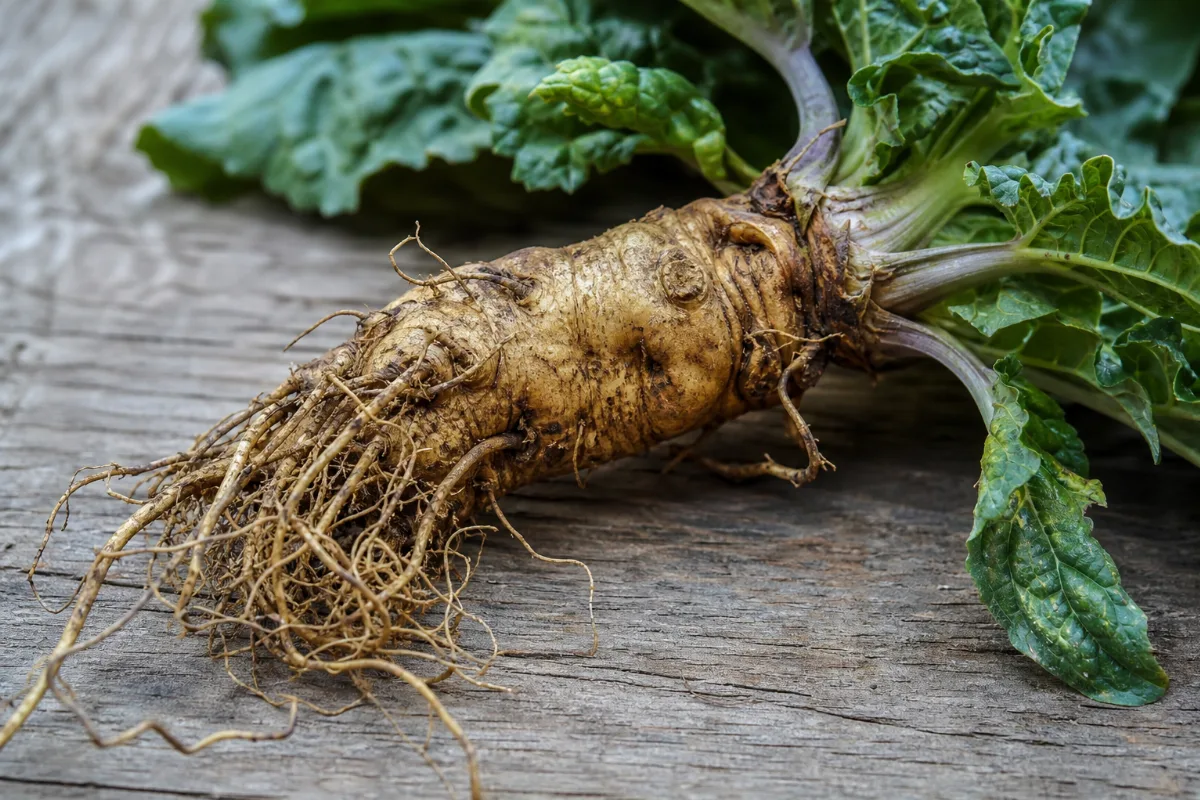
- Roots: A thick, branched root is the part famous in folklore. The 1976 structure study was not read.; Stems: Not checked.; Leaves: Leaves have been eaten in poisoning cases; borage and chard leaves are confused with them.; Flowers: Not checked.; Fruit: Berries have caused poisoning (one case report).; Plant part used: Root in historical medicine; leaves and berries in poisoning reports
- Cultivation
- Not covered on this page.
- Harvest and processing
- Not covered on this page.
- Look-alikes and adulterants
- Name: Borage, chard and spinach leaves; Note: Poisonings followed mix-ups with these edible leaves (case reports and a 2018 identification study).; Name: American mandrake (Podophyllum peltatum, May apple); Note: A different plant with a different poison (podophyllotoxin), sold under the same common name.
- Sustainability and conservation
- Not checked. No IUCN or CITES source on this species was read.
Traditional use and history history, not clinical proof
| Tradition or era | Documented use | Source |
|---|---|---|
| Ancient Near East and Bible lands | Mandrake (Mandragora officinarum) is one of five species the Bible mentions directly as medicinal plants, according to a 2019 review of Biblical plants. | p31775790 |
| Antiquity (Greek, Roman) and 16th century BCE depictions | Used as a sedative and to dull pain during surgery. It is depicted on tablets and friezes from the 16th century BCE. Hannibal used its sedative effect against his enemies in the 2nd century BCE. The Romans used it in surgery. | p22584550 |
| Medieval Islamic world and Europe | Arab scholars made the Spongia Somnifera, a sponge containing mandrake juice. It was used in Europe until ether anaesthesia was discovered. Mandrake use covered the most conditions in the medieval period (37 recorded uses). | p22584550 |
| 14th-century Italian health manuscripts | Mandrake appears among the plants illustrated in Tacuinum Sanitatis manuscripts, which date from the late 14th century. | p19318382 |
| Folklore and names | Names across 41 languages refer to a human-like shape, narcotic effects, aphrodisiac properties, use of a dog, gallows and witchcraft. The authors suggest the pulling ceremonies began in the Near East. Names are folklore, not evidence of what the plant does. | p34863248 |
| Decline in medicine | Today mandrake plays a marginal role in popular medicine. Reliable volatile anaesthetics ended its surgical use, while atropine and scopolamine remain important medicines. | p36395976 |
| The screaming-root legend | The popular story that the root screams when pulled is NOT verified in the abstracts read; only the pulling ceremonies and gallows or dog-related names are described in the 2021 study. | p34863248 |
Traditional use shows how it was used. It does not show that it works or is safe today.
What is inside, and how it may work
What it contains and how those compounds act in cells and animals. Laboratory and animal mechanisms are not proven effects in people.
Main compounds
| Compound | Family | Where it is concentrated | Activity studied | Level of evidence |
|---|---|---|---|---|
| Hyoscyamine PubChem 64692 | tropane alkaloid | Not stated in the sources read Up to 10 times higher in M. officinarum than in M. autumnalis in one plant study; no per-part numbers read. | Blocks muscarinic acetylcholine receptors. 20 23 17 24 | Human data |
| Atropine PubChem 174174 | tropane alkaloid | Not stated Reported as present in a 15-case poisoning series (identified in the plant material). | Same family as hyoscyamine; PubChem lists dl-hyoscyamine as a synonym of atropine. 21 12 | Human data |
| Scopolamine PubChem 638340 | tropane alkaloid | Berries (one case) Absent from M. officinarum samples in a 2019 plant study but found in berries identified as M. officinarum in one case report; the two do not agree. | Blocks muscarinic acetylcholine receptors; causes drowsiness and confusion. 22 23 17 | Human data |
| Anisodamine (6-beta-hydroxyhyoscyamine) | tropane alkaloid | Not stated Missing from M. officinarum and M. turcomanica in the 2019 plant study; present in M. autumnalis. | Made by the enzyme H6H from hyoscyamine. 23 | Lab |
| Withanolides (including mandragorolide A and B), coumarins, sterols | steroid-type and other plant compounds | Whole plant (Jordanian sample) Not stated | Lab research only; safety not assessed. 25 11 14 | Lab |
Mechanisms, receptors and pathways
| Target or pathway | Gene or receptor | What was found | Level |
|---|---|---|---|
| Muscarinic (and possibly nicotinic) acetylcholine receptors | CHRM1 to CHRM5 (muscarinic receptors) | Tropane alkaloids block acetylcholine in the nervous system, which explains dry mouth, wide pupils, fast heartbeat and confusion. Human poisoning series show this clinical pattern. 24 12 | Human data |
| Cholinesterase inhibition as antidote | ACHE | Cholinesterase inhibitors (physostigmine, neostigmine) reverse atropine-like effects; clinicians used them in poisoning cases. 12 18 | Human data |
| Scopolamine biosynthesis (H6H enzyme) | H6H (hyoscyamine 6-beta-hydroxylase) | A mutation in the gene linked to the lack of scopolamine in M. officinarum in one plant study. 23 | Plant lab |
| Lab effects of extracts | Not specific | Antioxidant, immune-modulating and enzyme-inhibiting effects in cells; none shown in people. 14 1 | Laboratory research |
Absorption, metabolism and elimination
- Absorption
- By mouth in poisoning cases. Symptoms began 1 to 4 hours after eating in a 15-case series (mean 2.7 hours).
- Distribution
- Not found in the sources read.
- Metabolism
- Not found in the sources read.
- Elimination
- In treated patients, a definite response took 3 to 36 hours; this depends on antidote treatment, not on a natural clearance time.
- Bioavailability
- Not found.
Isolated compounds versus whole extracts
Purified atropine and scopolamine are standardised medicines on the WHO essential medicines list (per a 2022 review). The wild mandrake plant is not standardised, contains different alkaloid amounts in different species and has caused poisoning. Evidence about the drugs does not apply to the plant.
Nutritional composition
Mandrake is not a food or nutrient. It is poisonous if eaten.
1 very low certainty4 not enough evidence
What was looked at
The 5 benefits and uses checked for Mandrake, each with how strong the evidence is. Tap one to open it.
- Sedation, sleep and surgical pain relief (historical use)Not enough evidence
- Low mood and melancholia (traditional use)Not enough evidence
- Pain, toothache and rheumatic pain (traditional)Not enough evidence
- Aphrodisiac and fertility reputationNot enough evidence
- Laboratory research on extracts (antioxidant, anti-inflammatory, anticancer, enzyme tests)Very low certainty
What is Mandrake good for?
The uses people talk about, and how strong the human evidence is for each. None is proven, and every row must be read with the Safety tab first.
Benefits, one by one
Each card is a research question, not a promise. Tap a goal to filter. Open a card to see the studies, doses and limits.
Sedation, sleep and surgical pain relief (historical use)
Not enough evidenceMandrake was used for centuries to make people sleepy and numb to pain, including before surgery. This comes from old texts. No modern trial tested it, and poisoning cases show it is unsafe.
4 studiesNot given. This page does not describe amounts or preparations becaus…
Studies, doses and limits
What the trials found
No clinical trial of Mandragora for sleep, sedation or anaesthesia was found. The evidence is historical text and modern poisoning case reports.
Results
The historical review found 88 recorded medicinal uses of mandrake in 39 condition groups. The poisoning reports show agitation, delirium and hallucinations more often than calm sleep: in a 15-person poisoning series, 14 had hyperactivity or hallucinations and 9 had agitation or delirium.
Why this rating
Only old texts and poisoning reports. Nothing shows a safe, reliable calming effect.
Form and dose studied
Not given. This page does not describe amounts or preparations because the plant is poisonous.
Limits
Old texts cannot show how well it worked or how many people were harmed. Unreliable and variable alkaloid content made it dangerous.
Why researchers looked
The plant contains atropine-type alkaloids that affect the brain and body, and old physicians wrote about its sleep-inducing effect.
Traditional use
Historical reviews describe mandrake as a sedative and pain relief for surgery from antiquity, shown on tablets and friezes since the 16th century BCE and used by the Romans. Arab scholars made the Spongia Somnifera, a sponge soaked in mandrake juice, which was used in Europe until ether anaesthesia. Hannibal is said to have used its sedative effect against his enemies (Chidiac 2012). Reliable volatile anaesthetics ended its use in surgery (Benitez 2023).
Proposed mechanism Pharmacological theory
Atropine-type tropane alkaloids block the nerve chemical acetylcholine at muscarinic and possibly nicotinic receptors in the brain and body. This can cause drowsiness, confusion and delirium, but also dangerous poisoning.
A proposed mechanism does not show that the effect happens in people.
Mandrake is poisonous. Eating any part can cause anticholinergic poisoning with confusion, hallucinations and a fast heartbeat. See the Safety tab first.
Low mood and melancholia (traditional use)
Not enough evidenceOld medical traditions used mandrake for melancholia and depression. No human study supports this, and the plant can cause confusion, hallucination and psychosis when eaten.
2 studiesNot given. This page does not describe amounts or preparations becaus…
Studies, doses and limits
What the trials found
No human trial for mood was found.
Why this rating
Traditional listing in a narrative review only.
Form and dose studied
Not given. This page does not describe amounts or preparations because the plant is poisonous.
Limits
Narrative review; the lab statement was not checked against original studies.
Why researchers looked
Traditional medicine lists mind-related uses, so a review of the genus covers them.
Traditional use
A 2021 review of the genus lists insomnia, melancholia and depression among traditional uses, including in Persian medicine (Monadi 2021).
Proposed mechanism Laboratory research
The review says some isolated compounds show antidepressant-type effects in lab research; the specific compound and test are not given in the abstract.
A proposed mechanism does not show that the effect happens in people.
Mandrake is poisonous. Eating any part can cause anticholinergic poisoning with confusion, hallucinations and a fast heartbeat. See the Safety tab first.
Pain, toothache and rheumatic pain (traditional)
Not enough evidenceMandrake was used on and in the body for pain in many old traditions. No trial shows it is safe or helpful for pain. Skin use has caused an allergic rash.
3 studiesNot given. This page does not describe amounts or preparations becaus…
Studies, doses and limits
What the trials found
No human trial of Mandragora for pain was found. One case report in a man of 82 recorded allergic contact dermatitis after the sap was put on the skin.
Why this rating
Traditional use and one adverse skin case only.
Form and dose studied
Not given. This page does not describe amounts or preparations because the plant is poisonous.
Limits
The case report shows harm (allergy), not benefit.
Why researchers looked
Old texts list pain uses and the alkaloids block certain nerve signals.
Traditional use
Reviews list toothache and rheumatic pain among traditional uses of Mandragora (Monadi 2021). A case report describes a man whose rash followed 3 days of mandrake root sap on his knees (Baysak 2015).
Proposed mechanism Pharmacological theory
Atropine-type alkaloids block acetylcholine; whether this could ease pain at safe levels was not shown in the sources read.
A proposed mechanism does not show that the effect happens in people.
Mandrake is poisonous. Eating any part can cause anticholinergic poisoning with confusion, hallucinations and a fast heartbeat. See the Safety tab first.
Aphrodisiac and fertility reputation
Not enough evidenceMandrake is famous in folklore as a love plant. The only human data found are a case of poisoning in a man who ate berries to improve sexual performance.
2 studiesNot given. This page does not describe amounts or preparations becaus…
Studies, doses and limits
What the trials found
No trial. A 35-year-old man who ate M. officinarum berries as an aphrodisiac developed anticholinergic syndrome and spent 4 days in hospital.
Results
Harm, not benefit, was documented.
Why this rating
Folklore and one poisoning case.
Form and dose studied
Not given. This page does not describe amounts or preparations because the plant is poisonous.
Limits
Names and legends are not evidence of effect.
Why researchers looked
The reputation is old, and 17 plant names in 10 languages refer to aphrodisiac properties.
Traditional use
A study of 292 vernacular names in 41 languages found names linked to aphrodisiac properties (Dafni 2021). The authors link much of the lore to the doctrine of signatures, in which a plant's shape suggests its use.
Proposed mechanism None
No mechanism for an aphrodisiac effect was shown in the sources read.
A proposed mechanism does not show that the effect happens in people.
Mandrake is poisonous. Eating any part can cause anticholinergic poisoning with confusion, hallucinations and a fast heartbeat. See the Safety tab first.
Laboratory research on extracts (antioxidant, anti-inflammatory, anticancer, enzyme tests)
Very low certaintyCell and test-tube studies of Mandragora extracts report antioxidant, immune-modulating and enzyme-blocking effects. These do not show any benefit in people.
3 studiesNot given. This page does not describe amounts or preparations becaus…
Studies, doses and limits
What the trials found
No human trial.
Why this rating
Cell and lab tests only; a plant that causes poisoning in people is not a candidate for use on this basis.
Form and dose studied
Not given. This page does not describe amounts or preparations because the plant is poisonous.
Limits
Narrative reviews; original experiments not read.
Why researchers looked
Researchers screen plant extracts for activity and isolate compounds such as withanolides.
Traditional use
Reviews of the genus describe this lab work (Monadi 2021; Albahri 2025). Most work used Mandragora autumnalis.
Proposed mechanism Laboratory research
In vitro studies found antioxidant, immune-modulating and enzyme-inhibiting effects of crude extracts; the review also notes more in vivo work is needed.
A proposed mechanism does not show that the effect happens in people.
Mandrake is poisonous. Eating any part can cause anticholinergic poisoning with confusion, hallucinations and a fast heartbeat. See the Safety tab first.
Connections to the rest of health
How Mandrake connects to the rest of our health knowledge graph. Every link says what kind of connection it is. A safety link (for example to the liver) is a warning, not a benefit. A study that merely mentions a topic never creates a benefit link.
Explore every connection: goals, body systems, organs, symptoms, genes
B. Body systems
| Connected to | Kind of connection | Evidence status | Context | Studies |
|---|---|---|---|---|
| Nervous system | Adverse effect or risk | Low certainty | Delirium, hallucination, agitation and psychosis in poisoning reports. Preparation or compound: Hyoscyamine and scopolamine (Mandragora) |
12 18 |
| Cardiovascular system | Adverse effect or risk | Low certainty | Fast heartbeat in all 15 in one series; severe supraventricular tachycardia in two people. Preparation or compound: Hyoscyamine and scopolamine |
12 26 |
| Skin | Adverse effect or risk | Low certainty | One case of allergic contact dermatitis. Preparation or compound: Root sap |
2 |
| Nervous System | Biological association | Not enough evidence | Studied for: Sedation, sleep and surgical pain relief (historical use) Studied for: Low mood and melancholia (traditional use) | 4 3 12 24 14 2 |
| Musculoskeletal System | Biological association | Not enough evidence | Studied for: Pain, toothache and rheumatic pain (traditional) | 14 2 4 |
| Reproductive System | Biological association | Not enough evidence | Studied for: Aphrodisiac and fertility reputation | 7 17 |
| Immune System | Biological association | Very low certainty | Studied for: Laboratory research on extracts (antioxidant, anti-inflammatory, anticancer, enzyme tests) | 14 1 25 |
C. Body parts and organs
E. Health conditions
| Connected to | Kind of connection | Evidence status | Context | Studies |
|---|---|---|---|---|
| Anticholinergic toxicity | Adverse effect or risk | Low certainty | Documented case series and reports. Preparation or compound: Mandragora plant |
12 19 |
J. Genes, receptors and enzymes
| Connected to | Kind of connection | Evidence status | Context | Studies |
|---|---|---|---|---|
| Muscarinic acetylcholine receptors | Preliminary mechanism | Human | Blocked by hyoscyamine, atropine and scopolamine. | 24 12 |
| H6H (hyoscyamine 6-beta-hydroxylase) | Preliminary mechanism | Plant lab | Makes scopolamine from hyoscyamine; inactive in M. officinarum in one study. | 23 |
L. Active compounds
| Connected to | Kind of connection | Evidence status | Context | Studies |
|---|---|---|---|---|
| Hyoscyamine | Adverse effect or risk | Low certainty | Found in urine and in the berries in one case. Preparation or compound: Main tropane alkaloid in M. officinarum |
17 23 |
| Hyoscyamine | Biological association | Human | Blocks muscarinic acetylcholine receptors. | 20 23 17 24 |
| Atropine | Biological association | Human | Same family as hyoscyamine; PubChem lists dl-hyoscyamine as a synonym of atropine. | 21 12 |
| Scopolamine | Biological association | Human | Blocks muscarinic acetylcholine receptors; causes drowsiness and confusion. Preparation or compound: Berries (one case) |
22 23 17 |
| Anisodamine (6-beta-hydroxyhyoscyamine) | Biological association | Lab | Made by the enzyme H6H from hyoscyamine. | 23 |
| Withanolides (including mandragorolide A and B), coumarins, sterols | Biological association | Lab | Lab research only; safety not assessed. Preparation or compound: Whole plant (Jordanian sample) |
25 11 14 |
Each connection is stored with the ingredient, the connected record, the kind of connection, the evidence status, the supporting studies, the preparation or compound involved, and a review date (last reviewed October 25, 2026).
Evidence at a glance: what the research found for 5 outcomes
Each outcome below is one thing researchers measured. Certainty is how far the evidence can be trusted, not how well it works. The full studies are on the next tab.
The evidence
The research centre for Mandrake. Every record here was checked against PubMed or the publisher's page; we never list a study we have not verified.
Evidence by outcome
Bars show how many studies we found for each outcome, not how well it works. People are added up across trials only (reviews are not added, to avoid double counting).
How we rate evidence
High certainty
Several well-run trials or reviews agree; further research is unlikely to change the picture much.
Moderate certainty
Good trials point the same way, but some doubt remains.
Low certainty
Small, short or inconsistent trials. The finding could change with better research.
Very low certainty
Very little or very weak human data. Treat as a possibility only.
Mixed findings
Trials or reviews disagree with each other.
Not enough evidence
Not enough human research to say either way.
Evidence against
Good research found no benefit, or found harm.
We take the reviewers' own risk-of-bias and GRADE statements where they exist, and otherwise judge from study size, design, consistency, directness and whether a product matches what is sold. Many publications do not make evidence high. Method note: We searched PubMed, read the abstracts of about 20 papers (case reports, a case series and reviews), and checked GBIF, PubChem, MedlinePlus, poison.org and the NHS. Full texts were not read. Plants of the World Online could not be opened.
Study library: every study we checked 26
| Study | Design | People | Product, dose, length | Result |
|---|---|---|---|---|
| Albahri 2025 Mandragora autumnalis Distribution, Phytochemical Characteristics, and Pharmacological Bioactivities. Pharmaceuticals (Basel) · PMID 40143106 · DOI |
Narrative review review |
Literature on Mandragora autumnalis | M. autumnalis extracts and compounds various |
Reports coumarins, withanolides and alkaloids, and lab effects such as anti-inflammatory activity in macrophages, free-radical inhibition, bacterial and fungal growth inhibition, cytotoxic effects on cancer cell lines and enzyme inhibition (cholinesterase, tyrosinase, alpha-amylase, alpha-glucosidase). Methods, limits and fundingOutcomes: Phytochemistry and lab pharmacology Limitations: Narrative review. Lab and animal findings only; no human trials. Funding and conflicts: Not stated in the abstract. Read: abstract |
| Baysak 2015 A Case Report of Allergic Contact Dermatitis due to Mandragora Radix. Case Reports Immunol · PMID 26347280 · DOI |
Case report |
1 Man aged 82 in Turkey |
Mandragora radix sap applied to the skin root sap |
A rash with burning and itching began 4 days after sap was applied to the knees for 3 days. An open application test confirmed allergic contact dermatitis. Methods, limits and fundingOutcomes: Skin reaction Limitations: One case; the authors say only one earlier case had been reported. Funding and conflicts: Not stated in the abstract. Read: abstract |
| Benítez 2023 The rise and fall of mandrake in medicine. J Ethnopharmacol · PMID 36395976 · DOI |
Historical review review |
Historical medical writings from antiquity to modern times | Mandrake (Mandragora) drugs roots and other parts |
Found 88 medicinal uses grouped into 39 conditions; the most uses were recorded in the medieval period (37). Today mandrake has a marginal role in popular medicine, while atropine, scopolamine and semisynthetic derivatives remain important. Reliable volatile anaesthetics ended the use of mandrake in surgery. Methods, limits and fundingOutcomes: How medicinal use changed over time Limitations: A review of texts, not of clinical trials; historical use is not evidence that it works or is safe. Funding and conflicts: Not stated in the abstract. Read: abstract |
| Chidiac 2012 Special article: mandragora: anesthetic of the ancients. Anesth Analg · PMID 22584550 · DOI |
Historical review review |
History of anaesthesia | Mandragora (mandrake) |
Mandrake was used as a sedative and for pain relief in surgery in antiquity; it is shown on tablets and friezes since the 16th century BCE. Arab scholars made the Spongia Somnifera containing mandrake juice, which was used in Europe until ether anaesthesia. Methods, limits and fundingOutcomes: Historical uses as sedative and pain relief Limitations: A history article: it does not measure effectiveness or safety. Funding and conflicts: Not stated in the abstract. Read: abstract |
| Cornara 2018 The problem of misidentification between edible and poisonous wild plants: Reports from the Mediterranean area. Food Chem Toxicol · PMID 29753868 · DOI |
Lab analysis plant |
Young leaves of borage, mandrake (M. autumnalis), foxglove and spinach | Mandragora autumnalis leaves vs edible leaves young leaves |
Reports that cases of accidental mandrake and foxglove poisoning followed confusion with borage and spinach leaves over twenty years. Microscopy, DNA and chemical methods could each help identify the poisonous species in medical settings. Methods, limits and fundingOutcomes: Whether look-alike leaves can be told apart Limitations: A laboratory identification study, not a clinical study. Methods are for laboratories, not for readers. Funding and conflicts: Not stated in the abstract. Read: abstract |
| Dafni 2019 Medicinal plants of the Bible-revisited. J Ethnobiol Ethnomed · PMID 31775790 · DOI |
Historical review review |
Plants named in the Bible, reviewed with philology and archaeobotany | Mandrake (Mandragora officinarum) |
The authors list Mandragora officinarum as one of only five species mentioned directly as medicinal plants in the Bible. Methods, limits and fundingOutcomes: Which Biblical plants were medicinal Limitations: A historical and philological review. Funding and conflicts: Not stated in the abstract. Read: abstract |
| Dafni 2021 In search of traces of the mandrake myth: the historical, and ethnobotanical roots of its vernacular names. J Ethnobiol Ethnomed · PMID 34863248 · DOI |
Ethnobotany review |
292 vernacular names of Mandragora in 41 languages | Mandragora species roots mainly |
Names fall into groups such as human-like shape (33 names in 13 languages), narcotic effects (21 in 8), aphrodisiac properties (17 in 10), use of a dog (15 in 9), gallows (14 in 5) and witchcraft (13 in 8). The authors suggest the pulling ceremonies for the plant began in the Near East. Methods, limits and fundingOutcomes: Origins and meanings of the names Limitations: Language and folklore study, not clinical research. Funding and conflicts: Not stated in the abstract. Read: abstract |
| De Salvo 1980 [A rare case of acute mandragora poisoning. Diagnostic and therapeutic criteria]. Minerva Anestesiol · PMID 7219737 |
Case report |
1 One patient (Italian journal) |
Mandragora (species not stated in the abstract) |
Serious symptoms, with signs of disturbed liver and kidney function. It was treated with cholinesterase inhibitors, which reverse atropine-like effects. Methods, limits and fundingOutcomes: Poisoning course Limitations: Old, one case, only an English abstract of an Italian paper; liver and kidney signs are not described in detail. Funding and conflicts: Not stated in the abstract. Read: abstract |
| Frasca 1997 Mandrake toxicity. A case of mistaken identity. Arch Intern Med · PMID 9308513 · DOI |
Case report |
1 Man aged 31 in the United States |
Mandrake plant bought at a health food store; identified as Podophyllum peltatum (American mandrake), not Mandragora |
Severe nausea and vomiting; overnight hospital stay and full recovery. Podophyllotoxin was found, so the plant was almost certainly Podophyllum peltatum, but the man believed he had taken the anticholinergic Mandragora officinarum. Methods, limits and fundingOutcomes: Symptoms and plant identification Limitations: One case. It shows the name mix-up, not Mandragora poisoning. Funding and conflicts: Not stated in the abstract. Read: abstract |
| GBIF 2026 GBIF Backbone Taxonomy: Mandragora officinarum L. (key 5341748), retrieved 2026-10-25 n/a · Source |
Taxonomy database n/a |
n/a | n/a |
Mandragora officinarum L. is ACCEPTED in the Solanaceae (order Solanales). Synonyms include Atropa mandragora L., Mandragora autumnalis Bertol., Mandragora microcarpa Bertol. and Mandragora officinalis L. Methods, limits and fundingOutcomes: Accepted name, family and synonyms Limitations: Taxonomy database; authors who work on the plants sometimes treat M. autumnalis as a separate species. Plants of the World Online could not be opened (blocked), so it was not checked. Read: api |
| Hanus 2005 Substances isolated from Mandragora species. Phytochemistry · PMID 16137728 · DOI |
Review review |
Chemistry of the genus Mandragora | Mandragora plants, all parts all parts |
Reviews the chemistry of the plant. More than 80 substances have been identified in different Mandragora species. Methods, limits and fundingOutcomes: Compounds isolated from the genus Limitations: Abstract is short; per-compound details not read. Funding and conflicts: Not stated in the abstract. Read: abstract |
| Jiménez-Mejías 1990 [Atropine poisoning by Mandragora autumnalis. A report of 15 cases]. Med Clin (Barc) · PMID 2087109 |
Case series |
15 Fifteen people in two family groups in Spain |
Mandragora autumnalis (named in the paper), found mixed with chard and spinach leaves leaves (mixed in a vegetable meal) |
Symptoms began 1 to 4 hours after eating (mean 2.7 hours). All had blurred vision, dry mouth, flushing, fixed wide pupils and fast heart rate; 14 of 15 had hyperactivity or hallucinations and 9 had agitation or delirium; one had a florid psychotic episode. Eleven were given neostigmine-type treatment and six physostigmine; recovery took 3 to 36 hours, and physostigmine reversed the brain symptoms better. Methods, limits and fundingOutcomes: Onset time, symptoms, treatment response Limitations: Abstract only (Spanish journal, English abstract). Small, two families; the antidote comparison was not randomised. Funding and conflicts: Not stated in the abstract. Read: abstract |
| MedlinePlus 2026 MedlinePlus (NIH): Poisoning n/a · Source |
Authoritative guidance n/a |
n/a | n/a |
If you suspect someone has been poisoned, call your local poison control center at 1-800-222-1222 right away. Methods, limits and fundingOutcomes: Advice on suspected poisoning Limitations: General page on poisoning, not about Mandragora. US number only. Read: full-text |
| Monadi 2021 A Comprehensive Review on the Ethnopharmacology, Phytochemistry, Pharmacology, and Toxicology of the Mandragora Genus; from Folk Medicine to Modern Medicine. Curr Pharm Des · PMID 33535944 · DOI |
Narrative review review |
Literature on the genus Mandragora | Mandragora species, crude extracts and isolated compounds roots, leaves, fruits |
Traditional uses listed include insomnia, dysuria, hemorrhoids, rheumatic pain, toothache, melancholia and depression. In vitro studies found antioxidant, immune-modulating and enzyme-inhibiting effects. Compounds isolated include atropine, scopolamine, coumarins and withanolides. The authors say more in vivo studies are needed. Methods, limits and fundingOutcomes: Traditional uses, chemistry, lab pharmacology and toxicity Limitations: A narrative review: not a systematic search with risk-of-bias scoring. Lab results do not show benefit in people. Funding and conflicts: Not stated in the abstract. Read: abstract |
| NHS (UK) 2026 NHS: When to call 999 n/a · Source |
Authoritative guidance n/a |
n/a | n/a |
999 is for life-threatening emergencies; NHS 111 can advise when unsure. Methods, limits and fundingOutcomes: Emergency number in the UK Limitations: UK only; not specific to poisoning. Read: full-text |
| National Capital Poison Center (US) 2026 National Capital Poison Center (poison.org): Poison Control help n/a · Source |
Authoritative guidance n/a |
n/a | n/a |
Says to use the online tool or call a poison center at 1-800-222-1222; both are free, expert and confidential. Methods, limits and fundingOutcomes: How to get poison help Limitations: US service; read from the home page. Read: full-text |
| Nikolaou 2012 Accidental poisoning after ingestion of "aphrodisiac" berries: diagnosis by analytical toxicology. J Emerg Med · PMID 21571482 · DOI |
Case report |
1 Man aged 35 in Greece |
Mandragora officinarum berries (named in the paper), eaten as an "aphrodisiac" berries |
Anticholinergic syndrome. Hyoscyamine and scopolamine were found in his urine and in the berries. He recovered completely after 4 days in hospital. Methods, limits and fundingOutcomes: Symptoms, urine and berry analysis, course Limitations: One case. The berries were identified as M. officinarum in the paper; our own check of the plant identity was not possible. Funding and conflicts: Not stated in the abstract. Read: abstract |
| Piccillo 2002 Six clinical cases of Mandragora autumnalis poisoning: diagnosis and treatment. Eur J Emerg Med · PMID 12501035 · DOI |
Case series |
6 Six people poisoned in Sicily |
Mandragora autumnalis (named in the paper) |
Typical atropine-like (anticholinergic) symptoms, sometimes severe. Vital-function support, decontamination, symptom treatment and, in severe cases, the antidote physostigmine helped control the poisoning. Methods, limits and fundingOutcomes: Symptoms and treatment of poisoning Limitations: Abstract only; no numbers given beyond six cases. Species named M. autumnalis. Funding and conflicts: Not stated in the abstract. Read: abstract |
| Piccillo 2006 Anticholinergic syndrome due to 'Devil's herb': when risks come from the ancient time. Int J Clin Pract · PMID 16620365 · DOI |
Case report |
1 Woman aged 72 in Sicily |
Mandragora autumnalis (named in the paper), eaten by mistake instead of borage leaves picked near her home (vegetable meal) |
Anticholinergic syndrome. Diagnosis rested on symptoms, history of a vegetable meal of uncontrolled origin and analysis of the plant from gastric lavage. Decontamination and symptom treatment controlled the poisoning. Methods, limits and fundingOutcomes: Symptoms and treatment Limitations: One case. Funding and conflicts: Not stated in the abstract. Read: abstract |
| PubChem (NIH) 2026 PubChem: Hyoscyamine (CID 64692) n/a · Source |
Chemical database n/a |
n/a | n/a |
Formula C17H23NO3; L-hyoscyamine. Methods, limits and fundingOutcomes: Chemical identity Limitations: Database record only. Read: api |
| PubChem (NIH) 2026 PubChem: Atropine (CID 174174) n/a · Source |
Chemical database n/a |
n/a | n/a |
Formula C17H23NO3; the record lists dl-hyoscyamine as a synonym of atropine. Methods, limits and fundingOutcomes: Chemical identity Limitations: Database record only. Read: api |
| PubChem (NIH) 2026 PubChem: Scopolamine (CID 638340) n/a · Source |
Chemical database n/a |
n/a | n/a |
Formula C17H21NO4. Methods, limits and fundingOutcomes: Chemical identity Limitations: Database record only. Read: api |
| Schlesinger 2019 Alkaloid chemodiversity in Mandragora spp. is associated with loss-of-functionality of MoH6H, a hyoscyamine 6β-hydroxylase gene. Plant Sci · PMID 31128700 · DOI |
Plant biochemistry plant |
Mandragora species samples (M. officinarum, M. turcomanica, M. autumnalis) | Plant tissue alkaloid analysis and gene study plant tissue |
M. officinarum and M. turcomanica lacked anisodamine and scopolamine but had up to 10 times higher hyoscyamine than M. autumnalis. A single mutation in the gene for the enzyme H6H is linked with the missing scopolamine in M. officinarum. Methods, limits and fundingOutcomes: Tropane alkaloid content and the gene that makes scopolamine Limitations: Plant laboratory study. It treats M. officinarum and M. autumnalis as different species, which differs from GBIF (where M. autumnalis is a synonym). Funding and conflicts: Not stated in the abstract. Read: abstract |
| Shim 2022 Beauty of the beast: anticholinergic tropane alkaloids in therapeutics. Nat Prod Bioprospect · PMID 36109439 · DOI |
Narrative review review |
Tropane alkaloids from Solanaceae plants including Mandragora officinarum | Tropane alkaloids (atropine, hyoscyamine, scopolamine) as purified medicines |
Poisonous Solanaceae plants, among them Mandragora officinarum, are rich sources of tropane alkaloids. These block acetylcholine at muscarinic and/or nicotinic receptors. Purified forms are used as antiemetics, anaesthetic aids, antispasmodics, bronchodilators and pupil dilators, and are on the WHO essential medicines list with some FDA approvals. Methods, limits and fundingOutcomes: Mechanism and clinical use of tropane alkaloids Limitations: A review about purified drugs, not about eating the plant. Funding and conflicts: Not stated in the abstract. Read: abstract |
| Suleiman 2010 New withanolides from Mandragora officinarum: first report of withanolides from the Genus Mandragora. Fitoterapia · PMID 20580923 · DOI |
Plant biochemistry plant |
Whole plant of Mandragora officinarum from Jordan | Methanol extract of the whole plant whole plant |
Two new withanolides (mandragorolide A and B) and five known withanolides were isolated; fatty compounds, coumarins, sterols and tropane alkaloids were also found. Methods, limits and fundingOutcomes: Compounds isolated Limitations: Chemistry only; no activity or safety data in the abstract. Funding and conflicts: Not stated in the abstract. Read: abstract |
| Tsiligianni 2009 A two cases clinical report of mandragora poisoning in primary care in Crete, Greece: two case report. Cases J · PMID 20062591 · DOI |
Case report |
2 Woman aged 47 and man aged 48 from one Greek family |
Mandragora officinarum (named in the paper), eaten in a vegetable meal |
Nausea, dizziness, blurred vision, headache and dry mouth. Serious, persistent supraventricular tachycardia (fast, abnormal heart rhythm) kept both in intensive care for about a week. Methods, limits and fundingOutcomes: Symptoms and hospital course Limitations: Two cases from one family; plant identification method not given in the abstract. Funding and conflicts: Not stated in the abstract. Read: abstract |
What we do not know yet
- No clinical trial of any Mandragora species for any use.
- No data on pregnancy, breastfeeding or children.
- Alkaloid content per plant part and species is not settled (scopolamine reports disagree).
- No regulator source on the plant's legal status was found.
How new research is added
New studies are found by a saved PubMed search and are placed in a review queue. A person reads each one before it changes any evidence rating or safety wording.
Lab markers
What changed in blood or saliva tests during trials. A changed number is not the same as feeling or being healthier, and we give no "normal ranges".
Safety
What studies and official sources say about side effects, medicines and who should check first. Each point shows what kind of evidence it comes from.
Main points to know 10
- Danger first: mandrake poisons the brain, eyes, skin and heart. Mandrake (Mandragora) contains tropane alkaloids such as hyoscyamine (atropine) and scopolamine. Eating the plant has caused anticholinergic poisoning in published case reports from Italy, Spain and Greece: dry mouth, fixed wide pupils and blurred vision, flushing, a very fast heartbeat, confusion, hallucinations and delirium. It is a deliriant, not a safe or classic psychedelic. This page gives no use advice. Case series 12 18 26 17 24
- Poisoning can look like a vegetable-meal mix-up. In reports from Sicily, Spain and Greece, people ate mandrake leaves thinking they were borage, chard or spinach, or wild greens. Fifteen people in two families were poisoned in one Spanish series. A 2018 study of look-alike leaves notes that cases followed confusion with borage and spinach over twenty years. Case series 12 19 5 26
- Heart rhythm and hospital stay can be serious. Two family members in Greece had persistent supraventricular tachycardia (a fast, abnormal heart rhythm) and spent about a week in intensive care. In the Spanish series all 15 had a fast heartbeat. Case report 26 12
- Mind effects are part of the poisoning, not a safe effect. In 15 poisoned people, 14 had hyperactivity or hallucinations, 9 had agitation or delirium and one had a florid psychotic episode. Recovery took 3 to 36 hours in people who were treated in hospital. Case series 12
- Antidote treatment exists but is for medical teams. Hospitals in the reports used decontamination, symptom treatment and, in severe cases, the antidote physostigmine. In 15 cases those given physostigmine had better reversal of the brain symptoms. This is what clinicians reported, not advice for home. Case series 12 18 19
- The poison content varies between plants and species. Mandragora species differ: one 2019 plant study found that M. officinarum and M. turcomanica lacked scopolamine but had up to 10 times more hyoscyamine than M. autumnalis. One case report found scopolamine in berries identified as M. officinarum, so the picture is not settled. A person cannot judge how strong a plant is by looking at it. Narrative review 23 17
- If someone may have eaten it: get poison help now. Call a poison centre or emergency number straight away. In the US, poison control is 1-800-222-1222 (MedlinePlus and poison.org). In the UK, 999 is for life-threatening emergencies and NHS 111 can advise. Do not wait for symptoms to pass. Authoritative guidance 13 16 15
- Do not confuse it with American mandrake (May apple). A man in the United States bought a plant sold as mandrake from a health food store believing it was the hallucinogenic Mandragora. It was almost certainly Podophyllum peltatum (American mandrake), which has a different poison (podophyllotoxin) and caused severe nausea and vomiting. Case report 9
- Touching the sap can cause an allergic rash. One man aged 82 developed allergic contact dermatitis after mandrake root sap was applied to his knees for 3 days. Case report 2
- No safe or approved use of the plant was found. No regulator source read approves mandrake as a medicine. The purified compounds atropine and scopolamine are standardised medicines on the WHO essential medicines list (per a 2022 review). The wild plant is not standardised, so purified drugs and the plant are not the same thing. Review 24
Side effects 10
| Effect | How often | Severity and recovery | Evidence |
|---|---|---|---|
| Blurred vision, wide fixed pupils Pupils did not react to light (areactive mydriasis). | All 15 patients in one Spanish series | moderate Reversible with treatment in the reports | Case series 12 |
| Dry mouth and dry skin, flushing Typical of atropine-like poisoning. | Dry mouth in all 15; dry skin and mucous membranes in 14 of 15; flushing in all | mild Reversible | Case series 12 |
| Fast heartbeat | All 15 in the Spanish series; severe supraventricular tachycardia in two Greek patients | severe Needed intensive care in the Greek cases | Case series 12 26 |
| Hallucinations, hyperactivity, agitation, delirium, psychosis A deliriant effect: people can be confused and not know what is real. | Hyperactivity or hallucination in 14 of 15; agitation or delirium in 9; one florid psychosis | severe Resolved in 3 to 36 hours with hospital treatment in the series | Case series 12 18 |
| Difficulty passing urine | 9 of 15 | moderate Reversible in the series | Case series 12 |
| Dizziness and headache | 9 of 15 each | mild Reversible | Case series 12 26 |
| Nausea and vomiting Also seen with American mandrake (a different plant). | 8 of 15 vomited; nausea in Greek cases | moderate Reversible | Case series 12 26 |
| Difficulty swallowing, abdominal pain | 2 of 15 each | moderate Reversible | Case series 12 |
| Allergic contact dermatitis (skin rash) After root sap was applied to the skin. | One reported case | moderate Not stated in the abstract | Case report 2 |
| Liver and kidney disturbance Only an English abstract of an Italian paper was read; do not treat as established. | One 1980 case report mentions it | unknown Not stated in the abstract | Case report 8 |
Liver
One old Italian case report (1980) mentions disturbed liver and kidney function in a person with acute Mandragora poisoning. The abstract gives no detail, and the other case series read did not describe liver injury. No LiverTox record for Mandragora was found. 8
How often. No rate can be given.
Monitoring. No monitoring advice was read.
- p7219737.
This is a safety connection. It is not evidence that Mandrake supports liver health.
Medicines and supplements 4
| With | Why it matters | Importance | Evidence | What to do |
|---|---|---|---|---|
| Other anticholinergic medicines (some antihistamines, tricyclic antidepressants, antipsychotics, bladder and gut antispasmodics, atropine or scopolamine drugs) prescription | Same type of action at muscarinic receptors, so effects could add up. | Predicted from how the alkaloids work. No interaction study with Mandragora was read. | Pharmacological theory Not enough evidence 24 | Tell a doctor or pharmacist about any exposure to a plant like this; do not combine. |
| Cholinesterase-inhibiting medicines (such as those for dementia) and the antidote physostigmine prescription | These raise acetylcholine and work against atropine-like poisoning; doctors used physostigmine or neostigmine to treat poisoning cases. | Only hospital teams should decide on antidotes. The reports describe their use, not a recommendation for the public. | Case series Low certainty 12 18 | Treatment belongs to emergency staff. |
| Alcohol, sedatives, sleeping medicines, other deliriants (datura, henbane, brugmansia) substance | Adds to confusion, sedation and heart-rate effects; other nightshade deliriants have the same type of alkaloids. | Predicted, not measured, for Mandragora. | Pharmacological theory Not enough evidence 24 | Not studied; avoid any combination. |
| Heart-rhythm medicines and drugs that speed the heart prescription | Atropine-like poisoning speeds the heart; severe tachycardia was reported. | No specific study found. | Case report Not enough evidence 26 | Medical supervision only. |
Who should check first 8
| Situation | Advice | Evidence |
|---|---|---|
| Anyone, especially children and older adults, who might eat a wild plant that looks like a vegetable | Plants of this type have been eaten by mistake. If a plant is not certainly identified as safe, it is not food. Stop and ask a poison centre or doctor if you are unsure. | Case series 12 19 5 |
| People with heart-rhythm problems | Fast, abnormal rhythms were the main reason for intensive care in one report. Avoid: no safe level is known. | Case report 26 |
| People with urinary retention or eye-pressure (glaucoma) problems | Difficult urination affected 9 of 15 poisoned people, and pupils are widened. No Mandragora-specific study; atropine-type effects are the concern. Avoid. | Case series 12 24 |
| Pregnancy | No human data on Mandragora were found. Do not use. | Insufficient |
| Breastfeeding | No data were read. Avoid unless a clinician advises otherwise. | Insufficient |
| Children | No paediatric study of Mandragora was found. The plant is poisonous at any age; keep it away from children. | Insufficient |
| Driving or machinery | Blurred vision, dizziness and confusion were common in poisoned people. Do not drive or operate machinery if affected. | Case series 12 |
| Skin contact | Allergic contact dermatitis was reported after sap was applied to skin. Avoid contact if you know you are allergic to nightshade plants. | Case report 2 |
Overdose, product quality and regulators
Summary. Mandragora contains hyoscyamine (atropine), and in some species scopolamine. These block muscarinic receptors and cause an anticholinergic syndrome. Reports describe poisoning from leaves, from berries and from root. The amount in a plant varies, so no safe amount can be given.
Animal. Not reviewed; lab and animal work was not read in detail.
High dose or long term signals. No long-term data were found. Severe single episodes were reported (fast heart rhythm, psychosis).
Overdose response. Symptoms started 1 to 4 hours after eating in one series (mean 2.7 hours); severity did not track how long after eating symptoms began. Hospital care and antidotes were used.
Genotoxicity. Not read.
Toxic or hazardous parts. Poisonings involved leaves (eaten in vegetable meals), berries and root. Which part is most dangerous was not compared in the sources read.
The risk here is mix-up rather than manufacturing: look-alike leaves and a different plant that shares the name. No product-testing study of mandrake products was found.
Mistaken for food plants. Cases followed confusion of mandrake leaves with borage, chard or spinach. 12 19 5
Two plants called mandrake. American mandrake (Podophyllum peltatum, May apple) is a different plant with a different poison. The two have been confused by users and in medical writing. 9
Different species, different alkaloid mixes. The scopolamine content differs by species, so the effect of a given plant is not predictable. 23 17
| Body | Action | Date |
|---|---|---|
| WHO essential medicines list (purified atropine and scopolamine, not the plant) (WHO) | A 2022 review states that purified tropane alkaloids are on the WHO essential medicines list and some have FDA approval. This does not cover mandrake itself. source | 2026-10-25 |
| Poison control (US) (US) | Advice for suspected poisoning: call a local poison control center at 1-800-222-1222. source | 2026-10-25 |
When to get medical help
- Anyone who may have eaten any part of mandrake, or a wild plant that looks like a vegetable: call a poison center now (US: 1-800-222-1222) or your local emergency number.
- In the UK call 999 for a life-threatening emergency or NHS 111 for advice. In other countries use your local emergency number or poison centre.
- Wide pupils, blurred vision, very dry mouth, hot flushed skin, very fast heartbeat.
- Confusion, hallucinations, agitation, unusual behaviour or unsteady walking.
- Trouble passing urine, severe belly pain, chest pain or fainting.
- Symptoms can last many hours; do not wait to see if they pass.
If someone may be poisoned or in a crisis, contact a clinician or emergency service straight away. In the US, Poison Control is 1-800-222-1222.
General information only, not medical advice. Ask a clinician or pharmacist before use, especially with medicines, in pregnancy or with a health condition. See the Natural Remedy Safety guide.
Frequently asked questions
What is mandrake?
Is mandrake a psychedelic?
What happens in mandrake poisoning?
Can mandrake be mistaken for food?
Is the scream of the root real?
The legend that the root screams when pulled is not supported by the sources we read. A study of folklore names notes names about a human-like shape, dogs and gallows, and suggests the pulling ceremonies began in the Near East. These are stories, not evidence.
Did ancient doctors use mandrake as anaesthesia?
Is mandrake an aphrodisiac?
Is American mandrake the same plant?
No. American mandrake or May apple (Podophyllum peltatum) is a different plant with a different poison. A man who bought it believing it was Mandragora had severe nausea and vomiting.
Does research show any medical benefit?
How is it related to atropine and scopolamine medicines?
Is mandrake legal?
We did not find a regulator page that lists Mandragora officinarum as a scheduled substance, and we could not verify its legal status. Laws differ by country and change. This is not legal advice.
Explore by health goal
Editorial transparency
- Written by
- AlternativeMed editorial team. Research compiled with AI assistance, then checked against PubMed records.
- Medical review
- None. This page has not been reviewed by a physician or pharmacist.
- First published
- 2026-10-25
- Last substantive update
- 2026-10-25
- How we research
- We searched PubMed, read the abstracts of about 20 papers (case reports, a case series and reviews), and checked GBIF, PubChem, MedlinePlus, poison.org and the NHS. Full texts were not read. Plants of the World Online could not be opened.
- How we rate evidence
- See "How we rate evidence" in the Evidence tab.
- Independence
- No product is promoted on this page. No affiliate links are shown, and none will be added without clear labelling.
Sources 26
Each source was opened and checked. Where we read only the abstract, it says so. The small numbers in the text point here.
- Albahri G, Badran A, Baki ZA, et al. Mandragora autumnalis Distribution, Phytochemical Characteristics, and Pharmacological Bioactivities.. Pharmaceuticals (Basel). 2025. PMID 40143106. DOI 10.3390/ph18030328. (abstract)
- Baysak S, Gönül M, Atacan D, et al. A Case Report of Allergic Contact Dermatitis due to Mandragora Radix.. Case Reports Immunol. 2015. PMID 26347280. DOI 10.1155/2015/591438. (abstract)
- Benítez G, Leonti M, Böck B, et al. The rise and fall of mandrake in medicine.. J Ethnopharmacol. 2023. PMID 36395976. DOI 10.1016/j.jep.2022.115874. (abstract)
- Chidiac EJ, Kaddoum RN, Fuleihan SF. Special article: mandragora: anesthetic of the ancients.. Anesth Analg. 2012. PMID 22584550. DOI 10.1213/ANE.0b013e318259ee4d. (abstract)
- Cornara L, Smeriglio A, Frigerio J, et al. The problem of misidentification between edible and poisonous wild plants: Reports from the Mediterranean area.. Food Chem Toxicol. 2018. PMID 29753868. DOI 10.1016/j.fct.2018.04.066. (abstract)
- Dafni A, Böck B. Medicinal plants of the Bible-revisited.. J Ethnobiol Ethnomed. 2019. PMID 31775790. DOI 10.1186/s13002-019-0338-8. (abstract)
- Dafni A, Blanché C, Khatib SA, et al. In search of traces of the mandrake myth: the historical, and ethnobotanical roots of its vernacular names.. J Ethnobiol Ethnomed. 2021. PMID 34863248. DOI 10.1186/s13002-021-00494-5. (abstract)
- De Salvo R, Sinardi AU, Santamaria LB, et al. [A rare case of acute mandragora poisoning. Diagnostic and therapeutic criteria].. Minerva Anestesiol. 1980. PMID 7219737. (abstract)
- Frasca T, Brett AS, Yoo SD. Mandrake toxicity. A case of mistaken identity.. Arch Intern Med. 1997. PMID 9308513. DOI 10.1001/archinte.157.17.2007. (abstract)
- GBIF. GBIF Backbone Taxonomy: Mandragora officinarum L. (key 5341748), retrieved 2026-10-25. n/a. 2026. (api)
- Hanus LO, Rezanka T, Spízek J, et al. Substances isolated from Mandragora species.. Phytochemistry. 2005. PMID 16137728. DOI 10.1016/j.phytochem.2005.07.016. (abstract)
- Jiménez-Mejías ME, Montaño-Díaz M, López Pardo F, et al. [Atropine poisoning by Mandragora autumnalis. A report of 15 cases].. Med Clin (Barc). 1990. PMID 2087109. (abstract)
- MedlinePlus, US National Library of Medicine. MedlinePlus (NIH): Poisoning. n/a. 2026. (full-text)
- Monadi T, Azadbakht M, Ahmadi A, et al. A Comprehensive Review on the Ethnopharmacology, Phytochemistry, Pharmacology, and Toxicology of the Mandragora Genus; from Folk Medicine to Modern Medicine.. Curr Pharm Des. 2021. PMID 33535944. DOI 10.2174/1381612827666210203143445. (abstract)
- NHS (UK). NHS: When to call 999. n/a. 2026. (full-text)
- National Capital Poison Center (US). National Capital Poison Center (poison.org): Poison Control help. n/a. 2026. (full-text)
- Nikolaou P, Papoutsis I, Stefanidou M, et al. Accidental poisoning after ingestion of "aphrodisiac" berries: diagnosis by analytical toxicology.. J Emerg Med. 2012. PMID 21571482. DOI 10.1016/j.jemermed.2011.03.023. (abstract)
- Piccillo GA, Mondati EG, Moro PA. Six clinical cases of Mandragora autumnalis poisoning: diagnosis and treatment.. Eur J Emerg Med. 2002. PMID 12501035. DOI 10.1097/00063110-200212000-00010. (abstract)
- Piccillo GA, Miele L, Mondati E, et al. Anticholinergic syndrome due to 'Devil's herb': when risks come from the ancient time.. Int J Clin Pract. 2006. PMID 16620365. DOI 10.1111/j.1368-5031.2006.00864.x. (abstract)
- PubChem (NIH). PubChem: Hyoscyamine (CID 64692). n/a. 2026. (api)
- PubChem (NIH). PubChem: Atropine (CID 174174). n/a. 2026. (api)
- PubChem (NIH). PubChem: Scopolamine (CID 638340). n/a. 2026. (api)
- Schlesinger D, Davidovich Rikanati R, Volis S, et al. Alkaloid chemodiversity in Mandragora spp. is associated with loss-of-functionality of MoH6H, a hyoscyamine 6β-hydroxylase gene.. Plant Sci. 2019. PMID 31128700. DOI 10.1016/j.plantsci.2019.03.013. (abstract)
- Shim KH, Kang MJ, Sharma N, et al. Beauty of the beast: anticholinergic tropane alkaloids in therapeutics.. Nat Prod Bioprospect. 2022. PMID 36109439. DOI 10.1007/s13659-022-00357-w. (abstract)
- Suleiman RK, Zarga MA, Sabri SS. New withanolides from Mandragora officinarum: first report of withanolides from the Genus Mandragora.. Fitoterapia. 2010. PMID 20580923. DOI 10.1016/j.fitote.2010.05.013. (abstract)
- Tsiligianni IG, Vasilopoulos TK, Papadokostakis PK, et al. A two cases clinical report of mandragora poisoning in primary care in Crete, Greece: two case report.. Cases J. 2009. PMID 20062591. DOI 10.1186/1757-1626-2-9331. (abstract)


