Psychedelic Therapy · Plant
Jurema (Mimosa tenuiflora)
Mimosa tenuiflora (also called Mimosa hostilis) · also called Jurema, jurema preta (black jurema), tepescohuite
Jurema is a thorny tree of north-eastern Brazil and Mexico. Its root bark contains DMT, a strong psychedelic, and is part of the living ritual traditions of Indigenous peoples and of the Jurema Sagrada religion in Brazil. The bark is also used on the skin in Mexico, where two small trials of a leg-ulcer gel gave mixed results. No human trial has tested the root bark for any mind or mood use. The biggest warning is the danger of mixing a DMT source with MAO inhibitors, antidepressants or cough medicine.
General information, not medical advice. Last substantive update · Not medically reviewed. A named clinician has not signed off on this page. Needs Indigenous and cultural review. How this page is made
About Jurema (Mimosa tenuiflora)
Jurema (Mimosa tenuiflora) is a tree whose root bark contains DMT and belongs to Indigenous and Afro-Brazilian ritual traditions. Evidence for any health use is weak, safety data in people are missing, and mixing a DMT source with MAO inhibitors or serotonin-raising medicines is dangerous.
Danger first: MAO inhibitors and serotonin-raising medicines
DMT swallowed on its own is broken down by the gut enzyme MAO, which is why plants that block MAO matter in other traditions. Blocking MAO can make a DMT source stronger and longer-lasting. A 2026 case report describes a 46-year-old man who took ayahuasca for three days and then cough medicine and an antihistamine. He developed severe serotonin syndrome with breathing failure and needed intensive care. A 1998 paper had warned of antidepressants (SSRIs) with these brews.
Those reports are about ayahuasca, not jurema. Nobody has measured the risk for jurema. A blend of jurema with other plants called juremahuasca is described as a neo-shamanic practice separate from traditional jurema rituals. Do not combine a DMT source with any medicine. Ask a doctor or pharmacist, and do not stop prescribed medicine on your own. If someone is very unwell, call emergency services.
What jurema is
Mimosa tenuiflora is an accepted species in the pea family (GBIF). Mimosa hostilis is a synonym. It is called jurema or jurema preta in Brazil and tepescohuite in Mexico. The word jurema is used for plants, a drink, a sacred forest and a spirit realm, so a name alone does not tell you what is meant.
DMT in the root bark varied from 1.26 to 9.35 mg/g across 24 samples, so no figure applies to a given product.
Tradition: Indigenous peoples, Jurema Sagrada and Afro-Brazilian religions
Indigenous peoples of Northeastern Brazil have used jurema in ceremonies that were historically held in secret. Jurema Sagrada, once called Catimbo, is a religion that joined Indigenous, African and European influences; it later merged with Umbanda and its rituals take place in Afro-Brazilian terreiros. Some juremeiros say a psychedelic experience is not needed to connect with the enchanted beings.
These traditions belong to the people who keep them. This page describes them only as the cited sources do, and it is separate from clinical evidence. The text is awaiting Indigenous and cultural review.
What research shows
The best human evidence is about bark gels on leg ulcers in Mexico: two small trials with different answers. For the psychoactive root bark there are only mouse studies of anxiety-like and depression-like behaviour. There is no human trial. A Brazilian research institute that extracted DMT from jurema-preta for depression research later said it would favour synthetic DMT.
Pregnancy and animal toxicity
Sheep and goats in north-eastern Brazil that eat the plant have birth defects and abortions, and pregnant rats given leaf, seed or DMT-type compounds had pups with cleft palate and skeletal defects. Causes are not proven and these are not human doses, but they are a clear warning for pregnancy. One mouse study found organ changes after a high oral dose of root-bark extract.
Law, as sources state it
In the United States, DMT is in Schedule I of the federal list (21 CFR 1308.11, read 2026-10-25). We found no entry for Mimosa, hostilis or jurema in that section. Whether the plant or a product is lawful is a separate question we did not examine.
In Brazil, ICEERS says DMT is prohibited under drug law 11.343/2006, with the list kept by ANVISA, and federal prosecutors said in September 2026 that DMT remains on the psychotropic lists. CONAD rules allow religious use of ayahuasca; the sources we read do not say how jurema is treated, so we do not say. Laws differ by country and change. This is not legal advice.
At a glance
Traditional uses history, not proof
- Root bark is made into jurema wine, a drink described as psychedelic and used in Indigenous religious rituals in Northeastern Brazil (research abstracts). Ceremonies were historically held in secret.
- Jurema is central to the Jurema Sagrada religion, once called Catimbo, which joins Indigenous, African and European influences and later merged with Umbanda; rituals take place in Afro-Brazilian terreiros (Chacruna interview, 2025).
- Many juremeiros say a psychedelic experience is not necessary to connect with the enchanted beings (Chacruna interview).
- In Mexico and Central America the bark, called tepescohuite, is a folk remedy for wounds and burns (abstracts).
Studied for research
- Venous leg ulcers (bark gel on the skin), low and mixed
- Anxiety-like behaviour in mice (root-bark fraction), very low
- Depression-like behaviour in mice (bark extract), very low
- Burns and wounds (one rabbit study, no difference), very low
- Skin-cell activity in the lab, very low
Main compounds
- N,N-dimethyltryptamine (DMT) in the root bark
- Tannins and proanthocyanidins in the bark
- Arabinogalactans (sugar-like compounds)
- Yuremamine and other alkaloids
Common forms
- Jurema wine, a drink from the root bark in religious ritual (a tradition, not described here)
- Bark-extract gels and powder for the skin (Mexico)
- Lab fractions and extracts used in animal research
Research links: US eCFR Schedule I text (21 CFR 1308.11) · Chacruna: The Enchanted Science of Jurema (interview, 2025) · ICEERS: Brazil, general situation · Bark gel for leg ulcers, 2012 trial (abstract) · Teratogenicity in ruminants, systematic review (abstract) · Research Library · Genes & Biomarkers Library
What it is and its history
- Accepted scientific name
- Mimosa tenuiflora
- Naming authority
- (Willd.) Poir.
- Synonyms
- Mimosa hostilis Benth. (a synonym per GBIF)
- Common names
- Jurema (Portuguese); Jurema preta (black jurema) (Portuguese); Tepescohuite (Mexican Spanish)
- Family or group
- Fabaceae (pea family)
- Classification
- Plantae > Fabaceae > Mimosa > Mimosa tenuiflora
- Native range
- Described as native to Brazil in the Caatinga and Cerrado (systematic-review abstract); also used in Mexico (tepescohuite). Plants of the World Online could not be queried.
- Habitat
- Shrub or tree of semi-arid northeastern Brazil (abstract).
- What it looks like
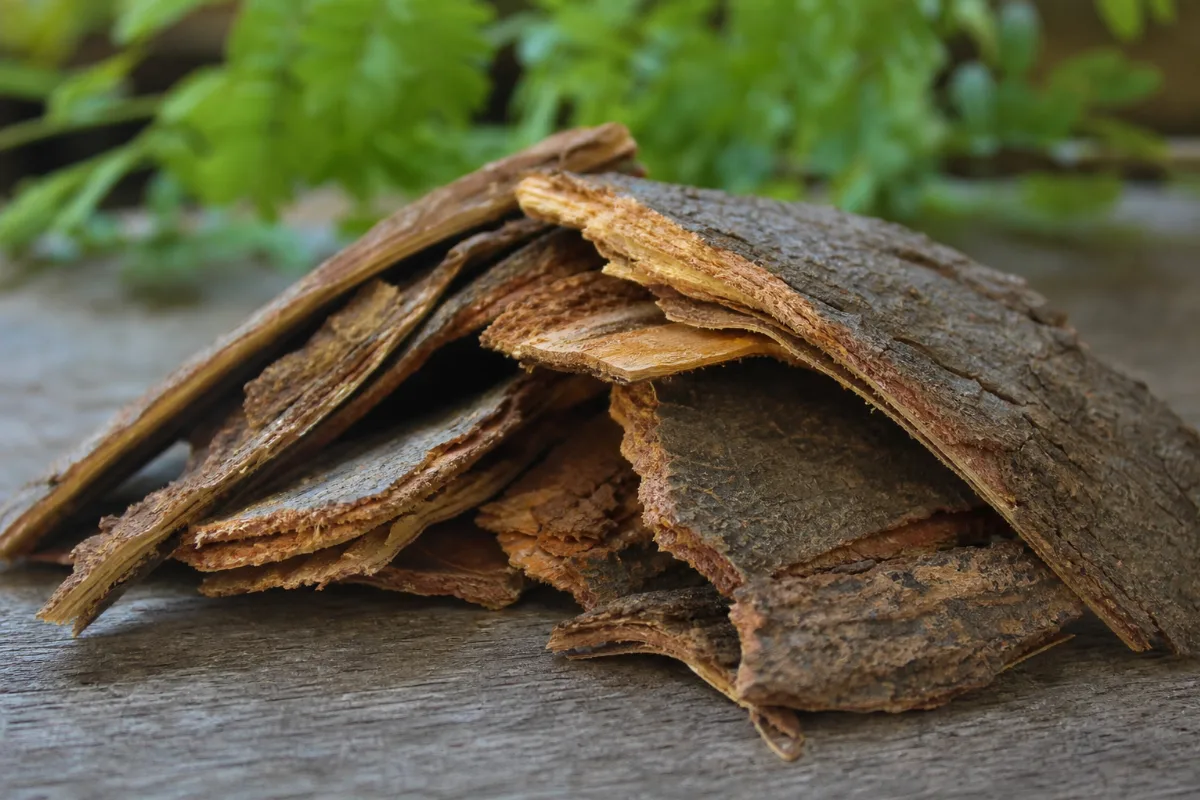
- Roots: Root bark is the part used in the jurema drink (abstract).; Stems: Stem bark (cortex) is used in Mexican skin remedies (abstracts).; Leaves: Leaves and seeds were fed to rats in toxicity studies.; Flowers: Not checked.; Fruit: Not checked.
- Cultivation
- Not checked.
- Harvest and processing
- Not covered, by design.
- Look-alikes and adulterants
- Name: Other plants called jurema; Note: Different species can share the name; do not rely on a name or photo.; Name: Mimosa pudica (sensitive plant); Note: A different plant not covered here; naming overlap with the genus only.
- Sustainability and conservation
- Not checked.
Traditional use and history history, not clinical proof
| Tradition or era | Documented use | Source |
|---|---|---|
| Indigenous peoples of Northeastern Brazil | Ritual use of jurema, historically held in secret in the semi-arid woods; a drink from the root bark is described as a psychedelic used in Indigenous religious rituals. | s-chacruna-2025 |
| Jurema Sagrada, Catimbo and Umbanda (Brazil) | A syncretic religion joining Indigenous, African and European influences; once called Catimbo (a term described as stigmatised), later joined with Umbanda in the 20th century; rituals take place in Afro-Brazilian terreiros. Many juremeiros say a psychedelic experience is not necessary to connect with the enchanted beings. | s-chacruna-2025 |
| Mexico and Central America | Bark is a folk remedy for wounds and burns under the name tepescohuite. | p19505559 |
| Neo-shamanic practice | Juremahuasca, a blend that combines jurema with other plants, is described as separate from traditional jurema rituals. | s-chacruna-2025 |
| Pankararu and other named peoples | Search-result summaries (not opened) said Pankararu people use jurema in the Ciencia do Indio and Amaro festival. NOT verified; omitted from the page text. | s-chacruna-2025 |
Traditional use shows how it was used. It does not show that it works or is safe today.
What is inside, and how it may work
What it contains and how those compounds act in cells and animals. Laboratory and animal mechanisms are not proven effects in people.
Main compounds
| Compound | Family | Where it is concentrated | Activity studied | Level of evidence |
|---|---|---|---|---|
| N,N-dimethyltryptamine (DMT) PubChem 6089 | tryptamine | Root bark 1.26 to 9.35 mg/g in 24 inner bark samples; 24.74 mg/g in a standardised extract (different methods). | A strong serotonin-receptor psychedelic. Inactive by mouth unless MAO is blocked (ayahuasca research). 6 2 10 22 | Lab |
| Tannins and proanthocyanidins | polyphenols | Bark Tannin-standardised gel (1.8% tannin in a 5% crude extract). | Suggested wound-related activity; not shown in people. 14 17 | Lab |
| Arabinogalactans | polysaccharides | Bark Not stated. | Stimulated skin fibroblasts in cell culture. 16 | Lab |
| Yuremamine | alkaloid | Bark extract Not stated. | Identified in the standardised extract; role not described. 2 | Lab |
Mechanisms, receptors and pathways
| Target or pathway | Gene or receptor | What was found | Level |
|---|---|---|---|
| Serotonin 2A/2C receptors | 5-HT2A/2C | Ketanserin prevented the antidepressant-like effect of the bark extract in mice. 2 | Animal research |
| MAO enzyme and DMT breakdown | MAO | DMT is inactive orally because gut MAO degrades it; MAO inhibitors may let it work by mouth (ayahuasca study, mechanism proposed). 10 | Lab |
| Dermal fibroblast stimulation | n/a | Arabinogalactan fractions stimulated fibroblast activity; action unclear. 16 | Lab |
Absorption, metabolism and elimination
- Absorption
- No human data for this plant. DMT is described as inactive by mouth unless MAO is blocked (ayahuasca research).
- Distribution
- Not found.
- Metabolism
- DMT is broken down by MAO (abstract).
- Elimination
- Not found.
- Bioavailability
- Not established for jurema.
Isolated compounds versus whole extracts
Skin trials used bark-extract gels; the psychoactive questions concern DMT in root bark; animal work used fractions and standardised extracts. These are three different things, and none is the traditional drink.
Nutritional composition
Not a nutrient and has no nutritional claim.
1 low certainty4 very low certainty
What was looked at
The 5 benefits and uses checked for Jurema (Mimosa tenuiflora), each with how strong the evidence is. Tap one to open it.
- Venous leg ulcers (bark extract gel on the skin)Low certainty
- Anxiety-like behaviour (root-bark alkaloid fraction, mice)Very low certainty
- Depression-like behaviour (standardised bark extract, mice)Very low certainty
- Burns and skin wounds (bark powder, animal study)Very low certainty
- Skin-cell activity in the labVery low certainty
Lab markers tracked in the studies
Venous leg ulcer area
What is Jurema (Mimosa tenuiflora) good for?
The uses people ask about and how strong the evidence is for each. None is proven for the root bark, and the skin use is a different matter from the ritual use. Read every row with the Safety tab.
Benefits, one by one
Each card is a research question, not a promise. Tap a goal to filter. Open a card to see the studies, doses and limits.
Venous leg ulcers (bark extract gel on the skin)
Low certaintyThis is a skin use, not the psychoactive use. Two small randomised trials in Mexico tested a gel made with bark extract on leg ulcers. One found much smaller ulcers than with plain gel. The other found no difference from plain gel.
3 studiesTopical gel containing a bark extract; the trials used different extr…
Studies, doses and limits
What the trials found
A 2007 randomised double-blind trial used a 5% bark-extract gel against the same gel without extract for 13 weeks. A 2012 randomised trial of 41 patients compared a bark-extract gel with the gel alone. A 2017 systematic review pooled two Mimosa tenuiflora studies (42 patients) and found high heterogeneity.
Results
Trial 1: ulcers 92% smaller on average after 8 weeks with extract; effective in all extract patients versus one control (p = 0.0001). Trial 2: area fell 6.29 cm2 with extract and 5.85 cm2 with plain gel, no difference (P = 0.815). Meta-analysis: heterogeneity I2 = 84%.
Effect sizes as reported
Mixed: one large benefit, one null result.
Why this rating
Two small trials that disagree, topical use, low average quality score (2.5 of 5) in the review. Numbers of patients in the first trial were not read.
Form and dose studied
Topical gel containing a bark extract; the trials used different extracts. This page does not recommend any product.
Who was studied
Adults with venous leg ulcers in Mexico.
Limits
Few trials, small groups, different extracts, and the gel was used with ulcer washing and dressings. Results do not apply to swallowing bark or to the psychoactive drink.
Why researchers looked
Bark has long been used on wounds in Mexico under the name tepescohuite, so researchers tested it on slow-healing ulcers.
Traditional use
Bark powder and extracts are used on skin lesions and burns in Mexico and Central America, where the plant is called tepescohuite (trial abstracts).
Proposed mechanism Pharmacological theory
Tannins and other bark compounds are suggested to help wound repair; the mechanism was not shown in the trials.
A proposed mechanism does not show that the effect happens in people.
Jurema bark carries real safety unknowns: DMT with a possible MAO-inhibitor interaction, pregnancy signals from animals, and no human safety trials. See the Safety tab.
Anxiety-like behaviour (root-bark alkaloid fraction, mice)
Very low certaintyA root-bark fraction that contained DMT reduced anxiety-like behaviour in mice, as diazepam did. This was a short animal report. Nobody has tested it in people.
1 studiesNot applicable to people. The mouse fraction is not a traditional dri…
Studies, doses and limits
What the trials found
No human study was found.
Results
In mice, the alkaloid fraction (6 mg/kg injected under the skin) produced anxiolytic-like effects in the light/dark box and elevated plus maze.
Effect sizes as reported
Significant effect in two mouse tests.
Why this rating
Mouse study, injected fraction, short report, no human data.
Who was studied
Female Swiss mice.
Limits
Animal results often do not carry over to people. This is not a reason to use the plant.
Why researchers looked
Jurema root bark is the part used in the Indigenous religious drink, and it contains DMT, so researchers asked whether the alkaloids change mood-like behaviour in animals.
Traditional use
Jurema wine, a drink made from root bark, is used in Indigenous religious rituals in Northeastern Brazil (toxicity-study abstract). Its use is religious, not a treatment.
Proposed mechanism Laboratory
DMT acts on serotonin receptors; the paper identified DMT in the fraction but does not prove DMT caused the effect.
A proposed mechanism does not show that the effect happens in people.
Jurema bark carries real safety unknowns: DMT with a possible MAO-inhibitor interaction, pregnancy signals from animals, and no human safety trials. See the Safety tab.
Depression-like behaviour (standardised bark extract, mice)
Very low certaintyA standardised bark extract reduced giving-up behaviour in mice in two standard tests. A drug that blocks serotonin 2A/2C receptors prevented the effect. No human study exists.
1 studiesNot applicable to people.
Studies, doses and limits
What the trials found
No human trial was found.
Results
The extract (DMT 24.74 mg/g by their measurement) reduced immobility in the tail-suspension and forced-swim tests, independent of harmine, and potentiated a serotonin-linked head-twitch behaviour.
Effect sizes as reported
Significant effects in mouse tests (p < 0.05).
Why this rating
Mouse models, one research group, no human data.
Who was studied
Mice.
Limits
Animal depression tests are crude, and a lab extract is not a drink made in a ceremony.
Why researchers looked
Researchers noted that psychedelic drinks such as ayahuasca and jurema wine contain DMT and asked if jurema bark acts like an antidepressant in animals.
Traditional use
Jurema wine is used religiously by Indigenous peoples in Northeastern Brazil (abstract). The religious use is not an antidepressant treatment.
Proposed mechanism Laboratory
Serotonin 2A/2C receptors appear involved because a blocker (ketanserin) prevented the effect in mice.
A proposed mechanism does not show that the effect happens in people.
Jurema bark carries real safety unknowns: DMT with a possible MAO-inhibitor interaction, pregnancy signals from animals, and no human safety trials. See the Safety tab.
Burns and skin wounds (bark powder, animal study)
Very low certaintyBark powder is a traditional remedy for burns and wounds in Mexico. The one animal study we read found no difference from saline or an antibiotic ointment, and its authors advised against use in people.
1 studiesSterile bark powder in the animal study.
Studies, doses and limits
What the trials found
No human trial of burns was found.
Results
In rabbits with chemical burns, bark powder, 2% mupirocin ointment and saline did not differ significantly. The authors wrote that, because of potentially liver-damaging effects and low effectiveness, it should not be used in humans.
Effect sizes as reported
No significant difference between treatments.
Why this rating
One old rabbit study, abstract only, in Spanish.
Form and dose studied
Sterile bark powder in the animal study.
Who was studied
Rabbits.
Limits
Old and small; a safety warning from the authors that this page cannot confirm or rule out.
Why researchers looked
It is a long-standing folk remedy under the name tepescohuite.
Traditional use
Bark is used on wounds and burns in Mexico and Central America (lab-study abstracts).
Proposed mechanism Laboratory
Not established.
A proposed mechanism does not show that the effect happens in people.
Jurema bark carries real safety unknowns: DMT with a possible MAO-inhibitor interaction, pregnancy signals from animals, and no human safety trials. See the Safety tab.
Skin-cell activity in the lab
Very low certaintyIn cell dishes, a purified sugar-like fraction from the bark stimulated skin fibroblasts, the cells that help repair skin. A plain water extract reduced fibroblast survival. This is lab work only.
1 studiesNot applicable.
Studies, doses and limits
What the trials found
No human data.
Results
Fibroblast activity and growth rose with the fraction (10 microg/mL) and fell with the crude water extract at 10 and 100 microg/mL.
Effect sizes as reported
Mixed lab effects.
Why this rating
Cell study only.
Who was studied
Human skin cells in culture.
Limits
Cells in a dish are not wounds in a person.
Why researchers looked
Researchers wanted to see if bark chemicals explain the folk wound use.
Traditional use
Wound and burn use of bark is traditional in Middle and South America (abstract).
Proposed mechanism Laboratory
Arabinogalactan fractions stimulated fibroblast activity; the mode of action stays unclear (authors).
A proposed mechanism does not show that the effect happens in people.
Jurema bark carries real safety unknowns: DMT with a possible MAO-inhibitor interaction, pregnancy signals from animals, and no human safety trials. See the Safety tab.
Connections to the rest of health
How Jurema (Mimosa tenuiflora) connects to the rest of our health knowledge graph. Every link says what kind of connection it is. A safety link (for example to the liver) is a warning, not a benefit. A study that merely mentions a topic never creates a benefit link.
Explore every connection: goals, body systems, organs, symptoms, genes
B. Body systems
| Connected to | Kind of connection | Evidence status | Context | Studies |
|---|---|---|---|---|
| Skin | Biological association | Low certainty | Studied for: Venous leg ulcers (bark extract gel on the skin) Studied for: Burns and skin wounds (bark powder, animal study) | 14 7 4 13 16 |
| Cardiovascular System | Biological association | Low certainty | Studied for: Venous leg ulcers (bark extract gel on the skin) | 14 7 4 |
| Nervous System | Biological association | Very low certainty | Studied for: Anxiety-like behaviour (root-bark alkaloid fraction, mice) Studied for: Depression-like behaviour (standardised bark extract, mice) | 3 2 |
I. Biomarkers
| Connected to | Kind of connection | Evidence status | Context | Studies |
|---|---|---|---|---|
| Venous leg ulcer area | Biological association | Low certainty | Measured in trials: lowered. A lab change is not the same as a health benefit. | 14 7 |
J. Genes, receptors and enzymes
| Connected to | Kind of connection | Evidence status | Context | Studies |
|---|---|---|---|---|
| 5-HT2A receptor (HTR2A) | Preliminary mechanism | Animal | Suggested target of the bark extract in mice. | 2 |
L. Active compounds
| Connected to | Kind of connection | Evidence status | Context | Studies |
|---|---|---|---|---|
| N,N-dimethyltryptamine (DMT) | Biological association | Lab | A strong serotonin-receptor psychedelic. Inactive by mouth unless MAO is blocked (ayahuasca research). Preparation or compound: Root bark |
6 2 10 22 |
| Tannins and proanthocyanidins | Biological association | Lab | Suggested wound-related activity; not shown in people. Preparation or compound: Bark |
14 17 |
| Arabinogalactans | Biological association | Lab | Stimulated skin fibroblasts in cell culture. Preparation or compound: Bark |
16 |
| Yuremamine | Biological association | Lab | Identified in the standardised extract; role not described. Preparation or compound: Bark extract |
2 |
Each connection is stored with the ingredient, the connected record, the kind of connection, the evidence status, the supporting studies, the preparation or compound involved, and a review date (last reviewed October 25, 2026).
Evidence at a glance: what changed in 1 lab markers
Tap a number to show only those markers. Counts are markers, not people.
The evidence
The research centre for Jurema (Mimosa tenuiflora). Every record here was checked against PubMed or the publisher's page; we never list a study we have not verified.
Evidence by outcome
Bars show how many studies we found for each outcome, not how well it works. People are added up across trials only (reviews are not added, to avoid double counting).
How we rate evidence
High certainty
Several well-run trials or reviews agree; further research is unlikely to change the picture much.
Moderate certainty
Good trials point the same way, but some doubt remains.
Low certainty
Small, short or inconsistent trials. The finding could change with better research.
Very low certainty
Very little or very weak human data. Treat as a possibility only.
Mixed findings
Trials or reviews disagree with each other.
Not enough evidence
Not enough human research to say either way.
Evidence against
Good research found no benefit, or found harm.
We take the reviewers' own risk-of-bias and GRADE statements where they exist, and otherwise judge from study size, design, consistency, directness and whether a product matches what is sold. Many publications do not make evidence high. Method note: We read the abstracts of 18 PubMed papers (two title-only), the US eCFR Schedule I text, and Brazilian legal summaries and a 2025 interview on jurema, and checked the plant name and DMT identifiers in GBIF and PubChem. Statements we could not verify are marked as such.
Study library: every study we checked 23
| Study | Design | People | Product, dose, length | Result |
|---|---|---|---|---|
| Callaway 1998 Ayahuasca preparations and serotonin reuptake inhibitors: a potential combination for severe adverse interactions Journal of Psychoactive Drugs · PMID 9924842 · DOI |
Expert warning human (theory) |
Not applicable | Ayahuasca harmala alkaloids with SSRI antidepressants |
The authors warn that harmala MAO inhibitors plus SSRIs may cause serotonin syndrome with potentially grave outcome. Methods, limits and fundingOutcomes: Possible serotonin syndrome Limitations: A short warning paper about ayahuasca, not a trial and not about jurema. Read: abstract |
| Duarte-Filho LAMS 2022 Beta-carboline-independent antidepressant-like effect of the standardized extract of the barks of Mimosa tenuiflora (Willd) Poir. occurs via 5-HT2A/2C receptors in mice Journal of Psychopharmacology · PMID 35723216 · DOI |
Animal experiment mouse |
Mice in tail-suspension and forced-swim tests | Standardised bark extract (SEMT), with or without harmine bark |
The extract showed an antidepressant-like effect independent of harmine; the effect was prevented by ketanserin, a 5-HT2A/2C blocker, which points to serotonin receptors. The DMT content of the extract was reported as 24.74 mg/g. Methods, limits and fundingOutcomes: Immobility time in depression-like tests; head-twitch test Limitations: Mice only; these tests are crude models of depression. Not a human result. Read: abstract |
| Ferreira JVBP 2025 The anxiolytic-like effect of the alkaloid fraction of the psychedelic plant Mimosa tenuiflora (Willd.) Poir. Natural Product Research · PMID 39291339 · DOI |
Animal experiment mouse |
Female Swiss mice | Alkaloid fraction AF II from root bark (6 mg/kg under the skin) versus saline versus diazepam root bark |
The fraction showed anxiolytic-like effects in both tests; DMT was identified in the fraction by HPLC. Methods, limits and fundingOutcomes: Light/dark box and elevated plus maze (anxiety-like behaviour) Limitations: Mice, a fraction injected under the skin; short report. Does not show the effect in people or from any traditional drink. Read: abstract |
| Freitas 2017 The use of medicinal plants in venous ulcers: a systematic review with meta-analysis International Wound Journal · PMID 28488305 · DOI |
Systematic review with meta analysis |
42 7 studies of medicinal plants for venous ulcers; a meta-analysis of 2 Mimosa tenuiflora hydrogel studies in 42 patients |
Medicinal plants; Mimosa tenuiflora hydrogel in the meta-analysis bark (hydrogel) |
Study quality averaged 2.5 on the Jadad scale (0 to 5). Heterogeneity for the two Mimosa tenuiflora studies was high (I2 = 84%). The authors called the Mimosa tenuiflora hydrogel a promising candidate. Methods, limits and fundingOutcomes: Ulcer area, re-epithelialisation Limitations: Very few trials, low quality scores and high heterogeneity; the two included trials disagreed. Read: abstract |
| Gardner 2014 Teratogenic effects of Mimosa tenuiflora in a rat model and possible role of N-methyl- and N,N-dimethyltryptamine Journal of Agricultural and Food Chemistry · PMID 24689494 · DOI |
Animal experiment rat |
Pregnant rats | Plant leaf and seed, extracts, and purified N-methyltryptamine and DMT in the diet leaf, seed |
Pups of mothers given plant material, extracts or the purified tryptamines had more soft-tissue cleft palate and skeletal malformations. Methods, limits and fundingOutcomes: Cleft palate and skeletal malformations in pups Limitations: Rats; feeding doses are not human exposures. Shows a pregnancy warning signal, not a human risk figure. Read: abstract |
| Gaujac 2012 Determination of N,N-dimethyltryptamine in Mimosa tenuiflora inner barks by matrix solid-phase dispersion procedure and GC-MS Journal of Chromatography B · PMID 22209595 · DOI |
Laboratory chemistry study plant material |
24 local bark samples (Brazil) | Inner bark inner bark |
DMT in the 24 bark samples ranged from 1.26 to 9.35 mg/g. The abstract also states that in Brazil even children and pregnant women are legally authorised to consume ayahuasca in a religious context. Methods, limits and fundingOutcomes: DMT concentration in bark samples Limitations: A measurement of the chemical in plant samples; the content varied more than seven-fold between samples. Read: abstract |
| Lammoglia-Ordiales 2012 A randomised comparative trial on the use of a hydrogel with tepescohuite extract (Mimosa tenuiflora cortex extract-2G) in the treatment of venous leg ulcers International Wound Journal · PMID 22128789 · DOI |
Controlled trial |
41 41 patients with venous leg ulcers randomised; 32 completed (Mexico City wound centre) |
Hydrogel with bark extract MTC-2G versus the hydrogel alone bark (cortex) · vs Hydrogel alone |
Ulcer area fell by 6.29 cm2 with the extract gel and 5.85 cm2 with the plain gel (no difference between groups, P = 0.815). No laboratory or tissue differences. The extract gel was not better than the gel alone. Methods, limits and fundingOutcomes: Ulcer surface area, laboratory tests, biopsies Limitations: Small trial; 9 of 41 did not finish; topical use only. Read: abstract |
| Lauriola 2016 Allergic contact dermatitis caused by argan oil, neem oil, and Mimosa tenuiflora Contact Dermatitis · PMID 27870098 · DOI |
Case report |
One patient | Skin products containing Mimosa tenuiflora |
Only the title was available: a case of allergic contact dermatitis linked to products including Mimosa tenuiflora. Methods, limits and fundingOutcomes: Allergic skin reaction Limitations: Title only; one case. Read: title-only |
| Lima Bezerra 2021 Phytochemistry and teratogenic potential of Mimosa tenuiflora (Willd.) Poir. (Fabaceae) in ruminants: A systematic review Toxicon · PMID 33727031 · DOI |
Systematic review farm animals (sheep, goats) |
24 24 articles, 1990 to 2020 |
Plant material (Mimosa tenuiflora) whole plant |
The plant has embryotoxic, fetotoxic and abortive potential in farm animals, especially sheep and goats. The authors think some compounds, mainly DMT, may be related to the birth defects. Methods, limits and fundingOutcomes: Birth defects, fetal loss Limitations: Animal data; the cause in livestock is not proven. Read: abstract |
| McKenna 1984 Monoamine oxidase inhibitors in South American hallucinogenic plants: tryptamine and beta-carboline constituents of ayahuasca Journal of Ethnopharmacology · PMID 6587171 · DOI |
Laboratory chemistry study lab (test tube) |
Eight ayahuasca samples from Peru | Ayahuasca alkaloids |
States that DMT is inactive when swallowed because the MAO enzyme in the gut breaks it down, and that beta-carbolines inhibit MAO and may let it work by mouth. This mechanism was proposed but not proven in that study. Methods, limits and fundingOutcomes: MAO inhibition Limitations: Lab study of ayahuasca, 1984; the mechanism was proposed, not confirmed. Read: abstract |
| Medeiros 2008 Teratogenicity of Mimosa tenuiflora seeds to pregnant rats Toxicon · PMID 18078971 · DOI |
Animal experiment rat |
25 15 treated and 10 control pregnant Wistar rats |
Diet with 10% seeds seed |
90 bone malformations in 40 of 101 treated-group fetuses versus 4 in 3 of 58 controls (p<0.05). The authors conclude the seeds are teratogenic to rat fetuses. Methods, limits and fundingOutcomes: Fetal malformations Limitations: Seeds, not bark; rats. Read: abstract |
| Pack 2026 Severe Serotonin Syndrome With Acute Respiratory Failure Following Ayahuasca and Dextromethorphan Use: A Case Report Cureus · PMID 42713547 · DOI |
Case report |
1 A 46-year-old man |
Ayahuasca (a vine plus DMT plant brew), then dextromethorphan and diphenhydramine brew |
Severe serotonin syndrome with breathing failure after ayahuasca over three days followed by cough medicine and an antihistamine; intubation and ICU care; recovered and went home on day 3. This was ayahuasca, not jurema. Methods, limits and fundingOutcomes: Serotonin syndrome Limitations: One case; ayahuasca, not jurema. Shown here as an example of what MAO inhibitors plus serotonin-raising drugs can do. Read: abstract |
| Palacios 1991 [Cicatricial, antibacterial and antimycotic effects of tepescohuite in experimental animals] (Spanish) Revista de Investigacion Clinica · PMID 1818366 |
Animal experiment rabbit |
Rabbits with chemically induced burns | Sterile bark powder versus 2% mupirocin ointment versus saline bark |
No statistically significant difference was found among the three treatments. The authors state that because of potentially liver-damaging effects and low effectiveness, tepescohuite should not be used in human beings. Methods, limits and fundingOutcomes: Healing, bacteria and fungi on burns Limitations: Old animal study in Spanish, abstract only; the liver-toxicity statement is the authors' and is not detailed in the abstract. Read: abstract |
| Rivera-Arce 2007 Therapeutic effectiveness of a Mimosa tenuiflora cortex extract in venous leg ulceration treatment Journal of Ethnopharmacology · PMID 17088036 · DOI |
Controlled trial |
Ambulatory patients with venous leg ulcers, Mexico | Hydrogel with 5% crude bark extract (tannin-standardised) versus the same hydrogel without extract stem bark (cortex) 13 weeks · vs Same hydrogel without extract |
After the 8th week ulcer size was reduced by 92% on average in the extract group; effectiveness occurred in all extract patients and one control patient (p = 0.0001). No side effects were seen in either group. Methods, limits and fundingOutcomes: Ulcer area over a 13-week follow-up Limitations: Patient numbers not given in the abstract; a topical bark gel, not the psychoactive use. A later trial did not find an advantage over the plain gel. Read: abstract |
| Rocha 2025 Abortions and Congenital Malformations in Small Ruminants Associated with Toxic Plant Consumption in the Brazilian Semi-Arid Region Animals (Basel) · PMID 39943126 · DOI |
Farm survey with necropsies sheep and goats |
80 80 farms in the Brazilian semi-arid region |
Plants on farms whole plant |
Malformations were found on about 42 farms. Toxic plants including Mimosa tenuiflora were recorded on 95.23% of properties with malformations. Necropsies supported an association and excluded infectious causes. Methods, limits and fundingOutcomes: Abortions, malformations and associated plants Limitations: Livestock association survey, not proof for a single plant or for people. Read: abstract |
| Zippel 2009 Arabinogalactans from Mimosa tenuiflora (Willd.) Poiret bark as active principles for wound-healing properties Journal of Ethnopharmacology · PMID 19505559 · DOI |
Laboratory (cell) study human cells in the lab |
Human skin fibroblasts and HaCaT keratinocytes in culture | Water extract and ethanol-precipitated fractions of bark bark |
A water extract reduced fibroblast viability at 10 and 100 microg/mL. A purified fraction (arabinogalactans) stimulated fibroblast activity and growth. The authors say this gives a rationale for the traditional wound use; the mode of action stays unclear. Methods, limits and fundingOutcomes: Cell activity and growth Limitations: Cells in a dish only; says nothing about healing in people. Read: abstract |
| de Sousa 2024 Unraveling the metabolomic profile and acute toxicity of ethanolic extract from Mimosa tenuiflora (Willd.) Poir. root bark Toxicon · PMID 39179178 · DOI |
Animal toxicity study mouse |
Female Swiss mice, single oral dose, 14 days | Ethanolic root-bark extract at 300 and 2000 mg/kg root bark |
No deaths at either dose (LD50 above 2000 mg/kg). Kidney weights, blood measures and tissue in the heart, liver and kidneys still changed. The abstract notes that jurema wine, from the root bark, is a psychedelic drink used in Indigenous religious rituals in Northeastern Brazil. Methods, limits and fundingOutcomes: Deaths, organ weights, blood tests and tissue changes Limitations: One mouse study of an alcohol extract; not the traditional drink and not people. Funding and conflicts: Public research funding declared (CNPq, CAPES, FAPEPI) Read: abstract |
| n/a 2025 Chacruna: The Enchanted Science of Jurema: DMT at the Root of Afro-Amerindian Rituals in Brazil (interview of Marcelo Leite by Bia Labate, 20 June 2025) Chacruna Institute · Source |
Reference source n/a |
n/a | n/a |
Describes jurema ritual use by Indigenous peoples of Northeastern Brazil, in the Jurema Sagrada religion (once called Catimbo, later joined with Umbanda) and in Afro-Brazilian terreiros. Describes juremahuasca as a neo-shamanic blend separate from traditional rituals. Reports that a Natal brain institute extracted DMT from jurema-preta for depression research and later said it would favour synthetic DMT. Notes that many juremeiros say a psychedelic experience is not needed to connect with the enchanted beings. Methods, limits and fundingOutcomes: n/a Limitations: Interview article read in full via a summarising tool; not peer-reviewed; the legal status was not stated in it. Read: full-text-summary |
| n/a 2026 US Code of Federal Regulations, 21 CFR 1308.11 (Schedule I) US eCFR, current to 21 Oct 2026 · Source |
Regulator text n/a |
n/a | n/a |
Lists Dimethyltryptamine (DMT, code 7435) in paragraph (d) hallucinogenic substances in Schedule I. The words Mimosa, hostilis and jurema do not appear in the section. Methods, limits and fundingOutcomes: n/a Limitations: Regulator text; our reading of one section only, not legal advice. Read: full-text |
| n/a 2026 ICEERS: Ayahuasca and the law in Brazil, general situation ICEERS · Source |
Reference source n/a |
n/a | n/a |
Says DMT is prohibited under Brazil drug law 11.343/2006 (the law leaves the list to ANVISA); recounts CONAD resolutions allowing religious ayahuasca use (1987, 2002, 2004, 2010). It does not mention jurema or Mimosa. Methods, limits and fundingOutcomes: n/a Limitations: Advocacy-research organisation page, not the law itself. Jurema was not mentioned. Read: full-text-summary |
| n/a 2026 MPF (Brazilian federal prosecutors, Acre): recommends revision of the rules on ayahuasca use (4 Sept 2026) Ministerio Publico Federal · Source |
Reference source n/a |
n/a | n/a |
States DMT remains on the psychotropic lists of Portaria SVS/MS 344/1998 and recommends Conad and Anvisa revise the rules and create two-year working groups. Does not mention jurema. Methods, limits and fundingOutcomes: n/a Limitations: News item from prosecutors, a recommendation not a rule change; the response of Conad and Anvisa was not found. Read: full-text-summary |
| n/a 2026 PubChem compound record: N,N-Dimethyltryptamine (CID 6089) PubChem · Source |
Reference source n/a |
n/a | n/a |
Formula C12H16N2, molecular weight 188.27, IUPAC name 2-(1H-indol-3-yl)-N,N-dimethylethanamine. Methods, limits and fundingOutcomes: n/a Limitations: Database record, retrieved 2026-10-25. Read: full-text |
| n/a 2026 GBIF species match: Mimosa tenuiflora and Mimosa hostilis GBIF · Source |
Reference source n/a |
n/a | n/a |
Mimosa tenuiflora (Willd.) Poir. is ACCEPTED (key 2969531, Fabaceae). Mimosa hostilis Benth. is a SYNONYM of it (key 2969532). Methods, limits and fundingOutcomes: n/a Limitations: Database record, retrieved 2026-10-25. Plants of the World Online could not be queried (blocked). Read: full-text |
What we do not know yet
- No human trial of the root bark or jurema wine for any use.
- No human safety or interaction study for jurema.
- Law for the plant and for jurema ritual use in Brazil not found in the sources read.
- UN 1971 Convention status not checked.
- Conservation status not checked.
How new research is added
New studies are found by a saved PubMed search and placed in a review queue. A person reads each before it changes this page. Regulator statements are rechecked on a schedule.
Lab markers
What changed in blood or saliva tests during trials. A changed number is not the same as feeling or being healthier, and we give no "normal ranges".
Other 1
Venous leg ulcer area
Lowered in trials
The size of the open wound on the leg, usually measured from photographs or tracings.
Low certaintyResults and what it means
Why it was measured
It is the standard way to see if a leg ulcer is healing.
Statistical vs. clinical meaning
Large in one trial, absent in the other.
Safety implication
No side effects were reported in the first trial.
| Study | Result | People | Product |
|---|---|---|---|
| 14 | About 92% smaller on average after the 8th week with the 5% extract gel | Patients with venous leg ulcers | Bark-extract gel versus plain gel |
| 7 | Fell by 6.29 cm2 (extract) and 5.85 cm2 (plain gel); no difference, P = 0.815 | 41 randomised patients (32 completed) | Bark-extract gel versus plain gel |
Safety
What studies and official sources say about side effects, medicines and who should check first. Each point shows what kind of evidence it comes from.
Main points to know 6
- Danger first: an MAO-inhibitor interaction can be life-threatening. The root bark contains DMT. DMT by mouth is normally broken down by the MAO enzyme, which is why MAO-inhibiting plants are added in other preparations. Mixing a DMT source with MAO inhibitors, antidepressants or cough medicine can cause dangerous serotonin syndrome, shown in an ayahuasca case report with breathing failure and intensive care. No such case from jurema alone was found, and nobody has measured the risk for jurema. Mechanism and case report 10 12 1 18
- No human safety trials of the root bark or jurema wine. Only mouse and rat studies, chemistry papers and ulcer-gel trials were found. A single mouse study of root-bark extract found no deaths up to 2000 mg/kg but did find changes in blood tests and in heart, liver and kidney tissue. Animal research 17
- Birth defects and abortions in animals: avoid in pregnancy. Sheep and goats grazing on the plant in northeastern Brazil have birth defects and abortions, and pregnant rats given leaf, seed, extracts or purified DMT-type compounds had pups with cleft palate and skeletal defects. The causes are not proven and doses are not human doses, but this is a warning signal for pregnancy. Animal research 9 5 11 15
- Psychoactive effects can be frightening or unsafe. DMT is a strong psychoactive drug in the category covered by this section. This profile found no human safety data from jurema. Risks known for strong psychedelics in general (panic, risky behaviour, harm for people with psychosis or mania in the personal or family history) are covered on the section guides, not shown for jurema. Authoritative guidance 19
- Skin use: a rabbit study warned of possible liver harm, and allergy is reported. The authors of an old rabbit study advised against use in humans, citing possibly liver-damaging effects and low effectiveness. A case report links an allergic skin reaction to products containing the plant. No liver case reports in people were found. Animal and case report 13 8
- Content varies a great deal. DMT in 24 bark samples ranged from 1.26 to 9.35 mg/g, more than seven-fold. A traditional drink, a tincture and a lab extract are therefore not the same thing, and no one can say what a given product holds. Lab analysis 6
Side effects 3
| Effect | How often | Severity and recovery | Evidence |
|---|---|---|---|
| Allergic skin reaction (topical products) Title only was read. | One case report | mild to moderate Not stated in the title | Case report 8 |
| Changes in blood tests and in heart, liver and kidney tissue (mice, high oral extract dose) Not human data. | Seen in a mouse study | unknown Not stated | Animal research 17 |
| No side effects in 13 weeks of bark-extract gel on leg ulcers Topical gel only. | Reported in one trial | n/a n/a | Controlled trial 14 |
Liver
No human liver case was found. A 1991 rabbit study said bark was potentially liver-damaging, and a 2024 mouse study found liver tissue changes after a high oral extract dose. Human liver safety is unknown. 13 17
How often. Unknown.
Monitoring. No source gave monitoring advice.
This is a safety connection. It is not evidence that Jurema (Mimosa tenuiflora) supports liver health.
Medicines and supplements 3
| With | Why it matters | Importance | Evidence | What to do |
|---|---|---|---|---|
| MAO-inhibitor plants and drugs (harmala-containing vines or seeds such as Banisteriopsis caapi or Peganum harmala, and prescription MAOI antidepressants) plant and prescription | DMT is broken down in the gut by the MAO enzyme and so is inactive by mouth alone; blocking MAO lets it act by mouth and can make it stronger and longer-lasting. | This is the key danger. Neo-shamanic blends of jurema with MAO-inhibiting plants are described as a separate practice from traditional jurema rituals. Evidence for the mechanism is from ayahuasca research and lab work, not from jurema studies. The harm in people is shown only by ayahuasca case reports. | Mechanism and case report Low certainty 10 18 12 | Do not combine. Ask a doctor or pharmacist about any medicine you take. Do not stop prescribed medicine on your own. |
| Antidepressants (SSRIs and others), dextromethorphan cough medicine and other serotonin-raising medicines prescription and over-the-counter | DMT acts on serotonin receptors; combined with MAO inhibition or serotonin-raising drugs, serotonin syndrome becomes possible. | A 2026 case report of severe serotonin syndrome with breathing failure followed ayahuasca then cough medicine; a 1998 paper warned of SSRI risks with ayahuasca. These are ayahuasca reports, not jurema. | Case report Low certainty 12 1 | Do not combine. Seek urgent care for severe agitation, fever, stiffness or a racing heart. |
| Other psychedelics, stimulants, alcohol and sedatives other substances | Unknown for this plant. | No jurema-specific interaction study was found. | No data Not enough evidence | Unknown; ask a clinician. |
Who should check first 4
| Situation | Advice | Evidence |
|---|---|---|
| Pregnancy and breastfeeding | Avoid. Birth defects and abortions occur in livestock that eat the plant and in rat studies; human data are absent. | Animal research 9 5 11 15 |
| Taking MAOI or serotonin-raising medicines | Do not combine; ask a doctor or pharmacist. | Mechanism and case report 12 1 |
| Personal or family history of psychosis or mania, or heart disease | Not studied for jurema; strong psychedelics carry general cautions. Talk to a doctor. | No data |
| Driving or operating machinery | Not studied for jurema; psychoactive effects would make these unsafe. | No data |
Overdose, product quality and regulators
Summary. In one mouse study a root-bark extract had an LD50 above 2000 mg/kg (GHS category 5) but altered blood tests and organ tissue. Plant material is toxic to the fetuses of animals.
Animal. Mouse acute toxicity (root bark extract); rat and ruminant birth-defect findings.
Human doses studied. Only a topical 5% extract gel in ulcer trials.
High dose or long term signals. Not studied in people.
Overdose response. Not described.
Genotoxicity. Not read.
Toxic or hazardous parts. Seeds and leaves caused malformations in rat studies; root bark was used in the mouse toxicity study.
Plant-product content varies, and no quality standard for psychoactive jurema products was found.
Variable DMT content. 1.26 to 9.35 mg/g in 24 samples. 6
| Body | Action | Date |
|---|---|---|
| US Drug Enforcement Administration, via the Code of Federal Regulations (United States) | In the Schedule I text (21 CFR 1308.11) we found Dimethyltryptamine (DMT, code 7435) listed in Schedule I. We searched for Mimosa, hostilis and jurema and found no entry for the plant. This is our reading of one section, not legal advice; whether having the plant or a product containing DMT is lawful was not examined, and state law was not checked. source | 2026-10-21 |
When to get medical help
- Trouble breathing, collapse, a seizure or being unable to wake someone: call emergency services now (911 in the US, 999 in the UK).
- After mixing with antidepressants, cough medicine or MAO-inhibiting plants: severe agitation, high fever, muscle stiffness, sweating or a racing heart need urgent care. Tell staff everything taken.
- US: Poison Help 1-800-222-1222. Other countries: contact local poison control; numbers were not checked.
If someone may be poisoned or in a crisis, contact a clinician or emergency service straight away. In the US, Poison Control is 1-800-222-1222.
General information only, not medical advice. Ask a clinician or pharmacist before use, especially with medicines, in pregnancy or with a health condition. See the Natural Remedy Safety guide.
Frequently asked questions
What is jurema?
Is jurema the same as Mimosa hostilis?
Does jurema contain DMT?
Who uses jurema in ceremony?
Is jurema the same as ayahuasca?
Why are MAO inhibitors dangerous with it?
Does it help with depression or anxiety?
Is the bark used for skin problems?
Is it safe in pregnancy?
Are there human safety studies?
Is DMT legal?
Is jurema endangered?
We did not check conservation status in a regulator source, so we cannot say.
Explore by health goal
Editorial transparency
- Written by
- AlternativeMed editorial team. Research compiled with AI assistance, then checked against PubMed records, GBIF, PubChem and regulator pages.
- Medical review
- None. This page has not been reviewed by a physician or pharmacist.
- First published
- 2026-10-25
- Last substantive update
- 2026-10-25
- How we research
- We read the abstracts of 18 PubMed papers (two title-only), the US eCFR Schedule I text, and Brazilian legal summaries and a 2025 interview on jurema, and checked the plant name and DMT identifiers in GBIF and PubChem. Statements we could not verify are marked as such.
- How we rate evidence
- See "How we rate evidence" in the Evidence tab.
- Independence
- No product is promoted. No affiliate links are shown and none will be added. This page gives no dose, preparation, extraction, growing, foraging or sourcing advice.
Sources 23
Each source was opened and checked. Where we read only the abstract, it says so. The small numbers in the text point here.
- Callaway JC, Grob CS. Ayahuasca preparations and serotonin reuptake inhibitors: a potential combination for severe adverse interactions. Journal of Psychoactive Drugs. 1998. PMID 9924842. DOI 10.1080/02791072.1998.10399712. (abstract)
- Duarte-Filho LAMS, Amariz IA, Nishimura RHV, et al. Beta-carboline-independent antidepressant-like effect of the standardized extract of the barks of Mimosa tenuiflora (Willd) Poir. occurs via 5-HT2A/2C receptors in mice. Journal of Psychopharmacology. 2022. PMID 35723216. DOI 10.1177/02698811221104050. (abstract)
- Ferreira JVBP, Pessoa AMF, Sousa RCL, et al. The anxiolytic-like effect of the alkaloid fraction of the psychedelic plant Mimosa tenuiflora (Willd.) Poir.. Natural Product Research. 2025. PMID 39291339. DOI 10.1080/14786419.2024.2405875. (abstract)
- Freitas AL, Santos CA, Souza CA, et al. The use of medicinal plants in venous ulcers: a systematic review with meta-analysis. International Wound Journal. 2017. PMID 28488305. DOI 10.1111/iwj.12751. (abstract)
- Gardner D, Riet-Correa F, Lemos D, et al. Teratogenic effects of Mimosa tenuiflora in a rat model and possible role of N-methyl- and N,N-dimethyltryptamine. Journal of Agricultural and Food Chemistry. 2014. PMID 24689494. DOI 10.1021/jf5005176. (abstract)
- Gaujac A, Aquino A, Navickiene S, de Andrade JB. Determination of N,N-dimethyltryptamine in Mimosa tenuiflora inner barks by matrix solid-phase dispersion procedure and GC-MS. Journal of Chromatography B. 2012. PMID 22209595. DOI 10.1016/j.jchromb.2011.11.014. (abstract)
- Lammoglia-Ordiales L, Vega-Memije ME, Herrera-Arellano A, et al. A randomised comparative trial on the use of a hydrogel with tepescohuite extract (Mimosa tenuiflora cortex extract-2G) in the treatment of venous leg ulcers. International Wound Journal. 2012. PMID 22128789. DOI 10.1111/j.1742-481X.2011.00900.x. (abstract)
- Lauriola MM, Corazza M. Allergic contact dermatitis caused by argan oil, neem oil, and Mimosa tenuiflora. Contact Dermatitis. 2016. PMID 27870098. DOI 10.1111/cod.12665. (title-only)
- Lima Bezerra JJ, Vieira Pinheiro AA, Barbosa Lucena R. Phytochemistry and teratogenic potential of Mimosa tenuiflora (Willd.) Poir. (Fabaceae) in ruminants: A systematic review. Toxicon. 2021. PMID 33727031. DOI 10.1016/j.toxicon.2021.03.010. (abstract)
- McKenna DJ, Towers GH, Abbott F. Monoamine oxidase inhibitors in South American hallucinogenic plants: tryptamine and beta-carboline constituents of ayahuasca. Journal of Ethnopharmacology. 1984. PMID 6587171. DOI 10.1016/0378-8741(84)90003-5. (abstract)
- Medeiros RM, de Figueiredo AP, Benicio TM, et al. Teratogenicity of Mimosa tenuiflora seeds to pregnant rats. Toxicon. 2008. PMID 18078971. DOI 10.1016/j.toxicon.2007.06.012. (abstract)
- Pack S, Ellett TR, Pham J, Ahmad Y. Severe Serotonin Syndrome With Acute Respiratory Failure Following Ayahuasca and Dextromethorphan Use: A Case Report. Cureus. 2026. PMID 42713547. DOI 10.7759/cureus.114211. (abstract)
- Palacios C, Reyes RE, Lopez-Martinez R, et al. [Cicatricial, antibacterial and antimycotic effects of tepescohuite in experimental animals] (Spanish). Revista de Investigacion Clinica. 1991. PMID 1818366. (abstract)
- Rivera-Arce E, Chavez-Soto MA, Herrera-Arellano A, et al. Therapeutic effectiveness of a Mimosa tenuiflora cortex extract in venous leg ulceration treatment. Journal of Ethnopharmacology. 2007. PMID 17088036. DOI 10.1016/j.jep.2006.08.032. (abstract)
- Rocha VC, Santos Filho GJ, de Souza MF, et al. Abortions and Congenital Malformations in Small Ruminants Associated with Toxic Plant Consumption in the Brazilian Semi-Arid Region. Animals (Basel). 2025. PMID 39943126. DOI 10.3390/ani15030356. (abstract)
- Zippel J, Deters A, Hensel A. Arabinogalactans from Mimosa tenuiflora (Willd.) Poiret bark as active principles for wound-healing properties. Journal of Ethnopharmacology. 2009. PMID 19505559. DOI 10.1016/j.jep.2009.05.034. (abstract)
- de Sousa RP, de Oliveira CMF, de Lima Sousa RC, et al. Unraveling the metabolomic profile and acute toxicity of ethanolic extract from Mimosa tenuiflora (Willd.) Poir. root bark. Toxicon. 2024. PMID 39179178. DOI 10.1016/j.toxicon.2024.108076. (abstract)
- n/a. Chacruna: The Enchanted Science of Jurema: DMT at the Root of Afro-Amerindian Rituals in Brazil (interview of Marcelo Leite by Bia Labate, 20 June 2025). Chacruna Institute. 2025. (full-text-summary)
- n/a. US Code of Federal Regulations, 21 CFR 1308.11 (Schedule I). US eCFR, current to 21 Oct 2026. 2026. (full-text)
- n/a. ICEERS: Ayahuasca and the law in Brazil, general situation. ICEERS. 2026. (full-text-summary)
- n/a. MPF (Brazilian federal prosecutors, Acre): recommends revision of the rules on ayahuasca use (4 Sept 2026). Ministerio Publico Federal. 2026. (full-text-summary)
- n/a. PubChem compound record: N,N-Dimethyltryptamine (CID 6089). PubChem. 2026. (full-text)
- n/a. GBIF species match: Mimosa tenuiflora and Mimosa hostilis. GBIF. 2026. (full-text)


