Vitamins & Supplements · Protein supplement
Protein Powder
Protein powder (whey, casein, soy, pea and other plant blends) · also called Protein supplement, protein shake powder, whey, casein, plant protein, proteína en polvo, suplemento de proteínas
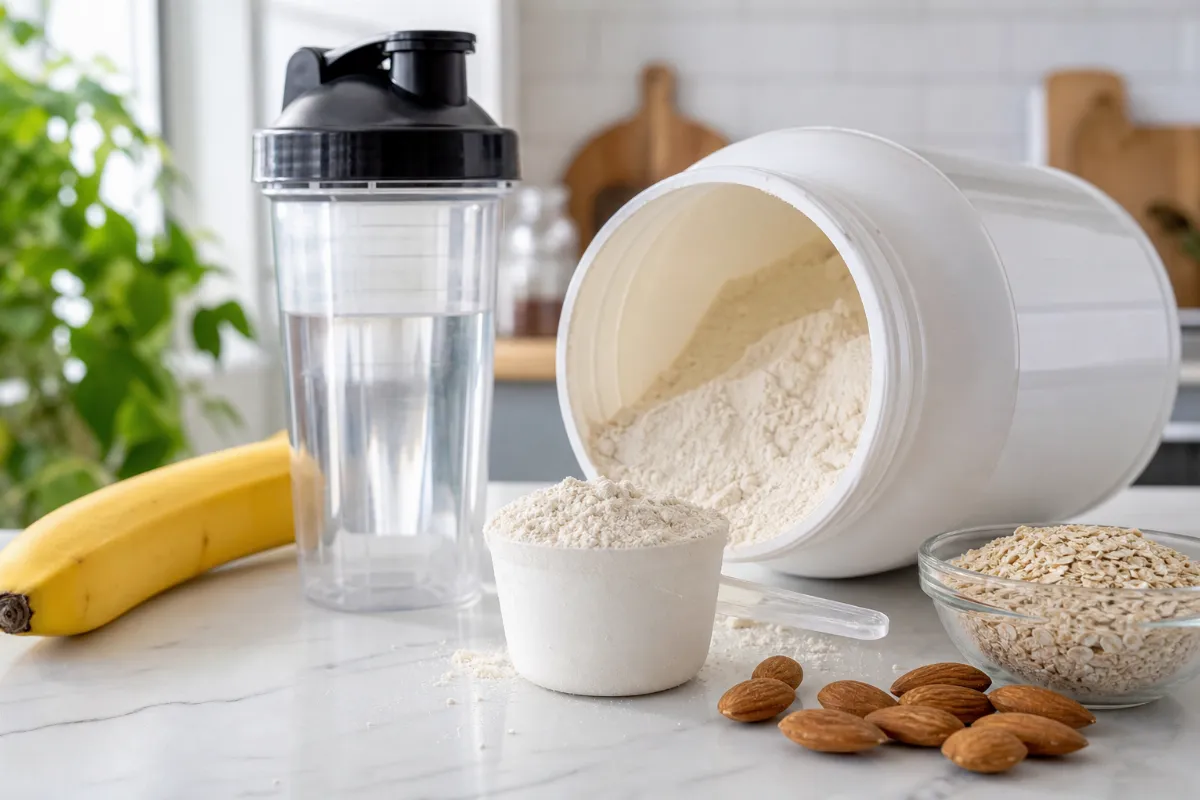
Protein powder is concentrated protein, from milk, soy, peas or other plants, sold to stir into drinks and food. It is mainly studied for small extra muscle and strength gains alongside weight training. Most people who eat enough protein from food gain little extra. Milk, soy and pea allergies, kidney disease, added sugars and metals such as lead are the main cautions, and quality varies a lot between products.
General information, not medical advice. Last substantive update · Not medically reviewed. A named clinician has not signed off on this page. How this page is made
About Protein Powder
Protein powder is concentrated protein sold alone or in blends. With weight training it gave small extra gains in muscle and strength in pooled trials, and soy and animal protein did about as well as each other. Allergy, kidney disease, added sugars and variable metal levels are the main cautions.
What protein powder is
Protein powder is protein taken from food, usually milk, soy or peas, concentrated and dried so you can stir it into a drink. MedlinePlus says protein is made of chains of amino acids and that your body uses it to repair cells and make new ones. It is found in meat, milk, fish, eggs, beans, nuts and some grains.
Powders are sold as dietary supplements. The FDA says it is not authorized to approve dietary supplements for safety and effectiveness before they are marketed, so quality depends on the maker.
Protein needs, and where a powder fits
MedlinePlus gives healthy adults a range of 10 to 35 percent of daily calories from protein, which for a 2,000-calorie diet could mean up to about 100 g. A 2017 review explains that the adult recommended allowance of 0.8 g per kg a day was set as the minimum to avoid losing body nitrogen, and that studies in older people suggest benefits above it.
In trials, protein supplements helped most in people doing weight training. A pooled analysis of 49 trials found no extra gain in fat-free mass once total protein intake in the trial groups was above about 1.6 g per kg a day. These are published reference figures and study findings, not advice for any one person. Most people can meet their needs with food, and a powder is a convenient way to add protein, not a requirement.
The main types compared
Whey and casein are the two milk proteins. Whey is digested quickly and casein more slowly. Soy, pea, rice and hemp are plant proteins, often sold as blends. Collagen is a different animal protein with different uses and is not compared here. Each has its own page with the detail; this page does not repeat it.
A review of plant proteins says they may be lower in nutritional quality than animal proteins in some respects, and describes ways to use them to meet amino acid needs. Scoring systems for protein quality have limits too: a review notes the FAO has endorsed the DIAAS score in place of PDCAAS but lists limits, especially for plant foods.
For building muscle with training, the evidence shows more similarity than difference. Soy and animal protein gave similar gains in one analysis. A second found no difference in strength or total lean mass between animal and plant protein, with a small edge for animal protein in adults under 50. A 2024 network analysis rated milk proteins effective for muscle mass and strength, but it compares types indirectly and the authors call for direct trials.
What the research shows
With weight training, protein supplements as a group gave small extra gains in strength, fat-free mass and muscle size. Gains are smaller with older age and larger in trained people. A 2025 analysis of 150 trials of milk-protein supplements found slightly more lean mass and slightly less body fat, with no clear change in body weight. Casein before sleep had limited to no effect on appetite or metabolism, and no type or timing of protein improved walking and everyday performance tests.
Almost every trial included weight training, so the results say nothing about taking a powder without exercise.
Heavy metals and testing reports
Consumer Reports tested 23 protein powders and shakes and published in October 2025. About 70 percent had more lead per serving than its own level of concern, some by more than 10 times. Plant-based products averaged about nine times the lead of dairy-based ones, but half of the dairy-based products still exceeded the level at which it advises against daily use. All the plant-based products it tested used pea protein as a main ingredient, and it did not determine whether pea protein was the source of the lead. Consumer Reports notes there is no federal limit for lead in protein powders.
A 2020 modelling study using earlier test data and US EPA thresholds found no increased health risk for one or three servings a day; mass-gain powders were highest and whey lowest. A 2021 test of 36 powders sold in Ireland found acceptable levels, with a caution about excessive, prolonged use. The sources use different thresholds, which is why they sound different. They agree that levels vary by product. No study read followed people to see whether metals in powders caused harm.
Product names are left out of this page on purpose.
Allergy and kidney cautions
The FDA lists milk, eggs, soybeans and wheat among nine major food allergens and requires the source to be named on the label, for example 'whey (milk)'. Whey, casein and soy powders are therefore not suitable for people with those allergies. Pea allergy has been documented too: in a small study of 19 pea-sensitised young children, 14 had pea allergy. Blends can mix several sources, and 'may contain' warnings are not required by law.
A review of 28 trials in healthy adults found higher-protein diets did not harm kidney filtering. That does not cover people who already have kidney disease. The NIDDK says some people with chronic kidney disease may need to limit protein, while people on dialysis may need more, so it advises working with a dietitian or health professional.
Sugars, sweeteners and testing labels
Flavoured powders may contain added sugars or sweeteners. In a 2025 laboratory study of 34 whey powders sold in India, 44 percent of one group held 2 g or more of sucrose or fructose per 100 g, often unlabelled. The WHO advises against using non-sugar sweeteners to control body weight (a conditional recommendation that excludes people who already have diabetes).
Labels do not always match contents: in the same study, one group of whey powders averaged 29.1 g of protein per 100 g against 75.6 g for another, and 83 percent of the lower group were mislabelled by more than 5 percent. The NCCIH says 'standardized', 'verified' or 'certified' do not necessarily guarantee quality. Consumer Reports mentions that NSF certification limits lead to 10 micrograms a day; the program pages themselves could not be read, so this page cannot say what each testing mark covers.
At a glance
Traditional uses history, not proof
- Concentrated protein powders are a modern product, so food tradition says little about them
- The protein itself comes from everyday foods such as meat, fish, eggs, milk, beans, nuts and some grains
Studied for research
- Muscle and strength gains with resistance training, moderate certainty
- Whether the protein source (milk, soy, other plant) matters, low certainty
- Body fat and body composition with milk-protein supplements, low certainty
- Appetite and metabolism with casein before sleep, low certainty
- Walking speed and everyday performance, no improvement found
Main compounds
- Dietary protein (amino acid chains)
- Leucine and other essential amino acids
- Sweeteners and added sugars (in flavoured products)
Common forms
- Whey protein powder
- Casein protein powder
- Soy protein powder
- Pea protein powder
- Plant protein blends
- Mass-gain powders and ready-to-drink shakes
Research links: 2018 pooled analysis: protein supplements and training gains (49 trials) · 2024 network analysis: timing and types of protein supplements (116 trials) · 2018 pooled analysis: soy versus animal protein (9 studies) · 2020 modelling study: heavy metals in protein powders · 2018 pooled analysis: higher-protein diets and kidney function in healthy adults (28 trials) · Research Library · Genes & Biomarkers Library
What it is and its history
- Accepted scientific name
- Protein powder (whey, casein, soy, pea and other plant blends)
- Common names
- Protein powder (English); Protein supplement (English); Protein shake powder (English); Proteína en polvo (Spanish); Suplemento de proteínas (Spanish); Batido de proteína (Spanish)
- Family or group
- Concentrated dietary protein. MedlinePlus says proteins are chains of amino acids; animal sources include meat, milk, fish and eggs and plant sources include soy, beans, legumes, nut butters and some grains.
- Harvest and processing
- How powders are made was not read from a source for this overview.
- Look-alikes and adulterants
- Name: Whey protein; Note: Milk protein left after cheese-making; has its own page.; Name: Casein protein; Note: The slower-digesting milk protein; has its own page.; Name: Plant protein powders; Note: Soy, pea, rice, hemp and blends; has its own page.; Name: Collagen; Note: An animal-derived protein sold as powder with different uses; has its own page and is not compared here.; Name: Amino acid products (BCAAs and others); Note: Single amino acids rather than whole protein; has its own page.
- Sustainability and conservation
- Not assessed.
What is inside, and how it may work
What it contains and how those compounds act in cells and animals. Laboratory and animal mechanisms are not proven effects in people.
Main compounds
| Compound | Family | Where it is concentrated | Activity studied | Level of evidence |
|---|---|---|---|---|
| Dietary protein (amino acid chains) | protein | Milk, egg, meat, soy, pea, rice, hemp and other sources, depending on the powder MedlinePlus: each gram of protein gives 4 calories; about 7 g of protein in one ounce (30 g) of most protein-rich foods. Powder protein content varies; in one Indian lab survey of whey powders it ranged from an average of 29.1 to 75.6 g per 100 g. | The ingredient tested in the trials on this page. 18 10 | Human data |
| Leucine and other essential amino acids | amino acid | Varies by protein source Not read for this overview except one Indian survey of whey (up to 8.5 g leucine per 100 g in one group). | Proposed to drive muscle building; leucine is highest in milk proteins in acute studies. 7 10 | Human (acute studies) |
Mechanisms, receptors and pathways
| Target or pathway | Gene or receptor | What was found | Level |
|---|---|---|---|
| Muscle protein building after training | Not specified in the sources read | The abstract of the soy-versus-animal protein analysis states that acute studies indicate whey, likely because of its leucine content, stimulates muscle protein building more than soy or casein; long-term strength and lean-mass gains did not differ between soy and animal protein. 7 | Human (acute studies) and pooled trials |
Absorption, metabolism and elimination
- Absorption
- Not found.
- Distribution
- Not found.
- Metabolism
- Not found.
- Elimination
- The NIDDK page says kidneys handle protein waste; people with kidney disease may need to limit protein.
- Bioavailability
- Not found for powders as a class.
Isolated compounds versus whole extracts
A powder is concentrated protein; whole foods bring fibre, fat, minerals and other nutrients. The animal-versus-plant pooled analysis included both foods and supplements, and the 28-trial kidney review looked at whole diets. Research on powders alone is a subset of the protein evidence.
Nutritional composition
MedlinePlus (reviewed 2025-04-01) gives adults a protein range of 10 to 35 percent of calories; a 2,000-calorie diet could include up to 100 g. The adult recommended dietary allowance is 0.8 g per kg a day, set as the minimum to avoid body-nitrogen loss; a 2017 review notes the low end of the 10 to 35 percent range is higher than the RDA and that some studies in older people suggest benefit above the RDA. These are published reference figures, not personal advice. Protein quality scoring (DIAAS replaced PDCAAS in FAO advice) has limits, especially for plant foods, and plant protein may be lower in nutritional quality in some respects.
1 moderate certainty4 low certainty
What was looked at
The 5 benefits and uses checked for Protein Powder, each with how strong the evidence is. Tap one to open it.
- Muscle and strength gains when added to resistance trainingModerate certainty
- Does the protein source matter? Milk, soy and other plant proteins comparedLow certainty
- Body composition and body fat with milk-protein supplementsLow certainty
- Appetite and metabolism with casein taken before sleepLow certainty
- Walking speed and everyday physical performanceLow certainty
Lab markers tracked in the studies
Fat-free mass (lean mass)Muscle strengthFat mass and body fat percentageWaist circumference
What is Protein Powder good for?
The main studied uses and how strong the human evidence is for each. Most trials are in healthy, younger adults who lift weights, and each result is for the products tested, not for every powder.
Benefits, one by one
Each card is a research question, not a promise. Tap a goal to filter. Open a card to see the studies, doses and limits.
Muscle and strength gains when added to resistance training
Moderate certaintyPooled trials found that protein supplements as a group add a small extra gain in muscle and strength on top of weight training. The gain is small, shrinks with age, and stops adding up once total daily protein is already high. Training does most of the work.
2 studiesMany protein types were pooled. Amounts used appear only in the studi…
Studies, doses and limits
What the trials found
A pooled analysis of 49 trials (1,863 healthy adults, training for 6 weeks or longer) found small extra gains in strength, fat-free mass and muscle size with protein supplements of any kind. The gain was smaller with older age and larger in people already trained, and no further fat-free mass was gained above a total intake of about 1.6 g per kg a day. A 2024 network analysis of 116 trials (4,711 adults) found that milk proteins (milk, whey, yogurt, casein, colostrum), red meat and mixed protein supplements were effective for gains in both muscle mass and strength (moderate certainty by the authors), with protein after exercise or at night linked to the biggest gains in muscle mass or strength respectively.
Results
Small extra gains, mostly in people doing weight training. The pooled work does not show that any one powder beats a good diet once total protein is already enough.
Effect sizes as reported
All protein supplements: strength +2.49 kg (95% CI 0.64 to 4.33), fat-free mass +0.30 kg (0.09 to 0.52). Network analysis, protein after exercise versus placebo: fat-free mass +0.54 kg (0.10 to 0.99), skeletal muscle mass +0.34 kg (0.10 to 0.58).
Why this rating
Moderate because two large pooled analyses of randomised trials point the same way for a small effect, and the network authors themselves rate the main results moderate. Not higher because the effect is small, the analyses lump many products together, the benefit fades with age and with high baseline protein, and the abstracts do not give funding details.
Form and dose studied
Many protein types were pooled. Amounts used appear only in the studies tables.
Who was studied
Healthy adults doing resistance training, mostly young. Less gain with older age.
Limits
Every trial included resistance training, so these results say nothing about taking a powder without exercise. A pooled result describes groups of people, not what one person will gain.
Why researchers looked
Protein is the building material of muscle, so researchers asked whether a convenient powder on top of normal food helps training results.
Traditional use
Protein powders are a modern product. Food tradition says little about them; the nutrient itself comes from meat, fish, eggs, milk, beans, nuts and grains.
Proposed mechanism Proposed mechanism
Proposed: extra amino acids from digested protein support muscle repair after training. Short acute studies suggest some proteins, such as whey, switch on muscle building more strongly, possibly because of their leucine content, but the abstracts read do not prove this explains lasting gains.
A proposed mechanism does not show that the effect happens in people.
No safety signal in these abstracts, which were short trials. See the Safety tab for allergy, kidney, sweetener and metal cautions.
Does the protein source matter? Milk, soy and other plant proteins compared
Low certaintyFor people lifting weights, soy and animal protein gave similar strength and muscle gains in one pooled analysis. A second found no difference in strength or total lean mass between animal and plant protein, but a small edge for animal protein in people under 50. The picture is close to even, with a small possible edge for animal and milk proteins in younger adults.
3 studiesWhey, casein, milk protein, soy, pea and other plant powders were poo…
Studies, doses and limits
What the trials found
A pooled analysis of 9 studies (266 people) found that soy and animal protein, including whey, gave similar strength and lean-mass gains with resistance training. A second pooled analysis of 16 trials found no difference between animal and plant protein for absolute lean mass or strength, but animal protein favoured percent lean mass, and adults under 50 gained 0.41 kg more lean mass (95% CI 0.08 to 0.74) with animal protein. That analysis included whole foods as well as powders. The 2024 network analysis rated milk proteins as effective for muscle and strength but is an indirect comparison, and the authors call for direct trials.
Results
Mostly similar results across protein types. A small edge for animal or milk protein appears in younger adults in one analysis. The detailed whey and plant powder evidence is on their own pages.
Effect sizes as reported
Animal vs plant, under-50s: absolute lean mass +0.41 kg (0.08 to 0.74), percent lean mass +0.50% (0.00 to 1.01). Soy vs animal protein: no between-group difference (lean mass p = .96 for whey vs soy).
Why this rating
Low because the pooled analyses are small or mix foods with powders, the two analyses lean slightly different ways, and the network comparison is indirect. Only the finding of similar results between soy and animal protein is consistent across sources.
Form and dose studied
Whey, casein, milk protein, soy, pea and other plant powders were pooled in different analyses. See the whey and plant protein powder pages for detail.
Who was studied
Mostly healthy adults doing resistance training; the pooled results lean on younger adults.
Limits
Few head-to-head trials. No pooled analysis read looked at every powder type separately, and blends were not compared with single proteins.
Why researchers looked
Animal proteins digest quickly and carry more of certain amino acids, so researchers asked whether plant powders build less muscle.
Proposed mechanism Proposed mechanism
Proposed: milk proteins, especially whey, are digested fast and rich in leucine, which may boost muscle building in short acute studies. Long trials do not clearly show the difference carries through.
A proposed mechanism does not show that the effect happens in people.
Allergy risk differs by source: milk and soy are major allergens, and pea allergy has been described. See the Safety tab.
Body composition and body fat with milk-protein supplements
Low certaintyA 2025 pooled analysis of 150 trials found milk-protein supplements (whey, casein and milk protein) were linked with slightly more lean mass and slightly less body fat and waist size. They had no clear effect on body weight or BMI.
1 studiesMilk protein, casein and whey supplements. Amounts used appear only i…
Studies, doses and limits
What the trials found
The 2025 analysis (150 trials) reported lean mass +0.41 kg, fat-free mass +0.67 kg, body fat -0.66 percentage points, fat mass -0.66 kg and waist -0.69 cm. It found no considerable effect on muscle mass, BMI or body weight. Only milk-based proteins were covered, so it says nothing about soy, pea or other plant powders.
Results
Small differences on average. These are statistical averages, and the abstract does not say how long the trials lasted or how many included exercise or dieting.
Effect sizes as reported
Lean mass +0.41 kg (95% CI 0.19 to 0.62); fat-free mass +0.67 kg (0.40 to 0.94); body fat -0.66% (-1.03 to -0.28); fat mass -0.66 kg (-0.91 to -0.41); waist -0.69 cm (-1.16 to -0.22).
Why this rating
Low because it is one pooled analysis whose abstract gives no certainty rating, no trial lengths and no detail on diet or exercise in the trials, the changes are small, and weight and BMI did not move. It covers milk proteins only.
Form and dose studied
Milk protein, casein and whey supplements. Amounts used appear only in the studies table.
Who was studied
Adults in 150 trials; groups not described in the abstract.
Limits
One analysis; small average changes; no plant-protein comparison.
Why researchers looked
Protein fills people up and helps keep muscle while dieting, so researchers asked whether adding a milk-protein powder changes body fat.
Proposed mechanism Hypothesis
Proposed: protein can increase fullness and helps hold on to lean mass; not shown by the abstract read.
A proposed mechanism does not show that the effect happens in people.
None reported in the abstract. See the Safety tab.
Appetite and metabolism with casein taken before sleep
Low certaintyA systematic review of 11 studies found limited to no effect of a casein serving before sleep on energy burned or appetite.
1 studiesCasein protein before sleep. Amounts used appear only in the studies …
Studies, doses and limits
What the trials found
The 2021 review of 11 studies in healthy and overweight people found limited to no effects on energy expenditure, fat breakdown, appetite or food intake when casein was taken about 30 minutes before sleep. The authors say the data are limited.
Results
Limited to no effect.
Effect sizes as reported
Not given in the abstract.
Why this rating
Low because only 11 studies were found and the review's own authors call the data limited.
Form and dose studied
Casein protein before sleep. Amounts used appear only in the studies table.
Who was studied
Healthy and overweight or obese adults.
Limits
Few and varied studies; abstract gives no numbers.
Why researchers looked
Casein is a slow-digesting milk protein, so researchers asked whether having it at night changes metabolism or hunger.
Proposed mechanism Hypothesis
Proposed: slow release of amino acids overnight. Not shown to change metabolism or appetite in the review read.
A proposed mechanism does not show that the effect happens in people.
None reported in the abstract.
Walking speed and everyday physical performance
Low certaintyMuscle and strength rose slightly in the 116-trial network analysis, but no type or timing of protein improved walking and everyday performance tests.
1 studiesMany protein types and timings were compared.
Studies, doses and limits
What the trials found
In the 2024 network analysis of 116 trials, no timing or type of protein showed a significant improvement in timed up-and-go, 6-minute walk or gait speed.
Results
No improvement found.
Effect sizes as reported
Not given in the abstract.
Why this rating
Low because the abstract does not say how many trials measured these tests, and a null result may reflect small samples.
Form and dose studied
Many protein types and timings were compared.
Who was studied
Adults doing resistance training in the trials pooled.
Limits
Few trials may have used these tests; the abstract is brief.
Why researchers looked
The point of more muscle is to move better, so the analysis also looked at timed up-and-go, 6-minute walk and gait speed.
Proposed mechanism None
No mechanism was claimed for this result.
A proposed mechanism does not show that the effect happens in people.
None reported in the abstract.
Connections to the rest of health
How Protein Powder connects to the rest of our health knowledge graph. Every link says what kind of connection it is. A safety link (for example to the liver) is a warning, not a benefit. A study that merely mentions a topic never creates a benefit link.
Explore every connection: goals, body systems, organs, symptoms, genes
A. Wellness goals
| Connected to | Kind of connection | Evidence status | Context | Studies |
|---|---|---|---|---|
| Peak Performance | Moderate certainty | Muscle and strength gains when added to resistance training: Pooled trials found that protein supplements as a group add a small extra gain in muscle and strength on top of weight training. The gain is small, shrinks with age, and stops adding up once total daily protein is already high. Training does most of the work. Does the protein source matter? Milk, soy and other plant proteins compared: For people lifting weights, soy and animal protein gave similar strength and muscle gains in one pooled analysis. A second found no difference in strength or total lean mass between animal and plant protein, but a small edge for animal protein in people under 50. The picture is close to even, with a small possible edge for animal and milk proteins in younger adults. | 9 14 7 6 | |
| Muscle Support | Moderate certainty | Muscle and strength gains when added to resistance training: Pooled trials found that protein supplements as a group add a small extra gain in muscle and strength on top of weight training. The gain is small, shrinks with age, and stops adding up once total daily protein is already high. Training does most of the work. Does the protein source matter? Milk, soy and other plant proteins compared: For people lifting weights, soy and animal protein gave similar strength and muscle gains in one pooled analysis. A second found no difference in strength or total lean mass between animal and plant protein, but a small edge for animal protein in people under 50. The picture is close to even, with a small possible edge for animal and milk proteins in younger adults. | 9 14 7 6 | |
| Balanced Nutrition | Moderate certainty | Muscle and strength gains when added to resistance training: Pooled trials found that protein supplements as a group add a small extra gain in muscle and strength on top of weight training. The gain is small, shrinks with age, and stops adding up once total daily protein is already high. Training does most of the work. Walking speed and everyday physical performance: Muscle and strength rose slightly in the 116-trial network analysis, but no type or timing of protein improved walking and everyday performance tests. | 9 14 | |
| Weight Management | Low certainty | Body composition and body fat with milk-protein supplements: A 2025 pooled analysis of 150 trials found milk-protein supplements (whey, casein and milk protein) were linked with slightly more lean mass and slightly less body fat and waist size. They had no clear effect on body weight or BMI. | 8 | |
| Metabolic Health | Low certainty | Body composition and body fat with milk-protein supplements: A 2025 pooled analysis of 150 trials found milk-protein supplements (whey, casein and milk protein) were linked with slightly more lean mass and slightly less body fat and waist size. They had no clear effect on body weight or BMI. | 8 | |
| Weight Management | Low certainty | Appetite and metabolism with casein taken before sleep: A systematic review of 11 studies found limited to no effect of a casein serving before sleep on energy burned or appetite. | 3 | |
| Balanced Nutrition | Low certainty | Appetite and metabolism with casein taken before sleep: A systematic review of 11 studies found limited to no effect of a casein serving before sleep on energy burned or appetite. | 3 |
B. Body systems
| Connected to | Kind of connection | Evidence status | Context | Studies |
|---|---|---|---|---|
| Bones Joints Muscles | Biological association | Moderate certainty | Studied for: Muscle and strength gains when added to resistance training Studied for: Does the protein source matter? Milk, soy and other plant proteins compared | 9 14 7 6 |
| Musculoskeletal System | Biological association | Moderate certainty | Studied for: Muscle and strength gains when added to resistance training Studied for: Does the protein source matter? Milk, soy and other plant proteins compared | 9 14 7 6 |
| Metabolism Weight | Biological association | Low certainty | Studied for: Body composition and body fat with milk-protein supplements Studied for: Appetite and metabolism with casein taken before sleep | 8 3 |
| Metabolic System | Biological association | Low certainty | Studied for: Body composition and body fat with milk-protein supplements | 8 |
| Digestive System | Biological association | Low certainty | Studied for: Appetite and metabolism with casein taken before sleep | 3 |
E. Health conditions
| Connected to | Kind of connection | Evidence status | Context | Studies |
|---|---|---|---|---|
| Milk allergy | Adverse effect or risk | Authoritative guidance | Milk is a major allergen in the FDA's list. Preparation or compound: Whey, casein and milk-protein powders |
16 |
| Chronic kidney disease | Authoritative guidance | Protein needs may be higher or lower; ask a dietitian. Preparation or compound: Protein powders |
20 | |
| Muscle gain with training | Preliminary | Protein supplements gave small extra muscle and strength gains alongside resistance training in pooled trials. Preparation or compound: Protein powders |
9 14 |
I. Biomarkers
| Connected to | Kind of connection | Evidence status | Context | Studies |
|---|---|---|---|---|
| Fat-free mass (lean mass) | Biological association | Moderate certainty | Measured in trials: small extra rise with protein supplements in pooled trials. A lab change is not the same as a health benefit. | 9 14 6 |
| Muscle strength | Biological association | Moderate certainty | Measured in trials: small extra rise with protein supplements; similar with soy and animal protein. A lab change is not the same as a health benefit. | 9 7 14 |
| Fat mass and body fat percentage | Biological association | Low certainty | Measured in trials: small fall in pooled trials of milk proteins. A lab change is not the same as a health benefit. | 8 |
| Waist circumference | Biological association | Low certainty | Measured in trials: slight fall in pooled trials of milk proteins. A lab change is not the same as a health benefit. | 8 |
K. Biological pathways
| Connected to | Kind of connection | Evidence status | Context | Studies |
|---|---|---|---|---|
| Leucine | Preliminary mechanism | Human (acute studies) | An essential amino acid proposed to drive the muscle-building response to milk proteins. | 7 |
L. Active compounds
| Connected to | Kind of connection | Evidence status | Context | Studies |
|---|---|---|---|---|
| Dietary protein (amino acid chains) | Biological association | Human | The ingredient tested in the trials on this page. Preparation or compound: Milk, egg, meat, soy, pea, rice, hemp and other sources, depending on the powder |
18 10 |
| Leucine and other essential amino acids | Biological association | Human (acute studies) | Proposed to drive muscle building; leucine is highest in milk proteins in acute studies. Preparation or compound: Varies by protein source |
7 10 |
Each connection is stored with the ingredient, the connected record, the kind of connection, the evidence status, the supporting studies, the preparation or compound involved, and a review date (last reviewed October 31, 2026).
Evidence at a glance: what the research found for 5 outcomes
Each outcome below is one thing researchers measured. Certainty is how far the evidence can be trusted, not how well it works. The full studies are on the next tab.
The evidence
The research centre for Protein Powder. Every record here was checked against PubMed or the publisher's page; we never list a study we have not verified.
Evidence by outcome
Bars show how many studies we found for each outcome, not how well it works. People are added up across trials only (reviews are not added, to avoid double counting).
How we rate evidence
High certainty
Several well-run trials or reviews agree; further research is unlikely to change the picture much.
Moderate certainty
Good trials point the same way, but some doubt remains.
Low certainty
Small, short or inconsistent trials. The finding could change with better research.
Very low certainty
Very little or very weak human data. Treat as a possibility only.
Mixed findings
Trials or reviews disagree with each other.
Not enough evidence
Not enough human research to say either way.
Evidence against
Good research found no benefit, or found harm.
We take the reviewers' own risk-of-bias and GRADE statements where they exist, and otherwise judge from study size, design, consistency, directness and whether a product matches what is sold. Many publications do not make evidence high. Method note: We searched PubMed, re-read the abstract of every review, trial and lab study cited, and read official pages from MedlinePlus, FDA, NCCIH, NIDDK and WHO plus a Consumer Reports testing article. Only abstracts were read for PubMed papers.
Study library: every study we checked 21
| Study | Design | People | Product, dose, length | Result |
|---|---|---|---|---|
| Bandara 2020 A human health risk assessment of heavy metal ingestion among consumers of protein powder supplements. Toxicol Rep · PMID 33005567 · DOI |
Exposure risk modelling |
Modelling of published test data on 15 and 133 protein powder products (arsenic, cadmium, mercury, lead) | Protein powders, assumed one or three servings a day Powder Modelled, not given to people · vs US EPA reference doses and CDC blood lead guidance |
Modelled exposure did not pose an increased health risk (hazard index below 1). Arsenic or cadmium drove the index. The highest values, approaching 1, were in mass-gain powders; the lowest were in whey powders. Modelled blood lead stayed below the CDC guidance value of 5 micrograms per decilitre, with background lead exposure the main contributor. Hazard index below 1 for one or three servings a day (Not applicable) Methods, limits and fundingOutcomes: Hazard index for metals; modelled adult blood lead Limitations: A modelling study using other people's test data and US EPA thresholds, not new lab tests; its threshold is much looser than Consumer Reports'. Funding and conflicts: No funding or conflict statement in the record read. Read: abstract |
| Craddock 2021 Limitations with the Digestible Indispensable Amino Acid Score (DIAAS) with Special Attention to Plant-Based Diets: a Review. Curr Nutr Rep · PMID 33409931 · DOI |
Narrative review |
Not applicable (review of a protein-quality score) | Protein quality scoring (DIAAS and PDCAAS) Powder Amounts varied; not given in the abstract |
The FAO has endorsed DIAAS to replace PDCAAS. The review lists limits of DIAAS, especially for plant foods, and says it should ideally be avoided when judging plant-based diets. Methods, limits and fundingOutcomes: Limits of the DIAAS score Limitations: Narrative review and the authors' opinion. Funding and conflicts: No funding or conflict statement in the record read. Read: abstract |
| Dela Cruz 2021 Pre-Sleep Casein Supplementation, Metabolism, and Appetite: A Systematic Review. Nutrients · PMID 34070862 · DOI |
Systematic review |
11 studies in healthy and overweight or obese people | Casein protein taken about 30 minutes before sleep Powder 24 to 48 g per serving in the studies reviewed Not given in the abstract · vs Not given in the abstract |
Limited to no effects on metabolism or appetite. The authors say data are limited and more research is needed. Methods, limits and fundingOutcomes: Energy expenditure, fat breakdown, appetite and food intake Limitations: Only 11 studies; the authors call the data limited. Funding and conflicts: No funding or conflict statement in the record read. Read: abstract |
| Devries 2018 Changes in Kidney Function Do Not Differ between Healthy Adults Consuming Higher- Compared with Lower- or Normal-Protein Diets: A Systematic Review and Meta-Analysis. J Nutr · PMID 30383278 · DOI |
Systematic review meta analysis |
1358 28 randomised trials in adults without kidney disease |
Higher-protein diets (1.5 g per kg or more, 20 percent of energy or more, or 100 g a day or more) versus normal or lower protein Powder Defined by the review; trial amounts not given in the abstract More than 4 days · vs Normal or lower-protein diets |
Change in filtering rate did not differ between higher- and lower-protein diets; after-diet filtering was trivially higher with higher protein. The authors concluded higher protein does not adversely affect kidney function in healthy adults. Post-diet filtering SMD 0.19; change in filtering SMD 0.11 (0.07 to 0.31; -0.05 to 0.27) Methods, limits and fundingOutcomes: Glomerular filtration rate (a measure of kidney filtering) Limitations: Healthy adults only, so it says nothing about people with kidney disease; the authors note unclear risk of selection bias in included trials; trials were mostly of whole-diet protein, not powders. Funding and conflicts: No funding or conflict statement in the record read. Read: abstract |
| Hertzler 2020 Plant Proteins: Assessing Their Nutritional Quality and Effects on Health and Physical Function. Nutrients · PMID 33266120 · DOI |
Narrative review |
Not applicable (review of plant protein quality, health and physical function) | Plant proteins compared with animal proteins Powder Amounts varied; not given in the abstract |
The review says plant proteins may be lower in nutritional quality than animal proteins in some respects, and describes ways to use them to meet amino acid needs. Methods, limits and fundingOutcomes: Nutritional quality, health, physical function, safety Limitations: Narrative review; the abstract gives no pooled numbers. Funding and conflicts: No funding or conflict statement in the record read. Read: abstract |
| Lim 2021 Animal Protein versus Plant Protein in Supporting Lean Mass and Muscle Strength: A Systematic Review and Meta-Analysis of Randomized Controlled Trials. Nutrients · PMID 33670701 · DOI |
Systematic review meta analysis |
18 articles in the review, 16 in the pooled analysis; adults | Animal protein versus plant protein, from foods and supplements Powder Not given in the abstract Not given in the abstract · vs Plant protein |
Protein source did not change absolute lean mass or strength. Animal protein favoured percent lean mass. In adults under 50, animal protein gave a small extra gain in lean mass (0.41 kg). Resistance training did not change the picture. Total protein intakes were generally above the recommended allowance in these trials. Younger adults under 50, animal vs plant: absolute lean mass +0.41 kg; percent lean mass +0.50% (0.08 to 0.74 kg; 0.00 to 1.01 percent) Methods, limits and fundingOutcomes: Absolute and percent lean mass, muscle strength Limitations: Includes whole foods as well as powders; number of participants not stated in the abstract. Funding and conflicts: Funding listed: National University of Singapore and its Mind Science Centre; no industry funder named in the record read. Read: abstract |
| Messina 2018 No Difference Between the Effects of Supplementing With Soy Protein Versus Animal Protein on Gains in Muscle Mass and Strength in Response to Resistance Exercise. Int J Sport Nutr Exerc Metab · PMID 29722584 · DOI |
Systematic review meta analysis |
266 9 studies of resistance training, 6 weeks or longer |
Soy protein versus animal protein (whey, beef, milk or dairy protein) Powder Not given in the abstract 6 weeks or longer · vs Animal protein |
Soy and animal protein, including whey, gave similar gains in strength and lean body mass with resistance training. No difference between groups. Between-group tests: bench press p = .90; squat p = .64; lean mass p = .96 (whey vs soy, 5 studies) (Not given in the abstract) Methods, limits and fundingOutcomes: Strength (bench press, squat) and lean body mass Limitations: Few, small studies; five compared whey with soy and four compared soy with other proteins. Funding and conflicts: No funding or conflict statement in the record read. Read: abstract |
| Mohammadi 2025 Effects of Supplementation with Milk Proteins on Body Composition and Anthropometric Parameters: A Systematic Review and Dose-Response Meta-Analysis. Nutrients · PMID 41470822 · DOI |
Systematic review meta analysis |
150 randomised trials | Milk protein, casein protein and whey protein supplements Powder Not given in the abstract Not given in the abstract · vs Control groups |
Milk-protein supplements were linked with slightly more lean and fat-free mass and slightly less body fat, fat mass and waist size. No clear effect on muscle mass, BMI or body weight. Lean mass +0.41 kg; fat-free mass +0.67 kg; body fat -0.66%; fat mass -0.66 kg; waist -0.69 cm (Lean mass 0.19 to 0.62; fat-free mass 0.40 to 0.94; body fat -1.03 to -0.28; fat mass -0.91 to -0.41; waist -1.16 to -0.22) Methods, limits and fundingOutcomes: Lean body mass, fat-free mass, body fat percentage, fat mass, waist, muscle mass, BMI, body weight Limitations: Milk proteins only (no plant powders); the abstract gives no certainty rating, trial lengths or whether trials included exercise; the dose-response result is not detailed. Funding and conflicts: No funding or conflict statement in the record read. Read: abstract |
| Morton 2018 A systematic review, meta-analysis and meta-regression of the effect of protein supplementation on resistance training-induced gains in muscle mass and strength in healthy adults. Br J Sports Med · PMID 28698222 · DOI |
Systematic review meta analysis |
1863 49 randomised trials in healthy adults, resistance training for 6 weeks or longer |
Protein supplements of any kind added to resistance training Powder Not given in the abstract 6 weeks or longer · vs Training without extra protein or with a comparison supplement |
Protein supplements gave small extra gains in strength, fat-free mass and muscle size. The gain in fat-free mass was smaller with older age and larger in people already trained. Above a total protein intake of about 1.62 g per kg a day, extra supplement added no further fat-free mass in the trial groups. Strength +2.49 kg; fat-free mass +0.30 kg; muscle fibre area +310 square micrometres; mid-thigh area +7.2 square mm (Strength 0.64 to 4.33; fat-free mass 0.09 to 0.52; fibre area 51 to 570; mid-thigh 0.20 to 14.30) Methods, limits and fundingOutcomes: Strength (one-repetition maximum), fat-free mass, muscle fibre and mid-thigh size Limitations: Covers all protein types together; every trial included resistance training; the abstract does not say which products were used. Funding and conflicts: No funding or conflict statement in the record read. Read: abstract |
| Philips 2025 The Citizens Protein Project 2: The first publicly crowd-funded observational study on exhaustive analysis of popular whey protein supplements in India reveal poor quality and deceptive marketing claims of medical pharmaceutical- compared to nutraceutical- industry powders. Medicine (Baltimore) · PMID 41239695 · DOI |
Laboratory analysis |
34 18 medical-pharmaceutical and 16 nutraceutical whey powders sold in India |
Whey protein powders Powder |
Nutraceutical whey powders averaged 75.6 g protein per 100 g and matched their labels. Medical-pharmaceutical powders averaged 29.1 g per 100 g, 83 percent were mislabelled by more than 5 percent, and 44 percent held 2 g or more of sucrose or fructose per 100 g, often unlabelled. Taurine-based nitrogen spiking was found in 89 percent of them versus 12.5 percent of nutraceuticals. Cadmium, arsenic and copper outliers, aflatoxin and progesterone appeared more often in the pharmaceutical group. No product had detectable pesticides or mercury. Protein 75.6 versus 29.1 g per 100 g (Not given in the abstract) Methods, limits and fundingOutcomes: Protein, amino acids, sugars, metals, mycotoxins, hormones, pesticides, undeclared additives Limitations: Whey powders from one country; products not named; crowd-funded. Funding and conflicts: Publicly crowd-funded according to its title; author interests not in the abstract. Read: abstract |
| Popp 2020 Pea (Pisum sativum) allergy in children: Pis s 1 is an immunodominant major pea allergen and presents IgE binding sites with potential diagnostic value. Clin Exp Allergy · PMID 32078204 · DOI |
Laboratory and clinical study |
19 19 pea-sensitised children (14 with doctor-diagnosed pea allergy, 5 who tolerated pea), median age 3.5 and 4.5 years |
Blood tests and cell tests on pea proteins Powder · vs Tolerant children |
Pea allergy was confirmed in 14 of the children and one protein, Pis s 1, was the major allergen (11 of 14 allergic children were sensitised to it). 11 of 14 pea-allergic children sensitised to Pis s 1 (Not given) Methods, limits and fundingOutcomes: IgE binding to pea proteins Limitations: Very small study in young children; it is about pea allergy, not pea protein powders. Funding and conflicts: No funding or conflict statement in the record read. Read: abstract |
| Ring 2021 Development, Validation and Application of an ICP-SFMS Method for the Determination of Metals in Protein Powder Samples, Sourced in Ireland, with Risk Assessment for Irish Consumers. Molecules · PMID 34299622 · DOI |
Laboratory analysis |
36 36 protein powders sold in Ireland in 2016 and 2017, tested for 21 elements |
Protein powder samples Powder |
Element levels were at acceptable levels. The authors still said excessive and prolonged use of some products may put consumers at slightly raised lifetime risk of cancer or other harm, and cautioned against excessive use. Not given in the abstract (Not given in the abstract) Methods, limits and fundingOutcomes: Concentrations of 21 elements and a consumer risk assessment Limitations: Products bought in 2016 to 2017 in one country; the abstract does not say which protein types were tested. Funding and conflicts: Funding listed: Irish Research Council, Science Foundation Ireland, Cork Institute of Technology; no industry funder named in the record read. Read: abstract |
| Wolfe 2017 Optimizing Protein Intake in Adults: Interpretation and Application of the Recommended Dietary Allowance Compared with the Acceptable Macronutrient Distribution Range. Adv Nutr · PMID 28298271 · DOI |
Narrative review |
Not applicable (review of protein recommendations) | Protein recommendations (RDA and AMDR) Amounts varied; not given in the abstract |
The adult RDA is 0.8 g per kg a day, essentially unchanged for over 70 years, and was derived as the minimum to avoid loss of body nitrogen. The AMDR is 10 to 35 percent of calories as protein, and its low end is higher than the RDA. Recent studies, especially in older people, suggest benefits at intakes well above the RDA. Methods, limits and fundingOutcomes: How the adult protein RDA and AMDR were set Limitations: Narrative review; authors favour higher intakes. Funding not in the record read. Funding and conflicts: No funding or conflict statement in the record read. Read: abstract |
| Zhou 2024 Effects of Timing and Types of Protein Supplementation on Improving Muscle Mass, Strength, and Physical Performance in Adults Undergoing Resistance Training: A Network Meta-Analysis. Int J Sport Nutr Exerc Metab · PMID 38039960 · DOI |
Network meta analysis |
4711 116 randomised trials in adults doing resistance training |
14 types and 11 timings of protein supplementation (milk, whey, yogurt, casein, bovine colostrum, red meat, mixed protein and others) Powder Not given in the abstract Not given in the abstract · vs Placebo |
Milk proteins (milk, whey, yogurt, casein, bovine colostrum), red meat and mixed protein were effective for gains in both muscle mass and strength (moderate certainty). No timing or type of protein improved physical performance tests. The authors called for trials that compare types directly. Protein after exercise: fat-free mass +0.54 kg, skeletal muscle mass +0.34 kg; protein at night: handgrip +2.85 kg, leg press +12.12 kg (Fat-free mass 0.10 to 0.99; muscle mass 0.10 to 0.58; handgrip 0.49 to 5.22; leg press 3.26 to 20.99) Methods, limits and fundingOutcomes: Fat-free mass, skeletal muscle mass, handgrip and leg press strength, and physical performance tests (timed up-and-go, 6-minute walk, gait speed) Limitations: A network meta-analysis compares types indirectly, so type-versus-type differences are less certain than direct trial comparisons; the authors say direct trials are needed. Funding and conflicts: No funding or conflict statement in the record read. Registration: PROSPERO CRD42022358766 Read: abstract |
| s-cr-2025 Consumer Reports: protein powders and shakes tested for lead, cadmium and arsenic (published 2025-10-14, updated 2026-01-08) · Source |
Consumer testing report n/a |
Methods, limits and fundingRead: full-text | ||
| s-fda-allergens FDA: Food Allergies (page content current as of 2026-03-11) · Source |
Health agency n/a |
Methods, limits and fundingRead: full-text | ||
| s-fda-consumers FDA: Information for Consumers on Using Dietary Supplements (page content current as of 2022-10-21) · Source |
Health agency n/a |
Methods, limits and fundingRead: full-text | ||
| s-medlineplus-protein MedlinePlus: Protein in diet (reviewed 2025-04-01) · Source |
Health agency n/a |
Methods, limits and fundingRead: full-text | ||
| s-nccih-wisely NCCIH: Using Dietary Supplements Wisely (page shows last updated January 2019) · Source |
Health agency n/a |
Methods, limits and fundingRead: full-text | ||
| s-niddk-ckd NIDDK: Healthy Eating for Adults with Chronic Kidney Disease (last reviewed January 2025) · Source |
Health agency n/a |
Methods, limits and fundingRead: full-text | ||
| s-who-nss WHO: advises not to use non-sugar sweeteners for weight control (news item 2023-05-15) · Source |
Health agency n/a |
Methods, limits and fundingRead: full-text |
What we do not know yet
- No trial read tested a protein powder without resistance training, or against the same protein from ordinary food in people who are not training.
- No pooled head-to-head comparison of whey, casein, soy and pea powders was read; the network analysis compares types only indirectly.
- No study followed people to see whether metals in protein powders cause harm; the sources are product tests and models, and they use different thresholds.
- The pages of third-party testing programs (NSF, USP, Informed Sport and others) could not be read, so what each mark covers is not stated.
- No source on protein powders in pregnancy, breastfeeding or children was read.
- Label-accuracy and added-sugar results come from one country and one protein type; no US or European survey was read.
- Consumer Reports and the official pages were read through a summarising tool, not as full text.
How new research is added
New studies are found by a saved PubMed search and placed in a review queue before the page changes.
Lab markers
What changed in blood or saliva tests during trials. A changed number is not the same as feeling or being healthier, and we give no "normal ranges".
Other 4
Fat-free mass (lean mass)
Small extra rise with protein supplements in pooled trials in trials
Fat-free mass is the weight of everything in the body that is not fat: muscle, bone, organs and water.
Moderate certaintyResults and what it means
Why it was measured
To see whether a protein powder adds lean tissue on top of training.
Statistical vs. clinical meaning
A small average gain. Weight training, not the powder, drives most of the change.
Safety implication
None reported in these abstracts.
| Study | Result | People | Product |
|---|---|---|---|
| 9 | Protein supplements added 0.30 kg of fat-free mass (95% CI 0.09 to 0.52); no further gain above about 1.62 g per kg a day total intake | 1,863 adults, 49 trials | Protein supplements of any kind |
| 14 | Protein after exercise added 0.54 kg of fat-free mass (95% CI 0.10 to 0.99) versus placebo | 4,711 adults, 116 trials | 14 types of protein supplementation |
| 6 | Animal protein gave 0.41 kg more lean mass than plant protein in adults under 50 (95% CI 0.08 to 0.74); no difference in absolute lean mass overall | 16 trials | Animal versus plant protein |
Muscle strength
Small extra rise with protein supplements; similar with soy and animal protein in trials
How much weight a person can lift once or how hard they can grip or press.
Moderate certaintyResults and what it means
Why it was measured
A practical sign of muscle function that people can feel.
Statistical vs. clinical meaning
A small average gain on top of training.
Safety implication
None reported in these abstracts.
| Study | Result | People | Product |
|---|---|---|---|
| 9 | Protein supplements added 2.49 kg to one-repetition-maximum strength (95% CI 0.64 to 4.33) | 1,863 adults, 49 trials | Protein supplements of any kind |
| 7 | Soy and animal protein, including whey, gave similar bench press and squat gains (p = .90 and p = .64) | 266 people, 9 studies | Soy versus animal protein |
| 14 | Protein at night added 2.85 kg of handgrip strength (0.49 to 5.22) and 12.12 kg of leg press strength (3.26 to 20.99) versus placebo | 4,711 adults, 116 trials | 14 types of protein supplementation |
Fat mass and body fat percentage
Small fall in pooled trials of milk proteins in trials
The weight or share of body weight that is fat.
Low certaintyResults and what it means
Why it was measured
To see whether milk-protein supplements change body fat.
Statistical vs. clinical meaning
Small averages; body weight and BMI did not change.
Safety implication
None reported.
| Study | Result | People | Product |
|---|---|---|---|
| 8 | Fat mass fell by 0.66 kg (95% CI -0.91 to -0.41); body fat fell by 0.66 percentage points (-1.03 to -0.28) | 150 trials | Milk, casein and whey protein supplements |
Waist circumference
Slight fall in pooled trials of milk proteins in trials
The distance around the waist, a simple sign of belly fat.
Low certaintySafety
What studies and official sources say about side effects, medicines and who should check first. Each point shows what kind of evidence it comes from.
Main points to know 4
- Metals in protein powders: results depend on whose limit is used. Consumer Reports tested 23 protein powders and shakes and published in October 2025 (updated January 2026). It found about 70 percent had more lead per serving than its own level of concern (0.5 micrograms a day), some by more than 10 times. Plant-based products averaged about nine times the lead of dairy-based ones, but half of the dairy-based products still had lead high enough for it to advise against daily use. All the plant-based powders tested had pea protein as a main ingredient; Consumer Reports did not determine whether pea protein was the source. The same article notes there is no federal limit for lead in protein powders, that the FDA's interim reference level for lead is 8.8 micrograms a day for adults and that NSF certification limits lead to 10 micrograms a day. A 2020 modelling study using earlier test data (15 and 133 products) used US EPA thresholds and found no increased risk for one or three servings a day, with mass-gain powders highest and whey lowest. A 2021 test of 36 powders sold in Ireland found acceptable levels but said excessive, prolonged use of some may slightly raise lifetime risk. The sources use different thresholds, so they disagree on how worried to be; they agree that metal levels vary by product. Consumer testing report, modelling study and laboratory analysis 15 1 12
- Allergy: milk, soy and pea are the ones to watch. The FDA lists milk and soybeans among the nine major food allergens, and says the source of each major allergen must be named on the label, for example 'whey (milk)'. Powders based on milk (whey, casein) or soy are therefore not suitable for people with those allergies. Pea allergy exists too: a small study of 19 pea-sensitised young children found pea allergy in 14, with one pea protein (Pis s 1) as the main trigger. Blends can combine several sources, so read the full ingredient list. 'May contain' warnings are not required by law. Authoritative guidance and small clinical study 16 11
- Kidney disease: ask before adding protein. A review of 28 trials in healthy adults found higher-protein diets did not harm kidney filtering. That does not cover people who already have kidney disease. The NIDDK says some people with chronic kidney disease may need to limit protein, while people on dialysis may need more, and advises working with a dietitian or health professional to find the right balance. Systematic review and authoritative guidance 4 20
- Labels do not always match the tub. In a 2025 laboratory study of 34 whey powders sold in India, one group matched its protein claims while the other averaged 29.1 g protein per 100 g against 75.6 g, with 83 percent mislabelled by more than 5 percent and amino-acid spiking found in 89 percent. That is one country and one protein type, but it shows why a label is a claim, not a test result. The NCCIH adds that 'standardized', 'verified' or 'certified' do not necessarily guarantee quality. Laboratory analysis and authoritative guidance 10 19
Side effects 4
| Effect | How often | Severity and recovery | Evidence |
|---|---|---|---|
| Allergic reaction to milk, soy, pea or another protein source Source-specific: milk and soy are FDA major allergens; pea allergy was shown in a small study of children. | No rate for reactions to protein powders was found in the sources read. | Can be severe or life-threatening Mild reactions settle; severe ones need emergency treatment | Authoritative guidance 16 11 |
| Metals (lead, cadmium, arsenic) from the powder itself No study read followed people over time for harm from metals in powders. | Varies by product; about 70 percent of 23 products tested by Consumer Reports exceeded its own lead level of concern per serving. | Depends on amount and long-term use; no harm in people was measured in the sources read Not assessed | Consumer testing report and modelling 15 1 12 |
| Added sugars or sweeteners WHO advises against non-sugar sweeteners for weight control (conditional), not for people who already have diabetes. Check the label for added sugars and sweeteners. | In one Indian lab survey, 44 percent of one group of whey powders held 2 g or more of sucrose or fructose per 100 g, often unlabelled. | Not assessed Not assessed | Laboratory analysis 10 |
| Digestive upset, bloating and acne Separate guides cover these topics; they are not re-reviewed here. | No rate found in the sources read for this overview. | Not assessed Not assessed | Absence of evidence in sources read |
Liver
No source on protein powders and the liver was read for this overview. People with liver disease should ask a doctor first.
How often. No frequency was found.
Monitoring. No agency monitoring advice was found.
This is a safety connection. It is not evidence that Protein Powder supports liver health.
Medicines and supplements 2
| With | Why it matters | Importance | Evidence | What to do |
|---|---|---|---|---|
| Prescription medicines (general) prescription | No mechanism found. | No interaction study between protein powders and any medicine was found in the sources read. | Absence of evidence Not enough evidence | Absence of a study is not proof of safety. Tell a doctor or pharmacist about every supplement you use. |
| Other supplements (creatine, amino acids, pre-workout blends) supplement | No mechanism found. | Many protein powders also contain other ingredients. No source read tested combinations. | Absence of evidence Not enough evidence | Read the full ingredient list and ask a pharmacist about combinations. |
Who should check first 5
| Situation | Advice | Evidence |
|---|---|---|
| Milk allergy | Avoid whey, casein and milk-protein powders unless an allergist says otherwise. Milk is a major food allergen. | Authoritative guidance 16 |
| Soy allergy | Avoid soy protein and blends that list soy. Soybeans are a major food allergen. | Authoritative guidance 16 |
| Pea allergy | Pea protein powders contain the allergen source; pea allergy was documented in 14 of 19 pea-sensitised young children in one study. Ask an allergist. | Small clinical study 11 |
| Chronic kidney disease or dialysis | Protein needs can be higher or lower than usual. Ask a doctor or dietitian before adding a powder. | Authoritative guidance 20 |
| Pregnancy, breastfeeding and children | No trial or regulator statement on protein powders for these groups was read for this overview. MedlinePlus says protein from food matters for growth in children, teens and pregnancy. Ask a doctor or pharmacist before use. | Absence of evidence 18 |
Overdose, product quality and regulators
Summary. Protein is a normal part of food. For powders, the concerns in the sources read are allergens, product quality, metals and added sugars, not the protein itself in healthy adults.
Animal. Not reviewed.
High dose or long term signals. A review of 28 trials in healthy adults found higher-protein diets did not harm kidney filtering. The Irish metals study cautioned that excessive and prolonged use of some protein powders may raise lifetime risk slightly.
Overdose response. Not found.
Genotoxicity. Not researched.
Metal levels in protein powders vary a lot by product, and sources disagree on whether typical levels matter because they use different thresholds. Label accuracy also varies.
Consumer Reports test, 23 products (2025). About 70 percent exceeded its level of concern for lead per serving; plant-based products averaged about 9 times the lead of dairy-based ones; half of dairy-based ones also exceeded it. One product had no detectable lead. Average lead was higher than in its 2010 test. 15
Modelled health risk using EPA thresholds. Using test data on 15 and 133 products, modelled exposure for one or three servings a day did not pose an increased risk. Highest values were in mass-gain powders; lowest in whey powders. 1
Metals in 36 protein powders sold in Ireland (2016 to 2017). Levels were acceptable, but excessive and prolonged use of some may slightly raise lifetime risk. 12
Label accuracy and added sugars in 34 whey powders sold in India. Nutraceutical-type powders matched their labels; medical-pharmaceutical-type powders had large gaps, unlabelled sugars in 44 percent, and amino-acid spiking in 89 percent. 10
What 'certified' labels mean. The NCCIH says 'standardized', 'verified' or 'certified' do not necessarily guarantee quality. Consumer Reports says NSF certification limits are 10 micrograms a day for lead and inorganic arsenic and 4.1 micrograms for cadmium. The testing programs' own pages could not be read. 19 15
| Body | Action | Date |
|---|---|---|
| US Food and Drug Administration (United States) | Names nine major food allergens, including milk, eggs, soybeans and wheat. The food source of each major allergen must appear on the label, for example 'whey (milk)'. 'May contain' statements are not required by law. source | 2026-03-11 |
| US Food and Drug Administration (United States) | Says it is not authorized to approve dietary supplements for safety and effectiveness before they are marketed, and advises people to talk to a doctor, pharmacist or other health professional before using a supplement. source | 2022-10-21 |
| NIH National Center for Complementary and Integrative Health (United States) | Says labels may not match what is in a product, and that words such as 'standardized', 'verified' or 'certified' do not necessarily guarantee quality or consistency. Also says to tell your providers about every supplement you take. source | 2019-01-01 |
| NIH National Institute of Diabetes and Digestive and Kidney Diseases (United States) | Says some people with chronic kidney disease may need to limit protein, too little protein can cause malnutrition, people on dialysis may need more protein, and to work with a dietitian or health professional to find the right balance. source | 2025-01-01 |
| World Health Organization (International) | Advises against using non-sugar sweeteners to control body weight or lower disease risk (a conditional recommendation). It applies to everyone except people with pre-existing diabetes, and covers sweeteners added to manufactured foods and drinks. source | 2023-05-15 |
When to get medical help
- Swelling of the lips, face, tongue or throat, hives, wheezing or trouble breathing after a protein powder: call emergency services (999 in the UK, 911 in the US). This list is general safety guidance, not taken from a source read for this page.
- A child with a known allergy who has any reaction after a shake: get emergency help.
- Passing much less urine, swelling of the legs or face, or new tiredness in someone with kidney disease after adding protein: see a doctor.
- Persistent vomiting, severe stomach pain or blood in stools after a product: stop it and see a doctor.
Stop using the product and contact a clinician or emergency service. In the US, Poison Control is 1-800-222-1222.
General information only, not medical advice. Ask a clinician or pharmacist before use, especially with medicines, in pregnancy or with a health condition. See the Natural Remedy Safety guide.
Frequently asked questions
What is protein powder?
Do I need protein powder to get enough protein?
Does protein powder build muscle?
Is whey better than soy or pea protein?
What is the difference between whey and casein?
Does protein powder help with weight or body fat?
A pooled analysis of 150 trials of milk-protein supplements found slightly less body fat and waist size and slightly more lean mass, but no clear change in body weight or BMI. It is not a proven weight-loss treatment.
Do protein powders contain lead and other heavy metals?
Some do, and levels vary by product. Consumer Reports found about 70 percent of 23 products above its own lead level of concern per serving, and plant-based ones averaged about nine times the lead of dairy-based ones. A modelling study using looser thresholds found no increased risk. The sources disagree on how much it matters.
Can I trust the label on a protein powder?
What if I have a milk, soy or pea allergy?
Is protein powder safe for the kidneys?
Do protein powders contain added sugar or sweeteners?
Is protein powder safe in pregnancy, breastfeeding or for children?
No trial or regulator statement on protein powders for these groups was read for this page. Protein from food matters for growth and pregnancy, according to MedlinePlus. Ask a doctor or pharmacist before use.
Explore by health goal
Peak PerformanceBalanced NutritionMuscle SupportWeight ManagementMetabolic Health
Editorial transparency
- Written by
- AlternativeMed editorial team. Research compiled with AI assistance, then checked against the sources listed.
- Medical review
- None. This page has not been reviewed by a physician or pharmacist.
- First published
- 2026-10-31
- Last substantive update
- 2026-10-31
- How we research
- We searched PubMed, re-read the abstract of every review, trial and lab study cited, and read official pages from MedlinePlus, FDA, NCCIH, NIDDK and WHO plus a Consumer Reports testing article. Only abstracts were read for PubMed papers.
- How we rate evidence
- See "How we rate evidence" in the Evidence tab.
- Independence
- No product is promoted on this page. No affiliate links are shown. Funding statements are not in the abstracts of several pooled analyses, so they are not stated.
Sources 21
Each source was opened and checked. Where we read only the abstract, it says so. The small numbers in the text point here.
- Bandara SB, Towle KM, Monnot AD. A human health risk assessment of heavy metal ingestion among consumers of protein powder supplements.. Toxicol Rep. 2020. PMID 33005567. DOI 10.1016/j.toxrep.2020.08.001. (abstract)
- Craddock JC, Genoni A, Strutt EF, Goldman DM. Limitations with the Digestible Indispensable Amino Acid Score (DIAAS) with Special Attention to Plant-Based Diets: a Review.. Curr Nutr Rep. 2021. PMID 33409931. DOI 10.1007/s13668-020-00348-8. (abstract)
- Dela Cruz J, Kahan D. Pre-Sleep Casein Supplementation, Metabolism, and Appetite: A Systematic Review.. Nutrients. 2021. PMID 34070862. DOI 10.3390/nu13061872. (abstract)
- Devries MC, Sithamparapillai A, Brimble KS, Banfield L, Morton RW, Phillips SM. Changes in Kidney Function Do Not Differ between Healthy Adults Consuming Higher- Compared with Lower- or Normal-Protein Diets: A Systematic Review and Meta-Analysis.. J Nutr. 2018. PMID 30383278. DOI 10.1093/jn/nxy197. (abstract)
- Hertzler SR, Lieblein-Boff JC, Weiler M, Allgeier C. Plant Proteins: Assessing Their Nutritional Quality and Effects on Health and Physical Function.. Nutrients. 2020. PMID 33266120. DOI 10.3390/nu12123704. (abstract)
- Lim MT, Pan BJ, Toh DWK, Sutanto CN, Kim JE. Animal Protein versus Plant Protein in Supporting Lean Mass and Muscle Strength: A Systematic Review and Meta-Analysis of Randomized Controlled Trials.. Nutrients. 2021. PMID 33670701. DOI 10.3390/nu13020661. (abstract)
- Messina M, Lynch H, Dickinson JM, Reed KE. No Difference Between the Effects of Supplementing With Soy Protein Versus Animal Protein on Gains in Muscle Mass and Strength in Response to Resistance Exercise.. Int J Sport Nutr Exerc Metab. 2018. PMID 29722584. DOI 10.1123/ijsnem.2018-0071. (abstract)
- Mohammadi S, Ashtary-Larky D, Alaghemand N, Alnsour AF, Shokouhifar S, Borzabadi A, Mehrbod M, Candow DG, Forbes SC, Antonio J, Suzuki K, Asbaghi O. Effects of Supplementation with Milk Proteins on Body Composition and Anthropometric Parameters: A Systematic Review and Dose-Response Meta-Analysis.. Nutrients. 2025. PMID 41470822. DOI 10.3390/nu17243877. (abstract)
- Morton RW, Murphy KT, McKellar SR, Schoenfeld BJ, Henselmans M, Helms E, Aragon AA, Devries MC, Banfield L, Krieger JW, Phillips SM. A systematic review, meta-analysis and meta-regression of the effect of protein supplementation on resistance training-induced gains in muscle mass and strength in healthy adults.. Br J Sports Med. 2018. PMID 28698222. DOI 10.1136/bjsports-2017-097608. (abstract)
- Philips CA, Theruvath AH, Sreemohan A, Baby A, Jose S, Philips M, Philip T, et al.. The Citizens Protein Project 2: The first publicly crowd-funded observational study on exhaustive analysis of popular whey protein supplements in India reveal poor quality and deceptive marketing claims of medical pharmaceutical- compared to nutraceutical- industry powders.. Medicine (Baltimore). 2025. PMID 41239695. DOI 10.1097/MD.0000000000045970. (abstract)
- Popp J, Trendelenburg V, Niggemann B, Randow S, Völker E, Vogel L, Reuter A, Spiric J, Schiller D, Beyer K, Holzhauser T. Pea (Pisum sativum) allergy in children: Pis s 1 is an immunodominant major pea allergen and presents IgE binding sites with potential diagnostic value.. Clin Exp Allergy. 2020. PMID 32078204. DOI 10.1111/cea.13590. (abstract)
- Ring G, Sheehan A, Lehane M, Furey A. Development, Validation and Application of an ICP-SFMS Method for the Determination of Metals in Protein Powder Samples, Sourced in Ireland, with Risk Assessment for Irish Consumers.. Molecules. 2021. PMID 34299622. DOI 10.3390/molecules26144347. (abstract)
- Wolfe RR, Cifelli AM, Kostas G, Kim IY. Optimizing Protein Intake in Adults: Interpretation and Application of the Recommended Dietary Allowance Compared with the Acceptable Macronutrient Distribution Range.. Adv Nutr. 2017. PMID 28298271. DOI 10.3945/an.116.013821. (abstract)
- Zhou HH, Liao Y, Zhou X, Peng Z, Xu S, Shi S, Liu L, Hao L, Yang W. Effects of Timing and Types of Protein Supplementation on Improving Muscle Mass, Strength, and Physical Performance in Adults Undergoing Resistance Training: A Network Meta-Analysis.. Int J Sport Nutr Exerc Metab. 2024. PMID 38039960. DOI 10.1123/ijsnem.2023-0118. (abstract)
- . Consumer Reports: protein powders and shakes tested for lead, cadmium and arsenic (published 2025-10-14, updated 2026-01-08). . . (full-text)
- . FDA: Food Allergies (page content current as of 2026-03-11). . . (full-text)
- . FDA: Information for Consumers on Using Dietary Supplements (page content current as of 2022-10-21). . . (full-text)
- . MedlinePlus: Protein in diet (reviewed 2025-04-01). . . (full-text)
- . NCCIH: Using Dietary Supplements Wisely (page shows last updated January 2019). . . (full-text)
- . NIDDK: Healthy Eating for Adults with Chronic Kidney Disease (last reviewed January 2025). . . (full-text)
- . WHO: advises not to use non-sugar sweeteners for weight control (news item 2023-05-15). . . (full-text)
Where to buy
Check the label first. Whatever you buy, look for these:
- The amount of the active ingredient per serving, not just the front-label claim
- A third-party testing mark (USP, NSF or ConsumerLab)
- Other ingredients and allergens
- Ask a pharmacist about interactions with your medicines
Talk to a pharmacist or doctor before you start any supplement, especially if you take medicines. See the Safety tab for interactions.
Support our free guides: as an Amazon Associate we earn from qualifying purchases. Full disclosure.


