Women's Wellness
Hot Flashes and Night Sweats
Hot flashes and night sweats are sudden waves of heat, often with sweating, that are very common around menopause and usually last several years. This page covers practical cooling steps, the mind-body and medical options that have been studied, and what the research says about soy, black cohosh and other supplements.
General information, not medical advice. Last updated November 1, 2026. Written by the AlternativeMed editorial team. Not medically reviewed.
Start here
- Try everyday cooling steps: lightweight layers, a cool bedroom, a fan, a cold drink, and noting which triggers (alcohol, caffeine, spicy food, hot drinks, smoking) set yours off. These are comfort steps; trials of them have not been done.
- If symptoms disturb your sleep or daily life, ask a doctor about options. Cognitive behavioural therapy (CBT) and clinical hypnosis have the best non-hormone trial support, and hormone therapy is the most effective treatment for people who can use it.
- Check with a doctor or pharmacist before taking any herbal or soy supplement, especially with liver problems, a history of breast, uterine or ovarian cancer, pregnancy, or regular medicines.
Be careful with
- Natural does not mean risk free. Rare liver injury has been reported with products labelled black cohosh, and some products have contained the wrong herb.
- Most supplements, including soy, red clover, flaxseed, omega-3 and evening primrose oil, gave mixed, null or insufficient results in the studies we read. A strong placebo effect makes small trials hard to read.
- Do not start, stop or change a prescribed medicine, including hormone therapy, on the strength of this page. A clinician decides what suits each person.
Get help when
- Any vaginal bleeding after 12 months without a period, even once, light, spotting, pink or brown. Also bleeding that is heavier than before while you still have periods.
- A racing, pounding or irregular heartbeat with the hot flashes (the NHS advises seeing a GP). Chest pain, severe breathlessness or fainting need emergency help.
- Hot flashes or night sweats that disrupt sleep, work or daily life, or low mood that does not lift. Dark urine, yellow skin or eyes, abdominal pain or unusual tiredness while taking black cohosh or any herbal product: stop it and contact a health care provider.
About Hot Flashes and Night Sweats
What this goal means
This goal is about easing sudden heat, sweating and night-time waking linked to menopause, and choosing options with honest evidence behind them. The NHS describes a hot flush (the UK spelling) as the face, neck and chest suddenly feeling very hot or cold, sometimes with heavy sweating, palpitations, anxiety or dizziness. At night the same thing is called night sweats.
Overall menopause, other symptoms, mood, bones and habits through midlife have their own pages, linked below. This page stays on the vasomotor symptoms: the heat and the sweating.
1Common experiences
Hot flashes can happen by day or by night, and each episode can last several minutes. The NHS lists heavy sweating, a pounding heart, anxiety and dizziness as things that can come with them. Night sweats can break up sleep.
Three UK trials that measured how much of a problem the symptoms were found improvements in problem rating, night sweat frequency, mood and sleep with CBT. Not everyone has severe symptoms, and they can change over time.
1,2,3What contributes
The NHS says ethnic background can affect how severe menopause symptoms are and how long they last, and that women from a Black ethnic background are more likely to have hot flushes that are severe and last longer. The NHS also lists possible triggers: spicy meals, caffeine, hot drinks, smoking and alcohol.
A weight-loss trial in women who were overweight or obese linked greater weight, BMI and waist reduction with improvement in bothersome hot flushes, which is why the NHS lists a healthy weight among its suggestions. We did not find other causes of hot flushes and night sweats covered in the sources read.
1,4,5Relevant conditions
Hot flashes are one symptom of the menopausal transition. For the overall picture see the page on perimenopause and menopause, and for another common symptom see vaginal dryness and sexual wellness.
Palpitations, bleeding after the periods have stopped and low mood that does not lift are not explained by hot flashes and need a clinician. We did not find other medical causes of night sweats covered in the sources read, so a doctor can check if the pattern does not fit menopause.
1Realistic expectations
The NHS says menopause-related symptoms usually last 7 to 9 years, sometimes longer, and can change over time. Nothing in the studies we read makes them disappear overnight.
Placebo responses are large: in the Cochrane phytoestrogen review placebo lowered hot flush frequency by 1 to 59 percent, and in the 2025 hypnosis trial the sham-recording group improved by about 41 percent. That is why the trial comparisons, not personal testimonials, are the useful evidence. Several results here measure bother or problem rating rather than the number of flashes.
1,6,7Who it applies to
Mainly women in perimenopause or after menopause. One CBT trial (MENOS 1) studied women with menopausal symptoms after breast cancer treatment, and the Cochrane phytoestrogen review excluded women with breast cancer, so its results do not apply to them.
Women with breast cancer, liver disease or a history of blood clots should not use conventional hormone therapy, according to NCCIH, and need informed non-hormone options. Ask your own clinician; this page cannot decide that for you.
8,6,9,10Related conditions and symptoms
Perimenopause and menopause → Vaginal dryness and sexual wellness → Women's health: when to get help →
A manageable starting plan
An educational starting point, not a personal prescription. Adjust it to your own situation and any advice from your clinician.
Your first actions
- Start a simple note for 1 to 2 weeks: when flashes and night sweats happen, how bothersome they are, and what came before.
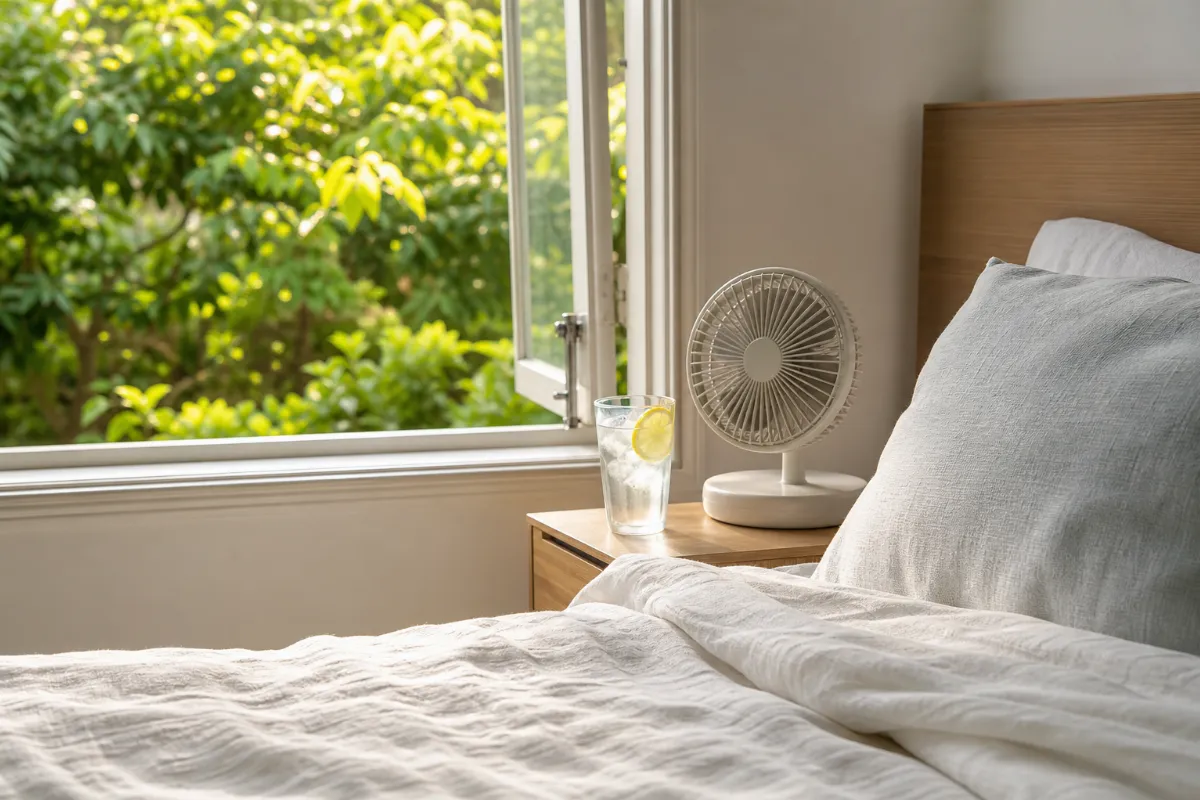
- Use cooling steps: light layers, a cool bedroom, a fan, a cold drink, and cutting back on your personal triggers.
- Book a visit with a doctor if symptoms disturb sleep or daily life, you have palpitations, or you have any bleeding after your periods have stopped.
Optional additions
- Ask about CBT, a guided self-help booklet or clinical hypnosis.
- If you are overweight, discuss gradual weight loss with your health team.
- Review any supplement with a doctor or pharmacist before you start.
What to track
- Number of flashes a day and how many night sweats wake you.
- How bothersome they feel on a simple 0 to 10 scale.
- Sleep, mood and any new symptoms such as palpitations.
When to reassess
Give each change a few weeks, because placebo effects can be large. If the notes show no improvement, or things get worse, return to your clinician to review options.
When to seek professional support
- A GP or menopause-aware clinician for a symptom review and for treatment options.
- A pharmacist for supplement and medicine checks.
- Our pages on perimenopause and menopause, and on women's health and when to get help.
What helps
Ordered by how well the research supports each step. Evidence strength is shown on every card; precautions sit next to the advice.
Start here
Everyday cooling steps
Not enough evidenceAddresses: May make heat and night sweats more comfortable
Why it may help: The NHS suggests lightweight clothing, a cool bedroom at night, a fan, a cold shower or chilled drink, lowering stress and regular activity. NAMS did not list cooling techniques as recommended treatments because the evidence is limited or inconsistent, and we did not find a trial of them. They are comfort steps, not proven treatments.
How to apply it: Dress in thin layers you can remove, keep the bedroom cool, use light bedding and keep a fan or cold water within reach.
Who it may suit: Anyone with hot flashes or night sweats.
Precautions: Low risk, but they may not be enough on their own. See a doctor if symptoms disrupt sleep or daily life.
4,10Cognitive behavioural therapy (CBT)
Moderate certaintyAddresses: Makes hot flushes and night sweats less of a problem
Why it may help: Three UK trials (96, 140 and 124 women) found that CBT, in a group, guided self-help or booklet form, lowered how much hot flushes and night sweats were a problem compared with no treatment or usual care, and the gains held at 20 to 26 weeks. NAMS recommends CBT as a non-hormone option. The NHS also lists CBT.
How to apply it: Ask a doctor or a qualified therapist about a menopause-focused CBT programme or a guided self-help booklet.
Who it may suit: People who want a non-drug option, including women who cannot use hormone therapy.
Precautions: The trials measured how much of a problem symptoms were, not always how many flashes, and used no-treatment or usual-care comparisons rather than attention-matched ones.
8,2,3,10,4Talk to a clinician about medical options
Moderate certaintyAddresses: Opens access to the most effective treatment and to non-hormone prescriptions
Why it may help: NAMS says hormone therapy remains the most effective treatment for hot flashes and should be considered in women within 10 years of their final period. For those who cannot or prefer not to use it, NAMS recommends certain antidepressants and some other non-hormone prescription medicines. The Cochrane reviews of black cohosh and acupuncture found hormone therapy worked better than those. We read the NAMS abstract only, not the full statement.
How to apply it: Book a visit, describe how often the symptoms happen and what they disturb, and ask about the benefits and risks for you.
Who it may suit: Anyone whose symptoms disturb sleep, work or daily life.
Precautions: NCCIH says women with breast cancer, liver disease or a history of blood clots should not use conventional hormone therapy. A clinician weighs risks and decides; this page recommends no medicine or amount.
10,9,11,12,1Additional options
Clinical hypnosis, including hypnosis audio
Moderate certaintyAddresses: Lowers hot flash scores and interference
Why it may help: A 2025 trial of 250 postmenopausal women found self-administered hypnosis audio lowered hot flash scores by 53.4 percent against 40.9 percent with a sham recording at 6 weeks, and more women reported benefit (90.3 against 64.3 percent). NAMS recommends clinical hypnosis.
How to apply it: Ask a clinician or a qualified hypnotherapist, or ask about a structured hypnosis audio programme.
Who it may suit: People who like guided relaxation and want a non-drug option.
Precautions: The sham group also improved a lot, the trial was single-blind with self-reported diaries, and its abstract gave no harms data. NCCIH says hypnotherapy might worsen some psychological problems.
7,10,9Weight loss for those who are overweight
Low certaintyAddresses: Improves bothersome hot flushes
Why it may help: In a trial of 338 overweight or obese women with urinary incontinence, an intensive weight-loss programme was associated with more improvement in bothersome flushing than health education (odds ratio 2.25). The effect weakened after adjustment, and flushing was a secondary outcome. NAMS lists weight loss as recommended at a lower evidence level, and the NHS lists a healthy weight.
How to apply it: Work gradually with your health team on food and activity; see the linked pages on weight in midlife.
Who it may suit: Women who are overweight and want to lower their symptoms and other health risks.
Precautions: Weight-loss programmes are not right for everyone. People with a history of disordered eating, pregnancy, or medical conditions need clinician guidance.
5,10,4Mindfulness-based stress reduction (MBSR)
Low certaintyAddresses: Less bother from hot flashes, plus better sleep and anxiety scores
Why it may help: One waiting-list trial of 110 women found hot flashes and night sweats were less bothersome with MBSR, with quality of life, sleep, anxiety and stress also improving, but the intensity of the flashes did not change. NAMS does not recommend mindfulness-based intervention.
How to apply it: Look for a structured group programme or a qualified teacher.
Who it may suit: People who want a coping skill and are willing to practise.
Precautions: NCCIH says mindfulness may worsen symptoms in some people with chronic physical or mental health conditions. Check with a clinician if you have a mental health condition.
13,10,9Still being studied
Soy foods and isoflavone supplements
Mixed findingsAddresses: A small average reduction in hot flush frequency in some pooled analyses
Why it may help: A Cochrane review of 43 trials (4,364 women) found no conclusive evidence for phytoestrogen supplements, with a strong placebo effect, while a later pooled analysis of ten studies found a small greater reduction in frequency. NCCIH says the effect may be small. NAMS does not recommend soy foods or extracts.
How to apply it: If you want soy, food forms are the usual way; talk to a doctor before taking soy supplements.
Who it may suit: Adults who tolerate soy and have no hormone-sensitive condition.
Precautions: NCCIH cites guidance that people with a personal or strong family history of breast, uterine or ovarian cancer should not use soy-based treatments, and says soy above food amounts may be unsafe in pregnancy.
6,14,15,9,10Red clover extract
Mixed findingsAddresses: About 1.7 fewer hot flushes a day in one pooled analysis
Why it may help: Cochrane found no significant difference from placebo for one red clover extract, while a 2021 pooled analysis of randomised trials found a significant reduction versus placebo, larger in women with five or more flushes a day.
How to apply it: Discuss with a clinician first; products vary a lot.
Who it may suit: Adults without hormone-sensitive conditions.
Precautions: The authors of the pooled analysis call for better trials; the findings come from subgroups with wide confidence intervals. Safety with hormone-sensitive conditions is uncertain.
6,16,9Black cohosh
Mixed findingsAddresses: Mixed results for hot flush frequency
Why it may help: A 2012 Cochrane review of 16 trials found no significant difference from placebo in hot flush frequency and concluded there was insufficient evidence to support use. NCCIH describes a 2023 review that found potential benefit; we did not read that review.
How to apply it: Only after talking with a doctor or pharmacist.
Who it may suit: Adults with no liver problems and no hormone-sensitive condition, under clinician guidance.
Precautions: NCCIH reports rare liver injury, some serious, in people taking products labelled black cohosh, and some products contained the wrong herb. It may not be safe in pregnancy or breastfeeding.
11,17,9Acupuncture
Low certaintyAddresses: Mixed results: no clear gain over sham needling
Why it may help: The Cochrane review (8 trials, 414 women, low quality) found no significant difference from sham needling in hot flush frequency. Compared with no treatment, traditional acupuncture lowered frequency and severity in low-quality evidence, and it was less effective than hormone therapy.
How to apply it: If you choose it, use an experienced practitioner with sterile needles.
Who it may suit: People who value the experience and understand the evidence is limited.
Precautions: Adverse-effect data were lacking in the review. NCCIH says it is generally considered safe with an experienced practitioner. NAMS does not recommend it.
12,9,10Yoga
Mixed findingsAddresses: No effect on hot flush frequency in one 12-week trial, but less insomnia
Why it may help: In a 12-week trial of 249 women there was no difference in hot flash frequency or bother, while the Insomnia Severity Index improved more with yoga. NCCIH describes a 2018 review that found benefit for menopause symptoms; we did not read that review.
How to apply it: Choose a class suited to your fitness and tell the teacher about any joint or heart conditions.
Who it may suit: People who enjoy gentle movement and want help with sleep or stress.
Precautions: NCCIH says injuries from yoga are rare, but some serious ones have been reported. A teacher who adapts poses can help.
18,9,10Evening primrose oil
Not enough evidenceAddresses: Lower severity but not frequency in a 2024 review
Why it may help: A 2024 systematic review found severity lower than placebo in under six months, with no significant difference in frequency or duration; the authors say the evidence is insufficient for firm conclusions.
How to apply it: Discuss with a doctor or pharmacist before trying it.
Who it may suit: Adults who have already talked through other options.
Precautions: Mild nausea and headache were reported. We did not find interaction data in the sources read.
19,9Paced breathing
Evidence againstAddresses: Not recommended by NAMS as a hot flash treatment
Why it may help: NAMS rates paced respiration as not recommended (Level I). The trials behind that rating were not read.
How to apply it: Slow breathing may still help you relax; it should not replace other care for hot flashes.
Who it may suit: Anyone who finds slow breathing calming.
Precautions: No safety concern was found in the sources read.
10Food & nutrition
Foods and drinks that may trigger flashes
The NHS suggests cutting back on possible triggers: spicy meals, caffeine, hot drinks and alcohol. NAMS did not list avoiding trigger foods as a recommended treatment because the evidence is limited or inconsistent, so this is personal trial and error.
A cold drink within reach is one of the NHS comfort suggestions.
- Spicy meals
- Caffeine
- Hot drinks
- Alcohol
Soy foods
Results for soy are mixed: Cochrane found no conclusive evidence for phytoestrogen supplements and a strong placebo effect, while later pooled analyses found a small reduction in hot flush frequency. NCCIH says the effect may be small, and NAMS does not recommend soy foods or extracts.
NCCIH says soy above amounts commonly found in food may be unsafe in pregnancy. People with a personal or strong family history of breast, uterine or ovarian cancer should ask their doctor (NCCIH cites guidance not to use soy-based treatments).
6,14,15,9,10Flaxseed, omega-3 foods and supplements
A placebo-controlled trial found flaxseed bars no better than placebo bars for hot flashes, with gut effects such as bloating and nausea in both groups, probably due to the fibre. A 12-week trial of 355 women found omega-3 no better than placebo. These foods may be fine in a balanced diet; the point is that they were not shown to treat hot flashes.
20,21Eating and weight
The NHS lists a healthy weight among its suggestions, and an intensive weight-loss programme in overweight women was associated with improvement in bothersome flushing. Weight-loss plans should be gradual and guided by your health team; our weight pages cover this.
4,5Remedies & supplements
Traditional use, laboratory findings and human trials are kept apart. "Natural" does not mean safe.
Black cohosh
Mixed findingsStudied form and route: Extract products
Intended outcome: Fewer hot flushes (unclear)
Human evidence: Cochrane (16 trials) found no difference from placebo in hot flush frequency (3 trials, 393 women) or symptom scores (4 trials, 357 women), and called the evidence insufficient. NCCIH describes a 2023 review of 22 studies that found potential benefit, which we did not read.
Traditional use: We did not find traditional-use information in the sources read for this page.
Laboratory findings: We did not find laboratory findings in the sources read for this page.
Limits: Safety evidence was inconclusive because of poor reporting. Products vary and some contained the wrong herb.
Interactions and precautions: Rare liver injury has been reported (causation uncertain). Stop and see a provider if you have dark urine, yellow skin or eyes, abdominal pain or unusual tiredness. May not be safe in pregnancy or breastfeeding; uncertain with hormone-sensitive conditions. Blue cohosh is a different herb with different risks.
11,17,9Soy isoflavones
Mixed findingsStudied form and route: Soy foods and isoflavone extracts
Intended outcome: Possible small reduction in flush frequency
Human evidence: Cochrane found no conclusive evidence in 43 trials; five trials of one product pooled showed no difference from placebo, while four trials of high-genistein extracts consistently reduced flushes. Later pooled analyses found a small average reduction.
Traditional use: We did not find traditional-use information in the sources read for this page.
Laboratory findings: We did not find laboratory findings in the sources read for this page.
Limits: Many trials were small and at high risk of bias, and the placebo effect was strong. Long-term safety is not established. Cochrane's trials excluded women with breast cancer.
Interactions and precautions: Ask a doctor first with a personal or strong family history of breast, uterine or ovarian cancer. Soy above food amounts may be unsafe in pregnancy.
6,14,22,15,9Red clover
Mixed findingsStudied form and route: Extract
Intended outcome: Fewer hot flushes a day (unclear)
Human evidence: A 2021 pooled analysis found a significant reduction versus placebo, larger in women with five or more flushes a day and at 12 weeks; Cochrane found no significant difference for one extract.
Traditional use: We did not find traditional-use information in the sources read for this page.
Laboratory findings: We did not find laboratory findings in the sources read for this page.
Limits: Subgroup findings with wide confidence intervals; products vary; authors call for better trials.
Interactions and precautions: Safety with hormone-sensitive conditions is uncertain. We did not find interaction data in the sources read, so ask a pharmacist.
16,6,9Flaxseed
Evidence againstStudied form and route: Flaxseed bars
Intended outcome: No benefit over placebo
Human evidence: In a placebo-controlled, double-blind trial of 188 women, the hot flash score fell by 4.9 with flaxseed and 3.5 with placebo (P = 0.29), and the authors concluded the results did not support its use for hot flashes.
Traditional use: We did not find traditional-use information in the sources read for this page.
Laboratory findings: We did not find laboratory findings in the sources read for this page.
Limits: One product studied for 6 weeks.
Interactions and precautions: Bloating, wind, diarrhea and nausea were reported in both groups, probably from the fibre.
20,9Omega-3 fish oil
Evidence againstStudied form and route: Supplement
Intended outcome: No benefit over placebo
Human evidence: A 12-week placebo-controlled trial of 355 women found hot flashes fell by 2.5 a day with omega-3 and 2.7 with placebo, with no difference in bother, sleep or mood.
Traditional use: We did not find traditional-use information in the sources read for this page.
Laboratory findings: We did not find laboratory findings in the sources read for this page.
Limits: One product, 12 weeks, in healthy sedentary women.
Interactions and precautions: We did not find safety data in the sources read; ask a pharmacist if you take blood thinners.
21Evening primrose oil
Not enough evidenceStudied form and route: Oil capsules
Intended outcome: Lower severity but not frequency
Human evidence: A 2024 systematic review found lower severity than placebo in under six months and no significant difference in frequency or duration. The authors say evidence is insufficient.
Traditional use: We did not find traditional-use information in the sources read for this page.
Laboratory findings: We did not find laboratory findings in the sources read for this page.
Limits: The abstract gave no trial count or effect sizes.
Interactions and precautions: Mild nausea and headache were reported.
19,9Therapies & care
Established medical care comes first. Hormone therapy is the most effective treatment, according to NAMS, and certain non-hormone prescriptions exist too; a clinician decides what suits each person based on benefits and risks. Never start, stop or change a prescribed medicine on the strength of this page.
CBT for menopausal symptoms
Moderate certaintyPsychological therapy Group, guided self-help or booklet programmes lowered how much hot flushes and night sweats were a problem in three UK trials, with some gains in sleep, mood and work adjustment. NAMS recommends it.
Who it may suit: Anyone, including breast cancer survivors (MENOS 1).
Precautions: Not attention-matched trials; results are about bother.
8,2,3,10Clinical hypnosis
Moderate certaintyMind-body therapy A 2025 trial found hypnosis audio lowered hot flash scores more than a sham recording at 6 weeks. NAMS recommends clinical hypnosis.
Who it may suit: Adults who want a non-drug option.
Precautions: Hypnotherapy might worsen some psychological problems (NCCIH).
7,10,9Hormone therapy (as a class)
Moderate certaintyMedical treatment NAMS says it remains the most effective treatment and should be considered within 10 years of the final period. Cochrane found it reduced flushes more than black cohosh, exercise and acupuncture.
Who it may suit: Women who can use it, after a clinician weighs benefits and risks.
Precautions: NCCIH says women with breast cancer, liver disease or a history of blood clots should not use conventional hormone therapy.
10,11,23,12,9Non-hormone prescriptions (as a class)
Moderate certaintyMedical treatment NAMS recommends certain antidepressants and some other non-hormone prescription medicines, and lists a few at lower evidence levels. We read the NAMS abstract only, not the trials.
Who it may suit: Women who cannot or prefer not to use hormone therapy.
Precautions: Medicines have their own side effects and interactions; a clinician advises. We name no medicine or amount.
10Acupuncture
Low certaintyComplementary therapy No clear gain over sham needling for flush frequency in the Cochrane review; better than no treatment and worse than hormone therapy.
Who it may suit: People who value it and accept limited evidence.
Precautions: Use an experienced practitioner with sterile needles. Data on adverse effects were lacking.
12,9,10Yoga and mindfulness
Mixed findingsMind-body practice Yoga did not reduce flush frequency in a 12-week trial but lowered insomnia scores. MBSR reduced bother but not intensity.
Who it may suit: People who want help with sleep and coping.
Precautions: Injuries from yoga are rare but some serious ones have been reported. Mindfulness may worsen symptoms in some people with chronic conditions (NCCIH).
18,13,9What to avoid
Habits, products and claims that can get in the way. Never stop a prescribed medicine without talking to the professional who prescribed it.
Risks that apply to most people
Smoking
Not enough evidenceWhy: The NHS lists smoking among the possible triggers to cut back on for hot flushes.
Who it applies to: Anyone with hot flashes who smokes.
Try instead: Ask a doctor or pharmacist about support to stop smoking.
4Taking supplements without telling your clinician
Moderate certaintyWhy: NCCIH says supplements can have side effects or interact with drugs, and long-term safety is largely unknown. The sources read list no specific interactions for soy, red clover, flaxseed or evening primrose oil, but absence of a study is not proof of safety.
Who it applies to: Anyone taking prescribed medicines, especially for the liver, hormones, mood or blood clotting.
Try instead: Tell your doctor or pharmacist about every supplement you use.
9,17Personal triggers to check
Alcohol, caffeine, hot drinks and spicy meals
Not enough evidenceWhy: The NHS lists these as possible triggers to cut back on. NAMS did not recommend avoiding trigger foods as a treatment because the evidence is limited or inconsistent.
Who it applies to: People whose flashes follow these. Triggers differ from person to person.
Try instead: Notice what sets yours off and reduce those items rather than banning everything.
4,10A warm bedroom and heavy bedding
Not enough evidenceWhy: The NHS suggests a cool bedroom, lightweight clothing and a fan, which implies heat can worsen night sweats. No trial of this was read.
Who it applies to: People with night sweats.
Try instead: Use light layers you can peel off and keep the room cool.
4Letting stress build up
Low certaintyWhy: The NHS lists lowering stress among its suggestions. CBT and mindfulness trials reduced how bothersome symptoms were.
Who it applies to: People who notice flashes during stressful times.
Try instead: Try the CBT, hypnosis or mindfulness options above, and wind-down routines.
4,13,2Products that need caution
Black cohosh products with liver trouble or unclear labels
Mixed findingsWhy: NCCIH says liver damage, some serious, has been reported in people taking products labelled black cohosh. Cases are rare and causation is uncertain, and some products contained the wrong herb or undeclared mixtures.
Who it applies to: Anyone with liver symptoms or liver disease; pregnancy and breastfeeding; hormone-sensitive conditions.
Try instead: Ask a doctor first. If you get dark urine, yellow skin or eyes, abdominal pain or unusual tiredness, stop it and see a provider.
17,9Soy or red clover supplements with a hormone-sensitive condition
Moderate certaintyWhy: NCCIH cites guidance not to use soy-based treatments with a personal or strong family history of breast, uterine or ovarian cancer, and says long-term safety of phytoestrogens is not established.
Who it applies to: People with, or at higher risk of, breast, uterine or ovarian cancer.
Try instead: Ask your cancer team or doctor before any supplement.
9,15,6High-amount vitamin E supplements while on blood thinners
Low certaintyWhy: NCCIH's menopause page says high supplement amounts of vitamin E may increase bleeding risk and interact with warfarin.
Who it applies to: People on blood thinners.
Try instead: Ask a doctor or pharmacist before taking vitamin E.
9Unsupported claims
"Natural hormone balancers work as well as hormone therapy"
Moderate certaintyWhy: The Cochrane reviews found hormone therapy reduced flushes more than black cohosh, exercise and acupuncture, and NAMS says hormone therapy remains the most effective treatment and does not recommend supplements and herbal remedies.
Who it applies to: Product labels and social media.
Try instead: Weigh supplements as optional extras with uncertain benefit and ask a clinician about proven options.
11,12,10,23Botanicals for menopause and hormone claims → Evaluate Hormone Balance Products & Claims →
"Flaxseed or fish oil stops hot flashes"
Evidence againstWhy: A placebo-controlled trial of 188 women found flaxseed bars no better than placebo bars, and a trial of 355 women found omega-3 no better than placebo for frequency, bother, sleep or mood.
Who it applies to: Anyone buying flaxseed or fish oil for flashes.
Try instead: Eat these foods for other reasons if you like them, not as a hot flash treatment.
20,21"Exercise cures hot flashes"
Evidence againstWhy: Cochrane found insufficient evidence, and a 12-week aerobic exercise trial found no effect on hot flushes. Exercise can still help sleep, mood and health in general.
Who it applies to: People hoping exercise alone will stop flashes.
Try instead: Stay active for general health and treat any effect on flashes as a bonus.
23,24,10Common mistakes
Putting up with symptoms that disrupt sleep or daily life
Moderate certaintyWhy: The NHS says to see a GP to know your options, if you have palpitations, or if symptoms disrupt daily life.
Who it applies to: Anyone struggling to sleep or work.
Try instead: Make an appointment and bring a short note of how often and when flashes happen.
1Treating bleeding as a hot flash problem
Moderate certaintyWhy: The NHS says any vaginal bleeding after 12 months without a period needs a GP, even once or light. Hot flash remedies do not explain or treat bleeding.
Who it applies to: Women after their periods have stopped.
Try instead: See a GP promptly about any such bleeding.
1Judging a remedy only by how you feel in a few days
Moderate certaintyWhy: Placebo effects were large in the trials we read, with sham groups improving by roughly 40 percent in the hypnosis trial and by up to 59 percent in the phytoestrogen trials.
Who it applies to: Anyone trying a new product.
Try instead: Note symptoms before and after, and ask a clinician how long to try anything.
6,7Evidence & safety
What the research shows
The best evidence is trials and reviews. CBT and clinical hypnosis have moderate non-hormone trial support, hormone therapy is the most effective treatment, and weight loss, mindfulness and acupuncture have lower-level support. Soy, red clover and black cohosh have mixed results, while flaxseed, omega-3, exercise and paced breathing have evidence against an effect on flashes. Rare liver injury is reported with black cohosh products.
Limits of the evidence
- We did not find a trial of cooling, layering or trigger avoidance, so those steps rest on guidance, not trial results.
- CBT trials compared with no treatment or usual care, not attention-matched comparisons.
- The 2023 black cohosh review and the 2018 yoga review cited by NCCIH were not read.
- Hormone therapy and other medicines were named from the NAMS abstract only; their trials were not read.
- Most supplement trials are short, and long-term safety is largely unknown.
- Other causes of hot flushes and night sweats were not covered by the sources read.
Precautions and interactions
- Natural does not mean risk free. Ask a doctor or pharmacist before combining supplements with any medicine.
- Do not start, stop or change prescribed medicines, including hormone therapy, without a clinician.
- Tell every provider about every supplement and complementary approach you use.
Life-stage considerations
- Pregnancy and breastfeeding: black cohosh may not be safe, and soy above food amounts may be unsafe in pregnancy (NCCIH). Ask a doctor or midwife before any supplement.
- History of breast, uterine or ovarian cancer, or hormone-sensitive conditions: ask your cancer team or doctor before soy, red clover or black cohosh. Women with breast cancer should not use conventional hormone therapy (NCCIH). CBT and hypnosis were studied in breast cancer survivors.
- Women from a Black ethnic background are more likely to have severe, longer-lasting hot flushes (NHS), which is a reason to seek help early if symptoms are hard to manage.
- Liver disease: women with liver disease should not use conventional hormone therapy (NCCIH), and anyone with liver symptoms should avoid black cohosh and see a provider.
Warning signs
- Any vaginal bleeding after 12 months without a period, even once or light.
- Bleeding heavier than before while you still have periods.
- A racing, pounding or irregular heartbeat; chest pain, severe breathlessness or fainting need emergency care.
- Dark urine, yellow skin or eyes, abdominal pain or unusual tiredness while using a herbal product.
- Low mood that does not lift, or symptoms that disrupt sleep and daily life.
Claim checks
Black cohosh is a proven natural fix for hot flashes
Mixed findingsNot proven. Cochrane found no difference from placebo in hot flush frequency; NCCIH describes a later review with potential benefit. Rare liver injury has been reported.
11,17Soy cures hot flashes
Mixed findingsResults are mixed. Cochrane found no conclusive evidence; later pooled analyses found a small reduction. NCCIH says the effect may be small.
6,14,15Flaxseed or fish oil stops hot flashes
Evidence againstNot supported. Placebo-controlled trials found no benefit over placebo.
20,21CBT can help with hot flashes
Moderate certaintySupported for how much of a problem symptoms are. Three UK trials found improvements versus no treatment or usual care.
8,2,3,10Exercise reduces the number of hot flashes
Evidence againstNot shown. Cochrane found insufficient evidence and a 12-week trial found no effect on frequency or bother.
23,24Questions people ask
What are hot flashes and night sweats?
The NHS describes hot flushes as the face, neck and chest suddenly feeling very hot or cold, sometimes with heavy sweating, palpitations, anxiety or dizziness. At night they are called night sweats. Each episode can last several minutes.
How long do hot flashes last?
The NHS says menopause-related symptoms usually last 7 to 9 years, sometimes longer, and can change over time. Women from a Black ethnic background are more likely to have severe hot flushes that last longer.
What practical steps help with hot flashes?
The NHS suggests lightweight clothing, a cool bedroom, a fan, cutting back on triggers such as spicy food, caffeine, alcohol and smoking, regular activity and a healthy weight. NAMS says the trial evidence for cooling and trigger avoidance is limited or inconsistent, so they are comfort steps.
Does CBT help hot flashes and night sweats?
Three UK trials found that CBT made hot flushes and night sweats less of a problem than no treatment or usual care, and NAMS recommends it. The trials measured how much of a problem the symptoms were, and there was no attention-matched comparison.
Does hypnosis work for hot flashes?
A 2025 trial of 250 postmenopausal women found self-administered hypnosis audio lowered hot flash scores 53.4 percent against 40.9 percent with a sham recording. NAMS recommends clinical hypnosis.
What is the most effective treatment for hot flashes?
NAMS says hormone therapy remains the most effective, and should be considered within 10 years of the final period. Non-hormone options named include certain antidepressants and other prescription medicines. A clinician decides what suits each person.
Does soy help hot flashes?
Results are mixed. A Cochrane review of 43 trials found no conclusive evidence for phytoestrogen supplements and a strong placebo effect, while a later pooled analysis found a small reduction in hot flush frequency. NCCIH says the effect may be small. NAMS does not recommend soy foods or extracts.
Does black cohosh work, and is it safe?
A 2012 Cochrane review of 16 trials found no difference from placebo in hot flush frequency; NCCIH describes a 2023 review of 22 studies finding potential benefit. NCCIH says rare liver injury has been reported with black cohosh products, though causation is uncertain. Anyone with liver symptoms should stop and see a provider.
What about red clover, flaxseed, evening primrose oil and omega-3?
Red clover results differ between reviews. A flaxseed trial of 188 women and an omega-3 trial of 355 women found no benefit over placebo. A 2024 review of evening primrose oil found lower severity but the authors say the evidence is insufficient.
Do acupuncture, yoga or exercise help?
A Cochrane review found acupuncture no better than sham needling for frequency. A 12-week yoga trial and a 12-week exercise trial found no effect on hot flush frequency, although yoga lowered insomnia symptoms. Both can have other benefits.
When should I see a doctor?
The NHS says to see a GP if you want to know your options, if you have palpitations, if you are bleeding more than before while still having periods, or if you have any vaginal bleeding after 12 months without a period, even once and even if light. Hot flashes that disrupt sleep or daily life are also a reason to ask for help.
Can I take supplements if I have had breast cancer?
Ask your cancer team first. NCCIH says safety of black cohosh is uncertain with hormone-sensitive conditions, and its menopause page cites guidance not to use soy-based treatments with a personal or strong family history of breast, uterine or ovarian cancer. CBT and hypnosis were studied in breast cancer survivors.
References
- NHS. Symptoms of menopause and perimenopause (last reviewed 19 May 2026). Read through a summarising tool. source
- Effectiveness of group and self-help cognitive behavior therapy in reducing problematic menopausal hot flushes and night sweats (MENOS 2): a randomized controlled trial. Menopause 2012 (140 women). source
- Self-help cognitive behavior therapy for working women with problematic hot flushes and night sweats (MENOS@Work): a multicenter randomized controlled trial. Menopause 2018 (124 women). source
- NHS. Things you can do to help menopause and perimenopause symptoms (last reviewed 19 May 2026). Read through a summarising tool. source
- An intensive behavioral weight loss intervention and hot flushes in women. Arch Intern Med 2010 (338 women). source
- Phytoestrogens for menopausal vasomotor symptoms. Cochrane Database Syst Rev 2013 (43 trials, 4,364 women). source
- Self-Administered Hypnosis vs Sham Hypnosis for Hot Flashes: A Randomized Clinical Trial. JAMA Netw Open 2025 (250 women). source
- Cognitive behavioural treatment for women who have menopausal symptoms after breast cancer treatment (MENOS 1): a randomised controlled trial. Lancet Oncol 2012 (96 women). source
- NCCIH. Menopausal Symptoms and Complementary Health Approaches: In Depth (page marked last updated May 2017). Read through a summarising tool. source
- The 2023 nonhormone therapy position statement of The North American Menopause Society. Menopause 2023. Abstract read via PubMed; full statement not read. source
- Black cohosh (Cimicifuga spp.) for menopausal symptoms. Cochrane Database Syst Rev 2012 (16 trials, 2,027 women). source
- Acupuncture for menopausal hot flushes. Cochrane Database Syst Rev 2013 (16 trials, 1,155 women). source
- Mindfulness training for coping with hot flashes: results of a randomized trial. Menopause 2011 (110 women). source
- Efficacy of phytoestrogens for menopausal symptoms: a meta-analysis and systematic review. Climacteric 2015. source
- NCCIH. Soy (page updated April 2025). Read through a summarising tool. source
- Evaluation of clinical meaningfulness of red clover (Trifolium pratense L.) extract to relieve hot flushes and menopausal symptoms in peri- and post-menopausal women: a systematic review and meta-analysis of randomized controlled trials. Nutrients 2021. source
- NCCIH. Black Cohosh (page updated November 2024). Read through a summarising tool. source
- Efficacy of yoga for vasomotor symptoms: a randomized controlled trial. Menopause 2014 (249 women). source
- Evening primrose oil for menopause hot flashes: systematic review and meta-analysis. J Menopausal Med 2024. source
- A phase III, randomized, placebo-controlled, double-blind trial of flaxseed for the treatment of hot flashes: North Central Cancer Treatment Group N08C7. Menopause 2012 (188 women). source
- Efficacy of omega-3 for vasomotor symptoms treatment: a randomized controlled trial. Menopause 2014 (355 women). source
- Efficacy of plant-derived dietary supplements in improving overall menopausal symptoms in women: an updated systematic review and meta-analysis. Phytother Res 2024. source
- Exercise for vasomotor menopausal symptoms. Cochrane Database Syst Rev 2014. source
- Efficacy of exercise for menopausal symptoms: a randomized controlled trial. Menopause 2014 (248 women). source
Related on AlternativeMed
Related goals
Support Your Wellbeing Through Menopause → Adapt Healthy Habits to Midlife Changes → Understand Hormonal Changes → Recognize When Hormonal Symptoms Need Evaluation → Stay Asleep Through the Night → Evaluate Hormone Balance Products & Claims →
Ingredients, foods and supplements
Black cohosh → Red clover → Soy foods → Flaxseed → Evening primrose, borage and GLA oils →
Research, safety and claim-check resources
Botanicals for menopause and hormone claims → Women's Wellness: a starting guide by life stage → Women's Wellness research and evidence → Acupuncture → Yoga → Meditation →