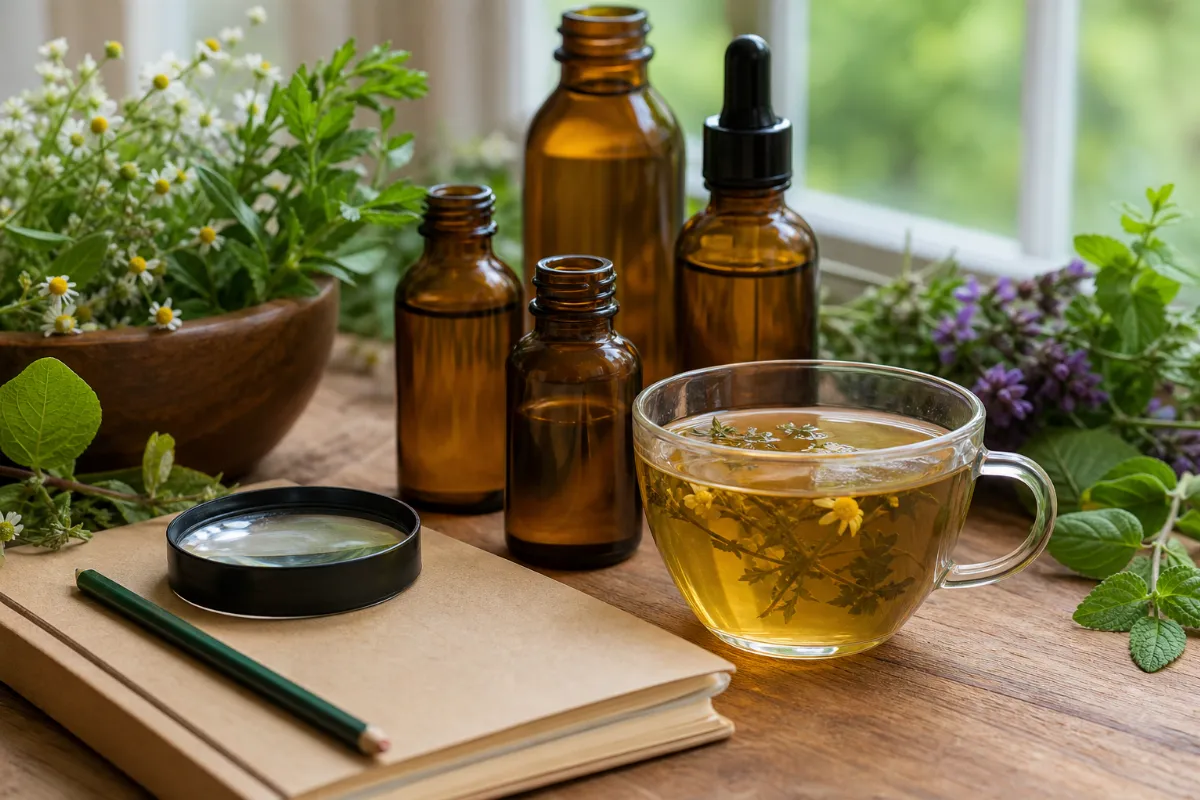
Understand Your Hormonal Health
Evaluate “Hormone Balance” Products & Claims
Shelves, feeds and test kits are full of promises to “balance your hormones naturally.” This page helps you weigh those promises: what the research actually supports, where the cautions are, and why symptoms that worry you are better checked by a clinician than treated with a guess.
General information, not medical advice. Last updated November 1, 2026. Written by the AlternativeMed editorial team. Not medically reviewed.
Start here
- Before buying anything, write down the exact symptom you want help with, and ask what evidence shows the product helps that symptom in people, not just in cells or animals.
- Treat the words “balance,” “detox” and “support” on a label as marketing terms, not findings. Look for named human trials and named health agencies instead.
- If the symptoms are new, strong or lasting (irregular or missing periods, tiredness that will not lift, weight change, palpitations), see a clinician for proper tests first; see the linked evaluation page.
Be careful with
- Herbs and supplements can interact with medicines, including thyroid, diabetes and hormone-related medicines. Check with a pharmacist or doctor before starting any, and never stop or change a prescribed medicine because of a product.
- Pregnancy, breastfeeding, and a history of hormone-sensitive conditions (such as some breast, uterine or ovarian cancers) are reasons to avoid several popular hormone herbs unless a clinician agrees.
- Biotin (often sold for hair and nails) can make some blood tests read falsely high or low, including thyroid tests. Tell whoever orders your tests about every supplement you take.
- Kelp and other iodine-rich products can push iodine intake too high. Do not use them to “fix” the thyroid.
- “Natural” does not mean safe or standardised: product content can differ from the label.
Get help when
- Very heavy or long-lasting bleeding, or no periods for 3 months or more when you are not pregnant.
- A new breast lump or nipple discharge.
- Sudden severe headache or a change in vision.
- Fast or unexplained weight change, palpitations, a swelling in the neck, or trouble swallowing.
- Extreme thirst or passing large amounts of urine.
- Excess hair growth together with a deepening voice.
- Low mood that lasts two weeks or more, loss of interest, or any thoughts of self-harm: speak to a doctor or a local crisis line now. See the mood pages linked below.
- Symptoms that keep going or start to worry you, even if none of these fit: a clinician can order the right tests, which a supplement cannot replace.
About Evaluate “Hormone Balance” Products & Claims
What this goal means
This goal is about judging “hormone balance” products and claims: supplements, teas, powders, test kits, cleanses and programs sold with promises to fix, reset or optimise your hormones. It is not a guide to treating any hormone condition. Understanding normal changes, tests, thyroid care and sleep each have their own pages.
1What the claims often sound like
Common wording includes “balance your hormones naturally,” “detox your hormones,” “fix estrogen dominance,” “reset your cortisol,” “adrenal support” and “seed cycling.” These are popular phrases, but most are not recognised medical diagnoses or measured outcomes.
The Endocrine Society says there is no scientific proof that “adrenal fatigue” is a real medical condition, that no test can detect it, and that supplements sold for it could hurt you. We did not find a recognised diagnosis behind “estrogen dominance” or “hormone detox” in the agency sources we read for this page.
1Why symptoms get blamed on hormones
Tiredness, low mood, weight change, poor sleep, hair thinning and irregular periods are real and common, but they have many possible causes. The NHS says, for example, that having the symptoms of polycystic ovary syndrome does not definitely mean you have it, and that an underactive or overactive thyroid can look like other problems and needs a blood test.
This is why a product aimed at “hormones” in general can miss the real cause.
2,3,4Conditions that can be behind it
Thyroid conditions, polycystic ovary syndrome, perimenopause and menopause, and several non-hormonal problems (sleep, anemia, low mood, medicines) can all cause symptoms that products claim to balance. Each has established care, so it is worth getting checked before trying supplements.
3,4,2,5Realistic expectations
For a few botanicals there is some human research, but it is limited and specific to a symptom. Black cohosh has been studied for menopause hot flashes; chasteberry has been studied for premenstrual symptoms and breast tenderness. No product has been shown to “balance” hormones overall.
Expect to find modest, uncertain effects at best, and judge any product by the single symptom it is meant to help.
6,7,8Who this applies to
Adults and older teens considering hormone-related products for themselves. Children and younger teens, pregnant or breastfeeding people, and anyone with a hormone-sensitive condition or a thyroid, diabetes or hormone-related prescription should speak to a clinician first. For normal changes across life see Understand Hormonal Changes.
6Related conditions and symptoms
Thyroid Problems and Fatigue → Polycystic Ovary Syndrome (PCOS) → Anxiety disorders →
A manageable starting plan
An educational starting point, not a personal prescription. Adjust it to your own situation and any advice from your clinician.
Your first actions
- Name the symptom you want help with and how long it has lasted.
- If symptoms are new, lasting or strong, book a clinician visit and bring a list of all supplements and medicines.
- Check any product against NCCIH or NHS pages for the named symptom, pregnancy and medicine cautions.
- Do not stop or change prescribed medicines because of a product.
Optional additions
- Use the claim-check and ingredient pages linked here for individual products.
- Try one product at a time only with pharmacist or clinician advice, and for a limited time.
What to track
- Your symptom and its severity over weeks.
- Every supplement, start date and any side effect.
- Questions to ask at your appointment.
When to reassess
If there is no clear change within the time you set, or you have side effects, stop the product and speak to a clinician or pharmacist.
When to seek professional support
- A GP or primary-care clinician for symptoms and tests.
- A pharmacist for supplement and medicine interactions.
- The linked mood pages and a local crisis line if low mood or thoughts of self-harm appear.
What helps
Ordered by how well the research supports each step. Evidence strength is shown on every card; precautions sit next to the advice.
Start here
Pick one symptom and one question: “what is the human evidence?”
Moderate certaintyAddresses: Turns vague promises into something you can check
Why it may help: “Hormone balance” is not a measured outcome. The research we found looks at specific symptoms, such as hot flashes or premenstrual breast tenderness. Naming your symptom lets you see whether a product has been tested for it at all.
How to apply it: Write the symptom, how long it has lasted and how bad it is. Search a health agency page (NHS, NCCIH, NIH) for the product plus that symptom. If no human research is named, treat the claim as unproven.
Who it may suit: Anyone looking at a product label or ad.
Precautions: This is a decision habit, not a treatment. Symptoms that worry you still need a clinician.
6,7Get symptoms checked before supplementing
High certaintyAddresses: Finds treatable causes that a supplement can hide
Why it may help: The NHS advises seeing a GP when symptoms of an underactive or overactive thyroid appear, and describes blood tests that measure thyroid-stimulating hormone and thyroxine. It likewise advises a GP visit if you think you might have polycystic ovary syndrome, and for heavy bleeding or palpitations around menopause.
How to apply it: Book a routine appointment, list your symptoms and every supplement you take, and ask which tests are appropriate.
Who it may suit: Anyone with symptoms that last or keep returning.
Precautions: Tests are chosen by a clinician; see the tests page for what they can and cannot show.
3,4,2,5Recognize When Hormonal Symptoms Need Evaluation → Understand Hormone Tests →
Tell every clinician and lab about all supplements, especially biotin
Moderate certaintyAddresses: Avoids misleading blood test results
Why it may help: A review in Endocrine Practice reports that high-dose over-the-counter biotin supplements have been linked to rising numbers of reports of interference in immunoassays used to assess endocrine function, producing falsely increased or decreased results, and urges clinicians to consider biotin as a possible cause when a result does not fit the clinical picture.
How to apply it: Bring a list of supplements to appointments. Ask whether a biotin product should be paused before a particular test, and follow that clinician's advice rather than guessing.
Who it may suit: Anyone taking biotin, hair-skin-nail or multi-ingredient “beauty” products before blood tests.
Precautions: Do not stop prescribed medicines on your own.
9Check pregnancy, medicine and cancer-history cautions first
Moderate certaintyAddresses: Prevents the most serious product harms
Why it may help: NCCIH says black cohosh may not be safe in pregnancy or breastfeeding and that safety is uncertain with hormone-sensitive conditions such as breast or uterine cancer. For chasteberry it says it may be unsafe in pregnancy or breastfeeding and may not be safe for people with breast, uterine or ovarian cancer. NCCIH advises talking to a provider before using herbs with medicines.
How to apply it: Show the ingredient list to a pharmacist and ask about your medicines and history before trying a product.
Who it may suit: Pregnant or breastfeeding people, anyone with a hormone-sensitive condition, and anyone taking regular medicines.
Precautions: Never stop or change hormone, thyroid, diabetes or contraceptive medicines because of a supplement.
6,7Use steady lifestyle basics for the symptoms they are known to help
Moderate certaintyAddresses: Sensible support without a product
Why it may help: For polycystic ovary syndrome the NHS recommends a healthy balanced diet and regular exercise, and suggests weight loss may help if you are overweight. These are general habits, not hormone “resets.”
How to apply it: Aim for regular meals, movement you enjoy and enough sleep, and see the condition page for details.
Who it may suit: Adults with symptoms linked to polycystic ovary syndrome or midlife changes.
Precautions: Anyone with an eating-disorder history or a medical condition should adapt habits with a clinician.
2Polycystic Ovary Syndrome (PCOS) → Understand How Sleep & Hormones Interact →
Ask what a test kit can actually show
Moderate certaintyAddresses: Avoids paying for results that cannot guide care
Why it may help: The Endocrine Society says no test can detect adrenal fatigue and that blood or saliva tests sometimes offered for it are not supported by good science, so their results may be unreliable.
How to apply it: Ask the seller which condition the test diagnoses, whether a recognised guideline uses it, and who will interpret it. Prefer tests ordered by your own clinician.
Who it may suit: Anyone considering a home or online hormone panel.
Precautions: A result from a kit should not change your medicines.
1,9Additional options
Read labels for ingredients that affect the thyroid
Moderate certaintyAddresses: Avoids unplanned thyroid effects
Why it may help: NCCIH says ashwagandha is not recommended for people with thyroid disorders and may interact with thyroid hormone medicines. Kelp and similar sea products are high in iodine, which can affect thyroid function.
How to apply it: Look for kelp, seaweed, iodine and ashwagandha on blends. If you have a thyroid condition, ask your clinician before using them.
Who it may suit: People with thyroid conditions or thyroid medicine.
Precautions: Do not change thyroid medicine dose or timing because of a supplement.
10,3Thyroid Problems and Fatigue → Support Wellbeing With a Thyroid Condition →
Watch for liver warning signs with some herbs
Low certaintyAddresses: Catches rare but serious reactions early
Why it may help: NCCIH reports rare liver problems linked to black cohosh and to ashwagandha, though it is unclear whether black cohosh caused the cases. It advises talking to a provider if symptoms such as dark urine or fatigue develop. Some commercial black cohosh products have contained the wrong herb or unlisted herbs.
How to apply it: Stop the product and contact a clinician if you notice dark urine, yellowing, pain under the right ribs or unusual fatigue.
Who it may suit: Anyone taking these herbs.
Precautions: People with liver disease or on liver-affecting medicines should avoid them unless advised.
6,10Choose a single, time-limited trial if you do try a product
Low certaintyAddresses: Keeps results interpretable and risks small
Why it may help: Studies of chasteberry for premenstrual symptoms used the extract for up to 3 months, according to NCCIH, with mostly mild side effects such as nausea, stomach pain, diarrhea, headache or itching.
How to apply it: Only after clinician or pharmacist advice, try one product at a time, track the symptom and stop if there are side effects or no change.
Who it may suit: Adults without pregnancy, hormone-sensitive conditions or interacting medicines.
Precautions: Not a replacement for evaluation.
7Use mood and sleep pages for the symptoms people often label “hormonal”
Moderate certaintyAddresses: Targets the real problem
Why it may help: Poor sleep, low mood and stress are everyday causes of tiredness and irritability and have their own evidence-based pages.
How to apply it: Start with the linked pages rather than a hormone product.
Who it may suit: People whose main symptoms are mood, sleep or stress.
Precautions: Low mood lasting two weeks or more needs a doctor.
3Support a More Balanced Mood → Understand How Sleep & Hormones Interact →
Still being studied
Chasteberry (Vitex agnus-castus) for premenstrual symptoms
Low certaintyAddresses: Possible modest help with premenstrual symptoms
Why it may help: A systematic review and meta-analysis in the American Journal of Obstetrics and Gynecology found 17 randomized trials of Vitex agnus-castus preparations in premenstrual syndrome, with 14 usable in the pooled analysis, and 13 of 14 placebo- or other-controlled studies reported positive effects. NCCIH says some research suggests chasteberry might reduce premenstrual symptoms such as breast tenderness but better-quality evidence is needed.
How to apply it: Studied as an extract taken for at least two cycles; talk to a clinician or pharmacist first.
Who it may suit: Adults with regular premenstrual symptoms who are not pregnant.
Precautions: May be unsafe in pregnancy and breastfeeding and for people with breast, uterine or ovarian cancer; check medicines with a pharmacist.
8,7Black cohosh for menopause symptoms
Low certaintyAddresses: May ease hot flashes for some people
Why it may help: NCCIH says a 2023 review of 22 studies found black cohosh products potentially beneficial for overall menopause symptoms, with hot flashes improving but not anxiety or depressive symptoms.
How to apply it: Discuss with a clinician; the claim-check page covers black cohosh, soy and red clover together.
Who it may suit: Adults with menopause symptoms and no cautions.
Precautions: Rare liver reports; avoid in pregnancy, breastfeeding and uncertain in hormone-sensitive cancers.
6Black Cohosh, Soy, Red Clover and "Hormone Balance" Claims → Black cohosh →
Food & nutrition
Food and “hormone balance”
We did not find a food, juice, tea or “cycle” plan that the agency sources read for this page recommend for balancing hormones. For polycystic ovary syndrome the NHS recommends a healthy balanced diet and regular exercise, and for weight loss it points to its own support tools.
Seed cycling and similar plans are popular online, but we did not find human trials or agency guidance supporting them for hormone balance, so they remain unproven.
2Iodine-rich foods and seaweed
Iodine is needed by the thyroid. The NHS lists too little dietary iodine as a rare cause of an underactive thyroid in the UK. Seaweed and kelp supplements can contain a lot of iodine, so supplements are not a casual add-on for people with thyroid conditions.
3Remedies & supplements
Traditional use, laboratory findings and human trials are kept apart. "Natural" does not mean safe.
Black cohosh
Low certaintyStudied form and route: Standardised root extract, studied for menopause symptoms
Intended outcome: Possible reduction of hot flashes
Human evidence: NCCIH says a 2023 review of 22 studies found black cohosh products potentially beneficial for overall menopause symptoms, with hot flashes improved but anxiety and depressive symptoms not.
Laboratory findings: Not reviewed for this page.
Limits: NCCIH says it is uncertain whether it reduces hot flashes caused by breast cancer treatment. Some commercial products contained the wrong or unlisted herbs.
Interactions and precautions: Rare serious liver cases reported, unclear causation. May not be safe in pregnancy or breastfeeding. Safety uncertain with hormone-sensitive cancers. Speak to a clinician before use.
6Black cohosh → Black Cohosh, Soy, Red Clover and "Hormone Balance" Claims →
Chasteberry (Vitex)
Low certaintyStudied form and route: Fruit extract, studied for premenstrual symptoms
Intended outcome: Possible easing of premenstrual symptoms such as breast tenderness
Human evidence: A meta-analysis of randomized trials in premenstrual syndrome found 17 trials, 14 usable in pooled analysis, with 13 of 14 placebo- or other-controlled studies reporting positive effects. NCCIH says higher-quality evidence is needed.
Limits: Trial quality and designs vary. NCCIH describes studies of up to 3 months.
Interactions and precautions: Mild side effects (nausea, stomach pain, diarrhea, headache, itching). May be unsafe in pregnancy and breastfeeding, and in people with breast, uterine or ovarian cancer. Ask a pharmacist about medicines.
8,7Ashwagandha
Low certaintyStudied form and route: Root extract sold as “cortisol” or “thyroid” support
Intended outcome: Possible help with stress and sleep, not hormone balance
Human evidence: NCCIH says some ashwagandha preparations may be effective for insomnia and stress, while evidence for anxiety is unclear.
Limits: We did not find evidence that it “balances” hormones.
Interactions and precautions: NCCIH does not recommend it for people with thyroid disorders and warns of interactions with thyroid hormone, diabetes, blood pressure, immunosuppressant, sedative and anti-seizure medicines. Rare liver injury has been reported. Avoid in pregnancy and breastfeeding.
10Ashwagandha → Cortisol, "Adrenal Fatigue" and What the Science Supports →
Maca, red clover, evening primrose and similar “hormone” botanicals
Not enough evidenceStudied form and route: Powders and extracts
Intended outcome: Not established for hormone balance
Human evidence: We did not find a source read for this page that shows these products balance hormones.
Limits: Insufficient evidence reviewed here. See the ingredient pages and the claim-check page.
Interactions and precautions: Pregnancy, breastfeeding, hormone-sensitive conditions and medicines: ask a clinician or pharmacist first.
7Maca → Red clover → Evening primrose → Black Cohosh, Soy, Red Clover and "Hormone Balance" Claims →
Biotin
Moderate certaintyStudied form and route: Hair, skin and nail supplements
Intended outcome: Not a hormone treatment; matters because of test interference
Human evidence: A review reports that high-dose over-the-counter biotin has been linked to analytical interference in immunoassays used to evaluate endocrine function.
Limits: Biotin is not shown here to affect hormones themselves.
Interactions and precautions: Tell clinicians and labs before blood tests.
9Therapies & care
Established care for hormone-related symptoms starts with a clinician who can take a history and order appropriate tests. Treatments such as thyroid medicine or menopausal hormone therapy are decided by a clinician. This page does not recommend any medicine or dose, and you should not start, stop or change hormone, thyroid, diabetes or contraceptive medicines on your own.
Assessment by a GP or primary-care clinician
High certaintyMedical evaluation The NHS describes asking about symptoms, family history and recent pregnancy, sometimes examining the neck, and blood tests for thyroid-stimulating hormone and thyroxine, with specialist referral if needed.
Who it may suit: Anyone with persistent or concerning symptoms.
Precautions: Bring your supplement and medicine list.
3,4Recognize When Hormonal Symptoms Need Evaluation → Understand Hormone Tests →
Treatment of diagnosed thyroid conditions
High certaintyMedical treatment The NHS says treatment for an underactive thyroid is usually tablets taken for life with regular blood tests to check the dose.
Who it may suit: People with a diagnosed thyroid condition.
Precautions: Do not change the medicine without your prescriber.
3Thyroid Problems and Fatigue → Support Wellbeing With a Thyroid Condition →
Lifestyle and medical care for polycystic ovary syndrome
Moderate certaintyLifestyle and clinical care The NHS recommends a healthy balanced diet and regular exercise, suggests weight loss may help if overweight, suggests talking therapy for associated low mood or anxiety, and advises seeing a GP about medicines.
Who it may suit: People diagnosed or suspecting it.
Precautions: Individual plans come from a clinician.
2Menopause assessment
Moderate certaintyMedical evaluation The NHS advises seeing a GP for menopause or perimenopause symptoms, palpitations, heavier bleeding, or bleeding after menopause. Its page on hormone replacement therapy lists herbal and complementary remedies as one option among others.
Who it may suit: People in midlife with symptoms.
Precautions: Decisions about hormone therapy belong with a clinician.
5What to avoid
Habits, products and claims that can get in the way. Never stop a prescribed medicine without talking to the professional who prescribed it.
Risks that apply to most people
Starting a “hormone balance” product instead of getting symptoms checked
High certaintyWhy: Symptoms such as tiredness, weight change, irregular periods or palpitations can come from thyroid problems, polycystic ovary syndrome, menopause or other conditions that the NHS says need a GP and blood tests.
Who it applies to: Anyone with new or lasting symptoms.
Try instead: Book an appointment first and bring your supplement list.
3,4,2Stopping or changing prescribed hormone, thyroid, diabetes or contraceptive medicines
High certaintyWhy: The NHS describes thyroid medicine as usually long-term with regular checks of the dose. A product cannot replace it, and changes should be made with the prescriber.
Who it applies to: Anyone on such medicines.
Try instead: Talk to your prescriber about any questions about your treatment.
3Using hormone-active herbs in pregnancy or breastfeeding
Moderate certaintyWhy: NCCIH says black cohosh may not be safe in pregnancy or while breastfeeding and chasteberry may be unsafe on the same basis.
Who it applies to: Pregnant or breastfeeding people.
Try instead: Ask an obstetric clinician or pharmacist.
6,7Personal triggers to check
Taking biotin before blood tests without telling the clinician
Moderate certaintyWhy: Review authors report that biotin can falsely raise or lower immunoassay results, including endocrine tests.
Who it applies to: Anyone taking biotin or “beauty” blends.
Try instead: Tell the clinician and lab about all supplements.
9Combining several herbal products at once
Moderate certaintyWhy: Several herbs can affect the liver or interact with medicines; NCCIH advises talking with a provider before using any herbal product with medicines.
Who it applies to: People using stacks or multi-ingredient blends.
Try instead: One product at a time, with advice.
7,10Products that need caution
Ashwagandha “thyroid balancing” and “cortisol balancing” products
Moderate certaintyWhy: NCCIH says ashwagandha is not recommended for people with thyroid disorders, may interact with thyroid hormone medicines and diabetes, blood pressure, sedative and other medicines, and has been linked to rare liver injury; avoid in pregnancy.
Who it applies to: People with thyroid conditions, on medicines, pregnant or with liver problems.
Try instead: Ask a clinician; see the ingredient page for details.
10Ashwagandha → Cortisol, "Adrenal Fatigue" and What the Science Supports →
Kelp and other high-iodine “thyroid support” products
Low certaintyWhy: Kelp is a seaweed rich in iodine, and the NHS lists iodine only as a rare cause of an underactive thyroid from too little, not a general treatment. We did not find a source establishing that extra iodine products balance hormones.
Who it applies to: Anyone with a thyroid condition or goitre.
Try instead: Ask a clinician before using iodine or kelp.
3Adrenal “support” supplements
High certaintyWhy: The Endocrine Society says supplements sold for adrenal fatigue could hurt you and that adrenal hormone supplements taken when not needed can stop the adrenal glands working, risking adrenal crisis on stopping.
Who it applies to: Anyone tired and stressed who sees “adrenal” products.
Try instead: Look for the real cause of the tiredness.
1Cortisol, "Adrenal Fatigue" and What the Science Supports → Energy supplements and adrenal claims →
Unsupported claims
“Adrenal fatigue” is the cause of your tiredness
Evidence againstWhy: The Endocrine Society says there is no scientific proof it is a real medical condition and that a diagnosis could cause the true cause to be missed.
Who it applies to: Product pages, forums and some practitioners.
Try instead: Ask for a medical review of tiredness; see the claim-check page.
1“Estrogen dominance” or “detox your hormones” explains your symptoms
Evidence againstWhy: We did not find these terms as recognised diagnoses or treatments in the NHS, NCCIH or Endocrine Society sources read for this page.
Who it applies to: Wellness programs and social media.
Try instead: Ask what is being measured and which agency recognises it.
1Black Cohosh, Soy, Red Clover and "Hormone Balance" Claims →
Saliva or home kits can reveal your hormone “balance”
Evidence againstWhy: The Endocrine Society considers saliva and blood tests sometimes offered for adrenal fatigue unsupported by good science, so results may be unreliable.
Who it applies to: Online test kits.
Try instead: Let your clinician choose tests.
1“Natural” herbs are safe because they are plant-based
Evidence againstWhy: NCCIH reports rare liver problems with black cohosh and ashwagandha, pregnancy cautions for black cohosh, chasteberry and ashwagandha, and interaction cautions for ashwagandha.
Who it applies to: Labels and ads.
Try instead: Check cautions for each herb.
6,7,10Common mistakes
Judging a product by testimonials
Moderate certaintyWhy: Testimonials are not controlled trials; the chasteberry review pooled randomized trials with comparison groups, and NCCIH still asks for higher-quality evidence.
Who it applies to: Anyone choosing by reviews.
Try instead: Look for named randomized trials from agencies.
8,7Assuming a normal life change needs fixing
Moderate certaintyWhy: Hormone levels change through puberty, the menstrual cycle, pregnancy and midlife; many changes are normal. Check with the page on normal hormonal changes.
Who it applies to: Teens, adults in midlife, anyone after childbirth.
Try instead: Learn what is normal first.
5Understand Hormonal Changes → Adapt Healthy Habits to Midlife Changes → Navigate Hormonal Changes During Puberty →
Evidence & safety
What the research shows
The sources read for this page support a few narrow points: some botanicals have limited human research for specific symptoms (black cohosh for menopause hot flashes, chasteberry for premenstrual symptoms), biotin can distort lab tests, and several herbs carry pregnancy, liver, thyroid and medicine cautions. We did not find evidence that any supplement, tea or kit “balances hormones” overall, and the Endocrine Society says there is no scientific proof that adrenal fatigue is a real medical condition.
Limits of the evidence
- We read a small set of agency pages and two systematic reviews; this page is not a full review of every product.
- Trials of chasteberry and black cohosh vary in quality, and NCCIH asks for higher-quality evidence.
- Product content differs between brands.
- Pages read have different dates; check for newer guidance.
Precautions and interactions
- Check herbs with a pharmacist if you take any medicine, especially thyroid, diabetes, blood pressure or sedating medicines.
- Never stop or change prescribed hormone, thyroid, diabetes or contraceptive medicines because of a product.
- Tell labs about biotin before blood tests.
Life-stage considerations
- Pregnancy and breastfeeding: avoid black cohosh, chasteberry and ashwagandha unless a clinician advises.
- Children and teenagers: do not give hormone products; see the puberty page and ask a pediatric clinician.
- Older adults: more medicines mean more interaction risk; review with a pharmacist.
- Hormone-sensitive cancers: ask your cancer team before any herb.
Warning signs
- Very heavy or prolonged bleeding or no periods for 3 months or more when not pregnant.
- New breast lump or nipple discharge.
- Sudden severe headache or vision change.
- Rapid weight change, palpitations, neck swelling or trouble swallowing.
- Extreme thirst or urination.
- Excess hair growth with a deepening voice.
- Low mood for two weeks or more or any thoughts of self-harm: seek a doctor or crisis line now.
Claim checks
Adrenal fatigue is a real condition you can fix with supplements
Evidence againstNot supported
1Black cohosh balances hormones
Low certaintyLimited evidence for menopause hot flashes only; not hormone balance overall
6Chasteberry balances hormones
Low certaintyLimited evidence for premenstrual symptoms only
8,7Ashwagandha fixes thyroid or cortisol
Evidence againstNot recommended with thyroid disorders; evidence is for stress and sleep
10Saliva or home kits show your true hormone balance
Evidence againstNot supported for adrenal fatigue claims
1Biotin is harmless to take before any blood test
Moderate certaintyCan distort some test results
9Questions people ask
What does “hormone balance” actually mean?
It is a marketing phrase rather than a medical measurement. Clinicians look at particular hormones for particular symptoms, such as thyroid-stimulating hormone and thyroxine for a suspected thyroid problem.
Is adrenal fatigue real?
The Endocrine Society says there is no scientific proof that it is a real medical condition, that no test can detect it, and that supplements sold for it could hurt you.
Do any supplements have human evidence?
A few have limited evidence for specific symptoms. NCCIH describes a 2023 review of 22 studies of black cohosh for menopause symptoms and some research on chasteberry for premenstrual symptoms, with higher-quality evidence still needed for chasteberry.
Can I take herbs while pregnant or breastfeeding?
NCCIH says black cohosh and chasteberry may not be safe in pregnancy or while breastfeeding, and ashwagandha should be avoided. Ask a clinician.
Can biotin affect my blood tests?
Yes. A review in Endocrine Practice reports biotin can falsely raise or lower results of immunoassays used to evaluate endocrine function. Tell the clinician and lab.
I have a thyroid condition. Are these products safe?
NCCIH does not recommend ashwagandha for thyroid disorders and says it may interact with thyroid hormone medicines. Kelp is rich in iodine. Ask your clinician before using any, and do not change your thyroid medicine.
Should I use a home hormone test?
The Endocrine Society considers the saliva and blood tests sometimes sold for adrenal fatigue unsupported by good science. A clinician can choose tests that fit your symptoms.
What about seed cycling or hormone teas?
We did not find human trials or agency guidance supporting seed cycling or hormone teas for balancing hormones.
Can natural products replace hormone therapy or thyroid medicine?
We did not find evidence that they can. Decisions about those medicines belong to a clinician, and you should not stop them on your own.
When should I see a doctor instead?
See a clinician for persistent symptoms and promptly for the warning signs listed on this page, such as very heavy bleeding, a new breast lump, sudden severe headache, palpitations or rapid weight change.
References
- Endocrine Society. Adrenal Fatigue (patient resource). Read 2026-11-01. source
- NHS. Polycystic ovary syndrome (PCOS) and its treatment pages. Read 2026-11-01. source
- NHS. Underactive thyroid (hypothyroidism). Read 2026-11-01. source
- NHS. Overactive thyroid (hyperthyroidism). Read 2026-11-01. source
- NHS. Menopause symptoms, and Hormone replacement therapy (HRT). Read 2026-11-01. source
- NCCIH. Black Cohosh (last updated November 2024). Read 2026-11-01. source
- NCCIH. Chasteberry. Read 2026-11-01. source
- Verkaik S, et al. The treatment of premenstrual syndrome with preparations of Vitex agnus castus: a systematic review and meta-analysis. Am J Obstet Gynecol. 2017;217(2):150-166. PubMed PMID 28237870. Read 2026-11-01. source
- Samarasinghe S, et al. Biotin interference with routine clinical immunoassays: understand the causes and mitigate the risks. Endocr Pract. 2017;23(8):989-998. PubMed PMID 28534685. Read 2026-11-01. source
- NCCIH. Ashwagandha (last updated March 2023). Read 2026-11-01. source
Related on AlternativeMed
Related goals
Understand Hormonal Changes → Recognize When Hormonal Symptoms Need Evaluation → Understand Hormone Tests → Support Wellbeing With a Thyroid Condition → Navigate Hormonal Changes During Puberty → Adapt Healthy Habits to Midlife Changes → Understand How Sleep & Hormones Interact → Support a More Balanced Mood →
Ingredients, foods and supplements
Black cohosh → Chasteberry → Red clover → Ashwagandha → Maca → Evening primrose → Kelp → Iodine → Biotin →
Research, safety and claim-check resources
Black Cohosh, Soy, Red Clover and "Hormone Balance" Claims → Cortisol, "Adrenal Fatigue" and What the Science Supports → Energy supplements and adrenal claims → Medicine interaction checker → Women's health: when to get help → Men's health: when to get help →