Men's Wellness
Reduce Sleep Disruption From Nighttime Urination
Waking once or more a night to pass urine is common, and it breaks up sleep even when you fall straight back to sleep afterwards. This page is about finding out why it happens, easing it with evening habits and the right checks, and getting back to more unbroken sleep.
General information, not medical advice. Last updated November 1, 2026. Written by the AlternativeMed editorial team. Not medically reviewed.
Start here
- Keep a bladder diary for two or three days: when you drink, what you drink, when you pass urine and roughly how much. It shows whether the cause is mostly evening fluids, a full night of extra urine, or a small bladder, and it is what a clinician will ask for.
- Move most of your drinks to earlier in the day and drink less in the last few hours before bed, while still drinking enough overall. Cut back on evening caffeine and alcohol.
- If you also snore loudly, gasp at night, have swollen legs, or the waking has gone on for several days and bothers you, book a check rather than waiting: night urination often has a treatable cause.
Be careful with
- Do not cut your fluids sharply all day. The NHS warns that drinking too little can cause problems such as urinary infections; the aim is to shift when you drink, not to go thirsty.
- If you take a water tablet (diuretic) or any other medicine that may be making you pass more urine, ask the prescriber about timing. Do not stop or change a prescribed medicine on your own.
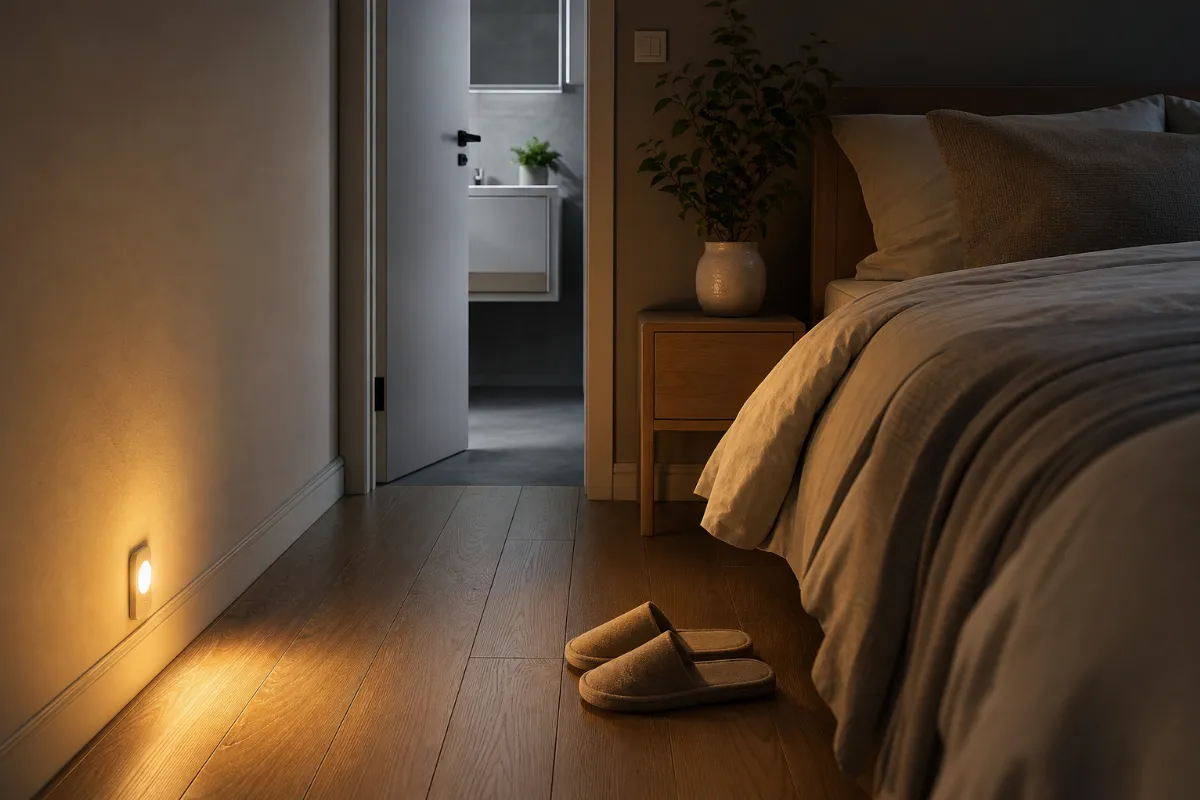
- Walking to the toilet in the dark raises the risk of falls, especially for older adults. Use a low light and clear the path.
- Herbal 'prostate' or 'bladder' products are not a safe shortcut: some interact with medicines, and the best-studied one did not help symptoms in a large review.
Get help when
- Not being able to pass urine at all, or a very weak stream with a painful, full bladder: this is an emergency. Seek urgent medical care. The NHS lists being unable to pee as a reason for urgent help.
- Blood in the urine (pink, red or brown), pain or burning when passing urine, or fever with urinary symptoms, or new back pain with urinary symptoms.
- Waking to pass urine several nights in a row that bothers you, or that comes with great thirst, leg swelling, or unexplained weight loss.
- Loud snoring, gasping or choking at night and heavy daytime sleepiness: these can point to sleep apnoea, which is linked to night urination.
- Falls or near-falls on night-time trips to the toilet.
About Reduce Sleep Disruption From Nighttime Urination
What this goal means
Nocturia means waking up during the night one or more times to pass urine. MedlinePlus explains that urine production normally drops at night, so most people can sleep 6 to 8 hours without needing to go. This goal is about the night trips that break up sleep; the daytime pattern of frequent urination has its own page.
It is not a diagnosis. It is a symptom with several possible causes, and the aim here is to understand yours and reduce how much it costs you in sleep.
1,2What it can feel like
Many people describe waking once or twice, then lying awake after the toilet trip, or waking so often that the night feels cut into pieces. Daytime tiredness, low mood and worry about the next night are common knock-on effects. A review of the literature found that nocturia interferes with sleep through repeated interruptions and non-restorative sleep, and that it is still debated whether people wake because they need to urinate or need to urinate because they are already awake.
Clinicians describe four broad mechanisms: more urine made at night, a bladder that holds less, incomplete emptying, or a primary sleep disorder.
3,2What can contribute
MedlinePlus lists evening fluids, caffeine and alcohol, bladder or urinary tract infection, an enlarged prostate (BPH), and pregnancy as common causes. Less common causes include chronic kidney disease, diabetes, heart failure, high blood calcium, water tablets, excess water intake and leg swelling. Sleep disorders, including obstructive sleep apnoea, are linked to night urination, and it may improve when the sleep problem is treated.
In a group of 213 men with two or more night trips, a retrospective study found at least one of five common factor groups (sleep disorders, other conditions or medicines, everyday behaviours, bladder problems) in 73%, and several factors in a third. This suggests that more than one thing is often going on.
1,4,5Conditions that can be behind it
In men, an enlarged prostate is a common reason: the NHS lists getting up to pee during the night as a main symptom, which usually develops slowly and may worsen with age. Other possible links are urinary infections, sleep apnoea, diabetes, kidney or heart conditions, and medicines. Persistent symptoms deserve a check because they can occasionally have a more serious cause such as prostate cancer.
6,1Realistic expectations
Everyday changes such as shifting fluids earlier, cutting evening caffeine and alcohol, and reviewing the timing of a water tablet are the first step recommended in a clinical review, with treatment of underlying conditions alongside. They often reduce the number of trips but may not stop them completely; one trip a night is common and not necessarily a problem.
Expect to give changes a couple of weeks, with the diary showing whether they work. If they do not, a clinician can look for the specific cause.
2,7Who this applies to
Adults of any age who wake at night to pass urine, with a particular focus on men because prostate changes are a common cause. Women also get nocturia, and the same habits and warning signs apply; see the linked bladder page. Pregnancy, children and people with kidney, heart or diabetes conditions need individual advice.
1,3Related conditions and symptoms
Urinary symptoms and enlarged prostate → Prostatitis → Sleep apnea → Insomnia → Urinary tract infections → Prediabetes, type 2 diabetes and metabolic syndrome → Erectile dysfunction →
A manageable starting plan
An educational starting point, not a personal prescription. Adjust it to your own situation and any advice from your clinician.
Your first actions
- Keep a two to three day bladder diary: drinks, toilet trips and sleep.
- Move most fluids earlier and cut caffeine and alcohol in the evening.
- Light the path to the toilet and clear the floor.
- Book a check if you have warning signs, loud snoring or leg swelling.
Optional additions
- Lower salt, especially at dinner.
- Ask the prescriber about timing of a water tablet.
- Try gradual bladder training by day.
- Use dim light and avoid screens on night trips.
What to track
- Number of night trips and the time of each.
- Evening drinks, caffeine, alcohol and salty meals.
- Snoring or gasping noticed by a partner.
- Daytime sleepiness, mood and any falls.
When to reassess
Give the habit changes about two weeks and compare the diary. If you still wake most nights, or you have any warning sign, take the diary to a clinician and ask about prostate or bladder checks, sleep apnoea, diabetes and your medicines.
When to seek professional support
- See a doctor if night urination bothers you, comes with blood, pain, fever, thirst or weight loss.
- Ask about the Manage Frequent Urination page for daytime symptoms.
- For sleeping again after you wake, see Fall Back Asleep After Waking.
What helps
Ordered by how well the research supports each step. Evidence strength is shown on every card; precautions sit next to the advice.
Start here
A bladder diary for two or three days
Low certaintyAddresses: Shows why you wake, so changes can be aimed
Why it may help: MedlinePlus advises keeping a diary of fluid intake, how often you urinate and how much you pass. A clinical review says validated questionnaires and frequency-volume charts (bladder diaries) can aid diagnosis, and that a urinalysis should be done for everyone with bothersome symptoms.
How to apply it: Note drink times and types, each toilet visit (day and night) and, if you can, the amount. Mark when you went to bed and woke. Bring it to your appointment.
Who it may suit: Anyone with night urination that bothers them.
Precautions: Based on clinical guidance rather than trials of the diary itself. A diary does not replace seeing a clinician if you have warning signs.
1,2Shift drinks earlier and drink less in the last hours before bed
Low certaintyAddresses: May reduce night-time urine and trips
Why it may help: The NHS suggests drinking less in the hours before bed while drinking enough during the day. The clinical review lists limiting fluid, especially in the evening, as a first-line step.
How to apply it: Spread drinks through the morning and afternoon. Taper in the last 2 to 3 hours before bed and take a small sip if you are thirsty. Keep soups and watery foods earlier in the day too.
Who it may suit: Most adults with evening fluids as a trigger.
Precautions: Do not cut fluids too much overall. This is recommended practice, but we did not find a trial in the sources read that measured how much it helps.
6,7,2Cut back on evening caffeine and alcohol
Low certaintyAddresses: Less extra urine and less bladder irritation
Why it may help: The NHS says caffeine and alcohol can make the kidneys produce more urine and irritate the bladder, so cutting down may help. MedlinePlus lists evening caffeine and alcohol among common causes of night urination.
How to apply it: Move coffee, tea and cola to the morning. Keep alcohol out of the last hours before bed, or cut it down.
Who it may suit: Anyone who drinks caffeine or alcohol in the evening.
Precautions: Agency advice rather than trial results. Heavy regular alcohol use should be discussed with a doctor, not reduced suddenly alone if you are dependent.
7,1Additional options
Lower your salt intake if it is high
Low certaintyAddresses: May reduce night urine
Why it may help: In a Japanese prospective study of 321 patients with nocturia and high salt intake, the 223 who successfully cut salt had fewer night trips (from 2.3 to 1.4) and a lower share of urine made at night; the 98 who did not cut salt saw no improvement. A 2026 systematic review of 10 studies found that people with salty diets had more frequent and severe urinary symptoms, and suggested that lowering salt might help.
How to apply it: Cook with less salt, check labels on processed and restaurant foods, and make the evening meal lighter in salt.
Who it may suit: People with a high-salt diet and nocturia.
Precautions: The Japanese study was not randomised or placebo-controlled; the review could not pool results. If you have heart, kidney or blood pressure conditions, ask before changing salt or fluids.
8,9Ask your prescriber about the timing of a water tablet or other medicines
Low certaintyAddresses: May remove an avoidable cause
Why it may help: MedlinePlus lists water tablets (diuretics) as a cause and says a provider may suggest taking them earlier in the day. The clinical review also lists addressing the timing of diuretic intake.
How to apply it: Write down when you take each medicine and tell the prescriber about the night trips. Ask whether any dose can be taken earlier.
Who it may suit: People who take a diuretic or other medicine that increases urine.
Precautions: Never stop or change a medicine on your own.
1,2Get snoring or gasping checked for sleep apnoea
Low certaintyAddresses: May reduce night trips when apnoea is the cause
Why it may help: A systematic review reports that nocturia becomes more common as sleep apnoea becomes more severe. A meta-analysis of five before-and-after studies (307 patients) found fewer night-time urine passings after CPAP treatment, though the studies had no control groups. The NHS lists treatments from lifestyle changes to a CPAP machine.
How to apply it: Tell a doctor about loud snoring, gasping, choking or morning headaches, or ask a partner what they notice.
Who it may suit: Anyone who snores heavily, gasps, or is sleepy in the day.
Precautions: Small studies without controls; results may not apply to everyone. Treatment decisions belong to a sleep clinic.
4,10,11Bladder training and emptying fully
Low certaintyAddresses: May help when the bladder empties poorly or feels urgent
Why it may help: For prostate-related symptoms the NHS suggests gradually holding on a little longer when you feel the urge, extending the time over a few weeks. It also advises waiting a moment after peeing and trying again to empty the bladder, avoiding straining, eating enough fibre, keeping to a healthy weight and checking whether any medicines worsen symptoms.
How to apply it: Add a few minutes to the gap between toilet visits by day each week. Take time at each visit and try again after a moment.
Who it may suit: Men and women with daytime urgency or a feeling of incomplete emptying.
Precautions: Stop and get advice if you cannot pass urine, or have pain or blood.
6Make the night trip safer and shorter
Moderate certaintyAddresses: Less waking and fewer falls
Why it may help: The clinical review includes sleep hygiene among recommended steps, and a meta-analysis of nine studies linked nocturia to about a 1.2-fold higher risk of falls.
How to apply it: Use a low amber light or motion nightlight, keep the path clear, wear non-slip footwear, and avoid turning on bright lights or screens so you fall back asleep more easily.
Who it may suit: Everyone, especially older adults.
Precautions: Observational falls data show association, not proof that this prevents falls.
2,12Still being studied
Saw palmetto and other prostate herbs
Evidence againstAddresses: Not shown to help urinary symptoms
Why it may help: A 2023 Cochrane review of 27 randomised trials (4,656 men with symptoms from prostate enlargement) found that saw palmetto made little to no difference to symptom scores or quality of life compared with placebo, at 3 to 6 months and at 12 to 17 months (high-certainty evidence). Combination herbal products showed little to no difference with low-certainty evidence. The review measured overall symptom scores, not night trips alone.
How to apply it: If you try it anyway, do not delay a check for the cause, and tell your pharmacist or doctor.
Who it may suit: Men with symptoms from an enlarged prostate.
Precautions: Can interact with other medicines; avoid in pregnancy and breastfeeding. Does not replace evaluation, and may blur monitoring if you are being checked for prostate problems.
13Food & nutrition
Drinks and timing
Most advice is about when you drink rather than how much. The NHS suggests drinking less in the hours before bed while still drinking enough during the day, and a clinical review lists limiting evening fluids as first-line.
Caffeine and alcohol are the two drinks the NHS says can make the kidneys produce more urine and irritate the bladder.
- Front-load water, tea and juice before mid-afternoon.
- Taper in the last 2 to 3 hours before bed.
- Move coffee, tea and cola to the morning.
- Keep alcohol away from the evening or cut down.
Salt
In a prospective study, people with high salt intake who managed to cut it had fewer night trips, and a 2026 review found some evidence that lower salt intake might help urinary symptoms. The evidence is not from randomised trials yet.
- Check labels for sodium in bread, soups, sauces and ready meals.
- Make the evening meal the lowest in salt.
Fibre and healthy weight
For prostate-related symptoms the NHS advises eating enough fibre to avoid constipation and straining, and keeping to a healthy weight.
- Include vegetables, fruit, beans and whole grains through the day.
Remedies & supplements
Traditional use, laboratory findings and human trials are kept apart. "Natural" does not mean safe.
Saw palmetto (Serenoa repens)
Evidence againstStudied form and route: Berry extract capsules or tablets
Intended outcome: Not shown to ease urinary symptoms
Human evidence: A 2023 Cochrane review of 27 trials (4,656 men) found little to no difference from placebo in symptom scores and quality of life, in the short and long term, with high certainty. Combinations with other plant extracts also showed little to no difference, with low certainty.
Traditional use: Used traditionally in North America for urinary complaints in men.
Limits: The review looked at overall symptom scores in men with prostate enlargement, not at night trips on their own. Products vary.
Interactions and precautions: Check with a pharmacist if you take blood thinners or hormone-related medicines; avoid in pregnancy and breastfeeding. Do not use it in place of a check for the cause of your symptoms.
13Therapies & care
Established care starts by finding the cause. A clinical review says a clinician should assess urinary symptoms, fluid intake and other conditions, use a bladder diary, and check a urine sample. Lifestyle changes and treating underlying conditions come first, and medicines are reserved for people who do not respond, aimed at the specific cause. This page does not recommend medicines or doses, and you should not stop a prescribed medicine on your own.
Clinical assessment
Moderate certaintyMedical evaluation A clinician asks about your symptoms, fluids, medicines and other conditions, and checks a urine sample. A review lists four mechanisms: more night-time urine, a smaller bladder capacity, incomplete emptying, or a primary sleep disorder.
Who it may suit: Anyone whose night urination bothers them or comes with warning signs.
Precautions: Bring your bladder diary and a list of medicines and supplements.
2,5Treating the underlying condition
Moderate certaintyCondition-specific care For an enlarged prostate, an overactive bladder, diabetes, heart or kidney conditions, or sleep apnoea, treating the cause is what changes night urination. The NHS describes CPAP for sleep apnoea, and the clinical review lists specialist and surgical options for hard-to-treat cases.
Who it may suit: People whose diary and checks point to a cause.
Precautions: Decisions about medicines and procedures belong to the treating clinician.
2,11,10Bladder training
Low certaintyBehavioural technique Gradually lengthening the time between toilet trips by day, and taking time to empty the bladder, is suggested by the NHS for prostate-related symptoms.
Who it may suit: People with urgency or incomplete emptying.
Precautions: Stop and seek advice if you cannot pass urine or have pain or blood.
6CBT for insomnia
Moderate certaintyPsychological therapy If you stay awake after toilet trips or sleep was poor before the night trips began, therapy aimed at sleep can help with getting back to sleep. See the linked page for the evidence.
Who it may suit: Adults with long-standing sleep difficulty.
Precautions: Work with a trained clinician or validated program.
3What to avoid
Habits, products and claims that can get in the way. Never stop a prescribed medicine without talking to the professional who prescribed it.
Risks that apply to most people
Large drinks in the last hours before bed
Low certaintyWhy: MedlinePlus lists evening fluids among the commonest causes of night urination, and the NHS advises drinking less before bed.
Who it applies to: Anyone waking to pass urine.
Try instead: Drink earlier and taper in the evening.
1,6Cutting fluids too hard all day
Low certaintyWhy: The NHS warns that cutting fluids too much can lead to problems such as urinary infections.
Who it applies to: Anyone tempted to avoid water to avoid night trips.
Try instead: Keep up daytime fluids, and shift the timing.
6Personal triggers to check
Evening caffeine
Low certaintyWhy: The NHS says caffeine can make the kidneys produce more urine and irritate the bladder.
Who it applies to: People who drink coffee, tea or cola after lunch.
Try instead: Switch to caffeine-free drinks earlier in the evening.
7,1Alcohol close to bedtime
Low certaintyWhy: Alcohol increases urine output according to the NHS and MedlinePlus.
Who it applies to: Anyone who drinks in the evening.
Try instead: Cut down, and leave several hours before bed.
7,1A very salty evening meal
Low certaintyWhy: Salt reduction improved night trips in a prospective study of people with high intake.
Who it applies to: People with a high salt intake.
Try instead: Lighten salt, especially at dinner.
8,9Taking a water tablet late in the day
Low certaintyWhy: MedlinePlus says diuretic-related nocturia may improve if the medicine is taken earlier.
Who it applies to: People prescribed a diuretic.
Try instead: Ask the prescriber about timing; never stop it alone.
1,2Products that need caution
Saw palmetto and combination 'prostate' pills
Evidence againstWhy: The Cochrane review found little to no benefit on symptom scores, and these products do not address other causes of night urination.
Who it applies to: Men hoping a supplement will end night trips.
Try instead: Get the cause checked first.
13Unsupported claims
'Waking at night to pee is just normal ageing'
Moderate certaintyWhy: A review found nocturia is not necessarily associated with natural ageing, and a clinical review says bothersome symptoms should be evaluated, as nocturia is linked to falls, fractures, low mood and cognitive problems.
Who it applies to: Anyone told to put up with it.
Try instead: If it bothers you, ask for a check.
3,2,12'An herbal pill will cure it'
Evidence againstWhy: High-certainty evidence shows saw palmetto does not meaningfully change symptom scores.
Who it applies to: Adverts for prostate and bladder products.
Try instead: Treat the cause rather than a symptom label.
13Common mistakes
Ignoring snoring or gasping
Low certaintyWhy: Night urination is more common as sleep apnoea becomes more severe, and treating apnoea may help.
Who it applies to: Heavy snorers.
Try instead: Mention it to a doctor.
4,10Waiting when you cannot pass urine or see blood
High certaintyWhy: The NHS lists blood in urine, pain when peeing and being unable to pee as reasons for urgent care.
Who it applies to: Anyone with these signs.
Try instead: Seek urgent care.
6Evidence & safety
What the research shows
The best evidence we found is about causes and first steps. Agency sources agree that evening fluids, caffeine, alcohol, water tablets, an enlarged prostate, urinary infections and sleep problems commonly contribute, and a 2025 clinical review recommends evening fluid limits, medicine timing, sleep hygiene and treating underlying conditions first. Trial evidence for specific self-care steps is thin: salt reduction has a prospective study, and CPAP has uncontrolled before-and-after studies. Saw palmetto does not help symptom scores in high-certainty evidence.
Limits of the evidence
- We did not find randomised trials in the sources read that measure how much evening fluid restriction or caffeine reduction cuts night trips.
- The salt study was not randomised and the review could not pool results.
- The CPAP studies had no control groups.
- The Cochrane saw palmetto review measured overall symptom scores, not night trips alone.
- Falls and fracture links come from observational studies, so they show association rather than cause.
Precautions and interactions
- Do not stop or change prescribed medicines for urinary, heart, kidney or diabetes conditions without the prescriber.
- Check herbs and supplements with a pharmacist if you take any medicine.
- Do not drink too little: it can cause problems such as urinary infections.
Life-stage considerations
- Older adults: night trips raise fall risk; light the path and review medicines with a clinician.
- Pregnancy: MedlinePlus lists pregnancy as a cause; ask a midwife or doctor before any herbal products.
- Women: the same habits apply; see the bladder page.
- Children and teenagers: night wetting and night urination in children have different causes; ask a paediatric clinician.
Warning signs
- Unable to pass urine, or a painful full bladder: urgent care.
- Blood in urine, painful urination, or fever with urinary symptoms.
- New back pain with urinary symptoms or unexplained weight loss.
- Great thirst with passing a lot of urine, or swollen legs.
- Loud snoring and gasping with heavy daytime sleepiness.
Claim checks
Saw palmetto stops night-time urination
Evidence againstA Cochrane review of 27 trials found little to no difference from placebo in symptom scores, with high certainty.
13Waking to pee at night is just part of getting older
Moderate certaintyA review found it is not necessarily due to natural ageing, and bothersome nocturia is linked to falls, low mood and cognitive problems, so it deserves evaluation.
3,2Drinking nothing in the evening is the cure
Low certaintyDrinking less before bed is recommended, but cutting fluids too much can cause problems; a bladder diary shows whether fluids are the cause.
6,2Treating sleep apnoea can reduce night urination
Low certaintyA meta-analysis of five uncontrolled studies found fewer night trips after CPAP, but better controlled studies are needed.
10,4Nocturia increases the risk of falls
Moderate certaintyA meta-analysis of nine studies found about a 1.2-fold higher fall risk with nocturia and a possible 1.3-fold fracture risk that was not clearly significant.
12Questions people ask
What is nocturia?
It is waking in the night one or more times to pass urine. Normally urine production falls at night so most people sleep 6 to 8 hours without needing to go, according to MedlinePlus.
How many trips a night is too many?
There is no single cut-off in the sources read. One trip is common; if it bothers you, or you wake two or more times, it is worth a check.
Is it always the prostate?
No. Evening fluids, caffeine, alcohol, medicines, sleep apnoea, infections, diabetes and kidney or heart conditions can all be involved, and women get it too.
Will drinking less at night fix it?
It often helps, but the NHS cautions against cutting fluids too much. Shift drinks earlier rather than drinking less overall.
Does caffeine really matter?
The NHS says caffeine can make the kidneys produce more urine and irritate the bladder, so moving it to the morning is a sensible first step.
Does saw palmetto work?
A large Cochrane review found little to no difference from placebo in urinary symptom scores. It is rated against.
Can sleep apnoea cause it?
Night urination is more common as sleep apnoea becomes more severe, and treatment with CPAP was linked to fewer trips in small studies.
Should I tell my doctor about my supplements?
Yes. Herbs can interact with medicines, and a doctor needs the full picture.
When is it an emergency?
If you cannot pass urine, have severe pain with a full bladder, or sudden severe testicular pain, seek urgent care.
Is night urination dangerous?
Not usually by itself, but it is linked to falls and fractures in older adults, so make the path safe and get it checked.
What about erection problems with urinary symptoms?
That is a separate topic; see the linked erectile dysfunction page and talk to a clinician.
References
- MedlinePlus. Nocturia (Urinating More at Night). Read 2026-11-01. source
- Getaneh FW et al. Nocturia: Evaluation and Management. Am Fam Physician 2025. PMID 40531150. source
- Furtado D et al. Nocturia x disturbed sleep: a review. Int Urogynecol J 2012. PMID 22052440. source
- Di Bello F et al. Nocturia and obstructive sleep apnea syndrome: A systematic review. Sleep Med Rev 2023. PMID 37167825. source
- Monaghan TF et al. Prevalence of Sleep CALM nocturia factors in a male veteran population. Neurourol Urodyn 2024. PMID 38511613. source
- NHS. Prostate enlargement. Read 2026-11-01. source
- NHS. Urinary incontinence: self-help and drinking habits. Read 2026-11-01. source
- Matsuo T et al. Effect of salt intake reduction on nocturia in patients with excessive salt intake. Neurourol Urodyn 2019. PMID 30706965. source
- Fribourg-Liendo RA et al. Association between sodium or salt intake and lower urinary tract symptoms: a systematic review. Ther Adv Urol 2026. PMID 41492308. source
- Wang T et al. The Efficacy of Continuous Positive Airway Pressure Therapy on Nocturia in Patients With Obstructive Sleep Apnea: A Systematic Review and Meta-Analysis. Int Neurourol J 2015. PMID 26620900. source
- NHS. Sleep apnoea. Read 2026-11-01. source
- Pesonen JS et al. The Impact of Nocturia on Falls and Fractures: A Systematic Review and Meta-Analysis. J Urol 2020. PMID 31347956. source
- Franco JV et al. Serenoa repens for the treatment of lower urinary tract symptoms due to benign prostatic enlargement. Cochrane Database Syst Rev 2023. PMID 37345871. source
Related on AlternativeMed
Related goals
Stay Asleep Through the Night → Fall Back Asleep After Waking → Improve Your Sleep Quality → Build a Healthy Sleep Schedule → Manage Frequent Urination → Support Prostate & Urinary Health → Maintain Health Through Midlife →
Ingredients, foods and supplements
Saw palmetto → Pumpkin seed → Pygeum →
Research, safety and claim-check resources
Saw palmetto and prostate supplements → Men's health safety → Men's health starting guide → Men's wellness research and evidence → Caffeine, alcohol and sleep → Sleep hygiene → CBT for insomnia → Falls and balance → Medicine interactions →