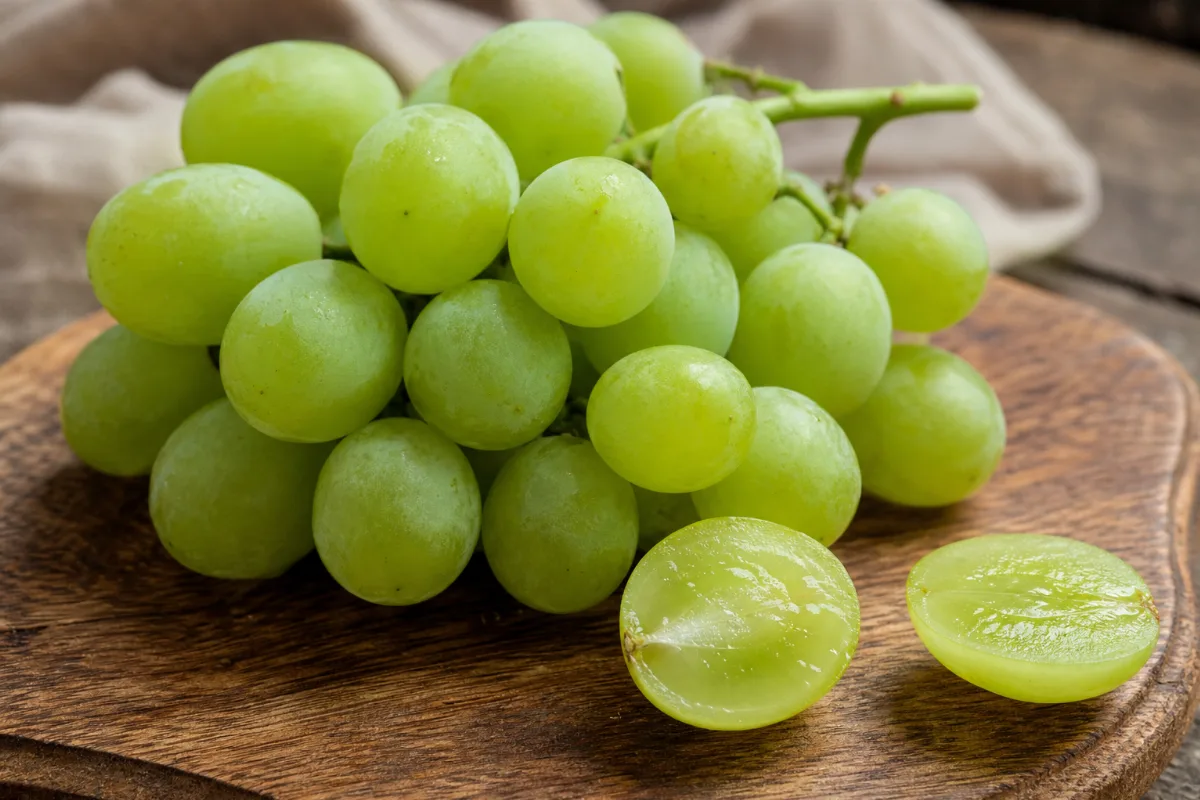
Fruits · Fruit
Grapes
Vitis vinifera · also called Grape, table grape, European grape, uvas (Spanish)
Grapes are the berries of the grapevine, eaten fresh, dried as raisins or pressed into juice. A cup has about 104 calories and 23 g of natural sugar. Large studies link eating grapes and raisins with a lower chance of type 2 diabetes, and trials of grape products show small changes in blood pressure and cholesterol, but these are weak results. The main cautions are a rare but serious allergy, and choking in children aged 3 or younger.
General information, not medical advice. Last substantive update · Not medically reviewed. A named clinician has not signed off on this page. How this page is made
About Grapes
Grapes are a sweet, everyday fruit. The research on eating them is mostly observational, and trials of grape products show small changes, so they are best seen as a tasty food rather than a proven remedy.
What it is
Grapes are the berries of the grapevine (Vitis vinifera, in the grape family). They are eaten whole, fresh or dried as raisins, or pressed into juice.
A cup of raw European-type grapes (151 g) provides about 104 calories, 23.4 g of natural sugars and 1.4 g of fibre, plus 22 micrograms of vitamin K, 0.19 mg of copper and 288 mg of potassium (USDA). Grapes are low in fibre compared with many fruits.
What the research shows
Three large US studies that followed health professionals for years linked eating more grapes and raisins with a somewhat lower chance of type 2 diabetes. People who eat more grapes may differ in other ways, so this is not proof.
Pooled trials of grape products found a small fall in systolic blood pressure, mostly with raisins and grape powder, and small falls in LDL cholesterol and triglycerides. Many of these trials used juice, powder or extracts rather than fresh grapes.
Blood sugar results are mixed, and a pooled analysis found no meaningful effect on body weight.
Grapes versus juice, raisins and supplements
In the blood pressure analysis, raisins and grape powder lowered systolic pressure but juice did not. In the diabetes cohorts, grapes and raisins went with lower risk while fruit juice went with higher risk.
Resveratrol capsules and grape seed extract are supplements. Their results do not apply to eating the fruit. NCCIH says grape seed extract is generally well tolerated and to talk to your provider first if you take medicines.
At a glance
Traditional uses history, not proof
- Eaten fresh, dried as raisins, or pressed into juice
- Also used to make wine (not covered on this page)
Studied for research
- Blood pressure in trials of grape products, low certainty
- Blood cholesterol in trials of grape products, juice and extracts, low certainty
- Type 2 diabetes risk in large eating-habit studies, low certainty
- Blood sugar and insulin resistance, mixed results
- Body weight, no meaningful effect found
- Resveratrol capsules and grape seed extract (supplements, not the fruit)
Main compounds
- Natural sugars (about 23 g in a cup)
- Polyphenols, plant pigments in the skin and seeds
- Vitamin K, copper and potassium in modest amounts
- Resveratrol, found in skins and sold separately as capsules
Common forms
- Fresh grapes (the form the nutrition figures describe)
- Raisins and other dried grapes
- Grape juice
- Grape powder (used in trials)
- Grape seed extract and resveratrol capsules (supplements, not the same as the fruit)
Research links: NHS: Food allergy · Blood pressure and grape products, meta-analysis (Nutrition, Metabolism and Cardiovascular Diseases, 2023) · Fruit and type 2 diabetes, three cohorts (BMJ, 2013) · USDA FoodData Central: raw grapes (European type) · Research Library · Genes & Biomarkers Library
What it is and its history
- Accepted scientific name
- Vitis vinifera
- Naming authority
- L. (GBIF accepted, usageKey 5372392)
- Common names
- Grapes (English); Uvas (Spanish)
- Family or group
- Vitaceae (the grape family).
- Classification
- Plantae > Tracheophyta > Magnoliopsida > Vitales > Vitaceae > Vitis > Vitis vinifera
- Native range
- Not verified from a source read.
- Habitat
- Not verified.
- What it looks like
- Roots: Not verified.; Stems: Not verified.; Leaves: Not verified.; Flowers: Not verified.; Fruit: A berry eaten whole, fresh or dried (existing site summary; not re-sourced).
- Cultivation
- Not verified from a source read.
- Harvest and processing
- Eaten fresh, dried as raisins, or pressed into juice; wine is also made from grapes (existing site summary).
- Look-alikes and adulterants
- Name: American grapes (Concord type); Note: USDA lists slip-skin American grapes separately from European types such as Thompson seedless. Their figures differ, for example more manganese. This page uses the European-type record.
- Sustainability and conservation
- Not assessed.
Photographs
Traditional use and history history, not clinical proof
| Tradition or era | Documented use | Source |
|---|---|---|
| Everyday fruit | No source read documents the history of grape growing or eating. NOT verified (no source read). | NOT verified (no source read) |
Traditional use shows how it was used. It does not show that it works or is safe today.
What is inside, and how it may work
What it contains and how those compounds act in cells and animals. Laboratory and animal mechanisms are not proven effects in people.
Main compounds
| Compound | Family | Where it is concentrated | Activity studied | Level of evidence |
|---|---|---|---|---|
| Natural sugars | carbohydrate | Flesh 15.5 g per 100 g; about 23.4 g in a cup (USDA) | Provides sweetness and energy. 17 | Composition data |
| Polyphenols | plant compounds (including proanthocyanidins in seeds and resveratrol in skins) | Skins and seeds (as described by NCCIH for seeds) | Studied in trials of grape products; amounts in a cup of grapes were not found in the sources read. 4 13 | Lab and animal, with some human trials of products |
| Resveratrol | polyphenol (stilbene) | Skin | Tested as capsules; those results do not apply to eating grapes. 7 3 | Human trials of supplements, mixed |
| Lutein and zeaxanthin | carotenoids | Flesh and skin (not verified) 72 micrograms per 100 g (USDA) | Listed in the food record. No health claim is made here. 17 | Composition data |
Mechanisms, receptors and pathways
| Target or pathway | Gene or receptor | What was found | Level |
|---|---|---|---|
| Polyphenol effects on blood vessels and fat handling | Suggested by reviews as possible routes behind small changes in blood pressure and cholesterol. The sources read do not test this; it is unproven in people. 4 1 | Hypothesis; lab and animal |
Absorption, metabolism and elimination
- Absorption
- Not researched.
- Distribution
- Not found.
- Metabolism
- Not found.
- Elimination
- Not found.
- Bioavailability
- Not established.
Isolated compounds versus whole extracts
Most trials pooled raisins, grape powder, juice and extracts, so they do not show what fresh grapes do. In the blood pressure analysis whole forms such as raisins and powder lowered systolic pressure but juice did not. In the diabetes cohorts grapes and raisins went with lower risk while fruit juice went with higher risk. Resveratrol capsules and grape seed extract are supplements; their results do not transfer to the fruit.
Nutritional composition
Per 100 g of raw European-type grapes (USDA FoodData Central, SR Legacy record 174683): 69 kcal, 80.5 g water, 0.72 g protein, 0.16 g fat, 18.1 g carbohydrate of which 15.5 g are sugars, and 0.9 g fibre. A cup (151 g; USDA says 10 grapes weigh 49 g) provides about 104 kcal, 23.4 g sugars and 1.4 g fibre, plus 22 micrograms of vitamin K, 0.19 mg of copper, 288 mg of potassium and 4.8 mg of vitamin C. Grapes are a modest source of vitamin K and copper and a small source of most other nutrients; they are low in fibre. Per-cup figures are calculated from the per-100 g values. American slip-skin grapes are a separate USDA record with different values. Values vary with variety, ripeness and storage.
2 mixed findings5 low certainty
What was looked at
The 7 benefits and uses checked for Grapes, each with how strong the evidence is. Tap one to open it.
- Blood pressure (raisins, grape powder and juice trials)Low certainty
- Blood cholesterol and blood fats (grape products, juice and extracts)Low certainty
- Type 2 diabetes risk (grape and raisin intake)Low certainty
- Blood sugar and insulin resistance (grape products)Mixed findings
- Body weight and waist size (grapes and grape products)Low certainty
- Resveratrol capsules (a grape-skin compound as a supplement, not the fruit)Mixed findings
- Grape seed extract (a supplement, not the fruit)Low certainty
Lab markers tracked in the studies
Systolic blood pressureDiastolic blood pressureVCAM-1 (vascular cell adhesion molecule-1)LDL cholesterolTotal cholesterolHDL cholesterolTriglyceridesInsulin resistance (HOMA-IR)Fasting blood glucoseFasting insulinHbA1cBody weightBody mass index (BMI)C-reactive protein (CRP)
What is Grapes good for?
The main studied uses and how strong the human evidence is for each. Most results are links seen in eating habits or small changes in lab markers from grape products, not proof that grapes prevent or treat a disease.
Benefits, one by one
Each card is a research question, not a promise. Tap a goal to filter. Open a card to see the studies, doses and limits.
Blood pressure (raisins, grape powder and juice trials)
Low certaintyIn trials of grape products, the top blood pressure number fell by about 3 mmHg on average. The fall was seen with raisins and grape powder but not with grape juice. The lower number did not change. The authors call the evidence low certainty.
1 studiesMostly raisins and grape powder, plus juice. Results for fresh grapes…
Studies, doses and limits
What the trials found
A 2023 meta-analysis pooled 30 randomised trials of grape products (raisins, grape powder, juice and others).
Results
Systolic pressure fell a little overall. In the whole-grape-product subgroup (raisin and grape powder) it also fell; grape juice did not lower it. Diastolic pressure, endothelial function, heart rate and pulse rate did not change. A blood-vessel marker, VCAM-1, rose slightly (very low certainty).
Effect sizes as reported
Systolic: -3.17 mmHg (95% CI -5.36 to -0.99); raisin and powder subgroup -2.69 mmHg (-4.81 to -0.57). VCAM-1 +34.11 ng/ml (0.98 to 67.25).
Why this rating
The authors rate the certainty of evidence as low for blood pressure and very low for VCAM-1. Heterogeneity was moderate to high (I2 64%) and fresh grapes were not the main form tested.
Form and dose studied
Mostly raisins and grape powder, plus juice. Results for fresh grapes cannot be read off this analysis.
Who was studied
Adults in randomised trials.
Limits
Small average change, marker not heart attacks or stroke. Products and trial lengths differ.
Why researchers looked
Grapes contain potassium and polyphenols, and researchers asked whether eating them nudges blood pressure.
Proposed mechanism Preliminary mechanism
Grapes contain polyphenols, plant pigments that are mostly in the skin and seeds. Researchers suggest they may relax blood vessels or affect fats, but this is mainly lab and animal work and unproven in people.
A proposed mechanism does not show that the effect happens in people.
None specific.
Blood cholesterol and blood fats (grape products, juice and extracts)
Low certaintyIn trials that gave grape products, juice or extracts, LDL ("bad") cholesterol was about 6 mg/dL lower than with placebo, and triglycerides were lower. HDL ("good") cholesterol was slightly higher. Because the trials mixed forms, this does not show what eating fresh grapes does.
1 studiesGrape products, juice and extracts pooled. Not a result for a cup of …
Studies, doses and limits
What the trials found
A 2020 meta-analysis pooled randomised trials of grape products, grape juice and grape extracts against placebo.
Results
Total cholesterol, LDL, oxidised LDL, apolipoprotein B and triglycerides were lower than with placebo, and HDL was slightly higher.
Effect sizes as reported
Versus placebo: LDL -6.3 mg/dL (95% CI -9.5 to -3.0); total cholesterol -7.6 mg/dL (-10.8 to -4.4); HDL +1.4 mg/dL (0.8 to 1.9); triglycerides -14.5 mg/dL (-17.7 to -11.2).
Why this rating
Small changes in markers, pooled across products including extracts. High heterogeneity for HDL (I2 74.7%) and oxidised LDL (I2 90.6%). No grading from the authors.
Form and dose studied
Grape products, juice and extracts pooled. Not a result for a cup of fresh grapes.
Who was studied
Adults in randomised trials.
Limits
Marker only; no heart attack or stroke data. Products differ.
Why researchers looked
Grape polyphenols are thought to affect how the body handles fats, so trials looked at blood fat levels.
Proposed mechanism Preliminary mechanism
Grapes contain polyphenols, plant pigments that are mostly in the skin and seeds. Researchers suggest they may relax blood vessels or affect fats, but this is mainly lab and animal work and unproven in people.
A proposed mechanism does not show that the effect happens in people.
None specific.
Type 2 diabetes risk (grape and raisin intake)
Low certaintyIn three large US studies of health professionals, people who ate more grapes and raisins had a somewhat lower chance of developing type 2 diabetes. Fruit juice went the other way. This is a link seen in eating habits, not proof that grapes protect against diabetes.
1 studiesGrapes and raisins eaten as food.
Studies, doses and limits
What the trials found
A 2013 analysis of three prospective cohorts (about 187,000 people, 12,198 new cases of diabetes) compared individual fruits.
Results
More grapes and raisins went with lower risk. The link differed a lot between fruits. Fruit juice went with higher risk.
Effect sizes as reported
Grapes and raisins, per 3 servings a week: hazard ratio 0.88 (95% CI 0.83-0.93). Fruit juice 1.08 (1.05-1.11). Total whole fruit 0.98 (0.97-0.99). Blueberries 0.74 and apples and pears 0.93 in the same analysis.
Why this rating
Observational data from food questionnaires. People who eat more grapes may differ in other ways. Grapes and raisins were reported together.
Form and dose studied
Grapes and raisins eaten as food.
Who was studied
Adult US health professionals.
Limits
Association, not cause. Mostly health professionals, so results may not apply to everyone.
Why researchers looked
Whole fruit has fibre and is different from sugary drinks, so researchers asked whether individual fruits relate to diabetes differently.
Proposed mechanism Unknown
Not established.
A proposed mechanism does not show that the effect happens in people.
People with diabetes should ask their care team how fruit fits their own plan.
Blood sugar and insulin resistance (grape products)
Mixed findingsA pooled analysis of 29 trials found grape products lowered a measure of insulin resistance, but fasting insulin and HbA1c did not change. Fasting glucose was slightly higher, not lower, with grape products. The result is mixed.
1 studiesMixed grape products. Not a result for fresh grapes.
Studies, doses and limits
What the trials found
A 2021 meta-analysis pooled 29 randomised trials (1,297 adults) of grapes and grape products such as fruit, juice, powder and extracts.
Results
Insulin resistance (HOMA-IR) was lower. Fasting insulin and HbA1c did not change. Fasting glucose favoured the control group by a small amount.
Effect sizes as reported
HOMA-IR WMD -0.54 (95% CI -0.91 to -0.17); fasting insulin WMD -0.90 uIU/ml (-1.04 to 2.84); HbA1c WMD 0.00% (-0.10 to 0.11); fasting glucose WMD +1.19 mg/dl (0.05 to 2.34, favouring control).
Why this rating
Results point different ways across measures. The trials mix fruit, juice, powder and extracts. The authors call for larger, longer trials.
Form and dose studied
Mixed grape products. Not a result for fresh grapes.
Who was studied
Adults in randomised trials.
Limits
Markers only. Products and trial lengths differ.
Why researchers looked
Researchers asked whether grape polyphenols change how the body handles sugar.
Proposed mechanism Preliminary mechanism
Grapes contain polyphenols, plant pigments that are mostly in the skin and seeds. Researchers suggest they may relax blood vessels or affect fats, but this is mainly lab and animal work and unproven in people.
A proposed mechanism does not show that the effect happens in people.
People with diabetes should ask their care team before changing fruit intake.
Body weight and waist size (grapes and grape products)
Low certaintyA 2025 pooled analysis of trials found no meaningful effect of grapes or grape products on body weight, waist size, body fat or fat-related hormones. A trivial BMI change was reported, and the authors say it should not be taken seriously given low study quality.
1 studiesGrapes and grape products pooled.
Studies, doses and limits
What the trials found
A 2025 meta-analysis of randomised trials searched to January 2022 compared whole grapes or grape products with placebo.
Results
No significant change in weight, waist circumference, body fat, waist-to-hip ratio, leptin or adiponectin. BMI changed by a trivial amount. Small subgroups of women and of people with metabolic syndrome (3 studies each) showed weight about 0.6 to 0.7 kg lower.
Effect sizes as reported
BMI WMD -0.14; weight in women (3 studies) -0.68 kg; in metabolic syndrome (3 studies) -0.62 kg; no overall weight effect.
Why this rating
The authors rate the included studies as low quality. Subgroups rest on three studies each.
Form and dose studied
Grapes and grape products pooled.
Who was studied
Adults in randomised trials.
Limits
Low-quality studies. The null overall result is the main finding.
Why researchers looked
Fruit is often eaten as part of weight-conscious diets, so trials looked at body measures.
Proposed mechanism Unknown
Not established.
A proposed mechanism does not show that the effect happens in people.
None specific.
Resveratrol capsules (a grape-skin compound as a supplement, not the fruit)
Mixed findingsResveratrol is a compound found in grape skins. Taken as capsules, it did not change inflammation, cholesterol, blood sugar or blood pressure in one pooled analysis. Another found better blood sugar control only in people who already had diabetes. These results are about capsules and do not apply to eating grapes.
2 studiesCapsules of isolated resveratrol. Not the same as the fruit or wine.
Studies, doses and limits
What the trials found
Two meta-analyses of randomised trials of resveratrol supplements: 10 trials (2015) for heart-risk markers and 11 trials with 388 people (2014) for blood sugar.
Results
Heart-risk markers: no significant change in CRP, total or LDL cholesterol, triglycerides, glucose or blood pressure; HDL was slightly lower. Blood sugar: improved in people with diabetes, no effect in people without.
Effect sizes as reported
2015 analysis: CRP WMD -0.144 mg/L (95% CI -0.968 to 0.680); LDL -0.31 mg/dL (-9.57 to 8.95); HDL -4.18 mg/dL (-6.54 to -1.82); systolic BP +0.82 mmHg (-8.86 to 10.50). The 2014 abstract gives the direction only.
Why this rating
Two analyses disagree by population. Supplement trials, small, and the sources were read as abstracts only. How much resveratrol grapes themselves provide was not found in the sources read.
Form and dose studied
Capsules of isolated resveratrol. Not the same as the fruit or wine.
Who was studied
Adults in randomised trials, with and without diabetes.
Limits
A supplement, not a food. Doses and products varied.
Why researchers looked
Resveratrol is in grape skins and red wine and is widely sold as a supplement.
Proposed mechanism Unknown
Not covered in the sources read.
A proposed mechanism does not show that the effect happens in people.
Ask a doctor or pharmacist before taking supplements, especially with medicines.
Grape seed extract (a supplement, not the fruit)
Low certaintyGrape seed extract is made from the seeds of wine grapes. NCCIH says reviews suggest it may lower LDL cholesterol and triglycerides and the lower blood pressure number, but the studies were small and products varied. It is not the same as eating grapes.
1 studiesGrape seed extract supplements of varied composition.
Studies, doses and limits
What the trials found
NCCIH summarises a 2020 review of 11 studies (536 people) and a 2022 review of 19 studies (1,080 people). The reviews themselves were not opened.
Results
2020 review: LDL cholesterol and triglycerides may be lower, but not total or HDL cholesterol. 2022 review: diastolic but not systolic blood pressure was lower. NCCIH says wound-healing and tooth-decay ideas rest on lab or experimental work and there is not enough human evidence to judge them.
Effect sizes as reported
Not given in the NCCIH summary.
Why this rating
Summary-only: the NCCIH page was read, but not the underlying reviews. NCCIH says conclusions should not be considered definite because studies were small and products varied.
Form and dose studied
Grape seed extract supplements of varied composition.
Who was studied
Adults in small trials.
Limits
Small studies, varied products. Result applies to the extract only.
Why researchers looked
The seeds contain proanthocyanidins, which have a variety of effects that might be beneficial, according to NCCIH.
Proposed mechanism Preliminary mechanism
Proanthocyanidins are suggested, according to NCCIH. Not tested in the sources read.
A proposed mechanism does not show that the effect happens in people.
NCCIH says it is generally well tolerated; if you take medicines, talk with your provider first.
Connections to the rest of health
How Grapes connects to the rest of our health knowledge graph. Every link says what kind of connection it is. A safety link (for example to the liver) is a warning, not a benefit. A study that merely mentions a topic never creates a benefit link.
Explore every connection: goals, body systems, organs, symptoms, genes
A. Wellness goals
| Connected to | Kind of connection | Evidence status | Context | Studies |
|---|---|---|---|---|
| Blood Pressure Support | Potential benefit | Low certainty | Blood pressure (raisins, grape powder and juice trials): In trials of grape products, the top blood pressure number fell by about 3 mmHg on average. The fall was seen with raisins and grape powder but not with grape juice. The lower number did not change. The authors call the evidence low certainty. Grape seed extract (a supplement, not the fruit): Grape seed extract is made from the seeds of wine grapes. NCCIH says reviews suggest it may lower LDL cholesterol and triglycerides and the lower blood pressure number, but the studies were small and products varied. It is not the same as eating grapes. | 1 13 |
| Heart Health | Potential benefit | Low certainty | Blood pressure (raisins, grape powder and juice trials): In trials of grape products, the top blood pressure number fell by about 3 mmHg on average. The fall was seen with raisins and grape powder but not with grape juice. The lower number did not change. The authors call the evidence low certainty. Blood cholesterol and blood fats (grape products, juice and extracts): In trials that gave grape products, juice or extracts, LDL ("bad") cholesterol was about 6 mg/dL lower than with placebo, and triglycerides were lower. HDL ("good") cholesterol was slightly higher. Because the trials mixed forms, this does not show what eating fresh grapes does. | 1 4 7 3 |
| Cholesterol Balance | Potential benefit | Low certainty | Blood cholesterol and blood fats (grape products, juice and extracts): In trials that gave grape products, juice or extracts, LDL ("bad") cholesterol was about 6 mg/dL lower than with placebo, and triglycerides were lower. HDL ("good") cholesterol was slightly higher. Because the trials mixed forms, this does not show what eating fresh grapes does. Grape seed extract (a supplement, not the fruit): Grape seed extract is made from the seeds of wine grapes. NCCIH says reviews suggest it may lower LDL cholesterol and triglycerides and the lower blood pressure number, but the studies were small and products varied. It is not the same as eating grapes. | 4 13 |
| Blood Sugar Balance | Potential benefit | Low certainty | Type 2 diabetes risk (grape and raisin intake): In three large US studies of health professionals, people who ate more grapes and raisins had a somewhat lower chance of developing type 2 diabetes. Fruit juice went the other way. This is a link seen in eating habits, not proof that grapes protect against diabetes. Blood sugar and insulin resistance (grape products): A pooled analysis of 29 trials found grape products lowered a measure of insulin resistance, but fasting insulin and HbA1c did not change. Fasting glucose was slightly higher, not lower, with grape products. The result is mixed. | 6 5 7 3 |
| Weight Management | Potential benefit | Low certainty | Body weight and waist size (grapes and grape products): A 2025 pooled analysis of trials found no meaningful effect of grapes or grape products on body weight, waist size, body fat or fat-related hormones. A trivial BMI change was reported, and the authors say it should not be taken seriously given low study quality. | 9 |
B. Body systems
| Connected to | Kind of connection | Evidence status | Context | Studies |
|---|---|---|---|---|
| Cardiovascular System | Biological association | Low certainty | Studied for: Blood pressure (raisins, grape powder and juice trials) Studied for: Blood cholesterol and blood fats (grape products, juice and extracts) | 1 4 7 3 13 |
| Blood Sugar Support | Biological association | Low certainty | Studied for: Type 2 diabetes risk (grape and raisin intake) Studied for: Blood sugar and insulin resistance (grape products) | 6 5 7 3 |
| Metabolism Weight | Biological association | Low certainty | Studied for: Body weight and waist size (grapes and grape products) | 9 |
E. Health conditions
| Connected to | Kind of connection | Evidence status | Context | Studies |
|---|---|---|---|---|
| Food allergy | Adverse effect or risk | Documented risk (case report) | A case report describes severe anaphylaxis from a grape lipid transfer protein. A case report describes severe anaphylaxis from a grape protein. Preparation or compound: Fresh grapes, raisins, wine |
8 15 |
I. Biomarkers
| Connected to | Kind of connection | Evidence status | Context | Studies |
|---|---|---|---|---|
| Systolic blood pressure | Biological association | Low certainty | Measured in trials: lowered slightly. A lab change is not the same as a health benefit. | 1 |
| Diastolic blood pressure | Biological association | Low certainty | Measured in trials: no clear change. A lab change is not the same as a health benefit. | 1 |
| VCAM-1 (vascular cell adhesion molecule-1) | Biological association | Very low certainty | Measured in trials: raised slightly. A lab change is not the same as a health benefit. | 1 |
| LDL cholesterol | Biological association | Low certainty | Measured in trials: lowered slightly. A lab change is not the same as a health benefit. | 4 |
| Total cholesterol | Biological association | Low certainty | Measured in trials: lowered slightly. A lab change is not the same as a health benefit. | 4 |
| HDL cholesterol | Biological association | Low certainty | Measured in trials: raised slightly. A lab change is not the same as a health benefit. | 4 |
| Triglycerides | Biological association | Low certainty | Measured in trials: lowered. A lab change is not the same as a health benefit. | 4 |
| Insulin resistance (HOMA-IR) | Biological association | Mixed findings | Measured in trials: lowered. A lab change is not the same as a health benefit. | 5 |
| Fasting blood glucose | Biological association | Mixed findings | Measured in trials: slightly higher in the grape groups. A lab change is not the same as a health benefit. | 5 |
| Fasting insulin | Biological association | Mixed findings | Measured in trials: no clear change. A lab change is not the same as a health benefit. | 5 |
| HbA1c | Biological association | Mixed findings | Measured in trials: no change. A lab change is not the same as a health benefit. | 5 |
| Body weight | Biological association | Low certainty | Measured in trials: no clear change. A lab change is not the same as a health benefit. | 9 |
| Body mass index (BMI) | Biological association | Low certainty | Measured in trials: trivial fall. A lab change is not the same as a health benefit. | 9 |
| C-reactive protein (CRP) | Biological association | Mixed findings | Measured in trials: no clear change. A lab change is not the same as a health benefit. | 7 |
L. Active compounds
| Connected to | Kind of connection | Evidence status | Context | Studies |
|---|---|---|---|---|
| Natural sugars | Biological association | Composition data | Provides sweetness and energy. Preparation or compound: Flesh |
17 |
| Polyphenols | Biological association | Lab and animal, with some human trials of products | Studied in trials of grape products; amounts in a cup of grapes were not found in the sources read. Preparation or compound: Skins and seeds (as described by NCCIH for seeds) |
4 13 |
| Resveratrol | Biological association | Human trials of supplements, mixed | Tested as capsules; those results do not apply to eating grapes. Preparation or compound: Skin |
7 3 |
| Lutein and zeaxanthin | Biological association | Composition data | Listed in the food record. No health claim is made here. Preparation or compound: Flesh and skin (not verified) |
17 |
Each connection is stored with the ingredient, the connected record, the kind of connection, the evidence status, the supporting studies, the preparation or compound involved, and a review date (last reviewed October 25, 2026).
The evidence
The research centre for Grapes. Every record here was checked against PubMed or the publisher's page; we never list a study we have not verified.
Evidence by outcome
Bars show how many studies we found for each outcome, not how well it works. People are added up across trials only (reviews are not added, to avoid double counting).
How we rate evidence
High certainty
Several well-run trials or reviews agree; further research is unlikely to change the picture much.
Moderate certainty
Good trials point the same way, but some doubt remains.
Low certainty
Small, short or inconsistent trials. The finding could change with better research.
Very low certainty
Very little or very weak human data. Treat as a possibility only.
Mixed findings
Trials or reviews disagree with each other.
Not enough evidence
Not enough human research to say either way.
Evidence against
Good research found no benefit, or found harm.
We take the reviewers' own risk-of-bias and GRADE statements where they exist, and otherwise judge from study size, design, consistency, directness and whether a product matches what is sold. Many publications do not make evidence high. Method note: We started from our existing grape summary, re-read the USDA FoodData Central record, and read PubMed abstracts and the NHS, FDA, NCCIH and MedlinePlus pages. Only abstracts were read for studies. Items we could not verify are flagged in the research gaps.
Study library: every study we checked 17
| Study | Design | People | Product, dose, length | Result |
|---|---|---|---|---|
| Ashoori 2023 The effect of whole grape products on blood pressure and vascular function: A systematic review and meta-analysis of randomized controlled trials. Nutr Metab Cardiovasc Dis · PMID 37482483 · DOI |
Systematic review and meta analysis of RCTs |
30 randomised trials, searched to 14 January 2022 | Grape products (raisin, grape powder, grape juice and others) fruit (dried, powder) and juice Varied Varied · vs Control, varied |
Systolic blood pressure fell a little with grape products. Diastolic pressure, endothelial function, heart rate and pulse rate did not change. VCAM-1 (a blood-vessel marker) rose slightly. In the subgroup of whole grape products (raisin and grape powder) systolic pressure fell; grape juice did not. The authors rate the certainty of evidence as low (blood pressure) and very low (VCAM-1). Systolic BP WMD -3.17 mmHg (95% CI -5.36 to -0.99); whole forms (raisin, powder) -2.69 mmHg (-4.81 to -0.57); VCAM-1 WMD +34.11 ng/ml (0.98 to 67.25) (SBP -5.36 to -0.99) Methods, limits and fundingOutcomes: Blood pressure, endothelial function, heart rate, pulse rate, VCAM-1, sICAM-1 Limitations: Low and very low certainty (authors' own rating). Moderate to high heterogeneity for systolic pressure (I2 64%). Fresh grapes were not the main form tested. Funding and conflicts: Authors declared no competing interests Registration: PROSPERO CRD42022379231 Read: abstract |
| Committee on Injury 2010 Prevention of choking among children. Pediatrics · PMID 20176668 · DOI |
Policy statement (American Academy of Pediatrics) |
Children, especially those aged 3 years or younger | n/a |
The statement says choking is a leading cause of illness and death in children, especially those aged 3 or younger, that food, coins and toys are the main causes, and that the shape, size and consistency of some foods raise the chance of choking. Grapes are not named in the abstract. Policy statement, not a trial (n/a) Methods, limits and fundingOutcomes: Choking prevention Limitations: Expert policy statement. Grapes are not named in the abstract, so any grape-specific advice must come from a doctor or other source. Funding and conflicts: Not applicable Read: abstract |
| Liu 2014 Effect of resveratrol on glucose control and insulin sensitivity: a meta-analysis of 11 randomized controlled trials. Am J Clin Nutr · PMID 24695890 · DOI |
Systematic review and meta analysis of RCTs |
388 11 randomised trials, 388 people, searched to March 2014 |
Resveratrol supplements (not grapes) isolated compound (capsule) Varied Varied · vs Control |
In people with diabetes, resveratrol reduced fasting glucose, insulin, HbA1c and insulin resistance. In people without diabetes it had no significant effect on these measures. Direction only in the abstract: reductions in people with diabetes, no significant effect in people without (n/a) Methods, limits and fundingOutcomes: Fasting glucose, insulin, HbA1c, insulin resistance Limitations: A supplement, not the fruit. The authors say more high-quality studies are needed. Small number of people. Funding and conflicts: Not stated in the abstract read Read: abstract |
| Lupoli 2020 Impact of Grape Products on Lipid Profile: A Meta-Analysis of Randomized Controlled Studies. J Clin Med · PMID 31979098 · DOI |
Systematic review and meta analysis of RCTs |
Randomised trials of grape products, juice or extracts versus placebo (number of trials not read in the abstract) | Grape products, grape juice and grape extracts, pooled fruit products, juice, extracts (mixed) Varied Varied · vs Placebo |
Versus placebo, total cholesterol, LDL, oxidised LDL, apolipoprotein B and triglycerides were lower, and HDL was slightly higher. The authors conclude grape polyphenols have a favourable effect on lipids in humans. Versus placebo: TC -7.6 mg/dL (95% CI -10.8 to -4.4); LDL -6.3 mg/dL (-9.5 to -3.0); HDL +1.4 mg/dL (0.8 to 1.9); triglycerides -14.5 mg/dL (-17.7 to -11.2) (LDL -9.5 to -3.0) Methods, limits and fundingOutcomes: Total, LDL and HDL cholesterol, oxidised LDL, apolipoprotein B, triglycerides Limitations: Pools grape products with juice and extracts, so it does not show what eating fresh grapes does. High heterogeneity for HDL (I2 74.7%) and oxidised LDL (I2 90.6%). Marker outcomes only. Funding and conflicts: Authors declared no conflict of interest Read: abstract |
| Moodi 2021 The effect of grapes/grape products on glycemic response: A systematic review and meta-analysis of randomized controlled trials. Phytother Res · PMID 33893683 · DOI |
Systematic review and meta analysis of RCTs |
1297 29 randomised trials (1,297 adults), searched to February 2020 |
Grapes and grape products (fruit, juice, powder, extracts and others, pooled) fruit, juice, powder, extract (mixed) Varied Varied · vs Control or placebo, varied |
Insulin resistance (HOMA-IR) fell. Fasting insulin and HbA1c did not change. Fasting glucose was slightly in favour of the control group, not the grape group. HOMA-IR WMD -0.54 (95% CI -0.91 to -0.17); fasting insulin WMD -0.90 uIU/ml (-1.04 to 2.84); HbA1c WMD 0.00% (-0.10 to 0.11); fasting glucose WMD +1.19 mg/dl (0.05 to 2.34) favouring control (HOMA-IR -0.91 to -0.17) Methods, limits and fundingOutcomes: Fasting glucose, fasting insulin, HbA1c, insulin resistance (HOMA-IR) Limitations: Pools fruit, juice, powder and extracts. The authors call for larger, longer trials. Funding and conflicts: Not stated in the abstract read Read: abstract |
| Muraki 2013 Fruit consumption and risk of type 2 diabetes: results from three prospective longitudinal cohort studies. BMJ · PMID 23990623 · DOI |
Prospective cohort studies (three cohorts, pooled) |
66,105 women (Nurses' Health Study), 85,104 women (Nurses' Health Study II) and 36,173 men (Health Professionals Follow-up Study), free of major disease at the start; 12,198 developed type 2 diabetes over 3,464,641 person-years | Usual intake of individual fruits from food questionnaires, including grapes and raisins fruit (grapes and raisins reported together) Intake bands of 3 servings a week (observational, not advice) Follow-up 1984-2008, 1991-2009 and 1986-2008 depending on cohort · vs Lower intake |
After adjusting for lifestyle and diet, each 3 servings a week of grapes and raisins went with a hazard ratio of 0.88 for type 2 diabetes. Blueberries 0.74, apples and pears 0.93, fruit juice 1.08 (higher risk). Total whole fruit 0.98. The link differed a lot between fruits. Grapes and raisins per 3 servings/week: HR 0.88 (95% CI 0.83-0.93); fruit juice HR 1.08 (1.05-1.11) (0.83-0.93) Methods, limits and fundingOutcomes: Incident type 2 diabetes Limitations: Observational: shows an association, not cause. Food questionnaires, mostly health professionals in the US. Grapes and raisins are reported together, so grapes alone are not separated. The abstract notes an erratum was published. Funding and conflicts: Authors declared no support from any organisation for the submitted work Read: abstract |
| Sahebkar 2015 Lack of efficacy of resveratrol on C-reactive protein and selected cardiovascular risk factors--Results from a systematic review and meta-analysis of randomized controlled trials. Int J Cardiol · PMID 25885871 · DOI |
Systematic review and meta analysis of RCTs |
10 randomised trials (11 treatment arms), searched to August 2014 | Resveratrol supplements (not grapes) isolated compound (capsule) Varied Varied · vs Control |
No significant change in CRP, total or LDL cholesterol, triglycerides, glucose or blood pressure. HDL cholesterol was slightly lower. The authors conclude there is no benefit on these risk factors. CRP WMD -0.144 mg/L (95% CI -0.968 to 0.680); LDL -0.31 mg/dL (-9.57 to 8.95); HDL -4.18 mg/dL (-6.54 to -1.82); systolic BP +0.82 mmHg (-8.86 to 10.50) (CRP -0.968 to 0.680) Methods, limits and fundingOutcomes: C-reactive protein, cholesterol, triglycerides, glucose, blood pressure Limitations: A supplement, not the fruit. Wide confidence intervals; larger trials are needed per the authors. Funding and conflicts: Not stated in the abstract read Read: abstract |
| Schad 2005 Wine anaphylaxis in a German patient: IgE-mediated allergy against a lipid transfer protein of grapes. Int Arch Allergy Immunol · PMID 15650314 · DOI |
Case report with laboratory tests |
1 One German patient with severe anaphylaxis after wine, fresh grapes and raisins |
Grapes, raisins, wine and grape extract used for skin and blood tests fruit |
Skin tests were positive to fresh and cooked white and blue grapes, raisins, white and red wine and grape extract. The allergen was a 15-kDa grape lipid transfer protein (Vit v 1). The authors say this kind of allergy can cause severe fruit allergy without pollen allergy. Case report, no effect size (n/a) Methods, limits and fundingOutcomes: Identification of the allergen Limitations: One patient. Case reports cannot show how common grape allergy is. The abstract says allergy to grapes has been very rarely reported in the Mediterranean area. Funding and conflicts: Not stated in the abstract read Read: abstract |
| Soltani 2025 Whole grapes or grape products on body weight, anthropometrics, and adipokines: systematic review and meta-analysis of randomized controlled trials. Int J Food Sci Nutr · PMID 39800850 · DOI |
Systematic review and meta analysis of RCTs |
Randomised trials searched before January 2022 (number of trials not read in the abstract) | Whole grapes or grape products versus placebo fruit and products (mixed) Varied Varied · vs Placebo |
No significant effect on body weight, waist, body fat, waist-to-hip ratio, leptin or adiponectin overall. BMI fell by a trivial 0.14. Weight fell in subgroups of women and of people with metabolic syndrome (3 studies each). The authors say the trivial BMI change should not be considered given the low quality of the studies. BMI WMD -0.14; weight in women (3 studies) -0.68 kg; in metabolic syndrome (3 studies) -0.62 kg; overall weight no significant effect (n/a) Methods, limits and fundingOutcomes: Body weight, BMI, waist circumference, body fat, waist-to-hip ratio, leptin, adiponectin Limitations: Authors rate the included studies as low quality. Subgroups are small (3 studies each). Funding and conflicts: Not stated in the abstract read Read: abstract |
| s-fda-produce-safely FDA: Selecting and Serving Produce Safely · Source |
Official consumer guidance n/a |
Methods, limits and fundingRead: full-text | ||
| s-gbif-vitis-vinifera GBIF Backbone: Vitis vinifera L. (usageKey 5372392) · Source |
Reference database n/a |
Methods, limits and fundingRead: full-text | ||
| s-medlineplus-potassium MedlinePlus: Potassium · Source |
Official health information n/a |
Methods, limits and fundingRead: full-text | ||
| s-nccih-grape-seed NCCIH: Grape Seed Extract: Usefulness and Safety · Source |
Official health guidance n/a |
Methods, limits and fundingRead: full-text | ||
| s-nhs-5-a-day NHS: 5 A Day: what counts? · Source |
Official health guidance n/a |
Methods, limits and fundingRead: full-text | ||
| s-nhs-food-allergy NHS: Food allergy · Source |
Official health guidance n/a |
Methods, limits and fundingRead: full-text | ||
| s-nhs-warfarin NHS: Warfarin · Source |
Official health guidance n/a |
Methods, limits and fundingRead: full-text | ||
| s-usda-fdc-174683 USDA FoodData Central: Grapes, red or green (European type, such as Thompson seedless), raw (FDC 174683, SR Legacy) · Source |
Food composition database n/a |
Methods, limits and fundingRead: full-text |
What we do not know yet
- No trial has tested fresh grapes alone for diabetes, heart outcomes or weight.
- Most trials pooled raisins, powder, juice and extracts with the fruit.
- Pregnancy, breastfeeding, how to cut grapes for young children, pesticide residues and pet safety were not researched.
- Amounts of polyphenols and resveratrol in a cup of grapes were not found.
- The two reviews NCCIH cites for grape seed extract were not opened.
How new research is added
New studies are found by a saved PubMed search and placed in a review queue before the page changes.
Lab markers
What changed in blood or saliva tests during trials. A changed number is not the same as feeling or being healthier, and we give no "normal ranges".
Metabolic 8
LDL cholesterol
Lowered slightly in trials
The so-called bad cholesterol carried in the blood.
Low certaintyTotal cholesterol
Lowered slightly in trials
All cholesterol carried in the blood.
Low certaintyHDL cholesterol
Raised slightly in trials
The so-called good cholesterol carried in the blood.
Low certaintyResults and what it means
Why it was measured
A common heart-risk marker.
Statistical vs. clinical meaning
A small rise with inconsistent results between trials.
Safety implication
None specific.
| Study | Result | People | Product |
|---|---|---|---|
| 4 | +1.4 mg/dL versus placebo (95% CI 0.8 to 1.9); heterogeneity I2 74.7% | Adults in randomised trials | Grape products, juice and extracts pooled |
Triglycerides
Lowered in trials
A type of fat carried in the blood.
Low certaintyResults and what it means
Fasting blood glucose
Slightly higher in the grape groups in trials
Sugar in the blood after not eating.
Mixed findingsResults and what it means
Why it was measured
Used to watch blood sugar control.
Statistical vs. clinical meaning
A very small difference in the opposite direction to the hoped-for effect.
Safety implication
None specific.
| Study | Result | People | Product |
|---|---|---|---|
| 5 | +1.19 mg/dl in favour of control (95% CI 0.05 to 2.34) | Adults in 29 trials | Grape products pooled |
HbA1c
No change in trials
Average blood sugar over the past two to three months.
Mixed findingsBody weight
No clear change in trials
How much a person weighs.
Low certaintyResults and what it means
Why it was measured
Used to track weight change.
Statistical vs. clinical meaning
No meaningful effect overall.
Safety implication
None specific.
| Study | Result | People | Product |
|---|---|---|---|
| 9 | No significant effect overall; about -0.6 to -0.7 kg in subgroups of women and of metabolic syndrome (3 studies each) | Adults in randomised trials | Grapes and grape products pooled |
Body mass index (BMI)
Trivial fall in trials
A height-and-weight score.
Low certaintyResults and what it means
Why it was measured
Used to track weight change.
Statistical vs. clinical meaning
A trivial change of uncertain meaning.
Safety implication
None specific.
| Study | Result | People | Product |
|---|---|---|---|
| 9 | WMD -0.14; the authors say it should not be considered given low study quality | Adults in randomised trials | Grapes and grape products pooled |
Other 6
Systolic blood pressure
Lowered slightly in trials
The top number in a blood pressure reading.
Low certaintyResults and what it means
Why it was measured
A common heart-risk marker.
Statistical vs. clinical meaning
A small fall. Its meaning for heart health is unknown.
Safety implication
None specific.
| Study | Result | People | Product |
|---|---|---|---|
| 1 | -3.17 mmHg overall (95% CI -5.36 to -0.99); -2.69 mmHg with raisins and grape powder; no fall with grape juice | Adults in 30 trials | Grape products pooled |
Diastolic blood pressure
No clear change in trials
The bottom number in a blood pressure reading.
Low certaintyVCAM-1 (vascular cell adhesion molecule-1)
Raised slightly in trials
A protein linked to inflammation of the blood-vessel lining.
Very low certaintyResults and what it means
Why it was measured
Used as a marker of vessel-lining activity.
Statistical vs. clinical meaning
A small rise, in the opposite direction to the hoped-for effect. Its meaning is unknown.
Safety implication
None specific.
| Study | Result | People | Product |
|---|---|---|---|
| 1 | +34.11 ng/ml (95% CI 0.98 to 67.25); the authors rate this very low certainty | Adults in trials | Grape products pooled |
Insulin resistance (HOMA-IR)
Lowered in trials
A calculated score of how well the body responds to insulin.
Mixed findingsResults and what it means
Fasting insulin
No clear change in trials
Insulin in the blood after not eating.
Mixed findingsC-reactive protein (CRP)
No clear change in trials
A blood marker of inflammation.
Mixed findingsResults and what it means
Why it was measured
Used as a marker of body-wide inflammation.
Statistical vs. clinical meaning
No effect found from resveratrol capsules.
Safety implication
None specific.
| Study | Result | People | Product |
|---|---|---|---|
| 7 | WMD -0.144 mg/L (95% CI -0.968 to 0.680), not significant | Adults in 10 trials | Resveratrol capsules (not grapes) |
Safety
What studies and official sources say about side effects, medicines and who should check first. Each point shows what kind of evidence it comes from.
Main points to know 3
- Whole grapes can be a choking hazard for young children. The American Academy of Pediatrics says choking is a leading cause of illness and death in children, especially those aged 3 or younger, and that the shape, size and consistency of some foods raise the risk. The abstract we read does not name grapes. Grapes are small, round and smooth, so ask your pediatrician or health service how to prepare them for a small child. Authoritative guidance 2
- A true grape allergy is uncommon but can be severe. A German case report describes severe anaphylaxis after wine, fresh and cooked grapes and raisins, traced to a grape protein called a lipid transfer protein. The authors say this allergy can happen without pollen allergy. If you have reacted to grapes, raisins or wine, see an allergist and do not test yourself. Case report 8
- A serious allergic reaction is an emergency. The NHS says to call 999 (911 in the US) if the lips, mouth, throat or tongue suddenly swell, if breathing is fast or difficult, the throat feels tight or swallowing is hard, or if someone is very confused or drowsy, faints, or a child goes limp. If an adrenaline auto-injector has been prescribed, use it straight away and still call for help. Authoritative guidance 15
Side effects 4
| Effect | How often | Severity and recovery | Evidence |
|---|---|---|---|
| Allergic reaction to grapes, raisins or wine (itching, hives, swelling, breathing trouble) The abstract says grape allergy has very rarely been reported in the Mediterranean area. No frequency was found in the sources read. | Not established | mild to severe Needs medical advice; severe reactions need emergency treatment. | Case report 8 15 |
| Choking in young children General statement on foods and choking; grapes are not named in the abstract. | Not established | potentially severe Emergency | Authoritative guidance 2 |
| Tooth decay risk with dried grapes (raisins and other dried fruit) The NHS says to eat dried fruit at mealtimes, not as a between-meal snack, to reduce the risk of tooth decay. | Not established | mild Preventable | Authoritative guidance 14 |
| Foodborne illness from unwashed or poorly handled fruit FDA says harmful bacteria can contaminate produce in the field or after harvest. | Not established | mild to severe Varies | Authoritative guidance 10 |
Liver
No liver injury linked to eating grapes was found in the sources read. LiverTox was not checked.
How often. No frequency found.
This is a safety connection. It is not evidence that Grapes supports liver health.
Medicines and supplements 4
| With | Why it matters | Importance | Evidence | What to do |
|---|---|---|---|---|
| Prescription and over-the-counter medicines (general) prescription | No source read describes a medicine interaction with eating grapes. Grapes are a different fruit from grapefruit, whose medicine warnings are not stated for grapes in any source read. | None found Not enough evidence | A pharmacist can check your own medicines. | |
| Warfarin (a blood thinner) and vitamin K prescription | The NHS says foods high in vitamin K, such as broccoli, spinach and other green leafy vegetables, can affect how warfarin works. Grapes are not named. USDA lists 22 micrograms of vitamin K in a cup of grapes. | Not established for grapes. No source read describes a problem with eating grapes on warfarin. | Authoritative guidance Not enough evidence 16 17 | If you take warfarin, ask your warfarin clinic about changes in your diet. |
| Kidney disease and medicines that raise potassium condition | MedlinePlus lists grapes among fruits that supply potassium. It says people with chronic kidney disease may not remove extra potassium and that some medicines raise potassium. | A cup of grapes has about 288 mg of potassium (USDA). Whether that matters depends on your kidney function and medicines. | Authoritative guidance Not enough evidence 12 17 | Ask your kidney team what suits you. |
| Medicines and grape seed extract (a supplement) supplement | NCCIH says some herbs and medicines interact in harmful ways and does not name specific interactions for grape seed extract. | Not described for eating grapes. | Authoritative guidance Not enough evidence 13 | Talk to your provider before using grape seed extract if you take any medicine. |
Who should check first 2
| Situation | Advice | Evidence |
|---|---|---|
| Known allergy to grapes, raisins or wine that has caused swelling or trouble breathing | Avoid grapes and get an allergy assessment. Follow your own emergency plan. | Case report 8 15 |
| Chronic kidney disease or a potassium-restricted diet | Ask your kidney team how fruit fits your plan. | Authoritative guidance 12 |
Overdose, product quality and regulators
Summary. Grapes are an ordinary food. No toxicity concern for people was found in the sources read.
Animal. Not reviewed.
Human doses studied. Trials gave grape products, raisins and powder for weeks with no safety problem reported in the abstracts read.
Overdose response. Not found.
Genotoxicity. Not reviewed.
Toxic or hazardous parts. Not reviewed. Safety for pets was not researched; ask a vet.
Like any raw produce, grapes can carry bacteria. The USDA Pesticide Data Program report on grapes could not be opened, so no claim is made about pesticide residues.
Bacteria on produce. FDA says to wash produce under running water, without soap or produce wash, and dry it with a clean cloth or paper towel. Washing reduces bacteria but does not eliminate them. Throw away produce that looks rotten and refrigerate pre-cut or packaged produce at 40 F (about 4 C) or below. 10
| Body | Action | Date |
|---|---|---|
| FDA (US Food and Drug Administration) (United States) | Consumer advice on washing, storing and choosing fresh produce source | 2026-10-25 (page read) |
| NHS (UK) (United Kingdom) | Counts 80 g of fresh fruit and 30 g of dried fruit as one 5 A Day portion; dried fruit at mealtimes for teeth; lists signs of a serious allergic reaction source | 2026-10-25 (pages read) |
| NCCIH (US National Institutes of Health) (United States) | Says grape seed extract is generally well tolerated; talk to a provider if you take medicines; little is known in pregnancy and breastfeeding source | 2026-10-25 (page read) |
| American Academy of Pediatrics (United States) | Policy statement on prevention of choking among children (grapes not named in the abstract) source | 2010 |
When to get medical help
- Swelling of the lips, mouth, tongue, face or throat
- Trouble breathing, wheezing, a tight throat or difficulty swallowing
- Feeling faint, very dizzy, very confused or collapsing after eating
- Spreading hives or a swollen face after eating grapes or raisins
- A child who is choking and cannot cough, cry or breathe: get emergency help at once
Stop using the product and contact a clinician or emergency service. In the US, Poison Control is 1-800-222-1222.
General information only, not medical advice. Ask a clinician or pharmacist before use, especially with medicines, in pregnancy or with a health condition. See the Natural Remedy Safety guide.
Frequently asked questions
What are grapes good for?
Do grapes lower blood pressure?
A pooled analysis of 30 trials found the top number about 3 mmHg lower with grape products, mostly raisins and grape powder. Grape juice did not lower it. The authors rate the evidence low certainty.
Do grapes lower cholesterol?
Pooled trials of grape products, juice and extracts found LDL about 6 mg/dL lower than placebo. They mixed forms, so this does not show what fresh grapes do.
Do grapes help prevent type 2 diabetes?
Three large US studies linked grapes and raisins with a hazard ratio of 0.88. They cannot show cause. Fruit juice went with higher risk.
Are grapes bad for blood sugar?
Do grapes help with weight loss?
A pooled analysis of trials found no meaningful effect of grapes or grape products on body weight, waist or body fat. The studies were low quality.
How many calories and how much sugar are in a cup of grapes?
USDA lists a cup of raw European-type grapes (151 g) at about 104 calories, 23.4 g of sugars and 1.4 g of fibre.
Is resveratrol in grapes good for you?
Is grape seed extract the same as eating grapes?
No. It is a supplement made from the seeds of wine grapes. NCCIH says it is generally well tolerated, and to talk to your provider if you take medicines.
Can grapes cause allergic reactions?
Are grapes a choking risk for young children?
The American Academy of Pediatrics says some foods raise choking risk, especially for children aged 3 or younger. Its abstract does not name grapes. Ask your pediatrician how to prepare grapes for a small child.
Explore by health goal
Heart HealthBlood Sugar BalanceBlood Pressure SupportCholesterol BalanceWeight Management
Editorial transparency
- Written by
- AlternativeMed editorial team. Research compiled with AI assistance, then checked against the sources listed.
- Medical review
- None. This page has not been reviewed by a physician or pharmacist.
- First published
- 2026-10-25
- Last substantive update
- 2026-10-25
- How we research
- We started from our existing grape summary, re-read the USDA FoodData Central record, and read PubMed abstracts and the NHS, FDA, NCCIH and MedlinePlus pages. Only abstracts were read for studies. Items we could not verify are flagged in the research gaps.
- How we rate evidence
- See "How we rate evidence" in the Evidence tab.
- Independence
- No product is promoted on this page. No affiliate links are shown.
Sources 17
Each source was opened and checked. Where we read only the abstract, it says so. The small numbers in the text point here.
- Ashoori M, Soltani S, Kolahdouz-Mohammadi R, et al.. The effect of whole grape products on blood pressure and vascular function: A systematic review and meta-analysis of randomized controlled trials.. Nutr Metab Cardiovasc Dis. 2023. PMID 37482483. DOI 10.1016/j.numecd.2023.05.001. (abstract)
- Committee on Injury, Violence, and Poison Prevention.. Prevention of choking among children.. Pediatrics. 2010. PMID 20176668. DOI 10.1542/peds.2009-2862. (abstract)
- Liu K, Zhou R, Wang B, Mi MT.. Effect of resveratrol on glucose control and insulin sensitivity: a meta-analysis of 11 randomized controlled trials.. Am J Clin Nutr. 2014. PMID 24695890. DOI 10.3945/ajcn.113.082024. (abstract)
- Lupoli R, Ciciola P, Costabile G, et al.. Impact of Grape Products on Lipid Profile: A Meta-Analysis of Randomized Controlled Studies.. J Clin Med. 2020. PMID 31979098. DOI 10.3390/jcm9020313. (abstract)
- Moodi V, Abedi S, Esmaeilpour M, et al.. The effect of grapes/grape products on glycemic response: A systematic review and meta-analysis of randomized controlled trials.. Phytother Res. 2021. PMID 33893683. DOI 10.1002/ptr.7135. (abstract)
- Muraki I, Imamura F, Manson JE, et al.. Fruit consumption and risk of type 2 diabetes: results from three prospective longitudinal cohort studies.. BMJ. 2013. PMID 23990623. DOI 10.1136/bmj.f5001. (abstract)
- Sahebkar A, Serban C, Ursoniu S, et al.. Lack of efficacy of resveratrol on C-reactive protein and selected cardiovascular risk factors--Results from a systematic review and meta-analysis of randomized controlled trials.. Int J Cardiol. 2015. PMID 25885871. DOI 10.1016/j.ijcard.2015.04.008. (abstract)
- Schad SG, Trcka J, Vieths S, et al.. Wine anaphylaxis in a German patient: IgE-mediated allergy against a lipid transfer protein of grapes.. Int Arch Allergy Immunol. 2005. PMID 15650314. DOI 10.1159/000083324. (abstract)
- Soltani S, Asoudeh F, Motallaei M, et al.. Whole grapes or grape products on body weight, anthropometrics, and adipokines: systematic review and meta-analysis of randomized controlled trials.. Int J Food Sci Nutr. 2025. PMID 39800850. DOI 10.1080/09637486.2024.2449037. (abstract)
- . FDA: Selecting and Serving Produce Safely. . . (full-text)
- . GBIF Backbone: Vitis vinifera L. (usageKey 5372392). . . (full-text)
- . MedlinePlus: Potassium. . . (full-text)
- . NCCIH: Grape Seed Extract: Usefulness and Safety. . . (full-text)
- . NHS: 5 A Day: what counts?. . . (full-text)
- . NHS: Food allergy. . . (full-text)
- . NHS: Warfarin. . . (full-text)
- . USDA FoodData Central: Grapes, red or green (European type, such as Thompson seedless), raw (FDC 174683, SR Legacy). . . (full-text)
Where to buy
Check the label first. Whatever you buy, look for these:
- Unsweetened with no added sugar, if you want the fruit alone
- Sulfur dioxide (sulfites) listed on the label: some people react
- A best-by date and a resealable bag
- Dried fruit is high in sugar and calories, so watch portions
Talk to a pharmacist or doctor before you start any supplement, especially if you take medicines. See the Safety tab for interactions.
Support our free guides: as an Amazon Associate we earn from qualifying purchases. Full disclosure.


