Fruits · Fruit
Mulberries
Morus alba · also called Mulberry, white mulberry, moras (Spanish)
Mulberries are the soft, sweet fruits of trees in the genus Morus, eaten fresh or dried and made into juice or jam. A cup of raw mulberries has about 60 calories, 2.4 g of fibre and 51 mg of vitamin C. The blood-sugar trials all used a fruit extract added to meals, not the berries, and no trial has tested eating the fruit. The main cautions are allergy (reported in case reports, including a serious one) and that mulberry leaf and extracts can lower blood sugar.
General information, not medical advice. Last substantive update · Not medically reviewed. A named clinician has not signed off on this page. How this page is made
About Mulberries
Mulberries are a soft, sweet fruit that provide vitamin C, fibre and some iron. Almost all the research on blood sugar used a fruit extract added to meals, not the berries, so they are best seen as a food rather than a proven remedy.
What it is
Mulberries are the fruits of trees in the genus Morus, in the mulberry family (Moraceae). White mulberry (Morus alba), black mulberry (Morus nigra) and red mulberry (Morus rubra) are separate species. The fruit is eaten fresh or dried and made into juice or jam.
A cup of raw mulberries (140 g) provides about 60 calories, 2.4 g of fibre, 11.3 g of natural sugars and 51 mg of vitamin C, plus iron (2.6 mg) and potassium (272 mg) (USDA). Figures vary with variety and ripeness, and dried mulberries are a different product.
What the research shows
The best-studied use is blood sugar after a meal. In trials in healthy adults a measured mulberry fruit extract mixed into rice or porridge lowered the rise in blood sugar and insulin after that meal. A pilot in 24 people with type 2 diabetes saw a similar drop at the higher amount. These were single meals of an extract, and some are linked to Unilever.
A small study with labelled glucose suggests the extract slows how fast sugar is absorbed, rather than changing how the body clears it.
Large studies link fruit and vegetables overall with lower heart disease and early death, but they do not name mulberries. One trial of mulberry milk in children reported better attention scores. Claims about gut health come from animal studies. No trial has tested eating the fruit for blood sugar, weight, cholesterol or iron.
Fruit versus extract and leaf
The blood-sugar trials used a fruit extract. In one trial pure DNJ, a compound found in the extract, matched the extract's effect on after-meal blood sugar. Eating the whole fruit has not been shown to do the same.
Mulberry leaf and leaf tea are different products, with their own research and cautions. See the leaf pages linked below.
At a glance
Traditional uses history, not proof
- Eaten fresh or dried, or made into juice, jam or syrup
- The leaf, not the fruit, is used in traditional Chinese medicine for diabetes, cough and sore throat (NCCIH)
Studied for research
- Blood sugar and insulin after a rice meal in healthy adults (extract trials), low certainty
- Blood sugar after a meal in type 2 diabetes (small extract pilot), very low certainty
- A food source of vitamin C, moderate certainty (a nutrient fact)
- Heart disease and early death in fruit-rich diets, very low certainty for mulberries
- Attention in children after mulberry milk, very low certainty
- Gut health, insufficient evidence (animal studies)
Main compounds
- Vitamin C (about 36 mg per 100 g)
- Fibre (about 1.7 g per 100 g) and iron (1.85 mg per 100 g)
- Lutein and zeaxanthin, plant pigments
- Anthocyanins, plant pigments reported mainly in black mulberry
- 1-Deoxynojirimycin (DNJ), found in leaf and in the extract used in trials
Common forms
- Fresh berries (the form the nutrition figures describe)
- Dried mulberries (a different product from raw)
- Juice, jam and syrup
- Fruit extract or powder (what the blood-sugar trials used; not the same as the fruit)
- Mulberry leaf and leaf tea (a different product, covered on its own pages)
Research links: NCCIH: White mulberry leaf · Mulberry fruit extract and blood sugar after rice, healthy adults (British Journal of Nutrition, 2023) · Mulberry fruit extract in type 2 diabetes, pilot trial (Nutrients, 2024) · Allergic reaction caused by mulberry fruit, case report (Allergy, Asthma and Immunology Research, 2015) · USDA FoodData Central: raw mulberries · Research Library · Genes & Biomarkers Library
What it is and its history
- Accepted scientific name
- Morus alba
- Naming authority
- L. (GBIF accepted, usageKey 5361889)
- Common names
- Mulberry (English); White mulberry (English); Moras (Spanish)
- Family or group
- Moraceae (the mulberry family), which also includes the fig (Ficus carica), according to the 2003 allergy report that calls Ficus and Morus closely related genera.
- Classification
- Plantae > Tracheophyta > Magnoliopsida > Rosales > Moraceae > Morus > Morus alba
- Native range
- NCCIH says white mulberry is native to China and can be found throughout the world in temperate and tropical climates.
- Habitat
- Not verified.
- What it looks like
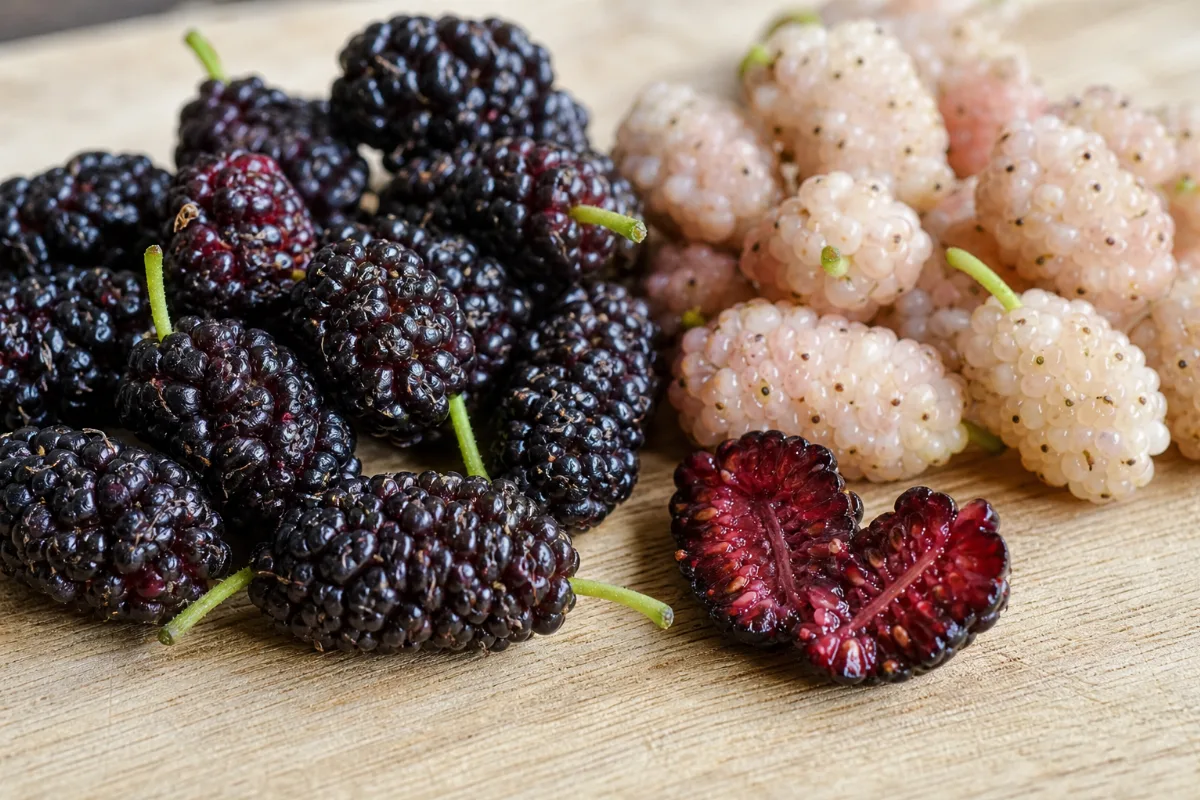
- Roots: Not verified.; Stems: Not verified.; Leaves: Not verified.; Flowers: Not verified.; Fruit: The soft fruit is eaten and the colour ranges from white to red to dark purple (existing site summary and photo; not re-sourced).
- Cultivation
- Not verified from a source read.
- Harvest and processing
- Eaten fresh or dried, or made into juice, jam or syrup; also sold as extracts and powders (existing site summary; not re-sourced).
- Look-alikes and adulterants
- Name: Fig (Ficus carica); Note: A related fruit in the same family. Two case reports describe allergy to figs and mulberries in the same patient.
- Sustainability and conservation
- Not assessed.
Photographs
Traditional use and history history, not clinical proof
| Tradition or era | Documented use | Source |
|---|---|---|
| Traditional Chinese medicine (leaf) | NCCIH says mulberry leaves are used in traditional Chinese medicine for diabetes, cough, sore throat, fever and bronchitis, and in parts of Asia for tea, wine, bean curd and noodles. This describes the leaf, not the fruit. | NCCIH White Mulberry Leaf (s-nccih-white-mulberry-leaf, read 2026-10-25) |
| Fruit as food | No source read documents the history or traditional medicinal use of the fruit. | NOT verified (no source read) |
Traditional use shows how it was used. It does not show that it works or is safe today.
What is inside, and how it may work
What it contains and how those compounds act in cells and animals. Laboratory and animal mechanisms are not proven effects in people.
Main compounds
| Compound | Family | Where it is concentrated | Activity studied | Level of evidence |
|---|---|---|---|---|
| Vitamin C (ascorbic acid) | vitamin | Raw fruit 36.4 mg per 100 g; about 51 mg in a cup (140 g) (USDA) | Essential vitamin; deficiency causes scurvy. 17 14 | Composition data and established nutrition |
| Dietary fibre | carbohydrate | Raw fruit 1.7 g per 100 g; about 2.4 g in a cup (USDA) | Provides fibre in the diet. Not tested here as a treatment. 17 | Composition data |
| Lutein plus zeaxanthin | carotenoids (plant pigments) | Raw fruit 136 micrograms per 100 g (USDA) | Listed in the USDA record. We found no human trial of mulberry carotenoids on a health outcome. 17 | Composition data |
| Anthocyanins | polyphenol pigments | Fruit, especially Morus nigra (black mulberry) according to a 2026 review | A review says fruits, especially Morus nigra, contain substantial anthocyanins. The amount in the mulberries on this page was not found. 10 | Review of mostly preclinical studies |
| 1-Deoxynojirimycin (DNJ) | iminosugar | Leaf mainly; present in the fruit extract used in the trials (2.90 mg in 0.75 g extract in one trial) 2.90 mg DNJ in 0.75 g of the extract used in one trial; not a figure for the fresh fruit | Slows the enzyme alpha-glucosidase that breaks down starch, so sugar enters the blood more slowly. In the 2025 trial, pure DNJ and the whole extract had equivalent effects on after-meal blood sugar. 6 10 | Human trials of an extract |
Mechanisms, receptors and pathways
| Target or pathway | Gene or receptor | What was found | Level |
|---|---|---|---|
| Slower uptake of sugar from the gut after a starchy meal | Intestinal alpha-glucosidase (presumed) | In a dual-isotope study of 12 healthy men, the extract delayed glucose absorption by about 10 minutes and did not clearly change glucose disposal or the body's own glucose production. The 2025 trial calls inhibition of alpha-glucosidase the presumed mechanism. 2 6 | Human (small, extract) |
| Gut microbes and short-chain fatty acids | In animal models, mulberry leaf and fruit preparations changed gut bacteria and short-chain fatty acids. Results differ between preparations. Human data are lacking. 10 | Animal and lab |
Absorption, metabolism and elimination
- Absorption
- In the 2025 trial, plasma DNJ levels were higher after the whole extract than after pure DNJ. Not studied for the fresh fruit.
- Distribution
- Not found.
- Metabolism
- Not found.
- Elimination
- Not found.
- Bioavailability
- Not established for the fresh fruit.
Isolated compounds versus whole extracts
Every blood-sugar trial used a specified mulberry fruit extract, not fresh or dried berries, and an isolated compound (DNJ) matched the whole extract in one trial. Mulberry leaf, fruit, extracts and berries differ in composition. Nothing here shows that eating the fruit gives the same effect, and the trial amounts of extract (0.04 to 1.5 g) are not amounts of fruit.
Nutritional composition
Per 100 g of raw mulberries (USDA FoodData Central, SR Legacy record 169913): 43 kcal, 87.7 g water, 1.44 g protein, 0.39 g fat, 9.8 g carbohydrate of which 8.1 g are sugars, and 1.7 g fibre. One cup (140 g) provides about 60 kcal, 2.4 g fibre and 11.3 g sugars. It also provides vitamin C (51 mg), iron (2.6 mg), potassium (272 mg), vitamin K (10.9 micrograms), calcium (55 mg), magnesium (25 mg), copper (0.08 mg), riboflavin (0.14 mg) and vitamin E (1.2 mg). Mulberries provide vitamin C, iron and fibre, along with small amounts of other nutrients. Per-cup figures are calculated from the per-100 g values. Values vary with variety, ripeness and storage, and dried mulberries are a different product.
1 moderate certainty1 low certainty3 very low certainty2 not enough evidence
What was looked at
The 7 benefits and uses checked for Mulberries, each with how strong the evidence is. Tap one to open it.
- Blood sugar and insulin after a rice meal (mulberry fruit extract, healthy adults)Low certainty
- Blood sugar and insulin after a rice meal in people with type 2 diabetes (mulberry fruit extract)Very low certainty
- A food source of vitamin C (preventing deficiency)Moderate certainty
- Heart disease and early death (diets rich in fruit and vegetables; mulberries not singled out)Very low certainty
- Iron content (no trial of iron status)Not enough evidence
- Attention and memory in children (mulberry milk, single dose)Very low certainty
- Gut health (mostly animal studies)Not enough evidence
Lab markers tracked in the studies
Blood sugar after a meal (2-hour rise)Insulin after a mealSaliva cortisol
What is Mulberries good for?
The main studied uses and how strong the human evidence is for each. The blood-sugar findings are for a fruit extract, not for eating mulberries, and nothing here shows that mulberries prevent or treat a disease.
Benefits, one by one
Each card is a research question, not a promise. Tap a goal to filter. Open a card to see the studies, doses and limits.
Blood sugar and insulin after a rice meal (mulberry fruit extract, healthy adults)
Low certaintyIn several short trials, healthy adults who had a measured amount of a mulberry fruit extract mixed into a rice or porridge meal had a smaller rise in blood sugar and insulin after that meal than with a plain meal. These trials tested a powdered extract added to the meal, not a handful of fresh berries.
4 studiesA specified mulberry fruit extract added to a rice or porridge meal. …
Studies, doses and limits
What the trials found
Four randomised trials in healthy adults: a 2023 dose-response pair of trials (84 people each) in India, a 2023 trial in 120 Indian adults across four rice types, a 2023 isotope study in 12 young men using wheat porridge, and a 2025 trial in 84 adults comparing the extract with pure DNJ. All were crossover trials in which each person ate several meals.
Results
Blood sugar and insulin after the meal were lower with the extract in every trial. Reductions in the dose-response trials ranged from about 20 to 27 percent for blood sugar. In the 120-person rice trial a lower amount cut blood sugar by 11.4 percent on average. Gut symptoms were low and no adverse effects were reported in the abstracts.
Effect sizes as reported
Dose-response trial 1: blood sugar -22.9 to -27.2 percent (all extract amounts), insulin -14.0 to -34.6 percent. Dose-response trial 2: only the 0.37 g amount was significant (-20.4 percent glucose, -17.0 percent insulin). 2023 rice trial: -11.4 percent glucose (-9.8 to -15.1 percent by rice type), -10.1 percent insulin. 2023 isotope study: glucose rise -11 percent (95% CI -26.3 to -7.3). 2025: DNJ-to-extract ratio 0.903 (90% CI 0.801-1.019).
Why this rating
Several small, short trials agree, but they test a specified extract, not the fruit; they measure one meal in healthy people; the extract amounts were 0.04 to 1.5 g. The authors overlap across trials and at least two trials report employment by or sponsorship from Unilever. Whether eating fresh or dried berries has the same effect was not tested.
Form and dose studied
A specified mulberry fruit extract added to a rice or porridge meal. This is not the fresh fruit and the result should not be read as a statement about eating mulberries.
Who was studied
Healthy adults, mostly in India and the Netherlands. A separate small trial in people with type 2 diabetes is on this page under the diabetes entry.
Limits
One meal at a time, so nothing is known about long-term blood sugar (HbA1c) or health outcomes. Extract not fruit. Industry links. Only abstracts were read.
Why researchers looked
Mulberry leaf and fruit extracts contain a sugar-like compound called 1-deoxynojirimycin (DNJ) that can slow the gut's uptake of sugar from starchy food.
Traditional use
Mulberry leaf (not the fruit) is used in traditional Chinese medicine for diabetes (NCCIH). We found no source we read that documents a traditional use of the fruit for blood sugar.
Proposed mechanism Human mechanistic
The extract appears to slow how fast sugar from the meal gets into the blood. A small human study using labelled glucose found a slower rate of absorption, with no clear change in how the body clears glucose or makes its own.
A proposed mechanism does not show that the effect happens in people.
Because the extract can lower blood sugar after a meal, people on diabetes medicines should ask a pharmacist before using extract products.
Blood sugar and insulin after a rice meal in people with type 2 diabetes (mulberry fruit extract)
Very low certaintyIn a small pilot trial of 24 adults with type 2 diabetes who were not taking medicines, a mulberry fruit extract added to a rice meal lowered blood sugar and insulin after that meal, mainly at the higher amount.
1 studiesA mulberry fruit extract added to rice. Not the fresh fruit.
Studies, doses and limits
What the trials found
A 2024 randomised crossover pilot trial of 24 unmedicated adults with type 2 diabetes (mean age 51) compared 0, 0.37 and 0.75 g of extract added to rice with about 50 g of carbohydrate.
Results
At 0.75 g, blood sugar for two hours after the meal was 22.4 percent lower and insulin 17.5 percent lower than with the plain meal. At 0.37 g the changes were smaller and their confidence ranges included zero. No adverse events or stomach discomfort were reported.
Effect sizes as reported
Blood sugar: 0.37 g -8.2% (95% CI -20.8 to 6.6); 0.75 g -22.4% (-38.6 to -1.9). Insulin: 0.37 g -9.6% (-20.7 to 3.0); 0.75 g -17.5% (-27.9 to -5.7).
Why this rating
A pilot with 24 people, one meal, and an extract rather than the fruit. The confidence range at 0.75 g comes close to zero. The sponsor, Unilever, employed several authors and helped analyse and write up the results.
Form and dose studied
A mulberry fruit extract added to rice. Not the fresh fruit.
Who was studied
Adults with type 2 diabetes who were not taking diabetes medicines. People on medicines were not studied.
Limits
Very small, short, extract only, industry-sponsored. It does not show that mulberries treat diabetes or improve long-term control.
Why researchers looked
If the extract slows sugar uptake in healthy people, researchers asked whether it does the same in people with type 2 diabetes.
Proposed mechanism Preliminary mechanism
Same suggested route as above: slower uptake of sugar from the meal. Not measured in this trial.
A proposed mechanism does not show that the effect happens in people.
People with diabetes should not use this as a replacement for their care plan and should ask their care team before adding extracts.
A food source of vitamin C (preventing deficiency)
Moderate certaintyRaw mulberries contain vitamin C, about 36 mg per 100 g or 51 mg in a cup. Vitamin C deficiency causes scurvy, so a vitamin C food helps prevent that. This is a nutrient fact about the food, not a finding that mulberries treat anything else.
2 studiesRaw fruit. Drying, cooking and juicing were not checked for vitamin C…
Studies, doses and limits
What the trials found
No trial of mulberries was needed or found for this. MedlinePlus describes scurvy as a severe form of vitamin C deficiency that mainly affects older, malnourished adults, and the USDA database lists the vitamin C content of raw mulberries.
Results
Raw mulberries provide 36.4 mg of vitamin C per 100 g, or about 51 mg in one cup (140 g). MedlinePlus lists citrus fruits, kiwi, mango and other fruits among those with the highest vitamin C content.
Effect sizes as reported
36.4 mg vitamin C per 100 g (USDA FDC 169913); about 51 mg per cup (140 g), calculated.
Why this rating
The link between vitamin C and scurvy is long established, but the sources read here are a reference page and a food database, not trials of mulberries. The figure is for raw fruit and varies with variety, ripeness and storage.
Form and dose studied
Raw fruit. Drying, cooking and juicing were not checked for vitamin C loss.
Who was studied
General population; the deficiency role applies mainly to people who eat too little vitamin C.
Limits
Shows a role in preventing deficiency only, not extra benefit in people who already get enough vitamin C.
Why researchers looked
Berries are a common source of vitamin C in the diet.
Proposed mechanism Established nutrition
Vitamin C is an essential vitamin. Without enough of it people develop scurvy.
A proposed mechanism does not show that the effect happens in people.
None specific at food amounts.
Heart disease and early death (diets rich in fruit and vegetables; mulberries not singled out)
Very low certaintyIn large groups followed over time, people who ate more fruit and vegetables overall had lower rates of heart disease and early death. Mulberries were not named in the summary we read, so this tells us about fruit in general, not mulberries.
1 studiesUsual dietary intake. Not advice for any amount.
Studies, doses and limits
What the trials found
A 2017 review of 95 prospective studies found lower risk of cardiovascular disease, cancer and early death with higher fruit and vegetable intake. The abstract names apples and pears, citrus fruits and some vegetables, but not mulberries.
Results
For fruit and vegetables combined, each extra 200 g a day went with lower risk. Nothing mulberry-specific is given.
Effect sizes as reported
Per 200 g a day of fruit and vegetables combined: cardiovascular disease RR 0.92 (95% CI 0.90-0.95), all-cause mortality RR 0.90 (0.87-0.93), total cancer RR 0.97 (0.95-0.99).
Why this rating
Observational data only, about fruit and vegetables combined. Mulberries are not isolated, so the result may not apply to this fruit.
Form and dose studied
Usual dietary intake. Not advice for any amount.
Who was studied
Adults in cohort studies.
Limits
An association, not proof of cause. No mulberry-specific figure.
Why researchers looked
Mulberries are a fruit, and fruit-rich diets are often linked with better health.
Proposed mechanism Unknown
Not established. Fibre, potassium and plant compounds are common suggestions.
A proposed mechanism does not show that the effect happens in people.
None specific to this finding.
Iron content (no trial of iron status)
Not enough evidenceRaw mulberries contain 1.85 mg of iron per 100 g, which is a modest amount. We found no trial showing that eating them changes iron levels or treats anaemia.
1 studiesRaw fruit.
Studies, doses and limits
Results
1.85 mg iron per 100 g, about 2.6 mg in a cup (140 g, calculated). No effect on iron levels has been shown.
Effect sizes as reported
1.85 mg iron per 100 g (USDA FDC 169913).
Why this rating
A composition figure only. No mulberry study of iron absorption or iron status was found.
Form and dose studied
Raw fruit.
Who was studied
Not studied.
Limits
Nutrient content is not a health effect.
Why researchers looked
Mulberries are sometimes promoted for their iron.
Proposed mechanism Unknown
Not tested.
A proposed mechanism does not show that the effect happens in people.
People who suspect low iron should see a clinician rather than rely on food claims.
Attention and memory in children (mulberry milk, single dose)
Very low certaintyIn one small trial, 46 healthy children aged 6 to 12 did attention and memory tests after a drink of milk containing 10 g of mulberry or a plain milk. Some test results were better 1.5 and 3 hours after the mulberry milk. It is one study, one dose, and not the plain fruit.
1 studiesMulberry milk (10 g mulberry in 50 mL), not the plain fruit.
Studies, doses and limits
What the trials found
A 2020 randomised, double-blind crossover trial of 46 healthy children given 50 mL of milk containing mulberry (10 g) or placebo milk, tested before and 1.5 and 3 hours after.
Results
After the mulberry milk, brain-wave timing measures of attention improved and children were quicker at two working-memory tasks. Saliva cortisol was lower at both time points.
Effect sizes as reported
No effect sizes in the abstract; the authors report decreased N100 latency, increased P300 amplitude, faster digit and picture updating, and reduced saliva cortisol.
Why this rating
A single small trial from one group, one dose, tests within hours, mulberry given in milk rather than as plain fruit, and no repeat. The abstract gives no numbers to judge the size of the change.
Form and dose studied
Mulberry milk (10 g mulberry in 50 mL), not the plain fruit.
Who was studied
Healthy children aged 6-12.
Limits
Short-term brain tests, not school results. The authors declare no conflicts, but the abstract does not name the funder.
Why researchers looked
Mulberry fruit is rich in anthocyanins, plant pigments that have improved memory in animal studies.
Proposed mechanism Preliminary mechanism
The authors suggest lower stress hormone (cortisol) is part of the reason. Not shown.
A proposed mechanism does not show that the effect happens in people.
No safety data were given in the abstract. A child with a fruit or milk allergy should not be given it.
Gut health (mostly animal studies)
Not enough evidenceA 2026 review says mulberry leaf and fruit preparations changed gut bacteria and gut-related markers in animal experiments, and that well-designed human trials are still needed. No human evidence for the fruit is shown.
1 studiesLeaf and fruit preparations in animals, not eating fruit.
Studies, doses and limits
What the trials found
The review states that non-human studies predominate and calls for standardised human trials. It does not report a human trial of mulberry fruit for gut health.
Results
No human result. Animal findings differ between leaf and fruit and between preparations.
Why this rating
Animal and lab evidence only; the review itself says extracts are not always well described.
Form and dose studied
Leaf and fruit preparations in animals, not eating fruit.
Who was studied
Animals.
Limits
Review of preclinical work; only the abstract was read.
Why researchers looked
Mulberry fruit contains fibre, anthocyanins and other plant compounds that gut bacteria can use.
Proposed mechanism Animal research
In animal models of metabolic problems, mulberry preparations increased some bacteria considered helpful and raised short-chain fatty acids, but results varied with species, plant part and processing.
A proposed mechanism does not show that the effect happens in people.
None specific.
Connections to the rest of health
How Mulberries connects to the rest of our health knowledge graph. Every link says what kind of connection it is. A safety link (for example to the liver) is a warning, not a benefit. A study that merely mentions a topic never creates a benefit link.
Explore every connection: goals, body systems, organs, symptoms, genes
A. Wellness goals
| Connected to | Kind of connection | Evidence status | Context | Studies |
|---|---|---|---|---|
| Blood Sugar Balance | Potential benefit | Low certainty | Blood sugar and insulin after a rice meal (mulberry fruit extract, healthy adults): In several short trials, healthy adults who had a measured amount of a mulberry fruit extract mixed into a rice or porridge meal had a smaller rise in blood sugar and insulin after that meal than with a plain meal. These trials tested a powdered extract added to the meal, not a handful of fresh berries. Blood sugar and insulin after a rice meal in people with type 2 diabetes (mulberry fruit extract): In a small pilot trial of 24 adults with type 2 diabetes who were not taking medicines, a mulberry fruit extract added to a rice meal lowered blood sugar and insulin after that meal, mainly at the higher amount. | 7 8 2 6 9 |
| Immune Support | Moderate certainty | A food source of vitamin C (preventing deficiency): Raw mulberries contain vitamin C, about 36 mg per 100 g or 51 mg in a cup. Vitamin C deficiency causes scurvy, so a vitamin C food helps prevent that. This is a nutrient fact about the food, not a finding that mulberries treat anything else. | 17 14 | |
| Heart Health | Potential benefit | Very low certainty | Heart disease and early death (diets rich in fruit and vegetables; mulberries not singled out): In large groups followed over time, people who ate more fruit and vegetables overall had lower rates of heart disease and early death. Mulberries were not named in the summary we read, so this tells us about fruit in general, not mulberries. | 1 |
| Energy Boost | Not enough evidence | Iron content (no trial of iron status): Raw mulberries contain 1.85 mg of iron per 100 g, which is a modest amount. We found no trial showing that eating them changes iron levels or treats anaemia. | 17 | |
| Better Focus | Potential benefit | Very low certainty | Attention and memory in children (mulberry milk, single dose): In one small trial, 46 healthy children aged 6 to 12 did attention and memory tests after a drink of milk containing 10 g of mulberry or a plain milk. Some test results were better 1.5 and 3 hours after the mulberry milk. It is one study, one dose, and not the plain fruit. | 11 |
| Gut Health | Potential benefit | Not enough evidence | Gut health (mostly animal studies): A 2026 review says mulberry leaf and fruit preparations changed gut bacteria and gut-related markers in animal experiments, and that well-designed human trials are still needed. No human evidence for the fruit is shown. | 10 |
B. Body systems
| Connected to | Kind of connection | Evidence status | Context | Studies |
|---|---|---|---|---|
| Blood Sugar Support | Biological association | Low certainty | Studied for: Blood sugar and insulin after a rice meal (mulberry fruit extract, healthy adults) Studied for: Blood sugar and insulin after a rice meal in people with type 2 diabetes (mulberry fruit extract) | 7 8 2 6 9 |
| Immune Support | Biological association | Moderate certainty | Studied for: A food source of vitamin C (preventing deficiency) | 17 14 |
| Heart Circulation | Biological association | Very low certainty | Studied for: Heart disease and early death (diets rich in fruit and vegetables; mulberries not singled out) | 1 |
| Nutrition | Biological association | Not enough evidence | Studied for: Iron content (no trial of iron status) | 17 |
| Brain Focus | Biological association | Very low certainty | Studied for: Attention and memory in children (mulberry milk, single dose) | 11 |
| Gut Health | Biological association | Not enough evidence | Studied for: Gut health (mostly animal studies) | 10 |
E. Health conditions
| Connected to | Kind of connection | Evidence status | Context | Studies |
|---|---|---|---|---|
| Food allergy | Adverse effect or risk | Case reports | Allergic reactions to mulberry fruit, including a serious one, are described in case reports; fig allergy may travel with it. Allergic reactions to mulberry fruit, including a serious one, are described in case reports. Preparation or compound: Fresh mulberry fruit |
4 3 |
I. Biomarkers
| Connected to | Kind of connection | Evidence status | Context | Studies |
|---|---|---|---|---|
| Blood sugar after a meal (2-hour rise) | Biological association | Low certainty | Measured in trials: lowered. A lab change is not the same as a health benefit. | 7 8 2 6 9 |
| Insulin after a meal | Biological association | Low certainty | Measured in trials: lowered. A lab change is not the same as a health benefit. | 7 8 9 |
| Saliva cortisol | Biological association | Very low certainty | Measured in trials: lowered. A lab change is not the same as a health benefit. | 11 |
L. Active compounds
| Connected to | Kind of connection | Evidence status | Context | Studies |
|---|---|---|---|---|
| Vitamin C (ascorbic acid) | Biological association | Composition data and established nutrition | Essential vitamin; deficiency causes scurvy. Preparation or compound: Raw fruit |
17 14 |
| Dietary fibre | Biological association | Composition data | Provides fibre in the diet. Not tested here as a treatment. Preparation or compound: Raw fruit |
17 |
| Lutein plus zeaxanthin | Biological association | Composition data | Listed in the USDA record. We found no human trial of mulberry carotenoids on a health outcome. Preparation or compound: Raw fruit |
17 |
| Anthocyanins | Biological association | Review of mostly preclinical studies | A review says fruits, especially Morus nigra, contain substantial anthocyanins. The amount in the mulberries on this page was not found. Preparation or compound: Fruit, especially Morus nigra (black mulberry) according to a 2026 review |
10 |
| 1-Deoxynojirimycin (DNJ) | Biological association | Human trials of an extract | Slows the enzyme alpha-glucosidase that breaks down starch, so sugar enters the blood more slowly. In the 2025 trial, pure DNJ and the whole extract had equivalent effects on after-meal blood sugar. Preparation or compound: Leaf mainly; present in the fruit extract used in the trials (2.90 mg in 0.75 g extract in one trial) |
6 10 |
Each connection is stored with the ingredient, the connected record, the kind of connection, the evidence status, the supporting studies, the preparation or compound involved, and a review date (last reviewed October 25, 2026).
Evidence at a glance: what changed in 3 lab markers
Tap a number to show only those markers. Counts are markers, not people.
The evidence
The research centre for Mulberries. Every record here was checked against PubMed or the publisher's page; we never list a study we have not verified.
Evidence by outcome
Bars show how many studies we found for each outcome, not how well it works. People are added up across trials only (reviews are not added, to avoid double counting).
How we rate evidence
High certainty
Several well-run trials or reviews agree; further research is unlikely to change the picture much.
Moderate certainty
Good trials point the same way, but some doubt remains.
Low certainty
Small, short or inconsistent trials. The finding could change with better research.
Very low certainty
Very little or very weak human data. Treat as a possibility only.
Mixed findings
Trials or reviews disagree with each other.
Not enough evidence
Not enough human research to say either way.
Evidence against
Good research found no benefit, or found harm.
We take the reviewers' own risk-of-bias and GRADE statements where they exist, and otherwise judge from study size, design, consistency, directness and whether a product matches what is sold. Many publications do not make evidence high. Method note: We started from our existing mulberry summary, re-read the USDA FoodData Central record, and read PubMed abstracts and the NCCIH, MedlinePlus, FDA and NHS pages. Only abstracts were read for studies. Items we could not verify are flagged in the research gaps.
Study library: every study we checked 17
| Study | Design | People | Product, dose, length | Result |
|---|---|---|---|---|
| Aune 2017 Fruit and vegetable intake and the risk of cardiovascular disease, total cancer and all-cause mortality-a systematic review and dose-response meta-analysis of prospective studies. Int J Epidemiol · PMID 28338764 · DOI |
Systematic review (observational cohort studies) |
95 prospective studies (142 publications) of fruit and vegetable intake in adults | Usual dietary intake of fruit and vegetables; mulberries are not named in the abstract fruit and vegetables Follow-up varied by study · vs Lower intake |
For fruit and vegetables combined, each 200 g a day went with a lower risk of coronary heart disease (RR 0.92), stroke (0.84), cardiovascular disease (0.92), total cancer (0.97) and all-cause death (0.90). The abstract lists apples and pears, citrus fruits and certain vegetables as showing inverse associations; mulberries are not mentioned. Per 200 g/day: cardiovascular disease RR 0.92 (95% CI 0.90-0.95); all-cause mortality RR 0.90 (0.87-0.93); total cancer RR 0.97 (0.95-0.99) (0.90-0.95 (cardiovascular disease)) Methods, limits and fundingOutcomes: Cardiovascular disease, total cancer, all-cause mortality Limitations: Observational: an association, not cause. About fruit and vegetables combined. Heterogeneity was high for some outcomes (I2 up to 83 percent). Funding and conflicts: Not stated in the abstract read Read: abstract |
| Boers 2023 Effect of mulberry fruit extract on glucose fluxes after a wheat porridge meal: a dual isotope study in healthy human subjects. Eur J Clin Nutr · PMID 36944719 · DOI |
Double blind randomised full crossover (exploratory, not powered for formal tests) |
12 12 healthy men, mean age 24.9 |
Mulberry fruit extract (MFE) fruit (extract) 0.75 g with 13C-labelled wheat porridge Single meal · vs Porridge without extract; a glucose solution as a reference |
The extract slowed the time to half-absorption by 10.2 minutes and reduced the 2-hour rate of glucose appearance by 8.4 percent and the blood sugar rise by 11 percent, with no clear change in glucose disposal or the body's own glucose production. The authors conclude the effect is mainly a slower rate of glucose uptake. T50% absorption +10.2 min (95% CI 3.9 to 16.5); rate of glucose appearance -8.4% (-14.9 to -1.4); glucose rise -11% (-26.3 to -7.3) (3.9 to 16.5 min) Methods, limits and fundingOutcomes: Glucose absorption, disposal and endogenous production Limitations: Only 12 men; exploratory. Funding and conflicts: Not stated in the abstract read Read: abstract |
| Caiaffa 2003 Fig and mulberry cross-allergy. Ann Allergy Asthma Immunol · PMID 14692435 · DOI |
Case series (3 patients) |
3 Three patients with fig allergy and multiple other sensitisations |
Fig (Ficus carica) and mulberry (Morus nigra and M. alba) fruit |
All three had a convincing history of food allergy to fresh figs and also showed clinical or laboratory evidence of sensitisation to mulberries. The authors speculate that the related genera Ficus and Morus share allergens. Qualitative Methods, limits and fundingOutcomes: Skin prick tests, specific IgE Limitations: Three patients; the abstract says reactions to figs and mulberries are considered uncommon. Funding and conflicts: Not stated in the abstract read Read: abstract |
| Choi 2015 An IgE-Mediated Allergic Reaction Caused by Mulberry Fruit. Allergy Asthma Immunol Res · PMID 25729628 · DOI |
Case report |
1 An 18-year-old with mulberry fruit allergy, plus one birch-pollen-sensitised person |
Mulberry fruit (Morus spp.) fruit · vs Non-atopic healthy controls (blood tests) |
After eating mulberries he had generalised hives, chest tightness, breathing difficulty and abdominal cramping. Skin test was positive (5 mm wheal) and specific IgE to mulberry fruit extract was found. A second person strongly sensitised to birch pollen also had mulberry IgE. The same 17 kDa band was found in both, possibly a PR-10 protein related to the main birch pollen allergen. The authors conclude mulberry fruit can cause a systemic IgE-mediated reaction and may cross-react with birch pollen. Qualitative Methods, limits and fundingOutcomes: Symptoms after eating, skin test, mulberry-specific IgE, IgE-binding protein Limitations: One patient; frequency unknown. Funding and conflicts: No conflicts declared Read: abstract |
| Gharbi 2026 Aerobiology in Africa: a continent-wide review of pollen, fungal spores, and allergy risk. Aerobiologia (Bologna) · PMID 42472298 · DOI |
Narrative review of airborne pollen and spores n/a |
African pollen and spore monitoring studies | Airborne pollen (not food) pollen |
The authors mention planting exotic trees that produce abundant highly allergenic pollen, such as Morus (mulberry) and Platanus. This is about breathing in pollen, not eating the fruit. Qualitative Methods, limits and fundingOutcomes: Pollen patterns and allergy risk Limitations: About pollen, not food. Only the abstract was read. Funding and conflicts: Not stated in the abstract read Read: abstract |
| Hoogenraad 2025 Bioequivalence of Mulberry Fruit Extract and 1-Deoxynojirimycin for Postprandial Blood Glucose Lowering: A Randomized Trial in Humans. J Nutr · PMID 40419090 · DOI |
Balanced order, double blind, placebo controlled randomised trial |
84 Healthy adults |
Mulberry fruit extract (MFE) or pure DNJ fruit (extract) MFE 0.75 g (2.90 mg DNJ) or DNJ 2.90 mg, with rice meals of 50 g available carbohydrate Single meals · vs Placebo |
The ratio of the DNJ effect to the extract effect was 0.903 (90% CI 0.801-1.019), which met the pre-set test for equivalence. Both lowered blood sugar and insulin compared with placebo, and the effect was larger for the whole extract. The authors say other components of the extract may also contribute. DNJ/MFE ratio 0.903 (90% CI 0.801 to 1.019) (0.801 to 1.019) Methods, limits and fundingOutcomes: Blood sugar rise over 2 hours; insulin; plasma DNJ Limitations: Extract and an isolated compound, not fruit. Single meals. Funding and conflicts: One author reports employment at Unilever Innovation Centre Wageningen; others declare none Registration: ClinicalTrials.gov NCT02599740 Read: abstract |
| Mela 2023 Dose-response efficacy of mulberry fruit extract for reducing post-prandial blood glucose and insulin responses: randomised trial evidence in healthy adults. Br J Nutr · PMID 35272722 · DOI |
Two randomised controlled crossover trials |
168 Healthy Indian adults aged 20-50, 84 per trial |
A specified mulberry fruit extract (MFE) fruit (extract) Trial 1: 0, 0.37, 0.75, 1.12, 1.5 g in boiled rice and 0 or 1.5 g in rice porridge. Trial 2: 0, 0.04, 0.12, 0.37 g in boiled rice Single meals · vs Meal without extract |
In trial 1 all extract amounts lowered blood sugar by 22.9 to 27.2 percent and insulin by 14.0 to 34.6 percent. In trial 2 only 0.37 g was significant (-20.4 percent glucose, -17.0 percent insulin). Breath hydrogen rose only at 1.5 g in porridge. Self-reported stomach symptoms were low. Trial 1: glucose -27.2 to -22.9% (all P<=0.02); insulin -34.6 to -14.0%. Trial 2: 0.37 g glucose -20.4% (P=0.002), insulin -17.0% Methods, limits and fundingOutcomes: Blood sugar rise over 2 hours; insulin; gut symptoms Limitations: Extract not fruit; single meals; healthy adults. Funding was not stated in the abstract read, but the authors overlap with Unilever-sponsored trials. Funding and conflicts: Not stated in the abstract read; several authors also appear on Unilever-sponsored trials below Read: abstract |
| Mela 2023 Effect of mulberry fruit extract on post-prandial glycaemic and insulinemic responses to different rice types: a randomised trial in healthy adults. Br J Nutr · PMID 37272629 · DOI |
Randomised, balanced, partial factorial crossover trial |
120 Healthy, normal-weight Indian adults |
Mulberry fruit extract (MFE) fruit (extract) 0.37 g with or without, added to four rice types with about 50 g available carbohydrate Single meals · vs Same rice without extract |
Averaged over rice types, blood sugar was 11.4 percent lower and insulin 10.1 percent lower. The effect was in a similar range for all rice types (-9.8 to -15.1 percent for glucose) and was statistically significant for one rice type; for insulin it was significant for three. Glucose -11.4% (P<0.003); insulin -10.1% (P<0.001) Methods, limits and fundingOutcomes: Blood sugar rise over 2 hours; insulin Limitations: Extract not fruit; single meals; healthy adults; the lower amount gave a modest effect. Funding and conflicts: Not stated in the abstract read Read: abstract |
| Mela 2024 Effect of Low-Dose Mulberry Fruit Extract on Postprandial Glucose and Insulin Responses: A Randomized Pilot Trial in Individuals with Type 2 Diabetes. Nutrients · PMID 39064619 · DOI |
Randomised crossover pilot trial |
24 Unmedicated adults with type 2 diabetes, mean age 51, mean BMI 27.5 |
Mulberry fruit extract (MFE) fruit (extract) 0, 0.37 and 0.75 g added to rice with about 50 g available carbohydrate Single meals · vs Meal without extract |
0.37 g and 0.75 g lowered the mean 2-hour blood sugar by 8.2 percent (CI included zero) and 22.4 percent, and insulin by 9.6 percent (CI included zero) and 17.5 percent. There were no adverse events or stomach discomfort. Glucose peak and swing were also lower in a dose-related way. Glucose 0.37 g -8.2% (95% CI -20.8 to 6.6); 0.75 g -22.4% (-38.6 to -1.9). Insulin 0.37 g -9.6% (-20.7 to 3.0); 0.75 g -17.5% (-27.9 to -5.7) (-38.6 to -1.9 (glucose, 0.75 g)) Methods, limits and fundingOutcomes: Blood sugar rise over 2 hours; insulin; adverse events Limitations: 24 people, one meal, extract not fruit, industry-sponsored. Funding and conflicts: Sponsor was Unilever; two authors are Unilever employees and three were employees when the work was done; Unilever staff helped analyse and write up the data Read: abstract |
| Miszczak 2026 Mulberry, Gut Microbiota and Gut Functionality: Effects Shaped by Raw Material and Processing Methods. Biomolecules · PMID 42509759 · DOI |
Narrative review (mostly preclinical) animal and lab (review) |
Mostly animal and lab studies of Morus leaf and fruit preparations | Mulberry leaf- and fruit-derived preparations (extracts, ferments, fractions) leaf and fruit |
Preclinical studies suggest effects on gut microbes and short-chain fatty acids, often alongside better glucose, lipid or inflammation markers in models of metabolic disease. The review says human studies are lacking and results depend on species, plant part and processing. It notes that fruits, especially Morus nigra, contain substantial anthocyanins, while leaves are rich in iminosugars such as DNJ. Qualitative Methods, limits and fundingOutcomes: Gut microbial composition, short-chain fatty acids, metabolic markers Limitations: Review of non-human studies; incomplete reporting of extract composition. Only the abstract was read. Funding and conflicts: Authors declare no conflicts of interest Read: abstract |
| Thukham-Mee 2020 Effect of Single Administration of Mulberry Milk on the Cognitive Function of 6-12-Year-Old Children: Results from a Randomized, Placebo-Controlled, Crossover Study. Oxid Med Cell Longev · PMID 32685097 · DOI |
Randomised, double blind, placebo controlled crossover trial |
46 Healthy children aged 6-12 with normal cognition |
Mulberry milk (milk containing 10 g mulberry, in 50 mL) fruit (form not further described in the abstract) Single dose Tested at baseline, 1.5 and 3 hours · vs Placebo milk |
After mulberry milk, N100 latency was shorter and P300 amplitude greater at both time points, response times in digit updating were faster at both times and in picture updating at 3 hours, and saliva cortisol was lower at both times. The authors suggest cognitive-enhancing potential. No effect sizes in the abstract Methods, limits and fundingOutcomes: Attention (auditory event-related potentials), working memory, saliva cortisol, AChE and MAO activity Limitations: Single dose, short follow-up, one small study. Mulberry given in milk. Numbers not in the abstract. Funding and conflicts: Authors declare no conflicts of interest; funder not named in the abstract Read: abstract |
| s-fda-produce-safely FDA: Selecting and Serving Produce Safely · Source |
Official consumer advice n/a |
Methods, limits and fundingRead: full-text | ||
| s-gbif-morus-alba GBIF Backbone: Morus alba L. (usageKey 5361889) · Source |
Reference database n/a |
Methods, limits and fundingRead: full-text | ||
| s-medlineplus-vitamin-c MedlinePlus: Vitamin C · Source |
Official health information n/a |
Methods, limits and fundingRead: full-text | ||
| s-nccih-white-mulberry-leaf NCCIH: White Mulberry Leaf: Usefulness and Safety · Source |
Official fact sheet n/a |
Methods, limits and fundingRead: full-text | ||
| s-nhs-food-allergy NHS: Food allergy · Source |
Official health information n/a |
Methods, limits and fundingRead: full-text | ||
| s-usda-fdc-169913 USDA FoodData Central: Mulberries, raw (FDC 169913, SR Legacy) · Source |
Food composition database n/a |
Methods, limits and fundingRead: full-text |
What we do not know yet
- No trial has tested eating fresh or dried mulberries for blood sugar, diabetes, weight, cholesterol or iron.
- The blood-sugar trials are single meals of an extract and many come from an overlapping group of authors, with some linked to Unilever.
- Pregnancy, breastfeeding, choking risk for young children, unripe fruit, sulfites in dried fruit, oxalate and bloating (FODMAP) were not researched.
- How common mulberry allergy is has not been measured; only case reports were found.
- The anthocyanin and DNJ content of the fruit was not found.
How new research is added
New studies are found by a saved PubMed search and placed in a review queue before the page changes.
Lab markers
What changed in blood or saliva tests during trials. A changed number is not the same as feeling or being healthier, and we give no "normal ranges".
Other 3
Blood sugar after a meal (2-hour rise)
Lowered in trials
How much blood sugar rises above the starting level in the two hours after eating.
Low certaintyResults and what it means
Why it was measured
Large swings after meals are a marker of how well the body handles starchy food.
Statistical vs. clinical meaning
A one-meal change in a lab marker. It is not known whether it changes long-term blood sugar control or health.
Safety implication
Could add to the effect of diabetes medicines (a caution for extracts; see Safety).
| Study | Result | People | Product |
|---|---|---|---|
| 7 | -22.9 to -27.2 percent with 0.37 to 1.5 g extract in rice (trial 1); -20.4 percent with 0.37 g (trial 2) | Healthy adults in India, 84 per trial | Specified mulberry fruit extract added to boiled rice |
| 8 | -11.4 percent overall (range -9.8 to -15.1 percent by rice type) with 0.37 g | 120 healthy Indian adults | Mulberry fruit extract added to four rice types |
| 9 | -22.4 percent at 0.75 g (95% CI -38.6 to -1.9); -8.2 percent at 0.37 g (not clearly different from zero) | 24 adults with type 2 diabetes, not on medicines | Mulberry fruit extract added to rice |
Insulin after a meal
Lowered in trials
The rise in the hormone insulin after eating. Insulin moves sugar from the blood into cells.
Low certaintyResults and what it means
Why it was measured
A smaller rise can mean the body needed to release less insulin for the same meal.
Statistical vs. clinical meaning
A short-term lab marker; its meaning for long-term health is unknown.
Safety implication
None specific beyond the blood-sugar caution above.
Saliva cortisol
Lowered in trials
The level of the stress hormone cortisol measured in saliva.
Very low certaintyResults and what it means
Why it was measured
Used here as a possible clue to why attention changed.
Statistical vs. clinical meaning
A short-term change in one small trial; its meaning is unknown.
Safety implication
None specific.
| Study | Result | People | Product |
|---|---|---|---|
| 11 | Lower at both 1.5 and 3 hours after the mulberry milk (no numbers in the abstract) | 46 healthy children aged 6-12 | Milk with 10 g mulberry, single dose, versus placebo milk |
Safety
What studies and official sources say about side effects, medicines and who should check first. Each point shows what kind of evidence it comes from.
Main points to know 3
- Mulberry fruit can cause allergic reactions, including a serious one reported in a case. A 2015 case report describes an 18-year-old with hives, chest tightness, breathing difficulty and stomach cramps after eating mulberries, with positive allergy tests. The authors suggest cross-reaction with birch pollen. A 2003 report of three patients links fig and mulberry allergy, and the authors suggest the two related fruits share allergens. These are case reports, so they show it can happen, not how often. Case report 4 3
- Leaf and extract products are not the fruit, and may lower blood sugar. NCCIH says white mulberry leaf may carry a risk of low blood sugar when taken with diabetes medicines, and that there is insufficient reliable information about the safety of white mulberry berries as a product. The blood-sugar trials of mulberry fruit extract found lower blood sugar after a meal. No source we read describes a medicine interaction with eating the fresh fruit. Authoritative guidance 15 9
- Wash fresh berries and keep them chilled. FDA advises washing all produce under running water, without soap or produce wash, cutting away damaged areas, throwing away produce that looks rotten, and keeping perishable fruit in a refrigerator at 40 F (about 4 C) or below. Authoritative guidance 12
Side effects 5
| Effect | How often | Severity and recovery | Evidence |
|---|---|---|---|
| Allergic reaction to the fruit: hives, chest tightness, difficulty breathing, stomach cramps Described in a few case reports. No frequency was in the sources read. | Not established | mild to severe Not stated in the abstract read. Serious reactions need emergency treatment. | Case report 4 3 |
| Itchy mouth after raw fruit in people with pollen allergy The NHS describes this for raw fruit in general; the 2015 case report found a birch-pollen cross-reaction with mulberry in one other person. Mulberry was not named by the NHS. | Not established | mild, usually The NHS says it is not usually serious and that well-cooked fruit helps. | Authoritative guidance 16 4 |
| Digestive upset (bloating, constipation, gas, loose stools) with mulberry leaf products NCCIH lists this as the most common side effect of the leaf. It is not a finding about the fruit. | Not established | mild Not stated. | Authoritative guidance 15 |
| No adverse events or stomach discomfort reported in trials of a fruit extract added to meals Single-meal trials of an extract in adults; breath hydrogen rose only at the highest amount (1.5 g). Not a long-term safety study and not about the fresh fruit. | Not established | none reported n/a | Human trial 9 7 |
| Foodborne illness from unwashed or poorly handled fruit Applies to fresh produce in general. | Not established | mild to severe Varies | Authoritative guidance 12 |
Liver
No liver injury linked to eating mulberries was found in the sources read. LiverTox was not checked.
How often. No frequency found.
This is a safety connection. It is not evidence that Mulberries supports liver health.
Medicines and supplements 2
| With | Why it matters | Importance | Evidence | What to do |
|---|---|---|---|---|
| Diabetes medicines (including insulin) prescription | Mulberry leaf and fruit extracts lowered blood sugar after meals. NCCIH warns the leaf may cause low blood sugar with diabetes medicines. | The warning is about the leaf. For the fresh or dried fruit as a food, no source we read describes an interaction. Extracts have not been tested in people taking diabetes medicines (the diabetes trial used unmedicated adults). | Authoritative guidance (leaf) and extrapolation Not enough evidence 15 9 | Ask a pharmacist or your care team before using mulberry leaf or fruit extracts if you take diabetes medicines. Tell them about any change in your food. |
| Other prescription and over-the-counter medicines prescription | No source read describes an interaction between eating mulberries and other medicines. Extracts and leaf products were not checked beyond blood sugar. | None found Not enough evidence | A pharmacist can check your own medicines. |
Who should check first 2
| Situation | Advice | Evidence |
|---|---|---|
| Known allergy to mulberry, or to fig | Avoid mulberries and get an allergy assessment. Follow your own emergency plan. | Case report 4 3 |
| Taking diabetes medicines and thinking of using mulberry leaf or fruit extract | Ask your pharmacist or care team first (see Interactions). | Authoritative guidance 15 |
Overdose, product quality and regulators
Summary. The ripe fruit is an ordinary food. No toxicity concern for the ripe fruit was found in the sources read.
Animal. Not reviewed.
Human doses studied. Trials of a fruit extract at 0.04 to 1.5 g added to single meals and one single dose of mulberry milk in children reported no adverse events in the abstracts read.
Overdose response. Not found.
Genotoxicity. Not reviewed.
Toxic or hazardous parts. Not checked. Unripe fruit, leaves, stems and milky sap were not reviewed in any source read.
Fresh berries can carry bacteria and pesticide residues like any raw produce. No mulberry-specific contamination study was read.
Washing and storing produce. FDA says to wash produce under running water without soap, cut away damaged areas, throw away produce that looks rotten, and refrigerate perishable fruit at 40 F (about 4 C) or below. 12
Dried mulberries, added sugar and sulfites. Not researched. The existing summary says to check dried fruit labels for added sugar and sulfites, but no source for this was read.
| Body | Action | Date |
|---|---|---|
| NCCIH (US National Center for Complementary and Integrative Health) (United States) | White mulberry leaf fact sheet: leaf may lower blood sugar with diabetes medicines; insufficient reliable safety information about the berries; little known in pregnancy or breastfeeding source | page read 2026-10-25 (page date not captured) |
| FDA (United States) | Consumer advice on washing and storing fresh produce source | 2026-10-25 (page read) |
| NHS (UK) (United Kingdom) | Describes oral allergy syndrome and lists signs of a serious allergic reaction source | 2026-10-25 (page read) |
When to get medical help
- Swelling of the lips, face, tongue or throat after eating mulberries
- Trouble breathing, wheezing or a tight throat
- Feeling faint, dizzy or collapsing after eating
- Widespread hives or itching with stomach cramps after eating
- Shakiness, sweating, confusion or fainting from low blood sugar in a person taking diabetes medicines who has started a mulberry extract or leaf product
Stop using the product and contact a clinician or emergency service. In the US, Poison Control is 1-800-222-1222.
General information only, not medical advice. Ask a clinician or pharmacist before use, especially with medicines, in pregnancy or with a health condition. See the Natural Remedy Safety guide.
Frequently asked questions
What are mulberries good for?
Do mulberries lower blood sugar?
Are mulberries good for diabetes?
Is mulberry the same as mulberry leaf?
How many calories and how much vitamin C are in mulberries?
USDA lists raw mulberries at 43 calories and 36.4 mg of vitamin C per 100 g. One cup (140 g) has about 60 calories, 2.4 g of fibre, 11.3 g of natural sugars and 51 mg of vitamin C, calculated from the per-100 g values.
Do mulberries have a lot of iron?
Raw mulberries contain 1.85 mg of iron per 100 g. No trial shows that eating them changes iron levels or treats anaemia.
Do mulberries help the heart?
Large studies link more fruit and vegetables overall with lower heart disease and early death, but they do not single out mulberries and cannot show cause.
Can you be allergic to mulberries?
When is a reaction to mulberries an emergency?
Do mulberries interact with medicines?
Are mulberries safe in pregnancy or breastfeeding?
We did not find a statement about eating the fruit as food. NCCIH says little is known about the leaf in pregnancy and breastfeeding and that safety information about the berries is insufficient. Ask your midwife or doctor about concentrated products.
Do mulberries help the gut?
Animal studies report changes in gut bacteria with mulberry leaf and fruit preparations. A 2026 review says human trials are lacking, so no benefit is shown in people.
Explore by health goal
Blood Sugar BalanceImmune SupportHeart HealthEnergy BoostBetter FocusGut Health
Editorial transparency
- Written by
- AlternativeMed editorial team. Research compiled with AI assistance, then checked against the sources listed.
- Medical review
- None. This page has not been reviewed by a physician or pharmacist.
- First published
- 2026-10-25
- Last substantive update
- 2026-10-25
- How we research
- We started from our existing mulberry summary, re-read the USDA FoodData Central record, and read PubMed abstracts and the NCCIH, MedlinePlus, FDA and NHS pages. Only abstracts were read for studies. Items we could not verify are flagged in the research gaps.
- How we rate evidence
- See "How we rate evidence" in the Evidence tab.
- Independence
- No product is promoted on this page. No affiliate links are shown.
Sources 17
Each source was opened and checked. Where we read only the abstract, it says so. The small numbers in the text point here.
- Aune D, Giovannucci E, Boffetta P, et al.. Fruit and vegetable intake and the risk of cardiovascular disease, total cancer and all-cause mortality-a systematic review and dose-response meta-analysis of prospective studies.. Int J Epidemiol. 2017. PMID 28338764. DOI 10.1093/ije/dyw319. (abstract)
- Boers HM, van Dijk TH, Duchateau GS, et al.. Effect of mulberry fruit extract on glucose fluxes after a wheat porridge meal: a dual isotope study in healthy human subjects.. Eur J Clin Nutr. 2023. PMID 36944719. DOI 10.1038/s41430-023-01282-y. (abstract)
- Caiaffa MF, Cataldo VM, Tursi A, Macchia L.. Fig and mulberry cross-allergy.. Ann Allergy Asthma Immunol. 2003. PMID 14692435. DOI 10.1016/s1081-1206(10)61520-7. (abstract)
- Choi JH, Sim JK, Oh JY, et al.. An IgE-Mediated Allergic Reaction Caused by Mulberry Fruit.. Allergy Asthma Immunol Res. 2015. PMID 25729628. DOI 10.4168/aair.2015.7.2.195. (abstract)
- Gharbi D, Ajikah L, Podile K, et al.. Aerobiology in Africa: a continent-wide review of pollen, fungal spores, and allergy risk.. Aerobiologia (Bologna). 2026. PMID 42472298. DOI 10.1007/s10453-026-09933-w. (abstract)
- Hoogenraad AR, Geldof M, Hiemstra H, et al.. Bioequivalence of Mulberry Fruit Extract and 1-Deoxynojirimycin for Postprandial Blood Glucose Lowering: A Randomized Trial in Humans.. J Nutr. 2025. PMID 40419090. DOI 10.1016/j.tjnut.2025.05.037. (abstract)
- Mela DJ, Cao XZ, Govindaiah S, et al.. Dose-response efficacy of mulberry fruit extract for reducing post-prandial blood glucose and insulin responses: randomised trial evidence in healthy adults.. Br J Nutr. 2023. PMID 35272722. DOI 10.1017/S0007114522000824. (abstract)
- Mela DJ, Boers HM, Kadam T, et al.. Effect of mulberry fruit extract on post-prandial glycaemic and insulinemic responses to different rice types: a randomised trial in healthy adults.. Br J Nutr. 2023. PMID 37272629. DOI 10.1017/S0007114523001319. (abstract)
- Mela DJ, Alssema M, Hiemstra H, et al.. Effect of Low-Dose Mulberry Fruit Extract on Postprandial Glucose and Insulin Responses: A Randomized Pilot Trial in Individuals with Type 2 Diabetes.. Nutrients. 2024. PMID 39064619. DOI 10.3390/nu16142177. (abstract)
- Miszczak MM, Klosowska-Burylo K, Pieczynska JM, et al.. Mulberry, Gut Microbiota and Gut Functionality: Effects Shaped by Raw Material and Processing Methods.. Biomolecules. 2026. PMID 42509759. DOI 10.3390/biom16070965. (abstract)
- Thukham-Mee W, Wattanathorn J, Kirisattayakul W, et al.. Effect of Single Administration of Mulberry Milk on the Cognitive Function of 6-12-Year-Old Children: Results from a Randomized, Placebo-Controlled, Crossover Study.. Oxid Med Cell Longev. 2020. PMID 32685097. DOI 10.1155/2020/6123759. (abstract)
- . FDA: Selecting and Serving Produce Safely. . . (full-text)
- . GBIF Backbone: Morus alba L. (usageKey 5361889). . . (full-text)
- . MedlinePlus: Vitamin C. . . (full-text)
- . NCCIH: White Mulberry Leaf: Usefulness and Safety. . . (full-text)
- . NHS: Food allergy. . . (full-text)
- . USDA FoodData Central: Mulberries, raw (FDC 169913, SR Legacy). . . (full-text)
Where to buy
Check the label first. Whatever you buy, look for these:
- Unsweetened with no added sugar, if you want the fruit alone
- Sulfur dioxide (sulfites) listed on the label: some people react
- A best-by date and a resealable bag
- Dried fruit is high in sugar and calories, so watch portions
Talk to a pharmacist or doctor before you start any supplement, especially if you take medicines. See the Safety tab for interactions.
Support our free guides: as an Amazon Associate we earn from qualifying purchases. Full disclosure.


