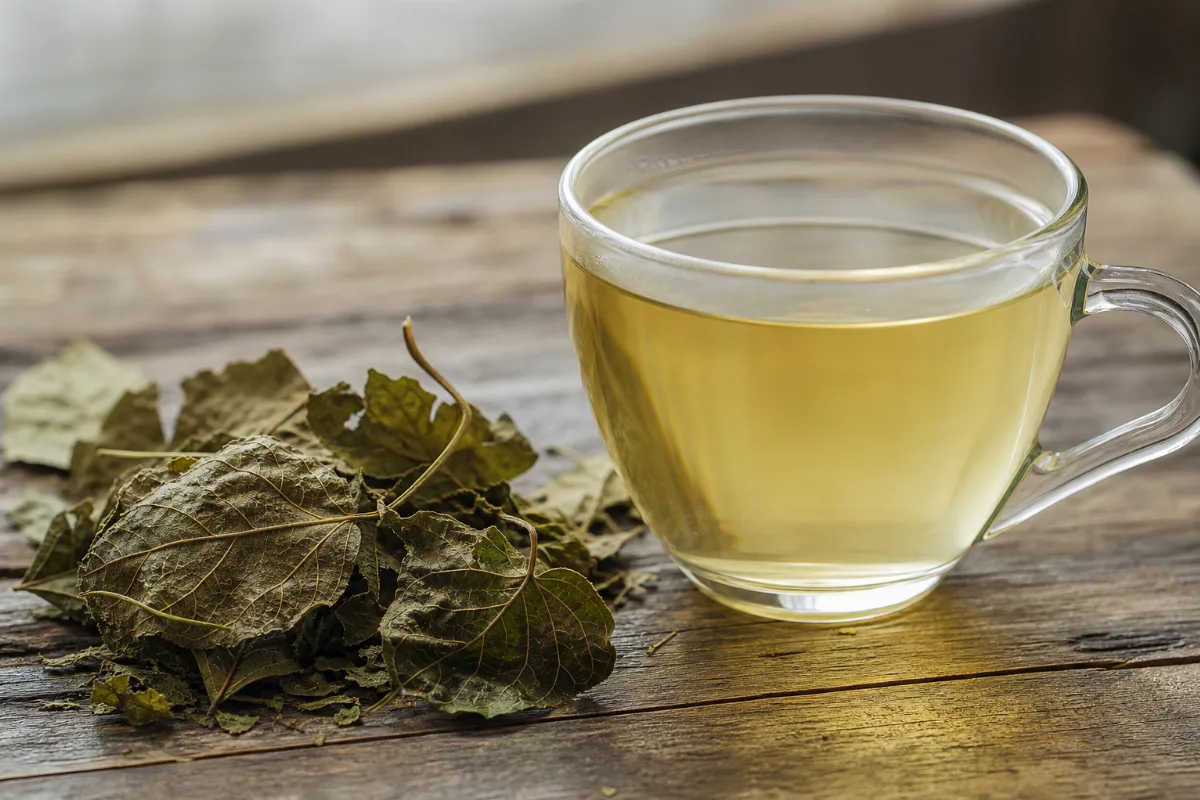
Herbal Teas & Extracts · Herbal tea
Mulberry Leaf Tea
Morus alba L. · also called White mulberry leaf tea, sang ye tea (Chinese), mulberry tea, morera blanca (Spanish). Not the same as mulberry fruit tea or capsules and extracts of the leaf.
Mulberry leaf tea is a drink made by steeping the dried leaf of the white mulberry tree. It is used mainly to ease the blood sugar rise after meals. Small, short trials of mulberry tea blends report a smaller rise, but most research is on powders and extracts, not tea. The most important caution: it can push blood sugar too low if you take diabetes medicines, so ask your prescriber first.
General information, not medical advice. Last substantive update · Not medically reviewed. A named clinician has not signed off on this page. How this page is made
About Mulberry Leaf Tea
Mulberry leaf tea is a drink made by steeping the dried leaf of the white mulberry tree (Morus alba). Its best-studied use is a smaller blood sugar rise after meals. Three small Japanese trials of a mulberry and water chestnut husk tea blend point that way, but most research is on powders and extracts, and reviews say the evidence is not enough to call mulberry leaf an effective treatment. The main caution is low blood sugar with diabetes medicines.
What it is
Mulberry leaf tea is an infusion of the dried leaf of the white mulberry (Morus alba), a tree native to China (NCCIH). The leaf is the part used. Mulberry fruit and root bark (sang bai pi) are different products.
In parts of Asia the leaf is used in tea, wine, bean curd and noodles (NCCIH). Some teas are plain leaf and some are blends, for example with water chestnut husk, green tea or other Chinese herbs.
Traditional and current uses
In traditional Chinese medicine, as NCCIH reports, the leaf has been used for diabetes, cough, sore throat, fever and bronchitis. Only the blood sugar use has been studied in people to any degree, and the studies mostly used powders and extracts.
We did not find a source on when or how the leaf first became a tea in China or Japan, so we do not describe that history.
What is in it and how it works
The leaf holds 1-deoxynojirimycin (DNJ), which blocks enzymes that turn starch and sugar into glucose, so less glucose may reach the blood soon after a meal. It also holds antioxidant phenols such as chlorogenic acid and rutin.
DNJ content differs a lot between leaves and products, from about 0.4 to 5.3 mg per gram in one lab study. A cup of tea can therefore act very differently from a concentrated extract.
What the research shows
Tea itself: three small trials of a mulberry leaf and water chestnut husk blend (30, 20 and 31 adults) report a smaller glucose rise after meals, and a weaker study of plain mulberry tea in type 2 diabetes agrees. Powders and extracts: reviews agree on a smaller blood sugar and insulin rise after meals, mostly in healthy adults in single-meal tests, with some key trials linked to one extract's maker.
Longer-term results (fasting glucose, HbA1c, cholesterol) disagree between reviews. There are no human blood pressure trials we could find, and the weight result is for a mix of ingredients.
At a glance
Traditional uses history, not proof
- Traditional Chinese medicine (as NCCIH reports): the leaf has been used for diabetes (Xiao-ke), cough, sore throat, fever and bronchitis.
- Food use (NCCIH): leaves are used in tea, wine, bean curd and noodles in parts of Asia.
- China (2024 review): mulberry leaf is described as approved by the Ministry of Health as a 'homology of medicine and food'. We did not read the official document.
- 'Traditional' means long use, not proof from modern trials.
Studied for research
- Mulberry tea itself (blends), blood sugar after meals, low
- Leaf powder and extracts, blood sugar after meals, moderate
- Insulin after meals (powder and extracts), moderate
- Starch digestion (breath tests), low
- Fasting glucose and HbA1c, mixed
- Prediabetes and insulin resistance, low
- Six-herb tea including mulberry (type 2 diabetes), very low
- Cholesterol, mixed
- Weight, artery thickness, very low; blood pressure, insufficient
Main compounds
- 1-Deoxynojirimycin (DNJ), a leaf compound that blocks starch-digesting enzymes
- Phenols such as chlorogenic acid and rutin, antioxidants in lab tests
Common forms
- Dried leaf steeped as a tea (tea bags or loose leaf)
- Tea blends, for example with water chestnut husk, green tea or other Chinese herbs
- Leaf powder, capsules and standardized extracts (not tea)
Research links: US National Center for Complementary and Integrative Health: White Mulberry Leaf · Tea blend trial in adults with borderline diabetes (abstract) · Two-week tea blend trial with glucose sensors (abstract) · 4-week safety trial of a green tea with mulberry leaf extract (abstract) · Meta-analysis of 13 trials on blood glucose and lipids (abstract) · Systematic review of Morus alba for blood sugar (abstract) · Research Library · Genes & Biomarkers Library
What it is and its history
- Accepted scientific name
- Morus alba L.
- Naming authority
- L. (Linnaeus), Species Plantarum, page 986 (1753) (GBIF). NCBI Taxonomy record: taxid 3498, common name white mulberry.
- Synonyms
- Morus alba var. alba; Morus alba var. multicaulis (Perr.) Loudon; Morus alba var. latifolia (Poir.) Bureau; Morus alba var. atropurpurea (Roxb.) Bureau; Morus alba f. tatarica (L.) C.K.Schneid.
- Common names
- White mulberry (English); Common mulberry (English); Silkworm mulberry (English); Russian mulberry (English); Egyptian mulberry (English); Morera blanca (Spanish); Moral blanco (Spanish); Mûrier blanc (French); Weisser Maulbeerbaum (German)
- Family or group
- Moraceae, the mulberry family, which also includes figs and jackfruit (the 2010 allergy paper tested fig, mulberry and jackfruit as related fruits).
- Classification
- Plantae > Tracheophyta > Magnoliopsida > Rosales > Moraceae > Morus > Morus alba
- Native range
- Native to China (NCCIH); now found in temperate and tropical climates around the world.
- Habitat
- Not verified from a source read beyond the NCCIH statement on climates.
- What it looks like
- Leaves: Not described in the sources read; the part used is the leaf.; Fruit: Fruit (the mulberry berry) is a different product from the leaf (NCCIH).
- Cultivation
- Grown for silkworm feed; NCCIH says leaves are also used for tea, wine, bean curd and noodles in parts of Asia.
- Harvest and processing
- A Japanese study found young leaves from the top of branches picked in summer held the most DNJ, and that drying and harvest methods change it. Two lab studies show leaf content varies between growing areas.
- Look-alikes and adulterants
- Name: Black mulberry (Morus nigra) and red mulberry (Morus rubra); Note: Other widely grown mulberries named in a 2025 review. Research on the white mulberry leaf should not be assumed to apply to them.; Name: Mulberry fruit and root bark (sang bai pi); Note: Different parts of the same tree, sold for different uses. NCCIH says berry safety information is insufficient. Neither is covered by the leaf evidence on this page.
- Sustainability and conservation
- Cultivated and widespread; no concern in the sources read.
Photographs
Traditional use and history history, not clinical proof
| Tradition or era | Documented use | Source |
|---|---|---|
| Traditional Chinese medicine (NCCIH) | Leaves used for diabetes (Xiao-ke), cough, sore throat, fever and bronchitis. Also used in tea, wine, bean curd and noodles in parts of Asia. Credited as the source states (NCCIH): leaves are used in tea, wine, bean curd and noodles in parts of Asia. | s-nccih-white-mulberry-leaf |
| Modern China (2024 review) | Described as approved by China's Ministry of Health as a 'homology of medicine and food'. | p38555774 |
| Modern supplements | Preparations are sold as supplements for weight control and blood glucose control (NCCIH). In the EU/US research literature the leaf compound DNJ was developed as a food ingredient (Japan, 2007). | s-nccih-white-mulberry-leaf |
| Silk industry | A consumer reference states the tree is the food of silkworms. This is NOT verified beyond that reference. | s-rxlist-white-mulberry |
Traditional use shows how it was used. It does not show that it works or is safe today.
What is inside, and how it may work
What it contains and how those compounds act in cells and animals. Laboratory and animal mechanisms are not proven effects in people.
Main compounds
| Compound | Family | Where it is concentrated | Activity studied | Level of evidence |
|---|---|---|---|---|
| 1-Deoxynojirimycin (DNJ) PubChem 29435 | iminosugar alkaloid | Leaf (young leaves richest) 0.401 to 5.309 mg per gram in 24 southern Chinese leaf samples; about 0.1% in commercial mulberry products in a 2007 study; 5% in the standardized extract Reducose. | Blocks alpha-glucosidase, an enzyme that frees glucose from starch and sugar. Also occurs in dayflower (Commelina communis) and some bacteria. 6 12 5 15 36 | Human data |
| Fagomine PubChem 72259 | iminosugar alkaloid | Leaf 0.279 to 2.300 mg per gram in the same 24 samples. | A second leaf iminosugar studied with DNJ; human effects not separated. 6 17 | Laboratory research |
| Chlorogenic acid PubChem 1794427 | phenolic acid | Leaf 3.104 to 10.050 mg per gram in the same samples; the main phenol measured. | Antioxidant in lab tests; no human effect shown. 6 | Laboratory research |
| Rutin PubChem 5280805 | flavonoid | Leaf Not read beyond being named a main phenol. | Antioxidant in lab tests; no human effect shown. 6 | Laboratory research |
Mechanisms, receptors and pathways
| Target or pathway | Gene or receptor | What was found | Level |
|---|---|---|---|
| Alpha-glucosidase enzyme block | Intestinal alpha-glucosidases | In a test tube, a standardized leaf extract blocked alpha-glucosidase four times more strongly than acarbose. In people, after-meal glucose and insulin rises were smaller in many trials, consistent with this. The human trials did not prove the mechanism. 9 18 22 | Laboratory research |
| Insulin resistance and inflammation proteins | RBP4, haptoglobin | After 12 weeks of leaf powder, retinol-binding protein 4 and haptoglobin were lower in blood samples from adults with prediabetes or early type 2 diabetes. A marker result, not a health result. 4 | Human data |
| Nitric oxide and vessel relaxation | Nitric oxide pathway | In rats with induced high blood pressure, a Morus alba extract partly prevented the rise, improved vessel relaxation and reduced platelet clumping through more nitric oxide activity. Animal only. 1 | Animal research |
Absorption, metabolism and elimination
- Absorption
- A 2023 review says leaf iminosugars have relatively good uptake. Details were not read.
- Distribution
- Not read.
- Metabolism
- Not read.
- Elimination
- Not read.
- Bioavailability
- In the one-year heart disease trial, blood DNJ was 70 +/- 50 ng/mL in the treated group and not detectable in the placebo group. No other human blood level data were read.
Isolated compounds versus whole extracts
Leaf powder, tea (leaf infusion), water extract and purified extract hold very different amounts of DNJ. A 2007 study reported about 0.1% DNJ in commercial products versus 1.5% in a developed powder, and the extract Reducose is standardized to 5%. Lab measurement shows about 13-fold variation between leaf samples. So trial results for one product cannot be transferred to another. Whether DNJ alone or the whole leaf (with phenols and other compounds) is responsible for the effects in people is not known; the heart disease trial linked blood DNJ to thinner artery walls but that is an association.
Nutritional composition
No food composition entry (for example from USDA) was checked, so we make no nutrient claims.
2 moderate certainty2 mixed findings5 low certainty3 very low certainty2 not enough evidence
What was looked at
The 14 benefits and uses checked for Mulberry Leaf Tea, each with how strong the evidence is. Tap one to open it.
- Mulberry leaf tea itself: blood sugar after a mealLow certainty
- Blood sugar after a meal: leaf powder and extracts (not tea)Moderate certainty
- Insulin after a meal: smaller riseModerate certainty
- Starch digestion and absorption (breath tests)Low certainty
- Longer-term blood sugar: fasting glucose and HbA1cMixed findings
- People with prediabetes or impaired glucose toleranceLow certainty
- Insulin resistance (HOMA-IR)Low certainty
- Six-herb Chinese tea that includes mulberry leaf (type 2 diabetes)Very low certainty
- Cholesterol and blood fats (LDL, total cholesterol, triglycerides)Mixed findings
- Blood pressureNot enough evidence
- Weight and body fatVery low certainty
- Artery wall thickness and heart or stroke events in coronary heart diseaseVery low certainty
- Inflammation markers (CRP, TNF-alpha, IL-6)Low certainty
- Antioxidant effects and traditional uses (cough, sore throat, fever)Not enough evidence
Lab markers tracked in the studies
Blood glucose after a meal (incremental area, mmol/L x hours)Insulin after a mealFasting blood glucoseHbA1c (three-month average blood sugar)HOMA-IR (insulin resistance score)LDL cholesterolTriglyceridesCarotid artery wall thickness (IMT)BMI and body fatLiver enzymes (AST and ALT)
What is Mulberry Leaf Tea good for?
The proposed uses and how strong the human evidence is for each. 'Moderate' means several trials point the same way but doubt remains, 'mixed' means studies disagree, 'low' means small or inconsistent studies, 'very low' means one small or unclear study, and 'insufficient' means not enough to judge. Only a few small trials tested tea; most results come from leaf powders and extracts, which can hold a different amount of the active compound.
Benefits, one by one
Each card is a research question, not a promise. Tap a goal to filter. Open a card to see the studies, doses and limits.
Mulberry leaf tea itself: blood sugar after a meal
Low certaintyThree small Japanese trials of a tea made from mulberry leaf blended with water chestnut husk reported a smaller blood sugar rise after a meal, in adults with borderline diabetes and in healthy adults. A fourth, weaker study in Saudi Arabia reported the same for plain mulberry tea in people with type 2 diabetes, but it was not described as randomised. All are small, short and use one blend or tea, and two come from the group that developed the tea. No trial of plain mulberry leaf tea against a placebo tea in a large group was found.
4 studiesTea made from mulberry leaf blended with water chestnut husk (three t…
Studies, doses and limits
What the trials found
Yasuda 2025 (30 adults with borderline diabetes, crossover, blend tea with water chestnut husk): glucose lower 30 and 60 minutes after rice and insulin lower at every time point, compared with placebo tea. Yasutake 2026 (20 healthy adults, crossover, same kind of blend, skin glucose sensor): smaller glucose rise after breakfast and after lunch. Shinkawa 2025 (31 adults, two weeks of the blend, crossover, glucose sensor): slightly smaller day-to-day glucose swings and a smaller one-hour rise, with no difference in low blood sugar, liver, kidney or inflammation blood markers. Banu 2015 (48 people with type 2 diabetes, 28 on mulberry tea and 20 on plain tea, not described as randomised): after-meal glucose reported as about 210 versus 287, but the groups already differed in fasting glucose.
Results
Smaller after-meal glucose rise in each study; sizes not available for the three crossover trials in their abstracts.
Effect sizes as reported
Banu 2015: after-meal glucose about 210 versus 287 (units not stated), effect size 1.31, p < 0.001, weak design. Shinkawa 2025: day-to-day swing measure 0.02 lower (p = 0.0006). The other two trials give no numbers in their abstracts.
Why this rating
Our own reading. The results all point the same way, but the studies are small and short, three use the same kind of blend (not mulberry alone), two are from the group that developed the tea, and the one study of plain mulberry tea was not described as randomised and its groups differed at the start. A smaller one-meal rise has not been shown to improve health.
Form and dose studied
Tea made from mulberry leaf blended with water chestnut husk (three trials) and plain mulberry tea (one weaker study). Tea strength is not comparable between studies.
Who was studied
Adults with borderline diabetes, healthy adults, and people with type 2 diabetes (weaker study).
Limits
Blend, not mulberry alone, in three trials; small; short; abstracts only; two trials share authors who developed the tea; the plain-tea study is weak. Funding not stated in the abstracts.
Why researchers looked
Tea is the oldest and simplest way the leaf is used, and it holds DNJ, which blocks enzymes that break starch into glucose.
Traditional use
In traditional Chinese medicine the leaf has been used for diabetes (called Xiao-ke) as well as cough, sore throat, fever and bronchitis (NCCIH).
Proposed mechanism Preliminary mechanism
The leaf compound DNJ blocks alpha-glucosidase, an enzyme that frees glucose from starch. The tea trials did not test this; it is the likely explanation, not a proven one.
A proposed mechanism does not show that the effect happens in people.
No difference in low blood sugar events in the two-week trial, but it did not include people on diabetes medicines. See the safety file.
Blood sugar after a meal: leaf powder and extracts (not tea)
Moderate certaintyIn several small trials, mostly in healthy adults, mulberry leaf powder or extract taken with a carbohydrate meal made the blood sugar rise after eating smaller. These were powders and extracts, not tea, and tea can hold a very different amount of the active compound. Two reviews agree on this short-term effect, but the reviewers of one said it is not enough to call mulberry leaf an effective way to lower blood glucose. Several of the larger-effect trials are linked to the company that makes one extract (Reducose).
8 studiesBranded water extract (Reducose, standardized to DNJ), DNJ-enriched l…
Studies, doses and limits
What the trials found
A 2017 meta-analysis of 13 randomized trials found that after-meal glucose was lower at 30, 60 and 90 minutes. A 2022 systematic review also found lower after-meal glucose and insulin, and its authors said the evidence is insufficient to call mulberry leaf an effective way to lower blood glucose. Individual trials: in 37 healthy adults a branded extract lowered the glucose rise after a maltodextrin drink by about 14% at the normal dose and 22% at double dose (half dose was not significant). In a second trial of 37 healthy adults, three amounts of the same extract lowered glucose over two hours after a mixed bread-and-egg meal by 30 to 33%. A Japanese trial using a DNJ-enriched leaf powder in healthy volunteers found that the two higher amounts suppressed the glucose and insulin rise after sucrose. A Thai dose-finding study found the smallest tested amount that dampened the rise (figure left out). A Korean trial of a standardized extract in coated rice reported the same direction in people with impaired glucose tolerance and in healthy people.
Results
Smaller after-meal rise in glucose in nearly every trial, from about 14% to 33% in the two branded-extract trials.
Effect sizes as reported
Meta-analysis mean difference in after-meal glucose: -1.04 at 30 min (CI -1.36 to -0.73), -0.87 at 60 min (CI -1.27 to -0.48), -0.55 at 90 min (CI -0.87 to -0.22); units not stated in the abstract. Lown 2017: glucose area -14.0% (CI -26.0 to -2.0) at normal dose, -22.0% (CI -33.9 to -10.0) at double dose. Thondre 2024: -30%, -33%, -32%.
Why this rating
Our own reading. The direction is the same in two reviews and in trials from Japan, the UK, Thailand and Korea. The rating stops at moderate because the effect is over a few hours after one meal, most people were healthy, the trials are small, the best-known results come from authors linked to the extract maker, and the 2022 review's authors said the evidence was insufficient to call it an effective treatment. A smaller after-meal rise has not been shown to improve health outcomes.
Form and dose studied
Branded water extract (Reducose, standardized to DNJ), DNJ-enriched leaf powder, plain leaf powder, standardized extract in rice. These differ in how much DNJ they hold, so one trial's result does not carry over to another product.
Who was studied
Mostly healthy adults; some trials in adults with impaired glucose tolerance or obesity with borderline diabetes.
Limits
Single-meal tests, small groups, healthy volunteers, product differences, two of the key trials list the extract maker (Phynova Group Ltd) among authors. Only abstracts were read.
Why researchers looked
A substance in the leaf, 1-deoxynojirimycin (DNJ), blocks enzymes that break starch and sugar into glucose, so less glucose may reach the blood soon after a meal.
Traditional use
In traditional Chinese medicine the leaf has been used for diabetes (called Xiao-ke) as well as cough, sore throat, fever and bronchitis (NCCIH).
Proposed mechanism Preliminary mechanism
DNJ is a blocker of alpha-glucosidase, a digestive enzyme. In the test tube a standardized leaf extract blocked the enzyme more strongly than the diabetes drug acarbose did. The after-meal effect in people fits this idea, but the human trials did not prove how it works.
A proposed mechanism does not show that the effect happens in people.
Can add to the effect of diabetes medicines and cause low blood sugar (NCCIH). Digestive upset is the commonest side effect. See the safety file.
Insulin after a meal: smaller rise
Moderate certaintyAlong with glucose, the amount of insulin the body released after a carbohydrate meal was lower with mulberry leaf in several short trials. This means the body needed to release less insulin for the same meal. It is a short-term lab result, not a proven health gain.
4 studiesBranded extract (Reducose) and DNJ-enriched powder.
Studies, doses and limits
What the trials found
The 2022 systematic review reported lower after-meal insulin. In the 37-person branded-extract trial, insulin area fell 23.8% (normal dose) and 24.7% (double dose); in the second branded-extract trial, 31 to 38%. The Japanese DNJ-powder trial also reported a smaller insulin rise at the higher amounts.
Results
Smaller insulin rise after a meal in trials of healthy adults.
Effect sizes as reported
Lown 2017: insulin area -23.8% (CI -39.9 to -7.8) and -24.7% (CI -40.8 to -8.6). Thondre 2024: -31%, -34%, -38%.
Why this rating
Same trials and same limits as the after-meal glucose result; insulin was reported in fewer trials and again the biggest results come from industry-linked authors.
Form and dose studied
Branded extract (Reducose) and DNJ-enriched powder.
Who was studied
Healthy adults.
Limits
Healthy people, single meals, industry-linked trials; no long-term insulin measure.
Why researchers looked
If less glucose arrives, less insulin is needed. High insulin after meals is linked with insulin resistance.
Traditional use
Not part of traditional use; this is a modern laboratory outcome.
Proposed mechanism Preliminary mechanism
Likely a follow-on from less glucose reaching the blood after the meal (blocked starch digestion), not a separate action.
A proposed mechanism does not show that the effect happens in people.
No specific insulin-related harm was reported in these trials.
Starch digestion and absorption (breath tests)
Low certaintyTwo small crossover trials in healthy adults used breath tests to see whether less starch or sugar was absorbed. One used a mulberry leaf extract, the other a mix of black, green and mulberry tea extracts. Both found signs of less carbohydrate absorbed, consistent with the leaf's enzyme-blocking compound.
2 studiesA mulberry leaf extract and a mixed black, green and mulberry tea ext…
Studies, doses and limits
What the trials found
Jozefczuk 2017 (25 healthy adults aged 19 to 27, single-blind crossover): less of the starch label appeared in the breath after the extract than after placebo (median 13.9% versus 17.2%, p = 0.015). Zhong 2006 (healthy volunteers, crossover): a mixed extract of black, green and mulberry tea raised breath hydrogen, which the authors read as about 25% of the carbohydrate not being absorbed, with no fat malabsorption and no significant rise in symptoms.
Results
Less starch digested or absorbed in both tests.
Effect sizes as reported
13.9% vs 17.2% starch recovery (p = 0.015); about 25% carbohydrate malabsorbed (estimate).
Why this rating
Our own reading. Two small single-meal tests in healthy people, one of which used a three-tea mix.
Form and dose studied
A mulberry leaf extract and a mixed black, green and mulberry tea extract. Neither is a plain cup of mulberry tea.
Who was studied
Healthy adults.
Limits
Small, single meals, extracts not tea, one mix of three teas, abstracts only.
Why researchers looked
To check in people the idea that the leaf blocks starch digestion.
Traditional use
In traditional Chinese medicine the leaf has been used for diabetes (called Xiao-ke) as well as cough, sore throat, fever and bronchitis (NCCIH).
Proposed mechanism Preliminary mechanism
Less carbohydrate absorbed fits the enzyme-blocking idea. The breath tests are indirect measures.
A proposed mechanism does not show that the effect happens in people.
The mix did not significantly raise symptoms in the abstract.
Longer-term blood sugar: fasting glucose and HbA1c
Mixed findingsWhether mulberry leaf lowers everyday (fasting) glucose and the three-month average (HbA1c) is disputed. One 2023 review found small drops, one 2017 review found no difference, and the reviews mix different products and people.
5 studiesLeaf powder and extracts of many kinds; one review includes other mul…
Studies, doses and limits
What the trials found
A 2023 meta-analysis of 12 trials (615 people) found fasting glucose lower by 0.47 mmol/L and HbA1c lower by 2.92 mmol/mol, with better results after 8 weeks or more and in people whose starting fasting glucose was above 6.1 mmol/L. A 2017 meta-analysis of 13 trials found no difference in fasting glucose, HbA1c or HOMA-IR. A 2025 meta-analysis of 15 trials (1,202 people, mixed mulberry plant parts) reported lower fasting glucose and HbA1c. In a 12-week trial in obese adults with borderline diabetes, fasting glucose fell 3.86 mg/dL and HbA1c fell 0.11 percentage points compared with the group's own starting values; this is a small change, and the improvement in glucose tolerance was not seen. NCCIH says some trials found no effect on glucose.
Results
Mixed: small average drops in newer reviews, none in an older one.
Effect sizes as reported
2023: fasting glucose -0.47 mmol/L, HbA1c -2.92 mmol/mol, fasting insulin -0.58 uIU/mL (CIs not in abstract). 2017: no significant difference. Thai trial: fasting glucose -3.86 mg/dL, HbA1c -0.11 percentage points versus baseline.
Why this rating
Reviews disagree. Included trials differ in plant part, product, population and length. The effects seen are small and may not matter clinically.
Form and dose studied
Leaf powder and extracts of many kinds; one review includes other mulberry parts.
Who was studied
Adults with prediabetes, obesity, type 2 diabetes and some healthy adults.
Limits
Mixed products, short trials, small groups, abstracts only. Changes against baseline are not the same as changes against a control group.
Why researchers looked
HbA1c and fasting glucose are what doctors use to follow diabetes, so a longer-term effect would matter more than a one-meal effect.
Traditional use
Traditional use for diabetes (Xiao-ke) in Chinese medicine.
Proposed mechanism Pharmacological theory
If it works at all over weeks, it would likely be through repeated blunting of after-meal peaks; a direct effect on fasting glucose is not shown.
A proposed mechanism does not show that the effect happens in people.
Combined with diabetes medicines it may lower blood sugar too far. Do not replace medicines.
People with prediabetes or impaired glucose tolerance
Low certaintyA few small trials tested mulberry leaf in people with raised blood sugar. They lean positive for after-meal glucose but are too small and short to tell whether it prevents diabetes.
3 studiesStandardized leaf extract; leaf powder with set DNJ content.
Studies, doses and limits
What the trials found
A Korean trial of a standardized leaf extract in coated rice reported a smaller after-meal rise in people with impaired glucose tolerance and in healthy people (no numbers in the abstract). A Thai study of obese adults with borderline diabetes reported small changes in fasting glucose and HbA1c over 12 weeks, with no improvement in glucose tolerance. A follow-up lab study on blood from the Thai trial found lower levels of two proteins linked to insulin resistance and inflammation (retinol-binding protein 4 and haptoglobin); that is a marker result, not a health result.
Results
Small positive signals; no trial showed that diabetes was prevented or delayed.
Effect sizes as reported
Not given in two abstracts; Thai trial figures above.
Why this rating
Few trials, small, short, and the abstracts we read give no participant counts for two of them.
Form and dose studied
Standardized leaf extract; leaf powder with set DNJ content.
Who was studied
Adults with impaired glucose tolerance, obesity with borderline diabetes, early type 2 diabetes.
Limits
No diabetes-prevention outcome, no long follow-up, abstracts only.
Why researchers looked
Prediabetes is the stage where lowering sugar spikes might matter most.
Traditional use
Traditional use for diabetes, not prediabetes as a named condition.
Proposed mechanism Preliminary mechanism
Same enzyme-blocking idea as above.
A proposed mechanism does not show that the effect happens in people.
Bloating, gas and loose stools were the usual side effects in the 12-week study.
Insulin resistance (HOMA-IR)
Low certaintyInsulin resistance means the body responds poorly to insulin. A 2025 pooled analysis reported better HOMA-IR scores, but a 2017 pooled analysis found no difference, and the one trial that did show a clear gain used a three-ingredient mix.
4 studiesLeaf powder; a combination capsule containing a leaf extract standard…
Studies, doses and limits
What the trials found
The 2017 meta-analysis found no difference in HOMA-IR. The 2025 meta-analysis of 15 trials reported lower HOMA-IR. The Thai 12-week trial saw a trend (p = 0.057, not significant). A 12-week trial of 93 adults with obesity found insulin sensitivity improved 28% more with a combination of berberine, mulberry leaf extract and chromium than with placebo; since the three were given together, mulberry's part cannot be separated.
Results
Unclear; positive in a combination trial only.
Effect sizes as reported
Combination trial: Matsuda index ratio 1.28 (CI 1.14 to 1.44). Thai trial: p = 0.057.
Why this rating
Reviews disagree and the only clear human gain came from a combination product.
Form and dose studied
Leaf powder; a combination capsule containing a leaf extract standardized to 5% DNJ.
Who was studied
Obese adults with or without prediabetes.
Limits
Combination product; abstracts only; funding of the combination trial not read.
Why researchers looked
Insulin resistance links high sugar, weight gain and heart risk.
Traditional use
No traditional equivalent.
Proposed mechanism Preliminary mechanism
Not established. A marker study found lower retinol-binding protein 4 after 12 weeks of leaf powder.
A proposed mechanism does not show that the effect happens in people.
Berberine, which is in the combination, has its own interactions.
Six-herb Chinese tea that includes mulberry leaf (type 2 diabetes)
Very low certaintyOne 12-week trial of 90 people with type 2 diabetes added a six-herb tea that includes mulberry leaf to usual care. Fasting glucose and total cholesterol fell more than with usual care alone. Mulberry cannot be credited, because five other herbs were in the tea and there was no placebo tea.
1 studiesSix-herb tea: mulberry leaf, astragalus, corn silk, wolfberry bark, o…
Studies, doses and limits
What the trials found
Hu 2023 (90 people with type 2 diabetes, 12 weeks, registered trial): the tea group had larger falls in fasting glucose and total cholesterol (p < 0.05) than the usual-care group, changes in gut bacteria, and no adverse events observed. The authors called the improvement slight and the tea safe and feasible.
Results
Slightly better fasting glucose and cholesterol than usual care alone.
Effect sizes as reported
p < 0.05 for fasting glucose and total cholesterol; no sizes in the abstract.
Why this rating
Our own reading. A mix of six herbs and no placebo tea, so people knew which group they were in.
Form and dose studied
Six-herb tea: mulberry leaf, astragalus, corn silk, wolfberry bark, ophiopogon root, gynostemma.
Who was studied
Community patients with type 2 diabetes.
Limits
Combination; not blinded; abstract only.
Why researchers looked
Chinese herbal teas are often mixes; this was a community trial of one.
Traditional use
In traditional Chinese medicine the leaf has been used for diabetes (called Xiao-ke) as well as cough, sore throat, fever and bronchitis (NCCIH).
Proposed mechanism Preliminary mechanism
Less carbohydrate absorbed fits the enzyme-blocking idea. The breath tests are indirect measures.
A proposed mechanism does not show that the effect happens in people.
No adverse events observed in the abstract.
Cholesterol and blood fats (LDL, total cholesterol, triglycerides)
Mixed findingsReviews disagree. A 2025 pooled analysis (mixed mulberry parts) reported lower total cholesterol, LDL and triglycerides, but a 2017 analysis of 13 trials found no change in any blood fat.
4 studiesMulberry leaf DNJ preparation (heart trial); mixed extracts (2025 rev…
Studies, doses and limits
What the trials found
2017 meta-analysis of 13 trials: no significant difference in total cholesterol, triglycerides, LDL or HDL. 2025 meta-analysis of 15 trials (1,202 people): lower total cholesterol, LDL and triglycerides, with extracts from different plant parts behaving differently. A one-year placebo-controlled trial in people with coronary heart disease and LDL above 140 mg/dL reported a better blood fat profile with a mulberry leaf DNJ preparation (p < .05; no numbers or participant count in the abstract). RxList says the cholesterol use has insufficient evidence.
Results
Conflicting. No consistent, sized lowering of LDL.
Effect sizes as reported
Not given in the abstracts of the 2025 review or the heart disease trial; 2017 review: no significant difference.
Why this rating
Two pooled analyses disagree; the positive one mixes plant parts; the single trial gives no numbers.
Form and dose studied
Mulberry leaf DNJ preparation (heart trial); mixed extracts (2025 review).
Who was studied
Adults with metabolic disorders; people with coronary heart disease and high LDL.
Limits
Abstracts only; mixed products and plant parts; one single-centre trial.
Why researchers looked
Mulberry leaf is sold for weight and metabolic health, and animal work suggested it lowers blood fats.
Traditional use
Not a classical use in the sources read.
Proposed mechanism Preliminary mechanism
Proposed through DNJ and leaf polyphenols; in people the mechanism is not shown.
A proposed mechanism does not show that the effect happens in people.
Not a replacement for cholesterol medicines. No interaction with cholesterol drugs has been studied (not found).
Blood pressure
Not enough evidenceWe found no human trial that measured blood pressure as a main result. The only blood pressure finding is in rats. Evidence for people is insufficient.
3 studiesNot applicable for people.
Studies, doses and limits
What the trials found
No human blood pressure trial result was found in our searches. The 2025 pooled analysis did not list blood pressure among its outcomes in the abstract.
Results
Animal only.
Why this rating
Only a rat study; nothing in people was found.
Who was studied
Rats.
Limits
A rat result cannot be assumed to apply to people.
Why researchers looked
Listed as an unproven use in consumer references (RxList says insufficient evidence). A rat study tested it.
Traditional use
Not a classical use in the sources read.
Proposed mechanism Animal research
In rats with induced high blood pressure, a Morus alba extract partly prevented the rise, improved blood vessel relaxation and reduced platelet clumping, through more nitric oxide activity.
A proposed mechanism does not show that the effect happens in people.
If it does lower pressure it could add to blood pressure medicines; this is unstudied.
Weight and body fat
Very low certaintyOne 12-week trial of 93 adults with obesity found a combination of berberine, mulberry leaf extract and chromium lowered BMI and body fat more than placebo. Mulberry alone has not been tested for weight in a trial we found.
2 studiesCombination capsule: berberine, a leaf extract standardized to 5% DNJ…
Studies, doses and limits
What the trials found
In the 93-person trial, compared with placebo BMI was lower by 1.24 kg/m2, fat mass by 2.35 kg and visceral fat rating by 0.92. The three ingredients were taken together, so mulberry's share is unknown. A 2024 systematic review of obesity effects is mostly lab and animal work.
Results
Positive only for a combination product.
Effect sizes as reported
BMI -1.24 (CI -2.15 to -0.33); fat mass -2.35 kg (CI -4.12 to -0.58); visceral fat rating -0.92 (CI -1.74 to -0.10).
Why this rating
One combination-product trial; no mulberry-only trial.
Form and dose studied
Combination capsule: berberine, a leaf extract standardized to 5% DNJ, chromium picolinate.
Who was studied
Greek adults with obesity.
Limits
Combination; funding not read; abstract only.
Why researchers looked
Leaf preparations are sold for weight control (NCCIH).
Traditional use
Not a classical use in the sources read.
Proposed mechanism Preliminary mechanism
Reviews of lab and animal work propose effects on fat metabolism; they need more study (2024 review).
A proposed mechanism does not show that the effect happens in people.
Berberine has its own drug interactions.
Artery wall thickness and heart or stroke events in coronary heart disease
Very low certaintyOne year-long trial in people with coronary heart disease reported fewer heart and brain events and thinner carotid artery walls with a mulberry leaf DNJ preparation. It is one trial and the abstract gives no numbers.
1 studiesMulberry leaf DNJ preparation.
Studies, doses and limits
What the trials found
Placebo-controlled, double-blind, one year, patients with LDL above 140 mg/dL. Treated group had fewer cerebrovascular and cardiovascular events, better antioxidant and inflammation markers and lower carotid intima-media thickness (all p < .05). Blood DNJ was 70 +/- 50 ng/mL in the treated group.
Results
Positive in a single trial.
Effect sizes as reported
Not given in the abstract.
Why this rating
One trial, no sizes or counts visible, no repeat.
Form and dose studied
Mulberry leaf DNJ preparation.
Who was studied
People with coronary heart disease and high LDL.
Limits
Abstract only; the abstract's strong wording is not backed by visible numbers.
Why researchers looked
Mulberry leaf tea has been linked to reduced plaque in lab work.
Proposed mechanism Preliminary mechanism
The authors tie the result to DNJ because blood DNJ levels were linked to thinner artery walls. A link is not proof of cause.
A proposed mechanism does not show that the effect happens in people.
Do not replace heart medicines.
Inflammation markers (CRP, TNF-alpha, IL-6)
Low certaintyA 2025 pooled analysis reported lower inflammation markers with mulberry extract, and a marker study found lower haptoglobin after 12 weeks. These are lab numbers, not symptoms.
2 studiesMulberry extracts of mixed parts.
Studies, doses and limits
What the trials found
The 2025 analysis of 15 trials reported lower TNF-alpha, IL-6 and hs-CRP (no sizes in the abstract). The proteomic study of 12 weeks of leaf powder found lower haptoglobin.
Results
Lower markers; no symptom outcome.
Effect sizes as reported
Not given.
Why this rating
Mixed plant parts, abstract-only, markers not symptoms.
Form and dose studied
Mulberry extracts of mixed parts.
Who was studied
Adults with metabolic disorders.
Limits
No sizes read.
Why researchers looked
Leaf polyphenols have anti-inflammatory activity in lab work.
Traditional use
Leaf used traditionally for fever and sore throat (NCCIH); not inflammation as such.
Proposed mechanism Preliminary mechanism
Not established in people.
A proposed mechanism does not show that the effect happens in people.
None specific.
Antioxidant effects and traditional uses (cough, sore throat, fever)
Not enough evidenceThe leaf contains antioxidant compounds in lab tests (NCCIH), and Chinese medicine has used it for cough, sore throat, fever and bronchitis. No human trial of these uses was found.
2 studiesNot applicable.
Studies, doses and limits
Results
Not tested in people.
Why this rating
Traditional use and lab tests are not evidence of benefit in people.
Limits
No human studies.
Why researchers looked
Traditional use and lab chemistry.
Traditional use
Traditional Chinese medicine: cough, sore throat, fever, bronchitis (NCCIH).
Proposed mechanism Laboratory research
Lab antioxidant tests only; a lab study of 24 leaf samples measured polyphenols and antioxidant activity.
A proposed mechanism does not show that the effect happens in people.
None specific.
Connections to the rest of health
How Mulberry Leaf Tea connects to the rest of our health knowledge graph. Every link says what kind of connection it is. A safety link (for example to the liver) is a warning, not a benefit. A study that merely mentions a topic never creates a benefit link.
Explore every connection: goals, body systems, organs, symptoms, genes
A. Wellness goals
| Connected to | Kind of connection | Evidence status | Context | Studies |
|---|---|---|---|---|
| Blood Sugar Balance | Low certainty | Mulberry leaf tea itself: blood sugar after a meal: Three small Japanese trials of a tea made from mulberry leaf blended with water chestnut husk reported a smaller blood sugar rise after a meal, in adults with borderline diabetes and in healthy adults. A fourth, weaker study in Saudi Arabia reported the same for plain mulberry tea in people with type 2 diabetes, but it was not described as randomised. All are small, short and use one blend or tea, and two come from the group that developed the tea. No trial of plain mulberry leaf tea against a placebo tea in a large group was found. Starch digestion and absorption (breath tests): Two small crossover trials in healthy adults used breath tests to see whether less starch or sugar was absorbed. One used a mulberry leaf extract, the other a mix of black, green and mulberry tea extracts. Both found signs of less carbohydrate absorbed, consistent with the leaf's enzyme-blocking compound. | 25 27 19 2 11 29 8 | |
| Metabolic Health | Low certainty | Mulberry leaf tea itself: blood sugar after a meal: Three small Japanese trials of a tea made from mulberry leaf blended with water chestnut husk reported a smaller blood sugar rise after a meal, in adults with borderline diabetes and in healthy adults. A fourth, weaker study in Saudi Arabia reported the same for plain mulberry tea in people with type 2 diabetes, but it was not described as randomised. All are small, short and use one blend or tea, and two come from the group that developed the tea. No trial of plain mulberry leaf tea against a placebo tea in a large group was found. Starch digestion and absorption (breath tests): Two small crossover trials in healthy adults used breath tests to see whether less starch or sugar was absorbed. One used a mulberry leaf extract, the other a mix of black, green and mulberry tea extracts. Both found signs of less carbohydrate absorbed, consistent with the leaf's enzyme-blocking compound. | 25 27 19 2 11 29 8 | |
| Blood Sugar Balance | Demonstrated clinical effect | Moderate certainty | Blood sugar after a meal: leaf powder and extracts (not tea): In several small trials, mostly in healthy adults, mulberry leaf powder or extract taken with a carbohydrate meal made the blood sugar rise after eating smaller. These were powders and extracts, not tea, and tea can hold a very different amount of the active compound. Two reviews agree on this short-term effect, but the reviewers of one said it is not enough to call mulberry leaf an effective way to lower blood glucose. Several of the larger-effect trials are linked to the company that makes one extract (Reducose). Insulin after a meal: smaller rise: Along with glucose, the amount of insulin the body released after a carbohydrate meal was lower with mulberry leaf in several short trials. This means the body needed to release less insulin for the same meal. It is a short-term lab result, not a proven health gain. | 18 10 14 21 12 20 9 35 |
| Metabolic Health | Demonstrated clinical effect | Moderate certainty | Blood sugar after a meal: leaf powder and extracts (not tea): In several small trials, mostly in healthy adults, mulberry leaf powder or extract taken with a carbohydrate meal made the blood sugar rise after eating smaller. These were powders and extracts, not tea, and tea can hold a very different amount of the active compound. Two reviews agree on this short-term effect, but the reviewers of one said it is not enough to call mulberry leaf an effective way to lower blood glucose. Several of the larger-effect trials are linked to the company that makes one extract (Reducose). Insulin after a meal: smaller rise: Along with glucose, the amount of insulin the body released after a carbohydrate meal was lower with mulberry leaf in several short trials. This means the body needed to release less insulin for the same meal. It is a short-term lab result, not a proven health gain. | 18 10 14 21 12 20 9 35 |
| Blood Sugar Balance | Potential benefit | Mixed findings | Longer-term blood sugar: fasting glucose and HbA1c: Whether mulberry leaf lowers everyday (fasting) glucose and the three-month average (HbA1c) is disputed. One 2023 review found small drops, one 2017 review found no difference, and the reviews mix different products and people. People with prediabetes or impaired glucose tolerance: A few small trials tested mulberry leaf in people with raised blood sugar. They lean positive for after-meal glucose but are too small and short to tell whether it prevents diabetes. | 3 18 28 20 35 9 4 24 |
| Metabolic Health | Potential benefit | Mixed findings | Longer-term blood sugar: fasting glucose and HbA1c: Whether mulberry leaf lowers everyday (fasting) glucose and the three-month average (HbA1c) is disputed. One 2023 review found small drops, one 2017 review found no difference, and the reviews mix different products and people. People with prediabetes or impaired glucose tolerance: A few small trials tested mulberry leaf in people with raised blood sugar. They lean positive for after-meal glucose but are too small and short to tell whether it prevents diabetes. | 3 18 28 20 35 9 4 24 13 |
| Cholesterol Balance | Potential benefit | Mixed findings | Cholesterol and blood fats (LDL, total cholesterol, triglycerides): Reviews disagree. A 2025 pooled analysis (mixed mulberry parts) reported lower total cholesterol, LDL and triglycerides, but a 2017 analysis of 13 trials found no change in any blood fat. | 18 28 23 38 |
| Heart Health | Potential benefit | Mixed findings | Cholesterol and blood fats (LDL, total cholesterol, triglycerides): Reviews disagree. A 2025 pooled analysis (mixed mulberry parts) reported lower total cholesterol, LDL and triglycerides, but a 2017 analysis of 13 trials found no change in any blood fat. Artery wall thickness and heart or stroke events in coronary heart disease: One year-long trial in people with coronary heart disease reported fewer heart and brain events and thinner carotid artery walls with a mulberry leaf DNJ preparation. It is one trial and the abstract gives no numbers. | 18 28 23 38 |
| Blood Pressure Support | Preliminary mechanism | Not enough evidence | Blood pressure: We found no human trial that measured blood pressure as a main result. The only blood pressure finding is in rats. Evidence for people is insufficient. | 1 28 38 |
| Heart Health | Preliminary mechanism | Not enough evidence | Blood pressure: We found no human trial that measured blood pressure as a main result. The only blood pressure finding is in rats. Evidence for people is insufficient. | 1 28 38 |
| Weight Management | Potential benefit | Very low certainty | Weight and body fat: One 12-week trial of 93 adults with obesity found a combination of berberine, mulberry leaf extract and chromium lowered BMI and body fat more than placebo. Mulberry alone has not been tested for weight in a trial we found. | 24 13 |
| Inflammation Balance | Biological association | Low certainty | Inflammation markers (CRP, TNF-alpha, IL-6): A 2025 pooled analysis reported lower inflammation markers with mulberry extract, and a marker study found lower haptoglobin after 12 weeks. These are lab numbers, not symptoms. | 28 4 |
| Immune Support | Traditional use | Not enough evidence | Antioxidant effects and traditional uses (cough, sore throat, fever): The leaf contains antioxidant compounds in lab tests (NCCIH), and Chinese medicine has used it for cough, sore throat, fever and bronchitis. No human trial of these uses was found. | 35 6 |
B. Body systems
| Connected to | Kind of connection | Evidence status | Context | Studies |
|---|---|---|---|---|
| Digestive system | Adverse effect or risk | Low certainty | Bloating, gas, constipation, loose stools. Bloating, gas, loose stools. Preparation or compound: Mulberry leaf powder or extract |
35 20 |
| Immune system | Adverse effect or risk | Low certainty | Allergic reactions to fruit and pollen documented; leaf not shown. Preparation or compound: Mulberry fruit and pollen |
7 22 |
| Metabolism Weight | Biological association | Low certainty | Studied for: Mulberry leaf tea itself: blood sugar after a meal Studied for: Blood sugar after a meal: leaf powder and extracts (not tea) | 25 27 19 2 18 10 14 21 12 20 9 35 11 29 3 28 4 24 8 23 38 13 |
| Endocrine System | Biological association | Low certainty | Studied for: Mulberry leaf tea itself: blood sugar after a meal Studied for: Blood sugar after a meal: leaf powder and extracts (not tea) | 25 27 19 2 18 10 14 21 12 20 9 35 11 29 3 28 24 8 |
| Cardiovascular System | Biological association | Mixed findings | Studied for: Cholesterol and blood fats (LDL, total cholesterol, triglycerides) Studied for: Blood pressure | 18 28 23 38 1 4 |
| Immune System | Biological association | Low certainty | Studied for: Inflammation markers (CRP, TNF-alpha, IL-6) | 28 4 |
| Respiratory System | Biological association | Not enough evidence | Studied for: Antioxidant effects and traditional uses (cough, sore throat, fever) | 35 6 |
I. Biomarkers
| Connected to | Kind of connection | Evidence status | Context | Studies |
|---|---|---|---|---|
| Blood glucose | Drug or supplement interaction | Low certainty | May add to diabetes medicines and cause low blood sugar. Preparation or compound: Mulberry leaf powder or extract |
35 38 |
| Blood glucose | Demonstrated clinical effect | Moderate certainty | Smaller rise after meals in short trials; can add to diabetes medicines. Preparation or compound: Mulberry leaf tea, powder or extract |
18 10 |
| Blood glucose after a meal (incremental area, mmol/L x hours) | Biological association | Moderate certainty | Measured in trials: lowered. A lab change is not the same as a health benefit. | 18 14 21 12 |
| Insulin after a meal | Biological association | Moderate certainty | Measured in trials: lowered. A lab change is not the same as a health benefit. | 14 21 10 |
| Fasting blood glucose | Biological association | Mixed findings | Measured in trials: mixed. A lab change is not the same as a health benefit. | 3 18 20 |
| HbA1c (three-month average blood sugar) | Biological association | Mixed findings | Measured in trials: mixed. A lab change is not the same as a health benefit. | 3 18 20 |
| HOMA-IR (insulin resistance score) | Biological association | Low certainty | Measured in trials: mixed. A lab change is not the same as a health benefit. | 18 28 24 |
| LDL cholesterol | Biological association | Mixed findings | Measured in trials: mixed. A lab change is not the same as a health benefit. | 18 28 |
| Triglycerides | Biological association | Mixed findings | Measured in trials: mixed. A lab change is not the same as a health benefit. | 18 28 |
| Carotid artery wall thickness (IMT) | Biological association | Very low certainty | Measured in trials: lowered. A lab change is not the same as a health benefit. | 23 |
| BMI and body fat | Biological association | Very low certainty | Measured in trials: lowered. A lab change is not the same as a health benefit. | 24 |
| Liver enzymes (AST and ALT) | Biological association | Low certainty | Measured in trials: mixed. A lab change is not the same as a health benefit. | 28 19 |
J. Genes, receptors and enzymes
| Connected to | Kind of connection | Evidence status | Context | Studies |
|---|---|---|---|---|
| Alpha-glucosidase | Preliminary mechanism | In vitro | Blocked by DNJ in test-tube work; consistent with smaller after-meal glucose rises in people. | 9 |
K. Biological pathways
| Connected to | Kind of connection | Evidence status | Context | Studies |
|---|---|---|---|---|
| Retinol-binding protein 4 (RBP4) | Preliminary mechanism | Human | Lower after 12 weeks of leaf powder in adults with prediabetes or early type 2 diabetes. | 4 |
| Haptoglobin | Preliminary mechanism | Human | Lower after 12 weeks of leaf powder in the same study. | 4 |
L. Active compounds
| Connected to | Kind of connection | Evidence status | Context | Studies |
|---|---|---|---|---|
| 1-Deoxynojirimycin (DNJ) | Biological association | Human | Blocks alpha-glucosidase, an enzyme that frees glucose from starch and sugar. Also occurs in dayflower (Commelina communis) and some bacteria. Preparation or compound: Leaf (young leaves richest) |
6 12 5 15 36 |
| Fagomine | Biological association | In vitro | A second leaf iminosugar studied with DNJ; human effects not separated. Preparation or compound: Leaf |
6 17 |
| Chlorogenic acid | Biological association | In vitro | Antioxidant in lab tests; no human effect shown. Preparation or compound: Leaf |
6 |
| Rutin | Biological association | In vitro | Antioxidant in lab tests; no human effect shown. Preparation or compound: Leaf |
6 |
Each connection is stored with the ingredient, the connected record, the kind of connection, the evidence status, the supporting studies, the preparation or compound involved, and a review date (last reviewed October 25, 2026).
Evidence at a glance: what changed in 10 lab markers
Tap a number to show only those markers. Counts are markers, not people.
The evidence
The research centre for Mulberry Leaf Tea. Every record here was checked against PubMed or the publisher's page; we never list a study we have not verified.
Evidence by outcome
Bars show how many studies we found for each outcome, not how well it works. People are added up across trials only (reviews are not added, to avoid double counting).
How we rate evidence
High certainty
Several well-run trials or reviews agree; further research is unlikely to change the picture much.
Moderate certainty
Good trials point the same way, but some doubt remains.
Low certainty
Small, short or inconsistent trials. The finding could change with better research.
Very low certainty
Very little or very weak human data. Treat as a possibility only.
Mixed findings
Trials or reviews disagree with each other.
Not enough evidence
Not enough human research to say either way.
Evidence against
Good research found no benefit, or found harm.
We take the reviewers' own risk-of-bias and GRADE statements where they exist, and otherwise judge from study size, design, consistency, directness and whether a product matches what is sold. Many publications do not make evidence high. Method note: We searched PubMed (including for tea trials), read the NCCIH page on white mulberry leaf and a consumer drug reference (RxList), and checked plant names in GBIF and NCBI Taxonomy and compounds in PubChem. Only abstracts were read for nearly all studies. The caffeine-free point comes from shop listings only and is not verified. Not verified: EMA, LiverTox, LactMed, Commission E, WHO and FDA documents (none found or opened). Certainty ratings are the compiler's own reading, not formal grades. No study is cited that we could not verify.
Study library: every study we checked 38
| Study | Design | People | Product, dose, length | Result |
|---|---|---|---|---|
| Aghdam 2025 Evaluation of the Effects of Mulberry Leaf Extracts Morus alba L. on Cardiovascular, Renal, and Platelet Function in Experimental Arterial Hypertension Nutrients · PMID 39796483 · DOI |
Animal research animal |
Rats made hypertensive with L-NAME | Morus alba L. extract (plant part not clearly stated in the abstract) unspecified Amounts left out on purpose 6 weeks · vs Untreated and captopril groups |
The extract partly prevented high blood pressure, improved blood vessel relaxation and reduced platelet clumping, though it did not normalize blood pressure as captopril did. Partial prevention of high blood pressure (no numbers in the abstract) Methods, limits and fundingOutcomes: Blood pressure, aorta response, platelet clumping Limitations: Only the abstract was read. Rats. No human blood pressure result. Not safe to assume a human effect. Read: abstract |
| Banu 2015 Reduction of post-prandial hyperglycemia by mulberry tea in type-2 diabetes patients. Saudi J Biol Sci · PMID 25561880 · DOI |
Controlled trial unclear |
48 48 people with type 2 diabetes (28 mulberry tea, 20 plain tea) |
Mulberry tea, drunk with a small amount of sugar after a standard breakfast leaf Amounts left out on purpose Follow-up after breakfast (about 90 minutes) · vs Plain tea (control group) |
After-meal glucose was reported as 210 (mulberry tea) versus 287 (plain tea), a large and highly significant difference, with a very large effect size (1.31). The abstract does not say people were randomly assigned. Fasting glucose also differed between the groups at the start (about 154 versus 179). After-meal glucose about 210 versus 287 (units not stated in the abstract); p < 0.001 Methods, limits and fundingOutcomes: Fasting and after-meal blood glucose Limitations: Only the abstract was read. Not described as randomised or blinded, groups already differed in fasting glucose, one time point. Weak evidence. Funding and conflicts: None stated in the abstract. Read: abstract |
| Cui 2023 Effect of mulberry leaf or mulberry leaf extract on glycemic traits: a systematic review and meta-analysis Food Funct · PMID 36644880 · DOI |
Meta-analysis |
615 Adults in 12 randomized trials |
Mulberry leaf or mulberry leaf extract leaf Various Various (subgroup 8 weeks or longer) · vs Placebo or control |
Pooled results favoured mulberry leaf. Longer use (8 weeks or more) worked better in people who were not healthy and in people whose starting fasting glucose was above 6.1 mmol/L. Fasting glucose -0.47 mmol/L; HbA1c -2.92 mmol/mol; fasting insulin -0.58 uIU/mL (Confidence intervals not given in the abstract (GRADE was done, but the ratings are not stated in the abstract)) Methods, limits and fundingOutcomes: Fasting glucose, HbA1c, fasting insulin Limitations: Only the abstract was read. Small trials, mixed products. The reviewers' GRADE ratings were not visible. Funding and conflicts: Not stated in the abstract Read: abstract |
| Fongsodsri 2022 Mulberry-Derived 1-Deoxynojirimycin Prevents Type 2 Diabetes Mellitus Progression via Modulation of Retinol-Binding Protein 4 and Haptoglobin Nutrients · PMID 36364802 · DOI |
Controlled trial |
Obese adults with prediabetes or early type 2 diabetes | Mulberry leaf powder (set DNJ content) leaf Amounts left out on purpose 12 weeks · vs Before versus after (blood samples) |
Out of 1291 proteins, two linked to insulin resistance (retinol-binding protein 4) and inflammation (haptoglobin) went down. RBP4 and haptoglobin lower after treatment Methods, limits and fundingOutcomes: Blood protein profile (proteomics) and energy-handling proteins Limitations: Only the abstract was read. A lab-marker study on samples from the authors' earlier trial; it does not show a health benefit. Number of people not stated in the abstract. Read: abstract |
| Gao 2016 1-Deoxynojirimycin: Occurrence, Extraction, Chemistry, Oral Pharmacokinetics, Biological Activities and In Silico Target Fishing Molecules · PMID 27886092 · DOI |
Narrative review review |
Review (lab, animal) | 1-Deoxynojirimycin (DNJ) leaf and other sources |
Describes DNJ (C6H13NO4, 163.17 g/mol) as an iminosugar found in mulberry leaves, in Commelina communis (dayflower) and in some bacteria. Lists blood sugar lowering, anti-obesity and antiviral features. No numbers in the abstract Methods, limits and fundingOutcomes: Where DNJ occurs, chemistry, absorption, activity Limitations: Only the abstract was read (the abstract is cut off in the record we read). Pharmacokinetic details were not read. Read: abstract |
| Hao 2018 Effect of different planting areas on the chemical compositions and hypoglycemic and antioxidant activities of mulberry leaf extracts in Southern China PLoS One · PMID 29944667 · DOI |
Laboratory in-vitro |
24 24 mulberry leaf samples from three regions of southern China |
Mulberry leaf extracts leaf |
DNJ ranged from 0.401 to 5.309 mg per gram of leaf, fagomine from 0.279 to 2.300 mg per gram, and chlorogenic acid from 3.104 to 10.050 mg per gram, depending on the sample. Chlorogenic acid, rutin and isoquercitrin were the main phenols. DNJ about 13-fold range between samples Methods, limits and fundingOutcomes: DNJ, fagomine and phenol content; antioxidant and enzyme-blocking tests Limitations: Only the abstract was read. Lab measurement of leaf, no human outcome. Shows how much the ingredient varies, not what any product contains. Funding and conflicts: No competing interests declared Read: abstract |
| Hemmer 2010 Identification of Bet v 1-related allergens in fig and other Moraceae fruits Clin Exp Allergy · PMID 20447079 · DOI |
Cross sectional |
188 188 patients with or without birch pollen allergy |
Skin prick tests with fresh fig, mulberry (Morus alba) fruit, jackfruit and other foods fruit (not leaf) |
Among 85 people with birch pollen allergy alone, 91% had a positive skin test to mulberry fruit. Mulberry fruit contains a protein like the main birch pollen allergen (Bet v 1). Among 60 people sensitized only to Ficus benjamina (the weeping fig houseplant), none reacted to mulberry fruit. None of 32 mugwort-allergic people reacted. 91% positive skin test to mulberry fruit in birch-pollen-allergic people; 0% in Ficus benjamina-only sensitized people Methods, limits and fundingOutcomes: Skin test reactions, IgE binding, mass spectrometry Limitations: Only the abstract was read. Tested mulberry FRUIT, not leaf, so it does not show leaf allergy. The abstract notes that fig allergy has been linked to Ficus benjamina and latex; it does not show this for mulberry. Read: abstract |
| Hu 2023 Effect of "maccog" TCM tea on improving glucolipid metabolism and gut microbiota in patients with type 2 diabetes in community. Front Endocrinol (Lausanne) · PMID 36967788 · DOI |
Controlled trial |
90 90 community patients with type 2 diabetes on usual care |
A six-herb Chinese tea (mulberry leaf, astragalus, corn silk, wolfberry bark, ophiopogon root, gynostemma) added to usual care leaf (one of six herbs) Amounts left out on purpose 12 weeks · vs Usual care alone (no placebo tea) |
Fasting glucose and total cholesterol fell more in the tea group (p < 0.05). Gut bacteria changed in the tea group. Protein, albumin and creatinine blood levels were lower in the tea group. No adverse events were observed. The authors called it a slight improvement and safe and feasible. Fasting glucose and total cholesterol fell more with tea (p < 0.05) Methods, limits and fundingOutcomes: Fasting glucose, cholesterol, liver and kidney tests, gut bacteria Limitations: Only the abstract was read. A six-herb mix, so mulberry cannot be credited. No placebo, so people knew which group they were in. Registered (ChiCTR1800018566). Funding and conflicts: Funding not stated in the abstract. Registration: ChiCTR1800018566 Read: abstract |
| Hwang 2016 Evaluation of a Standardized Extract from Morus alba against alpha-Glucosidase Inhibitory Effect and Postprandial Antihyperglycemic in Patients with Impaired Glucose Tolerance: A Randomized Double-Blind Clinical Trial Evid Based Complement Alternat Med · PMID 27974904 · DOI |
Controlled trial |
People with impaired glucose tolerance, and healthy people | Standardized Morus alba leaf extract (SEMA), in coated rice leaf Amounts left out on purpose Single test · vs Control rice |
The extract blocked a starch-digesting enzyme more strongly than acarbose in the test tube, lowered blood sugar in animals, and in people it reduced the after-meal rise in both the impaired-glucose-tolerance group and the healthy group. No numbers in the abstract Methods, limits and fundingOutcomes: After-meal glucose; also lab enzyme test and animal tests Limitations: Only the abstract was read. No numbers, no participant count. A paper that mixes lab, animal and human parts. Funding and conflicts: No competing interests declared Read: abstract |
| Jeong 2022 Morus alba L. for Blood Sugar Management: A Systematic Review and Meta-Analysis Evid Based Complement Alternat Med · PMID 35656460 · DOI |
Systematic review |
Randomized trials of Morus alba in any population, any control | Morus alba products (type not stated in the abstract) unspecified Various Various · vs Any control |
Morus alba lowered after-meal glucose and insulin. The authors wrote that this is not enough to conclude that Morus alba is an effective way to lower blood glucose, and that more rigorous studies are needed. No numbers in the abstract Methods, limits and fundingOutcomes: Blood sugar outcomes Limitations: Only the abstract was read. Number of trials and effect sizes are not in the abstract. The abstract's own conclusion line is more positive than its results line; we follow the results line. Registered as PROSPERO CRD42021255940. Funding and conflicts: No conflicts of interest declared Read: abstract |
| Jozefczuk 2017 Mulberry leaf extract decreases digestion and absorption of starch in healthy subjects-A randomized, placebo-controlled, crossover study. Adv Med Sci · PMID 28501729 · DOI |
Controlled trial |
25 Healthy adults aged 19 to 27 |
Mulberry (Morus alba) leaf extract taken with cornflakes and milk leaf extract Amounts left out on purpose Single-meal crossover tests one week apart · vs Placebo |
Less of the starch label was recovered in the breath after the extract than after placebo (median 13.9% versus 17.2%; p = 0.015), a difference visible from minute 120. The authors say it decreases starch digestion and absorption. 13.9% vs 17.2%, p = 0.015 Methods, limits and fundingOutcomes: Starch digestion and absorption by a 13C breath test Limitations: Only the abstract was read. 25 young healthy adults, single blind, one meal. The abstract calls mulberry leaf tea a supplement of interest, but the test product was an extract. Funding and conflicts: Funding not stated in the abstract. Read: abstract |
| Kimura 2007 Food-grade mulberry powder enriched with 1-deoxynojirimycin suppresses the elevation of postprandial blood glucose in humans J Agric Food Chem · PMID 17555327 · DOI |
Controlled trial |
Healthy volunteers | DNJ-enriched mulberry leaf powder (Shin ichinose variety) leaf Amounts left out on purpose Single test · vs Placebo |
The two higher amounts significantly lowered the rise in blood glucose and insulin after sucrose. The authors also found that commercial mulberry products contained only about 0.1% DNJ, and that young leaves from the tops of branches picked in summer had the most DNJ. Significant suppression at the two higher amounts (numbers not in the abstract) Methods, limits and fundingOutcomes: Blood glucose and insulin 30-180 minutes after sucrose Limitations: Only the abstract was read. Number of volunteers not stated in the abstract. Healthy people, single sucrose test. The powder was developed by the authors, so results may not apply to ordinary leaf products. Read: abstract |
| Li 2024 Mulberry leaf and its effects against obesity: A systematic review of phytochemistry, molecular mechanisms and applications Phytomedicine · PMID 38555774 · DOI |
Systematic review |
Mixed (lab, animal, some human) | Mulberry leaf leaf Various Various · vs Various |
States that mulberry leaf is approved by China's Ministry of Health as a 'homology of medicine and food', and that its ingredients and mechanisms need further study. No numbers in the abstract Methods, limits and fundingOutcomes: Review of ingredients, mechanisms and products related to obesity Limitations: Only the abstract was read. A broad review, mostly lab and animal work; it does not provide pooled human results. Read: abstract |
| Lown 2017 Mulberry-extract improves glucose tolerance and decreases insulin concentrations in normoglycaemic adults: Results of a randomised double-blind placebo-controlled study PLoS One · PMID 28225835 · DOI |
Controlled trial |
37 Healthy adults aged 19-59, BMI 20-30 |
Reducose mulberry leaf extract (proprietary, standardized to DNJ) leaf Amounts left out on purpose Single-meal crossover tests · vs Placebo |
Normal and double dose lowered the glucose and insulin rise over 120 minutes. Half dose did not reach significance. No significant difference in nausea, cramping, bloating or gas between groups. Glucose pIAUC: half dose -6.1% (not significant), normal dose -14.0%, double dose -22.0%. Insulin pIAUC: -9.7% (not significant), -23.8%, -24.7%. (Glucose: normal dose -26.0% to -2.0%, double dose -33.9% to -10.0%. Insulin: normal dose -39.9% to -7.8%, double dose -40.8% to -8.6%) Methods, limits and fundingOutcomes: Glucose and insulin response; stomach and gut symptoms Limitations: Only the abstract was read. Healthy adults, one test meal of maltodextrin, 37 people. Says 'phase 2' design inside the text. Industry-linked: an author is the chief operating officer of the extract's maker (Phynova Group Ltd). Funding and conflicts: Industry-linked: Phynova Group Ltd (makes Reducose) listed among author affiliations Read: abstract |
| Marx 2016 A 28-Day Repeated Dose Toxicological Study of an Aqueous Extract of Morus Alba L. Int J Toxicol · PMID 27733446 · DOI |
Animal research animal |
Rats (10 per sex per group) | Reducose, a water extract of Morus alba leaf standardized to 5% DNJ leaf Amounts left out on purpose 28 days · vs Vehicle |
No treatment-related deaths or harm found. No target organ. The no-observed-adverse-effect level was the highest dose tested. the highest dose tested (figure left out) Methods, limits and fundingOutcomes: Deaths, body weight, blood tests, organ weights, tissue exams Limitations: Only the abstract was read. Rats, 28 days. Does not show human safety. The extract is a commercial product, sponsor not stated in the abstract. Read: abstract |
| Murbach 2024 A 90-day preclinical toxicological evaluation in rats of a highly purified and concentrated mulberry leaf extract J Appl Toxicol · PMID 38837228 · DOI |
Animal research animal |
Rats | Reducose 5% (purified Morus alba leaf extract, 5 +/- 0.5% DNJ) leaf Amounts left out on purpose 90 days · vs Vehicle |
No adverse effects. The no-observed-adverse-effect level was the highest dose tested. the highest dose tested (figure left out) Methods, limits and fundingOutcomes: Clinical signs, weight, blood tests, tissue exams Limitations: Only the abstract was read. Rats; the abstract says the work is of interest to regulators in several markets. Sponsor not stated in the abstract. Read: abstract |
| Parida 2023 A comprehensive review on the production, pharmacokinetics and health benefits of mulberry leaf iminosugars: Main focus on 1-deoxynojirimycin, d-fagomine, and 2-O-alpha-d-galactopyranosyl-DNJ Crit Rev Food Sci Nutr · PMID 34658276 · DOI |
Narrative review review |
Review (mostly lab and animal) | Mulberry leaf iminosugars (DNJ, d-fagomine, GAL-DNJ) leaf |
Says these compounds have relatively good uptake and safety profiles, and that how much of them a product holds depends on farming and processing. No numbers in the abstract Methods, limits and fundingOutcomes: Absorption, processing, activity Limitations: Only the abstract was read. Most of the biology is from lab and animal work. Read: abstract |
| Phimarn 2017 A meta-analysis of efficacy of Morus alba Linn. to improve blood glucose and lipid profile Eur J Nutr · PMID 26972284 · DOI |
Meta-analysis |
13 randomized trials rated high quality by the Jadad score | Products derived from Morus alba unspecified Various Various · vs Control |
After-meal glucose fell at 30, 60 and 90 minutes. No difference was found in fasting glucose, HbA1c, HOMA-IR, total cholesterol, triglycerides, LDL or HDL. No serious side effects in either group. After-meal glucose mean difference -1.04 at 30 min, -0.87 at 60 min, -0.55 at 90 min (units not stated in the abstract) (30 min -1.36 to -0.73; 60 min -1.27 to -0.48; 90 min -0.87 to -0.22) Methods, limits and fundingOutcomes: After-meal glucose, fasting glucose, HbA1c, HOMA-IR, cholesterol and triglycerides Limitations: Only the abstract was read. Jadad score is a simple quality score. The authors say large trials are still needed. The parts of Morus alba used are not stated in the abstract. Funding and conflicts: Not stated in the abstract Read: abstract |
| Shinkawa 2025 Evaluation of the Postprandial-Hyperglycemia-Suppressing Effects and Safety of Short-Term Intake of Mulberry Leaf and Water Chestnut Tea: A Randomized Double-Blind Placebo-Controlled Crossover Trial Nutrients · PMID 40732933 · DOI |
Controlled trial |
31 Adults, tested with continuous glucose monitoring |
Kanzaki mulberry leaf and water chestnut tea (blend of mulberry leaf with water chestnut leaves and husks) leaf (blend with another plant) Amounts left out on purpose 2 weeks per period, 1 week washout · vs Placebo tea |
Glucose swings were slightly lower with the tea, and the 1-hour after-meal glucose area was lower. There was no difference in low blood sugar events, liver, kidney or inflammation blood markers, or reported symptoms. Coefficient of variation mean difference 0.02 (p = 0.0006) Methods, limits and fundingOutcomes: Day-to-day swings in glucose (coefficient of variation); after-meal glucose; low blood sugar; blood tests; symptoms Limitations: Only the abstract was read. Small, two weeks, a blend with water chestnut, so the effect cannot be given to mulberry alone. Read: abstract |
| Thaipitakwong 2020 A randomized controlled study of dose-finding, efficacy, and safety of mulberry leaves on glycemic profiles in obese persons with borderline diabetes Complement Ther Med · PMID 32147046 · DOI |
Controlled trial |
Healthy adults (dose-finding) and obese adults with borderline diabetes (12 weeks) | Mulberry leaf powder leaf Amounts left out on purpose 12 weeks · vs Control group |
The smallest tested amount that dampened the after-meal rise was identified (figure left out). Over 12 weeks, fasting glucose and HbA1c fell compared with the person's own starting values. Glucose tolerance did not improve and the insulin resistance change did not reach significance. Bloating, gas and loose stools were the common side effects. Fasting glucose -3.86 mg/dL (SD 5.99, p = 0.002); HbA1c -0.11 percentage points (SD 0.22, p = 0.011), both versus baseline; insulin resistance p = 0.057 Methods, limits and fundingOutcomes: After-meal glucose; fasting glucose; HbA1c; insulin; side effects Limitations: Only the abstract was read. The changes quoted are against baseline, not clearly against the control group. Number of people not given in the abstract. Small changes. Read: abstract |
| Thondre 2024 Understanding the Impact of Different Doses of Reducose Mulberry Leaf Extract on Blood Glucose and Insulin Responses after Eating a Complex Meal: Results from a Double-Blind, Randomised, Crossover Trial Nutrients · PMID 38892603 · DOI |
Controlled trial |
37 Healthy adults |
Reducose mulberry leaf extract capsules leaf Amounts left out on purpose Single-meal crossover tests · vs Placebo capsule |
All three amounts lowered the glucose and insulin rise after a mixed meal compared with placebo. Glucose iAUC 120 lower by 30%, 33% and 32%; insulin iAUC 120 lower by 31%, 34% and 38% (p-values 0.003, 0.001, 0.002 for glucose; 0.024, 0.004, <0.001 for insulin) Methods, limits and fundingOutcomes: Glucose and insulin over 120 minutes after the meal Limitations: Only the abstract was read. Healthy people, one meal, 37 people. Industry-linked: two authors work for Phynova Group Ltd, which made the product and helped design the study. Funding and conflicts: Industry-linked: authors employed by Phynova Group Ltd; company took part in design but not collection or analysis, per the paper Read: abstract |
| Tricase 2025 Insights into the Activities and Usefulness of Deoxynojirimycin and Morus alba: A Comprehensive Review Molecules · PMID 40807388 · DOI |
Narrative review |
Review of DNJ and Morus alba (lab, animal and clinical work) | DNJ; Morus alba (white mulberry); Reducose and Glubloc products leaf (mainly) |
Describes DNJ as a strong blocker of the starch-digesting enzyme alpha-glucosidase, says DNJ has not been approved as a food supplement, calls some studies on Reducose and Glubloc 'spurious', and notes that mulberry allergy can include breathing allergy, hives from airborne contact, anaphylaxis, oral allergy syndrome and food-induced hives. No numbers in the abstract Methods, limits and fundingOutcomes: Mechanism, clinical studies, allergy Limitations: Only the abstract was read. A narrative review. The abstract does not say which mulberry part causes which allergy, and does not explain 'spurious'. Funding and conflicts: No conflicts of interest declared Read: abstract |
| Wang 2021 Mulberry leaf attenuates atherosclerotic lesions in patients with coronary heart disease possibly via 1-Deoxynojirimycin: A placebo-controlled, double-blind clinical trial J Food Biochem · PMID 33277698 · DOI |
Controlled trial |
People with coronary heart disease and LDL cholesterol above 140 mg/dL | Mulberry leaf DNJ preparation (MLD) leaf Amounts left out on purpose 1 year · vs Placebo |
Compared with placebo, the group on mulberry leaf DNJ had fewer heart and brain events, better blood fat results, and thinner carotid artery wall. Blood DNJ was 70 +/- 50 ng/mL in the treated group and not detectable in placebo. Reported as significant (p < .05); no effect sizes in the abstract Methods, limits and fundingOutcomes: Blood fats, antioxidant and inflammation markers, carotid artery thickness, heart and brain events Limitations: Only the abstract was read. Number of people, doses and effect sizes are not given in the abstract, and the abstract's 'amazing treat' wording overstates what a single trial can show. One trial, one centre. Read: abstract |
| Xenos 2026 Effects of Berberine, White Mulberry Leaf Extract and Chromium Picolinate on Body Composition and Insulin Resistance in Adults with Obesity: A Randomized Controlled Trial Nutrients · PMID 42738972 · DOI |
Controlled trial |
93 Greek adults with obesity and no diagnosed chronic disease |
Fixed combination: berberine, white mulberry leaf extract (5% DNJ) and chromium picolinate leaf (in a combination) Amounts left out on purpose 12 weeks · vs Matching placebo |
The combination lowered BMI, body fat and visceral fat and raised insulin sensitivity more than placebo. Because the three ingredients were given together, the effect of mulberry alone cannot be separated. BMI -1.24 kg/m2; fat mass -2.35 kg; visceral fat rating -0.92; Matsuda index 28% greater improvement (ratio 1.28) (BMI -2.15 to -0.33; fat mass -4.12 to -0.58; visceral fat -1.74 to -0.10; ratio 1.14 to 1.44) Methods, limits and fundingOutcomes: Insulin sensitivity (Matsuda index), BMI, body fat, visceral fat rating Limitations: Only the abstract was read. Combination product, 12 weeks, no mulberry-alone group. Funding not read. Funding and conflicts: Not read Read: abstract |
| Yasuda 2025 Mulberry leaves and water chestnut tea reduces postprandial blood glucose in borderline diabetic Japanese: A randomized, double-blind, placebo-controlled crossover study. Asia Pac J Clin Nutr · PMID 40134056 · DOI |
Controlled trial |
30 Adults with borderline diabetes (Japan) |
Tea of mulberry leaf with water chestnut husk (a blend), drunk before a rice meal leaf (blend with another plant) Amounts left out on purpose Single-meal crossover tests · vs Placebo tea |
Blood glucose was significantly lower 30 and 60 minutes after rice with the tea than with placebo, and insulin was significantly lower at every time point (30, 60, 90 and 120 minutes). The authors measured DNJ and polyphenols in the tea in the lab and said it may be an effective drink for borderline diabetes. Significant at 30 and 60 min for glucose and at all four times for insulin (numbers not in the abstract) Methods, limits and fundingOutcomes: Blood glucose and insulin 30 to 120 minutes after eating rice Limitations: Only the abstract was read. 30 people, a blend, single meals. The authors set out to develop this tea, so they are not independent of it. Cannot be credited to mulberry alone. Funding and conflicts: Funding not stated in the abstract; the authors developed the tea. Read: abstract |
| Yasumoto 2022 Safety evaluation of a beverage containing mulberry leaf extract. Biosci Biotechnol Biochem · PMID 35089999 · DOI |
Controlled trial |
48 Healthy adults |
Green tea drink containing mulberry leaf extract, taken three times a day leaf extract added to green tea Amounts left out on purpose 4 weeks · vs Same green tea without the extract |
No adverse reactions were seen over 4 weeks and the rate of adverse events did not differ between the groups. The authors concluded the drink was safe for healthy adults for that period. No difference in adverse events Methods, limits and fundingOutcomes: Adverse reactions and adverse events Limitations: Only the abstract was read. 48 healthy adults, 4 weeks. The drink was a green tea (which contains caffeine) with an added extract, not a plain mulberry leaf tea. Does not cover people on medicines, pregnancy or longer use. Funding and conflicts: Funding not stated in the abstract. Read: abstract |
| Yasutake 2026 Effects of mulberry leaves & water chestnut husk tea on postprandial and second meal interstitial glucose in healthy adults: A randomised, double-blind, placebo-controlled crossover study. Asia Pac J Clin Nutr · PMID 42242851 · DOI |
Controlled trial |
20 Healthy adults |
Tea of mulberry leaf with water chestnut husk (a blend), drunk before breakfast leaf (blend with another plant) Amounts left out on purpose Single-day crossover tests, at least one week apart · vs Placebo tea |
Compared with placebo tea, the tea was linked to a smaller glucose rise after both breakfast and lunch, with moderate to large effect sizes. The authors say the findings need confirming. Effect sizes described as moderate to large; no numbers in the abstract Methods, limits and fundingOutcomes: Glucose under the curve after breakfast and after lunch (second meal), by a skin glucose sensor Limitations: Only the abstract was read. 20 healthy adults, one day of each tea, a blend. Same research group as the 2025 borderline-diabetes trial. Funding and conflicts: Funding not stated in the abstract. Read: abstract |
| Yu 2025 Integrative Evidence on Mulberry Extract for Modulating Metabolic Risk Factors Associated with Vascular Dementia Int J Mol Sci · PMID 40943306 · DOI |
Meta-analysis |
1202 Adults with metabolic disorders in 15 randomized trials |
Mulberry (Morus alba) extracts from different plant parts mixed (parts differ between trials) Various Various · vs Placebo or standard care |
Pooled results: lower total cholesterol, LDL, triglycerides, fasting glucose, HbA1c, HOMA-IR and inflammation markers; AST improved, ALT did not change. Bigger benefits were seen with shorter treatment and lower amounts. Extracts from different plant parts had different effects. No trial measured thinking or brain outcomes. Effect sizes not given in the abstract Methods, limits and fundingOutcomes: Glucose, insulin, liver enzymes, lipids, inflammation markers Limitations: Only the abstract was read. The review mixes mulberry leaf with other plant parts, so it cannot be read as leaf-only evidence. The 'shorter treatment, lower dose looked better' result is odd and may reflect trial differences rather than a real effect. The title mentions vascular dementia but the abstract says no trial measured brain outcomes. Funding and conflicts: Not stated in the abstract Read: abstract |
| Zhong 2006 An extract of black, green, and mulberry teas causes malabsorption of carbohydrate but not of triacylglycerol in healthy volunteers. Am J Clin Nutr · PMID 16960168 |
Controlled trial |
Healthy adult volunteers | A mixed extract of black, green and mulberry tea leaves, taken with a rice meal leaf (mixed extract with black and green tea) Amounts left out on purpose Crossover test meals · vs Placebo drink |
The extract raised breath hydrogen strongly, which the authors read as about 25% of the carbohydrate not being absorbed. It did not cause fat malabsorption or a significant increase in symptoms. The authors said it gave the basis for more experiments on obesity or diabetes. About 25% of the carbohydrate malabsorbed (estimate from breath tests) Methods, limits and fundingOutcomes: Breath hydrogen (a sign of undigested carbohydrate reaching the bowel), fat absorption, symptoms Limitations: Only the abstract was read. A mixture of three teas with mulberry as the largest part by weight, so it cannot be credited to mulberry alone. Number of volunteers not given in the abstract. Funding and conflicts: Funding not stated in the abstract. Read: abstract |
| s-ema-hmpc-morus-not-found European Medicines Agency / HMPC: no Morus alba herbal monograph found · Source |
Negative search n/a |
Methods, limits and fundingRead: not-found | ||
| s-gbif-morus-alba GBIF Backbone Taxonomy: Morus alba L. (usageKey 5361889) · Source |
Reference database n/a |
Methods, limits and fundingRead: full-text | ||
| s-lactmed-mulberry-not-found LactMed (NIH): no mulberry or Morus alba entry found · Source |
Negative search n/a |
Methods, limits and fundingRead: not-found | ||
| s-livertox-mulberry-not-found LiverTox (NIH): no mulberry or Morus alba entry found · Source |
Negative search n/a |
Methods, limits and fundingRead: not-found | ||
| s-ncbi-taxonomy-morus-alba NCBI Taxonomy: Morus alba (taxid 3498) · Source |
Reference database n/a |
Methods, limits and fundingRead: summary-only | ||
| s-nccih-white-mulberry-leaf NCCIH (NIH): White Mulberry Leaf · Source |
Authoritative guidance n/a |
Methods, limits and fundingRead: full-text | ||
| s-pubchem-mulberry-compounds PubChem compound records for DNJ (CID 29435), fagomine (72259), chlorogenic acid (1794427), rutin (5280805) · Source |
Reference database n/a |
Methods, limits and fundingRead: summary-only | ||
| s-retail-caffeine-free Retailer listings of mulberry leaf tea describing it as caffeine-free · Source |
Retail listing n/a |
Methods, limits and fundingRead: search-result-only | ||
| s-rxlist-white-mulberry RxList (consumer reference): White Mulberry · Source |
Consumer drug reference n/a |
Methods, limits and fundingRead: full-text |
What we do not know yet
- What the evidence supports: for tea, a smaller after-meal sugar rise is low certainty. For powders and extracts, a smaller after-meal sugar and insulin rise is moderate. Fasting glucose, HbA1c and cholesterol are mixed. Prediabetes, insulin resistance, starch digestion and inflammation are low. Weight, artery thickness and the six-herb tea are very low. Blood pressure is insufficient.
- What is uncertain: the tea trials are small, short, mostly of one blend, and two come from the group that developed the tea. Most other trials used powders or extracts, are small and in healthy adults, and many results come from maker-linked authors.
- Not found: a large trial of plain mulberry leaf tea against placebo tea, a measurement of caffeine in the tea, EMA monograph, LiverTox and LactMed entries, human blood pressure trials, drug-interaction studies, pregnancy data, and tests of tea quality.
How new research is added
New studies are found by a saved PubMed search and are placed in a review queue. A person reads each one before it changes any evidence rating or safety wording.
Lab markers
What changed in blood or saliva tests during trials. A changed number is not the same as feeling or being healthier, and we give no "normal ranges".
Metabolic 5
Insulin after a meal
Lowered in trials
The hormone released to move sugar from the blood into cells.
Moderate certaintyResults and what it means
Why it was measured
Shows how hard the body works to handle a meal.
Statistical vs. clinical meaning
Short-term lab effect; not shown to improve health.
Safety implication
None specific found.
| Study | Result | People | Product |
|---|---|---|---|
| 14 | -23.8% (CI -39.9 to -7.8) and -24.7% (CI -40.8 to -8.6) at normal and double dose; half dose -9.7% not significant | 37 healthy adults | Reducose leaf extract |
| 21 | iAUC 120 lower by 31%, 34% and 38% | 37 healthy adults | Reducose leaf extract |
| 25 | Lower at all four time points (30, 60, 90, 120 minutes) | 30 adults with borderline diabetes | Mulberry leaf and water chestnut husk tea |
Fasting blood glucose
Mixed results in trials
Blood sugar after not eating overnight.
Mixed findingsResults and what it means
Why it was measured
Common diabetes check.
Statistical vs. clinical meaning
Small changes, uncertain; the drop in the Thai trial is about 4 mg/dL.
Safety implication
Low sugar risk with diabetes medicines.
HbA1c (three-month average blood sugar)
Mixed results in trials
Share of the blood's haemoglobin coated in sugar; shows average glucose over about three months.
Mixed findingsResults and what it means
Why it was measured
Standard long-term diabetes measure.
Statistical vs. clinical meaning
Even if real, a drop of about 0.1 percentage point is far smaller than what diabetes medicines achieve.
Safety implication
Do not stop diabetes treatment.
LDL cholesterol
Mixed results in trials
The 'bad' cholesterol carried in the blood.
Mixed findingsResults and what it means
Why it was measured
A heart risk factor.
Statistical vs. clinical meaning
Unresolved.
Safety implication
Not a replacement for cholesterol medicines.
Triglycerides
Mixed results in trials
A type of blood fat.
Mixed findingsResults and what it means
Organ function 1
Liver enzymes (AST and ALT)
Mixed results in trials
Blood enzymes that rise when liver cells are stressed.
Low certaintyResults and what it means
Why it was measured
Safety check, not a benefit.
Statistical vs. clinical meaning
No sign of liver harm in these trials; they were short.
Safety implication
Reassuring but short-term.
Other 4
Blood glucose after a meal (incremental area, mmol/L x hours)
Lowered in trials
How high and for how long blood sugar rises in the hours after eating.
Moderate certaintyResults and what it means
Why it was measured
Main outcome of the mulberry leaf trials.
Statistical vs. clinical meaning
A smaller one-meal rise is real in these trials, but it has not been linked to better long-term health. Healthy people were mostly tested.
Safety implication
Can add to diabetes medicines and cause low blood sugar.
| Study | Result | People | Product |
|---|---|---|---|
| 18 | Mean difference -1.04 (CI -1.36 to -0.73) at 30 min, -0.87 (CI -1.27 to -0.48) at 60 min, -0.55 (CI -0.87 to -0.22) at 90 min; units not stated in the abstract | 13 randomized trials | Morus alba products |
| 14 | -14.0% (CI -26.0 to -2.0) normal dose; -22.0% (CI -33.9 to -10.0) double dose; half dose -6.1% not significant | 37 healthy adults | Reducose leaf extract with a maltodextrin drink |
| 21 | iAUC over 120 minutes lower by 30%, 33% and 32% | 37 healthy adults | Reducose leaf extract with a mixed meal |
| 12 | The two higher amounts of DNJ-enriched powder significantly lowered the rise after a sucrose drink | Healthy volunteers | DNJ-enriched leaf powder |
| 25 | Lower at 30 and 60 minutes after rice (numbers not in the abstract) | 30 adults with borderline diabetes | Mulberry leaf and water chestnut husk tea |
HOMA-IR (insulin resistance score)
Mixed results in trials
A calculated score from fasting glucose and insulin.
Low certaintyResults and what it means
Why it was measured
Estimates insulin resistance.
Statistical vs. clinical meaning
Cannot be attributed to mulberry alone in the only clear positive trial.
Safety implication
None specific.
| Study | Result | People | Product |
|---|---|---|---|
| 18 | No significant difference | 13 trials | Morus alba products |
| 28 | Reported lower; no figure in the abstract | 15 trials, 1,202 adults | Mulberry extracts, mixed plant parts |
| 24 | Matsuda insulin sensitivity ratio 1.28 (CI 1.14 to 1.44) versus placebo | 93 adults with obesity | Berberine + mulberry leaf extract + chromium combination |
Carotid artery wall thickness (IMT)
Lowered in trials
Ultrasound measure of the neck artery wall.
Very low certaintyResults and what it means
Why it was measured
A stand-in for artery plaque.
Statistical vs. clinical meaning
One trial; a thickness change is not the same as fewer heart attacks.
Safety implication
None specific.
| Study | Result | People | Product |
|---|---|---|---|
| 23 | Lower than placebo (p < .05); no values in the abstract | People with coronary heart disease, LDL above 140 mg/dL | Mulberry leaf DNJ preparation, 1 year |
BMI and body fat
Lowered in trials
Body size and fat measures.
Very low certaintyResults and what it means
Safety
What studies and official sources say about side effects, medicines and who should check first. Each point shows what kind of evidence it comes from.
Main points to know 8
- Caffeine: plain mulberry leaf tea is sold as caffeine-free, but we could not confirm it independently. Shop listings describe plain mulberry leaf tea as caffeine-free, which fits a tea made from a leaf that is not a tea plant (Camellia sinensis). We found no laboratory measurement of caffeine in mulberry tea in PubMed, so this rests on seller statements and is NOT verified. Check the label of any blend: tea blends and ready-made drinks may include green or black tea. The 4-week safety trial used a green tea with a mulberry extract added, which does contain caffeine. Retail listing 37 26
- If you take diabetes medicines, mulberry leaf can push blood sugar too low. NCCIH says there is a potential risk of low blood sugar when white mulberry leaf is taken with diabetes medicines. A consumer drug reference (RxList) rates the combination as moderate, advises close blood sugar monitoring and says the medicine dose may need to change. No case report of low blood sugar was found in our searches, and in a two-week trial in 31 adults using continuous monitoring there was no difference in low blood sugar events, but that trial was not in people on diabetes drugs. In the two-week tea trial there was no difference in low blood sugar events. If you take insulin or tablets for diabetes, ask your prescriber or pharmacist before drinking mulberry leaf tea regularly, and do not stop or change a diabetes medicine without them. Authoritative guidance 35 38 19
- The tea is not the same as an extract or capsule. Most safety and trial information comes from powders and concentrated extracts, which can hold far more of the active compound than a cup of tea. What is known about extracts cannot simply be applied to tea, and the reverse. Teas sold as blends (for example with water chestnut, astragalus or green tea) carry the cautions of every ingredient. Authoritative guidance 6 12 17
- Gas, bloating and loose stools are the usual side effects. NCCIH lists bloating, constipation, gas and loose stools as the most common side effect, in studies up to 12 weeks. A 12-week trial in obese adults with borderline diabetes reported bloating, flatulence and loose stools. A single-dose trial of a branded extract found no significant difference in nausea, cramps, bloating or gas compared with placebo. A 4-week trial in 48 healthy adults of a green tea drink with mulberry leaf extract added found no adverse reactions and no difference in adverse events from the same drink without the extract. A 12-week trial of a six-herb tea that includes mulberry leaf reported no adverse events. Authoritative guidance 35 20 14 26 8
- Pregnancy and breastfeeding: not enough is known. NCCIH says little is known about safety in pregnancy or breastfeeding. RxList advises to stay on the safe side and avoid it. No LactMed entry was found. Authoritative guidance 35 38 32
- Mulberry allergy exists; fruit allergy is documented, leaf allergy was not found. A skin-test study found 91% of birch-pollen-allergic people reacted to mulberry fruit, because the fruit has a protein like the main birch pollen allergen. A 2025 review says mulberry allergy may include breathing allergy, hives from airborne contact, anaphylaxis, oral allergy syndrome and food-induced hives (it does not say which plant part). In that skin-test study, people sensitized to the weeping fig houseplant (Ficus benjamina) alone did not react to mulberry fruit, although the same paper notes fig allergy has been linked to Ficus benjamina and latex. We found no source showing cross-reaction between mulberry leaf and natural rubber latex. Anyone with birch pollen, fig or known mulberry allergy should ask a doctor first. Cross sectional 7 22
- Tell your surgeon and anaesthetist; no specific guidance was found. We found no surgery guidance from NCCIH, RxList or a regulator. Because mulberry leaf can lower blood sugar, it is reasonable to tell the surgical team, who may ask you to pause it. This is a precaution based on how it works, not on a study. Pharmacological theory 35
- Safe long-term use is not established. Human studies lasted up to about a year (one trial) and mostly 12 weeks or less. RxList rates the powdered leaf as possibly safe for most people for up to 5 weeks. Berry safety information is insufficient (NCCIH), and mulberry fruit and root bark are different products not covered here. Authoritative guidance 35 38 23
Side effects 4
| Effect | How often | Severity and recovery | Evidence |
|---|---|---|---|
| Bloating, gas, loose stools, constipation Fits the way the main compound slows starch digestion, so some starch reaches the large bowel. This explanation is our reading, not a source statement. | Not established | mild Not stated in the sources read | Authoritative guidance 35 20 |
| Low blood sugar when combined with diabetes medicines No case reports found; the warning is from NCCIH and RxList. | Not established | unknown Not stated | Authoritative guidance 35 38 |
| Allergic reactions (mulberry allergy) Documented for fruit and pollen; leaf-specific reports not found. | Not established | unknown Not stated | Narrative review 22 7 |
| No serious side effects reported in pooled trials Short trials, abstract only. A lack of reports in small trials does not rule out rare harms. | Neither group had serious side effects in the 2017 meta-analysis of 13 trials | none reported Not applicable | Meta-analysis 18 19 |
Liver
No LiverTox entry for mulberry or Morus alba was found. No human case of liver injury from mulberry leaf was found in our PubMed searches. A 2025 pooled analysis (mixed mulberry parts) reported lower AST and no change in ALT, and a two-week trial of a mulberry leaf and water chestnut tea found no change in liver markers. Rat studies of a purified leaf extract found no harm to organs, including the liver, at very high doses. None of this proves liver safety in people. 33 28 19 15 16
How often. No frequency of human liver injury available; no cases found.
Monitoring. No agency monitoring advice found. Seek care for yellow skin or eyes, dark urine or severe tiredness.
This is a safety connection. It is not evidence that Mulberry Leaf Tea supports liver health.
Medicines and supplements 6
| With | Why it matters | Importance | Evidence | What to do |
|---|---|---|---|---|
| Diabetes medicines (insulin, sulfonylureas, metformin and others) prescription | Mulberry leaf lowers the blood sugar rise after meals; diabetes medicines also lower blood sugar. | NCCIH warns of a potential risk of low blood sugar. RxList rates the interaction as moderate and says the medicine dose may need to change. No controlled interaction trial and no case report found. | Authoritative guidance Low certainty 35 38 | Tell your prescriber before starting; check blood sugar more often. |
| Medicines that block starch digestion (acarbose and similar) prescription | DNJ, the main leaf compound, blocks the same type of enzyme (alpha-glucosidase). In a test tube a standardized leaf extract blocked the enzyme more strongly than acarbose. | Possible added effect and added digestive upset. No human interaction study was found. | Pharmacological theory Not enough evidence 9 22 | Ask your pharmacist before combining. Ask also how to treat low blood sugar while on such a medicine. |
| Blood pressure medicines prescription | A Morus alba extract partly prevented high blood pressure in rats. | Animal result only. No human interaction or blood pressure trial was found. | Animal research Not enough evidence 1 | Tell your prescriber if you use blood pressure medicines; monitor pressure if you start it. |
| Blood thinners and anti-platelet drugs prescription | The same rat study found less platelet clumping with a Morus alba extract. | Animal result only; no human report of bleeding was found. | Animal research Not enough evidence 1 | Mention it to the doctor managing your blood thinner. |
| Berberine, chromium or other blood sugar supplements supplement | Additive blood sugar lowering is plausible. | One trial combined mulberry leaf extract with berberine and chromium; the combined effect on insulin sensitivity was positive but the parts cannot be separated. | Controlled trial Very low certainty 24 | Do not stack several blood sugar products without medical advice. |
| Cholesterol medicines, immune-suppressing medicines, other drugs prescription | Not studied. | No interaction data found. We did not find a drug-metabolism (CYP enzyme) study for mulberry leaf. | None found Not enough evidence | Absence of data is not proof of safety; ask a pharmacist. |
Who should check first 5
| Situation | Advice | Evidence |
|---|---|---|
| Allergy to mulberry, or birch pollen or fig allergy | Avoid unless an allergy doctor agrees. Fruit reactions are documented; leaf reactions were not found. | Cross sectional 7 22 |
| Taking diabetes medicines, or prone to low blood sugar | Only with your prescriber's knowledge. | Authoritative guidance 35 38 |
| Pregnancy or breastfeeding | Safety unknown; RxList advises to avoid. | Authoritative guidance 35 38 |
| Planned surgery | Tell the surgical team (precaution; no source guidance found). | Pharmacological theory 35 |
| Children | No safety information on children was found; do not assume it is safe. | None found |
Overdose, product quality and regulators
Summary. Leaves are eaten as tea, wine, noodles and bean curd in parts of Asia (NCCIH). Laboratory studies of one purified extract in rats found no harmful effect at very high doses. Human data are limited to short and medium-length trials.
Animal. A 28-day rat study of the extract Reducose found no treatment-related harm at any dose tested, up to the highest dose. A 90-day rat study of a purified extract also found no harm up to the highest dose tested. Rat results do not show human safety.
Human doses studied. Doses are not summarized here. Trials ran from a single test to one year.
High dose or long term signals. No signals found in the sources read; long-term human data are sparse.
Overdose response. No overdose reports found.
Genotoxicity. Not found in the abstracts read.
Toxic or hazardous parts. Leaf is the part discussed. Fruit and root bark are different products; berry safety information is insufficient (NCCIH). Latex-containing parts were not studied in the sources read.
No tests for heavy metals, pesticides or fakes in mulberry leaf supplements were found. What is documented is large variation in the main ingredient.
DNJ content varies a lot. In 24 leaf samples from three regions of southern China, DNJ ranged from 0.401 to 5.309 mg per gram, about 13-fold. A Japanese study found that commercial mulberry products contained only about 0.1% DNJ and that young leaves from branch tops in summer had the most. 6 12
Other mulberry species and parts. Besides white mulberry (Morus alba), black mulberry (Morus nigra) and red mulberry (Morus rubra) are widely grown; DNJ also occurs in other plants and in bacteria. Whether products are mislabelled was not studied in the sources read. 22 5
Branded products: independence of studies. A 2025 review calls some studies on Reducose and Glubloc 'spurious' without explaining the word in its abstract. Treat results from one branded product as not applying to another. 22
| Body | Action | Date |
|---|---|---|
| US National Center for Complementary and Integrative Health (NCCIH, NIH) (United States) | Herb page: clinical studies are limited and mostly preliminary; no serious harm in studies up to 12 weeks; digestive upset most common; potential low blood sugar with diabetes medicines; berry safety insufficient; pregnancy and breastfeeding unknown. Notes dietary supplements are not approved by the FDA before sale. source | Not stated in the text read |
| RxList (consumer reference, not a regulator) (United States) | Possibly safe for most people for up to 5 weeks as a powdered leaf; avoid in pregnancy and breastfeeding; moderate interaction with diabetes medicines. source | Not stated |
When to get medical help
- Shaking, sweating, fast heartbeat, confusion, fainting or a very low blood sugar reading: treat low blood sugar as your doctor taught you and get medical help.
- Swelling of the face, lips or throat, trouble breathing, wheezing or widespread hives after taking it: call emergency services.
- Severe or lasting diarrhoea, severe belly pain or signs of dehydration.
- Yellow skin or eyes, dark urine or severe tiredness.
Stop using the product and contact a clinician or emergency service. In the US, Poison Control is 1-800-222-1222.
General information only, not medical advice. Ask a clinician or pharmacist before use, especially with medicines, in pregnancy or with a health condition. See the Natural Remedy Safety guide.
Frequently asked questions
Does mulberry leaf tea lower blood sugar?
It may make the rise after a meal smaller. Three small Japanese trials of a mulberry leaf and water chestnut husk tea blend reported this, and reviews of powders and extracts agree on a short-term effect. The authors of a 2022 review said the evidence is not enough to call it an effective way to lower blood glucose. Certainty for tea is low.
Can I drink it with diabetes medicine?
Is mulberry leaf tea caffeine-free?
What are the side effects?
Is it safe in pregnancy or while breastfeeding?
Has mulberry leaf tea itself been studied?
A little. Three small Japanese trials used a tea blend of mulberry leaf and water chestnut husk, two from the group that developed it, and one weaker study used plain mulberry tea in type 2 diabetes. Most research is on powders and extracts, which cannot be assumed to work the same way in a cup of tea.
Does it help with weight loss?
Does it lower cholesterol or blood pressure?
Could I be allergic?
Should I stop it before surgery?
No guidance was found. Because it can lower blood sugar, tell your surgical team and ask them.
Is it the same as mulberry fruit tea or capsules?
Has the research been independent?
Explore by health goal
Metabolic HealthBlood Sugar BalanceHeart HealthCholesterol BalanceBlood Pressure SupportWeight ManagementInflammation BalanceImmune Support
Editorial transparency
- Written by
- AlternativeMed editorial team. Research compiled with AI assistance, then checked against PubMed records.
- Medical review
- None. This page has not been reviewed by a physician or pharmacist.
- First published
- 2026-10-25
- Last substantive update
- 2026-10-25
- How we research
- We searched PubMed (including for tea trials), read the NCCIH page on white mulberry leaf and a consumer drug reference (RxList), and checked plant names in GBIF and NCBI Taxonomy and compounds in PubChem. Only abstracts were read for nearly all studies. The caffeine-free point comes from shop listings only and is not verified. Not verified: EMA, LiverTox, LactMed, Commission E, WHO and FDA documents (none found or opened). Certainty ratings are the compiler's own reading, not formal grades. No study is cited that we could not verify.
- How we rate evidence
- See "How we rate evidence" in the Evidence tab.
- Independence
- No product is promoted on this page. No affiliate links are shown. If one is added later it will be labelled and kept apart from the evidence.
Sources 38
Each source was opened and checked. Where we read only the abstract, it says so. The small numbers in the text point here.
- Aghdam MA, Pagan A, Garcia-Estan J, et al.. Evaluation of the Effects of Mulberry Leaf Extracts Morus alba L. on Cardiovascular, Renal, and Platelet Function in Experimental Arterial Hypertension. Nutrients. 2025. PMID 39796483. DOI 10.3390/nu17010049. (abstract)
- Banu S, Jabir NR, Manjunath NC, et al.. Reduction of post-prandial hyperglycemia by mulberry tea in type-2 diabetes patients.. Saudi J Biol Sci. 2015. PMID 25561880. DOI 10.1016/j.sjbs.2014.04.005. (abstract)
- Cui W, Luo K, Xiao Q, et al.. Effect of mulberry leaf or mulberry leaf extract on glycemic traits: a systematic review and meta-analysis. Food Funct. 2023. PMID 36644880. DOI 10.1039/d2fo02645g. (abstract)
- Fongsodsri K, Thaipitakwong T, Rujimongkon K, et al.. Mulberry-Derived 1-Deoxynojirimycin Prevents Type 2 Diabetes Mellitus Progression via Modulation of Retinol-Binding Protein 4 and Haptoglobin. Nutrients. 2022. PMID 36364802. DOI 10.3390/nu14214538. (abstract)
- Gao K, Zheng C, Wang T, et al.. 1-Deoxynojirimycin: Occurrence, Extraction, Chemistry, Oral Pharmacokinetics, Biological Activities and In Silico Target Fishing. Molecules. 2016. PMID 27886092. DOI 10.3390/molecules21111600. (abstract)
- Hao JY, Wan Y, Yao XH, et al.. Effect of different planting areas on the chemical compositions and hypoglycemic and antioxidant activities of mulberry leaf extracts in Southern China. PLoS One. 2018. PMID 29944667. DOI 10.1371/journal.pone.0198072. (abstract)
- Hemmer W, Focke M, Marzban G, et al.. Identification of Bet v 1-related allergens in fig and other Moraceae fruits. Clin Exp Allergy. 2010. PMID 20447079. DOI 10.1111/j.1365-2222.2010.03486.x. (abstract)
- Hu B, Yin T, Zhang J, et al.. Effect of "maccog" TCM tea on improving glucolipid metabolism and gut microbiota in patients with type 2 diabetes in community.. Front Endocrinol (Lausanne). 2023. PMID 36967788. DOI 10.3389/fendo.2023.1134877. (abstract)
- Hwang SH, Li HM, Lim SS, et al.. Evaluation of a Standardized Extract from Morus alba against alpha-Glucosidase Inhibitory Effect and Postprandial Antihyperglycemic in Patients with Impaired Glucose Tolerance: A Randomized Double-Blind Clinical Trial. Evid Based Complement Alternat Med. 2016. PMID 27974904. DOI 10.1155/2016/8983232. (abstract)
- Jeong HI, Jang S, Kim KH. Morus alba L. for Blood Sugar Management: A Systematic Review and Meta-Analysis. Evid Based Complement Alternat Med. 2022. PMID 35656460. DOI 10.1155/2022/9282154. (abstract)
- Jozefczuk J, Malikowska K, Glapa A, et al.. Mulberry leaf extract decreases digestion and absorption of starch in healthy subjects-A randomized, placebo-controlled, crossover study.. Adv Med Sci. 2017. PMID 28501729. DOI 10.1016/j.advms.2017.03.002. (abstract)
- Kimura T, Nakagawa K, Kubota H, et al.. Food-grade mulberry powder enriched with 1-deoxynojirimycin suppresses the elevation of postprandial blood glucose in humans. J Agric Food Chem. 2007. PMID 17555327. DOI 10.1021/jf062680g. (abstract)
- Li R, Wang J, Liu J, et al.. Mulberry leaf and its effects against obesity: A systematic review of phytochemistry, molecular mechanisms and applications. Phytomedicine. 2024. PMID 38555774. DOI 10.1016/j.phymed.2024.155528. (abstract)
- Lown M, Fuller R, Lightowler H, et al.. Mulberry-extract improves glucose tolerance and decreases insulin concentrations in normoglycaemic adults: Results of a randomised double-blind placebo-controlled study. PLoS One. 2017. PMID 28225835. DOI 10.1371/journal.pone.0172239. (abstract)
- Marx TK, Glavits R, Endres JR, et al.. A 28-Day Repeated Dose Toxicological Study of an Aqueous Extract of Morus Alba L.. Int J Toxicol. 2016. PMID 27733446. DOI 10.1177/1091581816670597. (abstract)
- Murbach TS, Glavits R, Endres JR, et al.. A 90-day preclinical toxicological evaluation in rats of a highly purified and concentrated mulberry leaf extract. J Appl Toxicol. 2024. PMID 38837228. DOI 10.1002/jat.4644. (abstract)
- Parida IS, Takasu S, Nakagawa K. A comprehensive review on the production, pharmacokinetics and health benefits of mulberry leaf iminosugars: Main focus on 1-deoxynojirimycin, d-fagomine, and 2-O-alpha-d-galactopyranosyl-DNJ. Crit Rev Food Sci Nutr. 2023. PMID 34658276. DOI 10.1080/10408398.2021.1989660. (abstract)
- Phimarn W, Wichaiyo K, Silpsavikul K, et al.. A meta-analysis of efficacy of Morus alba Linn. to improve blood glucose and lipid profile. Eur J Nutr. 2017. PMID 26972284. DOI 10.1007/s00394-016-1197-x. (abstract)
- Shinkawa Y, Yasuda M, Nishida Y, et al.. Evaluation of the Postprandial-Hyperglycemia-Suppressing Effects and Safety of Short-Term Intake of Mulberry Leaf and Water Chestnut Tea: A Randomized Double-Blind Placebo-Controlled Crossover Trial. Nutrients. 2025. PMID 40732933. DOI 10.3390/nu17142308. (abstract)
- Thaipitakwong T, Supasyndh O, Rasmi Y, et al.. A randomized controlled study of dose-finding, efficacy, and safety of mulberry leaves on glycemic profiles in obese persons with borderline diabetes. Complement Ther Med. 2020. PMID 32147046. DOI 10.1016/j.ctim.2019.102292. (abstract)
- Thondre PS, Butler I, Tammam J, et al.. Understanding the Impact of Different Doses of Reducose Mulberry Leaf Extract on Blood Glucose and Insulin Responses after Eating a Complex Meal: Results from a Double-Blind, Randomised, Crossover Trial. Nutrients. 2024. PMID 38892603. DOI 10.3390/nu16111670. (abstract)
- Tricase AF, Cavalluzzi MM, Catalano A, et al.. Insights into the Activities and Usefulness of Deoxynojirimycin and Morus alba: A Comprehensive Review. Molecules. 2025. PMID 40807388. DOI 10.3390/molecules30153213. (abstract)
- Wang Y, Yu Z, Jiang J, et al.. Mulberry leaf attenuates atherosclerotic lesions in patients with coronary heart disease possibly via 1-Deoxynojirimycin: A placebo-controlled, double-blind clinical trial. J Food Biochem. 2021. PMID 33277698. DOI 10.1111/jfbc.13573. (abstract)
- Xenos K, Chalkias K, Chryssou G, et al.. Effects of Berberine, White Mulberry Leaf Extract and Chromium Picolinate on Body Composition and Insulin Resistance in Adults with Obesity: A Randomized Controlled Trial. Nutrients. 2026. PMID 42738972. DOI 10.3390/nu18172801. (abstract)
- Yasuda M, Yasutake K, Yoshinaga I, et al.. Mulberry leaves and water chestnut tea reduces postprandial blood glucose in borderline diabetic Japanese: A randomized, double-blind, placebo-controlled crossover study.. Asia Pac J Clin Nutr. 2025. PMID 40134056. DOI 10.6133/apjcn.202504_34(2).0004. (abstract)
- Yasumoto K, Hoshiko H, Sekiguchi N, et al.. Safety evaluation of a beverage containing mulberry leaf extract.. Biosci Biotechnol Biochem. 2022. PMID 35089999. DOI 10.1093/bbb/zbac011. (abstract)
- Yasutake K, Agune M, Yasuda M. Effects of mulberry leaves & water chestnut husk tea on postprandial and second meal interstitial glucose in healthy adults: A randomised, double-blind, placebo-controlled crossover study.. Asia Pac J Clin Nutr. 2026. PMID 42242851. DOI 10.6133/apjcn.202606_35(3).0007. (abstract)
- Yu JT, Li CP, Hsiao Y, et al.. Integrative Evidence on Mulberry Extract for Modulating Metabolic Risk Factors Associated with Vascular Dementia. Int J Mol Sci. 2025. PMID 40943306. DOI 10.3390/ijms26178380. (abstract)
- Zhong L, Furne JK, Levitt MD. An extract of black, green, and mulberry teas causes malabsorption of carbohydrate but not of triacylglycerol in healthy volunteers.. Am J Clin Nutr. 2006. PMID 16960168. (abstract)
- . European Medicines Agency / HMPC: no Morus alba herbal monograph found. . . (not-found)
- . GBIF Backbone Taxonomy: Morus alba L. (usageKey 5361889). . . (full-text)
- . LactMed (NIH): no mulberry or Morus alba entry found. . . (not-found)
- . LiverTox (NIH): no mulberry or Morus alba entry found. . . (not-found)
- . NCBI Taxonomy: Morus alba (taxid 3498). . . (summary-only)
- . NCCIH (NIH): White Mulberry Leaf. . . (full-text)
- . PubChem compound records for DNJ (CID 29435), fagomine (72259), chlorogenic acid (1794427), rutin (5280805). . . (summary-only)
- . Retailer listings of mulberry leaf tea describing it as caffeine-free. . . (search-result-only)
- . RxList (consumer reference): White Mulberry. . . (full-text)
Where to buy
Check the label first. Whatever you buy, look for these:
- The herb is the first or only ingredient
- Organic or lab-tested if that matters to you
- Loose leaf or tea bags, and how long they have been stored
- If you take medicines or are pregnant, ask a pharmacist about the herb first
Talk to a pharmacist or doctor before you start any supplement, especially if you take medicines. See the Safety tab for interactions.
Support our free guides: as an Amazon Associate we earn from qualifying purchases. Full disclosure.


