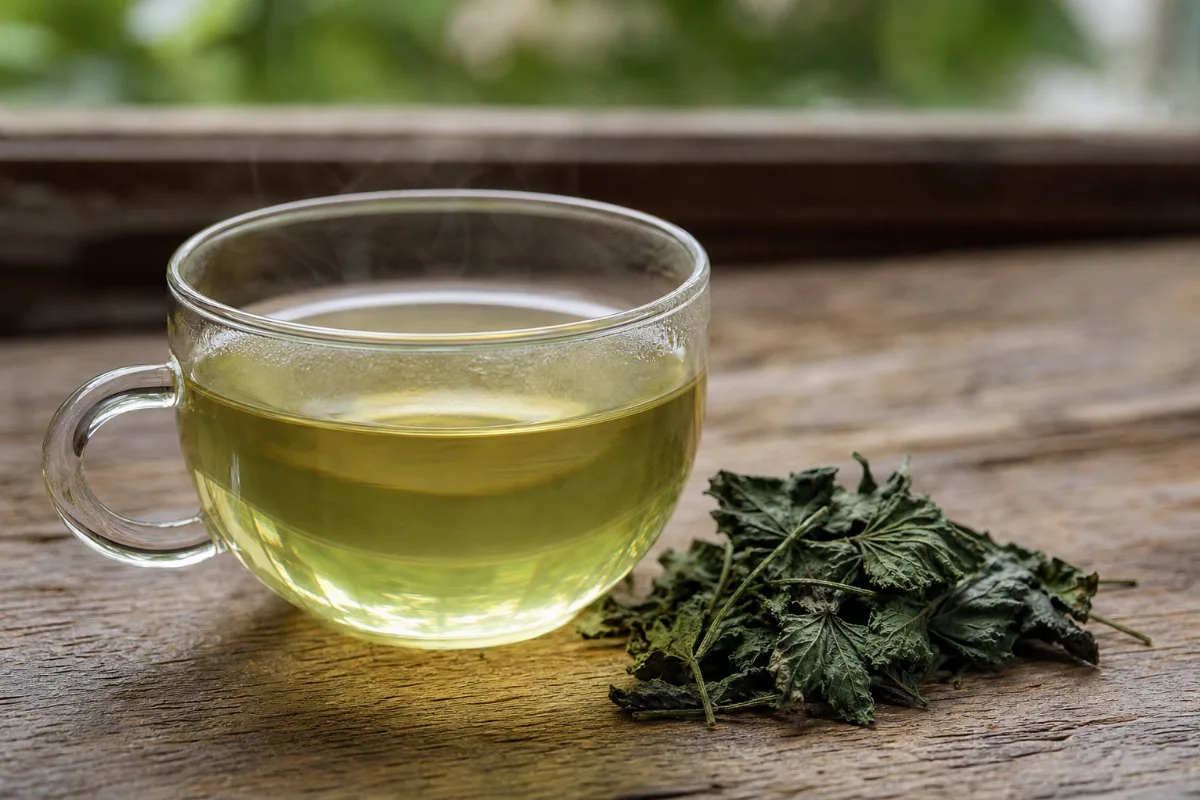
Herbal Teas & Extracts · Herbal tea
Gynostemma (Jiaogulan) Tea
Gynostemma pentaphyllum (Thunb.) Makino · also called Jiaogulan, jiao-gu-lan, gynostemma, southern ginseng (nickname)
Gynostemma tea, also called jiaogulan, is a herbal tea made from the leaf of a climbing vine used in China and Southeast Asia. It is not true tea and not a ginseng. Two small trials of a prepared Gynostemma tea found lower blood sugar markers than placebo tea in people with new type 2 diabetes; most other studies used extracts, not tea. The most important caution is that one case report links long-term use to very low platelets, and it may add to the effect of diabetes medicine.
General information, not medical advice. Last substantive update · Not medically reviewed. A named clinician has not signed off on this page. How this page is made
About Gynostemma (Jiaogulan) Tea
Gynostemma tea (jiaogulan) is a herbal infusion of Gynostemma pentaphyllum leaf, a gourd-family vine from Asia. It is not related to the tea plant, and no source we read measured any caffeine in it. Two small trials of a prepared tea product found lower blood sugar markers in new type 2 diabetes. Stronger-sounding claims come from extracts, not tea. Safety questions include platelets, diabetes and other medicines, and pregnancy.
What it is
Gynostemma tea is made from the leaf of Gynostemma pentaphyllum (Thunb.) Makino, a climbing vine in the gourd family (Cucurbitaceae). GBIF accepts the name. It is not a true tea (Camellia sinensis), and despite the nickname 'southern ginseng' it is not a ginseng.
Its main studied compounds are gypenosides, a large family of saponins. A 2021 review counts 328 of them in the genus. Some are very sweet, which helps explain the tea's sweet taste. No source we read gave a caffeine figure for this plant, so we do not state one.
Chinese and Southeast Asian tradition
A 2021 review says jiaogulan has been used as a folk remedy in China and parts of East and Southeast Asia, and is called an 'immortality herb' in Guizhou Province because older local people drank it regularly. The review relies on secondary sources, so we treat this as tradition, not proof. We did not verify the popular stories of how it became known as 'southern ginseng'.
Tea, extract and capsule are different things
Tea is leaf steeped in hot water. An extract is a concentrated or alcohol-based preparation, often sold in capsules. The two diabetes trials used a prepared tea product. The trials for stress, fatigue and fatty liver used extracts. The reviews of blood sugar and blood fats do not say which forms they pooled. Results from one form should not be assumed for another, and this page gives no amounts.
What the research shows
The best-matched evidence is two small trials from one research group: 24 people for 12 weeks and a small crossover for 4 weeks, both in drug-free adults with new type 2 diabetes. Blood sugar markers fell more than with placebo tea, and no low blood sugar was reported. A 2026 pooled review of 8 studies agrees in direction but does not say which were tea.
For cholesterol, fatty liver, stress and fatigue, the research used extracts or mixed preparations, and the certainty is low to very low. Most of the rest of Gynostemma's reputation comes from lab and animal work on gypenosides.
At a glance
Traditional uses history, not proof
- A 2021 review says jiaogulan has been used as a folk remedy in China and parts of East and Southeast Asia, for diabetes, high blood pressure, obesity and fatty liver, and that it is called an 'immortality herb' in Guizhou Province because older local people drank it regularly. The reviewers draw on secondary sources.
- Vietnamese researchers call it a traditional Vietnamese herb used as a tea and tested it in type 2 diabetes.
Studied for research
- Blood sugar in type 2 diabetes, low (two small trials of a prepared tea product; a pooled review that does not say which forms)
- Insulin sensitivity, very low (small crossover trial)
- Cholesterol and blood fats, very low (a review of mixed preparations, not tea)
- Fatty liver markers, very low (one extract trial; a Cochrane review is not conclusive)
- Stress and anxiety, low (one extract trial, not tea)
- Exercise capacity and fatigue, low (one extract trial, not tea)
Main compounds
- Gypenosides, dammarane-type saponins and the main studied group; some are very sweet. Oral absorption is limited, according to a 2025 review.
Common forms
- Tea from the dried leaf, loose or in bags
- A prepared Gynostemma tea product used in the diabetes trials
- Extracts and capsules, which most other trials used and which are not the same as tea
Research links: Gynostemma pentaphyllum tea in type 2 diabetes, 2010 trial · Gynostemma pentaphyllum tea and insulin sensitivity, 2013 · Case of thrombocytopenia with Gynostemma, 2025 · WebMD jiaogulan overview · Research Library · Genes & Biomarkers Library
What it is and its history
- Accepted scientific name
- Gynostemma pentaphyllum (Thunb.) Makino
- Naming authority
- (Thunb.) Makino; ACCEPTED in the GBIF backbone (usageKey 7317960), read 2026-10-25.
- Synonyms
- Not listed here; the GBIF synonym list was not pulled.
- Common names
- Jiaogulan (Chinese (pinyin)); Jiao-Gu-Lan (Chinese (as spelled in a 2021 review)); Gynostemma (English); Southern ginseng (English)
- Family or group
- Cucurbitaceae (the gourd family); GBIF places it in a different family from the tea plant, Camellia sinensis. It is not a ginseng.
- Classification
- Plantae > Tracheophyta > Cucurbitales > Cucurbitaceae > Gynostemma > Gynostemma pentaphyllum
- Native range
- WebMD says it is native to many parts of Asia; a review says it is used in China and some countries of East and Southeast Asia.
- Habitat
- Not verified from a source read.
- What it looks like
- Roots: Not verified.; Stems: WebMD describes it as a vine.; Leaves: WebMD says the leaves are eaten and made into tea; the species name means 'five-leaved'. Leaf shape not verified from a botanical source.; Flowers: Not verified.; Fruit: Not verified.
- Cultivation
- Not verified.
- Harvest and processing
- Not verified. WebMD says chemical content varies with growing area, weather, harvest time and processing.
- Look-alikes and adulterants
- Name: Gynostemma longipes and G. laxum; Note: A 2021 review says these relatives have been used as alternatives to G. pentaphyllum in Vietnam and elsewhere; toxicology was reported only for G. pentaphyllum.; Name: Camellia sinensis (true tea); Note: A different plant; Gynostemma tea is a herbal infusion, not true tea.
- Sustainability and conservation
- Not verified.
Photographs
Traditional use and history history, not clinical proof
| Tradition or era | Documented use | Source |
|---|---|---|
| China and East and Southeast Asia, folk medicine | A 2021 review says the plant has been used as a folk remedy for diabetes, metabolic syndrome, ageing and neurodegenerative diseases, and that the genus has been widely used in traditional medicine mainly for diabetes, high blood pressure, obesity and fatty liver. It calls it an 'immortality herb' in Guizhou Province because older local people consumed it regularly. These are the reviewers' statements and may rest on secondary sources. | p33186700 |
| Vietnam, traditional tea | The Vietnamese and Swedish authors call it a traditional Vietnamese herb and tested it as a tea in type 2 diabetes in 2010 and 2013. | p20213586 |
| 'Southern ginseng' nickname and the story of how it became a popular tea | Popular accounts say it was promoted as a 'southern ginseng' in modern times. We did not read a source for this and do not repeat the story. | s-webmd-jiaogulan |
Traditional use shows how it was used. It does not show that it works or is safe today.
What is inside, and how it may work
What it contains and how those compounds act in cells and animals. Laboratory and animal mechanisms are not proven effects in people.
Main compounds
| Compound | Family | Where it is concentrated | Activity studied | Level of evidence |
|---|---|---|---|---|
| Gypenosides (dammarane-type saponins) | triterpenoid saponins | Leaf and aerial parts A 2021 review says 328 dammarane-type saponins have been isolated from the genus. A water extract in a rat study contained 6% gypenosides. | The main group studied. A 2025 review says limited oral bioavailability, a lack of standardized extracts and insufficient clinical data limit their use. Some are strongly sweet: 15 newly isolated gypenosides were 10 to 100 times sweeter than sugar in a taste panel. 13 11 18 2 | Laboratory research |
Mechanisms, receptors and pathways
| Target or pathway | Gene or receptor | What was found | Level |
|---|---|---|---|
| Drug-processing (CYP) enzymes | CYP2D6, CYP2C8, CYP3A4, CYP2C9 | Gypenosides inhibited these enzymes in human liver microsomes, most strongly CYP2D6. 7 | Laboratory research |
| Platelet clumping and clotting | Not specified | A water extract inhibited ADP-induced platelet clumping and delayed several clotting tests in human blood in the lab. 16 | Laboratory research |
| Glucose and insulin handling | Not specified in the abstracts read | Human tea trial authors conclude improved insulin sensitivity; the 2026 review summarises lab pathways (glucose uptake, glucose production, insulin secretion). These are lab and review statements, not proof for tea. 10 17 | Human biomarker |
Absorption, metabolism and elimination
- Absorption
- A 2025 review says oral bioavailability of gypenosides is limited.
- Distribution
- Not covered in the abstracts read.
- Metabolism
- Not covered.
- Elimination
- Not covered.
- Bioavailability
- Limited for gypenosides (review statement); no human data on a cup of tea.
Isolated compounds versus whole extracts
Tea is the leaf (and sometimes other aerial parts) steeped in hot water. The strongest-looking human studies for stress, fatigue, fat and liver used extracts, which are more concentrated or made with alcohol, and are not the same as tea. The diabetes tea trials used a prepared product, not necessarily a home-brewed infusion. No research compares these forms directly, and no dose guidance is given here.
Nutritional composition
Gynostemma tea is a drink; no source read reports it as a meaningful source of vitamins or minerals.
3 low certainty3 very low certainty
What was looked at
The 6 benefits and uses checked for Gynostemma (Jiaogulan) Tea, each with how strong the evidence is. Tap one to open it.
- Blood sugar in type 2 diabetesLow certainty
- Insulin sensitivityVery low certainty
- Cholesterol and blood fatsVery low certainty
- Fatty liver markersVery low certainty
- Stress and anxietyLow certainty
- Exercise capacity and fatigueLow certainty
Lab markers tracked in the studies
Fasting blood glucoseHbA1cInsulin resistance (HOMA-IR)TriglyceridesLDL cholesterolLiver enzymes (AST, ALP)Trait anxiety score (T-STAI)Maximal oxygen uptake (VO2 max)
What is Gynostemma (Jiaogulan) Tea good for?
The main studied uses of Gynostemma tea and how strong the human evidence is for each. 'Low' means a small study or two; 'very low' means almost nothing reliable. Where a result came from an extract, not tea, we say so.
Benefits, one by one
Each card is a research question, not a promise. Tap a goal to filter. Open a card to see the studies, doses and limits.
Blood sugar in type 2 diabetes
Low certaintyTwo small trials from one research group found that a prepared Gynostemma 'tea' product lowered blood sugar markers more than placebo tea in people with new type 2 diabetes. A 2026 review of eight studies also found lower blood sugar, but it does not say which were tea. This is not a replacement for diabetes care.
4 studiesPrepared Gynostemma tea product in the trials; amounts are not given …
Studies, doses and limits
What the trials found
In the 2010 trial, 24 adults with new type 2 diabetes got Gynostemma tea or placebo tea for 12 weeks. Fasting glucose fell 3.0 mmol/L with the tea and 0.6 with placebo; HbA1c fell about 2 percentage points versus 0.2. In the 2013 crossover trial, glucose was lower during the Gynostemma period, and the effect reversed when treatments were swapped. No low blood sugar and no kidney or liver problems were reported. The 2026 meta-analysis of 8 studies (584 patients) found fasting glucose lower by 0.79 mmol/L and HbA1c lower by 1.01 percentage points, but its abstract does not say which forms were included. The tea product used in the trials was prepared and may differ from a home-made cup.
Results
Lower fasting glucose and HbA1c than placebo tea in two small trials; the pooled review points the same way but is not specific to tea.
Effect sizes as reported
Fasting glucose -3.0 vs -0.6 mmol/L and HbA1c about -2 vs -0.2 points (24 people, 12 weeks); pooled fasting glucose -0.79 mmol/L (95% CI -1.08 to -0.51) and HbA1c -1.01% (95% CI -1.41 to -0.61) across 8 studies.
Why this rating
Two small trials from one group, one with no head-count in the abstract, using a prepared product. The pooled review does not say which forms it covered or rate study quality. The trials last 4 to 12 weeks.
Form and dose studied
Prepared Gynostemma tea product in the trials; amounts are not given on this page.
Who was studied
Adults with newly diagnosed type 2 diabetes, not on drugs (Vietnamese research group).
Limits
Very small; one research group; short; a prepared tea product, not necessarily a home-brewed leaf infusion; no long-term outcomes such as complications.
Why researchers looked
Jiaogulan has a folk reputation for diabetes, so researchers in Vietnam and Sweden tested it in people with newly found type 2 diabetes who were not on drugs.
Traditional use
Gynostemma pentaphyllum (jiaogulan) is a traditional folk herb in China and parts of East and Southeast Asia, drunk as a tea. A 2021 review says it has been used for diabetes, high blood pressure, obesity and fatty liver, and calls it an 'immortality herb' in Guizhou Province because older local people drank it regularly. The review draws on secondary sources, so these are traditions, not proof.
Proposed mechanism Preliminary mechanism
Lab and animal work suggests the leaf saponins (gypenosides) may affect glucose uptake, glucose production and insulin signalling. This is not shown in people drinking tea.
A proposed mechanism does not show that the effect happens in people.
No low blood sugar was reported in the tea trials. An extract trial found added blood sugar lowering when combined with a diabetes drug, so anyone on diabetes medicine should ask a doctor or pharmacist first (see the safety section).
Insulin sensitivity
Very low certaintyIn a small crossover trial, tests of how well the body uses insulin were better during the Gynostemma tea period than during the placebo tea period. The finding comes from one small trial.
2 studiesPrepared Gynostemma tea product.
Studies, doses and limits
What the trials found
The 2013 crossover trial used a special infusion test (somatostatin-insulin-glucose infusion test) and found steady-state glucose was lower after Gynostemma tea than after placebo tea (p<0.001). The 2010 trial also reported a fall in an insulin-resistance score (HOMA-IR) of 2.1 versus a rise of 1.1 with placebo.
Results
Insulin-sensitivity measures improved in two small trials from one group.
Effect sizes as reported
HOMA-IR -2.1 vs +1.1 (24 people, 12 weeks); infusion-test steady-state glucose lower with tea (p<0.001), numbers not given in the abstract.
Why this rating
Small trials from one group, a prepared product, short follow-up and no head-count in one abstract.
Form and dose studied
Prepared Gynostemma tea product.
Who was studied
Adults with new type 2 diabetes.
Limits
Lab measures, not diabetes outcomes; same research group; small.
Why researchers looked
Researchers wanted to know whether lower blood sugar came from the body using insulin better.
Traditional use
Gynostemma pentaphyllum (jiaogulan) is a traditional folk herb in China and parts of East and Southeast Asia, drunk as a tea. A 2021 review says it has been used for diabetes, high blood pressure, obesity and fatty liver, and calls it an 'immortality herb' in Guizhou Province because older local people drank it regularly. The review draws on secondary sources, so these are traditions, not proof.
Proposed mechanism Preliminary mechanism
The authors suggest the tea improves insulin sensitivity rather than raising insulin release; the abstract shows circulating insulin did not change much.
A proposed mechanism does not show that the effect happens in people.
No hypoglycemia reported.
Cholesterol and blood fats
Very low certaintyA review of 22 trials found very low certainty that Gynostemma matches lipid drugs, and low-to-moderate certainty that adding it to lipid drugs helped a little more. Tea was not described; the trials used various preparations. The tea trials in diabetes found no change in lipids.
3 studiesMixed preparations (not described in the abstract); not tea.
Studies, doses and limits
What the trials found
The 2022 systematic review included 22 randomised trials with 2,407 people. Fourteen had some concerns about bias, seven were high risk and one low risk. Added to lipid-lowering agents, Gynostemma lowered triglycerides by 0.65 mmol/L (95% CI 0.28 to 1.03), LDL by 0.57 mmol/L (95% CI 0.08 to 1.07) and raised HDL by 0.15 mmol/L (95% CI 0.11 to 0.20), at low-to-moderate certainty. Red yeast rice was better than Gynostemma alone (low certainty). In both Vietnamese tea trials, lipids did not differ between tea and placebo.
Results
Small extra improvements when added to usual lipid treatment; very low certainty that it equals lipid drugs; no lipid change in the tea trials.
Effect sizes as reported
Add-on to lipid agents: triglycerides -0.65 mmol/L, LDL -0.57 mmol/L, HDL +0.15 mmol/L (22 trials, 2,407 people, mixed preparations).
Why this rating
Review rates the evidence for matching lipid drugs as very low certainty and most trials had bias concerns; preparations varied and tea is not described.
Form and dose studied
Mixed preparations (not described in the abstract); not tea.
Who was studied
People with high blood fats (countries not stated in the abstract).
Limits
Blood fat numbers are not heart attacks or deaths; the review does not break results out for tea; the tea trials found no lipid change.
Why researchers looked
High triglycerides and LDL cholesterol are heart-disease risk factors, and jiaogulan is traditionally used for 'blood fat' problems.
Traditional use
Gynostemma pentaphyllum (jiaogulan) is a traditional folk herb in China and parts of East and Southeast Asia, drunk as a tea. A 2021 review says it has been used for diabetes, high blood pressure, obesity and fatty liver, and calls it an 'immortality herb' in Guizhou Province because older local people drank it regularly. The review draws on secondary sources, so these are traditions, not proof.
Proposed mechanism Preliminary mechanism
Animal work links gypenosides to fat metabolism; this is not shown in people drinking tea.
A proposed mechanism does not show that the effect happens in people.
The review says use for more than 8 weeks appeared safe and had fewer adverse events than lipid drugs. Gynostemma is not a substitute for prescribed cholesterol medicine.
Fatty liver markers
Very low certaintyOne small Taiwanese trial found that a Gynostemma liquid extract added to a diet lowered some liver enzymes and insulin resistance more than placebo. A large Cochrane review of herbal medicines for fatty liver found the evidence not conclusive. This was an extract, not tea.
2 studiesLiquid Gynostemma extract; not tea.
Studies, doses and limits
What the trials found
In the 2006 trial, 56 adults with fatty liver on ultrasound followed a diet for 2 months, then continued the diet with a Gynostemma extract or a placebo capsule for 4 months. At month 6, the Gynostemma group had larger falls in BMI, AST, ALP, insulin and HOMA-IR. The trial was single-blind. The Cochrane review of 77 trials (6,753 people) lists Gynostemma among the single herbs tested but says all trials had high risk of bias and the findings were not conclusive.
Results
Some liver and insulin markers fell more than with placebo in one small extract trial; the Cochrane review found no firm conclusion.
Effect sizes as reported
Not given as single numbers in the abstract; the extract group showed greater falls in BMI, AST, ALP, insulin and HOMA-IR.
Why this rating
One small single-blind extract trial, and a Cochrane review that says all included trials had high risk of bias.
Form and dose studied
Liquid Gynostemma extract; not tea.
Who was studied
Adults with fatty liver on ultrasound (Taiwan).
Limits
Surrogate markers; single-blind; extract; no data on liver health outcomes.
Why researchers looked
Fatty liver is linked to insulin resistance and blood fats, which Gynostemma is also studied for.
Traditional use
Gynostemma pentaphyllum (jiaogulan) is a traditional folk herb in China and parts of East and Southeast Asia, drunk as a tea. A 2021 review says it has been used for diabetes, high blood pressure, obesity and fatty liver, and calls it an 'immortality herb' in Guizhou Province because older local people drank it regularly. The review draws on secondary sources, so these are traditions, not proof.
Proposed mechanism Preliminary mechanism
Animal and lab work suggests gypenosides may affect liver fat handling; not shown in people.
A proposed mechanism does not show that the effect happens in people.
No liver harm was described in the abstract. See the safety section for what is not known.
Stress and anxiety
Low certaintyOne 8-week trial of a Gynostemma leaf extract in stressed adults found a lower trait-anxiety score than placebo, but most other anxiety scales and stress hormones did not differ. It was an extract in capsules, not tea.
1 studiesEthanol leaf extract in capsules; not tea.
Studies, doses and limits
What the trials found
In 72 healthy Korean adults with chronic stress, an ethanol leaf extract for 8 weeks lowered the Trait Anxiety score by 16.8% compared with placebo (p = 0.041). The total score fell 17.8% in the extract group but the difference from placebo was not significant (p = 0.067). State anxiety, HAM-A, BAI, stress hormones and heart rate variability did not differ. No adverse reactions were linked to the extract.
Results
One of several anxiety scores was lower than placebo; the rest were not different.
Effect sizes as reported
Trait anxiety score 16.8% lower than placebo (p = 0.041); other scales not significantly different.
Why this rating
One small trial of one extract with one positive scale among many; possible company links among the authors.
Form and dose studied
Ethanol leaf extract in capsules; not tea.
Who was studied
Healthy adults with chronic stress (Korea).
Limits
Small; 8 weeks; extract; result may not apply to tea.
Why researchers looked
Jiaogulan is sometimes called an adaptogen, and a mouse study suggested calming effects.
Traditional use
Gynostemma pentaphyllum (jiaogulan) is a traditional folk herb in China and parts of East and Southeast Asia, drunk as a tea. A 2021 review says it has been used for diabetes, high blood pressure, obesity and fatty liver, and calls it an 'immortality herb' in Guizhou Province because older local people drank it regularly. The review draws on secondary sources, so these are traditions, not proof.
Proposed mechanism Preliminary mechanism
The trial authors cite mouse work for the idea; no mechanism is shown in people.
A proposed mechanism does not show that the effect happens in people.
No adverse reactions linked to the extract in the trial.
Exercise capacity and fatigue
Low certaintyOne 12-week trial of a Gynostemma extract rich in a saponin called gypenoside L found higher oxygen uptake in exercise and better fatigue scores in healthy adults. It was a specific extract, not tea.
1 studiesGypenoside L-containing extract; not tea.
Studies, doses and limits
What the trials found
In 100 healthy Korean adults aged 19 to 60, a gypenoside L-containing extract for 12 weeks raised VO2 max (p = 0.007) and O2 pulse (p = 0.047) compared with control, lowered free fatty acids (p = 0.042), raised blood eNOS (p = 0.047), and improved perceived exertion and one fatigue-scale value (p < 0.05).
Results
Better exercise-capacity and fatigue measures in healthy adults on one specific extract.
Effect sizes as reported
Exact differences are not given in the abstract; p values 0.007 for VO2 max and 0.047 for O2 pulse.
Why this rating
One trial of one extract in healthy adults, several outcomes tested, and a possible company link among the authors.
Form and dose studied
Gypenoside L-containing extract; not tea.
Who was studied
Healthy adults aged 19 to 60 (Korea).
Limits
One trial; healthy people; extract; funder and control not described in the abstract.
Why researchers looked
Some companies sell Gynostemma as an energy or stamina herb, so researchers tested it in healthy adults.
Traditional use
Gynostemma pentaphyllum (jiaogulan) is a traditional folk herb in China and parts of East and Southeast Asia, drunk as a tea. A 2021 review says it has been used for diabetes, high blood pressure, obesity and fatty liver, and calls it an 'immortality herb' in Guizhou Province because older local people drank it regularly. The review draws on secondary sources, so these are traditions, not proof.
Proposed mechanism Preliminary mechanism
The authors report higher blood eNOS and lower free fatty acids and suggest better blood vessel function and fat use; this is a measurement, not proof of mechanism.
A proposed mechanism does not show that the effect happens in people.
The abstract mentions safety parameters were compared but does not report problems.
Connections to the rest of health
How Gynostemma (Jiaogulan) Tea connects to the rest of our health knowledge graph. Every link says what kind of connection it is. A safety link (for example to the liver) is a warning, not a benefit. A study that merely mentions a topic never creates a benefit link.
Explore every connection: goals, body systems, organs, symptoms, genes
A. Wellness goals
| Connected to | Kind of connection | Evidence status | Context | Studies |
|---|---|---|---|---|
| Blood Sugar Balance | Potential benefit | Low certainty | Blood sugar in type 2 diabetes: Two small trials from one research group found that a prepared Gynostemma 'tea' product lowered blood sugar markers more than placebo tea in people with new type 2 diabetes. A 2026 review of eight studies also found lower blood sugar, but it does not say which were tea. This is not a replacement for diabetes care. | 8 10 17 9 |
| Metabolic Health | Potential benefit | Low certainty | Blood sugar in type 2 diabetes: Two small trials from one research group found that a prepared Gynostemma 'tea' product lowered blood sugar markers more than placebo tea in people with new type 2 diabetes. A 2026 review of eight studies also found lower blood sugar, but it does not say which were tea. This is not a replacement for diabetes care. Fatty liver markers: One small Taiwanese trial found that a Gynostemma liquid extract added to a diet lowered some liver enzymes and insulin resistance more than placebo. A large Cochrane review of herbal medicines for fatty liver found the evidence not conclusive. This was an extract, not tea. | 8 10 17 9 4 12 |
| Blood Sugar Balance | Preliminary mechanism | Very low certainty | Insulin sensitivity: In a small crossover trial, tests of how well the body uses insulin were better during the Gynostemma tea period than during the placebo tea period. The finding comes from one small trial. | 10 8 |
| Metabolic Health | Preliminary mechanism | Very low certainty | Insulin sensitivity: In a small crossover trial, tests of how well the body uses insulin were better during the Gynostemma tea period than during the placebo tea period. The finding comes from one small trial. | 10 8 |
| Cholesterol Balance | Potential benefit | Very low certainty | Cholesterol and blood fats: A review of 22 trials found very low certainty that Gynostemma matches lipid drugs, and low-to-moderate certainty that adding it to lipid drugs helped a little more. Tea was not described; the trials used various preparations. The tea trials in diabetes found no change in lipids. | 5 8 10 |
| Heart Health | Potential benefit | Very low certainty | Cholesterol and blood fats: A review of 22 trials found very low certainty that Gynostemma matches lipid drugs, and low-to-moderate certainty that adding it to lipid drugs helped a little more. Tea was not described; the trials used various preparations. The tea trials in diabetes found no change in lipids. | 5 8 10 |
| Liver Support | Potential benefit | Very low certainty | Fatty liver markers: One small Taiwanese trial found that a Gynostemma liquid extract added to a diet lowered some liver enzymes and insulin resistance more than placebo. A large Cochrane review of herbal medicines for fatty liver found the evidence not conclusive. This was an extract, not tea. | 4 12 |
| Anxiety Support | Potential benefit | Low certainty | Stress and anxiety: One 8-week trial of a Gynostemma leaf extract in stressed adults found a lower trait-anxiety score than placebo, but most other anxiety scales and stress hormones did not differ. It was an extract in capsules, not tea. | 3 |
| Stress Reduction | Potential benefit | Low certainty | Stress and anxiety: One 8-week trial of a Gynostemma leaf extract in stressed adults found a lower trait-anxiety score than placebo, but most other anxiety scales and stress hormones did not differ. It was an extract in capsules, not tea. | 3 |
| Endurance Support | Potential benefit | Low certainty | Exercise capacity and fatigue: One 12-week trial of a Gynostemma extract rich in a saponin called gypenoside L found higher oxygen uptake in exercise and better fatigue scores in healthy adults. It was a specific extract, not tea. | 1 |
| Reduce Fatigue | Potential benefit | Low certainty | Exercise capacity and fatigue: One 12-week trial of a Gynostemma extract rich in a saponin called gypenoside L found higher oxygen uptake in exercise and better fatigue scores in healthy adults. It was a specific extract, not tea. | 1 |
B. Body systems
| Connected to | Kind of connection | Evidence status | Context | Studies |
|---|---|---|---|---|
| Metabolism Weight | Biological association | Low certainty | Studied for: Blood sugar in type 2 diabetes Studied for: Insulin sensitivity | 8 10 17 9 5 4 12 |
| Endocrine System | Biological association | Low certainty | Studied for: Blood sugar in type 2 diabetes Studied for: Insulin sensitivity | 8 10 17 9 |
| Cardiovascular System | Biological association | Very low certainty | Studied for: Cholesterol and blood fats | 5 8 10 |
| Hepatic System | Biological association | Very low certainty | Studied for: Fatty liver markers | 4 12 |
| Stress Mood | Biological association | Low certainty | Studied for: Stress and anxiety | 3 |
| Nervous System | Biological association | Low certainty | Studied for: Stress and anxiety Studied for: Exercise capacity and fatigue | 3 1 |
| Musculoskeletal System | Biological association | Low certainty | Studied for: Exercise capacity and fatigue | 1 |
E. Health conditions
| Connected to | Kind of connection | Evidence status | Context | Studies |
|---|---|---|---|---|
| Type 2 diabetes | Drug or supplement interaction | Low certainty | Added blood-sugar lowering with a diabetes drug in a small extract trial. Preparation or compound: Gynostemma extract with gliclazide |
9 |
| Type 2 diabetes | Potential benefit | Low certainty | Two small trials; lower glucose and HbA1c than placebo tea. Preparation or compound: Prepared Gynostemma tea product |
8 10 |
I. Biomarkers
| Connected to | Kind of connection | Evidence status | Context | Studies |
|---|---|---|---|---|
| Platelet count | Adverse effect or risk | Very low certainty | One case report of very low platelets after over three months of use, recovered after stopping. One case report of very low platelets after over three months of use. Preparation or compound: Gynostemma, form not stated |
6 |
| Fasting blood glucose | Biological association | Low certainty | Measured in trials: lowered. A lab change is not the same as a health benefit. | 8 10 17 |
| HbA1c | Biological association | Low certainty | Measured in trials: lowered. A lab change is not the same as a health benefit. | 8 17 |
| Insulin resistance (HOMA-IR) | Biological association | Very low certainty | Measured in trials: lowered. A lab change is not the same as a health benefit. | 8 |
| Triglycerides | Biological association | Low certainty | Measured in trials: lowered. A lab change is not the same as a health benefit. | 5 8 |
| LDL cholesterol | Biological association | Low certainty | Measured in trials: lowered. A lab change is not the same as a health benefit. | 5 |
| Liver enzymes (AST, ALP) | Biological association | Very low certainty | Measured in trials: mixed. A lab change is not the same as a health benefit. | 4 |
| Trait anxiety score (T-STAI) | Biological association | Low certainty | Measured in trials: lowered. A lab change is not the same as a health benefit. | 3 |
| Maximal oxygen uptake (VO2 max) | Biological association | Low certainty | Measured in trials: raised. A lab change is not the same as a health benefit. | 1 |
J. Genes, receptors and enzymes
| Connected to | Kind of connection | Evidence status | Context | Studies |
|---|---|---|---|---|
| CYP2D6 | Preliminary mechanism | In vitro | Inhibited by gypenosides in human liver microsomes. | 7 |
L. Active compounds
| Connected to | Kind of connection | Evidence status | Context | Studies |
|---|---|---|---|---|
| Gypenosides (dammarane-type saponins) | Biological association | In vitro | The main group studied. A 2025 review says limited oral bioavailability, a lack of standardized extracts and insufficient clinical data limit their use. Some are strongly sweet: 15 newly isolated gypenosides were 10 to 100 times sweeter than sugar in a taste panel. Preparation or compound: Leaf and aerial parts |
13 11 18 2 |
Each connection is stored with the ingredient, the connected record, the kind of connection, the evidence status, the supporting studies, the preparation or compound involved, and a review date (last reviewed October 25, 2026).
Evidence at a glance: what changed in 8 lab markers
Tap a number to show only those markers. Counts are markers, not people.
The evidence
The research centre for Gynostemma (Jiaogulan) Tea. Every record here was checked against PubMed or the publisher's page; we never list a study we have not verified.
Evidence by outcome
Bars show how many studies we found for each outcome, not how well it works. People are added up across trials only (reviews are not added, to avoid double counting).
How we rate evidence
High certainty
Several well-run trials or reviews agree; further research is unlikely to change the picture much.
Moderate certainty
Good trials point the same way, but some doubt remains.
Low certainty
Small, short or inconsistent trials. The finding could change with better research.
Very low certainty
Very little or very weak human data. Treat as a possibility only.
Mixed findings
Trials or reviews disagree with each other.
Not enough evidence
Not enough human research to say either way.
Evidence against
Good research found no benefit, or found harm.
We take the reviewers' own risk-of-bias and GRADE statements where they exist, and otherwise judge from study size, design, consistency, directness and whether a product matches what is sold. Many publications do not make evidence high. Method note: We searched PubMed, read the abstract of every study listed, checked the plant name in GBIF and read the WebMD jiaogulan page. A second consumer reference (RxList) is used only through an earlier summary and marked unverified. We did not find an EU herbal monograph, NCCIH page, LiverTox entry or LactMed entry for this herb.
Study library: every study we checked 21
| Study | Design | People | Product, dose, length | Result |
|---|---|---|---|---|
| Ahn 2023 Effects of gypenoside L-containing Gynostemma pentaphyllum extract on fatigue and physical performance: A double-blind, placebo-controlled, randomized trial Phytother Res · PMID 36877124 · DOI |
Controlled trial |
100 100 healthy Korean adults aged 19 to 60 |
Gypenoside L-containing Gynostemma pentaphyllum extract (an extract, not tea) leaf amount not given here 12 weeks · vs control |
VO2 max and O2 pulse were higher in the extract group (p = 0.007 and p = 0.047). Free fatty acids fell (p = 0.042), eNOS was higher (p = 0.047), and perceived exertion and one fatigue-scale value were better (p < 0.05). Better exercise-capacity and fatigue scores in healthy adults on one specific extract. Methods, limits and fundingOutcomes: Maximal oxygen uptake (VO2 max), perceived exertion, fatigue scale, blood markers Limitations: One trial; one gypenoside-L extract; healthy people; several outcomes tested; the abstract does not describe the control or funder; not a tea. Funding and conflicts: Funding not stated in the abstract. One author works at a company R&D centre (BTC Corporation); possibly industry-linked. Read: abstract |
| Chiranthanut 2013 Toxicity evaluation of standardized extract of Gynostemma pentaphyllum Makino J Ethnopharmacol · PMID 23796877 · DOI |
Animal research animal |
Rats (Thailand) | Standardised water extract of Gynostemma pentaphyllum (6% gypenosides) aerial part (as extract) single large dose and 90-day daily dosing in rats up to 90 days plus 28 days recovery · vs distilled water |
No deaths or toxic signs in the single high-dose test, and no harmful effects after 90 days of daily dosing. A few blood values (neutrophils, monocytes, glucose, alkaline phosphatase) differed from controls but stayed in normal rat ranges. No toxicity found in rats. Methods, limits and fundingOutcomes: Death, toxic signs, blood counts and chemistry Limitations: Rats, not people; an extract, not tea. Funding and conflicts: Funding not stated in the abstract. Read: abstract |
| Choi 2019 Supplementation with extract of Gynostemma pentaphyllum leaves reduces anxiety in healthy subjects with chronic psychological stress: A randomized, double-blind, placebo-controlled clinical trial Phytomedicine · PMID 30599899 · DOI |
Controlled trial |
72 72 healthy Korean adults with chronic stress and mild anxiety scores |
Ethanol extract of Gynostemma pentaphyllum leaves in capsules (an extract, not tea) leaf capsule amount not given here 8 weeks · vs placebo |
Trait anxiety score fell 16.8% more than with placebo (p = 0.041). The total STAI score fell 17.8% in the extract group but the difference from placebo was not significant (p = 0.067). State anxiety, HAM-A, BAI and the other measures did not differ between groups. No adverse reactions were linked to the extract. One anxiety score improved; the other scales and hormones did not. Methods, limits and fundingOutcomes: Trait anxiety (T-STAI) and other anxiety scales, stress hormones, heart rate variability Limitations: One small trial of one extract; the main result was one scale among many; 8 weeks only; not a tea. Funding and conflicts: Authors include staff of a company (Healthcare Claims & Management Incorporation); funding is not stated in the abstract. Treat as possibly industry-linked. Read: abstract |
| Chou 2006 The add-on effects of Gynostemma pentaphyllum on nonalcoholic fatty liver disease Altern Ther Health Med · PMID 16708768 |
Controlled clinical trial |
56 56 adults with fatty liver on ultrasound (Taiwan) |
Gynostemma pentaphyllum liquid extract added to a controlled diet (an extract, not tea) leaf set amount of liquid extract, not given here 4 months on top of 2 months of diet · vs placebo capsule plus diet |
Both groups improved with diet alone. At month 6 the Gynostemma group had greater falls in BMI, AST, ALP, insulin and HOMA-IR. The authors conclude it is an effective add-on to diet. Some liver enzyme and insulin-resistance markers fell more with the extract than with placebo, on top of diet. Methods, limits and fundingOutcomes: BMI, liver enzymes, insulin resistance, fatty liver score Limitations: Single-blind; the comparison was a capsule against a liquid; 56 people; extract not tea; surrogate markers only. Funding and conflicts: Funding not stated in the abstract. Read: abstract |
| Dai 2022 Gynostemma pentaphyllum for dyslipidemia: A systematic review of randomized controlled trials Front Pharmacol · PMID 36091752 · DOI |
Systematic review |
2407 22 randomised trials in 2,407 people with high blood fats |
Gynostemma pentaphyllum alone or added to lipid-lowering treatment (various preparations; tea is not described in the abstract) leaf varied varied · vs n-3 fatty acids, red yeast rice, statins, fibrates, or add-on versus the drug alone |
Of 22 trials, 14 had some concerns about bias, 7 were high risk and 1 was low risk. Gynostemma alone looked comparable to lipid-lowering agents (very low certainty) and red yeast rice was better (low certainty). Added to lipid-lowering agents it looked better than the agents alone: triglycerides -0.65 mmol/L (95% CI -1.03 to -0.28), LDL-C -0.57 mmol/L (95% CI -1.07 to -0.08), HDL-C +0.15 mmol/L (95% CI 0.11 to 0.20) (low to moderate certainty). Fewer adverse events than lipid drugs; use for more than 8 weeks appeared safe. Better blood fat numbers when added to usual treatment; very low certainty that it matches lipid drugs alone. (see results) Methods, limits and fundingOutcomes: Triglycerides, total cholesterol, LDL-C, HDL-C, adverse events Limitations: Most trials had risk of bias; preparations varied and tea is not described in the abstract; blood fat numbers are not heart attacks or deaths. Funding and conflicts: The authors declared no commercial or financial relationships. Read: abstract |
| Ding 2025 A Case of Thrombocytopenia Caused by Gynostemma Pentaphyllum Clin Lab · PMID 40779472 · DOI |
Case report |
1 One patient who had a cerebral infarction (China) |
Gynostemma pentaphyllum, form not stated in the abstract used continuously for over three months |
Platelets were 6.0 x 10^9/L and white cells 3.27 x 10^9/L after more than three months of use. After stopping, platelets rebounded to 156 x 10^9/L and white cells to 5.26 and 5.52 x 10^9/L. The authors say it may cause low platelets and advise monitoring platelets in long-term users. One reported case of very low platelets that recovered after stopping. Methods, limits and fundingOutcomes: Platelet and white cell counts before and after stopping Limitations: A single case; cause not proven; the form and amount are not in the abstract; the patient may have been taking other medicines. Funding and conflicts: Not applicable (case report). Read: abstract |
| He 2013 Inhibitory effects of gypenosides on seven human cytochrome P450 enzymes in vitro Food Chem Toxicol · PMID 23583485 · DOI |
Laboratory research in-vitro |
Human liver microsomes (lab) | Gypenosides (the saponin group from Gynostemma) leaf lab concentrations lab test |
Gypenosides inhibited CYP2D6 most strongly (IC50 1.61 ug/mL), then CYP2C8, CYP3A4 and CYP2C9. The authors say herb-drug interactions via CYP2D6 might occur and that an in vivo study is needed. A lab signal that the saponins could slow the breakdown of some medicines; not tested in people. Methods, limits and fundingOutcomes: Inhibition of seven human drug-processing (CYP) enzymes Limitations: Lab test only; concentrations of a purified gypenoside mixture may not match a cup of tea. Funding and conflicts: Funding not stated in the abstract. Read: abstract |
| Huyen 2010 Antidiabetic effect of Gynostemma pentaphyllum tea in randomly assigned type 2 diabetic patients Horm Metab Res · PMID 20213586 · DOI |
Controlled trial |
24 24 adults with new type 2 diabetes, not on drugs (Vietnamese research group; authors based in Stockholm and Hanoi) |
Authenticated Gynostemma pentaphyllum tea (prepared product) versus placebo tea leaf set daily amount, not given here 12 weeks · vs placebo tea |
Fasting plasma glucose fell by 3.0 +/- 1.8 mmol/L with Gynostemma tea and 0.6 +/- 2.2 with placebo tea (p<0.01). HbA1c fell about 2 percentage points versus 0.2 (p<0.001). Insulin resistance fell (-2.1) versus a rise (+1.1) with placebo (p<0.05). No low blood sugar and no kidney, liver or stomach problems were reported. Lipids, blood pressure and body measures did not differ. Large fall in blood sugar markers against placebo tea in a very small group. Methods, limits and fundingOutcomes: Fasting glucose, HbA1c, insulin resistance (HOMA-IR), lipids, kidney and liver tests, blood pressure Limitations: Only 24 people; one research group; participants also received diet and exercise advice; the abstract does not describe how the tea product was made, so it may not match a home-made cup of leaf tea; 12 weeks only. Funding and conflicts: Funding not stated in the abstract. Read: abstract |
| Huyen 2012 Antidiabetic Effects of Add-On Gynostemma pentaphyllum Extract Therapy with Sulfonylureas in Type 2 Diabetic Patients Evid Based Complement Alternat Med · PMID 23125867 · DOI |
Controlled trial |
25 25 adults with new type 2 diabetes (Vietnamese research group) |
Gynostemma pentaphyllum extract added to the diabetes drug gliclazide (an extract, not tea) leaf set daily amount, not given here 8 weeks after 4 weeks of gliclazide alone · vs placebo extract added to gliclazide |
After 4 weeks of gliclazide alone, glucose and HbA1c had already fallen. Adding the extract lowered fasting glucose by a further 2.9 +/- 1.7 mmol/L versus 0.9 +/- 0.6 with placebo extract (p<0.001), and HbA1c fell about 2 percentage points versus 0.7 (p<0.001). An extract added to a diabetes drug lowered blood sugar further than placebo extract. Methods, limits and fundingOutcomes: Fasting glucose, HbA1c, glucose tolerance Limitations: Small; an extract, not tea; shows an added blood-sugar-lowering effect with a diabetes drug, which is why anyone on diabetes medicine should ask before adding it; short trial. Funding and conflicts: Funding not stated in the abstract. Read: abstract |
| Huyen 2013 Gynostemma pentaphyllum Tea Improves Insulin Sensitivity in Type 2 Diabetic Patients J Nutr Metab · PMID 23431428 · DOI |
Controlled trial |
Adults with new type 2 diabetes, not on drugs (Vietnamese research group; the abstract gives no head-count) | Gynostemma pentaphyllum tea versus placebo tea (prepared product) leaf set daily amount, not given here 4 weeks per period, 2-week washout, crossover · vs placebo tea |
Fasting glucose and steady-state glucose were lower after Gynostemma tea than after placebo tea (p<0.001). Fasting glucose fell 1.9 +/- 1.0 mmol/L with Gynostemma tea versus 0.2 +/- 1.5 with placebo, and the effect reversed after the treatments were swapped. Circulating insulin did not change much. No change in lipids, body measures or blood pressure, and no low blood sugar or acute kidney or liver problems were reported. The authors conclude it works by improving insulin sensitivity. Lower blood sugar markers during the tea period of a crossover trial; the number of people is not in the abstract. Methods, limits and fundingOutcomes: Insulin sensitivity (somatostatin-insulin-glucose infusion test), fasting glucose, HbA1c, glucose tolerance, lipids, blood pressure, kidney and liver tests Limitations: Small crossover trial from the same research group as the 2010 trial; 4 weeks only; the abstract does not give the number of people; the tea was a prepared product. Funding and conflicts: Funding not stated in the abstract. Read: abstract |
| Li 2025 Gypenosides, a promising phytochemical triterpenoid: research progress on its pharmacological activity and mechanism Front Pharmacol · PMID 41181612 · DOI |
Narrative review mixed |
Review of lab, animal and human work on gypenosides | Gypenosides from Gynostemma pentaphyllum leaf |
The review lists many lab effects (metabolism, oxidative stress, inflammation, heart, liver, anti-cancer potential) but says limited oral bioavailability, a lack of standardized extracts and insufficient clinical data limit translation into medicines or supplements. Mostly lab and animal findings; the authors flag the gaps. Methods, limits and fundingOutcomes: Pharmacology, pharmacokinetics, toxicology Limitations: Narrative review; abstract only. Funding and conflicts: The authors declared no commercial or financial relationships. Read: abstract |
| Liu 2013 Herbal medicines for fatty liver diseases Cochrane Database Syst Rev · PMID 23975682 · DOI |
Systematic review |
6753 77 randomised trials of herbal medicines for fatty liver (6,753 people) |
Seventy-five herbal products; Gynostemma pentaphyllum was one of three single herbs tested various varied varied · vs placebo, no treatment, drugs or diet |
The Cochrane review found risk of bias was high in all trials and the findings were not conclusive. No trial reported death, liver-related illness or quality of life. Adverse effects did not differ from control in the 27 trials that reported them. No conclusion can be drawn for Gynostemma specifically. Methods, limits and fundingOutcomes: Liver enzymes, ultrasound, CT, adverse effects Limitations: The abstract only names Gynostemma as one of the herbs tested; it gives no Gynostemma result. Funding and conflicts: Cochrane review; funding not stated in the abstract. Read: abstract |
| Nguyen 2021 Triterpenoids from the genus Gynostemma: Chemistry and pharmacological activities J Ethnopharmacol · PMID 33186700 · DOI |
Narrative review mixed |
Review of the genus Gynostemma | Gynostemma species, mainly G. pentaphyllum leaf and aerial parts |
The review says G. pentaphyllum (Jiao-Gu-Lan) has been used traditionally as a folk remedy in China and some countries in East and Southeast Asia, and is called an "immortality herb" in Guizhou Province because older local people drank it regularly. 328 dammarane-type saponins have been isolated. Toxicology was done only on G. pentaphyllum and found the extracts relatively safe in animals. G. longipes and G. laxum have been used as alternatives in Vietnam and elsewhere. A source for the traditional uses; the review itself says clinical data are needed. Methods, limits and fundingOutcomes: Traditional use, chemistry, pharmacology, toxicology Limitations: Narrative review that draws on secondary sources, books and websites; most pharmacology is lab and animal work. Funding and conflicts: Funding not stated in the abstract. Read: abstract |
| Siwek 2023 Harder, better, faster, stronger? Retrospective chart review of adverse events of interactions between adaptogens and antidepressant drugs Front Pharmacol · PMID 37829299 · DOI |
Case series |
1816 1,816 adverse-event reports reviewed in Poland; 30 judged to show a causal link between an adaptogen and an antidepressant |
Adaptogen herbs taken with antidepressants; Gynostemma pentaphyllum appeared once various |
Adaptogens were involved in 9% of the adverse events. Gynostemma with duloxetine was listed once, for back pain. The authors advise clinicians to monitor adverse events when adaptogens and antidepressants are combined. One report with Gynostemma; no cause shown. Methods, limits and fundingOutcomes: Adverse events from adaptogen and antidepressant combinations Limitations: Chart review; one report cannot show frequency or cause; the form of Gynostemma is not stated. Funding and conflicts: One author is employed by a drug-safety consultancy; the authors declared no commercial relationships affecting the work. Read: abstract |
| Suntararuks 2008 Immunomodulatory effects of cadmium and Gynostemma pentaphyllum herbal tea on rat splenocyte proliferation J Agric Food Chem · PMID 18795782 · DOI |
Animal research animal |
Rats (Thailand) | Gynostemma pentaphyllum herbal tea containing cadmium, versus cadmium in drinking water leaf (tea) cadmium at set concentrations in the tea or water 4 to 6 months · vs drinking water |
The authors state that this herbal tea can be contaminated with heavy metals, especially cadmium, from agricultural areas. In rats, high cadmium in plain water suppressed T-cell responses, but the same cadmium level in the tea did not. Shows cadmium contamination is a recognised concern for this tea; did not measure tea on sale. Methods, limits and fundingOutcomes: Cadmium accumulation and immune cell responses in rats Limitations: Rat study; the tea in the study was spiked to set cadmium levels; it did not test retail products. Funding and conflicts: Funding not stated in the abstract. Read: abstract |
| Tan 1993 [Antithrombotic effect of Gynostemma pentaphyllum] Zhongguo Zhong Xi Yi Jie He Za Zhi · PMID 8219678 |
Laboratory research in-vitro |
Human blood samples in the lab (Guangzhou) | Water extract of Gynostemma pentaphyllum leaf lab test lab test |
The extract inhibited platelet clumping caused by ADP and other agents and delayed several clotting tests, which the authors read as lower activity of several clotting factors. They call it an antithrombotic agent worth further study. A lab signal of slower clotting; not tested in people drinking tea. Methods, limits and fundingOutcomes: Platelet aggregation, clotting tests, thrombosis models Limitations: Lab test only; Chinese-language paper read through its English abstract; 1993; no human trial. Funding and conflicts: Funding not stated in the abstract. Read: abstract |
| Wang 2026 Efficacy and mechanisms of Gynostemma pentaphyllum as a medicine food homology herb in glycemic control: a meta-analysis with review Front Pharmacol · PMID 42064816 · DOI |
Meta-analysis |
584 Eight clinical studies (584 patients) of Gynostemma pentaphyllum for blood sugar |
Gynostemma pentaphyllum, forms not stated in the abstract varied · vs varied |
Pooled: fasting glucose -0.79 mmol/L (95% CI -1.08 to -0.51), HbA1c -1.01% (95% CI -1.41 to -0.61), 2-hour glucose -0.90 mmol/L (95% CI -1.95 to -0.15). Long-term use and use without other drugs looked stronger. The review also summarised lab pathways. Lower blood sugar markers on average across eight studies; the abstract does not say which were tea. (FPG -1.08 to -0.51; HbA1c -1.41 to -0.61; 2hPG -1.95 to -0.15) Methods, limits and fundingOutcomes: Fasting plasma glucose, 2-hour glucose, HbA1c Limitations: The abstract does not name the forms used (tea, extract, capsule), so the result cannot be credited to tea; it does not describe study quality or bias; it is a short abstract. Funding and conflicts: The authors declared no commercial or financial relationships. Read: abstract |
| Zhang 2022 Sensory-guided isolation and identification of new sweet-tasting dammarane-type saponins from Jiaogulan (Gynostemma pentaphyllum) herbal tea Food Chem · PMID 35468461 · DOI |
Laboratory research in-vitro |
Chemistry study of Jiaogulan herbal tea with a human taste panel | Jiaogulan (Gynostemma pentaphyllum) herbal tea leaf leaf |
Sixteen new compounds (gypenosides YN 1-16) were isolated; fifteen were sweet, 10 to 100 times sweeter than sucrose by a human taste panel. Their concentrations in the tea were measured. Explains in part why the tea tastes sweet; no health effect studied. Methods, limits and fundingOutcomes: Isolation of sweet-tasting saponins, tested by taste panel Limitations: Chemistry and taste only; no health outcome. Funding and conflicts: Funding not stated in the abstract. Read: abstract |
| s-gbif-gynostemma GBIF Backbone: Gynostemma pentaphyllum (Thunb.) Makino (usageKey 7317960) · Source |
Reference database n/a |
Methods, limits and fundingRead: full | ||
| s-rxlist-jiaogulan RxList / Medical Reference monograph: Jiaogulan · Source |
Authoritative guidance n/a |
Methods, limits and fundingRead: summary-only | ||
| s-webmd-jiaogulan WebMD: Jiaogulan - Uses, Side Effects, and More (medically reviewed 2026-03-23) · Source |
Authoritative guidance n/a |
Methods, limits and fundingRead: full |
What we do not know yet
- No trial tested a plain home-brewed Gynostemma leaf infusion; the tea trials used a prepared product.
- The tea trials came from one research group and lasted 4 to 12 weeks.
- No study tested the tea with diabetes medicine, blood thinners or immune-suppressing medicine.
- Pregnancy, breastfeeding and children are not studied, and no caffeine measurement was found.
How new research is added
New studies are found by a saved PubMed search and placed in a review queue. A person checks each one before it changes any rating or safety wording.
Lab markers
What changed in blood or saliva tests during trials. A changed number is not the same as feeling or being healthier, and we give no "normal ranges".
Metabolic 5
Fasting blood glucose
Lowered in trials
Blood sugar after not eating overnight.
Low certaintyResults and what it means
Why it was measured
Used to diagnose and follow diabetes.
Statistical vs. clinical meaning
Lower than placebo tea in two small trials; the pooled estimate does not say which forms were tea.
Safety implication
No low blood sugar reported in the tea trials.
| Study | Result | People | Product |
|---|---|---|---|
| 8 | -3.0 vs -0.6 mmol/L (p<0.01) | 24 adults with new type 2 diabetes | Prepared Gynostemma tea, 12 weeks |
| 10 | -1.9 vs -0.2 mmol/L (p<0.001) | Adults with new type 2 diabetes (crossover) | Prepared Gynostemma tea, 4 weeks |
| 17 | Pooled -0.79 mmol/L (95% CI -1.08 to -0.51) | 584 patients, 8 studies | Gynostemma, forms not stated |
HbA1c
Lowered in trials
Average blood sugar over about three months.
Low certaintyResults and what it means
Why it was measured
A standard long-term diabetes marker.
Statistical vs. clinical meaning
Large fall in a very small tea trial; pooled review does not specify tea.
Safety implication
None noted.
Insulin resistance (HOMA-IR)
Lowered in trials
A calculated score of how poorly the body responds to insulin.
Very low certaintyResults and what it means
Triglycerides
Lowered in trials
A blood fat linked to heart-disease risk.
Low certaintyResults and what it means
Why it was measured
Part of a standard lipid panel.
Statistical vs. clinical meaning
Add-on result rated low to moderate certainty by the reviewers; the tea trials found no lipid change.
Safety implication
None noted.
| Study | Result | People | Product |
|---|---|---|---|
| 5 | -0.65 mmol/L (95% CI -1.03 to -0.28) when added to lipid-lowering agents | 22 trials, 2,407 people | Gynostemma preparations (not tea) |
LDL cholesterol
Lowered in trials
The 'bad' cholesterol carried in the blood.
Low certaintyResults and what it means
Why it was measured
A main target of heart-disease prevention.
Statistical vs. clinical meaning
Small add-on difference with a wide range; not seen in the tea trials.
Safety implication
None noted.
| Study | Result | People | Product |
|---|---|---|---|
| 5 | -0.57 mmol/L (95% CI -1.07 to -0.08) when added to lipid-lowering agents | 22 trials, 2,407 people | Gynostemma preparations (not tea) |
Organ function 1
Liver enzymes (AST, ALP)
Mixed results in trials
Blood enzymes that rise when the liver is irritated.
Very low certaintyResults and what it means
Why it was measured
Used as a rough sign of liver health.
Statistical vs. clinical meaning
One small single-blind trial; both groups improved with diet alone.
Safety implication
None noted.
| Study | Result | People | Product |
|---|---|---|---|
| 4 | AST and ALP fell more with the extract than placebo at month 6 | 56 adults with fatty liver | Gynostemma liquid extract plus diet (not tea) |
Other 2
Trait anxiety score (T-STAI)
Lowered in trials
A questionnaire score for how anxiety-prone someone is in general.
Low certaintyResults and what it means
Maximal oxygen uptake (VO2 max)
Raised in trials
How much oxygen the body can use at hard effort.
Low certaintySafety
What studies and official sources say about side effects, medicines and who should check first. Each point shows what kind of evidence it comes from.
Main points to know 4
- A case report links long-term Gynostemma to very low platelets. One patient who had a cerebral infarction was found to have platelets of 6.0 x 10^9/L after using Gynostemma continuously for over three months. Counts returned to 156 x 10^9/L after stopping. The authors advise monitoring platelets in long-term users. One case cannot show how common this is or prove the cause. Case report 6
- If you take diabetes medicine, ask first. In an extract trial, Gynostemma added to the diabetes drug gliclazide lowered blood sugar further than placebo extract. The tea trials in people not on drugs reported no low blood sugar. Tea with diabetes medicine has not been tested. Controlled trial 9 8
- Lab and consumer-reference signals about clotting and the immune system. A 1993 lab study found a water extract slowed platelet clumping and several clotting tests. A consumer reference summary (not verified here) lists moderate interactions with blood-thinning and immune-suppressing medicines and advises stopping two weeks before surgery. No study of a person drinking the tea with these medicines was found. Laboratory research 16 20
- Pregnancy and breastfeeding are not studied. WebMD says it is not known if or how jiaogulan could affect pregnancy or pass into breast milk. A second consumer reference summary (not verified here) rates it possibly unsafe in pregnancy. Avoiding it unless a doctor agrees is the careful choice. Authoritative guidance 21 20
Side effects 3
| Effect | How often | Severity and recovery | Evidence |
|---|---|---|---|
| Diarrhea, dizziness, nausea, upset stomach Listed as the most common possible side effects by a consumer reference. The tea trials reported no stomach or other adverse effects over 4 to 12 weeks. | Not stated | mild Not stated | Authoritative guidance 21 |
| Allergic reaction WebMD lists serious allergic reactions as a rare possibility and says people allergic to the plant should not use it. | Not stated | can be serious Stop and get help | Authoritative guidance 21 |
| Very low platelet count Cause not proven. Authors advise monitoring platelets in long-term users. | One case report; frequency unknown | serious in the case reported Platelets recovered after stopping in the case | Case report 6 |
Liver
The two tea trials reported no problems in liver tests over 4 to 12 weeks. A rat study of a standardised extract found no toxic signs over 90 days. We did not find a case report of liver injury from Gynostemma, and we could not read the LiverTox page, so this is not proof of safety. People with liver disease should ask a doctor. 8 10 2
How often. Not known.
Monitoring. No official monitoring advice was found.
This is a safety connection. It is not evidence that Gynostemma (Jiaogulan) Tea supports liver health.
Medicines and supplements 5
| With | Why it matters | Importance | Evidence | What to do |
|---|---|---|---|---|
| Diabetes medicines (insulin, sulfonylureas, others) drug | Both lower blood sugar; added effect shown with an extract. | An extract added to the sulfonylurea gliclazide lowered fasting glucose and HbA1c more than placebo extract. Tea with diabetes medicine is untested, so a medicine dose might need review. | Controlled trial Low certainty 9 | Ask a doctor or pharmacist before using it if you take diabetes medicine; do not change your medicine on your own. |
| Blood thinners and antiplatelet medicines (warfarin, aspirin, clopidogrel and similar) drug | A water extract slowed platelet clumping and clotting tests in the lab; one case of very low platelets. | Possible added bleeding tendency; unknown in people drinking tea. | Laboratory research Very low certainty 16 6 | Ask a doctor or pharmacist before regular use if you take these medicines or bruise or bleed easily. |
| Immune-suppressing medicines (for example azathioprine, cyclosporine, corticosteroids) drug | Not shown in the sources read. | A consumer reference summary lists a moderate interaction and advises avoiding it in autoimmune disease. We could not verify this from the page text or a primary study. | Authoritative guidance Not enough evidence 20 | Ask a doctor or pharmacist before use if you take these medicines or have an autoimmune disease. |
| Medicines cleared by the CYP2D6, CYP2C8, CYP3A4 or CYP2C9 liver enzymes drug | Gypenosides inhibited these enzymes in human liver microsomes, most strongly CYP2D6. | Unknown in people; the authors say an in vivo study is needed. | Laboratory research Not enough evidence 7 | Ask a pharmacist if you take a narrow-range medicine. |
| Antidepressants (duloxetine) drug | Not known. | A Polish chart review of 1,816 adverse-event reports listed one report of back pain with Gynostemma and duloxetine and advised monitoring when adaptogens and antidepressants are combined. | Case series Not enough evidence 14 | Tell the prescriber or pharmacist; never stop a prescribed medicine on your own. |
Who should check first 7
| Situation | Advice | Evidence |
|---|---|---|
| Pregnancy or trying to become pregnant | Ask a doctor; it is not known whether it is safe. | Authoritative guidance 21 20 |
| Breastfeeding | Ask a doctor; it is not known if it passes into milk. | Authoritative guidance 21 |
| Low platelets, bleeding disorders, or planned surgery | Ask a doctor first. | Case report 6 16 |
| Diabetes medicines, blood thinners, immune-suppressing medicines or antidepressants | Ask a doctor or pharmacist first. | Controlled trial 9 14 |
| Allergy to Gynostemma | Do not use. | Authoritative guidance 21 |
| Children and babies | No sources describing use in children were found; ask a doctor. | Authoritative guidance 21 |
| Kidney or liver disease | Ask a doctor; WebMD asks people with kidney or liver problems to tell their provider. | Authoritative guidance 21 |
Overdose, product quality and regulators
Summary. No serious toxicity is documented in the sources read. Safety rests on short trials, rat studies and a few case reports.
Animal. A standardised water extract (6% gypenosides) caused no deaths or toxic signs in rats after a single very large dose or 90 days of daily dosing; a few blood values differed from controls but stayed in normal rat ranges.
Human doses studied. Tea trials lasted 4 to 12 weeks and reported no low blood sugar and no kidney, liver or stomach problems; the extract reviews call use over 8 weeks safe. Amounts are not given on this page.
High dose or long term signals. One case report of very low platelets after more than three months of continuous use.
Overdose response. No overdose syndrome was found in the sources read.
Genotoxicity. Not covered by the abstracts read.
Toxic or hazardous parts. No toxic plant part was identified in the sources read; the leaf and aerial parts are used.
A study from Thailand says this herbal tea can be contaminated with heavy metals, especially cadmium, from farmland. It did not test tea on sale. Other Gynostemma species are used as stand-ins in parts of Asia. WebMD notes the amount of each chemical in a product varies with where the plant grew, the weather, the harvest time and processing.
Cadmium. The authors say the tea can pick up cadmium from agricultural areas and tested rats given set cadmium levels in the tea or water. They did not measure retail tea. 15
Other species used instead. A review says G. longipes and G. laxum are used as alternatives in Vietnam and elsewhere; toxicology was reported only for G. pentaphyllum. 13
Product variability and labels. WebMD says the FDA has not tested jiaogulan products to confirm label contents, and that amounts of chemicals vary. 21
| Body | Action | Date |
|---|
When to get medical help
- Unusual bruising or bleeding, nosebleeds that will not stop, tiny red or purple spots on the skin, or black stools: get medical help (low platelets were reported in one case).
- Swelling of the face, lips or throat, trouble breathing or swallowing, or a spreading rash: stop and get emergency help (possible allergy).
- Shaky, sweaty, confused or faint feelings if you take diabetes medicine: check your blood sugar and ask a clinician.
Stop using the product and contact a clinician or emergency service. In the US, Poison Control is 1-800-222-1222.
General information only, not medical advice. Ask a clinician or pharmacist before use, especially with medicines, in pregnancy or with a health condition. See the Natural Remedy Safety guide.
Frequently asked questions
What is Gynostemma (jiaogulan) tea?
Is Gynostemma tea caffeine-free?
It does not come from the tea plant, but no source we read measured caffeine in it, so we cannot give a figure. Check the product label.
Why is it called southern ginseng?
It is a nickname. The plant is not a ginseng and belongs to a different plant family. We did not verify the story of how the nickname began.
Does Gynostemma tea lower blood sugar?
Does it lower cholesterol?
Is the tea the same as the extracts used in trials?
Can it affect platelets or bleeding?
Can I drink it with diabetes medicine?
Ask a doctor or pharmacist first. An extract added to the diabetes drug gliclazide lowered blood sugar further than placebo extract. Tea with medicine has not been tested.
Does it interact with blood thinners or immune-suppressing medicines?
Is it safe in pregnancy or while breastfeeding?
What side effects have been reported?
Is the tea contaminated with metals?
A Thai study says Gynostemma tea can be contaminated with cadmium from farmland, but it did not test tea on sale. Buy from sellers that name the species and test for metals.
Explore by health goal
Metabolic HealthBlood Sugar BalanceCholesterol BalanceHeart HealthLiver SupportAnxiety SupportStress ReductionEndurance SupportReduce Fatigue
Editorial transparency
- Written by
- AlternativeMed editorial team. Research compiled with AI assistance, then checked against the original sources.
- Medical review
- None. This page has not been reviewed by a physician or pharmacist.
- First published
- 2026-10-25
- Last substantive update
- 2026-10-25
- How we research
- We searched PubMed, read the abstract of every study listed, checked the plant name in GBIF and read the WebMD jiaogulan page. A second consumer reference (RxList) is used only through an earlier summary and marked unverified. We did not find an EU herbal monograph, NCCIH page, LiverTox entry or LactMed entry for this herb.
- How we rate evidence
- See "How we rate evidence" in the Evidence tab.
- Independence
- No product is promoted on this page. No affiliate links are shown. Some trials of extracts list company staff among their authors; this is flagged where it applies.
Sources 21
Each source was opened and checked. Where we read only the abstract, it says so. The small numbers in the text point here.
- Ahn Y, Lee HS, Lee SH, et al.. Effects of gypenoside L-containing Gynostemma pentaphyllum extract on fatigue and physical performance: A double-blind, placebo-controlled, randomized trial. Phytother Res. 2023. PMID 36877124. DOI 10.1002/ptr.7801. (abstract)
- Chiranthanut N, Teekachunhatean S, Panthong A, et al.. Toxicity evaluation of standardized extract of Gynostemma pentaphyllum Makino. J Ethnopharmacol. 2013. PMID 23796877. DOI 10.1016/j.jep.2013.06.027. (abstract)
- Choi EK, Won YH, Kim SY, et al.. Supplementation with extract of Gynostemma pentaphyllum leaves reduces anxiety in healthy subjects with chronic psychological stress: A randomized, double-blind, placebo-controlled clinical trial. Phytomedicine. 2019. PMID 30599899. DOI 10.1016/j.phymed.2018.05.002. (abstract)
- Chou SC, Chen KW, Hwang JS, et al.. The add-on effects of Gynostemma pentaphyllum on nonalcoholic fatty liver disease. Altern Ther Health Med. 2006. PMID 16708768. (abstract)
- Dai N, Zhao FF, Fang M, et al.. Gynostemma pentaphyllum for dyslipidemia: A systematic review of randomized controlled trials. Front Pharmacol. 2022. PMID 36091752. DOI 10.3389/fphar.2022.917521. (abstract)
- Ding L, Lu T, Zhan L. A Case of Thrombocytopenia Caused by Gynostemma Pentaphyllum. Clin Lab. 2025. PMID 40779472. DOI 10.7754/Clin.Lab.2025.250218. (abstract)
- He M, Jiang J, Qiu F, et al.. Inhibitory effects of gypenosides on seven human cytochrome P450 enzymes in vitro. Food Chem Toxicol. 2013. PMID 23583485. DOI 10.1016/j.fct.2013.03.041. (abstract)
- Huyen VT, Phan DV, Thang P, et al.. Antidiabetic effect of Gynostemma pentaphyllum tea in randomly assigned type 2 diabetic patients. Horm Metab Res. 2010. PMID 20213586. DOI 10.1055/s-0030-1248298. (abstract)
- Huyen VT, Phan DV, Thang P, et al.. Antidiabetic Effects of Add-On Gynostemma pentaphyllum Extract Therapy with Sulfonylureas in Type 2 Diabetic Patients. Evid Based Complement Alternat Med. 2012. PMID 23125867. DOI 10.1155/2012/452313. (abstract)
- Huyen VT, Phan DV, Thang P, et al.. Gynostemma pentaphyllum Tea Improves Insulin Sensitivity in Type 2 Diabetic Patients. J Nutr Metab. 2013. PMID 23431428. DOI 10.1155/2013/765383. (abstract)
- Li X, Chen Y, Wang R, et al.. Gypenosides, a promising phytochemical triterpenoid: research progress on its pharmacological activity and mechanism. Front Pharmacol. 2025. PMID 41181612. DOI 10.3389/fphar.2025.1705946. (abstract)
- Liu ZL, Xie LZ, Zhu J, et al.. Herbal medicines for fatty liver diseases. Cochrane Database Syst Rev. 2013. PMID 23975682. DOI 10.1002/14651858.CD009059.pub2. (abstract)
- Nguyen NH, Ha TKQ, Yang JL, et al.. Triterpenoids from the genus Gynostemma: Chemistry and pharmacological activities. J Ethnopharmacol. 2021. PMID 33186700. DOI 10.1016/j.jep.2020.113574. (abstract)
- Siwek M, Woroń J, Wrzosek A, et al.. Harder, better, faster, stronger? Retrospective chart review of adverse events of interactions between adaptogens and antidepressant drugs. Front Pharmacol. 2023. PMID 37829299. DOI 10.3389/fphar.2023.1271776. (abstract)
- Suntararuks S, Yoopan N, Rangkadilok N, et al.. Immunomodulatory effects of cadmium and Gynostemma pentaphyllum herbal tea on rat splenocyte proliferation. J Agric Food Chem. 2008. PMID 18795782. DOI 10.1021/jf801062z. (abstract)
- Tan H, Liu ZL, Liu MJ. [Antithrombotic effect of Gynostemma pentaphyllum]. Zhongguo Zhong Xi Yi Jie He Za Zhi. 1993. PMID 8219678. (abstract)
- Wang R, Wang Y, Mo Y, et al.. Efficacy and mechanisms of Gynostemma pentaphyllum as a medicine food homology herb in glycemic control: a meta-analysis with review. Front Pharmacol. 2026. PMID 42064816. DOI 10.3389/fphar.2026.1731723. (abstract)
- Zhang HX, Wang ZZ, Du ZZ. Sensory-guided isolation and identification of new sweet-tasting dammarane-type saponins from Jiaogulan (Gynostemma pentaphyllum) herbal tea. Food Chem. 2022. PMID 35468461. DOI 10.1016/j.foodchem.2022.132981. (abstract)
- . GBIF Backbone: Gynostemma pentaphyllum (Thunb.) Makino (usageKey 7317960). . . (full)
- . RxList / Medical Reference monograph: Jiaogulan. . . (summary-only)
- . WebMD: Jiaogulan - Uses, Side Effects, and More (medically reviewed 2026-03-23). . . (full)
Where to buy
Check the label first. Whatever you buy, look for these:
- The herb is the first or only ingredient
- Organic or lab-tested if that matters to you
- Loose leaf or tea bags, and how long they have been stored
- If you take medicines or are pregnant, ask a pharmacist about the herb first
Talk to a pharmacist or doctor before you start any supplement, especially if you take medicines. See the Safety tab for interactions.
Support our free guides: as an Amazon Associate we earn from qualifying purchases. Full disclosure.


