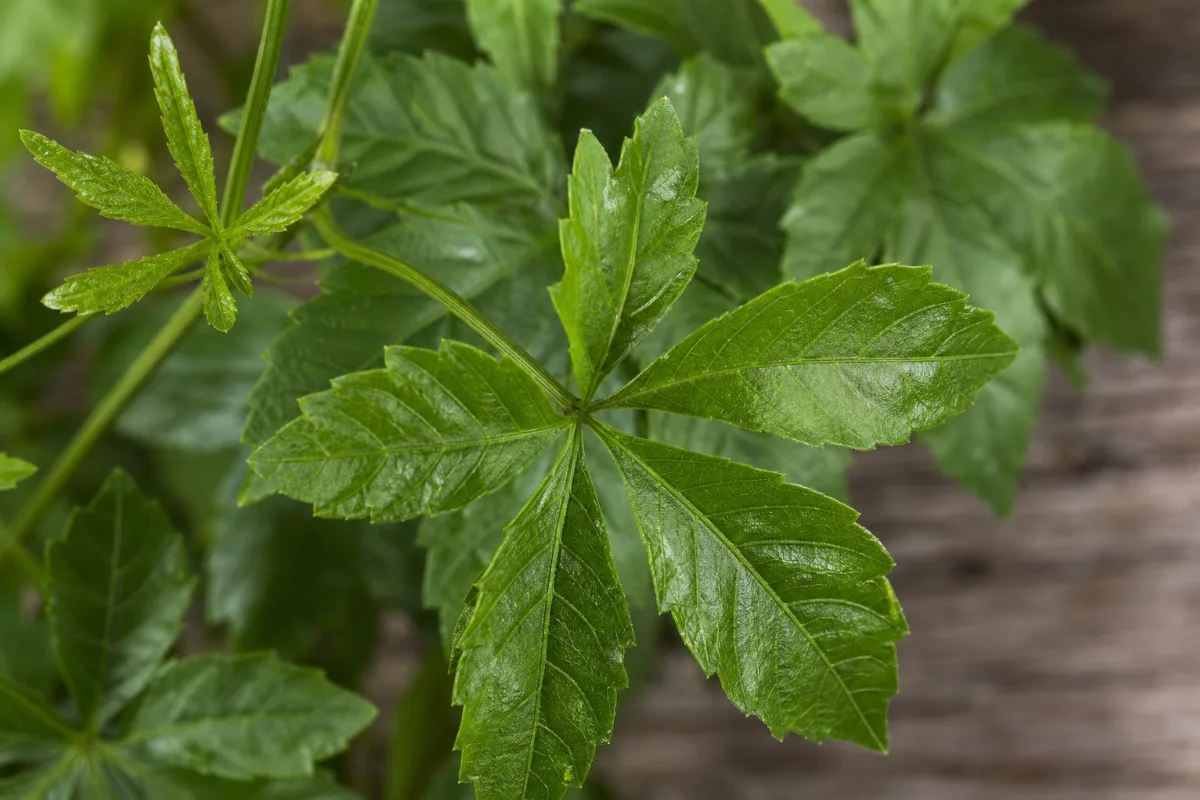
Adaptogens · Herbs & Botanicals · Chinese vine leaf tea with low-certainty evidence for blood sugar
Jiaogulan (Gynostemma)
Gynostemma pentaphyllum (Thunb.) Makino · also called Jiaogulan, gynostemma, southern ginseng, five-leaf gynostemma, 絞股藍 jiǎogǔlán (Chinese), アマチャヅル (Japanese), 돌외 doloe (Korean), cipó-doce (Portuguese)
Jiaogulan is the leaf of a climbing vine in the gourd family, drunk as tea or taken as extracts in China and Southeast Asia. Despite the nickname 'southern ginseng', it is not a ginseng. Researchers have tested it mostly for blood sugar and blood fats. The evidence is small, and the safety questions (platelets, diabetes and blood thinner medicines, pregnancy) are not settled.
General information, not medical advice. Last substantive update · Not medically reviewed. A named clinician has not signed off on this page. How this page is made
About Jiaogulan (Gynostemma)
Jiaogulan (Gynostemma pentaphyllum) is a climbing plant from China and Southeast Asia whose leaves are drunk as a tea or taken as extracts. It is called 'southern ginseng' but is not a ginseng. The human research is small: low-certainty evidence for blood sugar in type 2 diabetes, very-low to low evidence for blood fats, fatty liver, weight, stress, exercise and hair, and almost nothing on safety beyond one case report of low platelets. It may add to diabetes and blood-thinning medicines and should be avoided in pregnancy and breastfeeding. Ask a doctor or pharmacist about amounts.
What it is
Jiaogulan is the Chinese name of Gynostemma pentaphyllum, accepted by GBIF as a species of the gourd family (Cucurbitaceae), the family of cucumber and melon. It is not related to true ginseng (Panax), even though one nickname is 'southern ginseng'.
The leaves are the part used, as a tea or as extracts. Many products also exist in the research: a dried-leaf extract, an ethanol leaf extract, a water extract, a heat-processed extract sold under the name actiponin, and a branded extract called ActivAMP. They are not the same product, so results cannot be moved from one to another.
Traditional and current uses
A 2021 review says the plant has been used in folk medicine in China and in East and Southeast Asia for diabetes, metabolic problems, aging and brain disease, and that it is called an 'immortality herb' in Guizhou. Vietnamese researchers describe it as a traditional Vietnamese tea. Traditional use is not proof that it works.
Today it is mainly taken for blood sugar, cholesterol, weight and general wellbeing. No European Union herbal monograph or NCCIH page for it was found, so there is no official statement of approved uses.
What the active compounds are
The main active group is the gypenosides, a family of saponins. A review says 328 of these have been isolated from the Gynostemma genus. Some trial products are made to contain a named gypenoside, such as gypenoside L.
Lab and animal work links gypenosides to AMPK (a cell energy sensor), cholesterol-related proteins such as PCSK9, and the gut bacteria. In people, muscle AMPK activity was higher after exercise in one small trial. A 2025 review says the body absorbs gypenosides poorly and that standardised extracts are lacking.
What the research shows
Nothing is rated above low certainty. The best-studied use is blood sugar in type 2 diabetes: two small tea trials from one Vietnamese group and a 2026 pooled analysis of 8 studies. Blood fats come next, with a 2022 review of 22 trials rated very low to low. Weight, fatty liver, stress, exercise, hair and optic neuritis rest on one or two small trials each, several with company-linked authors.
Many trials report only p-values and fold changes without sizes, and several positive results have p-values just under 0.05. Most lab and animal papers on cancer, brain, heart and gut cannot be applied to people. See the Evidence tab for each use.
At a glance
Traditional uses history, not proof
- Folk medicine in China and East and Southeast Asia: a review says it was used for diabetes, metabolic problems, aging and brain disease, and called an 'immortality herb' in Guizhou.
- Vietnamese herbal tea: researchers there describe it as a traditional Vietnamese herb and tested it in type 2 diabetes.
- A 2026 review calls it a 'medicine food homology' plant widely consumed in Asia; the official list was not read.
Studied for research
- Type 2 diabetes (blood sugar, HbA1c) and blood fats added to lipid drugs, low
- Weight and body fat, stress and anxiety, and exercise performance, low; insulin sensitivity, blood fats alone, fatty liver, fatigue and hair, very low; stress hormones, optic neuritis and blood pressure, insufficient
Main compounds
- Gypenosides, dammarane-type saponins (328 isolated from the genus, per a review)
- Gypenoside L and gypenoside XLIX, two named examples
- Damulin B, found in heat-processed extracts
Common forms
- Leaf tea
- Dried leaf extract and standardised water extract
- Ethanol leaf extract
- Heat-processed extract (actiponin) and branded extract (ActivAMP)
Research links: WebMD: Jiaogulan uses, side effects and interactions · RxList: Jiaogulan · 2026 meta-analysis of Gynostemma for blood sugar (PubMed) · 2022 systematic review of Gynostemma for blood fats (PubMed) · Case report of low platelets with Gynostemma (PubMed) · Research Library · Genes & Biomarkers Library
The plant and its history
- Accepted scientific name
- Gynostemma pentaphyllum (Thunb.) Makino
- Naming authority
- GBIF accepted name, species rank (usageKey 7317960, exact match on 2026-10-25). Authority: (Thunb.) Makino.
- Synonyms
- GBIF lists synonyms including Alsomitra cissoides M.Roem., Gynostemma blumei Hassk., Gynostemma burmanicum King and Gynostemma cissoides (Wall.) Benth. & Hook.f. ex Franch. & Sav. (first page of results only).
- Common names
- Jiaogulan (Chinese (pinyin, as listed by GBIF)); Southern ginseng (English); Five-leaf gynostemma (English); Gynostemma (English); 絞股藍 (jiǎogǔlán) (Chinese); 七葉膽 (Chinese); アマチャヅル (amachazuru) (Japanese); 돌외 (doloe) (Korean); ginseng-do-sul, cipó-doce, erva-da-imortalidade (Portuguese)
- Botanical family
- Cucurbitaceae (the gourd family, order Cucurbitales), the family of cucumber and melon. It is not related to Panax ginseng.
- Classification
- Plantae > Tracheophyta > Magnoliopsida > Cucurbitales > Cucurbitaceae > Gynostemma > Gynostemma pentaphyllum
- Native range
- Not verified from a source read. A review says it is used traditionally in China and in some countries of East and Southeast Asia (p33186700).
- Habitat
- Not verified from a source read.
- What the plant looks like
- Roots: Not verified from a source read.; Stems: Often described as a climbing vine; this was not verified from a source read.; Leaves: The species name 'pentaphyllum' means five leaflets; the leaf and aerial parts are the parts used in tea and extracts in the studies read. Details of leaf shape were not verified from a source read.; Flowers: Not verified from a source read.; Fruit: Not verified from a source read.
- Cultivation
- Tea is grown on farmland in Southeast Asia (p18795782 says it is widely grown there). Not verified from a source read.
- Harvest and processing
- Not verified. Studies read used a dried-leaf extract, a standardised water extract, an ethanol leaf extract, a heat-processed extract (actiponin) and plain tea; paper titles describe heat processing and enzyme conversion that change the saponin mix, but those papers were not read.
- Look-alikes and adulterants
- Name: Other Gynostemma species; Note: G. longipes and G. laxum are used as substitutes in Vietnam and elsewhere; toxicology was reported only for G. pentaphyllum (p33186700).; Name: Panax ginseng and Panax notoginseng; Note: Not related. Some of the same kind of saponin chemistry (dammarane-type) is shared, which is why one nickname is 'southern ginseng'. Ginseng research does not apply to Gynostemma.
- Sustainability and conservation
- Not verified. No IUCN assessment was retrieved.
Traditional use and history history, not clinical proof
| Tradition or era | Documented use | Source |
|---|---|---|
| China and East and Southeast Asia, folk medicine | Used traditionally for diabetes, metabolic syndrome, aging and neurodegenerative diseases, and called an 'immortality herb' in Guizhou Province because older local people drank it regularly. Both are statements from a review that may rest on secondary sources. | p33186700 |
| Vietnam, traditional use | Described by Vietnamese researchers as a traditional Vietnamese herb used as a tea; they tested it for type 2 diabetes in 2010 and 2013. | p20213586 |
| China, 'medicine food homology' plant | A 2026 review describes it as a traditional medicine food homology plant widely consumed in Asia to promote health. The legal list was not read. | p42064816 |
| Modern period, 1980s onward | Popular stories of how the plant was discovered or became a tea were NOT verified here and are not repeated. | s-gbif-gynostemma-pentaphyllum |
| Regulatory | No European Union herbal monograph (EMA/HMPC) or NCCIH page was found, so there is no official traditional-use statement to cite. | s-webmd-jiaogulan |
Traditional use shows how a plant was used. It does not show that a supplement works or is safe today.
What is inside, and how it may work
What the plant contains and how those compounds act in cells and animals. Laboratory and animal mechanisms are not proven effects in people.
Main compounds
| Compound | Family | Where it is concentrated | Activity studied | Level of evidence |
|---|---|---|---|---|
| Gypenosides (dammarane-type saponins, the main active group) | triterpenoid saponins | Leaf and aerial parts (the parts used in the studies) A review says 328 dammarane-type saponins have been isolated from the Gynostemma genus (p33186700). A water extract in a rat study contained 6% gypenosides (p23796877). | Gypenosides are the group the herb is usually standardised to. Lab and animal work links them to AMPK, PCSK9 and gut-bacteria effects; some human trials used gypenoside-rich extracts (gypenoside L in p36877124). 21 3 2 15 | Laboratory research |
| Gypenoside XLIX PubChem 16007240 | dammarane saponin | Leaf | Studied in cells and animals for liver, heart and nerve protection (titles only, not read). One representative single gypenoside. 33 15 | Laboratory research |
| Gypenoside L PubChem 76335475 | dammarane saponin | Leaf | The marker named in the extract used in the fatigue and exercise trial (p36877124). 33 2 | Controlled trial |
| Gypenoside XVII PubChem 44584555 | dammarane saponin | Leaf | Studied in cells and animals for nerve protection (titles only, not read). 33 | Laboratory research |
| Gypenoside LXXV PubChem 86289140 | dammarane saponin | Leaf | Studied in a colitis mouse paper (title only, not read). 33 | Laboratory research |
| Damulin B PubChem 57390324 | dammarane saponin | Leaf (heat-processed extracts) | Named in titles of cell and animal studies (hair, skin and kidney protection, liver cancer cells); not read here. 33 | Laboratory research |
| Polysaccharides, flavonoids and other compounds | mixed | Leaf | Reviews and titles mention polysaccharides and flavonoids from the plant; no verified amounts or human data were read. 15 | Laboratory research |
Mechanisms, receptors and pathways
| Target or pathway | Gene or receptor | What was found | Level |
|---|---|---|---|
| AMPK (energy sensor) in muscle | PRKAA (AMPK alpha), ACC | In healthy untrained men, 4 weeks of leaf extract raised muscle AMPK Thr172 phosphorylation after 60 minutes of exercise, and lowered total ACC-alpha, compared with placebo. 20 | Human data |
| Endothelial nitric oxide synthase (blood vessel relaxation) | NOS3 (eNOS) | Blood eNOS was higher than placebo after 12 weeks of a gypenoside L extract in healthy adults. 2 | Human data |
| Liver fat clearing (lipophagy) through AMPK/mTOR/ULK1 | AMPK, mTOR, ULK1 | In high-fat-diet hamsters and fat-loaded liver cells, gypenosides lowered liver fat and switched on lipophagy through AMPK/mTOR/ULK1. 30 | Animal research |
| PCSK9 and LOX-1 (cholesterol and artery inflammation) | PCSK9, OLR1 (LOX-1) | In rats and vein cells, gypenosides lowered cholesterol and these two proteins; computer docking suggested binding to PCSK9. 9 | Animal research |
| Gut bacteria, bile acids and gut barrier | PI3K/AKT, FXR/FGF15 | In diabetic mice, gypenosides raised microbial diversity, shifted bile acids, strengthened the gut barrier and lowered inflammation signals. 28 | Animal research |
| Drug-metabolising enzymes | CYP2D6, CYP2C8, CYP3A4, CYP2C9 | Gypenosides blocked these enzymes in human liver tests, CYP2D6 most strongly (IC50 1.61 micrograms/mL). 8 | Lab |
| Platelet and clotting activity | Not established | A water extract reduced platelet clumping and delayed clotting tests in human blood samples in the lab. 27 | Lab |
| Brain cell protection (animal and cell models) | NF-kB, Nrf2, AKT, ERK1/2 | A review of preclinical work says gypenosides protect nerve cells in animal models of depression, Parkinson's, Alzheimer's, stroke and optic neuritis, and that human research is lacking. 16 | Animal research |
Absorption, metabolism and elimination
- Absorption
- No human blood-level data for gypenosides were found. A 2025 review says oral bioavailability is limited (p41181612). A lab digestion model found food matrices such as coffee, yogurt and tomato juice raised the digested and potentially absorbed share of gypenosides (p41524815); this is not human data.
- Distribution
- Not established in people.
- Metabolism
- Not established in people. Rat studies exist (titles seen) but were not read.
- Elimination
- Not found.
- Bioavailability
- Not established in humans. The authors of the 2025 review list limited oral bioavailability as an obstacle.
Isolated compounds versus whole extracts
The studies use mixed products (tea, ethanol leaf extract, water extract, heat-processed extract, gypenoside-rich fractions). No single compound has been shown to carry the effects in people. Extracts with different gypenoside mixes are not interchangeable, and a review says standardised extracts are lacking.
Nutritional composition
A nutrient table is not meaningful for the tea or extract uses studied. This is a medicinal leaf, not a food source of vitamins or minerals, and no verified nutrient data were read.
5 low certainty5 very low certainty3 not enough evidence
What was looked at
The 13 benefits and uses checked for Jiaogulan (Gynostemma), each with how strong the evidence is. Tap one to open it.
- Type 2 diabetes: blood sugar and HbA1cLow certainty
- Insulin sensitivity in type 2 diabetesVery low certainty
- Blood fats (cholesterol, triglycerides): Gynostemma on its ownVery low certainty
- Blood fats: added to lipid-lowering drugsLow certainty
- Fatty liver (non-alcoholic fatty liver disease)Very low certainty
- Body weight and body fatLow certainty
- Stress and anxiety in healthy adultsLow certainty
- Stress hormones (cortisol, ACTH)Not enough evidence
- Exercise performance and enduranceLow certainty
- FatigueVery low certainty
- Hair healthVery low certainty
- Optic neuritis (eye nerve inflammation)Not enough evidence
- Blood pressureNot enough evidence
Lab markers tracked in the studies
Fasting blood glucoseHbA1cBlood sugar 2 hours after a sugar drink or mealInsulin resistance (HOMA-IR) and insulinTriglyceridesHDL cholesterolLDL cholesterolLiver enzymes (AST, ALT, ALP)Body weight, BMI, fat massTNF-alpha (an inflammation signal)Trait anxiety score (T-STAI)Cortisol (saliva) and ACTHVO2 max and oxygen pulse20 km cycling time trialLeptinFree fatty acidsBlood eNOS (endothelial nitric oxide synthase)Hair elasticity, density and diameterRetinal nerve fibre layer thickness (pRNFL)
What is Jiaogulan (Gynostemma) good for?
The main proposed uses and how strong the human evidence is for each. "Low" means small or inconsistent studies, "very low" means a single small or unclear study, and "insufficient" means there is not enough to judge. Nothing here is rated above low.
Benefits, one by one
Each card is a research question, not a promise. Tap a goal to filter. Open a card to see the studies, doses and limits.
Type 2 diabetes: blood sugar and HbA1c
Low certaintyIn small trials of adults with type 2 diabetes, Gynostemma tea lowered fasting blood sugar and HbA1c, and a 2026 pooled analysis of 8 studies agreed. The trials are small and the evidence is still thin.
4 studiesTeas and extracts differ. The tea trials used 6 g of authenticated Gy…
Studies, doses and limits
What the trials found
Two small Vietnamese trials of Gynostemma tea (6 g a day) in drug-naive type 2 diabetes: a 24-person, 12-week parallel trial (p20213586) and a crossover of 4 weeks per tea (p23431428). A 2026 meta-analysis pooled 8 studies with 584 patients (p42064816). Mouse work shows effects on gut bacteria and glucose (p40728984).
Results
12-week trial: fasting glucose fell 3.0 mmol/L with the tea against 0.6 with placebo; HbA1c fell about 2 points against 0.2. Crossover: fasting glucose fell 1.9 against 0.2 mmol/L. Meta-analysis: fasting glucose -0.79 mmol/L, HbA1c -1.01 points, 2-hour glucose -0.90 mmol/L. No low blood sugar was reported in either tea trial.
Effect sizes as reported
Pooled (8 studies, 584 patients): fasting glucose MD -0.79 mmol/L (CI -1.08 to -0.51); HbA1c MD -1.01 percentage points (CI -1.41 to -0.61); 2-hour glucose MD -0.90 mmol/L (CI -1.95 to -0.15).
Why this rating
The results point the same way, but the best randomised data are two tiny trials from one research group, in untreated patients, and the pooled analysis reports only abstract-level detail on study quality. The size of the HbA1c fall in the 2010 trial is unusually large and has not been repeated by an independent group. No GRADE rating was given by the reviewers.
Form and dose studied
Teas and extracts differ. The tea trials used 6 g of authenticated Gynostemma tea daily. The pooled analysis mixed products and said longer treatment and use alone worked better.
Who was studied
Adults with type 2 diabetes, mostly untreated by drugs in the best-described trials.
Limits
Only 24 people in the main randomised trial. Same group ran both tea trials. Short follow-up (up to 12 weeks). No trial of long-term outcomes such as heart disease or kidney damage. Industry funding of the tea trials is not stated in the abstracts.
Why researchers looked
Jiaogulan tea is a traditional remedy for diabetes in East and Southeast Asia, and Vietnamese researchers tested it in people with new, untreated type 2 diabetes.
Traditional use
Jiaogulan (Gynostemma pentaphyllum) is a climbing vine used in China and in East and Southeast Asia as a tea and folk remedy, traditionally for diabetes, metabolic problems, aging and brain conditions, and it is called an 'immortality herb' in Guizhou (a review, p33186700). Traditional use is not proof that it works.
Proposed mechanism Animal research
Animal and lab work suggests the saponins (gypenosides) may raise glucose uptake, lower liver glucose output, raise insulin release and ease insulin resistance, and that they may act through the gut bacteria. This has not been shown in people.
A proposed mechanism does not show that the effect happens in people.
If you take diabetes medicines (insulin, sulfonylureas or others), a herb that lowers blood sugar could add to their effect. Talk to your doctor or pharmacist first and check your sugar as advised. Do not replace prescribed treatment with a herb.
Insulin sensitivity in type 2 diabetes
Very low certaintyA small crossover trial of Gynostemma tea found lower steady-state glucose during a research insulin test, which the authors read as better insulin sensitivity. One small study only.
2 studies6 g a day of Gynostemma tea in both trials.
Studies, doses and limits
What the trials found
A crossover trial gave drug-naive type 2 diabetes patients Gynostemma tea or placebo tea (6 g a day) for 4 weeks each (p23431428). Insulin sensitivity was measured with a somatostatin-insulin-glucose infusion test. In the first 12-week trial, HOMA-IR (a blood-test estimate of insulin resistance) also fell (p20213586).
Results
Steady-state plasma glucose during the infusion test was lower after the tea than after placebo (P<0.001); circulating insulin did not change much. HOMA-IR changed -2.1 with the tea against +1.1 with placebo in the 12-week trial.
Effect sizes as reported
Steady-state glucose lower (P<0.001, no values in the abstract); HOMA-IR -2.1 +/- 3.0 vs +1.1 +/- 3.3 (p<0.05).
Why this rating
Two small studies from one group, one with an unstated number of participants.
Form and dose studied
6 g a day of Gynostemma tea in both trials.
Who was studied
Drug-naive adults with type 2 diabetes.
Limits
Very small studies, one group, no independent repeat. Surrogate lab measures, not health outcomes.
Why researchers looked
To find out whether the sugar-lowering effect came from the body using insulin better.
Traditional use
Jiaogulan (Gynostemma pentaphyllum) is a climbing vine used in China and in East and Southeast Asia as a tea and folk remedy, traditionally for diabetes, metabolic problems, aging and brain conditions, and it is called an 'immortality herb' in Guizhou (a review, p33186700). Traditional use is not proof that it works.
Proposed mechanism Animal research
Lab and animal work suggests effects on glucose uptake and insulin signalling (PI3K/AKT); not shown in people beyond this one test.
A proposed mechanism does not show that the effect happens in people.
If you take diabetes medicines (insulin, sulfonylureas or others), a herb that lowers blood sugar could add to their effect. Talk to your doctor or pharmacist first and check your sugar as advised. Do not replace prescribed treatment with a herb.
Blood fats (cholesterol, triglycerides): Gynostemma on its own
Very low certaintyPooled trials suggest Gynostemma may lower triglycerides and raise HDL cholesterol, and may work about as well as some lipid drugs, but the reviewers rate this very-low certainty. Results from a tea trial were mixed, with HDL falling.
5 studiesMixed products and doses; trials were mostly Chinese. A Thai tea tria…
Studies, doses and limits
What the trials found
A 2022 systematic review of 22 randomised trials with 2,407 people with high blood fats (p36091752) found Gynostemma alone similar to fish oil (RR 0.89, CI 0.62-1.28) and to lipid drugs on triglycerides, total cholesterol and HDL, with very-low certainty, and inferior to red yeast rice (low certainty). A 2023 meta-analysis found lower triglycerides and higher HDL but gave no numbers in its abstract (p37129524). A 30-day tea study in 48 people with high cholesterol saw lower total cholesterol and fasting glucose only in certain gene subgroups, and HDL fell (p28244718).
Results
No placebo-controlled pooled number was given in the abstracts. Against red yeast rice, total cholesterol was 0.64 mmol/L worse (CI 0.15 to 1.13), triglycerides 0.43 mmol/L worse (CI 0.15 to 0.71).
Effect sizes as reported
Versus red yeast rice: total cholesterol MD 0.64 mmol/L (CI 0.15 to 1.13) and triglycerides MD 0.43 (CI 0.15 to 0.71), both in favour of red yeast rice; versus fish oil RR 0.89 (CI 0.62 to 1.28), no clear difference.
Why this rating
The reviewers themselves call the comparison with lipid drugs very-low certainty; most trials had some concerns or high risk of bias (14 some concerns, 7 high, 1 low of 22). 'As good as another treatment' is not the same as beating a placebo. The 2023 meta-analysis abstract gives no numbers.
Form and dose studied
Mixed products and doses; trials were mostly Chinese. A Thai tea trial and heat-processed extract trials are separate.
Who was studied
Adults with high cholesterol or triglycerides.
Limits
Many trials compared Gynostemma with other treatments rather than placebo. Abstract-level reading only. HDL fell in the tea trial.
Why researchers looked
High blood fats are a common reason people take Gynostemma products in China.
Traditional use
Jiaogulan (Gynostemma pentaphyllum) is a climbing vine used in China and in East and Southeast Asia as a tea and folk remedy, traditionally for diabetes, metabolic problems, aging and brain conditions, and it is called an 'immortality herb' in Guizhou (a review, p33186700). Traditional use is not proof that it works.
Proposed mechanism Animal research
Mouse, hamster and rat studies suggest gypenosides lower liver fat and cholesterol through AMPK/mTOR/ULK1 signalling, PCSK9/LOX-1 and the gut bacteria. This has not been shown in people.
A proposed mechanism does not show that the effect happens in people.
Gynostemma is not a replacement for prescribed cholesterol medicines. Ask your doctor before changing any heart or cholesterol treatment.
Blood fats: added to lipid-lowering drugs
Low certaintyIn the same systematic review, adding Gynostemma to lipid-lowering drugs did better than the drugs alone for triglycerides, LDL and HDL, rated low to moderate certainty.
1 studiesProducts and doses not stated in the abstract.
Studies, doses and limits
What the trials found
Within the 22-trial review (p36091752), the add-on comparison found lower triglycerides, lower LDL and higher HDL than drugs alone. The reviewers rated this low to moderate certainty, and they noted fewer adverse events than with lipid drugs.
Results
Add-on versus drug alone: triglycerides MD -0.65 mmol/L (CI -1.03 to -0.28); LDL MD -0.57 mmol/L (CI -1.07 to -0.08); HDL MD +0.15 mmol/L (CI 0.11 to 0.20).
Effect sizes as reported
Add-on versus drug alone: triglycerides MD -0.65 mmol/L; LDL MD -0.57 mmol/L; HDL MD +0.15 mmol/L (CIs above).
Why this rating
The reviewers rate this low to moderate certainty. It is shown here as low because the trials had high or some risk of bias, the abstract does not show which drugs or products were used, and the trials are mostly from China. No independent confirmation was found.
Form and dose studied
Products and doses not stated in the abstract.
Who was studied
Adults with high blood fats already taking lipid-lowering drugs (statins, fibrates, fish oil).
Limits
Open trials are likely to overstate benefit. Safety of the combination (for example bleeding or liver effects) is not described in the abstract.
Why researchers looked
Many Chinese trials tested Gynostemma as an add-on to usual treatment.
Traditional use
Jiaogulan (Gynostemma pentaphyllum) is a climbing vine used in China and in East and Southeast Asia as a tea and folk remedy, traditionally for diabetes, metabolic problems, aging and brain conditions, and it is called an 'immortality herb' in Guizhou (a review, p33186700). Traditional use is not proof that it works.
Proposed mechanism Animal research
Same lab and animal proposals as above (PCSK9 and AMPK pathways); not shown in people.
A proposed mechanism does not show that the effect happens in people.
Tell your doctor or pharmacist before combining it with statins or other lipid medicines.
Fatty liver (non-alcoholic fatty liver disease)
Very low certaintyOne small single-blind trial found that adding Gynostemma extract to diet improved some liver and insulin measures. A large Cochrane review lists Gynostemma among herbs tried but gives no result for it.
2 studies80 mL of a liquid extract for 4 months (after 2 months diet).
Studies, doses and limits
What the trials found
A 6-month trial in 56 Taiwanese adults with fatty liver (p16708768): after 2 months of diet, the Gynostemma group (80 mL extract) and a placebo capsule group were compared for 4 more months. The Cochrane review of herbal medicines for fatty liver (77 trials, 6,753 people, p23975682) included single-herb Gynostemma among 75 products but gave no Gynostemma-specific result in its abstract, and rated risk of bias high in all trials.
Results
At month 6 BMI, AST, ALP, insulin and HOMA-IR fell significantly in the Gynostemma group; BMI, triglycerides, ALT and fatty liver score fell in both groups. No numbers in the abstract.
Effect sizes as reported
Not reported in the abstracts.
Why this rating
One small single-blind trial of 56 people, no numbers in the abstract, and a review that rates all fatty-liver herb trials at high risk of bias.
Form and dose studied
80 mL of a liquid extract for 4 months (after 2 months diet).
Who was studied
Adults with fatty liver on ultrasound.
Limits
Single-blind; different-looking treatment and placebo; surrogate liver measures only. No trial reports liver disease outcomes.
Why researchers looked
Fatty liver has no approved drug, so diet and herbs get tried.
Traditional use
Jiaogulan (Gynostemma pentaphyllum) is a climbing vine used in China and in East and Southeast Asia as a tea and folk remedy, traditionally for diabetes, metabolic problems, aging and brain conditions, and it is called an 'immortality herb' in Guizhou (a review, p33186700). Traditional use is not proof that it works.
Proposed mechanism Animal research
Mouse and rat studies suggest gypenosides reduce liver fat and inflammation (for example in a 2025 mouse study with changes in gut bacteria and bile acids); not shown in people.
A proposed mechanism does not show that the effect happens in people.
A liver enzyme (ALT) was among the differences in a separate weight trial (p34323337), and its direction was not stated in the abstract. If you have liver disease, ask a doctor before using Gynostemma.
Body weight and body fat
Low certaintyTwo placebo-controlled trials of branded Gynostemma extracts (12 and 16 weeks) in people with overweight or obesity reported small improvements in weight, BMI and fat mass. Details are missing in the abstracts and one paper has two corrections.
4 studiesTwo different branded extracts: actiponin (heat-processed, 450 mg a d…
Studies, doses and limits
What the trials found
Actiponin (450 mg a day) in 80 Korean adults with obesity for 12 weeks (p23804546) and ActivAMP in 117 overweight adults for 16 weeks with DXA scans (p34323337). The first paper has two published errata (2015 and 2020), which were not read here (p32841525).
Results
Actiponin: abdominal fat area (P=0.044), body weight (P<0.05), body fat mass and percent fat (both P<0.0001) and BMI (P<0.05) fell more than with placebo. ActivAMP: weight, BMI, total fat mass and hip (gynoid) fat fell more than with placebo; men also lost visceral fat. No numbers of change in either abstract.
Effect sizes as reported
No sizes of change are given in the abstracts.
Why this rating
Two placebo-controlled trials point the same way, but the abstracts give no size of effect, the products are different branded extracts, and one paper has errata. A reviewer's GRADE rating was not found.
Form and dose studied
Two different branded extracts: actiponin (heat-processed, 450 mg a day) and ActivAMP (dose not stated in the abstract).
Who was studied
Korean adults with obesity (actiponin); overweight men and women (ActivAMP).
Limits
No effect sizes in the abstracts. Short (12 to 16 weeks). Funding by the product makers is not stated and cannot be ruled out. Not tested for keeping weight off.
Why researchers looked
A heat-processed Gynostemma extract (actiponin) and an extract sold as ActivAMP were developed for weight and metabolism.
Traditional use
Jiaogulan (Gynostemma pentaphyllum) is a climbing vine used in China and in East and Southeast Asia as a tea and folk remedy, traditionally for diabetes, metabolic problems, aging and brain conditions, and it is called an 'immortality herb' in Guizhou (a review, p33186700). Traditional use is not proof that it works.
Proposed mechanism Preliminary mechanism
Lab work suggests gypenosides activate AMPK, a cell energy sensor; in healthy men on a 4-week extract, muscle AMPK activity rose after exercise (p38004115).
A proposed mechanism does not show that the effect happens in people.
In the ActivAMP trial, ALT (a liver enzyme) and triglycerides were reported as different between groups, with direction not given. Other markers were reported as no clinically significant change in the actiponin trial.
Stress and anxiety in healthy adults
Low certaintyOne 8-week placebo-controlled trial of a leaf extract in stressed adults found lower trait anxiety (a long-term tendency to feel anxious), but other anxiety scales and stress hormones did not clearly change.
3 studiesEthanol extract of Gynostemma leaves, 200 mg twice a day for 8 weeks …
Studies, doses and limits
What the trials found
A 72-person double-blind trial (p30599899) of an ethanol extract of the leaves (200 mg twice a day for 8 weeks). A 2022 systematic review of stress-hormone trials (p33650944) names Jiaogulan among about 27 plants and found that for most the effect on stress hormones was unclear. A 2024 review of lab studies says clinical research on gypenosides in brain conditions is lacking (p38908668).
Results
Trait anxiety (T-STAI, the main outcome) fell 16.8% more than with placebo (p=0.041). Total STAI fell 17.8% in the extract group but only trended against placebo (p=0.067). State anxiety, HAM-A, BAI, noradrenaline, ACTH, cortisol, alpha-amylase and heart-rate variability did not differ significantly.
Effect sizes as reported
T-STAI -16.8% vs placebo, p=0.041; total STAI p=0.067 (not significant).
Why this rating
One trial with a borderline main result and no confirmation. Most secondary outcomes were null.
Form and dose studied
Ethanol extract of Gynostemma leaves, 200 mg twice a day for 8 weeks in the trial.
Who was studied
Healthy adults with chronic stress (STAI 40-60).
Limits
One small trial, 8 weeks, not people with anxiety disorders. Funding not stated in the abstract.
Why researchers looked
Mouse studies suggested calming effects, so a Korean team tested it in stressed people.
Traditional use
Jiaogulan (Gynostemma pentaphyllum) is a climbing vine used in China and in East and Southeast Asia as a tea and folk remedy, traditionally for diabetes, metabolic problems, aging and brain conditions, and it is called an 'immortality herb' in Guizhou (a review, p33186700). Traditional use is not proof that it works.
Proposed mechanism Animal research
Mouse studies suggest an anti-anxiety effect (the trial authors cite this); reviews of gypenosides describe lab effects on brain cells and inflammation. Not shown in people beyond this trial.
A proposed mechanism does not show that the effect happens in people.
No adverse reaction was linked to the extract in the trial. Not a replacement for care for anxiety or depression.
Stress hormones (cortisol, ACTH)
Not enough evidenceNo clear effect on stress hormones has been shown. In the one Jiaogulan trial that measured them, they did not differ from placebo.
2 studiesSame as the anxiety trial.
Studies, doses and limits
What the trials found
The anxiety trial (p30599899) measured blood noradrenaline and ACTH and salivary cortisol and alpha-amylase and found no significant difference from placebo. The 2022 systematic review (p33650944) lists Jiaogulan among many plants and concludes the effect on stress hormones is unclear for most plants.
Results
No significant difference in these measures in the anxiety trial.
Effect sizes as reported
No numbers in the abstract.
Why this rating
One trial with null results and a review with no Jiaogulan-specific finding.
Form and dose studied
Same as the anxiety trial.
Who was studied
Stressed healthy adults.
Limits
Hormone measures were secondary outcomes.
Why researchers looked
To test whether the calming effect might work through the body's stress-hormone system.
Traditional use
Jiaogulan (Gynostemma pentaphyllum) is a climbing vine used in China and in East and Southeast Asia as a tea and folk remedy, traditionally for diabetes, metabolic problems, aging and brain conditions, and it is called an 'immortality herb' in Guizhou (a review, p33186700). Traditional use is not proof that it works.
Proposed mechanism Pharmacological theory
Not established.
A proposed mechanism does not show that the effect happens in people.
None specific.
Exercise performance and endurance
Low certaintyA small crossover trial in untrained young men and a 100-person trial in healthy adults both reported better exercise results, but the first is tiny and the second reports few numbers.
2 studiesLeaf extract (450 mg a day, equal to 2.25 g of leaf) in one; gypenosi…
Studies, doses and limits
What the trials found
A crossover of 16 untrained men: 450 mg of leaf extract daily for 4 weeks (p38004115); and a 100-adult trial of a gypenoside L extract for 12 weeks (p36877124).
Results
Crossover: better 20 km time trial, higher muscle oxygen flux, lower leptin and glucose. Parallel trial: VO2 max (p=0.007) and oxygen pulse (p=0.047) were higher, with perceived exertion lower (p<0.05).
Effect sizes as reported
No numbers in the abstracts; p-values only.
Why this rating
Two small trials with several outcomes and some borderline p-values; no repeat by independent groups.
Form and dose studied
Leaf extract (450 mg a day, equal to 2.25 g of leaf) in one; gypenoside L extract (dose not stated) in the other.
Who was studied
Healthy untrained young men (one trial); healthy adults 19 to 60 (other).
Limits
Healthy untrained people only; not tested in athletes, women only, or older people.
Why researchers looked
Gynostemma saponins act on AMPK, a cell energy sensor activated by exercise.
Traditional use
Jiaogulan (Gynostemma pentaphyllum) is a climbing vine used in China and in East and Southeast Asia as a tea and folk remedy, traditionally for diabetes, metabolic problems, aging and brain conditions, and it is called an 'immortality herb' in Guizhou (a review, p33186700). Traditional use is not proof that it works.
Proposed mechanism Preliminary mechanism
Human data: higher muscle AMPK phosphorylation after exercise in the crossover trial. Mouse work reports that gut bacteria may be involved; this was not read in detail here.
A proposed mechanism does not show that the effect happens in people.
A leaf extract that lowers blood sugar can matter if you use diabetes medicines (see Safety).
Fatigue
Very low certaintyIn the 100-person trial, an extract rich in gypenoside L was linked to less perceived exertion and a better score on one fatigue scale. Other fatigue scales are not described.
1 studiesExtract containing gypenoside L, 12 weeks.
Studies, doses and limits
What the trials found
A 12-week double-blind trial in 100 healthy Korean adults (p36877124).
Results
Rating of perceived exertion (p<0.05) and the 'temporal fatigue' value on the multidimensional fatigue scale (p<0.05) were better than with placebo. The abstract does not report other fatigue scales.
Effect sizes as reported
p<0.05, no numbers in abstract.
Why this rating
One trial; borderline p-values on several measures; fatigue in healthy adults only.
Form and dose studied
Extract containing gypenoside L, 12 weeks.
Who was studied
Healthy adults 19 to 60.
Limits
No study in people with chronic fatigue or illness.
Why researchers looked
Ginseng-like herbs are often tried for tiredness.
Traditional use
Jiaogulan (Gynostemma pentaphyllum) is a climbing vine used in China and in East and Southeast Asia as a tea and folk remedy, traditionally for diabetes, metabolic problems, aging and brain conditions, and it is called an 'immortality herb' in Guizhou (a review, p33186700). Traditional use is not proof that it works.
Proposed mechanism Preliminary mechanism
Higher blood eNOS (a vessel-relaxing enzyme) in the extract group (p=0.047); the link to fatigue is unproven.
A proposed mechanism does not show that the effect happens in people.
None specific.
Hair health
Very low certaintyA 24-week trial of a Gynostemma extract drink reported better hair elasticity, density and thickness than placebo. The authors work for the company, and the abstract gives no absolute numbers.
1 studiesA Gynostemma extract drink, 340 mL a day.
Studies, doses and limits
What the trials found
A double-blind trial in 100 Korean adults aged 19 to 60, 340 mL a day of the test drink for 24 weeks (p40077637).
Results
Elasticity and density about threefold, and diameter fourfold, higher than placebo (as described by the authors). Glossiness did not differ. No severe adverse events.
Effect sizes as reported
Fold changes only; no absolute values.
Why this rating
One company-linked trial reporting relative changes without absolute numbers.
Form and dose studied
A Gynostemma extract drink, 340 mL a day.
Who was studied
Healthy adults 19 to 60.
Limits
Three authors were employed by the maker. Small absolute changes can look large as folds.
Why researchers looked
Antioxidant and anti-inflammatory plants are being tested for hair.
Traditional use
Jiaogulan (Gynostemma pentaphyllum) is a climbing vine used in China and in East and Southeast Asia as a tea and folk remedy, traditionally for diabetes, metabolic problems, aging and brain conditions, and it is called an 'immortality herb' in Guizhou (a review, p33186700). Traditional use is not proof that it works.
Proposed mechanism Laboratory research
Lab and animal papers suggest antioxidant and anti-inflammatory effects on skin cells; none of this was read here and none shows an effect on human hair.
A proposed mechanism does not show that the effect happens in people.
No severe adverse events were reported.
Optic neuritis (eye nerve inflammation)
Not enough evidenceA small trial of gypenosides alongside steroids was stopped early after 10 people and showed no clear benefit on its main measure.
2 studiesGypenosides 180 mg a day for 10 days, as an add-on to steroids.
Studies, doses and limits
What the trials found
A double-blind pilot trial in 10 adults with their first optic neuritis episode, all on standard steroids (p42398278).
Results
At 6 months the main measure (retinal nerve fibre layer thickness) did not differ significantly (+16.2 micrometres, CI -16.3 to 48.6). Macular volume also did not differ. An exploratory measure looked different but the authors say it is not evidence of benefit.
Effect sizes as reported
pRNFL +16.2 micrometres (CI -16.3 to 48.6, P=0.274); macular volume +0.034 mm3 (CI -0.166 to 0.234).
Why this rating
Ten people, stopped early, main measure not met.
Form and dose studied
Gypenosides 180 mg a day for 10 days, as an add-on to steroids.
Who was studied
Adults with first-episode optic neuritis, many with AQP4-IgG antibodies.
Limits
Severely underpowered. Because this is an immune-related condition, nobody should add a herb without their neurologist's agreement.
Why researchers looked
Animal studies suggested gypenosides protect nerves in experimental optic neuritis.
Traditional use
Jiaogulan (Gynostemma pentaphyllum) is a climbing vine used in China and in East and Southeast Asia as a tea and folk remedy, traditionally for diabetes, metabolic problems, aging and brain conditions, and it is called an 'immortality herb' in Guizhou (a review, p33186700). Traditional use is not proof that it works.
Proposed mechanism Animal research
Animal work (not human) suggests nerve protection through anti-inflammatory and antioxidant pathways.
A proposed mechanism does not show that the effect happens in people.
Immune-related effects of Gynostemma are not established; see Safety.
Blood pressure
Not enough evidenceTwo small diabetes trials that measured blood pressure found no change. No trial in people with high blood pressure was found.
3 studiesGynostemma tea 6 g a day.
Studies, doses and limits
What the trials found
Blood pressure was a secondary outcome in the two tea trials in type 2 diabetes (p20213586, p23431428). A review lists high blood pressure among the traditional uses (p33186700).
Results
No difference from placebo in blood pressure in either tea trial.
Why this rating
Only incidental measurements in small trials of people with diabetes, not in people with high blood pressure.
Form and dose studied
Gynostemma tea 6 g a day.
Who was studied
Drug-naive type 2 diabetes.
Limits
No trial of people with high blood pressure.
Why researchers looked
Traditional medicine lists Gynostemma for high blood pressure (review p33186700).
Traditional use
Jiaogulan (Gynostemma pentaphyllum) is a climbing vine used in China and in East and Southeast Asia as a tea and folk remedy, traditionally for diabetes, metabolic problems, aging and brain conditions, and it is called an 'immortality herb' in Guizhou (a review, p33186700). Traditional use is not proof that it works.
Proposed mechanism Animal research
Animal and lab work only.
A proposed mechanism does not show that the effect happens in people.
If you take blood pressure medicines, tell your doctor or pharmacist; no interaction study was found.
Connections to the rest of health
How Jiaogulan (Gynostemma) connects to the rest of our health knowledge graph. Every link says what kind of connection it is. A safety link (for example to the liver) is a warning, not a benefit. A study that merely mentions a topic never creates a benefit link.
Explore every connection: goals, body systems, organs, symptoms, genes
A. Wellness goals
| Connected to | Kind of connection | Evidence status | Context | Studies |
|---|---|---|---|---|
| Blood Sugar Balance | Demonstrated clinical effect | Low certainty | Type 2 diabetes: blood sugar and HbA1c: In small trials of adults with type 2 diabetes, Gynostemma tea lowered fasting blood sugar and HbA1c, and a 2026 pooled analysis of 8 studies agreed. The trials are small and the evidence is still thin. | 10 11 29 28 |
| Metabolic Health | Demonstrated clinical effect | Low certainty | Type 2 diabetes: blood sugar and HbA1c: In small trials of adults with type 2 diabetes, Gynostemma tea lowered fasting blood sugar and HbA1c, and a 2026 pooled analysis of 8 studies agreed. The trials are small and the evidence is still thin. | 10 11 29 28 |
| Blood Sugar Balance | Preliminary mechanism | Very low certainty | Insulin sensitivity in type 2 diabetes: A small crossover trial of Gynostemma tea found lower steady-state glucose during a research insulin test, which the authors read as better insulin sensitivity. One small study only. | 11 10 |
| Metabolic Health | Preliminary mechanism | Very low certainty | Insulin sensitivity in type 2 diabetes: A small crossover trial of Gynostemma tea found lower steady-state glucose during a research insulin test, which the authors read as better insulin sensitivity. One small study only. | 11 10 |
| Cholesterol Balance | Potential benefit | Very low certainty | Blood fats (cholesterol, triglycerides): Gynostemma on its own: Pooled trials suggest Gynostemma may lower triglycerides and raise HDL cholesterol, and may work about as well as some lipid drugs, but the reviewers rate this very-low certainty. Results from a tea trial were mixed, with HDL falling. Blood fats: added to lipid-lowering drugs: In the same systematic review, adding Gynostemma to lipid-lowering drugs did better than the drugs alone for triglycerides, LDL and HDL, rated low to moderate certainty. | 6 14 12 30 9 |
| Heart Health | Potential benefit | Very low certainty | Blood fats (cholesterol, triglycerides): Gynostemma on its own: Pooled trials suggest Gynostemma may lower triglycerides and raise HDL cholesterol, and may work about as well as some lipid drugs, but the reviewers rate this very-low certainty. Results from a tea trial were mixed, with HDL falling. Blood fats: added to lipid-lowering drugs: In the same systematic review, adding Gynostemma to lipid-lowering drugs did better than the drugs alone for triglycerides, LDL and HDL, rated low to moderate certainty. | 6 14 12 30 9 |
| Liver Support | Potential benefit | Very low certainty | Fatty liver (non-alcoholic fatty liver disease): One small single-blind trial found that adding Gynostemma extract to diet improved some liver and insulin measures. A large Cochrane review lists Gynostemma among herbs tried but gives no result for it. | 5 17 |
| Metabolic Health | Potential benefit | Very low certainty | Fatty liver (non-alcoholic fatty liver disease): One small single-blind trial found that adding Gynostemma extract to diet improved some liver and insulin measures. A large Cochrane review lists Gynostemma among herbs tried but gives no result for it. Body weight and body fat: Two placebo-controlled trials of branded Gynostemma extracts (12 and 16 weeks) in people with overweight or obesity reported small improvements in weight, BMI and fat mass. Details are missing in the abstracts and one paper has two corrections. | 5 17 23 24 22 20 |
| Weight Management | Potential benefit | Low certainty | Body weight and body fat: Two placebo-controlled trials of branded Gynostemma extracts (12 and 16 weeks) in people with overweight or obesity reported small improvements in weight, BMI and fat mass. Details are missing in the abstracts and one paper has two corrections. | 23 24 22 20 |
| Anxiety Support | Potential benefit | Low certainty | Stress and anxiety in healthy adults: One 8-week placebo-controlled trial of a leaf extract in stressed adults found lower trait anxiety (a long-term tendency to feel anxious), but other anxiety scales and stress hormones did not clearly change. | 4 18 16 |
| Stress Reduction | Potential benefit | Low certainty | Stress and anxiety in healthy adults: One 8-week placebo-controlled trial of a leaf extract in stressed adults found lower trait anxiety (a long-term tendency to feel anxious), but other anxiety scales and stress hormones did not clearly change. | 4 18 16 |
| Stress Reduction | Biological association | Not enough evidence | Stress hormones (cortisol, ACTH): No clear effect on stress hormones has been shown. In the one Jiaogulan trial that measured them, they did not differ from placebo. | 4 18 |
| Adrenal Support | Biological association | Not enough evidence | Stress hormones (cortisol, ACTH): No clear effect on stress hormones has been shown. In the one Jiaogulan trial that measured them, they did not differ from placebo. | 4 18 |
| Endurance Support | Potential benefit | Low certainty | Exercise performance and endurance: A small crossover trial in untrained young men and a 100-person trial in healthy adults both reported better exercise results, but the first is tiny and the second reports few numbers. | 20 2 |
| Physical Stamina | Potential benefit | Low certainty | Exercise performance and endurance: A small crossover trial in untrained young men and a 100-person trial in healthy adults both reported better exercise results, but the first is tiny and the second reports few numbers. | 20 2 |
| Reduce Fatigue | Potential benefit | Very low certainty | Fatigue: In the 100-person trial, an extract rich in gypenoside L was linked to less perceived exertion and a better score on one fatigue scale. Other fatigue scales are not described. | 2 |
| Energy Boost | Potential benefit | Very low certainty | Fatigue: In the 100-person trial, an extract rich in gypenoside L was linked to less perceived exertion and a better score on one fatigue scale. Other fatigue scales are not described. | 2 |
| Hair Support | Potential benefit | Very low certainty | Hair health: A 24-week trial of a Gynostemma extract drink reported better hair elasticity, density and thickness than placebo. The authors work for the company, and the abstract gives no absolute numbers. | 13 |
| Healthy Skin | Potential benefit | Very low certainty | Hair health: A 24-week trial of a Gynostemma extract drink reported better hair elasticity, density and thickness than placebo. The authors work for the company, and the abstract gives no absolute numbers. | 13 |
| Brain Health | Potential benefit | Not enough evidence | Optic neuritis (eye nerve inflammation): A small trial of gypenosides alongside steroids was stopped early after 10 people and showed no clear benefit on its main measure. | 19 16 |
| Immune Support | Potential benefit | Not enough evidence | Optic neuritis (eye nerve inflammation): A small trial of gypenosides alongside steroids was stopped early after 10 people and showed no clear benefit on its main measure. | 19 16 |
| Blood Pressure Support | Biological association | Not enough evidence | Blood pressure: Two small diabetes trials that measured blood pressure found no change. No trial in people with high blood pressure was found. | 10 11 21 |
| Heart Health | Biological association | Not enough evidence | Blood pressure: Two small diabetes trials that measured blood pressure found no change. No trial in people with high blood pressure was found. | 10 11 21 |
B. Body systems
| Connected to | Kind of connection | Evidence status | Context | Studies |
|---|---|---|---|---|
| Cardiovascular system | Drug or supplement interaction | Very low certainty | Possible added bleeding tendency with blood thinners; lab data and one case report only. Platelet and clotting effects in the lab and one case of low platelets; ask before using with blood thinners. Preparation or compound: Gynostemma extract or tea |
27 7 34 |
| Immune system | Contraindication | Not enough evidence | A consumer reference says avoid in autoimmune disease and with immunosuppressants. No human study. A consumer reference says avoid in autoimmune disease and with immune-suppressing drugs; no human study. Preparation or compound: Gynostemma |
34 |
| Reproductive system | Contraindication | Not enough evidence | Avoid in pregnancy and breastfeeding; no human data. Preparation or compound: Gynostemma |
34 35 |
| Digestive system | Adverse effect or risk | Low certainty | Nausea, upset stomach, diarrhea, increased bowel movements listed by consumer references. Preparation or compound: Gynostemma |
35 34 |
| Metabolism Weight | Biological association | Low certainty | Studied for: Type 2 diabetes: blood sugar and HbA1c Studied for: Insulin sensitivity in type 2 diabetes | 10 11 29 28 6 14 12 30 9 5 17 23 24 22 20 |
| Endocrine System | Biological association | Low certainty | Studied for: Type 2 diabetes: blood sugar and HbA1c Studied for: Insulin sensitivity in type 2 diabetes | 10 11 29 28 4 18 |
| Cardiovascular System | Biological association | Very low certainty | Studied for: Blood fats (cholesterol, triglycerides): Gynostemma on its own Studied for: Blood fats: added to lipid-lowering drugs | 6 14 12 30 9 10 11 21 |
| Hepatic System | Biological association | Very low certainty | Studied for: Fatty liver (non-alcoholic fatty liver disease) | 5 17 |
| Stress Mood | Biological association | Low certainty | Studied for: Stress and anxiety in healthy adults Studied for: Stress hormones (cortisol, ACTH) | 4 18 16 |
| Nervous System | Biological association | Low certainty | Studied for: Stress and anxiety in healthy adults Studied for: Fatigue | 4 18 16 2 19 |
| Musculoskeletal System | Biological association | Low certainty | Studied for: Exercise performance and endurance Studied for: Fatigue | 20 2 |
| Integumentary System | Biological association | Very low certainty | Studied for: Hair health | 13 |
| Immune System | Biological association | Not enough evidence | Studied for: Optic neuritis (eye nerve inflammation) | 19 16 |
C. Body parts and organs
I. Biomarkers
| Connected to | Kind of connection | Evidence status | Context | Studies |
|---|---|---|---|---|
| Blood glucose | Drug or supplement interaction | Low certainty | Lowers blood sugar in diabetes trials; may add to diabetes medicines. Preparation or compound: Gynostemma tea and extracts |
10 11 29 |
| White blood cell count | Adverse effect or risk | Very low certainty | White cells 3.27 x 10^9/L with low platelets in one case, recovering after stopping. Preparation or compound: Gynostemma (case report) |
7 |
| Fasting blood glucose | Biological association | Low certainty | Measured in trials: lowered. A lab change is not the same as a health benefit. | 10 11 29 20 12 |
| HbA1c | Biological association | Low certainty | Measured in trials: lowered. A lab change is not the same as a health benefit. | 10 29 |
| Blood sugar 2 hours after a sugar drink or meal | Biological association | Low certainty | Measured in trials: lowered. A lab change is not the same as a health benefit. | 29 |
| Insulin resistance (HOMA-IR) and insulin | Biological association | Very low certainty | Measured in trials: lowered. A lab change is not the same as a health benefit. | 10 11 5 |
| Triglycerides | Biological association | Low certainty | Measured in trials: lowered. A lab change is not the same as a health benefit. | 6 14 24 10 |
| HDL cholesterol | Biological association | Very low certainty | Measured in trials: mixed. A lab change is not the same as a health benefit. | 6 12 |
| LDL cholesterol | Biological association | Low certainty | Measured in trials: lowered. A lab change is not the same as a health benefit. | 6 |
| Liver enzymes (AST, ALT, ALP) | Biological association | Very low certainty | Measured in trials: mixed. A lab change is not the same as a health benefit. | 5 24 10 17 |
| Body weight, BMI, fat mass | Biological association | Low certainty | Measured in trials: lowered. A lab change is not the same as a health benefit. | 23 24 5 |
| TNF-alpha (an inflammation signal) | Biological association | Not enough evidence | Measured in trials: mixed. A lab change is not the same as a health benefit. | 24 |
| Trait anxiety score (T-STAI) | Biological association | Low certainty | Measured in trials: lowered. A lab change is not the same as a health benefit. | 4 |
| Cortisol (saliva) and ACTH | Biological association | Not enough evidence | Measured in trials: no-change. A lab change is not the same as a health benefit. | 4 18 |
| VO2 max and oxygen pulse | Biological association | Low certainty | Measured in trials: raised. A lab change is not the same as a health benefit. | 2 |
| 20 km cycling time trial | Biological association | Low certainty | Measured in trials: raised. A lab change is not the same as a health benefit. | 20 |
| Leptin | Biological association | Very low certainty | Measured in trials: lowered. A lab change is not the same as a health benefit. | 20 |
| Free fatty acids | Biological association | Very low certainty | Measured in trials: lowered. A lab change is not the same as a health benefit. | 2 |
| Blood eNOS (endothelial nitric oxide synthase) | Biological association | Very low certainty | Measured in trials: raised. A lab change is not the same as a health benefit. | 2 |
| Hair elasticity, density and diameter | Biological association | Very low certainty | Measured in trials: raised. A lab change is not the same as a health benefit. | 13 |
| Retinal nerve fibre layer thickness (pRNFL) | Biological association | Not enough evidence | Measured in trials: no-change. A lab change is not the same as a health benefit. | 19 |
J. Genes, receptors and enzymes
| Connected to | Kind of connection | Evidence status | Context | Studies |
|---|---|---|---|---|
| AMPK (PRKAA1/2) | Preliminary mechanism | Human | Muscle AMPK phosphorylation rose after exercise on the leaf extract; liver AMPK/mTOR/ULK1 signalling in hamsters. | 20 30 |
| NOS3 (eNOS) | Preliminary mechanism | Human | Higher blood eNOS in the gypenoside L extract trial. | 2 |
| PCSK9 | Preliminary mechanism | Animal | Lowered in rat and cell studies; docking suggests binding. | 9 |
| CYP2D6 | Preliminary mechanism | Lab | Competitive inhibition in human liver microsomes (Ki 1.18). | 8 |
K. Biological pathways
| Connected to | Kind of connection | Evidence status | Context | Studies |
|---|---|---|---|---|
| PI3K/AKT and bile acid FXR/FGF15 signalling | Preliminary mechanism | Animal | Activated in diabetic mice treated with gypenosides. | 28 |
| Gut microbiome | Preliminary mechanism | Animal | Diversity and bile acid pool changed in mice; also in high-fat-diet mouse work. | 28 14 |
L. Active compounds
| Connected to | Kind of connection | Evidence status | Context | Studies |
|---|---|---|---|---|
| Gypenosides (dammarane-type saponins, the main active group) | Biological association | In vitro | Gypenosides are the group the herb is usually standardised to. Lab and animal work links them to AMPK, PCSK9 and gut-bacteria effects; some human trials used gypenoside-rich extracts (gypenoside L in p36877124). Preparation or compound: Leaf and aerial parts (the parts used in the studies) |
21 3 2 15 |
| Gypenoside XLIX | Biological association | In vitro | Studied in cells and animals for liver, heart and nerve protection (titles only, not read). One representative single gypenoside. Preparation or compound: Leaf |
33 15 |
| Gypenoside L | Biological association | Rct | The marker named in the extract used in the fatigue and exercise trial (p36877124). Preparation or compound: Leaf |
33 2 |
| Gypenoside XVII | Biological association | In vitro | Studied in cells and animals for nerve protection (titles only, not read). Preparation or compound: Leaf |
33 |
| Gypenoside LXXV | Biological association | In vitro | Studied in a colitis mouse paper (title only, not read). Preparation or compound: Leaf |
33 |
| Damulin B | Biological association | In vitro | Named in titles of cell and animal studies (hair, skin and kidney protection, liver cancer cells); not read here. Preparation or compound: Leaf (heat-processed extracts) |
33 |
| Polysaccharides, flavonoids and other compounds | Biological association | In vitro | Reviews and titles mention polysaccharides and flavonoids from the plant; no verified amounts or human data were read. Preparation or compound: Leaf |
15 |
Each connection is stored with the ingredient, the connected record, the kind of connection, the evidence status, the supporting studies, the preparation or compound involved, and a review date (last reviewed October 25, 2026).
Evidence at a glance: what changed in 19 lab markers
Tap a number to show only those markers. Counts are markers, not people.
The evidence
The research centre for Jiaogulan (Gynostemma). Every record here was checked against PubMed or the publisher's page; we never list a study we have not verified.
Evidence by outcome
Bars show how many studies we found for each outcome, not how well it works. People are added up across trials only (reviews are not added, to avoid double counting).
How we rate evidence
High certainty
Several well-run trials or reviews agree; further research is unlikely to change the picture much.
Moderate certainty
Good trials point the same way, but some doubt remains.
Low certainty
Small, short or inconsistent trials. The finding could change with better research.
Very low certainty
Very little or very weak human data. Treat as a possibility only.
Mixed findings
Trials or reviews disagree with each other.
Not enough evidence
Not enough human research to say either way.
Evidence against
Good research found no benefit, or found harm.
We take the reviewers' own risk-of-bias and GRADE statements where they exist, and otherwise judge from study size, design, consistency, directness and whether a product matches what is sold. Many publications do not make evidence high. Method note: We searched PubMed, read the abstracts of each study listed, checked the plant name in GBIF and the NCBI taxonomy and compounds in PubChem, and read two consumer references (WebMD and RxList) for safety statements. We did not find or read an EU herbal monograph, NCCIH page, LiverTox entry or LactMed entry for this herb.
Study library: every study we checked 35
| Study | Design | People | Product, dose, length | Result |
|---|---|---|---|---|
| Ahmad 2026 Biocompatible Food Matrix for Digestibility and Bioavailability of beta-Carotene, Resveratrol, and Gypenosides. J Am Nutr Assoc · PMID 41524815 · DOI |
Laboratory research in-vitro |
Simulated digestion in the lab | Gypenosides with different foods and drinks unspecified |
In the lab, coffee, plain or fruited yogurt and tomato juice or smoothies raised the digested and potentially absorbed share of gypenosides (for example 17% and 16.44% with coffee). n/a Methods, limits and fundingOutcomes: In-vitro digestibility and potential bioavailability Limitations: Lab digestion model. No human absorption was measured. Funding and conflicts: Not stated in the abstract. Read: abstract |
| Ahn 2023 Effects of gypenoside L-containing Gynostemma pentaphyllum extract on fatigue and physical performance: A double-blind, placebo-controlled, randomized trial. Phytother Res · PMID 36877124 · DOI |
Controlled trial |
100 Healthy Korean adults aged 19 to 60 |
Gynostemma pentaphyllum extract containing gypenoside L unspecified 12 weeks · vs Placebo |
VO2 max (p=0.007) and oxygen pulse (p=0.047) were higher than with placebo. Free fatty acids were lower (p=0.042), perceived exertion and one fatigue score (temporal fatigue) were better (p<0.05), and blood eNOS was higher (p=0.047). Reported as p-values; sizes of change not in the abstract Methods, limits and fundingOutcomes: VO2 max, oxygen pulse, rating of perceived exertion, multidimensional fatigue scale, free fatty acids, blood eNOS, safety Limitations: Several outcomes tested and several borderline p-values (0.042 to 0.047), so some could be chance. Dose and sizes of change not in the abstract. Healthy people only. Funding and conflicts: Funding and conflicts not stated in the abstract; one author is from a company (BTC Corporation) according to the affiliation list. Read: abstract |
| Chiranthanut 2013 Toxicity evaluation of standardized extract of Gynostemma pentaphyllum Makino. J Ethnopharmacol · PMID 23796877 · DOI |
Animal research animal |
Female Sprague-Dawley rats (acute); rats of both sexes with 28-day satellite groups (90-day) | Standardised water extract of Gynostemma pentaphyllum (6% gypenosides) unspecified Single 5000 mg/kg; 1000 mg/kg a day Acute single dose; 90 days plus 28 days off · vs Distilled water |
No deaths or toxic signs. Neutrophils, monocytes, glucose and alkaline phosphatase differed from controls but stayed inside the normal range for rats. No toxicity seen Methods, limits and fundingOutcomes: Death, toxic signs, blood counts and chemistry Limitations: Rats, one water extract at 6% gypenosides. Not the same as other extracts (ethanol, heat-processed) and not proof for people. Funding and conflicts: Not stated in the abstract. Read: abstract |
| Choi 2019 Supplementation with extract of Gynostemma pentaphyllum leaves reduces anxiety in healthy subjects with chronic psychological stress: A randomized, double-blind, placebo-controlled clinical trial. Phytomedicine · PMID 30599899 · DOI |
Controlled trial |
72 Healthy Korean adults with chronic stress and anxiety scores (STAI) of 40 to 60 |
Ethanol extract of Gynostemma pentaphyllum leaves (EGP) leaf 200 mg twice a day 8 weeks · vs Placebo (36 per group) |
Trait anxiety score fell 16.8% more than with placebo (p=0.041). Total STAI fell 17.8% in the extract group but the difference from placebo was only a trend (p=0.067). State anxiety, HAM-A, BAI and the stress hormone and heart measures did not differ significantly. No adverse reaction was linked to the extract. T-STAI -16.8% vs placebo (p=0.041) Methods, limits and fundingOutcomes: Trait anxiety (T-STAI, primary), state anxiety, HAM-A, BAI, noradrenaline, ACTH, salivary cortisol and amylase, heart rate variability Limitations: One borderline primary result; most secondary measures showed no difference; 8 weeks only; healthy stressed people, not people with an anxiety disorder. Funding and conflicts: Funding and conflicts not stated in the abstract. Read: abstract |
| Chou 2006 The add-on effects of Gynostemma pentaphyllum on nonalcoholic fatty liver disease. Altern Ther Health Med · PMID 16708768 |
Controlled trial |
56 Adults with fatty liver on ultrasound, hospital clinic (Taiwan) |
Gynostemma pentaphyllum extract (liquid) unspecified 80 mL extract 4 months after 2 months of diet alone · vs Placebo capsule; both groups kept the controlled diet |
After 2 months of diet alone the groups did not differ. At month 6, BMI, triglycerides, AST, ALT, ALP, insulin, HOMA-IR and fatty liver score had fallen in both groups, but only the Gynostemma group had significant falls in BMI, AST, ALP, insulin and HOMA-IR. Significant reductions in the treatment group for BMI, AST, ALP, insulin, HOMA-IR; no numbers in the abstract Methods, limits and fundingOutcomes: BMI, liver enzymes, blood fats, insulin, insulin resistance (HOMA-IR), fatty liver score on ultrasound Limitations: Single-blind only, 56 people, 1 clinic, no numbers in the abstract. A comparison of 'significant in one group, not in the other' is not the same as a direct group-to-group difference. The extract and placebo looked different (liquid versus capsule). Funding and conflicts: Funding and conflicts not stated in the abstract. Read: abstract |
| Dai 2022 Gynostemma pentaphyllum for dyslipidemia: A systematic review of randomized controlled trials. Front Pharmacol · PMID 36091752 · DOI |
Systematic review |
2407 People with high blood fats in 22 randomised trials (eight databases and three trial registries searched to January 2022) |
Gynostemma pentaphyllum alone or added to lipid drugs (mixed products) unspecified Various Various (use for more than 8 weeks appeared safe, per the authors) · vs Fish oil (n-3 fatty acids), red yeast rice, statins, fibrates, or the drug alone |
Gynostemma was about as good as fish oil and other lipid drugs for triglycerides, total cholesterol and HDL, but this was very-low-certainty evidence. Red yeast rice was better than Gynostemma (low certainty). Gynostemma added to lipid drugs did better than the drugs alone for triglycerides, LDL and HDL (low to moderate certainty). There were fewer adverse events than with lipid drugs. Add-on to lipid drugs versus drugs alone: triglycerides MD -0.65 mmol/L, LDL MD -0.57 mmol/L, HDL MD +0.15 mmol/L; versus red yeast rice: total cholesterol MD 0.64 (worse), triglycerides MD 0.43 (worse), HDL MD -0.25 (worse) (Add-on: triglycerides -1.03 to -0.28; LDL -1.07 to -0.08; HDL 0.11 to 0.20. Versus red yeast rice: total cholesterol 0.15 to 1.13; triglycerides 0.15 to 0.71; HDL -0.47 to -0.04) Methods, limits and fundingOutcomes: Normalisation of blood lipids; triglycerides, total cholesterol, LDL, HDL; adverse events Limitations: Risk of bias: 1 trial low, 14 some concerns, 7 high. No placebo-controlled comparison is described in the abstract; comparisons are with other treatments. Trials were mostly from China. Funding and conflicts: Authors declare no commercial or financial relationships. Registration: INPLASY202210135 Read: abstract |
| Ding 2025 A Case of Thrombocytopenia Caused by Gynostemma Pentaphyllum. Clin Lab · PMID 40779472 · DOI |
Case report |
1 One woman treated after a cerebral infarction (stroke) |
Gynostemma pentaphyllum (product and dose not stated in the abstract) unspecified More than 3 months |
After more than three months of use her platelets were 6.0 x 10^9/L and white cells 3.27 x 10^9/L. After she stopped, white cells were 5.26 and 5.52 and platelets rose to 156 x 10^9/L. Platelets 6.0 to 156 x 10^9/L after stopping Methods, limits and fundingOutcomes: Platelet and white cell counts before and after stopping Limitations: One case. The abstract does not describe her other medicines (stroke patients often take antiplatelet drugs), tests for other causes or whether she took the herb again. It shows an association with timing, not proof. No frequency can be calculated. Funding and conflicts: Not stated in the abstract. Read: abstract |
| He 2013 Inhibitory effects of gypenosides on seven human cytochrome P450 enzymes in vitro. Food Chem Toxicol · PMID 23583485 · DOI |
Laboratory research in-vitro |
Human liver microsomes (lab test) | Gypenosides (saponin fraction) unspecified Concentration series in the lab |
Gypenosides blocked CYP2D6 most strongly (IC50 1.61 micrograms/mL, competitive, Ki 1.18), then CYP2C8 (20.06), CYP3A4 (34.76 with midazolam, 46.73 with testosterone) and CYP2C9 (54.52 micrograms/mL). The authors say this might cause herb-drug interactions and that tests in living animals or people are needed. IC50 CYP2D6 1.61 micrograms/mL Methods, limits and fundingOutcomes: Inhibition of CYP1A2, 2B6, 2C8, 2C9, 2C19, 2D6 and 3A4 Limitations: Lab test only. No test in people was found. Blood levels of gypenosides after a normal dose are not known, so it is unclear whether these concentrations are reached. Funding and conflicts: Not stated in the abstract. Read: abstract |
| Huang 2022 Chemical Characterization and Atherosclerosis Alleviation Effects of Gypenosides from Gynostemma pentaphyllum through Ameliorating Endothelial Dysfunction via the PCSK9/LOX-1 Pathway. J Agric Food Chem · PMID 36120893 · DOI |
Animal research animal |
Rats fed a high-cholesterol diet and human vein cells (HUVECs) | Gypenosides from G. pentaphyllum unspecified · vs Control |
Gypenosides lowered total and LDL cholesterol, raised HDL and reduced vessel damage in rats, and lowered PCSK9 and LOX-1 in injured vein cells. Five new saponins and ten known ones were identified. n/a Methods, limits and fundingOutcomes: Cholesterol, adhesion factors, PCSK9 and LOX-1, new compounds Limitations: Rat and cell work, plus computer docking. Not evidence for people. Funding and conflicts: Not stated in the abstract. Read: abstract |
| Huyen 2010 Antidiabetic effect of Gynostemma pentaphyllum tea in randomly assigned type 2 diabetic patients. Horm Metab Res · PMID 20213586 · DOI |
Controlled trial |
24 Adults with type 2 diabetes who were not taking diabetes drugs (drug-naive), Vietnam |
Authenticated Gynostemma pentaphyllum tea unspecified (tea; part not stated in the abstract) 6 g a day 12 weeks · vs Placebo tea; both groups got diet and exercise information |
Fasting glucose fell 3.0 +/- 1.8 mmol/L with the tea against 0.6 +/- 2.2 with placebo (p<0.01). HbA1c fell about 2 percentage points against 0.2 (p<0.001). HOMA-IR changed -2.1 +/- 3.0 against +1.1 +/- 3.3 (p<0.05). No low blood sugar and no kidney, liver or gut problems were reported. Lipids, glucagon, cortisol, body measurements and blood pressure did not differ between groups. Fasting glucose -3.0 vs -0.6 mmol/L; HbA1c about -2 vs -0.2 percentage points; HOMA-IR -2.1 vs +1.1 Methods, limits and fundingOutcomes: Fasting glucose, insulin, HbA1c, insulin resistance (HOMA-IR), glucose tolerance tests, kidney, liver and gut safety, lipids, blood pressure Limitations: Only 24 people, and they were drug-naive, so results may not apply to people on diabetes medicines. A fall of about 2 HbA1c points in 12 weeks is much larger than most herbal trials report and needs repeating in a bigger trial. Randomisation and blinding methods are not described in the abstract. Funding and conflicts: Funding and conflicts not stated in the abstract. Read: abstract |
| Huyen 2013 Gynostemma pentaphyllum Tea Improves Insulin Sensitivity in Type 2 Diabetic Patients. J Nutr Metab · PMID 23431428 · DOI |
Controlled trial |
Adults with type 2 diabetes who were not taking diabetes drugs (drug-naive), Vietnam | Gynostemma pentaphyllum tea unspecified (tea; part not stated in the abstract) 6 g a day 4 weeks per period, 2-week washout, crossover · vs Placebo tea (crossover) |
Fasting glucose and steady-state plasma glucose were lower after the Gynostemma tea than after placebo (P<0.001). Fasting glucose fell 1.9 +/- 1.0 mmol/L with the tea against 0.2 +/- 1.5 with placebo. The effect reversed after the teas were swapped. Insulin levels did not change much. No changes in lipids, body measurements or blood pressure. No low blood sugar and no acute kidney or liver effects were reported. Fasting glucose -1.9 vs -0.2 mmol/L (P<0.001) Methods, limits and fundingOutcomes: Fasting glucose, steady-state glucose in a somatostatin-insulin-glucose infusion test, HbA1c, insulin, lipids, body measurements, blood pressure, kidney and liver safety Limitations: Number of participants is not given in the abstract (so recorded as unknown). Short, with each treatment lasting 4 weeks. Same research group and same type of patient as the 2010 trial, so the two are not independent confirmation. Funding and conflicts: Funding and conflicts not stated in the abstract. Read: abstract |
| Jeenduang 2017 APOE and CETP TaqIB polymorphisms influence metabolic responses to Hibiscus sabdariffa L. and Gynostemma pentaphyllum Makino tea consumption in hypercholesterolemic subjects. Asia Pac J Clin Nutr · PMID 28244718 · DOI |
Controlled trial |
48 Adults with high cholesterol (Thailand); 48 people split between hibiscus tea and Gynostemma tea |
Gynostemma pentaphyllum tea (compared with a hibiscus tea arm) unspecified 30 days · vs No placebo group is described in the abstract |
In subgroups defined by gene type, Gynostemma tea lowered fasting glucose in non-E4 carriers (p=0.042) and in B2 carriers (p=0.026), and lowered total cholesterol in B2 carriers (p=0.045). HDL (good) cholesterol fell in non-E4 carriers (p=0.009) and B2 carriers (p=0.004). Subgroup changes with p-values only; no group sizes or effect sizes in the abstract Methods, limits and fundingOutcomes: Weight and body measures, fasting glucose, lipids, by APOE and CETP gene type Limitations: Small, 30 days, no placebo group described, results reported only for gene subgroups (many comparisons, so some may be chance). HDL fell, which is not a favourable change. Funding and conflicts: Funding and conflicts not stated in the abstract. Read: abstract |
| Lee 2025 Therapeutic Potential of Gynostemma pentaphyllum Extract for Hair Health Enhancement: A Randomized, Double-Blind, Placebo-Controlled Clinical Trial. Nutrients · PMID 40077637 · DOI |
Controlled trial |
100 Korean adults aged 19 to 60 |
Gynostemma pentaphyllum extract drink unspecified 340 mL a day of the test product 24 weeks · vs Placebo drink |
At 24 weeks hair elasticity and density were about threefold and diameter about fourfold higher than placebo (as the authors describe it). Satisfaction scores agreed. Glossiness did not differ. No severe adverse events and no abnormal safety tests. Described as threefold and fourfold; no absolute values in the abstract Methods, limits and fundingOutcomes: Hair elasticity, density, diameter, glossiness, satisfaction; safety lab tests Limitations: No absolute numbers in the abstract. Fold-changes of small measurements can look large. Company-linked trial. Funding and conflicts: Three authors were employed by Easy Hydrogen Corporation (the company named in the conflict statement); others declare no ties. Read: abstract |
| Li 2023 The Role of Gynostemma pentaphyllum in Regulating Hyperlipidemia. Am J Chin Med · PMID 37129524 · DOI |
Meta-analysis |
Meta-analysis of human trials (15 of 1,520 records retrieved from six databases) plus a 12-week experiment in high-fat-diet mice | Gynostemma pentaphyllum (extract in the mouse part; products in the human trials not stated in the abstract) unspecified Mice: 12 weeks |
The pooled result found that Gynostemma lowered triglycerides and raised HDL cholesterol. In mice it reduced body weight and blood lipids and changed the gut bacteria. Triglycerides lower and HDL higher (the abstract's significance values did not come through, and no effect sizes are given) Methods, limits and fundingOutcomes: Triglycerides, HDL cholesterol; in mice body weight, blood and liver fats, gut bacteria, tryptophan breakdown products Limitations: The abstract gives no numbers for the human pooling, no count of participants and no bias rating, so the size and reliability of the effect cannot be judged. Mouse results do not show the same happens in people. Funding and conflicts: Funding and conflicts not stated in the abstract. Read: abstract |
| Li 2025 Gypenosides, a promising phytochemical triterpenoid: research progress on its pharmacological activity and mechanism. Front Pharmacol · PMID 41181612 · DOI |
Systematic review n/a |
Narrative review | Gypenosides unspecified |
Gypenosides are dammarane saponins mainly from Gynostemma pentaphyllum. The review says obstacles include limited oral bioavailability, no standardised extracts and too little clinical data. n/a Methods, limits and fundingOutcomes: Pharmacology, mechanisms, pharmacokinetics, toxicology Limitations: Narrative review; abstract only was read. Funding and conflicts: Authors declare no commercial or financial relationships. Read: abstract |
| Liang 2024 Neuroprotective effects of Gypenosides: A review on preclinical studies in neuropsychiatric disorders. Eur J Pharmacol · PMID 38908668 · DOI |
Systematic review n/a |
Review of lab and animal studies | Gypenosides unspecified |
Gypenosides protected nerve cells in lab and animal models. The authors say clinical research is lacking and current work is in cells and animals. n/a Methods, limits and fundingOutcomes: Neuroprotection in depression, Parkinson's, Alzheimer's, stroke, optic neuritis Limitations: Preclinical only. Not evidence for people. Funding and conflicts: Authors declare no competing interests. Read: abstract |
| Liu 2013 Herbal medicines for fatty liver diseases. Cochrane Database Syst Rev · PMID 23975682 · DOI |
Systematic review |
6753 People with alcoholic or non-alcoholic fatty liver disease in 77 randomised trials (searches to March 2012) |
75 different herbal products, one of them single-herb Gynostemma pentaphyllum unspecified Various Various · vs Placebo, no treatment, drugs, diet or lifestyle |
Many trials reported better liver enzymes and imaging, but no trial reported deaths, liver complications or quality of life. Risk of bias was high in all trials. 27 trials reported adverse effects, with no clear difference between herbal products and control. Not specific to Gynostemma in the abstract Methods, limits and fundingOutcomes: Liver enzymes, ultrasound, CT; deaths, liver disease outcomes, quality of life; adverse effects Limitations: The review does not give a Gynostemma-specific result in its abstract. It only lists Gynostemma among the single herbs tested. Old searches (2012). Funding and conflicts: Not stated in the abstract. Read: abstract |
| Lopresti 2022 Modulation of the hypothalamic-pituitary-adrenal (HPA) axis by plants and phytonutrients: a systematic review of human trials. Nutr Neurosci · PMID 33650944 · DOI |
Systematic review |
52 randomised human studies of single plants or plant nutrients and stress hormones (searches to October 2020); Jiaogulan is one of about 27 plants named | Many plants, Jiaogulan among them unspecified Various Various · vs Control |
Because studies differed so much, the effect of the plants on stress hormones in people was unclear. The most consistent finding was a morning cortisol-lowering effect from ashwagandha. No Jiaogulan-specific result in the abstract Methods, limits and fundingOutcomes: Cortisol, ACTH, CRH and related stress hormones Limitations: The abstract lists Jiaogulan among 27 or more plants but gives no result for it. Funding and conflicts: Not stated in the abstract. Read: abstract |
| Lu 2026 Adjunctive gypenosides for acute optic neuritis: A prematurely terminated randomized, double-blind, placebo-controlled pilot trial in a cohort with frequent AQP4-IgG positivity. Mult Scler Relat Disord · PMID 42398278 · DOI |
Controlled trial |
10 Adults with first-episode optic neuritis within 28 days, all on standard steroids; 6 of 9 analysed were AQP4-IgG positive |
Gypenosides (saponin fraction) unspecified 180 mg a day 10 days (outcomes at 6 months) · vs Placebo (gypenosides n=6, placebo n=4) |
The trial stopped after 10 people. The main result was not met: pRNFL +16.2 micrometres, not significant. Macular volume was not significant. The exploratory ganglion cell layer result looked different (+18.0 micrometres) but the authors say it should not be read as proof of benefit. pRNFL +16.2 micrometres; macular volume +0.034 cubic mm; exploratory ganglion cell layer +18.0 micrometres (pRNFL -16.3 to 48.6 (P=0.274); macular volume -0.166 to 0.234 (P=0.696); ganglion cell layer 7.8 to 28.3 (nominal P=0.004)) Methods, limits and fundingOutcomes: Retinal nerve fibre layer (pRNFL) at 6 months (primary), macular volume, ganglion cell layer (exploratory) Limitations: Severely underpowered, ended early, single centre. The abstract says nothing about side effects. Funding and conflicts: One author reports personal fees from drug companies, outside this work. Registration: NCT02976766 Read: abstract |
| Nayyar 2023 Gynostemma Pentaphyllum Increases Exercise Performance and Alters Mitochondrial Respiration and AMPK in Healthy Males. Nutrients · PMID 38004115 · DOI |
Controlled trial |
16 Healthy untrained young men (Australia) |
Gynostemma pentaphyllum dried leaf extract leaf 450 mg a day (equal to 2.25 g dry leaf) 4 weeks per period, 4-week washout, crossover · vs Placebo (crossover) |
After 4 weeks of Gynostemma the men had lower leptin and blood glucose and a better 20 km time trial, with higher muscle oxygen flux than on placebo. Muscle AMPK (an energy sensor) phosphorylation was higher after 60 minutes of exercise, and total ACC-alpha was lower. Not given as numbers in the abstract Methods, limits and fundingOutcomes: 20 km cycling time trial, muscle oxygen flux, muscle AMPK and ACC, leptin, blood glucose Limitations: Only 16 untrained young men, short, results not shown as numbers in the abstract, and many outcomes measured. Not tested in women, trained athletes or older people. Authors say further research is warranted. Funding and conflicts: Authors report no ties to companies that benefit from the results. Read: abstract |
| Nguyen 2021 Triterpenoids from the genus Gynostemma: Chemistry and pharmacological activities. J Ethnopharmacol · PMID 33186700 · DOI |
Systematic review n/a |
Review of the literature to February 2020 | Gynostemma species, mainly G. pentaphyllum unspecified |
Traditionally used for diabetes, metabolic syndrome, aging and brain diseases in China and East and Southeast Asia, and called an 'immortality herb' in Guizhou. 328 dammarane saponins have been isolated from the genus. Toxicology studies were done only on G. pentaphyllum and showed extracts to be relatively safe in short and long experiments at the doses given. Other Gynostemma species (G. longipes, G. laxum) are used as substitutes in Vietnam and other countries, with no toxicology reported. n/a Methods, limits and fundingOutcomes: Traditional use, chemistry, pharmacology, toxicology Limitations: A narrative review from databases, not a systematic search with bias rating. Most evidence is lab and animal. The authors ask for clinical data. Funding and conflicts: Not stated in the abstract. Read: abstract |
| No authors listed 2020 Antiobesity effect of Gynostemma pentaphyllum Extract (Actiponin): A Randomized, Double-Blind, Placebo-Controlled Trial. (Erratum) Obesity (Silver Spring) · PMID 32841525 · DOI |
Authoritative guidance n/a |
Published erratum to the 2014 actiponin trial | n/a |
PubMed lists this as an erratum for the 2014 paper. The record has no abstract, so what was corrected is unknown. n/a Methods, limits and fundingOutcomes: n/a Limitations: The correction itself was not read. Funding and conflicts: n/a Read: summary-only |
| Park 2014 Antiobesity effect of Gynostemma pentaphyllum extract (actiponin): a randomized, double-blind, placebo-controlled trial. Obesity (Silver Spring) · PMID 23804546 · DOI |
Controlled trial |
80 Korean adults with obesity by BMI and waist-hip ratio, no diagnosed disease |
Actiponin, a heat-processed Gynostemma pentaphyllum extract unspecified 450 mg a day 12 weeks · vs Placebo (n=40 per group) |
Compared with placebo, total abdominal fat area (P=0.044), body weight (P<0.05), body fat mass (P<0.0001), percent body fat (P<0.0001) and BMI (P<0.05) fell. No clinically significant safety changes. Reported as P-values; the abstract gives no size of change Methods, limits and fundingOutcomes: Abdominal fat area, weight, body fat mass, percent body fat, BMI, blood lipids; safety Limitations: No effect sizes in the abstract. Two errata were published for this paper (2015 and 2020); the content of the corrections was not read here, so the numbers should be treated with caution. The study is of one branded extract. Funding not stated in the abstract. Funding and conflicts: Funding and conflicts not stated in the abstract. Read: abstract |
| Rao 2022 The effect of an orally-dosed Gynostemma pentaphyllum extract (ActivAMP) on body composition in overweight, adult men and women: A double-blind, randomised, placebo-controlled study. J Hum Nutr Diet · PMID 34323337 · DOI |
Controlled trial |
117 Overweight adults over 18 who completed the trial (117) |
ActivAMP, a branded Gynostemma pentaphyllum extract unspecified 16 weeks · vs Placebo |
Weight, BMI, total fat mass and gynoid (hip) fat fell more than with placebo. Triglycerides, ALT and TNF-alpha differed between groups at week 16 (the abstract does not say in which direction). Men lost visceral fat; women lost gynoid fat. Differences reported as significant; no size of change in the abstract Methods, limits and fundingOutcomes: Weight, BMI, fat mass and distribution by DXA scan, blood markers (inflammation and safety) Limitations: Abstract gives no numbers and no dose. ALT is a liver enzyme: a group difference could be a fall or a rise, and the direction is not stated. The abstract's copyright line names the wrong journal, which suggests an editorial error in the record. Funding and conflicts: Authors declare no conflicts. The extract is a branded product; sponsorship is not stated in the abstract. Read: abstract |
| Siwek 2023 Harder, better, faster, stronger? Retrospective chart review of adverse events of interactions between adaptogens and antidepressant drugs. Front Pharmacol · PMID 37829299 · DOI |
Case series |
1816 1,816 adverse-event reports from Poland, of which 30 had a probable adaptogen-antidepressant cause |
Many adaptogens; Gynostemma pentaphyllum appears once unspecified |
30 reports linked adaptogens and antidepressants. For Gynostemma pentaphyllum the one report listed was with duloxetine, with back pain. 1 Gynostemma report out of 30 Methods, limits and fundingOutcomes: Adverse events with adaptogens plus antidepressants Limitations: Spontaneous reports cannot show cause or give rates. One report of back pain is a weak signal. Funding and conflicts: One author employed by a drug-safety team; others declare no ties. Read: abstract |
| Suntararuks 2008 Immunomodulatory effects of cadmium and Gynostemma pentaphyllum herbal tea on rat splenocyte proliferation. J Agric Food Chem · PMID 18795782 · DOI |
Animal research animal |
Rats given cadmium in water or in Gynostemma tea for 4 to 6 months | Gynostemma pentaphyllum herbal tea contaminated with cadmium unspecified Cadmium 0.006 or 0.05 mg/L 4 to 6 months · vs Drinking water |
The authors say Gynostemma tea can be contaminated with cadmium from farm soil. High cadmium in water suppressed T cell growth; the same cadmium level in the tea did not. Low-dose groups, with and without tea, had a slight increase in one immune cell test. Not a herb effect test Methods, limits and fundingOutcomes: Cadmium in organs, white cell counts, immune cell (splenocyte) growth Limitations: Rat study whose purpose was cadmium, not the herb. It does not show an effect of the herb itself on the immune system. Funding and conflicts: Not stated in the abstract. Read: abstract |
| Tan 1993 [Antithrombotic effect of Gynostemma pentaphyllum]. (in Chinese) Zhongguo Zhong Xi Yi Jie He Za Zhi · PMID 8219678 |
Laboratory research in-vitro |
Human blood samples tested in the lab | Water extract of Gynostemma pentaphyllum unspecified |
The extract blocked platelet clumping caused by ADP and other triggers (P<0.05), sped up the breaking up of clumps and delayed several clotting tests (KPTT, PT, TT). The authors concluded the herb lowers the activity of several clotting factors. Significant at P<0.05; no numbers in the abstract Methods, limits and fundingOutcomes: Platelet clumping, clot breakdown, clotting tests Limitations: Lab test on blood samples, 1993, no numbers in the abstract, and no human trial of bleeding followed. Funding and conflicts: Not stated. Read: abstract |
| Wang 2025 Gypenosides Alleviate Hyperglycemia by Regulating Gut Microbiota Metabolites and Intestinal Permeability. Curr Issues Mol Biol · PMID 40728984 · DOI |
Animal research animal |
Type 2 diabetes mice | Gypenosides unspecified 50, 100 or 200 mg/kg 4 weeks · vs Untreated diabetic mice |
Gypenosides improved glucose and lipids, lowered inflammatory signals, strengthened the gut barrier and changed gut bacteria and bile acids in diabetic mice. n/a Methods, limits and fundingOutcomes: Glucose and lipids, gut bacteria, short-chain fatty acids, bile acids, gut barrier, PI3K/AKT and FXR/FGF15 signalling Limitations: Mouse study. Funding and conflicts: Authors declare no conflicts. Read: abstract |
| Wang 2026 Efficacy and mechanisms of Gynostemma pentaphyllum as a medicine food homology herb in glycemic control: a meta-analysis with review. Front Pharmacol · PMID 42064816 · DOI |
Meta-analysis |
584 Patients with raised blood sugar in 8 clinical studies (PubMed, CNKI, Embase searched); the abstract does not give the diagnosis, trial design or search dates |
Gynostemma pentaphyllum (product types not stated in the abstract) unspecified |
Eight studies with 584 patients. Fasting glucose, HbA1c and 2-hour glucose all fell. The authors say longer treatment and use alone (monotherapy) worked better. Fasting glucose MD -0.79 mmol/L; HbA1c MD -1.01 percentage points; 2-hour glucose MD -0.90 mmol/L (Fasting glucose -1.08 to -0.51; HbA1c -1.41 to -0.61; 2-hour glucose -1.95 to -0.15) Methods, limits and fundingOutcomes: Fasting plasma glucose, 2-hour after-meal glucose, HbA1c Limitations: Abstract only. It does not say how many studies were randomised or placebo-controlled, how bias was rated, or how much the studies differed. The 'efficacy' wording in the abstract is stronger than the data allow. Small number of studies. Funding and conflicts: Authors declare no commercial or financial relationships. Read: abstract |
| Zhang 2025 Gypenosides Ameliorate Hyperlipidemia by Activating Lipophagy through Modulation of the AMPK/mTOR/ULK1 Signaling Pathway. J Agric Food Chem · PMID 40838840 · DOI |
Animal research animal |
High-fat-diet golden Syrian hamsters and HepG2 liver cells | Gypenosides unspecified · vs Control |
Gypenosides reduced liver fat and lipid droplets and switched on autophagy in hamsters, and reduced fat in liver cells through AMPK/mTOR/ULK1 signalling. The abstract also says earlier clinical work found added lipid lowering on top of atorvastatin, but gives no source or numbers for that. n/a Methods, limits and fundingOutcomes: Liver fat, lipid droplets, autophagy, AMPK/mTOR/ULK1 signalling Limitations: Animal and cell study. The clinical claim in the abstract was not traced to a trial. Funding and conflicts: Not stated in the abstract. Read: abstract |
| s-gbif-gynostemma-pentaphyllum GBIF Backbone: Gynostemma pentaphyllum (Thunb.) Makino (usageKey 7317960) · Source |
Reference database n/a |
Methods, limits and fundingRead: full-text | ||
| s-ncbi-taxonomy-gynostemma-pentaphyllum NCBI Taxonomy: Gynostemma pentaphyllum (taxid 182084) · Source |
Reference database n/a |
Methods, limits and fundingRead: summary-only | ||
| s-pubchem-gypenosides PubChem records for gypenoside XLIX, L, XVII, LXXV and damulin B · Source |
Reference database n/a |
Methods, limits and fundingRead: full-text | ||
| s-rxlist-jiaogulan RxList / Medical Reference monograph: Jiaogulan · Source |
Authoritative guidance n/a |
Methods, limits and fundingRead: summary-only | ||
| s-webmd-jiaogulan WebMD: Jiaogulan uses, side effects, interactions (reviewed 2026-03-23) · Source |
Authoritative guidance n/a |
Methods, limits and fundingRead: summary-only |
What we do not know yet
- What the evidence supports: blood sugar in type 2 diabetes, blood fats added to lipid drugs, weight and body fat, stress and anxiety, and exercise performance are low. Insulin sensitivity, blood fats alone, fatty liver, fatigue and hair are very low. Stress hormones, optic neuritis and blood pressure are insufficient.
- What is uncertain: the best blood sugar trials are from one research group, with 24 people in the main trial, and have not been repeated. Many results are reported only as p-values or fold changes, several sit just under 0.05, and some trials have company-linked authors. One weight trial has two published corrections.
- What is missing: no trial with diabetes drugs, blood thinners or immune drugs; no long-term data beyond 24 weeks; no human data in pregnancy, breastfeeding or children; no test of products on sale for cadmium or species substitution; and no confirmed regulatory status in the EU or by NCCIH.
- Most of the many lab and animal papers on cancer, brain, heart, gut and liver cannot be applied to people.
- Reading limits: only abstracts were read for every study. RxList and WebMD statements were read through a web summary and are secondary sources.
How new research is added
New studies are found by a saved PubMed search and are placed in a review queue. A person reads each one before it changes any evidence rating or safety wording. New publications never change ratings automatically.
Lab markers
What changed in blood or saliva tests during trials. A changed number is not the same as feeling or being healthier, and we give no "normal ranges".
Hormonal 1
Cortisol (saliva) and ACTH
No clear change in trials
Cortisol is a stress hormone; ACTH is the pituitary signal that raises it.
Not enough evidenceResults and what it means
Why it was measured
To see whether the extract acts on the stress-hormone system.
Statistical vs. clinical meaning
Null in one trial; the review found unclear effects across plants.
Safety implication
None specific.
| Study | Result | People | Product |
|---|---|---|---|
| 4 | No significant difference from placebo in salivary cortisol, blood ACTH, noradrenaline or alpha-amylase | 72 healthy adults with chronic stress | Leaf extract, 8 weeks |
Metabolic 7
Fasting blood glucose
Lowered in trials
Blood sugar after not eating overnight, in mmol/L.
Low certaintyResults and what it means
Why it was measured
Main outcome in most diabetes trials of Gynostemma.
Statistical vs. clinical meaning
A fall of 0.8 mmol/L pooled is meaningful for diabetes if it holds. The two tea trials report larger falls but are tiny.
Safety implication
Could add to diabetes medicines.
| Study | Result | People | Product |
|---|---|---|---|
| 10 | Fell 3.0 +/- 1.8 mmol/L with tea vs 0.6 +/- 2.2 with placebo (p<0.01) | Drug-naive type 2 diabetes, n=24 | Gynostemma tea 6 g a day, 12 weeks |
| 11 | Fell 1.9 +/- 1.0 mmol/L with tea vs 0.2 +/- 1.5 with placebo (P<0.001); effect reversed after swapping | Drug-naive type 2 diabetes | Gynostemma tea 6 g a day, 4 weeks per period |
| 29 | Pooled MD -0.79 mmol/L (CI -1.08 to -0.51) | 8 studies, 584 patients | Gynostemma products |
| 20 | Lower blood glucose than placebo after 4 weeks | 16 healthy untrained men | Leaf extract 450 mg a day |
| 12 | Lower only in non-E4 carriers (p=0.042) and B2 carriers (p=0.026) in a tea trial; no placebo group described | 48 people with high cholesterol, 30 days | Gynostemma tea |
HbA1c
Lowered in trials
A blood test showing average blood sugar over about 3 months.
Low certaintyResults and what it means
Why it was measured
Tells whether sugar control improved over weeks, not just on the test day.
Statistical vs. clinical meaning
A 1-point HbA1c drop is clinically meaningful if real, but the 2-point fall in 24 people has not been repeated.
Safety implication
Could add to diabetes medicines.
Blood sugar 2 hours after a sugar drink or meal
Lowered in trials
Glucose measured two hours after eating or a glucose load.
Low certaintyResults and what it means
Insulin resistance (HOMA-IR) and insulin
Lowered in trials
HOMA-IR is a number worked out from fasting glucose and insulin; higher means more resistance.
Very low certaintyResults and what it means
Why it was measured
Used to see whether the body responds better to insulin.
Statistical vs. clinical meaning
Estimates, not direct clinical outcomes; small studies.
Safety implication
None specific.
| Study | Result | People | Product |
|---|---|---|---|
| 10 | HOMA-IR -2.1 +/- 3.0 with tea vs +1.1 +/- 3.3 with placebo (p<0.05) | Drug-naive type 2 diabetes, n=24 | Gynostemma tea 6 g a day, 12 weeks |
| 11 | Steady-state glucose lower during the infusion test (P<0.001); circulating insulin did not change much | Drug-naive type 2 diabetes | Gynostemma tea, crossover |
| 5 | Insulin and HOMA-IR fell significantly in the Gynostemma group | 56 adults with fatty liver | 80 mL extract, 4 months after diet |
Triglycerides
Lowered in trials
A type of blood fat; high levels raise heart and pancreas risk.
Low certaintyResults and what it means
Why it was measured
Common outcome in lipid trials.
Statistical vs. clinical meaning
Add-on result is low to moderate according to the reviewers; stand-alone is very low. Two tea trials found no lipid change.
Safety implication
None specific.
| Study | Result | People | Product |
|---|---|---|---|
| 6 | Add-on to lipid drugs: MD -0.65 mmol/L (CI -1.03 to -0.28); versus red yeast rice, 0.43 mmol/L worse (CI 0.15 to 0.71) | 22 trials, 2,407 people | Gynostemma alone or added to drugs |
| 14 | Lowered (abstract gives no numbers) | Meta-analysis, 15 studies | Gynostemma products |
| 24 | Differed from placebo at week 16 (direction not stated in abstract) | 117 overweight adults | ActivAMP, 16 weeks |
| 10 | No difference in lipid profile between tea and placebo | Type 2 diabetes, n=24 | Gynostemma tea |
HDL cholesterol
Mixed results in trials
The 'good' cholesterol carried away from artery walls.
Very low certaintyResults and what it means
Why it was measured
Often reported with triglycerides.
Statistical vs. clinical meaning
Opposite directions in different trials.
Safety implication
A fall in HDL is not a favourable change.
| Study | Result | People | Product |
|---|---|---|---|
| 6 | Add-on to lipid drugs: MD +0.15 mmol/L (CI 0.11 to 0.20); versus red yeast rice, 0.25 mmol/L lower (CI -0.47 to -0.04) | 22 trials, 2,407 people | Gynostemma alone or added to drugs |
| 12 | Fell in non-E4 carriers (p=0.009) and B2 carriers (p=0.004) | 48 people with high cholesterol, 30 days | Gynostemma tea |
LDL cholesterol
Lowered in trials
The 'bad' cholesterol that builds up in artery walls.
Low certaintyResults and what it means
Why it was measured
Main target of heart prevention.
Statistical vs. clinical meaning
Only the add-on result is reported in the abstract; wide interval.
Safety implication
None specific.
| Study | Result | People | Product |
|---|---|---|---|
| 6 | Add-on to lipid drugs: MD -0.57 mmol/L (CI -1.07 to -0.08) | 22 trials, 2,407 people | Gynostemma added to drugs |
Inflammatory 1
TNF-alpha (an inflammation signal)
Mixed results in trials
A blood signal released during inflammation.
Not enough evidenceResults and what it means
Why it was measured
Looked at in the ActivAMP trial as a marker of inflammation.
Statistical vs. clinical meaning
One trial, direction not given.
Safety implication
None specific.
| Study | Result | People | Product |
|---|---|---|---|
| 24 | Differed between groups at week 16; direction not stated in abstract | 117 overweight adults | ActivAMP, 16 weeks |
Organ function 1
Liver enzymes (AST, ALT, ALP)
Mixed results in trials
Blood tests that rise when liver cells are stressed or damaged. In fatty liver, falling values may show less liver fat or inflammation; in other settings a rise can show injury.
Very low certaintyResults and what it means
Why it was measured
Used as a stand-in for liver health in fatty liver trials, and also as a safety check.
Statistical vs. clinical meaning
Liver enzymes are a stand-in for liver health, not a health outcome.
Safety implication
A liver enzyme change is a safety question as well as a possible benefit: direction matters and was not stated in one trial.
| Study | Result | People | Product |
|---|---|---|---|
| 5 | AST and ALP fell significantly in the Gynostemma group; ALT fell in both groups | 56 adults with fatty liver | 80 mL extract for 4 months |
| 24 | ALT differed between groups at week 16; direction not stated in abstract | 117 overweight adults | ActivAMP, 16 weeks |
| 10 | No adverse changes in kidney and liver safety tests | Drug-naive type 2 diabetes, n=24 | Gynostemma tea, 12 weeks |
Other 9
Body weight, BMI, fat mass
Lowered in trials
Weight, BMI and DXA-scanned fat mass.
Low certaintyResults and what it means
Why it was measured
Outcomes in the two weight trials.
Statistical vs. clinical meaning
No effect sizes in the abstracts.
Safety implication
None specific.
| Study | Result | People | Product |
|---|---|---|---|
| 23 | Body weight (P<0.05), fat mass and percent fat (P<0.0001), BMI (P<0.05), abdominal fat area (P=0.044) lower than placebo | 80 Korean adults with obesity | Actiponin 450 mg a day, 12 weeks |
| 24 | Weight, BMI, total fat mass and gynoid fat lower than placebo; visceral fat lower in men | 117 overweight adults | ActivAMP, 16 weeks |
| 5 | BMI fell significantly in the Gynostemma group | 56 adults with fatty liver | 80 mL extract, 4 months |
Trait anxiety score (T-STAI)
Lowered in trials
A questionnaire score for how anxious a person tends to feel in general.
Low certaintyResults and what it means
Why it was measured
The main outcome of the anxiety trial.
Statistical vs. clinical meaning
A 16.8% fall on a questionnaire is a modest change; the effect on total STAI was only a trend.
Safety implication
None specific.
| Study | Result | People | Product |
|---|---|---|---|
| 4 | 16.8% lower than placebo (p=0.041) | 72 healthy adults with chronic stress | Leaf extract 200 mg twice a day, 8 weeks |
VO2 max and oxygen pulse
Raised in trials
The most oxygen the body can use during hard exercise; oxygen pulse is oxygen used per heartbeat.
Low certaintyResults and what it means
Why it was measured
Fitness measures in the 100-adult trial.
Statistical vs. clinical meaning
Statistical significance without numbers in the abstract.
Safety implication
None specific.
| Study | Result | People | Product |
|---|---|---|---|
| 2 | VO2 max higher (p=0.007) and oxygen pulse higher (p=0.047) than placebo | 100 healthy adults | Gypenoside L extract, 12 weeks |
20 km cycling time trial
Raised in trials
How long it takes to ride a set distance.
Low certaintyResults and what it means
Why it was measured
A direct performance measure.
Statistical vs. clinical meaning
16 men, no numbers in the abstract.
Safety implication
None specific.
| Study | Result | People | Product |
|---|---|---|---|
| 20 | Better time trial after Gynostemma than placebo, with higher muscle oxygen flux | 16 healthy untrained men | Leaf extract 450 mg a day, 4 weeks |
Leptin
Lowered in trials
A hormone from fat tissue linked to appetite and fat stores.
Very low certaintyFree fatty acids
Lowered in trials
Fats circulating in blood as fuel.
Very low certaintyBlood eNOS (endothelial nitric oxide synthase)
Raised in trials
An enzyme that helps blood vessels relax.
Very low certaintyResults and what it means
Hair elasticity, density and diameter
Raised in trials
Instrument-measured properties of the hair.
Very low certaintyResults and what it means
Why it was measured
Outcomes of the hair trial.
Statistical vs. clinical meaning
Fold changes without absolute values; maker-employed authors.
Safety implication
None specific.
| Study | Result | People | Product |
|---|---|---|---|
| 13 | About threefold more elasticity and density, fourfold more diameter vs placebo; glossiness no different | 100 adults | Gynostemma extract drink, 24 weeks |
Retinal nerve fibre layer thickness (pRNFL)
No clear change in trials
An eye scan measure of nerve fibre thickness in the retina.
Not enough evidenceResults and what it means
Why it was measured
Main outcome in the optic neuritis trial.
Statistical vs. clinical meaning
Ten people.
Safety implication
None specific.
| Study | Result | People | Product |
|---|---|---|---|
| 19 | +16.2 micrometres adjusted difference (CI -16.3 to 48.6, P=0.274), not significant | 10 adults with optic neuritis | Gypenosides 180 mg a day for 10 days |
Safety
What studies and official sources say about side effects, medicines and who should check first. Each point shows what kind of evidence it comes from.
Main points to know 8
- Possible effect on platelets and bleeding: tell your doctor, especially before surgery or with blood thinners. A 2025 case report describes a woman who developed a very low platelet count (6.0 x 10^9/L) after more than three months of Gynostemma, and whose platelets recovered to 156 after she stopped. A 1993 lab test on human blood found the extract blocked platelet clumping and delayed some clotting tests. Two consumer references (RxList and the Medical Reference monograph) say it may slow clotting and advise stopping at least 2 weeks before surgery and avoiding it with bleeding disorders. The case report does not describe her other medicines, so cause is not proven, and no controlled study of bleeding in people was found. Case report 7 27 34
- It lowers blood sugar in diabetes trials: check with your doctor if you take diabetes medicines. In trials of Gynostemma tea in people with type 2 diabetes, fasting blood sugar and HbA1c fell, and no low blood sugar was reported in the two tea trials (people not taking drugs). Nobody has tested it alongside diabetes drugs in the studies read here. Combining two things that lower sugar can push sugar too low, so ask before using it, and watch for shaking, sweating or confusion. Controlled trial 10 11 29
- No safety data in pregnancy or breastfeeding: avoid. No human study of pregnancy or breastfeeding was found. RxList rates it possibly unsafe in pregnancy and says one of its chemicals has been linked to possible birth defects; it does not name the chemical, and the source for this was not found. WebMD says it is not known how it affects pregnancy or whether it passes into breast milk. Treat the herb as one to avoid. Authoritative guidance 34 35
- Immune activity is not well understood: autoimmune disease and transplant medicines. One consumer reference (RxList) says it might make the immune system more active and could work against drugs that suppress the immune system (azathioprine, cyclosporine, prednisone and other corticosteroids), and advises people with autoimmune conditions such as multiple sclerosis, lupus and rheumatoid arthritis to avoid it. No human study of this was found, and no source specifically about organ transplants was found. A small optic-neuritis trial added gypenosides to steroids and reported no safety result in its abstract. Authoritative guidance 34 19
- May change how the body clears some medicines (lab data only). In human liver enzyme tests in the lab, gypenosides blocked CYP2D6 most strongly, then CYP2C8, CYP3A4 and CYP2C9. The authors say this might cause herb-drug interactions. No study in people was found, and the blood levels reached after a normal dose are not known. Laboratory research 8
- Stomach and gut effects and dizziness are the commonly listed side effects. WebMD lists diarrhea, dizziness, nausea and upset stomach. RxList lists severe nausea and increased bowel movements. Trials reported none or no causal link, and no rates are given by the sources. Authoritative guidance 35 34 4 10
- Products vary and may carry cadmium or be a different species. A rat study notes that Gynostemma tea can pick up cadmium from farm soil. The genus has other species used as substitutes in Vietnam and elsewhere, and 'jiaogulan' products differ in their saponin content. WebMD says the FDA has not tested supplements for label accuracy. Animal research 26 21 35
- Long-term safety in people is not known. The longest human trial read ran 24 weeks. RxList says it is possibly safe by mouth for up to 4 months; this rating has no stated basis. Rats given a standard extract for 90 days showed no harm. Controlled trial 13 34 3
Side effects 6
| Effect | How often | Severity and recovery | Evidence |
|---|---|---|---|
| Thrombocytopenia (low platelets) and low white cells One woman after a stroke: platelets 6.0 x 10^9/L and white cells 3.27 after over 3 months of use; platelets 156 and white cells 5.26 and 5.52 after stopping. No frequency can be calculated. Other medicines and causes are not described in the abstract. | Not established | severe Platelets recovered after stopping in the one case | Case report 7 |
| Nausea, upset stomach, diarrhea, increased bowel movements Listed by two consumer references with no rates. RxList says 'severe nausea'. Trials reported no gut problems. | Not established | mild to moderate Not stated | Authoritative guidance 35 34 |
| Dizziness Listed by WebMD; no rate. | Not established | mild Not stated | Authoritative guidance 35 |
| Allergic reaction WebMD says to stop and seek help for symptoms of serious allergy. | Not established | variable Not stated | Authoritative guidance 35 |
| Back pain (one report with duloxetine) One Polish adverse-event report linked Gynostemma plus the antidepressant duloxetine to back pain. A weak signal. | 1 of 30 reports in a chart review (not a rate) | mild Not stated | Case series 25 |
| No adverse effects in trials The tea and extract trials read reported no hypoglycemia, no kidney or liver problems, no causal adverse reactions, no clinically significant lab changes or no severe events. All were small and short (4 to 24 weeks). | None reported in the trials read | none n/a | Controlled trial 10 11 4 23 13 |
Liver
No published human case of liver injury from Gynostemma was found in the sources read, but LiverTox could not be opened, so its entry (if any) was not checked. In trials, liver safety tests were reported as normal in the tea trial (no kidney or liver adverse effects), liver enzymes fell in an add-on fatty-liver trial, and ALT differed between groups in the ActivAMP weight trial without a stated direction. A 90-day rat study at 1000 mg/kg a day found no harmful effects. Lab papers describe protective effects on the liver, but those are not human evidence. 10 5 24 3
How often. No frequency of human liver injury was found. Not finding reports is not proof that none exist.
Monitoring. No agency monitoring advice was found. Stop and seek care for yellow skin or eyes, dark urine, pale stools, or severe belly pain.
This is a safety connection. It is not evidence that Jiaogulan (Gynostemma) supports liver health.
Medicines and supplements 8
| With | Why it matters | Importance | Evidence | What to do |
|---|---|---|---|---|
| Diabetes medicines (insulin, sulfonylureas, metformin, others) prescription | Both lower blood sugar; adding them could cause low sugar. | Gynostemma lowered fasting sugar and HbA1c in trials of untreated type 2 diabetes. No trial tested it with diabetes drugs in the abstracts read. | Pharmacological theory Low certainty 10 11 29 | Tell your doctor or pharmacist. Check blood sugar as advised and know the signs of low blood sugar. |
| Blood thinners and antiplatelet drugs (warfarin, heparin, aspirin, clopidogrel and similar) prescription | Lab data show less platelet clumping and delayed clotting tests; a case report of low platelets. | RxList rates this a moderate interaction (might raise bruising and bleeding). No study in people tested bleeding. | Laboratory research Very low certainty 27 7 34 | Do not combine without your doctor or pharmacist knowing. Report bruising, nosebleeds or black stools. |
| Immune-suppressing medicines (azathioprine, cyclosporine, prednisone and other corticosteroids) prescription | A consumer reference proposes that Gynostemma increases immune activity and could reduce the effect of these drugs. | RxList lists it as a moderate interaction. No human study was found. A small trial added gypenosides to steroids for optic neuritis and gave no safety statement in the abstract. | Pharmacological theory Not enough evidence 34 19 | Avoid unless your specialist agrees. Organ transplant: no source specific to transplants was found, so do not use without the transplant team. |
| Medicines cleared by CYP2D6, 2C8, 3A4 or 2C9 liver enzymes prescription | Gypenosides inhibited these enzymes in human liver tests, CYP2D6 most strongly. | Lab only. Not tested in people. | Laboratory research Very low certainty 8 | Ask a pharmacist to check your medicines (many drug labels say which enzyme clears them). |
| Antidepressants (duloxetine in one report) prescription | Unknown; the authors of a chart review suggest possible effects on CYP and P-glycoprotein for adaptogens in general. | One report of back pain with duloxetine among 30 adaptogen-antidepressant reports. | Case series Very low certainty 25 | Tell your prescriber if you take an antidepressant. |
| Blood pressure medicines prescription | No effect on blood pressure was seen in two diabetes tea trials. | No interaction study was found. | Controlled trial Not enough evidence 10 11 | No specific warning found, but tell your doctor or pharmacist. |
| Lipid-lowering drugs (statins, fibrates, fish oil) prescription | Add-on trials in China found more lipid lowering with Gynostemma than with the drug alone. | Safety of the combination is not described in the abstract; the reviewers said Gynostemma had fewer adverse events than lipid drugs. | Systematic review Low certainty 6 | Tell your doctor before combining. |
| Surgery and anaesthesia procedure | Possible effect on clotting (see above). | RxList advises stopping at least 2 weeks before a scheduled operation. | Authoritative guidance Very low certainty 34 | Tell the surgical team you use it. |
Who should check first 9
| Situation | Advice | Evidence |
|---|---|---|
| Pregnancy | Avoid. RxList rates it possibly unsafe; WebMD says effects are unknown; no human data. | Authoritative guidance 34 35 |
| Breastfeeding | Avoid. Not known whether it passes into milk; no data. | Authoritative guidance 34 35 |
| Children | No study or reference with guidance for children was found. Do not use without a doctor. | Authoritative guidance |
| Bleeding disorders, low platelets, or before surgery | Avoid or ask first. A case of severe low platelets and lab data on clotting. | Case report 7 27 34 |
| Autoimmune disease (multiple sclerosis, lupus, rheumatoid arthritis) | A consumer reference says avoid until more is known. No human study. | Authoritative guidance 34 |
| Taking immunosuppressants or having had an organ transplant | Do not use without the specialist team. No source specific to transplant was found. | Authoritative guidance 34 |
| Diabetes treated with medicines | Ask first; risk of low blood sugar by theory. | Pharmacological theory 10 29 |
| Kidney or liver disease | WebMD asks people with kidney or liver problems to tell their provider. No specific harm was found. | Authoritative guidance 35 |
| Allergy to Gynostemma or to plants in the gourd family | Do not use after any reaction. The gourd-family link is a general precaution and was not found in a source read. | Authoritative guidance 35 |
Overdose, product quality and regulators
Summary. A standardised water extract (6% gypenosides) caused no deaths or toxic signs in rats, even at a single 5000 mg/kg dose and 1000 mg/kg a day for 90 days. A review says toxicology studies were done only on G. pentaphyllum and showed relative safety at the doses given. Human trials were up to 24 weeks.
Animal. Female rats: 5000 mg/kg once, no deaths or toxic signs. Rats of both sexes: 1000 mg/kg a day for 90 days plus a 28-day recovery group, no harm; neutrophil, monocyte, glucose and alkaline phosphatase values differed from controls but stayed within normal rat ranges.
Human doses studied. Tea 6 g a day for up to 12 weeks; leaf extract 450 mg a day for 4 weeks; ethanol leaf extract 200 mg twice a day for 8 weeks; actiponin 450 mg a day for 12 weeks; extract drink 340 mL a day for 24 weeks; gypenosides 180 mg a day for 10 days in optic neuritis. These are what trials used, not advice.
High dose or long term signals. No signal at high dose in rats. Human use beyond 24 weeks was not studied in the trials read. The platelet case report followed more than three months of use.
Overdose response. No human overdose report was found.
Genotoxicity. Not found in the sources read for G. pentaphyllum extract; one 2005 paper title mentions antimutagenicity but it was not read.
Toxic plant parts. No toxic part was identified in the sources read. The documented concerns are substitution with other Gynostemma species and cadmium in tea.
The one documented quality issue is heavy metal: Gynostemma tea can pick up cadmium from agricultural soil. No adulteration with drugs or look-alike plants was found in the sources read. Other Gynostemma species are used as substitutes in parts of Asia.
Cadmium in herbal tea. A Thai study says Gynostemma tea can be contaminated with cadmium, and tested rats given cadmium in water or in the tea for 4 to 6 months. The study did not measure the cadmium content of tea on sale. 26
Other Gynostemma species used as substitutes. G. longipes and G. laxum are used instead of G. pentaphyllum in Vietnam and elsewhere; toxicology was reported only for G. pentaphyllum. 21
Product variability. WebMD says the amount of each chemical in a jiaogulan product can change for many reasons and that the FDA has not tested products for label accuracy. A 2025 review notes there are no standardised extracts. 35 15
Adulteration with drugs or look-alikes. No study of adulteration of Gynostemma supplements (for example hidden drugs) was found.
| Body | Action | Date |
|---|
When to get medical help
- Unusual bruising, bleeding gums, nosebleeds that will not stop, black or bloody stools, or tiny red or purple spots on the skin: stop and see a doctor the same day (low platelets or bleeding).
- Fever, sore throat or repeated infections (low white cells): get a blood test.
- Signs of low blood sugar if you take diabetes medicines: shaking, sweating, confusion, fast heartbeat. Treat as your doctor taught you and call them.
- Yellow skin or eyes, dark urine, pale stools: stop and see a doctor.
- Swelling of the face or throat, hives or trouble breathing: call emergency services.
- A planned operation or dental surgery: tell the team you use it and ask when to stop.
Stop the supplement and contact a clinician or emergency service. In the US, Poison Control is 1-800-222-1222.
General information only, not medical advice. Ask a clinician or pharmacist before use, especially with medicines, in pregnancy or with a health condition. See the Natural Remedy Safety guide.
Frequently asked questions
What is jiaogulan?
Is jiaogulan really an adaptogen?
The word 'adaptogen' is used loosely, and no regulator defines it. Jiaogulan is often grouped with adaptogens. The human research is thin: one 8-week trial found lower trait anxiety in stressed adults, and the stress-hormone measures did not differ from placebo. A 2022 review says the effect of plants on stress hormones is unclear for most plants, including Jiaogulan.
Does jiaogulan lower blood sugar?
In small trials of adults with type 2 diabetes who were not taking drugs, Gynostemma tea lowered fasting blood sugar and HbA1c, and a 2026 pooled analysis of 8 studies agreed. The certainty is low because the best trials are tiny, come from one group and have not been repeated. If you take diabetes medicines, ask your doctor or pharmacist first because sugar could drop too low.
Does jiaogulan lower cholesterol?
Possibly a little, but the evidence is very weak on its own. A 2022 review rated its effect on blood fats as comparable to some lipid drugs with very-low certainty, and found red yeast rice did better. Added to lipid drugs it did better than the drugs alone (low to moderate certainty). One tea trial saw HDL (good) cholesterol fall in some people.
Can jiaogulan help with weight loss or fatty liver?
Two placebo-controlled trials of branded extracts reported lower weight and fat mass, and one small trial reported better liver and insulin measures in fatty liver. The abstracts give few numbers, and one weight paper has two published corrections. These are low or very-low certainty results.
Can jiaogulan reduce stress or anxiety?
One 8-week trial in 72 stressed adults found lower trait anxiety than placebo, a borderline result, with other scales and stress hormones unchanged. It is a single trial, so the certainty is low. It has not been tested in people with anxiety disorders.
Does jiaogulan improve exercise or fight tiredness?
Is jiaogulan safe?
Trials of 4 to 24 weeks reported no serious side effects, and rats given a standard extract for 90 days showed no harm. But the human data are small and short. Reference sources list nausea, upset stomach, diarrhea and dizziness. One 2025 case report links it to very low platelets. Long-term safety is not known.
Can I take jiaogulan with blood thinners or before surgery?
Ask first. A lab test on human blood found it reduced platelet clumping and delayed some clotting tests, one patient had very low platelets that recovered after stopping, and a consumer reference advises stopping at least two weeks before surgery. No study in people tested bleeding, so the certainty is very low, but the caution is reasonable.
Does jiaogulan interact with medicines?
Possibly. It may add to diabetes medicines, it may add to blood thinners, and a consumer reference says it might work against drugs that suppress the immune system. In lab tests it also blocked liver enzymes that clear many medicines. None of this has been tested in people, so tell your doctor or pharmacist about anything you take.
Is jiaogulan safe in pregnancy, breastfeeding or autoimmune disease?
Is it regulated, and can I trust the label?
No official herbal monograph from the European Medicines Agency was found, and WebMD says the US FDA has not reviewed it for safety or effectiveness or checked products against their labels. Tea can pick up cadmium from farm soil, and other Gynostemma species are used as substitutes. Choose products that name the species and show independent testing, and ask a doctor or pharmacist about amounts.
Explore by health goal
Metabolic HealthHeart HealthBlood Sugar BalanceCholesterol BalanceStress ReductionLiver SupportWeight ManagementAnxiety SupportAdrenal SupportEndurance SupportPhysical StaminaReduce FatigueEnergy BoostHair SupportHealthy SkinBrain HealthImmune SupportBlood Pressure Support
Editorial transparency
- Written by
- AlternativeMed editorial team. Research compiled with AI assistance, then checked against PubMed records.
- Medical review
- None. This page has not been reviewed by a physician or pharmacist.
- First published
- 2026-10-25
- Last substantive update
- 2026-10-25
- How we research
- We searched PubMed, read the abstracts of each study listed, checked the plant name in GBIF and the NCBI taxonomy and compounds in PubChem, and read two consumer references (WebMD and RxList) for safety statements. We did not find or read an EU herbal monograph, NCCIH page, LiverTox entry or LactMed entry for this herb.
- How we rate evidence
- See "How we rate evidence" in the Evidence tab.
- Independence
- No product is promoted on this page. No affiliate links are shown. If one is added later it will be labelled and kept apart from the evidence.
Sources 35
Each source was opened and checked. Where we read only the abstract, it says so. The small numbers in the text point here.
- Ahmad N, Khan M, Ali A, et al.. Biocompatible Food Matrix for Digestibility and Bioavailability of beta-Carotene, Resveratrol, and Gypenosides.. J Am Nutr Assoc. 2026. PMID 41524815. DOI 10.1080/27697061.2025.2610811. (abstract)
- Ahn Y, Lee HS, Lee SH, et al.. Effects of gypenoside L-containing Gynostemma pentaphyllum extract on fatigue and physical performance: A double-blind, placebo-controlled, randomized trial.. Phytother Res. 2023. PMID 36877124. DOI 10.1002/ptr.7801. (abstract)
- Chiranthanut N, Teekachunhatean S, Panthong A, et al.. Toxicity evaluation of standardized extract of Gynostemma pentaphyllum Makino.. J Ethnopharmacol. 2013. PMID 23796877. DOI 10.1016/j.jep.2013.06.027. (abstract)
- Choi EK, Won YH, Kim SY, et al.. Supplementation with extract of Gynostemma pentaphyllum leaves reduces anxiety in healthy subjects with chronic psychological stress: A randomized, double-blind, placebo-controlled clinical trial.. Phytomedicine. 2019. PMID 30599899. DOI 10.1016/j.phymed.2018.05.002. (abstract)
- Chou SC, Chen KW, Hwang JS, et al.. The add-on effects of Gynostemma pentaphyllum on nonalcoholic fatty liver disease.. Altern Ther Health Med. 2006. PMID 16708768. (abstract)
- Dai N, Zhao FF, Fang M, et al.. Gynostemma pentaphyllum for dyslipidemia: A systematic review of randomized controlled trials.. Front Pharmacol. 2022. PMID 36091752. DOI 10.3389/fphar.2022.917521. (abstract)
- Ding L, Lu T, Zhan L. A Case of Thrombocytopenia Caused by Gynostemma Pentaphyllum.. Clin Lab. 2025. PMID 40779472. DOI 10.7754/Clin.Lab.2025.250218. (abstract)
- He M, Jiang J, Qiu F, et al.. Inhibitory effects of gypenosides on seven human cytochrome P450 enzymes in vitro.. Food Chem Toxicol. 2013. PMID 23583485. DOI 10.1016/j.fct.2013.03.041. (abstract)
- Huang YP, Wang YS, Liu YY, et al.. Chemical Characterization and Atherosclerosis Alleviation Effects of Gypenosides from Gynostemma pentaphyllum through Ameliorating Endothelial Dysfunction via the PCSK9/LOX-1 Pathway.. J Agric Food Chem. 2022. PMID 36120893. DOI 10.1021/acs.jafc.2c02681. (abstract)
- Huyen VT, Phan DV, Thang P, et al.. Antidiabetic effect of Gynostemma pentaphyllum tea in randomly assigned type 2 diabetic patients.. Horm Metab Res. 2010. PMID 20213586. DOI 10.1055/s-0030-1248298. (abstract)
- Huyen VT, Phan DV, Thang P, et al.. Gynostemma pentaphyllum Tea Improves Insulin Sensitivity in Type 2 Diabetic Patients.. J Nutr Metab. 2013. PMID 23431428. DOI 10.1155/2013/765383. (abstract)
- Jeenduang N, Sangkaew B, Chantaracha P, et al.. APOE and CETP TaqIB polymorphisms influence metabolic responses to Hibiscus sabdariffa L. and Gynostemma pentaphyllum Makino tea consumption in hypercholesterolemic subjects.. Asia Pac J Clin Nutr. 2017. PMID 28244718. DOI 10.6133/apjcn.122015.04. (abstract)
- Lee J, Jin Y, Zhang X, et al.. Therapeutic Potential of Gynostemma pentaphyllum Extract for Hair Health Enhancement: A Randomized, Double-Blind, Placebo-Controlled Clinical Trial.. Nutrients. 2025. PMID 40077637. DOI 10.3390/nu17050767. (abstract)
- Li Y, Ouyang Q, Li X, et al.. The Role of Gynostemma pentaphyllum in Regulating Hyperlipidemia.. Am J Chin Med. 2023. PMID 37129524. DOI 10.1142/S0192415X23500441. (abstract)
- Li X, Chen Y, Wang R, et al.. Gypenosides, a promising phytochemical triterpenoid: research progress on its pharmacological activity and mechanism.. Front Pharmacol. 2025. PMID 41181612. DOI 10.3389/fphar.2025.1705946. (abstract)
- Liang G, Lee YZ, Kow ASF, et al.. Neuroprotective effects of Gypenosides: A review on preclinical studies in neuropsychiatric disorders.. Eur J Pharmacol. 2024. PMID 38908668. DOI 10.1016/j.ejphar.2024.176766. (abstract)
- Liu ZL, Xie LZ, Zhu J, et al.. Herbal medicines for fatty liver diseases.. Cochrane Database Syst Rev. 2013. PMID 23975682. DOI 10.1002/14651858.CD009059.pub2. (abstract)
- Lopresti AL, Smith SJ, Drummond PD. Modulation of the hypothalamic-pituitary-adrenal (HPA) axis by plants and phytonutrients: a systematic review of human trials.. Nutr Neurosci. 2022. PMID 33650944. DOI 10.1080/1028415X.2021.1892253. (abstract)
- Lu Y, Zhao M, Luo W, et al.. Adjunctive gypenosides for acute optic neuritis: A prematurely terminated randomized, double-blind, placebo-controlled pilot trial in a cohort with frequent AQP4-IgG positivity.. Mult Scler Relat Disord. 2026. PMID 42398278. DOI 10.1016/j.msard.2026.107346. (abstract)
- Nayyar D, Yan X, Xu G, et al.. Gynostemma Pentaphyllum Increases Exercise Performance and Alters Mitochondrial Respiration and AMPK in Healthy Males.. Nutrients. 2023. PMID 38004115. DOI 10.3390/nu15224721. (abstract)
- Nguyen NH, Ha TKQ, Yang JL, et al.. Triterpenoids from the genus Gynostemma: Chemistry and pharmacological activities.. J Ethnopharmacol. 2021. PMID 33186700. DOI 10.1016/j.jep.2020.113574. (abstract)
- No authors listed. Antiobesity effect of Gynostemma pentaphyllum Extract (Actiponin): A Randomized, Double-Blind, Placebo-Controlled Trial. (Erratum). Obesity (Silver Spring). 2020. PMID 32841525. DOI 10.1002/oby.22991. (summary-only)
- Park SH, Huh TL, Kim SY, et al.. Antiobesity effect of Gynostemma pentaphyllum extract (actiponin): a randomized, double-blind, placebo-controlled trial.. Obesity (Silver Spring). 2014. PMID 23804546. DOI 10.1002/oby.20539. (abstract)
- Rao A, Clayton P, Briskey D. The effect of an orally-dosed Gynostemma pentaphyllum extract (ActivAMP) on body composition in overweight, adult men and women: A double-blind, randomised, placebo-controlled study.. J Hum Nutr Diet. 2022. PMID 34323337. DOI 10.1111/jhn.12936. (abstract)
- Siwek M, Woron J, Wrzosek A, et al.. Harder, better, faster, stronger? Retrospective chart review of adverse events of interactions between adaptogens and antidepressant drugs.. Front Pharmacol. 2023. PMID 37829299. DOI 10.3389/fphar.2023.1271776. (abstract)
- Suntararuks S, Yoopan N, Rangkadilok N, et al.. Immunomodulatory effects of cadmium and Gynostemma pentaphyllum herbal tea on rat splenocyte proliferation.. J Agric Food Chem. 2008. PMID 18795782. DOI 10.1021/jf801062z. (abstract)
- Tan H, Liu ZL, Liu MJ. [Antithrombotic effect of Gynostemma pentaphyllum]. (in Chinese). Zhongguo Zhong Xi Yi Jie He Za Zhi. 1993. PMID 8219678. (abstract)
- Wang R, Liu XF, Yang K, et al.. Gypenosides Alleviate Hyperglycemia by Regulating Gut Microbiota Metabolites and Intestinal Permeability.. Curr Issues Mol Biol. 2025. PMID 40728984. DOI 10.3390/cimb47070515. (abstract)
- Wang R, Wang Y, Mo Y, et al.. Efficacy and mechanisms of Gynostemma pentaphyllum as a medicine food homology herb in glycemic control: a meta-analysis with review.. Front Pharmacol. 2026. PMID 42064816. DOI 10.3389/fphar.2026.1731723. (abstract)
- Zhang M, Jiang Y, Lu P, et al.. Gypenosides Ameliorate Hyperlipidemia by Activating Lipophagy through Modulation of the AMPK/mTOR/ULK1 Signaling Pathway.. J Agric Food Chem. 2025. PMID 40838840. DOI 10.1021/acs.jafc.4c11879. (abstract)
- . GBIF Backbone: Gynostemma pentaphyllum (Thunb.) Makino (usageKey 7317960). . . (full-text)
- . NCBI Taxonomy: Gynostemma pentaphyllum (taxid 182084). . . (summary-only)
- . PubChem records for gypenoside XLIX, L, XVII, LXXV and damulin B. . . (full-text)
- . RxList / Medical Reference monograph: Jiaogulan. . . (summary-only)
- . WebMD: Jiaogulan uses, side effects, interactions (reviewed 2026-03-23). . . (summary-only)
Where to buy
Check the label first. Whatever you buy, look for these:
- The plant part and extract type
- A third-party testing mark (USP, NSF or ConsumerLab)
- Other ingredients and fillers
- Interactions: ask a pharmacist if you take medicines, are pregnant or have a thyroid condition
Talk to a pharmacist or doctor before you start any supplement, especially if you take medicines. See the Safety tab for interactions.
Support our free guides: as an Amazon Associate we earn from qualifying purchases. Full disclosure.


