Fenugreek Tea: What Research Shows About the Tea, Safety and Cautions
Fenugreek seed tea: two small studies of the tea, plus the cautions that matter most: pregnancy, legume allergy, blood sugar medicines, warfarin and maple-syrup body odor.
Content last updated . This page has not been medically reviewed.
Safety first. Natural products can cause side effects and interact with medicines. Read herbal tea and extract safety before you use anything on this page.
Check before you drink: pregnancy, legume allergy and blood-sugar or blood-thinning medicines. NCCIH (US) says fenugreek is not safe in pregnancy in amounts above food amounts and has been linked to birth defects in animals and people. [1] The EU committee (EMA/HMPC) says people allergic to fenugreek, peanut, soya or other legumes should not use it, and that people treated for diabetes should have blood sugar closely monitored. [2] LactMed adds that fenugreek can interact with warfarin and cause bleeding. [3] Fenugreek tea is a herbal infusion (tisane) of the seeds; this page covers the TEA ITSELF and keeps it apart from capsules, powders and extracts. If you have trouble breathing or swelling of the face after fenugreek, call 911.
What fenugreek tea is
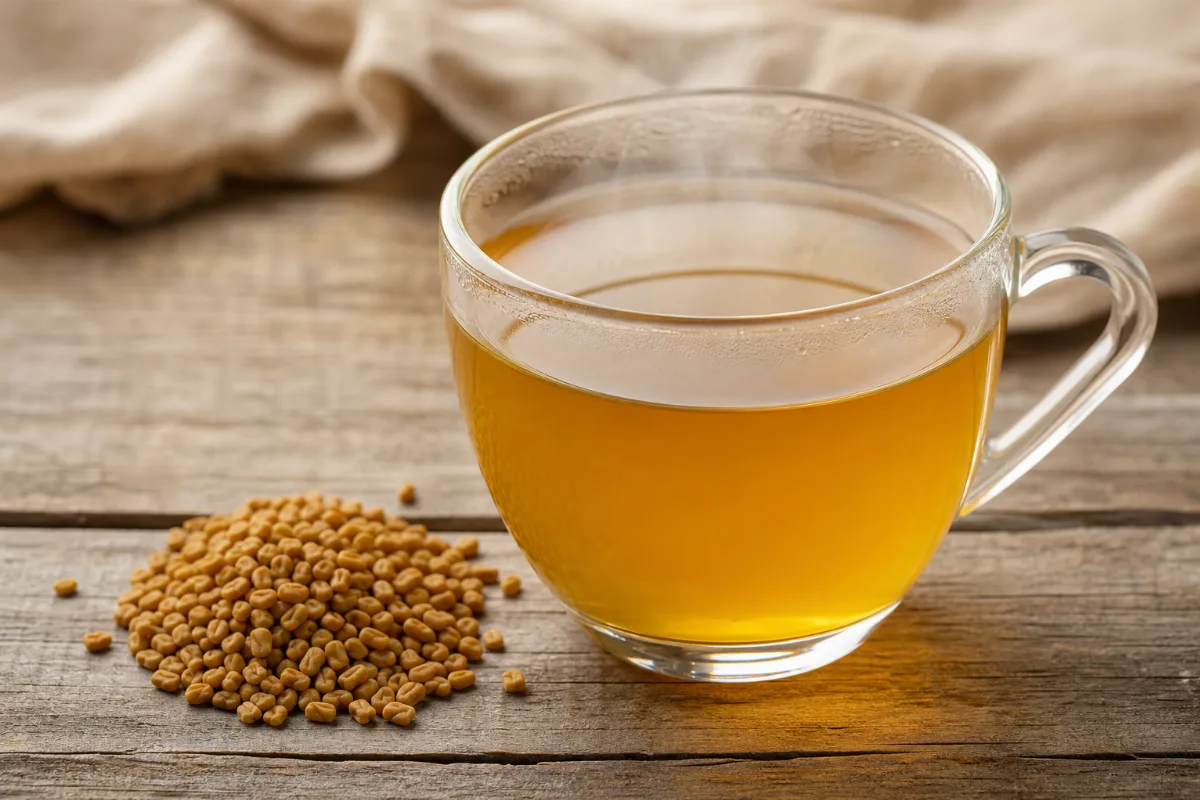
Fenugreek is Trigonella foenum-graecum L., a clover-like plant in the legume family (Fabaceae). [8][1] The seed is the part used; NCCIH says the seeds have a maple-like flavor and are used as a spice, flavoring and traditional medicine. [1] Fenugreek tea is made from the seeds, whole or ground, in water. It is a herbal tea, not true tea from the tea plant. EMA says fenugreek seed products are usually sold as herbal tea for drinking, as solid oral forms, or for the skin. [2] The supplement-level page is fenugreek, and the cooking use is on fenugreek as a spice.Taste, caffeine and how to brew
| Question | What sources say |
|---|---|
| Taste | NCCIH describes a maple-like flavor. [1] In plain words: nutty, slightly bitter and sweet-smelling. |
| Caffeine per 8 fl oz (240 mL) cup | Proper evidence not found. We read no source with a caffeine figure for fenugreek seed, and NCCIH and EMA do not mention caffeine. [1][2] We therefore do not label it. |
| Water temperature and steeping time | Proper evidence not found in the sources we read. EMA refers readers to the package leaflet. [2] |
| Amount of seed per cup | EMA gives no tea amount. [2] For information only: a small trial of overweight women used 24 g of dried fenugreek seeds in 400 mL of water per serving. [5] That is a research setting, not a recommendation. |
| Cold brew / iced | Proper evidence not found. |
| Very hot drinks | No source we read ties fenugreek tea to the hot-drink concern. See hot tea and esophageal cancer risk. |
What research found about the tea itself
Labels used here: Promising but limited, Mixed, Insufficient evidence, Extract only.| Question | What the source found | Strength of evidence | Form and who was studied |
|---|---|---|---|
| Appetite | In a three-way crossover, fenugreek tea increased fullness compared with a colored placebo drink (p < 0.05 in the area-under-curve analysis); lunch intake did not differ. [5] | Promising but limited | Fenugreek tea; 9 overweight women, single-blind, one short session each |
| Breast milk sufficiency | A 2018 Iranian triple-blind trial of 117 mothers compared a fenugreek seed tea, a fennel tea and a placebo tea over 4 weeks. The two herbal teas did not differ from each other, and the abstract says both improved signs of milk sufficiency compared with placebo at week 4, although it also reports more feeding sessions in the placebo group and its wording is hard to follow. [6] | Insufficient evidence (small, unclear reporting; indirect measures such as baby weight and wet diapers) | Fenugreek tea; mothers of girl infants aged 0 to 4 months |
| Breast milk supply overall | LactMed says one meta-analysis found a mild effect with unknown safety and another found no good evidence; some studies used multi-ingredient products. [3] NCCIH says results are mixed. [1] | Mixed | Mostly products other than plain tea |
| Blood sugar and cholesterol in type 2 diabetes | A 2023 meta-analysis of 10 trials (706 people) found lower fasting glucose and HbA1c, no change in insulin resistance (HOMA-IR), and better total cholesterol and triglycerides. [4] NCCIH says many studies were low quality. [1] | Extract only (the abstract does not say the forms were tea) | Adults with type 2 diabetes or prediabetes |
| Loss of appetite | EMA accepts fenugreek seed for temporary loss of appetite on a traditional-use basis, meaning long-standing use, not trial results. [2] | Insufficient evidence (regulatory category) | Seed herbal products |
Note the apparent mismatch: the EU traditional use is for loss of appetite, while the one tea study found more fullness in overweight women. Neither is strong evidence. Limits: very small tea studies, short follow-up, indirect measures. One registered trial of fenugreek seed tea for blood fat exists; we could not read any results, so we do not use it.
Check before you drink
- Pregnancy. Not safe in amounts above food amounts (NCCIH); EMA does not recommend fenugreek seed products in pregnancy. [1][2] NCCIH does not say how much tea counts as a food amount, so ask a clinician. See herbal tea in pregnancy.
- Breastfeeding. EMA does not recommend it; NCCIH and LactMed say little is known about larger amounts or effects on infants. [2][1][3] LactMed reports a maple-syrup odor of urine, sweat and feces, possibly of breast milk. [3] See herbal tea and breastfeeding.
- Babies and children. EMA does not recommend use under 18 years. [2] Herbal teas are generally not advised for infants: babies and children guide.
- Allergy. NCCIH says serious allergic reactions can occur. [1] EMA lists fenugreek, peanut, soya and other legumes; LactMed says cross-reaction with chickpeas, peanuts and other legumes is possible and reports asthma worsening. [2][3] See allergy and cross-reactions.
- Blood sugar medicines. Because fenugreek may lower blood sugar, EMA says blood glucose should be monitored closely in people treated for diabetes; NCCIH says large amounts may cause a harmful drop in blood sugar. [2][1] Never change a prescribed medicine on your own.
- Warfarin and blood thinners. LactMed says fenugreek can interact with warfarin and cause bleeding. [3] See medicine interactions.
- Digestive effects, potassium and odor. A 2026 review of 60 articles found mild stomach upset most common, with low blood sugar, possible low potassium, allergic reactions and a maple-syrup odor also reported and no deaths attributed to fenugreek. [7] EMA says powder over 25 g a day has been linked to minor digestive symptoms such as diarrhea and gas. [2]
- Liver. LactMed says liver toxicity has been reported, alone and in herbal combinations; the 2023 meta-analysis saw no liver or kidney toxicity. [3][4] Both are reported; see liver and kidney cautions.
- Caffeine, kidney, iron, surgery, metals. Not described in the sources we read for this tea. Not described is not proof of none.
Tea, capsule or extract?
Capsules and standardized extracts hold a set amount of seed material, and most blood-sugar trials used products rather than tea. A result for one form does not carry over to a cup. See tea vs tincture vs capsule and the fenugreek herb page.Buying and storing
- Check the label for the Latin name and "seed", and for blends: LactMed notes that fenugreek is included in many proprietary mixtures promoted for milk supply, and that results from mixtures may differ from fenugreek alone. [3] See reading an herbal tea label.
- If you have a peanut, soy or other legume allergy, read the full ingredient list. [2]
- Store dry and sealed: storing herbal tea.
Related pages
What research found and what to check: Fenugreek Tea
Findings about drinking the tea itself, kept apart from capsules, extracts and concentrated supplements. Each card says what was studied, in whom, and how strong the evidence is.
Fenugreek tea and appetite
Preliminary or mixedIn one small crossover study of 9 overweight women, fenugreek tea increased fullness compared with a placebo drink, but lunch intake did not differ.
Supplements: Tea (one small study); not shown to help weight loss.
Fenugreek tea and breast milk supply
Preliminary or mixedA 2018 Iranian trial of 117 mothers compared fenugreek seed tea, fennel tea and a placebo tea; the abstract's reporting is unclear and measures were indirect. LactMed: one meta-analysis found a mild effect, another found no good evidence. EMA advises against fenugreek seed products while breastfeeding.
Supplements: Mixed; small tea trial with unclear reporting; not recommended by EMA while breastfeeding.
Fenugreek and blood sugar (mostly not tea)
Preliminary or mixedA 2023 meta-analysis of 10 trials (706 people) found lower fasting glucose and HbA1c in type 2 diabetes or prediabetes; NCCIH says many studies were low quality. The abstract does not say the forms were tea.
Supplements: Extract/seed products; Proper evidence not found for trials of the tea itself for blood sugar.
Traditional use: loss of appetite
Not enough evidenceEMA accepts fenugreek seed for temporary loss of appetite on a traditional-use basis, meaning long-standing use rather than trial results.
Supplements: Traditional use only.
Connected topics
Open a group to see how each topic connects and how strong the evidence is.
Root causes (1)
- Medication Side EffectsDocumented risk
Fenugreek may lower blood sugar (diabetes medicines) and can interact with warfarin to cause bleeding, per EMA and LactMed.
Conditions & symptoms (1)
- HypoglycemiaDocumented risk
EMA and NCCIH describe a blood-sugar-lowering effect; large amounts may cause a harmful drop, especially with diabetes medicines.
Documented risks and interactions (7)
- Pregnancy: not safe above food amounts. NCCIH says fenugreek is not safe in pregnancy in amounts greater than those in food and has been linked to birth defects in animals and people. EMA does not recommend fenugreek seed products in pregnancy.
- Legume allergy (peanut, soy, chickpea). EMA lists allergy to fenugreek, peanut, soya or other legumes as a reason not to use it. NCCIH warns of serious allergic reactions; LactMed reports possible cross-reaction with chickpeas and peanuts and asthma worsening.
- Blood sugar medicines and low blood sugar. EMA says blood glucose should be monitored closely in people treated for diabetes because fenugreek may lower it. NCCIH says large amounts may cause a harmful drop in blood sugar.
- Warfarin and bleeding. LactMed says fenugreek can interact with warfarin to cause bleeding and advises caution in people taking warfarin or with diabetes.
- Breastfeeding, babies and children. EMA does not recommend fenugreek seed products under 18 years or while breastfeeding. NCCIH and LactMed say little is known about larger amounts. LactMed notes a maple-syrup odor in urine, sweat, feces and possibly breast milk.
- Digestive upset, low potassium and maple-syrup odor. A 2026 scoping review of 60 articles found mild stomach upset most common, with low blood sugar, possible low potassium, allergic reactions and a maple-syrup body odor also reported and no deaths attributed to fenugreek. EMA links more than 25 g a day of powder to minor digestive symptoms.
- Liver: reports and a reassuring meta-analysis. LactMed says liver toxicity has been reported alone and in herbal combinations containing fenugreek. A 2023 meta-analysis of trials saw no liver or kidney toxicity.
Frequently asked questions
Does fenugreek tea increase breast milk?
Mixed. LactMed reports one meta-analysis with a mild effect and one with no good evidence, and a 2018 trial of fenugreek tea in 117 mothers reported unclear results with indirect measures. [3][6] EMA does not recommend fenugreek seed products while breastfeeding. [2]
Is fenugreek tea safe in pregnancy?
NCCIH says fenugreek is not safe above food amounts in pregnancy, linking it to birth defects. [1] Ask a clinician before drinking it.
Can I drink fenugreek tea with diabetes medicines or warfarin?
EMA says blood sugar should be monitored closely, and LactMed says fenugreek may interact with warfarin and cause bleeding. [2][3] Ask the prescriber or pharmacist first.
Why do I smell like maple syrup?
LactMed describes a maple-syrup odor in urine, sweat and feces caused by a compound in fenugreek. [3] A scoping review lists it too. [7] Ask a clinician if you are unsure what is causing a smell.
Does fenugreek tea lower blood sugar or help weight?
The tea itself has not been shown to. One tiny study found more fullness after a cup; trials of blood sugar mostly used other forms. [5][4]
References
- National Center for Complementary and Integrative Health (NIH). Fenugreek. Last updated February 2025. Read 2026-10-24.
- European Medicines Agency, Committee on Herbal Medicinal Products (HMPC). Fenugreek seed: summary of conclusions (Trigonellae foenugraeci semen). Public summary first published 12 March 2026. Read 2026-10-24.
- Drugs and Lactation Database (LactMed), National Library of Medicine. Fenugreek. Record as indexed in PubMed (abstract read through Europe PMC). Read 2026-10-24.
- Kim J, Noh W, Kim A, Choi Y, Kim YS. The effect of fenugreek in type 2 diabetes and prediabetes: a systematic review and meta-analysis of randomized controlled trials. Int J Mol Sci. 2023. PubMed 37762302 (abstract). Read 2026-10-24.
- Bae J, Kim J, Choue R, Lim H. Fennel and fenugreek tea drinking suppresses subjective short-term appetite in overweight women. Clin Nutr Res. 2015;4(3):168-174. 9 women. Read 2026-10-24.
- Ghasemi V, Kheirkhah M, Vahedi M, et al. Comparison effect of herbals tea containing fenugreek seed and fennel seed on the signs of breast milk sufficiency in Iranian girl infants with 0-4 months of age. J Med Plants. 2018;17(68):166-174. Abstract read 2026-10-24.
- Amiri Ardekani E, Parvizi MM, Zare R, et al. Exploring the adverse effects of fenugreek in humans: a scoping review. Iran J Med Sci. 2026. PubMed 41625343 (abstract). Read 2026-10-24.
- GBIF Secretariat. GBIF Backbone Taxonomy species match: Trigonella foenum-graecum L., Fabaceae, accepted. Read 2026-10-24.