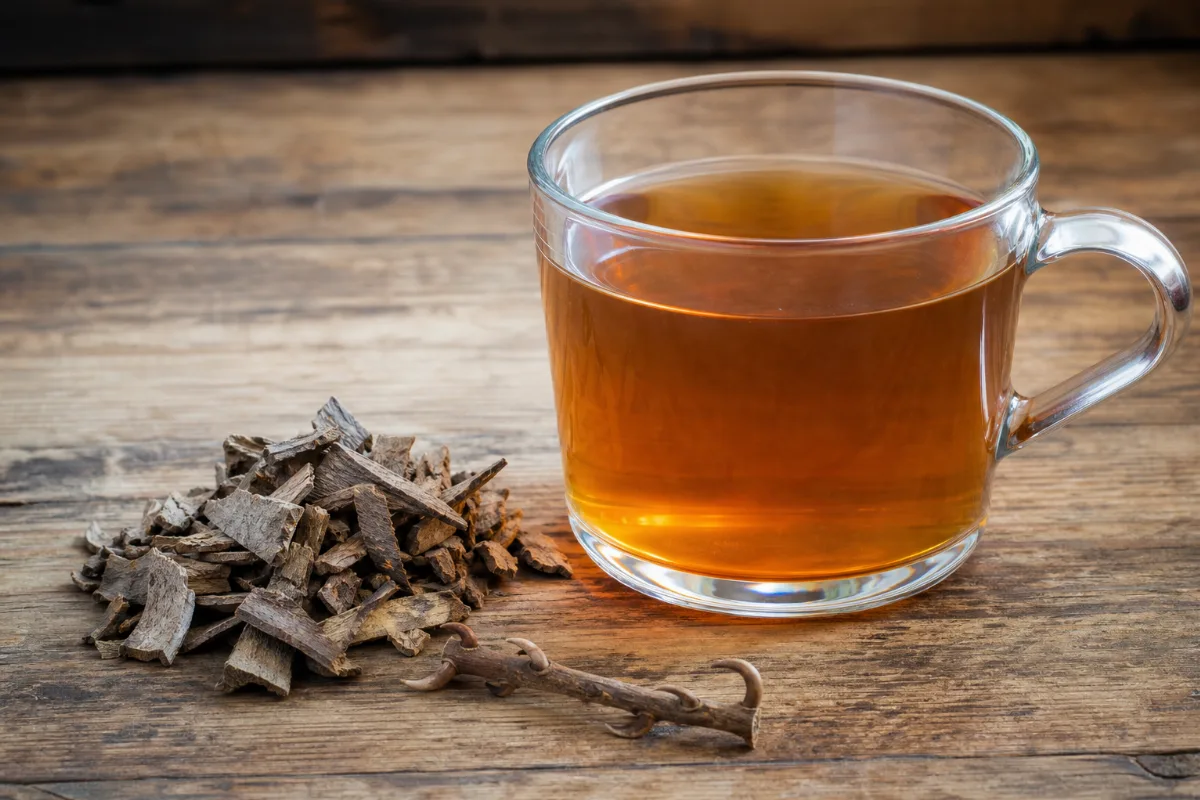
Herbal Teas & Extracts · Herbal tea
Cat's Claw Tea
Uncaria tomentosa (Peruvian cat's claw) · also called Una de gato, uña de gato, cat's claw bark tea. Uncaria guianensis is a second species with the same name. Not the same as cat's claw capsules or purified extracts.
Cat's claw tea is a drink made from the inner bark of a woody Amazon vine. It is used for joints and immune support. No human trial of the tea itself was found, and the small trials of extracts are weak. The biggest caution is that cat's claw might make the immune system more active, so ask a doctor first if you have an autoimmune disease or take immune-suppressing medicines. It also may slow clotting and is not advised in pregnancy.
General information, not medical advice. Last substantive update · Not medically reviewed. A named clinician has not signed off on this page. The account of Asháninka and Yanesha use comes from outside sources and has not been reviewed by Indigenous or cultural reviewers. How this page is made
About Cat's Claw Tea
Cat's claw tea is a hot-water drink made from the inner bark of an Amazon vine. No human trial of the tea itself was found, and the few trials of extracts are small. Safety comes first: cat's claw might make the immune system more active, may slow clotting, may interact with medicines, has been linked to kidney injury in case reports, and is not advised in pregnancy.
What it is
Cat's claw is a woody vine. Two species share the name: Uncaria tomentosa, which NCCIH says is in most US products, and Uncaria guianensis. GBIF accepts both. It is not the same as cat's foot or devil's claw, which are different plants.
The bark contains oxindole alkaloids and procyanidins. These are not shown to explain any effect in people who drink the tea.
Tea, extract or supplement?
A cup of tea is a weak water extract of bark. The arthritis trials used a highly purified extract and a freeze-dried extract of another species. The volunteer studies used a named water extract. A 2005 review found results often depended on the preparation. Do not carry extract results over to tea, or the reverse.
What the research shows
Tea: no human trial found. Knee osteoarthritis: 45 people, 4 weeks, a related species, less pain with activity but not at rest. Rheumatoid arthritis: 40 people already on standard drugs, fewer painful joints on a purified extract (53.2% vs 24.1%, p = 0.044), described by the authors as small and preliminary. A single-arm study of 51 people with advanced cancer saw small quality-of-life gains and no tumour response. No HIV trial was found. Animal studies lowered two of five inflammation markers.
NCCIH sums it up: very few high-quality trials, and no conclusive evidence for any health purpose.
Traditional use and the harvest
Peruvian Amazon peoples, including the Asháninka and Yanesha, are reported in a 1999 forestry report to have used cat's claw as medicine, traditionally as a boiled drink of inner bark or root bark or a cane-spirit soak. A 1999 review of the Asháninka healing system, written from outside, describes it as used by priests (healers). We have credited these peoples by name from outside sources and have not been able to have them reviewed by Asháninka or cultural experts.
The same report found that most bark came from wild forest, often with little concern for a lasting supply, and that exports peaked at 726 tonnes in 1996. It judged that harvest levels then were no threat to the species, but warned about uncertain demand. Harvesting the root kills the plant. Some communities cut vines at about one metre so they regrow and planned harvest cycles. These facts date from 1999; today's harvest levels were not checked.
At a glance
Traditional uses history, not proof
- Peruvian Amazon peoples, including the Asháninka and Yanesha, are reported to have used the inner bark or root bark as a boiled drink or a cane-spirit soak (1999 forestry report).
- A 1999 review describes una de gato in the Asháninka healing system as used by priests (healers), as seen from outside.
- A 2025 review lists arthritis, fevers, viral infections, ulcers and wounds among traditional uses of a bark, root and leaf decoction.
Studied for research
- Cat's claw tea in people: no trial found, insufficient
- Knee osteoarthritis (extract of a related species), very low
- Rheumatoid arthritis (purified extract), very low
- Immune measures in healthy men (branded extract), very low
- Quality of life in advanced cancer (extract, no control group), very low
- DNA-repair marker in 12 adults, very low
- HIV and viral infections, insufficient
- Inflammation markers (animals only), insufficient
Main compounds
- Oxindole alkaloids
- Procyanidins
Common forms
- Bark tea
- Tea bags of cut bark
- Powder and capsules (different products)
- Freeze-dried and purified extracts used in trials (not tea)
- Tinctures (different products)
Research links: NCCIH: Cat's claw · LiverTox: Cat's claw (summary) · Knee osteoarthritis trial (abstract) · Rheumatoid arthritis trial (abstract) · Kidney injury case report (abstract) · CIFOR report on harvest and trade (PDF) · Research Library · Genes & Biomarkers Library
What it is and its history
- Accepted scientific name
- Uncaria tomentosa (Willd. ex Schult.) DC. (Peruvian cat's claw). Uncaria guianensis (Aubl.) J.F.Gmel. is a second species with the same common name.
- Naming authority
- Both are accepted species in GBIF, family Rubiaceae.
- Common names
- Cat's claw (English); Una de gato (Spanish); Uña de gato (Spanish); Unha-de-gato (Portuguese)
- Family or group
- Rubiaceae (the coffee family)
- Classification
- Plantae > Not checked > Rubiaceae > Uncaria > Uncaria tomentosa; Uncaria guianensis
- Native range
- Amazon rainforest and other tropical areas of Central and South America (NCCIH).
- Habitat
- NCCIH: a woody vine that grows wild in the Amazon rainforest. The CIFOR report says it is harvested mainly from natural stands, mostly in high natural forest.
- What it looks like
- Roots: Root and root bark are sometimes used; harvesting roots destroys the plant, as the CIFOR report notes.; Stems: Woody vine. The inner stem bark is the part most used for tea.; Leaves: Leaves are also reported in traditional use (2025 review).; Flowers: Not checked.; Fruit: Not checked.
- Cultivation
- The CIFOR report describes attempts at propagation and planting; seed germination was low in some managed areas. Current cultivation was not checked.
- Harvest and processing
- Bark is cut and sifted for tea, or ground for capsules (CIFOR 1999). A minimum stem width of about 10 cm was needed to harvest, according to one informant in that report.
- Look-alikes and adulterants
- Name: Uncaria guianensis; Note: A second species also called cat's claw; used in one osteoarthritis trial.; Name: Cat's foot and devil's claw; Note: Different plants (NCCIH).
- Sustainability and conservation
- Sustainability of bark harvest (1999 report, not current): Peruvian exports peaked at 726 tonnes in 1996. Harvest came mostly from wild forest, often with little concern for a lasting supply. The authors judged then that harvest levels were no threat to the two species, but warned that demand was uncertain. Examples of care: a Yanesha community planned a 10-year harvest cycle and cut vines at 1 m so they could regrow; a company agreement with a native community zoned a forest into yearly harvest areas; a second-hand citation says Asháninka children plant two vines for every stem harvested. Root harvesting would destroy the plant, and permits were not being issued for it. IUCN/CITES status and today's harvest levels were not checked.
Photographs
Traditional use and history history, not clinical proof
| Tradition or era | Documented use | Source |
|---|---|---|
| Asháninka and Yanesha peoples, Peruvian Amazon | A 1999 forestry report says local medicinal use of una de gato is reported among Asháninka in the Chanchamayo, Perené and Tambo valleys and among Yanesha in the Palcazu valley, traditionally as a decoction of inner bark or root bark, or soaked in cane spirit. A 1999 pharmacology review says that in the Asháninka medicine system una de gato is used exclusively by priests (healers) to influence a regulating element between the physical and spiritual being. These are outsiders' accounts and need review by Asháninka or cultural experts. | s-cifor |
| Asháninka (as recorded by outsiders) | Keplinger and colleagues describe Uncaria tomentosa in the Asháninka healing system as exclusive to priests. The same review is a source for the idea that use was spiritual as well as physical. | p10075119 |
| Peruvian traditional medicine, wider | A 2025 review says a decoction of bark, root and leaves is used traditionally for arthritis, weakness, viral infections, skin disorders, abscesses, allergies, asthma, cancer, fevers, gastric ulcers, haemorrhages, inflammation, menstrual irregularity and wounds, among others. This is traditional use, not trial evidence. | p40725012 |
| Export trade and research, 20th century | The CIFOR report describes outside expeditions to collect samples in the 1960s and says exports peaked in 1996. It also repeats a second-hand report of use as a contraceptive among Asháninka women, that we could not check. | s-cifor |
Traditional use shows how it was used. It does not show that it works or is safe today.
What is inside, and how it may work
What it contains and how those compounds act in cells and animals. Laboratory and animal mechanisms are not proven effects in people.
Main compounds
| Compound | Family | Where it is concentrated | Activity studied | Level of evidence |
|---|---|---|---|---|
| Oxindole alkaloids, pentacyclic (for example pteropodine, isopteropodine, mitraphylline) | alkaloids | Bark and root Not stated in the abstracts read. | Seven alkaloids from cat's claw extracts activated PXR in cells. The 1999 review reports immune-cell effects in lab work. Not shown to explain any effect in people. 9 6 | Laboratory |
| Oxindole alkaloids, tetracyclic (for example rhynchophylline, isorhynchophylline, corynoxeine, isocorynoxeine) | alkaloids | Bark and root Not stated in the abstracts read. | Activated PXR in cells. In the 1999 review they acted against the pentacyclic type on lymphocyte growth in the lab. The RA trial used an extract of the pentacyclic-alkaloid chemotype. 9 6 13 | Laboratory |
| Procyanidins (proanthocyanidins) such as procyanidins B2 and C1 | polyphenols | Leaf and bark Not stated. | Bound thrombin in a computer model and in lab tests of extracts. Not shown in people. 7 | Laboratory |
Mechanisms, receptors and pathways
| Target or pathway | Gene or receptor | What was found | Level |
|---|---|---|---|
| Drug-handling receptor PXR and CYP3A4 | PXR (NR1I2), CYP3A4 | Extracts and seven alkaloids activated PXR and increased CYP3A4 expression in a cell line. 9 | Laboratory |
| Inflammation signals IL-6 and NF-kappaB | IL6, NF-kappaB | Animal studies pooled: IL-6 and NF-kappaB fell; IL-1, IL-10 and TNF-alpha did not change significantly. 1 | Animal research |
| Platelets and thrombin | Thrombin (F2) | Slight antiplatelet effect and slightly longer thrombin time in lab tests of extracts. 7 | Laboratory |
| Lymphocyte regulation | Not specified | Pentacyclic oxindole alkaloids made endothelial cells produce a factor that regulates lymphocyte growth in the lab; tetracyclic ones acted against it. 6 | Laboratory |
Absorption, metabolism and elimination
- Absorption
- Not covered for cat's claw tea in the sources read.
- Distribution
- Not covered.
- Metabolism
- Cell work suggests extracts could raise CYP3A4 (see mechanisms). Not tested in people.
- Elimination
- Not covered.
- Bioavailability
- Not covered for tea.
Isolated compounds versus whole extracts
Tea (a hot-water extract of bark), branded water extracts, freeze-dried powders, highly purified extracts and alcohol soaks are different products. The arthritis trials used a purified extract and a freeze-dried extract of another species. A 2005 review found results often depended on the preparation. Do not carry extract results over to tea.
Nutritional composition
A nutrient table is not meaningful for cat's claw tea; it is drunk for its plant compounds, not as a food.
5 very low certainty3 not enough evidence
What was looked at
The 8 benefits and uses checked for Cat's Claw Tea, each with how strong the evidence is. Tap one to open it.
- Cat's claw tea itself: human trialsNot enough evidence
- Knee osteoarthritis (freeze-dried Uncaria guianensis, a different species; one 4-week trial)Very low certainty
- Rheumatoid arthritis (purified Uncaria tomentosa extract; one 40-person trial)Very low certainty
- Immune measures in healthy men (C-Med-100 water extract; one pneumococcal vaccine study)Very low certainty
- Quality of life and tiredness in advanced cancer (dry Uncaria tomentosa extract; one uncontrolled study)Very low certainty
- DNA repair after a lab challenge in healthy adults (C-Med-100; 12 people)Very low certainty
- HIV (no efficacy trial found)Not enough evidence
- Inflammation markers (animal studies only)Not enough evidence
Lab markers tracked in the studies
Number of painful (tender) jointsLymphocyte-to-neutrophil ratio in bloodDNA damage and repair after a peroxide challenge
What is Cat's Claw Tea good for?
The uses people ask about and how strong the human evidence is for each. No human trial of the tea itself was found, so most ratings come from extracts and are labelled that way.
Benefits, one by one
Each card is a research question, not a promise. Tap a goal to filter. Open a card to see the studies, doses and limits.
Cat's claw tea itself: human trials
Not enough evidenceNo trial of cat's claw tea in people was found. NCCIH says there is no conclusive human evidence for any health use and does not mention tea. Everything below comes from extracts, lab work or tradition.
4 studiesTea has not been tested in people. No amounts are given here.
Studies, doses and limits
What the trials found
PubMed searches for cat's claw or Uncaria tomentosa with tea, decoction or infusion found no human trial of a tea. NCCIH (updated November 2024) says there have been very few high-quality clinical trials and no conclusive evidence for any health purpose, including COVID-19. A 2005 toxicology review says results often depended on the type of preparation used.
Results
No human tea trial found.
Why this rating
No trial of the tea; reviewers call the extract evidence inconclusive.
Form and dose studied
Tea has not been tested in people. No amounts are given here.
Limits
Evidence from extracts cannot be carried over to tea, or the other way round.
Why researchers looked
Cat's claw bark has been boiled into a drink in the Peruvian Amazon for a long time, and the same bark is sold as tea bags and powders.
Traditional use
A 1999 forestry report says the traditional preparation was a decoction (a boil) of inner bark or root bark, or a soak in cane spirit. Traditional use is long use, not proof from trials.
Proposed mechanism Preliminary mechanism
The bark contains oxindole alkaloids and proanthocyanidins. None of this is shown to explain an effect in people who drink the tea.
A proposed mechanism does not show that the effect happens in people.
Cat's claw might make the immune system more active, may slow clotting and may interact with medicines. See the Safety tab.
Knee osteoarthritis (freeze-dried Uncaria guianensis, a different species; one 4-week trial)
Very low certaintyOne small trial of a freeze-dried extract of a related species found less pain with activity after 4 weeks. Pain at rest did not change. It is not a tea and not the usual supplement species.
2 studiesFreeze-dried extract. No tea.
Studies, doses and limits
What the trials found
Piscoya 2001: 45 people with knee osteoarthritis, 30 on freeze-dried Uncaria guianensis and 15 on placebo, for 4 weeks. Pain with activity and the doctor and patient scores were lower than with placebo from the first week. Pain at rest or at night and knee size did not change significantly. No harmful effect on blood or liver tests. NCCIH says many cat's claw studies were not rigorous and had too few people for firm conclusions.
Results
Small gain in pain with activity in one short trial of a different species.
Effect sizes as reported
Numbers not given in the abstract.
Why this rating
One 45-person, 4-week trial, a different species, a freeze-dried product, and no numbers in the abstract.
Form and dose studied
Freeze-dried extract. No tea.
Who was studied
Adults with knee osteoarthritis.
Limits
One trial only. Four weeks says nothing about long-term effect or safety. The authors' own conclusion that it 'is effective' goes beyond the data.
Why researchers looked
Arthritis is the use cat's claw is most often promoted for.
Traditional use
The 2025 review says a decoction of bark, root and leaves is traditionally used for arthritis and rheumatism.
Proposed mechanism Laboratory
In test tubes, extracts of both species quenched free radicals and blocked TNF-alpha, an inflammation signal. This has not been shown to be how it works in people.
A proposed mechanism does not show that the effect happens in people.
Cat's claw might make the immune system more active, may slow clotting and may interact with medicines. See the Safety tab.
Rheumatoid arthritis (purified Uncaria tomentosa extract; one 40-person trial)
Very low certaintyIn one small trial, people with active rheumatoid arthritis who were already on arthritis medicines had fewer painful joints on a purified extract than on placebo. The authors call it small and preliminary. It is not a tea.
3 studiesHighly purified extract. No tea.
Studies, doses and limits
What the trials found
Mur 2002: 40 people on sulfasalazine or hydroxychloroquine. After 24 weeks of a highly purified extract of the pentacyclic chemotype of Uncaria tomentosa, painful joints fell by 53.2% versus 24.1% on placebo (p = 0.044). In the second phase, when everyone took the extract, those who had been on placebo improved too. Only minor side effects. The authors conclude 'relative safety and modest benefit'. A 2005 review found overall clinical data too thin for firm conclusions.
Results
Modest gain in tender joint count in one small trial, in people also on standard arthritis drugs.
Effect sizes as reported
Painful joints fell 53.2% vs 24.1% (p = 0.044).
Why this rating
One 40-person trial, a purified extract, a p-value close to 0.05, and no comparison group in the second half.
Form and dose studied
Highly purified extract. No tea.
Who was studied
Adults with active rheumatoid arthritis on sulfasalazine or hydroxychloroquine.
Limits
NCCIH warns cat's claw might worsen autoimmune disease by making the immune system more active. This trial does not settle that worry.
Why researchers looked
Rheumatoid arthritis is an immune disease, and cat's claw is promoted as an immune and joint herb.
Traditional use
The 2025 review lists arthritis and rheumatism among traditional uses of the bark decoction.
Proposed mechanism Preliminary mechanism
Lab work suggests extracts lower some inflammation signals. Cat's claw might also make the immune system more active, which is a risk in autoimmune disease.
A proposed mechanism does not show that the effect happens in people.
Autoimmune disease: ask your specialist before using cat's claw in any form. See the Safety tab.
Immune measures in healthy men (C-Med-100 water extract; one pneumococcal vaccine study)
Very low certaintyIn one small volunteer study, men taking a water extract had a higher lymphocyte-to-neutrophil ratio and a slower fall in antibody levels after a pneumococcal vaccine. This is a lab result, not fewer infections.
2 studiesBranded water extract in tablet form. No tea.
Studies, doses and limits
What the trials found
Lamm 2001: male volunteers in a New York general practice took C-Med-100, a named water-soluble extract of Uncaria tomentosa, for 2 months and were compared with untreated controls after a 23-type pneumococcal vaccine. The lymphocyte-to-neutrophil ratio was higher, and antibody levels against 12 vaccine types fell less by 5 months. No toxic effects on blood tests. The abstract gives no group sizes. NCCIH says there is no conclusive human evidence for immune benefit.
Results
Two lab measures moved in the extract group. No clinical result such as fewer infections.
Effect sizes as reported
Not given in the abstract.
Why this rating
Unknown group size, no placebo, a branded extract, and lab measures only.
Form and dose studied
Branded water extract in tablet form. No tea.
Who was studied
Healthy adult men.
Limits
Antibody levels and blood ratios are not the same as being healthier. The abstract does not describe the authors' ties to the extract's maker.
Why researchers looked
Cat's claw is promoted for 'immune support'.
Traditional use
Traditional use includes fevers and infections, as the 2025 review lists.
Proposed mechanism Laboratory
Lab and animal work suggest extracts change immune cell behaviour. How that works in people is not shown.
A proposed mechanism does not show that the effect happens in people.
Cat's claw might make the immune system more active, may slow clotting and may interact with medicines. See the Safety tab.
Quality of life and tiredness in advanced cancer (dry Uncaria tomentosa extract; one uncontrolled study)
Very low certaintyIn 51 people with advanced cancer and no further treatment options, quality-of-life and fatigue scores improved slightly, but there was no comparison group, and tumours did not shrink. Cat's claw does not treat cancer.
2 studiesDry extract. No tea.
Studies, doses and limits
What the trials found
de Paula 2015: a single-arm phase II study of 51 adults with advanced solid tumours. Overall quality of life (p = 0.0411), social functioning (p = 0.0341) and fatigue (p = 0.0496, Chalder questionnaire) improved. Inflammation markers did not change and no tumour responded; the disease stayed stable for more than 8 months in four people. NCCIH says there is no conclusive human evidence for cancer.
Results
Small gains on questionnaires, no control group, no tumour response.
Effect sizes as reported
Not given in the abstract.
Why this rating
No placebo group, many questionnaires, p-values just under 0.05.
Form and dose studied
Dry extract. No tea.
Who was studied
Adults with advanced solid tumours and short life expectancy.
Limits
Cancer needs proper medical care. Cat's claw can interact with medicines, so tell the cancer team.
Why researchers looked
Cat's claw is promoted for cancer, mainly on lab results.
Traditional use
The 2025 review lists cancer among the traditional and promoted uses.
Proposed mechanism Laboratory
Lab studies show extracts affect cancer cells in dishes. Those results do not carry over to people.
A proposed mechanism does not show that the effect happens in people.
Cat's claw might make the immune system more active, may slow clotting and may interact with medicines. See the Safety tab.
DNA repair after a lab challenge in healthy adults (C-Med-100; 12 people)
Very low certaintyIn 12 healthy adults, a water extract was linked with less DNA damage and more DNA repair after a lab peroxide test. It is a lab marker in a tiny group, not a health result.
1 studiesBranded water-extract tablets. No tea.
Studies, doses and limits
What the trials found
Sheng 2001: 12 apparently healthy adults in three groups took tablets of an aqueous extract for 8 weeks. DNA damage after a hydrogen peroxide challenge was lower and DNA repair higher than in non-supplemented controls (p < 0.05). There was a tendency to more lymphocyte growth. No drug-related toxic responses.
Results
Better DNA-repair marker in a tiny trial.
Effect sizes as reported
Not given in the abstract.
Why this rating
Twelve people, surrogate marker, branded extract.
Form and dose studied
Branded water-extract tablets. No tea.
Who was studied
Healthy adults.
Limits
A DNA-repair marker does not show less disease.
Why researchers looked
Early lab and rat work suggested the extract helped cells repair DNA.
Traditional use
Not part of traditional use.
Proposed mechanism Animal research
Rat studies on this extract suggested DNA repair help. The human study followed the same idea.
A proposed mechanism does not show that the effect happens in people.
Not a reason to take it. See the Safety tab.
HIV (no efficacy trial found)
Not enough evidenceNo trial of cat's claw as an HIV treatment was found. A letter exists on cat's claw and HIV protease-inhibitor medicines, but only its title could be read. People on HIV treatment should ask their HIV clinic before using it.
2 studiesNot applicable.
Studies, doses and limits
What the trials found
PubMed searches of cat's claw with HIV, AIDS and seropositive found no clinical trial. NCCIH says human evidence does not support cat's claw for viral infections. The only HIV-related paper found is a 2008 letter titled 'Interaction between cat's claw and protease inhibitors atazanavir, ritonavir and saquinavir'. PubMed lists no abstract for it, so what it found was not read.
Results
No HIV trial found.
Why this rating
Nothing to rate beyond a title.
Limits
Missing abstract means we cannot report the letter's finding.
Why researchers looked
Cat's claw is sometimes promoted for viral infections and immune support.
Traditional use
Traditional use includes viral infections, as the 2025 review says.
Proposed mechanism Insufficient
No mechanism in people is shown.
A proposed mechanism does not show that the effect happens in people.
Interaction questions belong with the HIV prescriber. See the Safety tab.
Inflammation markers (animal studies only)
Not enough evidenceA review of 24 animal studies found extracts lowered two inflammation signals (IL-6, NF-kappaB) but not three others. It is animal work.
1 studiesVarious extracts of bark, root and leaf.
Studies, doses and limits
What the trials found
Arado 2024 (24 animal studies of 523 found): IL-6 SMD -0.72 (95% CI -1.15 to -0.29) and NF-kappaB SMD -1.19 (-1.89 to -0.48) fell. IL-1, IL-10 and TNF-alpha did not change significantly. The review's conclusion says extracts, mostly water and water-alcohol, showed anti-inflammatory activity and low toxicity in animals.
Results
Two of five markers fell in animals.
Effect sizes as reported
IL-6 SMD -0.72; NF-kappaB SMD -1.19.
Why this rating
Animal studies cannot be rated as benefit for people.
Form and dose studied
Various extracts of bark, root and leaf.
Who was studied
Laboratory animals.
Limits
Animal work only.
Why researchers looked
Anti-inflammatory action is the main reason cat's claw is studied.
Traditional use
Amazonian peoples have used it for inflammation, as the review states.
Proposed mechanism Animal research
Extracts lowered IL-6 and NF-kappaB in animal studies. Not shown in people.
A proposed mechanism does not show that the effect happens in people.
Not a reason to use it. See the Safety tab.
Connections to the rest of health
How Cat's Claw Tea connects to the rest of our health knowledge graph. Every link says what kind of connection it is. A safety link (for example to the liver) is a warning, not a benefit. A study that merely mentions a topic never creates a benefit link.
Explore every connection: goals, body systems, organs, symptoms, genes
A. Wellness goals
| Connected to | Kind of connection | Evidence status | Context | Studies |
|---|---|---|---|---|
| Immune Support | Not enough evidence | Cat's claw tea itself: human trials: No trial of cat's claw tea in people was found. NCCIH says there is no conclusive human evidence for any health use and does not mention tea. Everything below comes from extracts, lab work or tradition. HIV (no efficacy trial found): No trial of cat's claw as an HIV treatment was found. A letter exists on cat's claw and HIV protease-inhibitor medicines, but only its title could be read. People on HIV treatment should ask their HIV clinic before using it. | 14 21 20 12 11 | |
| Joint Support | Very low certainty | Knee osteoarthritis (freeze-dried Uncaria guianensis, a different species; one 4-week trial): One small trial of a freeze-dried extract of a related species found less pain with activity after 4 weeks. Pain at rest did not change. It is not a tea and not the usual supplement species. Rheumatoid arthritis (purified Uncaria tomentosa extract; one 40-person trial): In one small trial, people with active rheumatoid arthritis who were already on arthritis medicines had fewer painful joints on a purified extract than on placebo. The authors call it small and preliminary. It is not a tea. | 16 14 13 20 | |
| Inflammation Balance | Very low certainty | Knee osteoarthritis (freeze-dried Uncaria guianensis, a different species; one 4-week trial): One small trial of a freeze-dried extract of a related species found less pain with activity after 4 weeks. Pain at rest did not change. It is not a tea and not the usual supplement species. | 16 14 | |
| Immune Support | Very low certainty | Immune measures in healthy men (C-Med-100 water extract; one pneumococcal vaccine study): In one small volunteer study, men taking a water extract had a higher lymphocyte-to-neutrophil ratio and a slower fall in antibody levels after a pneumococcal vaccine. This is a lab result, not fewer infections. | 8 14 | |
| Reduce Fatigue | Very low certainty | Quality of life and tiredness in advanced cancer (dry Uncaria tomentosa extract; one uncontrolled study): In 51 people with advanced cancer and no further treatment options, quality-of-life and fatigue scores improved slightly, but there was no comparison group, and tumours did not shrink. Cat's claw does not treat cancer. | 22 14 | |
| Cellular Protection | Very low certainty | Quality of life and tiredness in advanced cancer (dry Uncaria tomentosa extract; one uncontrolled study): In 51 people with advanced cancer and no further treatment options, quality-of-life and fatigue scores improved slightly, but there was no comparison group, and tumours did not shrink. Cat's claw does not treat cancer. DNA repair after a lab challenge in healthy adults (C-Med-100; 12 people): In 12 healthy adults, a water extract was linked with less DNA damage and more DNA repair after a lab peroxide test. It is a lab marker in a tiny group, not a health result. | 22 14 19 | |
| Inflammation Balance | Not enough evidence | Inflammation markers (animal studies only): A review of 24 animal studies found extracts lowered two inflammation signals (IL-6, NF-kappaB) but not three others. It is animal work. | 1 |
B. Body systems
| Connected to | Kind of connection | Evidence status | Context | Studies |
|---|---|---|---|---|
| Immune System | Biological association | Not enough evidence | Studied for: Cat's claw tea itself: human trials Studied for: Rheumatoid arthritis (purified Uncaria tomentosa extract; one 40-person trial) | 14 21 20 12 13 8 22 19 11 1 |
| Musculoskeletal System | Biological association | Very low certainty | Studied for: Knee osteoarthritis (freeze-dried Uncaria guianensis, a different species; one 4-week trial) Studied for: Rheumatoid arthritis (purified Uncaria tomentosa extract; one 40-person trial) | 16 14 13 20 |
E. Health conditions
| Connected to | Kind of connection | Evidence status | Context | Studies |
|---|---|---|---|---|
| Autoimmune diseases | Low certainty | NCCIH: might make the immune system more active and increase symptoms. NCCIH: might make the immune system more active; ask a clinician first. Preparation or compound: Cat's claw (any form) |
14 | |
| Kidney disease and lupus | Low certainty | Case reports of acute kidney injury, one biopsy-proven. Case reports of acute kidney injury. Preparation or compound: Uncaria tomentosa products |
17 5 | |
| Bleeding and surgery | Low certainty | NCCIH: may slow clotting; lab study shows slight antiplatelet effects. Preparation or compound: Cat's claw |
14 7 | |
| Pregnancy and breastfeeding | Contraindication | Low certainty | NCCIH: some studies suggest unsafe in pregnancy. Preparation or compound: Cat's claw |
14 15 |
I. Biomarkers
| Connected to | Kind of connection | Evidence status | Context | Studies |
|---|---|---|---|---|
| Number of painful (tender) joints | Biological association | Very low certainty | Measured in trials: decrease. A lab change is not the same as a health benefit. | 13 |
| Lymphocyte-to-neutrophil ratio in blood | Biological association | Very low certainty | Measured in trials: increase. A lab change is not the same as a health benefit. | 8 14 |
| DNA damage and repair after a peroxide challenge | Biological association | Very low certainty | Measured in trials: mixed. A lab change is not the same as a health benefit. | 19 |
J. Genes, receptors and enzymes
| Connected to | Kind of connection | Evidence status | Context | Studies |
|---|---|---|---|---|
| PXR / CYP3A4 | Preliminary mechanism | Laboratory | Drug-handling pathway activated by extracts in cells. | 9 |
K. Biological pathways
| Connected to | Kind of connection | Evidence status | Context | Studies |
|---|---|---|---|---|
| NF-kappaB / IL-6 inflammation signalling | Preliminary mechanism | Animal | Lowered by extracts in animal studies. | 1 |
L. Active compounds
| Connected to | Kind of connection | Evidence status | Context | Studies |
|---|---|---|---|---|
| Oxindole alkaloids, pentacyclic (for example pteropodine, isopteropodine, mitraphylline) | Biological association | Laboratory | Seven alkaloids from cat's claw extracts activated PXR in cells. The 1999 review reports immune-cell effects in lab work. Not shown to explain any effect in people. Preparation or compound: Bark and root |
9 6 |
| Oxindole alkaloids, tetracyclic (for example rhynchophylline, isorhynchophylline, corynoxeine, isocorynoxeine) | Biological association | Laboratory | Activated PXR in cells. In the 1999 review they acted against the pentacyclic type on lymphocyte growth in the lab. The RA trial used an extract of the pentacyclic-alkaloid chemotype. Preparation or compound: Bark and root |
9 6 13 |
| Procyanidins (proanthocyanidins) such as procyanidins B2 and C1 | Biological association | Laboratory | Bound thrombin in a computer model and in lab tests of extracts. Not shown in people. Preparation or compound: Leaf and bark |
7 |
Each connection is stored with the ingredient, the connected record, the kind of connection, the evidence status, the supporting studies, the preparation or compound involved, and a review date (last reviewed October 25, 2026).
Evidence at a glance: what changed in 1 lab markers
Tap a number to show only those markers. Counts are markers, not people.
The evidence
The research centre for Cat's Claw Tea. Every record here was checked against PubMed or the publisher's page; we never list a study we have not verified.
Evidence by outcome
Bars show how many studies we found for each outcome, not how well it works. People are added up across trials only (reviews are not added, to avoid double counting).
How we rate evidence
High certainty
Several well-run trials or reviews agree; further research is unlikely to change the picture much.
Moderate certainty
Good trials point the same way, but some doubt remains.
Low certainty
Small, short or inconsistent trials. The finding could change with better research.
Very low certainty
Very little or very weak human data. Treat as a possibility only.
Mixed findings
Trials or reviews disagree with each other.
Not enough evidence
Not enough human research to say either way.
Evidence against
Good research found no benefit, or found harm.
We take the reviewers' own risk-of-bias and GRADE statements where they exist, and otherwise judge from study size, design, consistency, directness and whether a product matches what is sold. Many publications do not make evidence high. Method note: We searched PubMed for cat's claw or Uncaria tomentosa with tea, decoction, arthritis, HIV, kidney, pregnancy and interactions, and found no human tea trial. We read the NCCIH page and the CIFOR report in full, the abstracts of the PubMed papers cited (three had no abstract, so only titles were read), the Europe PMC summary of LiverTox, and checked plant names in GBIF. The full LiverTox chapter, LactMed and any EU monograph were not opened. Certainty ratings are the compiler's own reading. Two volunteer studies used a branded extract whose makers' ties were not described in the abstracts. No study is cited that we could not verify.
Study library: every study we checked 22
| Study | Design | People | Product, dose, length | Result |
|---|---|---|---|---|
| Arado 2024 Anti-inflammatory and/or immunomodulatory activities of Uncaria tomentosa (cat's claw) extracts: A systematic review and meta-analysis of in vivo studies Frontiers in pharmacology · PMID 38881881 · DOI |
Systematic review and meta analysis (animal studies) Uncaria tomentosa (animals) |
24 animal studies out of 523 found | Uncaria tomentosa extracts (stem bark, root and leaf; mostly water and water-alcohol extracts) Stem bark, roots and leaves not repeated here Varied · vs Controls in each study |
Extracts lowered IL-6 (SMD -0.72) and NF-kappaB (SMD -1.19). They did not significantly change IL-1, IL-10 or TNF-alpha. IL-6 SMD -0.72; NF-kappaB SMD -1.19 (IL-6 -1.15 to -0.29; NF-kappaB -1.89 to -0.48) Methods, limits and fundingOutcomes: Inflammation markers (IL-6, NF-kappaB, IL-1, IL-10, TNF-alpha) Limitations: Animal studies only; the review itself says results suggest potential, not proof in people. Registered in PROSPERO (CRD42023450869). Funding not read. Read: abstract |
| GBIF 2026 GBIF Backbone Taxonomy: Uncaria tomentosa (Willd. ex Schult.) DC. GBIF species API · Source |
Database n/a |
n/a | n/a |
Accepted species, family Rubiaceae, exact match (key 5338267), checked 2026-10-25. Methods, limits and fundingLimitations: Name check only. Read: full-text |
| GBIF 2026 GBIF Backbone Taxonomy: Uncaria guianensis (Aubl.) J.F.Gmel. GBIF species API · Source |
Database n/a |
n/a | n/a |
Accepted species, family Rubiaceae, exact match (key 5338243), checked 2026-10-25. Methods, limits and fundingLimitations: Name check only. Read: full-text |
| Giovane 2026 Severe Delirium and Refractory Bradycardia Associated With Uncaria tomentosa Toxicity: A Case Report Cureus · PMID 42712860 · DOI |
Case report Uncaria tomentosa (product) |
1 A 53-year-old woman |
High-dose over-the-counter cat's claw supplement not repeated here |
Came in with severe insomnia, anxiety and stomach upset after trying to stop a high-dose supplement by herself. Severe delirium needed intensive care, and a very slow heart rate (29 to 40 beats a minute, with first-degree AV block) did not respond to treatment. Doctors found signs of sick sinus syndrome and fitted a pacemaker. The author suggests the supplement unmasked an underlying heart condition. Methods, limits and fundingOutcomes: Delirium and heart rate Limitations: One case in a single-author journal report. The cause is not proven, and an underlying heart condition may explain the slow heart rate. It may also relate to stopping the supplement rather than taking it. Read: abstract |
| Hilepo 1997 Acute renal failure caused by 'cat's claw' herbal remedy in a patient with systemic lupus erythematosus Nephron · PMID 9375835 · DOI |
Case report Not stated |
1 A patient with systemic lupus erythematosus |
"Cat's claw" herbal remedy not repeated here |
Title only was read: a letter reporting acute renal failure caused by a cat's claw herbal remedy in a patient with systemic lupus erythematosus. Methods, limits and fundingOutcomes: Kidney failure Limitations: PubMed lists no abstract, so only the title was read and nothing beyond it is claimed. Read: title-only |
| Keplinger 1999 Uncaria tomentosa (Willd.) DC.--ethnomedicinal use and new pharmacological, toxicological and botanical results Journal of ethnopharmacology · PMID 10075119 · DOI |
Review Uncaria tomentosa |
Ethnomedical, pharmacological and toxicological literature | Uncaria tomentosa extracts and isolated alkaloids not repeated here |
Portrays the medicine system of the Asháninka of Peru and says Uncaria tomentosa ('uña de gato') holds a special place in it, used exclusively by priests (healers) to influence a regulating element between the physical and spiritual being. Lab work: pentacyclic oxindole alkaloids made endothelial cells produce a factor that regulates lymphocyte growth; tetracyclic ones acted against it. Methods, limits and fundingOutcomes: Ethnomedicine of the Asháninka; pharmacology Limitations: 1999 review. This is an outsider's account of Asháninka belief and practice, so it needs review by Asháninka or cultural experts. Read: abstract |
| Kolodziejczyk-Czepas 2021 Extracts from Uncaria tomentosa as antiplatelet agents and thrombin inhibitors - The in vitro and in silico study Journal of ethnopharmacology · PMID 33091497 · DOI |
Laboratory study Uncaria tomentosa (lab) |
Human blood plasma and platelets in the lab; computer docking | Ethanol and water extracts of Uncaria tomentosa leaf and bark Leaf and bark not repeated here |
The extracts showed slight antiplatelet activity and slightly lengthened thrombin time. The best thrombin blocker was the ethanol leaf extract. Procyanidins B2 and C1 bound thrombin best in the computer model. Methods, limits and fundingOutcomes: Platelet clumping, clotting times, thrombin activity Limitations: Test-tube and computer work. It fits NCCIH's bleeding caution but does not show bleeding in people who drink tea. Read: abstract |
| Lamm 2001 Persistent response to pneumococcal vaccine in individuals supplemented with a novel water soluble extract of Uncaria tomentosa, C-Med-100 Phytomedicine : international journal of phytotherapy and phytopharmacology · PMID 11515716 · DOI |
Controlled trial (untreated controls, no placebo) Uncaria tomentosa |
Male volunteers at a general practice clinic in New York City | C-Med-100, a water-soluble extract of Uncaria tomentosa (a named commercial extract) not repeated here 2 months of supplement; vaccine response followed for 5 months · vs Untreated controls (no placebo) |
No toxic side effects on examination, blood chemistry and blood counts. The lymphocyte-to-neutrophil ratio was higher in the extract group, and the fall in antibody levels against 12 vaccine types was smaller at 5 months. Not given in the abstract Methods, limits and fundingOutcomes: Blood lymphocyte-to-neutrophil ratio; antibody levels after a pneumococcal vaccine Limitations: The abstract does not say how many people took part. Controls got no placebo, so people knew who took the extract. Blood ratios and antibody levels are lab measures, not proof of fewer infections. The extract has a brand name; the abstract does not describe the authors' ties to its maker. Read: abstract |
| Lei 2023 Identification of PXR Activators from Uncaria Rhynchophylla (Gou Teng) and Uncaria Tomentosa (Cat's Claw) Drug metabolism and disposition: the biological fate of chemicals · PMID 36797057 · DOI |
Laboratory study Uncaria tomentosa (cells) |
Engineered human cell line | Uncaria tomentosa extract and isolated alkaloids not repeated here |
Extracts of cat's claw dose-dependently activated PXR and induced CYP3A4 in cells. Seven alkaloids (isocorynoxeine, rhynchophylline, isorhynchophylline, corynoxeine, isopteropodine, pteropodine, mitraphylline) were identified as PXR activators. Methods, limits and fundingOutcomes: Activation of the drug-handling receptor PXR and CYP3A4 expression Limitations: Cell work. Shows a possible route for medicine interactions; it was not tested in people. Research support: NIH extramural (per PubMed). Read: abstract |
| LiverTox 2012 Cat's Claw (LiverTox: Clinical and Research Information on Drug-Induced Liver Injury), NCBI Bookshelf NBK548323 LiverTox / NCBI Bookshelf · Source |
Authoritative guidance n/a |
n/a | n/a |
Europe PMC summary: cat's claw is an herbal medicine from the bark of the Uncaria tomentosa vine, used for its anti-inflammatory and immune-modulating effects, and 'has not been implicated in causing liver injury'. Methods, limits and fundingLimitations: Only the two-sentence summary was read (via Europe PMC). The full chapter sits behind a verification page and was not opened, so no likelihood score is given. Not being implicated is not proof of safety. Read: summary-only |
| López Galera 2008 Interaction between cat's claw and protease inhibitors atazanavir, ritonavir and saquinavir European journal of clinical pharmacology · PMID 18712519 · DOI |
Letter / case report Cat's claw (species not read) |
Not known (abstract not available) | Cat's claw with HIV protease inhibitors atazanavir, ritonavir and saquinavir not repeated here |
Title only was read: a letter titled "Interaction between cat's claw and protease inhibitors atazanavir, ritonavir and saquinavir". What it found was not read. Methods, limits and fundingOutcomes: Interaction with protease inhibitors Limitations: PubMed and Europe PMC list no abstract, so the result is unknown to us and nothing is claimed beyond the title. Read: title-only |
| Marques 2025 Uncaria tomentosa as a Promising Natural Source of Molecules with Multiple Activities: Review of Its Ethnomedicinal Uses, Phytochemistry and Pharmacology International journal of molecular sciences · PMID 40725012 · DOI |
Narrative review Uncaria tomentosa |
Ethnobotany, phytochemistry and pharmacology literature | Uncaria tomentosa Bark, root and leaves not repeated here |
Says a decoction of bark, root and leaves is used in traditional Peruvian medicine for arthritis, weakness, viral infections, skin disorders, fever, ulcers, haemorrhage, inflammation and many other problems, and that lab activities include antioxidant, anti-inflammatory and antiproliferative effects. Methods, limits and fundingOutcomes: Traditional uses and lab pharmacology Limitations: A broad review that mixes traditional use with mostly lab findings. It does not prove benefit in people. Read: abstract |
| Mur 2002 Randomized double blind trial of an extract from the pentacyclic alkaloid-chemotype of uncaria tomentosa for the treatment of rheumatoid arthritis The Journal of rheumatology · PMID 11950006 |
Randomised controlled trial Uncaria tomentosa |
40 Adults with active rheumatoid arthritis already taking sulfasalazine or hydroxychloroquine |
Highly purified extract of the pentacyclic-alkaloid chemotype of Uncaria tomentosa not repeated here 52 weeks in two phases (24 weeks double-blind, then 28 weeks with everyone on the extract) · vs Placebo for the first 24 weeks |
After 24 weeks painful joints fell by 53.2% with the extract and 24.1% with placebo (p = 0.044). In the second phase, people who switched from placebo to the extract had fewer painful and swollen joints and a lower Ritchie Index than after their 24 placebo weeks. Only minor side effects. 53.2% vs 24.1% fall in painful joints Methods, limits and fundingOutcomes: Number of painful joints, swollen joints, Ritchie Index, side effects Limitations: Small. Only the first 24 weeks had a placebo group; the second phase had no comparison group. The p-value is just under 0.05. The authors call it a 'small preliminary study'. The extract was highly purified, not a tea. Funding is not stated in the abstract. Read: abstract |
| NCCIH (National Institutes of Health) 2024 Cat's Claw (NCCIH Herbs at a Glance), last updated November 2024 NCCIH, NIH · Source |
Authoritative guidance n/a |
n/a | n/a |
Names Uncaria tomentosa and Uncaria guianensis; most US products use U. tomentosa. Says very few high-quality human trials exist and there is no conclusive evidence from studies in people for any health purpose, including COVID-19. Appears safe orally for short periods, up to 6 months; not enough reliable information on skin use. Might make the immune system more active and raise autoimmune symptoms. May slow blood clotting and raise bleeding risk in surgery. Theoretical reasons to suspect interactions with anticoagulant, antiplatelet and blood-pressure drugs and other supplements. Some studies of use in pregnancy suggest it is unsafe; little known about breastfeeding. Does not mention tea. Methods, limits and fundingLimitations: The page does not describe tea. Safety statements are general and mostly theoretical. Page text read on 2026-10-25. Read: full-text |
| Nogueira Neto 2011 Contraceptive effect of Uncaria tomentosa (cat's claw) in rats with experimental endometriosis Acta cirurgica brasileira · PMID 22030809 · DOI |
Animal study Uncaria tomentosa (rats) |
29 Female rats with induced endometriosis |
Uncaria tomentosa extract (daily for 14 days) not repeated here 14 days · vs Saline placebo; leuprolide drug group |
More immature ovarian follicles, fewer mature corpus luteum and weak uterine lining growth in the extract group compared with placebo. The authors read this as a contraceptive effect. Methods, limits and fundingOutcomes: Ovary and uterus tissue changes Limitations: Rats with a disease model, one short study. It is a warning flag for pregnancy and fertility questions, not evidence about people. Read: abstract |
| Piscoya 2001 Efficacy and safety of freeze-dried cat's claw in osteoarthritis of the knee: mechanisms of action of the species Uncaria guianensis Inflammation research : official journal of the European Histamine Research Society ... [et al.] · PMID 11603848 · DOI |
Randomised controlled trial Uncaria guianensis (trial); U. tomentosa and U. guianensis (lab part) |
45 Adults with knee osteoarthritis |
Freeze-dried Uncaria guianensis (a different species from the usual supplement species) not repeated here 4 weeks · vs Placebo (30 on cat's claw, 15 on placebo) |
Pain with activity, and the doctor and patient assessment scores, fell more than with placebo, from the first week. Pain at rest or at night and knee size did not change significantly. No harmful effects on blood or liver tests or other significant side effects compared with placebo. Not given in the abstract Methods, limits and fundingOutcomes: Pain, doctor and patient assessments, blood tests, side effects Limitations: Small, four weeks only, a different species, and a 2-to-1 split. The abstract gives no numbers for the changes. The authors' own wording that it 'is an effective treatment' goes further than a 45-person, one-month trial can support. Funding is not stated in the abstract. PubMed lists US public-health-service research support. Read: abstract |
| Portalatin 2022 Ketogenic-Diet Shake Containing Uncaria tomentosa-Associated Acute Interstitial Nephritis Case reports in nephrology and dialysis · PMID 36465572 · DOI |
Case report Uncaria tomentosa |
1 One adult on a strict ketogenic diet |
Over-the-counter diet shakes containing Uncaria tomentosa (and other ingredients) not repeated here |
Kidney injury: creatinine 3.6 mg/dL, up from 0.7. Serology was negative. Biopsy showed acute interstitial nephritis (inflammation in the kidney tissue, with eosinophils). Kidney function returned to near baseline after stopping the shake and starting corticosteroids. The authors call it the only biopsy-proven case with Uncaria tomentosa use. Methods, limits and fundingOutcomes: Kidney function and kidney biopsy Limitations: One case: shows it can happen, not how often. The shake had other ingredients, and steroids were given too, so the cause is not certain. Read: abstract |
| Ragsdell 2021 A Possible Role for Uncaria Tomentosa (cat's claw) in a Case of Serotonin Syndrome The primary care companion for CNS disorders · PMID 34384007 · DOI |
Case report Uncaria tomentosa |
1 One patient |
Uncaria tomentosa (cat's claw) not repeated here |
Title only was read: a case report suggesting a possible role for cat's claw in a case of serotonin syndrome. Methods, limits and fundingOutcomes: Serotonin syndrome Limitations: PubMed lists no abstract, so only the title was read. 'Possible role' means the cause is uncertain. Read: title-only |
| Sheng 2001 DNA repair enhancement of aqueous extracts of Uncaria tomentosa in a human volunteer study Phytomedicine : international journal of phytotherapy and phytopharmacology · PMID 11515717 · DOI |
Randomised controlled trial Uncaria tomentosa |
12 Twelve apparently healthy adults working in the same place |
Aqueous (water) extract of Uncaria tomentosa, C-Med-100 (tablets) not repeated here 8 weeks · vs Non-supplemented controls |
Less DNA damage and more DNA repair in both supplement groups than in controls (p < 0.05). A tendency to more lymphocyte growth. No drug-related toxic responses on symptoms, blood chemistry or blood counts. Not given in the abstract Methods, limits and fundingOutcomes: DNA damage and DNA repair after a standard hydrogen peroxide challenge; lymphocyte growth response; safety Limitations: Twelve people in three groups is very small. DNA repair after a lab peroxide challenge is a surrogate measure, not a health outcome. A named commercial extract; the abstract does not describe the authors' ties to its maker. Read: abstract |
| Valerio 2005 Toxicological aspects of the South American herbs cat's claw (Uncaria tomentosa) and Maca (Lepidium meyenii) : a critical synopsis Toxicological reviews · PMID 16042502 · DOI |
Narrative review Uncaria tomentosa |
Published literature on cat's claw and maca | Uncaria tomentosa preparations Mostly root bark / bark not repeated here |
Evidence that cat's claw works against inflammation is 'not conclusive'. Controlled studies showed less pain in some chronic inflammatory disorders, but there is not enough clinical data for a firm conclusion. Results often depended on the preparation used. Animal studies suggested low acute and subacute oral toxicity and no genotoxicity or mutagenicity. Methods, limits and fundingOutcomes: Composition, clinical pharmacology and toxicology Limitations: Review from 2005; newer trials and case reports are not included. Read: abstract |
| de Jong 1999 Una de gato: fate and future of a Peruvian forest resource (CIFOR Occasional Paper 22) Center for International Forestry Research · Source |
Report n/a |
n/a | n/a |
Peruvian exports of U. tomentosa peaked at 726 tonnes in 1996. Harvest was mostly from natural stands, often with little concern for a lasting supply, though some communities used controlled harvesting. Local medicinal use is reported among Asháninka (Chanchamayo, Perené and Tambo valleys) and Yanesha (Palcazu valley). Traditional preparation was a decoction of inner bark or root bark, or a soak in cane spirit. The paper judged then that harvest levels posed no threat to the two species, warned about unclear future demand, and noted that harvesting the root would destroy the plant. Methods, limits and fundingLimitations: Published in 1999, so it says nothing about harvest today. Some details (for example Asháninka children planting vines) are second-hand citations inside the paper. Full text read on 2026-10-25. Read: full-text |
| de Paula 2015 Uncaria tomentosa (cat's claw) improves quality of life in patients with advanced solid tumors Journal of alternative and complementary medicine (New York, N.Y.) · PMID 25495394 · DOI |
Single arm phase II trial Uncaria tomentosa |
51 Adults with advanced solid tumours and no further treatment options, life expectancy at least 2 months |
Dry extract of Uncaria tomentosa not repeated here |
Overall quality of life (p = 0.0411), social functioning (p = 0.0341) and fatigue on one questionnaire (p = 0.0496) improved. Inflammation markers (IL-1, IL-6, CRP, TNF-alpha, ESR, alpha-1-acid glycoprotein) did not change. No tumour response; the disease stayed stable for more than 8 months in four people. Well tolerated by most. Not given in the abstract Methods, limits and fundingOutcomes: Quality of life, fatigue, anxiety and depression, sleep, blood inflammation markers, tumour response Limitations: No control group, so improvement may come from expectation or the passage of time. P-values sit just under 0.05 across many questionnaires. The extract did not shrink tumours. Funding is not stated in the abstract. Read: abstract |
What we do not know yet
- What the evidence supports: two small extract trials in arthritis, tiny lab-marker studies, case reports of harm; nothing on the tea itself.
- No human trial of cat's claw tea for any health outcome was found, and no HIV trial was found.
- Transplant and immune-suppressant medicines are not covered by any source read; the advice is a precaution.
- No contamination survey, children's data or allergy data for cat's claw tea was found.
- The full LiverTox chapter, LactMed and any EU herbal monograph were not opened.
- Three case or letter reports (kidney failure in lupus, serotonin syndrome, protease inhibitors) could be read by title only.
How new research is added
New studies are found by a saved PubMed search and placed in a review queue. A person reads each one before it changes any evidence rating or safety wording. New publications never change ratings automatically.
Lab markers
What changed in blood or saliva tests during trials. A changed number is not the same as feeling or being healthier, and we give no "normal ranges".
Other 3
Number of painful (tender) joints
Decrease in trials
A doctor counts how many joints hurt when pressed. A lower count means less active joint inflammation.
Very low certaintyResults and what it means
Why it was measured
A standard way to follow active rheumatoid arthritis.
Statistical vs. clinical meaning
One small trial with a p-value just under 0.05. Painful joint count is partly self-reported.
Safety implication
None from this measure. See the Safety tab for immune cautions.
| Study | Result | People | Product |
|---|---|---|---|
| 13 | Fell by 53.2% with the extract and 24.1% with placebo at 24 weeks (p = 0.044) | 40 adults with rheumatoid arthritis on sulfasalazine or hydroxychloroquine | Purified Uncaria tomentosa extract, 24 weeks |
Lymphocyte-to-neutrophil ratio in blood
Increase in trials
Compares two kinds of white blood cell. It moves with infection, stress and inflammation.
Very low certaintyResults and what it means
Why it was measured
Used in the volunteer study as a sign of immune activity.
Statistical vs. clinical meaning
A lab marker. It does not show fewer infections or better health.
Safety implication
A more active immune system is the same thing NCCIH warns about in autoimmune disease.
| Study | Result | People | Product |
|---|---|---|---|
| 8 | Higher in the extract group than in untreated controls (numbers not in the abstract) | Male volunteers, group size not stated | C-Med-100 water extract, 2 months |
DNA damage and repair after a peroxide challenge
Mixed results in trials
A lab test that adds a small chemical insult to blood cells and measures how much DNA damage there is and how fast cells repair it.
Very low certaintyResults and what it means
Why it was measured
Used as a lab sign of cell protection in the volunteer study.
Statistical vs. clinical meaning
Twelve people and a lab test. It does not show a health benefit.
Safety implication
None.
| Study | Result | People | Product |
|---|---|---|---|
| 19 | Less DNA damage and more repair than non-supplemented controls (p < 0.05) | 12 healthy adults | C-Med-100 aqueous extract tablets, 8 weeks |
Safety
What studies and official sources say about side effects, medicines and who should check first. Each point shows what kind of evidence it comes from.
Main points to know 6
- Immune effects: possible trouble for autoimmune disease, transplants and immune-suppressing medicines. NCCIH says cat's claw might make the immune system more active, which could increase symptoms of autoimmune diseases, and tells people with an autoimmune disease to talk to their health care provider first. Lab and animal work shows extracts change immune signals. Transplant and immunosuppressant medicines are not named in the sources we read. Because the stated worry is a more active immune system, people on those medicines should ask their transplant or specialist team before using cat's claw, as a precaution and not a proven interaction. No trial tested this with tea. Authoritative guidance 14 1 5
- Kidney: case reports of kidney injury, including one proven by biopsy. A 2022 case report describes a person who developed acute kidney injury (creatinine 3.6 mg/dL, up from 0.7) while using diet shakes containing Uncaria tomentosa. A biopsy showed acute interstitial nephritis, and kidney function returned to near baseline after the shake was stopped and steroids were given. A 1997 case report (title only read) describes acute renal failure attributed to a cat's claw remedy in a person with lupus. These are single cases, not a rate, and the shake had other ingredients. Anyone with kidney disease, or with lupus, should ask a doctor first. Case report 17 5
- Blood clotting and surgery. NCCIH says cat's claw may slow blood clotting and might raise the risk of bleeding during surgery, and that interactions with anticoagulant and antiplatelet drugs are theoretically possible. A lab study found slight antiplatelet activity and a slightly longer thrombin time. Tell your surgical team and prescriber if you use cat's claw. Authoritative guidance 14 7
- Blood-pressure medicines and other medicines. NCCIH gives theoretical reasons to suspect interactions with blood-pressure drugs. Cell work found extracts and seven of their alkaloids switch on PXR, a receptor that raises CYP3A4, a liver enzyme that clears many medicines. This has not been shown to change drug levels in people. A letter on cat's claw and HIV protease inhibitors exists, but only its title could be read. Ask a pharmacist before combining cat's claw with any regular medicine. Pharmacological theory 14 9 11
- Pregnancy and breastfeeding: avoid. NCCIH says some studies of use during pregnancy suggest cat's claw is unsafe and little is known about breastfeeding. A rat study found changes in ovaries and the uterine lining that the authors called contraceptive. A 1999 forestry report passes on a second-hand account that a plant called 'Zavenna rossa', supposedly cat's claw, was used as a contraceptive by Asháninka women. None of this is human trial evidence, but together it is a reason not to use cat's claw if pregnant, trying to conceive or breastfeeding. Authoritative guidance 14 15 21
- Short-term oral use looks tolerated in trials; long-term and skin use are unknown. NCCIH says cat's claw appears safe taken by mouth for short periods, up to 6 months, and that there is not enough reliable information on skin use. The knee trial, the arthritis trial and the volunteer studies reported no major side effects, but they were small and short, used extracts, and none tested tea. A 2005 toxicology review found low acute and subacute oral toxicity in animals. One 2026 case report describes severe delirium and a very slow heart rate after a person tried to stop a high-dose supplement; the cause is not proven and an underlying heart condition may explain it. Systematic review 14 16 13 20 4
Side effects 6
| Effect | How often | Severity and recovery | Evidence |
|---|---|---|---|
| Kidney injury (acute interstitial nephritis) Single cases, other ingredients in the shake, steroids given. | Two case reports; no rate | severe Kidney function returned to near baseline after stopping and steroids in the biopsy-proven case | Case report 17 5 |
| Bleeding risk (slower clotting) NCCIH caution and lab findings only. | Not measured in people | unknown Not known | Authoritative guidance 14 7 |
| Worsening of autoimmune disease Theoretical, from a more active immune system. | Not measured | unknown Not known | Authoritative guidance 14 |
| Delirium and very slow heart rate after stopping a high-dose supplement Cause uncertain; an underlying heart condition was found. | One case report | severe Delirium resolved; the slow heart rate needed a pacemaker | Case report 4 |
| Possible serotonin syndrome The title says 'possible role'; the details were not read. | One case report (title only read) | unknown Not read | Case report 18 |
| Minor side effects in trials The RA trial reports 'only minor side effects'; the knee trial found no significant side effects compared with placebo. | Not reported as a rate in the abstracts | mild Not stated | Randomised controlled trial 13 16 |
Liver
NIH's LiverTox summary says cat's claw has not been implicated in causing liver injury. We read only that summary, not the full chapter, so no likelihood score is given. Not being reported is not proof of safety. The 4-week knee trial found no harmful change in liver tests. 10 16
How often. No frequency was found.
Monitoring. No agency monitoring advice was found. For yellow skin or eyes, dark urine, pale stools or severe itching, stop and get care.
This is a safety connection. It is not evidence that Cat's Claw Tea supports liver health.
Medicines and supplements 6
| With | Why it matters | Importance | Evidence | What to do |
|---|---|---|---|---|
| Immune-suppressing medicines (for transplants and autoimmune disease) prescription | Cat's claw might make the immune system more active, which could work against medicines meant to hold it down. This is reasoning from NCCIH's statement, not a tested interaction. | Unknown. Transplant medicines are not named in the sources read. | Pharmacological theory Not enough evidence 14 | Ask your transplant or specialist team before using it in any form. |
| Blood thinners and antiplatelet medicines (warfarin, apixaban, clopidogrel, aspirin and similar) prescription | NCCIH says cat's claw may slow clotting. A lab study found slight antiplatelet activity and a slightly longer thrombin time. | Not shown in people. | Pharmacological theory Low certainty 14 7 | Tell your prescriber before using it. Stop and ask about timing before surgery. |
| Blood-pressure medicines prescription | NCCIH gives theoretical reasons to suspect an interaction. No mechanism or human data were found. | Not shown in people. | Pharmacological theory Not enough evidence 14 | Ask your prescriber or pharmacist. |
| Medicines cleared by the liver enzyme CYP3A4 (many types) prescription | Extracts and seven alkaloids activated PXR and induced CYP3A4 in cells, which could in theory lower levels of some medicines. | Cell work only; not tested in people in the papers read. | Laboratory Not enough evidence 9 | Ask a pharmacist before combining with regular medicines. |
| HIV protease inhibitors (atazanavir, ritonavir, saquinavir) prescription | A 2008 letter reports on an interaction. Only its title could be read. | Result not read. | Case report Not enough evidence 11 | Anyone on HIV treatment should ask their HIV clinic first. |
| Other supplements supplement | NCCIH says theoretical reasons exist for interactions with other supplements. No details are given. | Not known. | Authoritative guidance Not enough evidence 14 | Tell your pharmacist about all supplements. |
Who should check first 7
| Situation | Advice | Evidence |
|---|---|---|
| Pregnancy, trying to conceive, or breastfeeding | Avoid. NCCIH says some studies suggest it is unsafe in pregnancy, and little is known about breastfeeding. | Authoritative guidance 14 15 |
| Autoimmune disease, organ transplant, or taking immune-suppressing medicines | Ask your specialist first. NCCIH says it might make the immune system more active. | Authoritative guidance 14 |
| Kidney disease or lupus | Ask a doctor first because of reported kidney injury in case reports. | Case report 17 5 |
| Bleeding disorders, anticoagulant or antiplatelet medicines, or planned surgery | Tell your doctor and surgical team. NCCIH says it may slow clotting. | Authoritative guidance 14 |
| Taking blood-pressure medicines | Ask your prescriber or pharmacist; an interaction is theoretical. | Authoritative guidance 14 |
| Children | No source on cat's claw tea or extracts in children was found. Do not give it without a doctor's advice. | Gap |
| Skin use | NCCIH says reliable information on skin use is lacking. | Authoritative guidance 14 |
Overdose, product quality and regulators
Summary. Animal studies suggest low acute and subacute oral toxicity and no genotoxic or mutagenic potential. In people, short-term trials of extracts reported few problems, while case reports describe kidney injury and, in one case, delirium and a very slow heart rate.
Animal. A 2005 toxicology review found low acute and subacute oral toxicity and no evidence of genotoxicity or mutagenicity in available animal studies. A rat study found changes in ovaries and the uterine lining.
Human doses studied. Trials used purified, freeze-dried or branded extracts for 4 weeks to 52 weeks. None used tea. No amounts are repeated here.
High dose or long term signals. NCCIH says short-term oral use up to 6 months appears safe and gives no reliable data beyond that. One case report describes severe effects after a person tried to stop a high-dose supplement.
Overdose response. No overdose guidance was found. The only severe cardiac case read is unproven as to cause.
Genotoxicity. Not found in the animal studies reviewed in 2005.
Toxic or hazardous parts. Bark (including inner bark) is the usual part. Root and leaf are also reported. Safety by plant part was not assessed in the sources read.
No survey of heavy metals, pesticides or adulteration in cat's claw tea was found, so quality is unknown rather than known to be good. What can be said is that products differ by species and plant part, and results were often dependent on the preparation used.
Which species and which part. Two species are both called cat's claw (Uncaria tomentosa and Uncaria guianensis). NCCIH says most US products use U. tomentosa. One osteoarthritis trial used U. guianensis. A different plant, Chinese 'gou teng' (Uncaria rhynchophylla), is also used in medicine and shares some alkaloids. 14 16 9
Not the same as cat's foot or devil's claw. NCCIH says cat's claw is not to be confused with cat's foot or devil's claw, which are different plants. 14
Heavy metals, pesticides, mould, tea bag quality. Not found for cat's claw tea in the sources read.
| Body | Action | Date |
|---|---|---|
| NCCIH (US National Institutes of Health) (United States) | Herbs at a Glance page on cat's claw: no conclusive human evidence for any use; appears safe orally for short periods up to 6 months; cautions on autoimmune disease, clotting and surgery, interactions with anticoagulant, antiplatelet and blood-pressure drugs, pregnancy. States that dietary supplements are not approved by the FDA before sale. source | 2024-11 |
When to get medical help
- Much less urine than usual, swelling of legs or face, dark or foamy urine, or sudden tiredness with nausea: stop cat's claw and get medical care the same day, especially if you have lupus or kidney disease.
- Unusual bruising, nosebleeds that will not stop, blood in urine or stools, or heavy bleeding after surgery or a cut: get medical care.
- A very slow heartbeat, fainting, severe confusion or hallucinations: call emergency services.
- Swelling of the face or throat, trouble breathing or widespread hives: get emergency help.
- Yellow skin or eyes, dark urine, pale stools or severe itching: stop and get care.
- A flare of an autoimmune condition after you start cat's claw: stop it and tell your specialist.
Stop using the product and contact a clinician or emergency service. In the US, Poison Control is 1-800-222-1222.
General information only, not medical advice. Ask a clinician or pharmacist before use, especially with medicines, in pregnancy or with a health condition. See the Natural Remedy Safety guide.
Frequently asked questions
What is cat's claw tea?
Does cat's claw tea work for arthritis?
Is cat's claw tea safe if I have an autoimmune disease?
Ask your specialist first. NCCIH says cat's claw might make the immune system more active, which could increase symptoms of autoimmune diseases.
Can I use cat's claw tea after a transplant or on immune-suppressing medicines?
Ask your transplant or specialist team first. No source we read tests this, but the worry is that a more active immune system could work against these medicines. This is a precaution, not a proven interaction.
Does cat's claw tea thin the blood?
Can cat's claw harm the kidneys?
Case reports say it can. A 2022 case describes biopsy-proven acute interstitial nephritis in a person using shakes that contained Uncaria tomentosa, and a 1997 case describes acute renal failure in a person with lupus. These are single cases, not a rate. Ask a doctor first if you have kidney disease or lupus.
Does cat's claw tea interact with blood-pressure or other medicines?
Is cat's claw tea safe in pregnancy or while breastfeeding?
Does cat's claw tea treat cancer, HIV or viral infections?
Is cat's claw bad for the liver?
NIH's LiverTox summary says cat's claw has not been implicated in causing liver injury. Not being reported is not proof of safety, and the full chapter was not opened.
Who first used cat's claw, and is the harvest sustainable?
Peruvian Amazon peoples including the Asháninka and Yanesha are reported to have used it as medicine for a long time. A 1999 report found that most bark came from wild forest, that exports peaked in 1996, and that harvesting roots kills the plant. Some communities used careful harvesting. Current harvest levels were not checked.
Explore by health goal
Immune SupportJoint SupportInflammation BalanceCellular ProtectionReduce Fatigue
Editorial transparency
- Written by
- AlternativeMed editorial team. Research compiled with AI assistance, then checked against PubMed records.
- Medical review
- None. This page has not been reviewed by a physician or pharmacist.
- First published
- 2026-10-25
- Last substantive update
- 2026-10-25
- How we research
- We searched PubMed for cat's claw or Uncaria tomentosa with tea, decoction, arthritis, HIV, kidney, pregnancy and interactions, and found no human tea trial. We read the NCCIH page and the CIFOR report in full, the abstracts of the PubMed papers cited (three had no abstract, so only titles were read), the Europe PMC summary of LiverTox, and checked plant names in GBIF. The full LiverTox chapter, LactMed and any EU monograph were not opened. Certainty ratings are the compiler's own reading. Two volunteer studies used a branded extract whose makers' ties were not described in the abstracts. No study is cited that we could not verify.
- How we rate evidence
- See "How we rate evidence" in the Evidence tab.
- Independence
- No product is promoted on this page. No affiliate links are shown. This page is information, not a recommendation to drink or take anything.
Sources 22
Each source was opened and checked. Where we read only the abstract, it says so. The small numbers in the text point here.
- Arado GM, Amatto PPG, Marins M et al.. Anti-inflammatory and/or immunomodulatory activities of Uncaria tomentosa (cat's claw) extracts: A systematic review and meta-analysis of in vivo studies. Frontiers in pharmacology. 2024. PMID 38881881. DOI 10.3389/fphar.2024.1378408. (abstract)
- GBIF. GBIF Backbone Taxonomy: Uncaria tomentosa (Willd. ex Schult.) DC.. GBIF species API. 2026. (full-text)
- GBIF. GBIF Backbone Taxonomy: Uncaria guianensis (Aubl.) J.F.Gmel.. GBIF species API. 2026. (full-text)
- Giovane R. Severe Delirium and Refractory Bradycardia Associated With Uncaria tomentosa Toxicity: A Case Report. Cureus. 2026. PMID 42712860. DOI 10.7759/cureus.114193. (abstract)
- Hilepo JN, Bellucci AG, Mossey RT. Acute renal failure caused by 'cat's claw' herbal remedy in a patient with systemic lupus erythematosus. Nephron. 1997. PMID 9375835. DOI 10.1159/000190304. (title-only)
- Keplinger K, Laus G, Wurm M et al.. Uncaria tomentosa (Willd.) DC.--ethnomedicinal use and new pharmacological, toxicological and botanical results. Journal of ethnopharmacology. 1999. PMID 10075119. DOI 10.1016/s0378-8741(98)00096-8. (abstract)
- Kolodziejczyk-Czepas J, Ponczek M, Sady-Janczak M et al.. Extracts from Uncaria tomentosa as antiplatelet agents and thrombin inhibitors - The in vitro and in silico study. Journal of ethnopharmacology. 2021. PMID 33091497. DOI 10.1016/j.jep.2020.113494. (abstract)
- Lamm S, Sheng Y, Pero RW. Persistent response to pneumococcal vaccine in individuals supplemented with a novel water soluble extract of Uncaria tomentosa, C-Med-100. Phytomedicine : international journal of phytotherapy and phytopharmacology. 2001. PMID 11515716. DOI 10.1078/0944-7113-00046. (abstract)
- Lei S, Lu J, Cheng A et al.. Identification of PXR Activators from Uncaria Rhynchophylla (Gou Teng) and Uncaria Tomentosa (Cat's Claw). Drug metabolism and disposition: the biological fate of chemicals. 2023. PMID 36797057. DOI 10.1124/dmd.122.001234. (abstract)
- LiverTox, NIDDK. Cat's Claw (LiverTox: Clinical and Research Information on Drug-Induced Liver Injury), NCBI Bookshelf NBK548323. LiverTox / NCBI Bookshelf. 2012. (summary-only)
- López Galera RM, Ribera Pascuet E, Esteban Mur JI et al.. Interaction between cat's claw and protease inhibitors atazanavir, ritonavir and saquinavir. European journal of clinical pharmacology. 2008. PMID 18712519. DOI 10.1007/s00228-008-0551-1. (title-only)
- Marques O, Figueirinha A, Pina ME et al.. Uncaria tomentosa as a Promising Natural Source of Molecules with Multiple Activities: Review of Its Ethnomedicinal Uses, Phytochemistry and Pharmacology. International journal of molecular sciences. 2025. PMID 40725012. DOI 10.3390/ijms26146758. (abstract)
- Mur E, Hartig F, Eibl G et al.. Randomized double blind trial of an extract from the pentacyclic alkaloid-chemotype of uncaria tomentosa for the treatment of rheumatoid arthritis. The Journal of rheumatology. 2002. PMID 11950006. (abstract)
- NCCIH (National Institutes of Health). Cat's Claw (NCCIH Herbs at a Glance), last updated November 2024. NCCIH, NIH. 2024. (full-text)
- Nogueira Neto J, Cavalcante FL, Carvalho RA et al.. Contraceptive effect of Uncaria tomentosa (cat's claw) in rats with experimental endometriosis. Acta cirurgica brasileira. 2011. PMID 22030809. DOI 10.1590/s0102-86502011000800004. (abstract)
- Piscoya J, Rodriguez Z, Bustamante SA et al.. Efficacy and safety of freeze-dried cat's claw in osteoarthritis of the knee: mechanisms of action of the species Uncaria guianensis. Inflammation research : official journal of the European Histamine Research Society ... [et al.]. 2001. PMID 11603848. DOI 10.1007/PL00000268. (abstract)
- Portalatin G, Shettigar S, Carrion-Rodriguez A et al.. Ketogenic-Diet Shake Containing Uncaria tomentosa-Associated Acute Interstitial Nephritis. Case reports in nephrology and dialysis. 2022. PMID 36465572. DOI 10.1159/000526391. (abstract)
- Ragsdell JE, Tynes BE, Tynes LL. A Possible Role for Uncaria Tomentosa (cat's claw) in a Case of Serotonin Syndrome. The primary care companion for CNS disorders. 2021. PMID 34384007. DOI 10.4088/PCC.21cr02937. (title-only)
- Sheng Y, Li L, Holmgren K et al.. DNA repair enhancement of aqueous extracts of Uncaria tomentosa in a human volunteer study. Phytomedicine : international journal of phytotherapy and phytopharmacology. 2001. PMID 11515717. DOI 10.1078/0944-7113-00045. (abstract)
- Valerio LG, Gonzales GF. Toxicological aspects of the South American herbs cat's claw (Uncaria tomentosa) and Maca (Lepidium meyenii) : a critical synopsis. Toxicological reviews. 2005. PMID 16042502. DOI 10.2165/00139709-200524010-00002. (abstract)
- de Jong W, Melnyk M, Alfaro Lozano L, Rosales M, Garcia M. Una de gato: fate and future of a Peruvian forest resource (CIFOR Occasional Paper 22). Center for International Forestry Research. 1999. (full-text)
- de Paula LC, Fonseca F, Perazzo F et al.. Uncaria tomentosa (cat's claw) improves quality of life in patients with advanced solid tumors. Journal of alternative and complementary medicine (New York, N.Y.). 2015. PMID 25495394. DOI 10.1089/acm.2014.0127. (abstract)
Where to buy
Check the label first. Whatever you buy, look for these:
- The herb is the first or only ingredient
- Organic or lab-tested if that matters to you
- Loose leaf or tea bags, and how long they have been stored
- If you take medicines or are pregnant, ask a pharmacist about the herb first
Talk to a pharmacist or doctor before you start any supplement, especially if you take medicines. See the Safety tab for interactions.
Support our free guides: as an Amazon Associate we earn from qualifying purchases. Full disclosure.


