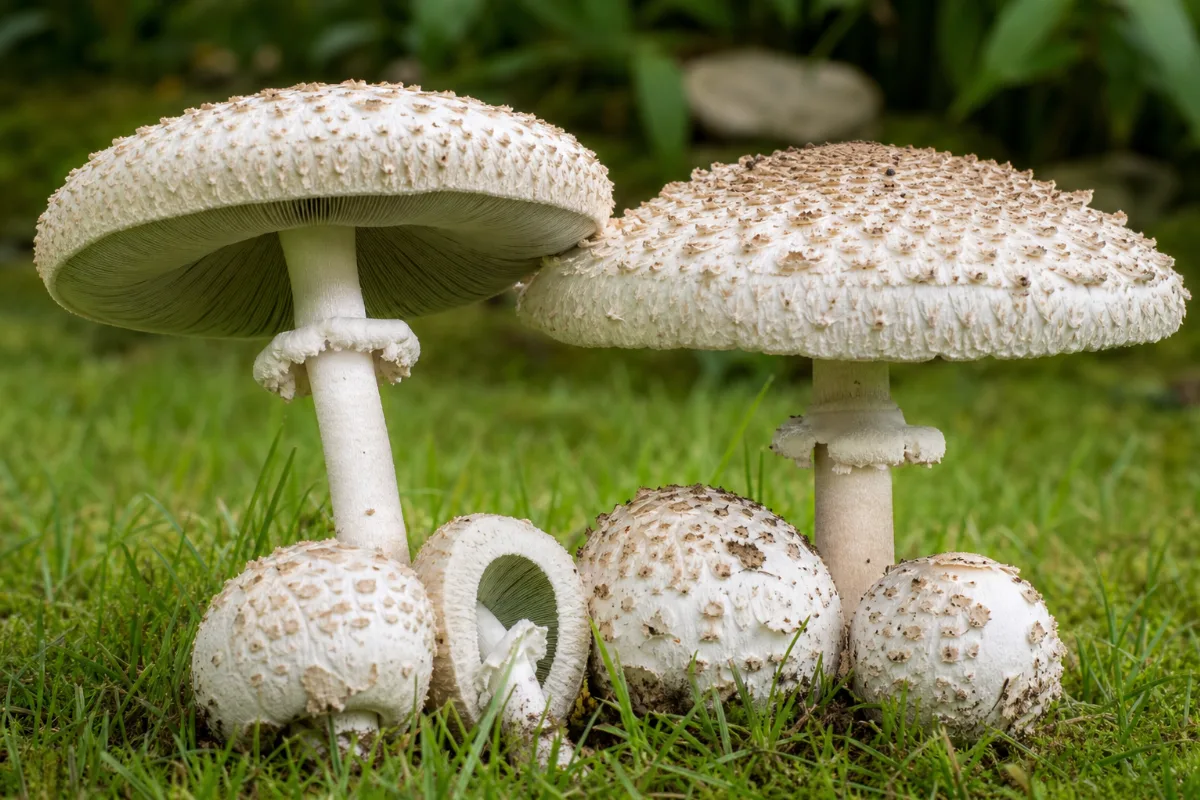
Mushrooms · Poisonous mushroom
Green-Spored Parasol
Chlorophyllum molybdites (G.Mey.) Massee · also called False parasol, Morgan's lepiota
The green-spored parasol (Chlorophyllum molybdites) is a poisonous mushroom. Eating it causes nausea, vomiting and diarrhoea, and children and frail people can lose enough fluid to go into shock. Cooking does not make it safe. No trial shows it helps any condition. If someone may have eaten it, call a poison centre right away.
General information, not medical advice. Last substantive update · Not medically reviewed. A named clinician has not signed off on this page. How this page is made
About Green-Spored Parasol
The green-spored parasol (Chlorophyllum molybdites) is a poisonous mushroom that causes hours of vomiting and diarrhoea. In children and frail people the fluid loss can lead to shock. Cooking does not make it safe, and early stomach symptoms can look like the first stage of a deadlier mushroom poisoning. A 1992 US review called it the most common cause of mushroom poisoning in North America. No clinical trial supports any health use.
Danger first: what it does
The green-spored parasol is a poisonous mushroom that grows in lawns and grassy places in warm regions. Eating it causes nausea, vomiting and diarrhoea, usually starting from about 30 minutes to a few hours later. Most people recover within about a day, but illness can last up to 7 days. Severe cases can have bloody diarrhoea and low blood pressure.
There is no known antidote. Care is fluids, medicines for vomiting and cramps, and watching in a health centre or emergency room. If someone has eaten it, call a poison centre right away.
Why children and frail people are at greater risk
A 6-year-old girl developed shock from fluid loss. The authors say that although this mushroom is considered a benign irritant, children have a limited capacity for fluid loss. The Italian authors say children and vulnerable patients may go into shock and need intensive support.
In Israel, many cases involved children under 6 eating raw mushrooms from lawns, and most of those children did not develop symptoms. That is a count of calls, not a promise that a child is safe. Dogs are also named at higher risk. Call a poison centre or a vet at once.
Cooking does not make it safe
In Sicily, symptoms began after meals of cooked mushrooms (risotto, grilled and others) and after raw ones. On Reunion Island, five of six poisoning events followed a shared pan-fried meal. Poison-centre advice is that cooking, canning, pickling, freezing and drying do not remove the toxins of poisonous mushrooms.
One older heat test quoted in a Florida fact sheet found the toxin lost strength after 30 minutes at 70 degrees C. The Italian authors conclude from their cooked-meal cases that the toxin is likely heat-stable. The sources disagree, and the reports show people were poisoned after cooked meals.
How often it is reported
A 1992 US review by Lehmann and Khazan calls it the most common cause of mushroom poisoning in North America, and a University of Florida fact sheet repeats that for the United States. That is a 1992 statement, not a current count.
In Zhejiang Province, China (2012 to 2023), it was the leading poisoning species at 36.27% of 408 outbreaks. In Israel it was the leading mushroom ingestion in summer. On Reunion Island it was the main culprit, and in Buenos Aires the main cause of fungal poisoning. A 2009 paper says it spread across Japan and poisonings rose.
What the poison is
The exact toxin has not been settled. The Florida sheet describes a gut irritant found through the whole mushroom, strongest in the cap. Japanese researchers isolated a toxic protein, molybdophyllysin, by following its lethal effect in mice; they do not say it causes human illness. The Italian authors say the toxic mechanism remains unknown.
In a brine shrimp test, extracts of this mushroom were about as toxic as a chemical poison used as the comparison (potassium dichromate). A shrimp test is a rough screen and does not predict human harm.
What research exists
Almost all human research is about poisoning: case reports, a few case series and surveillance counts. No clinical trial tests the mushroom for any use. Laboratory papers have isolated compounds and tried them on cancer cells, bacteria and lettuce seedlings; none shows a benefit in people. Spores caused an immune-messenger release in a dish of human blood, but that does not show an allergy to this mushroom.
At a glance
Traditional uses history, not proof
- No traditional or medicinal use of this mushroom is described in the sources we read.
- Medical papers describe it as a cause of accidental poisoning, often after it was mistaken for an edible parasol (Negrini 2022; Romano 2013).
- A 1992 US review calls it a common agent of mushroom poisoning in many countries (Lehmann 1992).
Studied for research
- Any health or wellness use: no trial, not enough evidence
- Cancer-cell and drug-resistance work: test-tube research only, very low evidence
- Plant-disease bacteria and plant growth: laboratory only
- Almost all human research is about poisoning, not benefit
Main compounds
- The poisoning irritant (not identified; strongest in the cap)
- Molybdophyllysin (a toxic protein isolated from the mushroom; lab and mouse work)
- Alkaloids and other compounds studied only in test tubes
Common forms
- Wild mushroom, eaten by mistake in the reports
- There is no supplement, extract or food product of this mushroom, and no safe way to prepare it
Research links: Poison Control (US): get help online or call 1-800-222-1222 · Case series from Sicily (abstract) · Reunion Island poisoning report (abstract) · Severe poisoning in a child (abstract) · University of Florida fact sheet · NHS: what to do in poisoning · Research Library · Genes & Biomarkers Library
What it is and its history
- Accepted scientific name
- Chlorophyllum molybdites
- Naming authority
- (G.Mey.) Massee
- Synonyms
- Agaricus molybdites G.Mey.; Lepiota molybdites (G.Mey.) Sacc.; Leucocoprinus molybdites (G.Mey.) Pat.; Macrolepiota molybdites (G.Mey.) G.Moreno, Banares & Heykoop; Chlorophyllum esculentum Massee; Mastocephalus molybdites (G.Mey.) O.Kuntze; Lepiota morganii (named in the Sicily paper and the Florida sheet)
- Common names
- Green-spored parasol (English); False parasol (English); Morgan's lepiota (English); Vomiter (English); Gruenblaettriger Schirmpilz (German); Lepiote de Morgan (French); Parasol de laminillas verdes (Spanish); Parasol verde (Spanish)
- Family or group
- Agaricaceae, a family of fungi (this is a mushroom, not a plant). Part concerned: the fruiting body, which is the mushroom. The family also holds edible parasol mushrooms.
- Classification
- Fungi > Basidiomycota > Agaricomycetes > Agaricales > Agaricaceae > Chlorophyllum > Chlorophyllum molybdites
- Native range
- A warm-region species. The Florida fact sheet says it is widely distributed in the southeastern United States and in other tropical regions (Brazil, the Philippines, Tahiti, Central Africa, Central America and the Caribbean) and less common in the north. GBIF holds about 19,474 occurrence records, with the most in the United States (about 14,387), then Australia, Mexico and Japan. A 2009 paper says it invaded Japan in recent years, and the Sicily authors describe it as an 'alien' species spreading on the east coast of Sicily.
- Habitat
- The Florida fact sheet describes lawns, grassy areas and open woods, with 'fairy rings' common. This page does not teach recognition.
- What it looks like
- Part used: The fruiting body (the mushroom). This page does not describe how to recognise it and gives no identification advice.
- Look-alikes and adulterants
- Name: Edible parasol mushrooms (named in poisoning reports only); Note: The Sicily case series and the Buenos Aires report name Macrolepiota procera as the edible mushroom people thought they had eaten; the Sicily paper also names Agaricus guadalupensis as sharing the habitat. This is what the reports say went wrong, not a way to tell mushrooms apart.
- Sustainability and conservation
- Not checked.
Traditional use and history history, not clinical proof
| Tradition or era | Documented use | Source |
|---|---|---|
| Medical literature | Papers from 1992 onward describe it as a poisonous mushroom that causes a severe gastrointestinal syndrome. The Sicily authors call it 'Morganic syndrome'. A 1992 US paper describes it as the most common cause of mushroom poisoning in North America; a Florida fact sheet repeats this for the United States. | Lehmann & Khazan 1992; Negrini et al. 2022; Espinoza & Smith (Florida fact sheet) |
| Recent spread | A 2009 paper says it recently invaded Japan (27 prefectures by 2009) with rising poisonings; the 2022 Sicily series calls it an alien species in Europe; the 2024 Reunion Island report calls it the main culprit in a place where mushroom poisoning is rarely reported. | Yokoyama 2009; Negrini 2022; Maillot 2024 |
| Traditional or medicinal use | No traditional or medicinal use of this mushroom is described in the sources we read. | n/a |
Traditional use shows how it was used. It does not show that it works or is safe today.
What is inside, and how it may work
What it contains and how those compounds act in cells and animals. Laboratory and animal mechanisms are not proven effects in people.
Main compounds
| Compound | Family | Where it is concentrated | Activity studied | Level of evidence |
|---|---|---|---|---|
| Molybdophyllysin | zinc metalloendopeptidase (protein, 23 kDa) | Fruiting body (extracted) | A toxic protein isolated by following lethal effect in mice; it keeps enzyme activity up to 60 degrees C. The authors do not state it causes human poisoning. 13 | Laboratory research |
| Meyeroguilline E and other isoindolinone alkaloids | alkaloids | Fruiting body (extracted) | Slightly increased paclitaxel-induced cell killing in some drug-resistant cancer cell lines at 20 uM (laboratory). 1 | Laboratory research |
| Glycoxyuracil and 15 other known compounds | mixed small molecules | Fruit body | Isolated and described; compounds 1 to 9 were not toxic to two cancer cell lines. 10 | Laboratory research |
| The poisoning irritant | not identified | Whole mushroom, higher in the cap (Florida fact sheet) | A gastrointestinal irritant. The Sicily authors say the toxic mechanism remains unknown and that older work pointed to a polymeric protein. 15 5 | Review |
Mechanisms, receptors and pathways
| Target or pathway | Gene or receptor | What was found | Level |
|---|---|---|---|
| Gut lining irritation | The poisoning is called a gastrointestinal irritant syndrome. The Sicily authors say the toxic mechanism remains unknown. Heat stability is disputed: a 1974 result quoted in the Florida sheet found the toxin lost strength after 30 minutes at 70 degrees C, while the Sicily authors see poisoning after cooked meals and conclude a heat-stable toxin is likely. 5 15 13 | Case series | |
| Innate immune response to spores | interleukin-1 beta | In pooled blood from healthy volunteers, spores of 11 species, including C. molybdites, caused a dose-dependent release of interleukin-1 beta (laboratory). Not shown to cause allergy in people from this mushroom. 6 | Laboratory research |
Absorption, metabolism and elimination
- Absorption
- Not established. Reports give a delay of 30 minutes to 7 hours before symptoms.
- Distribution
- Not established.
- Metabolism
- Not established.
- Elimination
- Not established.
- Bioavailability
- Not established.
Isolated compounds versus whole extracts
The mushroom, isolated lab compounds and any extract are different things. Poisoning data are about the whole mushroom eaten. The compounds studied in test tubes were not tested in people, and no product from this mushroom was found.
Nutritional composition
This mushroom is not a food or nutrient source. It is poisonous.
2 very low certainty1 not enough evidence
What is Green-Spored Parasol good for?
The uses people ask about and how strong the human evidence is for each. None is proven. Read every row together with the Safety tab: this is a poisonous mushroom.
Benefits, one by one
Each card is a research question, not a promise. Tap a goal to filter. Open a card to see the studies, doses and limits.
Any health or wellness use
Not enough evidenceNo trial has tested this mushroom as a food, remedy or supplement. It is known in medical papers as a cause of poisoning.
4 studiesNot covered. This page gives no amounts, preparation or ways of using…
Studies, doses and limits
What the trials found
No controlled study in people for any benefit was found. Human reports are poisonings: severe stomach and gut illness in case series from Sicily, Reunion Island, China, Israel and the United States.
Results
Nothing measured as a benefit. Vomiting, diarrhoea, stomach pain and fluid loss were recorded as harms.
Effect sizes as reported
None. No outcome was measured in a trial.
Why this rating
No trial. Poison reports can show harm but cannot show that the mushroom helps anyone.
Form and dose studied
Not covered. This page gives no amounts, preparation or ways of using the mushroom, and no trial tested it.
Who was studied
People poisoned (adults and children); no clinical group has been studied as a benefit.
Limits
Poison reports cannot separate a benefit from a harm, and what people ate and how much is unknown.
Why researchers looked
People ask because it is a large, common lawn mushroom and a close relative of edible parasols. The medical papers about it are poisoning reports, not benefit studies.
Traditional use
No traditional or medicinal use of this mushroom is described in the sources we read.
Proposed mechanism Laboratory research
The poisoning is called a gastrointestinal irritant syndrome. The exact toxin is not settled: a toxic protein (molybdophyllysin) was isolated from the mushroom by its lethal effect in mice, but the authors do not say it is the cause of human illness (laboratory work).
A proposed mechanism does not show that the effect happens in people.
This is a poisonous mushroom. Eating it can cause hours of vomiting and diarrhoea and, in children and vulnerable people, dangerous fluid loss. See the Safety tab first. Call a poison centre right away if someone has eaten it.
Cancer-cell laboratory work on compounds from the mushroom
Very low certaintyChemists have isolated compounds from this mushroom and tried them on cancer cells in test tubes. Results are early, small and not about people.
3 studiesNot covered. This page gives no amounts, preparation or ways of using…
Studies, doses and limits
What the trials found
None. No animal or human study of the mushroom or its compounds for any condition was found.
Results
At 20 uM two compounds slightly potentiated paclitaxel in three drug-resistant cell lines and had no effect on non-resistant cells (one paper). One compound inhibited Axl and immune checkpoints in an assay (another paper). Compounds 1 to 9 from the fruit body did not harm A549 or Panc-28 cells at up to 50 uM (a third paper).
Effect sizes as reported
Not applicable. Laboratory values do not translate into effects in people.
Why this rating
Test-tube and cell-culture studies only. They cannot show benefit or harm in people, and they use isolated compounds, not the mushroom.
Form and dose studied
Not covered. This page gives no amounts, preparation or ways of using the mushroom, and no trial tested it.
Who was studied
None (laboratory).
Limits
No animals or people were treated. The mushroom itself is poisonous, and results from isolated compounds say nothing about eating it.
Why researchers looked
Mushroom chemists look for new compounds that might become drug leads.
Traditional use
No traditional or medicinal use of this mushroom is described in the sources we read.
Proposed mechanism Laboratory research
In cell lines, two compounds slightly increased paclitaxel-induced cell killing in drug-resistant cells; one compound inhibited Axl and the PD-L1 and PD-L2 immune checkpoints in an assay; nine compounds from the fruit body were not toxic to two cancer cell lines (all laboratory).
A proposed mechanism does not show that the effect happens in people.
This is a poisonous mushroom. Eating it can cause hours of vomiting and diarrhoea and, in children and vulnerable people, dangerous fluid loss. See the Safety tab first. Call a poison centre right away if someone has eaten it.
Laboratory work against plant-disease bacteria and on plant growth
Very low certaintyIn test-tube and plant assays, some compounds from this mushroom slowed the growth of plant-disease bacteria and changed lettuce growth. This says nothing about people.
1 studiesNot covered. This page gives no amounts, preparation or ways of using…
Studies, doses and limits
What the trials found
None. No human or animal use was studied.
Results
Two compounds inhibited growth of P. carotovorum and C. michiganensis; four compounds showed significant regulatory activity on lettuce growth.
Effect sizes as reported
Not applicable.
Why this rating
Test-tube and plant assays only.
Form and dose studied
Not covered. This page gives no amounts, preparation or ways of using the mushroom, and no trial tested it.
Who was studied
None (laboratory).
Limits
Isolated compounds, not the mushroom. No people or animals were treated.
Why researchers looked
Researchers test fungal compounds as possible natural agents for crop protection.
Traditional use
No traditional or medicinal use of this mushroom is described in the sources we read.
Proposed mechanism Laboratory research
Compounds isolated from the culture broth and fruiting bodies inhibited growth of two plant-disease bacteria (Pectobacterium carotovorum and Clavibacter michiganensis, per the abstract) and regulated lettuce growth (laboratory).
A proposed mechanism does not show that the effect happens in people.
This is a poisonous mushroom. Eating it can cause hours of vomiting and diarrhoea and, in children and vulnerable people, dangerous fluid loss. See the Safety tab first. Call a poison centre right away if someone has eaten it.
Connections to the rest of health
How Green-Spored Parasol connects to the rest of our health knowledge graph. Every link says what kind of connection it is. A safety link (for example to the liver) is a warning, not a benefit. A study that merely mentions a topic never creates a benefit link.
Explore every connection: goals, body systems, organs, symptoms, genes
B. Body systems
| Connected to | Kind of connection | Evidence status | Context | Studies |
|---|---|---|---|---|
| Digestive system | Adverse effect or risk | Low certainty | Nausea, vomiting and diarrhoea after eating; case series and surveillance counts. Preparation or compound: Mushroom (gastrointestinal irritant) |
4 5 12 |
| Digestive System | Biological association | Not enough evidence | Studied for: Any health or wellness use | 5 4 2 13 |
E. Health conditions
| Connected to | Kind of connection | Evidence status | Context | Studies |
|---|---|---|---|---|
| Dehydration | Adverse effect or risk | Low certainty | Fluid and salt loss is the main complication; shock reported in a child. Preparation or compound: Mushroom (fluid loss from vomiting and diarrhoea) |
15 9 |
K. Biological pathways
| Connected to | Kind of connection | Evidence status | Context | Studies |
|---|---|---|---|---|
| Interleukin-1 beta | Preliminary mechanism | In vitro | Released from human blood cells in a dish by spores of several mushroom species including this one (laboratory). | 6 |
L. Active compounds
| Connected to | Kind of connection | Evidence status | Context | Studies |
|---|---|---|---|---|
| Molybdophyllysin | Biological association | In vitro | A toxic protein isolated by following lethal effect in mice; it keeps enzyme activity up to 60 degrees C. The authors do not state it causes human poisoning. Preparation or compound: Fruiting body (extracted) |
13 |
| Meyeroguilline E and other isoindolinone alkaloids | Biological association | In vitro | Slightly increased paclitaxel-induced cell killing in some drug-resistant cancer cell lines at 20 uM (laboratory). Preparation or compound: Fruiting body (extracted) |
1 |
| Glycoxyuracil and 15 other known compounds | Biological association | In vitro | Isolated and described; compounds 1 to 9 were not toxic to two cancer cell lines. Preparation or compound: Fruit body |
10 |
| The poisoning irritant | Biological association | Review | A gastrointestinal irritant. The Sicily authors say the toxic mechanism remains unknown and that older work pointed to a polymeric protein. Preparation or compound: Whole mushroom, higher in the cap (Florida fact sheet) |
15 5 |
Each connection is stored with the ingredient, the connected record, the kind of connection, the evidence status, the supporting studies, the preparation or compound involved, and a review date (last reviewed October 25, 2026).
The evidence
The research centre for Green-Spored Parasol. Every record here was checked against PubMed or the publisher's page; we never list a study we have not verified.
Evidence by outcome
Bars show how many studies we found for each outcome, not how well it works. People are added up across trials only (reviews are not added, to avoid double counting).
How we rate evidence
High certainty
Several well-run trials or reviews agree; further research is unlikely to change the picture much.
Moderate certainty
Good trials point the same way, but some doubt remains.
Low certainty
Small, short or inconsistent trials. The finding could change with better research.
Very low certainty
Very little or very weak human data. Treat as a possibility only.
Mixed findings
Trials or reviews disagree with each other.
Not enough evidence
Not enough human research to say either way.
Evidence against
Good research found no benefit, or found harm.
We take the reviewers' own risk-of-bias and GRADE statements where they exist, and otherwise judge from study size, design, consistency, directness and whether a product matches what is sold. Many publications do not make evidence high. Method note: We searched PubMed and read the abstracts of 14 papers, read the Sicily case series and the University of Florida fact sheet in full, opened the Poison Control, NHS, NSW Poisons Information Centre and Kansas poison-centre pages, and checked the scientific name in GBIF. Index Fungorum was not opened. Where a statement could not be checked it is marked as unverified in our notes.
Study library: every study we checked 20
| Study | Design | People | Product, dose, length | Result |
|---|---|---|---|---|
| Lee 2022 Meyeroguilline E, a New Isoindolinone Alkaloid from the Poisonous Mushroom Chlorophyllum molybdites, and Identification of Compounds with Multidrug Resistance (MDR) Reversal Activities. ACS Omega · PMID 36340132 · DOI |
Laboratory cell culture |
Compounds isolated from C. molybdites and tested on human cancer cell lines | n/a n/a n/a n/a · vs n/a |
Three isoindolinone alkaloids (one new) and six known compounds were isolated. At 20 uM, two compounds slightly increased paclitaxel-induced cell killing in some drug-resistant cancer cell lines and had no effect on the non-resistant cells. Methods, limits and fundingOutcomes: Drug-resistance reversal in cell lines Limitations: Cell lines only. Isolated compounds are not the mushroom; no animal or human test. Funding and conflicts: Not stated in the abstract. Read: abstract |
| Lehmann 1992 Mushroom poisoning by Chlorophyllum molybdites in the Midwest United States. Cases and a review of the syndrome. Mycopathologia · PMID 1406900 · DOI |
Case report and review |
2 Two adults poisoned in the Midwest United States, plus a review of the literature on this mushroom |
n/a n/a n/a n/a · vs n/a |
Both adults had severe gastrointestinal symptoms (profuse diarrhoea, vomiting, intestinal pain) and needed hospital care. One case had signs suggestive of muscarine poisoning. The authors describe the mushroom as a common agent of mushroom poisoning in many countries and the most common cause of mushroom poisoning in North America. The review also covers particularly susceptible groups, variation in response with cooking and between individuals, and spores as allergens. Methods, limits and fundingOutcomes: Symptoms, hospital care, review of the syndrome Limitations: Published in 1992; the 'most common' statement is the authors' own and is not a current count. Funding and conflicts: Not stated in the abstract. Read: abstract |
| Lewinsohn 2023 The epidemiology of wild mushroom poisoning in Israel. Mycologia · PMID 36927530 · DOI |
Surveillance study |
Wild mushroom exposures reported to the Israel Poison Information Center, 2010 to 2021 | n/a n/a n/a n/a · vs n/a |
Mushrooms caused 4% of exposures to biological agents. Most cases were adults over 18 (41%) or children under 6 (39%). Most children under 6 did not develop signs or symptoms. In 2017 to 2021, 128 cases (82.5%) involved raw mushrooms, mostly in children under 6. Mushrooms from irrigated lawns in summer posed a risk, and Chlorophyllum molybdites was the leading mushroom ingestion in summer. Methods, limits and fundingOutcomes: Frequency, age, season, species Limitations: Poison-centre calls, not all exposures; the abstract gives no separate numbers for this species. Funding and conflicts: Not stated in the abstract. Read: abstract |
| Maillot 2024 Chlorophyllum molybdites poisoning on Reunion Island. Toxicon · PMID 38072316 · DOI |
Case series |
19 People poisoned by wild mushrooms on Reunion Island, 2020 to 2021 (19 people, 6 events) |
n/a n/a n/a n/a · vs n/a |
Nineteen people were poisoned (15 in 2020, 4 in 2021). Five of six events were clusters after a shared pan-fried meal; one was a single person who ate a raw mushroom. Fifteen people had a gastrointestinal irritant syndrome starting 30 minutes to 3 hours after eating. Mycologists positively identified Chlorophyllum molybdites in 4 cases and an emergency doctor suspected it in 1. The authors call it the main culprit on the island. Methods, limits and fundingOutcomes: Symptoms, timing, mushroom involved Limitations: Small retrospective series from one island; identity confirmed in only some events. Funding and conflicts: Not stated in the abstract. Read: abstract |
| Negrini 2022 Case series of Chlorophyllum molybdites intoxication in Sicily: an "alien" mushroom species in Europe. Ann Ist Super Sanita · PMID 36128971 · DOI |
Case series |
10 10 people poisoned by Chlorophyllum molybdites in Sicily, managed by the Pavia Poison Centre |
n/a n/a n/a n/a · vs n/a |
The syndrome was severe gastrointestinal illness. In children or vulnerable patients it may lead to hypovolemic shock that needs intensive support. In the full text, symptoms in most cases began after meals of cooked mushrooms, three patients (a family of 2 adults and a child) were treated under a protocol for amatoxin mushrooms because stomach symptoms lasted 12 to 24 hours or began late, and they went home on day 2 and recovered completely once the mushroom was identified. The authors warn that watery diarrhoea lasting 12 to 24 hours may hide the start of the long-delay illness caused mainly by amatoxin mushrooms. Methods, limits and fundingOutcomes: Symptoms, treatment, outcome Limitations: Ten patients from one region. Full text read (5-page brief note). Funding and conflicts: Not stated in the abstract. Read: full-text |
| Rivera-Mariani 2014 Comparison of the interleukin-1β-inducing potency of allergenic spores from higher fungi (basidiomycetes) in a cryopreserved human whole blood system. Int Arch Allergy Immunol · PMID 24356469 · DOI |
Laboratory human blood in vitro |
Spores of 11 mushroom species, one of them C. molybdites, added to pooled blood from healthy volunteers | n/a n/a n/a n/a · vs n/a |
Spores caused a concentration-dependent release of interleukin-1 beta, more strongly for gilled mushrooms. The abstract gives no separate result for C. molybdites and does not describe allergic symptoms in people. Methods, limits and fundingOutcomes: Release of the inflammatory messenger interleukin-1 beta Limitations: Blood-in-a-dish study of 11 species. It does not show allergy from this mushroom. Funding and conflicts: Research Support, N.I.H., Extramural; U.S. Gov't (per PubMed). Read: abstract |
| Romano 2013 Toxic fungi in Buenos Aires City and surroundings (Spanish: Hongos toxicos en la Ciudad de Buenos Aires y alrededores) Medicina (B Aires) · PMID 24152394 |
Case series |
Fungus samples sent to a toxic-fungi identification service in Buenos Aires City and surroundings, 1985 to 2012 | n/a n/a n/a n/a · vs n/a |
Of the patients, 47% were under 18 and had eaten mushrooms, and 53% were adults who insisted they could tell edible from toxic mushrooms. Chlorophyllum molybdites was the main cause of fungal poisoning there, commonly confused with the edible Macrolepiota procera. The death cap (Amanita phalloides) came second; it causes severe symptoms after a 6 to 10 hour delay and can lead to liver failure. Methods, limits and fundingOutcomes: Which fungi caused poisoning; who was affected Limitations: Original title is in Spanish; English abstract read. Samples sent to a service are not all poisonings. Funding and conflicts: Not stated in the abstract. Read: abstract |
| Ruiz-González 2023 Mushrooms to live or die: toxicity of some Basidiomycota using Artemia franciscana. Braz J Biol · PMID 38126634 · DOI |
Laboratory animal (brine shrimp) |
Aqueous extracts of wild mushrooms from Jalisco, Mexico, tested on brine shrimp larvae (Artemia franciscana) | n/a n/a n/a n/a · vs n/a |
Extracts of Amanita amerivirosa, A. muscaria, Chlorophyllum molybdites and Leucopaxillus amarus had an LD50 below 70 ug/mL, similar to the potassium dichromate control (37 ug/mL). The authors call it a screening of probable toxicity. Methods, limits and fundingOutcomes: Median lethal dose (LD50) Limitations: Brine shrimp is a crude screen; it does not predict human harm. Funding and conflicts: Not stated in the abstract. Read: abstract |
| Stenklyft 1990 Chlorophyllum molybdites--severe mushroom poisoning in a child. J Toxicol Clin Toxicol · PMID 2118963 · DOI |
Case report |
1 A 6-year-old girl poisoned by Chlorophyllum molybdites |
n/a n/a n/a n/a · vs n/a |
She developed hypovolemic shock (a dangerous fall in blood volume from fluid loss) from the poisoning. The authors say the mushroom is considered a benign gastrointestinal irritant, but this case shows these mushrooms can cause severe toxicity and that children have a limited capacity for fluid loss before becoming hypovolemic. Methods, limits and fundingOutcomes: Course of illness Limitations: One child; a case report cannot show how often this happens. Funding and conflicts: Not stated in the abstract. Read: abstract |
| Su 2013 Chemical constituents from the fruit body of Chlorophyllum molybdites. Nat Prod Commun · PMID 24273852 |
Laboratory cell culture |
Compounds isolated from the fruit body of C. molybdites | n/a n/a n/a n/a · vs n/a |
One new glycoxyuracil and 15 known compounds were isolated. Compounds 1 to 9 were not toxic to two human cancer cell lines (A549 and Panc-28; GI50 above 50 uM). Methods, limits and fundingOutcomes: Chemistry and cancer-cell toxicity Limitations: Chemistry paper; cell lines only. Funding and conflicts: Research Support, Non-U.S. Gov't (per PubMed). Read: abstract |
| Wu 2023 Bioactive Compounds from the Mushroom-Forming Fungus Chlorophyllum molybdites. Antibiotics (Basel) · PMID 36978462 · DOI |
Laboratory laboratory |
Compounds from the culture broth and fruiting bodies of C. molybdites | n/a n/a n/a n/a · vs n/a |
A new compound and five known ones were isolated. One compound showed significant inhibition against Axl and the immune checkpoints PD-L1 and PD-L2 in the assay. Two compounds inhibited growth of two plant-disease bacteria, and four regulated lettuce growth. Methods, limits and fundingOutcomes: Enzyme/immune-checkpoint binding, bacterial growth, lettuce growth Limitations: Test tube and plant assays only; nothing in animals or people. Funding and conflicts: Not stated in the abstract. Read: abstract |
| Xu 2026 Identifying High-Risk Spatiotemporal Clusters of Mushroom Poisoning in Subtropical China: A Retrospective Surveillance Study in Zhejiang Province (2012-2023). Foods · PMID 42650607 · DOI |
Surveillance study |
2276 cases; 408 outbreaks Mushroom poisoning cases (2,276) and outbreaks (408) reported in Zhejiang Province, China, 2012 to 2023 |
n/a n/a n/a n/a · vs n/a |
The abstract names Chlorophyllum molybdites (36.27%) and Russula japonica (10.05%) as the dominant poisoning species, and says gastrointestinal symptoms were the most common clinical picture (84.07%). Poisonings peaked from June to October, farmers were the most affected group (47.93%) and homes were the main place (71.7%). 36.27% of 408 outbreaks is about 148, which matches the earlier full-text reading. Methods, limits and fundingOutcomes: Which mushrooms and symptoms were reported; places and seasons Limitations: Surveillance records count reports, not risk per meal. Reporting is uneven. Funding and conflicts: Not stated in the abstract. Read: abstract |
| Yamada 2012 Molybdophyllysin, a toxic metalloendopeptidase from the tropical toadstool, Chlorophyllum molybdites. Bioorg Med Chem · PMID 23063519 · DOI |
Laboratory animal + laboratory |
A toxic protein purified from Chlorophyllum molybdites fruiting bodies and tested for lethal effect in mice | n/a n/a n/a n/a · vs n/a |
A toxic protein, named molybdophyllysin, was isolated by following its lethal effect in mice. It is a 23-kDa zinc protease that kept its proteolytic activity at temperatures up to 60 degrees C. The abstract does not state that it is the cause of human illness. Methods, limits and fundingOutcomes: Identity and properties of the protein Limitations: Lab and mouse work. It does not show what causes poisoning in people. Funding and conflicts: Research Support, Non-U.S. Gov't (per PubMed). Read: abstract |
| Yokoyama 2009 Increase of poisoning by tropical mushrooms in Japan in recent years (Japanese paper, English abstract) Chudoku Kenkyu · PMID 19882971 |
Report |
Poisoning by tropical mushrooms in Japan | n/a n/a n/a n/a · vs n/a |
A 2009 paper says Chlorophyllum molybdites invaded Japan in recent years and was found in 27 prefectures in 2009, and that poisoning by it has increased recently. Methods, limits and fundingOutcomes: Spread of the mushroom and poisoning trend Limitations: Short abstract in English; the table of cases was not read. Funding and conflicts: Not stated in the abstract. Read: abstract |
| n/a 2026 University of Florida IFAS Extension: The Green-Spore Poison Parasol Mushroom, Chlorophyllum molybdites (PP324) n/a · Source |
Extension fact sheet (authoritative guidance) n/a |
n/a | n/a n/a n/a n/a · vs n/a |
Says it is a poisonous mushroom and reports it as the most common cause of mushroom poisoning in the United States (citing Lehmann 1992). The toxin is a gastrointestinal irritant, strongest in the cap. Symptoms usually start 1 to 2 hours after eating (nausea, vomiting, diarrhoea, loss of fluids and salts) and can last from 4 hours to up to 7 days; most people recover within 24 hours, but severe cases can have low blood pressure and shock. There is no known antidote; severity should be judged in a health centre or emergency room. Children and dogs are at higher risk. Read 25 October 2026. Methods, limits and fundingOutcomes: Poisoning, symptoms, treatment Limitations: Quotes older work (1974) on heat that the Sicily authors contradict in practice. Not a news count of cases. Read: full-text |
| n/a 2026 Poison Control (National Capital Poison Center): need immediate assistance n/a · Source |
Authoritative guidance n/a |
n/a | n/a n/a n/a n/a · vs n/a |
The page gives the poison help number 1-800-222-1222 (free and confidential; online tool or phone) and says to call 911 immediately if the person collapses, has a seizure, has trouble breathing or cannot be awakened. Read 25 October 2026. Methods, limits and fundingOutcomes: What to do in a suspected poisoning in the US Limitations: A public help page. Read: full-text |
| n/a 2026 NHS (UK): Poisoning n/a · Source |
Authoritative guidance n/a |
n/a | n/a n/a n/a n/a · vs n/a |
The page says to call 999 or go to A&E if someone may have swallowed something harmful or has lost consciousness, and to call NHS 111 if you are not sure whether something swallowed is harmful. Read 25 October 2026. Methods, limits and fundingOutcomes: What to do in suspected poisoning in the UK Limitations: A public help page. Read: full-text |
| n/a 2026 NSW Poisons Information Centre (Australia): home page n/a · Source |
Authoritative guidance n/a |
n/a | n/a n/a n/a n/a · vs n/a |
The home page shows the poisons line 13 11 26. Read 25 October 2026. Methods, limits and fundingOutcomes: Poison advice line in Australia Limitations: A public help page for one Australian state service; the number is shown as the national poisons line on the page. Read: full-text |
| n/a 2026 University of Kansas Health System Poison Control Center: Poisonous Mushrooms n/a · Source |
Authoritative guidance n/a |
n/a | n/a n/a n/a n/a · vs n/a |
Says that cooking, canning, pickling, freezing and drying poisonous mushrooms does not remove the toxins, and lists effects of poisonous mushrooms including diarrhoea, stomach pain and vomiting. Gives the Poison Help line 1-800-222-1222. Read 25 October 2026. Methods, limits and fundingOutcomes: Poison-centre advice on poisonous mushrooms Limitations: General page about poisonous mushrooms, not this species. Read: full-text |
| n/a 2026 GBIF Backbone Taxonomy: Chlorophyllum molybdites (G.Mey.) Massee, species key 5243168 n/a · Source |
Database record n/a |
n/a | n/a n/a n/a n/a · vs n/a |
Accepted name Chlorophyllum molybdites (G.Mey.) Massee, family Agaricaceae, published in Bull. Misc. Inf., Kew (1898). GBIF lists 13 synonyms and holds about 19,474 occurrence records. Read through the GBIF API on 25 October 2026. Methods, limits and fundingOutcomes: Accepted name, family, synonyms, records Limitations: A database, not a safety source. Read: full-text |
What we do not know yet
- No clinical trial of this mushroom for any use.
- The toxin behind human illness is not settled, and sources disagree on whether heat breaks it down.
- No reliable current count of poisonings or admissions; the 'most common cause' statement dates from 1992.
- No studies in pregnancy, breastfeeding, older adults or people on prescription medicines.
- Food-regulator statements and Index Fungorum were not checked, and no traditional-use source was found.
How new research is added
New studies are found by a saved PubMed search and are placed in a review queue. A person reads each one before it changes this page. Poison-centre pages are rechecked on a schedule.
Lab markers
What changed in blood or saliva tests during trials. A changed number is not the same as feeling or being healthier, and we give no "normal ranges".
Safety
What studies and official sources say about side effects, medicines and who should check first. Each point shows what kind of evidence it comes from.
Main points to know 7
- If someone has eaten it, call a poison centre now. Do not wait for symptoms. In the US call Poison Help at 1-800-222-1222 (free and confidential), or 911 if the person collapses, has a seizure, has trouble breathing or cannot be awakened. In the UK call NHS 111 if you are unsure and 999 in an emergency. In Australia the Poisons Information Centre line is 13 11 26. Keep the mushroom, a photo or any leftovers to show staff. Authoritative guidance 16 17 18
- It is a poisonous mushroom that causes severe stomach and gut illness. Sources describe nausea, vomiting and diarrhoea, usually starting about 30 minutes to a few hours after eating. Most people recover within about a day, but illness can last from 4 hours to up to 7 days, and severe cases can have bloody diarrhoea, low blood pressure and shock. There is no known antidote; care is fluids and symptom control, judged in a health centre or emergency room. Case series 15 5 4
- Children are at greater risk. A 6-year-old girl developed shock from fluid loss. Authors say children have little capacity for fluid loss, and a Florida fact sheet says children and dogs are at higher risk, partly because they are smaller and more likely to eat fresh mushrooms from lawns. In Israel most children under 6 who ate mushrooms did not develop symptoms, but most of those cases involved raw mushrooms. Case report 9 15 3
- Cooking does not make it safe. People were poisoned after cooked meals in Sicily and on Reunion Island, and poison-centre advice is that cooking, canning, pickling, freezing and drying do not remove the toxins of poisonous mushrooms. One older test quoted in a Florida fact sheet found the toxin weaker after heating; the Sicily authors say their cases suggest a heat-stable toxin, so the sources disagree. Case series 5 4 19 15
- Early stomach symptoms can hide a more dangerous poisoning. The Sicily authors warn that watery diarrhoea can last 12 to 24 hours and may hide the start of the long-delay illness caused mainly by amatoxin mushrooms, which damages the liver. Three patients were treated under an amatoxin protocol until the mushroom was identified. Tell the emergency team about every wild mushroom eaten, even if it seems to have been a mild one. Case series 5 7
- Pets can be poisoned. A Florida fact sheet says laboratory studies show the toxin can affect dogs, among other animals, and that dogs are at higher risk. Call a vet or an animal poison line at once if a pet has eaten a wild mushroom. Extension fact sheet 15
- A photo or a name is not proof that a wild mushroom is safe. Poisonings in the reports were mostly accidental. In Buenos Aires, 53% of the adult poisonings involved people who insisted they could tell edible from toxic mushrooms. This page does not help anyone identify a mushroom. Case series 7 5
Side effects 6
| Effect | How often | Severity and recovery | Evidence |
|---|---|---|---|
| Nausea, vomiting and diarrhoea Onset 30 minutes to 3 hours on Reunion Island; the Florida fact sheet says 1 to 2 hours. | 15 of 19 poisoned people on Reunion Island had a gastrointestinal irritant syndrome; 84.07% of Zhejiang poisoning cases had gastrointestinal symptoms (all mushroom species together) | moderate to severe Usually passes within about a day, sometimes up to 7 days | Case series 4 12 15 |
| Abdominal pain, dizziness, chills, cold sweats Described as additional symptoms some people report; frequency not given. | Not established | moderate Passes with recovery | Extension fact sheet 15 2 |
| Loss of fluids and salts (dehydration) The main complication named by the sources. | Not established | moderate to severe Treated with fluids by mouth or vein | Extension fact sheet 15 9 |
| Shock from fluid loss (hypovolemic shock) Frequency is unknown; case reports and small series cannot give it. | Reported in a 6-year-old girl (one case); the Sicily authors say it can happen in children or vulnerable patients | severe Needs intensive support; the child case and the Sicily cases recovered | Case report 9 5 |
| Bloody diarrhoea and low blood pressure One older US case also showed signs suggestive of muscarine poisoning; this is rare in the sources read. | Not established | severe Reported in severe cases | Extension fact sheet 15 2 |
| Hospital admission Not a measure of how often admission is needed. | Both adults in a two-case US report needed hospital care | moderate to severe Recovered | Case report 2 |
Liver
We found no report of liver injury caused by this mushroom itself in the sources we read. The risk is that the first stomach symptoms look like the first stage of an amatoxin mushroom (such as the death cap), which does damage the liver after a delay of several hours. In Buenos Aires the death cap was the second most common cause of fungal poisoning after this mushroom. 5 7
How often. Liver injury from C. molybdites was not found. Amatoxin liver failure is a separate poisoning from a different mushroom.
Monitoring. Not applicable to this mushroom alone. If a wild mushroom of unknown type has been eaten, the hospital team decides which tests are needed.
- Sicily case series (Pavia Poison Centre). Three patients were treated under an amatoxin protocol until a mycologist identified the mushroom as Chlorophyllum molybdites; they were discharged on day 2 and recovered completely. 5
- Buenos Aires toxic-fungi service, 1985 to 2012. Amanita phalloides came second to C. molybdites; it causes severe symptoms after a 6 to 10 hour delay and can lead to liver failure. 7
This is a safety connection. It is not evidence that Green-Spored Parasol supports liver health.
Medicines and supplements 2
| With | Why it matters | Importance | Evidence | What to do |
|---|---|---|---|---|
| Prescription and non-prescription medicines taken by mouth general reasoning | Severe vomiting and diarrhoea can stop tablets being absorbed and cause fluid loss, which matters for people on water pills, blood-pressure or kidney medicines. | No interaction study of this mushroom was found. This is general medical reasoning, not a finding. | General medical reasoning (not from a study of this mushroom) Not enough evidence 15 | Tell the poison centre or emergency team about every medicine taken. |
| Alcohol and other mushrooms or foods eaten in the same meal mixed meals | Poisoning reports involve family meals; a mixed meal may hold more than one kind of wild mushroom. | No study of combined effects. The Sicily authors stress how an amatoxin mushroom could be mistaken for this one and how that complicates care. | Case series Not enough evidence 5 | Report everything eaten and drunk to the emergency team. |
Who should check first 6
| Situation | Advice | Evidence |
|---|---|---|
| Anyone | There is no proven benefit and the mushroom is poisonous. Nobody should eat it. There is no safe way to prepare it according to the sources read. | Authoritative guidance 15 19 |
| Children, especially under 6 | Children have little reserve for fluid loss and may eat fresh lawn mushrooms. Call a poison centre at once if a child may have eaten a wild mushroom. | Case report 9 3 15 |
| Pregnancy and breastfeeding | No study of this mushroom in pregnancy or breastfeeding was found. Severe fluid loss from poisoning is a risk for anyone. Call a poison centre if it may have been eaten. | Gap (no data) |
| Frail, older or ill people, and people with kidney or heart conditions | The Sicily authors name vulnerable patients as the ones who may go into shock. No study of specific conditions was found. | Case series 5 |
| Pets | Dogs are named at higher risk. Call a vet or animal poison line at once. | Extension fact sheet 15 |
| People with mushroom or mould allergy | Mushroom spores can be allergens. In blood from healthy volunteers, spores of 11 species, including this one, triggered a release of an inflammatory messenger. This is lab work and does not show an allergy to this mushroom. | Laboratory 6 2 |
Overdose, product quality and regulators
Summary. The exact toxin has not been settled. The Florida fact sheet describes a gastrointestinal irritant present in the whole mushroom, strongest in the cap. A toxic protein, molybdophyllysin (23 kDa, a zinc protease), was isolated from the mushroom by its lethal effect in mice; the authors do not say it causes human illness. Brine shrimp tests found aqueous extracts toxic at under 70 ug/mL.
Amounts. No safe amount has been established in any source we read, and no measured toxin content in food terms was found. Reactions differ between people, and the Florida sheet says not everyone who eats the same mushrooms gets sick.
Onset and course. Symptoms start about 30 minutes to 7 hours after eating in the reports (30 minutes to 3 hours on Reunion Island; 1 to 2 hours in the Florida sheet; 30 minutes to 7 hours in Sicily). Most last under a day; severe cases can last up to 7 days.
Repeated use. No data on repeated or long-term exposure were found.
Animal data. Brine shrimp larvae: extract LD50 below 70 ug/mL, similar to the toxic control. The Florida sheet cites older work saying the toxin affects dogs, chickens and mice. No modern mammal data were read.
Toxic parts. The Florida sheet says the toxin is in all parts and stages of the mushroom, higher in the cap. Treat the whole mushroom as poisonous.
Not read. Genotoxicity, reproductive toxicity, long-term toxicity, and blood levels linked to severity were not found.
This is a wild poisonous species. We found no product made from it and no contamination testing.
Mixed-up mushrooms. In Buenos Aires the most common poisoning mushroom was often confused with an edible parasol, and in Sicily patients thought they had eaten an edible parasol. Reports name the mistake, not how to avoid it. 7 5
Heavy metals and other contaminants. Not reviewed here.
| Body | Action | Date |
|---|---|---|
| US Poison Control (National Capital Poison Center) (United States) | Gives the Poison Help number 1-800-222-1222 (free and confidential) and says to call 911 immediately if the person collapses, has a seizure, has trouble breathing or cannot be awakened. source | |
| NHS (United Kingdom) | Says to call 999 or go to A&E if someone may have swallowed something harmful, and to call NHS 111 if not sure. source | |
| NSW Poisons Information Centre (Australia) | Shows the poisons line 13 11 26. source |
When to get medical help
- If someone may have eaten this mushroom, or any wild mushroom that might be this one, call a poison centre right away, even if they seem fine (Poison Control, poison.org).
- Call 911 (or your local emergency number) at once if the person collapses, has a seizure, has trouble breathing or cannot be awakened (Poison Control, poison.org).
- Go to hospital for repeated vomiting or diarrhoea that does not stop, signs of dehydration (very dry mouth, little or no urine, dizziness on standing), bloody diarrhoea, or any symptoms in a child or older, frail person (Florida fact sheet; Sicily case series).
- Go to hospital if stomach symptoms seem to settle but the person ate a wild mushroom of unknown type, because delayed liver illness from other mushrooms can follow a quiet spell (Sicily case series).
If someone may be poisoned or in a crisis, contact a clinician or emergency service straight away. In the US, Poison Control is 1-800-222-1222.
General information only, not medical advice. Ask a clinician or pharmacist before use, especially with medicines, in pregnancy or with a health condition. See the Natural Remedy Safety guide.
Frequently asked questions
Is the green-spored parasol poisonous?
What should I do if someone has eaten it?
Call a poison centre now, even if the person seems fine. In the US call Poison Help at 1-800-222-1222 (free and confidential). Call 911 if the person collapses, has a seizure, has trouble breathing or cannot be awakened. In the UK call NHS 111 if unsure or 999 in an emergency. In Australia call 13 11 26. Keep any leftovers or a photo to show staff.
Is it deadly?
Does cooking make it safe?
Is it the most common cause of mushroom poisoning in North America?
Why are children and pets at higher risk?
Can stomach symptoms from it hide a worse poisoning?
Can I tell it apart from an edible mushroom?
Is there an antidote?
Is there any proven health use?
Is it a psychedelic or mind-altering mushroom?
Explore by health goal
Editorial transparency
- Written by
- AlternativeMed editorial team. Research compiled with AI assistance, then checked against PubMed records and poison-centre pages.
- Medical review
- None. This page has not been reviewed by a physician or pharmacist.
- First published
- 2026-10-25
- Last substantive update
- 2026-10-25
- How we research
- We searched PubMed and read the abstracts of 14 papers, read the Sicily case series and the University of Florida fact sheet in full, opened the Poison Control, NHS, NSW Poisons Information Centre and Kansas poison-centre pages, and checked the scientific name in GBIF. Index Fungorum was not opened. Where a statement could not be checked it is marked as unverified in our notes.
- How we rate evidence
- See "How we rate evidence" in the Evidence tab.
- Independence
- No product is promoted on this page. No affiliate links are shown, and none will be added for this mushroom. This page gives no dose, preparation, identification, picking or sourcing advice.
Sources 20
Each source was opened and checked. Where we read only the abstract, it says so. The small numbers in the text point here.
- Lee BS, Ryoo R, Park JS, Choi SU, Jeong SY, Ko YJ, et al. Meyeroguilline E, a New Isoindolinone Alkaloid from the Poisonous Mushroom Chlorophyllum molybdites, and Identification of Compounds with Multidrug Resistance (MDR) Reversal Activities.. ACS Omega. 2022. PMID 36340132. DOI 10.1021/acsomega.2c06155. (abstract)
- Lehmann PF, Khazan U. Mushroom poisoning by Chlorophyllum molybdites in the Midwest United States. Cases and a review of the syndrome.. Mycopathologia. 1992. PMID 1406900. DOI 10.1007/BF00472564. (abstract)
- Lewinsohn D, Lurie Y, Gaon A, Biketova AY, Bentur Y. The epidemiology of wild mushroom poisoning in Israel.. Mycologia. 2023. PMID 36927530. DOI 10.1080/00275514.2023.2177471. (abstract)
- Maillot A, Marteau A, Lecot J, Bruneau C, Le Roux G, De Haro L, et al. Chlorophyllum molybdites poisoning on Reunion Island.. Toxicon. 2024. PMID 38072316. DOI 10.1016/j.toxicon.2023.107554. (abstract)
- Negrini VM, Lonati D, Pappalardo A, Schicchi A, Petrolini VM, Bernasconi L, et al. Case series of Chlorophyllum molybdites intoxication in Sicily: an "alien" mushroom species in Europe.. Ann Ist Super Sanita. 2022. PMID 36128971. DOI 10.4415/ANN_22_03_11. (full-text)
- Rivera-Mariani FE, Vysyaraju K, Negherbon J, Levetin E, Horner WE, Hartung T, et al. Comparison of the interleukin-1β-inducing potency of allergenic spores from higher fungi (basidiomycetes) in a cryopreserved human whole blood system.. Int Arch Allergy Immunol. 2014. PMID 24356469. DOI 10.1159/000357036. (abstract)
- Romano GM, Iannone L, Novas MV, Carmarán C, Romero AI, López SE, et al. Toxic fungi in Buenos Aires City and surroundings (Spanish: Hongos toxicos en la Ciudad de Buenos Aires y alrededores). Medicina (B Aires). 2013. PMID 24152394. (abstract)
- Ruiz-González LE, Guzmán-Dávalos L, Guerrero-Galván SR, Vega-Villasante F. Mushrooms to live or die: toxicity of some Basidiomycota using Artemia franciscana.. Braz J Biol. 2023. PMID 38126634. DOI 10.1590/1519-6984.275156. (abstract)
- Stenklyft PH, Augenstein WL. Chlorophyllum molybdites--severe mushroom poisoning in a child.. J Toxicol Clin Toxicol. 1990. PMID 2118963. DOI 10.3109/15563659008993488. (abstract)
- Su Z, Wang P, Yuan W, Li S. Chemical constituents from the fruit body of Chlorophyllum molybdites.. Nat Prod Commun. 2013. PMID 24273852. (abstract)
- Wu J, Ohura T, Ogura R, Wang J, Choi JH, Kobori H, et al. Bioactive Compounds from the Mushroom-Forming Fungus Chlorophyllum molybdites.. Antibiotics (Basel). 2023. PMID 36978462. DOI 10.3390/antibiotics12030596. (abstract)
- Xu S, Zhang H, Chen L, Fang L, Jiang H, Zhang R, et al. Identifying High-Risk Spatiotemporal Clusters of Mushroom Poisoning in Subtropical China: A Retrospective Surveillance Study in Zhejiang Province (2012-2023).. Foods. 2026. PMID 42650607. DOI 10.3390/foods15162913. (abstract)
- Yamada M, Tokumitsu N, Saikawa Y, Nakata M, Asano J, Miyairi K, et al. Molybdophyllysin, a toxic metalloendopeptidase from the tropical toadstool, Chlorophyllum molybdites.. Bioorg Med Chem. 2012. PMID 23063519. DOI 10.1016/j.bmc.2012.09.036. (abstract)
- Yokoyama K, Gonmori K. Increase of poisoning by tropical mushrooms in Japan in recent years (Japanese paper, English abstract). Chudoku Kenkyu. 2009. PMID 19882971. (abstract)
- n/a. University of Florida IFAS Extension: The Green-Spore Poison Parasol Mushroom, Chlorophyllum molybdites (PP324). n/a. 2026. (full-text)
- n/a. Poison Control (National Capital Poison Center): need immediate assistance. n/a. 2026. (full-text)
- n/a. NHS (UK): Poisoning. n/a. 2026. (full-text)
- n/a. NSW Poisons Information Centre (Australia): home page. n/a. 2026. (full-text)
- n/a. University of Kansas Health System Poison Control Center: Poisonous Mushrooms. n/a. 2026. (full-text)
- n/a. GBIF Backbone Taxonomy: Chlorophyllum molybdites (G.Mey.) Massee, species key 5243168. n/a. 2026. (full-text)