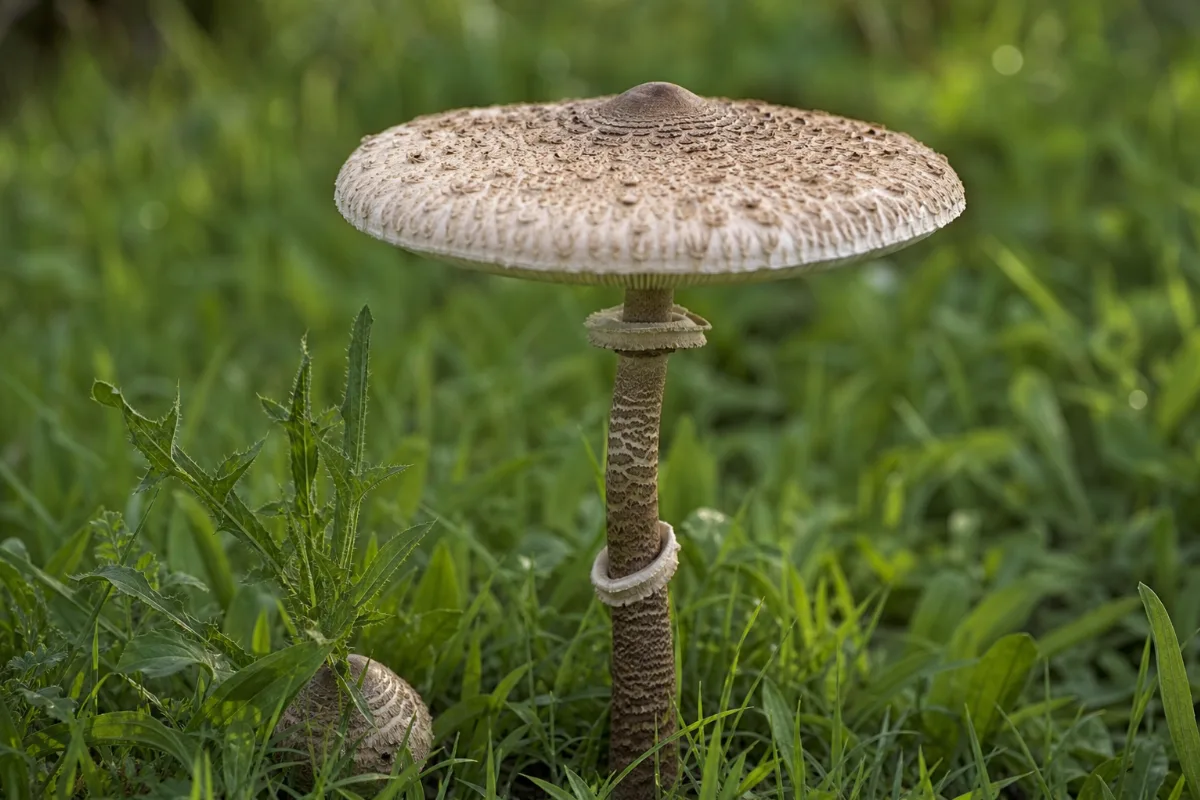
Mushrooms · Wild culinary mushroom
Parasol Mushroom
Macrolepiota procera · also called Parasol (names used in the papers we read)
The parasol is a tall wild mushroom eaten as a food. It is not a proven remedy: we found no human trial of it for any health outcome, and lab findings are only early ideas. The most serious caution is mistaken identity. A poisonous look-alike, the green-spored lepiota, causes violent stomach and gut illness, and some Lepiota relatives hold amatoxins, which can destroy the liver. Wild parasol also takes up cadmium and lead from the soil, so where it grew matters.
General information, not medical advice. Last substantive update · Not medically reviewed. A named clinician has not signed off on this page. How this page is made
About Parasol Mushroom
The parasol is a tall wild mushroom eaten for its flavour. There is no human research on health benefits. The real concerns are poisonous look-alikes, metals taken up from soil, and missing information on cooking, allergy, medicines, pregnancy and children. Missing information is not reassurance.
What it is
The parasol is Macrolepiota procera (GBIF accepted name, family Agaricaceae), a fungus that grows on the ground and is picked wild. Older papers and the Missouri guide also use the name Lepiota procera. Several other mushrooms have 'parasol' in their name, so the name alone does not say which species is meant.
What research has tested
We found no trial in which people ate or took parasol and a health outcome was measured. The research is about composition and the lab. A polysaccharide fraction from Polish caps blocked inflammation enzymes and killed colon cancer cells in dishes, and purified triterpenoids acted on cells. A mouse study tested a mycelium extract against a reproductive toxin.
These results are ideas for future research. They are not evidence that parasol prevents or treats any condition.
Metals from the soil
Wild parasol takes up cadmium and lead. In Romanian samples the mean cap cadmium was 1.605 mg per kg dry weight and the stem 0.321; cap lead was 1.783 and stem 1.140. The authors say all samples exceeded the limits for vegetables and that parasol took up more cadmium than the other species. For cadmium the health risk index was above 1 for children and, for parasol, for adults. Children's estimated intake was 1.5 times adults'.
A Serbian study also raised cadmium, and a Polish study spanning 1974 to 2019 says frequent regular eating of wild mushrooms, with exposure to some toxic elements, should not be recommended. The 2025 review adds that parasol may contain oxalates, digestive-enzyme inhibitors and polyphenols that could affect mineral absorption. This is theory; it was not tested in people.
Cooking, forms and storage
We found no parasol-specific rule on cooking or on eating it raw, so we say nothing either way. The 2025 review says careful processing and cooking help reduce risks in general, and that poorly stored mushrooms can grow bacteria and mould and should be thrown away. A US wildlife agency says to try only a small amount of any new wild edible to avoid a reaction. Extracts and mycelium products appear in laboratory studies, not in human trials. This page gives no amounts and does not recommend any product.
Rules and official statements
The Missouri Department of Conservation lists the parasol as a choice edible, with caution. We did not find or read a parasol-specific statement from the European Food Safety Authority, the US Food and Drug Administration, the European Medicines Agency, NCCIH, LiverTox or LactMed, and we found no USDA record. Absence of a statement is not a safety guarantee.
At a glance
Traditional uses history, not proof
- A US state wildlife agency lists the parasol as a choice edible, with caution (Missouri Department of Conservation).
- A 2025 review describes it as a commonly eaten mushroom valued for flavour and cooking use, and also as recognised for medicinal properties, without giving a history for the medicinal claim (Wang 2025).
Studied for research
- Food nutrients and minerals: very wide ranges in a review, no health effect shown, insufficient
- Antioxidant activity in test-tube assays, insufficient
- Anti-inflammatory enzyme and cell tests (polysaccharide fraction and triterpenoids), insufficient
- Colon cancer cell lines in dishes, insufficient
- Immune cells in the lab, and a mouse study of a mycelium extract, insufficient
Main compounds
- Polysaccharides: beta-glucans 10.76 g per 100 g dry weight in one Polish collection
- Lanostane triterpenoids (lepiotaprocerins A to L), found in cell tests
- Phenolic compounds and flavonoids, and a heat-stable trypsin inhibitor protein (macrospin) in the lab
Common forms
- Fresh or cooked cap as a food (no parasol-specific cooking rule was found)
- Polysaccharide fractions, triterpenoids and mycelium extracts used in laboratory studies only
Research links: Chlorophyllum molybdites poisoning on Reunion Island (abstract) · Chlorophyllum molybdites poisonings in Sicily (abstract) · Mushroom poisoning surveillance in Zhejiang, China (abstract) · Amatoxins in Lepiota species (abstract) · Amatoxin-containing mushroom poisonings: a review (abstract) · Heavy metals in wild edible mushrooms, Romania (abstract) · Parasol and wine cap: composition, bioactivity and safety review (abstract) · Missouri Department of Conservation field guide: Parasol · Research Library · Genes & Biomarkers Library
What it is and its history
- Accepted scientific name
- Macrolepiota procera
- Naming authority
- (Scop.) Singer (GBIF)
- Synonyms
- Agaricus procerus Scop.; Lepiota procera (Scop.) Gray; Lepiotophyllum procerum (Scop.) Locquin; Amanita procera (Scop.) Fr.
- Common names
- Parasol mushroom (English); Parasol (English)
- Family or group
- Agaricaceae (a fungus family), not a plant. The Missouri field guide still lists it under the older family name Lepiotaceae.
- Classification
- Fungi > Basidiomycota > Agaricomycetes > Agaricales > Agaricaceae > Macrolepiota > Macrolepiota procera
- Native range
- Not checked in the sources read. The studies read are from Poland, Romania, Serbia and the United States (field guide).
- Habitat
- Grows on the ground, per the Missouri field guide: scattered along trails, in open woods and in old pastures, sometimes in rings.
- What it looks like
- Fruiting body: Not described here by design. This page gives no identification help.
- Cultivation
- The 2025 review says mycelium grows in culture (wheat is described as a good grain for spawn) but fruiting was not achieved in the study it cites, so supply is wild-picked.
- Harvest and processing
- Not covered by a parasol-specific source read. The review gives general storage advice for mushrooms: cool, ventilated and eaten fresh.
- Look-alikes and adulterants
- Name: Green-spored lepiota (Chlorophyllum molybdites); Note: Named by the Missouri field guide as a poisonous look-alike. Sources describe severe gut illness, and a Sicilian poison centre says it could be confused with parasol mushrooms. No identification features are given here.; Name: Reddening lepiota (Leucoagaricus americanus); Note: Named by the Missouri field guide as a look-alike. No toxicity data were read.; Name: Deadly Lepiota species (for example Lepiota brunneoincarnata); Note: Contain amatoxins (Sarawi 2022); L. brunneoincarnata is the most frequently reported fatal Lepiota (Diaz 2018). The parasol was formerly classed as Lepiota procera. None of the papers read says these are mistaken for parasol, but the genus is a safety reason never to rely on appearance.
- Sustainability and conservation
- Not checked.
Traditional use and history history, not clinical proof
| Tradition or era | Documented use | Source |
|---|---|---|
| Food use | The Missouri Department of Conservation lists parasol as a choice edible, with caution. A 2025 review calls it a commonly eaten mushroom valued for its flavour and cooking uses. | s-mdc-parasol |
| Medicinal use | No traditional medicinal use was found in the sources read. The 2025 review describes it as recognised for both edibility and medicinal properties, but gives no history for the medicinal claim. | p40278080 |
Traditional use shows how it was used. It does not show that it works or is safe today.
What is inside, and how it may work
What it contains and how those compounds act in cells and animals. Laboratory and animal mechanisms are not proven effects in people.
Main compounds
| Compound | Family | Where it is concentrated | Activity studied | Level of evidence |
|---|---|---|---|---|
| Polysaccharides including beta-glucans | polysaccharide | Fruiting body Beta-glucans 10.76 g per 100 g dry weight and total glucans 13.51 g in one Polish collection (Nowacka-Jechalke 2025). | Mainly glucose- and galactose-based heteropolysaccharides; radical scavenging, COX and LOX inhibition and colon cancer cell toxicity in the lab. 13 | Laboratory research |
| Lanostane triterpenoids (lepiotaprocerins A to L) | triterpenoid | Fruiting body Not given in the abstract. | Twelve new compounds; nitric oxide inhibition and cancer cell toxicity in cells. 2 | Laboratory research |
| Phenolic compounds and flavonoids | phenolic | Fruiting body Not verified here. | The review attributes antioxidant and antimicrobial activity to them. 19 | Laboratory research |
| Macrospin (trypsin inhibitor protein) | protein | Fruiting body Not given in the abstract. | Strong trypsin inhibitor, weak against chymotrypsin, resistant to high temperature and extreme acidity in the lab. 8 | Laboratory research |
Mechanisms, receptors and pathways
| Target or pathway | Gene or receptor | What was found | Level |
|---|---|---|---|
| Inflammation enzymes | COX-1, COX-2, LOX | A polysaccharide fraction inhibited all three enzymes in a test tube; COX-1 by 74.23 percent. 13 | Laboratory research |
| Nitric oxide production | Not identified | Lepiotaprocerins A to F reduced nitric oxide production in cells more than the control L-NMMA. 2 | Laboratory research |
| Testis tissue signalling (mouse) | Akt/mTOR | Mycelium polysaccharides lowered Akt/mTOR signalling and improved oxidative stress and inflammation markers in mouse testes after nonylphenol. 18 | Animal research |
Absorption, metabolism and elimination
- Absorption
- Not found in the sources read.
- Distribution
- Not found.
- Metabolism
- Not found.
- Elimination
- Not found.
- Bioavailability
- Not established in people.
Isolated compounds versus whole extracts
The cell and mouse findings used a polysaccharide fraction, purified triterpenoids or lab-grown mycelium extract. Eating the cooked mushroom is not the same thing, and no human trial tested either.
Nutritional composition
Wang 2025 gives wide ranges for parasol: moisture 88 to 92 percent; protein 7.62 to 39.68 percent, carbohydrate 40.90 to 60.30 percent and lipid 0.70 to 4.23 percent of dry weight; potassium 300 to 500 mg and calcium 400 to 500 mg per 100 g; B vitamins and vitamin D listed without figures. We found no food-database record, so no single typical value is given. Some review table values may come from other studies or species.
7 not enough evidence
What was looked at
The 7 benefits and uses checked for Parasol Mushroom, each with how strong the evidence is. Tap one to open it.
- Parasol as a food (nutrients and minerals)Not enough evidence
- Antioxidant activity (test tube)Not enough evidence
- Anti-inflammatory activity (enzymes and cells)Not enough evidence
- Cancer cell lines in the labNot enough evidence
- Immune cells in the labNot enough evidence
- Male reproductive harm from nonylphenol (mice)Not enough evidence
- Blood sugar, liver, blood pressure and germ-killing claimsNot enough evidence
What is Parasol Mushroom good for?
What the parasol has been studied for and how strong the evidence is. None of it is proven in people. Read this together with the Safety tab.
Benefits, one by one
Each card is a research question, not a promise. Tap a goal to filter. Open a card to see the studies, doses and limits.
Parasol as a food (nutrients and minerals)
Not enough evidenceParasol is a tall, meaty-capped wild mushroom eaten as a food. A 2025 review lists protein, fibre, minerals and B vitamins, but the ranges are very wide, for example protein 7.6 to 39.7 percent of dry weight. A Serbian study and a Polish study call it a source of copper and some other minerals, and both warn about cadmium. No trial shows that eating parasol changes anyone's health.
3 studiesFresh or cooked cap as food. This page gives no amounts.
Studies, doses and limits
Results
Wang 2025 table: moisture 88 to 92 percent; protein 7.62 to 39.68 percent and carbohydrate 40.90 to 60.30 percent of dry weight; lipids 0.70 to 4.23 percent. The Serbian authors say it could be a good source of copper, zinc, manganese and iron; the Polish half-century study calls it a source of copper.
Effect sizes as reported
Nutrient values only; no health effect measured
Why this rating
Composition is measured, but nothing shows a health benefit from eating it. Values vary hugely with place, season and the study quoted. Some table values in the review may come from other mushrooms.
Form and dose studied
Fresh or cooked cap as food. This page gives no amounts.
Limits
Wide ranges, local samples, no food-database record for parasol was found, and the minerals come together with cadmium.
Why researchers looked
Parasol is a prized wild food, so much of the research asks what is in it and what the soil puts into it.
Traditional use
A review describes it as a commonly eaten mushroom valued for flavour and cooking use (Wang 2025). A US state wildlife agency lists it as a choice edible, with caution.
Proposed mechanism Other
Not a mechanism claim. Values are laboratory measurements of the food.
A proposed mechanism does not show that the effect happens in people.
Wild parasol can be confused with poisonous look-alikes and can carry cadmium and lead. See the Safety tab first.
Antioxidant activity (test tube)
Not enough evidenceExtracts and a polysaccharide fraction from parasol scavenge free radicals in laboratory tests. That is a test-tube result. No study measured antioxidant effects in people who ate it.
2 studiesLaboratory extracts, not the cooked mushroom.
Studies, doses and limits
Results
Nowacka-Jechalke 2025: the fraction showed significant radical-scavenging capacity, higher in the ORAC test. Wang 2025 quotes an extract IC50 of 311.40 ug/mL in a scavenging assay from another paper.
Effect sizes as reported
Test-tube activity; no human effect measured
Why this rating
Only test-tube assays on extracts. Test-tube antioxidant activity does not show benefit in the body.
Form and dose studied
Laboratory extracts, not the cooked mushroom.
Limits
Extract concentrations used in assays are not what eating a portion provides. One collection of mushrooms in the main paper.
Why researchers looked
Mushrooms contain phenols, flavonoids and polysaccharides, so researchers test extracts in the lab.
Proposed mechanism Laboratory research
Radical-scavenging chemistry in test-tube assays (TEAC and ORAC for a polysaccharide fraction; others reported in the review).
A proposed mechanism does not show that the effect happens in people.
Lab results do not show that eating parasol is useful or safe for any condition. See the Safety tab.
Anti-inflammatory activity (enzymes and cells)
Not enough evidenceA polysaccharide fraction from parasol blocked inflammation-related enzymes (COX-1, COX-2 and LOX) in a test tube, and some purified compounds reduced nitric oxide production in cells. No animal or human study shows an anti-inflammatory effect from eating parasol.
3 studiesPolysaccharide fraction and purified compounds, not the cooked mushro…
Studies, doses and limits
Results
Nowacka-Jechalke 2025: COX-1 inhibited by 74.23 percent, described as almost twice the effect of acetylsalicylic acid in the same assay; COX-2 and LOX also inhibited. Chen 2018: lepiotaprocerins A to F inhibited nitric oxide production more strongly than the control L-NMMA (IC50 47.1 uM).
Effect sizes as reported
Large effects in assays; none shown in people
Why this rating
Enzyme and cell assays only; no animals or people.
Form and dose studied
Polysaccharide fraction and purified compounds, not the cooked mushroom.
Limits
Assay conditions are far from eating a mushroom; one collection of mushrooms per paper; Chen 2018 read as abstract only.
Why researchers looked
Inflammation enzymes are a standard target when screening mushroom compounds.
Proposed mechanism Laboratory research
Enzyme inhibition in a test tube and reduced nitric oxide production by purified triterpenoids in cells.
A proposed mechanism does not show that the effect happens in people.
A test-tube enzyme effect does not mean eating parasol treats inflammation. It is not a substitute for medicine.
Cancer cell lines in the lab
Not enough evidenceA polysaccharide fraction from parasol killed three human colon cancer cell lines in dishes and did not harm normal colon cells in one test. Purified triterpenoids were toxic to several cancer cell lines. This is early laboratory screening. It does not show that parasol prevents or treats any cancer.
3 studiesPurified compounds and extracts, not the cooked mushroom.
Studies, doses and limits
Results
Nowacka-Jechalke 2025: HT-29 colon cancer cells were the most sensitive (MTT IC50 15 ug/mL; LDH EC50 174 ug/mL); normal colon epithelial CCD841 CoN cells showed no cytotoxic response. Chen 2018: lepiotaprocerins G to L were toxic to a panel of human cancer cell lines. The abstract of Chen 2018 gives no numbers for that.
Effect sizes as reported
Activity in cell dishes only
Why this rating
Cell lines only. No animal tumour study or human trial was found.
Form and dose studied
Purified compounds and extracts, not the cooked mushroom.
Limits
Dish concentrations are not reachable by eating a portion. Selectivity was tested in one normal cell line only.
Why researchers looked
Mushroom compounds are often screened against cancer cells.
Proposed mechanism Laboratory research
Cell growth and membrane-damage tests in cancer cell lines. Wang 2025 also lists gene changes reported for other extracts, from other papers.
A proposed mechanism does not show that the effect happens in people.
Do not use mushrooms in place of cancer care. See the Safety tab.
Immune cells in the lab
Not enough evidenceA review reports that water extracts of parasol activated mouse immune cells in a dish, raising signals such as nitric oxide, IL-6 and TNF-alpha. This was cell work only. We found no study of immune effects in people.
2 studiesWater extracts and polysaccharide fractions.
Studies, doses and limits
Results
Wang 2025 summarises other papers; no figures were re-opened. Nowacka-Jechalke 2025 gives beta-glucan content of 10.76 g per 100 g dry weight in the fruiting bodies it studied.
Effect sizes as reported
Cell activation only
Why this rating
Secondhand cell findings from a review; no animal or human data.
Form and dose studied
Water extracts and polysaccharide fractions.
Limits
Original cell papers were not opened. More immune activity is not necessarily a benefit.
Why researchers looked
Beta-glucan-rich mushrooms are often tested for immune effects.
Proposed mechanism Laboratory research
Macrophage cell activation reported by the review; the polysaccharide fraction is mainly glucose- and galactose-based with beta-glucans the main glucan type.
A proposed mechanism does not show that the effect happens in people.
Tell your doctor about mushroom products if you take immune-suppressing medicines. No interaction data exist for parasol.
Male reproductive harm from nonylphenol (mice)
Not enough evidenceIn mice given a reproductive toxin, mycelium polysaccharides of parasol (grown in culture) reversed damage to sperm counts, hormones and testis tissue. It was one mouse study of a lab-grown extract, not the wild mushroom.
1 studiesMycelium polysaccharides from culture, not the fruiting body.
Studies, doses and limits
Results
Mouse study (Wang 2022): sperm number and testis index, sperm shape, hormones and tissue injury were reversed. The abstract gives no numbers.
Effect sizes as reported
Improvements in a mouse toxicity model
Why this rating
A single mouse study of a mycelium extract, abstract only, no human data.
Form and dose studied
Mycelium polysaccharides from culture, not the fruiting body.
Limits
No numbers read; one model; not tested in people.
Why researchers looked
Researchers tested whether a mushroom polysaccharide could protect against a known toxicant.
Proposed mechanism Animal research
In mouse testis tissue the extract reduced oxidative stress, cell death and inflammation signals and lowered Akt/mTOR signalling.
A proposed mechanism does not show that the effect happens in people.
Not a fertility treatment. Nothing here supports using parasol for fertility.
Blood sugar, liver, blood pressure and germ-killing claims
Not enough evidenceThe 2025 review also lists blood sugar, liver, blood pressure and antimicrobial effects for parasol extracts. These come from enzyme tests, cells and animals. The review text does not describe a human trial of parasol for any of them.
1 studiesExtracts, not the cooked mushroom.
Studies, doses and limits
Results
The review says extracts inhibit enzymes involved in diabetes, may reduce fat in the liver in studies cited, and inhibit some bacteria and fungi in culture. No figures were re-checked here.
Effect sizes as reported
Claims in a review; no figures verified
Why this rating
Secondhand lab and animal claims; not graded by the reviewers.
Form and dose studied
Extracts, not the cooked mushroom.
Limits
Original papers were not opened. A narrative review does not grade or compare studies.
Why researchers looked
Reviews group many extract studies under health headings.
Proposed mechanism Laboratory research
Enzyme inhibition in the test tube and animal findings as summarised by the review; details were not re-opened.
A proposed mechanism does not show that the effect happens in people.
Do not use parasol instead of medicine for diabetes, liver disease or high blood pressure.
Connections to the rest of health
How Parasol Mushroom connects to the rest of our health knowledge graph. Every link says what kind of connection it is. A safety link (for example to the liver) is a warning, not a benefit. A study that merely mentions a topic never creates a benefit link.
Explore every connection: goals, body systems, organs, symptoms, genes
B. Body systems
| Connected to | Kind of connection | Evidence status | Context | Studies |
|---|---|---|---|---|
| Digestive System | Biological association | Not enough evidence | Studied for: Parasol as a food (nutrients and minerals) | 19 16 11 |
| Immune System | Biological association | Not enough evidence | Studied for: Antioxidant activity (test tube) Studied for: Anti-inflammatory activity (enzymes and cells) | 13 19 2 |
| Reproductive System | Biological association | Not enough evidence | Studied for: Male reproductive harm from nonylphenol (mice) | 18 |
| Endocrine System | Biological association | Not enough evidence | Studied for: Blood sugar, liver, blood pressure and germ-killing claims | 19 |
| Hepatic System | Biological association | Not enough evidence | Studied for: Blood sugar, liver, blood pressure and germ-killing claims | 19 |
| Cardiovascular System | Biological association | Not enough evidence | Studied for: Blood sugar, liver, blood pressure and germ-killing claims | 19 |
C. Body parts and organs
| Connected to | Kind of connection | Evidence status | Context | Studies |
|---|---|---|---|---|
| Gut | Adverse effect or risk | Not enough evidence | Vomiting, diarrhoea and cramps after eating it by mistake; shock in children possible. Preparation or compound: Green-spored lepiota (Chlorophyllum molybdites), a look-alike; not the parasol |
9 12 20 |
| Liver | Adverse effect or risk | Not enough evidence | Delayed liver injury and, in some cases, liver failure. Preparation or compound: Amatoxin Lepiota species (e.g. L. brunneoincarnata), mushrooms in the Lepiota group; not the parasol |
15 3 17 7 |
K. Biological pathways
L. Active compounds
| Connected to | Kind of connection | Evidence status | Context | Studies |
|---|---|---|---|---|
| Polysaccharides including beta-glucans | Biological association | In vitro | Mainly glucose- and galactose-based heteropolysaccharides; radical scavenging, COX and LOX inhibition and colon cancer cell toxicity in the lab. Preparation or compound: Fruiting body |
13 |
| Lanostane triterpenoids (lepiotaprocerins A to L) | Biological association | In vitro | Twelve new compounds; nitric oxide inhibition and cancer cell toxicity in cells. Preparation or compound: Fruiting body |
2 |
| Phenolic compounds and flavonoids | Biological association | In vitro | The review attributes antioxidant and antimicrobial activity to them. Preparation or compound: Fruiting body |
19 |
| Macrospin (trypsin inhibitor protein) | Biological association | In vitro | Strong trypsin inhibitor, weak against chymotrypsin, resistant to high temperature and extreme acidity in the lab. Preparation or compound: Fruiting body |
8 |
Each connection is stored with the ingredient, the connected record, the kind of connection, the evidence status, the supporting studies, the preparation or compound involved, and a review date (last reviewed October 25, 2026).
Evidence at a glance: what the research found for 7 outcomes
Each outcome below is one thing researchers measured. Certainty is how far the evidence can be trusted, not how well it works. The full studies are on the next tab.
The evidence
The research centre for Parasol Mushroom. Every record here was checked against PubMed or the publisher's page; we never list a study we have not verified.
Evidence by outcome
Bars show how many studies we found for each outcome, not how well it works. People are added up across trials only (reviews are not added, to avoid double counting).
How we rate evidence
High certainty
Several well-run trials or reviews agree; further research is unlikely to change the picture much.
Moderate certainty
Good trials point the same way, but some doubt remains.
Low certainty
Small, short or inconsistent trials. The finding could change with better research.
Very low certainty
Very little or very weak human data. Treat as a possibility only.
Mixed findings
Trials or reviews disagree with each other.
Not enough evidence
Not enough human research to say either way.
Evidence against
Good research found no benefit, or found harm.
We take the reviewers' own risk-of-bias and GRADE statements where they exist, and otherwise judge from study size, design, consistency, directness and whether a product matches what is sold. Many publications do not make evidence high. Method note: We read PubMed records and abstracts for 18 papers (three reviews, three lab or cell studies including a protein study, a mouse study, three poisoning series, a DNA-test paper, an amatoxin chemistry paper, three case reports, and three metals analyses), plus the Missouri Department of Conservation field guide and the GBIF taxonomy record. Bucurica 2024, Wang 2025 and Nowacka-Jechalke 2025 were also read in PMC full text. Index Fungorum, EFSA, FDA, EMA, NCCIH, LiverTox and LactMed were not read. Certainty ratings are the compiler's own reading.
Study library: every study we checked 20
| Study | Design | People | Product, dose, length | Result |
|---|---|---|---|---|
| Bucurica 2024 Heavy Metals and Associated Risks of Wild Edible Mushrooms Consumption: Transfer Factor, Carcinogenic Risk, and Health Risk Index. J Fungi (Basel) · PMID 39728340 · DOI |
Laboratory analysis laboratory |
228 228 mushroom samples (six wild edible species, cap and stem) and 114 soil samples from Prahova County, Romania, summer 2023 |
Wild edible mushrooms including Macrolepiota procera fruiting body (cap and stem) |
Mean parasol cap cadmium was 1.605 mg/kg dry weight and stem 0.321; cap lead 1.783 and stem 1.140. The authors say all samples exceeded the limits for vegetables, that parasol took up more cadmium and chromium than the other species, that cap cadmium transfer from soil was five times the stem, and that for cadmium the health risk index passed 1 for children and, for parasol, also for adults. Children's estimated metal intake was 1.5 times adults'. Wild parasol from this area carried more cadmium than the other species studied Methods, limits and fundingOutcomes: Cadmium, chromium, copper, nickel and lead; health risk indices Limitations: Local samples from one region and season; the text and abstract disagree slightly on sample counts (228 samples versus 128 sub-samples). Risk indices rest on assumed eating amounts. Applies to the area sampled, not to every parasol. Funding and conflicts: Not re-checked. Read: abstract and full text (PMC11676395) |
| Chen 2018 Anti-Proliferative and Anti-Inflammatory Lanostane Triterpenoids from the Polish Edible Mushroom Macrolepiota procera. J Agric Food Chem · PMID 29510036 · DOI |
Laboratory research in-vitro |
Compounds isolated from Polish parasol fruiting bodies and tested in cells | Twelve lanostane triterpenoids (lepiotaprocerins A to L) fruiting body |
Twelve new triterpenoids were described. Lepiotaprocerins A to F inhibited nitric oxide production more strongly than the control L-NMMA (IC50 47.1 uM). G to L were toxic to several human cancer cell lines, and compound 9 inhibited Mycobacterium tuberculosis H37Ra in a lab culture (MIC 50 ug/mL). Isolated compounds active in cells Methods, limits and fundingOutcomes: Nitric oxide production, cancer cell toxicity, antitubercular activity Limitations: Chemistry and cell tests of purified compounds. Abstract only was read. Not a food or supplement study. Funding and conflicts: Not stated in the abstract record. Read: abstract |
| Diaz 2018 Amatoxin-Containing Mushroom Poisonings: Species, Toxidromes, Treatments, and Outcomes. Wilderness Environ Med · PMID 29325729 · DOI |
Narrative review review |
Review of amatoxin mushroom poisonings | Amatoxin-containing mushrooms (Amanita, Lepiota, Galerina) fruiting body |
The review says the most frequently reported fatal Lepiota ingestions are due to Lepiota brunneoincarnata. Treatments other than liver transplantation are supportive and not tested in randomised trials. People with late-appearing stomach symptoms, with or without a false recovery, should go to a centre that can do liver transplants; about half of those who develop acute liver failure will need a transplant. Amatoxin poisoning can destroy the liver Methods, limits and fundingOutcomes: Species, symptoms, treatments, outcomes Limitations: A single-author narrative review with an internet search method. Funding and conflicts: Not stated in the abstract record. Read: abstract |
| GBIF Secretariat 2026 GBIF: Macrolepiota procera (Scop.) Singer GBIF Backbone Taxonomy (API) · Source |
Database record n/a |
n/a | n/a |
Accepted species, key 8914748, family Agaricaceae, order Agaricales, class Agaricomycetes, phylum Basidiomycota. The synonym list includes Agaricus procerus Scop., Lepiota procera (Scop.) Gray, Lepiotophyllum procerum and Amanita procera. Accepted name confirmed Methods, limits and fundingOutcomes: Accepted name, family, synonyms Limitations: Taxonomy database only; says nothing about safety or about look-alikes. Funding and conflicts: n/a Read: database record, checked 2026-10-25 |
| Kim 2018 Mushroom Poisoning by Macrolepiota neomastoidea. Korean J Gastroenterol · PMID 29471607 · DOI |
Case report |
1 One 57-year-old man in Korea (his mother and sister also ate the mushrooms) |
Macrolepiota neomastoidea fruiting body |
He had nausea, vomiting, diarrhoea and belly pain, developed acute liver failure and had a liver transplant. His mother and sister had supportive care only. The abstract does not name the toxin or say that the mushroom was a parasol. Liver failure after a wild Macrolepiota species Methods, limits and fundingOutcomes: Illness and treatment Limitations: One family event; a different species from the parasol; the abstract describes it as a rare case. Funding and conflicts: Not stated in the abstract record. Read: abstract |
| Koivikko 1988 Mushroom allergy. Allergy · PMID 3278649 · DOI |
Narrative review review |
Review of mushroom allergy | Mushrooms (food and airborne spores) fruiting body and spores |
The review says the overall extent of mushroom allergy is not known: it may be as low as 1 percent from eating, or as common as pollen and mould allergy in allergic people. All species studied for airborne spore allergy gave positive tests. It notes that Chlorophyllum occurs only in North America and its close relatives of the genus Macrolepiota are common in Europe. It does not report a parasol food allergy. Allergy to mushrooms exists; the extent is unknown Methods, limits and fundingOutcomes: Extent and type of mushroom allergy Limitations: Published in 1988 and about inhaled spores as well as food. Nothing parasol-specific. Funding and conflicts: Not stated in the abstract record. Read: abstract |
| Kose 2015 A Case Study: Rare Lepiota brunneoincarnata Poisoning. Wilderness Environ Med · PMID 25771029 · DOI |
Case report |
1 One patient in Turkey |
Lepiota brunneoincarnata fruiting body |
The patient reached hospital 12 hours after eating. Liver enzymes rose from day 4, with ALT peaking at 5124 IU/L at 90 hours. He was discharged on day 8 and enzymes later returned to normal. The mushrooms the patient said he ate held about 19.9 mg amatoxin in nearly 30 g. A near-miss: sublethal dose, recovery Methods, limits and fundingOutcomes: Symptoms, liver enzymes, toxin amount Limitations: One case. The authors call it a sublethal dose. Funding and conflicts: Not stated in the abstract record. Read: abstract |
| Lukanc 2017 Trypsin-specific Inhibitors from the Macrolepiota procera, Armillaria mellea and Amanita phalloides wild mushrooms. Acta Biochim Pol · PMID 28284022 · DOI |
Laboratory analysis laboratory |
Proteins purified from parasol, honey fungus and death cap | Trypsin inhibitor from parasol (macrospin) fruiting body |
A trypsin inhibitor named macrospin was isolated from the parasol. It was a strong trypsin inhibitor, weak against chymotrypsin, and resistant to high temperatures and extreme pH. A heat-stable protein that blocks a digestive enzyme in the test tube Methods, limits and fundingOutcomes: Enzyme inhibition and stability Limitations: Purified-protein chemistry. Whether it has any effect in a person who eats a cooked parasol was not studied. Funding and conflicts: Not stated in the abstract record. Read: abstract |
| Maillot 2024 Chlorophyllum molybdites poisoning on Reunion Island. Toxicon · PMID 38072316 · DOI |
Case series |
19 19 people poisoned after eating wild mushrooms on Reunion Island in 2020 and 2021 |
Wild mushroom meals fruiting body |
Fifteen of 19 had a gastrointestinal irritant syndrome starting 30 minutes to 3 hours after eating. The green-spored lepiota (Chlorophyllum molybdites) was positively identified by mycologists in four cases and suspected in one more; one self-declared case ate paddy straw mushroom. Most cases were clusters from shared pan-fried meals, and one single case ate a raw mushroom. Shows what a green-spored lepiota mix-up looks like Methods, limits and fundingOutcomes: Symptoms and the mushroom involved Limitations: Small series from one island. Not about parasol. It cannot say how often parasol is mistaken for this species. Funding and conflicts: Not stated in the abstract record. Read: abstract |
| Missouri Department of Conservation 2026 Parasol (field guide entry) MDC Field Guide (web page) · Source |
Regulator statement n/a |
n/a | n/a fruiting body |
The page lists the parasol (Macrolepiota procera, also called Lepiota procera) as "a choice edible, with caution". It names the poisonous green-spored lepiota (Chlorophyllum molybdites) and the reddening lepiota (Leucoagaricus americanus) as look-alikes, and says to be absolutely sure of any identification and to try only a small amount of a new wild edible the first time to avoid a reaction. The page also gives identification features, which this page does not repeat. A state wildlife agency lists it as edible with caution Methods, limits and fundingOutcomes: Edibility status and look-alike warning Limitations: A field-guide page from a US state agency, not a medical or food-safety assessment. It gives no cooking rule, toxicity data or allergy data for parasol. Funding and conflicts: n/a Read: web page read 2026-10-25 |
| Mleczek 2021 Toxicological risks and nutritional value of wild edible mushroom species -a half-century monitoring study. Chemosphere · PMID 33297091 · DOI |
Laboratory analysis laboratory |
Four wild edible mushrooms (including parasol) and soil from Polish forests, 1974 to 2019 | Wild edible mushrooms including Macrolepiota procera fruiting body |
Soil element levels rose over time and matched levels in the mushrooms. Cadmium, mercury and some other elements were concentrated by all four species (bioconcentration factor above 1). Parasol was a source of copper. The authors conclude wild mushrooms are a limited source of minerals and that frequent regular eating, with exposure to some toxic elements, should not be recommended. Wild mushrooms concentrate some toxic elements Methods, limits and fundingOutcomes: 34 elements over 45 years Limitations: Polish forests only; abstract only. Funding and conflicts: Not stated in the abstract record. Read: abstract |
| Negrini 2022 Case series of Chlorophyllum molybdites intoxication in Sicily: an "alien" mushroom species in Europe. Ann Ist Super Sanita · PMID 36128971 · DOI |
Case series |
10 Ten poisonings managed by the Pavia Poison Centre in Sicily |
Chlorophyllum molybdites fruiting body |
The syndrome was severe gastrointestinal illness. In children or vulnerable patients it may lead to hypovolaemic shock needing intensive care. The authors say the mushroom could be confused with parasol mushrooms and that confusion with amatoxin-containing mushrooms may complicate management. Severe stomach and gut illness; shock possible in children Methods, limits and fundingOutcomes: Clinical syndrome Limitations: Abstract only. Ten cases from a poison centre; no outcome numbers in the abstract. Funding and conflicts: Not stated in the abstract record. Read: abstract |
| Nowacka-Jechalke 2025 Chemical Characterization and In Vitro Antioxidant, Anti-Inflammatory, and Colon Cancer-Preventive Potential of a Polysaccharide Fraction from Macrolepiota procera. Int J Mol Sci · PMID 41155272 · DOI |
Laboratory research in-vitro |
Polysaccharide fraction from wild-picked Polish parasol caps; human colon cancer and normal colon cell lines | Crude polysaccharide fraction (Mp-CPS), ultrasound extraction fruiting body · vs Acetylsalicylic acid in the enzyme assay |
In the full text, total glucans were 13.51 g and beta-glucans 10.76 g per 100 g dry weight. The fraction inhibited COX-1 by 74.23 percent, almost twice acetylsalicylic acid in that assay, and also COX-2 and LOX. It was toxic to three colon cancer cell lines (HT-29 MTT IC50 15 ug/mL) and not to normal colon epithelial cells in the LDH test. Lab activity of an extract Methods, limits and fundingOutcomes: Antioxidant capacity, enzyme inhibition, cell growth Limitations: Test-tube and cell work with one extract from one collection. Concentrations used in dishes are not what eating a portion delivers. No animals or people. Funding and conflicts: Authors declare no conflicts; no external funding (full text). Read: abstract and full text (PMC12563510) |
| Parnmen 2025 Novel SCAR markers for accurate diagnosis of toxic Chlorophyllum molybdites and C. globosum. Food Chem (Oxf) · PMID 40084089 · DOI |
Laboratory analysis laboratory |
35 35 Chlorophyllum and Macrolepiota samples used to build DNA tests |
Toxic Chlorophyllum molybdites and C. globosum fruiting body |
The abstract says the two toxic species are mistaken for wild edible mushrooms of the same genus and of Macrolepiota, and that eating them causes nausea, vomiting and diarrhoea, and in severe cases dehydration, bloody stools and profuse sweating. DNA markers detected the toxic species at 1 percent in cooked samples. Toxic look-alikes confirmed by DNA tests Methods, limits and fundingOutcomes: DNA marker tests for toxic species Limitations: A laboratory method paper. It does not count poisonings or describe parasol itself. Funding and conflicts: Not stated in the abstract record. Read: abstract |
| Sarawi 2022 Occurrence and chemotaxonomical analysis of amatoxins in Lepiota spp. (Agaricales). Phytochemistry · PMID 34965486 · DOI |
Laboratory analysis laboratory |
48 48 recently collected specimens of 16 Lepiota species |
Lepiota species (amatoxin analysis) fruiting body |
The abstract says about 95 percent of fatal mushroom poisonings worldwide are caused by amatoxins and phallotoxins mostly produced by Amanita, Galerina and Lepiota. Amatoxins were found in Lepiota subincarnata, L. brunneoincarnata and L. elaiophylla, and not in 13 other Lepiota species tested. Some Lepiota species hold amatoxins, many do not Methods, limits and fundingOutcomes: Presence of amatoxins Limitations: Laboratory chemistry. It does not say which Lepiota are mistaken for parasol. Funding and conflicts: Not stated in the abstract record. Read: abstract |
| Stefanović 2016 Metal accumulation capacity of parasol mushroom (Macrolepiota procera) from Rasina region (Serbia). Environ Sci Pollut Res Int · PMID 27023804 · DOI |
Laboratory analysis laboratory |
Parasol caps and stems and soil from five sites in the Rasina region, Serbia | Wild Macrolepiota procera fruiting body (cap and stem) |
The authors say parasol could be a good source of copper, zinc, manganese and iron, but that eating mushrooms in the mushroom season may pose a health risk because of cadmium. Useful minerals and a cadmium concern Methods, limits and fundingOutcomes: 13 elements; soil-to-mushroom transfer Limitations: Local sites; abstract only; no figures were taken from it. Funding and conflicts: Not stated in the abstract record. Read: abstract |
| Sun 2019 A case study of Lepiota brunneoincarnata poisoning with endoscopic nasobiliary drainage in Shandong, China. Toxicon · PMID 30831147 · DOI |
Case report |
1 One patient in Shandong, China |
Lepiota brunneoincarnata fruiting body |
Stomach symptoms began 9 hours after eating. The patient reached hospital 4 days later with jaundice (ALT peak 2980 U/L, AST 1910 U/L on day 4). The authors calculated about 29 mg of amatoxin from 300 g of mushrooms. After fluids, endoscopic nasobiliary drainage and an intravenous silibinin preparation the patient recovered. Serious liver damage with recovery Methods, limits and fundingOutcomes: Symptoms, blood tests, toxin amount, recovery Limitations: One case; treatment effect cannot be judged from one patient. Funding and conflicts: Not stated in the abstract record. Read: abstract |
| Wang 2022 Mycelium polysaccharides of Macrolepiota procera alleviate reproductive impairments induced by nonylphenol. Food Funct · PMID 35543179 · DOI |
Animal research mouse |
Male mice given nonylphenol, a chemical that harms reproduction | Mycelium polysaccharides of Macrolepiota procera (grown in culture, not the fruiting body) mycelium |
The mycelium polysaccharides reversed the nonylphenol-induced changes in sperm, hormones and testis injury, and improved oxidative stress, cell death and inflammation markers, with lower Akt/mTOR signalling. The abstract gives no numbers. Protective effect in mice only Methods, limits and fundingOutcomes: Sperm counts, testis weight, hormones, tissue injury Limitations: Mouse study of a lab-grown mycelium extract, not the wild mushroom. Abstract only; no numbers. Funding and conflicts: Not stated in the abstract record. Read: abstract |
| Wang 2025 Nutritional and Therapeutic Potential of Stropharia rugosoannulata and Macrolepiota procera: From Composition to Health-Promoting Effect. J Fungi (Basel) · PMID 40278080 · DOI |
Narrative review review |
Review of composition and bioactivity papers on parasol mushroom and wine cap (Stropharia) | Parasol mushroom fruiting body and extracts fruiting body |
The review gives wide ranges for parasol composition (protein 7.62 to 39.68 percent and carbohydrate 40.90 to 60.30 percent of dry weight; moisture 88 to 92 percent) and lists antioxidant, immune, anticancer, antimicrobial, blood sugar, liver and heart claims. Those claims are from extracts, cells and animals as cited. Its safety section says wild parasol can accumulate cadmium, lead and mercury, that cap cadmium can be up to five times the stem and children are 1.5 times more susceptible than adults (citing Bucurica 2024), that it may contain oxalates and digestive-enzyme inhibitors, that polyphenols may reduce iron and zinc absorption, and that improper storage allows bacteria and mould and may worsen allergy. Overview: composition plus mostly lab and animal findings Methods, limits and fundingOutcomes: Composition, bioactivities, extraction, safety and toxicology Limitations: A narrative review; some table values appear to come from other mushrooms or other studies and are not graded. No human trial of eating parasol is described in the parts read. About two parts of the safety text rely on single cited papers. Funding and conflicts: No conflicts declared by the authors in the abstract record (not re-checked in full text). Read: abstract and full text (PMC12028555) |
| Xu 2026 Identifying High-Risk Spatiotemporal Clusters of Mushroom Poisoning in Subtropical China: A Retrospective Surveillance Study in Zhejiang Province (2012-2023). Foods · PMID 42650607 · DOI |
Observational |
2276 2276 mushroom poisoning cases and 408 outbreaks in Zhejiang Province, China, 2012 to 2023 |
Wild mushroom poisonings fruiting body |
Chlorophyllum molybdites was the leading poisoning species (36.27 percent), followed by Russula japonica (10.05 percent). Gastrointestinal symptoms were the main picture (84.07 percent). Poisonings peaked from June to October, and most happened at home. In one Chinese province the green-spored lepiota was the most common cause Methods, limits and fundingOutcomes: Species involved, symptoms, places and seasons Limitations: Surveillance data from one province. It does not mention parasol and does not say how many people thought they were eating a parasol. Funding and conflicts: Not stated in the abstract record. Read: abstract |
What we do not know yet
- No trial of eating or taking parasol for any health outcome was found.
- No parasol-specific regulator statement (EFSA, FDA, EMA, NCCIH, LiverTox, LactMed) was read, and no USDA record was found.
- No parasol-specific rule on cooking or raw eating, and no report of food allergy to parasol, were found.
- No interaction, pregnancy, breastfeeding or children data for parasol were found.
- None of the poisoning papers says how many patients thought they were eating a parasol.
How new research is added
New studies are found by a saved PubMed search and placed in a review queue. A person reads each one before it changes any evidence rating or safety wording. New publications never change ratings automatically.
Lab markers
What changed in blood or saliva tests during trials. A changed number is not the same as feeling or being healthier, and we give no "normal ranges".
Safety
What studies and official sources say about side effects, medicines and who should check first. Each point shows what kind of evidence it comes from.
Main points to know 4
- A look-alike makes people ill, and other look-alikes are deadly. The parasol has two kinds of dangerous look-alike. The green-spored lepiota (Chlorophyllum molybdites) causes violent stomach and gut illness. It was the leading cause of mushroom poisoning in one Chinese province (36 percent of poisonings in surveillance data covering 2276 cases), it caused gut illness starting 30 minutes to 3 hours after a shared meal on Reunion Island, and a Sicilian poison centre says it can be confused with parasol mushrooms and can cause shock in children. Separately, some Lepiota species hold amatoxins, the toxins behind most deaths from mushrooms worldwide. The most often reported fatal one is Lepiota brunneoincarnata. This page cannot teach identification, and pictures or apps are not enough. Do not eat a wild mushroom unless a qualified local expert has confirmed it. Case series 20 9 12 14 15 3
- Amatoxin poisoning can look like a stomach bug, then destroy the liver. After amatoxin mushrooms, stomach symptoms may start many hours after the meal, and liver injury can appear days later. In a Chinese case stomach symptoms began 9 hours after eating and jaundice was found on day 4 (ALT 2980 U/L). In a Turkish case liver enzymes peaked at 5124 IU/L at 90 hours; that patient recovered. A review says treatment is supportive apart from liver transplantation, and that people with late-appearing stomach symptoms, with or without a false recovery, should go to a centre that can do liver transplants. A Korean family case after a wild Macrolepiota species ended in liver failure and a liver transplant for one member; the abstract does not name the toxin or say the mushroom was a parasol. Case report 17 7 3 5
- Cadmium and lead build up in wild parasol caps. Parasol takes up metals from the soil, and the cap holds more than the stem. In Romanian samples the mean cap cadmium was 1.605 mg per kg dry weight and cap lead 1.783, and the authors say all samples were above the limits for vegetables and that the cadmium risk index passed 1 for children and for adults eating parasol. A Serbian study and a Polish study also raise cadmium. The 2025 review advises caution about frequent eating. Where it grew matters more than anything. Lab analysis 1 16 11 19
- Cooking, raw eating and allergy: what the sources do and do not say. We found no parasol-specific rule on cooking or on eating it raw. The 2025 review says careful processing and cooking help reduce metal and anti-nutrient problems in general. A US wildlife agency says to try only a small amount of any new wild edible to avoid a reaction. A 1988 review says mushroom allergy exists but its extent is not known. We found no report of food allergy to parasol, so that is a gap, not an all-clear. Insufficient 19 10 6
Side effects 4
| Effect | How often | Severity and recovery | Evidence |
|---|---|---|---|
| Violent stomach and gut illness after a mix-up with the green-spored lepiota (vomiting, diarrhoea, cramps) These are poisonings by the look-alike, not by the parasol. | 15 of 19 people in the Reunion Island series had a gut irritation syndrome, 30 minutes to 3 hours after eating; four had the green-spored lepiota confirmed. In Zhejiang the surveillance data (2276 cases, 408 outbreaks) gave 36.27 percent of poisonings to it, and gut symptoms were the main picture (84.07 percent). | moderate to severe The abstracts do not give recovery numbers. The Sicilian series says shock needing intensive care may happen in children or vulnerable people. | Observational 9 12 20 14 |
| Liver failure and death from amatoxin look-alikes in the Lepiota group None of the abstracts read says the patients thought they were eating a parasol, so we do not claim that. | No rate can be given. Amatoxins cause most fatal mushroom poisonings worldwide, per the 2022 chemistry paper; the 2018 review says Lepiota brunneoincarnata is the most often reported fatal Lepiota. | life-threatening Some recover with supportive care (Turkish case, Chinese case); about half of those who develop acute liver failure need a transplant (review). | Case report 15 3 17 7 |
| Possible reduced absorption of calcium, iron and zinc The review says parasol may contain oxalates, digestive-enzyme inhibitors and polyphenols. A lab study found a heat-stable trypsin inhibitor in parasol. No study shows an effect in people who eat it. | Not measured in people. | mild Not applicable | Theoretical 19 |
| Spoilage illness or allergy flare from stored mushrooms The review says bacteria and mould can grow on poorly stored mushrooms and may worsen allergic reactions in sensitive people. | Not measured. | mild to moderate Not described. | Theoretical 19 |
Liver
We found no report of liver injury from eating a correctly identified parasol. We did not search LiverTox. The liver danger in the sources comes from amatoxin look-alikes in the Lepiota group, and from one Korean family case after a wild Macrolepiota species (M. neomastoidea) that ended in acute liver failure and a transplant. This is a gap for true parasol, not a safety guarantee. 17 7 5 3
How often. No rate can be given.
- .
- .
- .
This is a safety connection. It is not evidence that Parasol Mushroom supports liver health.
Medicines and supplements 3
| With | Why it matters | Importance | Evidence | What to do |
|---|---|---|---|---|
| Prescription medicines in general prescription | Unknown. No report, trial or label statement was found. | Gap Not enough evidence | Ask a pharmacist or doctor if you take regular medicines and plan to eat wild mushrooms. | |
| Blood thinners and drugs that suppress the immune system prescription | Some other medicinal mushrooms carry cautions of this kind. No such caution or report was found for parasol. | Unknown. We found no report or study. | Gap Not enough evidence | Tell your pharmacist what you eat if you take these medicines. |
| Alcohol other | Unknown. We did not find any statement on this. | Gap Not enough evidence | Nothing to add beyond asking a pharmacist or doctor if unsure. |
Who should check first 5
| Situation | Advice | Evidence |
|---|---|---|
| Any wild mushroom that has not been confirmed by a qualified local expert | Do not eat it. Sources show that the green-spored lepiota is mistaken for parasol and that amatoxin Lepiota species exist. This page does not teach how to tell them apart, and pictures or phone apps are not enough. | Case series 12 14 15 10 |
| Children | Children are at higher risk: the Romanian metals study estimated children's metal intake 1.5 times adults', and the Sicilian series says the green-spored lepiota can cause shock in children. No safe amount is established; ask a doctor. | Lab analysis 1 12 |
| Pregnancy and breastfeeding | No safety data for parasol were found. Look-alike poisoning is dangerous at any stage. Ask a doctor or midwife. | Insufficient |
| Known allergy to mushrooms | Avoid unless an allergy specialist advises otherwise. A 1988 review says the extent of mushroom allergy is not known. | Insufficient 6 |
| Frequent, regular eating of wild-picked parasol from uncertain ground | Metal exposure is the concern the papers raise. Ground near roads, industry or old contamination matters; one Polish study conclusion says frequent regular eating of wild mushrooms should not be recommended. | Lab analysis 11 1 |
Overdose, product quality and regulators
Summary. A correctly identified parasol is a long-used food. The documented dangers are mistaken identity, with the green-spored lepiota causing severe gut illness and amatoxin Lepiota species causing liver failure, and cadmium and lead taken up from soil.
Animal. Not reviewed for toxicity. The one mouse study read (mycelium polysaccharides) reported no safety findings in its abstract.
Human doses studied. No human trials. This page gives no amounts and none are advised.
High dose or long term signals. No long-term safety study was found. The Polish half-century study says frequent regular eating of wild mushrooms, with exposure to some toxic elements, should not be recommended.
Overdose response. Not described.
Genotoxicity. Not read.
Toxic or hazardous parts. Fungus: fruiting body (eaten). The review says cap metal levels are higher than stem levels. Raw eating and cooking were not covered by any parasol-specific source we read.
Wild parasol takes up cadmium and lead (and, in places, mercury, according to the review). The cap holds more than the stem. Amounts depend on the ground, so a tested source matters more than the label.
Cadmium and lead in wild parasol (Romania). Mean cap cadmium 1.605 and stem 0.321 mg per kg dry weight; cap lead 1.783 and stem 1.140. The authors state that all samples exceeded the limits for vegetables, that parasol took up more cadmium and chromium than the other species, and that the cadmium health risk index was above 1 for children and, for parasol, adults. Cap cadmium transfer from soil was five times the stem. 1
Cadmium in Serbian parasol. The authors say eating the mushrooms in the season may pose a health risk because of cadmium, although parasol is also a source of copper, zinc, manganese and iron. 16
Half a century of Polish forest samples. Soil element levels rose between 1974 and 2019 and matched levels in the mushrooms. Cadmium and mercury were concentrated by all four species. Parasol was a source of copper. The authors say frequent regular eating of wild mushrooms should not be recommended. 11
Storage. The review says poorly stored mushrooms can grow bacteria and mould (Aspergillus species), may cause nausea, vomiting and belly pain, and may worsen allergy. 19
| Body | Action | Date |
|---|---|---|
| Missouri Department of Conservation (United States (state agency)) | Field guide lists parasol as a choice edible, with caution, and names the poisonous green-spored lepiota and the reddening lepiota as look-alikes. It says to be absolutely sure of any identification and to try only a small amount of a new wild edible. source | 2026-10-25 |
| GBIF Backbone Taxonomy (International) | Accepted name Macrolepiota procera (Scop.) Singer, family Agaricaceae. source | 2026-10-25 |
When to get medical help
- Vomiting, belly cramps or diarrhoea within hours of eating a wild mushroom: get medical advice, keep a sample and any leftovers, and call your local poison centre.
- Stomach symptoms that start many hours after a wild mushroom meal, or that settle and then return, especially with yellow skin or eyes, dark urine or severe tiredness: go to hospital at once, because amatoxin poisoning can damage the liver after a quiet spell.
- In children, repeated vomiting or diarrhoea, drowsiness or signs of dehydration after any wild mushroom: seek emergency help.
- Swelling of the lips, hives or trouble breathing after eating mushrooms: emergency help.
If someone may be poisoned or in a crisis, contact a clinician or emergency service straight away. In the US, Poison Control is 1-800-222-1222.
General information only, not medical advice. Ask a clinician or pharmacist before use, especially with medicines, in pregnancy or with a health condition. See the Natural Remedy Safety guide.
Frequently asked questions
What is a parasol mushroom?
Is the parasol safe to eat?
What are the poisonous look-alikes?
Can I tell the look-alikes apart from a description or an app?
What does poisoning by the green-spored lepiota look like?
What is amatoxin poisoning?
Does the parasol have any health benefits?
Does the parasol contain heavy metals?
Should the parasol be cooked?
Can the parasol cause allergy?
Does the parasol interact with medicines?
We found no report, trial or label statement about medicines and parasol. That means unknown, not safe. Ask a pharmacist or doctor if you take regular medicines.
Is the parasol safe in pregnancy, breastfeeding or for children?
Explore by health goal
Editorial transparency
- Written by
- AlternativeMed editorial team. Research compiled with AI assistance, then checked against PubMed records.
- Medical review
- None. This page has not been reviewed by a physician or pharmacist.
- First published
- 2026-10-25
- Last substantive update
- 2026-10-25
- How we research
- We read PubMed records and abstracts for 18 papers (three reviews, three lab or cell studies including a protein study, a mouse study, three poisoning series, a DNA-test paper, an amatoxin chemistry paper, three case reports, and three metals analyses), plus the Missouri Department of Conservation field guide and the GBIF taxonomy record. Bucurica 2024, Wang 2025 and Nowacka-Jechalke 2025 were also read in PMC full text. Index Fungorum, EFSA, FDA, EMA, NCCIH, LiverTox and LactMed were not read. Certainty ratings are the compiler's own reading.
- How we rate evidence
- See "How we rate evidence" in the Evidence tab.
- Independence
- No product is promoted on this page. No affiliate links are shown. This page is information, not a recommendation to eat or pick parasol mushrooms.
Sources 20
Each source was opened and checked. Where we read only the abstract, it says so. The small numbers in the text point here.
- Bucurica IA, Dulama ID, Radulescu C, et al. Heavy Metals and Associated Risks of Wild Edible Mushrooms Consumption: Transfer Factor, Carcinogenic Risk, and Health Risk Index.. J Fungi (Basel). 2024. PMID 39728340. DOI 10.3390/jof10120844. (abstract and full text (PMC11676395))
- Chen HP, Zhao ZZ, Li ZH, et al. Anti-Proliferative and Anti-Inflammatory Lanostane Triterpenoids from the Polish Edible Mushroom Macrolepiota procera.. J Agric Food Chem. 2018. PMID 29510036. DOI 10.1021/acs.jafc.8b00287. (abstract)
- Diaz JH. Amatoxin-Containing Mushroom Poisonings: Species, Toxidromes, Treatments, and Outcomes.. Wilderness Environ Med. 2018. PMID 29325729. DOI 10.1016/j.wem.2017.10.002. (abstract)
- GBIF Secretariat. GBIF: Macrolepiota procera (Scop.) Singer. GBIF Backbone Taxonomy (API). 2026. (database record, checked 2026-10-25)
- Kim SY, Baek YH, Han SY, et al. Mushroom Poisoning by Macrolepiota neomastoidea.. Korean J Gastroenterol. 2018. PMID 29471607. DOI 10.4166/kjg.2018.71.2.94. (abstract)
- Koivikko A, Savolainen J. Mushroom allergy.. Allergy. 1988. PMID 3278649. DOI 10.1111/j.1398-9995.1988.tb02037.x. (abstract)
- Kose M, Yilmaz I, Akata I, et al. A Case Study: Rare Lepiota brunneoincarnata Poisoning.. Wilderness Environ Med. 2015. PMID 25771029. DOI 10.1016/j.wem.2014.12.025. (abstract)
- Lukanc T, Brzin J, Kos J, et al. Trypsin-specific Inhibitors from the Macrolepiota procera, Armillaria mellea and Amanita phalloides wild mushrooms.. Acta Biochim Pol. 2017. PMID 28284022. DOI 10.18388/abp.2015_1187. (abstract)
- Maillot A, Marteau A, Lecot J, et al. Chlorophyllum molybdites poisoning on Reunion Island.. Toxicon. 2024. PMID 38072316. DOI 10.1016/j.toxicon.2023.107554. (abstract)
- Missouri Department of Conservation. Parasol (field guide entry). MDC Field Guide (web page). 2026. (web page read 2026-10-25)
- Mleczek M, Siwulski M, Budka A, et al. Toxicological risks and nutritional value of wild edible mushroom species -a half-century monitoring study.. Chemosphere. 2021. PMID 33297091. DOI 10.1016/j.chemosphere.2020.128095. (abstract)
- Negrini VM, Lonati D, Pappalardo A, et al. Case series of Chlorophyllum molybdites intoxication in Sicily: an "alien" mushroom species in Europe.. Ann Ist Super Sanita. 2022. PMID 36128971. DOI 10.4415/ANN_22_03_11. (abstract)
- Nowacka-Jechalke N, Lemieszek MK. Chemical Characterization and In Vitro Antioxidant, Anti-Inflammatory, and Colon Cancer-Preventive Potential of a Polysaccharide Fraction from Macrolepiota procera.. Int J Mol Sci. 2025. PMID 41155272. DOI 10.3390/ijms26209978. (abstract and full text (PMC12563510))
- Parnmen S, Pringsulaka O, Binchai S, et al. Novel SCAR markers for accurate diagnosis of toxic Chlorophyllum molybdites and C. globosum.. Food Chem (Oxf). 2025. PMID 40084089. DOI 10.1016/j.fochms.2025.100252. (abstract)
- Sarawi S, Shi YN, Lotz-Winter H, et al. Occurrence and chemotaxonomical analysis of amatoxins in Lepiota spp. (Agaricales).. Phytochemistry. 2022. PMID 34965486. DOI 10.1016/j.phytochem.2021.113069. (abstract)
- Stefanović V, Trifković J, Mutić J, et al. Metal accumulation capacity of parasol mushroom (Macrolepiota procera) from Rasina region (Serbia).. Environ Sci Pollut Res Int. 2016. PMID 27023804. DOI 10.1007/s11356-016-6486-7. (abstract)
- Sun J, Zhang HS, Li HJ, et al. A case study of Lepiota brunneoincarnata poisoning with endoscopic nasobiliary drainage in Shandong, China.. Toxicon. 2019. PMID 30831147. DOI 10.1016/j.toxicon.2019.02.017. (abstract)
- Wang W, Li X, Zhang Y, et al. Mycelium polysaccharides of Macrolepiota procera alleviate reproductive impairments induced by nonylphenol.. Food Funct. 2022. PMID 35543179. DOI 10.1039/d2fo00680d. (abstract)
- Wang Q, Yang X, Zhu J. Nutritional and Therapeutic Potential of Stropharia rugosoannulata and Macrolepiota procera: From Composition to Health-Promoting Effect.. J Fungi (Basel). 2025. PMID 40278080. DOI 10.3390/jof11040259. (abstract and full text (PMC12028555))
- Xu S, Zhang H, Chen L, et al. Identifying High-Risk Spatiotemporal Clusters of Mushroom Poisoning in Subtropical China: A Retrospective Surveillance Study in Zhejiang Province (2012-2023).. Foods. 2026. PMID 42650607. DOI 10.3390/foods15162913. (abstract)


