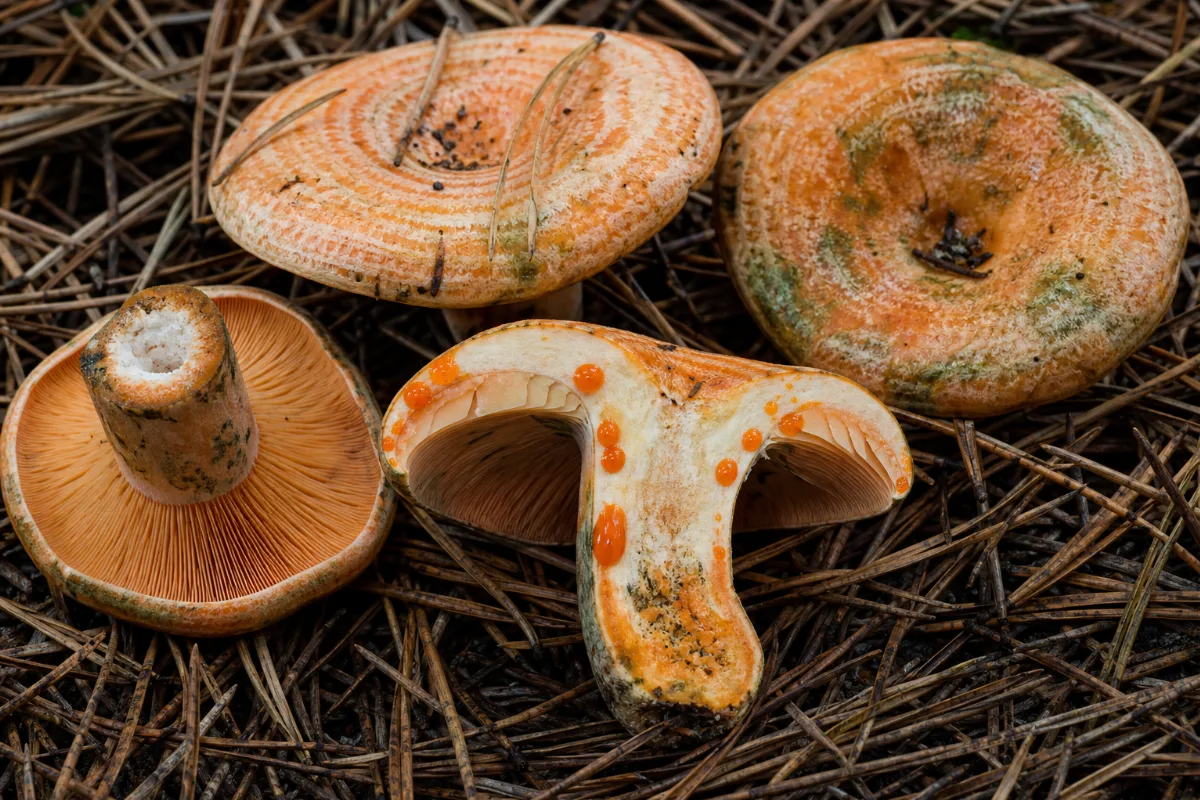
Mushrooms · Wild culinary mushroom
Saffron milk cap
Lactarius deliciosus (L.) Gray · also called Red pine mushroom; rovelló (a Catalan name used for the whole group)
Saffron milk cap is a wild mushroom of pine woods, cooked and eaten in places like Catalonia and Andorra. Safety comes first: it has look-alike milk caps that are toxic, and wild mushrooms can carry radioactive caesium from the soil. It is a food, not a proven remedy. The health findings are from cells and animals, and no human trial was found.
General information, not medical advice. Last substantive update · Not medically reviewed. A named clinician has not signed off on this page. How this page is made
About Saffron milk cap
Saffron milk cap is a wild mushroom of pine woods that is cooked and preserved in Catalonia, Andorra and elsewhere. Its safety questions are the toxic white-latex look-alikes, mistaking any wild mushroom for another, and radioactive caesium that depends on where it grew. Health claims are unproven: cancer-cell, antioxidant, rat and mouse findings come from extracts and purified parts, with no human trial. One informant in a survey reported dark urine after eating a lot; no source says why or calls it harmless.
What it is
Saffron milk cap (Lactarius deliciosus) is a fungus of the family Russulaceae, accepted in the GBIF database as Lactarius deliciosus (L.) Gray. A 2025 Polish table lists it as mycorrhizal, meaning it lives in partnership with tree roots, and the Andorran survey places the group in pine woods.
The name covers a group. Cooks in Catalonia and Andorra call the whole reddish-latex group rovelló, and one folk name, rovelló d'avet, refers specifically to Lactarius salmonicolor from fir woods. So the saffron milk cap you meet in a market or a paper may be this species or a close relative. Index Fungorum was not checked.
What the research shows
No human trial of saffron milk cap was found, as a food, extract or supplement.
Cell studies: a 2026 study reduced the survival of human breast cancer cells with methanol and ethanol extracts, while a skin cell line kept 80.55% to 98.92% viability with the ethanol extract. A 2025 study found that a microwave-made extract slowed human colon cancer cells, lowered reactive oxygen and lowered NOS2. These are results in a dish.
Animal studies: in rats given a liver-damaging chemical, an extract was reported to reduce liver and kidney damage. In mice, a purified lectin changed how fast particles were cleared from the blood, with a smaller effect at high levels, and a purified sugar chain was reported to cut tumour growth by 51.61% at the highest level tested in tumour-bearing mice. A purified pigment showed moderate activity against Staphylococcus aureus in a dish. None of this shows a health effect in people.
How strong is the evidence?
Insufficient for every use. All benefit findings come from cells or animals, using solvent extracts, purified parts or lab-grown mycelium that differ from a cooked mushroom. The abstracts rarely give group sizes or the mushroom's origin.
The safety evidence is mostly survey and lab-analysis data: an interview study, two radionuclide studies and three metal studies, only some of which include this species. It cannot give rates of illness.
Forms and quality
The form with a track record in the sources is the cooked fruiting body, and it is preserved in salt or vinegar. We found no extract, powder or capsule with human or safety data. A Polish university made fermented freeze-dried snacks as an experiment; they are not a supplement and no health effect was tested.
Origin and identity are the quality questions: where the mushroom grew, and whether it really is what it was sold as.
Legal and regulatory status
We found no drug-regulator statement on saffron milk cap. The Polish radiocaesium paper quotes an EU limit of 1250 becquerels per kg fresh mass for caesium-137 and says Euratom Regulation 2016/52 treats dried products by their reconstituted form; we did not open the regulation itself. FDA, EFSA and LactMed were not searched. Rules differ by country and change.
At a glance
Traditional uses history, not proof
- Cooked with oil, cooked without oil, or preserved in salt or vinegar in Catalonia and Andorra (2025 survey of 131 people).
- Among the most cited wild edible mushrooms in Andorra: third of all, and the most cited in mixed dishes (same survey).
- Collected for sale in the past, a tradition the survey says has largely disappeared.
- We found no traditional medicinal use of this mushroom in the sources read.
Studied for research
- Cancer cells in a dish (breast and colon cell lines), insufficient
- Antioxidant activity in lab tests, insufficient
- Liver and kidney damage in rats, insufficient
- Immune activity in mice, insufficient
- Inflammation marker and germ tests in the lab, insufficient
Main compounds
- Phenolic acids such as gallic and vanillic acid
- Violet and orange azulene pigments
- Glucans (sugar chains), lovastatin and ergothioneine, reported in experimental snacks
Common forms
- Fresh or cooked fruiting body (the food)
- Salted or pickled in vinegar (traditional preserving)
- Lab extracts and fermented freeze-dried snacks (research only; no supplement found)
Research links: Andorran ethnomycology, 2025 (abstract) · Radiocaesium in wild mushrooms, Poland 2025 (abstract) · Radionuclides in mushrooms, Turkey 2025 (abstract) · Breast cancer cell study, 2026 (abstract) · Colon cell study, 2025 (abstract) · Lactarius volatile chemicals, 2025 (abstract) · Research Library · Genes & Biomarkers Library
What it is and its history
- Accepted scientific name
- Lactarius deliciosus (L.) Gray (GBIF accepted name)
- Naming authority
- (L.) Gray (GBIF)
- Synonyms
- Agaricus deliciosus L.; Amanita deliciosa (L.) Roussel; Galorrheus deliciosus (L.) P.Kumm.
- Common names
- Saffron milk cap (English); Red pine mushroom (English (used in a 2025 paper title)); Rovelló (Catalan (folk name for the whole reddish-latex group, Andorran study))
- Family or group
- Russulaceae (a fungus family), not a plant
- Classification
- Fungi > Basidiomycota > Agaricomycetes > Russulales > Russulaceae > Lactarius > Lactarius deliciosus
- Native range
- Not checked as a range. Samples in the papers we read came from Poland, Spain, Morocco, Turkey and Andorra.
- Habitat
- Listed as mycorrhizal (living in partnership with tree roots) in a 2025 Polish table. The Andorran study places the reddish-latex group in Pyrenean pine woods. We did not read an ecology paper in full.
- What it looks like
- Fruiting body: Not described on this page. We give no identification help because wild mushrooms cannot be safely identified from text.
- Cultivation
- Not covered in the sources we read. A lab-grown mycelium of the species is used in research (a 2022 polysaccharide paper).
- Harvest and processing
- The Andorran study says the reddish-latex group cannot be air dried and is typically preserved in salt or vinegar, or cooked with oil.
- Look-alikes and adulterants
- Name: White-latex milk caps (Lactarius section Torminosi, for example L. torminosus); Note: Described by Andorran informants as mildly toxic with gastrointestinal irritants and often confused with the reddish-latex group; a 2025 paper calls L. torminosus poisonous (GBIF: L. torminosus key 8122710).; Name: Downy milk cap (Lactarius pubescens); Note: Named as inedible in the 2025 volatile-chemicals paper, as a species similar to L. deliciosus.; Name: Other reddish-latex relatives (L. deterrimus, L. salmonicolor, L. sanguifluus); Note: Separate accepted species in GBIF that are eaten in the same way in Catalan cooking. We did not research how they differ in edibility or safety.
- Sustainability and conservation
- Not checked.
Traditional use and history history, not clinical proof
| Tradition or era | Documented use | Source |
|---|---|---|
| Catalonia and Andorra, food | A very popular wild edible: the reddish-latex group is the third most cited wild edible mushroom among 131 Andorran informants, and the most cited in mixtures. It is cooked with oil, cooked without oil, or preserved in salt or vinegar. | p41219773 |
| Andorra, trade | The Andorran study lists the group among wild mushrooms collected for sale, a tradition it says has largely disappeared. | p41219773 |
| Catalan-speaking area, food | A scoping review lists 643 culinary fungi taxa in the area; only about a third have published nutritional values. | p40870809 |
| Medicine | We found no source naming a traditional medicinal use of this mushroom. The Andorran study records only nine medicinal use reports out of 1,172 across all mushrooms, and the abstract does not tie them to this group. | p41219773 |
Traditional use shows how it was used. It does not show that it works or is safe today.
What is inside, and how it may work
What it contains and how those compounds act in cells and animals. Laboratory and animal mechanisms are not proven effects in people.
Main compounds
| Compound | Family | Where it is concentrated | Activity studied | Level of evidence |
|---|---|---|---|---|
| Azulene-type sesquiterpenoids (violet and orange pigments such as 7-acetyl-4-methylazulene-1-carbaldehyde) | sesquiterpenoid | Fruiting body | One compound had moderate antibacterial activity against Staphylococcus aureus in a dish. 6 | Laboratory research |
| Phenolic acids (gallic, vanillic, 4-hydroxybenzoic) and succinic acid | phenolic | Fruiting body extracts A 2026 paper reports gallic acid 298.89 and vanillic acid 191.98 micrograms per gram in its sample | Antioxidant activity in lab assays. 8 2 | Laboratory research |
| Glucans, chitin, lovastatin, ergothioneine, indole chemicals | mixed food compounds | Caps (freeze-dried snacks) | Reported as present in experimental snacks; beta-glucans were 96.0 to 97.5% of the total glucans. A composition finding, not a health effect. 14 | Composition |
| Polysaccharide LDP (heteropolysaccharide with a mannose backbone) | polysaccharide | Purified from the mushroom (part not stated) | Immune and tumour effects in mice. 4 | Animal research |
| Lectin (galactose-binding protein) | protein | Not stated | Raised carbon clearance in mice, less so at high levels. 5 | Animal research |
Mechanisms, receptors and pathways
| Target or pathway | Gene or receptor | What was found | Level |
|---|---|---|---|
| Glucose handling and TCA-cycle genes in MCF-7 cells | SLC2A1/GLUT1, HK2, IDH1, OGDH | Extract lowered these genes in cultured breast cancer cells, with G0/G1 arrest and apoptosis (the authors call it reversing the Warburg effect). 8 | Laboratory research |
| Cell cycle, caspase-3 and mitochondria in Caco-2 cells | CASP3 | Extract caused G0/G1 arrest and apoptosis with altered mitochondrial potential and more caspase-3 activity. 2 | Laboratory research |
| Inflammation signalling in Caco-2 cells | NOS2 | NOS2 expression was lowered. 2 | Laboratory research |
| Gut bacteria and T cells in tumour-bearing mice | The polysaccharide raised lactobacilli, adenine-linked zeatin biosynthesis and CD4+ and CD8+ T-cell activity (authors' account). 4 | Animal research | |
| Macrophage and neutrophil phagocytosis in mice | A lectin stimulated clearance of injected carbon particles. 5 | Animal research |
Absorption, metabolism and elimination
- Absorption
- Not found in the sources read.
- Distribution
- Not found in the sources read.
- Metabolism
- Not found in the sources read.
- Elimination
- Not found in the sources read.
- Bioavailability
- Not established.
Isolated compounds versus whole extracts
Almost all of the lab work uses extracts made with methanol, ethanol or hot water-based solvents, purified sugar chains, a purified lectin, a single pure pigment, or lab-grown mycelium. None of these is the cooked mushroom. Results from one form cannot be carried over to another or to a meal.
Nutritional composition
As a food it is mostly water: the Polish study's median water content was 85.45% in two fresh samples. Potassium was the main mineral in the Spanish and Moroccan Lactarius samples, and iron in L. deliciosus ranged widely between samples. The Polish snack study reports glucans, lovastatin, ergothioneine and fibre in freeze-dried caps. No nutrient claim is made here; no food-table entry was found.
7 not enough evidence
What was looked at
The 7 benefits and uses checked for Saffron milk cap, each with how strong the evidence is. Tap one to open it.
- Cancer cells in a dish (laboratory only)Not enough evidence
- Antioxidant activity (test tube and cell tests)Not enough evidence
- Liver and kidney damage in rats (animal only)Not enough evidence
- Immune activity (mouse and lab findings)Not enough evidence
- Inflammation marker in cultured cells (laboratory only)Not enough evidence
- Germ-killing in a dish (one pigment, laboratory only)Not enough evidence
- Food value (composition only)Not enough evidence
Lab markers tracked in the studies
Survival of MCF-7 breast cancer cells in a dishReactive oxygen levels in Caco-2 cellsNOS2 gene activity in Caco-2 cellsCarbon particle clearance in mice
What is Saffron milk cap good for?
The uses people ask about and how strong the evidence is for each. None has been tested in people. Read this together with the Safety tab.
Benefits, one by one
Each card is a research question, not a promise. Tap a goal to filter. Open a card to see the studies, doses and limits.
Cancer cells in a dish (laboratory only)
Not enough evidenceIn two lab studies, extracts of saffron milk cap reduced the survival of human breast and colon cancer cells grown in a dish. Nothing was tested in people, and a dish result is not a treatment.
2 studiesLab extracts made with methanol or ethanol, or a water or glycerol-ba…
Studies, doses and limits
Results
A 2026 study used methanol and ethanol extracts on human MCF-7 breast cancer cells. Cell survival fell in a dose-dependent way, to as low as 5.60% after 72 hours at the strongest condition. A skin fibroblast line used as a healthy comparison kept 80.55% to 98.92% viability with the ethanol extract (read in the open-access full text). A 2025 study used a water or glycerol-based extract on human Caco-2 colon cancer cells. It reduced colony formation and cell adhesion and caused a stop in the cell cycle and cell death.
Effect sizes as reported
Dose-dependent fall in cancer-cell survival (breast study: down to 5.60% viability at the strongest condition); no human effect size
Why this rating
Two cell-line studies. Cells in a dish are not a body, extracts were made with solvents and methods (a 225 degree microwave extraction in one) that a kitchen does not use, and no animal or human test followed.
Form and dose studied
Lab extracts made with methanol or ethanol, or a water or glycerol-based solvent. These are not the cooked food and are not sold as supplements that we found. No amounts are given and none are advised.
Who was studied
Human breast cancer cells (MCF-7), human colon cancer cells (Caco-2), and skin fibroblasts as a healthy comparison
Limits
Cell-line studies by single groups. Where the mushrooms came from and how many batches were tested is not stated in the abstracts. Results do not show that eating the mushroom affects cancer in any way.
Why researchers looked
Mushrooms contain many chemicals, and lab groups screen extracts on cancer cell lines to look for leads.
Traditional use
We found no traditional medicinal use of this mushroom in the sources read. It is a food.
Proposed mechanism Laboratory research
In the breast cell study the authors report lower activity of glucose-handling genes, a stop in the cell cycle at the G0/G1 stage and cell death. In the colon cell study they report the same stop and cell death, with more caspase-3 activity and altered mitochondria.
A proposed mechanism does not show that the effect happens in people.
Not a cancer treatment. If you have cancer, talk to your cancer team before using any mushroom product. The real safety points are about wild harvesting: look-alike milk caps, mistaken identity and radioactive caesium in some places. See the Safety tab. Lab results do not make the food a remedy.
Antioxidant activity (test tube and cell tests)
Not enough evidenceExtracts and sugar chains from saffron milk cap showed antioxidant activity in lab tests and protected cultured cells from chemical damage. This does not show that eating the mushroom changes oxidative stress in people.
3 studiesLab extracts, and a purified sugar chain from lab-grown mycelium (not…
Studies, doses and limits
Results
The extracts showed antioxidant activity in assays, and in cells the colon extract lowered reactive oxygen species. A sugar chain (LDP-CP) from mycelium kept more PC12 cells alive after hydrogen peroxide and improved the cell markers LDH, SOD and GSH. All of these are laboratory results.
Effect sizes as reported
Not given as comparable numbers in the abstracts
Why this rating
Assay and cell-culture results only. Antioxidant tests in a dish are widely known not to predict an effect in the body, and no animal or human test of this was found.
Form and dose studied
Lab extracts, and a purified sugar chain from lab-grown mycelium (not the fruiting body). No amounts are given and none are advised.
Who was studied
Test-tube assays and cultured cells (human cancer lines, rat PC12 cells)
Limits
Mycelium is a different material from the mushroom that is eaten. Extraction methods differ widely between papers.
Why researchers looked
Mushrooms contain phenolic acids and other chemicals that react with free radicals in test-tube assays, so antioxidant tests are a common first screen.
Traditional use
We found no traditional medicinal use of this mushroom in the sources read. It is a food.
Proposed mechanism Laboratory research
The 2026 breast-cell paper reports phenolic acids (gallic and vanillic) and strong antioxidant activity of the extracts. The 2025 colon-cell paper reports phenolics such as 4-hydroxybenzoic and vanillic acids and lower reactive oxygen levels in cells. A 2022 paper reports that a sugar chain from lab-grown mycelium protected PC12 nerve-type cells from hydrogen peroxide damage.
A proposed mechanism does not show that the effect happens in people.
The real safety points are about wild harvesting: look-alike milk caps, mistaken identity and radioactive caesium in some places. See the Safety tab. Lab results do not make the food a remedy.
Liver and kidney damage in rats (animal only)
Not enough evidenceIn rats given a liver-damaging chemical, saffron milk cap extract was reported to reduce tissue damage in the liver and kidney. No person has been studied.
1 studiesAn extract of the mushroom was given to rats. No amounts are given an…
Studies, doses and limits
Results
In 36 rats split into six groups, the carbon tetrachloride group had severe liver and kidney lesions. The authors report that these lesions were ameliorated by L. deliciosus extract supplementation. Another mushroom in the same study, Agrocybe cylindracea, did not protect.
Effect sizes as reported
Not given as numbers in the abstract
Why this rating
One rat study with a toxic chemical as the injury. It says nothing about liver health in people or about eating the mushroom.
Form and dose studied
An extract of the mushroom was given to rats. No amounts are given and none are advised.
Who was studied
Rats (36, six groups)
Limits
One research group; the abstract does not say which part of the mushroom, the extract method or where it came from. The authors' phrase 'dietary antioxidant' goes beyond the data.
Why researchers looked
Turkish researchers tested wild mushrooms as dietary antioxidants against oxidative damage in organs.
Traditional use
We found no traditional medicinal use of this mushroom in the sources read. It is a food.
Proposed mechanism Animal research
The authors link the effect to antioxidant action against oxidative stress caused by carbon tetrachloride, measured with the markers ADA and MPO and by tissue slides.
A proposed mechanism does not show that the effect happens in people.
The real safety points are about wild harvesting: look-alike milk caps, mistaken identity and radioactive caesium in some places. See the Safety tab. Lab and animal results do not make the food a remedy. Do not use any mushroom to treat liver problems.
Immune activity (mouse and lab findings)
Not enough evidenceA protein (lectin) and a sugar chain from saffron milk cap changed immune measures in mice. This is mouse work and does not show a benefit for people.
2 studiesA purified lectin and a purified polysaccharide. Neither is sold as a…
Studies, doses and limits
Results
A partly purified lectin raised the clearance of carbon particles in mice, more at low levels and less at high levels (the authors state p < 0.0001). A purified polysaccharide (LDP) protected immune organs of tumour-bearing mice and suppressed solid tumour growth, with an inhibition rate of 51.61% at the highest level tested.
Effect sizes as reported
Tumour growth inhibition of 51.61% at the top level in tumour-bearing mice; the lectin effect fell at high levels
Why this rating
Two mouse studies of purified parts of the mushroom. Purified lectins and sugar chains are very different from eating the mushroom.
Form and dose studied
A purified lectin and a purified polysaccharide. Neither is sold as a product that we found. No amounts are given and none are advised.
Who was studied
Mice (including tumour-bearing mice)
Limits
The abstracts do not give group sizes. A lectin effect that falls at high levels, as reported here, shows that more is not simply better.
Why researchers looked
Mushroom sugar chains and proteins are commonly screened for immune effects.
Traditional use
We found no traditional medicinal use of this mushroom in the sources read. It is a food.
Proposed mechanism Animal research
For the lectin, the authors report stimulation of macrophages and neutrophils, measured by how fast carbon particles were cleared from the blood. For the sugar chain, the authors report better gut bacteria balance (more lactobacilli), more active CD4+ and CD8+ T cells and less tumour growth in tumour-bearing mice.
A proposed mechanism does not show that the effect happens in people.
The real safety points are about wild harvesting: look-alike milk caps, mistaken identity and radioactive caesium in some places. See the Safety tab. Lab and animal results do not make the food a remedy. Mouse tumour results are not a cancer treatment.
Inflammation marker in cultured cells (laboratory only)
Not enough evidenceAn extract lowered the activity of a gene linked to inflammation (NOS2) in cultured colon cells. It is one cell-line result.
1 studiesA lab extract made at high temperature. No amounts are given and none…
Studies, doses and limits
Results
The microwave-assisted water or glycerol-based extract lowered NOS2 expression in the cultured Caco-2 cells, which the authors describe as an anti-inflammatory effect.
Effect sizes as reported
Not given as numbers in the abstract
Why this rating
One cell line, no animal or human test. A gene reading in a dish is not an anti-inflammatory effect in a person.
Form and dose studied
A lab extract made at high temperature. No amounts are given and none are advised.
Who was studied
Cultured human Caco-2 cells
Limits
Single cell-line result by one group.
Why researchers looked
NOS2 is an enzyme linked to inflammation, and the researchers checked it as part of a colon cell study.
Traditional use
We found no traditional medicinal use of this mushroom in the sources read. It is a food.
Proposed mechanism Laboratory research
The authors report significant downregulation of NOS2 expression in Caco-2 cells treated with the extract.
A proposed mechanism does not show that the effect happens in people.
The real safety points are about wild harvesting: look-alike milk caps, mistaken identity and radioactive caesium in some places. See the Safety tab. Lab and animal results do not make the food a remedy.
Germ-killing in a dish (one pigment, laboratory only)
Not enough evidenceOne purified colour chemical from saffron milk cap had a moderate effect against Staphylococcus aureus bacteria in a dish. It does not show that the mushroom fights infection.
1 studiesA single purified pigment, not a food or a supplement.
Studies, doses and limits
Results
Two new azulene-type compounds were described together with seven known ones. Of the known ones, 7-acetyl-4-methylazulene-1-carbaldehyde showed moderate antibacterial activity against Staphylococcus aureus.
Effect sizes as reported
Described as moderate; no numbers in the abstract
Why this rating
A purified compound tested in a dish. A chemistry paper, not a test of infection.
Form and dose studied
A single purified pigment, not a food or a supplement.
Who was studied
Bacteria in a dish
Limits
Only one compound out of nine was reported active.
Why researchers looked
Chemists separated the mushroom's chemicals and tested the pure ones for activity.
Traditional use
We found no traditional medicinal use of this mushroom in the sources read. It is a food.
Proposed mechanism Laboratory research
The compound is an azulene-type sesquiterpenoid, a family of coloured chemicals found in some milk caps. The abstract gives no mechanism.
A proposed mechanism does not show that the effect happens in people.
The real safety points are about wild harvesting: look-alike milk caps, mistaken identity and radioactive caesium in some places. See the Safety tab. Lab and animal results do not make the food a remedy.
Food value (composition only)
Not enough evidenceAs a food, saffron milk cap supplies fibre, minerals and a few unusual chemicals. These measurements describe the food and do not show a health benefit.
3 studiesFresh and cooked caps, dried caps in lab analysis, and an experimenta…
Studies, doses and limits
Results
A Polish team made freeze-dried fermented snacks from caps and reported them as a source of minerals, phenolics, indole chemicals, lovastatin, dietary fibre and glucans after six months of storage. A Spanish and Moroccan study of 20 milk-cap samples found potassium was the main mineral and that eating 300 g of fresh mushrooms would not meet the daily need for any of the seven minerals measured except iron. A review of wild fungi in the Catalan language area found that only 35.46% of 643 culinary fungi taxa have published nutritional values.
Effect sizes as reported
Composition values only
Why this rating
Composition is not health. One iron value in the Spanish study ranged from 56.5 to 1245 mg per kg between L. deliciosus samples, so a single figure says little about a typical mushroom.
Form and dose studied
Fresh and cooked caps, dried caps in lab analysis, and an experimental fermented snack from a Polish university (not a supplement).
Who was studied
Mushroom samples from Poland, Spain and Morocco
Limits
Values vary widely with place and sample. No standard food-table entry was found.
Why researchers looked
Researchers measured what is in popular wild mushrooms, partly to see whether they are useful foods.
Traditional use
We found no traditional medicinal use of this mushroom in the sources read. It is a food.
Proposed mechanism Not applicable
Not applicable. This is a composition finding, not a mechanism.
A proposed mechanism does not show that the effect happens in people.
Wild mushrooms also take up metals and radioactive caesium from the soil. See the Safety tab.
Connections to the rest of health
How Saffron milk cap connects to the rest of our health knowledge graph. Every link says what kind of connection it is. A safety link (for example to the liver) is a warning, not a benefit. A study that merely mentions a topic never creates a benefit link.
Explore every connection: goals, body systems, organs, symptoms, genes
A. Wellness goals
| Connected to | Kind of connection | Evidence status | Context | Studies |
|---|---|---|---|---|
| Cellular Protection | Not enough evidence | Antioxidant activity (test tube and cell tests): Extracts and sugar chains from saffron milk cap showed antioxidant activity in lab tests and protected cultured cells from chemical damage. This does not show that eating the mushroom changes oxidative stress in people. | 8 2 9 | |
| Immune Support | Not enough evidence | Immune activity (mouse and lab findings): A protein (lectin) and a sugar chain from saffron milk cap changed immune measures in mice. This is mouse work and does not show a benefit for people. | 5 4 |
B. Body systems
| Connected to | Kind of connection | Evidence status | Context | Studies |
|---|---|---|---|---|
| Hepatic System | Biological association | Not enough evidence | Studied for: Liver and kidney damage in rats (animal only) | 3 |
| Immune System | Biological association | Not enough evidence | Studied for: Immune activity (mouse and lab findings) | 5 4 |
E. Health conditions
| Connected to | Kind of connection | Evidence status | Context | Studies |
|---|---|---|---|---|
| Food poisoning | Low certainty | Described as mildly toxic with gastrointestinal irritants and often confused with the reddish-latex group. Preparation or compound: White-latex look-alike milk caps, not saffron milk cap |
18 16 |
G. Root causes and contributing factors
| Connected to | Kind of connection | Evidence status | Context | Studies |
|---|---|---|---|---|
| Environmental toxins | Low certainty | Caesium-137 was measured in two regional studies and varied by place; none exceeded the limit quoted. Preparation or compound: Wild fruiting body |
12 1 | |
| Heavy metal exposure | Not enough evidence | No metal measurement for this species was found; other wild mushrooms in Poland often exceeded EU limits. Preparation or compound: Wild mushrooms in general |
13 10 |
I. Biomarkers
| Connected to | Kind of connection | Evidence status | Context | Studies |
|---|---|---|---|---|
| Survival of MCF-7 breast cancer cells in a dish | Biological association | Not enough evidence | Measured in trials: lowered. A lab change is not the same as a health benefit. | 8 |
| Reactive oxygen levels in Caco-2 cells | Biological association | Not enough evidence | Measured in trials: lowered. A lab change is not the same as a health benefit. | 2 |
| NOS2 gene activity in Caco-2 cells | Biological association | Not enough evidence | Measured in trials: lowered. A lab change is not the same as a health benefit. | 2 |
| Carbon particle clearance in mice | Biological association | Not enough evidence | Measured in trials: raised at low levels. A lab change is not the same as a health benefit. | 5 |
J. Genes, receptors and enzymes
| Connected to | Kind of connection | Evidence status | Context | Studies |
|---|---|---|---|---|
| SLC2A1 (GLUT1) and HK2 | Preliminary mechanism | In vitro | Lower in MCF-7 cells treated with extract. | 8 |
| NOS2 | Preliminary mechanism | In vitro | Lower in Caco-2 cells treated with extract. | 2 |
| Caspase-3 | Preliminary mechanism | In vitro | More active in Caco-2 cells treated with extract. | 2 |
L. Active compounds
| Connected to | Kind of connection | Evidence status | Context | Studies |
|---|---|---|---|---|
| Azulene-type sesquiterpenoids (violet and orange pigments such as 7-acetyl-4-methylazulene-1-carbaldehyde) | Biological association | In vitro | One compound had moderate antibacterial activity against Staphylococcus aureus in a dish. Preparation or compound: Fruiting body |
6 |
| Phenolic acids (gallic, vanillic, 4-hydroxybenzoic) and succinic acid | Biological association | In vitro | Antioxidant activity in lab assays. Preparation or compound: Fruiting body extracts |
8 2 |
| Glucans, chitin, lovastatin, ergothioneine, indole chemicals | Biological association | Composition | Reported as present in experimental snacks; beta-glucans were 96.0 to 97.5% of the total glucans. A composition finding, not a health effect. Preparation or compound: Caps (freeze-dried snacks) |
14 |
| Polysaccharide LDP (heteropolysaccharide with a mannose backbone) | Biological association | Animal | Immune and tumour effects in mice. Preparation or compound: Purified from the mushroom (part not stated) |
4 |
| Lectin (galactose-binding protein) | Biological association | Animal | Raised carbon clearance in mice, less so at high levels. | 5 |
Each connection is stored with the ingredient, the connected record, the kind of connection, the evidence status, the supporting studies, the preparation or compound involved, and a review date (last reviewed October 25, 2026).
Evidence at a glance: what changed in 3 lab markers
Tap a number to show only those markers. Counts are markers, not people.
The evidence
The research centre for Saffron milk cap. Every record here was checked against PubMed or the publisher's page; we never list a study we have not verified.
Evidence by outcome
Bars show how many studies we found for each outcome, not how well it works. People are added up across trials only (reviews are not added, to avoid double counting).
How we rate evidence
High certainty
Several well-run trials or reviews agree; further research is unlikely to change the picture much.
Moderate certainty
Good trials point the same way, but some doubt remains.
Low certainty
Small, short or inconsistent trials. The finding could change with better research.
Very low certainty
Very little or very weak human data. Treat as a possibility only.
Mixed findings
Trials or reviews disagree with each other.
Not enough evidence
Not enough human research to say either way.
Evidence against
Good research found no benefit, or found harm.
We take the reviewers' own risk-of-bias and GRADE statements where they exist, and otherwise judge from study size, design, consistency, directness and whether a product matches what is sold. Many publications do not make evidence high. Method note: We read PubMed records and abstracts for 18 papers (an interview survey, three radionuclide studies, three metal and mineral studies, two food-composition papers, six cell and animal studies, two chemistry papers including one on look-alike species, and a farm-pest toxicity paper), parts of several in open-access full text, and checked the species name in GBIF. Papers cited only inside the studies we read were not opened.
Study library: every study we checked 19
| Study | Design | People | Product, dose, length | Result |
|---|---|---|---|---|
| Akkaya 2025 Radioactive Contaminants in Edible Mushrooms: A Comparative Study of 137Cs and Natural Radionuclides in Amasya and Tekirdağ, Turkiye. Journal of Fungi · PMID 40422685 · DOI |
Food analysis fungus |
24 mushroom species from two Turkish provinces | Wild mushrooms including L. deliciosus fruiting body Not shown here |
Caesium-137 ranged from 3.9 to 127.8 Bq/kg (Tekirdağ) and 3.1 to 63.7 Bq/kg (Amasya). In the full-text tables, L. deliciosus had 5.2 Bq/kg (Tekirdağ) and 35.2 Bq/kg (Amasya). Region-dependent Methods, limits and fundingOutcomes: Caesium-137, uranium-238, thorium-232, potassium-40 Limitations: Fresh or dry basis not stated in the text we read. Funding and conflicts: No conflicts declared (abstract record) Read: abstract and open-access full text (tables) |
| Bidooki 2025 Lactarius deliciosus Extract from Green Microwave-Assisted Eutectic Solvent Extraction as a Therapeutic Candidate Against Colon Cancer. Antioxidants (Basel) · PMID 41462652 · DOI |
Laboratory research cell |
Human Caco-2 colon cancer cells | Extract made by microwave-assisted extraction with water or a glycerol/glycine/water solvent fruiting body (not stated in the abstract) Not shown here |
The extract was high in phenolics (4-hydroxybenzoic and vanillic acids). It cut colony formation and cell adhesion dose-dependently, caused G0/G1 arrest and apoptosis with higher caspase-3 activity, lowered reactive oxygen species and lowered NOS2 expression, without adversely affecting the intestinal barrier (authors' words). Antiproliferative in a dish Methods, limits and fundingOutcomes: Antioxidant activity, colony formation, adhesion, cell cycle, apoptosis, ROS, NOS2 Limitations: Single cell line; extraction at high temperature is not a cooking method; no animal or human test. Funding and conflicts: No conflicts of interest declared (abstract record) Read: abstract |
| Dogan 2022 The protective effects of the Lactarius deliciosus and Agrocybe cylindracea mushrooms on histopathology of carbon tetrachloride induced oxidative stress in rats. Biotechnic & Histochemistry · PMID 33970727 · DOI |
Animal study rat |
36 Rats in six groups (control, CCl4, each mushroom alone, each mushroom with CCl4) |
L. deliciosus extract supplementation Not shown here |
CCl4 caused severe hepato-renal lesions and raised MPO and ADA. The authors report that the CCl4-induced lesions were ameliorated by L. deliciosus extract supplementation. L. deliciosus alone did not produce severe lesions. Less tissue damage in rats Methods, limits and fundingOutcomes: ADA and MPO levels, liver and kidney histology Limitations: Rat model; group sizes per arm, mushroom part and extract method not stated in the abstract. Funding and conflicts: Funding not stated in the abstract Read: abstract |
| Dong 2024 Structural characteristics and intestinal flora metabolism mediated immunoregulatory effects of Lactarius deliciosus polysaccharide. International Journal of Biological Macromolecules · PMID 39187112 · DOI |
Animal study mouse |
Tumour-bearing mice | Purified L. deliciosus polysaccharide (LDP) Not shown here |
LDP is a heteropolysaccharide with a mannose backbone. In tumour-bearing mice it protected immune organs, suppressed solid tumour growth (inhibition rate 51.61% at the high level), raised gut lactobacillus and enhanced CD4+ and CD8+ T-cell activity. Tumour inhibition 51.61% at the high level Methods, limits and fundingOutcomes: Immune organs, tumour growth, gut bacteria, T cells Limitations: Mouse study of a purified sugar chain; group sizes not in the abstract; not the food. Funding and conflicts: No competing interests declared (abstract record) Read: abstract |
| Esseddik 2020 In Vivo Immunomodulatory Potential of Partial Purified Lectin from the Saffron Milk Cap Mushroom, Lactarius deliciosus (Agaricomycetes), against Colloidal Carbon Particles. International Journal of Medicinal Mushrooms · PMID 33426836 · DOI |
Animal study mouse |
Mice | Partly purified lectin from L. deliciosus Not shown here |
Significant effect on phagocytic activity and carbon half-life at 5, 10, 15 and 30 mg/kg. The effect increased at low levels and decreased at high levels versus control (p < 0.0001). Dose-dependent immune stimulation, lower at high levels Methods, limits and fundingOutcomes: Phagocytic activity and half-life of carbon particles Limitations: Mouse study of a purified protein; group sizes not in the abstract. Funding and conflicts: Funding not stated in the abstract Read: abstract |
| Feussi Tala 2017 New Azulene-Type Sesquiterpenoids from the Fruiting Bodies of Lactarius deliciosus. Natural Products and Bioprospecting · PMID 28493207 · DOI |
Chemistry lab bacteria |
Isolated compounds | Nine azulene-type compounds from fruiting bodies fruiting body Not shown here |
Two new and seven known compounds were characterised. 7-Acetyl-4-methylazulene-1-carbaldehyde showed moderate antibacterial activity against Staphylococcus aureus. Moderate activity in a dish Methods, limits and fundingOutcomes: Structure; antibacterial test Limitations: Chemistry paper; one test organism; no human data. Funding and conflicts: No conflicts declared (abstract record) Read: abstract |
| GBIF Secretariat 2026 GBIF Backbone Taxonomy: Lactarius deliciosus and relatives GBIF API · Source |
Taxonomy record n/a |
n/a | n/a |
Lactarius deliciosus (L.) Gray, key 5248629, ACCEPTED, family Russulaceae, order Russulales, published 1821 (Nat. Arr. Brit. Pl. 1: 624). Synonyms include Agaricus deliciosus L., Amanita deliciosa (L.) Roussel and Galorrheus deliciosus (L.) P.Kumm. Related accepted species: L. deterrimus 7925734, L. salmonicolor 5248788, L. sanguifluus 5248648, L. torminosus 8122710. Methods, limits and fundingOutcomes: Accepted names, family, synonyms and keys Limitations: Index Fungorum was not checked. Funding and conflicts: Public database Read: API response read 2026-10-25 |
| Gülüm 2026 From Phytochemical Characterization to Energy Metabolism-Driven Molecular Responses: The Anticancer Potential of Lactarius deliciosus (L.) Gray in Breast Cancer Cells. Nutrients · PMID 41901183 · DOI |
Laboratory research cell |
Human MCF-7 breast cancer cells and a human skin fibroblast line | Methanol and ethanol extracts of Lactarius deliciosus fruiting body (source not stated in the abstract) Not shown here |
Extracts showed antioxidant activity and dose-dependent cytotoxicity, with viability as low as 5.60% after 72 hours. Glycolysis and TCA-cycle genes were down (SLC2A1/GLUT1 -12.34, HK2 -1.71, IDH1 -17.81, OGDH -2.54), with G0/G1 arrest and apoptosis. In the full text the healthy fibroblast line kept 80.55% to 98.92% viability with the ethanol extract. Cytotoxic to MCF-7 cells in a dish Methods, limits and fundingOutcomes: Cell viability, cell cycle, apoptosis, expression of 46 genes, antioxidant activity, phenolic profile Limitations: Cell line only; one group; not tested in animals or people; extracts are not the food. Funding and conflicts: Reported as no external funding (full text) Read: abstract and open-access full text (partial) |
| Li 2022 Structural characterization and protective effect on PC12 cells against H2O2-induced oxidative damage of a polysaccharide extracted from mycelia of Lactarius deliciosus Gray. International Journal of Biological Macromolecules · PMID 35487375 · DOI |
Laboratory research cell |
Rat PC12 cells | Polysaccharides (LDP and purified LDP-CP) from lab-grown mycelium mycelium Not shown here |
The polysaccharides improved cell viability and morphology and the markers LDH, SOD and GSH after hydrogen peroxide damage. Cell protection in a dish Methods, limits and fundingOutcomes: Cell viability and LDH, SOD, GSH after hydrogen peroxide Limitations: Mycelium polysaccharide, not the fruiting body; cell line only. Funding and conflicts: No conflicts of interest declared (abstract record) Read: abstract |
| López 2022 Essential Mineral Content (Fe, Mg, P, Mn, K, Ca, and Na) in Five Wild Edible Species of Lactarius Mushrooms from Southern Spain and Northern Morocco: Reference to Daily Intake. Journal of Fungi · PMID 36547625 · DOI |
Food analysis fungus |
20 Twenty Lactarius samples from southern Spain and northern Morocco |
Wild Lactarius fruiting bodies including L. deliciosus fruiting body Not shown here |
Potassium was the main mineral in all samples. Eating 300 g of fresh mushrooms would cover a high share of the recommended daily intake but not meet it for any mineral studied except iron. In the full text, iron in L. deliciosus ranged from 56.5 mg/kg (sample 6) to 1245 mg/kg (sample 10). The authors advise moderating consumption because of toxic metals, although the abstract reports measuring only essential minerals. Composition only Methods, limits and fundingOutcomes: Seven essential minerals Limitations: Mixed Lactarius species; values vary widely by place; toxic metals are mentioned by the authors but not shown in the abstract. Funding and conflicts: No conflicts of interest declared (abstract record) Read: abstract and open-access full text (Table 3) |
| Melgar 2021 Natural radioactivity and total K content in wild-growing or cultivated edible mushrooms and soils from Galicia (NW, Spain). Environmental Science and Pollution Research · PMID 34018117 · DOI |
Food analysis fungus |
Wild and cultivated mushrooms from Galicia, Spain | Wild and cultivated mushrooms; L. deliciosus lowest fruiting body Not shown here |
Average 40K in wild species was 1291 Bq/kg dry weight, with the lowest species average, 748 Bq/kg, in L. deliciosus. The yearly dose from average consumption was 0.15 microsieverts, which the authors call a very low toxicological risk. Very low dose Methods, limits and fundingOutcomes: Potassium-40 Limitations: Natural isotope only; says nothing about caesium or metals. Funding and conflicts: Funding not stated in the abstract Read: abstract |
| Mirończuk-Chodakowska 2025 Forty Years After Chernobyl: Radiocaesium in Wild Edible Mushrooms from North-Eastern Poland and Its Relevance for Dietary Exposure and Food Safety. Toxics · PMID 40711045 · DOI |
Food analysis fungus |
230 230 samples of 19 wild edible species and soils, north-eastern Poland |
Wild mushrooms; L. deliciosus n = 2 fruiting body Not shown here |
137Cs 0.94 to 159.0 Bq/kg fresh mass; none above the 1250 Bq/kg limit; highest annual dose 2.32 microsieverts. For L. deliciosus (2 samples): median 34.9 Bq/kg fresh (32.7 to 37.2) and 255.0 Bq/kg dry; water content 85.45%. Below the limit Methods, limits and fundingOutcomes: Caesium-137 and potassium-40 by gamma spectrometry Limitations: Only 2 saffron milk cap samples; one region. Funding and conflicts: No conflicts declared (abstract record) Read: abstract and open-access full text (tables) |
| Rusin 2025 Spatial Variation in Cd, Pb, Hg, and Zn Accumulation in Edible Wild-Growing Mushroom Species from Different Environmentally Loaded Areas in Southern Poland: Risk Assessment and Implications for Consumer Safety. Toxics · PMID 41600585 · DOI |
Food analysis fungus |
200 200 wild mushroom samples, industrial and non-industrial areas of southern Poland |
Wild mushrooms (mostly boletes and others) fruiting body Not shown here |
51% of samples exceeded EU limits for Cd, Pb or Hg. Xerocomellus species were highest; Cd in them was up to 20 times higher than in Suillus. A high-consumption scenario gave hazard quotients above 1 for Cd from the most contaminated group. No saffron milk cap value appears in the abstract. Many samples above EU limits Methods, limits and fundingOutcomes: Cd, Pb, Hg, Zn Limitations: Abstract only; not specific to this species. Funding and conflicts: No conflicts declared (abstract record) Read: abstract |
| Venugopal 2025 Fermented, Freeze-Dried Snacks from Lactarius deliciosus as a Source of Functional Compounds and Lactic Acid Bacteria. Molecules · PMID 40286173 · DOI |
Food analysis fungus |
Caps bought at a market in Krakow, Poland, made into snacks | Fermented freeze-dried snacks (water or microwave blanching; two probiotic strains) cap Not shown here |
After six months of storage the snacks were a good source of functional compounds, especially lactic acid bacteria, minerals, indoles, lovastatin, phenolics and dietary fibre. Water blanching gave more lovastatin; microwave blanching gave more potassium, iron, phenolics and soluble fibre. Only microwave-blanched snacks fermented with L. plantarum kept a high count of lactic acid bacteria (7.3 log CFU/g). Composition only Methods, limits and fundingOutcomes: Minerals, phenolics, indoles, lovastatin, ergothioneine, glucans, lactic acid bacteria Limitations: Composition of an experimental food, not a health trial; one batch; no health outcome. Funding and conflicts: No conflicts of interest declared (abstract record) Read: abstract and open-access full text (partial) |
| Volcao 2022 Mushroom extract of Lactarius deliciosus (L.) Sf. Gray as biopesticide: Antifungal activity and toxicological analysis. Journal of Toxicology and Environmental Health Part A · PMID 34459359 · DOI |
Laboratory research cell |
Mould, cabbage seeds and mouse macrophage cells | Hydroalcoholic extract fruiting body (not stated in the abstract) Not shown here |
The extract slowed a fruit-rot fungus and was phytotoxic to cabbage seeds. The authors report no cytotoxicity in Vero cell lines and no adverse effect on the viability of the mouse J774A.1 cell line. Antifungal; no cell toxicity seen Methods, limits and fundingOutcomes: Antifungal activity, phytotoxicity, cell toxicity Limitations: A farm-pest paper; not a human safety test. Funding and conflicts: Funding not stated in the abstract Read: abstract |
| Wróblewski 2025 Studies on the Emission of Volatile Organic Compounds from Selected Forest Mushrooms of the Genus Lactarius Using Proton-Transfer Reaction Mass Spectrometry. Molecules · PMID 40733266 · DOI |
Chemistry lab fungus |
Three Lactarius species | L. deliciosus, L. pubescens, L. torminosus fruiting body Not shown here |
The authors describe the delicious-tasting L. deliciosus, the inedible downy L. pubescens and the poisonous woolly L. torminosus as similar species, and report that their volatile chemicals differ significantly for 20 selected molecules. Species differ in smell chemicals Methods, limits and fundingOutcomes: Volatile chemicals to tell the species apart Limitations: A lab method paper; not a method for readers to use to identify a mushroom. Funding and conflicts: No conflicts declared (abstract record) Read: abstract |
| Álvarez-Puig 2025 Wild Edible Fungi in the Catalan Linguistic Area: A Scoping Review Linking Nutritional Value to Ethnomycology. Foods · PMID 40870809 · DOI |
Scoping review n/a |
Culinary fungi of the Catalan language area | Wild edible fungi (643 taxa) fruiting body Not shown here |
The review listed 643 culinary fungi taxa, of which 35.46% have reported nutritional values. The authors say nutritional values for most macrofungi are still lacking and the data are hard to standardise. Gaps in nutrition data Methods, limits and fundingOutcomes: Which fungi are eaten and whether nutritional values are published Limitations: Regional review of the Catalan area; not specific to saffron milk cap. Funding and conflicts: No conflicts of interest declared (abstract record) Read: abstract |
| Álvarez-Puig 2025 Andorran ethnomycology: culinary uses and beyond. Journal of Ethnobiology and Ethnomedicine · PMID 41219773 · DOI |
Ethnographic survey human (interviews) |
131 131 informants in Andorra born 1914 to 1975 |
Wild mushrooms as used in Andorra, including Lactarius section Deliciosi fruiting body Not shown here |
1,172 use reports; culinary use 97.44%. Lactarius section Deliciosi was the third most cited wild edible (115 use reports) and the most cited in food mixtures. It is cooked with oil, cooked without oil, or preserved in salt or vinegar, and cannot be air dried. The white-latex section Torminosi is often confused with it and is mildly toxic with gastrointestinal irritants. One informant said eating too many of the edible ones may cause dark-coloured urine. Descriptive Methods, limits and fundingOutcomes: Uses, preparation, poisonous mushrooms, confusions Limitations: Interview study of a group of species, not one; self-reported; an erratum was published in 2026 and was not checked; no medical data. Funding and conflicts: No conflicts stated in the record we read Read: abstract and open-access full text (relevant parts) |
| Širić 2025 Soil contamination and health risk assessment of cadmium and lead exposure from four wild mushrooms in the Petrova Gora region, Croatia. Environmental Monitoring and Assessment · PMID 40856857 · DOI |
Food analysis fungus |
Forest soils and four wild mushrooms, Croatia | Wild mushrooms including Lactarius deterrimus (a different species) fruiting body Not shown here |
Cadmium bioconcentration factor above 1 in all species; hazard index below 1 for all species under typical consumption; the parasol mushroom (Macrolepiota procera) was highest for cadmium and lead. Low risk at typical eating Methods, limits and fundingOutcomes: Cd and Pb, hazard quotient and index Limitations: Different species (northern milk cap); one region; abstract only. Funding and conflicts: No competing interests declared (abstract record) Read: abstract |
What we do not know yet
- No human trial or supplement safety data for saffron milk cap.
- No poison-centre or hospital series, so no rate of illness from it or from its look-alikes.
- No cadmium, lead or mercury measurement for this species; caesium data are two samples per region.
- The dark-urine report is a single informant; its cause and meaning are unknown.
- Cell and animal findings use extracts, purified parts or lab-grown mycelium, not the cooked mushroom.
How new research is added
New studies are found by a saved PubMed search and placed in a review queue. A person reads each one before it changes any evidence rating or safety wording. New publications never change ratings automatically.
Lab markers
What changed in blood or saliva tests during trials. A changed number is not the same as feeling or being healthier, and we give no "normal ranges".
Other 4
Survival of MCF-7 breast cancer cells in a dish
Lowered in trials
The share of cultured cancer cells still alive after being exposed to an extract.
Not enough evidenceResults and what it means
Why it was measured
A first screen for whether an extract is toxic to cancer cells.
Statistical vs. clinical meaning
Dish result only; it does not show a benefit in people.
Safety implication
An extract that kills cells in a dish may also be toxic to normal cells at higher levels; this was not tested in animals or people.
| Study | Result | People | Product |
|---|---|---|---|
| 8 | Viability fell in a dose-dependent way, to as low as 5.60% after 72 hours; healthy fibroblasts kept 80.55% to 98.92% with the ethanol extract in the full text. | Cultured human cells | Methanol and ethanol extracts of Lactarius deliciosus |
Reactive oxygen levels in Caco-2 cells
Lowered in trials
A measure of the damaging oxygen chemicals inside cultured colon-type cells.
Not enough evidenceResults and what it means
Why it was measured
Used as a stand-in for oxidative stress in a dish.
Statistical vs. clinical meaning
Cell-line result only.
Safety implication
None established.
| Study | Result | People | Product |
|---|---|---|---|
| 2 | The extract decreased reactive oxygen species and, according to the authors, did not adversely affect the intestinal barrier in the cell model. | Cultured human Caco-2 cells | Water or glycerol-based microwave extract of Lactarius deliciosus |
NOS2 gene activity in Caco-2 cells
Lowered in trials
How active the NOS2 gene is. It makes an enzyme linked to inflammation.
Not enough evidenceResults and what it means
Why it was measured
Used as a rough stand-in for inflammation in a dish.
Statistical vs. clinical meaning
Single cell-line result.
Safety implication
None established.
| Study | Result | People | Product |
|---|---|---|---|
| 2 | Significant downregulation of NOS2 expression with the extract. | Cultured human colon cancer cells | Microwave-assisted extract of Lactarius deliciosus |
Carbon particle clearance in mice
Raised at low levels in trials
How quickly particles injected into the blood are cleared by immune cells. It is a classic mouse test of immune cell activity.
Not enough evidenceResults and what it means
Why it was measured
A way of checking whether a substance stimulates macrophages and neutrophils.
Statistical vs. clinical meaning
Mouse result with a purified protein; not a benefit in people.
Safety implication
The effect fell at high levels, so more is not better in this model.
| Study | Result | People | Product |
|---|---|---|---|
| 5 | Phagocytic activity and carbon half-life changed significantly. The effect was larger at low levels and smaller at high levels. | Mice | Partly purified lectin from Lactarius deliciosus |
Safety
What studies and official sources say about side effects, medicines and who should check first. Each point shows what kind of evidence it comes from.
Main points to know 5
- Look-alike milk caps exist. Saffron milk cap belongs to a group of reddish-latex milk caps (section Deliciosi) that cooks in Catalonia and Andorra treat as edible. An Andorran study of 131 informants says this group is often confused with the white-latex group (section Torminosi), which it calls mildly toxic because of gastrointestinal irritants. A 2025 chemistry paper names the downy milk cap (Lactarius pubescens) as inedible and the woolly milk cap (Lactarius torminosus) as poisonous, and says all three can be mistaken for one another. Neither source describes a hospital case series, so how often this happens and how bad it gets is not known. Wild mushrooms cannot be safely identified from words, photos or an app, and this page does not help with identification. Ethnography 18 16
- Other poisonous mushrooms grow in the same woods. The Andorran informants named several other mushrooms as poisonous, including fly agaric (Amanita muscaria), panther cap (Amanita pantherina), the white-latex milk caps, Ramaria pallida and Tricholoma saponaceum. They also warned about confusions between edible and poisonous mushrooms. Eating any wild mushroom that has not been identified in person by an expert is the main risk, and it is bigger than anything specific to this species. Ethnography 18
- Radioactive caesium and place of origin. Wild mushrooms take up radioactive caesium (caesium-137) from soil, and the amount depends on where they grew. In a 2025 north-eastern Poland study of 230 mushrooms from 19 species, saffron milk cap (2 samples) had a median of 34.9 Bq per kg fresh mass, against a range of 0.94 to 159.0 Bq per kg for all species and a legal limit the paper gives as 1250 Bq per kg. In a 2025 Turkish study of 24 species, the values for saffron milk cap were 5.2 Bq per kg in Tekirdağ and 35.2 Bq per kg in Amasya (basis not stated). Neither study found a sample over the limit. These are small samples from two regions, so they do not describe mushrooms from every forest. Lab analysis 12 1
- Dark urine after eating a lot: one informant's report. One informant in the Andorran study said that eating too many of the edible reddish-latex milk caps may cause dark-coloured urine. This is a single spoken report, not a clinical finding. No source we read says it is harmless, or explains the cause. Dark or red urine can have many causes; anyone who sees it should ask a doctor, especially if it comes with pain, fever or lasts more than a day. Ethnography 18
- No tested supplements. We found no extract, powder or capsule of saffron milk cap with human or safety data. The lab extracts in the research were made with methanol, ethanol or high-temperature microwave methods, and are not sold products that we found. Do not assume a concentrated product would be safer than the cooked food. Insufficient 8 2
Side effects 3
| Effect | How often | Severity and recovery | Evidence |
|---|---|---|---|
| Dark-coloured urine after eating a lot Anecdote about the edible reddish-latex milk caps as a group. No clinical source. | One informant's report in a study of 131; no rate | Not described Not described | Ethnography 18 |
| Stomach irritation from the white-latex look-alike This is a look-alike, not saffron milk cap itself. | Not given; described as 'mildly toxic' | Mild, by the authors' description Not described | Ethnography 18 |
| No poison-centre or hospital report of illness from saffron milk cap itself was found Our PubMed searches for this species with poisoning, toxicity, allergy and urine terms returned no case series. Absence of reports is not proof of safety. | Unknown | Unknown Unknown | Insufficient 18 |
Liver
We found no report of liver injury linked to saffron milk cap. A rat study found the extract reduced liver damage caused by a chemical (see the Benefits tab), but that does not show the mushroom is safe for the liver in people. 3
How often. No case reports or LiverTox entry were found in the sources we read; LiverTox itself was not searched.
Monitoring. No monitoring advice applies. After any wild mushroom meal followed by delayed or returning symptoms, urgent medical assessment is needed.
This is a safety connection. It is not evidence that Saffron milk cap supports liver health.
Medicines and supplements 2
| With | Why it matters | Importance | Evidence | What to do |
|---|---|---|---|---|
| Prescription medicines, supplements or alcohol (general) prescription | Not studied. | We found no source describing an interaction between saffron milk cap and any medicine, supplement or alcohol. | Insufficient Not enough evidence 18 | Ask a pharmacist if you take regular medicines and plan to eat wild mushrooms. |
| Cholesterol-lowering medicines (statins) prescription | Not studied. A 2025 Polish analysis detected lovastatin, a statin chemical, in snacks made from the caps. | Whether the amounts in cooked mushrooms matter for people taking statin medicines has not been studied. | Insufficient Not enough evidence 14 | If you take a statin or other cholesterol medicine, mention wild mushroom eating to your pharmacist. |
Who should check first 8
| Situation | Advice | Evidence |
|---|---|---|
| Any wild mushroom not identified in person by an expert | Do not eat it. Look-alike milk caps and other poisonous species exist, and wild mushrooms cannot be safely identified from a description, photo or app. | Ethnography 18 16 |
| Eating it raw | We found no source that describes eating it raw. The sources describe it cooked in oil, cooked without oil, or preserved in salt or vinegar. Use general advice on cooking mushrooms. | Ethnography 18 |
| Pregnancy | No safety data were found. Ask a clinician; avoid wild mushrooms unless a clinician says otherwise. | Insufficient 18 |
| Breastfeeding | No data were found in the sources read, and the LactMed database was not searched. Ask a clinician. | Insufficient 18 |
| Children | No data for children were found. Ask a doctor. | Insufficient 18 |
| Allergy to mushrooms or past reaction to milk caps | No allergy report for this species was found. Anyone who has reacted to a mushroom should ask a doctor first. | Insufficient 18 |
| Mushrooms from areas affected by nuclear fallout or industry | Radiocaesium and metals vary with place. Origin matters more than species name; ask local authorities about monitoring. | Lab analysis 12 1 13 |
| Concentrated extracts, powders or capsules | No human trial or safety data exist. Do not assume they are safer than the cooked food. | Insufficient 8 2 |
Overdose, product quality and regulators
Summary. We found no human poisoning record for saffron milk cap. The poisoning concern is its look-alikes. In cell tests, a hydroalcoholic extract did not harm mouse macrophage cells but did harm germinating cabbage seeds, so lab 'safe' and 'harmful' readings depend on the test.
Animal. No whole-animal toxicity study was found. A 2022 lab paper reports that a hydroalcoholic extract was phytotoxic to Brassica oleracea seeds and showed no cytotoxicity in the mouse cell line J774A.1 (the abstract also mentions Vero cells).
Human doses studied. No human dosing study exists. This page gives no amounts and none are advised.
High dose or long term signals. Not studied. One informant mentions dark urine after eating a lot (see above).
Overdose response. No overdose description was found. For any suspected mushroom poisoning, call a poison centre or emergency number early.
Genotoxicity. Not read.
Toxic or hazardous parts. Fungus: the fruiting body is the food. The sources do not describe a toxic part of this species.
Wild mushrooms carry what is in their soil: radioactive caesium and, in some places, metals such as cadmium and lead. Identity is a second quality problem because 'saffron milk cap' covers a group of similar mushrooms and has look-alikes. No test of supplement products was found.
Radiocaesium (caesium-137). Poland, 2 samples: median 34.9 Bq per kg fresh mass and 255.0 Bq per kg dry mass (lower and upper values 32.7 to 37.2 fresh). Turkey: 5.2 (Tekirdağ) and 35.2 (Amasya) Bq per kg, basis not stated. The Polish paper says none of 230 samples exceeded the 1250 Bq per kg limit and that the highest estimated yearly dose (from another species) was 2.32 microsieverts. 12 1
Natural potassium-40. In Galicia (north-west Spain), saffron milk cap had the lowest potassium-40 of the species in that study, 748 Bq per kg dry weight. The authors say the yearly dose from the average mushroom meal they modelled was 0.15 microsieverts, very low. 11
Metals in wild mushrooms in general. A 2025 southern Poland study of 200 wild mushroom samples found 51% exceeded EU limits for cadmium, lead or mercury; the worst were bolete species near industry. We saw no saffron milk cap value in the abstract, so this shows the range, not this mushroom. A 2025 Croatian study of a close relative, the northern milk cap (Lactarius deterrimus, a different species), found hazard index values below 1 but a cadmium concentration factor above 1 in every species tested. 13 19
Metals in this species. We found no cadmium, lead or mercury measurement for saffron milk cap itself. The authors of the Spanish and Moroccan mineral study advise moderating mushroom eating because of toxic metals, although their abstract reports only essential minerals. 10
Which mushroom is it?. In Catalonia and Andorra cooks name the whole reddish-latex group 'rovelló'. The Andorran paper notes that one folk name refers specifically to Lactarius salmonicolor, which grows with fir. A market name does not say which species was eaten. 18
| Body | Action | Date |
|---|
When to get medical help
- Vomiting, diarrhoea or stomach pain after a wild mushroom meal that is severe, gets worse, lasts more than a day or two, or comes back after you felt better: call a poison centre or emergency number now (US: Poison Help 1-800-222-1222).
- Swelling of the lips or face, trouble breathing, hives or fainting after eating a mushroom: call emergency services.
- Dark or red urine, especially with pain, fever, or lasting more than a day: see a doctor.
- If you are not sure what mushroom you ate, keep a sample or a clear photo for the clinician and call a poison centre early.
If someone may be poisoned or in a crisis, contact a clinician or emergency service straight away. In the US, Poison Control is 1-800-222-1222.
General information only, not medical advice. Ask a clinician or pharmacist before use, especially with medicines, in pregnancy or with a health condition. See the Natural Remedy Safety guide.
Frequently asked questions
What is saffron milk cap?
Is saffron milk cap safe to eat?
The sources describe it as a popular cooked food, and we found no poison-centre or hospital report of illness from it. That is not proof of safety. Its look-alikes can be toxic, and wild mushrooms can carry radioactive caesium. Never eat a wild mushroom unless an expert has identified it in person.
Does it have look-alikes?
Can this page help me identify it?
No. Wild mushrooms cannot be safely identified from a description, photo or app. Ask a local mycological society or an expert who can see the mushroom in person.
Does it turn urine dark or red?
One informant in an Andorran survey said eating too many of the edible reddish-latex milk caps may cause dark-coloured urine. That is a single report. We found no source that explains it or says it is harmless, so see a doctor if you notice dark or red urine, especially with pain or fever.
Is saffron milk cap radioactive?
Wild mushrooms take up radioactive caesium from soil, and the amount depends on place. In Poland, 2 saffron milk cap samples had a median of 34.9 becquerels per kg fresh mass, below the 1250 limit the paper quotes. In Turkey the values were 5.2 and 35.2 per kg. These are small samples from two regions.
Does it contain heavy metals?
Does saffron milk cap fight cancer?
Is it good for the liver or the immune system?
Is there a saffron milk cap supplement?
Is it safe in pregnancy, breastfeeding, for children, or with medicines?
Explore by health goal
Editorial transparency
- Written by
- AlternativeMed editorial team. Research compiled with AI assistance, then checked against PubMed records.
- Medical review
- None. This page has not been reviewed by a physician or pharmacist.
- First published
- 2026-10-25
- Last substantive update
- 2026-10-25
- How we research
- We read PubMed records and abstracts for 18 papers (an interview survey, three radionuclide studies, three metal and mineral studies, two food-composition papers, six cell and animal studies, two chemistry papers including one on look-alike species, and a farm-pest toxicity paper), parts of several in open-access full text, and checked the species name in GBIF. Papers cited only inside the studies we read were not opened.
- How we rate evidence
- See "How we rate evidence" in the Evidence tab.
- Independence
- No product is promoted on this page. No affiliate links are shown. This page is information, not a recommendation to eat any wild mushroom.
Sources 19
Each source was opened and checked. Where we read only the abstract, it says so. The small numbers in the text point here.
- Akkaya A, et al. Radioactive Contaminants in Edible Mushrooms: A Comparative Study of 137Cs and Natural Radionuclides in Amasya and Tekirdağ, Turkiye.. Journal of Fungi. 2025. PMID 40422685. DOI 10.3390/jof11050351. (abstract and open-access full text (tables))
- Bidooki SH, et al. Lactarius deliciosus Extract from Green Microwave-Assisted Eutectic Solvent Extraction as a Therapeutic Candidate Against Colon Cancer.. Antioxidants (Basel). 2025. PMID 41462652. DOI 10.3390/antiox14121452. (abstract)
- Dogan A, et al. The protective effects of the Lactarius deliciosus and Agrocybe cylindracea mushrooms on histopathology of carbon tetrachloride induced oxidative stress in rats.. Biotechnic & Histochemistry. 2022. PMID 33970727. DOI 10.1080/10520295.2021.1918349. (abstract)
- Dong X, et al. Structural characteristics and intestinal flora metabolism mediated immunoregulatory effects of Lactarius deliciosus polysaccharide.. International Journal of Biological Macromolecules. 2024. PMID 39187112. DOI 10.1016/j.ijbiomac.2024.135063. (abstract)
- Esseddik TM, et al. In Vivo Immunomodulatory Potential of Partial Purified Lectin from the Saffron Milk Cap Mushroom, Lactarius deliciosus (Agaricomycetes), against Colloidal Carbon Particles.. International Journal of Medicinal Mushrooms. 2020. PMID 33426836. DOI 10.1615/IntJMedMushrooms.2020036384. (abstract)
- Feussi Tala M, et al. New Azulene-Type Sesquiterpenoids from the Fruiting Bodies of Lactarius deliciosus.. Natural Products and Bioprospecting. 2017. PMID 28493207. DOI 10.1007/s13659-017-0130-1. (abstract)
- GBIF Secretariat. GBIF Backbone Taxonomy: Lactarius deliciosus and relatives. GBIF API. 2026. (API response read 2026-10-25)
- Gülüm L, et al. From Phytochemical Characterization to Energy Metabolism-Driven Molecular Responses: The Anticancer Potential of Lactarius deliciosus (L.) Gray in Breast Cancer Cells.. Nutrients. 2026. PMID 41901183. DOI 10.3390/nu18061008. (abstract and open-access full text (partial))
- Li K, et al. Structural characterization and protective effect on PC12 cells against H2O2-induced oxidative damage of a polysaccharide extracted from mycelia of Lactarius deliciosus Gray.. International Journal of Biological Macromolecules. 2022. PMID 35487375. DOI 10.1016/j.ijbiomac.2022.04.154. (abstract)
- López AR, et al. Essential Mineral Content (Fe, Mg, P, Mn, K, Ca, and Na) in Five Wild Edible Species of Lactarius Mushrooms from Southern Spain and Northern Morocco: Reference to Daily Intake.. Journal of Fungi. 2022. PMID 36547625. DOI 10.3390/jof8121292. (abstract and open-access full text (Table 3))
- Melgar MJ, et al. Natural radioactivity and total K content in wild-growing or cultivated edible mushrooms and soils from Galicia (NW, Spain).. Environmental Science and Pollution Research. 2021. PMID 34018117. DOI 10.1007/s11356-021-14423-2. (abstract)
- Mirończuk-Chodakowska I, et al. Forty Years After Chernobyl: Radiocaesium in Wild Edible Mushrooms from North-Eastern Poland and Its Relevance for Dietary Exposure and Food Safety.. Toxics. 2025. PMID 40711045. DOI 10.3390/toxics13070601. (abstract and open-access full text (tables))
- Rusin M, et al. Spatial Variation in Cd, Pb, Hg, and Zn Accumulation in Edible Wild-Growing Mushroom Species from Different Environmentally Loaded Areas in Southern Poland: Risk Assessment and Implications for Consumer Safety.. Toxics. 2025. PMID 41600585. DOI 10.3390/toxics14010036. (abstract)
- Venugopal K, et al. Fermented, Freeze-Dried Snacks from Lactarius deliciosus as a Source of Functional Compounds and Lactic Acid Bacteria.. Molecules. 2025. PMID 40286173. DOI 10.3390/molecules30071566. (abstract and open-access full text (partial))
- Volcao LM, et al. Mushroom extract of Lactarius deliciosus (L.) Sf. Gray as biopesticide: Antifungal activity and toxicological analysis.. Journal of Toxicology and Environmental Health Part A. 2022. PMID 34459359. DOI 10.1080/15287394.2021.1970065. (abstract)
- Wróblewski T, et al. Studies on the Emission of Volatile Organic Compounds from Selected Forest Mushrooms of the Genus Lactarius Using Proton-Transfer Reaction Mass Spectrometry.. Molecules. 2025. PMID 40733266. DOI 10.3390/molecules30143000. (abstract)
- Álvarez-Puig C, et al. Wild Edible Fungi in the Catalan Linguistic Area: A Scoping Review Linking Nutritional Value to Ethnomycology.. Foods. 2025. PMID 40870809. DOI 10.3390/foods14162897. (abstract)
- Álvarez-Puig C, et al. Andorran ethnomycology: culinary uses and beyond.. Journal of Ethnobiology and Ethnomedicine. 2025. PMID 41219773. DOI 10.1186/s13002-025-00829-6. (abstract and open-access full text (relevant parts))
- Širić I, et al. Soil contamination and health risk assessment of cadmium and lead exposure from four wild mushrooms in the Petrova Gora region, Croatia.. Environmental Monitoring and Assessment. 2025. PMID 40856857. DOI 10.1007/s10661-025-14458-9. (abstract)


