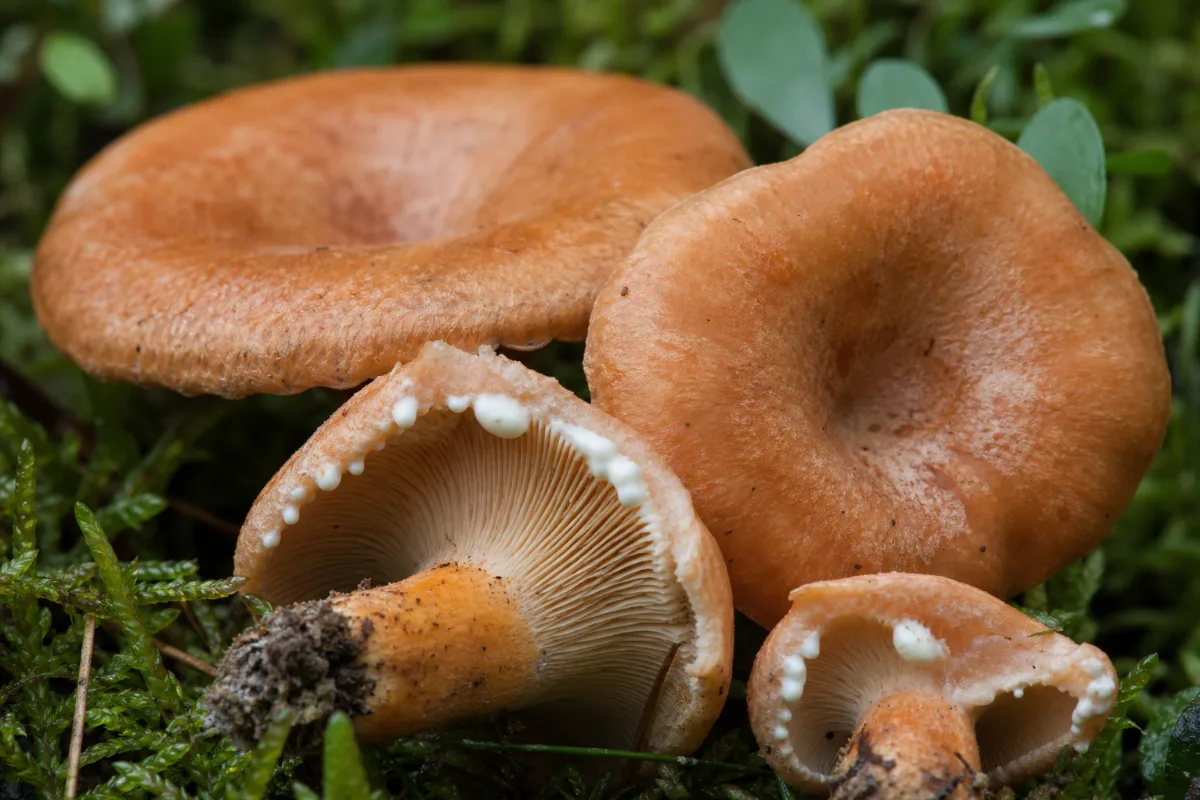
Mushrooms · Wild culinary mushroom
Weeping Milk Cap
Lactarius volemus (Fr.) Fr., accepted in GBIF as Lactifluus volemus (Fr.) Kuntze · also called Tawny milkcap, sweet milkcap, Tirmit (Turkey)
Weeping milk cap is a wild forest mushroom that people eat in Mexico, Turkey, China and parts of Europe. Safety comes first: a Turkish case report links it with stomach illness and one case of pancreatitis, and it took up a lot of mercury in one polluted Polish forest. It is a food, not a proven remedy. The health findings are from purified extracts in cells and mice, and no human trial was found.
General information, not medical advice. Last substantive update · Not medically reviewed. A named clinician has not signed off on this page. How this page is made
About Weeping Milk Cap
Weeping milk cap is a wild forest mushroom eaten in Mexico, Turkey, China and parts of Europe. Its safety questions are a case report of illness and pancreatitis in two people in Turkey, mercury and other metals that depend on where it grew, and the general risk of eating any wild mushroom that an expert has not identified. Health claims are unproven: findings come from purified polysaccharides and lab extracts in cells and mice, with no human trial.
What it is
Weeping milk cap (Lactarius volemus) is a fungus of the family Russulaceae that lives in partnership with tree roots. GBIF lists the accepted name as Lactifluus volemus (Fr.) Kuntze, with Lactarius volemus as a synonym; most papers and the common name still use Lactarius. Index Fungorum could not be checked.
Only the fruiting body is eaten. It is a different mushroom from the saffron milk cap, which has its own page: see Saffron milk cap under Related pages.
What the research shows
No human trial of weeping milk cap was found, as a food, extract or supplement.
Food and lab tests: papers measured sugars, fibre, protein and minerals, found four umami-tasting peptides, and showed antioxidant and germ-killing effects of extracts in test tubes and dishes.
Cell and animal studies: purified polysaccharides improved blood fats, blood sugar and liver fat in obese mice, raised immune measures in cells and injected mice, and slowed the growth of two cancer cell lines in a dish. None of this shows a health effect in people who eat the mushroom.
How strong is the evidence?
Every health finding is rated insufficient. It comes from purified polysaccharides or lab extracts in cells and mice, often injected or used at lab concentrations, not from people eating the mushroom. Most abstracts give few numbers, and we read abstracts for most papers.
The two safety papers are small: one case report of two people, and mercury and metal surveys of wild samples from single regions.
Forms and quality
It is eaten as a fresh or cooked wild mushroom. We found no extract, powder or supplement for this species, so the usual fruiting-body-versus-mycelium question does not arise. The extracts in the papers were made in the laboratory.
Mineral values depend on soil, place and method, and different papers use fresh or dry weight, so never compare the numbers directly.
Legal and regulatory status
No regulator statement on weeping milk cap was found, and EFSA, EMA, FDA, NCCIH, LiverTox and LactMed were not searched in depth for this item. We make no claim about what they say.
At a glance
Traditional uses history, not proof
- Gathered and eaten as a traditional food in a Mexican community in Morelos, where it was the species most often named in interviews (2026 study).
- Called an edible mushroom widely consumed in China (2021 paper).
- Called Tirmit and eaten for years by people in central Anatolia, Turkey (2016 case report).
- We found no traditional medicinal use of this mushroom in the sources read.
Studied for research
- Immune activity of purified sugar chains (cells and mice), insufficient
- Cancer cells in a dish (lung and breast cell lines), insufficient
- Blood fats and blood sugar in obese mice, insufficient
- Antioxidant and germ tests in the lab, insufficient
- As a food (composition and taste), insufficient
Main compounds
- Branched and mannan polysaccharides (LVF-I, LVP)
- Umami taste peptides
- Fungal sterols such as ergosterol, reported in a database listing
Common forms
- Fresh or cooked fruiting body (the food)
- Lab extracts and purified polysaccharides (research only; no supplement found)
Research links: Case report: pancreatitis after eating it, 2016 · Mercury in three Lactarius species, Poland 2017 · Mexican study of traditional use and lab tests, 2026 · Polysaccharides in obese mice, 2025 · Purified polysaccharide in cancer and immune cells, 2021 · Metals in wild mushrooms, Romania 2025 · Research Library · Genes & Biomarkers Library
What it is and its history
- Accepted scientific name
- Lactifluus volemus
- Naming authority
- (Fr.) Kuntze (GBIF, species key 2551150)
- Synonyms
- Lactarius volemus (Fr.) Fr. (GBIF key 5248803, listed as a synonym)
- Common names
- Weeping milk cap (English); Tawny milkcap (English); Sweet milkcap (Laptuca dulce) (English / Romanian); Tirmit (Turkish (central Anatolia, local name))
- Family or group
- Russulaceae (a fungus family), not a plant
- Classification
- Fungi > Basidiomycota > Agaricomycetes > Russulales > Russulaceae > Lactifluus > Lactifluus volemus
- Native range
- Not described in a source we read. The papers report it eaten or collected in Mexico (Morelos), Turkey (central Anatolia, Istanbul), China, Poland, Portugal and Romania.
- Habitat
- The Romanian paper lists deciduous and coniferous forests and mountains, summer. Another paper calls it mycorrhizal, a partnership with tree roots.
- What it looks like
- Fruiting body: Not described. This page gives no identification help.
- Cultivation
- No source on cultivation was read. Samples in the papers were wild.
- Harvest and processing
- Wild-gathered. A Mexican paper describes gathering, cleaning and selling by women and men in one community.
- Look-alikes and adulterants
- Name: Look-alike fungi; Note: No source read describes look-alikes of this mushroom. Wild mushrooms cannot be safely identified from words, photos or an app.
- Sustainability and conservation
- Not covered by any source read.
Traditional use and history history, not clinical proof
| Tradition or era | Documented use | Source |
|---|---|---|
| Mexico (Morelos): food | In the community of El Salto the mushroom was the species with the highest cultural importance, meaning the highest frequency of mention in interviews. Gathering and eating wild mushrooms is described as a traditional practice. | p41915575 |
| China: food | Called an edible mushroom widely consumed in China, and regarded as a great edible medicinal fungal resource. | p34655586 |
| Turkey (central Anatolia): food | Local people call it Tirmit; the couple in the case report had collected and eaten it for several years. | p26835473 |
| Traditional medicine | No source read describes a traditional medicinal use, so we claim none. |
Traditional use shows how it was used. It does not show that it works or is safe today.
What is inside, and how it may work
What it contains and how those compounds act in cells and animals. Laboratory and animal mechanisms are not proven effects in people.
Main compounds
| Compound | Family | Where it is concentrated | Activity studied | Level of evidence |
|---|---|---|---|---|
| Polysaccharide LVF-I | branched polysaccharide (fucose, mannose, glucose, galactose), 12,894 Da | Fruiting body, hot-water extract, purified Not given in the abstract | Slowed two cancer cell lines and stimulated immune cells in a dish 16 | Laboratory research |
| Polysaccharide LVP (mannan) | polysaccharide, 16.842 kDa mannan | Fruiting body, water extract Not given in the abstract | Raised immune-organ indices and phagocytosis in injected mice 3 | Animal research |
| Umami peptides (four) | short peptides | Water extract of the wild fruiting body Not given in the abstract | Umami taste; docked to the T1R3 taste receptor in a computer model 9 | Laboratory research |
| Ergosterol and related sterols | fungal sterols (e.g. ergosterol endoperoxide, incisterol-type sterols) | Part not given No amounts | Reported in the species in Wikidata; no activity read 13 | Other |
| Sugars and phenolic compounds | sugars; phenolic acids | Fruiting body Sugars were the most prevalent group in L. volemus among 12 Portuguese species (abstract) | Composition only 8 15 | Other |
Mechanisms, receptors and pathways
| Target or pathway | Gene or receptor | What was found | Level |
|---|---|---|---|
| Macrophage activation | Nitric oxide, IL-6, TNF-alpha (gene expression) | LVF-I raised nitric oxide, IL-6 and TNF-alpha secretion and mRNA in macrophage cells. 16 | Laboratory research |
| Insulin signalling and gut barrier | IRS1/AKT pathway, MAPKs, tight-junction proteins | In obese mice LVP was linked to better insulin signalling, less MAPK signalling, more tight-junction proteins and more short-chain fatty acids. 14 | Animal research |
| Digestive enzymes | alpha-amylase, alpha-glucosidase, xanthine oxidase | Extracts blocked all three enzymes in test tubes, most strongly in small-sized mushrooms. 15 | Laboratory research |
| Taste receptor | T1R3 | Four peptides fitted the T1R3 pocket in a docking model. 9 | In silico |
Absorption, metabolism and elimination
- Absorption
- Not found in the sources read.
- Distribution
- Not found in the sources read.
- Metabolism
- Not found in the sources read.
- Elimination
- Not found in the sources read.
- Bioavailability
- Not established.
Isolated compounds versus whole extracts
All the biological findings use purified polysaccharides, peptides or lab extracts. None used the whole mushroom as a meal, and none was in people.
Nutritional composition
It is a food first. Compared with 17 other mushrooms in one Romanian survey it had the lowest zinc and manganese. A Portuguese comparison found sugars the largest group. We found no vitamin or protein-per-serving value from a source we read.
8 not enough evidence
What was looked at
The 8 benefits and uses checked for Weeping Milk Cap, each with how strong the evidence is. Tap one to open it.
- Weeping milk cap as a food (sugars, protein, fibre, minerals)Not enough evidence
- Taste: umami peptidesNot enough evidence
- Protein from the mushroom (food-science extraction)Not enough evidence
- Antioxidant activity (laboratory tests only)Not enough evidence
- Germ-killing in a dish (laboratory only)Not enough evidence
- Blood fats, blood sugar and liver fat (obese mice only)Not enough evidence
- Immune activity (cells and mice only)Not enough evidence
- Cancer cells in a dish (laboratory only)Not enough evidence
Lab markers tracked in the studies
Free-radical scavenging in a test tube (DPPH)Blood fats and blood sugar in obese miceImmune signals from macrophage cells (nitric oxide, IL-6, TNF-alpha)Thymus, spleen and liver indices in mice
What is Weeping Milk Cap good for?
The uses people ask about and how strong the evidence is for each. None has been tested in people. Read this together with the Safety tab.
Benefits, one by one
Each card is a research question, not a promise. Tap a goal to filter. Open a card to see the studies, doses and limits.
Weeping milk cap as a food (sugars, protein, fibre, minerals)
Not enough evidenceWeeping milk cap is a wild forest mushroom eaten in Europe, Mexico, Turkey and China. Lab studies measured what is in it. Sugars were the most common group in a Portuguese comparison, and small mushrooms had more fibre, fat, protein and sugar than large ones in a Chinese study. None of this shows a health benefit.
5 studiesWild fruiting body, eaten cooked in places where it grows. No supplem…
Studies, doses and limits
Results
Chinese study of three size grades (dry samples): small mushrooms had the highest crude fibre, fat, crude protein, total sugar, polyphenols and flavonoids; medium ones the highest ash and total amino acids. Portuguese study of 12 wild mushrooms: sugars were more prevalent in L. volemus. Romanian survey, fresh weight: zinc 5.115 mg/kg and manganese 0.236 mg/kg, the lowest of 18 species for both.
Effect sizes as reported
Composition values only; no health effect measured
Why this rating
Single analyses from different regions, methods and weights (fresh or dry). The abstracts do not give most of the numbers, and composition does not show an effect on health.
Form and dose studied
Wild fruiting body, eaten cooked in places where it grows. No supplement was found. This page gives no amounts and none are recommended.
Limits
Soil, place, season, size and drying method change the values. Fresh-weight and dry-weight numbers cannot be compared. Figures in two of the papers were not read.
Why researchers looked
It is eaten as a wild food, so many papers ask what it contains.
Traditional use
A 2026 Mexican study says gathering and eating wild mushrooms is a traditional practice, and L. volemus was the species named most often in interviews in one Morelos community (Tello-Salgado 2026). A 2021 Chinese paper calls it an edible mushroom widely consumed in China (Zhong 2021).
Proposed mechanism Other
Not a mechanism claim. These are laboratory measurements of the food.
A proposed mechanism does not show that the effect happens in people.
Wild-picked mushrooms can carry mercury and other metals; see the Safety tab. Eating a wild mushroom you have not had identified by an expert is the main risk.
Taste: umami peptides
Not enough evidenceChinese researchers found four short protein pieces (peptides) in a water extract of the mushroom that taste of umami, the savoury taste. This explains part of its flavour in cooking. It is a taste finding, not a health finding.
1 studiesPeptides purified from a water extract of the wild fruiting body. Not…
Studies, doses and limits
Results
Four peptides (EVAEALDAPKTT, AVLEEAQKVELK, AEDLSTLR, KVDVDSLK) tasted of umami, with identification thresholds from 0.0625 to 0.250 mg/mL by sensory testing and an electronic tongue.
Effect sizes as reported
Taste thresholds only
Why this rating
A taste and computer-modelling study with no health outcome. Rated insufficient only because it is not a health claim.
Form and dose studied
Peptides purified from a water extract of the wild fruiting body. Not a product.
Who was studied
Taste panel and electronic tongue
Limits
Purified peptides are not the cooked mushroom.
Why researchers looked
Food scientists ask why some wild mushrooms taste so savoury.
Traditional use
No traditional source read.
Proposed mechanism Laboratory research
Computer docking placed the four peptides in the pocket of the T1R3 taste receptor, held by hydrogen bonds and water-repelling contacts. This is a model, not a measurement in the body.
A proposed mechanism does not show that the effect happens in people.
None reported in the abstract.
Protein from the mushroom (food-science extraction)
Not enough evidenceA Chinese food-science study found that microwave extraction gave a larger yield of mushroom protein than water-bath extraction, and the protein was more digestible in a simulated gut. This is about making a protein ingredient, not a health effect.
1 studiesLaboratory protein isolate. No product exists that we found.
Studies, doses and limits
Results
Microwave extraction raised the protein isolate yield by 30.00% and 47.98% at 20 and 60 minutes. In simulated small-intestine digestion, digestibility rose 6.06% and degree of hydrolysis 19.78% after 20 minutes.
Effect sizes as reported
Process improvement in the lab
Why this rating
Lab method study; no person ate the isolate.
Form and dose studied
Laboratory protein isolate. No product exists that we found.
Limits
Simulated digestion is not digestion in people.
Why researchers looked
Food scientists look for new protein ingredients from mushrooms.
Traditional use
No traditional source read.
Proposed mechanism Other
Not a mechanism claim. It compares two extraction methods in the lab.
A proposed mechanism does not show that the effect happens in people.
None reported in the abstract.
Antioxidant activity (laboratory tests only)
Not enough evidenceIn test tubes, extracts of the mushroom mopped up free radicals, chemicals that damage other molecules. Several wild mushrooms did the same, and one other mushroom (porcini) scored higher in one test. Test-tube results do not show an effect in the body.
4 studiesLaboratory methanol, water or other extracts. Not a food or supplemen…
Studies, doses and limits
Results
Mexican extract: DPPH scavenging 355.63 ug/mL and ABTS scavenging 742.13 ug/mL (as reported in the abstract). Turkish methanol extract: 61.44% inhibition of linoleic acid oxidation and 61.09% DPPH scavenging at 500 ug/mL. Small-sized mushrooms scored best among three sizes in a Chinese test. Microwave-assisted extract: antioxidant, but porcini ranked higher.
Effect sizes as reported
Test-tube values only
Why this rating
Test-tube assays do not predict an effect from eating the mushroom, and the extracts differ between papers.
Form and dose studied
Laboratory methanol, water or other extracts. Not a food or supplement form.
Who was studied
No people or animals
Limits
Assays and extraction methods differ between papers, so numbers cannot be compared.
Why researchers looked
Wild mushrooms are rich in phenolic compounds, so labs often test them for antioxidant activity.
Traditional use
No traditional source read.
Proposed mechanism Laboratory research
Extracts quench stable test radicals (DPPH, ABTS) and block fat oxidation in a test tube.
A proposed mechanism does not show that the effect happens in people.
None reported in the abstracts.
Germ-killing in a dish (laboratory only)
Not enough evidenceExtracts stopped or killed some bacteria in dishes, including E. coli. The amounts needed were large lab concentrations. This does not show that the mushroom treats or prevents infection.
2 studiesLaboratory extracts.
Studies, doses and limits
Results
Mexican extract: bacteriostatic and bactericidal effects; the most potent minimal bactericidal concentration was 28.94 mg/mL against Escherichia coli and Streptococcus agalactiae. Turkish methanol extract: strong antimicrobial activity, especially on E. coli.
Effect sizes as reported
Lab concentrations only
Why this rating
Dish tests only. The concentrations are far from anything reached by eating the mushroom.
Form and dose studied
Laboratory extracts.
Who was studied
No people or animals
Limits
Disc and dilution tests; different extracts and bacteria between papers.
Why researchers looked
Wild mushrooms are screened for natural germ-killing chemicals.
Traditional use
No traditional source read.
Proposed mechanism Laboratory research
Extracts slowed or killed bacteria growing in a dish.
A proposed mechanism does not show that the effect happens in people.
Do not use a mushroom in place of care for an infection.
Blood fats, blood sugar and liver fat (obese mice only)
Not enough evidenceA Chinese team fed mice a diet high in fat and fructose and gave them polysaccharides (long sugar chains) from the mushroom. The mice had better blood fats, blood sugar, insulin response, liver fat and gut barrier, and their gut bacteria shifted. It is mouse work with an extract, not a trial in people.
1 studiesPolysaccharide extract (LVP). Not a food or a supplement we found.
Studies, doses and limits
Results
Reduced hyperlipidaemia and hyperglycaemia, insulin resistance and liver inflammation; eased liver fat; improved gut barrier; restored gut bacteria; raised short-chain fatty acids. The abstract gives no numbers.
Effect sizes as reported
Qualitative; numbers not read
Why this rating
One mouse study with a purified polysaccharide, injected or fed in amounts not stated in the abstract. No human trial.
Form and dose studied
Polysaccharide extract (LVP). Not a food or a supplement we found.
Who was studied
Mice fed a high-fat, high-fructose diet
Limits
Abstract only; no group sizes or amounts. Mice are not people.
Why researchers looked
Mushroom polysaccharides are studied as possible prebiotics.
Traditional use
No traditional source read.
Proposed mechanism Animal study
Polysaccharide supplementation was linked to the IRS1/AKT insulin signal, to less MAPK signalling, to tighter gut-cell junctions, to a changed gut-bacteria mix and to more short-chain fatty acids. Butyric acid limited fat build-up in liver cells and strengthened gut cells in a dish.
A proposed mechanism does not show that the effect happens in people.
People with diabetes or on blood-sugar medicines should ask a doctor or pharmacist before using any mushroom extract.
Immune activity (cells and mice only)
Not enough evidenceTwo Chinese teams purified long sugar chains (polysaccharides) from the mushroom. In a dish they woke up immune cells, and injected into mice they enlarged immune organs. This is early work that does not show an effect from eating the mushroom.
2 studiesPurified polysaccharides (LVF-I, 12,894 Da; LVP, 16.842 kDa mannan). …
Studies, doses and limits
Results
LVF-I (250 to 1000 ug/mL): more spleen-cell growth, more phagocytosis (cells swallowing particles), and more nitric oxide, IL-6 and TNF-alpha. LVP injected in mice: higher thymus, spleen and liver indices (dose-dependent), better phagocytosis, and 60 to 70% more red-medullary lymphocytes.
Effect sizes as reported
Cell and organ measures only
Why this rating
Cultured cells and injected mice only, using purified fractions from two different papers. No human data.
Form and dose studied
Purified polysaccharides (LVF-I, 12,894 Da; LVP, 16.842 kDa mannan). Not a food or a supplement.
Who was studied
Mouse cells; BALB/c mice
Limits
Abstracts only; group sizes and amounts not read. Injection is not eating.
Why researchers looked
Mushroom polysaccharides are widely screened for immune activity.
Traditional use
A 2020 paper calls it a great edible medicinal fungal resource in China; we did not read a traditional source for this.
Proposed mechanism Laboratory research
Polysaccharides raised nitric oxide, IL-6 and TNF-alpha in macrophage cells, and injected polysaccharide raised thymus, spleen and liver indices in mice.
A proposed mechanism does not show that the effect happens in people.
Immune-active extracts could matter for people on immune-suppressing medicines; nothing is known for this mushroom. Ask a doctor or pharmacist first.
Cancer cells in a dish (laboratory only)
Not enough evidenceA purified sugar chain from the mushroom slowed the growth of two human cancer cell lines (lung and breast) in a dish. That is a first lab step. It is not a cancer treatment and not tested in people.
1 studiesPurified polysaccharide.
Studies, doses and limits
Results
Inhibited proliferation of H1299 and MCF-7 cells at 250 to 1000 ug/mL; the abstract gives no percentage.
Effect sizes as reported
Lab concentrations only
Why this rating
Two cell lines, one purified polysaccharide, no animal or human test of cancer.
Form and dose studied
Purified polysaccharide.
Who was studied
Cultured human cancer cell lines
Limits
Cell lines are not tumours in people.
Why researchers looked
Mushroom polysaccharides are screened against cancer cell lines.
Traditional use
No traditional source read.
Proposed mechanism Laboratory research
The polysaccharide LVF-I inhibited growth of H1299 (lung) and MCF-7 (breast) cells at 250 to 1000 ug/mL.
A proposed mechanism does not show that the effect happens in people.
Do not use a mushroom in place of cancer care; talk to your oncology team about any supplement.
Connections to the rest of health
How Weeping Milk Cap connects to the rest of our health knowledge graph. Every link says what kind of connection it is. A safety link (for example to the liver) is a warning, not a benefit. A study that merely mentions a topic never creates a benefit link.
Explore every connection: goals, body systems, organs, symptoms, genes
B. Body systems
| Connected to | Kind of connection | Evidence status | Context | Studies |
|---|---|---|---|---|
| Digestive System | Biological association | Not enough evidence | Studied for: Weeping milk cap as a food (sugars, protein, fibre, minerals) Studied for: Taste: umami peptides | 15 8 11 12 16 9 10 14 |
| Antioxidant Defense | Biological association | Not enough evidence | Studied for: Antioxidant activity (laboratory tests only) | 12 7 15 17 |
| Immune System | Biological association | Not enough evidence | Studied for: Germ-killing in a dish (laboratory only) Studied for: Immune activity (cells and mice only) | 12 7 16 3 |
| Blood Sugar Support | Biological association | Not enough evidence | Studied for: Blood fats, blood sugar and liver fat (obese mice only) | 14 |
| Cell Health | Biological association | Not enough evidence | Studied for: Cancer cells in a dish (laboratory only) | 16 |
C. Body parts and organs
G. Root causes and contributing factors
| Connected to | Kind of connection | Evidence status | Context | Studies |
|---|---|---|---|---|
| Heavy metal exposure | Low certainty | Mercury 3.7 mg/kg dry mass in caps in one polluted area of Poland; chromium intake estimate above the reference in a Romanian study. Preparation or compound: Wild-collected fruiting bodies |
1 11 |
I. Biomarkers
| Connected to | Kind of connection | Evidence status | Context | Studies |
|---|---|---|---|---|
| Free-radical scavenging in a test tube (DPPH) | Biological association | Not enough evidence | Measured in trials: raised. A lab change is not the same as a health benefit. | 7 12 |
| Blood fats and blood sugar in obese mice | Biological association | Not enough evidence | Measured in trials: lowered. A lab change is not the same as a health benefit. | 14 |
| Immune signals from macrophage cells (nitric oxide, IL-6, TNF-alpha) | Biological association | Not enough evidence | Measured in trials: raised. A lab change is not the same as a health benefit. | 16 |
| Thymus, spleen and liver indices in mice | Biological association | Not enough evidence | Measured in trials: raised. A lab change is not the same as a health benefit. | 3 |
K. Biological pathways
| Connected to | Kind of connection | Evidence status | Context | Studies |
|---|---|---|---|---|
| Macrophage cytokine signalling | Preliminary mechanism | In vitro | A purified polysaccharide raised IL-6 and TNF-alpha in cultured macrophages. | 16 |
| Insulin signalling (IRS1/AKT) | Preliminary mechanism | Animal | A polysaccharide was linked to better liver insulin signalling in obese mice. | 14 |
L. Active compounds
| Connected to | Kind of connection | Evidence status | Context | Studies |
|---|---|---|---|---|
| Polysaccharide LVF-I | Biological association | In vitro | Slowed two cancer cell lines and stimulated immune cells in a dish Preparation or compound: Fruiting body, hot-water extract, purified |
16 |
| Polysaccharide LVP (mannan) | Biological association | Animal | Raised immune-organ indices and phagocytosis in injected mice Preparation or compound: Fruiting body, water extract |
3 |
| Umami peptides (four) | Biological association | In vitro | Umami taste; docked to the T1R3 taste receptor in a computer model Preparation or compound: Water extract of the wild fruiting body |
9 |
| Ergosterol and related sterols | Biological association | Other | Reported in the species in Wikidata; no activity read Preparation or compound: Part not given |
13 |
| Sugars and phenolic compounds | Biological association | Other | Composition only Preparation or compound: Fruiting body |
8 15 |
Each connection is stored with the ingredient, the connected record, the kind of connection, the evidence status, the supporting studies, the preparation or compound involved, and a review date (last reviewed October 25, 2026).
Evidence at a glance: what changed in 4 lab markers
Tap a number to show only those markers. Counts are markers, not people.
The evidence
The research centre for Weeping Milk Cap. Every record here was checked against PubMed or the publisher's page; we never list a study we have not verified.
Evidence by outcome
Bars show how many studies we found for each outcome, not how well it works. People are added up across trials only (reviews are not added, to avoid double counting).
How we rate evidence
High certainty
Several well-run trials or reviews agree; further research is unlikely to change the picture much.
Moderate certainty
Good trials point the same way, but some doubt remains.
Low certainty
Small, short or inconsistent trials. The finding could change with better research.
Very low certainty
Very little or very weak human data. Treat as a possibility only.
Mixed findings
Trials or reviews disagree with each other.
Not enough evidence
Not enough human research to say either way.
Evidence against
Good research found no benefit, or found harm.
We take the reviewers' own risk-of-bias and GRADE statements where they exist, and otherwise judge from study size, design, consistency, directness and whether a product matches what is sold. Many publications do not make evidence high. Method note: We read PubMed records and abstracts for 14 papers (a survey with lab tests, a case report, three metal and mercury studies, five lab or food-science papers, two polysaccharide cell and mouse studies and a mouse metabolic study), the case report and the Romanian paper in open-access full text, and checked the species name in GBIF and NCBI Taxonomy.
Study library: every study we checked 17
| Study | Design | People | Product, dose, length | Result |
|---|---|---|---|---|
| Falandysz 2017 Mercury accumulation of three Lactarius mushroom species. Food Chem · PMID 27507453 · DOI |
Laboratory metal analysis fungus |
212 212 mushrooms (three Lactarius species) and 106 topsoil samples, Pomerania, Poland |
Wild fruiting bodies, lab analysis cap and stipe Not shown here |
Mercury was low in most locations. Where L. volemus grew in soil with only slightly raised mercury (0.11 +/- 0.07 mg/kg dry soil), caps held 3.7 +/- 1.3 mg/kg and stipes 1.9 +/- 0.9 mg/kg dry mass. The author says eating mushrooms from the Sobowidz forest, close to a metal foundry, could give a mercury intake above the current statutory limits. Mercury concentration in one polluted area Methods, limits and fundingOutcomes: Mercury in mushrooms and soil; potential dietary intake Limitations: One region; n for L. volemus alone is not in the abstract. Intake limits depend on how much is eaten. Funding and conflicts: Not stated in the abstract. Read: abstract (PubMed) |
| GBIF Secretariat 2026 GBIF Backbone Taxonomy: Lactifluus volemus (Fr.) Kuntze (species key 2551150); Lactarius volemus (Fr.) Fr. (key 5248803) is listed as a synonym GBIF API · Source |
Taxonomy record fungus |
Name record | n/a Not shown here |
GBIF lists Lactifluus volemus (Fr.) Kuntze as the accepted name (family Russulaceae, order Russulales, class Agaricomycetes) and Lactarius volemus (Fr.) Fr. as a synonym of it. Accepted name Methods, limits and fundingOutcomes: Accepted name and family Limitations: A database record; most papers, and the common name, still use Lactarius volemus. Index Fungorum could not be reached on 2026-10-25 and was not checked. Funding and conflicts: n/a Read: database record (API, 2026-10-25) |
| Huang 2020 Structural characterization of a novel Lactarius volemus Fr. polysaccharide and its immunity activity in BALB/c mice. RSC Adv · PMID 35516011 · DOI |
Animal study mouse |
BALB/c mice | Water-extracted polysaccharide LVP (16.842 kDa mannan), by injection into the abdomen fruiting body Not shown here |
LVP injected into the abdomen of mice raised thymus, spleen and liver indices in a dose-dependent way, enhanced the immune response and phagocytic activity, and increased proliferation of red medullary lymphocytes (60 to 70%). Immune-organ measures in mice Methods, limits and fundingOutcomes: Thymus, spleen and liver indices; immune response; phagocytosis; spleen tissue Limitations: Injected, not eaten. Mice only. Group sizes not given in the abstract. Funding and conflicts: No conflicts declared. Read: abstract (PubMed) |
| Karahan 2016 Acute Pancreatitis Caused By Mushroom Poisoning: A Report of Two Cases. J Investig Med High Impact Case Rep · PMID 26835473 · DOI |
Case report |
2 A married couple aged 73, central Anatolia, Turkey, who had eaten the mushroom for years |
L. volemus (local name Tirmit), eaten as food fruiting body Not shown here |
About 20 hours after eating it, both had abdominal pain, nausea or vomiting. The man (type 2 diabetes, high blood pressure, heart disease; took ramipril, metoprolol, aspirin and insulin) had amylase 1148 U/L and lipase 2204 U/L, acute pancreatitis on scan, was treated in intensive care and was discharged on day 6. His wife had milder illness (amylase 317, lipase 280) and went home on day 3. Both recovered without lasting effects. The authors note ramipril is known as a cause of pancreatitis and that the two may have added together. Two cases; cause not established Methods, limits and fundingOutcomes: Symptoms, blood tests, scan, outcome Limitations: Two people; whether the mushroom was correctly identified is not described in what we read; the man took a medicine linked to pancreatitis, so the cause is unclear. The authors say the toxins of many mushrooms cannot be removed by cooking, freezing or preserving. Funding and conflicts: Authors declared no conflicts and no funding. Read: open-access full text (Europe PMC, PMC4724762) and abstract |
| Keskin 2021 Metal concentrations of wild mushroom species collected from Belgrad forest (Istanbul, Turkey) with their health risk assessments. Environ Sci Pollut Res Int · PMID 33687630 · DOI |
Laboratory metal analysis fungus |
21 wild mushroom species (13 edible, including L. volemus) from Belgrad forest, Istanbul | Wild fruiting bodies, lab analysis fruiting body Not shown here |
The abstract names three edible species above reference values (Cd in Hygrophorus russula, Cr in Clitocybe nebularis, Cu in Macrolepiota mastoidea). L. volemus is in the list of edible species tested but is not named among those above reference values. Metal levels in one forest Methods, limits and fundingOutcomes: Twelve elements; daily intake and health risk index Limitations: Abstract read only; no L. volemus-specific values were read. Funding and conflicts: Not stated in the abstract. Read: abstract (PubMed) |
| NCBI 2026 NCBI Taxonomy: Lactifluus volemus (taxid 71967) NCBI Datasets API · Source |
Taxonomy record fungus |
Name record | n/a Not shown here |
NCBI Taxonomy has a species-rank record named Lactifluus volemus (taxid 71967) in the basidiomycete fungi. Name record Methods, limits and fundingOutcomes: Species record Limitations: Database record only. Funding and conflicts: n/a Read: database record (API, 2026-10-25) |
| Ozen 2011 Screening of antioxidant, antimicrobial activities and chemical contents of edible mushrooms wildly grown in the black sea region of Turkey. Comb Chem High Throughput Screen · PMID 20958253 · DOI |
Laboratory screen fungus |
12 wild edible mushroom species, Black Sea region, Turkey (methanol extracts) | Methanol extracts fruiting body Not shown here |
Lipid peroxidation inhibition was 61.44% for L. volemus (and 58.05% for L. camphoratus). DPPH scavenging at 500 ug/mL was 61.09% for L. volemus. L. volemus was among the species with strong antimicrobial activity, especially against E. coli. Lab antioxidant and antimicrobial screens Methods, limits and fundingOutcomes: Antioxidant tests; antimicrobial disc tests Limitations: Methanol extracts in test tubes and dishes; not a health effect. 12 species compared. Funding and conflicts: Not stated in the abstract. Read: abstract (PubMed) |
| Reis 2011 Toward the antioxidant and chemical characterization of mycorrhizal mushrooms from northeast Portugal. J Food Sci · PMID 22417480 · DOI |
Laboratory composition comparison fungus |
12 wild mycorrhizal mushroom species from north-east Portugal, including L. volemus | Wild fruiting bodies, lab analysis fruiting body Not shown here |
Across the 12 species the order was sugars > fat > ascorbic acid > phenolic compounds > tocopherols. Sugars were more prevalent in L. volemus than in the other species. Composition only Methods, limits and fundingOutcomes: Sugars, fat, ascorbic acid, phenolics, tocopherols, antioxidant activity Limitations: Abstract read. No numbers for L. volemus alone in the abstract. 12 species in one paper. Funding and conflicts: Not stated in the abstract. Read: abstract (PubMed) |
| Shen 2023 Isolation, taste characterization and molecular docking study of novel umami peptides from Lactarius volemus (Fr.). Food Chem · PMID 36103739 · DOI |
Laboratory food science fungus |
Water extract of wild L. volemus (lab) | Peptide fractions from an aqueous extract fruiting body Not shown here |
Four peptides (EVAEALDAPKTT, AVLEEAQKVELK, AEDLSTLR, KVDVDSLK) had umami taste, with identification thresholds of 0.0625 to 0.250 mg/mL by sensory evaluation and electronic tongue. Computer docking placed them in the T1R3 receptor pocket. Taste finding; no health outcome Methods, limits and fundingOutcomes: Taste of purified peptides; computer docking to the T1R3 taste receptor Limitations: Taste and computer modelling only. Funding and conflicts: Authors declare no competing interests. Read: abstract (PubMed) |
| Shi 2024 Insight into the physicochemical characteristics, functionalities and digestion behavior of protein isolate derived from Lactarius volemus by microwave-assisted extraction. Food Chem · PMID 37579611 · DOI |
Laboratory food science fungus |
Protein isolate from L. volemus (lab) | Protein isolate made by microwave-assisted or water-bath extraction fruiting body Not shown here |
Microwave extraction raised the extraction rate of the protein isolate by 30.00% and 47.98% at 20 and 60 minutes compared with water-bath extraction. In simulated small-intestine digestion, digestibility and degree of hydrolysis were 6.06% and 19.78% higher after 20 minutes of extraction. Food-processing result; no health outcome Methods, limits and fundingOutcomes: Extraction rate, solubility, emulsifying and foaming properties, digestibility in a simulated gut Limitations: Lab method study of a protein isolate, not the mushroom as eaten. Abstract read. Funding and conflicts: Authors declare no competing interests. Read: abstract (PubMed) |
| Stihi 2025 Assessment of the Impact of Metals in Wild Edible Mushrooms from Dambovita County, Romania, on Human Health. Foods · PMID 41154076 · DOI |
Laboratory metal analysis fungus |
18 wild edible mushroom species from Dambovita County, Romania, including L. volemus (listed locally as sweet milkcap) | Wild fruiting bodies, EDXRF analysis, fresh weight fruiting body Not shown here |
L. volemus had the lowest zinc (5.115 +/- 0.245 mg/kg) and the lowest manganese (0.236 +/- 0.010 mg/kg) of the 18 species (fresh weight). The text says estimated chromium intake exceeded the reference intake for L. volemus for men, women and children, with the same statement for other species such as Armillaria mellea and Amanita caesarea. Zinc intake stayed below reference thresholds. Metal levels and intake estimates for one region Methods, limits and fundingOutcomes: Metal concentrations and estimated daily intake against reference intakes Limitations: Estimated intakes depend on assumed portion sizes in the paper. Chromium recovery was 90.2% with no correction. Open-access full text and abstract were read; the L. volemus chromium concentration itself was not located. Funding and conflicts: Not read. Read: open-access full text (Europe PMC, PMC12564050) |
| Tello-Salgado 2026 Traditional Knowledge and Study of Medicinal Properties of the Weeping Milk Cap Mushroom Lactarius volemus (Agaricomycetes) in México. Int J Med Mushrooms · PMID 41915575 · DOI |
Interview survey plus lab fungus |
Community of El Salto, Puente de Ixtla, Morelos, Mexico (interviews); lab extracts of L. volemus | L. volemus extracts (lab) fruiting body Not shown here |
L. volemus was the species with the highest cultural importance (most often mentioned in interviews). Extracts showed DPPH scavenging of 355.63 ug/mL and ABTS scavenging of 742.13 ug/mL, plus bacteriostatic and bactericidal effects; the most potent minimal bactericidal concentration was 28.94 mg/mL against Escherichia coli and Streptococcus agalactiae. Laboratory values only; no health outcome in people Methods, limits and fundingOutcomes: Frequency of mention in interviews; antioxidant (DPPH, ABTS) and antibacterial tests Limitations: Number of interviewees not given in the abstract. Lab tests only; the extract is not the mushroom as eaten. Funding and conflicts: Not stated in the abstract. Read: abstract (PubMed) |
| Wikidata contributors 2026 Wikidata (CC0) compound-in-taxon statements for Lactarius volemus (Q155929), from the LOTUS project Wikidata via LOTUS · Source |
Database record fungus |
Compounds reported in L. volemus | n/a not given Not shown here |
Wikidata lists compounds reported in L. volemus, including ergosterol and related sterols (such as ergosterol endoperoxide and ergosterol peroxide glucoside), incisterol-type sterols and cerebroside D. No paper is attached to the statements in the file we held. A list of reports Methods, limits and fundingOutcomes: Compounds listed for the species Limitations: A listing means reported in at least one study of this species, not present in every product or sample. No amounts. Not re-opened on 2026-10-25; read from a file saved 2026-10-23. Funding and conflicts: n/a Read: saved database file (retrieved 2026-10-23) |
| Xu 2025 Polysaccharides from Lactarius volemus Fr. ameliorate high-fat and high-fructose diet induced metabolic disorders and intestinal barrier dysfunction. Int J Biol Macromol · PMID 39638176 · DOI |
Animal study mouse |
Mice made obese with a high-fat, high-fructose diet; plus liver and gut cell lines | L. volemus polysaccharides (LVP), given by supplementation fruiting body Not shown here |
LVP supplementation reduced high blood fats and blood sugar, insulin resistance and liver inflammation, eased liver fat and tissue damage, improved gut barrier function, restored gut bacteria and raised short-chain fatty acids in obese mice. Butyric acid limited fat build-up in liver cells and strengthened gut-cell barrier integrity in a dish. Qualitative improvements in mice; no numbers in the abstract Methods, limits and fundingOutcomes: Blood fats, blood sugar, insulin resistance, liver fat and inflammation, gut barrier, gut bacteria, short-chain fatty acids Limitations: Mice and cell lines only. The abstract gives no group sizes, amounts or effect sizes. The extract is a purified polysaccharide, not a meal of mushroom. Funding and conflicts: Authors declare no competing interests. Read: abstract (PubMed) |
| Zhang 2025 Characterization and comparison of chemical compositions and biological activities of an edible mushroom (Lactarius volemus) of three different sizes. Food Chem · PMID 39476584 · DOI |
Laboratory composition comparison fungus |
Lactarius volemus of three sizes (large, medium, small) | L. volemus, dried samples and extracts fruiting body Not shown here |
Small-sized mushrooms had the highest crude fibre, fat, crude protein, total sugar, reducing sugar, polyphenols and total flavonoids. Medium-sized ones had the highest ash and total amino acids. Small-sized ones also had the best DPPH radical scavenging and the strongest enzyme inhibition in the three enzyme tests. Composition differences by size; enzyme blocking in test tubes only Methods, limits and fundingOutcomes: Crude fibre, fat, protein, sugars, polyphenols, flavonoids, ash, amino acids; DPPH, alpha-amylase, alpha-glucosidase and xanthine oxidase inhibition in test tubes Limitations: Abstract read; the figures were not read. Sample source and numbers are not in the abstract. Test-tube enzyme blocking is not a health effect. Funding and conflicts: Authors declare no competing interests. Read: abstract (PubMed) |
| Zhong 2021 Structural characteristics, anti-proliferative and immunomodulatory activities of a purified polysaccharide from Lactarius volemus Fr. Int J Biol Macromol · PMID 34655586 · DOI |
Laboratory research fungus |
Human lung (H1299) and breast (MCF-7) cancer cell lines; mouse spleen cells and macrophage cell line (RAW264.7) | Purified polysaccharide LVF-I (12,894 Da; fucose, mannose, glucose, galactose) fruiting body Not shown here |
LVF-I at 250 to 1000 ug/mL inhibited the growth of H1299 and MCF-7 cells, increased spleen-cell proliferation and the phagocytic ability of RAW264.7 cells, and raised nitric oxide, IL-6 and TNF-alpha (and their gene expression) in macrophages. Cell-culture effects only Methods, limits and fundingOutcomes: Cell proliferation, phagocytosis, nitric oxide, IL-6 and TNF-alpha Limitations: Cultured cells only. Concentrations are lab concentrations. The authors say it has "potential" as an antitumour or immune agent; that is a research aim, not a result in people. Funding and conflicts: Not stated in the abstract. Read: abstract (PubMed) |
| Özyürek 2014 Antioxidant/antiradical properties of microwave-assisted extracts of three wild edible mushrooms. Food Chem · PMID 24679787 · DOI |
Laboratory screen fungus |
Methanol extracts of Terfezia boudieri, Boletus edulis and L. volemus | Methanol extracts, microwave-assisted fruiting body Not shown here |
The three extracts showed antioxidant activity. Boletus edulis had the highest total antioxidant capacity, phenolic content and DPPH inhibition of the three. No L. volemus numbers are in the abstract. Lab antioxidant tests Methods, limits and fundingOutcomes: Total antioxidant capacity, total phenolic content, scavenging of reactive species in vitro Limitations: Abstract read; no L. volemus values in it. Test-tube assays. Funding and conflicts: Not stated in the abstract. Read: abstract (PubMed) |
What we do not know yet
- No human trial of weeping milk cap for any health outcome.
- No poison-centre or hospital series, so no rate of illness from it.
- No source on look-alikes, pregnancy, breastfeeding, children, allergy or medicine interactions.
- Cell and mouse findings use purified polysaccharides or lab extracts, not the cooked mushroom.
- Cadmium, lead and radiocaesium values for this species were not found.
How new research is added
New studies are found by a saved PubMed search and placed in a review queue. A person reads each one before it changes any evidence rating or safety wording. New publications never change ratings automatically.
Lab markers
What changed in blood or saliva tests during trials. A changed number is not the same as feeling or being healthier, and we give no "normal ranges".
Other 4
Free-radical scavenging in a test tube (DPPH)
Raised in trials
A colour test of how well an extract neutralises a stable chemical radical. It is a laboratory measure, not something measured in blood.
Not enough evidenceResults and what it means
Why it was measured
A quick screen for antioxidant chemicals in foods.
Statistical vs. clinical meaning
A test-tube screen; it does not show a benefit in the body.
Safety implication
None reported in the abstracts.
Blood fats and blood sugar in obese mice
Lowered in trials
Fats and sugar in the blood of mice on a high-fat, high-fructose diet.
Not enough evidenceResults and what it means
Why it was measured
Used to test whether a food ingredient could ease diet-induced metabolic problems in animals.
Statistical vs. clinical meaning
Mouse finding with a purified extract; not tested in people.
Safety implication
None reported in the abstract.
| Study | Result | People | Product |
|---|---|---|---|
| 14 | LVP supplementation significantly improved raised blood fats and blood sugar in obese mice (no numbers in the abstract). | Obese mice | L. volemus polysaccharides (LVP) |
Immune signals from macrophage cells (nitric oxide, IL-6, TNF-alpha)
Raised in trials
Chemical messengers released by immune cells in a dish when they are activated.
Not enough evidenceResults and what it means
Why it was measured
Used as a screen for whether an ingredient stimulates immune cells.
Statistical vs. clinical meaning
Cell-culture finding; raised IL-6 and TNF-alpha can also mean inflammation, so higher is not simply better.
Safety implication
None reported in the abstract.
| Study | Result | People | Product |
|---|---|---|---|
| 16 | LVF-I at 250 to 1000 ug/mL significantly induced the secretion of nitric oxide, IL-6 and TNF-alpha by raising their gene expression in macrophages. | RAW264.7 mouse macrophage cell line | Purified polysaccharide LVF-I |
Thymus, spleen and liver indices in mice
Raised in trials
Organ weight relative to body weight, used in animal studies as a rough sign of immune-organ activity.
Not enough evidenceResults and what it means
Why it was measured
A simple screen for immune-organ effects in animals.
Statistical vs. clinical meaning
Mouse finding after injection; not shown to matter for people who eat the mushroom.
Safety implication
None reported in the abstract.
| Study | Result | People | Product |
|---|---|---|---|
| 3 | Injected LVP raised thymus, spleen and liver indices dose-dependently and increased red-medullary lymphocyte proliferation by 60 to 70%. | BALB/c mice | Mannan polysaccharide LVP injected into the abdomen |
Safety
What studies and official sources say about side effects, medicines and who should check first. Each point shows what kind of evidence it comes from.
Main points to know 4
- Wild mushrooms must be identified by an expert, not by text, photos or an app. Weeping milk cap is picked wild; we found no source on farming it. We found no source naming look-alikes of this species, which is not proof there are none. This page gives no identification help. Eat a wild mushroom only if a local expert has identified it in person. If you are worried after eating one, call your local poison centre (US: Poison Help 1-800-222-1222) or emergency number right away. General safety principle 4
- Two people in Turkey became ill, one with acute pancreatitis (case report). A 2016 report describes a married couple aged 73 in central Anatolia who had eaten this mushroom for years. About 20 hours after one meal both had stomach pain, nausea or vomiting. The man needed intensive care for acute pancreatitis and went home on day 6; his wife was less ill and went home on day 3. Both recovered fully. He also took ramipril, which the authors say is known to cause pancreatitis, so the cause could be the mushroom, the medicine or both. Two cases cannot show how common this is. Case report 4
- It can take up mercury and other metals from the soil. In Poland, L. volemus growing on only slightly polluted soil took up mercury very efficiently: 3.7 mg per kg dry mass in caps and 1.9 in stipes. The author says eating mushrooms from a forest near a metal foundry could give a mercury intake above current statutory limits. Most places studied had low mercury. A Romanian study estimated that chromium intake from this species could exceed the reference intake. Where it grew matters. Food contaminant analysis 1 11
- No human safety trial, and no information on pregnancy, breastfeeding, children or medicines. We found no trial, no pregnancy or breastfeeding data, no allergy report and no interaction study for this mushroom. Lack of a report is not proof of safety. Extracts and polysaccharides in the lab papers are not products you can buy as far as we found. Lack of evidence
Side effects 2
| Effect | How often | Severity and recovery | Evidence |
|---|---|---|---|
| Abdominal pain, nausea or vomiting about 20 hours after a meal (two people) The authors say the toxins of many mushrooms cannot be removed by cooking, freezing or preserving. | 2 cases reported; no rate known | moderate Both recovered without lasting effects in 3 to 6 days | Case report 4 |
| Acute pancreatitis (inflamed pancreas) in one man He had diabetes, high blood pressure and heart disease and took ramipril, which the authors say is known to cause pancreatitis. The cause is unclear. | 1 case; no rate known | severe Recovered; intensive care, discharged on day 6 | Case report 4 |
Liver
We found no published case of liver injury linked to weeping milk cap. LiverTox was not searched for this item. In the Turkish report the man's AST and ALT were normal. 4
How often. No human rate is known.
Monitoring. No agency advice was read. Anyone with liver disease should ask their doctor before eating wild mushrooms or taking mushroom extracts.
This is a safety connection. It is not evidence that Weeping Milk Cap supports liver health.
Medicines and supplements 4
| With | Why it matters | Importance | Evidence | What to do |
|---|---|---|---|---|
| Ramipril (an ACE-inhibitor blood-pressure medicine) prescription | In the Turkish case report, the man who was sickest took ramipril, which the authors say is a known cause of pancreatitis. They suggest the effects of mushroom and medicine may have added together. | Unproven; one man's case. Not a tested interaction. | Case report Very low certainty 4 | If you take ramipril or similar medicines and become ill after a wild mushroom meal, tell the doctors both what you ate and what you take. |
| Diabetes medicines prescription | Extracts blocked starch- and sugar-digesting enzymes (alpha-amylase, alpha-glucosidase) in test tubes, and a polysaccharide improved blood sugar in obese mice. | Theoretical for lab extracts; unknown for the mushroom as food. | Pharmacological theory Very low certainty 15 14 | Ask a doctor or pharmacist before using a mushroom extract if you take diabetes medicines. |
| Medicines that suppress the immune system prescription | Purified polysaccharides raised immune measures in cells and mice. | Theoretical only; no human data. | Pharmacological theory Very low certainty 16 3 | Ask a doctor or pharmacist before using a mushroom extract if you take immune-suppressing medicines. |
| Alcohol other | The Turkish authors say the most reliable way to prevent some mushroom toxicity is to avoid alcohol while eating mushrooms; they do not say this applies to L. volemus, and the man in their report did not drink alcohol. | General mushroom statement, not shown for this species. | General safety principle Not enough evidence 4 | No advice specific to this mushroom. |
Who should check first 5
| Situation | Advice | Evidence |
|---|---|---|
| Picking or eating wild mushrooms you have not had identified by an expert | Do not eat them. A description or an app cannot replace an expert in person. | General safety principle 4 |
| Pancreatitis, gallstones or a history of an inflamed pancreas | Ask your doctor before eating wild mushrooms. One report links this mushroom with pancreatitis in a man with other risk factors; the link is not established. | Case report 4 |
| Pregnancy and breastfeeding | No data were found. Ask a doctor or midwife before using extracts or supplements. Food use is not addressed by any source we read. | Lack of evidence |
| Children | No data were found. Ask a doctor before giving children any wild mushroom. | Lack of evidence |
| Mushroom allergy | No allergy report for this species was found. Stop and get help if you get hives, swelling or trouble breathing after any mushroom. | Lack of evidence |
Overdose, product quality and regulators
Summary. We found no animal toxicity study of the mushroom or its extracts. One human case report describes illness after a meal. Mercury and chromium intakes from wild samples are the better-documented concern.
Animal. Mouse studies of purified polysaccharides did not report toxicity in their abstracts; no safety study was designed.
Human doses studied. No human trial. This page gives no amounts and none are recommended.
High dose or long term signals. Long-term human safety is unknown. The Polish author notes that frequent eating of mushrooms from polluted forest could exceed mercury limits.
Overdose response. Not described in the sources we read.
Genotoxicity. Not described in the sources we read.
Toxic or hazardous parts. Fungus: the fruiting body is eaten. Caps held more mercury than stipes in the Polish study (3.7 versus 1.9 mg/kg dry mass).
Wild mushrooms take up metals from their soil. The amount depends on place, soil and species.
Mercury. Caps 3.7 +/- 1.3 mg/kg dry mass and stipes 1.9 +/- 0.9 mg/kg in L. volemus from slightly polluted soil near a foundry in Poland. Most locations in that study had low mercury. 1
Chromium. A Romanian study states estimated chromium intake exceeded the reference intake for L. volemus for men, women and children, as it did for several other species. The assumed portion size is set by the paper. 11
Zinc and manganese. L. volemus had the lowest zinc (5.115 mg/kg) and manganese (0.236 mg/kg) of 18 species in the Romanian study (fresh weight), so it is not a rich source of either. 11
Other metals (Turkey, Istanbul). L. volemus was one of 13 edible species tested; the abstract names cadmium, chromium and copper above reference values only in three other species. We did not read L. volemus values. 5
Radiocaesium. We did not find a measured value for this species, so we give none.
| Body | Action | Date |
|---|
When to get medical help
- After eating any wild mushroom: severe vomiting, diarrhoea, strong belly pain (especially pain that spreads to the back), confusion or fits mean call your local emergency number or poison centre now. Keep a sample or photo of what was eaten.
- Symptoms that start many hours or days after a wild mushroom meal, such as dark urine, yellow skin or eyes, or very little urine, need urgent medical care even if you felt well at first. In the Turkish report illness began about 20 hours after the meal.
- Hives, swelling of the lips or face, wheeze or trouble breathing after eating a mushroom: get emergency help.
If someone may be poisoned or in a crisis, contact a clinician or emergency service straight away. In the US, Poison Control is 1-800-222-1222.
General information only, not medical advice. Ask a clinician or pharmacist before use, especially with medicines, in pregnancy or with a health condition. See the Natural Remedy Safety guide.
Frequently asked questions
What is weeping milk cap?
Is weeping milk cap the same as the tawny milkcap?
Is weeping milk cap safe to eat?
It is eaten in several countries, but a 2016 case report describes two people in Turkey who became ill about 20 hours after a meal, one with pancreatitis, and the cause was unclear. Never eat a wild mushroom unless an expert has identified it in person.
Can this page help me identify it?
No. Wild mushrooms cannot be safely identified from words, photos or an app. We found no source naming its look-alikes.
Does it cause pancreatitis?
One Turkish report describes acute pancreatitis in a man after eating it. He also took ramipril, a medicine the authors say is known to cause pancreatitis, so the cause is unclear. Two cases cannot show how common it is.
Does it contain mercury?
It can take up mercury. In Poland, caps from slightly polluted soil held 3.7 mg per kg dry mass. Most places studied had low mercury, so where it grew matters.
Is it good for blood sugar or weight?
Does it boost immunity or fight cancer?
Is it an antioxidant food?
Is there a weeping milk cap supplement?
Is it safe in pregnancy, breastfeeding, for children, or with medicines?
No data were found. Ask a doctor or pharmacist, especially if you take diabetes medicines, blood-pressure medicines or medicines that affect the immune system.
Has it been studied in people?
Only as a case report of illness. No trial has tested weeping milk cap for any health outcome.
Explore by health goal
Editorial transparency
- Written by
- AlternativeMed editorial team. Research compiled with AI assistance, then checked against PubMed records.
- Medical review
- None. This page has not been reviewed by a physician or pharmacist.
- First published
- 2026-10-25
- Last substantive update
- 2026-10-25
- How we research
- We read PubMed records and abstracts for 14 papers (a survey with lab tests, a case report, three metal and mercury studies, five lab or food-science papers, two polysaccharide cell and mouse studies and a mouse metabolic study), the case report and the Romanian paper in open-access full text, and checked the species name in GBIF and NCBI Taxonomy.
- How we rate evidence
- See "How we rate evidence" in the Evidence tab.
- Independence
- No product is promoted on this page. No affiliate links are shown. This page is information, not a recommendation to eat any wild mushroom.
Sources 17
Each source was opened and checked. Where we read only the abstract, it says so. The small numbers in the text point here.
- Falandysz J. Mercury accumulation of three Lactarius mushroom species.. Food Chem. 2017. PMID 27507453. DOI 10.1016/j.foodchem.2016.07.062. (abstract (PubMed))
- GBIF Secretariat. GBIF Backbone Taxonomy: Lactifluus volemus (Fr.) Kuntze (species key 2551150); Lactarius volemus (Fr.) Fr. (key 5248803) is listed as a synonym. GBIF API. 2026. (database record (API, 2026-10-25))
- Huang YY, Yu JJ, Huang J, et al. Structural characterization of a novel Lactarius volemus Fr. polysaccharide and its immunity activity in BALB/c mice.. RSC Adv. 2020. PMID 35516011. DOI 10.1039/d0ra05176d. (abstract (PubMed))
- Karahan S, Erden A, Cetinkaya A, et al. Acute Pancreatitis Caused By Mushroom Poisoning: A Report of Two Cases.. J Investig Med High Impact Case Rep. 2016. PMID 26835473. DOI 10.1177/2324709615627474. (open-access full text (Europe PMC, PMC4724762) and abstract)
- Keskin F, Sarikurkcu C, Akata I, Tepe B. Metal concentrations of wild mushroom species collected from Belgrad forest (Istanbul, Turkey) with their health risk assessments.. Environ Sci Pollut Res Int. 2021. PMID 33687630. DOI 10.1007/s11356-021-13235-8. (abstract (PubMed))
- NCBI. NCBI Taxonomy: Lactifluus volemus (taxid 71967). NCBI Datasets API. 2026. (database record (API, 2026-10-25))
- Ozen T, Darcan C, Aktop O, et al. Screening of antioxidant, antimicrobial activities and chemical contents of edible mushrooms wildly grown in the black sea region of Turkey.. Comb Chem High Throughput Screen. 2011. PMID 20958253. DOI 10.2174/138620711794474079. (abstract (PubMed))
- Reis FS, Heleno SA, Barros L, et al. Toward the antioxidant and chemical characterization of mycorrhizal mushrooms from northeast Portugal.. J Food Sci. 2011. PMID 22417480. DOI 10.1111/j.1750-3841.2011.02251.x. (abstract (PubMed))
- Shen Q, Sun L, He Z, et al. Isolation, taste characterization and molecular docking study of novel umami peptides from Lactarius volemus (Fr.).. Food Chem. 2023. PMID 36103739. DOI 10.1016/j.foodchem.2022.134137. (abstract (PubMed))
- Shi R, He Y, Wang Q, et al. Insight into the physicochemical characteristics, functionalities and digestion behavior of protein isolate derived from Lactarius volemus by microwave-assisted extraction.. Food Chem. 2024. PMID 37579611. DOI 10.1016/j.foodchem.2023.137070. (abstract (PubMed))
- Stihi C, Dumitrescu C. Assessment of the Impact of Metals in Wild Edible Mushrooms from Dambovita County, Romania, on Human Health.. Foods. 2025. PMID 41154076. DOI 10.3390/foods14203540. (open-access full text (Europe PMC, PMC12564050))
- Tello-Salgado I, Martínez-Carrera D, Hernandez-Villegas Q, et al. Traditional Knowledge and Study of Medicinal Properties of the Weeping Milk Cap Mushroom Lactarius volemus (Agaricomycetes) in México.. Int J Med Mushrooms. 2026. PMID 41915575. DOI 10.1615/IntJMedMushrooms.2025062397. (abstract (PubMed))
- Wikidata contributors. Wikidata (CC0) compound-in-taxon statements for Lactarius volemus (Q155929), from the LOTUS project. Wikidata via LOTUS. 2026. (saved database file (retrieved 2026-10-23))
- Xu H, Zhang T, Zhou Z, et al. Polysaccharides from Lactarius volemus Fr. ameliorate high-fat and high-fructose diet induced metabolic disorders and intestinal barrier dysfunction.. Int J Biol Macromol. 2025. PMID 39638176. DOI 10.1016/j.ijbiomac.2024.138341. (abstract (PubMed))
- Zhang S, Gantumur MA, He Y, et al. Characterization and comparison of chemical compositions and biological activities of an edible mushroom (Lactarius volemus) of three different sizes.. Food Chem. 2025. PMID 39476584. DOI 10.1016/j.foodchem.2024.141690. (abstract (PubMed))
- Zhong RF, Yang JJ, Geng JH, et al. Structural characteristics, anti-proliferative and immunomodulatory activities of a purified polysaccharide from Lactarius volemus Fr.. Int J Biol Macromol. 2021. PMID 34655586. DOI 10.1016/j.ijbiomac.2021.10.049. (abstract (PubMed))
- Özyürek M, Bener M, Güçlü K, Apak R. Antioxidant/antiradical properties of microwave-assisted extracts of three wild edible mushrooms.. Food Chem. 2014. PMID 24679787. DOI 10.1016/j.foodchem.2014.02.053. (abstract (PubMed))


