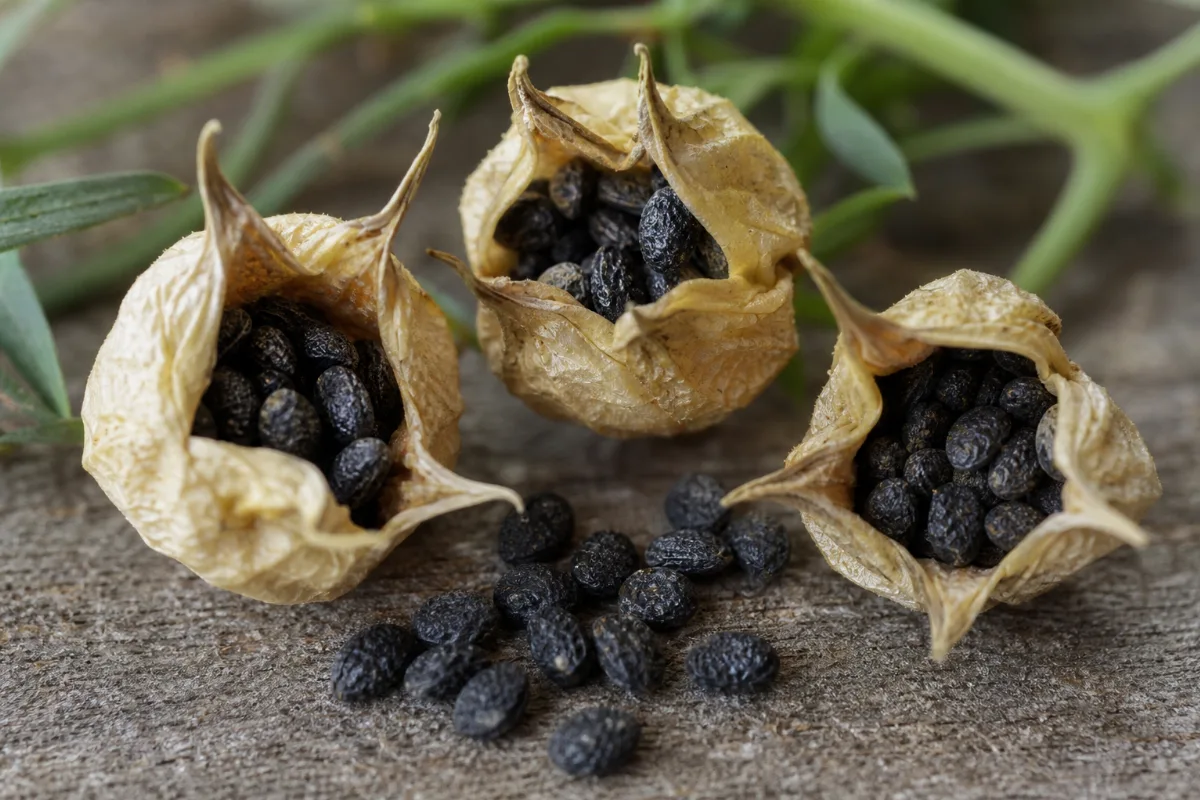
Psychedelic Therapy · Plant
Syrian rue
Peganum harmala · also called African rue; wild rue; harmal; esfand (Iran); not the same as rue or goat's rue
Syrian rue is a hardy plant of dry lands from the Mediterranean to Central Asia. Its seeds and roots contain harmine and harmaline, which block an enzyme called MAO-A. The seeds have caused serious poisonings and can interact dangerously with antidepressants and cough medicines. No trial shows it treats depression or any serious illness. It is not safe in pregnancy.
General information, not medical advice. Last substantive update · Not medically reviewed. A named clinician has not signed off on this page. How this page is made
About Syrian rue
Syrian rue (Peganum harmala) is a perennial plant native from southern Europe and North Africa through the Middle East to Central Asia. Its seeds and roots carry harmine and harmaline, which block MAO-A. This brings real poisoning and interaction risks. No trial supports it as a treatment.
Danger first: poisoning and MAO blocking
In 200 cases reported to the Moroccan poison control centre between 1984 and 2008, reasons were therapeutic use (32.5%), suicide (28.5%) and abortion (13.5%). Of 114 cases with a known outcome, 7 died. These are reports to a poison centre, so they cannot give a true rate.
Seed and root extracts reversibly block human MAO-A in the test tube. MAO blockers can cause serotonin syndrome or a dangerous rise in blood pressure with antidepressants, cough medicines and some foods. A 2026 case report of severe serotonin syndrome followed ayahuasca and cough medicine. Syrian rue itself has not been measured in people. Do not stop prescribed medicine on your own; ask a doctor or pharmacist.
What the plant is
Peganum harmala L. is an accepted species in GBIF, family Tetradiclidaceae; older papers call the family Zygophyllaceae or Nitrariaceae. Seeds and roots hold the most alkaloids: dry seeds had harmine 4.3% and harmaline 5.6% by weight in one analysis. Stems and leaves have little; flowers none.
The harmala alkaloids themselves are covered on the linked compounds page.
Traditional uses
Reviews describe Syrian rue in traditional Iranian medicine, in Chinese folk medicine, as a protective amulet against the evil eye and as a dye across Asia, Iran, north-west India and North Africa. In Iran the seed smoke is called Espand. In Morocco clinical papers record its traditional use to bring on menstruation or abortion, and many of the poisoning cases come from that use. We report only what the sources say. Tradition is not proof of safety or benefit.
What research shows
There is no trial of the plant for depression. One 90-man trial of seed capsules for prostate symptoms had no placebo group, and its reported scores favoured tamsulosin alone. A 54-patient trial of a skin oil for knee osteoarthritis found less pain than olive oil. Seed smoke lowered microbes in two rooms but raised particles. Cancer and infection findings come from cells and animals.
Pregnancy
A review calls the plant contraindicated in pregnancy. Published cases include a 24-year-old woman at 22 weeks with kidney failure and liver injury who lost the pregnancy and kept nerve damage, and a 20-year-old with brain bleeding and kidney failure who needed ventilation and dialysis. Two other Moroccan cases did well. Case reports cannot show how common these outcomes are.
Weed and invasive status
GBIF checklist records mark the plant as introduced in several western and southern US states, parts of Australia, South Africa and Europe, and invasive-species registers list it. The IUCN Global Invasive Species Database has no entry for it. We did not check state or national weed laws.
Law differs by country and changes
In the US federal schedule text we searched, DMT is in Schedule I but we found no entry for Peganum, harmine or harmaline. We did not check the UN conventions, other countries or US states. This is not legal advice; check current law where you live.
At a glance
Traditional uses history, not proof
- Seed used in traditional Iranian medicine as a carminative, diuretic, menstruation-promoting and pain-relieving remedy (Mina 2015).
- National medicinal herb in Chinese folk medicine for joint pain, cough, dizziness and headache (Li 2024).
- Seed smoke known as Espand in Iranian culture and Ozallaik in Turkey (Filban 2021); used in Morocco to bring on menstruation or abortion, with documented poisonings (Achour 2012).
Studied for research
- Depression: MAO-A blocking in the test tube only, insufficient evidence
- Prostate symptoms: one small trial, very low certainty
- Knee osteoarthritis: one small trial of a skin oil, low certainty
- Air disinfection by seed smoke: two-room study, very low certainty
- Cancer and infection: cell and animal work only
Main compounds
- Harmine (blocks MAO-A)
- Harmaline (blocks MAO-A)
- Harmalol and tetrahydroharmine (smaller amounts)
Common forms
- Seeds
- Roots and bark in folk medicine
- Seed oil, seed smoke and extracts in studies
Research links: Peganum harmala poisoning in Morocco, about 200 cases (abstract) · Alkaloids and MAO inhibition in the plant (abstract) · Review in traditional Iranian medicine and modern use (abstract) · Confirmed seed-extract intoxication case (abstract) · GBIF: Peganum harmala · Poison Control (US): call 1-800-222-1222 · Research Library · Genes & Biomarkers Library
What it is and its history
- Accepted scientific name
- Peganum harmala
- Naming authority
- L.
- Synonyms
- Peganum dauricum Pall.; Peganum rothschildianum Buxb.; Harmala peganum Crantz; Peganon harmalum (L.) St.-Lag.
- Common names
- Syrian rue (English); African rue (English); Wild rue (English); Harmal (English); Espand / esfand (Persian (Iran)); Ozallaik (Turkish)
- Family or group
- GBIF places it in Tetradiclidaceae. Review papers use Zygophyllaceae (2013, 2024) or Nitrariaceae (2015), so the family depends on the classification system. Plants of the World Online could not be checked (bot block).
- Classification
- Plantae > Tracheophyta > Magnoliopsida > Sapindales > Tetradiclidaceae (GBIF) > Peganum > Peganum harmala
- Native range
- GBIF checklist records give a native range from southern Europe and North Africa through the Middle East and Central Asia to Mongolia, north-west China, Pakistan and India.
- Habitat
- A perennial herb; a 2026 paper studied it along a soil-salinity gradient (not read beyond the title).
- What it looks like
- Part used: Seeds are the main medicinal part in Iranian medicine; roots and bark are also named. Seeds and roots hold most alkaloids. This page does not describe how to recognise or collect the plant.
- Look-alikes and adulterants
- Name: Rue (Ruta graveolens); Note: A different plant with a similar common name.; Name: Goat's rue (Galega officinalis); Note: A different plant with a similar common name.
- Sustainability and conservation
- Not a conservation concern in the sources read; listed as introduced in several regions (see notes).
Traditional use and history history, not clinical proof
| Tradition or era | Documented use | Source |
|---|---|---|
| Traditional Iranian medicine | Seed described as carminative, milk-promoting, diuretic, menstruation-promoting, anti-clotting and pain-relieving. | Mina 2015 |
| Chinese folk medicine | National medicinal herb used for weak muscles, joint pain, cough, dizziness, headache and irregular menstruation. | Li 2024 |
| Asia, Iran, north-west India and North Africa | Genus used as an amulet against the evil eye and as a dye, alongside medicinal uses. | Li 2017 |
| Iran and Turkey (Espand / Ozallaik) | Seed smoke used in indoor spaces; the 2021 study tested its effect on air microbes. | Filban 2021 |
| Middle East and North Africa (Morocco) | Used traditionally to bring on menstruation or abortion, according to clinical papers that also document poisonings. | Achour 2012 |
| Recent recreational use | A 2010 paper says the plant is increasingly used for psychoactive recreational purposes as an ayahuasca analogue. | Herraiz 2010 |
Traditional use shows how it was used. It does not show that it works or is safe today.
What is inside, and how it may work
What it contains and how those compounds act in cells and animals. Laboratory and animal mechanisms are not proven effects in people.
Main compounds
| Compound | Family | Where it is concentrated | Activity studied | Level of evidence |
|---|---|---|---|---|
| Harmine PubChem 5280953 | beta-carboline alkaloid | Seeds (4.3% w/w), roots (2.0%) 4.3% of dry seed weight in one analysis; varies by sample | Reversible MAO-A inhibitor. 12 | Laboratory |
| Harmaline PubChem 3564 | beta-carboline alkaloid | Seeds (5.6% w/w) 5.6% of dry seed weight in one analysis | Reversible MAO-A inhibitor. 12 | Laboratory |
| Harmalol | beta-carboline alkaloid | Seeds (0.6%) 0.6% | Not characterised here. 12 | Laboratory |
| Tetrahydroharmine PubChem 442118 | beta-carboline alkaloid | Seeds (0.1%) 0.1% | Not characterised here. 12 | Laboratory |
| Other groups | volatile oils, flavonoids, triterpenoids, coumarins and others | Various | Listed in a review. 14 | Review |
Mechanisms, receptors and pathways
| Target or pathway | Gene or receptor | What was found | Level |
|---|---|---|---|
| MAO-A enzyme | MAOA | Seed and root extracts reversibly and competitively inhibit human MAO-A; weak on MAO-B. 12 | Laboratory research |
| Liver drug-handling enzymes | CYP1A2, CYP2C19, CYP3A4 | A review states the plant increased expression of these enzymes. 17 | Review |
Absorption, metabolism and elimination
- Absorption
- Not established for the plant in people.
- Distribution
- Not established.
- Metabolism
- A review reports effects on CYP enzymes; no human data read.
- Elimination
- Not established.
- Bioavailability
- Not established.
Isolated compounds versus whole extracts
Seeds, roots, oil, smoke and isolated alkaloids are different products. The knee trial used a topical oil and the prostate trial used seed capsules. Most lab work uses isolated alkaloids. Results for one do not transfer to another.
Nutritional composition
Syrian rue is not a food or a nutrient.
1 low certainty3 very low certainty1 not enough evidence
What was looked at
The 5 benefits and uses checked for Syrian rue, each with how strong the evidence is. Tap one to open it.
- Mood and depression (a claimed use; lab work only)Not enough evidence
- Urinary symptoms from an enlarged prostate (one small trial)Very low certainty
- Knee osteoarthritis pain (traditional oil on the skin)Low certainty
- Indoor air microbes after seed smoke (air measurements)Very low certainty
- Cancer and infection (lab and animal research only)Very low certainty
Lab markers tracked in the studies
MAO-A enzyme activity (test tube)International Prostate Symptom Score (IPSS)
What is Syrian rue good for?
The uses people ask about and how strong the evidence is. None is proven. Read every row together with the Safety tab.
Benefits, one by one
Each card is a research question, not a promise. Tap a goal to filter. Open a card to see the studies, doses and limits.
Mood and depression (a claimed use; lab work only)
Not enough evidenceSeed and root extracts block MAO-A strongly in the test tube, and the authors of a 2010 paper say this could be the basis of the plant's purported antidepressant action. No trial in people tested the plant for depression.
2 studiesNot covered. This page gives no amounts or ways of using the plant.
Studies, doses and limits
Results
Dry seeds held harmine 4.3% and harmaline 5.6% by weight; seed extract blocked MAO-A at very low concentrations in the lab.
Effect sizes as reported
Seed extract IC50 27 microg/l and root extract 159 microg/l against human MAO-A (test tube).
Why this rating
Enzyme work only. Nobody has tested the plant for depression in people, and blocking MAO-A is also what makes the plant risky.
Form and dose studied
Not covered. This page gives no amounts or ways of using the plant.
Who was studied
Test-tube enzyme.
Limits
Does not show an effect in people.
Why researchers looked
MAO-A breaks down serotonin and other brain messengers. Medicines that block it are used for depression.
Traditional use
Reviews describe the seed in Iranian and Chinese traditional medicine for many complaints. We found no source in our search that describes a traditional use for depression.
Proposed mechanism Laboratory research
Harmine and harmaline in seeds and roots reversibly block human MAO-A in the test tube; they are poor blockers of MAO-B.
A proposed mechanism does not show that the effect happens in people.
The seeds block the enzyme MAO-A and can interact dangerously with antidepressants and other medicines. See the Safety tab. Seed poisoning is well documented.
Urinary symptoms from an enlarged prostate (one small trial)
Very low certaintyOne 90-man trial in Iran compared seed capsules, seed plus tamsulosin, and tamsulosin alone for four weeks. The numbers in the abstract favour tamsulosin alone, although the authors concluded the seed may help.
2 studiesNot covered. This page gives no amounts.
Studies, doses and limits
What the trials found
One single-blind randomized trial, 90 men, 4 weeks, no placebo group.
Results
Mean symptom scores after four weeks: seed alone 41.9, seed plus tamsulosin 21.0, tamsulosin alone 16.5 (lower is better).
Effect sizes as reported
Group differences reported as P=0.001; no confidence intervals in the abstract.
Why this rating
Small, single-blind, short, no placebo, and the reported numbers do not show the seed doing better than the standard medicine.
Form and dose studied
Not covered. This page gives no amounts.
Who was studied
90 men with benign prostatic hyperplasia.
Limits
Safety not reported in the abstract; one centre.
Why researchers looked
Folk use in Iran for urinary complaints.
Traditional use
Traditional Iranian medicine reviews list the seed as a diuretic.
Proposed mechanism Unknown
Not established.
A proposed mechanism does not show that the effect happens in people.
The trial did not report safety in its abstract; the seeds are poisonous.
Knee osteoarthritis pain (traditional oil on the skin)
Low certaintyIn a 54-patient double-blind trial, a standardised traditional Peganum oil rubbed on the knee for four weeks lowered pain and difficulty with function more than olive oil. Stiffness did not differ.
1 studiesNot covered. This page gives no amounts or ways of using the plant.
Studies, doses and limits
What the trials found
One double-blind randomized trial (54 patients, 4 weeks).
Results
Significantly greater drops in pain and function scores with Peganum oil; no difference in stiffness.
Effect sizes as reported
Not given in the abstract.
Why this rating
One small, short trial of a topical oil; not replicated; funding not stated.
Form and dose studied
Not covered. This page gives no amounts or ways of using the plant.
Who was studied
54 people with knee osteoarthritis.
Limits
Topical oil only; short.
Why researchers looked
Traditional topical use.
Traditional use
Reviews list pain relief among traditional uses.
Proposed mechanism Unknown
Not established.
A proposed mechanism does not show that the effect happens in people.
This was a skin-applied oil, not the swallowed seed. Do not read it as safety for seeds.
Indoor air microbes after seed smoke (air measurements)
Very low certaintyIn Iran, where the plant is called Espand, a study measured bacteria and fungi in room air after seed smoke. Microbe counts fell, but particles in the air rose. It says nothing about human health.
1 studiesNot covered. This page gives no amounts or ways of using the plant.
Studies, doses and limits
Results
Bacteria fell 71.4 to 92.8% and fungi 88.9 to 94.7% across two rooms; particle concentration rose.
Effect sizes as reported
See results.
Why this rating
Two rooms, air sampling only, no health outcome, and the particle increase counts against it.
Form and dose studied
Not covered. This page gives no amounts or ways of using the plant.
Who was studied
A classroom and a home in Ahvaz, Iran.
Limits
No people studied; extrapolating to disease prevention is not justified.
Why researchers looked
A traditional practice of burning the seeds indoors.
Traditional use
Called Espand in Iranian culture and Ozallaik in Turkey in the 2021 paper.
Proposed mechanism Hypothesis
The authors suggest harmine may be responsible; not shown.
A proposed mechanism does not show that the effect happens in people.
The smoke raised particle levels in the air, which is itself a health concern. Smoke is not a safe treatment.
Cancer and infection (lab and animal research only)
Very low certaintyReviews list anti-cancer, antibacterial, antifungal, anti-inflammatory and blood-sugar activity for extracts and alkaloids. These are cell and animal findings. No cancer or infection treatment in people is supported.
3 studiesNot covered. This page gives no amounts.
Studies, doses and limits
Results
Reviews summarise activity in cells and animals only.
Why this rating
Lab and animal studies summarised in narrative reviews.
Form and dose studied
Not covered. This page gives no amounts.
Who was studied
Cells and animals.
Limits
Review abstracts give no study counts.
Why researchers looked
Alkaloids are active in cells.
Traditional use
Chinese folk medicine uses for cough, joint pain and more are described in reviews.
Proposed mechanism Laboratory research
Various; mostly cell studies.
A proposed mechanism does not show that the effect happens in people.
Lab and animal findings do not mean the plant treats cancer or infection.
Connections to the rest of health
How Syrian rue connects to the rest of our health knowledge graph. Every link says what kind of connection it is. A safety link (for example to the liver) is a warning, not a benefit. A study that merely mentions a topic never creates a benefit link.
Explore every connection: goals, body systems, organs, symptoms, genes
B. Body systems
| Connected to | Kind of connection | Evidence status | Context | Studies |
|---|---|---|---|---|
| Nervous System | Biological association | Not enough evidence | Studied for: Mood and depression (a claimed use; lab work only) | 12 17 |
| Urinary System | Biological association | Very low certainty | Studied for: Urinary symptoms from an enlarged prostate (one small trial) | 22 17 |
| Musculoskeletal System | Biological association | Low certainty | Studied for: Knee osteoarthritis pain (traditional oil on the skin) | 1 |
| Respiratory System | Biological association | Very low certainty | Studied for: Indoor air microbes after seed smoke (air measurements) | 7 |
| Immune System | Biological association | Very low certainty | Studied for: Cancer and infection (lab and animal research only) | 14 13 18 |
I. Biomarkers
| Connected to | Kind of connection | Evidence status | Context | Studies |
|---|---|---|---|---|
| MAO-A enzyme activity (test tube) | Biological association | Moderate certainty | Measured in trials: decrease. A lab change is not the same as a health benefit. | 12 |
| International Prostate Symptom Score (IPSS) | Biological association | Very low certainty | Measured in trials: decrease. A lab change is not the same as a health benefit. | 22 |
J. Genes, receptors and enzymes
| Connected to | Kind of connection | Evidence status | Context | Studies |
|---|---|---|---|---|
| MAO-A | Preliminary mechanism | In vitro | Main target of harmine and harmaline. | 12 |
L. Active compounds
| Connected to | Kind of connection | Evidence status | Context | Studies |
|---|---|---|---|---|
| Harmine | Biological association | Laboratory | Reversible MAO-A inhibitor. Preparation or compound: Seeds (4.3% w/w), roots (2.0%) |
12 |
| Harmaline | Biological association | Laboratory | Reversible MAO-A inhibitor. Preparation or compound: Seeds (5.6% w/w) |
12 |
| Harmalol | Biological association | Laboratory | Not characterised here. Preparation or compound: Seeds (0.6%) |
12 |
| Tetrahydroharmine | Biological association | Laboratory | Not characterised here. Preparation or compound: Seeds (0.1%) |
12 |
| Other groups | Biological association | Review | Listed in a review. Preparation or compound: Various |
14 |
Each connection is stored with the ingredient, the connected record, the kind of connection, the evidence status, the supporting studies, the preparation or compound involved, and a review date (last reviewed October 25, 2026).
Evidence at a glance: what the research found for 5 outcomes
Each outcome below is one thing researchers measured. Certainty is how far the evidence can be trusted, not how well it works. The full studies are on the next tab.
The evidence
The research centre for Syrian rue. Every record here was checked against PubMed or the publisher's page; we never list a study we have not verified.
Evidence by outcome
Bars show how many studies we found for each outcome, not how well it works. People are added up across trials only (reviews are not added, to avoid double counting).
How we rate evidence
High certainty
Several well-run trials or reviews agree; further research is unlikely to change the picture much.
Moderate certainty
Good trials point the same way, but some doubt remains.
Low certainty
Small, short or inconsistent trials. The finding could change with better research.
Very low certainty
Very little or very weak human data. Treat as a possibility only.
Mixed findings
Trials or reviews disagree with each other.
Not enough evidence
Not enough human research to say either way.
Evidence against
Good research found no benefit, or found harm.
We take the reviewers' own risk-of-bias and GRADE statements where they exist, and otherwise judge from study size, design, consistency, directness and whether a product matches what is sold. Many publications do not make evidence high. Method note: We searched PubMed and read the abstracts of the papers cited, downloaded and searched the US eCFR schedule text, and checked the plant name and range in GBIF. The Kew record could not be reached. Statements we could not verify are marked as such.
Study library: every study we checked 23
| Study | Design | People | Product, dose, length | Result |
|---|---|---|---|---|
| Abolhassanzadeh 2015 Randomized clinical trial of peganum oil for knee osteoarthritis. J Evid Based Complementary Altern Med · PMID 25654976 · DOI |
Double blind randomized trial |
54 54 patients with knee osteoarthritis |
Traditional Peganum harmala oil rubbed on the skin versus olive oil Seed oil (topical) Not summarised here |
After 4 weeks pain and difficulty in function fell significantly more with Peganum oil than with the olive oil control. Stiffness did not differ between groups. Methods, limits and fundingOutcomes: WOMAC pain and function; visual analogue scale Limitations: Small, 4 weeks; topical oil, not the swallowed seed; funding not stated. Funding and conflicts: Not stated in the abstract. Read: abstract |
| Achour 2012 [Peganum harmala L. poisoning and pregnancy: two cases in Morocco]. Med Sante Trop · PMID 22868734 · DOI |
Case report |
2 Two pregnant women in Morocco |
Peganum harmala (Syrian rue) Not summarised here |
The plant is commonly used as an emmenagogue (to bring on menstruation) and abortifacient in traditional medicine in the Middle East and North Africa, including Morocco. Two cases of poisoning in pregnant women were treated successfully, with a good outcome for mother and child. Methods, limits and fundingOutcomes: Poisoning in pregnancy; outcome Limitations: Two cases; written in French with an English abstract; outcomes here were good, unlike other published pregnancy cases. Funding and conflicts: Not stated in the abstract. Read: abstract |
| Achour S et al 2012 [Peganum harmala L. poisoning in Morocco: about 200 cases]. Therapie · PMID 22487503 · DOI |
Case series |
200 200 poisoning cases reported to the Moroccan poison control centre, 1984 to 2008 |
Peganum harmala (Syrian rue) in traditional medicine Not summarised here |
Mean age 24.4 years; 167 women and 33 men. Reasons were therapeutic use (32.5%), suicide (28.5%) and abortion (13.5%). Symptoms were mainly neurological (34.4%), gastrointestinal (31.9%) and cardiovascular (15.8%). Outcome was known in 114 cases, with 7 deaths; the authors give a fatality rate of 6.2%. Methods, limits and fundingOutcomes: Who was poisoned, symptoms, outcome Limitations: Retrospective reports to a poison centre; abstract is in English but the paper is in French; real rate unknown. Funding and conflicts: Not stated in the abstract. Read: abstract |
| America's Poison Centers / HRSA 2026 Poison Help (US): 1-800-222-1222 poison.org · Source |
Authoritative guidance n/a |
General public | n/a |
The page gives 1-800-222-1222 as the US poison help number (re-read on 2026-10-25). Methods, limits and fundingOutcomes: Poison control contact Limitations: Round-the-clock availability was not checked here. Other countries have their own numbers; none were verified. Read: summary |
| Berdai MA et al 2014 Peganum harmala L. Intoxication in a Pregnant Woman. Case Rep Emerg Med · PMID 24955262 · DOI |
Case report |
1 One 24-year-old woman, 22 weeks pregnant |
Peganum harmala seeds Not summarised here |
She had disturbed consciousness, uterine contractions and little urine. Tests showed kidney failure and liver injury and she needed dialysis. During hospital care she was ventilated and had a spontaneous expulsion of the fetus. Afterwards she kept cerebellar ataxia (loss of balance and coordination) and nerve damage in the limbs. Methods, limits and fundingOutcomes: Poisoning features and outcome Limitations: Single case. Funding and conflicts: Not stated in the abstract. Read: abstract |
| Callaway JC et al 1998 Ayahuasca preparations and serotonin reuptake inhibitors: a potential combination for severe adverse interactions. J Psychoactive Drugs · PMID 9924842 · DOI |
Expert warning |
Ayahuasca users taking SSRI antidepressants (theoretical and reported risk) | Ayahuasca preparations with SSRIs Not summarised here |
The authors warn that the MAO-inhibiting harmala alkaloids in ayahuasca combined with SSRI antidepressants may induce a serotonin syndrome with a potentially grave outcome, and advise caution when combining ayahuasca with certain pharmaceutical drugs. Methods, limits and fundingOutcomes: Risk of serotonin syndrome Limitations: Expert warning from 1998; the abstract reports no numbers. Funding and conflicts: Not stated in the abstract. Read: abstract |
| Filban 2021 Antimicrobial properties of Peganum harmala L. seeds' smoke in indoors: applications and prospects. Environ Monit Assess · PMID 34888707 · DOI |
Experimental air sampling study environmental experiment |
One classroom and one home, Ahvaz, Iran | Peganum harmala seed smoke Seeds Not summarised here |
The plant is called Espand in Iranian culture and Ozallaik in Turkey. After seed smoke, bacteria and fungi in indoor air fell by 71.4% and 94.7% in the home and by 92.8% and 88.9% in the classroom. The smoke also raised the concentration of particles in the air. Methods, limits and fundingOutcomes: Bacteria and fungi in indoor air; particles Limitations: Two rooms; measures air microbes, not human health; particles raised. Funding and conflicts: Not stated in the abstract. Read: abstract |
| Frison 2008 A case of beta-carboline alkaloid intoxication following ingestion of Peganum harmala seed extract. Forensic Sci Int · PMID 18603389 · DOI |
Case report |
1 One patient |
Peganum harmala seed infusion Seeds Not summarised here |
The paper reports intoxication after intentional ingestion of a seed infusion bought over the internet. Harmala alkaloids were identified by GC-MS in the seed extract and in the patient's urine. The authors list possible toxic effects: visual and auditory hallucinations, ataxia, nausea, vomiting, confusion and agitation. They call it the first P. harmala intoxication confirmed by toxicology. Methods, limits and fundingOutcomes: Poisoning features; toxicology confirmation Limitations: Single case. Funding and conflicts: Not stated in the abstract. Read: abstract |
| Ghizlane EA et al 2021 Fatal poisoning of pregnant women by peganum harmala L.: A case reports. Ann Med Surg (Lond) · PMID 34401132 · DOI |
Case report |
1 One 20-year-old woman, pregnant |
Peganum harmala (Syrian rue) Not summarised here |
She arrived agitated, vomiting and with disturbed consciousness. Tests showed anaemia, low platelets, acute kidney injury and raised liver enzymes. Scans showed several areas of brain ischaemia, bleeding around the brain, internal bleeding in the enlarged uterus and aspiration pneumonia. She needed ventilation and dialysis and was discharged after about six weeks. The authors warn that excessive use can lead to a fatal outcome. Methods, limits and fundingOutcomes: Poisoning features and outcome Limitations: Single case; the title refers to fatal poisoning of pregnant women but the case described survived. Funding and conflicts: Not stated in the abstract. Read: abstract |
| Global Biodiversity Information Facility 2026 GBIF backbone: Peganum harmala L. (species key 3189912) GBIF species API · Source |
Database n/a |
General public | n/a |
GBIF API read 2026-10-25: Peganum harmala L. is an ACCEPTED species; kingdom Plantae, phylum Tracheophyta, class Magnoliopsida, order Sapindales, family Tetradiclidaceae, genus Peganum. Published in Species Plantarum 444 (1753). Listed synonyms include Peganum dauricum Pall., Peganum rothschildianum Buxb. and Harmala peganum Crantz. English vernacular names include Syrian rue, African rue, wild rue, harmal, esfand and aspand. Methods, limits and fundingOutcomes: Identity, range or legal text Limitations: Taxonomy backbone only. Papers place the plant in different families (Zygophyllaceae, Nitrariaceae); the family depends on the classification used. Read: summary |
| Global Biodiversity Information Facility 2026 GBIF distribution records for Peganum harmala (checklist-based) GBIF species API (distributions) · Source |
Database n/a |
General public | n/a |
GBIF distributions read 2026-10-25 (91 records). A native range is listed from southern Europe and North Africa across the Middle East and Central Asia to Mongolia and north-west China, Pakistan and India. Records marked INTRODUCED include the United States (Arizona, California, Colorado, Montana, Nevada, New Mexico, Oregon, Texas, Washington), Australia (South Australia, New South Wales, Victoria), South Africa (Cape) and some European places. Introduced records also come from invasive-species registers (the Global Register of Introduced and Invasive Species, DAISIE, RINSE). Methods, limits and fundingOutcomes: Identity, range or legal text Limitations: Registers record that the plant is introduced and listed in invasive-species registers; they are not a ruling on how weedy it is in any one place. The IUCN Global Invasive Species Database has no entry for it (searched 2026-10-25). Read: summary |
| Herraiz 2010 beta-Carboline alkaloids in Peganum harmala and inhibition of human monoamine oxidase (MAO). Food Chem Toxicol · PMID 20036304 · DOI |
Laboratory analysis in vitro |
Plant extracts and human enzyme in the test tube | Peganum harmala extracts Seeds, roots, stems, leaves, flowers Not summarised here |
Seeds and roots held the most alkaloids; stems and leaves had little and flowers none. Dry seeds contained harmine 4.3% and harmaline 5.6% by weight. Seed and root extracts were potent, reversible inhibitors of human MAO-A and poor inhibitors of MAO-B. The authors say this should contribute to the plant's psychopharmacological and toxicological effects. The paper notes the plant is increasingly used for psychoactive recreational purposes as an ayahuasca analogue. Methods, limits and fundingOutcomes: Alkaloid content by plant part; MAO-A inhibition Limitations: Test-tube enzyme work; does not measure effects in people. Funding and conflicts: Not stated in the abstract. Read: abstract |
| Li 2017 A review on traditional uses, phytochemistry, pharmacology, pharmacokinetics and toxicology of the genus Peganum. J Ethnopharmacol · PMID 28359849 · DOI |
Narrative review review |
Literature review | Genus Peganum (extracts and formulations) Not summarised here |
In Chinese traditional medicine the genus is used for cough, high blood pressure, diabetes, asthma, jaundice, colic and lumbago. It is also used as an amulet against the evil eye and as a dye, in Asia, Iran, north-west India and North Africa. The authors find some evidence from extract studies for effects relevant to Alzheimer and Parkinson disease, cancer, diabetes and hypertension, and say data on mechanisms, toxicology and drug interactions are still limited. Methods, limits and fundingOutcomes: Traditional uses, pharmacology, toxicology, interactions Limitations: Covers the whole genus, not only P. harmala; evidence is mostly extract and lab work. Funding and conflicts: Not stated in the abstract. Read: abstract |
| Li LN et al 2024 Peganum harmala L.: A Review of Botany, Traditional Use, Phytochemistry, Pharmacology, Quality Marker, and Toxicity. Comb Chem High Throughput Screen · PMID 37350001 · DOI |
Narrative review review |
Literature review | Peganum harmala (whole plant and extracts) Not summarised here |
In Chinese folk medicine the plant is a national medicinal herb used for weak muscles, joint pain, cough, dizziness, headache and irregular menstruation. It contains alkaloids, volatile oils, flavonoids and other groups. The authors list anti-cancer, neuroprotective, antibacterial, anti-inflammatory, blood-sugar, blood-pressure, anti-asthma and insecticidal activities from modern studies, and summarise toxicity. Methods, limits and fundingOutcomes: Botany, traditional use, chemistry, pharmacology, toxicity Limitations: The abstract does not give the number or quality of studies behind the activities; the list is mostly lab and animal work. Funding and conflicts: Not stated in the abstract. Read: abstract |
| Livingston MG et al 1996 Monoamine oxidase inhibitors. An update on drug interactions. Drug Saf · PMID 8713690 · DOI |
Review |
MAO inhibitor medicines in general | MAO-inhibitor antidepressant and Parkinson medicines Not summarised here |
MAO inhibitors can interact with a wide range of drugs and foods, particularly sympathomimetic medicines and tyramine-containing foods, causing hypertensive reactions. Newer reversible inhibitors of MAO-A (RIMAs such as moclobemide) are less likely to cause hypertensive reactions with sympathomimetics or tyramine-rich food, but the review still advises caution with such foods and medicines, and with serotonin-enhancing drugs, and advises against over-the-counter products containing sympathomimetics. Methods, limits and fundingOutcomes: Drug and food interactions Limitations: 1996 review of drugs, not of harmala brews. Funding and conflicts: Not stated in the abstract. Read: abstract |
| Mikkelsen N et al 2023 Serotonin syndrome-A focused review. Basic Clin Pharmacol Toxicol · PMID 37309284 · DOI |
Review |
Serotonin syndrome in general (not specific to harmala alkaloids) | Serotonergic drugs Not summarised here |
Serotonin syndrome can occur from therapeutic use or overdose of one serotonergic drug, or as an interaction between two or more. Its main features are neuromuscular excitation, autonomic dysfunction and altered mental state, in someone with new or altered serotonergic therapy. Early recognition and treatment are crucial. Methods, limits and fundingOutcomes: Causes, features, treatment Limitations: General review of the syndrome; not about harmala alkaloids. Funding and conflicts: Not stated in the abstract. Read: abstract |
| Mina 2015 Medicinal properties of Peganum harmala L. in traditional Iranian medicine and modern phytotherapy: a review. J Tradit Chin Med · PMID 25842736 · DOI |
Narrative review review |
Literature review | Peganum harmala (mainly seed) Seed Not summarised here |
The main medicinal part is the seed. Traditional Iranian medicine sources describe it as carminative, milk-promoting, diuretic, menstruation-promoting, anti-clotting and pain-relieving. Adverse events listed: neuro-sensory symptoms, visual hallucination, slow heartbeat, low blood pressure, agitation, tremor, ataxia, abortion and vomiting. The authors call it contraindicated in pregnancy because of abortive and mutagenic activity, and say it may change how the body handles medicines that use CYP1A2, 2C19 and 3A4, and through monoamine oxidase inhibition. Methods, limits and fundingOutcomes: Traditional Iranian medicine uses, safety, interactions Limitations: Review of mixed-quality sources; the abstract does not give counts. Funding and conflicts: Not stated in the abstract. Read: abstract |
| Moloudizargari 2013 Pharmacological and therapeutic effects of Peganum harmala and its main alkaloids. Pharmacogn Rev · PMID 24347928 · DOI |
Narrative review review |
Literature review | Peganum harmala seeds, bark, root and its alkaloids Seeds, bark, root Not summarised here |
Syrian rue is well known in Iran, where seeds, bark and root are used as folk medicine. Its main constituents are beta-carboline alkaloids (harmalol, harmaline, harmine); harmine is the most studied. The same alkaloids occur in Banisteria caapi. Methods, limits and fundingOutcomes: Traditional uses and pharmacology Limitations: Abstract gives no effect sizes or study quality. Funding and conflicts: Not stated in the abstract. Read: abstract |
| Pack S et al 2026 Severe Serotonin Syndrome With Acute Respiratory Failure Following Ayahuasca and Dextromethorphan Use: A Case Report. Cureus · PMID 42713547 · DOI |
Case report |
1 One 46-year-old man |
Ayahuasca over three days, then over-the-counter dextromethorphan and diphenhydramine Not summarised here |
He developed severe serotonin syndrome with acute respiratory failure, needed emergency breathing-tube insertion and intensive care, was treated with benzodiazepines and cyproheptadine, was extubated on intensive-care day 2 and discharged on hospital day 3. The authors say this appears to be the first report of ayahuasca with these over-the-counter medicines causing syndrome this severe. Methods, limits and fundingOutcomes: Serotonin syndrome and breathing failure Limitations: One case; cannot give how common this is. Funding and conflicts: Not stated in the abstract. Read: abstract |
| Rached G et al 2026 Safety and Efficacy of Monoamine Oxidase Inhibitors in Patients Who Use Psychoactive Substances: Potential Drug Interactions and Substance Use Disorder Treatment Data. CNS Drugs · PMID 41546846 · DOI |
Review |
People who use psychoactive substances and take MAO-inhibitor medicines (219 publications) | MAO-inhibitor medicines combined with psychoactive substances Not summarised here |
Hypertensive urgency or emergency has been reported with MAOIs and amphetamine, cocaine, dextroamphetamine, khat, methamphetamine, psilocybin mushrooms and tyramine-rich alcoholic drinks. Agitation, delirium, mania or psychosis and rhabdomyolysis were reported with DMT or 5-MeO-DMT. Methods, limits and fundingOutcomes: Interaction reports Limitations: Narrative review of mostly pharmaceutical MAOIs; includes 56 case reports and non-peer-reviewed forum reports; cannot give rates. Funding and conflicts: Not stated in the abstract. Read: abstract |
| Royal Botanic Gardens 2026 Plants of the World Online (Kew): Peganum harmala POWO · Source |
Database n/a |
General public | n/a |
Not read: the POWO site returned a bot-check page on 2026-10-25, so the Kew record could not be checked. Methods, limits and fundingOutcomes: Identity, range or legal text Limitations: Not verified against POWO. Read: not read |
| Shirani-Boroujeni 2017 Impact of oral capsule of Peganum harmala on alleviating urinary symptoms in men with benign prostatic hyperplasia; a randomized clinical trial. J Renal Inj Prev · PMID 28497089 · DOI |
Single blind randomized trial |
90 90 men with benign prostatic hyperplasia |
Peganum harmala seed capsules, with or without tamsulosin Seeds Not summarised here |
Three groups of 30: seed alone, seed plus tamsulosin, tamsulosin alone. Scores differed between groups. The tamsulosin-alone group had the lowest mean score as reported (16.5 versus 41.9 for seed alone and 21.0 for the combination). The authors nevertheless concluded the seed may reduce urinary symptoms. Methods, limits and fundingOutcomes: International Prostate Symptom Score (IPSS) at 4 weeks Limitations: Single-blind, 4 weeks, no placebo group. The reported scores favour tamsulosin; the conclusion in the abstract is not clearly supported by those numbers. Safety was not reported in the abstract. Funding and conflicts: Not stated in the abstract. Read: abstract |
| US Drug Enforcement Administration / eCFR 2026 eCFR: 21 CFR 1308.11 to 1308.15, schedules of controlled substances (version dated 2026-10-21) eCFR · Source |
Regulation n/a |
General public | n/a |
eCFR, version dated 2026-10-21, sections 1308.11 to 1308.15 re-downloaded and searched on 2026-10-25: no occurrence of Peganum, harmala, harmine or harmaline. Dimethyltryptamine is listed in Schedule I (section 1308.11). Methods, limits and fundingOutcomes: US legal status Limitations: Federal rule only; states and other countries differ; laws change; absence of a name in this text is not legal advice and says nothing about analogue or other provisions. Read: full-text |
What we do not know yet
- No trial of Syrian rue for depression or any mind-related condition.
- No measurement in people of how strongly the seeds block MAO or interact with medicines.
- No safety data from controlled studies; pregnancy evidence is case reports.
- International law, UN conventions and weed laws not checked; Plants of the World Online not reachable.
- Conservation status not checked.
How new research is added
New studies are found by a saved PubMed search and placed in a review queue. A person reads each before it changes this page. Regulator statements are rechecked on a schedule.
Lab markers
What changed in blood or saliva tests during trials. A changed number is not the same as feeling or being healthier, and we give no "normal ranges".
Other 2
MAO-A enzyme activity (test tube)
Decrease in trials
How strongly an extract slows the enzyme MAO-A in a laboratory dish.
Moderate certaintyResults and what it means
Why it was measured
To see whether the plant's alkaloids could change brain messenger levels and interact with medicines.
Statistical vs. clinical meaning
A solid lab finding. It explains the interaction risk but does not show a health benefit.
Safety implication
MAO-A blocking is the reason for the danger with antidepressants, cough medicines and some foods.
| Study | Result | People | Product |
|---|---|---|---|
| 12 |
International Prostate Symptom Score (IPSS)
Decrease in trials
A questionnaire score of urinary symptoms; lower is better.
Very low certaintySafety
What studies and official sources say about side effects, medicines and who should check first. Each point shows what kind of evidence it comes from.
Main points to know 5
- Danger first: the seeds are poisonous. In 200 poisoning cases reported to the Moroccan poison control centre over 1984 to 2008, reasons were therapeutic use (32.5%), suicide (28.5%) and abortion (13.5%). Symptoms were mainly neurological, digestive and cardiovascular. Outcome was known in 114 cases, with 7 deaths. Poison-centre reports cannot show how common poisoning is among all users. Case series 3
- Danger: it blocks MAO-A and can interact with many medicines. Seed and root extracts strongly and reversibly block human MAO-A in the test tube. MAO blockers can cause serotonin syndrome or a hypertensive crisis with antidepressants, cough medicines such as dextromethorphan, stimulants, opioids and some foods. A 2026 case report describes severe serotonin syndrome with breathing failure after ayahuasca (which uses a related MAO-blocking vine) and cough medicine. No study measured the interaction for Syrian rue itself. Lab and case report (from a related preparation) 12 19 6 16
- Danger: pregnancy. A review calls the plant contraindicated in pregnancy because of abortive and mutagenic activity. In Morocco it is used traditionally to bring on menstruation or abortion. Published cases include a pregnant woman with kidney failure, liver injury, ventilation and loss of the pregnancy, who kept balance and nerve damage; another with brain bleeding and kidney failure who survived after about six weeks; and two cases in which mother and child did well. Case report 17 5 9 2
- Hallucinations and confusion. A confirmed seed-infusion poisoning case lists visual and auditory hallucinations, loss of coordination, nausea, vomiting, confusion and agitation as possible effects. The seeds in that case were bought over the internet. Case report 8
- Smoke raises indoor particles. Burning the seeds indoors lowered microbes in two rooms but raised particles in the air. Experiment 7
Side effects 3
| Effect | How often | Severity and recovery | Evidence |
|---|---|---|---|
| Neuro-sensory symptoms, visual hallucination, agitation, tremor, ataxia From traditional-medicine and clinical sources summarised in the review. | Listed in a review; frequency not given. | moderate to severe Not stated | Review 17 |
| Vomiting, slow heartbeat, low blood pressure | Not given. | moderate Not stated | Review 17 |
| Kidney failure and liver injury Both cases were pregnant women. | Seen in pregnancy case reports; frequency unknown. | severe Needed dialysis in the cases | Case report 5 9 |
Liver
Medicines and supplements 4
| With | Why it matters | Importance | Evidence | What to do |
|---|---|---|---|---|
| Antidepressants (SSRIs and others), other serotonin-raising medicines prescription | MAO-A blocking plus serotonin-raising medicines can cause serotonin syndrome. | A 1998 paper warns of grave outcomes with SSRIs and ayahuasca preparations; a 2026 case shows severe serotonin syndrome after ayahuasca and cough medicine. These concern ayahuasca, not Syrian rue directly. | Case report Low certainty 6 19 | Do not combine. Ask a doctor or pharmacist; do not stop prescribed medicine on your own. |
| Dextromethorphan and decongestants over-the-counter | MAO-A blocking with cough and cold ingredients such as dextromethorphan. | Severe serotonin syndrome in a 2026 case report after ayahuasca and dextromethorphan. | Case report Low certainty 19 | Avoid the combination and ask a pharmacist. |
| Medicines cleared by CYP1A2, 2C19 or 3A4 prescription | A review reports the plant raised expression of CYP1A2, 2C19 and 3A4 and inhibited MAO, so drugs handled by these enzymes could be affected. | Stated in a review abstract; no human interaction study read. | Review Very low certainty 17 | Ask a pharmacist if you take any prescription medicine. |
| Tyramine-rich foods food | MAO inhibitor medicines can cause blood-pressure crises with tyramine-rich foods. | Documented for prescription MAO inhibitors; not measured for Syrian rue. | Review Low certainty 15 20 | Treat as a risk; ask a pharmacist. |
Who should check first 3
| Situation | Advice | Evidence |
|---|---|---|
| Pregnancy or trying to become pregnant | Avoid. A review calls the plant contraindicated and cases of severe poisoning exist. | Review and case report 17 5 9 |
| Taking antidepressants, cough or cold medicines, stimulants or other serotonin-active drugs | Avoid the combination and talk to a prescriber or pharmacist first. | Case report 6 19 |
| Kidney or liver disease, heart rhythm or blood-pressure problems | Ask a doctor first; poisoning cases show kidney, liver and heart effects. | Case series 3 5 |
Overdose, product quality and regulators
Summary. Seeds have caused serious poisoning in several countries' reports, with deaths in the Moroccan series.
Amounts. No safe amount is established in any source we read, and this page gives none.
Onset and course. Not summarised.
Repeated use. Not established.
Animal data. A review reports abortive and mutagenic activity.
Toxic parts. Seeds and roots hold the most alkaloids; stems and leaves little; flowers none (lab analysis).
Not read. Original animal and mutagenicity studies.
Alkaloid content differs by plant part. We found no testing of seed products sold online.
Plant part. Dry seeds had harmine 4.3% and harmaline 5.6% by weight; stems and leaves little. 12
Online purchase. The confirmed poisoning case involved seeds bought over the internet. 8
| Body | Action | Date |
|---|---|---|
| US Drug Enforcement Administration (21 CFR 1308.11 to 1308.15) (United States) | In the schedule text searched, DMT is listed in Schedule I. The words Peganum, harmala, harmine and harmaline do not appear in sections 1308.11 to 1308.15. Federal rule only; state laws and other countries differ. source | 2026-10-21 |
When to get medical help
- High fever, stiff or twitching muscles, severe agitation, heavy sweating, fast heartbeat or confusion after seeds, especially with an antidepressant or cough medicine: these can be serotonin syndrome. Call emergency services.
- Sudden severe headache, chest pain, vomiting, stiff neck or vision changes: these can be a hypertensive crisis. Call emergency services.
- Fits, fainting, trouble breathing, someone who cannot be woken, little or no urine, bleeding in pregnancy or pregnancy loss after seeds: call emergency services. In the US, Poison Help is 1-800-222-1222. Other countries have their own poison centres; none were verified here.
- Severe confusion, paranoia, hallucinations that do not settle or thoughts of self-harm: get urgent medical help and do not leave the person alone.
If someone may be poisoned or in a crisis, contact a clinician or emergency service straight away. In the US, Poison Control is 1-800-222-1222.
General information only, not medical advice. Ask a clinician or pharmacist before use, especially with medicines, in pregnancy or with a health condition. See the Natural Remedy Safety guide.
Frequently asked questions
What is Syrian rue?
Is Syrian rue the same as rue or goat's rue?
No. Common rue is Ruta graveolens and goat's rue is Galega officinalis. They are different plants with different chemistry.
Why is it dangerous with antidepressants?
Its seeds block MAO-A in the test tube. Mixing MAO blockers with serotonin-raising medicines can cause serotonin syndrome. A 2026 case report describes severe serotonin syndrome after ayahuasca, which uses a related MAO-blocking vine, and cough medicine. Do not stop prescribed medicine on your own; ask a doctor or pharmacist.
Can the seeds poison people?
Is it safe in pregnancy?
How is it used traditionally?
Reviews describe seeds used in Iranian medicine, in Chinese folk medicine, as an amulet against the evil eye, and as a dye. In Iran the seed smoke is called Espand. In Morocco it is used traditionally to bring on menstruation or abortion, and poisonings are documented. Tradition is not proof of safety or benefit.
Does it treat depression?
No trial tested it. Seed and root extracts block MAO-A in the test tube, and a 2010 paper links that to purported antidepressant action. That is lab work only.
Does it help the prostate or arthritis?
Does burning the seeds clean the air?
In two rooms in Iran the smoke lowered bacteria and fungi in the air but raised particle levels. It was not tested for health effects.
What is the difference between this plant and the harmala alkaloids?
This page is about the plant. The harmala alkaloids page covers harmine, harmaline and tetrahydroharmine, including ayahuasca research.
Is it legal?
Laws differ by country and change. In the US federal schedule text we searched, DMT is listed but we found no entry for Peganum, harmine or harmaline. Other countries and US states were not checked. This is not legal advice.
Is it an invasive weed?
GBIF records mark it as introduced in the western and southern United States, parts of Australia, South Africa and Europe, and several invasive-species registers include it. The IUCN global invasive species database has no entry for it, and we did not check local weed laws.
What should I do if someone feels very unwell after seeds?
Call emergency services for trouble breathing, collapse, fits or not waking. In the US call Poison Help at 1-800-222-1222. Tell staff everything taken.
Explore by health goal
Editorial transparency
- Written by
- AlternativeMed editorial team. Research compiled with AI assistance, then checked against PubMed records, GBIF and regulator text.
- Medical review
- None. This page has not been reviewed by a physician or pharmacist.
- First published
- 2026-10-25
- Last substantive update
- 2026-10-25
- How we research
- We searched PubMed and read the abstracts of the papers cited, downloaded and searched the US eCFR schedule text, and checked the plant name and range in GBIF. The Kew record could not be reached. Statements we could not verify are marked as such.
- How we rate evidence
- See "How we rate evidence" in the Evidence tab.
- Independence
- No product is promoted. No affiliate links are shown and none will be added. This page gives no dose, preparation, growing, foraging or sourcing advice.
Sources 23
Each source was opened and checked. Where we read only the abstract, it says so. The small numbers in the text point here.
- Abolhassanzadeh Z, Aflaki E, Yousefi G. Randomized clinical trial of peganum oil for knee osteoarthritis.. J Evid Based Complementary Altern Med. 2015. PMID 25654976. DOI 10.1177/2156587214566867. (abstract)
- Achour S, Saadi H, Turcant A et al. [Peganum harmala L. poisoning and pregnancy: two cases in Morocco].. Med Sante Trop. 2012. PMID 22868734. DOI 10.1684/mst.2012.0013. (abstract)
- Achour S et al. [Peganum harmala L. poisoning in Morocco: about 200 cases].. Therapie. 2012. PMID 22487503. DOI 10.2515/therapie/2012003. (abstract)
- America's Poison Centers / HRSA. Poison Help (US): 1-800-222-1222. poison.org. 2026. (summary)
- Berdai MA et al. Peganum harmala L. Intoxication in a Pregnant Woman.. Case Rep Emerg Med. 2014. PMID 24955262. DOI 10.1155/2014/783236. (abstract)
- Callaway JC et al. Ayahuasca preparations and serotonin reuptake inhibitors: a potential combination for severe adverse interactions.. J Psychoactive Drugs. 1998. PMID 9924842. DOI 10.1080/02791072.1998.10399712. (abstract)
- Filban F, Ravanbakhsh M, Poormohammadi A et al. Antimicrobial properties of Peganum harmala L. seeds' smoke in indoors: applications and prospects.. Environ Monit Assess. 2021. PMID 34888707. DOI 10.1007/s10661-021-09665-z. (abstract)
- Frison G, Favretto D, Zancanaro F et al. A case of beta-carboline alkaloid intoxication following ingestion of Peganum harmala seed extract.. Forensic Sci Int. 2008. PMID 18603389. DOI 10.1016/j.forsciint.2008.05.003. (abstract)
- Ghizlane EA et al. Fatal poisoning of pregnant women by peganum harmala L.: A case reports.. Ann Med Surg (Lond). 2021. PMID 34401132. DOI 10.1016/j.amsu.2021.102649. (abstract)
- Global Biodiversity Information Facility. GBIF backbone: Peganum harmala L. (species key 3189912). GBIF species API. 2026. (summary)
- Global Biodiversity Information Facility, from the World Checklist of Vascular Plants and other registers. GBIF distribution records for Peganum harmala (checklist-based). GBIF species API (distributions). 2026. (summary)
- Herraiz T, Gonzalez D, Ancin-Azpilicueta C. beta-Carboline alkaloids in Peganum harmala and inhibition of human monoamine oxidase (MAO).. Food Chem Toxicol. 2010. PMID 20036304. DOI 10.1016/j.fct.2009.12.019. (abstract)
- Li S, Cheng X, Wang C. A review on traditional uses, phytochemistry, pharmacology, pharmacokinetics and toxicology of the genus Peganum.. J Ethnopharmacol. 2017. PMID 28359849. DOI 10.1016/j.jep.2017.03.049. (abstract)
- Li LN et al. Peganum harmala L.: A Review of Botany, Traditional Use, Phytochemistry, Pharmacology, Quality Marker, and Toxicity.. Comb Chem High Throughput Screen. 2024. PMID 37350001. DOI 10.2174/1386207326666230622164243. (abstract)
- Livingston MG et al. Monoamine oxidase inhibitors. An update on drug interactions.. Drug Saf. 1996. PMID 8713690. DOI 10.2165/00002018-199614040-00002. (abstract)
- Mikkelsen N et al. Serotonin syndrome-A focused review.. Basic Clin Pharmacol Toxicol. 2023. PMID 37309284. DOI 10.1111/bcpt.13912. (abstract)
- Mina CN, Farzaei MH, Gholamreza A. Medicinal properties of Peganum harmala L. in traditional Iranian medicine and modern phytotherapy: a review.. J Tradit Chin Med. 2015. PMID 25842736. DOI 10.1016/s0254-6272(15)30016-9. (abstract)
- Moloudizargari M, Mikaili P, Aghajanshakeri S. Pharmacological and therapeutic effects of Peganum harmala and its main alkaloids.. Pharmacogn Rev. 2013. PMID 24347928. DOI 10.4103/0973-7847.120524. (abstract)
- Pack S et al. Severe Serotonin Syndrome With Acute Respiratory Failure Following Ayahuasca and Dextromethorphan Use: A Case Report.. Cureus. 2026. PMID 42713547. DOI 10.7759/cureus.114211. (abstract)
- Rached G et al. Safety and Efficacy of Monoamine Oxidase Inhibitors in Patients Who Use Psychoactive Substances: Potential Drug Interactions and Substance Use Disorder Treatment Data.. CNS Drugs. 2026. PMID 41546846. DOI 10.1007/s40263-025-01256-7. (abstract)
- Royal Botanic Gardens, Kew. Plants of the World Online (Kew): Peganum harmala. POWO. 2026. (not read)
- Shirani-Boroujeni M, Heidari-Soureshjani S, Keivani Hafshejani Z. Impact of oral capsule of Peganum harmala on alleviating urinary symptoms in men with benign prostatic hyperplasia; a randomized clinical trial.. J Renal Inj Prev. 2017. PMID 28497089. DOI 10.15171/jrip.2017.25. (abstract)
- US Drug Enforcement Administration / eCFR. eCFR: 21 CFR 1308.11 to 1308.15, schedules of controlled substances (version dated 2026-10-21). eCFR. 2026. (full-text)


