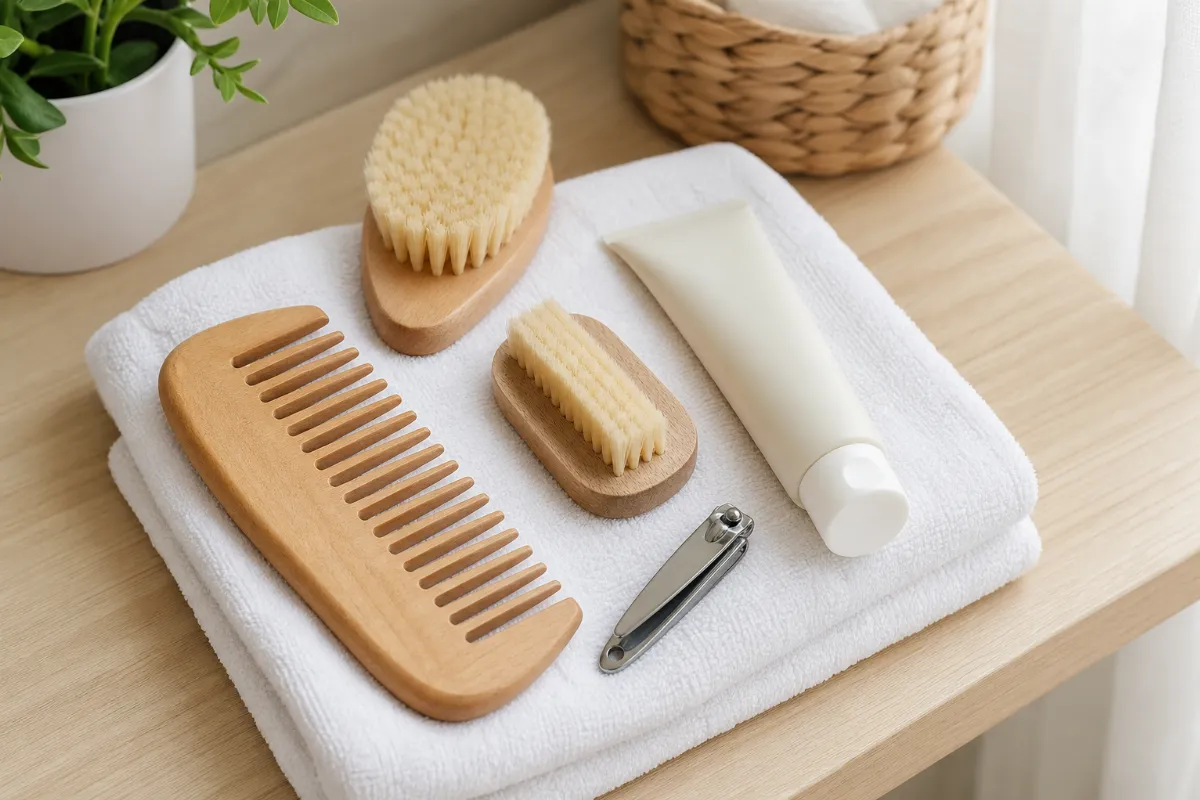
Support Healthy Hair, Scalp & Nails
Build Healthier Hair & Nail-Care Habits
A healthy hair and nail routine is mostly gentle handling, protecting your nails from constant water and picking, and noticing changes early. This page is the overall picture; the other hair, scalp and nail goals go deeper on each area.
General information, not medical advice. Last updated October 31, 2026. Written by the AlternativeMed editorial team. Not medically reviewed.
Start here
- Switch to a wide-tooth comb and a soft-bristled brush, and choose looser styles when you can. These are less likely to pull on your hair.
- Protect your nails: wear rubber gloves for wet work or cleaning products, use hand cream on your nails and fingertips, and trim straight across.
- Pick one habit to change this month (for example nail biting or a tight ponytail), and note any hair or nail change that you cannot explain.
Be careful with
- A routine cannot fix hair loss or nail changes that come from an underlying cause such as iron deficiency, a thyroid problem, psoriasis or an infection. If something changed without a clear reason, see a clinician rather than adding more products.
- Biotin is sold for hair and nails, but it can distort some blood tests, including troponin tests used when a heart attack is suspected. Tell any clinician or lab that you take it.
- Do not take iron or other minerals on a guess. Excess iron can cause iron overload, and the evidence for supplements in people without a proven deficiency is weak.
- Never stop a prescribed medicine because of a hair or nail change. Talk to the prescriber first.
Get help when
- Sudden or patchy hair loss, or hair loss with scalp pain, redness, scale, pustules or sores that do not heal, should be looked at by a clinician. Some types can scar if left.
- Hair loss that comes with weight change, unusual tiredness, heavy periods or thyroid-type symptoms, or that began after illness, childbirth, a crash diet or a new medicine, needs a conversation with a clinician about tests.
- A nail that has changed shape or colour, or fallen off for no clear reason, or skin around a nail that is sore, red, swollen and warm, needs a GP or doctor. Dark streaks or lines under a nail, a nail lifting off its bed, or thickened yellow nails also need a clinician; we did not read a source that names a time limit, so do not wait.
- Hair-pulling or an urge to bite or pick that you cannot stop is common and not a character flaw. A doctor can help without judgement.
About Build Healthier Hair & Nail-Care Habits
What this goal means
This goal is about the everyday routine that keeps hair, scalp and nails in good condition: how you handle hair, how you protect your nails, what you put on them, and when you decide something needs a professional. It does not promise faster growth or a new look.
1,2Common experiences
Common complaints include hair that snaps or looks thinner, dry or flaking scalp, and nails that split, flake or crumble. A review of brittle nails reports that nail fragility is common and affects up to 20% of the population, especially women over 50, with fingernails affected more than toenails.
The same review describes brittle nails as nails that split, flake and crumble, become soft and lose elasticity.
3,4What contributes
For nails, the NHS lists injuries, biting, heavy nail varnish, not trimming regularly or cutting at an angle, and hands often in water or exposed to cleaning products, as well as fungal infection, some medicines and conditions such as psoriasis, iron deficiency anaemia, thyroid problems, diabetes, and heart, lung or liver disease.
For hair, the NHS lists illness, stress, cancer treatment, weight loss and iron deficiency as causes of temporary hair loss, and says losing around 50 to 100 hairs a day is normal. Styling practices can also contribute: a dermatology review links certain hairstyling practices to traction alopecia.
2,5,6Related conditions
Hair and nail changes can be the visible sign of a medical issue, which is why unexplained changes deserve a check. See the pages on pattern hair loss, patchy and scarring hair loss, dandruff and seborrheic dermatitis, and anaemia and iron deficiency rather than treating these as a routine problem.
7,2Realistic expectations
The NHS says fingernails that fall off after an injury should grow back within 6 months, and toenails can take up to 18 months. Hair and nails respond slowly, so judge a change in habits over months, not days.
A review of hair loss in family medicine notes that diffuse hair loss such as telogen effluvium is usually self-limited and depends on stopping the underlying cause, and that traction alopecia is treated by decreasing tension on the hair.
2,7Who this applies to
Anyone who wants an easy, low-risk routine. Extra care applies to people who style hair tightly or use chemical treatments, whose hands are often wet (for example nurses, cleaners, parents of small children), and to people with conditions such as psoriasis or thyroid problems, pregnancy, or older age, when nails and hair may change on their own.
2,6Related conditions and symptoms
Pattern hair loss → Alopecia areata and scarring hair loss → Anemia and iron deficiency → Thyroid problems and fatigue → Psoriasis →
A manageable starting plan
An educational starting point, not a personal prescription. Adjust it to your own situation and any advice from your clinician.
Your first actions
- Swap to a wide-tooth comb and soft brush, and loosen any style that tugs on the scalp.
- Wear gloves for wet or chemical work and use hand cream on your nails every day.
- Stop biting or picking, or ask for help if you cannot.
Optional additions
- Take a monthly photo of your hairline and nails in the same light.
- Ask a pharmacist how to use an anti-dandruff shampoo if flakes bother you; the NHS suggests trying it for up to 4 weeks.
- Book a check for any unexplained change.
What to track
- Date a change began and what happened shortly before it.
- Hair in the brush or shower, and breakage near the ends or near the scalp.
- Any scalp soreness, redness, scale or pustules, and nail colour, shape or separation.
When to reassess
Review after about three months of consistent habits; nails grow slowly, so a full change takes longer. See a clinician sooner if anything is sudden, painful or unexplained.
When to seek professional support
- A GP or pharmacist can advise on product choices and when tests are needed.
- A dermatologist can assess hair, scalp or nail changes that persist.
- A podiatrist can help with difficult toenails.
- If hair loss is affecting your mood, the NHS says to tell your GP, who may arrange counselling, and that support groups and online forums exist.
What helps
Ordered by how well the research supports each step. Evidence strength is shown on every card; precautions sit next to the advice.
Start here
Use a wide-tooth comb and soft-bristled brush
Low certaintyAddresses: Less pulling on hair and scalp
Why it may help: The AAD, in its alopecia areata self-care advice, recommends a soft-bristled brush and a wide-tooth comb because these tools are less likely to pull on your hair. That advice is written for people with hair loss, and we did not find a trial testing it in healthy hair.
How to apply it: Start combing at the ends and work up, and do not force through knots.
Who it may suit: Everyone, especially people who see breakage or hair in the brush.
Precautions: This is sensible practical advice from one agency rather than a trial result. Our wider breakage goal covers handling in more depth.
1Choose looser styles and give tight ones a rest
Moderate certaintyAddresses: Lowers the risk of traction hair loss
Why it may help: A dermatology review describes traction alopecia as hair loss often attributed to certain styling practices and sorts practices into high-, moderate- and low-risk groups. A hair-loss review in family medicine says traction alopecia is treated by decreasing tension on the hair, and the AAD notes that tight styles such as ponytails and cornrows can pull on the scalp and cause further hair loss.
How to apply it: If your hairline feels sore or tight after a style, loosen or change it. Alternate styles so the same spots are not pulled every day.
Who it may suit: Anyone who wears tight ponytails, braids, weaves, extensions or buns often.
Precautions: Traction hair loss can become permanent if the pull continues, so tell a clinician if the edges of your hairline are thinning.
6,7,1Protect nails from water, chemicals and picking
Low certaintyAddresses: Fewer split, soft or damaged nails
Why it may help: The NHS lists hands often in water or exposed to cleaning products, biting, and cleaning under nails with sharp objects as causes or things to avoid. It advises rubber gloves for wet work or cleaning products, a soft nailbrush, and regular hand cream on nails and fingertips.
How to apply it: Keep gloves by the sink. Apply hand cream after washing and at night. Do not pick at nails or the skin around them.
Who it may suit: Anyone with brittle, peeling or frequently damaged nails.
Precautions: This is NHS self-care advice; we did not find a trial comparing these habits in people with brittle nails.
2,3Additional options
Trim nails straight across, regularly
Low certaintyAddresses: Fewer snags and ingrown toenails
Why it may help: The NHS advises trimming nails regularly, ideally after a shower or bath, and trimming straight across rather than cutting down the edges to help avoid ingrown toenails. It also advises trimming injured or loose nails back to where they are still attached.
How to apply it: Use clean clippers and avoid cutting into the corners.
Who it may suit: Everyone.
Precautions: If nails are too tough to cut or you cannot reach them, the NHS says a podiatrist can help.
2Wear shoes that do not pinch toes
Low certaintyAddresses: Less toenail damage
Why it may help: The NHS lists shoes that pinch the toes, especially when exercising, among things to avoid for nail health.
How to apply it: Check the toe box when buying shoes and especially exercise shoes.
Who it may suit: Runners, walkers and people on their feet all day.
Precautions: Toenails can take up to 18 months to regrow after injury, so be patient.
2Treat foot and skin fungus, and do not ignore it
Low certaintyAddresses: Reduces a source of nail infection
Why it may help: The NHS advises not to ignore fungal skin infections such as athlete's foot, and lists a fungal nail infection among causes of nail problems.
How to apply it: See a pharmacist or GP for persistent skin infection between toes or nails that thicken or change colour.
Who it may suit: People with itchy, flaky feet or nail changes.
Precautions: We did not review treatment options for fungal nail infection here.
2Treat flaking scalp with an anti-dandruff shampoo trial
Low certaintyAddresses: May ease dandruff flakes
Why it may help: The NHS says dandruff is not caused by poor hygiene, that anti-dandruff shampoos are sold in pharmacies and supermarkets, to use one for up to 4 weeks to see if it helps, and that you may need to try more than one type. It advises seeing a GP if symptoms continue after 4 weeks, the scalp is very itchy, red or swollen, or you have flaky patches on your face or body.
How to apply it: Ask a pharmacist how to use it and follow the label.
Who it may suit: People with flakes who have no other scalp symptoms.
Precautions: Our scalp flaking goal covers this fully. We name no ingredients or amounts here.
8Keep a simple log of hair and nail changes
Not enough evidenceAddresses: Makes patterns and triggers easier to see and to explain to a clinician
Why it may help: Many causes of hair loss are temporary, such as illness, stress, weight loss or iron deficiency, so noting dates of illness, new medicines, diet changes and styling helps a clinician look for a cause. This is a practical suggestion rather than a studied intervention.
How to apply it: Note the date a change began, what changed shortly before it, and take photos in the same light once a month.
Who it may suit: Anyone with changes they cannot explain.
Precautions: Tracking is not a substitute for a check if the change is sudden, patchy or painful.
5,7Still being studied
Checking for a cause before adding supplements
Moderate certaintyAddresses: Treats a real cause if one is found
Why it may help: The Dakkak review of hair loss says a comprehensive history and examination with targeted laboratory testing may elucidate malnutrition, autoimmune and endocrine disease. A review on iron says the cause of iron deficiency must be identified, iron deficiency anaemia should be treated, and there is insufficient evidence to recommend universal screening in hair loss or iron supplements in hair loss with iron deficiency without anaemia, so the decision rests on clinical judgment.
How to apply it: Ask a clinician which tests make sense for you before taking iron or other supplements.
Who it may suit: People with ongoing or unexplained hair loss, or tiredness, heavy periods, or nail changes.
Precautions: Evidence on supplements for hair is limited. Excess iron can cause iron overload, particularly in people with hereditary hemochromatosis.
7,9,10Food & nutrition
Food, supplements and your hair and nails
We did not find a source in this review that ties a specific food to better hair or nails in trials. A varied diet is a sensible default, and the main nutrition question is whether something is actually low.
The NHS lists weight loss and iron deficiency among causes of temporary hair loss, and iron deficiency anaemia and weight loss among the underlying conditions behind nail changes. A clinician can test rather than guess.
Our nutrition page covers iron, zinc, protein and testing in more detail. We did not read a source on upper limits for vitamin A or selenium for this page, so we do not give amounts; ask a pharmacist or clinician before combining several supplements.
5,2,10Remedies & supplements
Traditional use, laboratory findings and human trials are kept apart. "Natural" does not mean safe.
Biotin (vitamin B7) supplements
Not enough evidenceStudied form and route: Tablets or capsules, often in hair, skin and nails blends
Intended outcome: Claimed to improve hair and nail growth
Human evidence: A systematic review found 18 reported cases of biotin used for hair and nail changes; all had an underlying cause of poor growth and all improved. The authors concluded evidence is lacking for supplementation in healthy people, while biotin may help in biotin deficiency and in conditions such as brittle nail syndrome or uncombable hair.
Traditional use: We did not find a traditional-use record for this purpose.
Laboratory findings: We did not review laboratory studies for this page. The FDA reports that biotin can interfere with certain lab tests, including causing falsely low troponin results.
Limits: The review covered case reports and trials, with small numbers and no dose we can quote. It does not show benefit for healthy hair.
Interactions and precautions: Tell clinicians and labs before blood tests. We did not review pregnancy or breastfeeding data, so ask a clinician. We give no dose.
11,12Collagen, biotin and beauty supplements → Biotin (vitamin B7) →
Iron supplements (only after testing)
Low certaintyStudied form and route: Tablets under clinical advice
Intended outcome: Treats iron deficiency, which may be linked to some hair loss
Human evidence: A review of iron deficiency and hair loss says studies are mixed on whether iron deficiency is linked to different hair-loss types, that there is insufficient evidence for universal screening or for iron without anaemia, and that iron deficiency anaemia should be treated.
Traditional use: We did not find a traditional-use record for this purpose.
Laboratory findings: We did not review laboratory studies for this page.
Limits: The review is from 2006 and mostly covered women with non-scarring hair loss.
Interactions and precautions: Excess iron can cause iron overload, especially in hereditary hemochromatosis. Ask a clinician about testing and the cause of any deficiency, because blood loss may be behind it. We give no dose.
9Therapies & care
Established care for hair and nail changes starts with a GP, dermatologist or other clinician who can look for a cause, such as iron deficiency, a thyroid problem, psoriasis or an infection, and decide what is needed. This page does not recommend particular treatments.
A clinician check for hair or nail changes
Moderate certaintyClinical examination and testing A family-medicine review says diffuse hair loss usually depends on stopping the underlying cause, and that a history, examination and targeted laboratory testing may find malnutrition, autoimmune or endocrine disease. The NHS advises seeing a GP before visiting a commercial hair clinic.
Who it may suit: Anyone with unexplained, sudden, patchy or painful changes.
Precautions: Bring a list of medicines and supplements, including biotin.
7,5Podiatry for hard-to-manage toenails
Low certaintyFoot care The NHS says a podiatrist can help if nails are too tough to cut or you cannot reach them, and some GPs can refer you.
Who it may suit: Older adults and people with thick toenails or limited reach.
Precautions: People with diabetes should ask a clinician about foot care.
2What to avoid
Habits, products and claims that can get in the way. Never stop a prescribed medicine without talking to the professional who prescribed it.
Risks that apply to most people
Biting, picking or pulling at nails and surrounding skin
Moderate certaintyWhy: The NHS lists biting or picking nails or the skin around them among things to avoid, and biting as a cause of nail problems. Damage to the nail fold can also lead to the sore, red, swollen, warm skin that can signal infection.
Who it applies to: Everyone, including children.
Try instead: Keep nails short and smooth, use hand cream, and consider a fidget alternative. If you cannot stop, ask a doctor for help without shame.
2Cleaning under nails with sharp objects
Low certaintyWhy: The NHS advises not to clean under nails with sharp objects.
Who it applies to: Everyone.
Try instead: Use a soft nailbrush.
2Cutting nail edges down at the corners
Low certaintyWhy: The NHS says to trim straight across rather than cutting down the edges, to help avoid an ingrown toenail.
Who it applies to: Everyone, especially for toenails.
Try instead: Cut straight across and leave the corners.
2Personal triggers to check
Hands in water or cleaning products without gloves
Low certaintyWhy: The NHS lists hands often in water or exposed to cleaning products as a cause of nail problems and advises rubber gloves.
Who it applies to: People who do dishes, clean, or work with water or chemicals.
Try instead: Wear rubber gloves, and use hand cream after washing.
2Tight, pulling hairstyles worn every day
Moderate certaintyWhy: A review of hairstyling practices links certain styles to traction alopecia, and the AAD notes ponytails and cornrows can pull on the scalp and cause further hair loss.
Who it applies to: Anyone who wears the same tight style daily.
Try instead: Loosen the style, rotate styles and ask a clinician if the hairline is thinning.
6,1Products that need caution
Harsh chemical products, hair dye and strongly fragranced products when your scalp or hair is already irritated
Low certaintyWhy: The AAD, in advice written for people with alopecia areata, says to avoid hair and skin products with harsh chemicals, including dyes, fragrance and alcohol, and to choose fragrance-free products. We did not find a trial showing this protects healthy hair.
Who it applies to: People with sore, itchy or thinning scalps. Others may choose to be cautious too.
Try instead: Choose gentler, fragrance-free products and stop any product that stings or itches.
1Heavy nail varnish worn constantly
Low certaintyWhy: The NHS lists staining from smoking or heavy nail varnish use as a cause of nail problems.
Who it applies to: People who wear varnish continuously.
Try instead: Give nails regular breaks without varnish.
2Unsupported claims
"Biotin will make your hair and nails grow"
Not enough evidenceWhy: A systematic review found 18 reported cases of biotin use for hair and nail changes, all in people with an underlying cause of poor growth, and concluded that research demonstrating its efficacy is limited and that evidence is insufficient for supplementation in healthy individuals.
Who it applies to: Healthy people buying biotin for beauty.
Try instead: Look for a cause if hair or nails have changed, and keep the basics above.
11"Any supplement or tonic can fix thinning hair on its own"
Not enough evidenceWhy: A review of vitamins and minerals in hair loss says micronutrients play an important but not entirely clear role, and that large double-blind placebo-controlled trials are needed to determine the effect of supplementation on hair growth.
Who it applies to: Anyone shopping for hair-growth products.
Try instead: Talk to a clinician about the cause. For a look at the supplement claims see our collagen and biotin page.
10Common mistakes
Taking biotin without telling a clinician or lab
High certaintyWhy: The FDA says biotin, often found in dietary supplements, can significantly interfere with certain lab tests, may go undetected, and that it has received adverse event reports of biotin causing falsely low troponin results.
Who it applies to: Anyone taking biotin or a hair, skin and nails supplement before blood tests.
Try instead: Tell your clinician and the lab about every supplement. Ask them whether and when to pause it before a test. Do not stop prescribed medicines.
12Taking iron on a guess
Moderate certaintyWhy: A review warns that excessive iron supplementation can cause iron overload, and says there is insufficient evidence to recommend iron for hair loss with iron deficiency but no anaemia.
Who it applies to: People with hair loss who assume iron is low.
Try instead: Ask for testing first.
9Putting up with a nail change you cannot explain
Moderate certaintyWhy: The NHS says to see a GP if a nail has changed shape or colour, or fallen off, and you do not know why, or the skin around it is sore, red, swollen and warm.
Who it applies to: Everyone.
Try instead: Book a visit and bring photos of when you first noticed it.
2Evidence & safety
What the research shows
Health sources agree on gentle handling, avoiding tight pulling styles, protecting nails from water and picking, and checking unexplained changes. Trials testing everyday hair and nail routines are scarce, so most practical advice rates low. Evidence for biotin in healthy people is insufficient and it can distort some lab tests.
Limits of the evidence
- Most routine advice comes from agency guidance and reviews, not from randomised trials of the routine.
- The AAD hair-care advice we read was written for alopecia areata self-care, not for healthy hair.
- Reviews on biotin and iron are older or based on case reports and small studies.
- We did not read full texts beyond abstracts and agency pages, and we did not check every product claim.
Precautions and interactions
- Biotin can distort some blood tests including troponin; tell clinicians and labs.
- Excess iron can cause iron overload; avoid taking iron on a guess.
- Patch-test new products and stop any that irritate. We did not read a source on essential oils for hair, so we do not cover them.
- Do not stop prescribed medicines because of a hair or nail change.
Life-stage considerations
- Pregnancy and breastfeeding: the NHS notes nails change in pregnancy and should be healthier within 6 months of having a baby. We did not review supplement safety in pregnancy, so ask a clinician before taking any.
- Children: traction hair loss has a paediatric review, and unexplained hair loss or nail changes in children should be seen by a clinician.
- Older adults: nails become thicker or more brittle with age, and toenails can need podiatry.
- Chemotherapy: hair loss is a recognised effect; ask the treating team before using products.
Warning signs
- Sudden or patchy hair loss, or scalp pain, redness, scale, pustules or sores that do not heal.
- Hair loss with weight change, tiredness, heavy periods or thyroid-type symptoms.
- A nail that changed shape or colour, fell off, lifted off its bed, or has a dark streak, or a sore, red, swollen, warm nail fold.
- Thickened yellow nails or a spreading skin infection.
Claim checks
Biotin is proven to grow healthier hair and nails
Not enough evidenceA systematic review found limited research and insufficient evidence for supplementation in healthy people.
11Biotin is harmless for blood tests
High certaintyThe FDA says biotin can significantly interfere with certain lab tests and has received reports of falsely low troponin results.
12More vitamins and minerals always means more hair
Not enough evidenceA review says micronutrients play an important but not fully clear role and that large placebo-controlled trials are needed; excess iron can cause iron overload.
10,9Tight styles are harmless if they look neat
Moderate certaintyA dermatology review links certain styling practices to traction alopecia, which can become permanent if progression is not stopped.
6Brittle nails are always a vitamin problem
Low certaintyA review lists several causes for brittle nails, including factors that impair the nail plate and those involving the nail matrix, and the NHS lists water, cleaning products and underlying conditions.
4,2Questions people ask
How often should I wash my hair?
We did not find a source that gives a washing schedule, so we do not give one. For flakes, the NHS says dandruff is not caused by poor hygiene, but flakes may be more obvious if you do not wash regularly, and a pharmacist can explain how to use anti-dandruff shampoo.
Can my hairstyle cause hair loss?
Yes. A dermatology review links certain tight styling practices to traction alopecia, and the AAD notes tight styles can pull on the scalp. Loosening the pull is the main step, and a clinician can check a thinning hairline.
What is the best thing for brittle nails?
The NHS advises gloves for wet work, a soft nailbrush, regular hand cream, regular trimming and not picking or biting. If nails change for no clear reason, see a GP.
Should I take biotin?
Evidence in healthy people is insufficient. If you do, tell your clinician and the lab before blood tests, because biotin can interfere with some tests.
Can iron help my hair?
Only a test can tell. A review found insufficient evidence for iron without anaemia, and warns that too much iron can cause iron overload.
How long until nails look better?
The NHS says fingernails lost after injury grow back within 6 months and toenails can take up to 18 months. Expect months, not days.
Is it normal to lose hair every day?
Yes. The NHS says losing around 50 to 100 hairs a day is normal.
When should I see a doctor?
For sudden or patchy hair loss, scalp pain or sores, or a nail that has changed shape or colour or fallen off for no reason, or a sore, red, swollen, warm nail fold.
Does this page replace medical advice?
No. It is general information. It does not diagnose or recommend treatments, and you should never stop a prescribed medicine because of what you read here.
References
- American Academy of Dermatology. Alopecia areata: self-care (last updated 8/30/23). Read 2026-10-31. source
- NHS. Nail problems (last reviewed 12 March 2024). Read 2026-10-31. source
- Chessa MA, et al. Pathogenesis, clinical signs and treatment recommendations in brittle nails: a review. Dermatol Ther (Heidelb). 2020;10(1):15-27. Read 2026-10-31. source
- van de Kerkhof PC, et al. Brittle nail syndrome: a pathogenesis-based approach with a proposed grading system. J Am Acad Dermatol. 2005;53(4):644-651. Read 2026-10-31. source
- NHS. Hair loss (last reviewed 24 January 2024). Read 2026-10-31. source
- Haskin A, Aguh C. All hairstyles are not created equal: what the dermatologist needs to know about black hairstyling practices and the risk of traction alopecia. J Am Acad Dermatol. 2016;75(3):606-611. Read 2026-10-31. source
- Dakkak M, Forde KM, Lanney H. Hair loss: diagnosis and treatment. Am Fam Physician. 2024;110(3):243-250. Read 2026-10-31. source
- NHS. Dandruff. Read 2026-10-31. source
- Trost LB, Bergfeld WF, Calogeras E. The diagnosis and treatment of iron deficiency and its potential relationship to hair loss. J Am Acad Dermatol. 2006;54(5):824-844. Read 2026-10-31. source
- Almohanna HM, Ahmed AA, Tsatalis JP, Tosti A. The role of vitamins and minerals in hair loss: a review. Dermatol Ther (Heidelb). 2019;9(1):51-70. Read 2026-10-31. source
- Patel DP, Swink SM, Castelo-Soccio L. A review of the use of biotin for hair loss. Skin Appendage Disord. 2017;3(3):166-169. Read 2026-10-31. source
- US Food and Drug Administration. Biotin interference with troponin lab tests (content current as of 06/21/2022). Read 2026-10-31. source
Related on AlternativeMed
Related goals
Reduce hair breakage (Hair care practices and breakage) → Understand & address hair shedding → Care for thinning hair → Improve scalp comfort → Manage scalp flaking → Care for a dry scalp → Protect hair from styling damage → Support hair through nutrition → Care for brittle nails → Build a simple skin-care routine →
Ingredients, foods and supplements
Biotin (vitamin B7) → Iron → Zinc →
Research, safety and claim-check resources
Collagen, biotin and beauty supplements → Skin and hair safety → Skin and hair research and evidence →