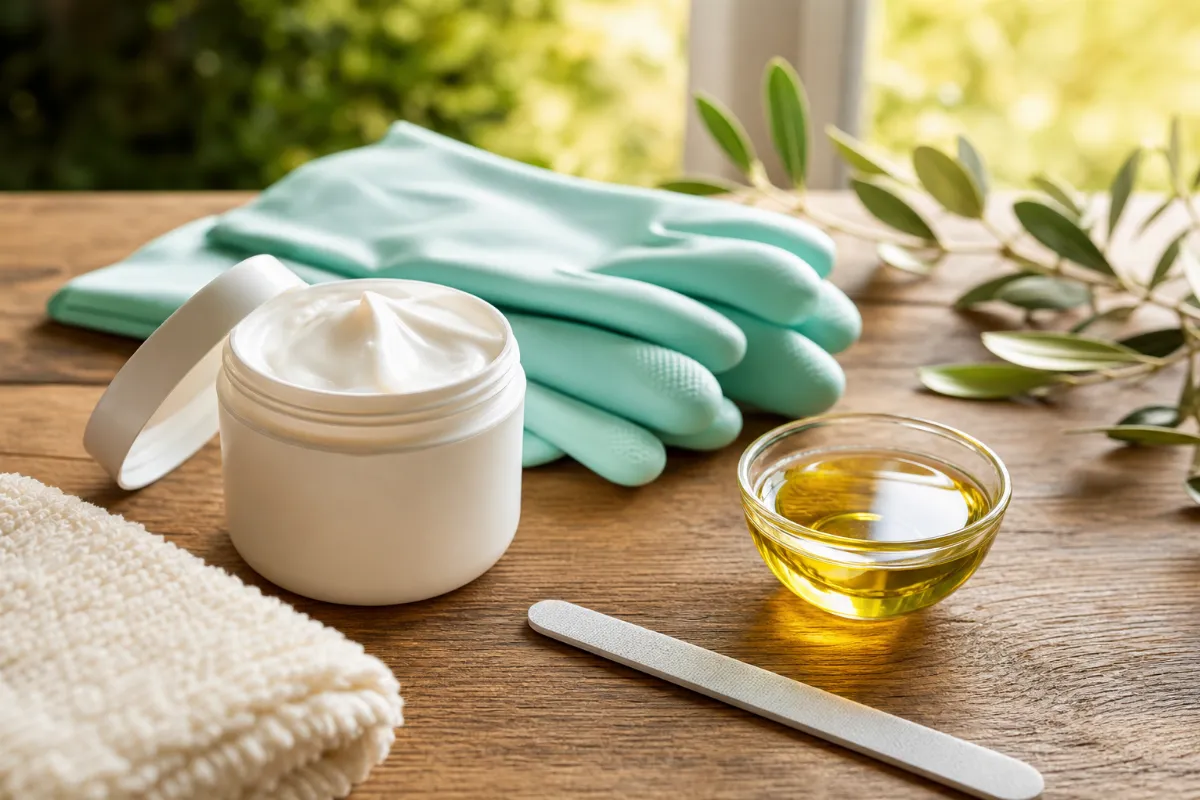
Support Healthy Hair, Scalp & Nails
Care for Brittle Nails
Nails that split, peel, crack or crumble are common, and for most people they come from everyday wear and water rather than illness, so gentle daily care is the first step. This page is about nail brittleness itself; hair breakage, shedding, scalp care and the wider hair-and-nail routine have their own pages.
General information, not medical advice. Last updated October 31, 2026. Written by the AlternativeMed editorial team. Not medically reviewed.
Start here
- Protect your hands from repeated wetting and drying: wear rubber gloves for dishes and cleaning, and moisturize your hands and nails regularly.
- Take a break from nail polish, polish remover and frequent manicures, and use a non-metal file gently in the direction the nail grows.
- If the nails do not improve, or you notice other changes or symptoms, ask a doctor to check for a cause such as low iron or a thyroid problem before spending money on supplements.
Be careful with
- Biotin and other supplements sold for nails can interfere with some blood tests, including thyroid tests. Tell your doctor and the lab before any blood test if you take them.
- A dark area under a nail that was not caused by an injury, a nail lifting off the nail bed, or a painful swollen nail fold needs a clinician rather than home care.
- Do not stop a prescribed medicine, or skip a recommended test, because you are trying a nail supplement. Check supplements with a pharmacist if you take medicines, are pregnant or breastfeeding, or are treating a child.
Get help when
- A dark area under a nail that has not been caused by an injury (the NHS lists this as a reason to see a GP).
- Nails that are thick, yellow or white, crumbly, or lifting from the nail bed, which can be a fungal infection; the NHS advises seeing a GP if it is severe, spreads to other nails, or if you have diabetes or a weakened immune system.
- Brittle nails together with tiredness, feeling cold, unexplained weight change or pale skin, since iron deficiency and thyroid disease are the illnesses most often linked to brittle nails.
- Nail changes with scaly skin patches or joint pain, or a red, swollen, painful skin fold around the nail.
About Care for Brittle Nails
What this goal means
Brittle nails (also called nail fragility, and when the free edge splits in layers, onychoschizia) are nails that split, flake, crack or crumble, may feel soft, and lose their flexibility. A 2020 expert review describes this as a common complaint affecting up to 20% of people, especially women over 50, with fingernails affected more often than toenails.
The Canadian Dermatology Association says it is common, more often seen in women and usually occurs with aging.
1,2What it can feel like
Common experiences are nails that peel in thin layers at the tip, split down the middle, snag on clothing, break short or look rough and ragged. Many people find it frustrating or embarrassing, and the 2020 review mentions the psychological impact of the problem as one reason to treat it.
1,3What can contribute
The Canadian Dermatology Association says most cases come from outside factors: frequent contact with water, harsh soaps and detergents, heavy use of nail polish and manicures, and repeated trauma. Repeated wetting and drying makes nails swell and shrink, and nails can become brittle from being either too dry or from too much moisture, which can make them soft and peeling.
Illness is a less common cause, most often iron deficiency or thyroid disease. The 2020 review separates a primary form, sometimes called brittle nail syndrome, with no other cause found, from nail fragility secondary to inflammatory nail disorders, infections, systemic diseases, injury or changes in nail hydration.
2,1Conditions that can be behind it
Brittle-looking nails can be a sign of a fungal infection, a skin condition such as psoriasis, iron deficiency or a thyroid problem. The 2020 review says optimal management requires treating the primary cause of brittle nails when possible, which is why a check is sensible when nails do not improve with care.
The NHS describes fungal nail infection as most often affecting toenails, with thickening, white or yellow discolouration, and a nail that may become brittle and crumbly.
1,2,4Realistic expectations
Nails grow slowly. A clinical nutrition review gives nail growth as about 2 to 3 mm per month, with complete replacement of the nail taking 6 to 9 months, so a healthier nail only shows as the new growth comes through. The supplement trials described below also ran for 4 to 6 months.
Expect gradual change from protecting the nail, not an overnight result, and expect that some people still need a clinician's help.
5,6,3Who this applies to
Adults whose fingernails split, peel or break easily. Hair breakage, shedding and scalp comfort are covered on their own pages. Children, pregnant or breastfeeding people and anyone taking medicines should check with a clinician or pharmacist before using supplements.
1Related conditions and symptoms
Anemia and iron deficiency → Thyroid problems and fatigue → Psoriasis → Eczema →
A manageable starting plan
An educational starting point, not a personal prescription. Adjust it to your own situation and any advice from your clinician.
Your first actions
- Wear gloves for wet work and cleaning, and moisturize your hands and nails after washing and before bed.
- Take a break from polish, remover and frequent manicures, and use a non-metal file gently in one direction.
- Stop biting, picking and using nails as tools.
- Give the routine a few months before judging it, since the nail grows out slowly.
Optional additions
- Ask a pharmacist about a moisturizing or strengthening nail lacquer.
- If you want to try a supplement, discuss it with a pharmacist or clinician first and treat it as a time-limited trial.
- Keep a photo of your nails each month to see slow progress.
What to track
- Splitting, peeling and breakage: how often per week or month.
- Photos of the nails every month or so.
- Any new supplement, and the date you started and told your clinician.
- New symptoms such as tiredness, feeling cold, weight change, joint pain or nail colour change.
When to reassess
Because the nail takes 6 to 9 months to be replaced, judge care after about three months for clear changes in new growth. If nails are not improving, or you have other symptoms or any nail colour change, see a doctor to check for a cause.
When to seek professional support
- See a doctor if brittle nails come with tiredness, feeling cold, weight change or other symptoms, or if home care has not helped.
- Ask a pharmacist or GP about thick, discoloured or lifting nails, and see a GP promptly for a dark area under a nail not caused by an injury.
- Tell your clinician and the lab if you take biotin before any blood test.
What helps
Ordered by how well the research supports each step. Evidence strength is shown on every card; precautions sit next to the advice.
Start here
Protect nails from repeated wetting and drying
Low certaintyAddresses: Fewer splits and less peeling from water and detergents
Why it may help: The Canadian Dermatology Association names frequent water exposure, harsh soaps and detergents as leading causes and advises limiting unnecessary water exposure and wearing rubber gloves for dishes and housecleaning. Repeated wetting and drying makes the nail swell and shrink.
How to apply it: Wear rubber gloves for washing up and cleaning, and dry your hands gently after washing.
Who it may suit: Almost everyone with brittle nails, especially people whose work involves water, cleaning or frequent hand washing.
Precautions: This is expert guidance rather than trial evidence. Gloves can trap sweat, so keep them dry inside; stop if you develop a rash.
2,1Moisturize hands and nails regularly
Low certaintyAddresses: Less dryness and splitting
Why it may help: The Canadian Dermatology Association advises moisturizing the hands regularly, and the 2020 expert review lists topical moisturizers among the options for brittle nails. We did not find controlled trials of plain hand creams for brittle nails, so benefit is based on expert opinion.
How to apply it: Rub a moisturizer into the hands, nail folds and nails, for example after washing and before bed.
Who it may suit: Dry, splitting nails.
Precautions: Choose a product that does not irritate your skin; stop if you get redness or itching. Fragranced products can bother sensitive skin.
2,1Give nails a break from polish, remover and manicures
Low certaintyAddresses: Less drying and damage to the nail plate
Why it may help: The Canadian Dermatology Association lists heavy use of nail polish and manicures among the common causes and advises taking a break from manicures, nail polish and polish remover.
How to apply it: Leave nails bare for a few weeks and keep removals to a minimum when you do use polish.
Who it may suit: People who wear polish or have frequent manicures.
Precautions: If you are using polish or other treatments for a nail infection, follow your pharmacist or doctor's advice instead.
2Trim and file gently
Low certaintyAddresses: Fewer snags and tears
Why it may help: The Canadian Dermatology Association advises cutting nails straight across or slightly rounded, filing with a non-metal file, and buffing only in the direction of nail growth.
How to apply it: Keep nails short enough not to catch, and file in one direction rather than sawing back and forth.
Who it may suit: Anyone with splitting or catching nails.
Precautions: Do not cut into the skin around the nail; a torn or inflamed nail fold needs care from a clinician if it becomes swollen or painful.
2Stop biting nails and using them as tools
Low certaintyAddresses: Less repeated injury
Why it may help: The Canadian Dermatology Association lists repeated trauma as a contributor and advises avoiding nail biting and using the nails as tools, for example to open packaging.
How to apply it: Use a key, coin or opener instead, and keep nails short if you tend to pick or bite.
Who it may suit: People who bite, pick or use their nails.
Precautions: If biting or picking feels hard to control, talk to a clinician; this is common and nothing to be ashamed of.
2Ask a doctor to look for a cause if nails do not improve
Moderate certaintyAddresses: Finds treatable causes such as low iron or thyroid disease
Why it may help: The Canadian Dermatology Association says illness is a less common cause, most often iron deficiency or thyroid disease, and the 2020 expert review says the primary cause should be treated when possible.
How to apply it: Book an appointment if care at home for a few months has not helped, or sooner if you have other symptoms.
Who it may suit: Nails that stay brittle, or brittle nails with tiredness, feeling cold, weight change or other nail changes.
Precautions: Testing is decided by a clinician. Do not start iron or other supplements before the tests, since too much of some nutrients can be harmful.
2,1Additional options
Moisturizing or strengthening nail lacquer
Low certaintyAddresses: Possible improvement in how the nail looks and splits
Why it may help: The 2020 expert review says topical moisturizers and lacquers could be considered to restructure the nail plate. In a randomized, assessor-blinded trial of 50 people with brittle nail syndrome (mean age 64), a hydroxypropyl chitosan-based lacquer used for 4 months reduced a nail damage score by 57%. There was no placebo group, and one author works in the medical department of a company named in the paper.
How to apply it: Follow the product label, and ask a pharmacist or dermatologist which type suits you.
Who it may suit: Adults with splitting or peeling nails who want a topical option.
Precautions: Check the ingredients for allergies; stop if the skin around the nail becomes red or sore.
6,1Oral biotin (vitamin B7)
Low certaintyAddresses: Possibly firmer, thicker nails
Why it may help: A review of clinical reports says trials showed improvement in firmness, hardness and thickness of brittle nails with oral biotin, but called for larger controlled trials. In the lacquer trial above, 80% of people using lacquer plus biotin had at least a 50% score reduction versus 53% with lacquer alone (p = 0.05). The Canadian Dermatology Association says there is not enough evidence to recommend biotin and other over-the-counter supplements, and that they can interfere with common blood tests.
How to apply it: Because the evidence is limited, talk to a clinician or pharmacist first and tell them before any blood test.
Who it may suit: Only adults who have discussed it with a clinician; not a first step.
Precautions: Biotin can distort some blood test results, including thyroid tests. Check with a pharmacist if you take medicines and with a clinician in pregnancy or breastfeeding.
7,6,2,8,9Biotin (vitamin B7) → Collagen, biotin and beauty supplements: what the evidence shows →
Collagen peptides
Very low certaintyAddresses: Possibly faster growth and fewer broken nails
Why it may help: In an open-label trial of 25 people who took a specific collagen peptide product daily for 24 weeks, nail growth rate rose by 12%, broken nails fell by 42%, and 64% had global improvement in brittle nails. There was no control group, so the result may overstate the effect.
How to apply it: If you try collagen, use it as a time-limited experiment and judge by whether the nails improve over the months the studies ran.
Who it may suit: Adults who have no allergy to the source (marine, bovine or other) and who accept limited evidence.
Precautions: Check the source for allergy (for example fish). Supplements are not regulated like medicines, so quality varies.
3,9Collagen → Collagen, biotin and beauty supplements: what the evidence shows →
Still being studied
Silicon (choline-stabilized orthosilicic acid)
Very low certaintyAddresses: May reduce self-rated nail brittleness
Why it may help: In a randomized, double-blind, placebo-controlled trial of 50 women with photodamaged facial skin, 20 weeks of a silicon supplement lowered nail and hair brittleness scores compared with the starting scores. The main results were for skin, the nail finding was a rating compared with baseline, and a later correction notice concerned a dosage error in the article text.
How to apply it: Not an everyday recommendation; this is one small study.
Who it may suit: No group has been shown to benefit.
Precautions: Ask a pharmacist before using, especially in pregnancy, breastfeeding or with kidney disease.
10,9Other nail supplements (keratin, MSM, amino acids such as cysteine, trace elements)
Not enough evidenceAddresses: Unclear
Why it may help: The 2020 review says vitamins (especially biotin), trace elements and amino acids (especially cysteine) have been reported to be useful in idiopathic nail fragility, and a 2025 review lists solubilized keratin and MSM among supplements shown to improve nail appearance. We did not read the underlying trials, so we cannot rate or describe them in detail.
How to apply it: Not recommended as a starting point.
Who it may suit: Not established.
Precautions: Supplements are not required to prove safety or efficacy before sale, so quality varies.
1,9Food & nutrition
Eating for nails
No single food has been shown to fix brittle nails. A clinical nutrition review notes that virtually every nutritional deficiency can affect nail growth in some manner, so a varied diet that covers your needs is a sensible base, particularly protein, iron and zinc, which are covered on the hair-nutrition page.
Biotin occurs in foods, and the 2020 review lists vitamins (especially biotin), trace elements and amino acids as options in idiopathic nail fragility. We did not find trials showing that food sources of these nutrients treat brittle nails, so we do not rate any specific food.
5,1When a deficiency is behind it
Iron deficiency is one of the illnesses most often linked to brittle nails. If a clinician finds low iron or another deficiency, correcting it is the treatment, and the plan should come from the clinician rather than from guesswork. Taking iron or other minerals without a test can cause harm.
2,1Remedies & supplements
Traditional use, laboratory findings and human trials are kept apart. "Natural" does not mean safe.
Biotin (vitamin B7)
Low certaintyStudied form and route: Oral supplement
Intended outcome: Firmer, thicker nails
Human evidence: A review says clinical trials showed improved firmness, hardness and thickness of brittle nails with oral biotin, but called for larger controlled trials. In a 50-person randomized trial of a nail lacquer with or without biotin for 4 months, 80% of the biotin group had at least a 50% score reduction versus 53% with lacquer alone (p = 0.05); there was no placebo group.
Limits: Small trials, no placebo in the trial we read, and the Canadian Dermatology Association says there is not enough evidence to recommend biotin.
Interactions and precautions: Can interfere with some blood tests, including thyroid tests, so tell your clinician and lab. Check with a pharmacist if you take medicines, and with a clinician in pregnancy or breastfeeding.
7,6,2,8Biotin (vitamin B7) → Collagen, biotin and beauty supplements: what the evidence shows →
Collagen peptides
Very low certaintyStudied form and route: Oral supplement
Intended outcome: Faster growth and fewer broken nails
Human evidence: An open-label trial of 25 participants who took a specific collagen peptide product daily for 24 weeks reported a 12% rise in nail growth rate and 42% fewer broken nails.
Limits: No control group, small, and one product only.
Interactions and precautions: Check the source (for example fish or bovine) for allergy; quality varies between products.
3,9Choline-stabilized orthosilicic acid (silicon)
Very low certaintyStudied form and route: Oral supplement
Intended outcome: Lower nail brittleness rating
Human evidence: In a placebo-controlled, double-blind trial of 50 women over 20 weeks, nail brittleness scores fell compared with baseline in the silicon group.
Limits: The trial was mainly about skin and enrolled women with photodamaged skin; the nail result was compared with baseline, and an erratum corrected a dosage error in the text.
Interactions and precautions: Ask a pharmacist before use, especially with kidney disease, pregnancy or breastfeeding.
10,9Hydroxypropyl chitosan-based nail lacquer
Low certaintyStudied form and route: Topical lacquer applied to the nail
Intended outcome: Better nail appearance and less splitting
Human evidence: A randomized, assessor-blinded trial of 50 people used the lacquer for 4 months and reported a 57% fall in a nail damage score.
Limits: No placebo group and the trial involved a company author; one product studied.
Interactions and precautions: Check for allergy to ingredients and stop if the skin around the nail becomes red or sore.
6,1Iron or zinc supplements
Not enough evidenceStudied form and route: Oral supplements
Intended outcome: Correcting a deficiency that affects nails
Human evidence: We did not find trials in people without a deficiency showing that iron or zinc supplements treat brittle nails. The expert review says treating the primary cause is the aim, and the Canadian Dermatology Association names iron deficiency as a possible cause.
Limits: Benefit applies only when a deficiency has been found.
Interactions and precautions: Too much iron or zinc can be harmful. Take them only after a clinician has tested and advised, and do not give them to children without advice.
2,1Therapies & care
Established care for brittle nails starts with protecting the nails and, when needed, finding and treating a cause. A clinician decides on tests and treatments; this page does not recommend medicines or doses, and you should not stop a prescribed medicine on your own.
Nail protection and gentle care routine
Low certaintySelf-care Gloves for wet work, regular moisturizing, a break from polish and remover, a non-metal file and no nail biting form the core advice from the Canadian Dermatology Association.
Who it may suit: Everyone with brittle nails.
Precautions: Stop products that sting or cause redness.
2Clinician check for an underlying cause
Moderate certaintyMedical assessment The 2020 expert review says optimal management requires treating the primary cause when possible. Iron deficiency and thyroid disease are the illnesses most often linked to brittle nails, and inflammatory nail disorders, infections and other conditions can also be behind it.
Who it may suit: Nails that do not improve, or brittleness with other symptoms.
Precautions: Tell the clinician about all supplements, especially biotin, before blood tests.
1,2,8Care for suspected fungal nail infection
High certaintyPharmacy or GP care The NHS says a pharmacist may suggest an antifungal nail medicine, treatment usually lasts 6 to 12 months, and a GP can arrange stronger options if that fails. It advises seeing a GP if the infection is severe, spreads, or if you have diabetes or a weakened immune system.
Who it may suit: Thick, discoloured, crumbly or lifting nails, most often toenails.
Precautions: The NHS notes some treatments may not suit people under 18 or people who are pregnant or breastfeeding. Ask a pharmacist or GP.
4Skin check for a dark area under a nail
High certaintyMedical assessment The NHS lists a dark area under a nail that has not been caused by an injury as a reason to see a GP, as part of finding melanoma early.
Who it may suit: Anyone with a new, dark or changing nail mark.
Precautions: Do not wait for it to go away on its own.
11What to avoid
Habits, products and claims that can get in the way. Never stop a prescribed medicine without talking to the professional who prescribed it.
Risks that apply to most people
Repeated soaking, washing and drying without protection
Low certaintyWhy: Repeated wetting and drying makes nails swell and shrink, and the Canadian Dermatology Association names water exposure and harsh soaps among the main causes.
Who it applies to: People who wash hands often, clean, cook or work with water.
Try instead: Wear gloves and moisturize after washing.
2Using your nails as tools, biting or picking
Low certaintyWhy: Repeated trauma is listed as a contributor to brittle nails.
Who it applies to: Anyone, especially people who bite or pick.
Try instead: Use a tool, keep nails short, and ask for help if the habit feels hard to stop.
2Aggressive filing, especially with a metal file
Low certaintyWhy: The Canadian Dermatology Association advises a non-metal file and buffing only in the direction of nail growth.
Who it applies to: People who file or buff often.
Try instead: File gently in one direction.
2Personal triggers to check
Frequent polish and polish-remover use
Low certaintyWhy: Heavy use of nail polish and manicures is listed among the common causes of brittle nails.
Who it applies to: People who change polish often or have regular manicures.
Try instead: Take a break from polish, remover and manicures for a while.
2Harsh soaps, detergents and cleaning products on bare hands
Low certaintyWhy: These are named among the main causes in the Canadian Dermatology Association guidance.
Who it applies to: Cleaners, carers, parents, kitchen workers and anyone doing housework.
Try instead: Wear gloves and rinse and dry hands afterwards.
2Products that need caution
Taking nail or beauty supplements without telling your doctor before blood tests
Moderate certaintyWhy: The Canadian Dermatology Association says over-the-counter supplements such as biotin can interfere with common blood tests, and a 2026 European Thyroid Association guideline lists biotin among causes of interference in thyroid hormone measurements. A wrong result could lead to the wrong diagnosis or treatment.
Who it applies to: Anyone taking biotin or products that contain it, including multivitamins and hair-skin-nails blends.
Try instead: Tell your clinician and the lab you take biotin before any blood test, and ask whether to pause it first.
2,8Collagen, biotin and beauty supplements: what the evidence shows →
Buying supplements with large claims for nails
Moderate certaintyWhy: A 2025 review notes there is a lack of regulation of dietary supplements, and that manufacturers are not required to carry out efficacy and safety studies before marketing.
Who it applies to: Shoppers of nail, hair and skin blends and gummies.
Try instead: Look for what trials actually found (see Remedies) and check with a pharmacist.
9Collagen, biotin and beauty supplements: what the evidence shows →
Unsupported claims
"Biotin cures brittle nails"
Moderate certaintyWhy: A review concluded that further larger controlled trials are needed, and the Canadian Dermatology Association says there is not enough evidence to recommend biotin and other supplements. The available trials are small and many lack a placebo group.
Who it applies to: Product labels and social media.
Try instead: Treat biotin as an uncertain extra and prioritize protecting the nail and checking for causes.
7,2,6"Nails need a detox or a quick fix"
Low certaintyWhy: Nails grow about 2 to 3 mm per month and take 6 to 9 months to be fully replaced, so no product can repair the nail you already have overnight. We did not find evidence for detox products for nail health.
Who it applies to: Marketing for fast results.
Try instead: Expect new growth to improve over months.
5Common mistakes
Assuming brittle nails are only about diet
Low certaintyWhy: The Canadian Dermatology Association says most cases come from water, soaps, polish and trauma, and that illness is a less common cause. Skipping nail protection while relying on pills usually misses the most common cause.
Who it applies to: People who start supplements first.
Try instead: Start with protection and gentle care, then ask about tests if nothing changes.
2Treating a possible fungal or other nail disease as simple brittleness
Moderate certaintyWhy: The NHS describes thickening, discolouration, crumbly nails and nails lifting off as signs of fungal infection, which needs different care, and lists a dark area under a nail not caused by injury as a reason to see a GP.
Who it applies to: Anyone with thick, discoloured, lifting or darkened nails.
Try instead: Have changed-looking nails checked by a pharmacist or doctor.
4,11Evidence & safety
What the research shows
Most brittle nails come from water, harsh soaps, polish and trauma, so protection and moisturizing are the first steps recommended by dermatology guidance. Less often iron deficiency, thyroid disease, skin disease or infection is behind it, and treating the cause is the aim. Supplements have small, mostly uncontrolled trials: biotin, collagen peptides and silicon have each shown some improvement in a few studies, but the evidence is low or very low, and biotin can distort blood tests.
Limits of the evidence
- The supplement trials we read were small, short, and often had no placebo group.
- Some outcomes were rated by assessors or participants, or compared with baseline rather than a placebo group.
- Several products were single branded formulations, and results may not apply to other products.
- We did not find controlled trials of everyday measures such as gloves and hand creams for brittle nails; that advice rests on expert opinion.
- We could not read the underlying trials for some supplements named in review articles.
Precautions and interactions
- Tell your doctor and the lab if you take biotin before any blood test, since it can interfere with some results, including thyroid tests.
- Check any supplement with a pharmacist if you take medicines.
- Do not take iron or other minerals without a test, and do not stop a prescribed medicine because of a nail problem.
Life-stage considerations
- Pregnancy and breastfeeding: use gentle nail care; ask a clinician before using supplements or antifungal products.
- Children: brittle or changed nails in a child need a clinician's advice before any supplement.
- Older adults: brittle nails are more common with age; check with a clinician about other symptoms and medicines before supplements.
Warning signs
- A dark area under a nail that was not caused by an injury.
- Nails that are thick, discoloured, crumbly or lifting from the nail bed, especially with diabetes or a weakened immune system.
- A swollen, red or painful skin fold around a nail.
- Brittle nails with tiredness, feeling cold, unexplained weight change or other symptoms.
- Nail changes together with scaly patches of skin or joint pain.
Claim checks
Biotin fixes brittle nails
Low certaintySmall trials and reviews suggest some benefit, but a review asked for larger controlled trials and the Canadian Dermatology Association says the evidence is not enough to recommend it. It can also affect blood test results.
7,2,6Collagen makes nails grow faster and stronger
Very low certaintyOne open-label trial of 25 people reported faster growth and fewer broken nails; without a control group, the result is uncertain.
3Gloves and moisturizing help brittle nails
Low certaintyRecommended by dermatology guidance as the main preventive steps; we did not find controlled trials, so this rests on expert opinion.
2,1Brittle nails always mean a vitamin deficiency
Moderate certaintyMost cases come from outside factors; iron deficiency and thyroid disease are the illnesses most often linked, but they are not the usual cause.
2,1Questions people ask
What causes brittle nails?
The Canadian Dermatology Association says most cases come from frequent contact with water, harsh soaps and detergents, heavy use of nail polish and manicures, and repeated trauma. Illness is a less common cause, most often iron deficiency or thyroid disease.
How common are brittle nails?
A 2020 expert review describes nail fragility as a common complaint affecting up to 20% of people, especially women over 50, with fingernails affected more than toenails.
Why do my nails peel in layers?
Layered splitting at the tip is called onychoschizia. It is often linked to repeated wetting and drying and other everyday wear, as described by the Canadian Dermatology Association and the 2020 review.
How long until my nails improve?
Nails grow about 2 to 3 mm per month and take 6 to 9 months to be completely replaced, so improvement shows gradually as new nail grows out.
Does biotin help brittle nails?
There are some small trials with promising results, but a review called for larger controlled trials and the Canadian Dermatology Association says the evidence is not enough to recommend it. See the biotin and beauty supplement pages for detail.
Can biotin affect my blood tests?
Yes. The Canadian Dermatology Association says supplements like biotin can interfere with common blood tests, and a 2026 European Thyroid Association guideline lists biotin as a cause of interference with thyroid tests. Tell your clinician and the lab before any blood test.
Should I take collagen for my nails?
The one trial we read was open-label with 25 people and no control group, so the evidence is very low. It is reasonable to ask a pharmacist and to check the source for allergy.
Could my brittle nails be a sign of illness?
Sometimes. Iron deficiency and thyroid disease are the illnesses most often linked, and skin conditions and infections can also affect nails. If nails do not improve or you have other symptoms, ask a doctor.
When should I worry about a change in my nails?
See a GP or doctor for a dark area under a nail that was not caused by an injury, for thick, discoloured or lifting nails, or for a painful swollen skin fold. The NHS also advises seeing a GP for a fungal nail infection that is severe or spreads.
Is gel polish or acrylic safe for brittle nails?
We did not find evidence on gel or acrylic nails for this page. The Canadian Dermatology Association advises taking a break from manicures, polish and remover when nails are brittle.
Where can I read about hair and scalp care?
Hair breakage, shedding, thinning and scalp comfort have their own goal pages, linked below.
References
- Chessa MA, et al. Pathogenesis, Clinical Signs and Treatment Recommendations in Brittle Nails: A Review. Dermatol Ther (Heidelb). 2020;10(1):15-27. PMID 31749091. Read 2026-10-31. source
- Canadian Dermatology Association. Brittle nails. Read 2026-10-31. source
- Hexsel D, et al. Oral supplementation with specific bioactive collagen peptides improves nail growth and reduces symptoms of brittle nails. J Cosmet Dermatol. 2017;16(4):520-526. PMID 28786550. Read 2026-10-31. source
- NHS. Fungal nail infection (page last reviewed 27 March 2024). Read 2026-10-31. source
- Cashman MW, Sloan SB. Nutrition and nail disease. Clin Dermatol. 2010;28(4):420-425. PMID 20620759. Read 2026-10-31. source
- Chiavetta A, et al. Treatment of brittle nail with a hydroxypropyl chitosan-based lacquer, alone or in combination with oral biotin: a randomized, assessor-blinded trial. Dermatol Ther. 2019;32(5):e13028. PMID 31344296. Read 2026-10-31. source
- Lipner SR, Scher RK. Biotin for the treatment of nail disease: what is the evidence? J Dermatolog Treat. 2018;29(4):411-414. PMID 29057689. Read 2026-10-31. source
- Campi I, et al. 2026 ETA guideline on interference in immunoassay measurements used in assessment of thyroid function. Eur Thyroid J. 2026;15(4):ETJ260011. PMID 42466561. Read 2026-10-31. source
- Zaraa I, Richert B. Nail Supplements: When, How, and Why? Skin Appendage Disord. 2025;11(2):176-181. PMID 40176998. Read 2026-10-31. source
- Barel A, et al. Effect of oral intake of choline-stabilized orthosilicic acid on skin, nails and hair in women with photodamaged skin. Arch Dermatol Res. 2005;297(4):147-153. PMID 16205932. Read 2026-10-31. source
- NHS. Melanoma skin cancer: symptoms (page last reviewed 15 July 2026). Read 2026-10-31. source
Related on AlternativeMed
Related goals
Build Healthier Hair & Nail-Care Habits → Support Hair Through Nutrition → Reduce Hair Breakage → Understand & Address Hair Shedding → Care for Thinning Hair → Protect Hair From Styling Damage → Dry skin and the skin barrier → Skin-care basics →
Ingredients, foods and supplements
Biotin (vitamin B7) → Collagen → Iron → Zinc →
Research, safety and claim-check resources
Collagen, biotin and beauty supplements: what the evidence shows → Skin and hair safety: when to see a doctor → Skin and hair research and evidence → Support Healthy Hair, Scalp & Nails →