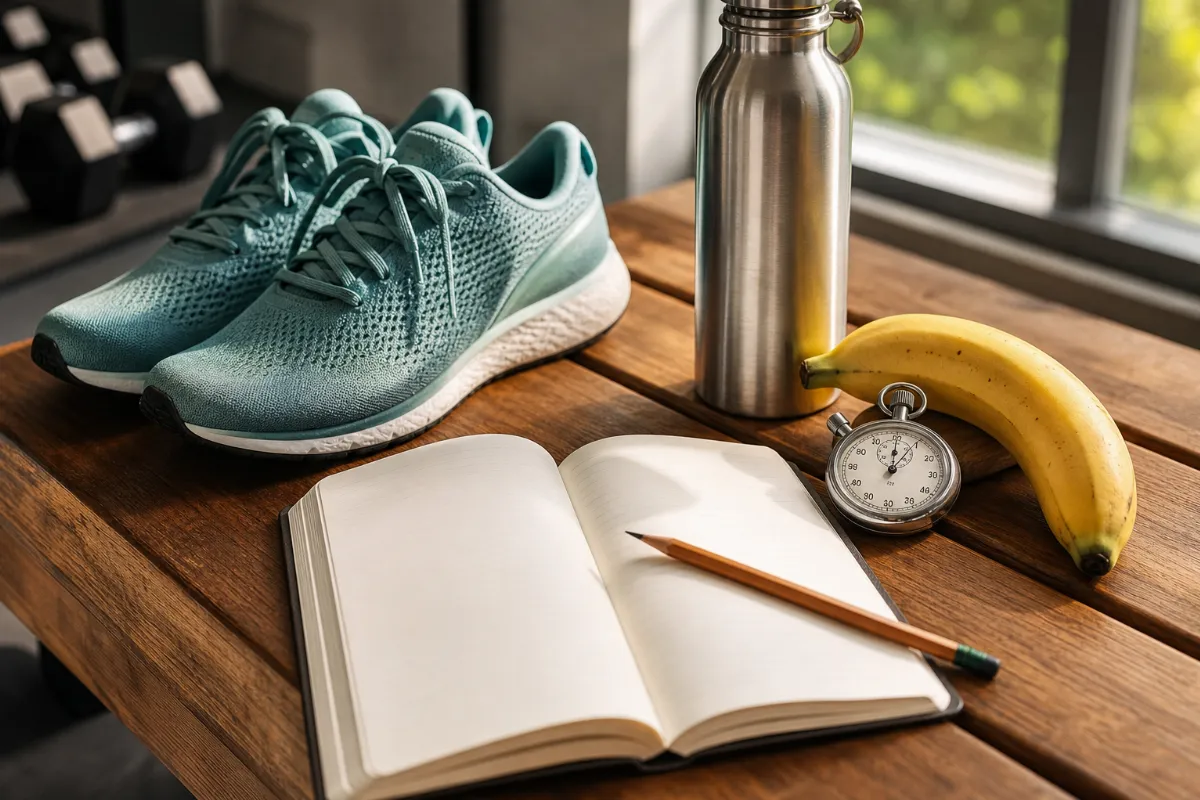
Build Strength & Fitness
Improve Your Physical Performance
Better physical performance means being able to run faster, lift more, last longer or move better at the activity you care about, and for most people it comes from steady training, enough recovery, sleep and food rather than from a product. This page covers performance basics and gives honest ratings to the supplements people ask about most.
General information, not medical advice. Last updated October 31, 2026. Written by the AlternativeMed editorial team. Not medically reviewed.
Start here
- Build on the basics first: regular aerobic and strength training (health agencies suggest at least 2 days a week of muscle-strengthening work), then add harder or more specific training slowly.
- Protect recovery: sleep, enough food and fluids, and rest days are part of training, not extras. Sudden jumps in training load are linked to more injury.
- Treat supplements as a small finishing touch at most. A few have real human evidence (creatine, caffeine), many do not, and none replaces training. Check with a doctor first if you have a health condition or have been inactive.
Be careful with
- Chest pain, fainting, severe breathlessness or new palpitations during exercise mean stop and get urgent care.
- Anabolic steroids, SARMs and prohormones are risky, often illegal without a prescription, and banned in sport. This page gives no instructions for them.
- Doing too much, too soon, with too little rest can lead to injury and to overtraining. If performance keeps falling despite rest, see a clinician.
- Supplements can interact with medicines and some products are mislabelled. Ask a pharmacist or doctor first if you take any medicine, are pregnant or breastfeeding, are under 18 or are an older adult.
- Do not stop or change any prescribed medicine because of a training or supplement plan.
Get help when
- Chest pain that feels tight or squeezing, spreading to the arm, neck or jaw, or severe trouble breathing: the NHS says to call 999 (UK) and not to drive yourself; elsewhere use your local emergency number.
- Pain, extreme shortness of breath or dizziness during activity: MedlinePlus says to stop and get help right away.
- Dark, red or cola-coloured urine, reduced urine, and marked muscle pain, weakness or swelling after hard exercise: these are listed rhabdomyolysis signs and need prompt medical care.
- Confusion, dizziness, nausea, dry skin with a rapid strong pulse in heat: possible heat stroke, a medical emergency.
- Performance that keeps dropping with persistent tiredness, mood change or frequent illness despite rest, or any injury that does not settle: see a doctor or sports medicine clinician.
- Fear of eating, restricting food to improve performance, or exercising compulsively: speak to a doctor or a registered dietitian.
About Improve Your Physical Performance
What this goal means
Physical performance is how well your body does a physical task: speed, strength, power, endurance or skill. It can mean a personal best in a race, lifting more in the gym, keeping up in a team sport, or simply doing physical work with less strain.
This page is about performance basics that apply across activities: training load and recovery, sleep, fuel and fluids, and whether supplements deserve a place. Building muscle, endurance, coordination and a regular routine each have their own goal pages.
1,2What it can feel like
People often notice plateaus, slower recovery, heavy legs, flat training sessions, or being unsure whether a product is worth buying. A short dip after a hard block of training is normal and can be followed by improvement once you recover.
Longer-lasting drops in performance with mood change and fatigue can signal that load and recovery are out of balance.
3What shapes performance
The training itself matters most, along with how well you recover. Sleep, food and fluids are the next layer, and the sports nutrition position statement from the American College of Sports Medicine and partner organisations says performance and recovery are enhanced by well-chosen nutrition strategies.
Age, sex, genetics, health conditions, medicines and the sport you do also shape what is realistic. Supplements come last in the order of importance.
1,3Relevant conditions
Muscle loss with age, post-exertional malaise in ME/CFS, long-lasting fatigue, heart or breathing problems, and eating disorders all change what safe training looks like. They are condition pages, not goals, and are linked below.
4Realistic expectations
Training gains are gradual and uneven. Where supplements work, effects found in studies are generally small to moderate and vary between people. For example, the umbrella review of caffeine found benefits across many tasks, with the quality of evidence mostly moderate, and a beta-alanine meta-analysis found a small overall effect.
No supplement or product replaces consistent training, sleep and food.
5,6Who it applies to
Recreational exercisers, gym-goers, team and club athletes, people doing physical work, and anyone who wants to move better. Many supplement studies were in young, healthy men, so results may not apply to women, older adults or people with health conditions.
Children and teenagers, pregnant or breastfeeding people and older adults should get individual guidance before using performance supplements.
5Related conditions and symptoms
Sarcopenia and muscle loss with age → ME/CFS and post-exertional malaise → Fatigue: when to get help → Eating disorders and disordered eating →
A manageable starting plan
An educational starting point, not a personal prescription. Adjust it to your own situation and any advice from your clinician.
Your first actions
- If you have a condition, symptoms or have been inactive, speak to a doctor before stepping up training.
- Train regularly: aerobic work plus strength sessions on at least 2 days a week.
- Change load gradually, with easier days and rest days built in.
- Protect sleep and eat and drink enough for your training.
- Consider supplements last, one at a time, only with real human evidence.
Optional additions
- Try creatine or caffeine if you are healthy and have asked a pharmacist about interactions.
- Log sessions, sleep and mood in a notebook.
- Work with a coach or dietitian.
What to track
- Sessions, load and how hard they felt.
- Sleep hours and how you feel on waking.
- Performance markers such as pace, weight lifted or reps, and how you recover.
When to reassess
Review every 4 to 8 weeks. If a block of training brings no change, look at recovery, sleep and food before adding products. If performance and mood keep falling despite rest, see a clinician.
When to seek professional support
- Doctor or pharmacist for conditions, medicines and supplement questions.
- Registered dietitian for fuelling.
- Qualified coach, exercise professional or physiotherapist for training and injuries.
What helps
Ordered by how well the research supports each step. Evidence strength is shown on every card; precautions sit next to the advice.
Start here
Do regular aerobic and muscle-strengthening training
High certaintyAddresses: Better fitness, strength and capacity for most sports and tasks
Why it may help: CDC guidance for adults is 150 minutes of moderate (or 75 minutes of vigorous) aerobic activity a week, or an equivalent mix, plus muscle-strengthening activity that works all major muscle groups on at least 2 days a week. These are health guidelines, not sport-specific training plans.
How to apply it: Spread sessions across the week and choose training that matches your goal. Build the base before adding speed work or heavy loads.
Who it may suit: Most adults; people with health conditions should get advice first.
Precautions: Check with your health care provider if you have not exercised in a while or wonder whether exercise is safe for you.
7,4Increase training load gradually and monitor it
Moderate certaintyAddresses: Lower chance of overuse injury and setbacks
Why it may help: An International Olympic Committee consensus statement reviewed load (including rapid changes in training and competition load) and concluded that poor load management is a major injury risk factor, with guidelines for prescribing and monitoring load. It was written for elite sport, but the principle is widely applied.
How to apply it: Change one thing at a time (time, intensity or frequency), keep a simple log, and avoid big jumps from one week to the next.
Who it may suit: Anyone training regularly.
Precautions: Pain that is sharp, worsening or lingering needs assessment rather than pushing through.
2Balance hard training with recovery
Moderate certaintyAddresses: Adaptation instead of burnout
Why it may help: The joint European College of Sport Science and American College of Sports Medicine consensus says successful training involves overload but must avoid excessive overload combined with inadequate recovery. A short performance dip after hard training can lead to improvement after recovery, whereas ongoing imbalance can lead to longer-lasting decline.
How to apply it: Plan easier days and full rest days, and cut back when you feel persistently flat, sore or low in mood.
Who it may suit: Everyone who trains hard.
Precautions: Unexplained long-lasting fatigue needs a medical check.
3Recovery after exercise and physical stamina → Balance Activity & Rest →
Protect your sleep
Low certaintyAddresses: Better reaction, mood and in some studies sport-specific performance
Why it may help: A review found sleep loss often reduces exercise performance, though findings are mixed and some maximal efforts are maintained; in athletes, sport-specific performance dropped. In a small uncontrolled study of 11 university basketball players, extending sleep over several weeks was followed by faster sprints and better shooting accuracy.
How to apply it: Keep regular bed and wake times, aim for a longer sleep window in hard training blocks, and see the sleep goal pages.
Who it may suit: Everyone.
Precautions: Persistent poor sleep, loud snoring or daytime sleepiness need a medical check.
8,9Build a Healthy Sleep Schedule → Improve Your Sleep Quality →
Eat and drink to support training
Moderate certaintyAddresses: Better training quality and recovery
Why it may help: The Academy of Nutrition and Dietetics, Dietitians of Canada and the American College of Sports Medicine say performance and recovery are enhanced by well-chosen type, amount and timing of food, fluids and supplements, and that athletes should be referred to a registered dietitian for a personalised plan.
How to apply it: Eat regular balanced meals that match your training, include enough protein, and see a registered dietitian if you train hard or have specific goals.
Who it may suit: Everyone who trains; people with diabetes or kidney disease need clinician guidance.
Precautions: Never use food restriction to chase performance; see the eating disorder page if food is becoming a source of fear.
1Additional options
Match fluids to your sweat and the conditions
Moderate certaintyAddresses: Avoid performance loss from dehydration
Why it may help: The American College of Sports Medicine fluid position stand says the goal is to start activity well hydrated and to avoid more than about 2% body weight loss from water deficit during exercise, because sweat rates vary widely between people. It also says drinks with electrolytes and carbohydrates can help in some circumstances.
How to apply it: Drink before, during longer sessions and afterwards. Weighing yourself before and after a session shows how much you lose.
Who it may suit: Anyone exercising, especially long or hot sessions.
Precautions: This is a 2007 statement; people with heart, kidney or hormone conditions or on certain medicines should ask their clinician. Drinking far more than needed is not helpful.
10,11Get enough protein alongside resistance training
High certaintyAddresses: Slightly larger gains in strength and muscle
Why it may help: A meta-analysis of 49 randomised trials (1863 participants) found protein supplementation increased strength and muscle size during resistance training, with benefit reduced in older people and no further gains in fat-free mass beyond total intakes of about 1.6 g per kg per day. The International Society of Sports Nutrition position stand says 1.4 to 2.0 g per kg per day is sufficient for most exercising people, and that whole foods can supply it.
How to apply it: Prefer food first and spread protein through the day; powders are a convenience, not a requirement.
Who it may suit: People doing resistance training.
Precautions: People with kidney disease should ask their clinician about protein intake first.
12,13Whey protein → Strength training and protein for older adults →
Use caffeine thoughtfully, if you tolerate it
Moderate certaintyAddresses: Small to moderate gains in endurance and strength tasks
Why it may help: The International Society of Sports Nutrition position stand says caffeine acutely enhances various aspects of performance in many but not all studies, with aerobic endurance the most consistent, and that individual responses differ and adverse effects on sleep or anxiety are possible. An umbrella review of 21 meta-analyses found benefits for endurance, strength, power and speed, mostly moderate-quality evidence, mostly in young men.
How to apply it: Test it in training, not on race day; stop using it late in the day if it disturbs sleep.
Who it may suit: Healthy adults who already tolerate caffeine.
Precautions: May worsen anxiety, sleep, palpitations and blood pressure; avoid in children and ask a clinician in pregnancy or with heart conditions. Energy drinks and pre-workout blends can contain several stimulants.
14,5Still being studied
Creatine for short, high-intensity efforts and resistance training
Moderate certaintyAddresses: More power and training volume over time
Why it may help: The International Society of Sports Nutrition position stand reports that studies consistently show creatine raises muscle creatine levels and that this is linked to improved high-intensity exercise performance and greater training adaptations. It reports good short- and long-term safety in healthy people. That statement is from a society that includes industry-connected authors; it is shown here as the best-developed supplement evidence, rated moderate.
How to apply it: See the creatine page. No amount is given here because no agency source was read.
Who it may suit: Healthy adults doing high-intensity or resistance training.
Precautions: Ask a clinician first if you have kidney disease or take medicines; gains of water weight are possible; under 18 and pregnancy need individual advice.
15Beta-alanine for efforts of about 30 seconds to 10 minutes
Low certaintyAddresses: Small gains in exercise capacity
Why it may help: A meta-analysis of 40 placebo-controlled studies (1461 participants) found a small overall effect (0.18), larger for exercise capacity than for performance and larger for exercise within a time frame of 0.5 to 10 minutes. The International Society of Sports Nutrition position stand also covers it.
How to apply it: See the beta-alanine page.
Who it may suit: Trained people doing repeated hard efforts.
Precautions: Tingling (paraesthesia) is a known side effect; ask a clinician if pregnant, breastfeeding or on medicines.
6,16Nitrate (beetroot juice) for endurance
Low certaintyAddresses: Longer time to exhaustion in lab tests
Why it may help: A meta-analysis of 17 controlled studies found a moderate benefit on time-to-exhaustion tests (effect size 0.79) and small, not statistically significant effects on time trials and graded tests, with benefits more often seen in inactive to recreationally active people.
How to apply it: Not covered here beyond the evidence; the best way to use it is unclear.
Who it may suit: Recreational endurance exercisers.
Precautions: Ask a pharmacist if you take blood pressure or heart medicines.
17Food & nutrition
Fuel, fluids and timing
The joint position statement from the Academy of Nutrition and Dietetics, Dietitians of Canada and the American College of Sports Medicine says performance and recovery are enhanced by well-chosen food, fluid and supplement strategies and refers athletes to a registered dietitian for personalised plans. The abstract read for this page gives no specific meal amounts, so none are given here.
The fluid position stand recommends starting exercise well hydrated, drinking enough during exercise to avoid more than about 2% body weight loss, and replacing fluid and electrolyte losses afterwards, with plans tailored to individual sweat rates.
1,10Protein
Meta-analysis found protein supplements add small gains in strength and muscle size during resistance training, with no extra fat-free mass gain beyond about 1.6 g per kg per day total intake. The International Society of Sports Nutrition position stand gives 1.4 to 2.0 g per kg per day as sufficient for most exercising people and says whole foods can supply it.
People with kidney disease should ask their clinician before raising protein.
12,13Foods that carry caffeine or nitrate
Coffee and tea contain caffeine; beetroot juice is a nitrate source studied for endurance. The studies used supplements or juices in controlled settings, so the effect of everyday foods is not established by these sources.
14,17Remedies & supplements
Traditional use, laboratory findings and human trials are kept apart. "Natural" does not mean safe.
Creatine
Moderate certaintyStudied form and route: Powder or capsules (creatine monohydrate is the most studied form)
Intended outcome: More power, training volume and adaptation in high-intensity and resistance training
Human evidence: The International Society of Sports Nutrition position stand reports consistent increases in muscle creatine, improved high-intensity performance, and good safety in healthy people over short and long use.
Traditional use: No traditional use; it is a modern supplement.
Laboratory findings: Raises muscle creatine stores, which may explain the gains.
Limits: The position stand is by a sports nutrition society; benefits are for short, high-intensity efforts rather than long endurance; individual responses vary.
Interactions and precautions: Ask a clinician first with kidney disease or medicines; pregnancy, breastfeeding and under-18s need individual advice. No amount is given because no agency source was read.
15Caffeine
Moderate certaintyStudied form and route: Coffee, tablets, gum, energy drinks
Intended outcome: Small to moderate gains, most consistently in aerobic endurance
Human evidence: The position stand and an umbrella review of 21 meta-analyses found benefits for endurance, strength, power and speed, with moderate-quality evidence, mostly in young men.
Traditional use: Coffee and tea are long-standing everyday drinks.
Laboratory findings: Not reviewed for this page.
Limits: Effects differ between people; fewer studies in women, middle-aged and older adults.
Interactions and precautions: Can disturb sleep and worsen anxiety, palpitations and blood pressure; interacts with some medicines; avoid for children and ask in pregnancy.
14,5Beta-alanine
Low certaintyStudied form and route: Capsules or powder
Intended outcome: Small gains in capacity for efforts lasting about 30 seconds to 10 minutes
Human evidence: A meta-analysis of 40 studies in 1461 people found a small overall effect (0.18) and a larger effect for exercise capacity than performance.
Traditional use: No traditional use.
Laboratory findings: Not reviewed for this page.
Limits: Small effects; stronger when combined with sodium bicarbonate in the meta-analysis, which has its own side effects.
Interactions and precautions: Tingling is common; check with a pharmacist if you take medicines.
6,16Nitrate (beetroot juice)
Low certaintyStudied form and route: Beetroot juice or nitrate supplements
Intended outcome: Longer time to exhaustion in lab tests
Human evidence: Meta-analysis of 17 controlled studies: moderate benefit on time-to-exhaustion (0.79), no clear benefit on time trials or graded tests.
Traditional use: Beetroot is a food; sport use is modern.
Laboratory findings: Not reviewed for this page.
Limits: Small studies; mostly less-trained people.
Interactions and precautions: Ask a pharmacist if you take blood pressure or heart medicines.
17Protein powders
High certaintyStudied form and route: Whey and other protein powders
Intended outcome: Slightly larger muscle and strength gains with resistance training
Human evidence: Meta-analysis of 49 trials found small gains in strength and muscle size.
Traditional use: Protein is a food nutrient, not a traditional remedy.
Laboratory findings: Not reviewed for this page.
Limits: Benefit smaller with age; no extra gains above about 1.6 g per kg per day total intake.
Interactions and precautions: Kidney disease needs clinician advice; check labels for added stimulants.
12,13Ashwagandha
Very low certaintyStudied form and route: Root extracts
Intended outcome: Possible gains in strength, power and fitness
Human evidence: A systematic review and Bayesian meta-analysis of 13 trials in healthy people reported improvements versus placebo, but the authors state more comparable studies in exercise-trained and athletic groups are needed.
Traditional use: Used for centuries in Ayurvedic medicine as an adaptogen.
Laboratory findings: Not reviewed for this page.
Limits: Small trials; many sources of variation; products differ.
Interactions and precautions: Ask a clinician if pregnant, breastfeeding, on medicines or with thyroid, liver or autoimmune conditions.
18BCAAs, HMB and other amino acid products
Not enough evidenceStudied form and route: Powders and capsules
Intended outcome: Claimed muscle and recovery benefits
Human evidence: We did not review trials for these products for this page, so no rating beyond insufficient can be given. The protein position stand notes whole-food and complete protein sources can meet needs.
Traditional use: No traditional use.
Laboratory findings: Not reviewed for this page.
Limits: Evidence not assessed here.
Interactions and precautions: Ask a pharmacist; check for contamination and banned ingredients if you are tested.
13Therapies & care
Established professional care for performance includes a doctor's check before starting if you have been inactive or have a condition, a physiotherapist or sports medicine clinician for injuries, a qualified coach or exercise professional for training plans, and a registered dietitian for nutrition. This page does not recommend medicines or doses, and no prescribed medicine should be stopped or changed without the prescriber.
Check-up before starting or stepping up
Moderate certaintyMedical advice MedlinePlus advises checking with your health care provider if you have not exercised in a while or wonder whether exercise is safe for you.
Who it may suit: People who have been inactive, are older, are pregnant, or have heart, blood pressure, diabetes, joint or other conditions.
Precautions: Do not delay urgent care for warning symptoms.
4Registered dietitian or sports dietitian
Moderate certaintyNutrition advice The joint position statement says athletes should be referred to a registered dietitian for personalised nutrition plans.
Who it may suit: Serious trainers, people with medical diets or supplement questions.
Precautions: Mention medicines and conditions.
1Qualified coach, exercise professional or physiotherapist
Not enough evidenceTraining and injury guidance The load consensus statement describes how training and competition load should be prescribed and monitored; a qualified professional can help apply this to your situation. We did not find a trial of coaching in the sources read for this page.
Who it may suit: Plateaus, injuries, new goals.
Precautions: Check credentials.
2What to avoid
Habits, products and claims that can get in the way. Never stop a prescribed medicine without talking to the professional who prescribed it.
Risks that apply to most people
Ramping up training load too fast
Moderate certaintyWhy: An International Olympic Committee consensus statement lists rapid changes in training load among the load factors linked to injury risk.
Who it applies to: Returners, beginners, anyone changing sport or season.
Try instead: Increase gradually, keep easier days, and log your sessions.
2Training hard with too little recovery
Moderate certaintyWhy: The overtraining consensus says successful training must avoid excessive overload combined with inadequate recovery; non-functional overreaching and overtraining syndrome can follow, and none of the markers used for detection meets all criteria.
Who it applies to: Frequent hard trainers, people with high life stress or low food intake.
Try instead: Schedule rest, treat sleep as training, and see a clinician if decline and fatigue persist.
3Personal triggers to check
Exercising hard in heat or while dehydrated
Moderate certaintyWhy: MedlinePlus lists dehydration and extremes of body temperature among causes of rhabdomyolysis and heat illness, with older adults, people who are sick or on certain medicines, and alcohol use raising the risk.
Who it applies to: Outdoor and hot-environment training; people on certain medicines.
Try instead: Limit time in the heat, drink fluids, replace lost salt and minerals, and stop if you feel confused, dizzy or nauseated.
11,19Sudden severe exertion you are not used to
Moderate certaintyWhy: MedlinePlus lists severe exertion such as marathon running or calisthenics among causes of rhabdomyolysis, a muscle breakdown that can harm the kidneys.
Who it applies to: People new to a type of effort or returning after a break.
Try instead: Build up gradually and get care for dark urine with marked muscle pain.
19Products that need caution
Anabolic steroids, SARMs and prohormone products
Evidence againstWhy: MedlinePlus links steroid misuse to high blood pressure, cholesterol changes, heart problems, liver and kidney damage, mood changes and addiction. The FDA says SARMs are unapproved, cannot be legally marketed as a supplement or drug in the US, and names heart attack, stroke, liver injury and other harms. They are also prohibited in sport.
Who it applies to: Everyone; especially teenagers and young adults targeted by social media.
Try instead: Focus on training, recovery, food and the supplements with human evidence. This page gives no instructions.
20,21,22Multi-stimulant pre-workout blends and energy drinks
Low certaintyWhy: The International Society of Sports Nutrition caffeine statement says caffeine can cause adverse effects on sleep and anxiety; blends can stack several stimulants, and only the caffeine content has the evidence discussed here.
Who it applies to: People sensitive to caffeine, with heart conditions, anxiety or poor sleep, and teenagers.
Try instead: If you use caffeine, keep it simple and test your tolerance.
14Unsupported claims
"This supplement will boost your performance"
Low certaintyWhy: Of the supplements reviewed for this page, only a few have consistent human evidence, effects are small to moderate, and benefits vary between people. Marketing often cites lab or animal studies.
Who it applies to: Anyone buying performance products.
Try instead: Ask what human trials show and in whom, and check the ingredient with a pharmacist.
5,6,17"Natural" or "legal" means safe or doping-free
Not enough evidenceWhy: Supplements may interact with medicines or be mislabelled, and athletes in tested sports should check products against the anti-doping list.
Who it applies to: Competitive athletes and anyone on medicines.
Try instead: Check the list of prohibited substances for your sport's rules and ask your pharmacist.
22Common mistakes
Chasing performance by restricting food
Moderate certaintyWhy: The nutrition and performance position statement describes food, fluids and supplements as strategies that support performance, and advises personalised planning with a registered dietitian.
Who it applies to: People under pressure to be lean or light.
Try instead: Eat enough to train; get help if food or exercise feels compulsive.
1Trying a new supplement or caffeine amount on competition day
Low certaintyWhy: Individual responses to caffeine differ and side effects such as sleep disturbance or anxiety can occur.
Who it applies to: Anyone using stimulants.
Try instead: Trial it in training first.
14Pushing through pain or warning signs
Moderate certaintyWhy: MedlinePlus says to stop exercising and get help for pain, extreme shortness of breath or dizziness.
Who it applies to: Everyone.
Try instead: Stop, rest and seek advice.
4Evidence & safety
What the research shows
Health agencies agree on the basics of regular aerobic and strength training, and consensus statements stress balancing load and recovery. Among supplements, creatine and caffeine have the most consistent human evidence, protein helps modestly with resistance training, while beta-alanine and nitrate have small or inconsistent effects and ashwagandha is poorly established. Steroids and SARMs are unsafe.
Limits of the evidence
- Many sports nutrition position stands come from societies with industry links.
- Most supplement studies were short, small and in young healthy men.
- Training-load guidance was written for elite sport.
- The sleep-extension study had 11 players and no control group.
- Evidence on BCAAs and HMB was not reviewed for this page.
Precautions and interactions
- Check with a doctor before starting if you have been inactive or have a condition.
- Stop and seek help for chest pain, severe breathlessness, dizziness or fainting.
- Ask a pharmacist about supplements if you take medicines.
- Never stop or change a prescribed medicine for a training plan.
Life-stage considerations
- Children and teenagers: do not use performance supplements, stimulants, steroids or SARMs; the FDA warns SARMs are targeted at teenagers and young adults.
- Pregnancy and breastfeeding: discuss activity and any supplement or caffeine with your midwife or doctor.
- Older adults: benefit from strength work but need gradual progression, protein advice and falls-aware training; see the older adults strength page.
- Women: many supplement studies had few female participants, so results may differ.
Warning signs
- Tight or squeezing chest pain, pain spreading to arm, neck or jaw, or severe trouble breathing (the NHS says to call 999).
- Fainting, severe dizziness or new palpitations during exercise.
- Dark, red or cola-coloured urine with muscle pain, stiffness or weakness.
- Confusion, dizziness, nausea or dry skin with a strong rapid pulse in heat.
- Persistent fatigue, mood change and falling performance despite rest.
Claim checks
Creatine is unsafe for healthy people
Moderate certaintyThe position stand found short- and long-term use safe and well tolerated in healthy people; individual medical advice still applies.
15Caffeine only works for endurance
Moderate certaintyNot quite: it helps endurance most consistently, but reviews also found benefits for strength, power and speed.
14,5Beetroot juice or beta-alanine will transform your performance
Low certaintyNot supported. Effects found were small or inconsistent.
6,17SARMs are a safe alternative to steroids
Evidence againstNo. The FDA says SARMs are unapproved and names heart attack, stroke and liver injury among harms.
21You need protein shakes to build muscle
High certaintyNo. Whole foods can meet needs; supplements add small gains.
13,12Chest pain or fainting during hard training is normal and can be pushed through
High certaintyNot safe. The NHS lists chest pain, pressure or tightness, and fainting, as heart attack warning signs that need an emergency call (999 in the UK) at once. Stop exercising and get help; do not train through them.
23Questions people ask
What matters most for physical performance?
Consistent training with enough recovery, then sleep, food and fluids. Supplements come last.
How much exercise do adults need?
CDC guidance is 150 minutes of moderate or 75 minutes of vigorous aerobic activity a week, plus muscle-strengthening on at least 2 days. Athletes often do more.
Does creatine work?
For short, high-intensity efforts and resistance training the evidence is moderate and the best of any supplement. Ask a clinician first if you have kidney disease.
Is caffeine worth taking?
It gives small to moderate gains for many people but can disturb sleep and worsen anxiety or palpitations.
Do protein shakes help?
Slightly, with resistance training. Whole foods can supply the same protein.
Are beetroot juice and beta-alanine worth it?
The effects found were small or inconsistent, so we rate the evidence as low.
Is ashwagandha proven for performance?
A meta-analysis of 13 trials reported benefits, but the authors say more studies in trained people are needed. We rate it very low.
What about steroids or SARMs?
They are risky, often illegal without a prescription and banned in sport. We give no instructions.
How do I know if I am overtraining?
Performance falls and fatigue and mood change persist despite rest. See a clinician to rule out other causes.
Do I need a check-up before training harder?
If you have been inactive, are older, are pregnant or have a health condition, yes. Stop and get help for chest pain, fainting or severe breathlessness.
References
- Thomas DT, et al. American College of Sports Medicine Joint Position Statement. Nutrition and Athletic Performance. Med Sci Sports Exerc. 2016. PMID 26891166. source
- Soligard T, et al. How much is too much? (Part 1) International Olympic Committee consensus statement on load in sport and risk of injury. Br J Sports Med. 2016. PMID 27535989. source
- Meeusen R, et al. Prevention, diagnosis, and treatment of the overtraining syndrome: joint consensus statement of the European College of Sport Science and the American College of Sports Medicine. Med Sci Sports Exerc. 2013. PMID 23247672. source
- MedlinePlus. Exercise and Physical Fitness. Read 2026-10-31. source
- Grgic J, et al. Wake up and smell the coffee: caffeine supplementation and exercise performance-an umbrella review of 21 published meta-analyses. Br J Sports Med. 2020. PMID 30926628. source
- Saunders B, et al. Beta-alanine supplementation to improve exercise capacity and performance: a systematic review and meta-analysis. Br J Sports Med. 2017. PMID 27797728. source
- CDC. Physical Activity Guidelines for Adults. Read 2026-10-31. source
- Fullagar HH, et al. Sleep and athletic performance: the effects of sleep loss on exercise performance, and physiological and cognitive responses to exercise. Sports Med. 2015. PMID 25315456. source
- Mah CD, et al. The effects of sleep extension on the athletic performance of collegiate basketball players. Sleep. 2011. PMID 21731144. source
- American College of Sports Medicine position stand. Exercise and fluid replacement. Med Sci Sports Exerc. 2007. PMID 17277604. source
- MedlinePlus. Heat Illness. Read 2026-10-31. source
- Morton RW, et al. A systematic review, meta-analysis and meta-regression of the effect of protein supplementation on resistance training-induced gains in muscle mass and strength in healthy adults. Br J Sports Med. 2018. PMID 28698222. source
- Jager R, et al. International Society of Sports Nutrition Position Stand: protein and exercise. J Int Soc Sports Nutr. 2017. PMID 28642676. source
- Guest NS, et al. International society of sports nutrition position stand: caffeine and exercise performance. J Int Soc Sports Nutr. 2021. PMID 33388079. source
- Kreider RB, et al. International Society of Sports Nutrition position stand: safety and efficacy of creatine supplementation in exercise, sport, and medicine. J Int Soc Sports Nutr. 2017. PMID 28615996. source
- Trexler ET, et al. International society of sports nutrition position stand: Beta-Alanine. J Int Soc Sports Nutr. 2015. PMID 26175657. source
- Hoon MW, et al. The effect of nitrate supplementation on exercise performance in healthy individuals: a systematic review and meta-analysis. Int J Sport Nutr Exerc Metab. 2013. PMID 23580439. source
- Bonilla DA, et al. Effects of Ashwagandha (Withania somnifera) on Physical Performance: Systematic Review and Bayesian Meta-Analysis. J Funct Morphol Kinesiol. 2021. PMID 33670194. source
- MedlinePlus Medical Encyclopedia. Rhabdomyolysis. Read 2026-10-31. source
- MedlinePlus. Anabolic Steroids. Read 2026-10-31. source
- FDA. FDA Warns of Use of Selective Androgen Receptor Modulators (SARMs) Among Teens, Young Adults. Read 2026-10-31. source
- World Anti-Doping Agency. Prohibited List (page checked to exist; its contents were not reviewed for this page). source
- NHS. Heart attack. Read 2026-10-31. source
Related on AlternativeMed
Related goals
Build Muscle Mass → Maintain the Muscle You Have → Improve Your Endurance → Start Exercising With Confidence → Build a Consistent Exercise Routine → Improve Coordination & Movement Skills → Return to Exercise After a Break → Stay Active Throughout Your Life → Improve Your Cardiovascular Fitness → Improve Your Everyday Stamina →
Ingredients, foods and supplements
Creatine → Caffeine supplements → Beta-alanine → Whey protein → Ashwagandha →
Research, safety and claim-check resources
Recovery after exercise and physical stamina → Physical activity, strength and keeping muscle → Strength training and protein for older adults → Caffeine and Energy Drinks → Supplements for healthy aging → Sleep hygiene → Return to your routine after illness →