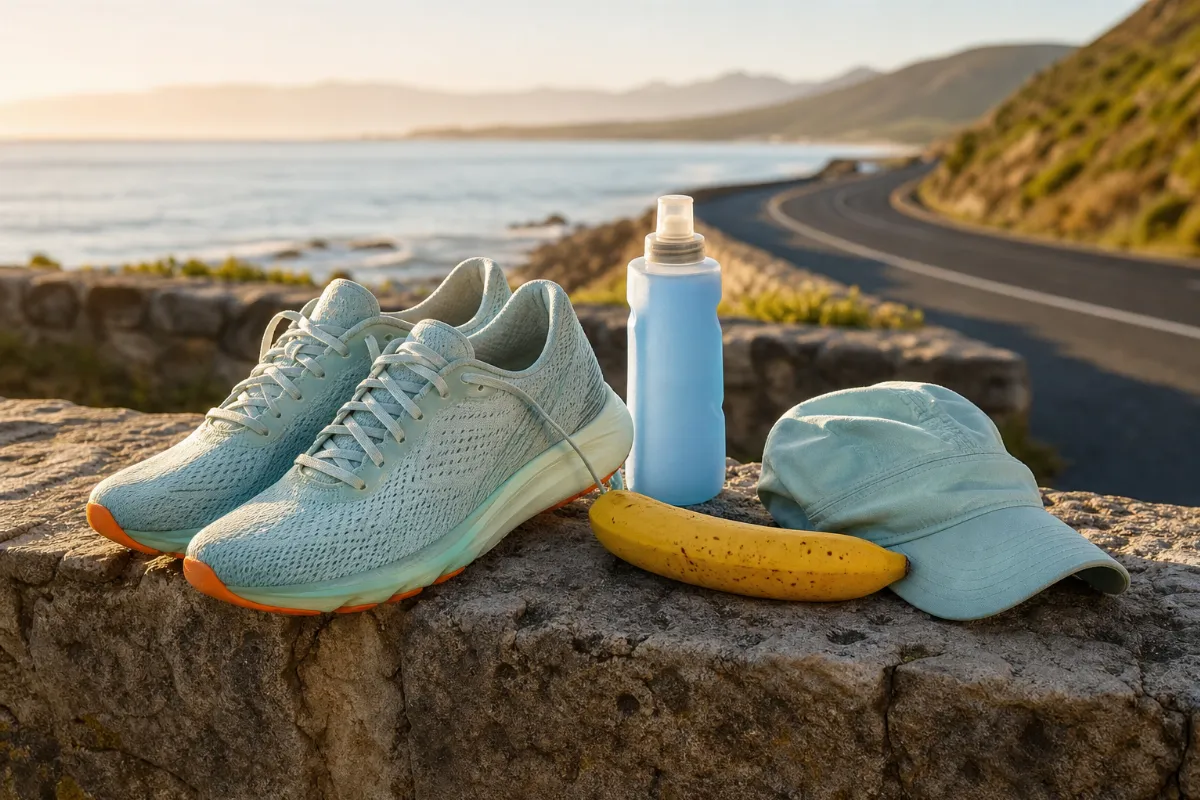
Build Strength & Fitness
Improve Your Endurance
Endurance is the ability to keep going at a steady effort for longer, whether that is a longer run, ride, swim, hike or a full match. This page is about training and fuelling for sport and exercise; building general fitness for health and everyday stamina have their own pages.
General information, not medical advice. Last updated October 31, 2026. Written by the AlternativeMed editorial team. Not medically reviewed.
Start here
- Build a base first: do mostly easy aerobic sessions you can talk through, add a little time or distance each week, and keep rest days between harder efforts.
- Add two short strength sessions a week, and once the base feels steady, one interval session in place of one easy session.
- Practise what you will eat and drink on longer sessions in training, not for the first time on the day of an event.
Be careful with
- Stop and get urgent care for chest pain or pressure, fainting, severe breathlessness or new palpitations during exercise. If you have a heart condition, high blood pressure or diabetes, are pregnant, have been inactive, or are older, ask a clinician before building up to long or hard efforts.
- Pushing too hard for too long without enough rest and food can leave you flatter and slower, not fitter. Persistent heaviness, falling performance and low mood are signals to ease off and get checked.
- Steroids, SARMs, EPO, growth hormone and similar substances are banned in sport and are not covered here as options. Supplements and pre-workout blends can interact with medicines or contain banned substances; ask a pharmacist or doctor first.
Get help when
- Chest pain, pressure or tightness, fainting or near-fainting, severe or unusual breathlessness, or new palpitations during or after exercise: stop and get urgent medical care.
- Dark red or cola-coloured urine with severe muscle pain or weakness after hard exercise: this can be a sign of muscle breakdown that harms the kidneys and needs prompt medical care.
- Confusion, hot skin that is not sweating, a very high temperature, a fast heartbeat or fast breathing during exercise in the heat: treat as heatstroke, an emergency.
- Tiredness that lasts for weeks, performance that keeps falling despite rest, unexplained weight loss, or feeling much worse for days after normal sessions: see a doctor to look for a cause such as low iron, a thyroid problem, sleep apnea or ME/CFS.
- Fear of eating, restricting food to train, or exercising compulsively even when injured or ill: speak to a doctor or an eating-disorder service.
About Improve Your Endurance
What this goal means
Endurance here means aerobic endurance: how long you can keep up a steady effort in running, cycling, swimming, rowing, hiking or team sport before fatigue forces you to slow down. It depends on what the heart, lungs and muscles can supply and use, and on how economically you move.
Elite-level research describes three ingredients for distance events: a high aerobic power, the ability to hold a large fraction of that power, and high movement economy. Recreational athletes benefit from the same three ideas in a gentler form.
1,2What it can feel like
Common experiences are legs that feel heavy long before your breathing does, slowing down in the second half of a session, having to stop for breath on hills, or finding that a distance that was easy last month now feels hard. Hot weather, poor sleep and not eating enough before a long session can all add to this.
3,4What shapes endurance
Training is the main driver. In a meta-analysis of 28 controlled trials in healthy adults aged 18 to 45, endurance training and interval training both gave large improvements in maximal oxygen uptake (VO2max) compared with no exercise, with interval training giving a modest extra gain.
Beyond the training plan, endurance is affected by recovery between sessions, strength, fuel and fluids, heat, and illness. A joint consensus statement on overtraining lists too little food, too little carbohydrate or protein, iron deficiency and magnesium deficiency among factors to look at when performance drops and tiredness lingers.
2,4,5Conditions worth ruling out
If your endurance falls for no clear reason, a clinician can look for other causes. Overtraining syndrome is diagnosed by excluding organic disease, infection and nutrition problems such as low energy intake or iron deficiency, and the consensus statement notes that no single test is generally accepted. Anemia, thyroid problems, sleep apnea and ME/CFS can also cause lasting tiredness, and ME/CFS needs specialist, personalised activity advice rather than pushing harder.
4Realistic expectations
Endurance builds over weeks and months. In the pooled trials, programmes ran for at least 2 weeks and most gains came from several weeks of regular training, so expect gradual progress rather than a quick jump. The NHS Couch to 5K plan, for example, takes beginners to 30 minutes of continuous running over 9 weeks or longer, with three runs a week and rest days between.
Gains are larger for people who start from a lower baseline, and smaller as fitness rises. Hard weeks, heat, poor sleep and illness will make some sessions feel worse; one flat day is not a setback.
2,6Who this applies to
Adults who already exercise or want to, and who aim to go further or longer in a sport or activity. If you are brand new to exercise, start with the beginner page; for heart and lung fitness as a health measure, see Improve Your Cardiovascular Fitness; for tiring easily in daily life, see Improve Your Everyday Stamina. Much of the published research is in healthy young to middle-aged adults, so older adults and people with health conditions need tailored advice.
7,2Related conditions and symptoms
Anemia and iron deficiency → Fatigue: when to get help → Sleep apnea → ME/CFS and post-exertional malaise → Sarcopenia and muscle loss with age → Eating disorders and disordered eating →
A manageable starting plan
An educational starting point, not a personal prescription. Adjust it to your own situation and any advice from your clinician.
Your first actions
- Weeks 1 to 4: do 3 easy aerobic sessions a week (walk-run, easy jog, cycle or swim) at a talking pace, adding a few minutes each week, with rest days between.
- Weeks 5 to 8: lengthen your longest session a little each week, add 2 short strength sessions, and keep other sessions easy.
- Weeks 9 onward: add one interval session a week in place of one easy session, and repeat any week that felt too hard.
Optional additions
- Follow a free structured plan such as NHS Couch to 5K if you want to run.
- Rehearse your fuel and fluid plan on your longest session each week.
- If you have a goal event, taper for about two weeks by reducing volume while keeping some short efforts at race pace.
- Join a club or training partner for company and accountability.
What to track
- Minutes per week and your longest session.
- How hard easy sessions feel: can you still talk?
- Sleep, mood, resting tiredness and any aches that linger.
- Heat, food and fluids on long sessions, and what worked.
When to reassess
After 6 to 8 weeks of regular training, check whether the same session feels easier and whether you can go further at the same effort. If you are more tired than when you started, if performance keeps falling, or if warning symptoms appear, cut back and talk to a clinician before continuing.
When to seek professional support
- See a GP before building up if you have a heart condition, high blood pressure, diabetes, are pregnant, or have been inactive for a long time.
- Ask a qualified coach, physiotherapist or your care team for a tailored plan if you have a long-term condition or injury.
- See our related pages on cardiovascular fitness, everyday stamina, recovery and returning to exercise.
What helps
Ordered by how well the research supports each step. Evidence strength is shown on every card; precautions sit next to the advice.
Start here
Build an easy aerobic base
Moderate certaintyAddresses: Raises aerobic capacity and lets you go longer at a comfortable effort
Why it may help: A meta-analysis of 28 controlled trials in healthy adults aged 18 to 45 found that continuous endurance training produced a large improvement in VO2max compared with no exercise (about 4.9 mL per kg per minute on average). The NHS describes moderate effort as being able to talk but not sing, and the ACSM recommends most adults reach at least 150 minutes of moderate activity a week or 75 minutes of vigorous activity.
How to apply it: Do most of your sessions at a pace where you can talk. Build total weekly time before you build speed. Spread sessions across the week rather than cramming them into one day.
Who it may suit: Most healthy adults, from beginners to regular athletes.
Precautions: Most trials were in healthy adults under 45. Older adults and people with health conditions should match effort to their fitness and ask their care team about types and amounts.
2,8,7Improve Your Cardiovascular Fitness → Improve Your Everyday Stamina →
Increase time or distance gradually, with rest days
Moderate certaintyAddresses: Lets the body adapt and lowers the chance of injury and burnout
Why it may help: The ACSM position stand says gradual progression of intensity and volume may reduce the risks of exercise. The NHS Couch to 5K plan builds up over 9 weeks or longer with three runs a week and rest days between, starting with run and walk intervals.
How to apply it: Add a little at a time, repeat a week if it felt hard, and keep at least some easy days. Use a free structured beginner plan if you like having one.
Who it may suit: Anyone building towards a longer run, ride or event, especially after a break.
Precautions: We did not find a source we read that tests a fixed weekly increase such as the popular 10 percent rule, so treat any such rule as a rough guide. If you are worried about your health before starting a plan, the NHS advises speaking to a GP first.
7,6Start Exercising With Confidence → Build a Consistent Exercise Routine →
Add strength training twice a week
Moderate certaintyAddresses: Can improve how economically you run, and supports joints and everyday strength
Why it may help: A meta-analysis of 5 controlled trials in 93 highly trained middle- and long-distance runners found that strength programmes done 2 to 3 times per week for 8 to 12 weeks improved running economy, a large beneficial effect. The NHS and the ACSM also recommend strengthening major muscle groups on at least 2 days a week.
How to apply it: Choose exercises for legs, hips, back, abdomen and shoulders, and do them to the point where you need a short rest before repeating. Keep sessions short enough that your endurance sessions are not compromised.
Who it may suit: Runners, cyclists and anyone doing long aerobic sessions.
Precautions: The running-economy trials were in highly trained runners; benefits for recreational athletes are less directly tested. Start light and build up if you are new to strength work.
9,8,7Strength training and protein for older adults → Build Muscle Mass →
Protect rest and recovery between hard sessions
Moderate certaintyAddresses: Helps avoid the flat, slower-not-fitter feeling that comes from too much load
Why it may help: A joint consensus statement from the European College of Sport Science and the ACSM describes training as overload plus enough recovery. Without enough recovery, athletes can slide into non-functional overreaching and, in rarer cases, overtraining syndrome, with longer-lasting fatigue and a fall in performance.
How to apply it: Keep easy days truly easy, take at least one rest day, and treat several weeks of heaviness and falling performance as a reason to cut back and look for causes such as too little food, poor sleep or illness.
Who it may suit: Anyone training regularly, especially with a goal event.
Precautions: The statement notes that no single marker is accepted for diagnosing overtraining, so see a clinician if tiredness persists rather than self-diagnosing.
4Recovery after exercise → Balance Activity & Rest → Build a Healthy Sleep Schedule →
Additional options
Add interval training once your base is steady
Moderate certaintyAddresses: A time-efficient way to raise aerobic capacity a little further
Why it may help: In the meta-analysis of 28 trials in healthy adults aged 18 to 45, high-intensity interval training gave a large VO2max improvement compared with no exercise, and a possibly small extra gain compared with continuous endurance training (about 1.2 mL per kg per minute). The NHS lists interval running and sprinting up hills among very vigorous activities.
How to apply it: Swap one easy session a week for short hard efforts with easy recovery between them, after you have built a few weeks of base. Keep other sessions easy.
Who it may suit: Healthy adults who already handle regular moderate sessions comfortably.
Precautions: The AHA notes that vigorous exercise, particularly in unfit people, can acutely raise the risk of a cardiac event in susceptible people. If you have heart disease, high blood pressure, diabetes, or have been inactive, ask a clinician first. Do not do intervals while ill.
2,8,10Taper before an event or test
Moderate certaintyAddresses: Allows fatigue to clear so that fitness shows on the day
Why it may help: A meta-analysis of 27 studies in competitive athletes found the best results from a taper of about 2 weeks in which training volume was reduced step by step by about 41 to 60 percent, without changing training intensity or frequency.
How to apply it: In the last two weeks before a goal event, cut your total volume, keep a few short sessions at race effort, and keep sleeping and eating well.
Who it may suit: People preparing for a race, long ride, trek or fitness test.
Precautions: Studied in competitive athletes; recreational exercisers may do well with a shorter or gentler version. Do not start new training or new foods during the taper.
11Practise your fuel and fluid plan on long sessions
Moderate certaintyAddresses: Helps avoid running out of energy and avoid stomach upset on the day
Why it may help: A review of nutrition for distance runners says carbohydrate-rich eating in the hours to days before an event stores fuel, that carbohydrate and fluid taken during long events can offset losses, and that the plan should be personalised and practised to balance benefit against gut discomfort. The ACSM position stand on fluids recommends customised plans because sweating rates vary, and suggests drinking to avoid losing more than about 2 percent of body weight as water.
How to apply it: In training, try the same pre-session meal, drinks and snacks you plan to use on the day. To learn how much you sweat, the ACSM suggests weighing yourself before and after a session.
Who it may suit: Anyone doing sessions lasting more than about an hour, or exercising in the heat.
Precautions: The nutrition review is based mainly on elite distance athletes and mentions much higher carbohydrate rates for the longest elite races; recreational athletes need much less and should build up gradually. People with diabetes, kidney problems or a history of disordered eating should have a plan from a clinician or dietitian.
1,5Adapt to heat and look after yourself in hot weather
Moderate certaintyAddresses: Lowers the chance of heat illness while you train
Why it may help: The NHS notes there is a high risk of heat exhaustion or heatstroke during hot weather or exercise and advises drinking more cold drinks when active, wearing light loose clothing, avoiding the midday sun and avoiding extreme exercise on very hot days.
How to apply it: Move sessions to the cooler parts of the day, ease the pace on hot days, carry fluids, and stop if you feel dizzy, sick or confused.
Who it may suit: Anyone training outdoors in warm or humid weather.
Precautions: Children, older people and people with long-term conditions such as diabetes or heart problems are more at risk. Heatstroke is an emergency.
3Still being studied
Caffeine before or during endurance exercise
Moderate certaintyAddresses: Possible small improvement in endurance performance
Why it may help: An umbrella review of 21 meta-analyses found caffeine was ergogenic for aerobic endurance, muscle strength, muscle endurance, power and exercise speed, with evidence mostly of moderate quality, and with larger effects in aerobic than anaerobic exercise. The IOC consensus statement names caffeine among the few supplements with good evidence of benefit for performance.
How to apply it: If you choose to use it, trial it in training first so you know how your body reacts, and keep it away from the hours before sleep.
Who it may suit: Healthy adults who tolerate caffeine and want a small edge in a hard session.
Precautions: Most studies were in young men. Caffeine can cause jitters, a fast heart rate and poor sleep; people with heart rhythm problems, anxiety, high blood pressure, pregnancy or breastfeeding should ask a clinician. We did not find a source we read that names a safe amount, so no dose is given here.
12,13Beetroot juice and dietary nitrate
Low certaintyAddresses: Possible modest benefit for time to exhaustion; unclear for time trials
Why it may help: A meta-analysis of 17 controlled studies found nitrate supplementation, mostly as beetroot juice, gave a moderate benefit for time-to-exhaustion tests, but only a small and not statistically significant effect on time trials and graded exercise tests. Benefits were seen more often in inactive to recreationally active people than in well-trained athletes. The IOC statement lists nitrate among supplements with good evidence, and the nutrition review for distance runners says nitrate is perhaps useful.
How to apply it: Studied as beetroot juice or nitrate taken in the hours or days before exercise; trial it in training first.
Who it may suit: Healthy recreational exercisers curious about a food-based option.
Precautions: Results vary between people. We did not find a source we read on interactions with blood-pressure or other medicines, so ask a pharmacist if you take any. No dose is given here.
14,13,1Carbohydrate mouth rinse for shorter events
Low certaintyAddresses: Possible small help when a full carbohydrate drink is not practical
Why it may help: The review of nutrition for distance runners says beneficial carbohydrate intakes range from small amounts, including mouth rinsing, for shorter events up to high rates for the longest races.
How to apply it: Rinsing the mouth with a carbohydrate drink and spitting it out is the approach the review describes; it is not a replacement for fuelling longer efforts.
Who it may suit: Athletes in shorter, hard events who prefer not to swallow fluid.
Precautions: We read only a short summary of this point, so treat it as an option under study, not a proven method for everyone.
1Food & nutrition
Fuel for longer sessions
The nutrition review for distance runners describes carbohydrate-rich eating in the hours to days before an event as a way to store fuel, and carbohydrate taken during long events as a way to offset what is used. It also says the intake should be tailored to the event and practised, to balance the benefit against the risk of stomach discomfort.
For ordinary sessions of an hour or less, the sources we read do not call for special fuelling. Regular meals that include carbohydrate, protein and plenty of plants are a sensible base.
- Before: a meal or snack you tolerate well, eaten with enough time to settle
- During (long sessions only): easy-to-digest carbohydrate, practised in training
- After: a meal with carbohydrate and protein, and fluids to replace what you lost
Fluids and electrolytes
The ACSM position stand on exercise and fluid replacement suggests starting activity well hydrated, drinking during exercise to avoid losing more than about 2 percent of body weight as water, and replacing deficits afterwards. Because sweating rates and sweat salt content differ widely between people, it recommends customised plans and says individual sweat rates can be estimated by weighing before and after a session.
It also says drinks containing electrolytes and carbohydrate can have benefits over water alone under certain circumstances. The NHS lists an isotonic sports drink or oral rehydration powder mixed with water as an option to help replace salt lost through sweating when someone has heat exhaustion.
5,3Iron, magnesium and other nutrients
The overtraining consensus lists iron deficiency and magnesium deficiency among factors to check when performance drops and fatigue lingers. We did not find in the sources we read any support for taking iron or magnesium without a test, so testing comes first. Persistent tiredness is best checked by a doctor, who can test for anemia and other causes.
4A word of caution about food and training
Fuel for training is different from restricting food to change body shape. If you feel guilty about eating, skip meals to earn exercise, or cannot rest without anxiety, that is a reason to speak to a doctor or an eating-disorder service.
4Where to read more
Fluids and caffeine have their own pages.
- Stay Hydrated for Daily Wellbeing: fluids and energy
- Manage Energy Without Relying on Stimulants: caffeine and energy drinks
- Eating disorders and disordered eating: signs and where to get help
Remedies & supplements
Traditional use, laboratory findings and human trials are kept apart. "Natural" does not mean safe.
Caffeine
Moderate certaintyStudied form and route: Coffee, tea or caffeine tablets taken before or during exercise
Intended outcome: Small improvement in endurance performance in studies
Human evidence: An umbrella review of 21 meta-analyses found caffeine ergogenic for aerobic endurance, muscle strength, muscle endurance, power and exercise speed, with evidence mostly of moderate quality. The effect was generally larger for aerobic than for anaerobic exercise.
Traditional use: Coffee and tea are widely used as a pick-me-up before activity.
Limits: Most individual studies were in young men. Not all analyses gave a definite direction of effect, and effects in women, middle-aged and older adults are less certain.
Interactions and precautions: Caffeine can cause jitters, raise heart rate and disturb sleep. People with heart rhythm problems, anxiety, high blood pressure, pregnancy or breastfeeding should ask a clinician. We did not find a source we read that names a safe dose for endurance athletes.
12,13Beetroot juice (dietary nitrate)
Low certaintyStudied form and route: Beetroot juice or nitrate-rich foods and concentrates
Intended outcome: Possible moderate benefit for time to exhaustion; small, uncertain effect on time trials
Human evidence: A meta-analysis of 17 controlled studies found a moderate benefit on time to exhaustion and a small, non-significant effect on time trials and graded exercise tests. Benefits were seen more often in inactive to recreationally active people and with several days of loading.
Traditional use: Beetroot is a long-standing food; its use for sport is recent.
Limits: Studies varied in preparation and timing, and the authors say more data are needed on how best to use it.
Interactions and precautions: We did not find a source we read on interactions with medicines; ask a pharmacist if you take blood-pressure or other regular medicines. No dose is given here.
14,13Ashwagandha
Low certaintyStudied form and route: Capsules, powders or extracts of Withania somnifera root
Intended outcome: Possible small rise in VO2max in a small set of trials
Human evidence: A meta-analysis of 4 randomized trials with 142 participants found a mean VO2max increase of 3.00 mL per kg per minute (95 percent confidence interval 0.18 to 5.82) in healthy adults and athletes, with high heterogeneity. The authors say more research is needed because the number of studies is limited.
Traditional use: Used for centuries in Ayurvedic practice as a general tonic.
Limits: Few, small trials with varied products. VO2max is a lab measure, not race performance. The review does not tell us which product or amount is best.
Interactions and precautions: Safety was not assessed in the review we read. Ask a clinician or pharmacist first if you are pregnant, breastfeeding, have a long-term condition or take regular medicines. No dose is given here.
15Cordyceps
Not enough evidenceStudied form and route: Cordyceps militaris or related fungus supplements
Intended outcome: Unclear
Human evidence: A narrative review of 5 human intervention studies (321 participants aged 16 to 35) found inconsistent results for aerobic performance and recovery measures.
Traditional use: Used in Asian ethnomedicine as a tonic.
Limits: Small samples, different products and exercise tests, multi-ingredient formulas, and no standardised preparations. The review concludes that better trials are needed.
Interactions and precautions: Product quality varies. Check with a pharmacist or clinician if you take regular medicines or are pregnant or breastfeeding. No dose is given here.
16Creatine, beta-alanine, BCAAs and similar sports supplements
Not enough evidenceStudied form and route: Powders and capsules
Intended outcome: Not established for aerobic endurance in the sources we read
Human evidence: The IOC statement lists creatine and buffering agents among the few supplements with good evidence of benefit in sport, but the sources we read for this page did not test them specifically for aerobic endurance.
Traditional use: These are modern sports products with no traditional-use history.
Limits: These products are better studied for strength and high-intensity efforts. See the performance and muscle pages for those goals.
Interactions and precautions: Ask a clinician first if you have kidney problems, are pregnant or breastfeeding, or take regular medicines. Products can be contaminated with banned substances.
13Creatine → Beta-alanine → BCAAs → Improve Your Physical Performance →
Sports drinks and electrolyte products
Moderate certaintyStudied form and route: Ready-made drinks, tablets or powders mixed with water
Intended outcome: Can help in long or hot sessions; not needed for short easy ones
Human evidence: The ACSM position stand says drinks containing electrolytes and carbohydrate can provide benefits over water alone under certain circumstances, and the NHS lists isotonic sports drinks or oral rehydration powder as a way to replace salt lost through sweating during heat exhaustion.
Traditional use: Plain water, salty snacks and fruit have long been used for the same purpose.
Limits: The ACSM statement stresses that sweat rates and salt losses differ a lot between people.
Interactions and precautions: Many products contain sugar and some contain caffeine. People with kidney disease, high blood pressure or heart conditions should ask a clinician about added salt.
5,3Anabolic steroids, SARMs, EPO and growth hormone
Evidence againstStudied form and route: Black-market injections, tablets and powders
Intended outcome: Banned in sport; not an option on this site
Human evidence: These substances appear on the World Anti-Doping Agency Prohibited List. We did not review health-risk studies for them.
Traditional use: There is no traditional-use history; these are modern pharmaceutical agents.
Limits: Not assessed here and no instructions are given.
Interactions and precautions: Do not use them to try to improve endurance. Talk to a doctor if you are considering them or have used them.
17Therapies & care
Established care for endurance questions starts with checking that exercise is safe for you and, when performance or energy drops, looking for a cause. This page describes care in general terms and does not recommend medicines.
A health check before building up to long or hard efforts
Moderate certaintyClinical assessment The NHS advises speaking to your GP first if you have not exercised for some time, or if you have medical conditions or concerns. The ACSM says consultations with a medical professional are useful when clinically indicated but are not recommended as universal screening. The AHA statement discusses pre-participation screening because vigorous exercise can acutely raise cardiac risk in susceptible people.
Who it may suit: People with heart disease or risk factors, high blood pressure, diabetes, pregnancy, joint problems, older adults, and anyone who has been inactive and wants to begin hard training.
Precautions: Bring a list of symptoms, medicines and the kind of training you plan. Do not stop prescribed medicines because of a training plan.
8,7,10Coaching or supervised training
Moderate certaintySupervised activity The ACSM says supervision by an experienced fitness instructor, behaviour-change strategies and enjoyable exercise can improve adoption and adherence to exercise programmes. A qualified coach can also adjust a plan for age, health and event.
Who it may suit: People new to structured training, returning after illness or injury, or preparing for a long event.
Precautions: Choose someone who asks about your health and adjusts the plan to you. Be wary of anyone who sells supplements as part of coaching.
7A medical review for lasting tiredness or falling performance
Moderate certaintyClinical assessment When fatigue lingers and performance drops, the overtraining consensus describes a process of excluding organic disease and infection and looking at nutrition (including low energy intake and iron or magnesium deficiency). A GP can check for anemia, thyroid problems, sleep apnea and other causes, and review medicines.
Who it may suit: Anyone whose tiredness or endurance does not recover with rest, or who has other symptoms such as weight loss or mood changes.
Precautions: Avoid self-diagnosing overtraining; the statement notes no single marker is generally accepted. In ME/CFS, activity advice must come from a specialist.
4Fatigue: when to get help → Anemia and iron deficiency → Sleep apnea → ME/CFS and post-exertional malaise →
A nutrition assessment before using supplements
Moderate certaintyDietitian or sports-medicine advice The IOC consensus statement says a complete nutritional assessment should be undertaken before decisions about supplement use, and that expert professional opinion is strongly advised before an athlete starts supplements.
Who it may suit: Anyone considering several supplements or competing under anti-doping rules.
Precautions: Do not use supplements to cover up under-eating or poor sleep.
13What to avoid
Habits, products and claims that can get in the way. Never stop a prescribed medicine without talking to the professional who prescribed it.
Risks that apply to most people
Doing too much, too soon
Moderate certaintyWhy: The ACSM says gradual progression of intensity and volume may reduce the risks of exercise. Sudden jumps in distance or intensity, especially after a break, raise the chance of injury and of burning out.
Who it applies to: Anyone starting or restarting, and people with a new race goal.
Try instead: Build up over weeks, repeat a week when needed, and use the talk test to keep most sessions easy.
7,8Training hard on every session
Moderate certaintyWhy: The consensus statement on overtraining describes overload plus inadequate recovery as the route to non-functional overreaching and overtraining syndrome. The NHS Couch to 5K plan builds in rest days between runs.
Who it applies to: Motivated beginners and regular athletes who feel guilty about rest.
Try instead: Keep most sessions easy, plan hard days apart, and take rest days.
4,6Ignoring dark urine and severe muscle pain after very hard exercise
Moderate certaintyWhy: MedlinePlus describes rhabdomyolysis as the breakdown of muscle tissue that releases harmful contents into the blood and often damages the kidneys. It lists severe exertion such as marathon running and severe dehydration among causes, and dark, red or cola-coloured urine, muscle aching and weakness among symptoms.
Who it applies to: Anyone doing a much harder or longer session than usual, especially in the heat or when dehydrated.
Try instead: Build up gradually, drink fluids after strenuous exercise, and contact a medical professional promptly if you have these symptoms.
18Pushing on through chest pain, fainting or severe breathlessness
Moderate certaintyWhy: The AHA statement notes that vigorous exercise can acutely increase the risk of sudden cardiac death and heart attack in susceptible people, particularly the unfit. These symptoms are a reason to stop.
Who it applies to: Everyone, including experienced athletes.
Try instead: Stop, rest, and get urgent medical care for chest pain or pressure, fainting, severe breathlessness or new palpitations.
10Personal triggers to check
Long or hard sessions in the heat without preparation
Moderate certaintyWhy: The NHS notes a high risk of heat exhaustion or heatstroke during hot weather or exercise, and advises avoiding extreme exercise on very hot days and the midday sun.
Who it applies to: Outdoor runners, cyclists and hikers, children, older adults and people with long-term conditions.
Try instead: Train in cooler hours, slow down, carry fluids and stop at the first signs of dizziness, nausea or confusion.
3Training hard on too little food
Low certaintyWhy: The consensus statement on overtraining lists dietary caloric restriction, insufficient carbohydrate or protein, iron deficiency and magnesium deficiency among factors that can contribute to the picture. It also reminds readers that persistent fatigue needs a medical look.
Who it applies to: Athletes cutting weight, skipping meals or eating very little before long sessions.
Try instead: Eat regularly and enough to support your training; ask a doctor or dietitian if you are worried. If restricting food feels hard to stop, seek support.
4,1Exercising through illness or lingering exhaustion
Low certaintyWhy: The overtraining consensus advises excluding infection and organic disease when performance falls and fatigue lingers. Hard sessions on top of unresolved illness make recovery harder.
Who it applies to: Anyone who feels ill, or has been unwell recently.
Try instead: Rest until you feel well, then return gradually.
4Return to Your Routine After Illness → Return to Exercise After a Break →
Products that need caution
Pre-workout stimulant blends and unregulated performance supplements
Evidence againstWhy: The IOC consensus statement says only a few supplements (including caffeine, creatine, buffering agents and nitrate) have good evidence of benefit, that responses vary widely, that an inadvertent banned substance in a supplement is a known risk, and that a full nutritional assessment should come before supplement use.
Who it applies to: Anyone tempted by powders, tablets or blends promising extra endurance.
Try instead: Put effort into training, sleep and food first. If you compete under anti-doping rules, get expert advice before using any supplement.
13Energy supplements and adrenal claims → Medicine interactions →
Anabolic steroids, SARMs, EPO, growth hormone and similar substances
Evidence againstWhy: The World Anti-Doping Agency Prohibited List bans anabolic agents (including anabolic steroids and SARMs), erythropoietins and agents affecting red-cell production, and growth hormone in sport. We did not review health-risk studies for them and give no instructions.
Who it applies to: Anyone competing under anti-doping rules, and anyone tempted by black-market products.
Try instead: Improve endurance through training, recovery and nutrition. If you have a medical reason to use a prescribed hormone or blood medicine, your doctor decides, and athletes should check anti-doping rules.
17Unsupported claims
"More training is always better"
Moderate certaintyWhy: An AHA scientific statement notes that large exercise volumes and vigorous intensities are associated with potential cardiac maladaptations, and that the relationship with physical activity often follows a U- or reverse J-shaped curve. The overtraining consensus describes the cost of too little recovery.
Who it applies to: Highly motivated exercisers.
Try instead: Aim for steady, sustainable training and look after recovery.
10,4"Beetroot juice or any supplement will guarantee faster times"
Evidence againstWhy: The nitrate meta-analysis found a clear benefit for time to exhaustion but only a small, non-significant effect on time trials. Effects were seen more often in inactive to recreationally active people.
Who it applies to: Social media and shop promotions for sports supplements.
Try instead: Treat supplements as small extras, trial them in training and do not expect them to replace a training plan.
14,13Common mistakes
Making every run or ride moderately hard
Low certaintyWhy: Training advice in the sources separates easy aerobic work from occasional vigorous or very vigorous sessions. Doing everything at the same medium-hard effort tends to leave you tired without a clear training signal.
Who it applies to: Recreational runners and cyclists who chase pace every session.
Try instead: Keep most sessions at a talking pace, and make the hard ones few and clearly hard.
8,2Skipping strength work
Moderate certaintyWhy: The NHS and ACSM recommend strengthening on at least 2 days a week, and a meta-analysis found strength training improved running economy in highly trained runners.
Who it applies to: Endurance athletes who feel strength work is for someone else.
Try instead: Add two short, regular strength sessions.
9,8,7Trying a new food, drink or supplement on the day of an event
Moderate certaintyWhy: The nutrition review for distance runners advises a personalised and practised plan because of the risk of gut discomfort, and the IOC statement advises trialling any performance supplement in training before using it in competition.
Who it applies to: Anyone preparing for a race or long outing.
Try instead: Rehearse your plan on long training sessions.
1,13Evidence & safety
What the research shows
Controlled trials show that aerobic training improves aerobic capacity: in a meta-analysis of 28 trials in healthy adults aged 18 to 45, both continuous endurance training and interval training gave large gains in VO2max compared with no exercise, with a modest extra gain for intervals. Strength training improved running economy in highly trained runners, and a taper of about two weeks helped competitive athletes. Caffeine has moderate-quality evidence for endurance performance, nitrate has a smaller and less certain effect, and evidence for ashwagandha is limited and for cordyceps inconsistent. Guidelines on fluids, fuelling and heat are mostly expert consensus rather than trial results.
Limits of the evidence
- The VO2max meta-analysis covered healthy adults aged 18 to 45, with an average age of about 25; results may differ for older adults or people with health conditions.
- The running-economy meta-analysis included only 5 studies and 93 highly trained runners.
- The taper meta-analysis was in competitive athletes and studied performance in events and field tests.
- Most caffeine studies were in young men and measured performance in tests, not everyday endurance.
- The nitrate meta-analysis found effects mainly in time-to-exhaustion tests, with small, non-significant results for time trials.
- The ashwagandha meta-analysis combined only 4 trials with high heterogeneity; the cordyceps review had 5 small studies of varied design.
- Fuelling and hydration guidance relies largely on expert reviews and position statements, mainly in elite distance athletes.
- We did not read sources on the health risks of banned substances and give no instructions on them.
Precautions and interactions
- Increase training gradually and match intensity to your fitness.
- Stop and seek urgent care for chest pain, fainting, severe breathlessness or new palpitations.
- Do not use exercise to treat unexplained persistent tiredness before it has been checked.
- Do not stop or change a prescribed medicine because of a training plan or supplement.
- Supplements, including caffeine, nitrate and herbs, can interact with medicines and may contain banned substances; ask a pharmacist or doctor first.
Life-stage considerations
- Pregnancy and postpartum: the NHS says guidelines are suitable for pregnant women and new mothers, to include strength training, to start more intense activity after the 6- to 8-week postnatal check if you feel able, and that vigorous activity is not recommended if you were inactive before pregnancy. Discuss plans with your midwife or doctor.
- Older adults: the same principles apply, with extra attention to balance, strength and gradual progression. Most trials we read were in adults under 45.
- Children and teenagers: the guideline pages we read for this topic were for adults; ask a paediatrician or qualified youth coach before specialised endurance training.
- Heart conditions, high blood pressure, diabetes, kidney disease and other long-term conditions: ask your care team about type, intensity and fuelling before building up.
Warning signs
- Chest pain or pressure, fainting or near-fainting, severe breathlessness or new palpitations during exercise.
- Dark red or cola-coloured urine with severe muscle pain or weakness after hard exercise.
- Confusion, hot dry skin, very high temperature, seizure or loss of consciousness in the heat.
- Tiredness lasting for weeks, performance falling despite rest, or feeling much worse for days after normal sessions.
- Unexplained weight loss, low mood, or fear of eating alongside heavy training.
Claim checks
Interval training is better than steady endurance training for everyone
Moderate certaintyPartly supported. In a meta-analysis of 28 trials in healthy adults aged 18 to 45, interval training gave a possibly small extra VO2max gain over continuous endurance training, and both gave large gains compared with no exercise. It does not show that intervals are better for older adults, people with health conditions or for every sport.
2More training always means better endurance
Moderate certaintyNot supported. An AHA statement notes potential cardiac maladaptations with large volumes and vigorous intensities, and the overtraining consensus describes performance falling when overload is not matched by recovery.
10,4Beetroot juice makes you faster
Low certaintyPartly supported. A meta-analysis found a moderate benefit for time to exhaustion but only a small, non-significant benefit for time trials, with effects seen more often in less-trained people.
14Caffeine improves endurance performance
Moderate certaintySupported with caveats. An umbrella review of 21 meta-analyses found caffeine ergogenic for aerobic endurance with mostly moderate-quality evidence, but studies were mainly in young men and caffeine has side effects.
12,13Ashwagandha boosts VO2max
Low certaintyPossible but unproven. A meta-analysis of 4 trials found an average gain of 3.00 mL per kg per minute, but with wide uncertainty, high heterogeneity and few studies.
15Everyone needs a sports drink during exercise
Moderate certaintyNot as a rule. The ACSM says drinks with electrolytes and carbohydrate can have benefits over water alone under certain circumstances, and that fluid plans should be customised because sweat rates differ.
5Steroids, SARMs, EPO or growth hormone are a shortcut to endurance
Evidence againstBanned in sport and not an option on this site. These substances appear on the WADA Prohibited List.
17Questions people ask
What is the quickest way to improve endurance?
There is no shortcut, but the steadiest route is regular aerobic training that builds a little at a time. A meta-analysis of 28 controlled trials in healthy adults aged 18 to 45 found large gains in aerobic capacity from both steady endurance training and interval training, compared with no exercise. Expect weeks of consistent work before you notice a clear change.
How many days a week should I train?
The NHS suggests spreading activity evenly over 4 to 5 days a week or every day, aiming for at least 150 minutes of moderate or 75 minutes of vigorous activity, plus strengthening on at least 2 days. Beginner plans such as NHS Couch to 5K use three sessions a week with rest days between. Adjust to your fitness and health.
Should I do intervals or long, easy sessions?
Both have a place. The research we read shows both improve aerobic capacity, and interval training gave a modest extra gain in healthy adults aged 18 to 45. A common approach is to keep most sessions easy and add one interval session once your base is steady. If you have heart disease, high blood pressure or diabetes, ask a clinician before doing hard intervals.
Does strength training help endurance?
In a meta-analysis of 5 controlled trials in 93 highly trained runners, strength training 2 to 3 times a week for 8 to 12 weeks improved running economy. The NHS and ACSM also recommend strength work on at least 2 days a week for health. Benefits for recreational athletes are less directly tested.
What should I eat and drink for long sessions?
Sessions under about an hour rarely need special fuelling. For longer ones, a review of nutrition for distance runners describes carbohydrate-rich eating beforehand and carbohydrate plus fluid during, tailored to you and practised in training. The ACSM suggests customised fluid plans and notes you can estimate your sweat rate by weighing yourself before and after a session.
Does caffeine really help?
An umbrella review of 21 meta-analyses found caffeine improved aerobic endurance and other exercise tasks, with mostly moderate-quality evidence, mainly in young men. It can also cause jitters, a fast heart rate and poor sleep, so trial it in training and avoid it close to bedtime.
Are supplements worth it for endurance?
Food, training and sleep matter more. The IOC statement says only a few supplements, including caffeine, creatine, buffering agents and nitrate, have good evidence of benefit in sport, and that contaminated products can cause accidental doping. Evidence for ashwagandha is limited and for cordyceps inconsistent. Ask a pharmacist or doctor before starting any.
How do I know if I am overtraining?
Warning signs include performance that keeps falling despite rest, heavy legs, ongoing tiredness and low mood. The ECSS and ACSM consensus says overtraining syndrome can only be diagnosed after excluding illness and nutrition problems, and that no single marker is generally accepted. Cut back and see a doctor if it lasts.
Is it safe to exercise in the heat?
It can be if you prepare. The NHS advises drinking more cold drinks, wearing light loose clothing, avoiding the midday sun and avoiding extreme exercise on very hot days. Heatstroke, with confusion, hot skin that is not sweating, a very high temperature or fast heartbeat, is an emergency.
How long should I taper before an event?
A meta-analysis in competitive athletes found that a taper of about 2 weeks, with training volume reduced by roughly 41 to 60 percent and no change in intensity or frequency, worked best. Recreational exercisers can use a gentler version.
Is it normal to feel exhausted after long sessions?
Feeling tired after a hard or long session is normal, but you should feel better after rest and food. Tiredness that lingers for weeks, performance that keeps falling, or severe muscle pain with dark urine needs medical attention. Persistent tiredness is also a reason to check for causes such as anemia or sleep apnea.
References
- Burke LM, Jeukendrup AE, Jones AM, Mooses M. Contemporary nutrition strategies to optimize performance in distance runners and race walkers. Int J Sport Nutr Exerc Metab. 2019. PMID 30747558. source
- Milanovic Z, Sporis G, Weston M. Effectiveness of high-intensity interval training (HIT) and continuous endurance training for VO2max improvements: a systematic review and meta-analysis of controlled trials. Sports Med. 2015. PMID 26243014. source
- NHS. Heat exhaustion and heatstroke. Read 2026-10-31. source
- Meeusen R, et al. Prevention, diagnosis, and treatment of the overtraining syndrome: joint consensus statement of the European College of Sport Science and the American College of Sports Medicine. Med Sci Sports Exerc. 2013. PMID 23247672. source
- American College of Sports Medicine; Sawka MN, et al. American College of Sports Medicine position stand. Exercise and fluid replacement. Med Sci Sports Exerc. 2007. PMID 17277604. source
- NHS. Get running with Couch to 5K. Read 2026-10-31. source
- Garber CE, et al. American College of Sports Medicine position stand. Quantity and quality of exercise for developing and maintaining cardiorespiratory, musculoskeletal, and neuromotor fitness in apparently healthy adults: guidance for prescribing exercise. Med Sci Sports Exerc. 2011. PMID 21694556. source
- NHS. Physical activity guidelines for adults aged 19 to 64. Read 2026-10-31. source
- Balsalobre-Fernandez C, Santos-Concejero J, Grivas GV. Effects of strength training on running economy in highly trained runners: a systematic review with meta-analysis of controlled trials. J Strength Cond Res. 2016. PMID 26694507. source
- Franklin BA, et al. Exercise-related acute cardiovascular events and potential deleterious adaptations following long-term exercise training: placing the risks into perspective - an update: a scientific statement from the American Heart Association. Circulation. 2020. PMID 32100573. source
- Bosquet L, Montpetit J, Arvisais D, Mujika I. Effects of tapering on performance: a meta-analysis. Med Sci Sports Exerc. 2007. PMID 17762369. source
- Grgic J, et al. Wake up and smell the coffee: caffeine supplementation and exercise performance - an umbrella review of 21 published meta-analyses. Br J Sports Med. 2020. PMID 30926628. source
- Maughan RJ, et al. IOC consensus statement: dietary supplements and the high-performance athlete. Br J Sports Med. 2018. PMID 29540367. source
- Hoon MW, Johnson NA, Chapman PG, Burke LM. The effect of nitrate supplementation on exercise performance in healthy individuals: a systematic review and meta-analysis. Int J Sport Nutr Exerc Metab. 2013. PMID 23580439. source
- Perez-Gomez J, Villafaina S, Adsuar JC, Merellano-Navarro E, Collado-Mateo D. Effects of ashwagandha (Withania somnifera) on VO2max: a systematic review and meta-analysis. Nutrients. 2020. PMID 32316411. source
- Jedrejko M, et al. Current evidence of ergogenic and post-exercise recovery effects of dietary supplementation with Cordyceps militaris in humans - a narrative review. Nutrients. 2026. PMID 41829950. source
- World Anti-Doping Agency. The Prohibited List. Read 2026-10-31. source
- MedlinePlus. Rhabdomyolysis. Read 2026-10-31. source
Related on AlternativeMed
Related goals
Improve Your Cardiovascular Fitness → Improve Your Everyday Stamina → Build Muscle Strength → Build Muscle Mass → Start Exercising With Confidence → Build a Consistent Exercise Routine → Improve Your Physical Performance → Return to Exercise After a Break → Stay Active Throughout Your Life → Balance Activity & Rest →
Ingredients, foods and supplements
Caffeine supplements → Beet juice → Ashwagandha → Cordyceps → Creatine → Electrolytes and electrolyte supplements →
Research, safety and claim-check resources
Recovery after exercise → Activity, strength and muscle → Caffeine and energy drinks → Energy supplements and adrenal claims → Stay Hydrated for Daily Wellbeing → Medicine interactions →