Energy & Vitality
Caffeine and Energy Drinks: Benefits, Limits and Risks
Caffeine can make you feel more alert, but it does not treat tiredness and it can cost you tomorrow's sleep. This page covers how much caffeine is in common drinks, what the evidence says about sleep, the heart and anxiety, and how to use caffeine and energy drinks in safer, steadier patterns.
General information, not medical advice. Last updated October 31, 2026. Written by the AlternativeMed editorial team. Not medically reviewed.
Start here
- Add up your caffeine for a few days (coffee, tea, soft drinks, energy drinks, supplements) and compare it with the FDA's 400 mg figure for most adults, remembering your own limit may be lower.
- Pick a caffeine cut-off several hours before bed: in one trial, 400 mg disturbed sleep even 6 hours before bedtime.
- If you need caffeine just to get through the day, protect your sleep and basics first, and see a health professional if tiredness lasts weeks.
Be careful with
- Energy drinks are not advised for children and teenagers, and pregnant people are advised by the NHS not to exceed 200 mg of caffeine a day.
- Avoid pure and powdered caffeine: the FDA estimates about 1,200 mg taken quickly, less than half a teaspoon, can cause seizures and can be fatal.
- Palpitations, a fast heart rate, anxiety or sleep trouble after caffeine are reasons to talk to a health professional; never stop a prescribed medicine on your own.
- Caffeine does not treat the cause of constant tiredness, and stopping suddenly after daily use can bring headache and fatigue for days.
Get help when
- Chest pain, fainting, a very fast or irregular heartbeat or severe shortness of breath after caffeine or an energy drink: call your local emergency number or go to the nearest emergency department.
- Seizures, vomiting that will not stop or confusion after pure or powdered caffeine or very large amounts: call your local emergency number; in the US, Poison Help is 1-800-222-1222.
- Palpitations, a fast heart rate, anxiety or sleep trouble that keep coming back with caffeine: talk with a health professional, as the FDA advises.
- Exhaustion that lasts weeks despite enough sleep, or tiredness with other new symptoms: see a clinician, because caffeine does not treat the cause.
- Pregnant, trying to conceive or breastfeeding and unsure about your caffeine: ask your midwife or doctor.
About Caffeine and Energy Drinks: Benefits, Limits and Risks
What this goal means
This goal is about managing your energy without leaning on stimulants: understanding what caffeine and energy drinks do, keeping your use at a level that suits your body, and finding steadier ways to feel awake.
Caffeine is a stimulant found in coffee, tea, chocolate, soft drinks, energy drinks and some supplements and medicines. It can make you feel more alert, but MedlinePlus states that stimulants, including caffeine, are not effective treatments for fatigue.
1,2How much caffeine is in common drinks
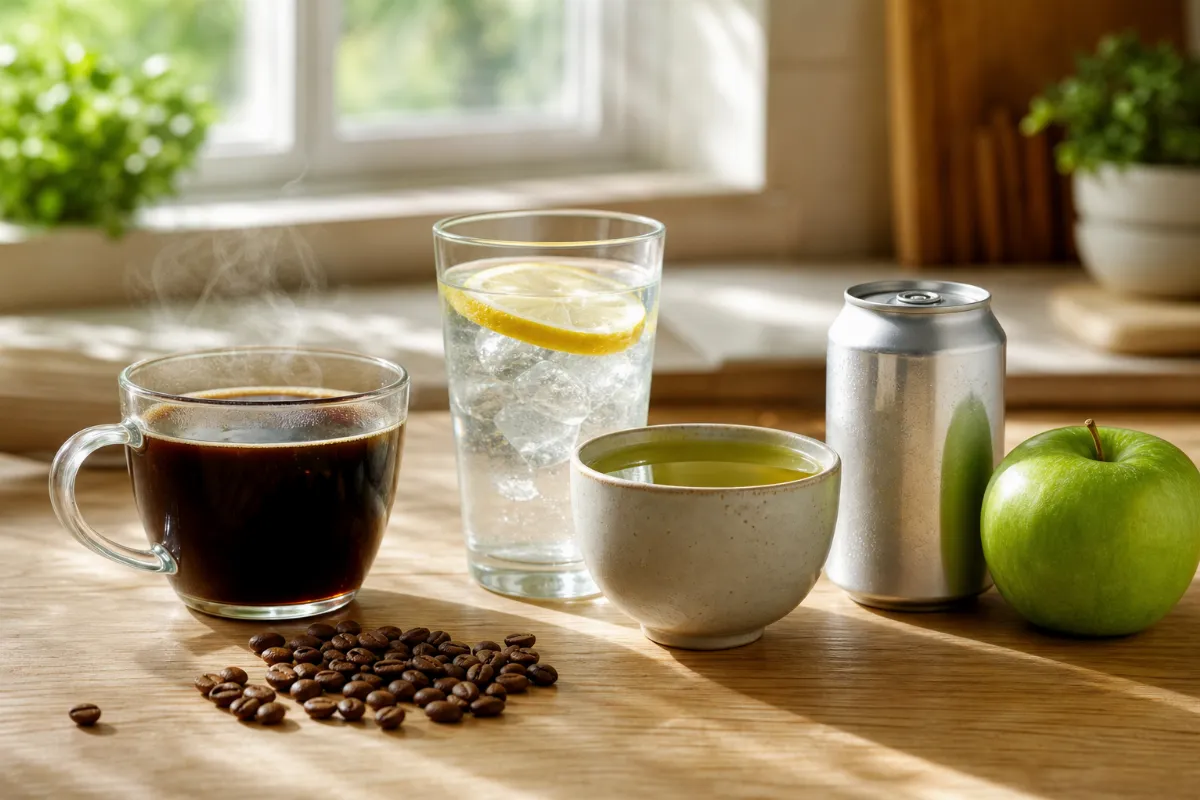
The FDA gives typical caffeine in 12-fluid-ounce drinks: caffeinated soft drink 23 to 83 mg, green tea 37 mg, black tea 71 mg, regular brewed coffee (non-specialty) 113 to 247 mg and energy drink 41 to 246 mg. Amounts vary by product and container size.
Decaffeinated coffee still has some caffeine (2 to 15 mg in an 8-ounce cup). Energy drinks generally have 54 to 328 mg per 16 fluid ounces, and may include other caffeine sources such as guarana, which should be counted on the label. Caffeine added to a product behaves like the caffeine in coffee or tea.
1Common experiences
People reach for caffeine for a morning start, an afternoon dip, a long drive or a late night. The downside shows up as jitters, a racing heart, poor sleep, an afternoon crash or a headache when a usual cup is missed.
The FDA lists increased heart rate, palpitations, high blood pressure, insomnia, anxiety, jitters, upset stomach, nausea and headache as signs of too much caffeine.
1What shapes how caffeine affects you
The FDA stresses wide variation in sensitivity and in how fast people clear caffeine, and says certain conditions and medications make people more sensitive. Timing matters too: in one randomised study, 400 mg of caffeine taken 0, 3 or 6 hours before habitual bedtime each disturbed sleep.
Totals add up from energy drinks, bars, gum, supplements and medicines.
1,3Relevant conditions
Anxiety and panic disorder make people more sensitive: about half of people with panic disorder had a panic attack after a large caffeine dose in a meta-analysis. Heart rhythm problems, high blood pressure and heart disease call for a clinician's advice before energy drinks. Persistent tiredness can have other causes that caffeine only hides.
4,5,6Realistic expectations
Caffeine reliably helps alertness in the short term and has moderate-quality evidence for exercise performance, mostly in young men, but it is not a way to cure everyday tiredness. If you cut back, expect a few uncomfortable days: withdrawal symptoms usually began 12 to 24 hours after stopping, peaked at 20 to 51 hours and lasted 2 to 9 days in a review.
The FDA says withdrawal is not considered dangerous but can be unpleasant.
7,8,1Who this applies to
Anyone who drinks coffee, tea or energy drinks, from students and shift workers to athletes and parents. Pregnant people, children and teenagers, and people with heart or anxiety conditions have extra reasons to be careful.
1,9Related conditions and symptoms
Anxiety disorders → Panic attacks → Anemia and iron deficiency → Vitamin B12 deficiency → Thyroid problems and fatigue → ME/CFS and post-exertional malaise →
A manageable starting plan
An educational starting point, not a personal prescription. Adjust it to your own situation and any advice from your clinician.
Your first actions
- Add up your caffeine for 3 days and compare it with the FDA's 400 mg figure and your own symptoms.
- Set a caffeine cut-off several hours before bed.
- If you drink caffeine every day and want less, cut back in small steps rather than stopping at once.
- Protect sleep, meals, water, light and movement before reaching for more caffeine.
Optional additions
- Swap one energy drink for a smaller cup of coffee or tea.
- Keep caffeine for short, deliberate needs such as a night shift.
- Read the label for caffeine per container before buying a drink.
- Read the other energy pages for steadier daily habits.
What to track
- Caffeine from all sources each day, and the time of your last dose.
- Sleep length and how rested you feel.
- Jitters, palpitations, headaches, anxiety or an afternoon crash.
When to reassess
Check in after 2 weeks. If sleep and energy are not improving, or palpitations, anxiety or exhaustion continue, see a health professional rather than raising your caffeine.
When to seek professional support
- Talk with a health professional if caffeine gives you palpitations, a fast heart rate, anxiety or sleep trouble.
- See a doctor if tiredness lasts weeks despite enough sleep.
- For serious symptoms after caffeine call your local emergency number; in the US, Poison Help is 1-800-222-1222.
What helps
Ordered by how well the research supports each step. Evidence strength is shown on every card; precautions sit next to the advice.
Start here
Add up your caffeine and know your own limit
Low certaintyAddresses: Helps you see how much you are really taking
Why it may help: Caffeine hides in coffee, tea, chocolate, soft drinks, energy drinks, bars, gum, supplements and some medicines, so totals add up. The FDA cites 400 mg a day (about two to three 12-ounce cups of coffee) as an amount not generally linked to negative effects for most adults, while stressing wide differences in sensitivity and in how fast people clear caffeine. Guarana in a drink adds caffeine too.
How to apply it: For three days, write down every drink, snack or product with caffeine and check labels (energy drinks generally have 54 to 328 mg per 16 fluid ounces). Then notice how you feel, not only the number: jitters, a racing heart, poor sleep or an upset stomach mean your own limit may be lower.
Who it may suit: Anyone who drinks coffee, tea or energy drinks most days.
Precautions: 400 mg is a general adult figure from the FDA, not a personal target. Certain conditions and medicines make people more sensitive; ask a pharmacist or doctor if that may apply to you.
1Set a caffeine cut-off well before bedtime
Moderate certaintyAddresses: Protects the sleep that tomorrow's energy depends on
Why it may help: In a randomised home study, 400 mg of caffeine taken at bedtime, 3 hours before, or 6 hours before habitual bedtime each disturbed sleep compared with placebo, and the authors concluded caffeine should be avoided for at least 6 hours before bed. The study used one dose and a small group.
How to apply it: Pick a clock time (for example, early afternoon for a 10 or 11 pm bedtime) after which you switch to water or a caffeine-free drink, and move it earlier if your sleep is still light. Remember that decaffeinated coffee still has a little caffeine (about 2 to 15 mg in an 8-ounce cup).
Who it may suit: Anyone with trouble falling or staying asleep, or who feels tired the next day.
Precautions: Caffeine sensitivity varies a lot, so some people need a much earlier cut-off. Persistent poor sleep deserves a conversation with a health professional.
3,1Caffeine, alcohol, nicotine and sleep → Build a Healthy Sleep Schedule →
Look after the sleep and basics that caffeine is covering for
Low certaintyAddresses: Addresses the cause of tiredness rather than masking it
Why it may help: MedlinePlus states that stimulants, including caffeine, are not effective treatments for fatigue and can make the problem worse when they are stopped. A narrative review found caffeine is useful for restoring low wakefulness after sleep loss but can harm later sleep and cause daytime sleepiness, a special concern for adolescents. A cycle of poor sleep, more caffeine, then poorer sleep can result.
How to apply it: If you need caffeine just to function, treat that as a signal: protect a regular sleep window, eat regular meals, drink water, get daylight and move a little each day, then see whether you still reach for the same amount. The linked pages cover each habit in depth.
Who it may suit: Anyone who relies on caffeine to get through the day.
Precautions: Tiredness that lasts for weeks despite enough sleep needs a medical check, not more caffeine.
2,10,11Have More Energy Throughout the Day → Everyday habits for energy → Understand & Address Persistent Tiredness →
Additional options
Cut back gradually if you drink caffeine every day
Moderate certaintyAddresses: Eases the unpleasant parts of withdrawal
Why it may help: The FDA advises cutting back gradually if you drink caffeine daily and says withdrawal is not considered dangerous but can be unpleasant. A critical review of 57 experimental and 9 survey studies found headache in about 50 percent of people in experiments, along with fatigue, low energy, drowsiness, low mood, trouble concentrating and irritability. Symptoms usually began 12 to 24 hours after stopping, peaked at 20 to 51 hours and lasted 2 to 9 days, and stopping doses as low as 100 mg a day produced them.
How to apply it: Reduce by a small step every few days (for example, swap one cup for a half-strength or decaf cup), keep water and meals regular, and expect a few rough days rather than reading the tiredness as proof you need caffeine.
Who it may suit: Daily caffeine drinkers who want to lower their intake.
Precautions: The review's experimental participants may differ from everyday users. If headaches or low mood are severe or last more than about a week or two, speak to a health professional.
1,8Choose simpler, smaller caffeine sources over large energy drinks
Low certaintyAddresses: May lower the heart and blood-pressure effects you are exposed to
Why it may help: A 2025 systematic review of 37 studies (1,597 people, mean age 22.6) reported higher heart rate in 60.9 percent of studies, higher systolic blood pressure in 53.8 percent and QTc prolongation (a change on heart tracings) in 63.2 percent. In an 18-person crossover trial, QTc was higher after a large energy drink than after the same caffeine alone, so the whole drink may not act like caffeine alone. The American Heart Association statement says data on the high doses in energy drinks are limited and generally suggest cardiovascular harm, while moderate intake, mostly studied as coffee, was linked to no relationship or lower risk of coronary disease, heart failure and stroke.
How to apply it: If you want a lift, a single cup of coffee or tea is easier to measure than a 16-ounce energy drink, and you can see what you are getting. Read the label for caffeine per container.
Who it may suit: Healthy adults who use energy drinks regularly.
Precautions: The energy-drink trials were small, in healthy young adults, with very large single volumes, so risks for people with heart conditions are unknown. Coffee evidence is mostly observational.
5,12,6,1Use caffeine on purpose for short stretches of sleepiness
Low certaintyAddresses: May briefly improve attention when you are sleep-deprived
Why it may help: A Cochrane review of 13 randomised trials in people with jet lag or shift work disorder found caffeine improved attention and orientation (SMD -0.55) and memory, and the two trials that measured errors found fewer errors with caffeine. Several trials had a high risk of bias, were run in simulated conditions and were mostly in young people. None measured injuries.
How to apply it: Keep it for the stretch when you truly must stay alert (for example, a night shift or long drive after a bad night, with other safety steps) and time it so it does not wreck your next sleep.
Who it may suit: Sleepy shift workers or travellers for a short period.
Precautions: This is not a fix for everyday tiredness. Do not drive when drowsy: pull over and rest. Evidence for older workers and real shifts is unclear.
13,11Still being studied
Caffeine before sport or hard exercise
Moderate certaintyAddresses: May improve endurance, strength, power and speed in sport
Why it may help: An umbrella review of 21 meta-analyses (11 reviews) found caffeine was ergogenic (performance-enhancing) for aerobic endurance, muscle strength, muscle endurance, power, jumping and speed, with generally moderate quality of evidence, though not every analysis gave a clear direction once prediction intervals were considered.
How to apply it: As reported in the review, caffeine was taken before exercise tasks. We give no dose here.
Who it may suit: Healthy adults doing sport or training; studies were mostly in young men.
Precautions: This is about sports tasks, not everyday tiredness. The extra stimulation can raise heart rate and disturb sleep if taken late.
7Moderate coffee and long-term heart and general health
Low certaintyAddresses: Observational links to no harm or lower risk for most outcomes
Why it may help: A BMJ umbrella review of 201 meta-analyses of observational studies and 17 of interventional studies found coffee was more often linked to benefit than harm, with the largest reductions at 3 to 4 cups a day versus none (all-cause mortality RR 0.83, cardiovascular disease RR 0.85). The harm links were largely removed after adjusting for smoking, except in pregnancy (low birth weight OR 1.31, pregnancy loss OR 1.46). The AHA statement reached similar conclusions for moderate intake, mostly studied as coffee.
How to apply it: This describes coffee habits in large groups of people; it does not mean starting to drink coffee will improve your health.
Who it may suit: Adults who already drink coffee without trouble.
Precautions: Mostly observational, so cause and effect are not shown. It does not apply to energy drinks or caffeine supplements. Pregnancy needs separate limits.
14,6Caffeine supplements and blood pressure
Mixed findingsAddresses: A small average rise in blood pressure
Why it may help: A 2023 meta-analysis of 8 randomised trials found caffeine supplementation raised systolic pressure by 1.94 mmHg and diastolic by 1.66 mmHg on average, with larger rises in men and with doses above 400 mg a day or more than 9 weeks of use. The AHA statement describes a more varied picture for naturally caffeinated products such as coffee.
How to apply it: Reported as what the trials used; this is a caution, not a recommendation.
Who it may suit: Relevant to anyone with high blood pressure or a family history who uses caffeine pills or powders.
Precautions: Only 8 trials, using supplements rather than coffee. If you have high blood pressure, ask your clinician about caffeine.
15,6Coffee in people with atrial fibrillation (DECAF trial)
Low certaintyAddresses: Fewer recurrences in one trial of regular coffee drinkers
Why it may help: In the 2026 DECAF randomised trial of 200 adults with persistent atrial fibrillation (or flutter with past AF) who were planned for cardioversion and were regular coffee drinkers (mean age 69), recurrence occurred in 47 percent of the coffee group and 64 percent of the abstinence group (hazard ratio 0.61), with no significant difference in adverse events. The AHA statement also notes more premature ventricular contractions with caffeinated coffee.
How to apply it: This result is specific to one group under medical care; it is included to show that the picture for coffee is not simply negative.
Who it may suit: Only relevant to people with this heart rhythm condition, under the advice of their own cardiologist.
Precautions: Open-label trial, people who already drank coffee, about one cup a day on average. The result does not apply to energy drinks. Do not change your caffeine habits for a heart condition without your care team.
16,6Food & nutrition
Drinks that carry caffeine
Tea has less caffeine than coffee in the FDA's typical amounts per 12 fluid ounces (green tea 37 mg and black tea 71 mg versus 113 to 247 mg for regular brewed coffee), and a caffeinated soft drink has 23 to 83 mg. Energy drinks range widely, so read the label.
Water, rest, light activity and sleep are the foundations. The NHS water and drinks guidance covers fluids in general.
- Coffee: 113 to 247 mg per 12 fluid ounces (FDA typical range)
- Black tea: 71 mg; green tea: 37 mg
- Caffeinated soft drinks: 23 to 83 mg
- Energy drinks: 41 to 246 mg per 12 fluid ounces; 54 to 328 mg per 16 fluid ounces
- Decaffeinated coffee: 2 to 15 mg per 8-ounce cup
Lower-caffeine swaps
Moving some cups to decaf or tea, using smaller sizes and keeping water to hand are practical ways to lower your total. These are habit tips; we found no trial of food swaps for managing energy without stimulants and make no claim that they raise energy.
1What about guarana and yerba mate?
Guarana and yerba mate are plant sources of caffeine. The FDA says guarana in energy drinks adds caffeine that should be counted, so treat them as stimulants rather than as caffeine-free energy foods.
1Remedies & supplements
Traditional use, laboratory findings and human trials are kept apart. "Natural" does not mean safe.
Coffee
Low certaintyStudied form and route: Brewed coffee, mostly studied as the usual cup
Intended outcome: Moderate intake linked to no harm or lower risk in observational studies
Human evidence: A BMJ umbrella review of 201 observational and 17 interventional meta-analyses found coffee more often linked to benefit than harm, with the largest reductions at 3 to 4 cups a day versus none. The AHA statement says moderate coffee intake was linked to no relationship or lower risk of coronary disease, heart failure and stroke, and that unfiltered coffee raises LDL cholesterol.
Traditional use: We did not read a source for traditional uses.
Laboratory findings: Not covered in the sources read.
Limits: Mostly observational, so cause and effect are not shown. Does not apply to energy drinks or pills. Pregnancy has separate limits.
Interactions and precautions: Count it in your total (113 to 247 mg per 12 fluid ounces). Pregnancy, breastfeeding, anxiety, palpitations and heart rhythm problems call for advice from a clinician.
14,6,1Black and green tea
Not enough evidenceStudied form and route: Brewed tea
Intended outcome: A lower-caffeine option than coffee
Human evidence: The FDA's typical caffeine in a 12-fluid-ounce serving is 71 mg for black tea and 37 mg for green tea. We did not read a trial of tea for energy.
Traditional use: We did not read a source for traditional uses.
Laboratory findings: Not covered in the sources read.
Limits: Caffeine content depends on the product and brewing; no trial of tea for everyday tiredness was read.
Interactions and precautions: Still counts toward your total and can disturb sleep if taken late.
1Yerba mate
Not enough evidenceStudied form and route: Infusion of the plant
Intended outcome: A plant source of caffeine, not a caffeine-free alternative
Human evidence: We did not read a trial of yerba mate for energy in preparing this page. The FDA notes plant sources such as guarana add caffeine that should be counted.
Traditional use: Traditionally drunk as a stimulating infusion in parts of South America; we did not read a source for specific traditional uses.
Laboratory findings: Not covered in the sources read.
Limits: No human evidence read for energy.
Interactions and precautions: Count it like coffee; the same cautions in pregnancy and for heart or anxiety conditions apply.
1Therapies & care
Established care starts with a health professional looking at why you feel tired and whether caffeine is part of the problem. They can check sleep, mood, medicines and conditions such as anaemia or thyroid problems. This page does not recommend medicines or doses, and you should never stop a prescribed medicine without speaking to your prescriber.
Check-up for palpitations, anxiety or poor sleep with caffeine
Low certaintyProfessional care The FDA advises talking with a health professional if caffeine gives you a fast heart rate, palpitations, anxiety or sleep trouble. A clinician can check your heart rate, blood pressure and sleep, and ask about all caffeine sources and medicines.
Who it may suit: Anyone with symptoms after caffeine, or with heart, blood pressure or anxiety conditions.
Precautions: Chest pain, fainting or a very irregular heartbeat need emergency care.
1Pharmacist review of medicines and caffeine
Not enough evidenceProfessional care The FDA says certain conditions and medications make people more sensitive to caffeine. A pharmacist can check whether your medicines, supplements or conditions change how much caffeine suits you.
Who it may suit: Anyone taking regular medicines or supplements.
Precautions: Never stop a prescribed medicine on your own.
1Medical assessment of persistent tiredness
Low certaintyProfessional care If you are tired most days for weeks despite enough sleep, a doctor can look for causes such as poor sleep, anaemia, thyroid problems, low mood or medicine effects, rather than relying on stimulants.
Who it may suit: Anyone with persistent unexplained tiredness.
Precautions: Caffeine can mask tiredness while the cause continues.
2Understand & Address Persistent Tiredness → Fatigue from medicines, mood and other conditions →
What to avoid
Habits, products and claims that can get in the way. Never stop a prescribed medicine without talking to the professional who prescribed it.
Risks that apply to most people
Energy drinks for children and teenagers
Moderate certaintyWhy: The FDA says medical experts, including the American Academy of Pediatrics, advise against energy drinks for children and teens because of sugar and caffeine, and that too much can cause fast heart rate, palpitations, high blood pressure, anxiety and sleep, digestive and dehydration problems. A review of 57 studies linked energy drink use in young people to short and poor sleep, psychological distress, tooth decay and risk behaviours, though these are mostly associations that do not show cause. A small randomised trial in 26 healthy children and teenagers found more extra heartbeats from the upper chambers after an energy drink but no dangerous rhythms.
Who it applies to: Children and teenagers; parents; young athletes.
Try instead: Water, milk and a regular sleep routine. Talk to a pharmacist or doctor about tiredness in a young person.
1,18,19,20Going over the pregnancy limit for caffeine
Moderate certaintyWhy: The NHS says pregnant people should not have more than 200 mg of caffeine a day, linking too much caffeine to a higher chance of miscarriage and stillbirth. The FDA recommends talking to your provider about limiting caffeine if pregnant, trying to become pregnant or breastfeeding. A meta-analysis of 60 publications found higher risks of miscarriage, stillbirth and low birth weight with more caffeine and no threshold below which associations vanished, though the authors noted the sizes were modest and may reflect study bias.
Who it applies to: Anyone pregnant, trying to conceive or breastfeeding.
Try instead: Count caffeine from every source, including tea, chocolate and energy drinks, and ask your midwife or doctor for your own limit.
9,1,21Personal triggers to check
Large doses if you are prone to anxiety or panic
Moderate certaintyWhy: A meta-analysis of studies in 546 healthy people found caffeine raised anxiety scores, with a much larger effect at high doses, especially above 400 mg. In a meta-analysis of studies in people with panic disorder, 51.1 percent of 237 patients had a panic attack after a large single caffeine dose (about 5 cups of coffee) and none after placebo, compared with 1.7 percent of healthy controls.
Who it applies to: People with anxiety, panic attacks or a sensitive nervous system.
Try instead: Choose smaller amounts, lower-caffeine drinks or decaf, and talk to a health professional about anxiety that is hard to manage.
22,4Caffeine in the afternoon and evening
Moderate certaintyWhy: In a randomised home study, 400 mg of caffeine even 6 hours before bedtime disturbed sleep compared with placebo.
Who it applies to: Anyone whose sleep is light, broken or short.
Try instead: Move your last caffeine earlier and switch to water or a caffeine-free drink.
3Energy drinks with heart rhythm problems, high blood pressure or heart disease
Moderate certaintyWhy: The energy drink trials mostly studied healthy young people and found short-term rises in blood pressure and QTc; groups with heart conditions were not covered and the AHA statement says data on high doses are limited and generally suggest harm.
Who it applies to: Anyone with a heart rhythm problem, high blood pressure or heart disease, or who has had fainting or palpitations.
Try instead: Ask your clinician whether caffeine is suitable for you before using energy drinks or caffeine products.
5,23,6Products that need caution
Pure or powdered caffeine
High certaintyWhy: The FDA estimates toxic effects such as seizures can occur with rapid consumption of about 1,200 mg, less than half a teaspoon of pure caffeine, and says pure and highly concentrated products can cause death. They have been sold in bulk packaging that requires buyers to measure a safe serving from what can be a toxic or even lethal amount.
Who it applies to: Everyone.
Try instead: Do not use pure or powdered caffeine. Get your caffeine from ordinary drinks you can measure. For severe symptoms call your local emergency number; in the US, Poison Help is 1-800-222-1222.
1Stacking energy drinks, caffeine supplements and guarana
Low certaintyWhy: The FDA notes caffeine appears in bars, gum, supplements and medicines, and that guarana in energy drinks adds caffeine that should be counted. US adverse event reports and poison centre calls about energy drinks exist (357 and 12,822 single-product cases, 2008 to 2015), but voluntary reports cannot prove the drink caused the problem.
Who it applies to: Anyone who uses energy drinks together with pre-workout, diet or energy supplements.
Try instead: Count every source, avoid doubling up, and see the supplements comparison before buying anything marketed for energy.
1,24Unsupported claims
"Caffeine treats tiredness"
Moderate certaintyWhy: MedlinePlus states that stimulants, including caffeine, are not effective treatments for fatigue and can make the problem worse when they are stopped. Caffeine makes you feel more alert, and can keep you from a good night's sleep, which can feed tomorrow's tiredness.
Who it applies to: Anyone with ongoing tiredness.
Try instead: Look for the cause (sleep, food, stress, health conditions) and see a clinician if tiredness persists.
2,10,1"An energy drink is just a coffee in a can"
Low certaintyWhy: The FDA says caffeine added to a product behaves like the caffeine in coffee or tea, but in an 18-person trial an energy drink raised QTc more than caffeine alone at 2 hours and systolic pressure more at 6 hours. Another trial of 38 adults found the QTc effect could not be pinned on caffeine, taurine or glucuronolactone alone.
Who it applies to: Regular energy drink users.
Try instead: Treat large energy drinks as a different thing from a cup of coffee, and check the label for caffeine per container.
1,12,23"Decaf is caffeine-free"
High certaintyWhy: Decaffeinated coffee still has some caffeine, about 2 to 15 mg in an 8-ounce cup according to the FDA.
Who it applies to: People cutting back, pregnant people, and anyone very sensitive.
Try instead: Count decaf in your total if you are sensitive or have been told to limit caffeine.
1Common mistakes
Stopping caffeine suddenly after daily use
Moderate certaintyWhy: Withdrawal headache occurred in about 50 percent of people in experiments, with fatigue, low mood and irritability for 2 to 9 days. The FDA advises cutting back gradually.
Who it applies to: Daily drinkers.
Try instead: Taper in small steps over one to a few weeks and keep water and meals regular.
8,1Using more caffeine to push through persistent exhaustion
Low certaintyWhy: Caffeine can hide tiredness without treating its cause, and exhaustion lasting weeks may point to something that needs checking, such as poor sleep, anaemia or thyroid problems.
Who it applies to: Anyone tired most days for more than a few weeks.
Try instead: Book a check-up and read about the common causes of tiredness.
2,1Understand & Address Persistent Tiredness → Anemia and iron deficiency →
Caffeine shortly before sleep to rescue a bad night
Moderate certaintyWhy: Late caffeine disturbed sleep in a randomised study, and a narrative review noted caffeine can harm later sleep and cause daytime sleepiness.
Who it applies to: Anyone sleeping badly.
Try instead: Accept a lower-energy day, get daylight and a short walk, and aim for a regular bedtime.
3,11Evidence & safety
What the research shows
The FDA cites 400 mg a day for most adults as an amount not generally linked to negative effects, with wide individual variation. Moderate-quality evidence supports caffeine for exercise performance (mostly young men), and a low-certainty Cochrane review supports short-term attention gains in sleepy shift workers. Caffeine at 400 mg disturbed sleep even 6 hours before bed in one trial, large doses raise anxiety and trigger panic in many people with panic disorder, and energy drinks raised heart rate, blood pressure and QTc in small studies of young people. Coffee observational evidence is mostly neutral to favourable, but cannot be applied to energy drinks. Caffeine does not treat fatigue.
Limits of the evidence
- The FDA and NHS pages were read through a summarising fetch tool, so their wording is second-hand.
- Energy drink trials were small, short, in healthy young people and used very large single volumes.
- Coffee evidence is mostly observational and does not apply to energy drinks.
- Pregnancy findings are observational with modest effect sizes and possible study bias.
- Adolescent findings are mostly cross-sectional associations.
- The Cochrane review had high risk of bias in several trials and used simulated shift conditions.
- We found no trial of food swaps or non-caffeinated products for managing everyday energy, so we make no claims for them.
- We did not read a source on mixing energy drinks with alcohol, so we make no claim about it.
Precautions and interactions
- Count caffeine from every source, including supplements and medicines.
- Check with a pharmacist or doctor if you take medicines or have heart, blood pressure or anxiety conditions.
- Never stop a prescribed medicine on your own.
- Avoid pure and powdered caffeine.
Life-stage considerations
- Pregnancy, trying to conceive and breastfeeding: the NHS advises not to exceed 200 mg of caffeine a day in pregnancy and the FDA recommends talking to your provider about limiting caffeine.
- Children and teenagers: energy drinks are not advised; the FDA says children under 2 should avoid caffeinated drinks (as cited from its page).
- Older adults: sensitivity varies, and caffeine can interact with medicines and heart conditions; ask a pharmacist.
- Chronic conditions: heart rhythm problems, high blood pressure, anxiety and panic need individual advice.
Warning signs
- Chest pain, fainting, a very fast or irregular heartbeat or severe shortness of breath.
- Seizures, vomiting that will not stop or confusion after very large amounts or pure caffeine.
- Palpitations, anxiety or sleep trouble that keep recurring.
- Exhaustion lasting weeks despite enough sleep.
Claim checks
Caffeine is a good treatment for tiredness
Moderate certaintyNot supported. MedlinePlus states stimulants, including caffeine, are not effective treatments for fatigue and can make it worse when stopped. Caffeine can improve alertness for a while and disturb the next night's sleep.
2,10,11Up to 400 mg a day is safe for everyone
Moderate certaintyNot accurate. The FDA cites 400 mg as an amount not generally associated with negative effects for most adults, but stresses wide variation in sensitivity and that some conditions and medicines raise sensitivity. Pregnancy advice in the NHS is 200 mg.
1,9Caffeine late in the day does not matter if you can fall asleep
Moderate certaintyNot supported. 400 mg at bedtime, 3 hours before or 6 hours before habitual bedtime each disturbed sleep in a randomised study compared with placebo.
3Energy drinks are harmless for healthy young adults
Moderate certaintyNot supported. A review of 37 studies reported higher heart rate, blood pressure and QTc in many studies, and small trials saw QTc and blood pressure rises, though effects were short-term and long-term effects were not covered.
5,23,12Coffee is bad for your heart
Low certaintyMixed. The AHA statement describes moderate intake, mostly studied as coffee, as linked to no relationship or lower risk of coronary disease, heart failure and stroke, and the DECAF trial found fewer atrial fibrillation recurrences in regular coffee drinkers. These findings do not cover energy drinks, and unfiltered coffee raises LDL cholesterol.
6,16,14Decaf has no caffeine
High certaintyFalse. Decaffeinated coffee still has about 2 to 15 mg in an 8-ounce cup.
1Questions people ask
How much caffeine is too much?
The FDA cites 400 mg a day (about two to three 12-ounce cups of coffee) for most adults as an amount not generally associated with negative effects, but sensitivity varies widely and your own limit may be lower. Pregnant people are advised by the NHS not to exceed 200 mg a day.
Are energy drinks bad for you?
A 2025 review of 37 studies, mostly in young adults, reported increased heart rate, blood pressure and QTc interval prolongation in many studies. Medical experts advise against them for children and teens. Long-term effects were not covered.
Does decaf have caffeine?
Yes, usually 2 to 15 mg in an 8-ounce cup of decaf coffee, according to the FDA.
Will caffeine at 3 p.m. affect my sleep?
It can. In a randomised home study, 400 mg of caffeine taken 6 hours before bedtime still disturbed sleep. People vary, so you may need an earlier cut-off.
Does caffeine give you energy?
It makes you feel more alert, and it improves exercise performance in moderate-quality evidence, but MedlinePlus states stimulants are not effective treatments for fatigue and can make it worse when stopped.
How do I cut back without a headache?
The FDA advises cutting back gradually. Withdrawal is not considered dangerous but can be unpleasant: in a review, headache occurred in about 50 percent of people in experiments, and symptoms lasted 2 to 9 days.
Can caffeine cause anxiety or panic?
In a meta-analysis, caffeine raised anxiety scores, especially above 400 mg, and about half of people with panic disorder had a panic attack after a large dose. If you are prone to anxiety, smaller amounts or decaf may suit you better.
Is coffee better than an energy drink?
Coffee is easier to measure, and large observational reviews link moderate coffee to no harm or lower risk for most outcomes, while data on high doses in energy drinks are limited and generally suggest harm according to the AHA. In one trial, an energy drink raised QTc more than caffeine alone.
Is caffeine safe in pregnancy?
The NHS advises not exceeding 200 mg a day, and the FDA recommends talking to your provider about limiting caffeine if pregnant, trying to become pregnant or breastfeeding.
What is the danger of pure or powdered caffeine?
The FDA estimates toxic effects such as seizures can occur with rapid consumption of about 1,200 mg, less than half a teaspoon of pure caffeine, and says pure and highly concentrated products can cause death.
When should I see a doctor?
See a health professional if caffeine gives you palpitations, a fast heart rate, anxiety or sleep trouble, or if you feel tired most days for weeks despite enough sleep. Call your local emergency number for chest pain or fainting.
References
- U.S. Food and Drug Administration. Spilling the Beans: How Much Caffeine Is Too Much? (content current as of 08/28/2024). Read 2026-10-31. source
- MedlinePlus Medical Encyclopedia. Fatigue (review date 5/19/2025). Read 2026-10-31. source
- Drake C, Roehrs T, Shambroom J, Roth T. Caffeine effects on sleep taken 0, 3, or 6 hours before going to bed. J Clin Sleep Med. 2013. PubMed PMID 24235903. Read 2026-10-31. source
- Klevebrant L, Frick A. Effects of caffeine on anxiety and panic attacks in patients with panic disorder: a systematic review and meta-analysis. Gen Hosp Psychiatry. 2022. PubMed PMID 34871964. Read 2026-10-31. source
- Mandato J, Kola R, Tyson T et al. The effects of energy drinks on the cardiovascular system: a systematic review. Curr Cardiol Rep. 2025. PubMed PMID 41236610. Read 2026-10-31. source
- Marcus GM, Hu FB, van Dam RM et al. Caffeine and cardiovascular disease: a scientific statement from the American Heart Association. Circulation. 2026. PubMed PMID 42473796. Read 2026-10-31. source
- Grgic J, Grgic I, Pickering C et al. Wake up and smell the coffee: caffeine supplementation and exercise performance, an umbrella review of 21 published meta-analyses. Br J Sports Med. 2020. PubMed PMID 30926628. Read 2026-10-31. source
- Juliano LM, Griffiths RR. A critical review of caffeine withdrawal: empirical validation of symptoms and signs, incidence, severity, and associated features. Psychopharmacology (Berl). 2004. PubMed PMID 15448977. Read 2026-10-31. source
- NHS. Foods to avoid in pregnancy (page last reviewed 15 June 2026). Read 2026-10-31 through a summarising fetch tool, so wording is second-hand. source
- MedlinePlus. Fatigue (health topic). Read 2026-10-31. source
- Snel J, Lorist MM. Effects of caffeine on sleep and cognition. Prog Brain Res. 2011. PubMed PMID 21531247. Read 2026-10-31. source
- Fletcher EA, Lacey CS, Aaron M et al. Randomized controlled trial of high-volume energy drink versus caffeine consumption on ECG and hemodynamic parameters. J Am Heart Assoc. 2017. PubMed PMID 28446495. Read 2026-10-31. source
- Ker K, Edwards PJ, Felix LM et al. Caffeine for the prevention of injuries and errors in shift workers. Cochrane Database Syst Rev. 2010. PubMed PMID 20464765. Read 2026-10-31. source
- Poole R, Kennedy OJ, Roderick P et al. Coffee consumption and health: umbrella review of meta-analyses of multiple health outcomes. BMJ. 2017. PubMed PMID 29167102. Read 2026-10-31. source
- Abbas-Hashemi SA, Hosseininasab D, Rastgoo S et al. The effects of caffeine supplementation on blood pressure in adults: a systematic review and dose-response meta-analysis. Clin Nutr ESPEN. 2023. PubMed PMID 38057002. Read 2026-10-31. source
- Wong CX, Cheung CC, Montenegro G et al. Caffeinated coffee consumption or abstinence to reduce atrial fibrillation: the DECAF randomized clinical trial. JAMA. 2026. PubMed PMID 41206802. Read 2026-10-31. source
- NHS. Water, drinks and hydration (page last reviewed 17 May 2023). Read 2026-10-31. source
- Ajibo C, Van Griethuysen A, Visram S et al. Consumption of energy drinks by children and young people: a systematic review examining evidence of physical effects and consumer attitudes. Public Health. 2024. PubMed PMID 38228408. Read 2026-10-31. source
- Silva-Maldonado P, Arias-Rico J, Romero-Palencia A et al. Consumption patterns of energy drinks in adolescents and their effects on behavior and mental health: a systematic review. J Psychosoc Nurs Ment Health Serv. 2022. PubMed PMID 34432594. Read 2026-10-31. source
- Mandilaras G, Li P, Dalla-Pozza R et al. Energy drinks and their acute effects on heart rhythm and electrocardiographic time intervals in healthy children and teenagers: a randomized trial. Cells. 2022. PubMed PMID 35159306. Read 2026-10-31. source
- Greenwood DC, Thatcher NJ, Ye J et al. Caffeine intake during pregnancy and adverse birth outcomes: a systematic review and dose-response meta-analysis. Eur J Epidemiol. 2014. PubMed PMID 25179792. Read 2026-10-31. source
- Liu C, Wang L, Zhang C et al. Caffeine intake and anxiety: a meta-analysis. Front Psychol. 2024. PubMed PMID 38362247. Read 2026-10-31. source
- Basrai M, Schweinlin A, Menzel J et al. Energy drinks induce acute cardiovascular and metabolic changes pointing to potential risks for young adults: a randomized controlled trial. J Nutr. 2019. PubMed PMID 30805607. Read 2026-10-31. source
- Markon AO, Jones OE, Punzalan CM et al. Caffeinated energy drinks: adverse event reports to the US Food and Drug Administration and the National Poison Data System, 2008 to 2015. Public Health Nutr. 2019. PubMed PMID 31317857. Read 2026-10-31. source
Related on AlternativeMed
Related goals
Have More Energy Throughout the Day → Feel More Energetic in the Morning → Manage Afternoon Energy Slumps → Understand & Address Persistent Tiredness → Support Energy Through Nutrition → Stay Hydrated for Daily Wellbeing → Balance Activity & Rest → Stay Asleep Through the Night → Build a Healthy Sleep Schedule →
Ingredients, foods and supplements
Coffee → Black tea → Yerba mate → Energy supplements compared →
Research, safety and claim-check resources
Fatigue: when to get help → Everyday habits for energy → Caffeine, alcohol, nicotine and sleep → Fatigue from medicines, mood and other conditions → How interactions work → Poisoning: what to do first → Poison Help by country →