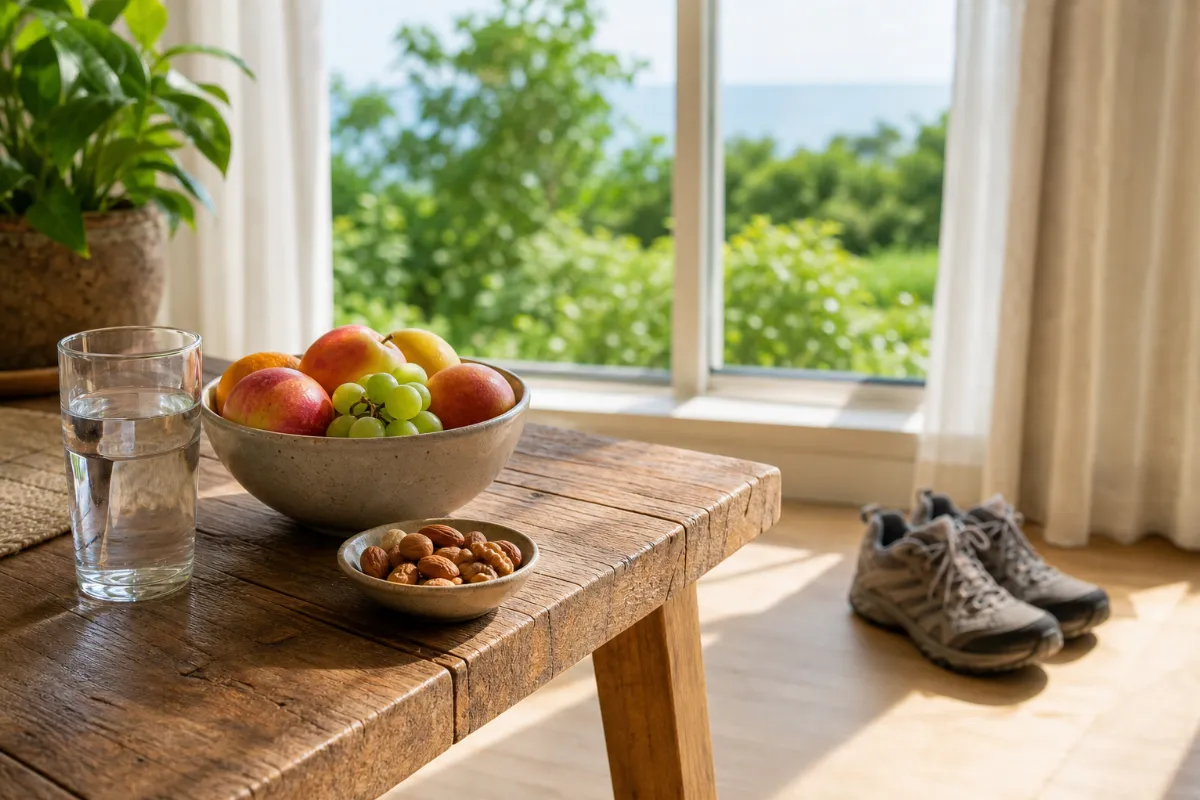
Energy & Vitality
How to Boost Energy: A Starting Guide
Everyday energy is shaped mostly by the basics: sleep, movement, regular eating, enough fluid and a sensible use of caffeine. This page helps you choose a few steady habits, tells you honestly how strong the evidence is for each, and says when tiredness needs a medical check instead.
General information, not medical advice. Last updated October 31, 2026. Written by the AlternativeMed editorial team. Not medically reviewed.
Start here
- Write down your sleep and wake times for a week and note when your energy rises and dips. A simple fatigue diary shows patterns, and it is useful to bring to a clinician if you still feel tired.
- Choose one habit and keep it steady for a few weeks: the same sleep and wake times, a short daily walk, or regular meals with a drink to hand. One steady habit beats five started and dropped.
- If you have been tired for several weeks with no clear reason, or it comes with other symptoms, book a check-up before trying anything else.
Be careful with
- There is no proven quick fix for low energy. Be sceptical of products that promise one: the research on herbs such as ginseng and rhodiola is limited and mixed, and none replaces sleep or a medical check.
- Caffeine can make you feel more awake but also disturbs sleep, which can leave you more tired the next day. Natural does not mean safe: check any supplement with a pharmacist or doctor if you take medicines, are pregnant or breastfeeding.
- Do not push through if effort makes you feel worse, sometimes hours or days later. That pattern (post-exertional malaise) needs a clinician and a different approach from general advice to be more active.
Get help when
- Tiredness that lasts a few weeks without a clear reason, affects daily life, or does not improve with steady sleep, food and movement.
- Tiredness together with other symptoms such as weight loss, a low or persistently flat mood, unusual breathlessness, dizziness, pale skin, loud snoring with pauses in breathing, or feeling unwell in other ways.
- Unusual tiredness with dizziness that does not ease when you stand, dark urine or passing little urine: seek urgent advice (in the UK, NHS 111; elsewhere your local urgent service).
- Symptoms that get worse after physical or mental effort, sometimes a day or two later.
About How to Boost Energy: A Starting Guide
What this goal means
This goal is about everyday energy: feeling alert and able to get through the day without running on empty. It is mostly about removing what drains energy and supporting the basics, not about finding a trick. Energy is partly physical, partly mental and partly emotional, and all three are affected by how you sleep, move, eat, drink and cope.
This page is the overall starting point. Narrower questions have their own pages: groggy mornings, the afternoon dip, lasting tiredness, stamina, mental tiredness, food, fluids, pacing and stimulants. They are linked at the bottom so this page does not repeat them.
1,2Common experiences
People describe low energy in different ways: feeling heavy or slow, needing a nap, being unable to start tasks, losing focus, or feeling flat even after a night in bed. MedlinePlus defines fatigue as a feeling of constant tiredness or weakness that can be physical, mental or both, and notes that feeling tired after a busy day or poor night is normal, while ongoing tiredness is not.
1Common contributing factors
The NHS says tiredness is common and often has several causes at once: poor or too little sleep, stress and worry, low mood, hormonal changes, illness, and some medicines. MedlinePlus lists lifestyle causes including too much alcohol, too much caffeine that spoils sleep, poor sleep habits, not enough activity, and an unbalanced diet.
Because causes overlap, it helps to look at the basics first, and to keep in mind that a physical or mood condition may sit underneath.
2,1Conditions that can cause tiredness
Several health conditions can make you tired, including iron-deficiency anaemia, vitamin B12 deficiency, thyroid problems, sleep apnoea, low mood and ME/CFS. This page does not try to tell you whether you have any of them. If your tiredness is lasting or unexplained, a clinician can check, and the pages below explain what each involves.
2,1Realistic expectations
Habit changes usually bring gradual, modest gains rather than sudden jumps. In trials, exercise programmes improved feelings of energy by a small-to-moderate amount on average, and short work breaks gave small effects. Give any change a few weeks, change one thing at a time so you can tell what helped, and expect natural ups and downs through the day.
If you have made steady changes and are still tired after several weeks, that is the signal to get checked rather than to try more products.
3,4,1Who this applies to
This guide is for adults with ordinary, everyday low energy. Pregnancy, older age, long-term illness, long COVID and ME/CFS all change what is sensible, particularly for exercise and for supplements, so talk to a health professional first. For children and teenagers, ask a doctor or school nurse.
5,6Related conditions and symptoms
Why am I so tired? Persistent tiredness → Anaemia and iron deficiency → Vitamin B12 deficiency → Thyroid problems and fatigue → ME/CFS and post-exertional malaise → Sleep apnea → Fatigue from medicines, mood and other conditions →
A manageable starting plan
An educational starting point, not a personal prescription. Adjust it to your own situation and any advice from your clinician.
Your first actions
- Week 1: record sleep and wake times and a morning, noon and evening energy rating. Do not change anything yet.
- Weeks 2 to 3: fix your sleep and wake times and keep caffeine to the morning and early afternoon.
- Add a 10 to 20 minute walk most days and a one to two minute break from sitting every half hour.
- Eat at regular times and keep a drink beside you.
Optional additions
- Plan your hardest task for your best hour of the day.
- Try a short walk outside after lunch if you tend to dip.
- Cut back alcohol to a few days a week.
What to track
- Sleep and wake times, and hours slept.
- Energy from 0 to 10 at three points in the day.
- Caffeine and alcohol.
- What you changed, and how you feel after two to four weeks.
When to reassess
Give each change two to four weeks. If you are still tired after that, if energy is getting worse, or if you have other symptoms, book a check-up instead of adding products. If your main problem is the morning, the afternoon, mental tiredness or stamina, move to the narrower goal page.
When to seek professional support
- See a doctor if tiredness lasts several weeks, affects daily life, or comes with weight loss, mood changes, breathlessness or other symptoms.
- Seek urgent advice for unusual tiredness with persistent dizziness, dark urine or passing little urine.
- If effort makes symptoms worse, talk to a clinician and read the ME/CFS page.
What helps
Ordered by how well the research supports each step. Evidence strength is shown on every card; precautions sit next to the advice.
Start here
Keep regular sleep and wake times
High certaintyAddresses: Supports steadier daytime alertness
Why it may help: The NHS advises sticking to the same sleep times each day, aiming for 6 to 9 hours, relaxing before bed and avoiding caffeine, large meals, alcohol and screens close to bedtime. A regular routine helps your body know when it is time to sleep, even on days off.
How to apply it: Pick a wake time you can keep seven days a week and count back about eight hours for bedtime. Keep the last hour calm and the bedroom not too bright, noisy or warm.
Who it may suit: Almost everyone with ordinary low energy.
Precautions: If you snore loudly with breathing pauses, or sleep a full night and are still exhausted, ask about sleep apnoea rather than just sleeping more.
2,7Build a Healthy Sleep Schedule → Improve Your Sleep Quality → Sleep apnea →
Move regularly, at a moderate level
Moderate certaintyAddresses: Small-to-moderate gains in energy and vitality, and less fatigue
Why it may help: A 2022 meta-analysis of 81 randomized studies (7,050 participants) found that exercise lowered feelings of fatigue by a small amount, raised energy by a small-to-moderate amount and raised vitality by a moderate amount. Effects were linked to intensity and programme length. NHS guidelines for adults suggest at least 150 minutes of moderate activity a week.
How to apply it: Start with a brisk 10 to 20 minute walk most days and build slowly. Choose something you enjoy so you keep doing it.
Who it may suit: Adults who are tired from low activity or a desk-based routine and are not in a flare of illness.
Precautions: Speak to a GP first if you have not exercised for some time or have a medical condition. If effort makes your symptoms worse, do not follow this advice; see the ME/CFS page.
3,5Everyday habits for energy → Improve Your Everyday Stamina → ME/CFS and post-exertional malaise →
Take short breaks and break up long sitting
Moderate certaintyAddresses: Small boost in feeling energetic, less fatigue at work
Why it may help: A 2022 meta-analysis of 22 study samples (2,335 people) found short work micro-breaks gave small but significant gains in vigour and reductions in fatigue. In a small randomized crossover trial of 24 healthy adults, 2 minutes of walking every 20 minutes during a long sitting period led to higher self-rated energy than sitting throughout.
How to apply it: Stand up, stretch or walk for a minute or two every 30 to 60 minutes. Use a phone timer if you forget.
Who it may suit: Desk workers, students and drivers who sit for long stretches.
Precautions: The sitting trial was small, short and in healthy young adults, and it found no change in thinking performance. Go gently if you have joint or balance problems.
4,8Eat regularly and keep your meals balanced
Moderate certaintyAddresses: Steadier day-to-day energy from consistent fuel
Why it may help: The NHS Eatwell Guide describes balance across a day or week, and starchy foods are a good source of energy. Skipping meals is a common, easily fixed drain on energy.
How to apply it: Eat at roughly the same times, include a starchy food, some protein and fruit or vegetables, and plan a simple snack for long gaps.
Who it may suit: Most adults, especially anyone who often skips breakfast or lunch.
Precautions: Do not cut out food groups to chase energy. Needs differ in pregnancy, diabetes and some other conditions; ask a clinician or dietitian.
9,10Additional options
Drink enough through the day
Low certaintyAddresses: Avoids the tiredness that dehydration can cause
Why it may help: The NHS says dehydration can cause tiredness, headache and dizziness, and that most people should drink enough for pale yellow urine. A narrative review found that adequate hydration matters, especially for thinking, but said the evidence is largely associative with few randomized trials and gaps for small shortfalls.
How to apply it: Keep a drink beside you and sip regularly. Water, lower-fat milk, lower-sugar drinks, tea and coffee all count. Drink more in heat, illness, pregnancy or long exercise.
Who it may suit: Anyone who forgets to drink or notices dark urine.
Precautions: Drinking far beyond thirst will not add energy. Fluid limits may apply with heart or kidney conditions; follow your clinician's advice.
11,12,13Keep alcohol low and caffeine earlier in the day
Moderate certaintyAddresses: Protects the night's sleep, which protects the next day's energy
Why it may help: MedlinePlus lists too much alcohol and too much caffeine that spoils sleep among lifestyle causes of fatigue. In one home study, 400 mg of caffeine taken even 6 hours before bedtime disturbed sleep compared with placebo. The NHS advises keeping alcohol to no more than 14 units a week on a regular basis.
How to apply it: Keep coffee and tea to the morning and early afternoon, and have some alcohol-free days. Notice whether a late drink changes how you wake.
Who it may suit: Anyone whose sleep is light or broken.
Precautions: Caffeine sensitivity varies a lot between people. Pregnant and breastfeeding people are advised to limit caffeine; ask your midwife or doctor.
1,14,15Manage Energy Without Relying on Stimulants → Caffeine, alcohol, nicotine and sleep →
Plan demanding tasks for your best hours
Low certaintyAddresses: Gets more done with the energy you have
Why it may help: MedlinePlus suggests keeping a fatigue diary to find patterns in when you are most and least tired. For people without a condition such as ME/CFS, a simple version is to note your high- and low-energy times and place demanding tasks accordingly.
How to apply it: For a week, rate your energy morning, noon and evening. Put hard tasks in your high spots and easy or restful ones in the dips.
Who it may suit: Anyone with a predictable daily dip.
Precautions: This is a planning habit, not a treatment. If you find yourself unable to keep up even with careful planning, see a clinician.
1Ease stress and workload where you can
Low certaintyAddresses: Frees up energy that worry and overload use up
Why it may help: MedlinePlus suggests learning better ways to relax, keeping a reasonable work and personal schedule, and reducing stressors where possible. The NHS lists stress among common causes of tiredness.
How to apply it: Choose one stressor to shrink or one relaxing activity to protect each day.
Who it may suit: People whose tiredness comes with a heavy load or worry.
Precautions: If low mood, anxiety or burnout seem to be behind the tiredness, speak to a GP or other health professional.
16,2Still being studied
Ginseng and ginseng formulas
Mixed findingsAddresses: Possible small reduction in fatigue
Why it may help: A 2023 systematic review and meta-analysis of 19 randomized trials found no significant reduction in fatigue severity when all ginseng products were pooled. Subgroups showed small benefits for ginseng herbal formulas and for chronic fatigue, and the authors said the effect sizes were small and that better trials are needed.
How to apply it: Not recommended as a first step. If you are curious, discuss it with a pharmacist or doctor first.
Who it may suit: Mostly studied in people with chronic or illness-related fatigue, not ordinary tiredness.
Precautions: Herbs can interact with medicines and are not advised in pregnancy or breastfeeding without advice. Do not use as a replacement for finding out why you are tired.
17Rhodiola and other 'energy' herbs
Not enough evidenceAddresses: Unclear
Why it may help: The U.S. National Center for Complementary and Integrative Health (NCCIH) describes the evidence for rhodiola as limited and mixed, with too little good-quality research to say it works for fatigue.
How to apply it: Not recommended on current evidence.
Who it may suit: No group has clear support.
Precautions: Safety in long-term use, pregnancy and breastfeeding is not well established. Ask a pharmacist before trying anything.
18Food & nutrition
Regular, balanced meals
The NHS Eatwell Guide describes balance across a day or week rather than a perfect single meal, and says starchy foods are a good source of energy. Neither source names a single 'energy food'. The aim is steady fuel: a starchy food, some protein, and fruit or vegetables at most meals.
- Eat at roughly regular times and do not routinely skip breakfast or lunch.
- Include a starchy food such as wholegrain bread, rice, potatoes or oats.
- Add fruit or vegetables and a source of protein.
- Keep a simple snack for long gaps, such as fruit or nuts.
Fluids and caffeine
The NHS says to drink enough that urine is pale yellow, and that dehydration can cause tiredness. Tea and coffee count toward fluid intake. Caffeine can make you feel more awake but also affects sleep; keep it moderate and earlier in the day.
- Keep a drink within reach.
- Drink more when it is hot, when you are ill or active, or if pregnant.
- Have your last caffeinated drink well before the evening.
Nutrient shortfalls need a test, not a guess
Iron and vitamin B12 deficiencies can cause tiredness, and treating a true B12 deficiency can improve many symptoms. A systematic review of B12 supplementation in people without overt deficiency could not assess fatigue, because only one trial reported it. So the sensible step is a blood test if you are worried, not a supplement taken in the dark. Details on foods and nutrients are on the nutrition page.
- Ask your GP about a blood test if tiredness is lasting.
- Do not take high-dose iron without a test; too much can be harmful.
Remedies & supplements
Traditional use, laboratory findings and human trials are kept apart. "Natural" does not mean safe.
Ginseng
Mixed findingsStudied form and route: Capsules, extracts, teas, herbal formulas
Intended outcome: Possible small reduction in fatigue
Human evidence: A 2023 meta-analysis of 19 randomized trials found no significant fatigue reduction when all ginseng products were pooled, with small benefits in subgroups (ginseng herbal formulas, chronic fatigue). Effect sizes were small and the authors called for better trials.
Traditional use: Used for centuries in traditional East Asian medicine as a tonic for tiredness.
Laboratory findings: Laboratory findings are not the basis for the claims here; the question is whether it helps people, and the trials show only small, inconsistent benefits.
Limits: Mostly studied in people with illness-related fatigue, not ordinary tiredness; products and doses vary.
Interactions and precautions: Can interact with medicines such as blood thinners and diabetes medicines. Ask a pharmacist, and avoid in pregnancy and breastfeeding unless advised.
17Rhodiola
Not enough evidenceStudied form and route: Capsules and extracts
Intended outcome: Unclear
Human evidence: NCCIH describes the evidence for rhodiola as limited and mixed.
Traditional use: Traditionally used in parts of Europe and Asia to help with stamina and stress.
Laboratory findings: Laboratory findings are not the basis for the claims here; human trials are what matter, and they are limited.
Limits: There is too little good-quality human research to say it works for everyday fatigue.
Interactions and precautions: Safety over longer periods, in pregnancy and breastfeeding is not well established. Ask a pharmacist before use.
18Vitamin B12 (only if low)
Moderate certaintyStudied form and route: Tablets, injections as prescribed
Intended outcome: Relief of tiredness when a true deficiency is the cause
Human evidence: The NHS says B12 deficiency anaemia causes tiredness among other symptoms and is treated with B12. A systematic review of trials in people without overt deficiency could not assess fatigue, because only one trial reported it.
Traditional use: Not traditionally used as a remedy; it is a nutrient found in animal foods and fortified foods.
Laboratory findings: Laboratory work is not relevant here; the question is about correcting a measured deficiency.
Limits: Helps if you are actually deficient; there is no good evidence that extra B12 raises energy when levels are normal.
Interactions and precautions: Get a blood test first. Treatment and dose are for a clinician to decide.
20,21Therapies & care
Persistent or unexplained tiredness starts with a conversation with a GP or other health professional, who can ask about sleep, mood, medicines and other symptoms and may arrange blood tests. This page does not recommend or dose any medicine and you should never stop a prescribed medicine without advice from the prescriber.
A check-up for lasting tiredness
High certaintyProfessional assessment The NHS and MedlinePlus advise seeing a clinician if tiredness lasts several weeks without a clear reason or comes with other symptoms. A check can look for common causes such as anaemia, thyroid problems, low mood, sleep problems and medicine effects.
Who it may suit: Anyone tired for several weeks, or with other symptoms.
Precautions: Bring your fatigue diary, a list of medicines and supplements, and your sleep times.
2,1Fatigue: when to get help → Understand & Address Persistent Tiredness →
Sleep assessment
Moderate certaintyProfessional assessment If you snore loudly, stop breathing in sleep, or sleep well yet wake exhausted, a clinician can consider a sleep problem such as sleep apnoea.
Who it may suit: People with these sleep signs.
Precautions: Do not self-treat; ask a clinician.
2Specialist care for ME/CFS
Moderate certaintyCondition-specific care Where ME/CFS is diagnosed, NICE describes pacing: using the energy you have while reducing the risk of post-exertional malaise, with activity maintained or adjusted rather than automatically increased. This is different from general advice to exercise more.
Who it may suit: People with ME/CFS or suspected post-exertional malaise.
Precautions: Do not follow general exercise-progression advice without clinician guidance.
22,23What to avoid
Habits, products and claims that can get in the way. Never stop a prescribed medicine without talking to the professional who prescribed it.
Risks that apply to most people
Cutting sleep to fit more in
High certaintyWhy: The NHS names poor or too little sleep as a common cause of tiredness, and advises regular sleep times and enough sleep. Short nights leave you tired the next day.
Who it applies to: Anyone, especially busy adults and shift workers.
Try instead: Protect a regular sleep window first and trim other things.
2,7Heavy drinking and smoking
Moderate certaintyWhy: MedlinePlus lists drinking too much alcohol and substance use among lifestyle causes of fatigue, and says smoking is linked to many diseases that cause fatigue.
Who it applies to: Anyone who drinks or smokes regularly.
Try instead: Keep alcohol low and ask your GP or pharmacist for help to cut down or quit.
1,15Personal triggers to check
Caffeine late in the day
Moderate certaintyWhy: A moderate dose of caffeine at bedtime, 3 hours before or even 6 hours before bedtime each significantly disturbed sleep in a home study of caffeine against placebo, which can show up as tiredness the next day.
Who it applies to: Anyone with light or broken sleep.
Try instead: Move your last coffee or tea earlier, and taper rather than stopping suddenly if you drink a lot.
14,19Long unbroken sitting
Moderate certaintyWhy: Breaking up sitting with short walks gave higher self-rated energy in a small randomized crossover trial, and micro-breaks gave small gains in vigour in a meta-analysis.
Who it applies to: Desk workers and long-distance drivers.
Try instead: Stand or walk for a minute or two every half hour or so.
8,4Skipping meals or going very long between them
Low certaintyWhy: The NHS Eatwell Guide describes balance across the day and week, and starchy foods are a good source of energy. Long gaps often lead to a slump and then a rush of snacks.
Who it applies to: Anyone who often skips breakfast or lunch.
Try instead: Plan regular meals and a simple snack for long gaps.
9,10Products that need caution
Relying on energy drinks and shots
Moderate certaintyWhy: They deliver a lot of caffeine and sugar in one go, and caffeine can disturb sleep. The FDA has cited 400 mg a day as an amount not generally associated with negative effects for most healthy adults, with wide differences between people.
Who it applies to: Anyone using them to get through the day.
Try instead: Use food, fluid, movement and light first; keep any caffeine moderate and early.
19,14Starting supplements without a reason
Mixed findingsWhy: The evidence for ginseng and rhodiola is limited or mixed. Treating a true B12 deficiency can improve many symptoms, but a systematic review of trials in people without overt deficiency could not assess fatigue, because only one trial reported it.
Who it applies to: Anyone tempted by a 'boost' product.
Try instead: If you are worried about a deficiency, ask for a blood test instead of guessing.
20,21,17,18Energy supplements compared → Vitamin B12 deficiency → Medication interactions →
Unsupported claims
'Adrenal fatigue' and similar quick explanations
Evidence againstWhy: 'Adrenal fatigue' is a popular label for tiredness, but the Endocrine Society says no scientific proof supports it as a true medical condition. Real adrenal diseases exist and are diagnosed by doctors with tests, so lingering tiredness should be checked for real causes.
Who it applies to: Anyone offered an adrenal test or product.
Try instead: Ask a clinician to look for common causes of fatigue.
24Cortisol and adrenal fatigue → Energy supplements compared →
Common mistakes
Pushing through when effort makes you worse
High certaintyWhy: If physical or mental activity makes your symptoms worse, sometimes hours or days later, that is post-exertional malaise. General 'push through it' advice does not apply, and the NHS advises seeing a clinician.
Who it applies to: Anyone with this pattern, including after infection or with long COVID.
Try instead: Stop increasing activity, keep a diary, and see a clinician.
23,6Changing everything at once
Low certaintyWhy: Several simultaneous changes make it hard to tell what helped, and they are harder to keep. A fatigue diary helps you see patterns.
Who it applies to: Anyone starting a new routine.
Try instead: Change one habit at a time for a few weeks.
1Waiting too long to get checked
High certaintyWhy: MedlinePlus advises contacting a provider if you have been fatigued for several weeks without improvement. The NHS advises seeing a clinician if tiredness lasts without a clear reason or comes with other symptoms.
Who it applies to: Anyone tired for weeks.
Try instead: Book a check-up and bring your diary.
1,2Evidence & safety
What the research shows
Health agencies agree on the basics for everyday energy: regular sleep, regular movement, enough fluid, balanced eating, limited alcohol and sensible caffeine, plus a medical check if tiredness is lasting. Trial evidence is best for exercise (small-to-moderate average effects) and modest for short breaks. Evidence for hydration is mostly associative, and for ginseng, rhodiola and other 'energy' supplements it is limited or mixed. Most studies measure self-rated energy over short periods.
Limits of the evidence
- Energy and fatigue are self-rated, so expectation and mood can influence results.
- The exercise meta-analysis pooled very different programmes and populations, so the average effect may not fit you.
- The micro-break and sitting-break studies are small and short, and the sitting trial was in healthy young adults.
- The hydration review is a narrative review with mostly associative evidence, and some of its authors were employed by a drinks company.
- Ginseng trials differ in product, dose and population, and effect sizes were small.
- This page was built from health-agency pages and PubMed abstracts; full texts of trials were not reviewed.
Precautions and interactions
- Natural does not always mean safe. Check supplements and herbs with a pharmacist or doctor if you take any medicine.
- Pregnancy, breastfeeding, older age and long-term illness change what is advisable for exercise, caffeine, fluid and supplements.
- Never stop a prescribed medicine because of tiredness without speaking to the prescriber.
Life-stage considerations
- Pregnancy: tiredness is common; ask your midwife or doctor, and limit caffeine as advised.
- Older adults: new, marked tiredness is worth a check, and medicines can contribute.
- Children and teenagers: ask a doctor or school nurse; this page is written for adults.
Warning signs
- Tiredness for several weeks with no clear cause.
- Tiredness with weight loss, low mood, breathlessness, dizziness, pale skin or other new symptoms.
- Symptoms that worsen after effort.
- Unusual tiredness with persistent dizziness, dark urine or very little urine.
Claim checks
Exercise gives you more energy
Supported on average
3,23Drinking more water boosts energy
Partly supported
12,13Caffeine late in the day is harmless
Not supported
14Ginseng cures fatigue
Not supported
17Everyone benefits from extra B12
Not supported
20,21Questions people ask
What is the fastest way to get more energy?
There is no proven quick fix. The basics with the best support are regular sleep, regular physical activity, drinking enough, balanced eating and limiting alcohol, along with a medical check if the tiredness lasts.
Does exercise really give you energy?
In randomized trials, exercise programmes produced small-to-moderate average improvements in feelings of fatigue, energy and vitality. This does not apply the same way to people whose symptoms worsen after exertion.
How long should I try changes before I worry?
Give a change two to four weeks. MedlinePlus advises contacting a provider if you have been fatigued for several weeks without improvement.
Do energy supplements work?
It depends on the product and on you. For ordinary tiredness the evidence is limited or mixed for ginseng and rhodiola, and B12 helps mainly if you are truly deficient.
Why am I tired in the afternoon?
Sleep, meals, caffeine and underlying health issues can all play a part. See the afternoon slump page. If it is new, persistent or comes with other symptoms, ask a clinician.
Is coffee good or bad for energy?
Caffeine can make you feel more alert, but it can also disturb sleep even when taken 6 hours before bed, which can leave you more tired. Keep it moderate and earlier in the day.
How much water should I drink?
The NHS says to drink enough that your urine is pale yellow. You may need more in heat, illness, pregnancy or long exercise.
Can short breaks really help?
A meta-analysis found small but significant gains in vigour and reductions in fatigue from short breaks. They are a cheap habit to try, not a cure.
When is tiredness a sign of something else?
If it lasts several weeks without a clear reason, affects daily life, or comes with weight loss, mood changes, breathlessness or other symptoms, see a clinician.
What if activity makes me feel worse?
That pattern, sometimes delayed by hours or days, is post-exertional malaise. Do not push through it; read the ME/CFS page and talk to a clinician.
References
- MedlinePlus. Fatigue (health topic). Read 2026-10-22 for the existing article. source
- NHS. Tiredness and fatigue (page last reviewed 2 June 2023). Read 2026-10-22 for the existing article. source
- Wender CLA, Manninen M, O'Connor PJ. The effect of chronic exercise on energy and fatigue states: a systematic review and meta-analysis of randomized trials. Front Psychol. 2022. PMID 35726269. Abstract checked 2026-10-31. source
- Albulescu P, et al. "Give me a break!" A systematic review and meta-analysis on the efficacy of micro-breaks for increasing well-being and performance. PLoS One. 2022. PMID 36044424. Abstract checked 2026-10-31. source
- NHS. Physical activity guidelines for adults aged 19 to 64 (page last reviewed 22 May 2024). Read 2026-10-22 for the existing article. source
- NHS. Long COVID (page last reviewed 19 August 2025). Read 2026-10-22 for the existing article. source
- NHS Every Mind Matters. How to fall asleep faster and sleep better. Read 2026-10-22 for the existing article. source
- Kuo FC, et al. Breaking prolonged sitting increases 24-h physical activity and self-perceived energy levels but does not acutely affect cognition in healthy adults. Eur J Appl Physiol. 2024. PMID 37543544. Abstract checked 2026-10-31. source
- NHS. The Eatwell Guide. Read 2026-10-22 for the existing article. source
- NHS. Starchy foods and carbohydrates. Read 2026-10-22 for the existing article. source
- NHS. Water, drinks and hydration (page last reviewed 17 May 2023). Read 2026-10-22 for the existing article. source
- NHS. Dehydration (page last reviewed 1 May 2026). Read 2026-10-22 for the existing article. source
- Liska D, et al. Narrative review of hydration and selected health outcomes in the general population. Nutrients. 2019. PMID 30609670. Abstract checked 2026-10-31. source
- Drake C, et al. Caffeine effects on sleep taken 0, 3, or 6 hours before going to bed. J Clin Sleep Med. 2013. PMID 24235903. Abstract checked 2026-10-31. source
- NHS. The risks of drinking too much. Read 2026-10-22 for the existing article. source
- MedlinePlus Medical Encyclopedia. Fatigue (review date 5/19/2025). Read 2026-10-22 for the existing article. source
- Li X, et al. Ginseng and ginseng herbal formulas for symptomatic management of fatigue: a systematic review and meta-analysis. J Integr Complement Med. 2023. PMID 36730693. Abstract checked 2026-10-31. source
- NCCIH, NIH. Rhodiola: usefulness and safety. Read 2026-10-22 for the existing article. source
- U.S. Food and Drug Administration. Spilling the Beans: How Much Caffeine Is Too Much? (content current as of 08/28/2024). Read 2026-10-22 for the existing article. source
- NHS. Vitamin B12 or folate deficiency anaemia (page last reviewed 20 February 2023). Read 2026-10-22 for the existing article. source
- Markun S, et al. Effects of vitamin B12 supplementation on cognitive function, depressive symptoms, and fatigue: a systematic review, meta-analysis, and meta-regression. Nutrients. 2021. PMID 33809274. Abstract checked 2026-10-31. source
- NICE. ME/CFS: diagnosis and management (NG206), Recommendations (published 29 October 2021). Read 2026-10-22 for the existing article. source
- NHS. ME/CFS: Symptoms (page last reviewed 28 May 2024). Read 2026-10-22 for the existing article. source
- Endocrine Society. Adrenal Fatigue (patient resource, last updated January 25, 2022). Read 2026-10-22 for the existing cortisol article. source
Related on AlternativeMed
Related goals
Feel More Energetic in the Morning → Manage Afternoon Energy Slumps → Understand & Address Persistent Tiredness → Improve Your Everyday Stamina → Reduce Mental Fatigue → Support Energy Through Nutrition → Stay Hydrated for Daily Wellbeing → Balance Activity & Rest → Manage Energy Without Relying on Stimulants → Build a Healthy Sleep Schedule → Manage Everyday Stress →
Ingredients, foods and supplements
Energy supplements compared → Cortisol and adrenal fatigue →
Research, safety and claim-check resources
Everyday habits for energy → Fatigue: when to get help → Energy research and evidence → Caffeine, alcohol, nicotine and sleep → Medication interactions →