Energy & Vitality
Food, Nutrition and Energy
Food is the fuel your body runs on, so eating enough, regularly and with variety is the most reliable way food supports daily energy. This page explains what food and nutrients can and cannot do, and why no single superfood fixes tiredness.
General information, not medical advice. Last updated October 31, 2026. Written by the AlternativeMed editorial team. Not medically reviewed.
Start here
- Eat regular meals built around starchy foods, fruit and vegetables, and some protein. The NHS says the balance matters over a day or even a week, not at every meal.
- Check that you are eating enough overall, and include iron-rich foods (beans, nuts, dried fruit, fortified cereals, red meat if you eat it) and B12 sources (meat, fish, eggs, dairy or fortified foods) every week.
- If you feel tired for no clear reason for weeks, ask a doctor about a blood test before buying supplements.
Be careful with
- Do not take iron on your own to treat tiredness. The NHS says the cause of low iron should be found first, and iron overdoses can be fatal in young children.
- Extra B vitamins do not add energy if you are not deficient; the evidence is insufficient.
- Cutting food hard, skipping meals or training heavily on too little food can itself cause tiredness. If food worries are taking over, seek help.
Get help when
- Tiredness that lasts weeks, or comes with unexplained weight loss, very low appetite, pale skin, shortness of breath or palpitations.
- Tingling, a sore red tongue, memory or mood changes with tiredness (possible B12 problem).
- Heavy periods, black stools or stomach pain with tiredness (possible iron loss).
- A restrictive diet, fear of food or eating less and less while feeling exhausted.
About Food, Nutrition and Energy
What this goal means
This goal is about getting steady energy from how and what you eat. For most people that means eating enough, regularly, with variety, rather than hunting for a particular superfood.
Conditions such as anemia have their own pages. This page covers the food side: meals, key nutrients, fluids, and the limits of what food can do.
1,2What it can feel like
Low food energy or missing nutrients can show up as tiredness, weakness, poor concentration or feeling flat, but these signs are not specific. Many other things cause the same feelings, including poor sleep, illness and low mood.
NHS lists tiredness and lack of energy as the most common symptom of iron deficiency anaemia, and extreme tiredness as the most common early sign of B12 or folate deficiency anaemia.
3,4,5Factors that can contribute
Eating too little overall, very restrictive diets, and long-term poor diet can leave you short of fuel and nutrients. NHS notes B12 lack is uncommon but possible on a vegan diet without supplements or fortified foods, or with a restrictive or long-term poor diet.
Iron can be lost through heavy periods or bleeding in the stomach or gut, and some medicines affect B12 absorption (NHS names anticonvulsants and proton pump inhibitors). Athletes with high training loads can eat too little for what they burn.
3,4,6Conditions that can overlap
Tiredness has many medical causes that food will not fix: anemia, B12 deficiency, thyroid problems, sleep disorders, low mood and others. If tiredness is persistent, a medical check comes before diet experiments.
5Realistic expectations
Good eating supports general health and gives your body what it needs to produce energy. Study evidence for specific meal patterns improving everyday energy is limited, and no food has been shown to remove tiredness.
If a real shortfall is found and corrected, such as low iron, tiredness often improves; that is different from adding extra nutrients to someone who is not short.
1,7Who this applies to
Anyone who wants steady energy from everyday eating. Extra attention applies to vegetarians and vegans, people with heavy periods, older adults, pregnant people, people on restrictive diets, and athletes.
8,4Related conditions and symptoms
Anemia and iron deficiency → Vitamin B12 deficiency → Thyroid problems and fatigue → ME/CFS and post-exertional malaise → Fatigue from medicines, mood and other conditions → Eating disorders and disordered eating →
A manageable starting plan
An educational starting point, not a personal prescription. Adjust it to your own situation and any advice from your clinician.
Your first actions
- Week 1: write down what you eat for 3 to 4 days. Look for skipped meals and gaps in protein, fruit, vegetables and starchy foods.
- Weeks 1 to 2: build regular meals around starchy foods, add fruit or vegetables, and include protein; keep drinks going through the day.
- Weeks 2 to 3: add iron foods (beans, nuts, dried fruit, fortified cereal or red meat) and a B12 source across the week.
- If you eat no animal foods, plan B12 now through fortified foods or a supplement.
Optional additions
- Pair plant iron with a vitamin C food.
- Move tea and coffee between meals if iron is a concern.
- Try eating breakfast for two weeks to see if you feel different; there is no proof it helps everyone.
What to track
- Energy from 0 to 10 morning, afternoon and evening.
- Meals eaten and when.
- Hours slept, caffeine and alcohol.
When to reassess
Give a change in eating about 2 to 4 weeks. If tiredness is still there, is getting worse, or comes with weight loss, pallor, breathlessness or tingling, see a doctor rather than adding supplements.
When to seek professional support
- GP: blood tests for iron, B12 and other causes.
- Registered dietitian for restrictive, vegan or medically managed diets.
- Sports doctor or dietitian if training is heavy and fatigue persists.
What helps
Ordered by how well the research supports each step. Evidence strength is shown on every card; precautions sit next to the advice.
Start here
Eat regular, balanced meals
Moderate certaintyAddresses: Gives your body steady fuel and nutrients
Why it may help: The NHS Eatwell Guide says you do not need to get the balance right at every meal, but over a day or even a week. It suggests fruit and vegetables should make up just over a third of what we eat. MedlinePlus advises a healthy, balanced diet and plenty of water to reduce fatigue.
How to apply it: Base meals on starchy foods, add fruit or vegetables, include protein such as beans, fish, eggs or meat, and keep drinks going through the day.
Who it may suit: Almost everyone.
Precautions: General guidance; people with diabetes, kidney disease or other conditions should follow their own care team's plan.
1,9,2Choose starchy foods, wholegrain where you can
Moderate certaintyAddresses: A source of energy plus fibre and some vitamins and minerals
Why it may help: NHS says starchy foods such as potatoes, bread, rice, pasta and cereals are a good source of energy and of nutrients including fibre, calcium, iron and B vitamins, and wholegrain varieties are a better choice where you can.
How to apply it: Make a starchy food the base of most meals, for example wholegrain bread, brown rice or potatoes with the skin on.
Who it may suit: Most people; those on medically prescribed diets should follow them.
Precautions: If you have coeliac disease or a grain allergy, use the alternatives your care team advises.
10,9Get iron from food across the week
Moderate certaintyAddresses: Supports the iron your body needs to make red blood cells
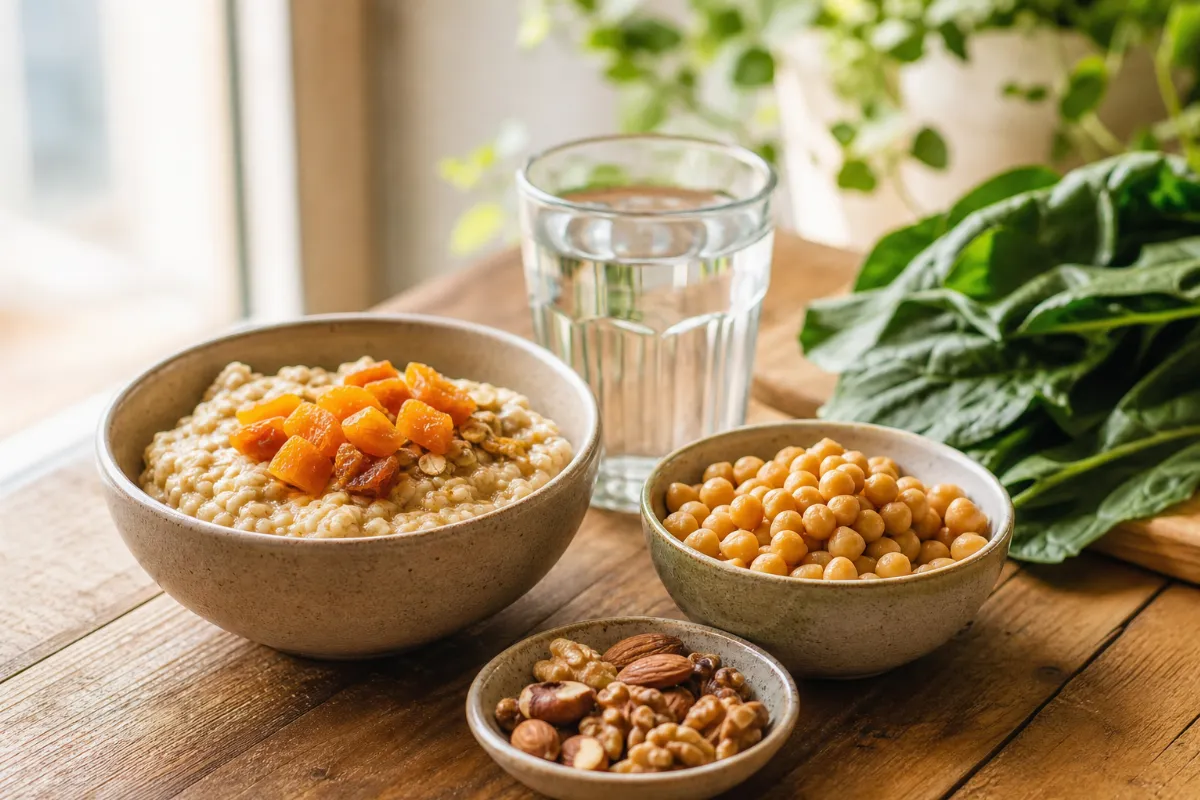
Why it may help: NHS says iron is needed to make red blood cells and lists red meat, beans (red kidney, chickpeas, edamame), nuts, dried fruit such as apricots, soy flour and fortified breakfast cereals. It gives adult needs of 8.7 mg a day for men and women 50+, and 14.8 mg for women aged 19 to 49.
How to apply it: Rotate iron-rich foods through the week. Pair plant iron with vitamin C foods, and keep tea and coffee away from main meals if iron is a concern.
Who it may suit: Everyone, especially people with heavy periods, vegetarians and vegans.
Precautions: Liver is not advised in pregnancy, and the DHSC advises limiting red and processed meat. Do not treat tiredness with iron tablets without testing.
11,3,8,12Include a reliable source of vitamin B12
Moderate certaintyAddresses: Helps prevent a lack that can cause deep tiredness
Why it may help: NHS lists meat, fish, milk, cheese, eggs and fortified cereals as B12 sources, says adults 19 to 64 need about 1.5 micrograms a day, and warns B12 lack can happen on a vegan diet without supplements or fortified foods.
How to apply it: Include B12 foods most days. If you eat no animal foods, use fortified foods or a B12 supplement.
Who it may suit: Vegans, vegetarians, older adults, people on acid-reducing medicines.
Precautions: Older age and some medicines reduce absorption; a doctor can test for deficiency rather than guessing.
13,4,8Additional options
Use vitamin C foods with plant iron
Low certaintyAddresses: May improve how much plant iron you absorb
Why it may help: NHS advice for vegans is to eat vitamin C foods at the same time as iron-rich foods. MedlinePlus says iron from plant foods is harder to absorb, though vitamin C-rich foods help.
How to apply it: Add fruit, peppers or other vitamin C foods to bean, lentil, or leafy green meals.
Who it may suit: Vegetarians, vegans and anyone relying on plant iron.
Precautions: Advice is practical guidance; it does not replace testing if you may be anemic.
8,12Keep tea and coffee away from iron-rich meals
Low certaintyAddresses: May reduce the iron lost to poor absorption
Why it may help: NHS advice for vegans is to avoid tea or coffee during or after main meals; the NHS iron deficiency anaemia page lists tea, coffee, milk and dairy as reducing iron absorption.
How to apply it: Have tea or coffee between meals rather than with them if you are watching iron.
Who it may suit: People with low iron or at risk of it.
Precautions: Tea and coffee still count towards fluid intake; this is about timing, not avoiding them.
8,3,14Drink enough through the day
Low certaintyAddresses: Avoids dehydration as a cause of feeling flat
Why it may help: NHS says to drink enough that your urine is pale yellow, and that tea and coffee count toward fluid intake. The NHS balanced diet page suggests at least 6 to 8 glasses a day.
How to apply it: Keep a drink nearby and sip regularly.
Who it may suit: Everyone.
Precautions: People told to limit fluids for heart or kidney conditions should follow their care team.
14,9Eat enough if you train hard
Moderate certaintyAddresses: Protects against low energy availability
Why it may help: The IOC describes Relative Energy Deficiency in Sport (REDs) as health and performance problems in athletes exposed to low energy availability. Overtraining consensus lists low calorie and insufficient carbohydrate or protein intake among things to exclude when someone is persistently fatigued and underperforming.
How to apply it: If training is rising and tiredness with it, check that food intake matches the load, and speak to a sports doctor or dietitian.
Who it may suit: Athletes and very active people.
Precautions: Persistent fatigue with weight loss, missed periods or injuries needs professional assessment.
6,15Ask for a blood test if you suspect a shortfall
High certaintyAddresses: Finds a real iron or B12 problem instead of guessing
Why it may help: NHS says a GP diagnoses iron deficiency anaemia with a full blood count, and B12 deficiency is usually diagnosed from symptoms and a blood test; early diagnosis of B12 problems matters because some effects can be permanent.
How to apply it: Book an appointment if tiredness lasts, and mention diet, periods, medicines and any tingling or mood changes.
Who it may suit: Anyone with lasting tiredness, or in a higher-risk group.
Precautions: A blood test is not a diet change; do not start high-dose supplements first.
3,4Still being studied
Skipping breakfast
Not enough evidenceAddresses: Unclear effect on everyday energy
Why it may help: A 2025 systematic review of 66 studies reports associations between skipping breakfast and several outcomes, including cognitive and mood outcomes and sports performance. The authors note causality is complex because of confounders such as diet quality and physical activity, and that studies are small and short.
How to apply it: Eat breakfast if you feel better for it; there is no proof it works for everyone.
Who it may suit: People curious whether breakfast changes how they feel.
Precautions: Associations are not proof of cause. Skipping meals can be unwise for some health conditions.
16Specific foods or meal patterns to prevent an energy dip
Not enough evidenceAddresses: No proven food or pattern
Why it may help: A PubMed search on 2026-10-22 for postprandial sleepiness, meal composition and the afternoon dip returned no records. NHS suggests looking at sleep, caffeine timing and health context first if tiredness is new or heavy.
How to apply it: Notice your own pattern and read the afternoon slumps page for ideas worth testing.
Who it may suit: Anyone with a regular afternoon dip.
Precautions: Evidence not found; claims that a food prevents the dip are unsupported.
5Extra B vitamins when you are not deficient
Not enough evidenceAddresses: Not shown to add energy
Why it may help: A systematic review of 16 randomised trials (6,276 people without overt B12 deficiency) found no effect of B12 or B complex on cognition or depression scores, and only one study reported idiopathic fatigue, so no analysis was possible. NHS says B vitamins help release energy from food but most people get all they need from a varied diet.
How to apply it: If you have no deficiency, focus on food first.
Who it may suit: People tempted by B-vitamin energy products.
Precautions: Large doses of folic acid (above 1 mg) can mask B12 deficiency, per NHS.
7,13Food & nutrition
Building meals for steady energy
The NHS says to eat a wide range of foods in the right proportions: at least 5 portions of fruit and vegetables a day, higher-fibre starchy foods as the base of meals, and protein from beans, pulses, fish, eggs or meat. Fish is suggested at least twice a week, including one oily fish portion.
- Base meals on wholegrain bread, brown rice, pasta or potatoes with skins.
- Add fruit and vegetables to most meals.
- Include protein such as beans, pulses, fish, eggs or meat.
- Limit sugary foods and drinks; keep fruit juice or smoothies to 1 portion a day (NHS).
Nutrients linked to tiredness
These nutrients matter for tiredness only if you fall short of them. Food sources are listed below as the NHS describes them; the pages on this site describe the conditions.
- Iron: red meat, beans, nuts, dried fruit, fortified cereals, soy flour (NHS). Needs 8.7 mg a day for men and women 50+, 14.8 mg for women aged 19 to 49.
- Vitamin B12: meat, fish, milk, cheese, eggs, fortified cereals (NHS). Adults 19 to 64 need about 1.5 micrograms a day.
- Other B vitamins: thiamin, riboflavin and niacin help release energy from food; NHS says most people get all they need from a varied diet.
- Vitamin C foods with plant iron may help absorption.
Eating plant-based
A vegan diet can be high in iron, but plant iron is absorbed less well than iron from meat. Good plant sources include pulses, wholemeal bread, fortified cereals, dark green leafy vegetables, nuts and dried fruit. Vegan B12 sources are limited to fortified foods and supplements.
- Pulses, leafy greens, nuts and dried fruit for iron.
- B12-fortified cereals, soya drinks or yeast extract, or a supplement.
- Vitamin C foods with iron-rich meals; tea and coffee between meals.
Eating enough when you are very active
The IOC describes REDs as health and performance problems in athletes who eat too little for their exercise load. Persistent fatigue with weight loss, injuries or missed periods deserves professional assessment. Restrictive eating that leaves you tired and worried about food is a reason to seek help.
- Match food intake to training load.
- Include enough carbohydrate and protein for your activity, per advice from a sports dietitian.
Fluids, alcohol and caffeine
Drink enough that your urine is pale yellow. Tea and coffee count toward fluid intake. Alcohol and caffeine can affect sleep, which affects energy; caffeine is covered on its own page.
- Water, tea, coffee and other drinks count.
- Alcohol and caffeine late in the day can disturb sleep.
Food guides on this site
These pages describe common foods. They do not prove an effect on energy.
- Oats
- Legumes
- Leafy greens
- Fortified foods
- Coffee
- Functional foods by wellness goal
Remedies & supplements
Traditional use, laboratory findings and human trials are kept apart. "Natural" does not mean safe.
Iron supplements
High certaintyStudied form and route: Tablets or liquid, only after testing
Intended outcome: Corrects a proven iron shortage
Human evidence: NHS says a GP treats iron deficiency anaemia by finding the cause, then prescribing iron tablets, usually for about 6 months, with repeat blood tests.
Traditional use: Treated as a medical treatment for a measured deficiency, not a traditional remedy.
Limits: Iron does not boost energy in people whose iron is normal; no evidence is cited here that it does.
Interactions and precautions: NHS: 17 mg or less a day is unlikely to cause harm; take higher doses only if a GP advises; over 20 mg can cause constipation, nausea, vomiting and stomach pain. Keep out of children's reach, as an overdose can be fatal for a young child. Take with or after food if side effects occur.
Dose, only as reported in studies: NHS: 17 mg or less a day is unlikely to cause harm; any higher dose only as a GP advises.
11,3Vitamin B12 supplements or injections
Not enough evidenceStudied form and route: Tablets, fortified foods or injections
Intended outcome: Corrects a B12 shortage
Human evidence: NHS says B12 deficiency is usually treated with injections first, then tablets or ongoing injections, depending on the cause. Some people need treatment for life. A systematic review of 16 trials in people without overt deficiency found no effect on cognition or depression scores and could not analyse fatigue.
Traditional use: No traditional use claimed.
Limits: Benefit for fatigue is proven only where deficiency exists; evidence for people who are not deficient is insufficient.
Interactions and precautions: NHS says up to 2 mg a day of B12 supplements is unlikely to cause harm; research on higher doses is limited. Large folic acid doses (above 1 mg) can mask B12 deficiency.
Dose, only as reported in studies: NHS: up to 2 mg a day is unlikely to cause harm.
4,13,7B-vitamin energy products
Not enough evidenceStudied form and route: Shots, drinks, B-complex tablets
Intended outcome: Marketed as an energy boost
Human evidence: A systematic review found no effect of B12 or B complex on cognition or depression in people without overt deficiency, and no analysable data on fatigue.
Traditional use: No traditional use.
Limits: Helping release energy from food does not mean extra B vitamins add energy.
Interactions and precautions: Check doses and combinations with a pharmacist, especially with medicines, pregnancy or kidney conditions.
7,13Therapies & care
Established professional care for tiredness starts with a conversation and often a blood test. A GP can check for iron, B12 or other causes. A registered dietitian can help if your diet is restricted or you have a medical condition. This page does not replace that care.
GP assessment and blood tests
High certaintyMedical assessment A GP asks about lifestyle, periods, medicines and history, runs a full blood count, and may order further tests, for example for hidden blood loss, if the cause is unclear.
Who it may suit: Anyone with lasting tiredness or higher-risk groups.
Precautions: Mention supplements, medicines and diet changes so results are read correctly.
3,4,5Registered dietitian advice
Low certaintyNutrition care NHS suggests a dietitian can help if fitting iron into your diet is difficult, and people with special dietary needs should consult a doctor or registered dietitian.
Who it may suit: Vegans, people with restricted or medically managed diets, athletes.
Precautions: Choose a registered professional.
3,9Support for disordered eating
Not enough evidenceSpecialist care Restrictive eating that leaves you tired and worried about food is a reason to seek help; the linked page explains what to look for.
Who it may suit: Anyone who recognises these patterns in themselves.
Precautions: Reach out to a doctor or specialist service; you do not have to cope alone.
6What to avoid
Habits, products and claims that can get in the way. Never stop a prescribed medicine without talking to the professional who prescribed it.
Risks that apply to most people
Eating too little or skipping most meals
Moderate certaintyWhy: NHS and MedlinePlus advise regular balanced eating; low energy intake is linked to tiredness and, in athletes, to REDs.
Who it applies to: Anyone feeling tired while dieting, busy or training hard.
Try instead: Eat regular meals that match your activity; get help if cutting back feels hard to stop.
1,6,2Treating tiredness with iron tablets on your own
High certaintyWhy: NHS says do not self-treat with iron: the cause should be found first, and overdoses can be fatal for young children.
Who it applies to: Anyone feeling tired, especially women with heavy periods.
Try instead: Ask a GP for a full blood count. If iron is low, follow the dose and plan the doctor gives you.
3,11Personal triggers to check
Very restrictive or unplanned vegan or vegetarian eating
Moderate certaintyWhy: NHS says vegans can miss B12, iron, calcium, iodine and selenium without planning, and vitamin D is hard to get from food alone.
Who it applies to: People starting or following plant-based diets.
Try instead: Plan sources of iron, use B12-fortified foods or a supplement, and ask a dietitian if unsure.
8,4Tea or coffee with iron-rich meals
Low certaintyWhy: NHS lists tea and coffee among things that reduce iron absorption.
Who it applies to: People with low iron or at risk of it.
Try instead: Move them between meals.
3,8Products that need caution
High-dose iron or B vitamin supplements without a test
Moderate certaintyWhy: NHS says 17 mg or less a day of iron is unlikely to cause harm and higher doses should be taken only if a GP advises; over 20 mg can cause constipation, nausea and stomach pain. It also says doses above 1 mg of folic acid can mask B12 deficiency.
Who it applies to: Anyone considering energy supplements.
Try instead: Test first and take only what a clinician recommends.
11,13Unsupported claims
"This superfood will end your tiredness"
Moderate certaintyWhy: No single food has been shown to do this, and NHS and MedlinePlus point to balanced eating overall and to finding the cause of persistent tiredness.
Who it applies to: Social media and product marketing.
Try instead: Use food guides as descriptions of foods, not proof of an effect on energy.
1,2,5"B vitamins give you energy"
Not enough evidenceWhy: They help release energy from food, but this does not mean extra B vitamins add energy. For people who are not deficient, evidence for supplements against fatigue is insufficient.
Who it applies to: Energy shots, drinks and supplements.
Try instead: Get B vitamins from a varied diet; see a doctor if you suspect deficiency.
13,7Common mistakes
Skipping the medical check because tiredness feels 'dietary'
Moderate certaintyWhy: NHS says tiredness can have many causes, and persistent tiredness needs assessment, especially with weight loss or very low appetite.
Who it applies to: Anyone whose tiredness lasts weeks.
Try instead: Combine better eating with a check-up when tiredness is lasting.
5Evidence & safety
What the research shows
Health agencies agree that regular balanced eating supports general health and may reduce fatigue, and that real iron or B12 shortages cause tiredness and should be found by testing. Study evidence for specific meal patterns, breakfast or foods improving everyday energy is limited, and evidence for extra B vitamins in people who are not deficient is insufficient.
Limits of the evidence
- Breakfast evidence comes from associations in small, short studies with confounders.
- No records were found on meal composition and the afternoon dip.
- The B12 trial review covered cognition and depression; only one study reported fatigue.
- NHS pages cited were last reviewed on various dates; iron page 3 August 2020.
Precautions and interactions
- Natural does not always mean safe. Check supplements with a pharmacist or doctor.
- Do not take iron without testing; overdoses are dangerous for children.
- Large folic acid doses can mask B12 deficiency.
- Do not stop prescribed medicines because of dietary advice.
Life-stage considerations
- Pregnancy: needs for iron and folic acid change; liver is not advised; speak to a midwife or doctor before supplements.
- Breastfeeding: check supplements with a health professional.
- Older adults: B12 absorption becomes harder with age; NHS says about 1 in 10 people aged 75+ and 1 in 20 aged 65 to 74 are affected by B12 or folate deficiency anaemia.
- Women with heavy periods are at higher risk of iron deficiency anaemia.
Warning signs
- Tiredness for weeks with unexplained weight loss or very low appetite.
- Pale skin, shortness of breath, palpitations or headaches.
- Tingling, sore red tongue, memory problems or mood changes.
- Black or bloody stools, or heavy periods with tiredness.
- Restricted eating with fear of food.
Claim checks
Eating a superfood fixes tiredness
Moderate certaintyNo single food has been shown to; balanced eating and finding the cause are the evidence-based steps.
1,5B vitamins give you energy
Not enough evidenceThey help release energy from food, but extra amounts do not add energy if you are not deficient; evidence is insufficient.
13,7Skipping breakfast causes tiredness
Not enough evidenceReviews report associations but note confounders, so cause is not settled.
16Iron tablets are a safe energy fix
High certaintyIron is only appropriate when deficiency is shown; NHS says do not self-treat and the cause should be found first.
3,11Questions people ask
What foods fight fatigue?
No single food does. A balanced diet over the day or week, with enough iron and B12 from food, supports general health, according to NHS.
Do B vitamins give you energy?
They help the body release energy from food, but NHS says most people can get all they need from a varied diet. Evidence for extra B vitamins against fatigue in people who are not deficient is insufficient.
Does skipping breakfast cause tiredness?
Reviews report associations but note confounders, so cause is not settled.
Can I get enough iron and B12 on a plant-based diet?
Plant iron is absorbed less well, though vitamin C-rich foods help. NHS says B12 lack can happen on a vegan diet without B12 supplements or fortified foods.
Should I take iron if I feel tired?
Not without testing. NHS says the cause should be found first, and a GP can check your blood.
How much iron do I need?
NHS gives 8.7 mg a day for men and for women over 50, and 14.8 mg a day for women aged 19 to 49.
How much B12 do I need?
NHS says adults aged 19 to 64 need about 1.5 micrograms a day.
Do tea and coffee affect iron?
NHS lists tea and coffee as reducing iron absorption; having them between meals rather than with them is the practical tip.
Can eating too little make me tired?
Yes. Low energy intake is linked to tiredness, and in athletes the IOC describes low energy availability as causing health and performance problems.
When should I see a doctor about tiredness?
If it lasts for weeks, comes with weight loss, very low appetite, pale skin, breathlessness or tingling, or follows a restricted diet.
References
- NHS. The Eatwell Guide. Read 2026-10-22. source
- MedlinePlus Medical Encyclopedia. Fatigue (review date 5/19/2025). Read 2026-10-22. source
- NHS. Iron deficiency anaemia. Read 2026-10-31. source
- NHS. Vitamin B12 or folate deficiency anaemia (page last reviewed 20 February 2023). Read 2026-10-31. source
- NHS. Tiredness and fatigue (page last reviewed 2 June 2023). Read 2026-10-22. source
- 2023 International Olympic Committee consensus statement on Relative Energy Deficiency in Sport (REDs). Br J Sports Med. 2023. PMID 37752011. Read 2026-10-22. source
- Markun S, et al. Effects of vitamin B12 supplementation on cognitive function, depressive symptoms, and fatigue: a systematic review, meta-analysis, and meta-regression. Nutrients. 2021. PMID 33809274. Read 2026-10-31. source
- NHS. The vegan diet. Read 2026-10-31. source
- NHS. Eating a balanced diet. Read 2026-10-31. source
- NHS. Starchy foods and carbohydrates. Read 2026-10-22. source
- NHS. Vitamins and minerals: Iron (page last reviewed 3 August 2020). Read 2026-10-31. source
- MedlinePlus Medical Encyclopedia. Iron in diet. Read 2026-10-22. source
- NHS. Vitamins and minerals: B vitamins and folic acid. Read 2026-10-31. source
- NHS. Water, drinks and hydration (page last reviewed 17 May 2023). Read 2026-10-22. source
- Prevention, diagnosis, and treatment of the overtraining syndrome: joint consensus statement of the European College of Sport Science and the American College of Sports Medicine. Med Sci Sports Exerc. 2013. PMID 23247672. Read 2026-10-22. source
- Minari TP, Pisani LP. Skipping breakfast and its wide-ranging health consequences: a systematic review. Nutr Res. 2025. PMID 40845418. Read 2026-10-31. source
- MedlinePlus. Fatigue (health topic). Read 2026-10-22. source
Related on AlternativeMed
Related goals
Have More Energy Throughout the Day → Feel More Energetic in the Morning → Manage Afternoon Energy Slumps → Understand & Address Persistent Tiredness → Improve Your Everyday Stamina → Reduce Mental Fatigue → Stay Hydrated for Daily Wellbeing → Balance Activity & Rest → Manage Energy Without Relying on Stimulants →
Ingredients, foods and supplements
Energy supplements compared → Oats → Legumes → Leafy greens → Fortified foods → Coffee →
Research, safety and claim-check resources
Fatigue: when to get help → Everyday habits for energy → Recovery after exercise → Energy and vitality research and evidence → Functional foods by wellness goal →