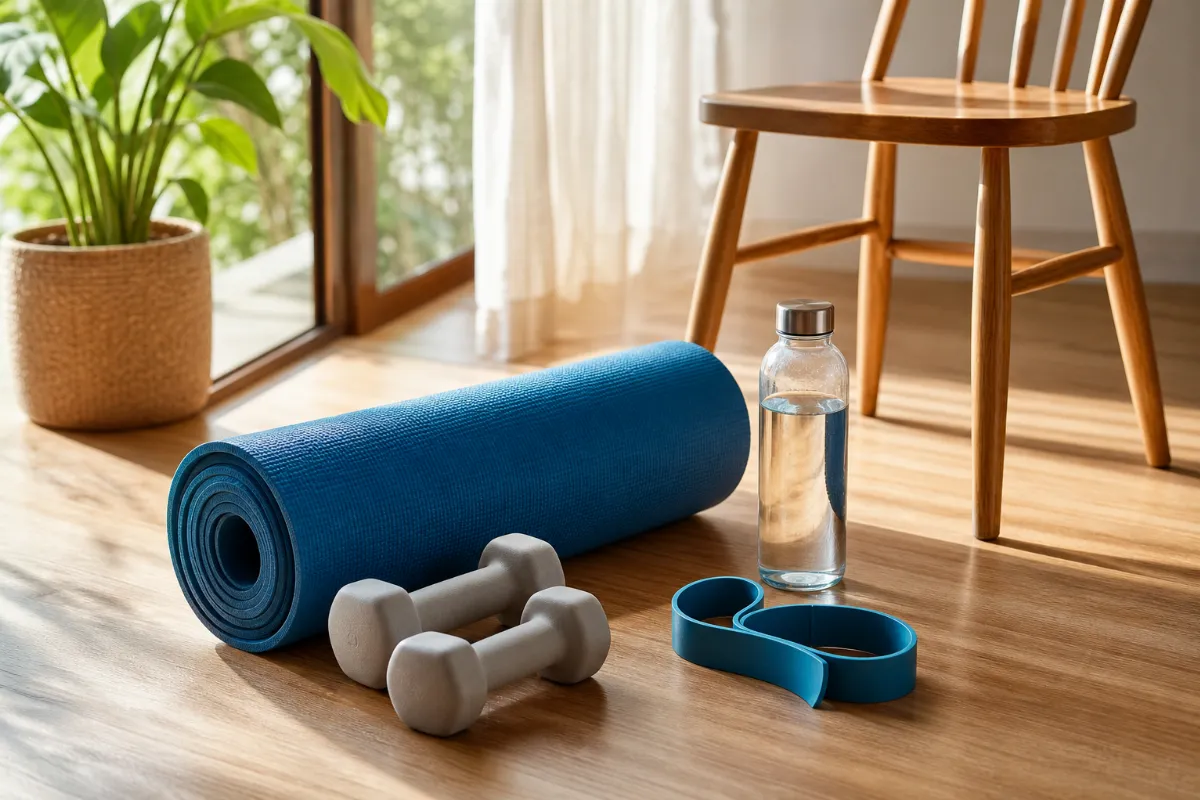
Build Strength & Fitness
Start Exercising With Confidence
Starting to exercise is easier and safer than it feels: most healthy people can begin with gentle, regular movement and build up slowly. This page covers the first steps, how to tell whether you should check with a doctor first, what to do about nerves and soreness, and the warning signs that mean stop.
General information, not medical advice. Last updated October 31, 2026. Written by the AlternativeMed editorial team. Not medically reviewed.
Start here
- Begin with something small you can finish comfortably, such as a 10-minute brisk walk or a few chair-based strength moves, and repeat it on most days before adding more.
- Check the 'talk test' as you go. At a moderate effort you can talk but not sing. If you cannot say more than a few words, ease off.
- Read the 'should I check with a doctor first?' section below. The NHS advises speaking to a GP first if you have not exercised for some time or have medical conditions or concerns.
Be careful with
- Chest pain or pressure, fainting, severe breathlessness or a new racing or irregular heartbeat during exercise are reasons to stop and get urgent medical advice. Do not push through them.
- Doing too much too soon is the most common beginner mistake. Heavy exertion has been linked to heart attack triggering mainly in people who are usually inactive, so build up gradually.
- People with heart disease, high blood pressure, diabetes, joint problems, pregnancy or a recent operation, and anyone who has been inactive for a long time, should get clinician guidance on the right kind and amount of activity.
- Steroids, SARMs and stimulant 'pre-workout' blends are not a shortcut. They carry real health risks and are covered below.
Get help when
- Chest pain that feels tight or like squeezing, pain spreading to the arm, neck or jaw, or severe difficulty breathing: stop and seek emergency help. The NHS says to call 999 in the UK; use your local emergency number elsewhere.
- Fainting or near-fainting, new palpitations, or dizziness during or just after exercise: stop and get medical advice before exercising again.
- Dark, red or cola-coloured urine with severe muscle pain, weakness or swelling after hard exercise: seek medical help the same day, as this can be a sign of muscle breakdown (rhabdomyolysis) that can harm the kidneys.
- Confusion, a very high temperature, hot skin without sweating or a seizure in hot weather: this can be heatstroke, a medical emergency.
- Pain that is sharp, gets worse, comes with swelling or stops you using a limb, or soreness that is severe or not settling after several days.
About Start Exercising With Confidence
What this goal means
Exercising with confidence means starting regular physical activity in a way that feels safe, manageable and worth repeating. It covers deciding where to begin, knowing when to check with a doctor, a gentle first few weeks, and trusting your body's signals instead of fearing them.
Regular activity is worth the effort. The WHO 2020 guidelines say some physical activity is better than none, and the NHS says exercising just once or twice a week can reduce the risk of heart disease or stroke. You do not need to meet the full targets on day one.
1,2What starting out can feel like
Beginners often feel nervous, self-conscious, unsure what to do, or worried about injury or about 'doing it wrong'. A little puffing, warmth and muscle tiredness are normal. Muscle soreness a day or two after unfamiliar exercise is also common: a review of delayed onset muscle soreness notes it is typical when people return to training after reduced activity or try new activities, especially movements that lengthen the muscle under load.
Confidence usually grows with experience. In a systematic review of 66 studies, feeling competent at an activity and doing it for reasons that mattered to the person (enjoyment, or because it fits their own values) were consistently linked with taking up and keeping up exercise.
3,4What can get in the way
Common barriers include not knowing where to start, worry about health or safety, past injuries, feeling out of shape, cost, time, and fear of being judged. Pain, long-term conditions and low mood can also make starting harder.
This page does not diagnose anything. If tiredness is lasting and unexplained, see our pages on persistent tiredness before increasing activity, and for a long-term condition, ask your care team what is right for you.
2Should I check with a doctor first?
The NHS advises speaking to a GP first if you have not exercised for some time, or if you have medical conditions or concerns, and making sure your activity and its intensity suit your fitness. For starting a programme such as Couch to 5K, the NHS also advises speaking to a GP if you are worried about your health.
Screening has been simplified. An American College of Sports Medicine (ACSM) expert roundtable proposed that pre-exercise screening should consider three things: your current activity level, whether you have signs or symptoms or known heart, metabolic or kidney disease, and how hard you want to exercise. It also noted that exercise is safe for most people, that exercise-related cardiac events are often preceded by warning signs, and that the cardiovascular risks of exercise lessen as people become more active and fit. Short readiness questionnaires such as the PAR-Q+ are used in some countries to help decide who should get medical clearance first.
2,5,6,7Realistic expectations
Fitness builds over weeks, not days. The NHS Couch to 5K plan, designed for absolute beginners, runs for 9 weeks with three sessions a week and rest days between, and says you can take longer. In the first week it uses 1-minute runs followed by 1 minute 30 seconds of walking.
Some soreness, missed sessions and slow weeks are part of the process. Consistency over months matters more than any single workout.
5Who this applies to
Anyone starting for the first time or after a long gap, including older adults, people with a desk job, people who feel self-conscious about their body or fitness, and people with long-term conditions who have been cleared to be active. The NHS guidelines for adults aged 19 to 64 are also suitable for disabled adults and for pregnant women and new mothers. If you are returning after a break, illness or injury, see the related return-to-exercise pages.
2Related conditions and symptoms
Fatigue: when to get help → ME/CFS and post-exertional malaise → Sarcopenia and muscle loss → Prediabetes, type 2 diabetes and metabolic syndrome → Obesity and weight-related health → Eating disorders and disordered eating → Anxiety disorders →
A manageable starting plan
An educational starting point, not a personal prescription. Adjust it to your own situation and any advice from your clinician.
Your first actions
- Week 1: check the doctor-first section, then walk 10 minutes on most days at a talk-test pace and do 5 repetitions of 2 or 3 chair-based strength moves on 2 days.
- Weeks 2 to 4: add a few minutes to your walks or a few repetitions to the strength moves, keep rest days, and notice how the same effort feels.
- Month 2 onward: build toward 150 minutes of moderate activity a week plus strengthening on 2 days, at a pace that feels sustainable.
Optional additions
- Try a beginner class, a walking group or a structured plan such as Couch to 5K.
- Ask a qualified instructor for a technique session.
- Try gentle variety, such as swimming or dancing.
What to track
- Minutes or steps, and which days you moved.
- How the same walk or exercise feels, including breathlessness and recovery time.
- Any pain, dizziness or symptoms during or after activity, and how you feel about exercise.
When to reassess
After 6 to 8 weeks, ask whether the same effort feels easier and whether you want to keep going. If you feel worse, have new symptoms, or keep dropping out, talk to a clinician or instructor and adjust the plan.
When to seek professional support
- See a GP before starting if you have symptoms, a long-term condition or a long gap since exercising.
- Ask a qualified instructor or physiotherapist for help with technique and pacing.
- Use our related pages on consistency, returning after a break and recovery.
What helps
Ordered by how well the research supports each step. Evidence strength is shown on every card; precautions sit next to the advice.
Start here
Check whether you need a medical conversation first
Moderate certaintyAddresses: Starting with the right level of advice and fewer surprises
Why it may help: The NHS advises speaking to a GP first if you have not exercised for some time or have medical conditions or concerns. The ACSM roundtable described a simpler screening model based on current activity, signs or symptoms or known heart, metabolic or kidney disease, and intended intensity, and said the process should not become an unnecessary barrier. The AHA scientific statement notes that exercise-related cardiac events generally occur in people with underlying structural heart disease, and that screening before exercise appears prudent but has not been systematically evaluated.
How to apply it: Use a short readiness questionnaire such as the PAR-Q+ if one is offered by your clinic or gym, and tell your GP or practice nurse your plans if you have symptoms, a heart, kidney, lung or metabolic condition, or you plan vigorous exercise after being inactive.
Who it may suit: Everyone starting, especially people who have been inactive, are over 40 or have health conditions.
Precautions: Screening tools guide decisions but do not replace a clinician's judgment. Never stop or change a prescribed medicine because of an exercise plan.
2,6,7,8Start small and build up gradually
Moderate certaintyAddresses: Lower risk of injury, soreness and quitting
Why it may help: The ACSM position stand says gradual progression of intensity and volume may reduce the risks of exercise. The AHA statement notes that a disproportionate number of exercise-related cardiac events occur in the least active people doing unaccustomed activity. In a classic case-crossover study of 1,228 heart attack patients, the risk of a heart attack in the hour after heavy exertion was 5.9 times higher than usual, but it was 107 times higher in people who usually exercised less than once a week and 2.4 times higher in those who exercised five or more times a week. The absolute risk in any one hour is still very small, and regular activity was protective.
How to apply it: Choose an activity you can do today at a comfortable level, such as walking, cycling or swimming. Do it 3 days a week, then add a few minutes or a little more effort every week or two. Repeat a week if it felt too hard.
Who it may suit: Almost everyone starting out.
Precautions: Heavy, sudden effort after a long period of inactivity is the situation to avoid. Stop for warning symptoms.
9,10,8,5Begin with brisk walking
Moderate certaintyAddresses: A low-risk way to build a base
Why it may help: The NHS describes walking as simple, free and one of the easiest ways to get more active, says a brisk 10-minute daily walk has lots of health benefits and counts toward the 150 minutes a week, and advises increasing walking distance gradually if you are not very active. Brisk means about 3 miles an hour, or being able to talk but not sing. Comfortable, supportive shoes that do not cause blisters are enough.
How to apply it: Walk 10 minutes on most days, add a few minutes each week, and use stairs or short errands on foot to add more. If joints are a problem, the NHS suggests checking for local water exercise classes.
Who it may suit: Most beginners, including older adults and people returning after a break.
Precautions: Stop for chest pain, faintness or severe breathlessness. Choose well-lit routes.
11,2Use the talk test to pace yourself
Moderate certaintyAddresses: Keeps effort comfortable without equipment
Why it may help: The NHS says moderate activity raises your heart rate and breathing and lets you talk but not sing, while vigorous activity means you cannot say more than a few words without pausing for breath. Starting at the moderate level lets you repeat sessions and progress.
How to apply it: Keep most early sessions at a level where you can hold a conversation. Add harder efforts later, once comfortable sessions feel easy.
Who it may suit: Beginners and anyone who gets breathless easily.
Precautions: The talk test is a rough guide. Some medicines and conditions change heart rate and breathing, so ask your clinician if you have any.
2Warm up before you start
Low certaintyAddresses: May lower injury risk and eases you into the session
Why it may help: The NHS says a proper warm-up helps prevent injury and make workouts more effective and shows a routine of at least 6 minutes that includes marching on the spot, heel digs, knee lifts, shoulder rolls and shallow knee bends. A systematic review of five randomised trials found three showed warming up cut injury risk and two did not, so the evidence is insufficient to endorse or drop routine warm-ups, although the weight of evidence favoured a lower risk of injury.
How to apply it: Spend 5 to 10 minutes on gentle movement that mimics what you are about to do, such as slow walking before a brisk walk.
Who it may suit: Anyone starting a session, especially in cold weather or after sitting.
Precautions: The evidence for injury prevention comes mainly from sport settings. Stop the warm-up if you feel pain or become unwell.
12,13Additional options
Add simple strength moves twice a week
Moderate certaintyAddresses: Stronger muscles make daily tasks feel easier and support confidence
Why it may help: The NHS recommends strengthening activities that work all the major muscle groups on at least 2 days a week, to the point where you need a short rest before repeating. It also offers gentle home strength exercises, including sit-to-stands, mini-squats and calf raises using a stable chair, and says to build up slowly. A review of resistance training reported that inactive adults lose 3% to 8% of muscle mass per decade, and that ten weeks of resistance training may increase lean weight by about 1.4 kg, with possible benefits for function, blood pressure, cholesterol and bone density. A meta-analysis of 16 cohort studies linked muscle-strengthening activities with 10% to 17% lower risk of death and several major diseases, though this observational evidence does not prove cause.
How to apply it: Start with 5 repetitions of 3 or 4 movements from the NHS chair-based routine, 2 days a week, and add repetitions slowly. Move slowly and keep control.
Who it may suit: Most beginners, including older adults.
Precautions: Learn the movements with a qualified instructor if you have joint problems, osteoporosis or a history of injury. Do not hold your breath while lifting.
2,14,15,16Choose activities you enjoy and feel capable of
Moderate certaintyAddresses: Better staying power, which is what builds confidence
Why it may help: In a systematic review of 66 studies using self-determination theory, more autonomous motivation (doing something because you value or enjoy it) was consistently linked with exercise participation. Feeling competent was also linked with taking part. Intrinsic motivation was more predictive of long-term adherence, while identified motives predicted early adoption more strongly. Most studies were not experimental, so the pattern shows association. The ACSM also notes that enjoyable programmes, behaviour-change strategies and supervision by an experienced instructor can improve adoption and adherence.
How to apply it: Try a few options (walking groups, swimming, dancing, a beginner class) and keep the ones you look forward to. Choose goals that matter to you, such as keeping up with grandchildren, rather than a number on the scale.
Who it may suit: Anyone who has started and stopped before.
Precautions: Associations only. The best activity is one you can safely repeat.
4,9Increase gradually, and expect some soreness
Low certaintyAddresses: Avoids overdoing it and prevents discouragement
Why it may help: A review of delayed onset muscle soreness says it is common when people start new activities or return after reduced activity, and that exercise is the most effective way of easing the pain, though the relief is temporary. It suggested easing back intensity and duration for 1 to 2 days after intense soreness-causing exercise, or working less affected body parts. In a one-year study of 874 novice runners, those who increased weekly running distance by more than 30% had a higher rate of distance-related injuries than those who increased by less than 10%, but the difference did not reach statistical significance (hazard ratio 1.59, 95% confidence interval 0.96 to 2.66) and the authors called the study exploratory.
How to apply it: Increase time or effort in small steps, repeat a week if a step felt too big, and leave an easy day or rest day after a harder one.
Who it may suit: People starting any new activity, especially running or strength work.
Precautions: The 'increase by 10% a week' rule is a rough guide, not a proven threshold. Pain that is sharp or lasting is different from ordinary muscle soreness.
3,17,5Work toward the weekly guideline over time
High certaintyAddresses: A target to grow into, not a starting requirement
Why it may help: The NHS advises adults to do at least 150 minutes of moderate activity or 75 minutes of vigorous activity a week, spread over 4 to 5 days or every day, with strengthening on at least 2 days. The WHO also says some activity is better than none. A Taiwanese cohort of 416,175 people found that about 15 minutes a day (92 minutes a week) was linked to lower mortality than inactivity, and each additional 15 minutes added a little more benefit.
How to apply it: Reach the guideline over weeks or months. Count brisk walking, cycling, dancing, swimming and active gardening. Break it into short sessions if that suits you.
Who it may suit: Adults of all ages. The NHS guidelines also suit disabled adults, and pregnant women and new mothers.
Precautions: These are population-level guidelines. Your own safe starting point depends on your health.
2,1,18Still being studied
Beginner running plans such as Couch to 5K
Not enough evidenceAddresses: A structured way to build from walking to running over 9 weeks
Why it may help: The NHS describes Couch to 5K as a free plan for absolute beginners: three sessions a week with rest days between, starting with 1-minute runs and 1 minute 30 seconds of walking, building to 30 minutes of running in 9 weeks or longer. The NHS says it is for everyone regardless of fitness level and suggests speaking to a GP first if you are worried about your health. No trial of the plan was reviewed for this page, so its benefits for your fitness come from general activity evidence, not from a test of the programme itself.
How to apply it: Follow the programme at your own pace and repeat weeks if needed.
Who it may suit: Healthy adults who want a running goal.
Precautions: Running is a higher-impact activity. Ask for advice if you have joint, heart or lung problems, or are pregnant or postnatal.
5,17Food & nutrition
What the sources say about food and starting out
The guidelines and studies used for this page are about activity, not specific foods, so we did not find evidence here that any food makes exercise safer or more effective for beginners. Regular meals, enough fluid and normal sleep generally help you feel able to move.
For fluid and food for energy, see our dedicated pages instead of repeating them here.
- Support Energy Through Nutrition: meals, iron and B12
- Stay Hydrated for Daily Wellbeing: fluids and energy
Drinking enough, especially in the heat
The NHS says someone with heat exhaustion should be moved somewhere cool and given plenty of water, and that heatstroke is an emergency. MedlinePlus lists severe dehydration among causes of muscle breakdown. Beginners can reduce risk by keeping a drink nearby and choosing cooler times of day.
19,20Protein and body-building diets
The sources read for this page did not assess protein intake for beginners. If you want to build muscle, our strength pages cover protein in more detail. Do not start a very restrictive diet at the same time as a new exercise plan without advice, and see the eating-disorders page if exercise or food starts to feel stressful.
Remedies & supplements
Traditional use, laboratory findings and human trials are kept apart. "Natural" does not mean safe.
Caffeine before exercise
Moderate certaintyStudied form and route: Coffee, tea or caffeine products
Intended outcome: Possible small improvement in exercise tests
Human evidence: An umbrella review of 21 meta-analyses found caffeine was ergogenic for aerobic endurance, muscle strength, muscle endurance, power and speed, with most evidence of moderate to low quality. It did not study beginners starting exercise.
Traditional use: Coffee and tea are widely used as a pick-me-up before activity.
Limits: Most studies measured performance in tests in trained or young adults. Effects on confidence, injury or starting exercise were not assessed.
Interactions and precautions: Caffeine can cause jitters, raise heart rate and disturb sleep. People with heart rhythm problems, anxiety, high blood pressure, pregnancy or breastfeeding should ask a clinician. It does not replace gradual training.
21Creatine
Moderate certaintyStudied form and route: Powder or capsules
Intended outcome: Studied mainly for high-intensity training, not needed to start
Human evidence: The ISSN position stand reviews creatine as one of the most studied performance aids and reports that short- and long-term use was well tolerated in healthy people. Its benefits relate to high-intensity exercise and training adaptations, which is beyond a first step.
Traditional use: Not a traditional remedy; a modern sports supplement.
Limits: Position stand written by a sports nutrition society; the evidence for gentle beginner activity was not assessed.
Interactions and precautions: People with kidney disease, those who are pregnant or breastfeeding, those under 18 and those on medicines should ask a clinician first. We give no dose here. Not needed to begin exercising.
22Pre-workout blends, 'fat burners' and 'muscle builders'
Not enough evidenceStudied form and route: Powders, capsules and drinks marketed to boost exercise
Intended outcome: Not established as helpful or safe for beginners
Human evidence: A 2025 integrative review of 24 studies found conflicting cardiovascular results for pre-workout blends and called for more research. SARM-type products sold for muscle gain are risky and prohibited in sport.
Traditional use: These are modern commercial products, not traditional remedies.
Limits: Blends differ widely; contents and labelling are not always reliable.
Interactions and precautions: Avoid stimulant blends if you have heart, blood pressure, anxiety or sleep problems, are pregnant, or take medicines. Anabolic steroids and SARMs are risky and are not recommended.
23,24,25Therapies & care
Established care starts with a conversation: a GP, practice nurse or physiotherapist can check any symptoms, talk through your medicines and conditions, and help you choose a safe starting level. This page describes care in general terms and does not recommend medicines or doses.
A health check before starting
Moderate certaintyClinical assessment The NHS advises speaking to a GP first if you have not exercised for some time or have medical conditions or concerns. The ACSM roundtable suggested clinicians focus on current activity level, signs or symptoms and known heart, metabolic or kidney disease, and desired exercise intensity.
Who it may suit: People with symptoms, long-term conditions or a long gap since last exercising.
Precautions: Bring a list of medicines and any symptoms you have noticed with effort.
2,6Supervised or guided exercise
Moderate certaintySupervised activity The ACSM says supervision by an experienced exercise instructor can improve adoption and adherence, and that consultation with a medical professional is useful when clinically indicated. Qualified instructors can teach technique and adjust a plan to your health.
Who it may suit: Beginners, older adults, people with long-term conditions or those who feel unsure.
Precautions: Choose professionals who ask about your health and history and adjust the plan to you.
9Physiotherapy
Not enough evidenceRehabilitation A physiotherapist can assess pain, injuries, balance or movement limits and design a graded programme. The NHS also lists gentle chair-based strength and balance exercises for people who are starting out. No trial was reviewed for this page.
Who it may suit: People with pain, joint problems, injuries or movement limits.
Precautions: Tell your physiotherapist about other conditions and medicines.
14What to avoid
Habits, products and claims that can get in the way. Never stop a prescribed medicine without talking to the professional who prescribed it.
Risks that apply to most people
Going all out in your first sessions
Moderate certaintyWhy: Heavy exertion can transiently raise the risk of a heart attack, and the risk was far higher in people who were usually inactive in a classic case-crossover study. A novice-runner study also suggested larger weekly jumps may raise some injuries, though the finding was not statistically significant.
Who it applies to: People starting after a long gap, or who are over 40 or have risk factors.
Try instead: Build up over weeks and use the talk test.
10,8,17Ignoring warning symptoms
Moderate certaintyWhy: The ACSM says exercise-related cardiovascular events are often preceded by warning signs and symptoms. Chest pain, fainting, severe breathlessness, new palpitations or unusual dizziness should stop exercise and prompt medical advice.
Who it applies to: Everyone, especially people with heart risk factors.
Try instead: Stop, rest and get checked before restarting.
6,26Personal triggers to check
Exercising hard in very hot, humid conditions or without drinking enough
Moderate certaintyWhy: The NHS lists heat exhaustion symptoms (tiredness, dizziness, headache, nausea, heavy sweating, cramps) and says heatstroke is an emergency. MedlinePlus lists severe dehydration and extremes of body temperature among causes of muscle breakdown.
Who it applies to: Outdoor exercisers in heatwaves, and beginners unused to heat.
Try instead: Choose cooler times, keep drinks handy, take it easier in the heat, and stop if you feel unwell.
19,20Starting with an exercise that is far too hard for current fitness
Low certaintyWhy: A review of delayed onset muscle soreness notes it is common when people try new activities, particularly ones that lengthen the muscle under load. MedlinePlus lists severe exertion among causes of rhabdomyolysis, a muscle breakdown that can damage the kidneys.
Who it applies to: Beginners joining intense classes or boot camps in their first week.
Try instead: Try an intro class or beginner level, tell the instructor you are new, and scale back.
3,20Products that need caution
Anabolic steroids, SARMs and 'prohormone' products
Evidence againstWhy: The NHS says anabolic steroids are prescription-only medicines that can cause serious side effects and addiction, including heart attack or stroke, liver or kidney problems, high blood pressure, and mood and aggression changes, and that the idea they make you fit and healthy is not true. A 2026 review of SARMs in sport found rises in lean mass were small, products are frequently mislabelled (about half in one analysis contained a SARM at all), liver injury and hormone suppression were the main serious harms, and SARMs have been prohibited in sport since 2008. We give no instructions for using them.
Who it applies to: Anyone tempted by quick muscle-gain products, including teenagers.
Try instead: Build strength gradually with training and enough food. If you feel you are never big or strong enough, talk to a GP; the NHS notes a link between body dysmorphic disorder and steroid misuse.
25,24Stimulant 'pre-workout' blends
Not enough evidenceWhy: An integrative review of 24 studies found multi-ingredient pre-workout supplements had mixed and conflicting cardiovascular effects, with some adverse and some beneficial, and said more research is needed.
Who it applies to: Beginners who think they need extra energy to start.
Try instead: Eat normally, sleep well and start gently. Ask a pharmacist or clinician before taking stimulant products, especially if you have heart or blood pressure problems.
23Unsupported claims
'No pain, no gain'
Moderate certaintyWhy: The NHS says to stop the exercise immediately if you feel any pain or become unwell. Muscle tiredness and mild soreness are normal, but sharp, worsening or lasting pain is not part of a safe start.
Who it applies to: Anyone encouraged by 'tough' fitness culture.
Try instead: Distinguish ordinary effort from pain, and stop if you are unsure.
12,3'You must join a gym or buy equipment'
High certaintyWhy: The NHS offers free walking, home strength exercises and bodyweight-based routines, and lists carrying heavy shopping, heavy gardening and bodyweight exercises as muscle-strengthening activities.
Who it applies to: People put off by cost or gym environments.
Try instead: Start with walking, chair-based strength moves and everyday activity.
2,14,11'If I can't do 150 minutes I should not bother'
Moderate certaintyWhy: The WHO says some physical activity is better than none, and the NHS says exercising once or twice a week can reduce the risk of heart disease or stroke. A large cohort linked even about 15 minutes a day to lower mortality than inactivity.
Who it applies to: Beginners discouraged by big targets.
Try instead: Start where you are and add gradually.
1,2,18Common mistakes
Skipping the warm-up and rest days
Low certaintyWhy: The NHS recommends a warm-up of at least 6 minutes, and the Couch to 5K plan builds in rest days between runs. The evidence that warm-ups prevent injury is insufficient but leans positive.
Who it applies to: Time-pressed beginners.
Try instead: Warm up briefly and leave rest days.
12,13,5Comparing yourself with other people
Moderate certaintyWhy: Motivation that comes from your own values and enjoyment was more consistently linked to long-term exercise adherence than pressure or outside demands in a systematic review.
Who it applies to: People who feel self-conscious.
Try instead: Set personal goals, track your own progress, and celebrate small wins.
4Using exercise to punish or control your body
Not enough evidenceWhy: We did not find a source for this page that measures compulsive exercise, so we give no figures. If exercise starts to feel compulsive, driven by guilt or fear about eating or weight, or you keep going when injured or ill, talk to a clinician or a professional who supports eating and exercise concerns.
Who it applies to: People with a history of disordered eating or intense fear of weight gain.
Try instead: Seek support and keep activity flexible and enjoyable.
Evidence & safety
What the research shows
Guidelines from the WHO and NHS support regular activity, say some activity is better than none, and advise a gradual build-up with a doctor conversation first if you have conditions or concerns. The ACSM supports a simpler screening model and notes that exercise is safe for most people, with cardiac risks highest in the least active doing unaccustomed activity. Evidence on motivation, soreness, warm-ups and progression is useful but mostly observational or limited; the often-quoted weekly increase rules have limited evidence, and supplement and steroid products are not supported for beginners.
Limits of the evidence
- The heart attack trigger study (1993) was a case-crossover design in people who already had heart attacks and relied on recall; it shows relative, not absolute, risk.
- The novice-runner study was exploratory and its main finding did not reach statistical significance.
- The warm-up systematic review found only five high-quality randomised trials, mainly in sport.
- The self-determination review mostly included non-experimental studies, so it shows association.
- The sources read for this page did not test beginner-specific programmes such as Couch to 5K, or any supplement for confidence or safe starting.
- The SARMs and pre-workout reviews describe risks and uncertainty; no data support these products as safe for beginners.
Precautions and interactions
- Increase activity gradually and match effort to your current fitness.
- Stop and seek advice for chest pain, fainting, severe breathlessness or new palpitations.
- Do not stop or change prescribed medicines because of an exercise plan.
- Avoid anabolic steroids, SARMs and stimulant blends; ask a clinician about any supplement.
Life-stage considerations
- Pregnancy and postpartum: the NHS says its guidelines suit pregnant women and new mothers; after pregnancy your choices should reflect your pre-pregnancy activity levels and include strength training, and after your 6- to 8-week postnatal check you can do more intense activity if you feel able, though vigorous activity is not recommended if you were inactive before pregnancy. Discuss plans with your midwife or doctor.
- Older adults: the NHS has gentle chair-based strength exercises and separate guidelines for older adults; check with your care team about balance, medicines and conditions.
- Children and teenagers: have their own physical activity guidelines. Anabolic steroids can stunt growth in adolescents who have not completed puberty, according to the NHS.
- Chronic conditions and disability: ask your care team to tailor type and amount; the NHS guidelines also suit disabled adults.
Warning signs
- Chest pain or pressure, or pain spreading to arm, neck or jaw.
- Fainting or near-fainting, new palpitations or severe breathlessness.
- Dark, red or cola-coloured urine with severe muscle pain or weakness after exertion.
- Heatstroke signs: confusion, hot dry skin, very high temperature, seizure.
- Sharp, worsening or lasting pain, or swelling after activity.
Claim checks
Exercise is too risky if you have not exercised for years
Moderate certaintyNot supported for most people. The ACSM says exercise is safe for most people, cardiovascular risk lessens as people become more active and fit, and events are often preceded by warning signs. The risk of a trigger event is highest with sudden heavy exertion in inactive people, so start gently and check with a GP if you have symptoms or conditions.
6,10,8You must increase your exercise by no more than 10% a week
Low certaintyNot proven as a fixed rule. A study of 874 novice runners found no significant difference in injuries overall, and a possible higher rate of some distance-related injuries with jumps over 30% that did not reach significance. Gradual progression is sensible, but the exact percentage is not established.
17,9Warming up always prevents injury
Low certaintyUnclear. A systematic review of five randomised trials found three showed benefit and two did not, so evidence is insufficient to endorse or drop warm-ups, though it leaned positive. The NHS still recommends a short warm-up.
13,12Anabolic steroids or SARMs are a safe shortcut to getting fit
Evidence againstAgainst. The NHS says taking anabolic steroids is a dangerous habit that can cause serious side effects and addiction, and a 2026 review found SARMs often mislabelled, linked to liver injury and hormone suppression, and prohibited in sport.
25,24Soreness means the workout worked, so you should push through
Moderate certaintyNot supported. Mild soreness after unfamiliar exercise is common, but sharp or worsening pain, or very dark urine with severe muscle pain, needs a stop and medical advice.
3,20,12Questions people ask
Do I need to see a doctor before I start exercising?
The NHS advises speaking to a GP first if you have not exercised for some time or have medical conditions or concerns. If you are healthy and starting gently, such as with walking, many people begin on their own. Tell a clinician if you have symptoms such as chest pain or breathlessness on effort.
What is a good first workout for a complete beginner?
A brisk 10-minute walk on most days and a few chair-based strength moves such as sit-to-stands and mini-squats, as shown by the NHS, are a gentle start. Add a little time or repetition each week.
How much exercise do adults need?
The NHS recommends at least 150 minutes of moderate or 75 minutes of vigorous activity a week, spread over 4 to 5 days or every day, plus strengthening on at least 2 days. The WHO says some activity is better than none, so treat these as long-term targets.
How do I know if I am working too hard?
Use the talk test: at moderate effort you can talk but not sing. If you cannot say more than a few words, you are working vigorously. Stop for chest pain, fainting, severe breathlessness or palpitations.
Is muscle soreness normal when I start?
Yes. A review of delayed onset muscle soreness says it is common when people start new activities or return after reduced activity. Mild soreness usually settles. Severe pain, swelling or very dark urine with muscle pain needs medical advice.
Do I need a gym or equipment?
No. The NHS lists walking, bodyweight exercises, carrying shopping and heavy gardening among ways to be active and strengthen muscles, and offers home strength exercises using a stable chair.
What if I am nervous or self-conscious?
That is very common. Start somewhere private or with a friend, pick activities you enjoy, and set goals that matter to you. A systematic review found that enjoyment, a sense of competence and personally valued reasons were linked to sticking with exercise.
Should I warm up?
The NHS recommends a warm-up of at least 6 minutes to help prevent injury. A systematic review found the evidence for injury prevention insufficient but leaning positive.
Are pre-workout supplements or protein powders necessary?
No. Starting gently needs no supplement. A review found conflicting cardiovascular effects for multi-ingredient pre-workout blends. If you are tempted by a product, ask a pharmacist or clinician first, especially with heart or blood pressure issues.
Are steroids or SARMs safe to speed up results?
No. The NHS says anabolic steroids can cause serious side effects and addiction, and a 2026 review describes SARMs as frequently mislabelled, linked to liver injury and hormone suppression, and prohibited in sport. We do not give instructions for them.
Can I exercise if I am pregnant or have just had a baby?
The NHS says its guidelines are suitable for pregnant women and new mothers, but recommends talking to your midwife or doctor, basing choices on what you did before pregnancy, and waiting until your 6- to 8-week postnatal check for more intense activity. Vigorous activity is not recommended if you were inactive before pregnancy.
When should I stop and get help?
Stop for chest pain or pressure, fainting, severe breathlessness, new palpitations, confusion in the heat, dark urine with severe muscle pain, or sharp worsening pain. Seek emergency help for severe symptoms.
References
- Bull FC, et al. World Health Organization 2020 guidelines on physical activity and sedentary behaviour. Br J Sports Med. 2020. PMID 33239350. source
- NHS. Physical activity guidelines for adults aged 19 to 64. Read 2026-10-31. source
- Cheung K, Hume P, Maxwell L. Delayed onset muscle soreness: treatment strategies and performance factors. Sports Med. 2003. PMID 12617692. source
- Teixeira PJ, et al. Exercise, physical activity, and self-determination theory: a systematic review. Int J Behav Nutr Phys Act. 2012. PMID 22726453. source
- NHS. Get running with Couch to 5K. Read 2026-10-31. source
- Riebe D, et al. Updating ACSM's recommendations for exercise preparticipation health screening. Med Sci Sports Exerc. 2015. PMID 26473759. source
- Bredin SS, et al. PAR-Q+ and ePARmed-X+: new risk stratification and physical activity clearance strategy for physicians and patients alike. Can Fam Physician. 2013. PMID 23486800. (Abstract not available; cited for the existence of the PAR-Q+ tool.) source
- Thompson PD, et al. Exercise and acute cardiovascular events placing the risks into perspective: a scientific statement from the American Heart Association. Circulation. 2007. PMID 17468391. source
- Garber CE, et al. American College of Sports Medicine position stand. Quantity and quality of exercise for developing and maintaining cardiorespiratory, musculoskeletal, and neuromotor fitness in apparently healthy adults. Med Sci Sports Exerc. 2011. PMID 21694556. source
- Mittleman MA, et al. Triggering of acute myocardial infarction by heavy physical exertion. Protection against triggering by regular exertion. N Engl J Med. 1993. PMID 8232456. source
- NHS. Walking for health. Read 2026-10-31. source
- NHS. How to warm up before exercising. Read 2026-10-31. source
- Fradkin AJ, Gabbe BJ, Cameron PA. Does warming up prevent injury in sport? The evidence from randomised controlled trials. J Sci Med Sport. 2006. PMID 16679062. source
- NHS. Strength exercises. Read 2026-10-31. source
- Westcott WL. Resistance training is medicine: effects of strength training on health. Curr Sports Med Rep. 2012. PMID 22777332. source
- Momma H, et al. Muscle-strengthening activities are associated with lower risk and mortality in major non-communicable diseases: a systematic review and meta-analysis of cohort studies. Br J Sports Med. 2022. PMID 35228201. source
- Nielsen RO, et al. Excessive progression in weekly running distance and risk of running-related injuries: an association which varies according to type of injury. J Orthop Sports Phys Ther. 2014. PMID 25155475. source
- Wen CP, et al. Minimum amount of physical activity for reduced mortality and extended life expectancy: a prospective cohort study. Lancet. 2011. PMID 21846575. source
- NHS. Heat exhaustion and heatstroke. Read 2026-10-31. source
- MedlinePlus. Rhabdomyolysis. Read 2026-10-31. source
- Grgic J, et al. Wake up and smell the coffee: caffeine supplementation and exercise performance - an umbrella review of 21 published meta-analyses. Br J Sports Med. 2020. PMID 30926628. source
- Kreider RB, et al. International Society of Sports Nutrition position stand: safety and efficacy of creatine supplementation in exercise, sport, and medicine. J Int Soc Sports Nutr. 2017. PMID 28615996. source
- Bella YF, et al. Pre-workout supplements and their effects on cardiovascular health: an integrative review. J Cardiovasc Dev Dis. 2025. PMID 40278171. source
- Adolf J, Enev G. Selective androgen receptor modulators (SARMs) in sport: patterns of use, product contamination, health risks and doping-control implications. Drug Test Anal. 2026. PMID 42919612. source
- NHS. Anabolic steroid misuse. Read 2026-10-31. source
- NHS. Heart attack. Read 2026-10-31. source
Related on AlternativeMed
Related goals
Build a Consistent Exercise Routine → Return to Exercise After a Break → Build Muscle Strength → Improve Your Everyday Stamina → Improve Your Cardiovascular Fitness → Feel More Confident Moving → Sit Less & Move More → Stay Active Throughout Your Life →
Ingredients, foods and supplements
Research, safety and claim-check resources
Recovery after exercise → Caffeine and energy drinks → Energy supplements and adrenal claims → Improve Your Balance → Falls and balance → Return to your routine after illness → Medicine interactions →