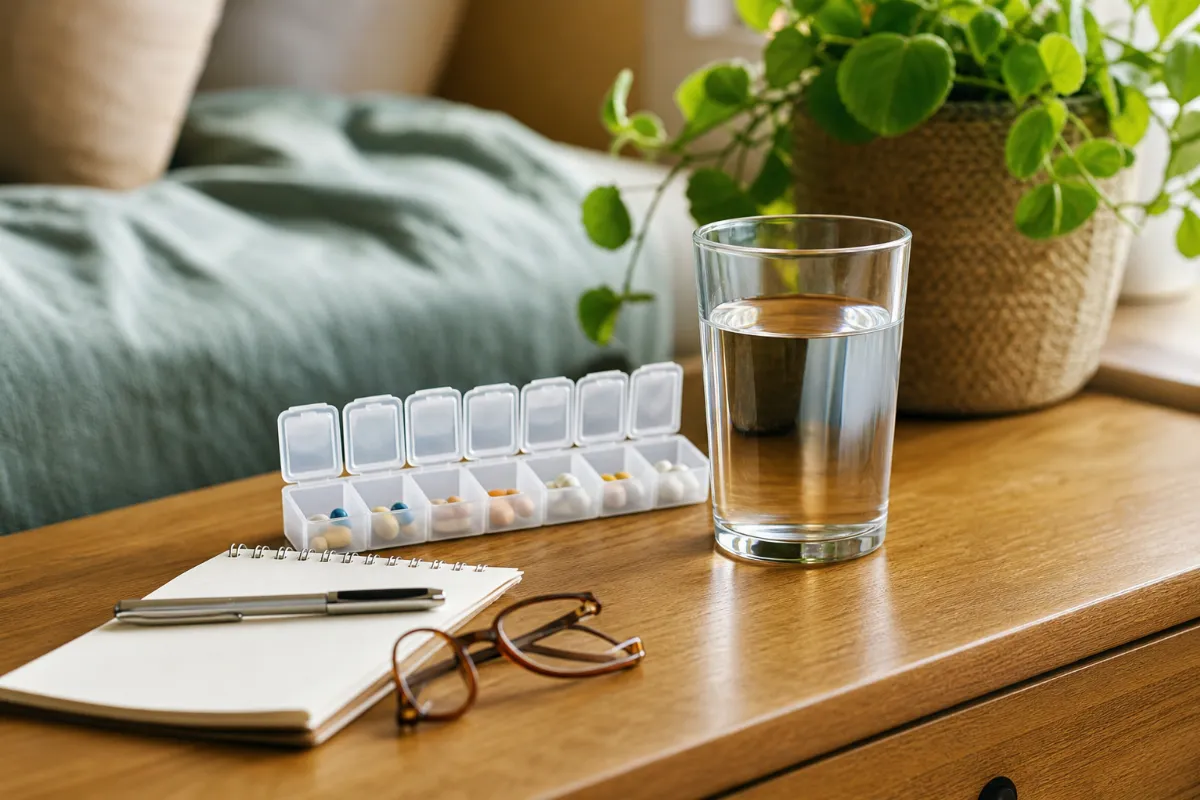
Improve Sexual Wellbeing & Intimacy
Understand How Medicines Affect Sexual Wellbeing
Many common medicines can change sexual desire, arousal, erections, orgasm or comfort, and these effects are real, often unreported and frequently manageable. This page helps you spot a possible link and prepare for a conversation with your prescriber or pharmacist; it never suggests stopping, reducing or changing a medicine on your own.
General information, not medical advice. Last updated November 1, 2026. Written by the AlternativeMed editorial team. Not medically reviewed.
Start here
- Keep taking every medicine as prescribed. Do not stop, skip, reduce or change anything because of sexual side effects; those decisions belong to you together with your prescriber.
- Write down what changed, when it started and when each medicine was started or changed. A short note makes the conversation with your prescriber or pharmacist much easier.
- Book a visit or ask a pharmacist. Sexual side effects are a normal thing to raise, and health services say a doctor may be able to review the medicine or treat the problem another way.
Be careful with
- Never stop, skip or lower a prescribed medicine on your own to improve your sex life. Stopping can bring back the condition it treats, and health services advise continuing treatment and talking to your doctor about side effects.
- Do not add herbal products, 'male-enhancement' pills or erection medicines bought online without checking with a pharmacist or doctor. Some interact with prescribed medicines and some contain hidden drugs.
- Nitrate medicines for chest pain and erection medicines are not usually prescribed together; this is a question for a doctor or pharmacist, never a do-it-yourself decision.
- Sexual problems have many causes besides medicines, including heart and blood-vessel disease, diabetes, hormone problems, mood, stress and relationship strain. A change deserves assessment, not just a guess.
Get help when
- A painful erection that lasts longer than 4 hours (priapism) is listed by the NHS as a serious side effect needing urgent medical help; do not wait.
- Chest pain, a fast or irregular heartbeat, fainting, a seizure or signs of a severe allergic reaction after taking any medicine or supplement need emergency care.
- New thoughts of suicide or self-harm after starting or changing an antidepressant: speak to a doctor straight away, and go to emergency services if you cannot keep yourself safe (this is the NHS wording).
- Sexual problems that last more than a few months or cause distress to you or your partner: MedlinePlus advises seeing a health care provider.
- Pain with sex, bleeding after sex or between periods, unusual discharge, or fever: see a clinician promptly.
- Sexual changes that continue after a medicine has been changed or stopped by your prescriber: tell the prescriber, because it may need further assessment.
About Understand How Medicines Affect Sexual Wellbeing
What this goal means
This goal is about understanding how prescribed and over-the-counter medicines can affect the sexual response: wanting sex (desire), becoming aroused, getting or keeping an erection, vaginal lubrication and comfort, orgasm and ejaculation. It is about recognising a possible link and knowing what to do next, not about changing treatment yourself.
MedlinePlus lists medicines that affect sexual desire or performance among the factors that can affect sexual health, and NIDDK says erectile dysfunction can be a side effect of many common prescription and over-the-counter medicines.
1,2What it can feel like
People describe less interest in sex, taking longer to become aroused, reduced genital sensation, difficulty keeping an erection, vaginal dryness or discomfort, delayed or absent orgasm, or ejaculation changes. The NHS lists problems with sex among the common side effects of antidepressants, including low sex drive, difficulty reaching orgasm, vaginal dryness and difficulty getting or keeping an erection.
Because these changes are private and can feel embarrassing, many people never mention them. A review of antidepressant studies notes that people tend to report sexual side effects far less often unless they are asked directly.
3,4,5What can contribute
NIDDK lists these medicine groups as possible contributors to erectile problems: antidepressants, appetite suppressants, antihistamines and some heartburn or ulcer medicines, blood pressure medicines and water pills (diuretics), chemotherapy and hormone medicines, some pain relievers (including some anti-inflammatory pain relievers and opioid-type pain relievers), and sedatives. MedlinePlus says drugs can also affect desire and function in women.
The NHS lists hormonal contraceptives and antidepressants among causes of vaginal dryness. Reviews also link antipsychotic medicines and a class of medicines used for an enlarged prostate or hair loss (5-alpha-reductase inhibitors) with sexual side effects.
Medicines are rarely the only factor. The condition being treated (for example depression, high blood pressure or diabetes), stress, tiredness, alcohol, smoking and relationship strain can all affect sex too, which is why the cause is hard to untangle without a clinician.
2,6,7,8,9,10Conditions and causes that can look the same
Diabetes, heart and blood-vessel disease, high blood pressure, nerve problems, thyroid and other hormone problems, low testosterone, anxiety, depression and loneliness can all cause the same changes as a medicine. MedlinePlus notes that erectile dysfunction can be a sign of blood-vessel or nerve problems, so a new change is worth an assessment even if a medicine seems the likely cause.
Depression itself commonly lowers desire, which is one reason it is hard to separate illness from treatment effects. A meta-analysis of antipsychotic studies says it is difficult to disentangle sexual problems caused by the drug from those caused by the illness.
2,11,8,6Realistic expectations
Frequency varies widely. In a meta-analysis of studies that asked directly, rates of new sexual problems among people taking antidepressants ranged from about 26% to 80% for the medicines that differed from placebo, while a few antidepressants did not differ significantly from placebo. A later network meta-analysis found most antidepressants carried a similar risk, with some possible differences, but rated the overall strength of evidence as low.
Many people find the problem can be improved with a conversation, a medicine review or added treatment, but the research is limited and the right option depends on you. The NHS says that for some people antidepressant-related sex problems carry on after stopping, and a literature review describes persistent changes after stopping antidepressants (post-SSRI sexual dysfunction) as under-researched, with no definitive treatment yet. We did not find reliable figures for how common this is.
4,5,3,12Who this applies to
Adults of any gender, orientation or age who take regular prescribed or over-the-counter medicines and notice a change in sex or intimacy. It applies equally to people with and without a partner. It also applies to partners, who may notice the change before the person taking the medicine does.
If your main concern is the sexual problem itself rather than the medicine link, see the linked goals on desire, erections, arousal, orgasm, dryness and pain.
1,13,6Related conditions and symptoms
Anxiety disorders → Urinary symptoms and enlarged prostate → Perimenopause and menopause → Testosterone and low testosterone →
A manageable starting plan
An educational starting point, not a personal prescription. Adjust it to your own situation and any advice from your clinician.
Your first actions
- Keep taking your medicines as prescribed and make no changes on your own.
- Write a short note of the sexual change, its start date and every medicine and supplement you take.
- Book a visit or speak to a pharmacist and say clearly what you have noticed.
Optional additions
- Ask for a general check of blood pressure, blood sugar and other tests your clinician suggests.
- Use water-based lubricant and a vaginal moisturiser for dryness, and avoid perfumed products.
- Consider counselling or sex therapy, alone or with a partner.
What to track
- When each medicine or dose changed and when the sexual change began
- Which part is affected: desire, arousal, erections, lubrication, orgasm or comfort
- Alcohol, sleep, stress, mood and relationship factors on the same days
- Any new supplements, herbal products or online purchases
When to reassess
After your prescriber has reviewed the medicine, notice over the following weeks whether things change and tell the prescriber. If the problem lasts more than a few months or causes distress, MedlinePlus advises seeing a provider.
When to seek professional support
- Your prescriber, pharmacist or a sexual health clinic can discuss medicine effects and options.
- Seek urgent help for a painful erection lasting over 4 hours, chest pain, fainting, a seizure or thoughts of self-harm.
- If sex has ever been unwanted or forced, tell a health professional you trust; you do not have to explain everything at once.
What helps
Ordered by how well the research supports each step. Evidence strength is shown on every card; precautions sit next to the advice.
Start here
Keep taking your medicines as prescribed while you seek advice
Moderate certaintyAddresses: Protects the treatment you need while the sexual side effect is assessed
Why it may help: Sexual side effects can tempt people to skip or stop a medicine, but the NHS says it is important to continue antidepressant treatment and to talk to your doctor if side effects are hard to manage. A Cochrane review notes that sexual side effects can lead people to stop an antidepressant to the detriment of their mental health.
How to apply it: Take your medicines as directed. Book an appointment or speak to a pharmacist about the sexual change instead of changing anything yourself.
Who it may suit: Anyone on a prescribed medicine who notices a sexual change.
Precautions: If a side effect feels unbearable or you have thoughts of self-harm, contact your doctor straight away rather than stopping alone.
3,14Write down what changed and when
Low certaintyAddresses: Makes it easier to see whether a medicine could be involved
Why it may help: Sexual side effects are under-reported unless people are asked directly, and the cause is often unclear because the illness, stress and relationships also matter. A simple timeline of when each medicine or dose was started and when the change began gives your prescriber useful information. We did not find a trial testing this exact step; it is a practical way to prepare for a visit.
How to apply it: Note what you notice (desire, arousal, erections, lubrication, orgasm, comfort), when it began, whether it comes and goes, and every medicine and supplement you take, including over-the-counter ones.
Who it may suit: Anyone preparing to talk to a doctor or pharmacist.
Precautions: Keep the notes private if you share a home with others.
4,5Raise it with your prescriber or pharmacist
Moderate certaintyAddresses: Opens the way to review, other explanations and treatment
Why it may help: The NHS says a doctor may switch you to a different medicine if it is causing erection problems, and lists seeing a doctor or sexual health clinic when problems keep happening. For antidepressants, the NHS says to talk to your doctor if side effects are hard to manage. MedlinePlus advises seeing a provider if sexual problems last more than a few months or cause distress.
How to apply it: Say plainly what you have noticed and what you would like help with. Pharmacists can also advise on whether a medicine is known to affect sex and on interactions with other products.
Who it may suit: Everyone; sexual health is a normal part of care.
Precautions: Medicine changes should only be made by the prescriber. Mention supplements and herbal products too.
10,3,13,6Men's health: when to get help → Women's health: when to get help →
Additional options
Ask whether something other than the medicine is involved
Moderate certaintyAddresses: Finds treatable causes that are sometimes missed
Why it may help: NIDDK lists conditions such as diabetes, blood-vessel disease, hormone problems and nerve damage, along with anxiety, depression, stress and lifestyle behaviours, as causes of erectile problems, and MedlinePlus lists similar physical and psychological causes for sexual problems in women. The NHS notes that erection problems can be a sign of conditions such as diabetes or heart problems.
How to apply it: Ask for a general check, including blood pressure and, where appropriate, tests your clinician suggests. Mention mood, sleep, alcohol, smoking and stress.
Who it may suit: Anyone with persistent sexual changes.
Precautions: Do not assume the medicine is the cause or rule out a serious condition without assessment.
2,6,15Look after general health: movement, a healthy diet, no smoking and less alcohol
Low certaintyAddresses: May help sexual function whatever the cause
Why it may help: The NHS suggests losing weight if overweight, stopping smoking, eating a healthy diet, exercising and reducing stress and anxiety for erection problems, and not drinking more than 14 units of alcohol a week. NIDDK lists too little physical activity, heavy drinking, smoking and recreational drug use as contributors. We did not find a trial showing these steps reverse a medicine side effect specifically.
How to apply it: Choose changes you can keep, and discuss alcohol and activity with your clinician if you have a heart or other medical condition.
Who it may suit: Most adults.
Precautions: Check with a clinician before starting vigorous exercise if you have heart disease or other medical conditions.
10,2Water-based lubricant and vaginal moisturiser for medicine-related dryness
Low certaintyAddresses: Eases dryness and discomfort during sex
Why it may help: The NHS lists hormonal contraceptives and antidepressants among the causes of vaginal dryness and advises water-based lubricants before sex and vaginal moisturisers, and avoiding perfumed soaps, washes and douches, as well as creams or lotions not meant for the vagina because they can irritate or cause infection.
How to apply it: Use products designed for vaginal use and avoid fragranced ones. If dryness lasts for a few weeks despite this, see a GP or clinician.
Who it may suit: People with vaginal dryness or discomfort, including from medicines.
Precautions: See a clinician for unusual discharge, bleeding after sex, between periods or after menopause, or pain that continues.
7Counselling or sex therapy alongside medical review
Low certaintyAddresses: Helps with worry, confidence and communication that often grow around a side effect
Why it may help: The NHS says counselling and therapy can help when erection problems are linked to emotional or mental health problems and mentions registered counsellors and sex therapists. NIDDK lists anxiety, stress, low self-esteem and negative body image as factors that can cause or worsen erectile problems.
How to apply it: Ask your doctor for a referral, or look for a therapist registered with a professional body.
Who it may suit: People or couples distressed by the change.
Precautions: Therapy does not replace a medical review of the medicine.
10,2Manage Sexual Performance Anxiety → Communicate More Comfortably About Intimacy →
Still being studied
A prescriber-led review of the medicine, timing or other options
Low certaintyAddresses: May reduce sexual side effects in some people
Why it may help: A network meta-analysis of antidepressant trials found most comparisons showed a similar risk of sexual dysfunction, with some medicines showing lower or higher risk than others, but rated the overall strength of evidence as low. A Cochrane review found only one small trial of switching to another antidepressant and no randomised trials of switching to currently available antidepressants with lower rates of sexual effects. Whether a change is right depends on the condition being treated and is only for the prescriber to decide.
How to apply it: Ask your prescriber what options exist for your situation. Do not make changes yourself.
Who it may suit: People whose sexual side effects are troubling and whose medicine is working for the condition it treats.
Precautions: Stopping or switching a medicine without guidance can cause withdrawal-type effects or relapse of the condition.
5,14,10Adding a medicine for erectile problems caused by an antidepressant (men)
Low certaintyAddresses: Better erectile function in small trials
Why it may help: A Cochrane review of 23 trials (1,886 people) found that adding a PDE-5 inhibitor, a class of erection medicine, improved erectile function more than placebo in small trials of men with antidepressant-related erectile problems. The authors said the available evidence is rather limited.
How to apply it: This is a prescriber decision. The NHS says these medicines are not usually prescribed with nitrates (for example for chest pain) and warns that online medicines are not always regulated.
Who it may suit: Men with antidepressant-related erectile problems, after a clinician has checked their heart health and other medicines.
Precautions: Nitrates, some blood pressure medicines, alpha blockers, and uncontrolled blood pressure need special care. A painful erection lasting over 4 hours is an emergency.
14,15,16Adding another medicine for antidepressant-related sexual problems (women)
Very low certaintyAddresses: A possible benefit in a small number of studies
Why it may help: The Cochrane authors concluded that for women with antidepressant-related sexual dysfunction, adding a second medicine at higher amounts appeared the most promising approach studied so far, but most options were studied in single trials and the evidence is limited.
How to apply it: Only a prescriber can decide whether any added medicine is suitable, and it is not something to try from this page.
Who it may suit: Women whose antidepressant is working but whose sexual side effects continue.
Precautions: Added medicines can have their own side effects and interactions.
14Food & nutrition
Eating, drinking and medicines
The NHS lists a healthy diet, more exercise, weight loss if overweight, stopping smoking, less stress and keeping alcohol within limits among the things that can help erection problems. These are general health steps and we did not find evidence that a particular food reverses a medicine side effect.
Always tell your pharmacist about foods, teas and supplements you take regularly, because some products affect how medicines work. Check specific food warnings on the leaflet that came with your medicine.
- A varied, mostly whole-food diet supports general health and healthy weight
- Alcohol: keep within recommended limits and ask if your medicine changes how alcohol affects you
- Check the leaflet or ask a pharmacist about foods or drinks that interact with your medicines
'Aphrodisiac' foods and flavoured products
Foods and drinks such as honey, chocolate and coffee are sometimes marketed for sexual performance. The FDA's list of tainted sexual-enhancement products includes honey, chocolate and coffee products that contain hidden drug ingredients. A food that is sold with a sexual-performance claim should be treated with caution.
Ordinary honey, chocolate or coffee bought as normal food is a different matter; the concern is products marketed as enhancers.
- Be wary of any food-type product sold online with a sexual-performance promise
- Do not combine such products with nitrates or other heart medicines
Remedies & supplements
Traditional use, laboratory findings and human trials are kept apart. "Natural" does not mean safe.
St. John's wort
Not enough evidenceStudied form and route: Herbal supplement, usually capsules, tablets or teas
Intended outcome: Promoted for low mood; relevant here because of medicine interactions
Human evidence: NCCIH says studies suggest it may help mild or moderate depression, and that for other conditions the evidence is insufficient. It also says it has been clearly shown to interact dangerously, sometimes life-threateningly, with a variety of medicines.
Traditional use: Used in traditional medicine for depression, stomach ulcers, colds and wound healing.
Laboratory findings: We did not review laboratory studies for this page.
Limits: Not studied as a way to reverse a medicine's sexual side effects, and it can interact with the very medicines that may be causing them.
Interactions and precautions: Do not combine it with antidepressants, erection medicines, contraceptives or other prescribed medicines without a pharmacist or prescriber. It can cause skin reactions after sun exposure. The NHS lists St. John's wort among products that may not mix well with erection medicines of this class. Do not use instead of care for low mood.
18,15Yohimbe
Evidence againstStudied form and route: Bark extract in supplements
Intended outcome: Promoted for erections and sexual performance; not supported
Human evidence: NCCIH says there is very little research in people and not enough evidence for definite conclusions about effectiveness for any condition.
Traditional use: The bark has been used traditionally as an aphrodisiac and sexual performance enhancer.
Laboratory findings: We did not review laboratory studies for this page.
Limits: Amounts of yohimbine vary a lot between products and many labels do not say how much is inside. Supplements may not act like the prescription medicine.
Interactions and precautions: NCCIH links yohimbine to irregular heartbeat, blood pressure problems, heart attacks and seizures, says not to use it with certain antidepressant types, and notes it has been restricted or banned in many countries. Avoid it, particularly with heart conditions, high blood pressure or antidepressants.
19Therapies & care
Established care for medicine-related sexual changes starts with a conversation with your prescriber or pharmacist. They can check for other causes, review your medicines and discuss treatment options where appropriate. This page does not recommend any medicine or amount, and you should never stop, reduce or change a prescribed medicine on your own.
Medicine review with your prescriber or pharmacist
Low certaintyClinical review A clinician reviews what you take, the timing of the sexual change and other possible causes. The NHS says a doctor may switch you to a different medicine if it is causing erection problems, and that high blood pressure, high cholesterol and hormone problems may be treated.
Who it may suit: Anyone with a new sexual change after starting or changing a medicine.
Precautions: Changes are made only by the prescriber, who weighs the benefit of the medicine against the side effect.
10,14Counselling or sex therapy
Low certaintyPsychological therapy A trained counsellor or sex therapist helps with worry, confidence, communication and the emotional side of sexual changes. The NHS says counselling and therapy can help when erection problems are linked to emotional or mental health problems and mentions finding therapists registered with professional bodies, although there can be long waits on the NHS.
Who it may suit: Individuals or couples, including when the medicine cannot be changed.
Precautions: Choose a therapist registered with a professional body.
10Prescribed treatment for erection problems
Low certaintyMedical treatment, a clinician decision The NHS lists medicines called PDE-5 inhibitors as the main treatment for erection problems, and vacuum pumps as an option when medicine is not suitable. A Cochrane review found these medicines improved erectile function in small trials of men with antidepressant-related problems.
Who it may suit: Men with erection problems, after assessment of heart health and current medicines.
Precautions: Not usually prescribed with nitrates; priapism (over 4 hours) needs urgent help. Heart and blood pressure medicines need review first.
10,15,14,16Hormone-based treatment for vaginal dryness
Moderate certaintyMedical treatment, a clinician decision The NHS says that when dryness comes from changes in hormone levels, a GP may prescribe creams, gels, patches or medicines to increase oestrogen (hormone replacement therapy), and that these are not recommended for everybody.
Who it may suit: People whose dryness persists despite self-care, after discussing suitability with a clinician.
Precautions: Not suitable for everyone; hormone-sensitive conditions need specialist advice.
7What to avoid
Habits, products and claims that can get in the way. Never stop a prescribed medicine without talking to the professional who prescribed it.
Risks that apply to most people
Stopping, skipping or lowering a medicine on your own
Moderate certaintyWhy: It can bring back the condition being treated and may cause withdrawal-type effects. The NHS advises continuing antidepressant treatment and talking to a doctor if side effects are hard to manage. The Cochrane review notes sexual side effects can lead people to stop treatment to the detriment of their mental health.
Who it applies to: Anyone taking prescribed medicines.
Try instead: Tell your prescriber or pharmacist about the sexual change and ask what can be done.
3,14Using alcohol or recreational drugs to cope with the change
Moderate certaintyWhy: NIDDK lists drinking too much alcohol and using recreational and illicit drugs among the behaviours that may contribute to erectile problems, and the NHS says taking an erection medicine of this class with poppers or illegal drugs can increase the risk of serious side effects.
Who it applies to: Anyone, especially people also taking erection medicines or sedating medicines.
Try instead: If alcohol or drug use is becoming a worry, speak to your clinician.
2,15Borrowing, sharing or buying leftover erection medicines
Moderate certaintyWhy: The NHS says erection problems can be a sign of heart disease or diabetes and that this class of medicine is not usually prescribed with nitrates. A medicine that is safe for one person can be dangerous for another.
Who it applies to: Anyone considering a medicine that was not prescribed or advised for them.
Try instead: Ask a doctor or pharmacist whether any treatment is suitable after your medicines and heart health are checked.
15Personal triggers to check
Antidepressants
Moderate certaintyWhy: In a meta-analysis of studies that asked directly, treatment-emergent sexual dysfunction was significantly higher than with placebo for many antidepressants, ranging from about 26% to 80%, while a few did not differ significantly from placebo. The NHS lists sex problems among common side effects.
Who it applies to: People taking antidepressants for depression, anxiety or other uses such as nerve pain.
Try instead: Talk to your prescriber before changing anything; do not stop on your own.
4,5,3Antipsychotic medicines
Moderate certaintyWhy: A meta-analysis found sexual dysfunction rates varied across antipsychotics, from about 16 to 27% with some to about 40 to 60% with others, with confounding by the illness itself.
Who it applies to: People taking antipsychotics for psychosis, bipolar disorder or other conditions.
Try instead: Raise it with the prescribing team; do not stop or lower the medicine yourself.
8Blood pressure medicines and water pills
Low certaintyWhy: A review concluded that older blood pressure medicines (diuretics and beta blockers) have harmful effects on erectile function while some newer types appear neutral or even helpful. NIDDK lists blood pressure medicines and diuretics among possible contributors. The review is narrative, so the evidence is limited.
Who it applies to: People taking medicines for high blood pressure or fluid retention.
Try instead: Ask your prescriber about options. High blood pressure itself can cause erection problems and must stay treated.
16,2Hormonal contraceptives and other hormone medicines
Low certaintyWhy: A systematic review of 36 studies found that most users of combined oral contraceptives reported no change or an increase in libido, while about 15% reported a decrease. The NHS lists hormonal contraceptives among the causes of vaginal dryness, and NIDDK lists hormone medicines among erectile-problem contributors.
Who it applies to: People using hormonal contraception, hormone therapy or medicines that change hormones, including cancer treatments.
Try instead: If you notice a change, ask your clinician about alternatives; never stop contraception without a plan.
20,7,25-alpha-reductase inhibitors (used for enlarged prostate or hair loss)
Moderate certaintyWhy: A meta-analysis of 34 trials found these medicines carried about 1.9 times the risk of sexual adverse effects compared with placebo in men treated for an enlarged prostate or hair loss during the trials.
Who it applies to: Men taking this class for the prostate or for hair.
Try instead: Discuss the benefits and sexual effects with the prescriber before and during treatment.
9Other medicines on the NIDDK list: pain relievers, sedatives, antihistamines, ulcer medicines, appetite suppressants and chemotherapy
Low certaintyWhy: NIDDK names these groups as medicines that can contribute to erectile problems. We did not find large trials for each group on its own, so the evidence is mainly drawn from clinical agency summaries.
Who it applies to: People taking these medicines regularly or in combination.
Try instead: Ask a pharmacist to review everything you take, including over-the-counter items.
2,6Products that need caution
'Male-enhancement', 'energy' and 'natural' sexual-enhancement pills, chocolates and honeys
Moderate certaintyWhy: The FDA says many products that claim to help with sexual enhancement or treat sexual dysfunction are likely to be contaminated with dangerous hidden ingredients, sometimes falsely advertised as dietary supplements or all-natural, and that they can cause severe health problems and hospitalisation. The FDA also says that a product missing from its list is not necessarily safe.
Who it applies to: Anyone buying online, in shops or through social media.
Try instead: Talk to a health care professional before trying any such product, especially if you take nitrates or other heart or blood pressure medicines.
17Online sellers of prescription erection medicines
Moderate certaintyWhy: The NHS says many websites sell fake medicines, that online medicines are not always regulated and that their ingredients can vary from pack to pack. It recommends seeing a doctor first and using only registered online services.
Who it applies to: Anyone considering buying erection medicines online without a consultation.
Try instead: See a doctor or pharmacist. If you use an online service, check it is registered in your country.
10Yohimbe supplements
Evidence againstWhy: NCCIH says there is very little research in people, not enough evidence for any health condition, variable and mislabelled yohimbine content, and reports of irregular heartbeat, blood pressure problems, heart attacks and seizures. It says not to use yohimbe with certain antidepressant types.
Who it applies to: Anyone tempted to try a 'natural' sexual performance product.
Try instead: Discuss options with a clinician rather than using unregulated supplements.
19St. John's wort used alongside other medicines
High certaintyWhy: NCCIH says St. John's wort has been clearly shown to interact in dangerous, sometimes life-threatening ways with a variety of medicines, and the NHS lists St. John's wort supplements among products that may not mix well with erection medicines of this class.
Who it applies to: People taking prescribed medicines who consider this herb for mood or other reasons.
Try instead: Always ask a pharmacist or prescriber before taking it.
18,15Unsupported claims
'Sexual side effects are rare or all in your head'
Evidence againstWhy: Studies that ask directly find sexual dysfunction is common with some medicine groups and is under-reported when people are not asked. A network meta-analysis noted evidence of under-reporting in efficacy studies and called sexual dysfunction a serious side effect that may lead to stopping treatment.
Who it applies to: People who are told or fear their experience is not real.
Try instead: Bring it up directly; it is a recognised, discussable side effect.
4,5'A natural supplement will cancel out a medicine's sexual side effects'
Not enough evidenceWhy: We did not find reliable human trials showing herbs or supplements reverse medicine-related sexual side effects. NCCIH found not enough evidence for yohimbe, and the FDA warns that many enhancement products contain hidden drugs.
Who it applies to: Product claims, forums and social media.
Try instead: Ask your prescriber about options with evidence behind them.
19,17'Everything returns to normal the moment a medicine is stopped'
Low certaintyWhy: The NHS says that for some people antidepressant-related sex problems may carry on after stopping, and a literature review describes persistent symptoms after stopping antidepressants, with unknown prevalence and no definitive treatment. It does not mean it happens to most people.
Who it applies to: People weighing up whether to stop a medicine.
Try instead: Do not stop to test it; discuss the question with your prescriber, and report persistent changes if they happen.
3,12Common mistakes
Staying silent because it feels embarrassing
Moderate certaintyWhy: Under-reporting is well documented, and it means problems that could be addressed are missed. Sexual health is part of health, and clinicians are used to the topic.
Who it applies to: Anyone starting or changing a medicine.
Try instead: Use a note to open the conversation, or ask a pharmacist first.
4,5,10Skipping doses before sex to 'work around' the side effect
Very low certaintyWhy: Planned pauses ('drug holidays') were not tested in the randomised trials the Cochrane review found, and skipping doses of a prescribed medicine risks relapse or withdrawal-type effects.
Who it applies to: People tempted to time their medicine around sex.
Try instead: Ask your prescriber whether any change in timing is appropriate for your medicine; do not try it alone.
14,3Assuming age, stress or the relationship is the only cause
Moderate certaintyWhy: MedlinePlus says erectile problems become more common with age but are not a natural part of ageing, and may signal blood-vessel or nerve problems; the NHS notes they can be a sign of heart disease or diabetes.
Who it applies to: Anyone with a persistent change.
Try instead: Ask for a check so that treatable conditions are not missed.
11,15,2Expecting a partner to guess
Low certaintyWhy: Sexual side effects can affect both partners, and silence can be read as lost interest or attraction. Open communication helps both of you understand it is a health effect.
Who it applies to: People in relationships.
Try instead: Explain that a health change is involved, and agree to seek help together.
10,6Communicate More Comfortably About Intimacy → Build Emotional & Physical Connection →
Evidence & safety
What the research shows
Health agencies agree that many common medicines can affect sexual function, and studies that ask directly find sexual side effects are common with some antidepressants, antipsychotics and 5-alpha-reductase inhibitors, with less certain evidence for blood pressure medicines and hormonal contraceptives. Evidence on how to manage them is limited: small trials show added erection medicines can help men with antidepressant-related erectile problems, and little is known about switching or other strategies. The consistent, safest message across sources is to keep taking medicines as prescribed and to discuss the problem with the prescriber.
Limits of the evidence
- Most evidence is for antidepressants. For many other medicine groups we found mainly agency lists and narrative reviews.
- Illness and treatment effects are hard to separate; the underlying condition can itself affect sex.
- Trial populations were often selected, and sexual effects were reported inconsistently, which the network meta-analysis rated as low-strength evidence.
- We did not review ginseng, maca, tribulus, fenugreek, L-arginine, DHEA, horny goat weed or saffron for this page; see the linked ingredient pages.
- We did not find reliable figures for how common persistent sexual changes after stopping a medicine are.
Precautions and interactions
- Never stop, skip, reduce or change a prescribed medicine without the prescriber.
- Ask a pharmacist before combining any herbal or enhancement product with prescribed medicines.
- Nitrates and erection medicines need medical supervision.
- Report side effects through your health service's official reporting scheme if one exists; the NHS names the Yellow Card scheme.
Life-stage considerations
- Older adults often take several medicines; ask for a combined medicines review.
- Pregnancy and breastfeeding: do not start herbs, enhancement products or hormonal products without advice from a clinician.
- Young people and adults of any age can be affected; the NHS notes antidepressants are usually not recommended for under 18s, so any such treatment is a specialist decision.
- People with cancer treatment-related sexual changes should ask their cancer team.
Warning signs
- A painful erection lasting longer than 4 hours.
- Chest pain, a fast or irregular heartbeat, fainting or a seizure after a medicine or supplement.
- Thoughts of suicide or self-harm after starting or changing an antidepressant: speak to a doctor straight away; go to emergency services if in danger.
- Bleeding after sex or between periods, unusual discharge, fever or pelvic pain.
- Sexual problems lasting more than a few months or causing distress.
Claim checks
Antidepressants commonly cause sexual problems
Moderate certaintySupported. A meta-analysis found significantly more sexual dysfunction than placebo for many antidepressants (26% to 80%), but a few did not differ; a network meta-analysis found most comparisons similar and rated the evidence low.
4,5,3Blood pressure medicines always cause erection problems
Low certaintyNot supported. A review found older types (diuretics, beta blockers) can harm erectile function while newer types appear neutral or beneficial, and high blood pressure itself can cause erection problems.
16,2The contraceptive pill lowers sex drive
Low certaintyMixed. A systematic review found most combined pill users reported no change or an increase in libido, with about 15% reporting a decrease.
20Herbal male-enhancement products are a safe alternative
Evidence againstNot supported. The FDA warns of hidden drug ingredients in many such products, and NCCIH found no good evidence for yohimbe and documented risks.
17,19Sexual side effects are permanent after stopping a medicine
Very low certaintyNot established. For most people effects are expected to ease, but the NHS says for some people they continue, and the prevalence of persistent effects is unknown.
3,12Questions people ask
Can my medicine really change my sex life?
Yes. MedlinePlus lists medicines that affect sexual desire or performance among factors that affect sexual health, and NIDDK lists many medicine groups as possible contributors to erectile problems.
Which medicines are most likely to affect sex?
Antidepressants have the most research. NIDDK also lists appetite suppressants, antihistamines, blood pressure medicines and water pills, chemotherapy and hormone medicines, some pain relievers, sedatives and ulcer medicines. Antipsychotics and 5-alpha-reductase inhibitors are also linked in reviews. Not everyone is affected, and the effect differs from medicine to medicine.
Should I stop my medicine if my sex life has changed?
No, not on your own. Tell your prescriber or pharmacist. The NHS advises continuing treatment and speaking to your doctor if side effects are hard to manage, and the prescriber can review the medicine or other causes.
Will the problem go away?
It can ease for some people, and for others it needs a review or added treatment. The NHS notes that for some people antidepressant-related sex problems continue after stopping. We did not find reliable figures for how often that happens.
Is it the medicine or the condition I am treating?
It can be either or both. Depression, high blood pressure, diabetes, hormone problems, stress and relationship strain can also affect sex. A clinician can help sort this out, so share your timeline.
Can I take a supplement to fix it?
We did not find reliable human trials showing herbs or supplements reverse medicine-related sexual side effects. Some, such as St. John's wort, interact with medicines, and the FDA warns that many enhancement products contain hidden drugs. Ask a pharmacist first.
Is it safe to buy erection pills online?
The NHS warns that many websites sell fake medicines and recommends seeing a doctor first. Erection medicines are not usually prescribed with nitrates, and erection problems can be a sign of heart disease or diabetes.
Does the contraceptive pill affect sexual desire?
In a systematic review of 36 studies, most combined pill users reported no change or an increase in libido, and about 15% reported a decrease. The NHS lists hormonal contraceptives among causes of vaginal dryness. If you notice a change, ask your clinician about alternatives rather than stopping.
What if I feel embarrassed to bring it up?
It is a common and recognised side effect that clinicians expect to discuss. A written note or a pharmacist conversation can be an easier first step.
When is it an emergency?
A painful erection lasting longer than 4 hours is listed by the NHS as a serious side effect needing urgent help. Chest pain, fainting, a seizure or severe allergic reaction need emergency care, as do thoughts of self-harm if you cannot keep yourself safe.
References
- MedlinePlus. Sexual Health. Read 2026-11-01. source
- NIDDK. Erectile Dysfunction (ED): Symptoms and Causes (last reviewed October 2024). Read 2026-11-01. source
- NHS. Antidepressants: side effects. Read 2026-11-01. source
- Serretti A, Chiesa A. Treatment-emergent sexual dysfunction related to antidepressants: a meta-analysis. J Clin Psychopharmacol. 2009. PMID 19440080. source
- Reichenpfader U, et al. Sexual dysfunction associated with second-generation antidepressants in patients with major depressive disorder: results from a systematic review with network meta-analysis. Drug Saf. 2014. PMID 24338044. source
- MedlinePlus. Sexual Problems in Women. Read 2026-11-01. source
- NHS. Vaginal dryness (page last reviewed 24 July 2025). Read 2026-11-01. source
- Serretti A, Chiesa A. A meta-analysis of sexual dysfunction in psychiatric patients taking antipsychotics. Int Clin Psychopharmacol. 2011. PMID 21191308. source
- Zhang JJ, et al. Sexual, physical, and overall adverse effects in patients treated with 5-alpha-reductase inhibitors: a systematic review and meta-analysis. Asian J Androl. 2022. PMID 34747724. source
- NHS. Erectile dysfunction (impotence) (page last reviewed 28 July 2023). Read 2026-11-01. source
- MedlinePlus. Erectile Dysfunction. Read 2026-11-01. source
- Bala A, Nguyen HMT, Hellstrom WJG. Post-SSRI sexual dysfunction: a literature review. Sex Med Rev. 2018. PMID 28778697. source
- MedlinePlus. Sexual Problems in Men. Read 2026-11-01. source
- Taylor MJ, et al. Strategies for managing sexual dysfunction induced by antidepressant medication. Cochrane Database Syst Rev. 2013. PMID 23728643. source
- NHS. Medicine information page for an erection medicine (PDE-5 inhibitor). Read 2026-11-01. source
- Manolis A, Doumas M. Antihypertensive treatment and sexual dysfunction. Curr Hypertens Rep. 2012. PMID 22581395. source
- U.S. Food and Drug Administration. Tainted Sexual Enhancement Products (hidden ingredients). Read 2026-11-01. source
- NCCIH. St. John's Wort: Usefulness and Safety. Read 2026-11-01. source
- NCCIH. Yohimbe: Usefulness and Safety. Read 2026-11-01. source
- Pastor Z, Holla K, Chmel R. The influence of combined oral contraceptives on female sexual desire: a systematic review. Eur J Contracept Reprod Health Care. 2013. PMID 23320933. source
Related on AlternativeMed
Related goals
Understand Changes in Sexual Desire → Support Healthy Erectile Function → Address Arousal Difficulties → Understand Orgasm Concerns → Manage Vaginal Dryness → Address Discomfort During Sex → Manage Sexual Performance Anxiety → Communicate More Comfortably About Intimacy → Build Emotional & Physical Connection → Support a More Balanced Mood →
Ingredients, foods and supplements
Research, safety and claim-check resources
Medication interactions → Medicines, sleep, mood and memory → Medicines and weight changes → Understand hormone tests → Testosterone boosters claim check → Men's health: when to get help → Women's health: when to get help →