Honey & Bee Products · Honey
Honey
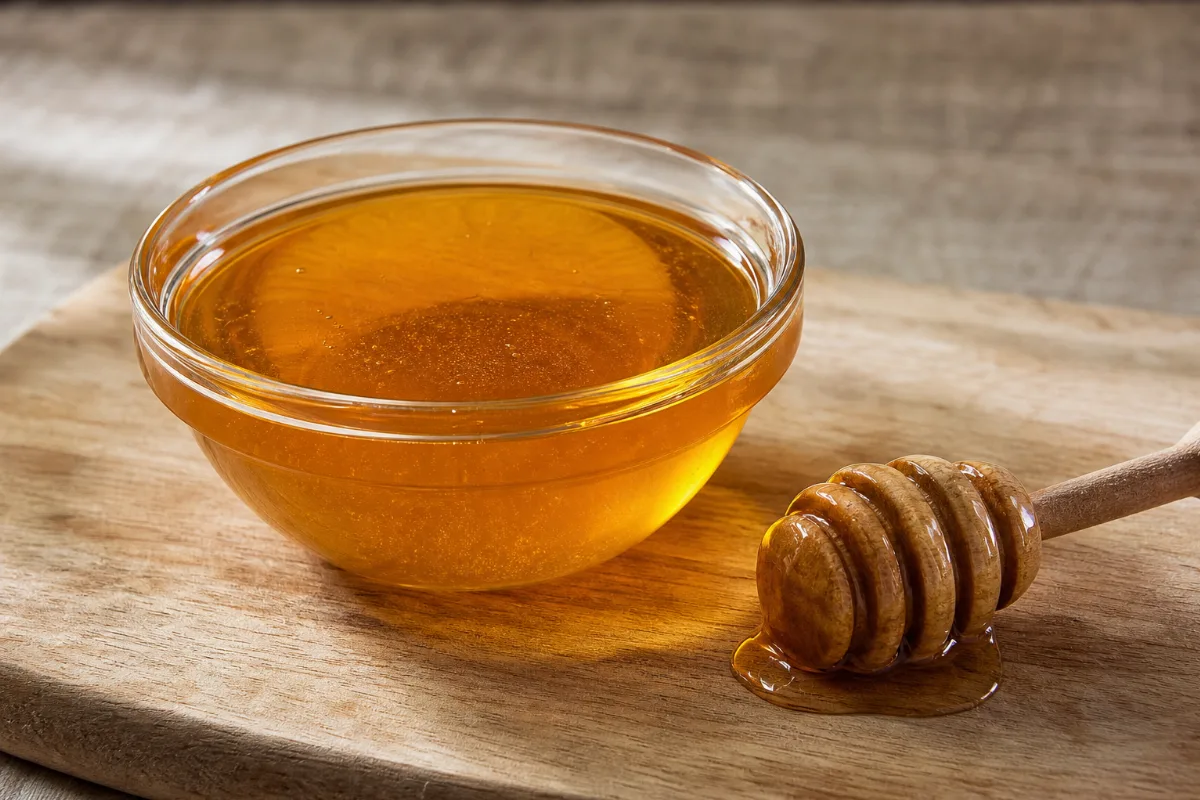
Honey made by honeybees (Apis mellifera) · also called Bee honey, miel
Honey is a sweet food that honeybees make from flower nectar. Never give honey to a baby under 12 months: it can cause infant botulism, a serious illness. Honey is a sugar, and it can cause allergy in some people. Research suggests it may ease children's cough a little for a day or two and that honey dressings can speed up healing of some burns, but the evidence is limited.
General information, not medical advice. Last substantive update · Not medically reviewed. A named clinician has not signed off on this page. How this page is made
About Honey
Honey is a sweet food made by honeybees from flower nectar. Safety first: never give honey to a baby under 12 months because of infant botulism. Honey is a sugar, and bee products can cause allergy, rarely severe. For children's cough honey may help a little for a day or two. Honey dressings speed healing of some burns, but jar honey is not a wound dressing.
What it is
Honey is made by honeybees from flower nectar. The Cochrane wound review describes it as a thick, supersaturated sugar solution made from nectar gathered and modified by the honeybee Apis mellifera (an accepted species name in GBIF).
Honey is a food, a home remedy for cough, and, in specially made medical products, a wound dressing. These are different things, and a result for one does not carry over to another. Honey types differ too. Single-flower honeys and special honeys such as manuka have their own pages.
What the research shows
For children's cough, a Cochrane review and a 2026 meta-analysis found honey probably helps a little for up to three days compared with no treatment or placebo, and looks similar to some cough medicines. The reviewers say there is no strong evidence either way, and the stronger 2026 result came only after extra analysis.
For burns, honey dressings healed partial-thickness burns faster than conventional dressings. For most other wounds the results are unclear or very low quality.
For blood sugar and blood fats, two large reviews point in partly different directions. Neither shows honey treats diabetes or heart disease.
Quality and labels
Honey fraud with cheaper sugar syrups is documented. A 2026 review says it is hard to detect and detection methods keep changing, but gives no rates. A 2026 study on acacia honey says syrup can be added or fed to bees.
The words raw and natural are not safety claims. FDA labelling guidance helps keep honey from being adulterated or misbranded but is not legally enforceable by itself.
At a glance
Traditional uses history, not proof
- Honey has been a home remedy for cough and sore throat in many places.
- The Cochrane wound review says honey has been used in wound care since ancient times. That is tradition, not proof.
Studied for research
- Cough in children (honey in general): mixed
- Colds and upper respiratory symptoms: mixed
- Partial-thickness burns (honey dressings): high for that one comparison
- Chronic wounds (honey dressings): very low
- Blood sugar and blood fat markers: mixed
Main compounds
- Sugars: honey is described as a supersaturated sugar solution, and WHO counts its sugars as free sugars
Common forms
- Liquid strained honey, the usual jar food
- Raw or less-heated honey (not safer for babies)
- Creamed honey and honey in the comb
- Sterile honey dressings (a separate medical product)
Research links: WHO: Botulism · NHS: Botulism · MedlinePlus: Infant botulism · WHO: Healthy diet (free sugars) · Cochrane: honey for cough in children (abstract) · Cochrane: honey for wounds (abstract) · Research Library · Genes & Biomarkers Library
What it is and its history
- Accepted scientific name
- Honey (made by honeybees, mainly Apis mellifera)
- Naming authority
- Bee: Apis mellifera Linnaeus, 1758 (GBIF accepted name)
- Synonyms
- Bee honey; Honeybee honey
- Common names
- Honey (English); Miel (Spanish)
- Family or group
- Producer: Apidae (bee family). The honey is made by bees, not a plant.
- Classification
- Animalia (producer: honeybee) > Arthropoda > Insecta > Hymenoptera > Apidae > Apis > Apis mellifera
- Native range
- Not checked in the sources read.
- Habitat
- Not checked.
- What it looks like
- Flowers: Nectar from flowers is the raw material (Cochrane review background).
- Cultivation
- Not checked.
- Harvest and processing
- A 2023 meta-analysis compared honeys by floral source and by processing (raw versus processed); the abstract does not describe the steps. Sterile honey dressings are a separate medical product.
- Look-alikes and adulterants
- Sugar syrups sold as or mixed into honey (adulteration; see the safety file).
Photographs
Traditional use and history history, not clinical proof
| Tradition or era | Documented use | Source |
|---|---|---|
| Honey as a wound remedy | The Cochrane wound review says honey has been used as a remedy in wound care since ancient times. The NHS and the cough reviews describe honey as a home remedy for cough. No source read gives dates or places beyond that. | p25742878 |
Traditional use shows how it was used. It does not show that it works or is safe today.
What is inside, and how it may work
What it contains and how those compounds act in cells and animals. Laboratory and animal mechanisms are not proven effects in people.
Main compounds
| Compound | Family | Where it is concentrated | Activity studied | Level of evidence |
|---|---|---|---|---|
| Sugars | carbohydrates | Honey Described as a supersaturated sugar solution; WHO counts the sugars in honey as free sugars. | Make honey a sugar food to be limited in the diet. 5 18 | Authoritative guidance |
Mechanisms, receptors and pathways
| Target or pathway | Gene or receptor | What was found | Level |
|---|---|---|---|
| How honey might ease cough or heal wounds | The reviews read test outcomes in people, not mechanisms. Any explanation (soothing, antimicrobial activity) is theory in these sources. 9 1 5 | Pharmacological theory |
Absorption, metabolism and elimination
- Absorption
- Not studied in the sources read.
- Distribution
- Not studied.
- Metabolism
- Not studied.
- Elimination
- Not studied.
- Bioavailability
- Not studied.
Isolated compounds versus whole extracts
Honey is a whole food. Results for honey dressings, medical-grade honey or one honey type do not carry over to jar honey or to other honeys.
Nutritional composition
Honey is mostly sugar. WHO counts sugars naturally present in honey as free sugars to be limited.
1 high certainty3 mixed findings1 very low certainty
What was looked at
The 5 benefits and uses checked for Honey, each with how strong the evidence is. Tap one to open it.
- Cough in children (honey in general)Mixed findings
- Symptoms of colds and upper respiratory infections (honey in general)Mixed findings
- Partial-thickness burns (honey dressings)High certainty
- Long-term wounds such as leg and foot ulcers (honey dressings)Very low certainty
- Blood sugar, blood fats, blood pressure and inflammation markers (honey in general)Mixed findings
Lab markers tracked in the studies
Cough frequency score (parent-rated, 7-point scale)HbA1cFasting blood glucoseTime to heal a partial-thickness burnHDL cholesterol
What is Honey good for?
What people ask about, and how strong the human evidence is. Most of it is about honey of mixed types, so it may not apply to one kind of honey. None of it is proof, and all of it should be read with the safety section.
Benefits, one by one
Each card is a research question, not a promise. Tap a goal to filter. Open a card to see the studies, doses and limits.
Cough in children (honey in general)
Mixed findingsA Cochrane review of 6 small trials in 899 children aged 12 months to 18 years found honey probably eases cough a little more than no treatment or placebo, mostly after one to three days. The reviewers say there is no strong evidence either way. A 2026 meta-analysis of 6 trials (576 children) found no clear difference from cough medicines on most measures.
2 studiesHoney types and amounts are not given in the abstracts.
Studies, doses and limits
What the trials found
Cochrane review (searched to February 2018): 6 randomised trials, 899 children aged 12 months to 18 years treated as outpatients. A 2026 meta-analysis: 6 trials in 576 children, mean ages 3 to 5, follow-up up to 3 days.
Results
Cochrane: on a 7-point cough scale honey probably lowered cough frequency more than no treatment (mean difference -1.05, 95% CI -1.48 to -0.62; moderate certainty) and more than placebo (-1.62, 95% CI -3.02 to -0.22; moderate certainty). Similar to dextromethorphan (low certainty) and better than diphenhydramine (low certainty). Up to three days honey was probably better than placebo; beyond three days probably no advantage. 2026 meta-analysis: no significant difference from drug treatment on most outcomes; one sleep outcome favoured honey (MD -0.73, 95% CI -1.45 to -0.01); extra post-hoc analysis favoured honey on all outcomes but the authors call that hypothesis-generating.
Effect sizes as reported
About 1 to 1.6 points on a 7-point cough scale in the Cochrane comparisons.
Why this rating
The reviewers rate some comparisons moderate and others low and say there was no strong evidence for or against honey. Trials were small and short (most children treated for one night). The stronger 2026 result came only after post-hoc analysis.
Form and dose studied
Honey types and amounts are not given in the abstracts.
Who was studied
Children aged 12 months and older. No trial in babies, because honey is not safe for them.
Limits
Few small trials, two at high risk of bias, very short follow-up, mixed honey types.
Why researchers looked
Parents look for gentler options than cough medicines for children's cough.
Traditional use
Honey has been a home remedy for cough in many places. That history is tradition, not proof.
Proposed mechanism Pharmacological theory
Honey is thought to coat and soothe the throat. The reviews do not test this and do not show how it works.
A proposed mechanism does not show that the effect happens in people.
Never give honey to a baby under 12 months. In the Cochrane review stomach symptoms were reported by 12% with honey and 11% with placebo (risk ratio 1.91, 95% CI 1.12 to 3.24; moderate certainty); nervousness, insomnia or hyperactivity in 9.3% with honey and 2.7% with dextromethorphan (not significant; low certainty).
Symptoms of colds and upper respiratory infections (honey in general)
Mixed findingsA 2021 meta-analysis of 14 studies found honey eased cold symptoms and cough better than usual care. Against placebo only two studies could be combined and the result could include no effect. The NHS says there is limited evidence that hot lemon and honey ease a cough.
2 studiesHoney types, amounts and ages are not given in the abstract.
Studies, doses and limits
What the trials found
Systematic review and meta-analysis: 1,345 records screened, 14 studies included, overall risk of bias moderate.
Results
Compared with usual care honey improved the combined symptom score (3 studies, mean difference -3.96, 95% CI -5.42 to -2.51), cough frequency (8 studies, SMD -0.36, 95% CI -0.50 to -0.21) and cough severity (5 studies, SMD -0.44, 95% CI -0.64 to -0.25). Two studies against placebo for combined symptoms: SMD -0.63, 95% CI -1.44 to 0.18 (a range that includes no effect; I2 91%). The authors ask for further high-quality placebo-controlled trials.
Effect sizes as reported
Better than usual care; against placebo the range includes no effect.
Why this rating
Usual care is not a placebo, so some of the benefit may be expectation. The placebo comparison rests on two inconsistent studies.
Form and dose studied
Honey types, amounts and ages are not given in the abstract.
Who was studied
People with upper respiratory tract infections (ages not stated in the abstract).
Limits
Moderate overall risk of bias; one author is a hobby beekeeper (disclosed).
Why researchers looked
Honey is a common lay remedy for colds, and doctors look for options that avoid unneeded antibiotics.
Traditional use
Long-standing home remedy for sore throat and cough.
Proposed mechanism Pharmacological theory
Honey is said to have antimicrobial properties, but the meta-analysis did not test a mechanism.
A proposed mechanism does not show that the effect happens in people.
The NHS marks hot lemon and honey as not suitable for babies under 1 year.
Partial-thickness burns (honey dressings)
High certaintyA Cochrane review found high-quality evidence from 2 trials (992 people) that honey dressings healed partial-thickness burns about 4.7 days faster than conventional dressings. These were honey dressings applied by health workers. This is not kitchen honey, and a burn needs a clinician.
1 studiesHoney dressings in trials; honey type or grade is not given in the ab…
Studies, doses and limits
What the trials found
Cochrane review (searched to October 2014): 26 trials, 3,011 people; 11 trials in burns.
Results
Partial-thickness burns healed faster with honey than with conventional dressings (2 trials, 992 people, weighted mean difference -4.68 days, 95% CI -5.09 to -4.28; high-quality evidence). Versus silver sulfadiazine: healing was faster in 4 trials (very low quality) but there was no difference in overall healing within 6 weeks (6 trials, 462 people, RR 1.00; high quality), with fewer adverse events with honey. Honey healed infected post-operative wounds faster than antiseptic washes plus gauze (1 trial, 50 people; moderate quality). For leg ulcers, diabetic foot ulcers and minor acute wounds the effect was unclear.
Effect sizes as reported
About 4.7 days faster for partial-thickness burns versus conventional dressings.
Why this rating
The reviewers' own grading is high for this one comparison. It rests on 2 trials, and the review concludes that for most other comparisons the evidence is low or very low and not a robust basis for decisions.
Form and dose studied
Honey dressings in trials; honey type or grade is not given in the abstract.
Who was studied
People with partial-thickness burns, infected post-operative wounds and other wounds, in trials.
Limits
Very different patients and comparators across trials; a 2015 review; trials used dressings, not jar honey.
Why researchers looked
Honey has long been put on wounds, and researchers tested it against ordinary dressings.
Traditional use
Honey has been used on wounds since ancient times (stated in the Cochrane review background).
Proposed mechanism Pharmacological theory
Honey is a thick, supersaturated sugar solution; the review does not test how it helps healing.
A proposed mechanism does not show that the effect happens in people.
A wound or burn that is spreading red, hot, swollen, leaking pus or with fever needs a clinician. Honey dressings may cause painful discomfort.
Long-term wounds such as leg and foot ulcers (honey dressings)
Very low certaintyA 2024 meta-analysis of 8 studies (906 people) found honey dressings shortened healing time, but the authors rate the evidence very low and say honey may increase painful discomfort.
1 studiesHoney dressings; type not given in the abstract.
Studies, doses and limits
What the trials found
Meta-analysis (searched to 22 March 2024): 8 studies, 906 people with chronic wounds.
Results
Healing time MD -17.13 (95% CI -26.37 to -7.89); percent healed MD 18.31 (95% CI 8.86 to 27.76). No significant difference in healing rate, time to clear bacteria or hospital stay. Honey may lower the pain score but may increase painful discomfort during treatment.
Effect sizes as reported
Faster healing time reported; very-low-quality evidence.
Why this rating
The authors say quality was very low because of risk of bias, inconsistency and publication bias.
Form and dose studied
Honey dressings; type not given in the abstract.
Who was studied
People with chronic wounds.
Limits
Bias, inconsistency and publication bias; units of healing time are not given in the abstract.
Why researchers looked
Long-term wounds are hard to heal, so researchers test honey dressings.
Traditional use
Honey has a long history as a wound remedy.
Proposed mechanism Pharmacological theory
Not tested in the review.
A proposed mechanism does not show that the effect happens in people.
May cause painful discomfort during treatment.
Blood sugar, blood fats, blood pressure and inflammation markers (honey in general)
Mixed findingsHoney is a free sugar. Two large reviews point different ways. A 2023 meta-analysis of 18 trials (1,105 adults) found small improvements in fasting glucose and several blood fats, mostly low certainty. A 2025 overview of 69 trials found about 10 g of honey a day may lower HbA1c but may worsen blood pressure, a liver enzyme, triglycerides, fasting glucose and an inflammation marker. Neither shows that honey helps people with diabetes.
4 studiesMixed honey types; the 2025 abstract analyses about 10 g a day.
Studies, doses and limits
What the trials found
2023 meta-analysis of 18 controlled trials (33 comparisons, 1,105 adults); 2025 overview of 69 trials (3,544 people); a meta-analysis of 7 short trials of sugar types.
Results
2023: honey lowered fasting glucose (MD -0.20 mmol/L, 95% CI -0.37 to -0.04), total cholesterol, LDL cholesterol, triglycerides and ALT (low certainty) and raised HDL cholesterol (0.07 mmol/L; high certainty); robinia, clover and raw honey showed the beneficial effects on fasting glucose and total cholesterol. 2025: about 10 g a day may lower HbA1c but may adversely affect systolic blood pressure, AST, triglycerides, fasting glucose and hs-CRP; long-term or high-dose honey in people with health concerns warrants caution. Short sugar-type trials: honey showed no significant effect on fasting glucose or insulin; a pooled analysis of fructose, fructose-glucose and honey showed higher uric acid (Hedges g 0.550, P = 0.028).
Effect sizes as reported
Small changes in lab markers; effect sizes not given in the 2025 abstract.
Why this rating
The two large reviews disagree on direction for some markers, and most findings are low certainty. These are blood markers, not outcomes such as diabetes or heart attacks.
Form and dose studied
Mixed honey types; the 2025 abstract analyses about 10 g a day.
Who was studied
Adults in controlled trials (health status not given in the abstracts).
Limits
Different honey types and trial lengths; effect sizes missing in one abstract; the 2023 subgroup findings by honey type need confirming.
Why researchers looked
People ask whether honey is a healthier sweetener than sugar for blood sugar and heart health.
Traditional use
Honey is a traditional sweet food; the sources read describe no traditional use for blood sugar.
Proposed mechanism Pharmacological theory
Not tested in the reviews.
A proposed mechanism does not show that the effect happens in people.
Honey is a sugar. People who manage blood sugar should ask a doctor or pharmacist.
Connections to the rest of health
How Honey connects to the rest of our health knowledge graph. Every link says what kind of connection it is. A safety link (for example to the liver) is a warning, not a benefit. A study that merely mentions a topic never creates a benefit link.
Explore every connection: goals, body systems, organs, symptoms, genes
B. Body systems
| Connected to | Kind of connection | Evidence status | Context | Studies |
|---|---|---|---|---|
| Immune system | Adverse effect or risk | Low certainty | Allergic reactions, rare but can be severe. Preparation or compound: Honey and bee products |
7 10 |
| Respiratory System | Biological association | Mixed findings | Studied for: Cough in children (honey in general) Studied for: Symptoms of colds and upper respiratory infections (honey in general) | 9 13 1 16 |
| Immune System | Biological association | Mixed findings | Studied for: Symptoms of colds and upper respiratory infections (honey in general) | 1 16 |
| Integumentary System | Biological association | High certainty | Studied for: Partial-thickness burns (honey dressings) Studied for: Long-term wounds such as leg and foot ulcers (honey dressings) | 5 12 |
| Endocrine System | Biological association | Mixed findings | Studied for: Blood sugar, blood fats, blood pressure and inflammation markers (honey in general) | 2 8 4 18 |
| Cardiovascular System | Biological association | Mixed findings | Studied for: Blood sugar, blood fats, blood pressure and inflammation markers (honey in general) | 2 8 4 18 |
C. Body parts and organs
I. Biomarkers
| Connected to | Kind of connection | Evidence status | Context | Studies |
|---|---|---|---|---|
| HbA1c | Mixed findings | Possible lower HbA1c, other measures may worsen. Preparation or compound: Honey of mixed types |
8 | |
| Cough frequency score (parent-rated, 7-point scale) | Biological association | Mixed findings | Measured in trials: lowered. A lab change is not the same as a health benefit. | 9 |
| HbA1c | Biological association | Mixed findings | Measured in trials: lowered. A lab change is not the same as a health benefit. | 8 |
| Fasting blood glucose | Biological association | Mixed findings | Measured in trials: mixed. A lab change is not the same as a health benefit. | 2 8 |
| Time to heal a partial-thickness burn | Biological association | High certainty | Measured in trials: lowered. A lab change is not the same as a health benefit. | 5 |
| HDL cholesterol | Biological association | Moderate certainty | Measured in trials: raised. A lab change is not the same as a health benefit. | 2 |
L. Active compounds
Each connection is stored with the ingredient, the connected record, the kind of connection, the evidence status, the supporting studies, the preparation or compound involved, and a review date (last reviewed October 30, 2026).
The evidence
The research centre for Honey. Every record here was checked against PubMed or the publisher's page; we never list a study we have not verified.
Evidence by outcome
Bars show how many studies we found for each outcome, not how well it works. People are added up across trials only (reviews are not added, to avoid double counting).
How we rate evidence
High certainty
Several well-run trials or reviews agree; further research is unlikely to change the picture much.
Moderate certainty
Good trials point the same way, but some doubt remains.
Low certainty
Small, short or inconsistent trials. The finding could change with better research.
Very low certainty
Very little or very weak human data. Treat as a possibility only.
Mixed findings
Trials or reviews disagree with each other.
Not enough evidence
Not enough human research to say either way.
Evidence against
Good research found no benefit, or found harm.
We take the reviewers' own risk-of-bias and GRADE statements where they exist, and otherwise judge from study size, design, consistency, directness and whether a product matches what is sold. Many publications do not make evidence high. Method note: We read the abstracts of 13 PubMed papers and the WHO botulism and healthy-diet pages, the NHS botulism and cough pages, MedlinePlus and the FDA labelling guidance as text, and checked the bee name in GBIF. Certainty ratings follow each review's own grading where it gives one, otherwise the compiler's reading.
Study library: every study we checked 20
| Study | Design | People | Product, dose, length | Result |
|---|---|---|---|---|
| Abuelgasim 2021 Effectiveness of honey for symptomatic relief in upper respiratory tract infections: a systematic review and meta-analysis. BMJ Evidence-Based Medicine · PMID 32817011 · DOI |
Meta-analysis |
14 studies in people with upper respiratory tract infections (ages and honey types not stated in the abstract) | Honey (types not stated in the abstract) versus usual care or placebo honey (types not stated in the abstract) · vs Usual care; placebo in 2 studies |
Versus usual care, honey improved the combined symptom score (3 studies, mean difference -3.96, 95% CI -5.42 to -2.51), cough frequency (8 studies, SMD -0.36, 95% CI -0.50 to -0.21) and cough severity (5 studies, SMD -0.44, 95% CI -0.64 to -0.25). Two studies against placebo for combined symptoms: SMD -0.63, 95% CI -1.44 to 0.18, a range that includes no effect, with high inconsistency (I2 91%). The authors say further high-quality placebo-controlled trials are needed. Better than usual care; against placebo the range includes no effect (Cough frequency SMD -0.36 (-0.50 to -0.21); versus placebo SMD -0.63 (-1.44 to 0.18)) Methods, limits and fundingOutcomes: Combined symptom score, cough frequency, cough severity Limitations: Moderate overall risk of bias; usual care is not a placebo; the placebo result comes from only 2 studies and was very inconsistent (I2 91%). Funding and conflicts: One author is a hobby beekeeper (disclosed). Read: abstract |
| Ahmed 2023 Effect of honey on cardiometabolic risk factors: a systematic review and meta-analysis. Nutrition Reviews · PMID 36379223 · DOI |
Meta-analysis |
1105 18 controlled trials (33 comparisons), 1,105 adults; trials of 1 week or longer |
Oral honey eaten within the diet; subgroups by floral source and processing honey 1 week or longer · vs Controlled comparisons (various) |
Overall honey lowered fasting glucose (MD -0.20 mmol/L, 95% CI -0.37 to -0.04), total cholesterol (-0.18 mmol/L), LDL cholesterol (-0.16 mmol/L), triglycerides (-0.13 mmol/L) and ALT (-9.75 U/L), all low certainty, and raised HDL cholesterol (0.07 mmol/L, high certainty). Robinia, clover and raw honey showed the beneficial effects on fasting glucose and total cholesterol. The authors say more studies on floral source and processing are needed. Small changes in blood sugar and fat markers, mostly low certainty (Fasting glucose MD -0.20 mmol/L (-0.37 to -0.04)) Methods, limits and fundingOutcomes: Glucose, lipids, blood pressure, uric acid, inflammation, liver markers Limitations: Lab markers, not heart attacks or diabetes outcomes; mostly low-certainty evidence; subgroup findings by honey type need more studies. A 2025 overview reached partly different conclusions (see the other honey review). Funding and conflicts: Not read in the abstract (authors list Canadian university and hospital affiliations). Read: abstract |
| Aricò 2026 Infant Botulism and Honey Exposure: Global Epidemiology, Prevention Policies, and Communication Strategies. Acta Paediatrica · PMID 41964486 · DOI |
Narrative review |
Surveillance reports, agency documents and papers on infant botulism from 1976 to 2024 | Honey exposure in infants honey (types not stated) |
Cases were rare, but honey was the only consistently confirmed dietary source. Median age at onset was 3 to 4 months. Mortality was below 1% when infants received intensive care and human botulism immune globulin. The USA had about 130 cases a year in a global review; Europe, Canada, Japan and Australia reported markedly lower rates. Health authorities uniformly advised against honey before 12 months, but warning labels were voluntary in many regions and caregiver awareness varied. Rare but serious; honey is the only consistently confirmed food source Methods, limits and fundingOutcomes: Epidemiology, mortality, prevention policy Limitations: Narrative review; not specific to acacia honey. Funding and conflicts: Not read in the abstract. Read: abstract |
| Guntari 2025 Fructose-containing sugars and metabolic risk: a systematic review and meta-analysis. Food & Nutrition Research · PMID 41323133 · DOI |
Meta-analysis |
7 clinical trials (17 study codes) in adults; intervention lengths 7 hours to 49 days | Honey was one of four sugar types compared (fructose, fructose-glucose mixtures, honey, sucrose) honey (type not stated) 7 hours to 49 days · vs Unsweetened drinks, artificial sweeteners, habitual diets |
Fructose-glucose mixtures raised fasting glucose and insulin; fructose, honey and sucrose showed no significant effects on those. A pooled analysis of fructose, fructose-glucose and honey showed a significant rise in uric acid (Hedges g 0.550, P = 0.028). Honey alone: no significant change in fasting glucose or insulin in short trials; pooled sugars raised uric acid (Uric acid (pooled sugars including honey) g 0.550, P = 0.028) Methods, limits and fundingOutcomes: Fasting blood glucose, insulin, cholesterol, uric acid Limitations: Short trials; honey was a small part of the data; the abstract does not separate honey results for uric acid. Funding and conflicts: Authors declare no conflicts; they used AI tools to improve readability. Read: abstract |
| Jull 2015 Honey as a topical treatment for wounds. Cochrane Database of Systematic Reviews · PMID 25742878 · DOI |
Systematic review |
3011 26 randomised or quasi-randomised trials, 3,011 people with acute wounds, burns or chronic wounds |
Honey dressings or topical honey versus other dressings and treatments honey dressings (types not given in the abstract) Varied · vs Conventional dressings, silver sulfadiazine, antiseptics and others |
High-quality evidence (2 trials, 992 people) that honey dressings healed partial-thickness burns faster than conventional dressings (weighted mean difference -4.68 days, 95% CI -5.09 to -4.28). Honey healed infected post-operative wounds faster than antiseptic washes with gauze. Effects were unclear for venous leg ulcers, diabetic foot ulcers and minor acute wounds. The authors say it is difficult to draw overall conclusions because the people studied and the comparisons were so varied and the evidence mostly low quality. Faster healing of partial-thickness burns; unclear for most other wounds (WMD -4.68 days (-5.09 to -4.28) for partial-thickness burns) Methods, limits and fundingOutcomes: Wound healing time and rate; adverse events; infection Limitations: Honey type or grade is not given in the abstract; evidence for most comparisons was low or very low quality; the trials used honey dressings, not jar honey. Funding and conflicts: Three authors were investigators in an included trial (HALT) that received a small unconditional cash contribution from a honey-dressing manufacturer; disclosed in the review. Read: abstract |
| Kim 2026 Metabolomics-based authentication of acacia honey against C3 and C4 sugar adulteration. Food Chemistry · PMID 41734540 · DOI |
Lab analysis lab |
Acacia (Robinia pseudoacacia) honey compared with honey from bees fed beet sugar (C3) or cane sugar (C4) | Acacia honey versus sugar-fed honey honey Lab |
The abstract says acacia honey is frequently adulterated with low-cost alternatives, either by adding syrup directly or by in-hive sugar feeding, and that sugar-feeding is hard to tell from nectar honey. The authors developed marker panels; 291 of 1,716 seven-marker panels reached 100% accuracy in an independent set and identified honey spiked with 20% beet- or cane-sugar-fed honey, beating a standard isotope method (60%) and another marker (30%). Adulteration is a documented problem for acacia honey; a lab test exists Methods, limits and fundingOutcomes: Ability of marker panels to tell genuine acacia honey from sugar-fed honey Limitations: Lab method study; no rate of adulteration on the market is given. Funding and conflicts: Not read in the abstract. Read: abstract |
| Matuszewska-Mach 2025 Ensuring the Safe Use of Bee Products: A Review of Allergic Risks and Management. International Journal of Molecular Sciences · PMID 41465502 · DOI |
Narrative review |
Literature on allergy to honey, bee pollen, bee bread, royal jelly, propolis, beeswax and bee brood | Bee products including honey honey and other bee products |
Bee products can provoke reactions from local dermatitis to life-threatening anaphylaxis, although relatively rarely. Both IgE-mediated (type I) and T-cell-mediated (type IV) mechanisms are described. People with atopy and beekeepers are at heightened risk of anaphylaxis. Management centres on avoiding the product, education and clearer labelling. Rare but can be severe; atopic people and beekeepers at higher risk Methods, limits and fundingOutcomes: Clinical forms of allergy, culprit allergens, at-risk groups Limitations: Narrative review; only the abstract was read; not specific to acacia honey. Funding and conflicts: Not read in the abstract. Read: abstract |
| Norouzzadeh 2025 Dosage exploration of the effects of honey and its derivatives on cardiometabolic outcomes: an overview of systematic reviews and GRADE-assessed updated meta-analysis. Nutrition & Diabetes · PMID 41261111 · DOI |
Meta-analysis |
3544 69 randomised trials with 3,544 participants (health status not given in the abstract) |
Honey (types not stated in the abstract); the same review also covered royal jelly and propolis honey (types not stated) The abstract reports that about 10 g of honey a day was the level analysed · vs Various |
The abstract says 10 g of honey daily may lower haemoglobin A1C but may adversely affect systolic blood pressure, aspartate transferase, triglycerides, fasting blood glucose and high-sensitivity C-reactive protein. It adds that long-term or high-dose honey in people with health concerns warrants caution. Mixed: possible lower HbA1c, possible worse blood pressure, liver enzyme, triglycerides, fasting glucose and inflammation marker Methods, limits and fundingOutcomes: HbA1c, systolic blood pressure, AST, triglycerides, fasting blood glucose, high-sensitivity C-reactive protein Limitations: Honey of mixed types; effect sizes not given in the abstract; certainty by GRADE is mentioned but not reported per outcome in the abstract. Funding and conflicts: Authors declare no competing interests. Read: abstract |
| Oduwole 2018 Honey for acute cough in children. Cochrane Database of Systematic Reviews · PMID 29633783 · DOI |
Systematic review |
899 6 randomised trials in 899 children aged 12 months to 18 years treated as outpatients for acute cough |
Honey of mixed types versus no treatment, placebo, dextromethorphan, diphenhydramine, salbutamol or bromelin honey (types not separated in the abstract) Most children were treated for one night · vs No treatment, placebo, cough medicines |
Honey probably reduced cough frequency more than no treatment (mean difference -1.05, 95% CI -1.48 to -0.62; 2 studies, 154 children; moderate certainty) and more than placebo (-1.62, 95% CI -3.02 to -0.22; 2 studies, 402 children; moderate certainty). Similar to dextromethorphan (low certainty); better than diphenhydramine (low certainty). Up to three days honey was probably better than placebo or salbutamol; beyond three days there was probably no advantage. The authors conclude there was no strong evidence for or against honey. Stomach symptoms: 12% with honey vs 11% with placebo (risk ratio 1.91, 95% CI 1.12 to 3.24; moderate certainty). Nervousness, insomnia or hyperactivity: 9.3% with honey vs 2.7% with dextromethorphan (not significant; low certainty). Small cough-score benefit over no treatment and placebo for a few days; no strong evidence either way (MD -1.05 (-1.48 to -0.62) vs no treatment; MD -1.62 (-3.02 to -0.22) vs placebo) Methods, limits and fundingOutcomes: Cough frequency and severity on 7-point scales; adverse events Limitations: Few, small trials; two at high risk of bias; most children treated for one night; honey types not separated in the abstract. Funding and conflicts: Cochrane review; authors declare none known. Read: abstract |
| Rocha Filho 2026 Pharmacovigilance and toxicological risks associated with apitherapeutic products: a systematic overview. Archives of Toxicology · PMID 41071287 · DOI |
Systematic review |
Literature and official pharmacovigilance databases for honey, bee venom, propolis, royal jelly, bee pollen and beeswax | Bee products honey and other bee products |
Reported cases for honey included infant botulism and grayanotoxin poisoning. Allergic responses were the most common adverse event across bee products, especially in atopic people. The authors call for better labelling, surveillance and education. Allergy is the most common reported problem; rare serious cases Methods, limits and fundingOutcomes: Adverse effects and toxicological risks Limitations: Overview of reports, not rates; abstract does not name acacia honey. Funding and conflicts: Not read in the abstract. Read: abstract |
| Schoder 2026 Honey Fraud as a Moving Analytical Target: Omics-Informed Authentication Within a Multi-Layer Analytical Framework. Foods · PMID 41750904 · DOI |
Narrative review lab |
Literature on honey fraud and detection methods | Honey authentication methods honey |
Honey fraud is a persistent and hard-to-detect problem driven by global supply chains and economic incentives. The review separates fraud shown in the lab, fraud that is technically feasible, and fraud documented by regulators, and says advanced strategies are potential risks rather than confirmed large-scale cases. No fraud rates are given. Fraud is real and detection keeps changing; no rates Methods, limits and fundingOutcomes: Types of honey fraud and how it is detected Limitations: Narrative review; honey in general. Funding and conflicts: Not read in the abstract. Read: abstract |
| Tang 2024 Efficacy and Safety of Honey Dressings in the Management of Chronic Wounds: An Updated Systematic Review and Meta-Analysis. Nutrients · PMID 39125335 · DOI |
Meta-analysis |
906 8 studies, 906 people with chronic wounds |
Honey dressings applied to the wound (not honey eaten) honey |
Honey dressings sped up healing time (MD -17.13, 95% CI -26.37 to -7.89) and raised the percentage healed (MD 18.31, 95% CI 8.86 to 27.76). No significant difference in healing rate, time to clear bacteria or hospital stay. Honey may increase painful discomfort during treatment. The authors rate the quality of evidence very low. Faster healing time, but very-low-quality evidence and possible pain (Healing time MD -17.13 (-26.37 to -7.89)) Methods, limits and fundingOutcomes: Healing time, percent healed, healing rate, bacteria clearance, pain, discomfort Limitations: Very low quality because of bias, inconsistency and publication bias; honey type and grade not given in the abstract. Funding and conflicts: Authors declare no conflicts of interest. Read: abstract |
| Timm Brun 2026 Honey vs. pharmacological treatment for acute cough in children: a systematic review and meta-analysis of randomized controlled trials. European Journal of Pediatrics · PMID 42671586 · DOI |
Meta-analysis |
576 6 trials in the meta-analysis (7 in the review), 576 children with acute cough; mean ages 3 to 5; follow-up up to 3 days |
Honey versus cough medicines (for example dextromethorphan); honey types not stated in the abstract honey Up to 3 days · vs Cough medicines |
Main analysis: no significant difference between honey and drug treatment on most outcomes; cough effect on the child's sleep was lower with honey (MD -0.73, 95% CI -1.45 to -0.01, p = 0.05). After a post-hoc sensitivity analysis honey scored better on all outcomes. The authors call this hypothesis-generating, not definitive. Similar to cough medicines on most outcomes; a stronger result appeared only after extra post-hoc analysis (Sleep outcome MD -0.73 (-1.45 to -0.01)) Methods, limits and fundingOutcomes: Cough frequency, severity, bothersomeness, sleep of child and caregivers Limitations: Heterogeneity was high; the stronger finding is post-hoc; follow-up only 3 days; honey types not given. Funding and conflicts: Authors declare no competing interests. Read: abstract |
| n/a 2018 FDA: Guidance for Industry: Proper Labeling of Honey and Honey Products (2018) n/a · Source |
Authoritative guidance n/a |
n/a | n/a |
Says accurate and consistent labelling helps ensure honey and honey products are not adulterated or misbranded and helps consumers make informed choices. FDA says its guidance documents do not establish legally enforceable responsibilities. Methods, limits and fundingOutcomes: Advice to industry on labelling honey. Limitations: Guidance for companies, not a safety statement. The issue date (2018) is from the earlier page note; the date on today's page text was not re-read. Read: partial-text |
| n/a 2023 WHO: Botulism (fact sheet, 25 September 2023) n/a · Source |
Authoritative guidance n/a |
n/a | n/a |
Infant botulism symptoms listed: constipation, loss of appetite, weakness, an altered cry and a striking loss of head control. Honey is not to be fed before age 1 year. Methods, limits and fundingOutcomes: Describes infant botulism: it mostly affects infants under 6 months; spores swallowed by an infant can grow in the gut and release toxin; spore-contaminated honey has been associated with a number of cases; parents and caregivers are warned not to feed honey to infants before 1 year. Spores are heat-resistant. Limitations: A regulator's fact sheet, not a trial. It does not mention acacia honey. Read: full-text |
| n/a 2025 NHS: Cough (page last reviewed 30 April 2025) n/a · Source |
Authoritative guidance n/a |
n/a | n/a |
The page says there is limited evidence to show that hot lemon and honey and herbal medicines help ease a cough. Hot lemon and honey is marked as not suitable for babies under 1 year old. Methods, limits and fundingOutcomes: Lists hot lemon and honey among self-care options and marks it not suitable for babies under 1 year. Limitations: A health service page, not a trial. Page text read 2026-10-30. Read: full-text |
| n/a 2025 MedlinePlus: Infant botulism (review date 1 July 2025) n/a · Source |
Authoritative guidance n/a |
n/a | n/a |
Infant botulism occurs mostly between 6 weeks and 6 months, from 6 days to 1 year. Symptoms include constipation, drooping eyelids, floppy body, loss of head control, poor feeding and weak suckling, weak cry, lethargy and breathing trouble. Go to the emergency room or call the emergency number right away. Spores are found in honey and corn syrup, which should not be fed to infants under 1 year. Methods, limits and fundingOutcomes: Spores may be found in soil and some foods including honey; risk factor is swallowing honey as a baby. Limitations: Encyclopedia page, not a trial. Page text read 2026-10-30. Read: full-text |
| n/a 2026 WHO: Healthy diet (fact sheet, 26 January 2026) n/a · Source |
Authoritative guidance n/a |
n/a | n/a |
Honey counts as a source of free sugars. Methods, limits and fundingOutcomes: Says consumption of free sugars should be limited throughout life, and that free sugars include sugars naturally present in honey, syrups, fruit juices and fruit juice concentrates. Limitations: A regulator's fact sheet; it does not discuss acacia honey separately. Read: full-text |
| n/a 2026 NHS: Botulism (page last reviewed 4 March 2026) n/a · Source |
Authoritative guidance n/a |
n/a | n/a |
Advice: no honey under 12 months; urgent help for a limp or floppy child. Methods, limits and fundingOutcomes: Says not to give honey to babies younger than 12 months because honey can contain the bacteria that cause botulism. Lists baby symptoms: a weak cry, difficulty feeding, being quieter or sleepier than usual, a limp or floppy head, neck, arms or legs. Says to call emergency services if a child is limp or floppy or may have botulism symptoms. Limitations: UK health service page, not a trial. Read: full-text |
| n/a 2026 GBIF Backbone Taxonomy: Apis mellifera Linnaeus, 1758 (match API, retrieved 2026-10-30) n/a · Source |
Database n/a |
n/a | n/a |
Apis mellifera Linnaeus, 1758, status ACCEPTED, family Apidae, GBIF key 1341976. Methods, limits and fundingOutcomes: Accepted species name for the western honey bee. Limitations: Database record only. The studies' abstracts often do not say which bee species made the honey. Read: api-record |
What we do not know yet
- Most reviews do not say which honey types or amounts were used, so findings are for honey in general.
- Cough trials were very short (most children treated for one night).
- The two large blood-sugar reviews disagree on some markers.
- No information on honey in pregnancy, breastfeeding or with medicines was found.
- No source tested honey for pesticides, antibiotics or metals, and no market rate of fraud was found.
How new research is added
New studies are found by a saved PubMed search and are placed in a review queue. A person reads each one before it is added.
Lab markers
What changed in blood or saliva tests during trials. A changed number is not the same as feeling or being healthier, and we give no "normal ranges".
Metabolic 3
HbA1c
Lowered in trials
A blood test showing average blood sugar over about 3 months.
Mixed findingsResults and what it means
Why it was measured
To see whether honey changes long-term blood sugar.
Statistical vs. clinical meaning
A possible small fall, but other blood measures may worsen; not shown to help people with diabetes.
Safety implication
People who manage blood sugar should ask a doctor or pharmacist.
| Study | Result | People | Product |
|---|---|---|---|
| 8 | About 10 g of honey a day may lower HbA1c (overview of 69 trials; honey types not stated). | 3,544 people in 69 trials | Honey of mixed types |
Fasting blood glucose
Mixed results in trials
Blood sugar after not eating overnight.
Mixed findingsResults and what it means
Why it was measured
To see whether honey raises or lowers blood sugar.
Statistical vs. clinical meaning
The two reviews point in different directions.
Safety implication
Honey is a free sugar.
HDL cholesterol
Raised in trials
A blood fat often called the good cholesterol.
Moderate certaintyResults and what it means
Why it was measured
To see whether honey changes blood fats.
Statistical vs. clinical meaning
A small change in a lab marker; the 2025 overview did not report HDL in its abstract.
Safety implication
Honey is a sugar food.
| Study | Result | People | Product |
|---|---|---|---|
| 2 | Honey raised HDL cholesterol by 0.07 mmol/L (95% CI 0.04 to 0.10; high certainty). | 1,105 adults in 18 trials | Honey eaten within the diet |
Other 2
Cough frequency score (parent-rated, 7-point scale)
Lowered in trials
A score parents give for how often the child coughs; a lower score is better.
Mixed findingsResults and what it means
Why it was measured
To see whether honey eases cough in children.
Statistical vs. clinical meaning
A small, short-term difference in a score parents rate, not a measured cure.
Safety implication
Never for babies under 12 months.
| Study | Result | People | Product |
|---|---|---|---|
| 9 | Honey probably lowered the score by about 1 point versus no treatment and about 1.6 versus placebo (moderate certainty), mostly after one to three days. | 899 children in 6 trials | Honey of mixed types |
Time to heal a partial-thickness burn
Lowered in trials
Days until a burn that damaged the top layers of skin has healed.
High certaintyResults and what it means
Why it was measured
To see whether honey dressings heal burns faster.
Statistical vs. clinical meaning
A real difference in trials of honey dressings; does not apply to jar honey.
Safety implication
Burns need a clinician.
| Study | Result | People | Product |
|---|---|---|---|
| 5 | Honey dressings healed these burns 4.68 days faster than conventional dressings (95% CI 4.28 to 5.09 days; 2 trials, 992 people). | 992 people with partial-thickness burns | Honey dressings |
Safety
What studies and official sources say about side effects, medicines and who should check first. Each point shows what kind of evidence it comes from.
Main points to know 4
- Never give honey to a baby under 12 months (infant botulism). WHO, the NHS and MedlinePlus all say not to give honey to babies before 12 months. Honey can carry spores of the bacterium that causes botulism, and in a baby the spores can grow in the gut and release a toxin. Infant botulism happens mostly between 6 weeks and 6 months of age but can occur from 6 days to 1 year. A 2026 review found honey was the only consistently confirmed food source, and that deaths were below 1% when babies received intensive care and specific treatment. WHO says the spores are heat-resistant, so raw, filtered, cooked or creamed honey does not change the risk. Authoritative guidance 15 19 17 3
- Allergic reactions, rare but can be severe. Honey and other bee products can trigger reactions from skin rashes to life-threatening anaphylaxis. People with an allergic tendency (atopy) and beekeepers are at higher risk. Allergy was the most common type of adverse event for bee products in a 2026 safety overview. Review 7 10
- Honey is a sugar food. WHO counts the sugars naturally present in honey as free sugars to be limited. Trials give mixed blood-sugar results. People who manage blood sugar should ask a doctor or pharmacist. Authoritative guidance 18 2 8
- Jar honey is not a wound dressing. The wound trials used honey dressings applied in care. A serious, spreading or worrying wound or burn needs a clinician. Honey dressings may cause painful discomfort. Systematic review 5 12
Side effects 7
| Effect | How often | Severity and recovery | Evidence |
|---|---|---|---|
| Infant botulism (babies under 12 months) Honey is the only consistently confirmed food source. Applies to every honey. | Rare; about 130 cases a year in the USA in one global review (2007 to 2021) | severe Mortality below 1% with intensive care and specific treatment; hospital care is needed | Review 15 3 |
| Allergic reactions (rash, swelling, wheeze, anaphylaxis) Higher risk in people with atopy and in beekeepers. | Relatively rare; no rate in the abstracts | mild to severe Varies; anaphylaxis is an emergency | Review 7 10 |
| Grayanotoxin poisoning from some honeys The overview lists grayanotoxin poisoning linked to honey; the abstract does not say which honeys. See the separate mad honey page. | Reported cases; no rate in the abstract | varies Not stated | Review 10 |
| Stomach symptoms in children over 12 months From a Cochrane review of honey for cough. | 12% with honey vs 11% with placebo (risk ratio 1.91, 95% CI 1.12 to 3.24) | mild Not stated | Systematic review 9 |
| Nervousness, insomnia or hyperactivity in children Low-certainty evidence. | 9.3% with honey vs 2.7% with dextromethorphan (risk ratio 2.94, 95% CI 0.74 to 11.71; not significant) | mild Not stated | Systematic review 9 |
| Painful discomfort with honey wound dressings Applies to dressings on chronic wounds. | Possible; no rate in the abstract | mild Not stated | Meta-analysis 12 |
| Higher blood pressure, triglycerides, AST, fasting glucose or inflammation marker with regular honey A 2023 review found some of these markers improved; the findings conflict. | Possible; effect sizes not in the abstract | unclear Not stated | Meta-analysis 8 |
Liver
No report of liver injury from honey was found in the sources read. A 2025 overview says about 10 g of honey a day may adversely affect AST, a liver enzyme; a 2023 meta-analysis found ALT lower with honey (low certainty). The findings conflict. 8 2
How often. No rate could be found.
Monitoring. No agency monitoring advice was read.
This is a safety connection. It is not evidence that Honey supports liver health.
Medicines and supplements 3
| With | Why it matters | Importance | Evidence | What to do |
|---|---|---|---|---|
| Glucose-lowering medicines and insulin prescription | Honey is a sugar food and may change blood sugar. | Trials give mixed blood-sugar results; no interaction study with diabetes medicines was read. | Pharmacological theory Not enough evidence 8 2 | Ask a doctor or pharmacist if you take glucose-lowering medicines or insulin. |
| Other sources of free sugar in the diet food | Honey adds to total free sugars. | WHO says free sugars include sugars naturally present in honey and should be limited. | Authoritative guidance High certainty 18 | Count it as sugar. |
| Cough medicines for children prescription | Honey was compared with, not combined with, dextromethorphan and diphenhydramine in the trials. | No interaction study was read. | Insufficient Not enough evidence 9 | Ask a pharmacist before combining remedies for a child. |
Who should check first 6
| Situation | Advice | Evidence |
|---|---|---|
| Babies under 12 months | Do not give honey in any form. | Authoritative guidance 15 19 17 3 |
| Known allergy to honey, bee products or pollen, or atopy with a history of severe reactions | Avoid unless an allergy specialist advises otherwise. Seek urgent care for breathing trouble or swelling. | Review 7 10 |
| Diabetes or other blood sugar problems | Ask a doctor or pharmacist first. Honey is a free sugar and trial results are mixed. | Systematic review 18 2 8 |
| Pregnancy | No source read describes honey in pregnancy. Lack of information is not proof of safety. Ask a doctor or midwife. | Insufficient |
| Breastfeeding | No source read describes honey while breastfeeding. Ask a doctor or pharmacist. Never give honey to the baby. | Insufficient 15 |
| Wounds and burns | See a clinician; do not use jar honey in place of medical care. | Systematic review 5 12 |
Overdose, product quality and regulators
Summary. Honey is a food. A 2026 overview lists infant botulism and grayanotoxin poisoning among reported honey cases; the abstract does not give details.
Animal. Not covered.
Human doses studied. Not given as advice here.
High dose or long term signals. A 2025 overview says long-term or high-dose honey in people with health concerns warrants caution.
Overdose response. Not described in the sources read.
Genotoxicity. Not covered.
The documented quality problem is adulteration with cheaper sugar syrups. No source read tested honey in general for pesticides, antibiotics or metals.
Adulteration with sugar syrups. A 2026 review says honey fraud is persistent and hard to detect, and separates shown, feasible and documented fraud; no rates are given. A 2026 study on acacia honey says it is frequently adulterated by adding syrup or by feeding bees sugar, and that feeding is hard to detect. 11 6
Spores of Clostridium botulinum. Spores are heat-resistant (WHO), so raw, filtered or heated honey is not safer for babies. 15
Labels. FDA says accurate and consistent labelling helps ensure honey is not adulterated or misbranded, and says its guidance is not legally enforceable by itself. 14
Pesticides, antibiotics and heavy metals. No source read tests honey for these.
| Body | Action | Date |
|---|---|---|
| World Health Organization (International) | Botulism fact sheet: parents and caregivers are warned not to feed honey to infants before 1 year; spores are heat-resistant. source | 2023-09-25 |
| NHS (England) (United Kingdom) | Do not give honey to babies younger than 12 months. Hot lemon and honey is marked not suitable for babies under 1 year. source | 2026-03-04 |
| MedlinePlus (US National Library of Medicine) (United States) | Honey should not be fed to infants under 1 year; go to the emergency room or call the emergency number at once for infant botulism symptoms. source | 2025-07-01 |
| World Health Organization (International) | Healthy diet fact sheet: free sugars include sugars naturally present in honey and should be limited throughout life. source | 2026-01-26 |
| U.S. Food and Drug Administration (United States) | Guidance on proper labelling of honey and honey products; says it does not create legally enforceable duties. source | 2018 |
When to get medical help
- A baby under 12 months who has had honey and has constipation, a weak cry, poor feeding, droopy eyelids, is unusually sleepy or floppy, or has trouble breathing: go to the emergency room or call the emergency number now.
- Anyone with trouble breathing, swelling of the face or throat, hives or fainting after eating honey: call emergency services.
- A wound or burn with spreading redness, heat, swelling, pus or fever: see a clinician, do not rely on honey.
Stop using the product and contact a clinician or emergency service. In the US, Poison Control is 1-800-222-1222.
General information only, not medical advice. Ask a clinician or pharmacist before use, especially with medicines, in pregnancy or with a health condition. See the Natural Remedy Safety guide.
Frequently asked questions
Can babies have honey?
Is raw honey safer or better than other honey?
Not for babies. WHO says the spores are heat-resistant, so raw, filtered and heated honey carry the same risk. We found no trial showing raw honey is better for health in general.
Does honey help a cough?
In children aged 12 months and over, reviews suggest honey may ease cough a little for up to three days compared with no treatment or placebo. The reviewers say the evidence is not strong, and a 2026 analysis calls its stronger finding hypothesis-generating. See a doctor for a cough that lasts or comes with other symptoms.
Does honey help colds and sore throats?
Can I put honey on a wound or burn?
Is honey good for people with diabetes?
Is honey healthier than sugar?
Can honey cause an allergic reaction?
Is the honey in the shop real?
Is honey safe in pregnancy or while breastfeeding?
No source we read describes honey in pregnancy or breastfeeding, and lack of information is not proof of safety. Ask a doctor, midwife or pharmacist. Never give honey to the baby.
Explore by health goal
Editorial transparency
- Written by
- AlternativeMed editorial team. Research compiled with AI assistance, then checked against PubMed records.
- Medical review
- None. This page has not been reviewed by a physician or pharmacist.
- First published
- 2026-10-30
- Last substantive update
- 2026-10-30
- How we research
- We read the abstracts of 13 PubMed papers and the WHO botulism and healthy-diet pages, the NHS botulism and cough pages, MedlinePlus and the FDA labelling guidance as text, and checked the bee name in GBIF. Certainty ratings follow each review's own grading where it gives one, otherwise the compiler's reading.
- How we rate evidence
- See "How we rate evidence" in the Evidence tab.
- Independence
- No product is promoted on this page. No affiliate links are shown.
Sources 20
Each source was opened and checked. Where we read only the abstract, it says so. The small numbers in the text point here.
- Abuelgasim H, Albury C, Lee J. Effectiveness of honey for symptomatic relief in upper respiratory tract infections: a systematic review and meta-analysis.. BMJ Evidence-Based Medicine. 2021. PMID 32817011. DOI 10.1136/bmjebm-2020-111336. (abstract)
- Ahmed A, Tul-Noor Z, Lee D, et al. Effect of honey on cardiometabolic risk factors: a systematic review and meta-analysis.. Nutrition Reviews. 2023. PMID 36379223. DOI 10.1093/nutrit/nuac086. (abstract)
- Aricò MO, Caselli D, Stefanizzi P, et al. Infant Botulism and Honey Exposure: Global Epidemiology, Prevention Policies, and Communication Strategies.. Acta Paediatrica. 2026. PMID 41964486. DOI 10.1111/apa.70538. (abstract)
- Guntari P, Junaida A, Eny P, et al. Fructose-containing sugars and metabolic risk: a systematic review and meta-analysis.. Food & Nutrition Research. 2025. PMID 41323133. DOI 10.29219/fnr.v69.11062. (abstract)
- Jull AB, Cullum N, Dumville JC, Westby MJ, Deshpande S, Walker N. Honey as a topical treatment for wounds.. Cochrane Database of Systematic Reviews. 2015. PMID 25742878. DOI 10.1002/14651858.CD005083.pub4. (abstract)
- Kim Y, Jo MY, Jeong H, et al. Metabolomics-based authentication of acacia honey against C3 and C4 sugar adulteration.. Food Chemistry. 2026. PMID 41734540. DOI 10.1016/j.foodchem.2026.148486. (abstract)
- Matuszewska-Mach E, Borysewicz P, Królak J, et al. Ensuring the Safe Use of Bee Products: A Review of Allergic Risks and Management.. International Journal of Molecular Sciences. 2025. PMID 41465502. DOI 10.3390/ijms262412074. (abstract)
- Norouzzadeh M, Barazandeh S, Hasan Rashedi M, et al. Dosage exploration of the effects of honey and its derivatives on cardiometabolic outcomes: an overview of systematic reviews and GRADE-assessed updated meta-analysis.. Nutrition & Diabetes. 2025. PMID 41261111. DOI 10.1038/s41387-025-00403-9. (abstract)
- Oduwole O, Udoh EE, Oyo-Ita A, Meremikwu MM. Honey for acute cough in children.. Cochrane Database of Systematic Reviews. 2018. PMID 29633783. DOI 10.1002/14651858.CD007094.pub5. (abstract)
- Rocha Filho LKA, Silva GI, Silva MS. Pharmacovigilance and toxicological risks associated with apitherapeutic products: a systematic overview.. Archives of Toxicology. 2026. PMID 41071287. DOI 10.1007/s00204-025-04218-6. (abstract)
- Schoder D. Honey Fraud as a Moving Analytical Target: Omics-Informed Authentication Within a Multi-Layer Analytical Framework.. Foods. 2026. PMID 41750904. DOI 10.3390/foods15040712. (abstract)
- Tang Y, Chen L, Ran X. Efficacy and Safety of Honey Dressings in the Management of Chronic Wounds: An Updated Systematic Review and Meta-Analysis.. Nutrients. 2024. PMID 39125335. DOI 10.3390/nu16152455. (abstract)
- Timm Brun M, Abreu Vianna Braga MC, Teixeira Ferraz Grunewald S. Honey vs. pharmacological treatment for acute cough in children: a systematic review and meta-analysis of randomized controlled trials.. European Journal of Pediatrics. 2026. PMID 42671586. DOI 10.1007/s00431-026-07348-w. (abstract)
- n/a. FDA: Guidance for Industry: Proper Labeling of Honey and Honey Products (2018). n/a. 2018. (partial-text)
- n/a. WHO: Botulism (fact sheet, 25 September 2023). n/a. 2023. (full-text)
- n/a. NHS: Cough (page last reviewed 30 April 2025). n/a. 2025. (full-text)
- n/a. MedlinePlus: Infant botulism (review date 1 July 2025). n/a. 2025. (full-text)
- n/a. WHO: Healthy diet (fact sheet, 26 January 2026). n/a. 2026. (full-text)
- n/a. NHS: Botulism (page last reviewed 4 March 2026). n/a. 2026. (full-text)
- n/a. GBIF Backbone Taxonomy: Apis mellifera Linnaeus, 1758 (match API, retrieved 2026-10-30). n/a. 2026. (api-record)
Where to buy
Check the label first. Whatever you buy, look for these:
- Raw or pasteurized, and the single flower source if stated
- Origin and any lab testing the seller shares
- Not for infants under 12 months
- A sealed jar with a packed-on date
Talk to a pharmacist or doctor before you start any supplement, especially if you take medicines. See the Safety tab for interactions.
Support our free guides: as an Amazon Associate we earn from qualifying purchases. Full disclosure.


