Honey & Bee Products · Bee product
Honeycomb
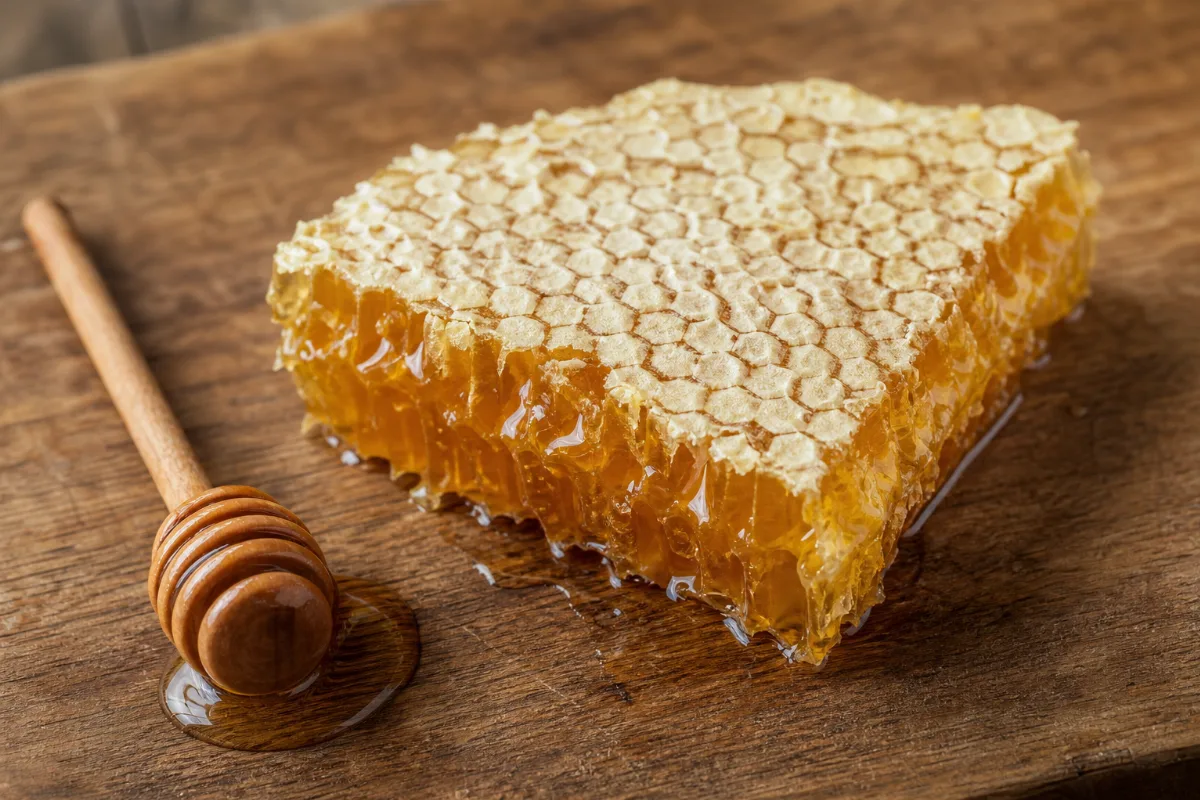
Comb honey: honey in its beeswax comb (made by Apis mellifera) · also called Comb honey, honey in the comb, cut comb, chunk honey
Honeycomb is honey still sealed in the beeswax comb the bees built, eaten whole. Never give it to a baby under 12 months: honey can cause infant botulism. Honey is a sugar food and can cause allergy in some people. No trial in people has tested comb honey for any health use, and the wax can hold farm and hive chemicals.
General information, not medical advice. Last substantive update · Not medically reviewed. A named clinician has not signed off on this page. How this page is made
About Honeycomb
Honeycomb is honey sealed in the beeswax comb that honey bees build. Safety first: never give any honey to a baby under 12 months, because of infant botulism. Honey is a sugar food, and honey or beeswax can cause allergic reactions in some people. The wax can collect residues from mite treatments and pesticides. No trial in people has tested comb honey, so it cannot be said to help any health problem.
What it is
Comb honey is honey stored by bees (Apis mellifera) in the cells of freshly built combs and sold in sealed whole combs or sections of comb, according to the Codex honey standard. Chunk honey is liquid honey with one or more pieces of comb in it.
The honey is mostly sugar and water. The comb is beeswax, a mix of more than 300 compounds including wax esters, hydrocarbons and fatty acids.
What the research shows
No trial has tested comb honey in people. The nearest evidence is a 2023 review of 18 trials of honey in general. It found small average changes in fasting glucose and blood fats, mostly low certainty. The abstract does not say whether any trial used comb.
A lab study found comb honey and processed honey differ in enzymes and antioxidant readings. Reviews of beeswax describe lab activity against germs, but these are test-dish results and wax-in-products uses, not eating comb.
Quality and what the wax can hold
Beeswax collects fat-loving residues. A 2020 survey found 54 different pesticide and veterinary-drug residues in 182 Belgian wax samples, with cappings wax (the thin seal over honey) substantially less contaminated. A 2023 review estimated that two mite treatments, coumaphos and chlorfenvinphos, can build up in wax enough to pose a potential risk to people who eat comb honey. No study measured illness in people.
A 2026 survey of 38 comb honey and 22 extracted honey samples in northern Croatia found coumaphos among the most often detected residues in comb honey, and glyphosate above the EU limit in three honey samples. No sample was over the EU lead limit.
A 2026 review also raises paraffin adulteration of beeswax. A jar or section cannot show any of this, and the words raw or natural are not safety claims.
At a glance
Traditional uses history, not proof
- Honey in the comb is the oldest form of honey as a food. The sources read describe no traditional medical use specific to eating comb.
- A 2026 review describes beeswax as having grown from an ancient remedy into a pharmaceutical ingredient.
Studied for research
- Blood sugar and cholesterol markers (honey in general, not comb): low
- Any health effect of comb honey itself: insufficient
- Comb versus processed honey in the lab (enzymes, antioxidants): very low
- Beeswax slowing germs in dishes (lab only): very low
- Beeswax in medicines and skin products (not eating comb): very low
- What the body does with swallowed wax: insufficient
Main compounds
- Fructose and glucose, the main sugars of honey
- Beeswax: over 300 constituents, including wax esters, hydrocarbons and free fatty acids
- Honey enzymes such as diastase and invertase
Common forms
- Sealed whole comb or cut sections
- Chunk honey: liquid honey with pieces of comb in the jar
- Raw or unfiltered comb honey (not safer for babies)
Research links: WHO: Botulism · NHS: Botulism · MedlinePlus: Infant botulism · WHO: Healthy diet (free sugars) · Honey and cardiometabolic risk factors: meta-analysis (abstract) · Allergic risks of bee products (abstract) · Research Library · Genes & Biomarkers Library
What it is and its history
- Accepted scientific name
- Honeycomb (comb honey: honey still in its beeswax comb)
- Naming authority
- Bee: Apis mellifera Linnaeus, 1758 (GBIF accepted name)
- Synonyms
- Comb honey; Honey in the comb; Cut comb; Chunk honey (honey with comb pieces)
- Common names
- Honeycomb (English); Comb honey (English)
- Family or group
- Made by honey bees (Apidae). Not a plant product.
- Classification
- Animalia > Arthropoda > Insecta > Hymenoptera > Apidae > Apis > Apis mellifera
- Native range
- Not checked.
- What it looks like
- Flowers: Bees gather nectar from many flowers; the sources read do not name flowers for comb honey in general.
- Cultivation
- Not checked.
- Harvest and processing
- Sold as whole or cut sealed comb, or as chunks in a jar of liquid honey. It is usually not filtered or heated, but the sources read do not state how often.
- Look-alikes and adulterants
- Name: Honey with a piece of comb added; Note: Under the Codex definition this is chunk honey, a different presentation from comb honey sold in sealed comb.; Name: Empty or old brood comb; Note: Brood comb is a different thing; Codex defines comb honey as stored in freshly built broodless combs.
Photographs
Traditional use and history history, not clinical proof
| Tradition or era | Documented use | Source |
|---|---|---|
| Beeswax and honey, general | A 2026 review describes beeswax as having evolved from an ancient remedy into a pharmaceutical ingredient. A 2016 review says bees build combs to store honey. No source read describes a traditional medical use specific to eating comb. | p42074130 |
Traditional use shows how it was used. It does not show that it works or is safe today.
What is inside, and how it may work
What it contains and how those compounds act in cells and animals. Laboratory and animal mechanisms are not proven effects in people.
Main compounds
| Compound | Family | Where it is concentrated | Activity studied | Level of evidence |
|---|---|---|---|---|
| Beeswax constituents (wax esters, hydrocarbons, free fatty acids) | waxes | Comb A 2026 review says beeswax has over 300 constituents. | Make the wax firm, water-resistant and a skin barrier in products. 5 | Review |
| Policosanols from beeswax | fatty alcohols | Comb | Described as showing potential cardiovascular and gastroprotective benefits; not tested by eating comb. 5 | Review |
| Honey enzymes (diastase, invertase) | enzymes | Honey Highest in the Croton comb honey in one Ethiopian lab study. | Used as food-quality markers. 7 | Lab analysis |
Mechanisms, receptors and pathways
| Target or pathway | Gene or receptor | What was found | Level |
|---|---|---|---|
| Antimicrobial effect of beeswax in dishes | Beeswax limited several germs in lab tests, more so combined with honey or olive oil. 4 | Laboratory research | |
| Enzymes and antioxidant readings of comb versus processed honey | Enzymes were associated with comb honey and antioxidants with processed honey in chemical tests. 7 | Lab analysis |
Absorption, metabolism and elimination
- Absorption
- Not studied for comb honey in the sources read.
- Distribution
- Not studied.
- Metabolism
- Not studied.
- Elimination
- Not studied.
- Bioavailability
- Not studied.
Isolated compounds versus whole extracts
Comb honey is a whole food: honey plus wax. Findings for honey in general, or for beeswax alone in lab dishes, do not show what the two eaten together do in people.
Nutritional composition
Honey is mostly sugar and water, and WHO counts the sugar in honey as free sugar to be limited. The comb is beeswax. No source read gives the nutrition of comb honey beyond this.
1 low certainty3 very low certainty2 not enough evidence
What was looked at
The 6 benefits and uses checked for Honeycomb, each with how strong the evidence is. Tap one to open it.
- Blood sugar and cholesterol markers (honey in general, not comb)Low certainty
- Any health effect of eating comb honey itselfNot enough evidence
- Comb honey compared with processed honey (lab tests only)Very low certainty
- Beeswax slowing germs in test dishes (lab only)Very low certainty
- Beeswax in medicines and skin products (a different use from eating comb)Very low certainty
- Eating the wax: what the body does with itNot enough evidence
Lab markers tracked in the studies
Fasting blood glucoseLDL cholesterolHDL cholesterolEnzyme activity in honey (diastase and invertase)
What is Honeycomb good for?
What people ask about, and how strong the human evidence is. Where a result is about honey in general or beeswax alone, not comb honey, it says so. None of it is proof, and all of it should be read with the safety section.
Benefits, one by one
Each card is a research question, not a promise. Tap a goal to filter. Open a card to see the studies, doses and limits.
Blood sugar and cholesterol markers (honey in general, not comb)
Low certaintyA review of 18 trials found that honey eaten by mouth lowered fasting blood sugar and some blood fats by small amounts, mostly with low certainty. The review does not say that any trial used honey in the comb. Honey is a sugar food.
2 studiesHoney of several types and processing; the abstract gives no amounts …
Studies, doses and limits
What the trials found
A systematic review and meta-analysis of 18 controlled trials (33 comparisons, 1105 people) lasting at least 1 week.
Results
Small average falls in fasting glucose, total cholesterol, LDL cholesterol, triglycerides and a liver enzyme (ALT), and a small rise in HDL cholesterol. Robinia, clover and raw honey looked most favourable in subgroups.
Effect sizes as reported
Fasting glucose -0.20 mmol/L (95% CI -0.37 to -0.04); LDL -0.16 mmol/L (-0.30 to -0.02); HDL +0.07 mmol/L (0.04 to 0.10).
Why this rating
The authors graded most outcomes low certainty by GRADE, with HDL as high certainty. The effects are small, and the trials were not about comb honey.
Form and dose studied
Honey of several types and processing; the abstract gives no amounts and none are given here.
Who was studied
Adults and others in 18 trials; details are not in the abstract.
Limits
Honey types and processing varied; comb honey is not named; funding is not stated in the abstract; honey remains a free sugar.
Why researchers looked
Honey is a free sugar, yet many people think of it as a healthy choice. Researchers wanted to know whether swapping or adding honey changes blood sugar, blood fats and blood pressure.
Traditional use
Honey has long been eaten as a sweet food. The sources read give no traditional medical use specific to honey in the comb.
Proposed mechanism Pharmacological theory
Not established. The review points to differences by floral source and processing, which the authors say need more study.
A proposed mechanism does not show that the effect happens in people.
Honey is a free sugar. People who manage blood sugar should ask a doctor or pharmacist. Never for babies under 12 months.
Any health effect of eating comb honey itself
Not enough evidenceNo trial in people has tested honey in the comb for any health use. Everything above is about honey in general, and everything below about the wax is from the lab.
2 studiesNot applicable.
Studies, doses and limits
Results
No human results.
Why this rating
There are no human studies of comb honey.
Limits
Only absence of evidence; it does not show comb honey is useless or harmful.
Why researchers looked
People ask whether eating the comb gives something extra over jar honey. The question has not been tested in people.
Traditional use
Honey in the comb is the oldest form of honey as a food. The sources read give no specific traditional medical use.
Proposed mechanism Preliminary mechanism
None shown. A lab study found comb honey and processed honey differ in enzymes and antioxidants, but that does not show a health effect.
A proposed mechanism does not show that the effect happens in people.
Same safety rules as other honey, plus questions about the wax. See the Safety tab.
Comb honey compared with processed honey (lab tests only)
Very low certaintyA lab study in Ethiopia found comb honey had higher enzyme activity and processed honey had higher antioxidant readings. These are tube tests on the food, not results in people.
1 studiesNot applicable.
Studies, doses and limits
Results
Comb honey: highest enzyme activity (diastase, invertase) in the Croton type. Processed honey: highest flavonoid and FRAP readings in the Croton type. One comb honey (Schefflera) had the stronger DPPH reading.
Effect sizes as reported
Lab values only.
Why this rating
Lab chemistry of a few samples from one place; no human outcome.
Limits
Two honey types, one forest; antioxidants in a tube do not show a benefit in the body.
Why researchers looked
People ask whether honey straight from the comb is different from honey that has been processed.
Traditional use
The sources read give no traditional claims for comb versus processed honey.
Proposed mechanism Preliminary mechanism
Processing may change enzymes and antioxidant readings; this was seen in chemical tests of two honey types.
A proposed mechanism does not show that the effect happens in people.
None specific.
Beeswax slowing germs in test dishes (lab only)
Very low certaintyFew lab studies found beeswax slowed some germs in dishes, more so when combined with honey or olive oil. This does not show that eating comb protects against infection.
2 studiesNot applicable.
Studies, doses and limits
Results
In lab studies beeswax limited Staphylococcus aureus, Salmonella enterica, Candida albicans and Aspergillus niger.
Effect sizes as reported
Not given in the abstract.
Why this rating
Lab-level results from few studies.
Limits
Beeswax alone, in dishes; no test of swallowed comb.
Why researchers looked
Honey is known for being sticky and sugary; researchers also looked at the wax of the comb.
Traditional use
Beeswax has been used for a long time on skin and for wrapping food; a 2026 review calls it an ancient remedy.
Proposed mechanism Preliminary mechanism
Not established. The reviews describe antimicrobial activity in lab tests.
A proposed mechanism does not show that the effect happens in people.
None specific.
Beeswax in medicines and skin products (a different use from eating comb)
Very low certaintyA 2026 review says beeswax is useful as an ingredient in creams and drug-delivery systems and describes lab activity against germs, inflammation and wound healing. It notes that beeswax compounds called policosanols show potential for heart and stomach protection. These are not tests of eating comb.
1 studiesNot applicable.
Studies, doses and limits
What the trials found
Not graded in the abstract.
Results
Narrative statements only.
Effect sizes as reported
Not given.
Why this rating
Narrative review; "potential" benefits; not about eating comb.
Limits
About wax used in products, not comb honey.
Why researchers looked
Beeswax is widely used as a pharmaceutical ingredient.
Traditional use
The review describes beeswax as evolving from an ancient remedy.
Proposed mechanism Preliminary mechanism
Beeswax forms a barrier on skin and carries drugs; policosanol effects are described as potential.
A proposed mechanism does not show that the effect happens in people.
The same review raises paraffin adulteration and pesticide contamination of beeswax.
Eating the wax: what the body does with it
Not enough evidenceNone of the sources read say how well people digest comb wax, or whether swallowing it causes any benefit or harm. Beeswax is used as a food additive (E901) in small roles, which does not show that eating comb is harmless.
2 studiesNot applicable.
Studies, doses and limits
Results
No data.
Why this rating
No source read addresses it.
Limits
Absence of data is not proof of safety.
Why researchers looked
Many people eat the wax with the honey and wonder what it does.
Traditional use
Not described in the sources read.
Proposed mechanism Pharmacological theory
Not studied.
A proposed mechanism does not show that the effect happens in people.
See the Safety tab.
Connections to the rest of health
How Honeycomb connects to the rest of our health knowledge graph. Every link says what kind of connection it is. A safety link (for example to the liver) is a warning, not a benefit. A study that merely mentions a topic never creates a benefit link.
Explore every connection: goals, body systems, organs, symptoms, genes
B. Body systems
| Connected to | Kind of connection | Evidence status | Context | Studies |
|---|---|---|---|---|
| Immune system | Adverse effect or risk | Low certainty | Allergic reactions, rare but can be severe. Preparation or compound: Honey and beeswax |
6 |
| Endocrine System | Biological association | Low certainty | Studied for: Blood sugar and cholesterol markers (honey in general, not comb) | 1 13 |
| Cardiovascular System | Biological association | Low certainty | Studied for: Blood sugar and cholesterol markers (honey in general, not comb) | 1 13 |
| Digestive System | Biological association | Not enough evidence | Studied for: Any health effect of eating comb honey itself Studied for: Eating the wax: what the body does with it | 7 5 4 |
| Integumentary System | Biological association | Very low certainty | Studied for: Beeswax in medicines and skin products (a different use from eating comb) | 5 |
C. Body parts and organs
G. Root causes and contributing factors
| Connected to | Kind of connection | Evidence status | Context | Studies |
|---|---|---|---|---|
| Environmental toxins | Adverse effect or risk | Low certainty | Pesticide and mite-treatment residues were found in wax and comb honey; illness in people was not measured. Preparation or compound: Comb wax residues |
9 8 3 |
I. Biomarkers
| Connected to | Kind of connection | Evidence status | Context | Studies |
|---|---|---|---|---|
| Fasting blood glucose | Biological association | Low certainty | Measured in trials: lowered. A lab change is not the same as a health benefit. | 1 |
| LDL cholesterol | Biological association | Low certainty | Measured in trials: lowered. A lab change is not the same as a health benefit. | 1 |
| HDL cholesterol | Biological association | Moderate certainty | Measured in trials: raised. A lab change is not the same as a health benefit. | 1 |
| Enzyme activity in honey (diastase and invertase) | Biological association | Very low certainty | Measured in trials: raised. A lab change is not the same as a health benefit. | 7 |
L. Active compounds
| Connected to | Kind of connection | Evidence status | Context | Studies |
|---|---|---|---|---|
| Beeswax constituents (wax esters, hydrocarbons, free fatty acids) | Biological association | Review | Make the wax firm, water-resistant and a skin barrier in products. Preparation or compound: Comb |
5 |
| Policosanols from beeswax | Biological association | Review | Described as showing potential cardiovascular and gastroprotective benefits; not tested by eating comb. Preparation or compound: Comb |
5 |
| Honey enzymes (diastase, invertase) | Biological association | Lab analysis | Used as food-quality markers. Preparation or compound: Honey |
7 |
Each connection is stored with the ingredient, the connected record, the kind of connection, the evidence status, the supporting studies, the preparation or compound involved, and a review date (last reviewed October 25, 2026).
The evidence
The research centre for Honeycomb. Every record here was checked against PubMed or the publisher's page; we never list a study we have not verified.
Evidence by outcome
Bars show how many studies we found for each outcome, not how well it works. People are added up across trials only (reviews are not added, to avoid double counting).
How we rate evidence
High certainty
Several well-run trials or reviews agree; further research is unlikely to change the picture much.
Moderate certainty
Good trials point the same way, but some doubt remains.
Low certainty
Small, short or inconsistent trials. The finding could change with better research.
Very low certainty
Very little or very weak human data. Treat as a possibility only.
Mixed findings
Trials or reviews disagree with each other.
Not enough evidence
Not enough human research to say either way.
Evidence against
Good research found no benefit, or found harm.
We take the reviewers' own risk-of-bias and GRADE statements where they exist, and otherwise judge from study size, design, consistency, directness and whether a product matches what is sold. Many publications do not make evidence high. Method note: We read the abstracts of 9 PubMed papers and the WHO botulism and healthy-diet fact sheets, the NHS botulism page, the MedlinePlus infant botulism page and the Codex comb honey definition in full, and checked the bee name in GBIF. Certainty ratings are the compiler's own reading unless a review gives its own.
Study library: every study we checked 15
| Study | Design | People | Product, dose, length | Result |
|---|---|---|---|---|
| Ahmed 2023 Effect of honey on cardiometabolic risk factors: a systematic review and meta-analysis. Nutrition Reviews · PMID 36379223 · DOI |
Meta-analysis |
1105 18 controlled trials (33 comparisons), 1105 participants; oral honey for at least 1 week |
Honey eaten by mouth (types varied; subgroups by floral source and processing) honey (extracted or raw; the abstract does not say any trial used comb honey) Not given as advice here At least 1 week per trial · vs Control diets or other sugars as in the trials |
Honey lowered fasting glucose, total cholesterol, LDL cholesterol, triglycerides and ALT (all low certainty by GRADE) and raised HDL cholesterol (high certainty). Subgroups with robinia honey, clover honey and raw honey showed benefit for fasting glucose and total cholesterol. Fasting glucose -0.20 mmol/L; total cholesterol -0.18 mmol/L; LDL -0.16 mmol/L; triglycerides -0.13 mmol/L; ALT -9.75 U/L; HDL +0.07 mmol/L (Fasting glucose -0.37 to -0.04; total cholesterol -0.33 to -0.04; LDL -0.30 to -0.02; triglycerides -0.20 to -0.07; ALT -18.29 to -1.21; HDL 0.04 to 0.10) Methods, limits and fundingOutcomes: Body fat, blood sugar, blood fats, blood pressure, uric acid, inflammation and liver markers Limitations: The authors rate most results low certainty and call for more studies on floral source and processing. The abstract does not name comb honey. The authors note honey is a free sugar. Effects are small. Funding and conflicts: Not stated in the abstract. Registration: PROSPERO CRD42015023580 Read: abstract |
| Aricò 2026 Infant Botulism and Honey Exposure: Global Epidemiology, Prevention Policies, and Communication Strategies. Acta Paediatrica · PMID 41964486 · DOI |
Narrative review |
Narrative review of surveillance reports and literature, 1976 to 2024 | Honey exposure in infants honey (all types) 1976-2024 data |
Cases were rare but honey was the only consistently confirmed dietary source of infant botulism. Median age at onset was 3 to 4 months; mortality was below 1% with intensive care and human botulism immune globulin. A 2007 to 2021 global review reported about 130 cases a year in the USA. Authorities uniformly advise no honey before 12 months, but warning labels stay voluntary in many regions. Rare; about 130 USA cases a year (—) Methods, limits and fundingOutcomes: Infant botulism cases, prevention policies Limitations: A narrative review; the abstract does not name comb honey. Funding and conflicts: Not stated in the abstract. Read: abstract |
| El Agrebi 2020 Pesticide and veterinary drug residues in Belgian beeswax: Occurrence, toxicity, and risk to honey bees. Science of the Total Environment · PMID 32758732 · DOI |
Lab analysis lab |
182 182 beeswax samples (brood comb, recycled comb, honey comb and cappings wax) from Belgian apiaries, spring 2016 |
Chemical analysis for 294 residues beeswax One-time sampling |
54 different pesticide and veterinary drug residues were found across the four wax types. Residues likelier to stay in wax were those used inside hives or very fat-loving. Cappings wax was substantially less contaminated. Survey (—) Methods, limits and fundingOutcomes: Residues in wax and risk to honey bees Limitations: The risk modelled was to bees, not to people eating comb. One country, one season. Funding and conflicts: Authors declare no competing interests. Read: abstract |
| Fratini 2016 Beeswax: A minireview of its antimicrobial activity and its application in medicine. Asian Pacific Journal of Tropical Medicine · PMID 27633295 · DOI |
Narrative review lab |
Review of laboratory studies of beeswax | Beeswax alone or with honey or olive oil beeswax Lab |
The few studies showed beeswax limiting Staphylococcus aureus, Salmonella enterica, Candida albicans and Aspergillus niger; effects were stronger when combined with honey or olive oil. The review says beeswax is used in food as a cheese wrap and as an additive (E901). It says beeswax is thought to help bruises, inflammation and burns. Qualitative review; no effect sizes in the abstract Methods, limits and fundingOutcomes: Antimicrobial activity of beeswax Limitations: A minireview of few studies; the authors say there are still few studies on beeswax alone. Test-dish results do not show effects from eating comb. Therapeutic statements are described as "thought to be". Funding and conflicts: Not stated in the abstract. Read: abstract |
| Huanbutta 2026 Beeswax in Pharmaceutical Sciences: A Comprehensive Review of Its Chemical Composition, Functional Applications, Types, and Formulation Roles. International Journal of Molecular Sciences · PMID 42074130 · DOI |
Narrative review lab |
Narrative review of beeswax from Apis mellifera and Apis cerana | Beeswax used in drug formulations beeswax Review |
Beeswax has over 300 constituents, including wax esters, hydrocarbons and free fatty acids. It is used in topical products and drug-delivery systems. It "exhibits" antimicrobial, anti-inflammatory and wound-healing activity, and beeswax-derived policosanols show potential cardiovascular and gastroprotective benefits. The authors raise concerns about paraffin adulteration and pesticide contamination. Narrative; no effect sizes in the abstract Methods, limits and fundingOutcomes: Composition, uses in pharmaceutical products, antimicrobial, anti-inflammatory and wound-healing activity, quality Limitations: A narrative review about pharmaceutical use of the wax, not about eating comb honey. The abstract does not rate the strength of the evidence. Funding and conflicts: Authors declare no conflicts of interest. Read: abstract |
| Matuszewska-Mach 2025 Ensuring the Safe Use of Bee Products: A Review of Allergic Risks and Management. International Journal of Molecular Sciences · PMID 41465502 · DOI |
Narrative review |
Narrative review of allergy to honeybee products | Honey, bee pollen, bee bread, royal jelly, propolis, beeswax, bee brood honey and beeswax among the bee products Review |
Bee products can provoke allergic reactions from local dermatitis to life-threatening anaphylaxis, though relatively rarely. Both IgE-mediated (type I) and T-cell (type IV) mechanisms are described. People with atopy and beekeepers are at heightened risk. Management centres on avoiding the product. Rare but can be severe (—) Methods, limits and fundingOutcomes: Allergic reactions, mechanisms, risk groups Limitations: Narrative review; no rates given in the abstract; comb honey not named. Funding and conflicts: Authors declare no conflicts of interest. Read: abstract |
| Mulugeta 2022 Comb honey and processed honey of Croton macrostachyus and Schefflera abyssinica honey differentiated by enzymes and antioxidant properties, and botanical origin. Heliyon · PMID 35647353 · DOI |
Lab analysis lab |
Comb and industrially processed honey samples from Bonga forest, Ethiopia (two honey types by pollen analysis) | Chemical tests of comb honey versus processed honey honey (comb and processed) Lab · vs Processed honey |
Croton comb honey had the highest enzyme activity (diastase 7.44 +/- 0.13 degrees Schade; invertase 13.97 +/- 0.2). Croton processed honey had the highest flavonoids and FRAP antioxidant values; Schefflera comb honey had stronger DPPH radical scavenging. Enzymes were associated with comb honey and antioxidants with processed honey. Lab description of the food; not a health effect Methods, limits and fundingOutcomes: Enzyme activity (diastase, invertase), antioxidant tests, physical and chemical properties Limitations: Two honey types from one forest in Ethiopia; sample number not given in the abstract; antioxidant tests in a tube do not show effects in the body. Funding and conflicts: Authors declare no conflict of interest. Read: abstract |
| Pavliček 2026 Pesticides and Trace Element Residues in Honey from Northern Croatia. Foods · PMID 42121445 · DOI |
Lab analysis lab |
60 38 comb honey and 22 extracted honey samples, northern Croatia, June 2023 |
Chemical analysis for 190 pesticides and 17 metals comb honey and extracted honey One-time sampling · vs Extracted honey |
In comb honey the most frequently found pesticides were fipronil-sulfone, trifloxystrobin and coumaphos. Glyphosate was the only pesticide above the EU maximum residue level (0.05 mg/kg), in three honey samples. No sample had lead above the EU limit for honey (0.1 mg/kg). Silver, arsenic and selenium were not detected. Health risks were not assessed. Survey (—) Methods, limits and fundingOutcomes: Pesticide and metal residues Limitations: One-time purposive sampling in one agricultural region; the abstract does not say which sample type had the glyphosate results. Funding and conflicts: Authors declare no conflicts of interest. Read: abstract |
| Végh 2023 Pesticide residues in bee bread, propolis, beeswax and royal jelly - A review of the literature and dietary risk assessment. Food and Chemical Toxicology · PMID 37121430 · DOI |
Narrative review review |
Review of residue studies, plus calculated dietary exposure | Hive products including beeswax beeswax (and comb honey consumers) Review |
Acaricides (mite treatments) can accumulate in bee bread, propolis and beeswax up to more than a thousand micrograms per kilogram. Tau-fluvalinate, coumaphos, chlorfenvinphos, chlorpyrifos and amitraz were commonly found. The authors estimate that coumaphos and chlorfenvinphos can accumulate in beeswax enough to pose a potential health risk to consumers of comb honey. Residues do not appear to transfer to royal jelly. Calculated estimate; no illness measured (—) Methods, limits and fundingOutcomes: Residue levels and calculated health risk Limitations: Risk is estimated from residue data and recommended intakes; no study measured illness in people. Funding and conflicts: Authors declare no competing interests. Read: abstract |
| n/a 1987 Codex Alimentarius: Standard for Honey (older text on fao.org) n/a · Source |
Authoritative guidance n/a |
n/a | n/a |
Comb honey is honey stored by bees in the cells of freshly built broodless combs and sold in sealed whole combs or sections of such combs. Chunk honey contains one or more pieces of comb honey. Methods, limits and fundingOutcomes: Defines honey and the ways it is presented, including comb honey and chunk honey. Limitations: A food standard, not health evidence. The version read is the older text on this page. Read: full-text |
| n/a 2023 WHO: Botulism (fact sheet, 25 September 2023) n/a · Source |
Authoritative guidance n/a |
n/a | n/a |
Infant botulism symptoms listed: constipation, loss of appetite, weakness, an altered cry and a striking loss of head control. Spore-contaminated honey has been associated with a number of cases, so parents and caregivers are warned not to feed honey to infants before the age of 1 year. Spores are described as heat-resistant. Methods, limits and fundingOutcomes: Describes infant botulism: spores swallowed by an infant germinate in the gut and release toxins; it mostly affects infants under 6 months. Limitations: A regulator fact sheet, not a trial. It does not mention comb honey by name. Read: full-text |
| n/a 2025 MedlinePlus: Infant botulism n/a · Source |
Authoritative guidance n/a |
n/a | n/a |
Says spores may be found in soil and certain foods such as honey and some corn syrups, that infant botulism occurs mostly between 6 weeks and 6 months, and that honey and corn syrup should not be fed to infants under 1 year. Review date shown: 7/1/2025. Methods, limits and fundingOutcomes: Infant botulism causes, risk factors and prevention. Limitations: An encyclopedia entry; it does not mention comb honey by name. Read: full-text |
| n/a 2026 WHO: Healthy diet (fact sheet) n/a · Source |
Authoritative guidance n/a |
n/a | n/a |
Free sugars include sugars naturally present in honey, syrups, fruit juices and fruit juice concentrates. Methods, limits and fundingOutcomes: Says free sugars should be limited throughout life and defines free sugars. Limitations: A general nutrition fact sheet; it does not mention comb honey. Read: full-text |
| n/a 2026 NHS: Botulism n/a · Source |
Authoritative guidance n/a |
n/a | n/a |
Says not to give honey to babies younger than 12 months because honey can contain the bacteria that cause botulism. The page was last reviewed 4 March 2026. Methods, limits and fundingOutcomes: Advice on preventing botulism. Limitations: A patient information page; it does not mention comb honey by name. Read: full-text |
| n/a 2026 GBIF Backbone Taxonomy: Apis mellifera Linnaeus, 1758 n/a · Source |
Database record n/a |
n/a | n/a |
Apis mellifera Linnaeus, 1758: status ACCEPTED, exact match, GBIF key 1341976, family Apidae, order Hymenoptera, class Insecta. Methods, limits and fundingOutcomes: Accepted name check. Limitations: A name record only. Read: api |
What we do not know yet
- No human trial of comb honey for any health use was found.
- No source read describes how comb wax is digested, or reports on choking or blockage from it.
- The honey reviews do not say whether any trial used comb honey.
- No information on honeycomb in pregnancy, breastfeeding or with medicines was found.
- Residue surveys come from Belgium and Croatia only; other regions may differ.
How new research is added
New studies are found by a saved PubMed search and are placed in a review queue. A person reads each one before it is added.
Lab markers
What changed in blood or saliva tests during trials. A changed number is not the same as feeling or being healthier, and we give no "normal ranges".
Metabolic 3
Fasting blood glucose
Lowered in trials
Blood sugar after not eating overnight.
Low certaintyResults and what it means
Why it was measured
To see whether honey raises or lowers blood sugar.
Statistical vs. clinical meaning
Small average change; low certainty by GRADE.
Safety implication
Honey is a free sugar; ask a doctor or pharmacist if you manage blood sugar.
| Study | Result | People | Product |
|---|---|---|---|
| 1 | Honey lowered fasting glucose by 0.20 mmol/L on average (low certainty). The abstract names robinia, clover and raw honey as showing the benefit in subgroups. | Participants in controlled trials of at least 1 week | Honey of several types, eaten by mouth |
LDL cholesterol
Lowered in trials
The cholesterol carried in LDL particles, often called the "bad" cholesterol.
Low certaintyResults and what it means
Why it was measured
LDL is one marker of heart and blood vessel risk.
Statistical vs. clinical meaning
Small average change; low certainty.
Safety implication
None specific beyond the sugar content of honey.
| Study | Result | People | Product |
|---|---|---|---|
| 1 | LDL fell by 0.16 mmol/L on average (low certainty). | Participants in controlled trials of at least 1 week | Honey of several types |
HDL cholesterol
Raised in trials
The cholesterol carried in HDL particles, often called the "good" cholesterol.
Moderate certaintyResults and what it means
Why it was measured
HDL is another marker of heart and blood vessel risk.
Statistical vs. clinical meaning
A very small change. A small rise in a marker is not proof of better health outcomes.
Safety implication
None specific beyond the sugar content of honey.
| Study | Result | People | Product |
|---|---|---|---|
| 1 | HDL rose by 0.07 mmol/L on average; the authors graded this high certainty. | Participants in controlled trials of at least 1 week | Honey of several types |
Other 1
Enzyme activity in honey (diastase and invertase)
Raised in trials
Lab measures of two natural enzymes in honey, often used as quality markers for freshness and handling.
Very low certaintyResults and what it means
Why it was measured
To compare comb honey with processed honey.
Statistical vs. clinical meaning
A food-quality measurement, not a body marker.
Safety implication
None.
| Study | Result | People | Product |
|---|---|---|---|
| 7 | The Croton macrostachyus comb honey had the highest enzyme activity (diastase 7.44 degrees Schade; invertase 13.97 invertase number). | Honey samples from Bonga forest, Ethiopia | Comb honey versus processed honey |
Safety
What studies and official sources say about side effects, medicines and who should check first. Each point shows what kind of evidence it comes from.
Main points to know 5
- Never give honeycomb to a baby under 12 months (infant botulism). WHO, the NHS and MedlinePlus all say not to give honey to babies under 12 months. Honey can carry spores of the bacterium behind botulism, and in a baby the spores can grow in the gut and release a toxin. Comb honey is honey, so the rule applies. "Raw" or "unfiltered" is not safer: WHO describes the spores as heat-resistant. Authoritative guidance 11 14 12 2
- Allergy to honey or bee products. Honey and beeswax can cause allergic reactions, from skin reactions to life-threatening anaphylaxis, though this is relatively rare. People with an allergic tendency (atopy) and beekeepers are at higher risk. Review 6
- Honey is sugar. WHO counts the sugar naturally present in honey as free sugar to be limited. Comb honey is no exception. People who manage blood sugar should ask a doctor or pharmacist. Authoritative guidance 13 1
- The wax can hold farm and hive chemicals. Beeswax collects fat-loving residues, including mite treatments used in hives. A 2023 review estimated that two of them (coumaphos and chlorfenvinphos) could accumulate in wax enough to be a potential risk to people who eat comb honey. A 2026 survey found coumaphos among the most often detected residues in comb honey. No study measured illness in people. Review 9 8 3
- Nobody has studied what swallowed wax does. None of the sources read describe how people digest comb wax, or report on choking or gut blockage from it. Absence of reports is not proof of safety. Beeswax is a food additive (E901), but that is a small, different use. No data 4 5
Side effects 3
| Effect | How often | Severity and recovery | Evidence |
|---|---|---|---|
| Infant botulism (babies under 12 months) Honey was the only consistently confirmed food source. It applies to every honey, comb included. | Rare; about 130 cases a year in the USA in one global review | severe Mortality below 1% with intensive care and specific treatment; hospital care is needed | Review 11 2 |
| Allergic reaction to honey, wax or other bee product residues Higher risk in people with atopy and in beekeepers. | Relatively rare; no rate in the abstract | mild to severe (anaphylaxis possible) Varies | Review 6 |
| Chemical residues from the wax (mite treatments, pesticides) Estimated potential risk only. | Residues were common in wax and comb honey samples; effects on people not measured | unknown Unknown | Lab analysis 9 8 3 |
Liver
No report of liver injury from honeycomb was found in the sources read. The honey meta-analysis found lower ALT (a liver enzyme) on average (low certainty); that is a trial result for honey in general, not a safety finding for comb. 1
How often. No rate found.
Monitoring. No agency monitoring advice was read.
This is a safety connection. It is not evidence that Honeycomb supports liver health.
Medicines and supplements 1
| With | Why it matters | Importance | Evidence | What to do |
|---|---|---|---|---|
| Glucose-lowering medicines and insulin prescription | Honey is a sugar food and may change blood sugar. | Honey trials show small average changes in blood sugar; no interaction study with diabetes medicines was read. | Pharmacological theory Not enough evidence 1 | Ask a doctor or pharmacist before adding honey regularly if you take glucose-lowering medicines. |
Who should check first 5
| Situation | Advice | Evidence |
|---|---|---|
| Babies under 12 months | Do not give honey in any form, comb included. | Authoritative guidance 11 14 12 |
| Known allergy to honey, bee products, bee venom or pollen, or atopy with a history of severe reactions | Avoid unless an allergy specialist advises otherwise. Seek urgent care for breathing trouble or swelling. The review describes cross-reactivity as one possible route to sensitisation. | Review 6 |
| Diabetes or blood sugar problems | Honey is a free sugar. Ask a doctor or pharmacist. | Authoritative guidance 13 1 |
| Pregnancy and breastfeeding | No source read addresses honeycomb in pregnancy or breastfeeding. Ask a doctor, midwife or pharmacist. | No data |
| Young children who can eat honey (over 12 months), and people with swallowing problems | No source read addresses comb pieces for these groups. Ask a doctor or pharmacist if unsure. | No data |
Overdose, product quality and regulators
Summary. Honey is a food. No source read reports toxicity from honeycomb itself. The documented concerns are residues in the wax and infant botulism.
Animal. Not studied for comb in the sources read.
Human doses studied. Not given as advice here.
Overdose response. Not described in the sources read.
Genotoxicity. Not studied.
Surveys found pesticide and veterinary-drug residues in beeswax and comb honey. Paraffin adulteration of beeswax is also raised as a concern in a 2026 review.
Mite treatments and pesticides in wax. 54 different residues were found in 182 Belgian beeswax samples; cappings wax was substantially less contaminated than other wax types. A review estimated potential risk to comb honey eaters from coumaphos and chlorfenvinphos. 3 9
Residues in comb honey in one region. In 38 comb honey and 22 extracted honey samples from northern Croatia, fipronil-sulfone, trifloxystrobin and coumaphos were most often found in comb honey. Glyphosate was above the EU limit in three honey samples. No sample exceeded the EU lead limit. 8
Wax adulteration. The 2026 pharmaceutical review raises paraffin adulteration of beeswax as a quality concern. 5
| Body | Action | Date |
|---|---|---|
| World Health Organization (International) | Botulism fact sheet: parents and caregivers are warned not to feed honey to infants before 1 year; spores are heat-resistant. source | 2023-09-25 |
| NHS (England) (United Kingdom) | Do not give honey to babies younger than 12 months. source | 2026-03-04 |
| MedlinePlus (US National Library of Medicine) (United States) | Honey and corn syrup should not be fed to infants under 1 year. source | 2025-07-01 |
| World Health Organization (International) | Healthy diet fact sheet: free sugars, including sugars naturally present in honey, should be limited. source | 2026-01-26 |
| Codex Alimentarius (FAO/WHO) (International) | Defines comb honey as honey stored by bees in the cells of freshly built broodless combs, sold in sealed whole combs or sections; chunk honey contains pieces of comb honey. source | 1987 |
When to get medical help
- A baby under 12 months who has had honey and has constipation, a weak cry, poor feeding, is unusually sleepy, or has a floppy head, neck, arms or legs: get emergency medical help now.
- Anyone with trouble breathing, swelling of the face or throat, hives or fainting after eating honey or comb: call emergency services.
- Anyone who swallowed a lump of comb and then has severe belly pain, repeated vomiting or cannot pass wind or stool: seek urgent medical care. (No report of this was found; it is a general precaution.)
Stop using the product and contact a clinician or emergency service. In the US, Poison Control is 1-800-222-1222.
General information only, not medical advice. Ask a clinician or pharmacist before use, especially with medicines, in pregnancy or with a health condition. See the Natural Remedy Safety guide.
Frequently asked questions
Is honeycomb safe for babies?
What is honeycomb?
Is the wax safe to swallow?
Is honeycomb healthier than regular honey?
This has not been tested in people. A lab study found comb honey had more enzyme activity and processed honey had higher antioxidant readings in two honey types, but that does not show a health difference.
Does honeycomb help with blood sugar or cholesterol?
Is honeycomb good for people with diabetes?
Can honeycomb cause an allergic reaction?
Yes, in some people. A 2025 review says honey and beeswax can trigger reactions from skin problems to life-threatening anaphylaxis, though relatively rarely. People with an allergic tendency and beekeepers are at higher risk. Call emergency services for trouble breathing or swelling.
Can honeycomb contain pesticides?
Does raw honeycomb kill germs or boost immunity?
Is honeycomb safe in pregnancy or breastfeeding?
No source read covers honeycomb in pregnancy or breastfeeding. Ask a doctor, midwife or pharmacist.
Can you use honeycomb on a wound or burn?
Do not use food honey or comb in place of medical care for a wound or burn. Sterile medical-grade honey dressings are a separate medical product.
How can I tell if honeycomb is genuine?
A jar or section cannot show it. A 2026 review raises paraffin adulteration of beeswax as a concern. A named beekeeper who can say how the hive was treated is a better sign than the words raw or natural.
Explore by health goal
Editorial transparency
- Written by
- AlternativeMed editorial team. Research compiled with AI assistance, then checked against PubMed records.
- Medical review
- None. This page has not been reviewed by a physician or pharmacist.
- First published
- 2026-10-25
- Last substantive update
- 2026-10-25
- How we research
- We read the abstracts of 9 PubMed papers and the WHO botulism and healthy-diet fact sheets, the NHS botulism page, the MedlinePlus infant botulism page and the Codex comb honey definition in full, and checked the bee name in GBIF. Certainty ratings are the compiler's own reading unless a review gives its own.
- How we rate evidence
- See "How we rate evidence" in the Evidence tab.
- Independence
- No product is promoted on this page. No affiliate links are shown.
Sources 15
Each source was opened and checked. Where we read only the abstract, it says so. The small numbers in the text point here.
- Ahmed A, Tul-Noor Z, Lee D, et al. Effect of honey on cardiometabolic risk factors: a systematic review and meta-analysis.. Nutrition Reviews. 2023. PMID 36379223. DOI 10.1093/nutrit/nuac086. (abstract)
- Aricò MO, Caselli D, Stefanizzi P, et al. Infant Botulism and Honey Exposure: Global Epidemiology, Prevention Policies, and Communication Strategies.. Acta Paediatrica. 2026. PMID 41964486. DOI 10.1111/apa.70538. (abstract)
- El Agrebi N, Traynor K, Wilmart O, et al. Pesticide and veterinary drug residues in Belgian beeswax: Occurrence, toxicity, and risk to honey bees.. Science of the Total Environment. 2020. PMID 32758732. DOI 10.1016/j.scitotenv.2020.141036. (abstract)
- Fratini F, Cilia G, Turchi B, Felicioli A. Beeswax: A minireview of its antimicrobial activity and its application in medicine.. Asian Pacific Journal of Tropical Medicine. 2016. PMID 27633295. DOI 10.1016/j.apjtm.2016.07.003. (abstract)
- Huanbutta K, Chuttong B, Danmek K, et al. Beeswax in Pharmaceutical Sciences: A Comprehensive Review of Its Chemical Composition, Functional Applications, Types, and Formulation Roles.. International Journal of Molecular Sciences. 2026. PMID 42074130. DOI 10.3390/ijms27083486. (abstract)
- Matuszewska-Mach E, Borysewicz P, Królak J, et al. Ensuring the Safe Use of Bee Products: A Review of Allergic Risks and Management.. International Journal of Molecular Sciences. 2025. PMID 41465502. DOI 10.3390/ijms262412074. (abstract)
- Mulugeta M, Belay A. Comb honey and processed honey of Croton macrostachyus and Schefflera abyssinica honey differentiated by enzymes and antioxidant properties, and botanical origin.. Heliyon. 2022. PMID 35647353. DOI 10.1016/j.heliyon.2022.e09512. (abstract)
- Pavliček D, Sedak M, Bilandžić N, et al. Pesticides and Trace Element Residues in Honey from Northern Croatia.. Foods. 2026. PMID 42121445. DOI 10.3390/foods15091502. (abstract)
- Végh R, Csóka M, Mednyánszky Z, Sipos L. Pesticide residues in bee bread, propolis, beeswax and royal jelly - A review of the literature and dietary risk assessment.. Food and Chemical Toxicology. 2023. PMID 37121430. DOI 10.1016/j.fct.2023.113806. (abstract)
- n/a. Codex Alimentarius: Standard for Honey (older text on fao.org). n/a. 1987. (full-text)
- n/a. WHO: Botulism (fact sheet, 25 September 2023). n/a. 2023. (full-text)
- n/a. MedlinePlus: Infant botulism. n/a. 2025. (full-text)
- n/a. WHO: Healthy diet (fact sheet). n/a. 2026. (full-text)
- n/a. NHS: Botulism. n/a. 2026. (full-text)
- n/a. GBIF Backbone Taxonomy: Apis mellifera Linnaeus, 1758. n/a. 2026. (api)
Where to buy
Check the label first. Whatever you buy, look for these:
- Raw or pasteurized, and the single flower source if stated
- Origin and any lab testing the seller shares
- Not for infants under 12 months
- A sealed jar with a packed-on date
Talk to a pharmacist or doctor before you start any supplement, especially if you take medicines. See the Safety tab for interactions.
Support our free guides: as an Amazon Associate we earn from qualifying purchases. Full disclosure.


