Honey & Bee Products · Honey
Honeydew Honey
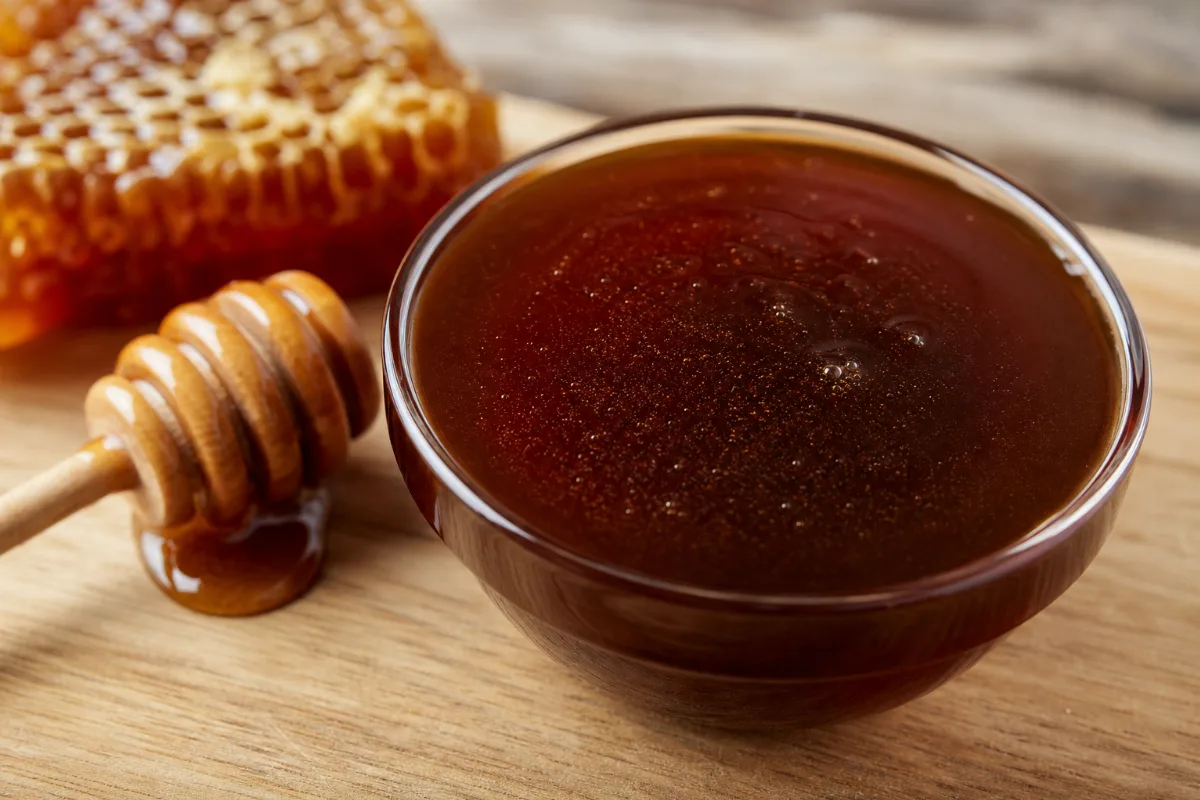
Honey made by Apis mellifera from honeydew (sap-sucking insect secretions) · also called Forest honey, fir honeydew honey, oak honeydew honey, pine honey
Honeydew honey is a dark honey that bees make from the sugary secretions of sap-sucking insects such as aphids, not from flower nectar. Never give any honey to a baby under 12 months: it can cause infant botulism. Honey is a sugar food. The research is mostly lab work, with one small uncontrolled study of sterilised honeydew honey on leg ulcers. In parts of New Zealand some honeydew honey carries a plant poison.
General information, not medical advice. Last substantive update · Not medically reviewed. A named clinician has not signed off on this page. How this page is made
About Honeydew Honey
Honeydew honey is a dark honey that bees make from the secretions of sap-sucking insects rather than flower nectar. Safety first: never give any honey to a baby under 12 months because of infant botulism. Honey is a sugar food and can cause allergy in some people. In parts of New Zealand honeydew honey can contain the poison tutin. There is no randomised trial of honeydew honey. Most findings are from the lab, cells or mice.
What it is
Honeydew honey is made by the honey bee (Apis mellifera) from honeydew: sugary secretions that sap-sucking insects such as aphids leave on plants. It is different from flower honey, which comes from nectar. It has nothing to do with the honeydew melon.
A 2019 review says honeydew honeys are usually dark, with less monosaccharide sugar and higher pH, acidity, electrical conductivity, protein, minerals and phenolic compounds than flower honeys. In 17 Bulgarian samples, oak honeydew honeys ranged in colour from 80 to 134 mm Pfund and coniferous honeydew honeys from 40 to 87, and conductivity was at least 0.80 mS/cm in both. Experts say honeydew honeys are still little studied compared with flower honeys.
What the research shows
We found no randomised trial of honeydew honey. The only human study is a 2014 report on 25 people with chronic leg ulcers who had sterilised honeydew honey applied. Their average ulcer area fell from 51 to 22 square centimetres over 6 weeks. There was no comparison group, so the result cannot be credited to the honey.
A Cochrane review of honey dressings in general found they heal partial-thickness burns faster than ordinary dressings, but weak or unclear evidence for most other wounds. It does not separate honey types.
Everything else is from lab dishes, cells or mice. Honeydew honeys slowed bacteria, scored high in antioxidant tests and lowered inflammation signals in mouse cells. In mice, honeydew honey made full-thickness wounds heal worse than the control dressings. None of this shows an effect in people.
Quality and buying
An Italian study found pesticide residues in 90% of 59 honeydew honeys, all below the EFSA limit, with fir honeydews lowest. A Greek study found no cheap-sugar adulteration in its honeydew samples, but Italian authors say honeydew honey is easy to counterfeit.
A jar cannot show any of this. A tree name on a label does not prove what is inside, and words like raw or natural are not safety claims.
At a glance
Traditional uses history, not proof
- Honey in general has a long history as a home remedy; the sources read describe no traditional medical use specific to honeydew honey.
- A 2014 study notes that only a few honeys meet the criteria for clinical use as wound dressings.
Studied for research
- Chronic leg ulcers (sterilised honeydew honey, 25 people, no comparison group): very low
- Wounds and burns (honey dressings in general): mixed
- Wound healing in mice and skin cells: very low
- Antibacterial activity (lab dishes): very low
- Antioxidant activity (lab): very low
- Inflammation signals in mouse cells: very low
- Gum-disease bacteria (lab and mice): very low
- Blood sugar and heart markers (honey in general): mixed
Main compounds
- Sugars, with fewer monosaccharides and more oligosaccharides than flower honey
- Phenolic compounds such as quercetin, naringenin, syringic acid and rutin
- Minerals, with potassium the most abundant in Bulgarian samples
- Tutin, a plant neurotoxin, in toxic honeydew honey from New Zealand
Common forms
- Liquid honey, the usual jar product, raw or heated
- Honey labelled by tree, such as fir, oak or pine honeydew
- Sterilised (gamma-irradiated) honey for wound care, a separate medical product
Research links: WHO: Botulism · NHS: Botulism · WHO: Healthy diet (free sugars) · Sterile honeydew honey on leg ulcers (abstract) · Honeydew honey overview (abstract) · Tutin honey poisoning in New Zealand (abstract) · Research Library · Genes & Biomarkers Library
What it is and its history
- Accepted scientific name
- Honeydew honey (honey made mainly from honeydew rather than flower nectar)
- Naming authority
- Made by the honey bee Apis mellifera Linnaeus, 1758 (GBIF accepted name)
- Synonyms
- Forest honey; Fir honeydew honey; Oak honeydew honey; Coniferous honeydew honey; Pine honey
- Common names
- Honeydew honey (English); Forest honey (English)
- Family or group
- Made by a bee (Apidae). The honeydew itself comes from sap-sucking insects such as aphids and passionvine hoppers.
- Classification
- Animalia > Arthropoda > Insecta > Hymenoptera > Apidae > Apis > Apis mellifera
- Native range
- Not checked in the sources read.
- Habitat
- Sources read describe honeydew honeys from forests (fir, oak, pine) in Europe and from Brazil's bracatinga trees.
- What it looks like
- Flowers: Not from flower nectar: bees collect secretions of sap-sucking insects.
- Cultivation
- Not checked.
- Harvest and processing
- A 2024 review says production is challenging, and an Italian study says that makes it easy to counterfeit. Sold as liquid honey, raw or heated; sterilised (gamma-irradiated) honey is a separate medical product (existing AlternativeMed summary and Mayer 2014).
- Look-alikes and adulterants
- Name: Flower (nectar) honey; Note: A 2019 review says honeydew honeys are usually darker, with less monosaccharide sugar and higher pH, acidity, conductivity, protein, minerals and phenolic compounds than blossom honeys.; Name: Mad honey (grayanotoxin honey); Note: A different honey from rhododendron nectar, not honeydew honey.
Photographs
Traditional use and history history, not clinical proof
| Tradition or era | Documented use | Source |
|---|---|---|
| Honey in general, many places | Mayer 2014 begins by saying honey has been used as a traditional medicine for centuries by different cultures, and that only a few honeys meet the criteria for clinical use. No source read describes a traditional medical use specific to honeydew honey. | p25187187 |
Traditional use shows how it was used. It does not show that it works or is safe today.
What is inside, and how it may work
What it contains and how those compounds act in cells and animals. Laboratory and animal mechanisms are not proven effects in people.
Main compounds
| Compound | Family | Where it is concentrated | Activity studied | Level of evidence |
|---|---|---|---|---|
| Sugars (fructose, glucose and oligosaccharides) | sugars | Honey A review says honeydew honeys have less monosaccharide and more oligosaccharide than blossom honeys. | Honey is mostly sugar and counts as free sugar for WHO. 19 25 | Lab analysis |
| Quercetin PubChem 5280343 | flavonol | Honeydew honey (marker of botanical origin in 64 European samples) Not given in the abstract. | Named as a potential marker of the botanical origin of honeydew honey. No effect in people shown. 20 27 | Lab analysis |
| Naringenin PubChem 439246 | flavanone | Honeydew honey (marker of botanical origin) Not given in the abstract. | Named as a potential marker of origin. No effect in people shown. 20 28 | Lab analysis |
| Syringic acid PubChem 10742 | phenolic acid | Bracatinga honeydew honey (Brazil) Not given in the abstract. | One of the main phenolics found in 14 bracatinga honeys that lowered inflammation signals in mouse cells. 23 29 | Laboratory research |
| Rutin PubChem 5280805 | flavonoid glycoside | Bracatinga honeydew honey (Brazil) Not given in the abstract. | The other main phenolic found in the bracatinga honeys in the same cell study. 23 30 | Laboratory research |
| Tutin PubChem 75729 | picrotoxane neurotoxin | Honeydew honey from passionvine hoppers feeding on tutu sap (New Zealand) Not given for the outbreak in the abstract. | A plant neurotoxin that caused poisoning cases in New Zealand; it comes from the plant sap, not the insect. 2 21 31 | Case report |
Mechanisms, receptors and pathways
| Target or pathway | Gene or receptor | What was found | Level |
|---|---|---|---|
| Antibacterial effect in dishes | Polish authors measured polyphenols, glucose oxidase and hydrogen peroxide alongside antibacterial activity and suggest honeydew honey with controlled glucose oxidase activity may be useful. This is a lab finding. 3 | Laboratory research | |
| Skin cell migration | Honeydew honey increased scratch closure by acting on fibroblasts and keratinocytes in culture. 8 | Laboratory research | |
| Inflammatory signals in macrophages | Nitrite, TNF-alpha, IL-6, IL-12p70, MCP-1, IFN-gamma | Some bracatinga honeydew honeys lowered these signals in mouse cells; effects varied between samples. 23 | Laboratory research |
Absorption, metabolism and elimination
- Absorption
- Not studied for honeydew honey in the sources read.
- Distribution
- Not studied.
- Metabolism
- Not studied.
- Elimination
- Not studied.
- Bioavailability
- Not studied.
Isolated compounds versus whole extracts
Honey is a whole food. Findings for single phenolic compounds or for sterilised medical-grade honey do not show what jar honey does in people. Findings for other honey types do not carry over to honeydew honey.
Nutritional composition
Honey is mostly sugar and WHO counts the sugar in honey as free sugar. Honeydew honey differs from flower honey in the lab measures a 2019 review lists, such as colour, conductivity, minerals and phenolic compounds. Bulgarian oak and coniferous honeydew honeys had conductivity of 0.80 mS/cm or more; potassium was the most abundant element in all 17 samples.
2 mixed findings6 very low certainty
What was looked at
The 8 benefits and uses checked for Honeydew Honey, each with how strong the evidence is. Tap one to open it.
- Chronic leg ulcers (sterilised honeydew honey dressing)Very low certainty
- Wounds and burns (honey dressings in general)Mixed findings
- Wound healing in mice and in skin cells (honeydew honey)Very low certainty
- Killing bacteria and bacteriophages in lab dishesVery low certainty
- Antioxidant activity and phenolic compounds (lab)Very low certainty
- Inflammation signals in mouse immune cells (bracatinga honeydew honey)Very low certainty
- Gum disease bacteria (bracatinga honeydew honey, lab and mice)Very low certainty
- Blood sugar and heart markers (honey in general)Mixed findings
Lab markers tracked in the studies
Leg ulcer areaReported wound painTotal phenolic contentMinimal inhibitory concentration (MIC)HbA1c
What is Honeydew Honey good for?
What people ask about, and how strong the human evidence is. Where a result is about honey in general, not honeydew honey, it says so. None of it is proof, and all of it should be read with the safety section.
Benefits, one by one
Each card is a research question, not a promise. Tap a goal to filter. Open a card to see the studies, doses and limits.
Chronic leg ulcers (sterilised honeydew honey dressing)
Very low certaintyOne small study put sterilised honeydew honey on the leg ulcers of 25 people. The average ulcer got smaller over 6 weeks. There was no comparison group, so it cannot show the honey did it.
1 studiesSterile (gamma-irradiated) honeydew honey on cleaned wounds. Amount n…
Studies, doses and limits
What the trials found
One uncontrolled study in 25 people with chronic venous leg ulcers in Slovakia. The honey was 100% gamma-irradiated (sterilised) and applied to cleaned wounds.
Results
Average wound area fell from 51 cm2 (range 3 to 150) to 22 cm2 (range 0 to 91). Eighteen people (72%) reported less pain and five (20%) the same. Satisfaction was positive in 80%. Two people tolerated it poorly because of pain at the ulcer.
Effect sizes as reported
Ulcers smaller on average after 6 weeks; no comparison group.
Why this rating
One small study with no control group. Ulcers also shrink with ordinary care, so the result cannot be credited to the honey. The authors themselves only say it has potential.
Form and dose studied
Sterile (gamma-irradiated) honeydew honey on cleaned wounds. Amount not stated in the abstract.
Who was studied
Adults with chronic venous leg ulcers.
Limits
No comparison group; 25 people; 6 weeks; sterilised medical-type honey, not jar honey; funding not stated.
Why researchers looked
Honeydew honeys can be strongly antibacterial in the lab, so researchers asked whether a sterilised one could be used as a wound dressing.
Traditional use
Honey in general has a long history as a home remedy. The sources read describe no traditional medical use specific to honeydew honey.
Proposed mechanism Pharmacological theory
Not tested in this study. The authors suggest honeydew honey could be a medical-grade honey.
A proposed mechanism does not show that the effect happens in people.
A sterile medical dressing applied by a clinician is not the same as honey from a jar. Do not put kitchen honey on a leg ulcer. See a clinician. Never give honey of any kind to a baby under 12 months.
Wounds and burns (honey dressings in general)
Mixed findingsA Cochrane review of 26 trials found honey dressings heal partial-thickness burns faster than ordinary dressings. For most other wounds the evidence is weak or unclear. It does not name honeydew honey.
1 studiesHoney dressings of mixed types; amounts not stated in the abstract.
Studies, doses and limits
What the trials found
Cochrane systematic review (searched to October 2014): 26 trials, 3,011 people with burns and other acute or chronic wounds.
Results
High-quality evidence (2 trials, 992 people) that honey dressings heal partial-thickness burns faster than conventional dressings (about 4.7 days faster). For venous leg ulcers (2 trials, 476 people), diabetic foot ulcers and minor wounds the effect was unclear. The authors say beyond burns and infected surgical wounds the evidence is low or very low quality.
Effect sizes as reported
About 4.7 days faster for partial-thickness burns; unclear elsewhere.
Why this rating
High-quality evidence for one burn comparison, but low or very low quality for most other wound types. Honey types were not separated, so this says nothing specific about honeydew honey.
Form and dose studied
Honey dressings of mixed types; amounts not stated in the abstract.
Who was studied
People with burns, venous ulcers, diabetic foot ulcers and other wounds.
Limits
Mixed honeys and mixed wound types; mostly low-quality evidence; three authors were investigators in one included trial that received a small cash contribution from a maker of honey dressings.
Why researchers looked
Honey has been used on wounds since ancient times, and animal studies and some trials suggested it might speed healing.
Traditional use
Honey has been used in wound care since ancient times (stated in the Cochrane review abstract).
Proposed mechanism Pharmacological theory
Not covered in the review abstract.
A proposed mechanism does not show that the effect happens in people.
Honey dressings are medical products used under care. Not for jar honey. See a clinician for any burn or wound. Never give honey of any kind to a baby under 12 months.
Wound healing in mice and in skin cells (honeydew honey)
Very low certaintyIn dishes, honeydew honey helped skin cells close a scratch. In mice, honeydew honey calmed early inflammation but the wounds healed worse than with the control dressings. Neither result shows an effect in people.
2 studiesHoneydew honey on cells; 0.1 mL on each mouse wound, dressings change…
Studies, doses and limits
What the trials found
One cell-culture study (fibroblasts and keratinocytes) and one study of 140 mice with full-thickness wounds, comparing honeydew, acacia, Manuka and pharmacopoeia honey with hydrocolloid dressing or gauze.
Results
Cells: more scratch closure with honeydew honey. Mice: all honey groups had lower inflammatory cell counts early, but after day 11 had re-epithelialisation below 40%, many neutrophils, weak wound contraction and poor collagen deposition. The authors conclude all honeys were less effective than controls for full-thickness wound healing.
Effect sizes as reported
Better closure in dishes; worse than controls in mice.
Why this rating
Cell and mouse work only, with opposite messages. Nothing here shows an effect in people.
Form and dose studied
Honeydew honey on cells; 0.1 mL on each mouse wound, dressings changed daily for 14 days.
Who was studied
Cultured cells and mice.
Limits
No people. Mouse wounds heal differently from human wounds. Funding not stated.
Why researchers looked
Little was known about how honeydew honey acts on healing skin compared with flower honey.
Traditional use
Honey in general has a long history as a home remedy. The sources read describe no traditional medical use specific to honeydew honey.
Proposed mechanism Laboratory research
In cells, honeydew honey acted on both fibroblasts and keratinocytes. In mice the authors suggest an anti-inflammatory effect early on.
A proposed mechanism does not show that the effect happens in people.
Not a recommendation for use on wounds.
Killing bacteria and bacteriophages in lab dishes
Very low certaintyIn lab dishes, honeydew honeys slowed or killed bacteria, especially Gram-positive types. A Czech study found them stronger than medical-honey controls. A Polish study found fir honeydew weaker than Manuka against bacteria but stronger against two bacteriophages (viruses that infect bacteria).
3 studiesHoney diluted in lab dishes. Not a dose for people.
Studies, doses and limits
What the trials found
Lab studies: Czech honeydew honeys against bacteria; 12 Polish fir honeydew samples versus 4 Manuka samples against four bacteria and four bacteriophages; five honey types including honeydew against eight microbial strains.
Results
Czech honeydew: average MIC 9.44% versus 17.54% for controls against Gram-positive bacteria (lower is stronger); similar against Gram-negative (16.48% versus 16.66%). Polish fir honeydew: MIC 15 to 35% for S. aureus and B. cereus versus 8 to 15% for Manuka, so Manuka was stronger; honeydew was more active against RNA bacteriophages, especially MS2. In the five-honey comparison all types showed good antimicrobial activity, with meadow honey the best.
Effect sizes as reported
Antibacterial in dishes only.
Why this rating
Test-tube results only. None of these studies tested people, and a dish result does not show that eating honey fights an infection.
Form and dose studied
Honey diluted in lab dishes. Not a dose for people.
Who was studied
Bacteria and bacteriophages in the lab.
Limits
No people. Bacteriophages infect bacteria, not humans. Sample counts small or not stated.
Why researchers looked
Antibiotic resistance is a problem, so researchers look for other natural antibacterial products.
Traditional use
Honey in general has a long history as a home remedy. The sources read describe no traditional medical use specific to honeydew honey.
Proposed mechanism Laboratory research
The Polish authors measured polyphenols, methylglyoxal, glucose oxidase and hydrogen peroxide, and suggest honeydew honey with controlled glucose oxidase activity may be useful. These are lab findings.
A proposed mechanism does not show that the effect happens in people.
Do not use honey in place of antibiotics or medical care for an infection. Never give honey of any kind to a baby under 12 months.
Antioxidant activity and phenolic compounds (lab)
Very low certaintyHoneydew honeys are rich in phenolic compounds and score high in test-tube antioxidant tests. A review says they usually have more phenolic compounds than flower honeys. That is a measurement in a dish, not a benefit shown in people.
4 studiesNot applicable (lab assays).
Studies, doses and limits
What the trials found
Chemistry and test-tube studies: 64 European honeydew samples; 12 Polish fir honeydew samples; a five-honey comparison (honeydew, meadow, wild cherry, sunflower, acacia); a review of the field.
Results
Polish fir honeydew polyphenols ranged from 583.87 to 1102.42 mg gallic acid per kg and matched antioxidant strength. Oak (Quercus) samples showed high activity in the European sample set. Honeydew and meadow honeys had the highest phenolic content and best DPPH and reducing-power results in the five-honey study. A 2019 review says honeydew honeys usually have higher phenolic content than blossom honeys.
Effect sizes as reported
High antioxidant scores in the lab; no effect in people shown.
Why this rating
Lab measurements only. High antioxidant scores in assays have not been shown to change health in people.
Who was studied
Honey samples tested in the lab.
Limits
No people. Sample sets differ in origin and method.
Why researchers looked
Honeydew honey is darker and has more minerals and phenolic compounds than flower honey, so researchers tested its antioxidant capacity.
Traditional use
Honey in general has a long history as a home remedy. The sources read describe no traditional medical use specific to honeydew honey.
Proposed mechanism Laboratory research
Phenolic compounds can neutralise free radicals in test-tube assays. This does not show the same happens in the body.
A proposed mechanism does not show that the effect happens in people.
None specific. See the safety section for sugar and other honey cautions.
Inflammation signals in mouse immune cells (bracatinga honeydew honey)
Very low certaintyBrazilian bracatinga honeydew honey lowered some inflammation signals in mouse immune cells in dishes. The effect varied from sample to sample.
1 studiesHoney added to cell cultures.
Studies, doses and limits
What the trials found
One cell study: 14 bracatinga honeydew samples added to mouse macrophage cells (RAW 264.7) inflamed with a bacterial toxin.
Results
Ten honeys lowered nitrite production. At least six lowered TNF-alpha, IL-12p70, MCP-1 and IFN-gamma. Only four lowered IL-6 and one lowered IL-10. Honeys from areas with denser, more varied vegetation worked better.
Effect sizes as reported
Variable lowering of inflammatory signals in cells.
Why this rating
Mouse cells in dishes. Results varied between samples. No evidence in animals or people from this study.
Form and dose studied
Honey added to cell cultures.
Who was studied
Mouse macrophage cells.
Limits
No whole animals or people.
Why researchers looked
Honeydew honeys are said to have anti-inflammatory activity, and researchers tested whether it varies with where the honey comes from.
Traditional use
Honey in general has a long history as a home remedy. The sources read describe no traditional medical use specific to honeydew honey.
Proposed mechanism Laboratory research
The authors attribute the effect mainly to phenolic compounds (syringic acid and rutin were the main ones found). This is a lab finding.
A proposed mechanism does not show that the effect happens in people.
None specific.
Gum disease bacteria (bracatinga honeydew honey, lab and mice)
Very low certaintyA Brazilian honeydew honey reduced gum-disease bacteria in a lab biofilm and reduced bone loss and bacteria in mice. No human study.
1 studiesHoney applied to the biofilm twice daily for 1 minute at 2 and 10 tim…
Studies, doses and limits
What the trials found
Lab biofilm tests and a mouse model of periodontal disease (C57BL/6 mice challenged with P. gingivalis), compared with 0.12% chlorhexidine and a vehicle.
Results
MIC 4% and minimum bactericidal concentration 6% against P. gingivalis. Biofilm viability fell by 80% in the lab. In mice the honey decreased microbial populations and bone loss. The authors call it a promising alternative, but this is early work.
Effect sizes as reported
Less biofilm and bone loss in a lab and mouse model.
Why this rating
Lab and mouse model only. No human trial.
Form and dose studied
Honey applied to the biofilm twice daily for 1 minute at 2 and 10 times the MIC (lab).
Who was studied
Lab biofilm and mice.
Limits
No people. Mouse periodontitis was induced with a ligature.
Why researchers looked
Periodontal disease involves bacteria such as Porphyromonas gingivalis, and researchers looked for natural antibiofilm products.
Traditional use
Honey in general has a long history as a home remedy. The sources read describe no traditional medical use specific to honeydew honey.
Proposed mechanism Laboratory research
The authors found five flavonoids and two lignans in the honey and link its antimicrobial effect to it. This is a lab finding.
A proposed mechanism does not show that the effect happens in people.
Honey is a sugar food and is not a replacement for dental care.
Blood sugar and heart markers (honey in general)
Mixed findingsTrials of honey in general give mixed results. About 10 g a day may lower HbA1c but may worsen blood pressure, triglycerides, fasting glucose and some other markers. Honeydew honey itself has not been tested.
3 studiesHoney of mixed types; the review discusses about 10 g a day.
Studies, doses and limits
What the trials found
A 2025 overview and meta-analysis of 69 randomised trials (3,544 people) of honey, royal jelly and propolis, and a 2025 meta-analysis of fructose-containing sugars (7 trials, honey included).
Results
About 10 g of honey a day may lower HbA1c, but may adversely affect systolic blood pressure, AST (a liver enzyme), triglycerides, fasting blood glucose and hs-CRP (an inflammation marker). In the second meta-analysis, honey had no significant effect on fasting glucose or insulin in short trials, and uric acid rose in a pooled analysis of fructose, fructose-glucose mixtures and honey (Hedges g 0.550, P = 0.028).
Effect sizes as reported
Mixed: possible lower HbA1c, possible worse other measures.
Why this rating
The two reviews point in different directions on some markers and do not separate honey types. The authors say long-term or high-dose honey in people with health concerns warrants caution.
Form and dose studied
Honey of mixed types; the review discusses about 10 g a day.
Who was studied
Adults in many trials, with and without health conditions.
Limits
Honey types not separated, so nothing is shown for honeydew honey. Short trials.
Why researchers looked
Honey is a sugar food that people often use in place of sugar, so researchers ask how it affects blood sugar and heart risk.
Traditional use
Honey in general has a long history as a home remedy. The sources read describe no traditional medical use specific to honeydew honey.
Proposed mechanism Pharmacological theory
Not examined in the abstracts.
A proposed mechanism does not show that the effect happens in people.
Honey is a free sugar. People who manage blood sugar should ask a doctor or pharmacist. Never give honey of any kind to a baby under 12 months.
Connections to the rest of health
How Honeydew Honey connects to the rest of our health knowledge graph. Every link says what kind of connection it is. A safety link (for example to the liver) is a warning, not a benefit. A study that merely mentions a topic never creates a benefit link.
Explore every connection: goals, body systems, organs, symptoms, genes
B. Body systems
| Connected to | Kind of connection | Evidence status | Context | Studies |
|---|---|---|---|---|
| Immune system | Adverse effect or risk | Low certainty | Allergic reactions, rare but can be severe. Preparation or compound: Honey and bee products |
9 16 |
| Integumentary System | Biological association | Very low certainty | Studied for: Chronic leg ulcers (sterilised honeydew honey dressing) Studied for: Wounds and burns (honey dressings in general) | 10 5 8 18 |
| Immune System | Biological association | Very low certainty | Studied for: Killing bacteria and bacteriophages in lab dishes Studied for: Inflammation signals in mouse immune cells (bracatinga honeydew honey) | 14 3 22 23 |
| Cardiovascular System | Biological association | Very low certainty | Studied for: Antioxidant activity and phenolic compounds (lab) Studied for: Blood sugar and heart markers (honey in general) | 20 3 22 19 13 4 25 |
| Digestive System | Biological association | Very low certainty | Studied for: Gum disease bacteria (bracatinga honeydew honey, lab and mice) | 17 |
| Endocrine System | Biological association | Mixed findings | Studied for: Blood sugar and heart markers (honey in general) | 13 4 25 |
C. Body parts and organs
I. Biomarkers
| Connected to | Kind of connection | Evidence status | Context | Studies |
|---|---|---|---|---|
| HbA1c | Mixed findings | Possible lower HbA1c, other measures may worsen. Preparation or compound: Honey of mixed types |
13 | |
| Leg ulcer area | Biological association | Very low certainty | Measured in trials: lowered. A lab change is not the same as a health benefit. | 10 |
| Reported wound pain | Biological association | Very low certainty | Measured in trials: lowered. A lab change is not the same as a health benefit. | 10 |
| Total phenolic content | Biological association | Very low certainty | Measured in trials: no direction (measured). A lab change is not the same as a health benefit. | 3 |
| Minimal inhibitory concentration (MIC) | Biological association | Very low certainty | Measured in trials: lowered. A lab change is not the same as a health benefit. | 14 3 |
| HbA1c | Biological association | Mixed findings | Measured in trials: possibly lowered. A lab change is not the same as a health benefit. | 13 |
L. Active compounds
| Connected to | Kind of connection | Evidence status | Context | Studies |
|---|---|---|---|---|
| Sugars (fructose, glucose and oligosaccharides) | Biological association | Lab analysis | Honey is mostly sugar and counts as free sugar for WHO. Preparation or compound: Honey |
19 25 |
| Quercetin | Biological association | Lab analysis | Named as a potential marker of the botanical origin of honeydew honey. No effect in people shown. Preparation or compound: Honeydew honey (marker of botanical origin in 64 European samples) |
20 27 |
| Naringenin | Biological association | Lab analysis | Named as a potential marker of origin. No effect in people shown. Preparation or compound: Honeydew honey (marker of botanical origin) |
20 28 |
| Syringic acid | Biological association | In vitro | One of the main phenolics found in 14 bracatinga honeys that lowered inflammation signals in mouse cells. Preparation or compound: Bracatinga honeydew honey (Brazil) |
23 29 |
| Rutin | Biological association | In vitro | The other main phenolic found in the bracatinga honeys in the same cell study. Preparation or compound: Bracatinga honeydew honey (Brazil) |
23 30 |
| Tutin | Biological association | Case report | A plant neurotoxin that caused poisoning cases in New Zealand; it comes from the plant sap, not the insect. Preparation or compound: Honeydew honey from passionvine hoppers feeding on tutu sap (New Zealand) |
2 21 31 |
Each connection is stored with the ingredient, the connected record, the kind of connection, the evidence status, the supporting studies, the preparation or compound involved, and a review date (last reviewed October 25, 2026).
Evidence at a glance: what changed in 3 lab markers
Tap a number to show only those markers. Counts are markers, not people.
The evidence
The research centre for Honeydew Honey. Every record here was checked against PubMed or the publisher's page; we never list a study we have not verified.
Evidence by outcome
Bars show how many studies we found for each outcome, not how well it works. People are added up across trials only (reviews are not added, to avoid double counting).
How we rate evidence
High certainty
Several well-run trials or reviews agree; further research is unlikely to change the picture much.
Moderate certainty
Good trials point the same way, but some doubt remains.
Low certainty
Small, short or inconsistent trials. The finding could change with better research.
Very low certainty
Very little or very weak human data. Treat as a possibility only.
Mixed findings
Trials or reviews disagree with each other.
Not enough evidence
Not enough human research to say either way.
Evidence against
Good research found no benefit, or found harm.
We take the reviewers' own risk-of-bias and GRADE statements where they exist, and otherwise judge from study size, design, consistency, directness and whether a product matches what is sold. Many publications do not make evidence high. Method note: We read the abstracts of 23 PubMed papers, the WHO botulism and healthy-diet fact sheets and the NHS botulism page as text, checked the bee name in GBIF and five compounds in PubChem. Certainty ratings are the compiler's own reading unless a review gives its own. The EU honey rules and Codex honey standard were not opened for this page.
Study library: every study we checked 32
| Study | Design | People | Product, dose, length | Result |
|---|---|---|---|---|
| Arico 2026 Infant Botulism and Honey Exposure: Global Epidemiology, Prevention Policies, and Communication Strategies. Acta Paediatrica · PMID 41964486 · DOI |
Narrative review human / review |
Surveillance reports, agency documents and papers on infant botulism, 1976 to 2024 | Honey exposure in babies honey (all types) |
Cases were rare, but honey was the only consistently confirmed dietary source of infant botulism. Median age at onset was 3 to 4 months. Mortality was below 1% with intensive care and specific therapy. The USA had about 130 cases a year in 2007 to 2021. Health authorities uniformly advise against honey before 12 months, but warning labels remained voluntary in many regions. Honey is the only consistently confirmed food source of infant botulism Methods, limits and fundingOutcomes: Cases, mortality, prevention policies Limitations: Narrative review; honey in general, not honeydew. Funding and conflicts: Not stated in the abstract. Read: abstract |
| Beasley 2018 Poisoning due to tutin in honey-a report of an outbreak in New Zealand. New Zealand Medical Journal · PMID 29649198 |
Case report |
Outbreak of toxic honey poisoning identified in autumn 2008 in New Zealand; 22 possible or probable cases | Locally produced honey containing the plant toxin tutin honey (tutin comes from the tutu plant, Coriaria arborea) |
The cause was tutin, from the New Zealand plant tutu. Retrospective investigation found 22 possible or probable cases. Of 13 honey samples linked to sick people that could be tested, 10 were positive for tutin and its metabolite hyenanchin, and one for hyenanchin alone. The authors conclude toxic honey production is a significant risk in parts of New Zealand, and the incident led to new food safety standards for New Zealand honey. 22 possible or probable poisoning cases traced to tutin in honey Methods, limits and fundingOutcomes: Case identification, symptoms, toxin testing of honey Limitations: Retrospective investigation. The abstract does not describe the symptoms in detail. Funding and conflicts: Conflict of interest: nil. Read: abstract |
| Grabek-Lejko 2024 The comparison of the antioxidant, antibacterial and antiviral potential of Polish fir honeydew and Manuka honeys. Scientific Reports · PMID 39732871 · DOI |
Laboratory research lab |
16 12 Polish coniferous (fir) honeydew honey samples and 4 Manuka honey samples tested in the lab |
Honey tested against bacteria and bacteriophages (viruses that infect bacteria) in dishes coniferous (fir) honeydew honey · vs Manuka honey |
Honeydew honey polyphenols ranged from 583.87 to 1102.42 mg gallic acid per kg and matched antioxidant strength. For the strongest samples these were comparable to Manuka, though the polyphenol profiles were completely different. Honeydew honeys were most active against Gram-positive bacteria: MICs for S. aureus and B. cereus were 15 to 35% for honeydew and 8 to 15% for Manuka (a lower MIC means stronger activity, so Manuka was stronger). Activity against RNA bacteriophages was higher than for Manuka, especially against MS2. Two samples failed quality checks. Antibacterial in dishes but weaker than Manuka; stronger than Manuka against two bacteriophages Methods, limits and fundingOutcomes: Quality indicators, polyphenols, antioxidant potential, minimal inhibitory concentration (MIC) against four bacteria, activity against four bacteriophages Limitations: Lab dishes only. Bacteriophages are viruses of bacteria, not human viruses. Only 12 honeydew samples. Funding and conflicts: Authors declare no competing interests. Read: abstract |
| Guntari 2025 Fructose-containing sugars and metabolic risk: a systematic review and meta-analysis. Food & Nutrition Research · PMID 41323133 · DOI |
Meta-analysis |
17 study codes from 7 clinical trials in adults, lasting from 7 hours to 49 days | Fructose, fructose-glucose mixtures, honey or sucrose honey (types not stated in the abstract) 7 hours to 49 days · vs Unsweetened drinks, artificial sweeteners, habitual diets |
Honey had no significant effect on fasting blood glucose or insulin. In a pooled analysis of fructose, fructose-glucose mixtures and honey, uric acid rose significantly (Hedges g 0.550, P = 0.028). Fructose-glucose mixtures raised fasting glucose and insulin. The authors say long-term studies are needed. No significant change in fasting glucose from honey in short trials (Pooled uric acid: Hedges g 0.550, P = 0.028) Methods, limits and fundingOutcomes: Fasting glucose, insulin, cholesterol, uric acid Limitations: Few, short trials; honey cannot be separated from the pooled uric acid result; honey in general, not honeydew. Funding and conflicts: Authors declare no conflicts of interest and say AI was used to improve readability. Read: abstract |
| Jull 2015 Honey as a topical treatment for wounds. Cochrane Database of Systematic Reviews · PMID 25742878 · DOI |
Systematic review |
3011 26 trials, 3,011 people with acute or chronic wounds (burns, ulcers and others) |
Honey dressings of mixed types versus other dressings and topical treatments honey (types not separated in the abstract; honeydew honey not named) · vs Conventional dressings, silver sulfadiazine, antiseptics, saline and others |
High-quality evidence (2 trials, 992 people) that honey dressings heal partial-thickness burns more quickly than conventional dressings (about 4.68 days faster, 95% CI 4.28 to 5.09). For most other wound types the evidence was low or very low quality, and effects on venous leg ulcers (2 trials, 476 people) were unclear. The authors say it is difficult to draw overall conclusions because of mixed populations and mostly low-quality evidence. Faster healing of partial-thickness burns; unclear for most other wounds (WMD -4.68 days (95% CI -5.09 to -4.28) for partial-thickness burns) Methods, limits and fundingOutcomes: Wound healing time and rate; adverse events Limitations: Honey types are not separated, so this is honey in general. Evidence for most comparisons is low or very low quality. Funding and conflicts: Three of the authors were investigators in one included trial (HALT) that received a small unconditional cash contribution from a maker of honey dressings. Read: abstract |
| Kulawik 2025 Liquid Gold with a Dark Side-A Toxicological Overview of Bioactive Components in Honey. Molecules · PMID 41097345 · DOI |
Narrative review review |
Review of toxic substances reported in honey | Honey honey (all types) |
Honey may contain plant-derived toxins such as pyrrolizidine alkaloids, grayanotoxins, triptolide, celastrol, gelsedine-type alkaloids and tutin, which pass from specific plants into honey. It may also contain 5-hydroxymethylfurfural, trace metals, pesticide residues and Clostridium botulinum spores, especially risky for infants. Adverse effects range from chronic toxicity to, in extreme cases, death. The authors urge caution with honey from unverified sources. Lists the toxins that can reach honey Methods, limits and fundingOutcomes: Plant toxins, contaminants and degradation products Limitations: Narrative review; no rates of poisoning in the abstract. Funding and conflicts: Authors declare no conflicts of interest. Read: abstract |
| Mara 2025 New Insights on Quality, Safety, Nutritional, and Nutraceutical Properties of Honeydew Honeys from Italy. Molecules · PMID 39860278 · DOI |
Lab analysis lab |
59 59 honeydew honey samples from Italy (forest, eucalyptus, fir, oak and citrus sources) |
Honeydew honey analysed for composition and contaminants honeydew honey (Italy) |
Pesticide residues were detected in 90% of the samples. Fir honeydews had the lowest contamination, probably because they are produced in less industrialised areas. Acetamiprid and imidacloprid were the most common residues, and their concentrations were below the limit indicated by EFSA. The authors say a continuous monitoring programme is needed. They also say honeydew honey is easy to counterfeit because of its challenging production. Pesticide residues in 90% of samples, below the EFSA limit Methods, limits and fundingOutcomes: Physical and chemical properties, minerals, toxic and rare earth elements, pesticide residues Limitations: Italian samples only. The abstract gives no numbers for residue levels. Funding and conflicts: One author is employed by Microfy.AI and another holds shares in it; the other authors declare no conflicts. Read: abstract |
| Martinotti 2017 Honeydew honey: biological effects on skin cells. Molecular and Cellular Biochemistry · PMID 28497368 · DOI |
Laboratory research cell culture |
Fibroblast and keratinocyte cell cultures (scratch wound test) | Honeydew honey applied to cells in dishes honeydew honey (type not further described in the abstract) |
Honeydew honey increased wound closure by acting on both fibroblasts and keratinocytes. The authors conclude it has potential to be useful in clinical settings. More scratch closure in cell dishes Methods, limits and fundingOutcomes: Closure of a scratch in a layer of skin cells Limitations: Cells in dishes only. No people and no whole-body effects. Funding and conflicts: Not stated in the abstract. Read: abstract |
| Matuszewska-Mach 2025 Ensuring the Safe Use of Bee Products: A Review of Allergic Risks and Management. International Journal of Molecular Sciences · PMID 41465502 · DOI |
Narrative review review |
Review of allergy to honeybee products (honey, pollen, bee bread, royal jelly, propolis, beeswax, brood) | Bee products honey and other bee products |
Bee products can provoke allergic reactions from local dermatitis to life-threatening anaphylaxis. Reactions are relatively rare. People with atopy and beekeepers are at heightened risk. Management centres on avoiding the product. Allergy is relatively rare but can be severe Methods, limits and fundingOutcomes: Clinical forms of allergy, at-risk groups Limitations: Narrative review. Not specific to honeydew honey. Funding and conflicts: Authors declare no conflicts of interest. Read: abstract |
| Mayer 2014 Treatment of non-healing leg ulcers with honeydew honey. Journal of Tissue Viability · PMID 25187187 · DOI |
Case series |
25 25 patients with chronic venous leg ulcers, Slovakia |
Sterile honeydew honey, 100% gamma-irradiated, applied to cleaned wounds honeydew honey (sterilised; botanical source not given in the abstract) Each wound assessed at least twice over 6 weeks |
Average wound area fell from 51 cm2 (range 3 to 150) to 22 cm2 (range 0 to 91). Eighteen patients (72%) reported less pain and five (20%) reported the same level of pain. Satisfaction was positive in 80%. Two patients tolerated it poorly because of pain at the ulcer site. Wound area fell during 6 weeks of treatment, with no comparison group Methods, limits and fundingOutcomes: Wound area, pain, patient satisfaction Limitations: No comparison group, so the change cannot be credited to the honey: leg ulcers also shrink with ordinary care. Small study. This was a sterilised medical-type honey, not jar honey. Funding and conflicts: Not stated in the abstract. Read: abstract |
| Mazarakioti 2026 Lanthanide Content and Adulteration Testing of Greek Honeydew and Nectar Honey. Molecules · PMID 42588533 · DOI |
Lab analysis lab |
Greek honeydew (including pine) and nectar honeys | Honey tested for rare-earth elements and for added cheap sugars (isotope ratio mass spectrometry) honeydew honey (Greek, including pine honey) |
Honeydew honey generally had a higher lanthanide content than nectar honey, with values below the limit of quantification. Testing found no adulteration with cheap sugars in the samples. Lanthanides, mainly cerium, helped classify the botanical origin (training classification 81.8%, hold-out 76.5%). No sugar adulteration detected in the tested samples Methods, limits and fundingOutcomes: Lanthanide content; adulteration with cheap sugars Limitations: Small, Greek samples. The abstract does not give the number of samples. Funding and conflicts: One author is employed by a Greek bee-culturing company; the other authors declare no conflicts. Read: abstract |
| Mladenova 2025 Preliminary Characterization of Bulgarian Forest Honeys: Oak Honeydew and Coniferous Varieties. Foods · PMID 41465004 · DOI |
Lab analysis lab |
17 17 Bulgarian honeydew honey samples harvested in 2022 (10 oak honeydew, 7 coniferous honeydew) |
Honeydew honey analysed for quality markers and elements oak and coniferous honeydew honey (Bulgaria) |
Oak honeydew honey: colour 80 to 134 mm Pfund, electrical conductivity 0.80 to 1.33 mS/cm, pH 3.92 to 4.50. Coniferous honeydew honey: colour 40 to 87 mm Pfund, conductivity 0.80 to 1.26 mS/cm, pH 3.40 to 3.75, and negative specific optical rotation. Potassium was the most abundant element in all samples. This was the first report on these parameters for coniferous honeydew honey from Bulgaria. Describes what oak and coniferous honeydew honeys look like in the lab Methods, limits and fundingOutcomes: Colour, water, conductivity, pH, acidity, enzymes, proline, HMF, minerals and trace metals Limitations: Preliminary study of 17 samples from two regions. Funding and conflicts: Authors declare no conflicts of interest. Read: abstract |
| Norouzzadeh 2025 Dosage exploration of the effects of honey and its derivatives on cardiometabolic outcomes: an overview of systematic reviews and GRADE-assessed updated meta-analysis. Nutrition & Diabetes · PMID 41261111 · DOI |
Meta-analysis |
3544 69 randomised trials, 3,544 people (honey, royal jelly and propolis combined in the review) |
Honey (types not stated in the abstract) and other bee products honey (types not separated in the abstract) About 10 g of honey a day was the level the abstract discusses |
About 10 g of honey a day may lower HbA1c, but may adversely affect systolic blood pressure, aspartate transferase (AST, a liver enzyme), triglycerides, fasting blood glucose and high-sensitivity C-reactive protein (an inflammation marker). The authors say long-term or high-dose honey in people with health concerns warrants caution. Mixed: possible lower HbA1c, possible worse other measures Methods, limits and fundingOutcomes: HbA1c, blood pressure, AST, triglycerides, fasting glucose, hs-CRP Limitations: Honey in general, not honeydew. Effect sizes are not in the abstract. Funding and conflicts: Authors declare no competing interests. Read: abstract |
| Pudelka 2024 Czech Honeydew Honeys-A Potential Source of Local Medical Honey with Strong Antimicrobial Activity. Pharmaceuticals · PMID 39065691 · DOI |
Laboratory research lab |
Czech honeydew honey samples compared in the lab with available medical-honey products | Honey tested against bacteria in dishes honeydew honey (Czech) · vs Pharmaceutical products containing medicinal honey |
Czech honeydew honeys showed strong antibacterial activity compared with the control group, especially against Gram-positive bacteria: average MIC 9.44% versus 17.54% (lower is stronger). Against Gram-negative bacteria activity was comparable (16.48% versus 16.66%). The authors say the study confirmed the safety and quality of the Czech honeys and helped choose a source for future tests in living organisms and clinical trials. Stronger than the medical-honey controls against Gram-positive bacteria in dishes; similar for Gram-negative Methods, limits and fundingOutcomes: Minimal inhibitory concentration (MIC) against bacteria; basic chemistry; undesirable substances Limitations: Lab dishes only. Number of samples not stated in the abstract. The authors themselves say animal and clinical testing is still to come. Funding and conflicts: Authors declare no commercial or other associations or interests. Read: abstract |
| Quirantes-Piné 2024 Mass Spectrometry Characterization of Honeydew Honey: A Critical Review. Foods · PMID 39063313 · DOI |
Narrative review review |
Review of mass spectrometry studies of honeydew honey | Honeydew honey honeydew honey |
Honeydew honey is produced by bees collecting secretions of certain aphids on various parts of plants. It is known for functional properties such as strong antioxidant and anti-inflammatory activity, but it is poorly characterised compared with flower honeys: most studies use too few samples and traditional chemical-physical measurements. Describes the honey and the gaps in research Methods, limits and fundingOutcomes: Markers of origin; contaminants and toxins Limitations: A review of laboratory analysis methods, not of health outcomes. Funding and conflicts: Authors declare no conflicts of interest. Read: abstract |
| Rocha Filho 2026 Pharmacovigilance and toxicological risks associated with apitherapeutic products: a systematic overview. Archives of Toxicology · PMID 41071287 · DOI |
Systematic review review |
Literature and official pharmacovigilance databases on honey, bee venom, propolis, royal jelly, bee pollen and beeswax | Bee products honey and other bee products |
Reported cases included infant botulism and grayanotoxin poisoning linked to honey, as well as anaphylaxis, contact dermatitis, asthma attacks, and adulteration of pollen-based supplements with illicit substances. Allergic responses were the most prevalent type of adverse event, particularly among atopic people. Allergy is the most common adverse event; botulism and grayanotoxin poisoning are linked to honey Methods, limits and fundingOutcomes: Adverse effects and toxicological risks Limitations: Overview of many products. Not specific to honeydew honey. Funding and conflicts: Authors declare no competing interests. Read: abstract |
| Romario-Silva 2025 Brazilian Organic Honeydew Reduces In Vitro and In Vivo Periodontal Disease-Related Subgingival Biofilm. Foods · PMID 40232035 · DOI |
Animal research lab / mouse |
Gum-disease bacteria in a lab biofilm model, and mice with ligature-induced periodontal disease challenged with Porphyromonas gingivalis | Bracatinga (Mimosa scabrella) organic honeydew versus 0.12% chlorhexidine or a vehicle bracatinga honeydew honey (Brazil, Denomination of Origin) Treated twice daily for 1 minute at 2 and 10 times the minimum inhibitory concentration (lab biofilm) · vs Chlorhexidine and vehicle |
Against Porphyromonas gingivalis the honey had a MIC of 4% and a minimum bactericidal concentration of 6%, and reduced biofilm viability by 80% in the lab. In mice it decreased microbial populations and bone loss linked to periodontal disease. Seven compounds were identified, including five flavonoids and two lignans. Less biofilm and less bone loss in a lab and mouse model Methods, limits and fundingOutcomes: Bacterial killing and biofilm viability in the lab; bone loss and microbial populations in mice Limitations: Lab biofilm and mice only. Mouse gum disease was induced with a ligature. No human trial. Funding and conflicts: Authors declare no conflicts of interest. Read: abstract |
| Sawazaki 2018 Efficacy of Honeydew Honey and Blossom Honey on Full-thickness Wound Healing in Mice. Wounds · PMID 29718813 |
Animal research mouse |
140 140 mice with two circular full-thickness wounds each |
Honeydew honey, acacia honey, Manuka honey or Japanese Pharmacopoeia honey (0.1 mL on the wound) versus hydrocolloid dressing or gauze honeydew honey (type not further described in the abstract) 0.1 mL per wound, dressings changed daily 14 days · vs Hydrocolloid dressing and gauze |
In all honey groups the wound area ratio and the number of inflammatory cells fell during the inflammatory phase. After day 11, the honey groups had re-epithelialisation below 40%, many neutrophils, weak wound contraction and poor collagen deposition. The authors conclude all the honeys tested were less effective than the controls at promoting full-thickness wound healing. Anti-inflammatory early on, but worse than controls for full-thickness healing in mice Methods, limits and fundingOutcomes: Wound area, inflammatory cells, re-epithelialisation, wound contraction, collagen deposition Limitations: Mice, not people. Full-thickness wounds in mice heal differently from human wounds. Funding and conflicts: Not stated in the abstract. Read: abstract |
| Seraglio 2019 An overview of physicochemical characteristics and health-promoting properties of honeydew honey. Food Research International · PMID 30884675 · DOI |
Narrative review review |
Review of studies on honeydew honey | Honeydew honey honeydew honey |
Honeydew honeys usually are dark, with less monosaccharide sugar and higher pH, acidity, electrical conductivity, protein, minerals, phenolic compounds and oligosaccharides than blossom honeys. The authors describe potential antimicrobial, anti-inflammatory and antioxidant properties, say honeydew honeys are still little studied, and note that contamination and adulteration can occur. Describes composition and potential properties; no human outcome stated in the abstract Methods, limits and fundingOutcomes: Composition, functional properties, contamination and adulteration Limitations: Narrative review. The abstract gives no numbers and no human trial results. Funding and conflicts: Not stated in the abstract. Read: abstract |
| Vasic 2019 Towards better quality criteria of European honeydew honey: Phenolic profile and antioxidant capacity. Food Chemistry · PMID 30372988 · DOI |
Lab analysis lab |
64 64 honeydew honey samples of defined botanical origin, Europe |
Honeydew honey analysed by liquid chromatography and mass spectrometry honeydew honey (including Quercus species samples) |
52 phenolic compounds were identified and 25 quantified. Quercetin, naringenin, caffeoylquinic acid, hydroxyphenylacetic acid, apigenin and genistein could be markers of botanical origin. Oak (Quercus) samples showed high biological activity in the antioxidant tests. Phenolic profile and test-tube antioxidant capacity described Methods, limits and fundingOutcomes: Phenolic compounds and antioxidant capacity Limitations: Chemistry only. Antioxidant capacity in a test tube does not show an effect in the body. Funding and conflicts: Not stated in the abstract. Read: abstract |
| Watkins 2018 Glycosides of the Neurotoxin Tutin in Toxic Honeys Are from Coriaria arborea Phloem Sap, Not Insect Metabolism. Journal of Natural Products · PMID 29504746 · DOI |
Lab analysis lab |
Toxic honeys and tutu plant (Coriaria) tissue analysed by liquid chromatography-mass spectrometry | Honey and plant sap toxic honeydew honey |
Some honeys contain the neurotoxin tutin and related compounds. These honeys are made by bees collecting honeydew from passionvine hoppers feeding on the sap of tutu plants (Coriaria species). All these compounds came from the plant, not the insect: tutu phloem sap contained all four compounds at concentrations up to the highest found in honeydew. Shows that the toxin in tutin-contaminated honeydew honey comes from the plant sap Methods, limits and fundingOutcomes: Origin of tutin compounds in honey Limitations: Chemistry study. It does not give poisoning rates. Funding and conflicts: Not stated in the abstract. Read: abstract |
| Zivkovic 2026 Honey as a multifunctional natural product with health-promoting potential: comparative insights into antioxidant, antimicrobial, and DNA-protective activities. BMC Complementary Medicine and Therapies · PMID 41957738 · DOI |
Laboratory research lab / non-human |
Five honey types (honeydew, meadow, wild cherry, sunflower, acacia) tested in the lab, with an in vivo DNA-protection model | Honey tested in test-tube assays, in an antigenotoxicity model and against eight microbial strains honeydew honey · vs Other honey types in the same study |
Honeydew and meadow honeys had the highest total phenolic content and the best antioxidant activity in the DPPH and total reducing power assays. All honeys reduced radical-induced DNA damage in vitro. Acacia honey showed the highest in vivo DNA-protective activity, followed by meadow and honeydew. All honey types showed good antimicrobial activity, especially meadow honey. Honeydew honey was top for phenolic content and two antioxidant assays; not top for DNA protection or antimicrobial activity Methods, limits and fundingOutcomes: Total phenolic content, antioxidant assays, DNA damage protection, antimicrobial activity Limitations: Lab and non-human models. No human outcome. The abstract does not say which non-human model was used. Funding and conflicts: Authors declare no competing interests. Read: abstract |
| da Silva 2022 Phenolic profile and in vitro anti-inflammatory activity of Mimosa scabrella Bentham honeydew honey in RAW 264.7 murine macrophages. Journal of Food Biochemistry · PMID 34997588 · DOI |
Laboratory research cell culture |
14 14 bracatinga (Mimosa scabrella) honeydew honey samples from Brazil tested on mouse macrophage cells |
Honey added to mouse immune cells (RAW 264.7) that had been inflamed with a bacterial toxin (LPS) bracatinga honeydew honey |
Fourteen phenolic compounds were identified, mainly syringic acid and rutin. Ten honeys lowered nitrite production and at least six lowered TNF-alpha, IL-12p70, MCP-1 and IFN-gamma. Only four lowered IL-6 and one lowered IL-10, so effects varied from sample to sample. Samples from areas with denser, more varied vegetation were more effective. Variable lowering of inflammatory signals in mouse cells Methods, limits and fundingOutcomes: Nitrite and inflammatory signal molecules (TNF-alpha, IL-6, IL-12p70, MCP-1, IFN-gamma, IL-10) Limitations: Mouse cells in dishes only. Results varied between samples. Funding and conflicts: Not stated in the abstract. Read: abstract |
| n/a 2023 WHO: Botulism (fact sheet, 25 September 2023) n/a · Source |
Authoritative guidance n/a |
n/a | n/a |
Infant botulism symptoms listed: constipation, loss of appetite, weakness, an altered cry and a striking loss of head control. Honey is not to be fed before the age of 1 year. Methods, limits and fundingOutcomes: Describes infant botulism: it mostly affects infants under 6 months; spore-contaminated honey has been associated with a number of cases; parents and caregivers are warned not to feed honey to infants before 1 year. Spores of Clostridium botulinum are heat-resistant. Limitations: A regulator's fact sheet, not a trial. It does not mention honeydew honey. Read: full-text |
| n/a 2026 WHO: Healthy diet (fact sheet, 26 January 2026) n/a · Source |
Authoritative guidance n/a |
n/a | n/a |
Free sugars, honey included, should be reduced and kept low. Methods, limits and fundingOutcomes: Defines free sugars as including sugars added to foods and drinks and sugars naturally present in honey, syrups, fruit juices and fruit juice concentrates. Limitations: A regulator's fact sheet. It does not mention honeydew honey. Read: full-text |
| n/a 2026 NHS: Botulism n/a · Source |
Authoritative guidance n/a |
n/a | n/a |
Advice: no honey under 12 months. Methods, limits and fundingOutcomes: Says do not give honey to babies younger than 12 months old because honey can contain the bacteria that cause botulism, and lists safety precautions. Limitations: A UK health service page, not a trial. It does not mention honeydew honey. Read: full-text |
| n/a 2026 PubChem compound record: Quercetin (CID 5280343) PubChem · Source |
Database record n/a |
n/a | n/a |
Quercetin, CID 5280343, formula C15H10O7 Methods, limits and fundingOutcomes: Identity check only: name, CID and formula. Limitations: A chemical database record, not a study. Read: full-text |
| n/a 2026 PubChem compound record: Naringenin (CID 439246) PubChem · Source |
Database record n/a |
n/a | n/a |
Naringenin, CID 439246, formula C15H12O5 Methods, limits and fundingOutcomes: Identity check only: name, CID and formula. Limitations: A chemical database record, not a study. Read: full-text |
| n/a 2026 PubChem compound record: Syringic acid (CID 10742) PubChem · Source |
Database record n/a |
n/a | n/a |
Syringic acid, CID 10742, formula C9H10O5 Methods, limits and fundingOutcomes: Identity check only: name, CID and formula. Limitations: A chemical database record, not a study. Read: full-text |
| n/a 2026 PubChem compound record: Rutin (CID 5280805) PubChem · Source |
Database record n/a |
n/a | n/a |
Rutin, CID 5280805, formula C27H30O16 Methods, limits and fundingOutcomes: Identity check only: name, CID and formula. Limitations: A chemical database record, not a study. Read: full-text |
| n/a 2026 PubChem compound record: Tutin (CID 75729) PubChem · Source |
Database record n/a |
n/a | n/a |
Tutin, CID 75729, formula C15H18O6 Methods, limits and fundingOutcomes: Identity check only: name, CID and formula. Limitations: A chemical database record, not a study. Read: full-text |
| n/a 2026 GBIF Backbone Taxonomy: Apis mellifera Linnaeus, 1758 GBIF · Source |
Database record n/a |
n/a | n/a |
Apis mellifera Linnaeus, 1758: ACCEPTED, family Apidae, order Hymenoptera, class Insecta (GBIF key 1341976, checked via the GBIF API on 2026-10-25). Methods, limits and fundingOutcomes: Identity check only. Limitations: A taxonomy database record, not a study. Read: full-text |
What we do not know yet
- No randomised trial of honeydew honey was found. The only human study is a 25-person study of sterilised honey on leg ulcers with no comparison group.
- No human study of honeydew honey for blood sugar, infection, mouth health or inflammation was found.
- General honey reviews do not separate honey types.
- No information on honeydew honey in pregnancy, breastfeeding or with medicines was found.
- No rate of tutin poisoning or of adulteration of honeydew honey was found.
How new research is added
New studies are found by a saved PubMed search and are placed in a review queue. A person reads each one before it is added.
Lab markers
What changed in blood or saliva tests during trials. A changed number is not the same as feeling or being healthier, and we give no "normal ranges".
Metabolic 1
HbA1c
Possibly lowered in trials
A blood test that reflects average blood sugar over about the last three months.
Mixed findingsResults and what it means
Why it was measured
Used to judge long-term blood sugar control.
Statistical vs. clinical meaning
Mixed picture across markers; honey types not separated.
Safety implication
The authors urge caution with long-term or high-dose honey in people with health concerns.
| Study | Result | People | Product |
|---|---|---|---|
| 13 | About 10 g of honey a day may lower HbA1c, while other markers (fasting glucose, triglycerides, systolic blood pressure) may worsen. | 69 randomised trials, 3,544 people | Honey of mixed types |
Other 4
Leg ulcer area
Lowered in trials
The size of the wound, measured in square centimetres.
Very low certaintyResults and what it means
Why it was measured
To see whether a wound is getting smaller.
Statistical vs. clinical meaning
Smaller on average, but with no comparison group it is not proof of benefit.
Safety implication
Two of 25 people tolerated it poorly because of pain at the ulcer.
| Study | Result | People | Product |
|---|---|---|---|
| 10 | Average wound area fell from 51 cm2 to 22 cm2 over 6 weeks. No comparison group. | 25 people with chronic venous leg ulcers | Sterile (gamma-irradiated) honeydew honey on cleaned wounds |
Reported wound pain
Lowered in trials
How much pain the person said they had.
Very low certaintyResults and what it means
Why it was measured
Pain matters to people with leg ulcers and affects whether a dressing is acceptable.
Statistical vs. clinical meaning
Self-reported, with no comparison group.
Safety implication
Honey on a wound can sting; two people had pain problems.
| Study | Result | People | Product |
|---|---|---|---|
| 10 | 18 of 25 (72%) reported less pain, 5 (20%) the same level. | 25 people with chronic venous leg ulcers | Sterile honeydew honey, 6 weeks |
Total phenolic content
No direction (measured) in trials
A lab measure of how many phenolic (plant-chemical) compounds a honey contains, in milligrams of gallic acid per kilogram.
Very low certaintyResults and what it means
Why it was measured
Phenolic compounds are linked to antioxidant activity in the lab.
Statistical vs. clinical meaning
A property of the honey, not an effect in a person.
Safety implication
None.
| Study | Result | People | Product |
|---|---|---|---|
| 3 | Polish fir honeydew honeys ranged from 583.87 to 1102.42 mg gallic acid per kg, strongly correlated with antioxidant properties. | 12 honeydew honey samples (lab) | Lab analysis, no people |
Minimal inhibitory concentration (MIC)
Lowered in trials
The weakest honey solution, as a percentage, that stops a bacterium growing in a dish. A lower number means stronger activity.
Very low certaintyResults and what it means
Why it was measured
To compare how strongly honeys block bacteria in the lab.
Statistical vs. clinical meaning
Lab strength only. Not the same as treating an infection.
Safety implication
None.
| Study | Result | People | Product |
|---|---|---|---|
| 14 | Czech honeydew honeys: average MIC 9.44% against Gram-positive bacteria versus 17.54% for controls. | Czech honeydew honey samples (lab) | Lab dishes, no people |
| 3 | Polish fir honeydew: MIC 15 to 35% for S. aureus and B. cereus versus 8 to 15% for Manuka. | 12 honeydew and 4 Manuka samples (lab) | Lab dishes, no people |
Safety
What studies and official sources say about side effects, medicines and who should check first. Each point shows what kind of evidence it comes from.
Main points to know 6
- Never give honey to a baby under 12 months (infant botulism). WHO and the NHS say not to give honey to babies. Honey can carry spores of the bacterium that causes botulism, and in a baby the spores can grow in the gut and release a toxin. A 2026 review found honey was the only consistently confirmed food source of infant botulism, and that deaths were below 1% when babies got intensive care and specific treatment. This applies to honeydew honey and every other honey. WHO says the spores are heat-resistant, so raw, filtered or heated does not change it. We found no source that says honeydew honey is safer or riskier than other honeys. Authoritative guidance 24 26 1
- Some honeydew honey can be poisonous: the New Zealand tutin honey. In parts of New Zealand, bees collect honeydew from passionvine hoppers feeding on the poisonous tutu plant. The honey then contains the neurotoxin tutin. A 2008 outbreak led to 22 possible or probable poisoning cases, and 10 of 13 testable honey samples linked to sick people contained tutin. The authors say toxic honey is a significant risk in parts of New Zealand, and the outbreak led to new food safety standards there. This is a special case of honeydew honey from one region and one plant, not a risk for every honeydew honey. A 2025 review also lists tutin and other plant toxins as ways honey can cause harm. Case report 2 21 6
- Honey is a sugar food. WHO counts the sugars naturally present in honey as free sugars, which it says should be reduced and kept low. Trials of honey in general give mixed blood-sugar results: a possible lower HbA1c, but possible worse fasting glucose, blood pressure, triglycerides, a liver enzyme (AST) and an inflammation marker at about 10 g a day. Honeydew honey has not been tested for these. People who manage blood sugar should ask a doctor or pharmacist. Authoritative guidance 25 13 4
- Allergic reactions are rare but can be severe. Bee products, honey included, can trigger reactions from skin rashes to life-threatening anaphylaxis. People with atopy (an allergic tendency) and beekeepers are at higher risk. Allergy was the most common adverse event reported for bee products in a 2026 safety overview. Not specific to honeydew honey. Review 9 16
- Jar honey is not a wound dressing. The one study of honeydew honey on leg ulcers used a sterilised (gamma-irradiated) honey applied by clinicians, and it had no comparison group. Do not use kitchen honey in place of medical care for a wound, ulcer or burn. See a clinician. Case series 10 5
- Pesticide residues and fraud are quality concerns. In 59 Italian honeydew honeys, pesticide residues were found in 90% of samples, all below the EFSA limit; fir honeydews had the lowest levels. The authors also say honeydew honey is easy to counterfeit. A Greek study found no cheap-sugar adulteration in the honeydew honeys it tested. A label cannot show any of this. Lab analysis 7 11
Side effects 5
| Effect | How often | Severity and recovery | Evidence |
|---|---|---|---|
| Infant botulism (babies under 12 months) Honey is the only consistently confirmed food source. Applies to every honey. | Rare; about 130 cases a year in the USA in one global review | severe Mortality below 1% with intensive care and specific treatment; hospital care is needed | Review 24 1 |
| Tutin poisoning from toxic honeydew honey (New Zealand) Tied to honeydew from passionvine hoppers feeding on tutu; not a general honeydew honey risk. | 22 possible or probable cases in one 2008 outbreak | unclear from the abstract Not stated in the abstract | Case report 2 21 |
| Allergic reactions (rash, swelling, wheeze, anaphylaxis) Higher risk in people with atopy and in beekeepers. | Relatively rare; no rate in the abstracts | mild to severe Varies; anaphylaxis is an emergency | Review 9 16 |
| Pain at an ulcer when sterile honeydew honey was applied Sterilised honey applied by clinicians, small uncontrolled study. | 2 of 25 people tolerated it poorly because of pain at the ulcer site | mild Not stated | Case series 10 |
| Higher blood sugar, blood pressure, triglycerides, AST or inflammation marker with regular honey The reviewers say long-term or high-dose honey in people with health concerns warrants caution. | Possible; effect sizes not in the abstract | unclear Not stated | Meta-analysis 13 |
Liver
No report of liver injury from honeydew honey was found in the sources read. A 2025 overview of trials reported that about 10 g of honey a day may adversely affect AST, a liver enzyme (honey types not stated). 13
How often. No rate could be found.
Monitoring. No agency monitoring advice was read.
This is a safety connection. It is not evidence that Honeydew Honey supports liver health.
Medicines and supplements 3
| With | Why it matters | Importance | Evidence | What to do |
|---|---|---|---|---|
| Glucose-lowering medicines and insulin prescription | Honey is a sugar food and may change blood sugar. | Honey trials give mixed blood-sugar results; no interaction study with diabetes medicines was read. | Pharmacological theory Not enough evidence 13 4 | Ask a doctor or pharmacist before adding honey regularly if you take glucose-lowering medicines. |
| Other sources of free sugar in the diet food | Honey adds to total free sugars. | WHO says free sugars include honey and should be reduced. | Authoritative guidance High certainty 25 | Count it as sugar. |
| Other medicines prescription | No source read describes an interaction of honeydew honey with any medicine. This is lack of information, not proof of safety. | Insufficient Not enough evidence | Ask a pharmacist if you take regular medicines. |
Who should check first 8
| Situation | Advice | Evidence |
|---|---|---|
| Babies under 12 months | Do not give honey in any form. | Authoritative guidance 24 26 1 |
| Known allergy to honey, bee products or pollen, or atopy with a history of severe reactions | Avoid unless an allergy specialist advises otherwise. Seek urgent care for breathing trouble or swelling. | Review 9 16 |
| Diabetes or other blood sugar problems | Ask a doctor or pharmacist first. Honey is a free sugar and trial results are mixed. | Systematic review 25 13 4 |
| Honey from parts of New Zealand where tutu grows, or any honey that makes you unwell after eating it | Stop eating it and get medical advice. Tutin honey is a documented hazard in parts of New Zealand. | Case report 2 6 |
| Pregnancy | No source read describes honeydew honey in pregnancy. Lack of information is not proof of safety. Ask a doctor or midwife. | Insufficient |
| Breastfeeding | No source read describes honeydew honey while breastfeeding. Ask a doctor or pharmacist. Never give honey to the baby. | Insufficient 24 |
| Children over 12 months | Honey is a sugar food. No source read tested honeydew honey in children. Ask a doctor or pharmacist before giving it for a health reason. | Insufficient |
| Wounds, ulcers and burns | See a clinician; do not use jar honey in place of medical care. | Systematic review 5 10 |
Overdose, product quality and regulators
Summary. Honeydew honey is a food. The documented poisoning risk is tutin in honeydew honey from passionvine hoppers feeding on tutu in New Zealand. A 2025 review lists other plant toxins (for example pyrrolizidine alkaloids and grayanotoxins) as ways honey in general can cause harm; none is linked to honeydew honey in the sources read.
Animal. Not covered by the sources read for honeydew honey.
Human doses studied. Not given as advice here.
High dose or long term signals. A 2025 overview says long-term or high-dose honey in people with health concerns warrants caution.
Overdose response. Not described in the sources read.
Genotoxicity. Not covered by the sources read.
Quality problems documented for honeydew honey are pesticide residues, possible adulteration and, in one region, a plant toxin.
Pesticide residues. Residues were found in 90% of 59 Italian honeydew honey samples. Acetamiprid and imidacloprid were most common and were below the EFSA limit. Fir honeydews had the lowest levels. 7
Adulteration with cheap sugars. A Greek study found none in its honeydew samples. An Italian study says honeydew honey is easy to counterfeit because production is difficult. No rate was found. 11 7
Plant toxin (tutin). Tutin from tutu plant sap reached honeydew honey in New Zealand and caused poisoning cases. 2 21
Spores of Clostridium botulinum. Spores are heat-resistant (WHO), so raw, filtered or heated honey is not safer for babies. 24
Heavy metals. A Bulgarian study measured lead, nickel, cobalt and cadmium in oak and coniferous honeydew honeys; the abstract gives levels only as micrograms per kilogram and no safety judgement. 12
| Body | Action | Date |
|---|---|---|
| World Health Organization (International) | Botulism fact sheet: parents and caregivers are warned not to feed honey to infants before 1 year; spores are heat-resistant. source | 2023-09-25 |
| NHS (England) (United Kingdom) | Do not give honey to babies younger than 12 months old; honey can contain the bacteria that cause botulism. source | |
| World Health Organization (International) | Healthy diet fact sheet: free sugars include sugars naturally present in honey and should be reduced and kept low. source | 2026-01-26 |
When to get medical help
- A baby under 12 months who has had honey and has constipation, weak cry, poor feeding, is unusually sleepy, or has a floppy head, neck, arms or legs: get emergency medical help now.
- Anyone with trouble breathing, swelling of the face or throat, hives or fainting after eating honey: call emergency services.
- Anyone who becomes very unwell soon after eating honey (especially honey from New Zealand or of unknown origin): get medical help and keep the jar.
- A wound or ulcer with spreading redness, heat, swelling, pus, or with fever: see a clinician, do not rely on honey.
Stop using the product and contact a clinician or emergency service. In the US, Poison Control is 1-800-222-1222.
General information only, not medical advice. Ask a clinician or pharmacist before use, especially with medicines, in pregnancy or with a health condition. See the Natural Remedy Safety guide.
Frequently asked questions
Is honeydew honey safe for babies?
What is honeydew honey?
It is honey that bees make mainly from honeydew, the sugary secretions of sap-sucking insects such as aphids, rather than from flower nectar. It is usually darker than flower honey. It is not related to the honeydew melon. Labels such as fir, oak or forest honey name the tree the insects fed on.
How is honeydew honey different from flower honey?
A 2019 review says honeydew honeys are usually darker, with less monosaccharide sugar and higher pH, acidity, electrical conductivity, protein, minerals and phenolic compounds than blossom honeys. These are differences in lab measures. They have not been shown to make it healthier for people.
Is some honeydew honey poisonous?
Does honeydew honey heal wounds?
Is honeydew honey antibacterial?
Is honeydew honey better than Manuka honey?
Not shown. In one lab comparison Polish fir honeydew was weaker than Manuka against the bacteria tested, stronger against two bacteriophages, and had a completely different polyphenol profile. Both were lab tests, not trials in people.
Is honeydew honey good for people with diabetes?
Does honeydew honey have antioxidants?
Can honeydew honey cause an allergic reaction?
Does honeydew honey contain pesticides or fake sugar?
Is honeydew honey safe in pregnancy or while breastfeeding?
No source we read describes honeydew honey in pregnancy or breastfeeding, and lack of information is not proof of safety. Ask a doctor, midwife or pharmacist. Never give honey to the baby.
Explore by health goal
Editorial transparency
- Written by
- AlternativeMed editorial team. Research compiled with AI assistance, then checked against PubMed records.
- Medical review
- None. This page has not been reviewed by a physician or pharmacist.
- First published
- 2026-10-25
- Last substantive update
- 2026-10-25
- How we research
- We read the abstracts of 23 PubMed papers, the WHO botulism and healthy-diet fact sheets and the NHS botulism page as text, checked the bee name in GBIF and five compounds in PubChem. Certainty ratings are the compiler's own reading unless a review gives its own. The EU honey rules and Codex honey standard were not opened for this page.
- How we rate evidence
- See "How we rate evidence" in the Evidence tab.
- Independence
- No product is promoted on this page. No affiliate links are shown.
Sources 32
Each source was opened and checked. Where we read only the abstract, it says so. The small numbers in the text point here.
- Arico MO, Caselli D, Stefanizzi P, et al. Infant Botulism and Honey Exposure: Global Epidemiology, Prevention Policies, and Communication Strategies.. Acta Paediatrica. 2026. PMID 41964486. DOI 10.1111/apa.70538. (abstract)
- Beasley M, Hood D, Anderson P, et al. Poisoning due to tutin in honey-a report of an outbreak in New Zealand.. New Zealand Medical Journal. 2018. PMID 29649198. (abstract)
- Grabek-Lejko D, Milek M, Dzugan M. The comparison of the antioxidant, antibacterial and antiviral potential of Polish fir honeydew and Manuka honeys.. Scientific Reports. 2024. PMID 39732871. DOI 10.1038/s41598-024-82429-0. (abstract)
- Guntari P, Junaida A, Eny P, et al. Fructose-containing sugars and metabolic risk: a systematic review and meta-analysis.. Food & Nutrition Research. 2025. PMID 41323133. DOI 10.29219/fnr.v69.11062. (abstract)
- Jull AB, Cullum N, Dumville JC, et al. Honey as a topical treatment for wounds.. Cochrane Database of Systematic Reviews. 2015. PMID 25742878. DOI 10.1002/14651858.CD005083.pub4. (abstract)
- Kulawik M, Kulawik A, Cielecka-Piontek J, et al. Liquid Gold with a Dark Side-A Toxicological Overview of Bioactive Components in Honey.. Molecules. 2025. PMID 41097345. DOI 10.3390/molecules30193925. (abstract)
- Mara A, Mainente F, Soursou V, et al. New Insights on Quality, Safety, Nutritional, and Nutraceutical Properties of Honeydew Honeys from Italy.. Molecules. 2025. PMID 39860278. DOI 10.3390/molecules30020410. (abstract)
- Martinotti S, Calabrese G, Ranzato E. Honeydew honey: biological effects on skin cells.. Molecular and Cellular Biochemistry. 2017. PMID 28497368. DOI 10.1007/s11010-017-3067-0. (abstract)
- Matuszewska-Mach E, Borysewicz P, Krolak J, et al. Ensuring the Safe Use of Bee Products: A Review of Allergic Risks and Management.. International Journal of Molecular Sciences. 2025. PMID 41465502. DOI 10.3390/ijms262412074. (abstract)
- Mayer A, Slezak V, Takac P, et al. Treatment of non-healing leg ulcers with honeydew honey.. Journal of Tissue Viability. 2014. PMID 25187187. DOI 10.1016/j.jtv.2014.08.001. (abstract)
- Mazarakioti EC, Karabagias VK, Karabournioti S, et al. Lanthanide Content and Adulteration Testing of Greek Honeydew and Nectar Honey.. Molecules. 2026. PMID 42588533. DOI 10.3390/molecules31152685. (abstract)
- Mladenova E, Balkanska R, Shumkova R. Preliminary Characterization of Bulgarian Forest Honeys: Oak Honeydew and Coniferous Varieties.. Foods. 2025. PMID 41465004. DOI 10.3390/foods14244298. (abstract)
- Norouzzadeh M, Barazandeh S, Hasan Rashedi M, et al. Dosage exploration of the effects of honey and its derivatives on cardiometabolic outcomes: an overview of systematic reviews and GRADE-assessed updated meta-analysis.. Nutrition & Diabetes. 2025. PMID 41261111. DOI 10.1038/s41387-025-00403-9. (abstract)
- Pudelka L, Sleha R, Janovska S, et al. Czech Honeydew Honeys-A Potential Source of Local Medical Honey with Strong Antimicrobial Activity.. Pharmaceuticals. 2024. PMID 39065691. DOI 10.3390/ph17070840. (abstract)
- Quirantes-Piné R, Sanna G, Mara A, et al. Mass Spectrometry Characterization of Honeydew Honey: A Critical Review.. Foods. 2024. PMID 39063313. DOI 10.3390/foods13142229. (abstract)
- Rocha Filho LKA, Silva GI, Silva MS. Pharmacovigilance and toxicological risks associated with apitherapeutic products: a systematic overview.. Archives of Toxicology. 2026. PMID 41071287. DOI 10.1007/s00204-025-04218-6. (abstract)
- Romario-Silva D, Franchin M, Bueno-Silva B, et al. Brazilian Organic Honeydew Reduces In Vitro and In Vivo Periodontal Disease-Related Subgingival Biofilm.. Foods. 2025. PMID 40232035. DOI 10.3390/foods14060997. (abstract)
- Sawazaki T, Nakajima Y, Urai T, et al. Efficacy of Honeydew Honey and Blossom Honey on Full-thickness Wound Healing in Mice.. Wounds. 2018. PMID 29718813. (abstract)
- Seraglio SKT, Silva B, Bergamo G, et al. An overview of physicochemical characteristics and health-promoting properties of honeydew honey.. Food Research International. 2019. PMID 30884675. DOI 10.1016/j.foodres.2019.01.028. (abstract)
- Vasic V, Gasic U, Stankovic D, et al. Towards better quality criteria of European honeydew honey: Phenolic profile and antioxidant capacity.. Food Chemistry. 2019. PMID 30372988. DOI 10.1016/j.foodchem.2018.09.045. (abstract)
- Watkins OC, Joyce NI, Gould N, et al. Glycosides of the Neurotoxin Tutin in Toxic Honeys Are from Coriaria arborea Phloem Sap, Not Insect Metabolism.. Journal of Natural Products. 2018. PMID 29504746. DOI 10.1021/acs.jnatprod.8b00120. (abstract)
- Zivkovic JM, Jovanovic N, Matic SL, et al. Honey as a multifunctional natural product with health-promoting potential: comparative insights into antioxidant, antimicrobial, and DNA-protective activities.. BMC Complementary Medicine and Therapies. 2026. PMID 41957738. DOI 10.1186/s12906-026-05371-w. (abstract)
- da Silva B, Caon T, Mohr ETB, et al. Phenolic profile and in vitro anti-inflammatory activity of Mimosa scabrella Bentham honeydew honey in RAW 264.7 murine macrophages.. Journal of Food Biochemistry. 2022. PMID 34997588. DOI 10.1111/jfbc.14076. (abstract)
- n/a. WHO: Botulism (fact sheet, 25 September 2023). n/a. 2023. (full-text)
- n/a. WHO: Healthy diet (fact sheet, 26 January 2026). n/a. 2026. (full-text)
- n/a. NHS: Botulism. n/a. 2026. (full-text)
- n/a. PubChem compound record: Quercetin (CID 5280343). PubChem. 2026. (full-text)
- n/a. PubChem compound record: Naringenin (CID 439246). PubChem. 2026. (full-text)
- n/a. PubChem compound record: Syringic acid (CID 10742). PubChem. 2026. (full-text)
- n/a. PubChem compound record: Rutin (CID 5280805). PubChem. 2026. (full-text)
- n/a. PubChem compound record: Tutin (CID 75729). PubChem. 2026. (full-text)
- n/a. GBIF Backbone Taxonomy: Apis mellifera Linnaeus, 1758. GBIF. 2026. (full-text)
Where to buy
Check the label first. Whatever you buy, look for these:
- Raw or pasteurized, and the single flower source if stated
- Origin and any lab testing the seller shares
- Not for infants under 12 months
- A sealed jar with a packed-on date
Talk to a pharmacist or doctor before you start any supplement, especially if you take medicines. See the Safety tab for interactions.
Support our free guides: as an Amazon Associate we earn from qualifying purchases. Full disclosure.


