Clays & Charcoal · Mud
Dead Sea Mud
Natural mineral mud from the Dead Sea shore (a mix of clay, salts and trace elements, not a plant) · also called Dead Sea black mud, Dead Sea mineral mud, spa mud
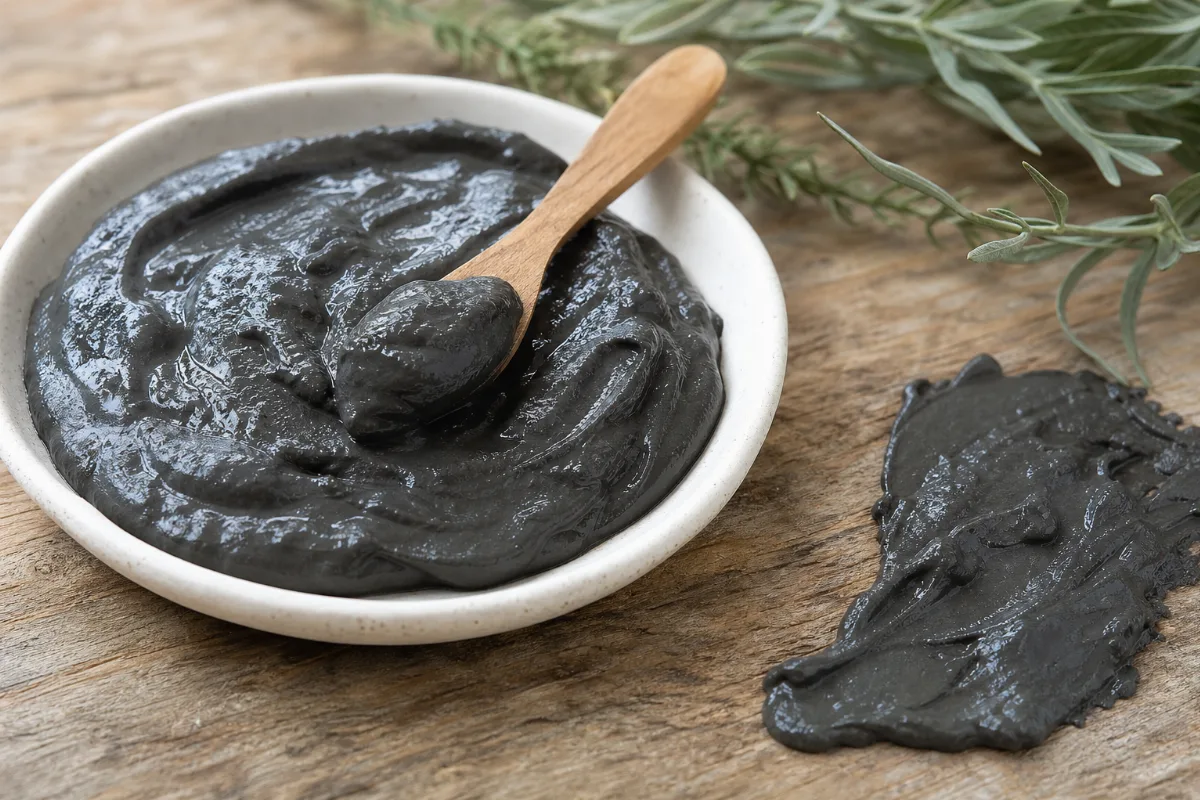
Dead Sea mud is a black, salty mud from the shore of the Dead Sea, used in spa mud packs and cosmetic masks. Reviews of mud therapy report less pain in knee osteoarthritis, but most of that research used other muds, and the evidence is low. Tests found low levels of toxic metals in the mud. People allergic to nickel or chrome are advised to avoid it on the skin.
General information, not medical advice. Last substantive update · Not medically reviewed. A named clinician has not signed off on this page. How this page is made
About Dead Sea Mud
Dead Sea mud is a natural mineral mud. The best research is on mud therapy for knee osteoarthritis, but it mostly covers other muds and is rated low. Dead Sea mud itself has one small back pain trial and mixed arthritis trials. Tests found low metals overall; avoid it on skin if you are allergic to nickel or chrome.
What it is
Dead Sea mud is the black, salty mud of the Dead Sea shore. A mud is a mix of clay, silt, salts and water, so no two jars are the same. Reviews group such muds as peloids.
The deposits tested in one 2009 study were black muds of Lisan Marl, Pleistocene in age, on the eastern shore, in Jordan. Raw mud held few living microbes, up to 20,000 colonies per gram.
Traditional and current uses
The Dead Sea has been known for healing properties since biblical times. Its mud is used in spa packs, masks and cosmetics, and in clinic and home mud compresses in trials.
Traditional use is not proof that it works or is safe.
What the research shows
Four pooled reviews of mud for knee osteoarthritis report less pain and better function. They cover many muds, mostly not Dead Sea mud, and the 2007 Cochrane review of baths found no clear effect of Dead Sea baths.
For rheumatoid arthritis, the original trials are positive but small, and a 2015 Cochrane review rates the evidence insufficient.
A 46-person trial of Dead Sea mud for back pain found a modest effect that the authors could not attribute to the mud.
Tolerance studies in healthy skin found no barrier damage. The germ-killing and wound healing findings are from the lab and mice.
At a glance
Traditional uses history, not proof
- The Dead Sea has been known for healing properties since biblical times (Katz 2012).
- Black mud from the shore is used in spa mud packs, masks and body and facial treatments around the lake and in cosmetics sold worldwide (Ma'or 2006).
Studied for research
- Knee osteoarthritis pain, low (mostly other muds)
- Rheumatoid arthritis, mixed
- Chronic low back pain, low (one small trial)
- Skin tolerance on healthy skin, low
- Psoriasis, insufficient for mud alone
- Killing germs in the lab, very low
- Wound healing in mice, very low
Main compounds
- Salts (sodium, magnesium, potassium, calcium, bromide)
- Clay and silt minerals (silica, aluminium, iron)
- Trace metals including nickel, chrome, lead, cadmium and zinc
- Spore-forming and sulphur-cycle bacteria in raw mud
Common forms
- Mud pack or compress applied warm to a joint or the back
- Face and body mask
- Mud bath at a spa
- Ready-made cosmetic with other ingredients added
Research links: Dead Sea treatments, systematic review, 2012 (abstract) · Mud for knee osteoarthritis, meta-analysis, 2024 (abstract) · Dead Sea mud packs for back pain, 2014 (abstract) · Metals in Dead Sea mud cosmetics, 2026 (abstract) · Poison Control · Research Library · Genes & Biomarkers Library
What it is and its history
- Accepted scientific name
- Dead Sea mud (also called Dead Sea black mud; a natural mineral mud, not a single substance or plant)
- Synonyms
- Dead Sea black mud; Dead Sea mineral mud; Lisan Marl black mud (a geological name for the deposits studied in Jordan)
- Common names
- Dead Sea mud (English); Barro del Mar Muerto (Spanish)
- Family or group
- Mineral mud from a salt lake shore (a peloid)
- Native range
- The shores of the Dead Sea; the deposits tested in the 2009 study were on the eastern shore, in Jordan.
- Habitat
- Hypersaline lake shore.
- Harvest and processing
- Mined from the shore and often formulated into masks and creams. Processing differs by seller and was not checked.
- Look-alikes and adulterants
- Name: Other peloids and mud (for example Italian thermal mud, peat) and ordinary clay masks; Note: Most mud-osteoarthritis trials used other muds. Mud cosmetics can contain little real Dead Sea mud (Abdel-Fattah 2009).
Traditional use and history history, not clinical proof
| Tradition or era | Documented use | Source |
|---|---|---|
| Biblical times to today | The Dead Sea, the deepest and most saline lake on earth, has been known from biblical times for its healing properties (Katz 2012 abstract). | p22503590 |
| Modern spas and cosmetics | The black hypersaline mud is mined from the shores and used in mud packs, masks and body and facial treatments in spas around the lake and in cosmetics sold worldwide (Ma'or 2006 abstract). | p16700781 |
Traditional use shows how it was used. It does not show that it works or is safe today.
What is inside, and how it may work
What it contains and how those compounds act in cells and animals. Laboratory and animal mechanisms are not proven effects in people.
Main compounds
| Compound | Family | Where it is concentrated | Activity studied | Level of evidence |
|---|---|---|---|---|
| Salts (sodium, potassium, chloride, magnesium, calcium, sulphate, bromide) | minerals | Measured in 8 retail products and 4 plain muds; the abstract gives no figures. | Salt content differed between muds, but skin blood flow and temperature did not change with salt level in a small study. 9 | Laboratory |
| Silica, aluminium and iron (clay and silt fractions) | minerals | Measured in the same samples; no figures in the abstract. | No drug-like activity described. 9 | Laboratory |
| Trace metals (nickel, chrome, lead, cadmium, zinc, others) | trace elements | Low-to-moderate in tested raw muds and cosmetics; zinc raised by added zinc oxide in products. | Contaminants of concern for allergy and long-term exposure; no benefit shown. 1 16 14 | Laboratory |
| Sulphur-cycle bacteria (spore-formers and sulphate reducers) | microbes | Up to 20,000 colonies per gram in raw mud; slow sulphate reduction shown with a radioactive sulphur tracer. | Not known to matter for skin effects. 13 | Laboratory |
Mechanisms, receptors and pathways
| Target or pathway | Gene or receptor | What was found | Level |
|---|---|---|---|
| Heat and physicochemical effects (knee osteoarthritis) | None | Authors say the effect is mainly secondary to heat and to physical and chemical properties of mud, and likely changes some inflammation chemicals. Not shown in people in the abstracts. 17 | Narrative review |
| Germ-killing by chemical or physical action | None | Killed or blocked some microbes even after gamma sterilisation, so living microbes are not the cause. 13 | Laboratory |
| Mineral effect vs. other causes | None | Pain fell more with mineral-rich than mineral-depleted compresses, but the authors say they cannot tell if this is a true mud effect or other causes. 2 | Human trial |
| Wound repair (proposed) | None | The mouse study credits minerals and trace elements with antimicrobial, anti-inflammatory and antioxidant action; this was not tested in the study. 3 | Hypothesis |
Absorption, metabolism and elimination
- Absorption
- Not studied for Dead Sea mud.
- Distribution
- Not studied.
- Elimination
- Not studied.
- Bioavailability
- No study showing minerals pass through skin in useful amounts was found.
Isolated compounds versus whole extracts
'As-is' mud, mud with added salt, and over-the-shelf mud behaved slightly differently on skin (drying versus slight hydrating). Formulas with added ingredients, such as zinc oxide, humectants or stabilisers, are not the same as raw mud.
Nutritional composition
Mud is not a food or nutrient source.
1 mixed findings3 low certainty2 very low certainty1 not enough evidence
What was looked at
The 7 benefits and uses checked for Dead Sea Mud, each with how strong the evidence is. Tap one to open it.
- Knee osteoarthritis pain and stiffnessLow certainty
- Rheumatoid arthritis (hand and joint symptoms)Mixed findings
- Chronic low back painLow certainty
- Skin tolerance and barrier on healthy skinLow certainty
- PsoriasisNot enough evidence
- Killing germs in the labVery low certainty
- Wound healing (mice)Very low certainty
Lab markers tracked in the studies
Pain score (visual analogue scale)WOMAC index (pain, stiffness, function)Tender and swollen joint countsWater loss through the skin (barrier)Living microbes in the mud
What is Dead Sea Mud good for?
The uses people ask about and how strong the evidence is for each. Much of the joint research is on mud therapy in general, not Dead Sea mud, and none of it proves a cure.
Benefits, one by one
Each card is a research question, not a promise. Tap a goal to filter. Open a card to see the studies, doses and limits.
Knee osteoarthritis pain and stiffness
Low certaintySeveral reviews of mud packs and mud baths, mostly with other muds, report less pain and better movement in knee osteoarthritis. The trials are small, people know they are being treated, and warmth is part of the treatment. Dead Sea mud itself is a small part of this research.
6 studiesMud packs or mud baths in spa or clinic settings; not advice.
Studies, doses and limits
What the trials found
Four reviews of mud therapy for knee osteoarthritis (10 to 21 trials each) found benefit. A 2007 Cochrane review of baths found Dead Sea baths made no significant difference to pain or function at 1 or 3 months.
Results
Pooled trials report less pain and better function after mud therapy: 11 trials with 1,106 people (2020); 10 studies with 560 people, pain SMD -0.36 and WOMAC SMD -0.49 (2024). A 2016 review found spa packages that include mud may help for 3 to 6 months. The 2007 Cochrane review found no clear effect of Dead Sea baths alone.
Effect sizes as reported
Boopalan 2024: pain SMD -0.36 (95% CI -0.56 to -0.16); WOMAC SMD -0.49 (95% CI -0.68 to -0.29). Small to moderate.
Why this rating
Pooled results agree in direction but come from small trials of many different muds, mostly not Dead Sea mud, where patients cannot easily be blinded to warm mud. The authors of the 2024 analysis ask for better trials.
Form and dose studied
Mud packs or mud baths in spa or clinic settings; not advice.
Who was studied
Adults with knee osteoarthritis.
Limits
Mostly short-term. Different muds and heat levels. Little Dead Sea-specific data. Mud is usually combined with other spa care.
Why researchers looked
Warm mud is used at spas for sore joints. Reviewers have pooled the trials of mud on knee osteoarthritis.
Traditional use
The Dead Sea has been known for healing properties since biblical times, and its shore mud is used in spas (Katz 2012; Ma'or 2006).
Proposed mechanism Narrative review
Authors suggest the effect comes mainly from heat and from the physical and chemical properties of the mud, and may involve inflammation chemicals. This is a proposal, not proven in people (Mennuni 2021).
A proposed mechanism does not show that the effect happens in people.
Mild thermal reactions are reported in one trial; see the Safety tab.
Rheumatoid arthritis (hand and joint symptoms)
Mixed findingsTwo small trials of mud (one at a Dead Sea spa) reported easier arthritis symptoms. But a Cochrane review that re-read one of them found no clear difference from a lookalike mud, so the answer is mixed.
4 studiesMud compresses or packs used at home or at a spa; not advice.
Studies, doses and limits
What the trials found
A 1990 trial of 40 people and a 2005 trial of 45 people found benefit. A 2015 Cochrane review of 9 balneotherapy trials (579 people) found the evidence insufficient.
Results
In the 2005 trial, true mud compresses on the hands lowered swollen and tender joint counts and pain scores for 3 months, while attenuated mud did not change joint counts. The 2015 Cochrane review re-analysed that trial and found no significant difference between groups for pain, improvement or swollen joints, with fewer tender joints (MD -4.60, 95% CI -8.72 to -0.48), all very low level evidence. The 1990 trial of 40 people (10 per group) saw improvement for up to 3 months with mud packs, sulphur baths or both versus control.
Effect sizes as reported
Cochrane 2015 (mud packs vs placebo, 45 people): pain MD 0.50 (95% CI -0.84 to 1.84); tender joints MD -4.60 (95% CI -8.72 to -0.48).
Why this rating
Original trials are positive, but the Cochrane review rates the evidence very low and insufficient. Both original trials are small.
Form and dose studied
Mud compresses or packs used at home or at a spa; not advice.
Who was studied
Adults with rheumatoid arthritis.
Limits
Tiny trials, short follow-up, unclear funding. Mud packs were never tested alone against doing nothing in a large trial.
Why researchers looked
People with rheumatoid arthritis often try spa mud and heat for sore hands and joints.
Traditional use
The Dead Sea has been known for healing properties since biblical times, and its mud and baths are used for rheumatic diseases (Katz 2012).
Proposed mechanism Unknown
Unknown. The authors of the back pain trial say they cannot tell whether the effect is from the mud itself or other causes (Abu-Shakra 2014).
A proposed mechanism does not show that the effect happens in people.
Three mild thermal reactions in the 1990 trial. Mud is not a replacement for arthritis medicines.
Chronic low back pain
Low certaintyOne small trial of home mud compresses saw less back pain than with mineral-depleted compresses. The authors call the effect modest and cannot say if the mud itself caused it.
2 studiesHome compresses five times a week for three weeks in the trial; not a…
Studies, doses and limits
What the trials found
One randomised trial of Dead Sea mud compresses (46 people), and a review of 26 spa trials for back pain (2,695 people) that is not about mud alone.
Results
In the trial, back pain fell only in the real-mud group, and stayed lower a month later. Roland and Morris scores improved in both groups. The 2022 review of mineral-water spa treatment says the role of the mineral water remains uncertain and trial methods need improving.
Effect sizes as reported
No numbers in the abstract.
Why this rating
One small trial with uneven groups (32 versus 12), a modest effect, and an unclear control.
Form and dose studied
Home compresses five times a week for three weeks in the trial; not advice.
Who was studied
Adults with chronic low back pain.
Limits
Small, unequal groups, no pain numbers in the abstract, funding not stated.
Why researchers looked
Chronic low back pain has no cure, and many people try spa and complementary care.
Traditional use
Spa treatment for back pain is common in Europe and the Middle East (Forestier 2022).
Proposed mechanism Unknown
Unknown. The trial authors could not tell a true mud effect from other causes.
A proposed mechanism does not show that the effect happens in people.
Heat on the skin: see the Safety tab. See a doctor for back pain with weakness, numbness or after a fall.
Skin tolerance and barrier on healthy skin
Low certaintyIn small studies of healthy volunteers, Dead Sea mud masks did not damage the skin barrier or cause redness, and gave only slight drying or moisturising. This is about tolerance, not a skin benefit.
3 studiesMud mask on the forearm in studies; not advice.
Studies, doses and limits
What the trials found
Three studies by the same lead author in healthy volunteers: 75 women (single 30-minute application), a 4-week forearm study, and 15 women in an irritation study.
Results
A single 30-minute mud mask was well tolerated with short-lived moisturising and no harm to barrier function, pH, redness or melanin. Four weeks of use every other day did not change water loss, pH, melanin or redness; as-is and salted mud were slightly drying, and the over-the-shelf mud slightly hydrating. Three mud types did not raise skin blood flow or temperature.
Effect sizes as reported
No numbers in the abstracts.
Why this rating
Small studies in healthy skin only, short, from one lead author, with sparse methods in the abstracts.
Form and dose studied
Mud mask on the forearm in studies; not advice.
Who was studied
Healthy adult volunteers (women in two studies).
Limits
Does not test acne, eczema or psoriasis. No data on sensitive or nickel-sensitised skin.
Why researchers looked
Dead Sea mud is a common face and body mask. Researchers asked if it weakens the skin barrier.
Traditional use
Used in spas around the Dead Sea and in cosmetics worldwide (Ma'or 2006).
Proposed mechanism Laboratory
Salt and mineral content could dry or irritate skin; one study found no change in skin blood flow or temperature whatever the mud's salt level.
A proposed mechanism does not show that the effect happens in people.
People sensitised to nickel or chrome are advised not to use it on the skin (see the Safety tab).
Psoriasis
Not enough evidenceReviewers say Dead Sea stays help psoriasis, but credit the sun's ultraviolet light and the sea water. Mud on its own was not shown to treat psoriasis in the sources read.
1 studiesNot applicable.
Studies, doses and limits
What the trials found
A 2012 systematic review of all Dead Sea treatments. It did not separate mud from sun and water in its abstract.
Results
The review reports bona fide evidence that Dead Sea treatments are especially effective in psoriasis because of the sun's ultraviolet light and Dead Sea water balneotherapy. Mud is not named as the reason.
Effect sizes as reported
No numbers in the abstract.
Why this rating
No study of mud alone for psoriasis was found. The positive finding belongs to sun and water.
Who was studied
People with psoriasis who travel for treatment.
Limits
Treatment bundle; one-query search; abstract only.
Why researchers looked
People travel to the Dead Sea for psoriasis. Mud is one part of the stay.
Traditional use
Dead Sea climate treatment for skin disease has a long history (Katz 2012).
Proposed mechanism Narrative review
The review points to the special sunlight at the Dead Sea and the water, not the mud.
A proposed mechanism does not show that the effect happens in people.
The same review notes more sun damage of the skin in people treated at the Dead Sea.
Killing germs in the lab
Very low certaintyIn the lab, Dead Sea mud killed some skin germs and not others. That does not show a mask treats acne or infection.
1 studiesNot applicable.
Studies, doses and limits
Results
E. coli, S. aureus, P. acnes and C. albicans rapidly lost viability in the mud. Mud discs blocked growth of Candida and Propionibacterium on agar but not of Staphylococcus or E. coli. Raw mud held up to 20,000 living colonies per gram, mostly spore-forming bacteria.
Why this rating
Lab dishes only, one study, industry-linked authors.
Limits
Does not show a mask treats acne or infection. Raw mud is not sterile.
Why researchers looked
Sellers say the mud cleanses skin. Researchers tested what microbes do in it.
Traditional use
Mud packs and masks are used in spas around the lake (Ma'or 2006).
Proposed mechanism Laboratory
The authors think chemical or physical effects of the mud, not living microbes, cause the germ-killing. The effect remained after gamma sterilisation.
A proposed mechanism does not show that the effect happens in people.
Do not put mud on infected or open skin in place of medical care.
Wound healing (mice)
Very low certaintyIn mice, Dead Sea black mud on wounds was followed by faster healing. No human wound study was found, so this is not advice to put it on wounds.
1 studiesNot applicable.
Studies, doses and limits
Results
Mud-treated mouse wounds had more granulation, contraction, new vessels and collagen than untreated wounds. The mud-containing skin-care product did better than natural mud when compared with the reference drug nitrofurazone.
Effect sizes as reported
No numbers in the abstract.
Why this rating
Animal study, group sizes not given.
Who was studied
BALB/c mice.
Limits
No human data; dirty mud on open wounds was not assessed for infection.
Why researchers looked
Mud and salts are said to help skin disease and wounds.
Traditional use
Used traditionally on skin at the Dead Sea (Abu-al-Basal 2012).
Proposed mechanism Hypothesis
The author guesses minerals and trace elements act against microbes and inflammation and help cell growth. Not tested in the abstract.
A proposed mechanism does not show that the effect happens in people.
Do not use mud on wounds instead of care. A wound that is not healing needs a clinician.
Connections to the rest of health
How Dead Sea Mud connects to the rest of our health knowledge graph. Every link says what kind of connection it is. A safety link (for example to the liver) is a warning, not a benefit. A study that merely mentions a topic never creates a benefit link.
Explore every connection: goals, body systems, organs, symptoms, genes
A. Wellness goals
| Connected to | Kind of connection | Evidence status | Context | Studies |
|---|---|---|---|---|
| Joint Health | Low certainty | Knee osteoarthritis pain and stiffness: Several reviews of mud packs and mud baths, mostly with other muds, report less pain and better movement in knee osteoarthritis. The trials are small, people know they are being treated, and warmth is part of the treatment. Dead Sea mud itself is a small part of this research. Rheumatoid arthritis (hand and joint symptoms): Two small trials of mud (one at a Dead Sea spa) reported easier arthritis symptoms. But a Cochrane review that re-read one of them found no clear difference from a lookalike mud, so the answer is mixed. | 4 11 17 15 6 19 5 18 20 12 | |
| Pain Relief | Low certainty | Chronic low back pain: One small trial of home mud compresses saw less back pain than with mineral-depleted compresses. The authors call the effect modest and cannot say if the mud itself caused it. | 2 7 | |
| Healthy Skin | Low certainty | Skin tolerance and barrier on healthy skin: In small studies of healthy volunteers, Dead Sea mud masks did not damage the skin barrier or cause redness, and gave only slight drying or moisturising. This is about tolerance, not a skin benefit. Psoriasis: Reviewers say Dead Sea stays help psoriasis, but credit the sun's ultraviolet light and the sea water. Mud on its own was not shown to treat psoriasis in the sources read. | 8 10 9 12 13 3 |
B. Body systems
| Connected to | Kind of connection | Evidence status | Context | Studies |
|---|---|---|---|---|
| Musculoskeletal System | Biological association | Low certainty | Studied for: Knee osteoarthritis pain and stiffness Studied for: Rheumatoid arthritis (hand and joint symptoms) | 4 11 17 15 6 19 5 18 20 12 2 7 |
| Immune System | Biological association | Mixed findings | Studied for: Rheumatoid arthritis (hand and joint symptoms) | 5 18 20 12 |
| Integumentary System | Biological association | Low certainty | Studied for: Skin tolerance and barrier on healthy skin Studied for: Psoriasis | 8 10 9 12 13 3 |
I. Biomarkers
| Connected to | Kind of connection | Evidence status | Context | Studies |
|---|---|---|---|---|
| Pain score (visual analogue scale) | Biological association | Low certainty | Measured in trials: lowered. A lab change is not the same as a health benefit. | 4 2 |
| WOMAC index (pain, stiffness, function) | Biological association | Low certainty | Measured in trials: lowered. A lab change is not the same as a health benefit. | 4 11 |
| Tender and swollen joint counts | Biological association | Mixed findings | Measured in trials: mixed. A lab change is not the same as a health benefit. | 5 20 |
| Water loss through the skin (barrier) | Biological association | Low certainty | Measured in trials: no-change. A lab change is not the same as a health benefit. | 10 8 |
| Living microbes in the mud | Biological association | Very low certainty | Measured in trials: low counts. A lab change is not the same as a health benefit. | 13 |
L. Active compounds
| Connected to | Kind of connection | Evidence status | Context | Studies |
|---|---|---|---|---|
| Salts (sodium, potassium, chloride, magnesium, calcium, sulphate, bromide) | Biological association | Laboratory | Salt content differed between muds, but skin blood flow and temperature did not change with salt level in a small study. | 9 |
| Silica, aluminium and iron (clay and silt fractions) | Biological association | Laboratory | No drug-like activity described. | 9 |
| Trace metals (nickel, chrome, lead, cadmium, zinc, others) | Biological association | Laboratory | Contaminants of concern for allergy and long-term exposure; no benefit shown. | 1 16 14 |
| Sulphur-cycle bacteria (spore-formers and sulphate reducers) | Biological association | Laboratory | Not known to matter for skin effects. | 13 |
Each connection is stored with the ingredient, the connected record, the kind of connection, the evidence status, the supporting studies, the preparation or compound involved, and a review date (last reviewed October 25, 2026).
Evidence at a glance: what changed in 4 lab markers
Tap a number to show only those markers. Counts are markers, not people.
The evidence
The research centre for Dead Sea Mud. Every record here was checked against PubMed or the publisher's page; we never list a study we have not verified.
Evidence by outcome
Bars show how many studies we found for each outcome, not how well it works. People are added up across trials only (reviews are not added, to avoid double counting).
How we rate evidence
High certainty
Several well-run trials or reviews agree; further research is unlikely to change the picture much.
Moderate certainty
Good trials point the same way, but some doubt remains.
Low certainty
Small, short or inconsistent trials. The finding could change with better research.
Very low certainty
Very little or very weak human data. Treat as a possibility only.
Mixed findings
Trials or reviews disagree with each other.
Not enough evidence
Not enough human research to say either way.
Evidence against
Good research found no benefit, or found harm.
We take the reviewers' own risk-of-bias and GRADE statements where they exist, and otherwise judge from study size, design, consistency, directness and whether a product matches what is sold. Many publications do not make evidence high. Method note: We searched PubMed, read the abstract of each cited paper, and read the FDA cosmetics and Poison Control pages. Certainty ratings are the compiler's own reading. Two papers have authors who work for a Dead Sea cosmetics company (found in PubMed author affiliations) and are flagged. Regulators outside the US were not checked. No study is cited that we could not verify.
Study library: every study we checked 22
| Study | Design | People | Product, dose, length | Result |
|---|---|---|---|---|
| Abdel-Fattah 2009 Low levels of toxic elements in Dead Sea black mud and mud-derived cosmetic products Environmental Geochemistry and Health · PMID 18688731 · DOI |
Lab study lab |
19 Samples from three black-mud deposits on the Jordan side of the Dead Sea, plus 16 commercial mud cosmetics |
Dead Sea black mud (Lisan Marl) and cosmetics mineral mud (not a plant) Lab |
No special enrichment of toxic elements in the mud, and none at levels of concern in 16 commercial mud cosmetics. The authors call the mud and products safe from a toxic-element standpoint. They also note the products' elemental fingerprints suggest Dead Sea mud is not a significant part of hand creams, lotions, shampoos and moisturisers. Methods, limits and fundingOutcomes: Eight toxic elements by ICP mass spectrometry Limitations: Jordanian deposits and 2009 products only. Not a guarantee for any jar bought today. Some products contained little real mud. Funding and conflicts: Not stated in the abstract. Read: abstract |
| Abu-Shakra 2014 Dead Sea mud packs for chronic low back pain Israel Medical Association Journal · PMID 25351016 |
Randomized controlled trial |
46 46 adults with chronic low back pain followed at one university rheumatology unit in Israel |
Dead Sea mineral-rich mud compresses mineral mud (not a plant) Applied at home 5 times a week 3 weeks, followed 1 month · vs Mineral-depleted compresses |
44 finished: 32 with real mud, 12 with mineral-depleted packs. Pain fell significantly only in the real-mud group, and the change was still there a month later. The Roland and Morris score improved in both groups. The authors call the effect modest and say they cannot tell whether it is a true mud effect or other causes. Methods, limits and fundingOutcomes: Patient-rated back pain severity (primary); Roland and Morris questionnaire (secondary) Limitations: Small. Uneven groups (32 versus 12). Abstract gives no pain numbers. The control packs are not described beyond being mineral-depleted, so heat and the act of treatment may explain part of the result. Funding and conflicts: Not stated in the abstract. Read: abstract |
| Abu-al-Basal 2012 Histological evaluation of the healing properties of Dead Sea black mud on full-thickness excision cutaneous wounds in BALB/c mice Pakistan Journal of Biological Sciences · PMID 24163956 · DOI |
Animal study animal |
BALB/c mice with two full-thickness skin wounds | 0.1% natural or compounded Dead Sea black mud, applied on the wound mineral mud (not a plant) 50 microlitres, once a day 2 days of treatment, healing followed to day 21 · vs Untreated mice and nitrofurazone 0.2% |
Mud-treated wounds healed faster, with more granulation, contraction, new vessels and collagen. The skin-care product containing mud did better than the natural mud when compared with the reference drug nitrofurazone. Methods, limits and fundingOutcomes: Granulation tissue, wound contraction, epithelialisation, blood vessels, collagen Limitations: Mice, not people. The abstract does not state group sizes. Healing credited to minerals is a guess. Does not show mud is safe or useful on human wounds. Funding and conflicts: Not stated in the abstract. Read: abstract |
| Boopalan 2024 Effect of local mud application in patients with knee osteoarthritis - A systematic review and meta-analysis International Journal of Biometeorology · PMID 38916766 · DOI |
Meta-analysis |
560 10 studies, 560 people with knee osteoarthritis |
Local mud application (mud packs) mineral mud (not a plant) Varied Varied · vs Varied |
Pain fell (SMD -0.36, 95% CI -0.56 to -0.16) and WOMAC scores fell (SMD -0.49, 95% CI -0.68 to -0.29). The authors call the evidence compelling for mud as an add-on to usual care and ask for more high-quality trials. Pain SMD -0.36; WOMAC SMD -0.49 (Pain -0.56 to -0.16; WOMAC -0.68 to -0.29) Methods, limits and fundingOutcomes: Pain (primary); WOMAC Limitations: Small to moderate effects. Fixed-effects model. The authors themselves ask for better trials. Mud types differ and most are not Dead Sea mud. Warmth is part of the treatment. Funding and conflicts: Not stated in the abstract. Read: abstract |
| Codish 2005 Mud compress therapy for the hands of patients with rheumatoid arthritis Rheumatology International · PMID 14618372 · DOI |
Randomized controlled trial |
45 45 adults with rheumatoid arthritis (hands), treated at home in Israel |
Mud compresses, true versus attenuated (the abstract does not name the mud's source) mineral mud (not a plant) Applied at home 5 times a week 3 weeks, then follow-up at 1 and 3 months · vs Attenuated mud compresses (double-blind) |
22 got true mud and 23 attenuated mud. The true-mud group had fewer swollen and tender joints and lower patient pain scores at every follow-up. The attenuated-mud group had no change in joint counts, but reported less pain at the end and at 3 months. The authors conclude mud compresses relieve hand pain and may be added to usual care. Methods, limits and fundingOutcomes: Tender and swollen joints in the hands; physician and patient global scores Limitations: Small. The 2015 Cochrane review re-read this same trial and found no significant difference between groups for pain, overall improvement or swollen joints (see that entry). Abstract does not name the source of the mud. Funding and conflicts: Listed as 'Research Support, Non-U.S. Gov't'; source of funds not stated in the abstract. Read: abstract |
| Forestier 2016 Spa therapy and knee osteoarthritis: A systematic review Annals of Physical and Rehabilitation Medicine · PMID 26996955 · DOI |
Systematic review |
Comparative trials of spa therapy in knee osteoarthritis | Spa treatments: hot mineral baths, mud therapy, showers, massage, exercises mineral mud (not a plant) Varied Varied · vs Varied |
Spa treatments in Europe and the Middle East seem to improve symptoms and may help pain and function. Results on quality of life and drug use conflict. The authors say improvements appear clinically relevant until 3 to 6 months, sometimes 9. Methods, limits and fundingOutcomes: Pain, function, quality of life, drug use Limitations: Spa packages bundle many treatments, so mud cannot be isolated. Abstract gives no numbers. Funding and conflicts: Not stated in the abstract. Read: abstract |
| Forestier 2022 Crenobalneotherapy for low back pain: systematic review of clinical trials International Journal of Biometeorology · PMID 34625843 · DOI |
Systematic review |
2695 26 clinical trials, 2,695 people with low back pain |
Spa treatment with mineral water, sometimes with other techniques mineral mud (not a plant) Varied Varied · vs Varied |
Some trials have good quality and the authors consider spa therapy a potential treatment for low back pain, though the role of the mineral water remains uncertain and the methods of the trials should be improved. Methods, limits and fundingOutcomes: Low back pain Limitations: About mineral-water spa treatment, not mud specifically. Abstract gives no numbers. Funding and conflicts: Not stated in the abstract. Read: abstract |
| Hamed 2018 Skin Tolerance of Three Types of Dead Sea Mud on Healthy Skin: A Short-Term Study Journal of Cosmetic Science · PMID 30311902 |
Randomized controlled trial |
75 75 healthy adult women |
Dead Sea mud: as-is mud, mud with extra Dead Sea salt, and an over-the-shelf mud mineral mud (not a plant) Single 30-minute application Measured up to 60 minutes after removal · vs Untreated skin areas (as described in the design) |
A single 30-minute application was well tolerated. It gave short-lived moisturising, stronger with humectant ingredients, and did not harm barrier function, pH, redness or melanin. Methods, limits and fundingOutcomes: Skin hydration, water loss through skin, redness, melanin, pH Limitations: Healthy skin only, single short application. Not skin disease. Abstract does not describe blinding. Funding and conflicts: Not stated in the abstract. Read: abstract |
| Hamed 2019 Does Salt and Mineral Content of Dead Sea Mud Affect Its Irritation Potential: A Laser Doppler Flowmetry Study Journal of Cosmetic Science · PMID 31596228 |
Randomized controlled trial |
15 15 healthy non-smoking women aged 18-45 |
Three Dead Sea mud formulas with different salt and mineral content mineral mud (not a plant) 10 mL for 30 minutes Single application · vs Untreated forearm |
None of the muds raised skin temperature or blood flow in a measurable way, whatever their salt and mineral content. The paper also measured many elements (including Hg, Cr, Ni, As, Cd, Pb) in 8 retail products and 4 plain muds, but the abstract gives no figures. Methods, limits and fundingOutcomes: Skin blood flow and temperature (irritation signal); element content of mud samples Limitations: Very small (5 per group), short, healthy skin. Irritation judged only by blood flow and temperature. Funding and conflicts: Not stated in the abstract. Read: abstract |
| Hamed 2021 The cutaneous effects of long-term use of Dead Sea mud on healthy skin: a 4-week study International Journal of Dermatology · PMID 33283890 · DOI |
Clinical study |
Healthy volunteers (number not given in the abstract) | Three Dead Sea mud types on forearms (as-is, extra salt, over-the-shelf) mineral mud (not a plant) Every other day 4 weeks plus a 1-week rest · vs Not described in the abstract |
Well tolerated with no notable change in water loss, pH, melanin or redness. A slight firming effect with salted mud. Skin hydration was not significantly changed. As-is and salted mud were slightly drying and the over-the-shelf mud slightly hydrating. The authors say long-term use did not compromise the skin barrier. Methods, limits and fundingOutcomes: Skin hydration, water loss, pH, melanin, redness, elasticity, thickness, collagen Limitations: Healthy forearm skin only. Abstract gives no number of volunteers. Not tested on skin disease. Funding and conflicts: Not stated in the abstract. Read: abstract |
| Hou 2020 The short-term efficacy of mud therapy for knee osteoarthritis: A meta-analysis Medicine (Baltimore) · PMID 32332614 · DOI |
Meta-analysis |
1106 11 randomised trials, 1,106 people with knee osteoarthritis |
Mud therapy mineral mud (not a plant) Varied Short term · vs Varied |
Significant differences in VAS pain and in WOMAC pain, stiffness and function, with low heterogeneity (I-squared under 25%). The authors conclude mud therapy can relieve pain and improve joint function in knee osteoarthritis in the short term. Methods, limits and fundingOutcomes: VAS pain; WOMAC pain, stiffness, function Limitations: Short-term only. Abstract gives no effect sizes. Mud types differ and most are not Dead Sea mud. Funding and conflicts: Not stated in the abstract. Read: abstract |
| Katz 2012 Scientific evidence of the therapeutic effects of dead sea treatments: a systematic review Seminars in Arthritis and Rheumatism · PMID 22503590 · DOI |
Systematic review |
Studies on Dead Sea treatments (sun, water, mud) in rheumatic diseases and psoriasis | Dead Sea treatments including Dead Sea mud and balneotherapy mineral mud (not a plant) Varied · vs Varied |
The authors report that Dead Sea mud and balneotherapy have been found beneficial in rheumatoid arthritis, psoriatic arthritis, ankylosing spondylitis and knee osteoarthritis, and that Dead Sea treatments are especially effective in psoriasis because of the sun's ultraviolet light and the water. They found no rise in skin cancer, but sun damage of the skin seemed more common. Swallowing a large amount of Dead Sea water (usually near-drowning) is toxic. Lab analysis of the mud found no mineral levels of concern for its intended use. Methods, limits and fundingOutcomes: Benefit in rheumatic diseases and psoriasis; safety Limitations: Search was one MEDLINE query, 'Dead Sea'. Treatments are mixed (sun, water, mud), so the review cannot say what the mud itself does. Abstract gives no numbers or risk-of-bias ratings. Funding and conflicts: Not stated in the abstract. Read: abstract |
| Ma'or 2006 Antimicrobial properties of Dead Sea black mineral mud International Journal of Dermatology · PMID 16700781 · DOI |
Lab study lab |
Dead Sea black mud samples tested in the lab | Dead Sea black mineral mud mineral mud (not a plant) Lab |
The mud held few living microbes (up to 20,000 colonies per gram, mostly spore-forming bacteria). Test microbes (E. coli, S. aureus, P. acnes, C. albicans) rapidly lost viability when added. Discs of mud blocked growth of Candida and Propionibacterium on agar, but not of Staphylococcus or E. coli. Gamma-sterilised mud did the same. The authors think chemical or physical effects explain it. Methods, limits and fundingOutcomes: Microbes in the mud; effect on test microbes Limitations: Lab only. Does not show that a mask treats infection or acne. At least one author works for a Dead Sea cosmetics company (affiliations on PubMed), a possible conflict not declared in the abstract. Funding and conflicts: Authors include staff of AHAVA Dead Sea Laboratories (per PubMed affiliations); the abstract states no funding or conflict. Flagged industry-linked. Read: abstract |
| Ma'or 2015 Safety evaluation of traces of nickel and chrome in cosmetics: The case of Dead Sea mud Regulatory Toxicology and Pharmacology · PMID 26496819 · DOI |
Risk assessment lab |
Dead Sea mud used as a cosmetic ingredient | Dead Sea mud, topical mineral mud (not a plant) |
Margins of safety showed no systemic toxicity concern for nickel and chrome. Skin sensitisation is not expected on normal healthy skin. Topical use is not recommended for people already sensitised to nickel or chrome. Methods, limits and fundingOutcomes: Margin of safety for nickel and chrome; skin sensitisation; health reports from 5 years of sales Limitations: Risk assessment by the authors, not a clinical trial. Authors are from the AHAVA Dead Sea cosmetics company (PubMed affiliations), so it is industry-linked, though that is not stated in the abstract. Funding and conflicts: Authors include staff of AHAVA Dead Sea Laboratories (per PubMed affiliations). Abstract states no funding. Flagged industry-linked. Read: abstract |
| Maier 2024 Effectiveness of Mud-Pack Therapy and Mud-Bath Therapy in Osteoarthritis: A Systematic Review Complementary Medicine Research · PMID 38008065 · DOI |
Systematic review |
19 studies of osteoarthritis (15 knee, 1 hand, 1 hip and knee, 2 low back) | Mud packs and mud baths (many different muds) mineral mud (not a plant) Varied Varied · vs Varied |
The authors report significant improvement in function, quality of life and perceived pain, and call mud therapy a promising part of a combined approach with drugs or physiotherapy. Methods, limits and fundingOutcomes: Function, quality of life, pain Limitations: Muds differ between trials and most are not Dead Sea mud. Abstract gives no numbers and no risk-of-bias grading. Mud baths dominate over mud packs. Funding and conflicts: Not stated in the abstract. Read: abstract |
| Massadeh 2026 Analysis of Heavy Metal Concentrations in Cosmetics Derived from Dead Sea Mud and Comparative Products Biological Trace Element Research · PMID 41364321 · DOI |
Lab study lab |
95 95 samples: raw mud from the Jordan shoreline plus body, face, hair and hand products bought locally |
Dead Sea mud cosmetics and comparison products mineral mud (not a plant) Lab · vs Non-Dead Sea mud products |
Mud-based cosmetics usually held lower metal levels than raw mud, except zinc, often raised because zinc oxide is added. Cadmium was slightly enriched (EF about 4) and zinc moderately (EF about 10). Maximum nickel, chromium and cobalt were below the Canadian and German benchmarks used, but lead and cadmium sometimes exceeded the stricter 'technically avoidable' thresholds. Overall metals were low to moderate and mostly in line with European and North American guidance. Methods, limits and fundingOutcomes: Nickel, lead, cadmium, chromium, copper, iron, cobalt, manganese, zinc Limitations: Local Jordanian market only. Flame atomic absorption method. Guidelines differ between countries. Funding and conflicts: Authors declare no competing interests. Read: abstract |
| Mennuni 2021 A meta-analysis of the effectiveness of mud-bath therapy on knee osteoarthritis La Clinica Terapeutica · PMID 34247222 · DOI |
Meta-analysis |
21 studies of knee osteoarthritis (search up to April 2019) | Mud-bath therapy mineral mud (not a plant) Varied Varied · vs Varied |
Significant improvement in function scores and pain after mud-bath therapy. The authors say it cannot replace usual treatment but can be added to it, and that effects are largely due to heat and the physical and chemical properties of the muds. Methods, limits and fundingOutcomes: WOMAC index and VAS pain Limitations: Abstract gives no pooled numbers or bias ratings. Many muds, mostly not Dead Sea mud. Funding and conflicts: Not stated in the abstract. Read: abstract |
| Sukenik 1990 Sulphur bath and mud pack treatment for rheumatoid arthritis at the Dead Sea area Annals of the Rheumatic Diseases · PMID 2180388 · DOI |
Randomized controlled trial |
40 40 adults with active rheumatoid arthritis treated at a Dead Sea spa hotel |
Daily mud packs, hot sulphur baths, or both mineral mud (not a plant) Daily 2 weeks, assessed for up to 3 months · vs No-treatment control group |
Four groups of 10: mud packs, sulphur baths, both, or control. The three treatment groups improved in most clinical measures for up to 3 months. The control group improved only a little, not significantly. No laboratory measure improved. Apart from three mild thermal reactions, no side effects. Methods, limits and fundingOutcomes: Clinical indices of arthritis; lab tests Limitations: Very small groups (10 each). Old trial. Patients knew what they were getting (the assessor was blinded). The mud-only group cannot be separated from the spa stay in the abstract. Funding and conflicts: Listed as 'Research Support, Non-U.S. Gov't'; source of funds not stated in the abstract. Read: abstract |
| Verhagen 2007 Balneotherapy for osteoarthritis Cochrane Database of Systematic Reviews · PMID 17943920 · DOI |
Systematic review |
498 7 randomised trials, 498 people with osteoarthritis |
Balneotherapy (spa baths, mineral, sulphur, Dead Sea baths); some mud mineral mud (not a plant) Varied Varied · vs No treatment or tap-water baths |
The authors report 'silver level' evidence that mineral baths relieve pain compared with no treatment. Dead Sea baths versus no treatment showed no significant difference in pain or function at 1 or 3 months (WMD 0.5, 95% CI -0.6 to 1.6). Adverse events were not measured in the trials. The authors call the evidence weak because of poor methods and say positive findings should be viewed with caution. Dead Sea baths vs no treatment: WMD 0.5 (-0.6 to 1.6) Methods, limits and fundingOutcomes: Pain, function, quality of life Limitations: Old review (search to 2006). Mostly baths, not mud. It does not say what the mud does. Funding and conflicts: Not stated in the abstract. Read: abstract |
| Verhagen 2015 Balneotherapy (or spa therapy) for rheumatoid arthritis Cochrane Database of Systematic Reviews · PMID 25862243 · DOI |
Systematic review |
579 9 randomised trials in rheumatoid arthritis, 579 people in all |
Balneotherapy: mineral and Dead Sea baths and mud packs mineral mud (not a plant) Varied Varied · vs No treatment, placebo or other treatments |
Most studies had unclear risk of bias. One trial of 45 people with hand arthritis compared mud packs with placebo and found no significant difference in pain (MD 0.50 on a 0-100 scale, 95% CI -0.84 to 1.84), overall improvement or swollen joints (very low level of evidence); tender joints fell more with mud (MD -4.60, 95% CI -8.72 to -0.48, very low level). The review concludes the evidence is insufficient to show balneotherapy works better than no treatment. MD tender joints -4.60 (mud packs vs placebo, very low level) (-8.72 to -0.48) Methods, limits and fundingOutcomes: Pain, improvement, disability, tender and swollen joints, adverse events Limitations: Few trials per comparison. The mud-pack trial reported no data on withdrawals due to adverse events or serious adverse events. Funding and conflicts: COI: none known (per abstract). Read: abstract |
| n/a 2025 FDA: FDA Authority Over Cosmetics: How Cosmetics Are Not FDA-Approved, but Are FDA-Regulated (content current as of 11/18/2025) n/a · Source |
Authoritative guidance n/a |
n/a | n/a |
Says cosmetic products and ingredients do not need FDA premarket approval, except colour additives, but FDA can pursue enforcement action against products on the market that do not comply with the law. Methods, limits and fundingOutcomes: How the US regulates cosmetics Limitations: General cosmetics law; it does not mention Dead Sea mud. Read: full-text |
| n/a 2026 Poison Control (National Capital Poison Center): home page, read 2026-10-25 n/a · Source |
Authoritative guidance n/a |
n/a | n/a |
Says help is free, expert and confidential online and by phone at 1-800-222-1222 (US), and to call 911 if the person collapses, has a seizure, has trouble breathing or cannot be awakened. Methods, limits and fundingOutcomes: What to do after a poisoning Limitations: Service information, not research. Read: full-text |
What we do not know yet
- No large trial of Dead Sea mud alone (not a spa package) against a convincing sham.
- Most osteoarthritis mud trials used muds other than Dead Sea mud.
- No trial of Dead Sea mud for acne, eczema, psoriasis or wounds in people.
- No data on pregnancy, breastfeeding, children, medicine interactions or swallowing the mud.
How new research is added
New studies are found by a saved PubMed search and are placed in a review queue. A person reads each one before it changes any evidence rating or safety wording.
Lab markers
What changed in blood or saliva tests during trials. A changed number is not the same as feeling or being healthier, and we give no "normal ranges".
Other 5
Pain score (visual analogue scale)
Lowered in trials
A self-rated pain line from no pain to worst pain.
Low certaintyResults and what it means
Why it was measured
The main measure in trials of mud for osteoarthritis and back pain.
Statistical vs. clinical meaning
Small to moderate changes. Patients know they are warm-treated, so expectation may add to the effect.
Safety implication
None found beyond heat reactions.
| Study | Result | People | Product |
|---|---|---|---|
| 4 | Pain fell: SMD -0.36 (95% CI -0.56 to -0.16) across 10 knee osteoarthritis studies. | 560 people with knee osteoarthritis | Local mud application versus comparison |
| 2 | Pain severity fell only in the real-mud group, kept at 1 month. | 44 people with chronic low back pain | Dead Sea mud compresses versus mineral-depleted compresses |
WOMAC index (pain, stiffness, function)
Lowered in trials
A questionnaire used in knee and hip osteoarthritis.
Low certaintyResults and what it means
Why it was measured
It captures how arthritis affects daily movement.
Statistical vs. clinical meaning
Statistically significant in pooled data. The size of benefit that matters to patients is not stated in the abstracts.
Safety implication
None found.
Tender and swollen joint counts
Mixed results in trials
A doctor counts painful and puffy joints.
Mixed findingsResults and what it means
Why it was measured
Standard clinic measure in rheumatoid arthritis.
Statistical vs. clinical meaning
One small trial; the review grades the evidence very low.
Safety implication
None found.
| Study | Result | People | Product |
|---|---|---|---|
| 5 | True mud compresses lowered tender and swollen joint counts; the attenuated-mud group did not change. | 45 people with hand rheumatoid arthritis | True versus attenuated mud compresses, 3 weeks |
| 20 | Cochrane re-analysis: swollen joints no significant difference (MD 0.60, 95% CI -0.90 to 2.10); tender joints lower with mud (MD -4.60, 95% CI -8.72 to -0.48); very low evidence. | 45 people (one trial) | Mud packs versus placebo |
Water loss through the skin (barrier)
No clear change in trials
A probe measures water escaping from the skin. A rise means a weaker barrier.
Low certaintyResults and what it means
Why it was measured
To check whether the mud damages the skin barrier.
Statistical vs. clinical meaning
Reassuring for healthy skin only.
Safety implication
Not tested on damaged skin.
Living microbes in the mud
Low counts in trials
The number of microbes that grow from a gram of mud.
Very low certaintyResults and what it means
Why it was measured
To see if the mud is clean enough to put on skin.
Statistical vs. clinical meaning
One lab study from a company-linked team.
Safety implication
Raw mud is not sterile.
| Study | Result | People | Product |
|---|---|---|---|
| 13 | Up to 20,000 colonies per gram, mostly spore-forming bacteria; test microbes lost viability when added. | Raw Dead Sea mud samples (lab) | Lab culture and growth tests |
Safety
What studies and official sources say about side effects, medicines and who should check first. Each point shows what kind of evidence it comes from.
Main points to know 5
- Put on skin only; do not swallow it. The sources read are about mud on the skin. No study of eating Dead Sea mud was found. The one ingestion warning in the sources is about Dead Sea water: a large amount (usually in near-drowning) is toxic and can disturb heart rhythm. Narrative review 12
- Metals are low in tested mud, but products differ. Lab tests of Jordanian black mud and 16 mud cosmetics found no toxic element at levels of concern (2009). A 2026 test of 95 mud and cosmetic samples found low-to-moderate metals, with lead and cadmium sometimes above stricter 'technically avoidable' benchmarks. Zinc was often raised because zinc oxide is added. Laboratory 1 16
- Nickel or chrome allergy: avoid. A risk assessment by staff of a Dead Sea cosmetics company found no sensitisation expected on healthy skin, but said topical use is not recommended for people already sensitised to nickel or chrome. Risk assessment 14
- Heat can cause mild reactions. In a 40-person trial of mud packs and sulphur baths at a Dead Sea spa, there were three mild thermal reactions and no other side effects. Adverse events were not measured in the baths trials in a 2007 Cochrane review. Randomized controlled trial 18 19
- Not a replacement for care. Mud has not been shown to treat arthritis, back pain, psoriasis, wounds or infection better than usual care. Do not use it instead of medicine or medical review. Narrative review 20 12
Side effects 5
| Effect | How often | Severity and recovery | Evidence |
|---|---|---|---|
| Mild thermal reaction to heated mud or sulphur baths Group-by-group split was not given in the abstract. | 3 cases among 30 treated people in one 40-person trial (the 10 controls were not treated) | mild Not stated | Randomized controlled trial 18 |
| Slight drying of healthy skin (as-is and salted mud) No barrier damage was found; one over-the-shelf mud slightly hydrated. | Not established | mild Not stated | Clinical study 10 |
| Skin sensitisation or allergy Based on margin-of-safety calculations and five years of company health reports, not a patch-test trial. | Not expected on healthy skin per a company-authored assessment | unknown Not stated | Risk assessment 14 |
| More sun damage of the skin with Dead Sea treatments (sun-bathing, not the mud itself) The review found no rise in skin cancer. | Not established | unknown Not stated | Systematic review 12 |
| Toxic effects from swallowing a large amount of Dead Sea water (not mud) Shown because it is a real Dead Sea risk. It is about water. | Usually near-drowning cases | serious Not stated | Systematic review 12 |
Liver
No report of liver injury from Dead Sea mud used on the skin was found. LiverTox was not searched. The 2026 metals study measured the content of products, not harm in people. 16
How often. No rate in people.
Monitoring. No monitoring advice was found.
This is a safety connection. It is not evidence that Dead Sea Mud supports liver health.
Medicines and supplements 3
| With | Why it matters | Importance | Evidence | What to do |
|---|---|---|---|---|
| Medicines taken by mouth prescription | No interaction study with Dead Sea mud was found. | Gap Not enough evidence | If you take medicines for arthritis or another condition, ask a pharmacist or doctor before changing anything because of a spa treatment. | |
| Nickel or chrome allergy allergy | Traces of these metals occur in the mud. | A company-authored assessment advises against topical use in people already sensitised to nickel or chrome. | Risk assessment Low certainty 14 | If you know you are allergic to nickel or chrome, skip it or ask a skin doctor. |
| Heat-sensitive conditions and treatments condition | Warm mud packs apply heat. | Mild thermal reactions reported. A 2012 review found Dead Sea treatments did not worsen blood pressure, but it covered the whole stay and not mud alone. | Systematic review Low certainty 18 12 | Ask a doctor first if you have poor skin sensation, heart disease or take blood pressure medicine. |
Who should check first 6
| Situation | Advice | Evidence |
|---|---|---|
| Known nickel or chrome allergy | Not recommended for skin use per the company-authored assessment. | Risk assessment 14 |
| Pregnancy and breastfeeding | No data on Dead Sea mud were found in the sources read. Not described is not proof of safety. Ask a clinician. | Gap |
| Babies and children | No data were found. Keep mud and powders out of reach. The 2009 metals paper names ingestion by children as a possible exposure route for cosmetic muds. | Gap 1 |
| Open wounds, broken or infected skin | Only a mouse study exists. Mud from the shore is not sterile. See a clinician for wounds. | Animal study 3 13 |
| Swallowing mud or product | No human study of swallowing it was found. Call poison control if someone swallows a lot or feels unwell. | Gap 22 |
| Skin diseases such as eczema, acne or psoriasis | The skin tolerance studies used healthy skin. Ask a skin doctor first. | Gap 10 8 |
Overdose, product quality and regulators
Summary. Mud is not a plant, so there are no toxic plant parts. Lab tests found low metal levels in Jordanian black mud and in many mud cosmetics, but quality control matters and some products differ from raw mud.
Animal. No animal toxicity study was read. The mouse study was about wound healing.
Human doses studied. No safety dose limits were found.
High dose or long term signals. A 4-week study on forearms showed no barrier damage. Nothing was found on years of use.
Overdose response. If someone swallows a lot of product and feels unwell, call poison control (US 1-800-222-1222) or your local emergency number.
Genotoxicity. Not read.
Mud is dug from the lake shore. Tests read show low levels of toxic elements in Jordanian black mud and in many cosmetics, but product mixes differ, and some products appear to hold little real mud.
Toxic elements in raw mud and cosmetics (Jordan, 2009). Three black-mud deposits showed no special enrichment, and 16 mud cosmetics showed no toxic element at elevated levels of concern. 1
Metals in 95 samples (Jordan, 2026). Nickel, chromium and cobalt were under the benchmarks used; lead and cadmium sometimes exceeded stricter 'technically avoidable' thresholds; zinc was often raised by added zinc oxide. 16
Nickel and chrome traces. Unavoidable traces; no systemic concern in the authors' margin-of-safety calculation. 14
Living microbes. Raw mud held up to 20,000 colonies per gram, mostly spore-forming bacteria. 13
Mud content of products. The authors compared product and field-sample elements and say Dead Sea black mud should not be a significant component of items such as hand creams, lotions, shampoos and moisturisers, which suggests little real mud in them. 1
| Body | Action | Date |
|---|---|---|
| US FDA (United States) | Cosmetic products and ingredients (except colour additives) do not need premarket approval; FDA can pursue enforcement action against products that do not comply with the law. source | 2025-11-18 |
When to get medical help
- Collapse, a seizure, trouble breathing or being impossible to wake after swallowing a mud product: call emergency services (911 in the US) now.
- Swallowed a mud product and feel unwell, or a child has: call poison control (US 1-800-222-1222) or your local emergency number.
- Hot, painful, blistering or very red skin after a mud pack: remove it and get medical advice.
- Rash, swelling or itching after use, especially if you know you are allergic to nickel or chrome: stop and ask a doctor.
- A wound, ulcer or infection with spreading redness, pus, fever or worsening pain: get medical care, do not use mud instead.
Stop using the product and contact a clinician or emergency service. In the US, Poison Control is 1-800-222-1222.
General information only, not medical advice. Ask a clinician or pharmacist before use, especially with medicines, in pregnancy or with a health condition. See the Natural Remedy Safety guide.
Frequently asked questions
What is Dead Sea mud?
Does Dead Sea mud help knee osteoarthritis?
Does it help rheumatoid arthritis?
Can mud packs ease back pain?
Does Dead Sea mud treat psoriasis?
A 2012 review credits the Dead Sea's sunlight and water for the benefit in psoriasis. Mud alone was not shown to treat it.
Is it safe on my skin?
Does it contain heavy metals?
Is it antibacterial?
In the lab it blocked some germs (Candida, Propionibacterium) and not others (Staphylococcus, E. coli). That does not show a mask treats acne or infection, and raw mud is not sterile.
Can I put it on a wound?
Does it detox the body or add minerals through the skin?
Can I swallow it?
Is Dead Sea mud regulated like a medicine?
Not as a cosmetic. The FDA says cosmetic products and ingredients do not need premarket approval except colour additives, though it can act against non-compliant products. Other countries were not checked.
Explore by health goal
Editorial transparency
- Written by
- AlternativeMed editorial team. Research compiled with AI assistance, then checked against PubMed records.
- Medical review
- None. This page has not been reviewed by a physician or pharmacist.
- First published
- 2026-10-25
- Last substantive update
- 2026-10-25
- How we research
- We searched PubMed, read the abstract of each cited paper, and read the FDA cosmetics and Poison Control pages. Certainty ratings are the compiler's own reading. Two papers have authors who work for a Dead Sea cosmetics company (found in PubMed author affiliations) and are flagged. Regulators outside the US were not checked. No study is cited that we could not verify.
- How we rate evidence
- See "How we rate evidence" in the Evidence tab.
- Independence
- No product is promoted on this page. No affiliate links are shown.
Sources 22
Each source was opened and checked. Where we read only the abstract, it says so. The small numbers in the text point here.
- Abdel-Fattah A, Pingitore NE. Low levels of toxic elements in Dead Sea black mud and mud-derived cosmetic products. Environmental Geochemistry and Health. 2009. PMID 18688731. DOI 10.1007/s10653-008-9201-x. (abstract)
- Abu-Shakra M, Mayer A, Friger M, Harari M. Dead Sea mud packs for chronic low back pain. Israel Medical Association Journal. 2014. PMID 25351016. (abstract)
- Abu-al-Basal MA. Histological evaluation of the healing properties of Dead Sea black mud on full-thickness excision cutaneous wounds in BALB/c mice. Pakistan Journal of Biological Sciences. 2012. PMID 24163956. DOI 10.3923/pjbs.2012.306.315. (abstract)
- Boopalan D, Vijayakumar V, Kalidas S, Ravi P, et al. Effect of local mud application in patients with knee osteoarthritis - A systematic review and meta-analysis. International Journal of Biometeorology. 2024. PMID 38916766. DOI 10.1007/s00484-024-02725-2. (abstract)
- Codish S, Abu-Shakra M, Flusser D, Friger M. Mud compress therapy for the hands of patients with rheumatoid arthritis. Rheumatology International. 2005. PMID 14618372. DOI 10.1007/s00296-003-0402-4. (abstract)
- Forestier R, Erol Forestier FB, Francon A. Spa therapy and knee osteoarthritis: A systematic review. Annals of Physical and Rehabilitation Medicine. 2016. PMID 26996955. DOI 10.1016/j.rehab.2016.01.010. (abstract)
- Forestier R, Fioravanti A, Bender T, Santos I, et al. Crenobalneotherapy for low back pain: systematic review of clinical trials. International Journal of Biometeorology. 2022. PMID 34625843. DOI 10.1007/s00484-021-02188-9. (abstract)
- Hamed S, Almalty AM. Skin Tolerance of Three Types of Dead Sea Mud on Healthy Skin: A Short-Term Study. Journal of Cosmetic Science. 2018. PMID 30311902. (abstract)
- Hamed S, Almalty AM, Alkhatib HS, Al-Hashimi NN, et al. Does Salt and Mineral Content of Dead Sea Mud Affect Its Irritation Potential: A Laser Doppler Flowmetry Study. Journal of Cosmetic Science. 2019. PMID 31596228. (abstract)
- Hamed S, Almalty AM, Alkhatib HS. The cutaneous effects of long-term use of Dead Sea mud on healthy skin: a 4-week study. International Journal of Dermatology. 2021. PMID 33283890. DOI 10.1111/ijd.15304. (abstract)
- Hou C, Liang L, Chu X, Qin W. The short-term efficacy of mud therapy for knee osteoarthritis: A meta-analysis. Medicine (Baltimore). 2020. PMID 32332614. DOI 10.1097/MD.0000000000019761. (abstract)
- Katz U, Shoenfeld Y, Zakin V, Sherer Y. Scientific evidence of the therapeutic effects of dead sea treatments: a systematic review. Seminars in Arthritis and Rheumatism. 2012. PMID 22503590. DOI 10.1016/j.semarthrit.2012.02.006. (abstract)
- Ma'or Z, Henis Y, Alon Y, Orlov E, et al. Antimicrobial properties of Dead Sea black mineral mud. International Journal of Dermatology. 2006. PMID 16700781. DOI 10.1111/j.1365-4632.2005.02621.x. (abstract)
- Ma'or Z, Halicz L, Portugal-Cohen M, Russo MZ, et al. Safety evaluation of traces of nickel and chrome in cosmetics: The case of Dead Sea mud. Regulatory Toxicology and Pharmacology. 2015. PMID 26496819. DOI 10.1016/j.yrtph.2015.10.016. (abstract)
- Maier GS, Rosar G, Dietz G, Hemken N, et al. Effectiveness of Mud-Pack Therapy and Mud-Bath Therapy in Osteoarthritis: A Systematic Review. Complementary Medicine Research. 2024. PMID 38008065. DOI 10.1159/000535437. (abstract)
- Massadeh R, Al-Momani I, Albals D. Analysis of Heavy Metal Concentrations in Cosmetics Derived from Dead Sea Mud and Comparative Products. Biological Trace Element Research. 2026. PMID 41364321. DOI 10.1007/s12011-025-04932-3. (abstract)
- Mennuni G, Fontana M, Perricone C, Nocchi S, et al. A meta-analysis of the effectiveness of mud-bath therapy on knee osteoarthritis. La Clinica Terapeutica. 2021. PMID 34247222. DOI 10.7417/CT.2021.2343. (abstract)
- Sukenik S, Buskila D, Neumann L, Kleiner-Baumgarten A. Sulphur bath and mud pack treatment for rheumatoid arthritis at the Dead Sea area. Annals of the Rheumatic Diseases. 1990. PMID 2180388. DOI 10.1136/ard.49.2.99. (abstract)
- Verhagen AP, Bierma-Zeinstra SM, Boers M, Cardoso JR, et al. Balneotherapy for osteoarthritis. Cochrane Database of Systematic Reviews. 2007. PMID 17943920. DOI 10.1002/14651858.CD006864. (abstract)
- Verhagen AP, Bierma-Zeinstra SM, Boers M, Cardoso JR, et al. Balneotherapy (or spa therapy) for rheumatoid arthritis. Cochrane Database of Systematic Reviews. 2015. PMID 25862243. DOI 10.1002/14651858.CD000518.pub2. (abstract)
- n/a. FDA: FDA Authority Over Cosmetics: How Cosmetics Are Not FDA-Approved, but Are FDA-Regulated (content current as of 11/18/2025). n/a. 2025. (full-text)
- n/a. Poison Control (National Capital Poison Center): home page, read 2026-10-25. n/a. 2026. (full-text)


