Clays & Charcoal · Clay
Montmorillonite Clay
Montmorillonite (a smectite clay mineral, not a plant) · also called Calcium montmorillonite, sodium montmorillonite, bentonite clay (shop name), smectite clay
Montmorillonite is a swelling clay sold as a powder for masks and, by some sellers, to swallow. Placebo-controlled trials of a refined calcium form found lower blood and urine markers of a mould toxin, but those were special tested products. Medicine-type smectite may shorten children's diarrhoea by about a day. Detox claims have no support, and some oral clays held lead and arsenic.
General information, not medical advice. Last substantive update · Not medically reviewed. A named clinician has not signed off on this page. How this page is made
About Montmorillonite Clay
Montmorillonite is a swelling smectite clay. A refined calcium form was tested in placebo-controlled trials against mould-toxin markers, and a related medicine-type smectite was tested for children's diarrhoea. Shop powders have not been tested like that. Some oral clays held lead and arsenic, bentonite can block an antibiotic, and no study supports detox.
What it is
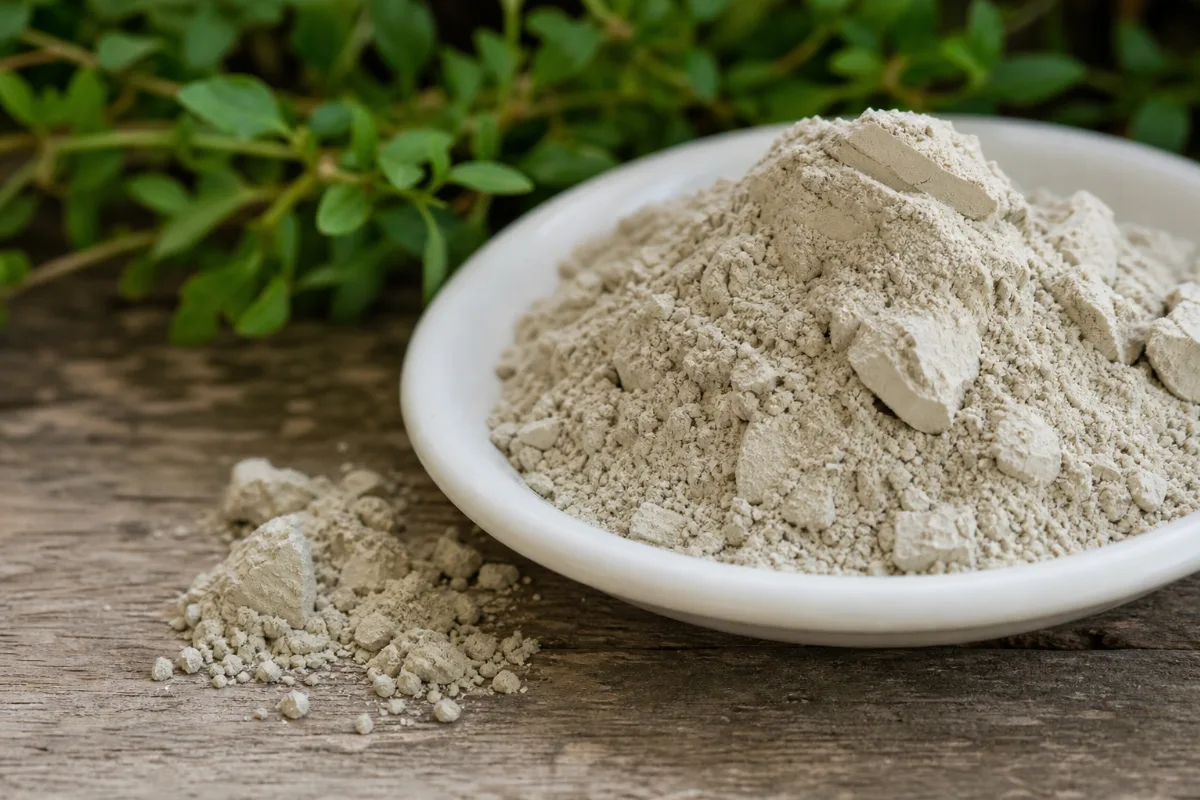
Montmorillonite is a clay mineral of the smectite group. It swells in water and has a large surface that can hold other substances. It is sold as bentonite clay and as calcium or sodium types; which type a jar holds is rarely on the label.
The trials used refined calcium montmorillonite made for study (NovaSil, a finer version called UPSN, and ACCS100). The refined version is described as having lower dioxins and furans than the parent clay. Those are not the same as a shop powder.
Traditional and current uses
Clays have been put on skin for healing since the earliest recorded history, and clay eating has been seen in all parts of the world since antiquity.
A calcium montmorillonite clay was a feed additive that bound mould toxins in animals. It was then tested in people in trials from 2005. Today montmorillonite is also sold in masks and, by some sellers, to swallow. Traditional use is not proof it works or is safe.
What the research shows
In Ghana, 177 adults took refined calcium montmorillonite capsules or placebo for 3 months. Blood aflatoxin markers were lower than placebo at 3 months in both clay groups, and the urine marker was up to 58% lower in the median at the higher amount. In Texas, 234 adults had lower markers by month 3, but only the lower amount was significant. Children's studies also showed lower urinary markers. None of this shows less liver disease.
A Cochrane review found medicinal smectite may shorten children's diarrhoea by about a day, with low certainty.
One purified-montmorillonite trial in 524 people with irritable bowel syndrome missed its main goal, with a benefit only in the constipation-type group.
At a glance
Traditional uses history, not proof
- Put on the skin for healing since the earliest recorded history (Williams and Haydel 2010).
- Eaten in many parts of the world since antiquity (Gomes 2018).
- Fed to farm animals to bind mould toxins, then tested in people from 2005 (2011 safety study).
Studied for research
- Binding aflatoxin from food, low (blood and urine markers only)
- Binding fumonisin from food, low (one trial, urine marker)
- Acute diarrhoea in children, low (medicine-type smectite)
- Irritable bowel syndrome, mixed (main result not significant)
- Detox or removing heavy metals, insufficient
- Face masks and wound use, insufficient
- Source of minerals, insufficient
Main compounds
- Montmorillonite (smectite clay mineral)
- Aluminium and magnesium silicate structure (as described for a purified form)
- Silica sand impurity in some refined samples
- Contaminant metals in some oral clays: lead, arsenic, mercury
Common forms
- Dry powder
- Mask paste mixed with water
- Refined capsules or food-mixed clay (used only in trials)
- Medicine-type smectite sachets (for diarrhoea, under medical advice)
Research links: Smectite for children's diarrhoea, Cochrane review 2018 (abstract) · Aflatoxin markers in Ghana, 2008 (abstract) · Lead and arsenic in oral clays, Netherlands 2013 (abstract) · NCCIH: Detoxes and cleanses · Poison Control · Research Library · Genes & Biomarkers Library
What it is and its history
- Accepted scientific name
- Montmorillonite (a smectite clay mineral, not a plant)
- Synonyms
- Smectite clay (the group it belongs to); Calcium montmorillonite; Sodium montmorillonite; Bentonite (trade name for clay rich in it; not checked in a mineral database)
- Common names
- Montmorillonite clay (English); Bentonite clay (English (shop name)); Arcilla de montmorillonita (Spanish)
- Family or group
- Smectite group of swelling clay minerals
- Native range
- Mined from deposits in many countries; not checked.
- Habitat
- Mined from sediment and volcanic-ash deposits (general knowledge, not from a source read).
- Cultivation
- Not applicable.
- Harvest and processing
- Dug, dried and ground. The trial clays were refined: NovaSil is described as processed, and UPSN is a refined version with lower dioxins and furans and a more uniform particle size (2011 abstract). Refined montmorillonites in the 2024 cell study were separated by particle size.
- Look-alikes and adulterants
- Name: Other clays (illite, kaolin, green and white clays); Note: Names and colours do not tell you the minerals or metals. Two similar-looking green clays acted oppositely on bacteria (2010).; Name: Medicinal smectite (diosmectite) and purified beidellitic montmorillonite; Note: Medicine-grade clays are purified products; results for them do not transfer to a shop powder.
- Sustainability and conservation
- Not applicable.
Traditional use and history history, not clinical proof
| Tradition or era | Documented use | Source |
|---|---|---|
| Ancient to modern | Clays have been used to heal skin infections since the earliest recorded history (Williams and Haydel 2010). Clay eating has been seen in all parts of the world since antiquity (Gomes 2018). | p20640226 |
| Animal feed and then human trials | NovaSil is described as a common anti-caking agent in animal feeds that was found to adsorb aflatoxins; it was then tested in people in phase I and IIa trials from 2005. | p22249378 |
Traditional use shows how it was used. It does not show that it works or is safe today.
What is inside, and how it may work
What it contains and how those compounds act in cells and animals. Laboratory and animal mechanisms are not proven effects in people.
Main compounds
| Compound | Family | Where it is concentrated | Activity studied | Level of evidence |
|---|---|---|---|---|
| Montmorillonite | smectite clay mineral | Not applicable The main mineral of the trial clays by name; percentages were not given in the abstracts. | Swelling layered clay with a large surface that can adsorb other substances. 19 8 | Laboratory |
| Aluminium and magnesium silicate (as described for beidellitic montmorillonite) | clay mineral composition | Not applicable Described only as a double aluminium and magnesium silicate in the IBS trial abstract. | Structure of the clay; no drug-like action described. 5 | Narrative |
| Silica sand (impurity) | mineral impurity | Not applicable Not stated. | Linked to cell side effects in the 2024 refined montmorillonite study. 19 | Laboratory |
| Lead, arsenic, mercury (contaminant metals) | toxic elements | Not applicable Up to 99.7 mg/kg lead and 45.1 mg/kg arsenic in oral clays on the Dutch market; mercury mean 28.91 micrograms per kg in cosmetic clays. | Toxic elements, not active ingredients. 15 7 | Product analysis |
Mechanisms, receptors and pathways
| Target or pathway | Gene or receptor | What was found | Level |
|---|---|---|---|
| Adsorption of mould toxins in the gut | None | Calcium montmorillonite binds aflatoxin and fumonisin so less is absorbed, shown first in animals and in lab binding, then through lower blood and urine markers in people. 16 18 11 | Laboratory and human marker |
| Adsorption of medicines | None | Bentonite in a medicine granule adsorbed rifampicin and lowered its absorption in six volunteers. 3 | Human pharmacokinetic |
| Adsorption of toxins and metals (general) | None | A review says clay particles can adsorb toxic substances for elimination, but can also adsorb and release heavy metals for uptake. 8 | Narrative review |
| Gut coating in diarrhoea (proposed) | None | Proposed for smectite medicines; the review abstract gives no mechanism. 13 | Theory |
Absorption, metabolism and elimination
- Absorption
- Not studied for shop montmorillonite. Clay minerals are not known to be absorbed whole; strontium in blood rose in the high-dose NovaSil group.
- Distribution
- Lead rose in mouse liver and kidney after green clay on skin (2020).
- Metabolism
- Not applicable.
- Elimination
- Not studied.
- Bioavailability
- Not studied.
Isolated compounds versus whole extracts
Calcium and sodium montmorillonites, refined and raw clays, and medicinal smectites are different products. The 2024 cell study found toxicity depended on dose, silica sand and particle size, and the human trials used one refined grade.
Nutritional composition
Clay is not a food or a nutrient. In a 3-month trial of refined NovaSil blood vitamins A and E and minerals did not change except strontium, so nothing shows it adds useful minerals.
1 mixed findings3 low certainty3 not enough evidence
What is Montmorillonite Clay good for?
The uses people ask about and how strong the evidence is for each. The better-studied results are for refined or medicine-type clays, not shop powders.
Benefits, one by one
Each card is a research question, not a promise. Tap a goal to filter. Open a card to see the studies, doses and limits.
Binding aflatoxin from food (blood and urine markers)
Low certaintyIn several placebo-controlled trials a refined calcium montmorillonite clay (NovaSil and close relatives) lowered blood and urine markers of aflatoxin, a mould toxin in stored grain. The trials measured markers, not liver disease or cancer. They come mostly from one research group and not every dose worked.
5 studiesCapsules or food-mixed clay of a specific refined grade, 0.75 to 3 g …
Studies, doses and limits
What the trials found
Four randomized trials of refined calcium montmorillonite measured aflatoxin markers: 177 adults in Ghana (3 months), 234 adults in Texas (3 months), and two child studies in Ghana. These are NovaSil, UPSN or ACCS100 products made for study, not shop powders.
Results
Ghana adults: blood aflatoxin-albumin adduct was lower than placebo at 3 months in both clay groups (p < 0.0001); urinary aflatoxin M1 was up to 58% lower in median at the high dose (p < 0.0391). Texas adults: adduct lower by month 3 in both clay groups but significant only at the low dose (p = 0.0005). Ghana children: urinary aflatoxin M1 was lower with clay (one 14-day study found a significant drop at the higher dose; another reports it reduced to 60% while it rose with placebo).
Effect sizes as reported
Effects are on exposure markers. The 58% figure is a drop in the median urinary marker at the high dose.
Why this rating
Several randomized trials with consistent marker results, but markers only (no liver disease or cancer outcomes), a single research network and clay family, mixed dose-response in the Texas trial, and short follow-up.
Form and dose studied
Capsules or food-mixed clay of a specific refined grade, 0.75 to 3 g a day in the trials; not advice and not a shop powder.
Who was studied
Adults and children in Ghana at high aflatoxin exposure; healthy adults in Texas.
Limits
Marker-only outcomes; mostly the same research group (authors of the clay's development); products not sold as supplements; results do not apply to other montmorillonite jars.
Why researchers looked
Aflatoxin is a mould poison found in poorly stored maize and nuts that can harm the liver. A refined clay was tested as a way to make less of it pass from the gut into the body.
Traditional use
Not a traditional use. Clay has been fed to farm animals to bind mould toxins, and was then tested in people (2005 to 2022 trials).
Proposed mechanism Laboratory
Clay particles hold on to aflatoxin in the gut so less is absorbed. This is a binding effect studied in dishes and animals and then checked with human markers.
A proposed mechanism does not show that the effect happens in people.
The trials used refined, tested clay. Ordinary clays can contain lead and arsenic (see the Safety tab). Aflatoxin is best avoided by food storage and monitoring, not by a clay powder.
Binding fumonisin from food (urine marker)
Low certaintyIn rats and then in one trial in Ghana, calcium montmorillonite lowered a urine marker of fumonisin, another mould toxin from grain. This is one trial with a marker outcome.
1 studies3 g a day in the trial, a refined clay (as in the study; not advice).
Studies, doses and limits
What the trials found
One phase IIa trial inside the Ghana aflatoxin study, urine measured at weeks 8 and 10.
Results
In rats the urinary marker was 20% lower at 24 hours and 50% lower at 48 hours. In people, 56% of 186 urine samples had detectable fumonisin B1, and median levels were more than 90% lower with 3 g a day than with placebo (p < 0.05).
Effect sizes as reported
More than 90% lower median urine marker at the high dose; no result for the low dose in the abstract.
Why this rating
One human trial; urine marker only; same research group as the aflatoxin trials.
Form and dose studied
3 g a day in the trial, a refined clay (as in the study; not advice).
Who was studied
Ghanaian adults.
Limits
Marker only; no health outcome; not repeated elsewhere in the sources read.
Why researchers looked
Fumonisin often appears together with aflatoxin in grain, so researchers checked whether the same clay also holds it.
Traditional use
Not a traditional use.
Proposed mechanism Laboratory
Lab tests showed fumonisin can stick to the clay surface, as aflatoxin does.
A proposed mechanism does not show that the effect happens in people.
Same cautions as for aflatoxin binding.
Acute infectious diarrhoea in children
Low certaintyA Cochrane review found that smectite, a medicinal clay used as an add-on to rehydration, may shorten children's diarrhoea by about a day. The evidence is low certainty. This is a medicine-type smectite given under medical care, not a clay powder from a shop.
1 studiesMedicinal smectite given by a clinician; dose not given here.
Studies, doses and limits
What the trials found
Cochrane review of 18 trials with 2616 children (search to June 2017). Smectite is the class of clay montmorillonite belongs to; the review does not break results down by product, so it is not a test of a shop montmorillonite powder.
Results
Diarrhoea about 24 hours shorter (mean difference -24.38 hours, 95% CI -30.91 to -17.85; 14 studies, 2209 children; low-certainty). Cure by day 3: RR 2.10 (1.30 to 3.39; 5 trials, 312 children; low-certainty). Stool output lower (low-certainty). No effect on hospital admission or the need for intravenous fluids. Constipation was the commonest side effect and did not differ from controls. No deaths or serious adverse effects reported.
Effect sizes as reported
About one day shorter on average.
Why this rating
The review rates its own evidence low-certainty. It supports an add-on to rehydration, not a replacement for it.
Form and dose studied
Medicinal smectite given by a clinician; dose not given here.
Who was studied
Children aged 1 month to 18 years, mostly rotavirus infections.
Limits
Different clay medicines pooled; low certainty; does not test shop montmorillonite.
Why researchers looked
Smectite clays coat the gut lining and can bind germs and toxins, so they are used as an adjuvant medicine for diarrhoea in children in several countries.
Traditional use
Used as an anti-diarrhoea medicine; the Cochrane review calls smectite 'a medicinal clay'.
Proposed mechanism Pharmacological theory
Proposed to coat the gut and bind irritants. The abstract does not describe a mechanism.
A proposed mechanism does not show that the effect happens in people.
Children with diarrhoea need fluids first. Ask a doctor or pharmacist; do not give a child a shop clay.
Irritable bowel syndrome (constipation type)
Mixed findingsOne 8-week trial of 524 adults tested a purified montmorillonite medicine. Overall it did not beat placebo. A subgroup with constipation-type IBS did better. The authors ask for confirmation.
1 studies3 g three times a day for 8 weeks in the trial (not advice).
Studies, doses and limits
What the trials found
One multicentre double-blind trial of beidellitic montmorillonite, a purified clay of aluminium and magnesium silicate (a medicine-type clay, not a shop powder).
Results
Overall success (pain or discomfort improved by at least 1 point) was 51.7% on clay versus 45.2% on placebo, not statistically significant. In constipation-predominant IBS: 49.4% versus 31.5% (P < 0.016). Stools per day did not change. No significant adverse events reported.
Effect sizes as reported
Overall difference 6.5 percentage points, not significant; subgroup difference 17.9 points.
Why this rating
The main result was null, the benefit is a subgroup finding, and nothing was repeated.
Form and dose studied
3 g three times a day for 8 weeks in the trial (not advice).
Who was studied
Adults with IBS (Rome I criteria).
Limits
Subgroup result; one trial from 2005; a different clay product.
Why researchers looked
Montmorillonite-type clays have been tried for gut pain and bloating.
Traditional use
Not a traditional use in the source read.
Proposed mechanism Unknown
The abstract does not give a mechanism and says the pain effect is not explained by changes in bowel habit.
A proposed mechanism does not show that the effect happens in people.
Ask a doctor about gut symptoms that last; constipation can also be a clay side effect.
Detox or binding toxins and heavy metals in the body
Not enough evidenceNo study shows that montmorillonite clay by mouth detoxes the body or removes heavy metals from people. The mould-toxin trials measured one toxin in food, not general detox. A health agency says there is no compelling research that detox diets remove toxins.
2 studiesNot applicable.
Studies, doses and limits
What the trials found
No human study of montmorillonite for general detox or heavy-metal removal was found.
Results
The NCCIH page reports a 2015 review that found no compelling research that detox diets remove toxins. That is about detox diets in general, not clay.
Effect sizes as reported
Not applicable.
Why this rating
No human data for this claim.
Form and dose studied
Not applicable.
Who was studied
None studied.
Limits
Absence of evidence; the agency statement is general.
Why researchers looked
Clay can bind substances in a dish, and sellers carry the idea over to the body.
Traditional use
Clay eating for health has been seen in all parts of the world since antiquity (Gomes 2018).
Proposed mechanism Pharmacological theory
Clay particles could adsorb toxins so they leave the body, but a review notes they could also adsorb heavy metals and make them available for uptake.
A proposed mechanism does not show that the effect happens in people.
Do not swallow clay to detox. Some clays hold lead and arsenic (see the Safety tab).
Face masks and skin or wound use
Not enough evidenceNo human trial of a montmorillonite face mask or wound dressing was found in the sources read. Lab work shows clays differ widely in what they do to bacteria and skin cells. One mouse study found lead in organs after green clay was put on skin.
3 studiesNot applicable.
Studies, doses and limits
What the trials found
None found for montmorillonite masks.
Results
In dishes, clay leachates stimulated wound-healing responses in skin-type cells but were toxic to immune-type cells, and a green clay killed bacteria only as a wet suspension (2021). Whether any of this helps skin in people is not shown.
Effect sizes as reported
Not applicable.
Why this rating
No human trial; lab results are mixed and clay-specific.
Form and dose studied
Not applicable.
Who was studied
None studied.
Limits
Lab only; clays named in the lab work are not all montmorillonite.
Why researchers looked
Sellers say clay draws out oil and impurities. Montmorillonite is sold in masks and used in some dressings and antidiarrhoeal medicines.
Traditional use
Clays have been used on skin infections since the earliest recorded history (Williams and Haydel 2010).
Proposed mechanism Pharmacological theory
Clays soak up water and oils because of their fine particles and surface. That is a property of the powder, not proof of skin benefit.
A proposed mechanism does not show that the effect happens in people.
Patch-test any clay on a small area first. Do not use clay in place of care for a wound or infection.
A source of minerals
Not enough evidenceClay is sold as mineral-rich, but no trial shows a useful mineral gain from swallowing montmorillonite. In the Ghana trial blood minerals did not change except strontium, which rose.
3 studiesNot applicable.
Studies, doses and limits
What the trials found
In 177 adults taking 1.5 or 3.0 g a day of NovaSil for 3 months, vitamins A and E and 30 minerals were similar to placebo except strontium (about 114-116 versus 84-90 micrograms per litre in the high-dose group; p < 0.001). A 13-week rat study saw some small sodium, potassium, zinc and vitamin E differences within normal ranges.
Results
Strontium higher in blood with the high dose; no other mineral changed.
Effect sizes as reported
Not applicable.
Why this rating
No evidence of nutritional benefit; one trial showed no meaningful change except strontium.
Form and dose studied
Not applicable.
Who was studied
Ghanaian adults; rats.
Limits
A refined clay; short trial.
Why researchers looked
Clay contains many elements and sellers describe it as a mineral supplement.
Traditional use
Clay eating has long been explained partly by nutritional need (Gomes 2018).
Proposed mechanism Pharmacological theory
Clay can release or bind elements in the gut depending on the clay and the element.
A proposed mechanism does not show that the effect happens in people.
The same clay that adds some elements can also bind others; see the Safety tab.
Connections to the rest of health
How Montmorillonite Clay connects to the rest of our health knowledge graph. Every link says what kind of connection it is. A safety link (for example to the liver) is a warning, not a benefit. A study that merely mentions a topic never creates a benefit link.
Explore every connection: goals, body systems, organs, symptoms, genes
A. Wellness goals
| Connected to | Kind of connection | Evidence status | Context | Studies |
|---|---|---|---|---|
| Digestive Support | Low certainty | Binding aflatoxin from food (blood and urine markers): In several placebo-controlled trials a refined calcium montmorillonite clay (NovaSil and close relatives) lowered blood and urine markers of aflatoxin, a mould toxin in stored grain. The trials measured markers, not liver disease or cancer. They come mostly from one research group and not every dose worked. Binding fumonisin from food (urine marker): In rats and then in one trial in Ghana, calcium montmorillonite lowered a urine marker of fumonisin, another mould toxin from grain. This is one trial with a marker outcome. | 18 1 14 10 12 16 | |
| Digestive Support | Low certainty | Acute infectious diarrhoea in children: A Cochrane review found that smectite, a medicinal clay used as an add-on to rehydration, may shorten children's diarrhoea by about a day. The evidence is low certainty. This is a medicine-type smectite given under medical care, not a clay powder from a shop. | 13 | |
| Digestive Support | Mixed findings | Irritable bowel syndrome (constipation type): One 8-week trial of 524 adults tested a purified montmorillonite medicine. Overall it did not beat placebo. A subgroup with constipation-type IBS did better. The authors ask for confirmation. | 5 | |
| Detoxification Support | Not enough evidence | Detox or binding toxins and heavy metals in the body: No study shows that montmorillonite clay by mouth detoxes the body or removes heavy metals from people. The mould-toxin trials measured one toxin in food, not general detox. A health agency says there is no compelling research that detox diets remove toxins. | 22 8 | |
| Healthy Skin | Not enough evidence | Face masks and skin or wound use: No human trial of a montmorillonite face mask or wound dressing was found in the sources read. Lab work shows clays differ widely in what they do to bacteria and skin cells. One mouse study found lead in organs after green clay was put on skin. | 9 21 20 | |
| Nutrient Source | Not enough evidence | A source of minerals: Clay is sold as mineral-rich, but no trial shows a useful mineral gain from swallowing montmorillonite. In the Ghana trial blood minerals did not change except strontium, which rose. | 2 11 8 |
B. Body systems
| Connected to | Kind of connection | Evidence status | Context | Studies |
|---|---|---|---|---|
| Digestive System | Biological association | Low certainty | Studied for: Binding aflatoxin from food (blood and urine markers) Studied for: Binding fumonisin from food (urine marker) | 18 1 14 10 12 16 13 5 22 8 2 11 |
| Integumentary System | Biological association | Not enough evidence | Studied for: Face masks and skin or wound use | 9 21 20 |
I. Biomarkers
| Connected to | Kind of connection | Evidence status | Context | Studies |
|---|---|---|---|---|
| Aflatoxin B1-albumin adduct in blood | Biological association | Low certainty | Measured in trials: lowered. A lab change is not the same as a health benefit. | 18 14 |
| Aflatoxin M1 in urine | Biological association | Low certainty | Measured in trials: lowered. A lab change is not the same as a health benefit. | 18 10 12 |
| Fumonisin B1 in urine | Biological association | Low certainty | Measured in trials: lowered. A lab change is not the same as a health benefit. | 16 |
| Length of diarrhoea | Biological association | Low certainty | Measured in trials: shortened. A lab change is not the same as a health benefit. | 13 |
| Abdominal pain or discomfort in IBS | Biological association | Mixed findings | Measured in trials: improved in a subgroup. A lab change is not the same as a health benefit. | 5 |
| Strontium in blood | Biological association | Low certainty | Measured in trials: raised. A lab change is not the same as a health benefit. | 2 |
| Vitamins A and E and other minerals in blood | Biological association | Low certainty | Measured in trials: unchanged. A lab change is not the same as a health benefit. | 2 |
L. Active compounds
| Connected to | Kind of connection | Evidence status | Context | Studies |
|---|---|---|---|---|
| Montmorillonite | Biological association | Laboratory | Swelling layered clay with a large surface that can adsorb other substances. Preparation or compound: Not applicable |
19 8 |
| Aluminium and magnesium silicate (as described for beidellitic montmorillonite) | Biological association | Narrative | Structure of the clay; no drug-like action described. Preparation or compound: Not applicable |
5 |
| Silica sand (impurity) | Biological association | Laboratory | Linked to cell side effects in the 2024 refined montmorillonite study. Preparation or compound: Not applicable |
19 |
| Lead, arsenic, mercury (contaminant metals) | Biological association | Product analysis | Toxic elements, not active ingredients. Preparation or compound: Not applicable |
15 7 |
Each connection is stored with the ingredient, the connected record, the kind of connection, the evidence status, the supporting studies, the preparation or compound involved, and a review date (last reviewed October 25, 2026).
Evidence at a glance: what changed in 4 lab markers
Tap a number to show only those markers. Counts are markers, not people.
The evidence
The research centre for Montmorillonite Clay. Every record here was checked against PubMed or the publisher's page; we never list a study we have not verified.
Evidence by outcome
Bars show how many studies we found for each outcome, not how well it works. People are added up across trials only (reviews are not added, to avoid double counting).
How we rate evidence
High certainty
Several well-run trials or reviews agree; further research is unlikely to change the picture much.
Moderate certainty
Good trials point the same way, but some doubt remains.
Low certainty
Small, short or inconsistent trials. The finding could change with better research.
Very low certainty
Very little or very weak human data. Treat as a possibility only.
Mixed findings
Trials or reviews disagree with each other.
Not enough evidence
Not enough human research to say either way.
Evidence against
Good research found no benefit, or found harm.
We take the reviewers' own risk-of-bias and GRADE statements where they exist, and otherwise judge from study size, design, consistency, directness and whether a product matches what is sold. Many publications do not make evidence high. Method note: We searched PubMed, read the abstract of each cited paper, and read the FDA cosmetics, NCCIH detox and Poison Control pages. Certainty ratings are the compiler's own reading. Most aflatoxin trials come from the group that developed the clay and are flagged. Regulators outside the US, and EFSA beyond one abstract, were not checked. No study is cited that we could not verify.
Study library: every study we checked 24
| Study | Design | People | Product, dose, length | Result |
|---|---|---|---|---|
| Afriyie-Gyawu 2008 NovaSil clay intervention in Ghanaians at high risk for aflatoxicosis. I. Study design and clinical outcomes Food Additives & Contaminants Part A · PMID 17852392 · DOI |
Randomized controlled trial (phase IIa, double blind, placebo controlled) |
177 177 of 507 screened Ghanaian volunteers were randomly assigned; 162 finished |
NovaSil calcium montmorillonite clay in capsules mineral clay (not a plant) 1.5 or 3.0 g a day (as in the study; not advice) 3 months · vs Placebo |
About 92% finished and compliance was over 97%. 99.5% of person-time reported no side effects. Mild to moderate events (about 0.5% of person-time) included nausea, diarrhoea, heartburn and dizziness and were similar across groups. No significant differences in blood counts, liver and kidney function or electrolytes. Methods, limits and fundingOutcomes: Safety, side effects, blood counts, liver and kidney tests, electrolytes Limitations: Three months only. Healthy volunteers screened for health and pregnancy status. One clay product. Funding and conflicts: US government research support listed on PubMed; no conflict statement in the abstract. Read: abstract |
| Afriyie-Gyawu 2008 NovaSil clay does not affect the concentrations of vitamins A and E and nutrient minerals in serum samples from Ghanaians at high risk for aflatoxicosis Food Additives & Contaminants Part A · PMID 18569006 · DOI |
Randomized controlled trial (secondary analysis) |
177 Ghanaian adults in the 3-month NovaSil trial |
NovaSil calcium montmorillonite clay in capsules mineral clay (not a plant) 1.5 or 3.0 g a day (as in the study; not advice) 3 months · vs Placebo |
Vitamins A and E and minerals were similar between high-dose and placebo groups, except strontium, which was significantly higher in the high-dose group (about 114-116 versus 84-90 micrograms per litre; p < 0.001). Methods, limits and fundingOutcomes: Serum vitamins A and E and 15 nutrient and 15 non-nutrient minerals Limitations: Blood levels only; short; one clay. Funding and conflicts: US government research support listed on PubMed; no conflict statement in the abstract. Read: abstract |
| Boman 1975 Mechanism of the inhibitory effect of PAS granules on the absorption of rifampicin: adsorption of rifampicin by an excipient, bentonite European Journal of Clinical Pharmacology · PMID 1233228 · DOI |
Human pharmacokinetic study |
6 Six healthy volunteers |
PAS granules and dummy granules whose main excipient was bentonite, given with rifampicin mineral clay (not a plant) Not stated in the abstract Single-dose studies · vs Na-PAS tablets (no effect) |
Giving the granules at the same time significantly lowered rifampicin absorption. Dummy granules with the same excipients reproduced it, and the bentonite was shown to adsorb rifampicin rapidly and strongly. Methods, limits and fundingOutcomes: Absorption of rifampicin (plasma levels, AUC, urine) Limitations: Six people; 1975; a medicine granule excipient, not a clay supplement. The abstract describes bentonite as closely related to kaolin. Funding and conflicts: No conflict statement in the abstract. Read: abstract |
| Bonglaisin 2022 Geophagia: Benefits and potential toxicity to human - A review Frontiers in Public Health · PMID 35958861 · DOI |
Narrative review review |
People who eat clay soil such as chalk or kaolin | Clay eating (geophagy) mineral clay (not a plant) n/a n/a · vs n/a |
Says the safety of those who eat clay is not fully established, composition varies by source, toxic minerals have been found in geophagic materials, and the toxicity of the practice has been little investigated. Methods, limits and fundingOutcomes: Potential toxicity of eating clay Limitations: Review of clay soil eating in general, not montmorillonite products. Funding and conflicts: No conflicts declared. Read: abstract |
| Ducrotte 2005 Symptomatic efficacy of beidellitic montmorillonite in irritable bowel syndrome: a randomized, controlled trial Alimentary Pharmacology & Therapeutics · PMID 15709995 · DOI |
Randomized controlled trial (multicentre, double blind, placebo controlled) |
524 Adults with irritable bowel syndrome (Rome I criteria): 263 clay, 261 placebo |
Beidellitic montmorillonite, a purified clay of aluminium and magnesium silicate (a medicine-type clay, not a shop powder) mineral clay (not a plant) 3 g three times a day (as in the study; not advice) 8 weeks · vs Placebo |
Overall success 51.7% on clay versus 45.2% on placebo, not statistically significant. In the constipation-predominant group improvement was 49.4% versus 31.5% (P < 0.016). Stool number per day did not change. Tolerance was reported as optimal without significant adverse events. Methods, limits and fundingOutcomes: Improvement in abdominal pain or discomfort by at least 1 point Limitations: Main result was null. The benefit is a subgroup finding. A different, purified product. The authors ask for confirmatory trials. Funding and conflicts: No conflict statement in the abstract. Read: abstract |
| EFSA FEEDAP Panel (Villa 2026 Assessment of a feed additive consisting of montmorillonite-illite mixed layer clay mineral (1g557) for all animal species for the renewal of its authorisation EFSA Journal · PMID 42564637 · DOI |
Regulatory opinion regulatory |
Animal feed additive (all species) | Montmorillonite-illite mixed-layer clay used as a feed additive mineral clay (not a plant) n/a n/a · vs n/a |
The Panel could not conclude whether the additive remains safe for the target animals under current conditions, found it safe for the consumer and the environment, and said it should be considered a skin and respiratory sensitiser. Eye irritation could not be judged for lack of data. Exposure of users by any route is a risk and should be minimised. Methods, limits and fundingOutcomes: Safety for animals, consumers, users and environment Limitations: About a feed additive, not a human supplement or a face mask. Montmorillonite-illite, not pure montmorillonite. Funding and conflicts: None in the abstract. Read: abstract |
| Fischer 2025 Analysis of Mercury Concentration in Cosmetic Clays Toxics · PMID 40559980 · DOI |
Product analysis product |
Cosmetic clays of different colours and makers on the Polish market (sample count not given in the abstract) | Cosmetic clays analysed for mercury mineral clay (not a plant) n/a n/a · vs n/a |
Mercury was found in all samples: mean 28.91 micrograms per kg, range 1.87 to 200.81. Highest averages were in green (53.26) and white (52.80) clays. The authors say such products likely need metal testing. Methods, limits and fundingOutcomes: Mercury by clay colour Limitations: One country; the abstract does not say which clays were montmorillonite. Funding and conflicts: No conflicts declared. Read: abstract |
| Gomes 2018 Healing and edible clays: a review of basic concepts, benefits and risks Environmental Geochemistry and Health · PMID 28150053 · DOI |
Narrative review review |
Healing and edible clays in general | Healing and edible clays mineral clay (not a plant) n/a n/a · vs n/a |
Says clay particles could adsorb and carry away toxic substances, but could also adsorb and make available toxic elements such as heavy metals, through ingestion or through the skin. Clay eating has been seen in all parts of the world since antiquity. Methods, limits and fundingOutcomes: Benefits and risks of healing clays Limitations: General review of clays, not montmorillonite alone. Read as abstract. Funding and conflicts: No conflict statement in the abstract. Read: abstract |
| Incledion 2021 A New Look at the Purported Health Benefits of Commercial and Natural Clays Biomolecules · PMID 33466399 · DOI |
Laboratory study lab |
Clay particles, suspensions and leachates tested on immune-type (THP-1) and skin-type (HaCaT) cell lines and wound bacteria | Commercial and natural clays (including a green clay) mineral clay (not a plant) Not stated in the abstract Not stated in the abstract · vs Untreated |
Clay leachates were toxic to immune-type cells and often stimulated wound-healing responses in skin-type cells. Leachates had too few ions to be antibacterial. The green clay was antibacterial only in suspension and lost the effect when neutralised. The authors stress dangers of unregulated marketing and unsubstantiated claims. Methods, limits and fundingOutcomes: Cell toxicity, wound-healing response, antibacterial effect Limitations: Lab only; the abstract does not name montmorillonite clays. Funding and conflicts: No conflict declared. Read: abstract |
| Kumi 2022 Safety and Efficacy of Novasil Clay (Calcium Montmorillonite) in Children Exposed to Aflatoxin in Ejura-Sekyedumase District in Ghana Global Pediatric Health · PMID 36133399 · DOI |
Placebo controlled trial (randomisation not described in the abstract) |
200 Children aged 2 to 9 years in Ghana |
Novasil calcium montmorillonite in food mineral clay (not a plant) 1.5 g (as in the study; not advice) Not stated in the abstract · vs Calcium carbonate placebo |
Urinary aflatoxin M1 in the clay group was reduced to 60% of baseline while it rose in the placebo group. Blood counts did not change except haemoglobin, which rose in the clay group. Chemistries were unchanged except calcium. Glutathione rose in the clay group. Methods, limits and fundingOutcomes: Urinary aflatoxin M1, blood counts and chemistries, glutathione Limitations: Duration not given in the abstract; the abstract does not say randomisation or blinding was done. Registered in the Pan African Clinical Trials Registry. Funding and conflicts: No conflicts declared. Registration: PACTR202202797930675 Read: abstract |
| Marroquin-Cardona 2011 Characterization and Safety of Uniform Particle Size NovaSil Clay as a Potential Aflatoxin Enterosorbent Applied Clay Science · PMID 22249378 · DOI |
Rat toxicity study animal |
Young male and female Sprague Dawley rats | Uniform Particle Size NovaSil (refined calcium montmorillonite) mineral clay (not a plant) 0.25% or 2% of the ration 13 weeks · vs Clay-free ration |
No overt toxicity at 2%. Sodium, sodium/potassium ratio and vitamin E rose in all clay groups; serum zinc and potassium were lower in some males. None of these were dose-dependent and all stayed in normal ranges. The abstract says the refined clay has lower levels of dioxins and furans than the parent clay, and that more research on sodium, zinc, potassium and vitamin E is warranted. Methods, limits and fundingOutcomes: Body weight, organs, blood chemistry, vitamins and minerals Limitations: Rats. Authors are from the clay's research group. Funding and conflicts: NIH NIMHD grant listed on PubMed; no conflict statement in the abstract. Read: abstract |
| Mitchell 2014 Short-term safety and efficacy of calcium montmorillonite clay (UPSN) in children American Journal of Tropical Medicine and Hygiene · PMID 25135766 · DOI |
Randomized controlled trial |
Children in Ghana (number not given in the abstract) | Uniform Particle Size NovaSil (UPSN), a refined calcium montmorillonite mineral clay (not a plant) 0.75 or 1.5 g a day (as in the study; not advice) 14 days · vs 1.5 g calcium carbonate placebo |
Blood and chemistry tests did not differ from placebo. No adverse events attributable to the clay. Urinary aflatoxin M1 was significantly lower in the high-dose group than placebo. Methods, limits and fundingOutcomes: Blood counts, serum chemistry, adverse events, urinary aflatoxin M1 Limitations: Two weeks only; number of children not in the abstract. Funding and conflicts: US government research support listed on PubMed; no conflict statement in the abstract. Read: abstract |
| Perez-Gaxiola 2018 Smectite for acute infectious diarrhoea in children Cochrane Database of Systematic Reviews · PMID 29693719 · DOI |
Systematic review with meta analysis |
2616 18 trials in children aged 1 month to 18 years with acute infectious diarrhoea |
Smectite (a medicinal clay used as an add-on to rehydration) mineral clay (not a plant) Varied by trial Varied by trial · vs Control (no smectite or placebo) |
Smectite may shorten diarrhoea by about a day (mean difference -24.38 hours, 95% CI -30.91 to -17.85; 14 studies, 2209 children; low-certainty). May raise resolution at day 3 (RR 2.10, 1.30 to 3.39; 5 trials, 312 children; low-certainty). No effect on hospitalisation. Constipation was the most common side effect and did not differ between groups (low-certainty). No deaths or serious adverse effects reported. Diarrhoea shorter by about 24 hours (95% CI -30.91 to -17.85 hours) Methods, limits and fundingOutcomes: Duration of diarrhoea; clinical resolution at day 3; stool output; hospitalisation; side effects Limitations: Low-certainty evidence. The reviewed product is a medicinal smectite clay, not a shop powder. Search ran to June 2017. Funding and conflicts: The review authors declare no financial interest in the subject. Read: abstract |
| Pollock 2016 Intervention trial with calcium montmorillonite clay in a south Texas population exposed to aflatoxin Food Additives & Contaminants Part A · PMID 27321368 · DOI |
Randomized controlled trial (double blind, placebo controlled) |
234 Healthy men and women in two Texas counties |
ACCS100, a refined calcium montmorillonite mineral clay (not a plant) 1.5 g or 3 g a day (as in the study; not advice) 3 months, then 1 month with none · vs Placebo |
Adverse event rates were similar across groups and blood tests did not differ. Adduct levels were lower by month 3 in both clay groups, but only the low-dose group was statistically significant (p = 0.0005). Methods, limits and fundingOutcomes: Serum aflatoxin B1-lysine adduct; blood chemistry and counts Limitations: Biomarker only. The high dose did not reach significance, so there was no clear dose-response. Funding and conflicts: Support from US NCI and NIMHD listed on PubMed; no conflict reported by the authors. Read: abstract |
| Reeuwijk 2013 Levels of lead, arsenic, mercury and cadmium in clays for oral use on the Dutch market and estimation of associated risks Food Additives & Contaminants Part A · PMID 23862762 · DOI |
Product analysis product |
63 Traditional clays from Africa (n = 10) and Suriname (n = 26), and health clays (n = 27) sampled 2004 to 2012 |
Clays for oral use, measured by ICP-MS mineral clay (not a plant) Estimated daily use level n/a · vs Health-based guidance values |
Highest levels found: lead 99.7, arsenic 45.1, mercury 2.2 and cadmium 0.75 mg per kg. For lead, 34 of 36 traditional clays and 2 of 27 health clays would give intakes above the toxicological limit, by up to 20-fold. For inorganic arsenic, 15 of 35 traditional clays and 11 of 27 health clays would exceed the limit, by up to 19-fold. The authors say limited bioaccessibility may reduce exposure but conclude lead and arsenic intakes could be of concern and use, especially by pregnant women, should be discouraged. Methods, limits and fundingOutcomes: Lead, arsenic, mercury and cadmium content and estimated intake Limitations: The abstract does not name the clay minerals, so these are clays for oral use in general, not proven to be montmorillonite. Estimates, not measured blood levels. Dutch market, 2004 to 2012. Funding and conflicts: No conflict statement in the abstract. Read: abstract |
| Robinson 2012 Calcium montmorillonite clay reduces urinary biomarkers of fumonisin B1 exposure in rats and humans Food Additives & Contaminants Part A · PMID 22324939 · DOI |
Rat experiment plus randomized controlled trial (phase IIa) human and animal |
Male Fisher rats; and Ghanaian participants (186 urine samples analysed) | NovaSil calcium montmorillonite mineral clay (not a plant) 1.5 or 3 g a day in people (as in the study; not advice); 2% of the diet in rats 3 months in people · vs Placebo (1.5 g a day) in people |
In rats the clay lowered the urinary marker by 20% at 24 hours and 50% at 48 hours. In people, 56% of 186 urine samples had detectable fumonisin B1 and median levels were more than 90% lower in the 3 g group than placebo (p < 0.05). Methods, limits and fundingOutcomes: Urinary fumonisin B1 Limitations: Biomarker only; fumonisin was measured in urine from weeks 8 and 10 only. Funding and conflicts: US government research support listed on PubMed; no conflict statement in the abstract. Read: abstract |
| Wang 2005 Short-term safety evaluation of processed calcium montmorillonite clay (NovaSil) in humans Food Additives and Contaminants · PMID 16019795 · DOI |
Randomized controlled trial (phase I, double blind) |
50 Healthy adults aged 20 to 45 (23 men, 27 women) |
NovaSil calcium montmorillonite capsules mineral clay (not a plant) 1.5 or 3.0 g a day (as in the study; not advice) 2 weeks · vs Two dose groups, no placebo group in the abstract |
Everyone finished. Mild gut effects: abdominal pain 6%, bloating 4%, constipation 2%, diarrhoea 2%, flatulence 8%, with no significant difference between doses. No significant differences in blood counts, liver and kidney tests, electrolytes, vitamins A and E or minerals. Methods, limits and fundingOutcomes: Side effects, blood and urine tests Limitations: Two weeks; two dose groups compared with each other, not with placebo, according to the abstract. Funding and conflicts: US government research support listed on PubMed; no conflict statement in the abstract. Read: abstract |
| Wang 2008 NovaSil clay intervention in Ghanaians at high risk for aflatoxicosis: II. Reduction in biomarkers of aflatoxin exposure in blood and urine Food Additives & Contaminants Part A · PMID 18478481 · DOI |
Randomized controlled trial (phase IIa, placebo controlled) |
177 Ghanaian adults at high risk of aflatoxin exposure (656 blood and 624 urine samples analysed) |
NovaSil calcium montmorillonite clay in capsules before meals mineral clay (not a plant) 1.5 g or 3.0 g a day (as in the study; not advice) 3 months · vs Placebo capsules |
Adduct levels were similar across groups at baseline and 1 month. At 3 months they were significantly lower in both the low-dose and high-dose groups than in placebo (p < 0.0001 each). Urinary aflatoxin M1 was lower by up to 58% in the median in the high-dose group at 3 months (p < 0.0391); not different at baseline or 1 month. Methods, limits and fundingOutcomes: Serum aflatoxin B1-albumin adduct; urinary aflatoxin M1 Limitations: Biomarkers of exposure, not liver disease or cancer. One research group's clay. The abstract does not describe blinding details for this part. Funding and conflicts: US government research support listed on PubMed; no conflict statement in the abstract. Read: abstract |
| Wang 2024 Toxicological Evaluation toward Refined Montmorillonite with Human Colon Associated Cells and Human Skin Associated Cells Journal of Functional Biomaterials · PMID 38535268 · DOI |
Laboratory cell study lab |
Human colon-type and skin-type cells in a dish | Three commercial montmorillonites refined by particle size: calcium, magnesium-enriched calcium, and silicon-enriched sodium montmorillonite mineral clay (not a plant) Various amounts Not stated in the abstract · vs Untreated cells |
Side effects were linked to excess amounts and to silica sand, and were more obvious in colon-type cells. Interactions depended on particle size. Methods, limits and fundingOutcomes: Cell side effects by dose, particle size and silica sand Limitations: Cells in a dish, no people. No numbers in the abstract. Funding and conflicts: No conflicts declared. Read: abstract |
| Whiteside 2020 Elevated Arsenic and Lead Concentrations in Natural Healing Clay Applied Topically as a Treatment for Ulcerative Dermatitis in Mice Journal of the American Association for Laboratory Animal Science · PMID 32059757 · DOI |
Animal study animal |
40 Two groups of 20 shaved adult male mice without skin disease |
Green clay paste on the skin (the abstract says healing clays such as bentonite and green clays were being used; this product is a green clay) mineral clay (not a plant) Not stated in the abstract 2 weeks, daily · vs Saline |
The clay product held high concentrations of arsenic and lead. After two weeks, lead in liver and kidney was higher in clay-treated mice in both groups. Arsenic did not differ. The lead-sensitive enzyme did not differ and the authors report no measurable biological effect. They say the products should be used with caution. Methods, limits and fundingOutcomes: Arsenic and lead in liver, kidney and blood; a lead-sensitive enzyme Limitations: Mice, healthy skin, short; the product is a green clay, not named as montmorillonite. Funding and conflicts: US government research (NIEHS, intramural). Read: abstract |
| Williams 2010 Evaluation of the medicinal use of clay minerals as antibacterial agents International Geology Review · PMID 20640226 · DOI |
Narrative review plus laboratory work lab and review |
Healing clays, including two French green clays (Fe-smectite rich) | Natural healing clays mineral clay (not a plant) n/a n/a · vs n/a |
Clays have been used on skin infections since earliest recorded history. Only a few of the clays tested were antibacterial; the authors separate 'healing clays' from antibacterial clays and say the highly adsorptive properties of many clays may contribute to healing although they are not antibacterial. Two similar French green clays acted oppositely on bacteria. Methods, limits and fundingOutcomes: Antibacterial action and clay chemistry Limitations: Not a montmorillonite study. Used here for the background that clay behaviour depends on the deposit. Funding and conflicts: NIH NCCIH grant listed on PubMed. Read: abstract |
| n/a 2025 NCCIH (NIH): Detoxes and Cleanses: What You Need To Know (last updated March 2025) n/a · Source |
Authoritative guidance n/a |
n/a | n/a n/a n/a n/a · vs n/a |
Says a 2015 review found no compelling research to support detox diets for weight management or for eliminating toxins from the body. Methods, limits and fundingOutcomes: Whether detox products and diets remove toxins Limitations: A health agency page about detoxes in general; it does not mention clay in the passage read. Page confirmed live 2026-10-25. Read: full-text |
| n/a 2025 FDA: FDA Authority Over Cosmetics: How Cosmetics Are Not FDA-Approved, but Are FDA-Regulated (content current as of 11/18/2025) n/a · Source |
Authoritative guidance n/a |
n/a | n/a n/a n/a n/a · vs n/a |
Says cosmetic products and ingredients do not need FDA premarket approval, except colour additives, but FDA can take enforcement action against products on the market that do not comply with the law. Methods, limits and fundingOutcomes: How the US regulates cosmetics Limitations: General cosmetics law; does not mention clay. Page confirmed live 2026-10-25. Read: full-text |
| n/a 2026 Poison Control (National Capital Poison Center): home page, read 2026-10-25 n/a · Source |
Authoritative guidance n/a |
n/a | n/a n/a n/a n/a · vs n/a |
Says help is free and confidential online and by phone at 1-800-222-1222 in the US, and to call 911 if the person collapses, has a seizure, has trouble breathing or cannot be woken. Methods, limits and fundingOutcomes: What to do after a poisoning Limitations: Service information, not research. Read: full-text |
What we do not know yet
- No trial of a shop montmorillonite or bentonite powder taken by mouth.
- No trial showing less liver disease from aflatoxin binding; only exposure markers.
- No human data on a montmorillonite mask, or on pregnancy, breastfeeding or kidney disease with shop products.
- No aluminium data and no testing of today's shop products for metals.
How new research is added
New studies are found by a saved PubMed search and are placed in a review queue. A person reads each one before it changes any evidence rating or safety wording.
Lab markers
What changed in blood or saliva tests during trials. A changed number is not the same as feeling or being healthier, and we give no "normal ranges".
Other 7
Aflatoxin B1-albumin adduct in blood
Lowered in trials
A marker in the blood that shows how much aflatoxin the body took in over recent weeks.
Low certaintyResults and what it means
Why it was measured
To see whether clay lowers how much aflatoxin gets into the body.
Statistical vs. clinical meaning
Consistent direction, but a marker and not a health outcome.
Safety implication
No safety information from the marker itself.
| Study | Result | People | Product |
|---|---|---|---|
| 18 | Equal across groups at baseline and 1 month; significantly lower than placebo in the low-dose and high-dose groups at 3 months (p < 0.0001 each). | 177 Ghanaian adults | NovaSil 1.5 or 3.0 g a day vs placebo |
| 14 | Lower by month 3 in both clay groups; significant only in the low-dose group (p = 0.0005). | 234 adults, Texas | ACCS100 1.5 or 3 g a day vs placebo |
Aflatoxin M1 in urine
Lowered in trials
A breakdown product of aflatoxin that is passed in urine.
Low certaintyResults and what it means
Why it was measured
A quicker, non-invasive sign of aflatoxin exposure.
Statistical vs. clinical meaning
Marker only; mostly one research network.
Safety implication
None.
| Study | Result | People | Product |
|---|---|---|---|
| 18 | Median level up to 58% lower in the high-dose group at 3 months (p < 0.0391). | 177 Ghanaian adults | NovaSil 3.0 g a day vs placebo |
| 10 | Reported as reduced to 60% in the clay group while it rose in the placebo group. | 200 children aged 2 to 9 | Novasil 1.5 g vs calcium carbonate |
| 12 | Significantly lower in the high-dose group than placebo. | Ghanaian children, 14 days | UPSN 1.5 g vs calcium carbonate |
Fumonisin B1 in urine
Lowered in trials
A marker of fumonisin, a mould toxin of maize.
Low certaintyResults and what it means
Why it was measured
To see whether the clay also holds this toxin.
Statistical vs. clinical meaning
One trial.
Safety implication
None.
| Study | Result | People | Product |
|---|---|---|---|
| 16 | Median levels more than 90% lower in the 3 g group than placebo (p < 0.05); detected in 56% of 186 samples. | Ghanaian adults, 3 months | NovaSil 3 g a day vs placebo |
Length of diarrhoea
Shortened in trials
How many hours a child's diarrhoea lasts.
Low certaintyResults and what it means
Why it was measured
The clinical outcome that matters most to families.
Statistical vs. clinical meaning
About a day shorter, low-certainty.
Safety implication
Constipation was the most frequent side effect and did not differ from controls.
| Study | Result | People | Product |
|---|---|---|---|
| 13 | Mean difference -24.38 hours (95% CI -30.91 to -17.85); 14 studies, 2209 children; low-certainty evidence. | Children with acute infectious diarrhoea | Smectite as an add-on to rehydration vs control |
Abdominal pain or discomfort in IBS
Improved in a subgroup in trials
A score of pain or discomfort on a 0 to 4 scale.
Mixed findingsResults and what it means
Why it was measured
The main symptom the trial wanted to improve.
Statistical vs. clinical meaning
Main result null; subgroup positive.
Safety implication
No significant adverse events reported.
| Study | Result | People | Product |
|---|---|---|---|
| 5 | Improvement by at least 1 point in 51.7% vs 45.2% (not significant); constipation-predominant IBS 49.4% vs 31.5% (P < 0.016). | 524 adults with IBS | Beidellitic montmorillonite vs placebo |
Strontium in blood
Raised in trials
A trace element measured in blood serum.
Low certaintyResults and what it means
Why it was measured
To see whether the clay changes mineral levels.
Statistical vs. clinical meaning
One trial; the health meaning is not stated in the abstract.
Safety implication
Not stated in the abstract.
| Study | Result | People | Product |
|---|---|---|---|
| 2 | Significantly higher in the high-dose group (about 114-116 vs 84-90 micrograms per litre) after 3 months (p < 0.001). | 177 Ghanaian adults | NovaSil 3.0 g a day vs placebo |
Vitamins A and E and other minerals in blood
Unchanged in trials
Blood levels of nutrients.
Low certaintyResults and what it means
Why it was measured
To check that the clay does not take nutrients out of the body.
Statistical vs. clinical meaning
One short trial of one refined clay; does not apply to other products or long-term use.
Safety implication
Reassuring for this clay at these amounts; not proof for others.
| Study | Result | People | Product |
|---|---|---|---|
| 2 | Vitamins A and E and the other nutrient minerals were not significantly different from placebo; vitamin E rose with time in men in all groups. | 177 Ghanaian adults | NovaSil 1.5 or 3.0 g a day vs placebo |
Safety
What studies and official sources say about side effects, medicines and who should check first. Each point shows what kind of evidence it comes from.
Main points to know 5
- Some clays for oral use held lead and arsenic. A Dutch study of 27 health clays and 36 traditional clays found up to 99.7 mg/kg lead and 45.1 mg/kg arsenic. The authors estimated that 2 of 27 health clays would give lead intakes above the health limit and 11 of 27 would exceed the limit for inorganic arsenic, by up to 19-fold, and said use, especially by pregnant women, should be discouraged. The abstract does not say which of these clays were montmorillonite. Product analysis 15
- Clay can block medicines. Bentonite, closely tied to montmorillonite clays, adsorbed the antibiotic rifampicin strongly and cut its absorption in six volunteers. If you take medicines, ask a pharmacist before swallowing any clay. Human pk study 3
- It is not a detox. No study shows swallowing montmorillonite detoxes the body. NCCIH reports no compelling research that detox diets remove toxins, and a review warns clay can also take up heavy metals and make them available. Authoritative guidance 22 8
- Trial clays were refined and tested; shop clays are not. The human trials used refined calcium montmorillonite (NovaSil, UPSN, ACCS100) that was tested for safety. Their results do not carry over to an ordinary clay powder. Clinical trial 1 12 11
- Dry powder can irritate skin and lungs. EFSA's 2026 opinion on a montmorillonite-illite clay feed additive says it should be considered a skin and respiratory sensitiser and that exposure of users by any route should be minimised. It is about animal feed, but it is a reason to avoid breathing the dust. Authoritative guidance 6
Side effects 6
| Effect | How often | Severity and recovery | Evidence |
|---|---|---|---|
| Mild stomach and gut effects (bloating, wind, abdominal pain, constipation, diarrhoea, nausea, heartburn) Refined NovaSil in capsules at 1.5 or 3.0 g a day. | Phase I trial, 50 adults: wind 8%, abdominal pain 6%, bloating 4%, constipation 2%, diarrhoea 2%. Phase IIa trial: mild to moderate events in about 0.5% of person-time, similar to placebo. | mild Not stated | Clinical trial 17 1 |
| Constipation Medicinal smectite in children. | Most frequent side effect in the smectite diarrhoea trials; not different from controls (low-certainty) | mild to unknown Not stated | Systematic review 13 |
| Cell harm in a dish at high amounts (more obvious in colon-type cells) Linked to excess amounts and silica sand in refined montmorillonite; clay leachates were toxic to immune-type cells. | Not established | unknown Not applicable | Laboratory 19 9 |
| Lead build-up in liver and kidney after green clay was put on mouse skin A green clay, not named as montmorillonite. The authors saw no measurable effect on the lead-sensitive enzyme they tested. | Seen in both groups of 20 mice after 2 weeks | unknown Not tested | Animal study 20 |
| Skin and respiratory sensitisation from the dry powder (feed additive) Eye irritation could not be judged for lack of data. | Not established | unknown Not stated | Authoritative guidance 6 |
| No data on long-term use of a shop montmorillonite or bentonite powder were found Reviews say the safety of eating clay is not fully established. | Not established | unknown n/a | Gap 4 |
Liver
No liver injury report was found in the trials: liver tests did not differ from placebo in the 3-month and 2-week trials of refined calcium montmorillonite. Not searched in LiverTox. In mice, lead from green clay paste built up in the liver after skin use. 1 17 20
How often. No rate. Not searched in LiverTox.
Monitoring. No monitoring advice was found.
This is a safety connection. It is not evidence that Montmorillonite Clay supports liver health.
Medicines and supplements 4
| With | Why it matters | Importance | Evidence | What to do |
|---|---|---|---|---|
| Rifampicin (antibiotic) prescription | Bentonite adsorbed rifampicin rapidly and strongly, lowering how much was absorbed. | Six healthy volunteers, 1975; the source was a medicine granule with bentonite as an excipient, not a clay supplement. It shows the effect can occur, not how large it is for a shop powder. | Human pk study Low certainty 3 | Ask a pharmacist before taking clay if you use rifampicin or any medicine. |
| Other medicines taken by mouth prescription | Clay can bind other substances, which could reduce how much of a medicine is absorbed if swallowed together. | No study with a montmorillonite supplement was found. A review says clay particles can adsorb substances, which is theory here. | Pharmacological theory Not enough evidence 8 | Ask a pharmacist before swallowing clay near medicine times. |
| Vitamins and minerals nutrient | Clay could bind minerals in the gut. | In a 3-month trial of refined NovaSil, blood vitamins A and E and minerals did not differ from placebo except strontium, which rose. A rat study saw small changes in sodium, zinc, potassium and vitamin E within normal ranges and said they warrant more research. | Clinical trial Low certainty 2 11 | Not proof that other clays leave nutrients alone; ask a clinician if you have low iron or other deficiencies. |
| Skin medicines or acne treatments topical | Not described in the sources read. | No study was found. | None found Not enough evidence | Ask a pharmacist or doctor before combining a clay mask with prescription skin products. |
Who should check first 6
| Situation | Advice | Evidence |
|---|---|---|
| Pregnancy and breastfeeding | The Dutch metal study warns that lead and arsenic intakes from some oral clays could be of concern and that use, especially by pregnant women, should be discouraged. No safety data on montmorillonite shop powders in pregnancy or breastfeeding were found. Do not swallow clay without a clinician's advice. | Product analysis 15 4 |
| Babies and children | Refined calcium montmorillonite was studied in children aged 2 to 9 under trial conditions (14 days in one trial; the length was not stated for the other), and a medicinal smectite is used under medical care for diarrhoea. That does not make a shop powder safe for a child. Keep powder away from children and ask a doctor first. | Clinical trial 12 10 13 |
| People who take medicines | Clay can block absorption of some medicines. Ask a pharmacist first. | Human pk study 3 |
| Constipation or bowel problems | Constipation was a reported side effect of clay medicines. If you have severe constipation, pain, vomiting or bowel disease, do not self-treat with clay and ask a doctor. No bowel-obstruction reports were found in the sources read. | Systematic review 13 |
| Asthma or other lung conditions | Avoid breathing dry powder. EFSA treats a montmorillonite-illite clay as a respiratory sensitiser. | Authoritative guidance 6 |
| Skin sensitivity or allergy | No allergy reports for montmorillonite were found in the sources read; the EFSA opinion says a related clay is a skin sensitiser. Patch-test on a small area first. | Authoritative guidance 6 |
Overdose, product quality and regulators
Summary. Clay is a mineral, not a plant, so there are no toxic plant parts. The concerns are metals in some clays, blocked medicine absorption and gut effects.
Animal. A 13-week rat study of refined calcium montmorillonite (2% of the diet) found no overt toxicity. Mice given green clay paste on skin for two weeks had more lead in liver and kidney.
Human doses studied. Refined calcium montmorillonite at 0.75 to 3.0 g a day for 2 weeks to 3 months was reported as well tolerated in trials. That is a study finding, not advice, and it applies to refined trial products.
High dose or long term signals. Reviews say the safety of eating clay is not fully established. Nothing beyond the trial durations was read.
Overdose response. If someone has swallowed a clay product and feels unwell, call poison control (US 1-800-222-1222) or your local emergency number. Call 911 for collapse, seizure or trouble breathing.
Genotoxicity. Not read.
Toxic or hazardous parts. Not applicable.
Clay is dug from the ground and can carry metals. Labels rarely say which, and a name such as montmorillonite or bentonite does not tell you.
Lead and arsenic in clays for oral use. Dutch market, 63 clays: maximum lead 99.7 and arsenic 45.1 mg/kg. Estimated intakes from some clays exceeded health limits for lead (2 of 27 health clays) and inorganic arsenic (11 of 27 health clays). The clay minerals were not named in the abstract. 15
Lead and arsenic in a green clay used on skin. A green clay product used in mice held high arsenic and lead; lead rose in liver and kidney after skin use for two weeks. 20
Mercury in cosmetic clays. All Polish-market cosmetic clays tested held mercury (mean 28.91, range 1.87 to 200.81 micrograms per kg), highest on average in green and white clays. 7
Dioxins in the parent clay. The refined trial clay (UPSN) is described as containing lower levels of dioxins and furans than the parent NovaSil, so processing and testing matter. 11
Aluminium. No measured aluminium content or uptake for oral montmorillonite was found in the sources read. Aluminium is part of the clay's mineral structure (the IBS trial describes its clay as an aluminium and magnesium silicate). 5
Silica sand. Cell side effects of refined montmorillonite were linked to silica sand and excess amounts. 19
| Body | Action | Date |
|---|---|---|
| US FDA (United States) | Cosmetic products and ingredients (except colour additives) do not need premarket approval; FDA can act against non-compliant products on the market. source | 2025-11-18 |
| EFSA FEEDAP Panel (European Union) | For a montmorillonite-illite mixed-layer clay used as an animal feed additive: skin and respiratory sensitiser; user exposure by any route should be minimised. source | 2026-08-06 |
| NCCIH (US National Institutes of Health) (United States) | Says a 2015 review found no compelling research that detox diets remove toxins. source | 2025-03 |
When to get medical help
- Collapse, a seizure, trouble breathing or being impossible to wake after swallowing or breathing in clay or clay dust: call emergency services (911 in the US) now.
- Swallowed a clay product and feel unwell, or a child has swallowed it: call poison control (US 1-800-222-1222) or your local emergency number.
- Severe or lasting stomach pain, vomiting or no bowel movement after taking clay: get medical care.
- A child with diarrhoea who is very sleepy, will not drink, or has a dry mouth and no tears: get medical care now.
- Wheeze, cough or chest tightness after breathing in dry powder: stop and get medical advice.
Stop using the product and contact a clinician or emergency service. In the US, Poison Control is 1-800-222-1222.
General information only, not medical advice. Ask a clinician or pharmacist before use, especially with medicines, in pregnancy or with a health condition. See the Natural Remedy Safety guide.
Frequently asked questions
What is montmorillonite clay?
Does montmorillonite clay detox the body?
Does it contain lead, arsenic or other heavy metals?
Some clays for oral use have. A Dutch test found up to 99.7 mg per kg lead and 45.1 mg per kg arsenic, and estimated that some would give intakes above health limits. The abstract does not name the minerals, and no aluminium data were found. Mercury was in every cosmetic clay tested in Poland.
Can clay stop my medicines from working?
Is it safe to swallow?
The trials of refined calcium montmorillonite reported mostly mild gut effects, and blood, liver and kidney tests were similar to placebo. That does not make a shop powder safe, because metal content varies. If someone swallowed it and feels unwell, call poison control (US 1-800-222-1222).
Does it help with aflatoxin from food?
Does it help with diarrhoea?
A Cochrane review found medicinal smectite may shorten children's diarrhoea by about a day (low-certainty). It is a medicine-type clay given with fluids. A child with diarrhoea needs fluids first, so talk to a doctor.
Does it help irritable bowel syndrome?
One trial of a purified montmorillonite did not reach its main goal overall. People with constipation-type IBS improved more than on placebo, and the authors asked for confirmation.
Does a montmorillonite face mask work?
Is it safe in pregnancy, while breastfeeding or for children?
Is breathing the dry powder a problem?
It is wise to avoid it. EFSA's 2026 opinion on a montmorillonite-illite clay in animal feed says it should be considered a skin and respiratory sensitiser and exposure should be minimised.
Is clay regulated like a medicine?
Not as a cosmetic. The FDA says cosmetic products and ingredients, except colour additives, do not need premarket approval, though it can act against non-compliant products. Rules for smectite medicines and other countries were not checked.
Explore by health goal
Digestive SupportDetoxification SupportHealthy SkinNutrient Source
Editorial transparency
- Written by
- AlternativeMed editorial team. Research compiled with AI assistance, then checked against PubMed records.
- Medical review
- None. This page has not been reviewed by a physician or pharmacist.
- First published
- 2026-10-25
- Last substantive update
- 2026-10-25
- How we research
- We searched PubMed, read the abstract of each cited paper, and read the FDA cosmetics, NCCIH detox and Poison Control pages. Certainty ratings are the compiler's own reading. Most aflatoxin trials come from the group that developed the clay and are flagged. Regulators outside the US, and EFSA beyond one abstract, were not checked. No study is cited that we could not verify.
- How we rate evidence
- See "How we rate evidence" in the Evidence tab.
- Independence
- No product is promoted on this page. No affiliate links are shown.
Sources 24
Each source was opened and checked. Where we read only the abstract, it says so. The small numbers in the text point here.
- Afriyie-Gyawu E, Ankrah NA, Huebner HJ, et al. NovaSil clay intervention in Ghanaians at high risk for aflatoxicosis. I. Study design and clinical outcomes. Food Additives & Contaminants Part A. 2008. PMID 17852392. DOI 10.1080/02652030701458105. (abstract)
- Afriyie-Gyawu E, Wang Z, Ankrah NA, et al. NovaSil clay does not affect the concentrations of vitamins A and E and nutrient minerals in serum samples from Ghanaians at high risk for aflatoxicosis. Food Additives & Contaminants Part A. 2008. PMID 18569006. DOI 10.1080/02652030701854758. (abstract)
- Boman G, Lundgren P, Stjernstrom G. Mechanism of the inhibitory effect of PAS granules on the absorption of rifampicin: adsorption of rifampicin by an excipient, bentonite. European Journal of Clinical Pharmacology. 1975. PMID 1233228. DOI 10.1007/BF00562653. (abstract)
- Bonglaisin JN, Kunsoan NB, Bonny P, et al. Geophagia: Benefits and potential toxicity to human - A review. Frontiers in Public Health. 2022. PMID 35958861. DOI 10.3389/fpubh.2022.893831. (abstract)
- Ducrotte P, Dapoigny M, Bonaz B, et al. Symptomatic efficacy of beidellitic montmorillonite in irritable bowel syndrome: a randomized, controlled trial. Alimentary Pharmacology & Therapeutics. 2005. PMID 15709995. DOI 10.1111/j.1365-2036.2005.02330.x. (abstract)
- EFSA FEEDAP Panel (Villa RE, Azimonti G, Bonos E, et al). Assessment of a feed additive consisting of montmorillonite-illite mixed layer clay mineral (1g557) for all animal species for the renewal of its authorisation. EFSA Journal. 2026. PMID 42564637. DOI 10.2903/j.efsa.2026.10244. (abstract)
- Fischer A, Brodziak-Dopierala B, Janska W, et al. Analysis of Mercury Concentration in Cosmetic Clays. Toxics. 2025. PMID 40559980. DOI 10.3390/toxics13060507. (abstract)
- Gomes CSF. Healing and edible clays: a review of basic concepts, benefits and risks. Environmental Geochemistry and Health. 2018. PMID 28150053. DOI 10.1007/s10653-016-9903-4. (abstract)
- Incledion A, Boseley M, Moses RL, et al. A New Look at the Purported Health Benefits of Commercial and Natural Clays. Biomolecules. 2021. PMID 33466399. DOI 10.3390/biom11010058. (abstract)
- Kumi J, Appiah-Opong R, Rein D, et al. Safety and Efficacy of Novasil Clay (Calcium Montmorillonite) in Children Exposed to Aflatoxin in Ejura-Sekyedumase District in Ghana. Global Pediatric Health. 2022. PMID 36133399. DOI 10.1177/2333794X221121243. (abstract)
- Marroquin-Cardona A, Deng Y, Garcia-Mazcorro J, et al. Characterization and Safety of Uniform Particle Size NovaSil Clay as a Potential Aflatoxin Enterosorbent. Applied Clay Science. 2011. PMID 22249378. DOI 10.1016/j.clay.2011.09.009. (abstract)
- Mitchell NJ, Kumi J, Aleser M, et al. Short-term safety and efficacy of calcium montmorillonite clay (UPSN) in children. American Journal of Tropical Medicine and Hygiene. 2014. PMID 25135766. DOI 10.4269/ajtmh.14-0093. (abstract)
- Perez-Gaxiola G, Cuello-Garcia CA, Florez ID, et al. Smectite for acute infectious diarrhoea in children. Cochrane Database of Systematic Reviews. 2018. PMID 29693719. DOI 10.1002/14651858.CD011526.pub2. (abstract)
- Pollock BH, Elmore S, Romoser A, et al. Intervention trial with calcium montmorillonite clay in a south Texas population exposed to aflatoxin. Food Additives & Contaminants Part A. 2016. PMID 27321368. DOI 10.1080/19440049.2016.1198498. (abstract)
- Reeuwijk NM, Klerx WN, Kooijman M, et al. Levels of lead, arsenic, mercury and cadmium in clays for oral use on the Dutch market and estimation of associated risks. Food Additives & Contaminants Part A. 2013. PMID 23862762. DOI 10.1080/19440049.2013.811297. (abstract)
- Robinson A, Johnson NM, Strey A, et al. Calcium montmorillonite clay reduces urinary biomarkers of fumonisin B1 exposure in rats and humans. Food Additives & Contaminants Part A. 2012. PMID 22324939. DOI 10.1080/19440049.2011.651628. (abstract)
- Wang JS, Luo H, Billam M, et al. Short-term safety evaluation of processed calcium montmorillonite clay (NovaSil) in humans. Food Additives and Contaminants. 2005. PMID 16019795. DOI 10.1080/02652030500111129. (abstract)
- Wang P, Afriyie-Gyawu E, Tang Y, et al. NovaSil clay intervention in Ghanaians at high risk for aflatoxicosis: II. Reduction in biomarkers of aflatoxin exposure in blood and urine. Food Additives & Contaminants Part A. 2008. PMID 18478481. DOI 10.1080/02652030701598694. (abstract)
- Wang Z, Jiang Y, Tian G, et al. Toxicological Evaluation toward Refined Montmorillonite with Human Colon Associated Cells and Human Skin Associated Cells. Journal of Functional Biomaterials. 2024. PMID 38535268. DOI 10.3390/jfb15030075. (abstract)
- Whiteside TE, Qu W, DeVito MJ, et al. Elevated Arsenic and Lead Concentrations in Natural Healing Clay Applied Topically as a Treatment for Ulcerative Dermatitis in Mice. Journal of the American Association for Laboratory Animal Science. 2020. PMID 32059757. DOI 10.30802/AALAS-JAALAS-19-000068. (abstract)
- Williams LB, Haydel SE. Evaluation of the medicinal use of clay minerals as antibacterial agents. International Geology Review. 2010. PMID 20640226. DOI 10.1080/00206811003679737. (abstract)
- n/a. NCCIH (NIH): Detoxes and Cleanses: What You Need To Know (last updated March 2025). n/a. 2025. (full-text)
- n/a. FDA: FDA Authority Over Cosmetics: How Cosmetics Are Not FDA-Approved, but Are FDA-Regulated (content current as of 11/18/2025). n/a. 2025. (full-text)
- n/a. Poison Control (National Capital Poison Center): home page, read 2026-10-25. n/a. 2026. (full-text)