Clays & Charcoal · Medical clay
Diosmectite (Smectite)
Diosmectite (dioctahedral smectite, an aluminomagnesium silicate clay) · also called Smectite, dioctahedral smectite, Smecta (a brand name) (a mineral, not a plant)
Diosmectite is a natural clay, purified into a medicine for acute diarrhea in some countries. A 2018 Cochrane review found it may shorten children's diarrhea by about a day when added to rehydration, but the evidence is low certainty. Clay from the ground contains trace lead, so France, Singapore and Malaysia advise against it for children under 2 and in pregnancy or breastfeeding. It is not a detox.
General information, not medical advice. Last substantive update · Not medically reviewed. A named clinician has not signed off on this page. How this page is made
About Diosmectite (Smectite)
Diosmectite is a natural clay purified into a medicine for acute diarrhea in some countries. In a 2018 Cochrane review of 18 trials and 2,616 children, it may shorten diarrhea by about a day when added to rehydration, but the evidence is low certainty and it did not clearly cut hospital stays. Clay from the ground contains trace lead, so regulators in France, Singapore and Malaysia advise against it for children under 2 and in pregnancy or breastfeeding. It can also bind other medicines, and it is not a detox.
Safety first: age, pregnancy and lead
Clay is dug from the ground and contains trace lead. France's medicines agency, ANSM, asked in 2019 that diosmectite medicines no longer be used in children under 2, even for short treatment, because the risk of lead passing into the blood cannot be ruled out in them. It does not recommend them in pregnancy or breastfeeding either. ANSM says it is a precaution and that it knows of no cases of lead poisoning in treated adults or children.
Singapore's HSA (2020) and Malaysia's NPRA (2019) gave the same advice. For babies and young children ANSM says oral rehydration solution is the reference treatment.
It can bind other medicines
The clay adsorbs, or holds on to, some substances. In healthy volunteers it lowered and delayed the peak blood level of diazepam, but did not change phenylbutazone. In a test-tube model of the stomach and duodenum it held on strongly to fluoroquinolone antibiotics, ranitidine, pyrimethamine and several others. In rats it sharply lowered blood levels of a cancer drug, osimertinib. No one has tested these in patients. Ask a pharmacist before using it with any medicine.
What it is
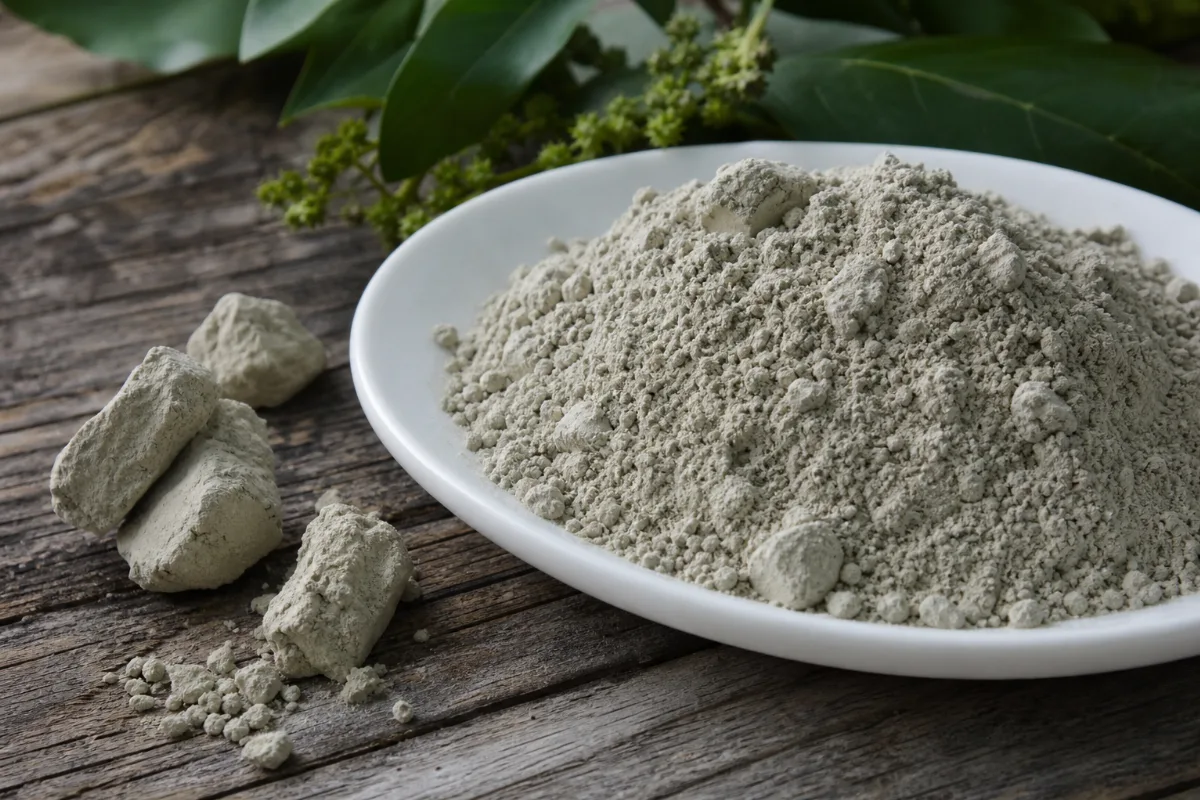
Diosmectite is a natural aluminomagnesium silicate clay of the smectite group, with a layered structure that gives it strong binding properties. A 2009 review says it is used mainly in European countries, and also in Asia and Africa, and should be an add-on to rehydration, not a replacement for it. It is a licensed medicine in some countries. It is not the same product as a cosmetic bentonite or 'healing' clay, and the trials do not cover those.
What the evidence says for children
A 2018 Cochrane review of 18 trials found smectite may shorten diarrhea by about 24 hours, may raise the chance of being cured by day 3, and may slightly lower stool output. All of these are low-certainty. It found no clear effect on admission to hospital or the need for intravenous fluids, and no deaths or serious side effects. The plain-language summary says eight of the trials were funded by the manufacturer.
Earlier meta-analyses (2006 and 2015) agree on about a day. Two double-blind trials in 602 children in Peru and Malaysia found less stool output, especially in children with rotavirus. A 2015 network meta-analysis ranked smectite second behind racecadotril.
Guidelines and regulators
A 2014 European guideline lists diosmectite among effective active therapies, with oral rehydration as the major treatment. A 2016 comparison of 15 guidelines found smectite judged useful in 4, not recommended in 5 and not covered in 6.
We looked for a statement from the European Medicines Agency (EMA) on diosmectite and lead. The EMA hosts the international guideline on elemental impurities in medicines (ICH Q3D), which ANSM links as the background to its request. We did not find an EMA decision specific to diosmectite, so we do not state one. Our search of the EMA site was blocked, so one may exist.
Adults and other uses
One trial in 346 adults with acute watery diarrhea found recovery about 15 hours sooner than with placebo. One small trial in diarrhea-predominant IBS found only smectite improved pain and bloating scores, though placebo also improved overall. A trial in patients having pelvic or abdominal radiotherapy found no significant benefit. Authors of the first adult trial are linked to the maker's other studies.
Not a detox
Sellers of clays say swallowing them removes toxins. Diosmectite has been studied only for diarrhea. NCCIH reports that a 2015 review found no compelling research supporting detox diets for eliminating toxins.
What research exists and what is missing
Most trials are old, short and in babies; several have authors linked to the maker, Ipsen. A maker-sponsored study in 35 adults looked at blood lead, but we did not review its full results. Missing: trials in children under 2 after the lead advice, data in pregnancy, and an EMA statement we could verify.
At a glance
Traditional uses history, not proof
- Not a traditional remedy. It is a purified clay used as a diarrhea medicine, mainly in European countries and also in Asia and Africa (2009 review).
- In 2006 a meta-analysis described it as commonly used in many countries but not then recommended by guidelines (Szajewska 2006).
- Since 2019 French regulators advise against it under age 2 and in pregnancy as a precaution because of trace lead.
Studied for research
- Shorter acute diarrhea in children, added to rehydration: low certainty
- Less stool volume: low certainty
- Fewer admissions or less intravenous fluid: not shown
- Acute diarrhea in adults: low certainty (one trial)
- Diarrhea-predominant IBS: low certainty (one small trial)
- Preventing radiotherapy diarrhea: no clear benefit
- Detox: no evidence
Main compounds
- Aluminomagnesium silicate clay (a smectite) with strong adsorbent (binding) properties
- Trace lead as a natural impurity (regulators; amount not stated in the pages read)
Common forms
- Licensed pharmacy medicine in some countries (not a supplement)
- Not the same as cosmetic, bentonite or 'healing' clays
Research links: Cochrane review 2018: smectite for children's diarrhea (abstract) · ANSM (France) notice on clay medicines, 2019, updated 2021 · HSA (Singapore) letter, 2020 · NPRA (Malaysia) safety alert, 2019 · Poison Control (US): 1-800-222-1222 · Research Library · Genes & Biomarkers Library
What it is and its history
- Accepted scientific name
- Diosmectite (dioctahedral smectite)
- Synonyms
- Dioctahedral smectite; Natural smectite clay; Aluminomagnesium silicate (as described in the 2009 review)
- Common names
- Smectite (English); Diosmectite (English); Smecta (brand name; owned by Ipsen per the registry record) (Brand)
- Family or group
- A clay mineral of the smectite group, described as a natural aluminomagnesium silicate clay with a lamellar, non-fibrous crystalline structure (Dupont and Vernisse 2009).
- Native range
- Not covered in the sources read. Regulators say it is a natural clay taken from the ground.
- Habitat
- Mined from soil deposits (ANSM: 'argiles extraites du sol').
- Harvest and processing
- Not described in the sources read; Cochrane calls it a 'medicinal clay'. The sources do not say how it is purified.
- Look-alikes and adulterants
- Name: Other clays, including cosmetic or 'healing' clays and other clay medicines; Note: ANSM lists attapulgite, beidellitic montmorillonite, kaolin and hydrotalcite as other clay medicines, for adults only. A trial of diosmectite does not apply to another clay.
Traditional use and history history, not clinical proof
| Tradition or era | Documented use | Source |
|---|---|---|
| Modern medicine | Used as an anti-diarrhea medicine, mainly in European countries but also in Asia and Africa (Dupont and Vernisse 2009). In 2006 it was described as commonly used in many countries although not then recommended by guidelines (Szajewska 2006). | p19301931 |
| 2019 onward | French regulators asked that it no longer be used in children under 2 and not in pregnancy, because of trace lead; Malaysia (2019) and Singapore (2020) followed. | s-ansm |
Traditional use shows how it was used. It does not show that it works or is safe today.
What is inside, and how it may work
What it contains and how those compounds act in cells and animals. Laboratory and animal mechanisms are not proven effects in people.
Main compounds
| Compound | Family | Where it is concentrated | Activity studied | Level of evidence |
|---|---|---|---|---|
| Aluminomagnesium silicate (diosmectite) | clay mineral | The medicine itself. | Adsorbs (binds) bacteria, bacterial toxins, viruses and other substances (2009 review); modifies mucus; may reduce inflammation. 9 | Review |
| Lead (trace impurity) | element | Trace amounts, as ANSM and HSA state; the quantity is not given in the pages read. | A contaminant of natural clay, not an active ingredient. 1 14 | Regulator statement |
Mechanisms, receptors and pathways
| Target or pathway | Gene or receptor | What was found | Level |
|---|---|---|---|
| Adsorption of bacteria, toxins and viruses in the gut | None | The 2009 review says its actions are not fully understood and are probably several, including adsorption of bacteria, enterotoxins and viruses. 9 | Review |
| Mucus and inflammation | None | The same review says it modifies mucus properties, inhibits mucolysis and reduces inflammation. 9 | Review |
| SARS-CoV-2 spike protein binding (cell dish) | ACE2; NF-kappaB; CXCL10 | In Caco-2 cells, diosmectite bound spike protein and virus preparations, blocked spike binding to ACE2 and lowered NF-kappaB activation and CXCL10. 25 | Laboratory |
| Drug adsorption | None | Basic and amphoteric drugs are strongly bound in the test tube; in volunteers diazepam absorption was delayed. 3 2 | Laboratory and human |
Absorption, metabolism and elimination
- Absorption
- Not described in the sources read. The registry study measured blood lead, which concerns the impurity, not the clay itself.
- Distribution
- Not studied in the sources read.
- Elimination
- Not studied in the sources read.
- Bioavailability
- Not studied for the clay itself.
Nutritional composition
Not a food or nutrient and not a source of any mineral the sources recommend.
1 mixed findings5 low certainty1 very low certainty4 not enough evidence
What was looked at
The 11 benefits and uses checked for Diosmectite (Smectite), each with how strong the evidence is. Tap one to open it.
- Shorter acute diarrhea in children (added to rehydration)Low certainty
- Less stool volumeLow certainty
- Fewer hospital stays or less intravenous fluidNot enough evidence
- What guidelines sayMixed findings
- Acute watery diarrhea in adultsLow certainty
- Diarrhea-predominant irritable bowel syndromeLow certainty
- Preventing diarrhea during radiotherapyNot enough evidence
- Adding a probiotic or herbal medicine to diosmectiteNot enough evidence
- Binding the COVID-19 virus in a dishVery low certainty
- Effect on gut bacteria (a safety-type finding)Low certainty
- 'Detox' or removing toxinsNot enough evidence
Lab markers tracked in the studies
Duration of diarrhea (hours)Stool output (grams per kilo of body weight)Cured by day 3Stool frequency (stools per day)Gut bacteria richness
What is Diosmectite (Smectite) good for?
The uses people ask about and how strong the evidence is for each. Nothing here is proven to cure anything. Read each row together with the Safety tab: this medicine is not advised for babies under 2 or in pregnancy.
Benefits, one by one
Each card is a research question, not a promise. Tap a goal to filter. Open a card to see the studies, doses and limits.
Shorter acute diarrhea in children (added to rehydration)
Low certaintyIn a 2018 Cochrane review of 18 trials in 2,616 children, smectite added to rehydration may shorten diarrhea by about a day and make a cure by day 3 more likely. The evidence is low certainty, and eight of the trials were funded by the manufacturer.
6 studiesNot covered. This page gives no amounts, timing or ways of using it.
Studies, doses and limits
What the trials found
Three meta-analyses of randomised trials (2006, 2015, 2018) and two double-blind trials in 602 children in Peru and Malaysia (2009). The Cochrane review is the most recent and uses the strictest rating.
Results
Cochrane 2018 (18 trials, 2,616 children): diarrhea about 24 hours shorter (14 studies, 2,209 children; low certainty); clinical resolution at day 3 more likely (RR 2.10, 95% CI 1.30 to 3.39; 5 trials, 312 children; low certainty). Szajewska 2006 (6 trials pooled): about 24 hours shorter and day-3 cure RR 1.64, number needed to treat 4. Das 2015 (13 trials, 2,164 children): about 23 hours shorter and day-5 cure OR 4.44, worked in all types except dysentery; evidence rated low quality (GRADE) because most trials were open-label with likely publication bias. A 2015 network meta-analysis ranked smectite second behind racecadotril for shortening diarrhea in children under five (Spanish-language paper, abstract only).
Effect sizes as reported
About a day shorter diarrhea (Cochrane: -24.38 hours, 95% CI -30.91 to -17.85). Cure by day 3: RR 2.10 (95% CI 1.30 to 3.39).
Why this rating
The Cochrane review rates the key results low certainty. Trials were often open-label, there are signs of publication bias, and eight were funded by the manufacturer.
Form and dose studied
Not covered. This page gives no amounts, timing or ways of using it.
Who was studied
Children from 1 month to 18 years in Cochrane (most trials in babies and young children). Most had rotavirus. Breastfed and non-breastfed.
Limits
Low-certainty evidence. Trials differ in design and country. Does not show it helps at once or prevents dehydration. It was always given with rehydration, never instead of it.
Why researchers looked
Acute infectious diarrhea in young children is common. Rehydration is the base of care but does not shorten the illness, so researchers test add-ons such as smectite.
Traditional use
Not a traditional remedy. It is a purified clay used as a medicine in some countries (the Dupont and Vernisse 2009 review says mainly in Europe, Asia and Africa).
Proposed mechanism Mechanism proposed
Probably several actions, not fully understood: it adsorbs (binds) bacteria, bacterial toxins and viruses, changes mucus and may reduce inflammation (2009 review). This is a proposed mechanism, not proof of how it works in a child.
A proposed mechanism does not show that the effect happens in people.
Not for babies under 2 and not recommended in pregnancy or breastfeeding, because of trace lead (see the Safety tab). Oral rehydration solution comes first. See a clinician about diarrhea in a young child.
Less stool volume
Low certaintyIn two double-blind trials in 602 children in Peru and Malaysia, children given diosmectite passed less stool than children given placebo, especially when rotavirus was found. The Cochrane review also found a small, low-certainty fall in stool output.
2 studiesNot covered. This page gives no amounts, timing or ways of using it.
Studies, doses and limits
What the trials found
Two parallel double-blind trials (Dupont 2009) and the Cochrane pooled result (3 studies, 634 children).
Results
Dupont 2009: pooled mean stool output 94.5 g/kg with diosmectite versus 104.1 g/kg with placebo (P = .002); effect strongest in rotavirus-positive children (only 22% of Peru and 12% of Malaysia children had rotavirus). Cochrane: stool output slightly lower (mean difference -11.37, 95% CI -21.94 to -0.79; low certainty). Stool frequency: Cochrane is uncertain (very low certainty).
Effect sizes as reported
Pooled stool output about 10 g/kg lower in the two trials (94.5 vs 104.1, P = .002).
Why this rating
The Cochrane rating is low. The two best trials had a clear but modest effect and the abstract does not say who funded them.
Form and dose studied
Not covered. This page gives no amounts, timing or ways of using it.
Who was studied
Children 1 to 36 months with watery diarrhea under 72 hours; those needing intravenous fluids, with blood in stool or fever above 39 C were excluded.
Limits
A modest difference of uncertain practical size. Funding of the two trials is not stated in the abstract.
Why researchers looked
Stool volume is a direct measure of how much fluid a child loses, so it matters more than counting trips to the toilet.
Proposed mechanism Mechanism proposed
Binding of toxins and changes in the gut lining and mucus are proposed (2009 review). Not proven in children.
A proposed mechanism does not show that the effect happens in people.
Not for babies under 2 and not recommended in pregnancy or breastfeeding, because of trace lead (see the Safety tab). Oral rehydration solution comes first. See a clinician about diarrhea in a young child.
Fewer hospital stays or less intravenous fluid
Not enough evidenceThe Cochrane review found no clear effect of smectite on hospital admission or on the need for intravenous fluids. This is the outcome families care about most, and it was not shown.
1 studiesNot covered. This page gives no amounts, timing or ways of using it.
Studies, doses and limits
What the trials found
Cochrane 2018: hospitalisation in 2 studies (885 children); intravenous rehydration in 1 study (81 children).
Results
Hospitalisation: RR 0.93 (95% CI 0.75 to 1.15), low certainty. Intravenous rehydration: RR 0.77 (95% CI 0.54 to 1.11), moderate certainty that there is no clear difference. The confidence intervals include no effect.
Effect sizes as reported
No clear difference in admissions or intravenous fluids.
Why this rating
Very few trials measured these outcomes (2 and 1), so smectite may help or not; the data cannot say.
Form and dose studied
Not covered. This page gives no amounts, timing or ways of using it.
Who was studied
Children in the Cochrane trials.
Limits
Few studies; the single trial for intravenous fluids had 81 children.
Why researchers looked
A shorter illness is only useful to a family if it also means fewer admissions and less drip treatment.
Proposed mechanism Not established
Not applicable: no effect was shown.
A proposed mechanism does not show that the effect happens in people.
Not for babies under 2 and not recommended in pregnancy or breastfeeding, because of trace lead (see the Safety tab). Oral rehydration solution comes first. See a clinician about diarrhea in a young child.
What guidelines say
Mixed findingsMedical societies do not agree. A 2014 European guideline lists diosmectite among effective add-ons, while a 2016 comparison found 4 of 15 guidelines called smectite useful, 5 did not recommend it and 6 did not cover it.
4 studiesNot covered. This page gives no amounts, timing or ways of using it.
Studies, doses and limits
What the trials found
Guidelines and reviews, not trials.
Results
ESPGHAN/ESPID 2014: effective interventions include specific probiotics, diosmectite or racecadotril. Pieścik-Lech 2013 review: smectite or racecadotril is an effective add-on to rehydration. Lo Vecchio 2016 (full text): smectite useful in 4 of 15 guidelines (1 high-income, 3 low-income), not recommended in 5, not included in 6. Szajewska 2006 said smectite was not then recommended and asked for cost-effectiveness studies.
Effect sizes as reported
No effect size; counts of guidelines.
Why this rating
Professional groups reach different conclusions from the same low-certainty evidence.
Form and dose studied
Not covered. This page gives no amounts, timing or ways of using it.
Who was studied
Children with acute gastroenteritis.
Limits
Guidelines differ in date and country. The newest Cochrane evidence (2018) is later than most of them.
Why researchers looked
Doctors rely on guidelines. Differences reflect the quality of the evidence and local practice, not new trials.
Proposed mechanism Not applicable
Not applicable.
A proposed mechanism does not show that the effect happens in people.
Not for babies under 2 and not recommended in pregnancy or breastfeeding, because of trace lead (see the Safety tab). Oral rehydration solution comes first. See a clinician about diarrhea in a young child.
Acute watery diarrhea in adults
Low certaintyOne trial in 346 adults found those given diosmectite recovered about 15 hours sooner than those given placebo. It is one trial, linked to the product's makers.
1 studiesNot covered. This page gives no amounts, timing or ways of using it.
Studies, doses and limits
What the trials found
One multicentre, double-blind, placebo-controlled trial (Khediri 2011).
Results
Median time to recovery 53.8 hours with diosmectite (166 adults) versus 69.0 hours with placebo (163 adults; P = .029): 15.2 hours shorter.
Effect sizes as reported
15.2 hours shorter median time to recovery (P = .029).
Why this rating
A single trial with a modest difference. Funding and maker role are not stated in the abstract, and two authors are linked to the maker's other studies.
Form and dose studied
Not covered. This page gives no amounts, timing or ways of using it.
Who was studied
Adults with at least three watery stools a day for under 48 hours (country not stated in the abstract).
Limits
One trial. Four days of follow-up. Not verified to apply to people with long-term illness.
Why researchers looked
Diosmectite works in children, so the maker tested adults too.
Proposed mechanism Mechanism proposed
Not applicable beyond the general adsorbent mechanism.
A proposed mechanism does not show that the effect happens in people.
Adults with blood in stool, fever, dehydration or diarrhea lasting more than a few days need a clinician.
Diarrhea-predominant irritable bowel syndrome
Low certaintyIn one small 8-week trial of 104 adults, both smectite and placebo lowered overall symptoms, but only smectite improved pain and bloating scores.
1 studiesNot covered. This page gives no amounts, timing or ways of using it.
Studies, doses and limits
What the trials found
One randomised, double-blind, placebo-controlled trial (Chang 2007).
Results
Both groups lowered the overall symptom score at every visit; the smectite group improved further at day 56 (P = 0.0167). Pain/discomfort improved only with smectite (P < 0.05); bloating improved only with smectite (P < 0.01). Global ratings by patients and doctors were similarly distributed. It was well tolerated.
Effect sizes as reported
No effect sizes in the abstract; mixed signal because placebo also improved.
Why this rating
One small trial from 2007 where placebo also helped, and the global ratings did not differ.
Form and dose studied
Not covered. This page gives no amounts, timing or ways of using it.
Who was studied
104 adults with Rome II diarrhea-predominant IBS (country not stated in the abstract).
Limits
Small, single trial, no sign of replication in the sources read.
Why researchers looked
IBS with diarrhea causes pain, bloating and loose stools, and an adsorbent clay was tried for it.
Proposed mechanism Not established
Not established.
A proposed mechanism does not show that the effect happens in people.
Long-term diarrhea needs a medical review to rule out other causes.
Preventing diarrhea during radiotherapy
Not enough evidenceA 2000 trial of 176 patients found no significant difference between smectite and placebo in preventing diarrhea during pelvic or abdominal radiotherapy.
1 studiesNot covered. This page gives no amounts, timing or ways of using it.
Studies, doses and limits
What the trials found
One double-blind, placebo-controlled multicentre trial (Hombrink 2000).
Results
No significant difference in time to first diarrhea (3 or more pappy stools). In an after-the-fact subgroup with a smaller irradiated bowel volume, first diarrhea appeared at 32 versus 18 days with smectite, but that was also not significant.
Effect sizes as reported
No significant difference; subgroup not significant.
Why this rating
The primary result was null and the subgroup was exploratory. Evidence points to no clear benefit.
Form and dose studied
Not covered. This page gives no amounts, timing or ways of using it.
Who was studied
176 people having pelvic or abdominal radiotherapy (multicentre trial run 1994-95; country not stated in the abstract).
Limits
Old trial, one study. Diarrhea during cancer treatment needs the care team.
Why researchers looked
Radiotherapy to the belly often causes diarrhea, and smectite had looked promising in earlier small studies.
Proposed mechanism Not applicable
Not applicable.
A proposed mechanism does not show that the effect happens in people.
Tell the cancer care team before taking anything for diarrhea during treatment; the clay can bind other medicines.
Adding a probiotic or herbal medicine to diosmectite
Not enough evidenceReviews of trials in China found that adding a probiotic yeast or a herbal medicine to smectite worked better than smectite alone. These tests judge the add-on, not the clay.
2 studiesNot covered. This page gives no amounts, timing or ways of using it.
Studies, doses and limits
What the trials found
Two 2026 meta-analyses of Chinese trials: 57 trials (5,767 children) for the yeast Saccharomyces boulardii CNCM I-745; 26 trials (2,876 children) for herbal medicine in rotavirus diarrhea.
Results
Yeast plus smectite: cure rate RR 1.45 (95% CI 1.38 to 1.53), illness shorter by SMD -1.54 days. Herbal medicine plus diosmectite: diarrhea shorter (SMD -1.31, 95% CI -1.63 to -0.99), certainty moderate to very low. Smectite was in both arms, so neither review shows whether smectite works.
Effect sizes as reported
See results.
Why this rating
Both tests used smectite as the background in every arm. They say nothing about the clay itself. One review co-author is a paid consultant for the yeast's maker.
Form and dose studied
Not covered. This page gives no amounts, timing or ways of using it.
Who was studied
Children with acute gastroenteritis in China.
Limits
Smectite effect cannot be separated. Many trials were published only in Chinese.
Why researchers looked
Doctors in China often combine treatments, so trials compared combinations with smectite alone.
Proposed mechanism Not applicable
Not applicable.
A proposed mechanism does not show that the effect happens in people.
Not a reason to combine products. Ask a pharmacist before giving a child two products.
Binding the COVID-19 virus in a dish
Very low certaintyIn a 2021 lab study with gut cells, diosmectite bound parts of the COVID-19 virus and lowered an inflammation signal. No patient has been tested.
1 studiesNot covered. This page gives no amounts, timing or ways of using it.
Studies, doses and limits
Results
Binding of spike protein and inactivated virus; lower NF-kappaB activation and CXCL10 release in cells.
Why this rating
Cells and inactivated virus only. No patient data. Author has received funding from the maker.
Form and dose studied
Not covered. This page gives no amounts, timing or ways of using it.
Limits
Laboratory finding only; says nothing about COVID-19 treatment.
Why researchers looked
COVID-19 can cause diarrhea, so researchers asked whether a gut-binding clay could trap the virus.
Proposed mechanism Laboratory
In cell dishes, diosmectite bound the spike protein and blocked its attachment to the ACE2 receptor on human gut cells (2021 study).
A proposed mechanism does not show that the effect happens in people.
Do not use this as a reason to take it for COVID-19.
Effect on gut bacteria (a safety-type finding)
Low certaintyIn 35 adults with long-term diarrhea given diosmectite for 5 weeks, the make-up of gut bacteria did not change. The study did not test whether diarrhea improved.
2 studiesNot covered. This page gives no amounts, timing or ways of using it.
Studies, doses and limits
What the trials found
One single-group study (Da Silva 2022), registered NCT03045926, sponsored by the maker.
Results
No change in gut-bacteria richness and no species changed significantly, whether people responded to treatment or not.
Effect sizes as reported
No significant changes.
Why this rating
Single group, no placebo, small, maker-sponsored. It tests bacteria, not symptoms.
Form and dose studied
Not covered. This page gives no amounts, timing or ways of using it.
Who was studied
35 adults with functional chronic diarrhea (UK and Netherlands).
Limits
Does not apply to children or short courses.
Why researchers looked
Researchers wanted to know whether a clay that stays in the gut disturbs the bacteria that live there.
Proposed mechanism Not applicable
Not applicable.
A proposed mechanism does not show that the effect happens in people.
Reassurance about bacteria, not a statement of overall safety.
'Detox' or removing toxins
Not enough evidenceSellers of clays say they remove toxins. Diosmectite has been studied only for diarrhea. The US National Center for Complementary and Integrative Health (NCCIH) says a 2015 review found no compelling research that detox diets remove toxins.
1 studiesNot covered. This page gives no amounts, timing or ways of using it.
Studies, doses and limits
What the trials found
No trial of diosmectite for detox was found.
Why this rating
No evidence found for this use, and a clay that binds medicines could interfere with them.
Form and dose studied
Not covered. This page gives no amounts, timing or ways of using it.
Limits
The NCCIH statement is general.
Why researchers looked
Detox is a common marketing claim for clays and charcoal.
Traditional use
Sellers' claim only.
Proposed mechanism Not established
Not established for any clay.
A proposed mechanism does not show that the effect happens in people.
Do not take a diarrhea medicine as a detox; it can bind other medicines (see Safety).
Connections to the rest of health
How Diosmectite (Smectite) connects to the rest of our health knowledge graph. Every link says what kind of connection it is. A safety link (for example to the liver) is a warning, not a benefit. A study that merely mentions a topic never creates a benefit link.
Explore every connection: goals, body systems, organs, symptoms, genes
B. Body systems
E. Health conditions
| Connected to | Kind of connection | Evidence status | Context | Studies |
|---|---|---|---|---|
| Diarrhea | Low certainty | May shorten acute diarrhea in children by about a day (low certainty). Preparation or compound: Diosmectite added to rehydration |
23 | |
| Rotavirus gastroenteritis | Low certainty | Effect on stool output greatest in rotavirus-positive children in two trials. Preparation or compound: Diosmectite |
8 |
I. Biomarkers
| Connected to | Kind of connection | Evidence status | Context | Studies |
|---|---|---|---|---|
| Duration of diarrhea (hours) | Biological association | Low certainty | Measured in trials: lowered. A lab change is not the same as a health benefit. | 23 7 26 |
| Stool output (grams per kilo of body weight) | Biological association | Low certainty | Measured in trials: lowered. A lab change is not the same as a health benefit. | 8 23 |
| Cured by day 3 | Biological association | Low certainty | Measured in trials: raised. A lab change is not the same as a health benefit. | 23 26 |
| Stool frequency (stools per day) | Biological association | Very low certainty | Measured in trials: uncertain. A lab change is not the same as a health benefit. | 23 |
| Gut bacteria richness | Biological association | Low certainty | Measured in trials: unchanged. A lab change is not the same as a health benefit. | 6 |
L. Active compounds
| Connected to | Kind of connection | Evidence status | Context | Studies |
|---|---|---|---|---|
| Aluminomagnesium silicate (diosmectite) | Biological association | Review | Adsorbs (binds) bacteria, bacterial toxins, viruses and other substances (2009 review); modifies mucus; may reduce inflammation. | 9 |
| Lead (trace impurity) | Biological association | Regulator statement | A contaminant of natural clay, not an active ingredient. | 1 14 |
Each connection is stored with the ingredient, the connected record, the kind of connection, the evidence status, the supporting studies, the preparation or compound involved, and a review date (last reviewed October 25, 2026).
Evidence at a glance: what changed in 3 lab markers
Tap a number to show only those markers. Counts are markers, not people.
The evidence
The research centre for Diosmectite (Smectite). Every record here was checked against PubMed or the publisher's page; we never list a study we have not verified.
Evidence by outcome
Bars show how many studies we found for each outcome, not how well it works. People are added up across trials only (reviews are not added, to avoid double counting).
How we rate evidence
High certainty
Several well-run trials or reviews agree; further research is unlikely to change the picture much.
Moderate certainty
Good trials point the same way, but some doubt remains.
Low certainty
Small, short or inconsistent trials. The finding could change with better research.
Very low certainty
Very little or very weak human data. Treat as a possibility only.
Mixed findings
Trials or reviews disagree with each other.
Not enough evidence
Not enough human research to say either way.
Evidence against
Good research found no benefit, or found harm.
We take the reviewers' own risk-of-bias and GRADE statements where they exist, and otherwise judge from study size, design, consistency, directness and whether a product matches what is sold. Many publications do not make evidence high. Method note: We read the abstracts of 19 PubMed papers (Cochrane review text for the funding statement, and the guideline-comparison full text for the counts), the ANSM, Singapore HSA, Malaysian NPRA, NCCIH and Poison Control pages, the EMA's elemental-impurities guideline page and the ClinicalTrials.gov record for the maker's blood-lead study (first results only). The EMA site search was blocked. Where a statement could not be checked it is marked as such.
Study library: every study we checked 26
| Study | Design | People | Product, dose, length | Result |
|---|---|---|---|---|
| ANSM (French National Agency for the Safety of Medicines and Health Products) 2019 Medicaments a base d'argile dans le traitement symptomatique de la diarrhee aigue chez l'enfant (ANSM, France, information notice) n/a · Source |
Regulator statement |
Clay-based medicines for acute diarrhoea in France, including Smecta and its generic | Regulator notice |
Published 28 February 2019, updated 16 March 2021. As a precaution, ANSM asks that these medicines no longer be used in children under 2 years because of the possible presence of a tiny amount of lead, even in short treatment. It says oral rehydration solution is the reference treatment for infants and children under 2. Clays taken from the soil can contain low amounts of naturally occurring heavy metals such as lead. After new international recommendations on acceptable heavy-metal limits in medicines, ANSM asked makers to show there is no risk of lead passing into the blood. The maker (Ipsen) supplied a clinical study indicating no lead passage into the blood of adults treated with Smecta for 5 weeks; the risk cannot be ruled out in children under 2. Use in pregnant or breastfeeding women is not recommended. ANSM says it is a precaution and that it knows of no cases of lead poisoning in treated adults or children. It also says other clay medicines (attapulgite, beidellitic montmorillonite, kaolin, hydrotalcite) are for adults only, and links the ICH Q3D guideline. Methods, limits and fundingOutcomes: Age and pregnancy advice about trace lead Limitations: A national (French) notice, read in French. It depends on a maker-supplied adult study. It is not an EU-wide decision. Funding and conflicts: Regulator; the adult study it cites was supplied by the maker (Ipsen). Read: full-text |
| Albengres 1985 Interactions between smectite, a mucus stabilizer, and acidic and basic drugs. In vitro and in vivo studies. European Journal of Clinical Pharmacology · PMID 3899678 |
Pharmacokinetic study |
Healthy volunteers (number not in abstract) given phenylbutazone or diazepam alone or with smectite, plus test-tube experiments | Smectite with phenylbutazone (acidic) or diazepam (basic) mineral clay (not a plant) Not given here Single-dose comparison · vs Each drug alone |
Smectite did not substantially change phenylbutazone levels. For diazepam, the peak blood concentration fell to 91% of the control value and the time to the peak was prolonged to 153% of the control. In the test tube smectite bound diazepam but not phenylbutazone. The authors conclude smectite delays absorption of basic drugs and does not change that of acidic drugs. Methods, limits and fundingOutcomes: Blood levels of each drug over time; test-tube binding Limitations: 1985, two drugs, healthy volunteers; number of volunteers not in the abstract. Not a study of the diarrhoea medicine in sick people. Does not apply to all drugs. Funding and conflicts: Not stated in the abstract. Read: abstract |
| Castela-Papin 1999 Drug interactions with diosmectite: a study using the artificial stomach-duodenum model. International Journal of Pharmaceutics · PMID 10332080 |
Laboratory study laboratory |
Test-tube model of the stomach and duodenum with a range of drugs | Diosmectite with digoxin, valproic acid, dapsone, metronidazole, cimetidine, fluoroquinolones, ranitidine, pyrimethamine mineral clay (not a plant) · vs Drug alone |
Neutral and acidic drugs (digoxin, valproic acid) were moderately fixed (under 27%). Basic drugs with a lower pKa (dapsone, metronidazole, cimetidine) were strongly fixed in acid and released under neutral conditions. Fluoroquinolones (amphoteric) and more strongly basic drugs (ranitidine, pyrimethamine) were more than 81% adsorbed in the stomach and duodenum compartments. In the distal duodenum, the likely absorption site, amphoteric and basic drugs lost 80% or more of their free fraction. Methods, limits and fundingOutcomes: Percentage of each drug fixed by the clay Limitations: Test-tube model, not people. Shows what may happen, not what does in patients. Funding and conflicts: Not stated in the abstract. Read: abstract |
| Chang 2007 Efficacy of dioctahedral smectite in treating patients of diarrhea-predominant irritable bowel syndrome. Journal of Gastroenterology and Hepatology · PMID 17559369 |
Randomised controlled trial |
104 104 adults with diarrhoea-predominant irritable bowel syndrome (Rome II criteria), 52 per group, 8 weeks |
Dioctahedral smectite or placebo mineral clay (not a plant) Three sachets daily as stated in the abstract; not advice 8 weeks · vs Placebo |
Both groups lowered overall symptom scores at every visit (P < 0.01). The smectite group improved further on day 56 (P = 0.0167). Placebo had no effect on pain/discomfort scores while smectite improved them on days 28 and 56 (P < 0.05). Only smectite improved bloating (P < 0.01). Both groups similarly reduced bowel disorders, and patient and doctor global ratings were similarly distributed. It was well tolerated. Methods, limits and fundingOutcomes: Change in overall symptom score and pain/discomfort score (visual analogue scale); bloating; bowel disorders; global response Limitations: One small trial. The placebo group also improved overall. Funding not stated in the abstract. Funding and conflicts: Not stated in the abstract. Read: abstract |
| Cho 2026 Efficacy and Safety of Oral Herbal Medicine Combined with Diosmectite for Pediatric Rotavirus Gastroenteritis: A Systematic Review and Meta-Analysis. Healthcare (Basel) · PMID 41897165 · DOI |
Systematic review meta analysis |
2876 26 randomised trials (2,876 children) with rotavirus gastroenteritis comparing herbal medicine plus diosmectite with diosmectite alone |
Oral herbal medicine plus diosmectite versus diosmectite alone herbal combinations (varied) Varied · vs Diosmectite alone |
Adding herbal medicine to diosmectite shortened diarrhoea (SMD -1.31; 95% CI -1.63 to -0.99) and hospital stay (MD -1.53; 95% CI -1.73 to -1.33) and was associated with fewer adverse events (RR 0.24; 95% CI 0.06 to 0.92). Certainty ranged from moderate to very low. This tests the herbal add-on, not diosmectite itself. Methods, limits and fundingOutcomes: Duration of diarrhoea; total effective rate; adverse events; hospital stay Limitations: Both arms received diosmectite, so it cannot show whether diosmectite works. Certainty moderate to very low (authors). Funding and conflicts: The authors declare no conflicts of interest. Read: abstract |
| Da Silva 2022 Long-term diosmectite use does not alter the gut microbiota in adults with chronic diarrhea. BMC Microbiology · PMID 35151268 · DOI |
Single arm trial |
35 35 adults with functional chronic diarrhoea (Great Britain and the Netherlands) given diosmectite for 5 weeks; stool bacteria read by shotgun gene sequencing |
Diosmectite for 5 weeks mineral clay (not a plant) 3 sachets a day (3 g each) as stated in the abstract; not advice 5 weeks |
Gut microbiota was not changed: richness stayed stable and no species changed significantly, whether people responded to treatment or not. The abstract does not report whether diarrhoea improved. Methods, limits and fundingOutcomes: Gut bacteria richness and species changes; response to treatment Limitations: Single group, no placebo. Tests gut bacteria, not symptoms. Authors include an Ipsen employee and an Ipsen consultant. Registered as NCT03045926. Funding and conflicts: Competing interests declared: one author is an Ipsen employee and one is an Ipsen consultant (PubMed record). Ipsen owns Smecta. Registry lists Ipsen as sponsor. Registration: NCT03045926 Read: abstract |
| Das 2015 Efficacy and safety of diosmectite in acute childhood diarrhoea: a meta-analysis. Archives of Disease in Childhood · PMID 25784748 · DOI |
Meta-analysis |
2164 13 randomised trials (2,164 children aged 1 to 60 months) comparing diosmectite with placebo, added to standard treatment of acute diarrhoea |
Diosmectite versus placebo as add-on treatment mineral clay (not a plant) Not given here 3 days to recovery, by trial · vs Placebo |
Diosmectite shortened diarrhoea (mean difference -23.39 hours, 95% CI -28.77 to -18.01) and raised the cure rate at day 5 (OR 4.44, 95% CI 1.66 to 11.84) with no increase in adverse events. It was effective in all types of acute childhood diarrhoea except dysentery. Most trials were open-label and publication bias was likely; the authors rate the evidence as low quality (GRADE) and say firm recommendations need better trials. Diarrhoea about 23 hours shorter; cure at day 5 OR 4.44 (95% CI -28.77 to -18.01 hours) Methods, limits and fundingOutcomes: Duration of diarrhoea; cure rate by day; stool output; adverse events Limitations: Open-label trials, likely publication bias, low-quality evidence (authors). Search to May 2014. Funding and conflicts: No conflict of interest statement in the PubMed record. Registered on PROSPERO (CRD42014013783). Registration: PROSPERO CRD42014013783 Read: abstract |
| Dupont 2009 Oral diosmectite reduces stool output and diarrhea duration in children with acute watery diarrhea. Clinical Gastroenterology and Hepatology · PMID 19268266 · DOI |
Randomised controlled trial |
602 Two parallel double-blind trials in children aged 1 to 36 months with watery diarrhoea for under 72 hours: Peru (300) and Malaysia (302). Children needing intravenous fluids, with blood in stool, fever above 39 C or on antidiarrhoeal or antibiotic medicines were excluded. |
Diosmectite or placebo, both with WHO oral rehydration solution mineral clay (not a plant) Weight- and age-based; not given here At least 3 days, then until recovery · vs Placebo |
Stool output fell with diosmectite in both studies, especially in rotavirus-positive children. Pooled mean stool output was 94.5 (SD 74.4) g/kg with diosmectite versus 104.1 (SD 94.2) g/kg with placebo (P = .002). Diarrhoea lasted less time with diosmectite, which was well tolerated. Rotavirus infection was found in 22% of children in Peru and 12% in Malaysia. Stool output 94.5 vs 104.1 g/kg (P = .002) Methods, limits and fundingOutcomes: Stool output (g/kg body weight); duration of diarrhoea; tolerability; rotavirus status Limitations: Only 12 to 22% had rotavirus. Children with severe illness were excluded. The abstract does not say who funded the trials; two authors (Garnier, Mathiex-Fortunet) also co-wrote the 2011 adult trial, and Mathiex-Fortunet is listed as an Ipsen consultant in a 2022 paper on the same product. Cochrane notes that eight of its included trials were manufacturer-funded; it is not stated in the abstract which. Funding and conflicts: Funding not stated in the abstract; possible maker involvement NOT verified. Read: abstract |
| Dupont 2009 Anti-diarrheal effects of diosmectite in the treatment of acute diarrhea in children: a review. Paediatric Drugs · PMID 19301931 · DOI |
Narrative review |
Review of mechanisms and trials of diosmectite in childhood diarrhoea | Diosmectite mineral clay (not a plant) |
The abstract describes diosmectite as a natural aluminomagnesium silicate clay with a lamellar, non-fibrous crystalline structure and strong adsorbent properties. Its actions are not fully understood and are probably several: it reduces inflammation, changes mucus, and adsorbs bacteria, bacterial toxins, viruses and other substances that can cause diarrhoea. The review says it is used mainly in European countries but also in Asia and Africa, has no serious side effects, and should be an adjunct to, not an alternative to, oral rehydration and, when needed, antibacterial treatment. Methods, limits and fundingOutcomes: Mechanisms, efficacy and safety Limitations: Narrative review. Funding not stated in the abstract; not checked in the full text. Mechanism statements are not proof of how it works in children. Funding and conflicts: Not stated in the abstract. Read: abstract |
| European Medicines Agency / 2022 ICH Q3D Elemental impurities - Scientific guideline (European Medicines Agency page) n/a · Source |
Regulator guideline n/a |
Medicines in general | Guideline |
The EMA page hosts the ICH Q3D guideline, which sets a risk-based process to assess and control elemental impurities in medicine products; Revision 2 has been effective from 24 September 2022. ANSM links to this guideline as the reason for its request. We found no EMA document, referral or committee outcome that is specific to diosmectite and lead. Methods, limits and fundingOutcomes: Control of elemental impurities such as lead in medicines Limitations: General guideline for all medicines. It does not name diosmectite. The search of the EMA site was blocked, so absence of a diosmectite-specific EMA statement is NOT proven. Funding and conflicts: Regulator. Read: abstract |
| Guarino 2014 European Society for Pediatric Gastroenterology, Hepatology, and Nutrition/European Society for Pediatric Infectious Diseases evidence-based guidelines for the management of acute gastroenteritis in children in Europe: update 2014. Journal of Pediatric Gastroenterology and Nutrition · PMID 24739189 · DOI |
Clinical guideline |
European guideline for children with acute gastroenteritis | Guideline text |
Oral rehydration with a low-salt solution is the major treatment. The guideline says active therapy may reduce the duration and severity of diarrhoea and lists effective interventions, including specific probiotics (Lactobacillus GG or Saccharomyces boulardii), diosmectite or racecadotril. Methods, limits and fundingOutcomes: Recommended management of acute gastroenteritis Limitations: A European society guideline from 2014; later evidence (Cochrane 2018) is graded low certainty. Abstract only read. Funding and conflicts: Research support (non-US government) listed by PubMed. No conflict statement in the record. Read: abstract |
| Gutierrez-Castrellon 2015 [Efficacy of racecadotril vs. smectite, probiotics or zinc as an integral part of treatment of acute diarrhea in children under five years: A meta-analysis of multiple treatments]. Gaceta Medica de Mexico · PMID 26089269 |
Network meta analysis |
Trials of add-on treatments for acute diarrhoea in children under five years (number not in the abstract); Spanish-language paper with English abstract | Racecadotril, smectite, Lactobacillus GG, L. reuteri, S. boulardii or zinc as add-ons mixed · vs Placebo |
Racecadotril ranked best, followed by smectite and Lactobacillus reuteri. The authors conclude racecadotril is superior as an add-on. Methods, limits and fundingOutcomes: Duration of diarrhoea, ranked by SUCRA Limitations: Abstract only; the number of trials and effect sizes are not in the abstract. Indirect comparisons. Funding and conflicts: Not stated in the abstract. Read: abstract |
| He 2026 Effect of diosmectite on the pharmacokinetics of osimertinib in rats. Scientific Reports · PMID 42056456 · DOI |
Animal study animal |
18 18 male rats in three groups of six |
Diosmectite given at the same time as, or 30 minutes after, the cancer drug osimertinib mineral clay (not a plant) Not given here Single dose; blood samples up to 24 hours · vs Osimertinib alone |
Given together, diosmectite lowered the peak osimertinib level by 91.6% and total exposure by 94.4%. Given 30 minutes later, it lowered the peak by 38.0% and total exposure by 66.3%. The authors say clinical studies are needed to confirm this. Methods, limits and fundingOutcomes: Blood levels of osimertinib Limitations: Rats, one drug, small groups. Not shown in people. Funding and conflicts: The authors declare no competing interests. Read: abstract |
| Health Sciences Authority 2020 Smecta: Restriction of treatment of acute diarrhoea to children >2 years of age and adults, and recommendation against use in pregnant and breastfeeding women (HSA, Singapore, Dear Healthcare Professional letter) n/a · Source |
Regulator statement |
Smecta users in Singapore | Regulator notice |
Letter dated 9 March 2020. Lead occurs naturally in soil and the diosmectite clay contains trace amounts. In line with international guidance the product owner (Ipsen) did a data review and a clinical study that found no evidence of actual lead risk in adults with chronic diarrhoea treated for 5 weeks, and other data confirmed the safety profile in children for treatment up to 7 days. As a precaution, and because of the lack of data in pregnancy and breastfeeding, Ipsen restricted the diarrhoea indication to children 2 years and above and adults and recommended against use in pregnant and breastfeeding women. Methods, limits and fundingOutcomes: Age and pregnancy advice about trace lead Limitations: HSA page gives only an abstract of the letter; full letter is behind a login. The restriction was a decision by the product owner, relayed by the regulator. Funding and conflicts: Regulator page; data are the maker's. Read: full-text |
| Hombrink 2000 [Prevention of radiation-induced diarrhea by smectite. Results of a double-blind randomized, placebo-controlled multicenter study]. Strahlentherapie und Onkologie · PMID 10812390 |
Randomised controlled trial |
176 176 people having radiotherapy to the pelvis or abdomen (85 smectite, 91 placebo), multicentre trial; the paper is in German with an English abstract |
Smectite (brand named in the abstract) or placebo during radiotherapy mineral clay (not a plant) Twice daily; amount not given here Whole radiotherapy period · vs Placebo |
There was no significant difference between smectite and placebo in preventing radiotherapy-related diarrhoea. In an after-the-fact subgroup (smaller irradiated bowel volume) the first diarrhoea appeared at 32 versus 18 days with smectite, but that difference was not statistically significant. Methods, limits and fundingOutcomes: Time to first appearance of diarrhoea (3 or more pappy stools) Limitations: 1994-95 trial. The subgroup analysis was exploratory and not significant. The authors say prevention could be delayed but could not prove it. Funding and conflicts: Not stated in the abstract. Read: abstract |
| Ipsen (sponsor) 2017 Assessment of Elemental Impurities Level After Chronic Administration of Diosmectite (SMECTA) in Subjects With Chronic Diarrhoea (ClinicalTrials.gov NCT03045926) ClinicalTrials.gov · Source |
Trial registry record |
35 35 adults with chronic functional diarrhoea, single group, 5 weeks of treatment and follow-up to day 125 |
Smecta (diosmectite) powder mineral clay (not a plant) Not given here 35 days of treatment |
The registry record lists Ipsen as sponsor, 35 participants and a completion date of 9 May 2017. Its primary outcome is the mean change from baseline in blood lead during treatment and for up to about three months afterwards. Results are posted. We read the first time points only (mean changes of about 0.1 to 0.4 ng/mL, with 95% confidence intervals spanning zero) and did not review the full results table, so we draw no conclusion beyond what ANSM and HSA state. Methods, limits and fundingOutcomes: Primary: change from baseline in blood lead. Secondary: blood aluminium and other elemental impurities. Limitations: Adults only, single group, no children. Maker-sponsored. Full results not reviewed here. Funding and conflicts: Sponsor Ipsen, which owns Smecta. Registration: NCT03045926 Read: abstract |
| Khediri 2011 Efficacy of diosmectite (smecta) in the treatment of acute watery diarrhoea in adults: a multicentre, randomized, double-blind, placebo-controlled, parallel group study. Gastroenterology Research and Practice · PMID 21760777 · DOI |
Randomised controlled trial |
346 346 adults with at least three watery stools a day for under 48 hours, randomised to diosmectite (166) or placebo (163 analysed) |
Diosmectite or placebo for four days mineral clay (not a plant) Not given here 4 days · vs Placebo |
Median time to recovery was 53.8 hours with diosmectite versus 69.0 hours with placebo (P = .029), a difference of 15.2 hours. The authors call diosmectite well tolerated and the difference clinically relevant. 15.2 hours shorter median time to recovery (53.8 vs 69.0 h) Methods, limits and fundingOutcomes: Time to recovery from diarrhoea (primary) Limitations: One trial. The abstract does not state who funded it, and two authors (Garnier, Mathiex-Fortunet) also co-wrote the 2009 children's trials; Mathiex-Fortunet is listed as an Ipsen consultant in a 2022 paper on the same product. Maker role in this trial is NOT verified. Short follow-up. Funding and conflicts: Funding not stated in the abstract; maker involvement NOT verified. Read: abstract |
| Li 2026 Saccharomyces boulardii CNCM I-745 and smectite treatment for pediatric acute gastroenteritis in China: a systematic review and meta-analysis. Frontiers in Pediatrics · PMID 41798274 · DOI |
Systematic review meta analysis |
5767 57 randomised trials in China (5,767 children) comparing a probiotic yeast plus smectite with smectite alone |
Saccharomyces boulardii CNCM I-745 added to smectite probiotic yeast plus clay Varied · vs Smectite alone |
Adding the probiotic to smectite improved the cure rate (RR 1.45, 95% CI 1.38 to 1.53) and shortened illness (SMD -1.54 days, 95% CI -1.79 to -1.29). This tests the probiotic, not the clay: smectite was in both arms. Methods, limits and fundingOutcomes: Cure rate; duration of illness; adverse events Limitations: Smectite was given to everyone, so the trial does not test smectite. Chinese trials, quality not summarised in the abstract. Funding and conflicts: Co-author McFarland is a consultant and paid lecturer for Biocodex, which makes the yeast product (PubMed record). Read: abstract |
| Lo Vecchio 2016 Comparison of Recommendations in Clinical Practice Guidelines for Acute Gastroenteritis in Children. Journal of Pediatric Gastroenterology and Nutrition · PMID 26835905 · DOI |
Guideline review |
15 clinical practice guidelines for acute gastroenteritis in children, from high-, middle- and low-income countries | Review of guidelines |
Oral rehydration solution is universally first-line. In the full text, smectite was judged useful by 4 of 15 guidelines (1 high-income, 3 low-income), not recommended by 5 (2 high-income, 3 low-income) and not included in the other 6. Methods, limits and fundingOutcomes: Agreement between guidelines Limitations: A comparison of documents, not a trial. The smectite counts come from the full text; the PubMed abstract does not mention smectite. Funding and conflicts: The authors report no conflicts of interest (PubMed). Read: full-text |
| National Capital Poison Center 2026 Poison Control (America's Poison Centers / National Capital Poison Center), home page n/a · Source |
Authoritative guidance |
General public (US) | Poison help service |
Call a poison center on 1-800-222-1222 (free, expert, confidential). If the person collapses, has a seizure, has trouble breathing or cannot be awakened, call 911. Methods, limits and fundingOutcomes: Where to get urgent poison advice Limitations: General guidance; not about diosmectite. Funding and conflicts: Non-profit. Read: full-text |
| National Center for Complementary and Integrative Health 2025 "Detoxes" and "Cleanses": What You Need To Know (NCCIH, US National Institutes of Health) n/a · Source |
Regulator statement |
General public | Fact sheet |
The fact sheet says a 2015 review concluded there was no compelling research to support 'detox' diets for weight management or for eliminating toxins from the body. It does not mention diosmectite. Methods, limits and fundingOutcomes: Evidence for detox diets and regimens Limitations: About detox diets in general, not clay. Funding and conflicts: US government. Read: full-text |
| National Pharmaceutical Regulatory Agency 2019 SMECTA (dioctahedral smectite): Not recommended for use in children aged below 2 years and pregnant or breastfeeding women (NPRA, Malaysia, safety alert) n/a · Source |
Regulator statement |
Smecta users in Malaysia | Regulator notice |
Posted 30 October 2019. NPRA relays ANSM's information about the possible risk of lead passing into the blood. It says a study found no lead passage in adults treated for 5 weeks but the risk cannot be ruled out in children under 2 years, so Smecta is not recommended in young children or in pregnant or breastfeeding women. NPRA had received 9 reports of 12 suspected adverse events with diosmectite (rash, urticaria, angioedema, swelling around the eyes) and no report of lead poisoning. Oral rehydration salts are the reference treatment in acute diarrhoea. Methods, limits and fundingOutcomes: Age and pregnancy advice; adverse reaction reports Limitations: Spontaneous reports do not prove diosmectite caused the events and cannot give a rate. The page uses both 'below 2 years' and '2 years old and below'. Funding and conflicts: Regulator. Read: full-text |
| Perez-Gaxiola 2018 Smectite for acute infectious diarrhoea in children. Cochrane Database of Systematic Reviews · PMID 29693719 · DOI |
Systematic review meta analysis |
2616 18 randomised or quasi-randomised trials in children aged 1 month to 18 years with acute infectious diarrhoea, in clinics and hospitals, rich and poor countries; most had rotavirus; half included breastfed children |
Smectite (medicinal clay) as an add-on to rehydration, versus a control group mineral clay (not a plant) Not given here Varied by trial · vs Placebo or routine care |
Smectite may shorten diarrhoea by about a day (mean difference -24.38 hours, 95% CI -30.91 to -17.85; 14 studies, 2209 children; low-certainty). It may raise clinical resolution at day 3 (risk ratio 2.10, 95% CI 1.30 to 3.39; 5 trials, 312 children; low-certainty) and may lower stool output (mean difference -11.37, 95% CI -21.94 to -0.79; 3 studies, 634 children; low-certainty). The review is uncertain about stool frequency (very low-certainty). No clear effect on hospitalisation (RR 0.93, 95% CI 0.75 to 1.15; 2 studies, 885 children; low-certainty) or on intravenous rehydration (RR 0.77, 95% CI 0.54 to 1.11; 1 study, 81 children; moderate-certainty). Constipation was the most reported side effect and did not differ between groups (RR 4.71, 95% CI 0.56 to 39.19; low-certainty). No deaths or serious side effects were reported. The plain-language summary says eight studies were funded by the manufacturer. Diarrhoea about 24 hours shorter (low certainty) (95% CI -30.91 to -17.85 hours) Methods, limits and fundingOutcomes: Duration of diarrhoea; clinical resolution at day 3; stool output and frequency; hospitalisation; intravenous rehydration; side effects Limitations: Search ran to 27 June 2017. All main results are low or very low certainty. Few trials per outcome for hospitalisation and intravenous fluids. Trials are mixed in design and country. Funding and conflicts: The authors declare no financial interest in smectite (abstract). Eight included trials were funded by the manufacturer (plain-language summary, PMC full text). Read: full-text |
| Piescik-Lech 2013 Review article: the management of acute gastroenteritis in children. Alimentary Pharmacology & Therapeutics · PMID 23190209 · DOI |
Systematic review |
Randomised trials and meta-analyses on childhood acute gastroenteritis published after 2008 (searches to August 2012) | Review of treatments |
The review says new data, mainly from outside Europe, reconfirmed that either smectite or racecadotril is an effective add-on to oral rehydration, and that rehydration remains the base. Methods, limits and fundingOutcomes: Update to European guidelines Limitations: Abstract read only. 2012 search. Pre-dates Cochrane 2018. Funding and conflicts: No conflict statement in the PubMed record. Read: abstract |
| Poeta 2021 Diosmectite inhibits the interaction between SARS-CoV-2 and human enterocytes by trapping viral particles, thereby preventing NF-kappaB activation and CXCL10 secretion. Scientific Reports · PMID 34741071 · DOI |
Laboratory study laboratory |
Human gut cell line (Caco-2) in dishes, with the spike protein part or heat-inactivated SARS-CoV-2 | Diosmectite added to cells mineral clay (not a plant) Not given here Lab exposure · vs Cells without diosmectite |
In dishes, diosmectite bound the spike protein part and virus preparations, blocked the spike from interacting with the ACE2 receptor on the cells, and lowered NF-kappaB activation and CXCL10 release. The authors call this a rationale for considering it for COVID-19-associated diarrhoea. Methods, limits and fundingOutcomes: Binding of viral parts; inflammation signals (NF-kappaB, CXCL10) Limitations: Laboratory cells and inactivated virus only. No patient data. Does not show benefit for COVID-19 or any infection in people. Funding and conflicts: The senior author received research grants and consultancy fees from Ipsen (PubMed record). Read: abstract |
| Szajewska 2006 Meta-analysis: Smectite in the treatment of acute infectious diarrhoea in children. Alimentary Pharmacology & Therapeutics · PMID 16393300 |
Meta-analysis |
1238 Nine randomised controlled trials (1,238 children) with acute infectious diarrhoea |
Dioctahedral smectite versus placebo, as an add-on to rehydration mineral clay (not a plant) Not given here Varied · vs Placebo |
Six trials combined showed smectite shortened diarrhoea compared with placebo: -22.7 hours (95% CI -24.8 to -20.6) in a fixed-effect model and -24.4 hours (95% CI -29.8 to -19.1) in a random-effects model. The chance of cure on day 3 was higher with smectite (RR 1.64, 95% CI 1.36 to 1.98; number needed to treat 4, 95% CI 3 to 5). Side effects were similar in both groups. The authors say most included studies had important limitations and that cost-effectiveness should be studied before routine use is recommended. Diarrhoea about 24 hours shorter; cure on day 3 RR 1.64 (95% CI -29.8 to -19.1 hours (random effects)) Methods, limits and fundingOutcomes: Duration of diarrhoea; cure on day 3; side effects Limitations: 2006 search. Most included studies had important limitations (authors). Earlier than the Cochrane review. Funding and conflicts: Not stated in the abstract. PubMed lists non-US government research support. Read: abstract |
What we do not know yet
- No EMA statement specific to diosmectite and lead could be found or verified.
- No trial in children under 2 since the lead advice, and no pregnancy data.
- Most trials are older, short, or have authors linked to the maker.
- The registered blood-lead and aluminium study results were only partly reviewed.
- No measured rate of allergic-type reactions; no LiverTox or LactMed entry was searched.
How new research is added
New studies are found by a saved PubMed search and placed in a review queue. A person reads each one before it changes this page. Regulator pages are rechecked on a schedule.
Lab markers
What changed in blood or saliva tests during trials. A changed number is not the same as feeling or being healthier, and we give no "normal ranges".
Other 5
Duration of diarrhea (hours)
Lowered in trials
How long the diarrhea lasts, from the start of treatment to recovery.
Low certaintyResults and what it means
Why it was measured
The main outcome in most trials of smectite in children.
Statistical vs. clinical meaning
Three reviews agree on roughly a day, but all rate the evidence as low quality or note important study limitations.
Safety implication
A day shorter is a real-world gain only if children come to no harm; side effects were similar to control.
| Study | Result | People | Product |
|---|---|---|---|
| 23 | About 24 hours shorter (MD -24.38 h, 95% CI -30.91 to -17.85; 14 studies, 2,209 children; low certainty). | Children 1 month to 18 years with acute infectious diarrhea | Smectite as add-on to rehydration versus control |
| 7 | About 23 hours shorter (MD -23.39 h, 95% CI -28.77 to -18.01; 13 trials, 2,164 children). | Children 1 to 60 months | Diosmectite versus placebo |
| 26 | About 24 hours shorter in the random-effects model (-24.4 h, 95% CI -29.8 to -19.1; 6 trials pooled). | Children with acute infectious diarrhea | Smectite versus placebo |
Stool output (grams per kilo of body weight)
Lowered in trials
The weight of stool passed, adjusted for body weight, measured by collecting stool.
Low certaintyResults and what it means
Why it was measured
A direct measure of fluid loss.
Statistical vs. clinical meaning
Statistically significant but modest, and rated low certainty in Cochrane.
Safety implication
A small drop in stool volume does not replace rehydration.
| Study | Result | People | Product |
|---|---|---|---|
| 8 | Pooled mean 94.5 vs 104.1 g/kg (diosmectite vs placebo, P = .002); larger effect in rotavirus-positive children. | 602 children 1 to 36 months in Peru and Malaysia | Diosmectite or placebo with oral rehydration solution |
| 23 | Slightly lower (MD -11.37, 95% CI -21.94 to -0.79; 3 studies, 634 children; low certainty). | Children in the Cochrane trials | Smectite versus control |
Cured by day 3
Raised in trials
Whether the child has recovered from diarrhea by the third day of treatment.
Low certaintyResults and what it means
Why it was measured
A simple, practical outcome for families and clinics.
Statistical vs. clinical meaning
The Cochrane result rests on only 5 trials and 312 children.
Safety implication
Different cure definitions are used across trials.
Stool frequency (stools per day)
Uncertain in trials
How many times a day the child passes stool.
Very low certaintyResults and what it means
Why it was measured
Easy for parents to count.
Statistical vs. clinical meaning
Very low certainty in Cochrane.
Safety implication
Not applicable.
| Study | Result | People | Product |
|---|---|---|---|
| 23 | MD -1.33 stools per day (95% CI -2.28 to -0.38; 3 studies, 954 children); Cochrane is uncertain (very low certainty). | Children in the Cochrane trials | Smectite versus control |
Gut bacteria richness
Unchanged in trials
How many different bacterial species are found in stool.
Low certaintyResults and what it means
Why it was measured
Checked because the clay stays in the gut.
Statistical vs. clinical meaning
Single-group study with maker links.
Safety implication
Reassuring on bacteria only.
| Study | Result | People | Product |
|---|---|---|---|
| 6 | Richness stayed stable; no species changed significantly over 5 weeks. | 35 adults with functional chronic diarrhea | Diosmectite for 5 weeks (single group) |
Safety
What studies and official sources say about side effects, medicines and who should check first. Each point shows what kind of evidence it comes from.
Main points to know 5
- Not for babies under 2, and not in pregnancy or breastfeeding. Clay is dug from the ground and contains trace lead. France's medicines agency (ANSM) asked in 2019 that diosmectite medicines no longer be used in children under 2 as a precaution, because the risk of lead passing into the blood cannot be ruled out in them. It also does not recommend them in pregnancy or breastfeeding. Singapore and Malaysia gave the same advice. ANSM says it knows of no lead poisoning cases linked to the product. This is a precaution, not a measured harm. Regulator statement 1 14 22
- Diarrhea in a baby or young child can mean dehydration. Oral rehydration solution is the first-line treatment; the clay was only ever tested as an add-on. See a clinician about diarrhea in a young child, with blood in the stool, or when the child is drinking poorly. Most guidelines list signs such as sunken eyes, a poor general appearance and dry mucous membranes as signs of dehydration. Authoritative guidance 19 1 9
- It can bind other medicines. In test-tube and human studies, diosmectite held on to some medicines and delayed or reduced their absorption. In rats it sharply lowered blood levels of a cancer drug (osimertinib). Ask a pharmacist before using it with any medicine. Mixed human lab animal 2 3 13
- Not a detox. It is studied only as a diarrhea medicine. No study shows it removes toxins, and NCCIH says a 2015 review found no compelling research that detox diets remove toxins. Authoritative guidance 21
- Allergic-type reactions have been reported. Malaysia's regulator (NPRA) received 9 reports of 12 suspected adverse events (rash, hives, swelling of the face and around the eyes). Spontaneous reports cannot show cause or rate. Spontaneous reports 22
Side effects 5
| Effect | How often | Severity and recovery | Evidence |
|---|---|---|---|
| Constipation Wide confidence interval: a real increase cannot be ruled out. | Cochrane: most frequently reported side effect; not different from control (RR 4.71, 95% CI 0.56 to 39.19; 2 studies, 128 children; low certainty) | mild Not described | Systematic review 23 |
| No deaths or serious adverse effects in the Cochrane trials Trials were short and not designed to find rare harms. | 18 trials, 2,616 children | none reported Not applicable | Systematic review 23 |
| Adverse effects similar to control in two other meta-analyses Most trials had important limitations (Szajewska); open-label (Das). | Szajewska 2006 (9 trials, 1,238 children); Das 2015 (13 trials, 2,164 children) | not specified Not described | Meta-analysis 26 7 |
| Rash, hives, angioedema (swelling) and swelling around the eyes Suspected, not proven to be caused by diosmectite. | 9 reports (12 events) to Malaysia's regulator; no denominator | unknown Not described | Spontaneous reports 22 |
| Well tolerated in adult trials (acute diarrhea, IBS-D, 5 weeks of chronic use) Several authors are linked to the maker. | Authors' statements in the abstracts | not specified Not described | Randomised trials 17 4 6 |
Liver
No report of liver injury from diosmectite was found in the sources read. The LiverTox database was not searched. 23
How often. No rate. Not searched in LiverTox.
Monitoring. No monitoring advice was found.
This is a safety connection. It is not evidence that Diosmectite (Smectite) supports liver health.
Medicines and supplements 4
| With | Why it matters | Importance | Evidence | What to do |
|---|---|---|---|---|
| Diazepam (a basic drug) prescription | The clay adsorbs some basic drugs, delaying absorption. | In healthy volunteers (1985), the diazepam peak was reduced to 91% of control and the time to peak was prolonged to 153% of control; the clay bound diazepam in the test tube. Phenylbutazone (an acidic drug) was not substantially changed. | Human pharmacokinetic Low certainty 2 | Ask a pharmacist about timing against any medicine. |
| Fluoroquinolone antibiotics, metronidazole, cimetidine, ranitidine, pyrimethamine and dapsone prescription | Binding by the clay. | In a test-tube stomach-duodenum model, amphoteric and basic drugs (fluoroquinolones, ranitidine, pyrimethamine) were more than 81% adsorbed, and basic compounds dapsone, metronidazole and cimetidine were strongly fixed in acid and released at neutral pH. Not tested in patients. | Laboratory Not enough evidence 3 | Ask a pharmacist; do not give with antibiotics without advice. |
| Osimertinib (a cancer drug) prescription | Binding in the gut. | In rats, diosmectite given with osimertinib reduced peak blood level by 91.6% and total exposure by 94.4%; given 30 minutes later, by 38.0% and 66.3%. The authors say clinical studies are needed. | Animal study Very low certainty 13 | People on cancer medicines should ask their oncology team before using any antidiarrhea product. |
| Medicines taken by mouth in general prescription | Adsorption | The 2009 review abstract says the clay adsorbs a range of substances. Specific timing advice was not verified in the sources read. | Narrative review Low certainty 9 | Ask a pharmacist before taking it with any medicine. |
Who should check first 5
| Situation | Advice | Evidence |
|---|---|---|
| Children under 2 years | ANSM advises against use as a precaution (lead); oral rehydration solution is the reference treatment. Singapore and Malaysia gave similar advice. | Regulator statement 1 14 22 |
| Pregnancy and breastfeeding | Not recommended by France, Singapore and Malaysia, as a precaution because of lack of data. No harm in humans has been documented in the sources read. | Regulator statement 1 14 22 |
| Dysentery or blood in the stool | The 2015 meta-analysis found it effective in all types of acute diarrhea except dysentery, and the 2009 children's trials excluded children with blood in stool. See a clinician. | Meta-analysis 7 8 |
| People taking other medicines | See interactions above; ask a pharmacist. | Mixed 2 3 13 |
| Previous allergic-type reaction to the product | Rash, hives and swelling have been reported. Stop and seek advice. | Spontaneous reports 22 |
Overdose, product quality and regulators
Summary. The main concern is trace lead in a natural clay (as ANSM and HSA state), and that it binds medicines. No overdose data were found in the sources read.
Animal. No animal toxicity data for the medicine itself were read; one rat study shows drug binding.
Human doses studied. Not covered. This page gives no amounts.
High dose or long term signals. A 5-week study in 35 adults (sponsored by the maker) was designed to test blood lead and other elemental impurities; the regulators cited it as showing no lead passage into blood in adults. Full results not reviewed here.
Overdose response. If someone has swallowed more than directed or is unwell, call a poison centre (US 1-800-222-1222) or local emergency number.
Genotoxicity. Not read.
Diosmectite is a natural clay taken from the ground. Lead is naturally present in trace amounts, which is the reason for the age advice. Aluminium is part of the clay's make-up (it is an aluminomagnesium silicate); the maker's registry record also lists blood aluminium as a secondary outcome, but its results were not reviewed.
Trace lead in clay. ANSM: clays from the soil can contain low amounts of naturally occurring heavy metals such as lead. HSA: the diosmectite clay contains trace amounts of lead. The maker's 5-week study found no lead passage into blood in adults; risk cannot be ruled out in children under 2. 1 14
Blood lead study (registered). NCT03045926: 35 adults, maker-sponsored, primary outcome change in blood lead. Mean changes at early time points were small, with 95% intervals spanning zero; we did not review the full results. 16
International guideline on elemental impurities. ANSM says its request followed new international recommendations on acceptable limits of heavy metals in medicines (ICH Q3D, hosted by the EMA). 1 10
| Body | Action | Date |
|---|---|---|
| ANSM (France) (France) | As a precaution, no longer use clay-based diosmectite medicines (Smecta and a generic) in children under 2 because of possible trace lead; oral rehydration solution is the reference treatment; not recommended in pregnancy or breastfeeding. Other clay medicines are for adults only. ANSM knows of no cases of lead poisoning. source | 2019-02-28 (updated 2021-03-16) |
| Health Sciences Authority (HSA) (Singapore) | Letter of 9 March 2020: the product owner restricted the diarrhea indication of Smecta to children 2 years and above and adults, and recommended against use in pregnant or breastfeeding women, as a precaution. source | 2020-03-09 |
| NPRA (Malaysia) (Malaysia) | Safety alert: not recommended in children below 2 years (the page also writes '2 years old and below') or in pregnant or breastfeeding women; 9 reports of suspected adverse events including rash, hives and angioedema; no report of lead poisoning. source | 2019-10-30 |
| ESPGHAN / ESPID (Europe (professional societies)) | 2014 guidelines list diosmectite among effective active therapies for children's acute gastroenteritis, with oral rehydration as the major treatment. source | 2014 |
| NCCIH (US) (United States) | Fact sheet on detoxes: a 2015 review found no compelling research that detox diets eliminate toxins. Does not mention diosmectite. source | 2025 |
When to get medical help
- A baby or young child with diarrhea who is drinking poorly, has sunken eyes, a dry mouth or looks very unwell: see a clinician urgently.
- Blood in the stool, high fever, or diarrhea that does not settle: see a clinician.
- Rash, hives, or swelling of the face or around the eyes after taking it: stop and seek medical help; trouble breathing needs emergency care.
- Someone has swallowed more than directed, or a child has swallowed it by accident and seems unwell: call a poison centre (US 1-800-222-1222). Call 911 if the person collapses, has a seizure, has trouble breathing or cannot be awakened.
Stop using the product and contact a clinician or emergency service. In the US, Poison Control is 1-800-222-1222.
General information only, not medical advice. Ask a clinician or pharmacist before use, especially with medicines, in pregnancy or with a health condition. See the Natural Remedy Safety guide.
Frequently asked questions
Does diosmectite work for diarrhea in children?
Does it keep children out of hospital?
The Cochrane review found no clear difference in hospital admission (RR 0.93, 95% CI 0.75 to 1.15) or in need for intravenous fluids (RR 0.77, 95% CI 0.54 to 1.11). Few trials measured these.
Is diosmectite safe for babies?
Is there lead in diosmectite?
Regulators say the natural clay contains trace amounts of lead. A maker-supplied 5-week study in adults showed no lead passage into the blood, but that was not shown for young children. ANSM knows of no lead poisoning cases linked to the product. We did not find the amount of lead per dose in the pages read.
Can I take it in pregnancy or while breastfeeding?
Does it interact with other medicines?
What are the side effects?
Is diosmectite a detox?
No source supports that. It is studied as a diarrhea medicine. NCCIH reports a 2015 review that found no compelling research that detox diets remove toxins.
Does it work for adults?
What do guidelines say?
What is the European Medicines Agency's position on lead?
Explore by health goal
Editorial transparency
- Written by
- AlternativeMed editorial team. Research compiled with AI assistance, then checked against PubMed records, regulator pages and a trial registry.
- Medical review
- None. This page has not been reviewed by a physician or pharmacist.
- First published
- 2026-10-25
- Last substantive update
- 2026-10-25
- How we research
- We read the abstracts of 19 PubMed papers (Cochrane review text for the funding statement, and the guideline-comparison full text for the counts), the ANSM, Singapore HSA, Malaysian NPRA, NCCIH and Poison Control pages, the EMA's elemental-impurities guideline page and the ClinicalTrials.gov record for the maker's blood-lead study (first results only). The EMA site search was blocked. Where a statement could not be checked it is marked as such.
- How we rate evidence
- See "How we rate evidence" in the Evidence tab.
- Independence
- No product is promoted on this page. No affiliate links are shown. This page gives no dose or instructions for use.
Sources 26
Each source was opened and checked. Where we read only the abstract, it says so. The small numbers in the text point here.
- ANSM (French National Agency for the Safety of Medicines and Health Products). Medicaments a base d'argile dans le traitement symptomatique de la diarrhee aigue chez l'enfant (ANSM, France, information notice). n/a. 2019. (full-text)
- Albengres E, Urien S, Tillement JP, Oury P, Decourt S, Flouvat B, Drieu K. Interactions between smectite, a mucus stabilizer, and acidic and basic drugs. In vitro and in vivo studies.. European Journal of Clinical Pharmacology. 1985. PMID 3899678. (abstract)
- Castela-Papin N, Cai S, Vatier J, Keller F, Souleau CH, Farinotti R. Drug interactions with diosmectite: a study using the artificial stomach-duodenum model.. International Journal of Pharmaceutics. 1999. PMID 10332080. (abstract)
- Chang FY, Lu CL, Chen CY, Luo JC. Efficacy of dioctahedral smectite in treating patients of diarrhea-predominant irritable bowel syndrome.. Journal of Gastroenterology and Hepatology. 2007. PMID 17559369. (abstract)
- Cho JH, Kim EJ, Sung HK, Min SY. Efficacy and Safety of Oral Herbal Medicine Combined with Diosmectite for Pediatric Rotavirus Gastroenteritis: A Systematic Review and Meta-Analysis.. Healthcare (Basel). 2026. PMID 41897165. DOI 10.3390/healthcare14060711. (abstract)
- Da Silva K, Guilly S, Thirion F, Le Chatelier E, Pons N, Roume H, Quinquis B, Ehrlich SD, Bekkat N, Mathiex-Fortunet H, Sokol H, Dore J. Long-term diosmectite use does not alter the gut microbiota in adults with chronic diarrhea.. BMC Microbiology. 2022. PMID 35151268. DOI 10.1186/s12866-022-02464-7. (abstract)
- Das RR, Sankar J, Naik SS. Efficacy and safety of diosmectite in acute childhood diarrhoea: a meta-analysis.. Archives of Disease in Childhood. 2015. PMID 25784748. DOI 10.1136/archdischild-2014-307632. (abstract)
- Dupont C, Foo JL, Garnier P, Moore N, Mathiex-Fortunet H, Salazar-Lindo E, and the Peru and Malaysia Diosmectite Study Groups. Oral diosmectite reduces stool output and diarrhea duration in children with acute watery diarrhea.. Clinical Gastroenterology and Hepatology. 2009. PMID 19268266. DOI 10.1016/j.cgh.2008.12.007. (abstract)
- Dupont C, Vernisse B. Anti-diarrheal effects of diosmectite in the treatment of acute diarrhea in children: a review.. Paediatric Drugs. 2009. PMID 19301931. DOI 10.2165/00148581-200911020-00001. (abstract)
- European Medicines Agency / ICH. ICH Q3D Elemental impurities - Scientific guideline (European Medicines Agency page). n/a. 2022. (abstract)
- Guarino A, Ashkenazi S, Gendrel D, Lo Vecchio A, Shamir R, Szajewska H. European Society for Pediatric Gastroenterology, Hepatology, and Nutrition/European Society for Pediatric Infectious Diseases evidence-based guidelines for the management of acute gastroenteritis in children in Europe: update 2014.. Journal of Pediatric Gastroenterology and Nutrition. 2014. PMID 24739189. DOI 10.1097/MPG.0000000000000375. (abstract)
- Gutierrez-Castrellon P, Ortiz-Hernandez AA, Llamosas-Gallardo B, Acosta-Bastidas MA, Jimenez-Gutierrez C, Diaz-Garcia L, Anzo-Osorio A, Estevez-Jimenez J, Jimenez-Escobar I, Vidal-Vazquez RP. [Efficacy of racecadotril vs. smectite, probiotics or zinc as an integral part of treatment of acute diarrhea in children under five years: A meta-analysis of multiple treatments].. Gaceta Medica de Mexico. 2015. PMID 26089269. (abstract)
- He G, Wu J, Bi Y, Fu C, Yang Y, Zu Y, Huo D, Yu J. Effect of diosmectite on the pharmacokinetics of osimertinib in rats.. Scientific Reports. 2026. PMID 42056456. DOI 10.1038/s41598-026-51113-w. (abstract)
- Health Sciences Authority, Singapore. Smecta: Restriction of treatment of acute diarrhoea to children >2 years of age and adults, and recommendation against use in pregnant and breastfeeding women (HSA, Singapore, Dear Healthcare Professional letter). n/a. 2020. (full-text)
- Hombrink J, Frohlich D, Glatzel M, Krauss A, Thiel HJ, Meier J, Hamann D, Mucke R, Glaser FH, Kost S. [Prevention of radiation-induced diarrhea by smectite. Results of a double-blind randomized, placebo-controlled multicenter study].. Strahlentherapie und Onkologie. 2000. PMID 10812390. (abstract)
- Ipsen (sponsor). Assessment of Elemental Impurities Level After Chronic Administration of Diosmectite (SMECTA) in Subjects With Chronic Diarrhoea (ClinicalTrials.gov NCT03045926). ClinicalTrials.gov. 2017. (abstract)
- Khediri F, Mrad AI, Azzouz M, Doughi H, Najjar T, Mathiex-Fortunet H, Garnier P, Cortot A. Efficacy of diosmectite (smecta) in the treatment of acute watery diarrhoea in adults: a multicentre, randomized, double-blind, placebo-controlled, parallel group study.. Gastroenterology Research and Practice. 2011. PMID 21760777. DOI 10.1155/2011/783196. (abstract)
- Li T, McFarland LV. Saccharomyces boulardii CNCM I-745 and smectite treatment for pediatric acute gastroenteritis in China: a systematic review and meta-analysis.. Frontiers in Pediatrics. 2026. PMID 41798274. DOI 10.3389/fped.2026.1747695. (abstract)
- Lo Vecchio A, Dias JA, Berkley JA, Boey C, Cohen MB, Cruchet S, Liguoro I, Salazar Lindo E, Sandhu B, Sherman P, Shimizu T, Guarino A. Comparison of Recommendations in Clinical Practice Guidelines for Acute Gastroenteritis in Children.. Journal of Pediatric Gastroenterology and Nutrition. 2016. PMID 26835905. DOI 10.1097/MPG.0000000000001133. (full-text)
- National Capital Poison Center. Poison Control (America's Poison Centers / National Capital Poison Center), home page. n/a. 2026. (full-text)
- National Center for Complementary and Integrative Health. "Detoxes" and "Cleanses": What You Need To Know (NCCIH, US National Institutes of Health). n/a. 2025. (full-text)
- National Pharmaceutical Regulatory Agency, Malaysia. SMECTA (dioctahedral smectite): Not recommended for use in children aged below 2 years and pregnant or breastfeeding women (NPRA, Malaysia, safety alert). n/a. 2019. (full-text)
- Perez-Gaxiola G, Cuello-Garcia CA, Florez ID, Perez-Pico VM. Smectite for acute infectious diarrhoea in children.. Cochrane Database of Systematic Reviews. 2018. PMID 29693719. DOI 10.1002/14651858.CD011526.pub2. (full-text)
- Piescik-Lech M, Shamir R, Guarino A, Szajewska H. Review article: the management of acute gastroenteritis in children.. Alimentary Pharmacology & Therapeutics. 2013. PMID 23190209. DOI 10.1111/apt.12163. (abstract)
- Poeta M, Cioffi V, Buccigrossi V, Nanayakkara M, Baggieri M, Peltrini R, Amoresano A, Magurano F, Guarino A. Diosmectite inhibits the interaction between SARS-CoV-2 and human enterocytes by trapping viral particles, thereby preventing NF-kappaB activation and CXCL10 secretion.. Scientific Reports. 2021. PMID 34741071. DOI 10.1038/s41598-021-01217-2. (abstract)
- Szajewska H, Dziechciarz P, Mrukowicz J. Meta-analysis: Smectite in the treatment of acute infectious diarrhoea in children.. Alimentary Pharmacology & Therapeutics. 2006. PMID 16393300. (abstract)


