Essential Oils & Aromatherapy · Essential oil
Palmarosa Oil
Cymbopogon martini (Roxb.) W.Watson (also written Cymbopogon martinii) · also called Palmarosa
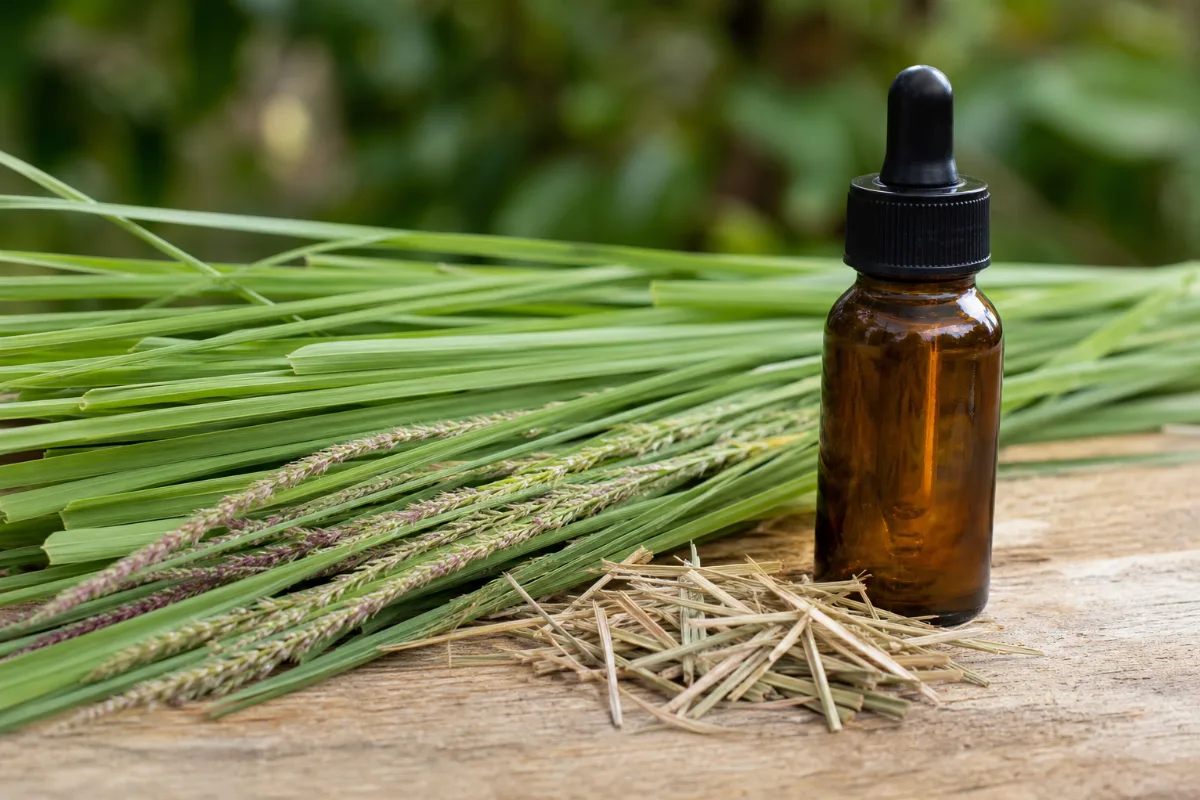
Palmarosa oil is a rose-scented essential oil taken from the leaves of a tropical grass. In several lab analyses it is mostly geraniol. Nearly all the research is test-tube or animal work, and we found no human trial of the oil alone. The main caution is skin allergy, and essential oils should not be swallowed.
General information, not medical advice. Last substantive update · Not medically reviewed. A named clinician has not signed off on this page. How this page is made
About Palmarosa Oil
Palmarosa oil (from Cymbopogon martini) is a rose-scented oil that is mostly geraniol in several lab analyses. We found no human trial of the oil alone. The best-supported fact is a safety one: it was a weak skin sensitiser in mice, and geraniol causes contact allergy in some people.
What it is
Palmarosa oil comes from Cymbopogon martini, a grass in the family Poaceae. GBIF accepts the spelling martini and lists martinii as a synonym; many papers use martinii.
In one study of treated plants, geraniol made up 78.36 to 85.84% of the oil. But a growth-stage study found oils led by carveol and p-menthadienols, and a study of the sofia variety (ginger-grass) found an oil rich in p-menthadienols. So bottles with the same name may not match.
How it is used
Papers describe palmarosa oil as a scent in soaps, detergents, mouthwash and cosmetics. It is also used in scent blends for inhaling. None of the safety studies we read tested these uses in people.
What the research shows
Almost all research is in test tubes, cells and animals. It found the oil stopped growth of some bacteria and fungi, and showed antioxidant activity. It does not show the oil treats any disease.
One 2026 trial of 60 older adults used a peppermint and palmarosa morning blend and a five-oil night blend. Sleep and memory scores improved, but because palmarosa was one of seven oils, nobody can tell what it did. A pooled analysis of 27 trials of inhaled aromatherapy found better sleep scores, but across many oils and with weak blinding.
Palmarosa versus related oils
Palmarosa is not lemongrass. Both are Cymbopogon grasses but they are different species, with different oils. Palmarosa also is not geranium oil, which comes from a Pelargonium plant. In the same mouse allergy test, geranium oil was negative while palmarosa was a weak sensitiser.
How these products are regulated
The US FDA says an aromatherapy product's rules depend mainly on its intended use. A product only meant to smell good is a cosmetic and does not need FDA approval before sale. Claims such as easing pain, relieving anxiety or helping you sleep are drug claims. Poison Control adds that essential oils are not well regulated, so it can be hard to know the species, strength or contaminants in a bottle.
At a glance
Traditional uses history, not proof
- One lab paper says the plant has been used in conventional medicine and beauty products, without details.
- Geraniol and citral, the rose-like and lemon-like scent compounds in this group of grasses, are used in soaps, detergents, mouthwash and cosmetics (a 2022 review).
Studied for research
- Stopping bacteria and fungi in the lab: very low
- Dandruff-linked microbes in the lab: very low
- Sleep and memory from a scent blend that included palmarosa: insufficient
- Antioxidant and anti-inflammatory activity in the lab: very low
Main compounds
- Geraniol, the main compound in several analyses (78 to 86% in one study)
- p-Menthadienols, carveol and limonene, leading compounds in other oils or growth stages
Common forms
- Essential oil from the leaves (hydro-distillation)
- Fragrance and cosmetic ingredient
- Scent blends for inhaling
Research links: FDA: Aromatherapy · Poison Control: Essential oils · Skin sensitisation study (PubMed) · Antibacterial lab study (PubMed) · Geraniol patch-test study (PubMed) · Research Library · Genes & Biomarkers Library
What it is and its history
- Accepted scientific name
- Cymbopogon martini
- Naming authority
- (Roxb.) W.Watson
- Synonyms
- Cymbopogon martinii (Roxb.) J.F.Watson (the spelling used in many papers); Cymbopogon martinianus Schult.
- Common names
- Palmarosa (English); Ginger-grass (the variety sofia, as one paper calls it) (English)
- Family or group
- Poaceae (the grass family)
- Classification
- Plantae > Tracheophyta > Liliopsida > Poales > Poaceae > Cymbopogon > Cymbopogon martini
- Native range
- Not checked in the sources read. One paper calls the plant an underutilised plant of tropical regions.
- Habitat
- A tropical aromatic grass (one paper calls it 'an economically important aromatic grass').
- What it looks like
- Roots: Not checked.; Stems: Not checked.; Leaves: Narrow grass leaves are the source of the oil in several papers (fresh leaves, hydro-distillation).; Flowers: Not checked.; Fruit: Not checked.
- Cultivation
- One study grew palmarosa with a seaweed-based leaf spray and measured oil yield; no farming advice is given here.
- Harvest and processing
- The oil is extracted from fresh leaves, in one paper by hydro-distillation (boiling the plant in water and collecting the oil). Oil makeup changed with the growth stage at which the plant was cut.
- Look-alikes and adulterants
- Name: Lemongrass (Cymbopogon citratus); Note: A different grass in the same genus. Its oil is rich in citral and is a different oil; the ASPCA entry on lemon grass is for this species, not palmarosa.; Name: Geranium oil (Pelargonium); Note: A different plant with a similar rose-like scent, tested in the same mouse allergy study (geranium oil was negative).
- Sustainability and conservation
- Not checked.
Photographs
Traditional use and history history, not clinical proof
| Tradition or era | Documented use | Source |
|---|---|---|
| Cosmetics and traditional medicine (not detailed) | One 2023 lab paper says the plant has been used as part of conventional medicine and beauty products, because of its antioxidant potential. It gives no details of who used it or how. | p37124716 |
| Soap, detergent and cosmetic scent | A 2022 review says geraniol and citral, with their rose-like and lemon-like scents, are used in soaps, detergents, mouthwash and cosmetics. | p36105217 |
Traditional use shows how it was used. It does not show that it works or is safe today.
What is inside, and how it may work
What it contains and how those compounds act in cells and animals. Laboratory and animal mechanisms are not proven effects in people.
Main compounds
| Compound | Family | Where it is concentrated | Activity studied | Level of evidence |
|---|---|---|---|---|
| Geraniol PubChem 637566 | acyclic monoterpene alcohol | Leaf (oil) 78.36 to 85.84% of the oil in one farming study; the major compound by GC-FID in another lab paper. | Antibacterial in the lab. A fragrance allergen: it forms stronger allergens (geranial, neral, a hydroperoxide) when exposed to air. 21 14 1 7 9 | Lab and human patch test |
| p-Menthadienols (for example trans-p-mentha-1(7),8-dien-2-ol) and carveol | monoterpene alcohols | Aerial plant (oil) Leading compounds in oil from different growth stages and in the sofia variety (for example 21.0% and 18.1% for two p-menthadienols). | Linked to antibacterial and antioxidant activity in the growth-stage study and to anti-inflammatory effects in mice. 16 15 | Lab and animal |
| Limonene PubChem 22311 | monoterpene | Aerial plant (oil) 6.2% in the vegetative-stage oil of one paper; 7.7% in the sofia-variety oil of another. | Named as a leading compound; no activity specific to this oil is established. 16 15 | Lab |
Mechanisms, receptors and pathways
| Target or pathway | Gene or receptor | What was found | Level |
|---|---|---|---|
| Microbial membranes and oxidative stress | In dandruff-linked microbes, palmarosa oil raised reactive oxygen species and changed membrane integrity (lab). 10 | Lab | |
| Skin sensitisation | Geraniol itself is a weak allergen, but air exposure creates geranial, neral and a hydroperoxide that sensitise more strongly in mice. Skin enzymes may also convert it to allergens in people. 7 8 | Mouse and human patch test | |
| Alpha-amylase (starch-digesting enzyme) | Palmarosa oil inhibited the enzyme in a competitive manner in a test tube. 1 | Lab | |
| Inflammation signals (IL-6, TNF-alpha) | A p-menthadienol-rich oil of variety sofia lowered these signals in skin cells and mouse ears. Not shown for geraniol-rich palmarosa oil. 15 | Cell and mouse |
Absorption, metabolism and elimination
- Absorption
- Not studied for palmarosa oil in the sources read.
- Distribution
- Not found.
- Metabolism
- The patch-test authors suggest skin metabolism of geraniol may form citral-type allergens (geranial and neral).
- Elimination
- Not found.
- Bioavailability
- Not found.
Isolated compounds versus whole extracts
Palmarosa oil is a mixture, mostly geraniol in several papers but not in all. The 2014 rat study and the 2025 antibacterial study both compared the whole oil with pure geraniol and found different results: in rats geraniol alone raised liver and kidney markers while the oil did not, and in bacteria the oil usually stopped growth at lower amounts than geraniol. So findings for pure geraniol should not be assumed to apply to the oil.
Nutritional composition
Palmarosa oil is a scent and cosmetic ingredient, not a nutrient. No nutritional claim is made.
5 very low certainty2 not enough evidence
What is Palmarosa Oil good for?
What people ask about, and how strong the evidence is. Almost all of it is lab or animal work, which cannot show that the oil helps people.
Benefits, one by one
Each card is a research question, not a promise. Tap a goal to filter. Open a card to see the studies, doses and limits.
Killing or stopping bacteria in the lab
Very low certaintyIn test tubes, palmarosa oil stopped the growth of several skin and airway bacteria. No one has shown it treats an infection in a person.
3 studiesSupplier-bought palmarosa essential oil, tested in test tubes.
Studies, doses and limits
What the trials found
No human trial of palmarosa oil against an infection was found. A 2025 lab study tested the oil on bacteria taken from human skin and airway samples.
Results
Lowest growth-stopping concentration (MIC) was 125 to 250 micrograms per mL for four Streptococcus species, 350 for Escherichia coli, 250 for Moraxella catarrhalis and 350 for Morganella morganii. In most cases the oil had lower MIC values than pure geraniol. A 2020 lab study found the oil cut bacterial counts in a biofilm grown in extracted teeth by 2.75 to 2.87 log10 CFU.
Effect sizes as reported
Lab effect only; no effect in people has been measured
Why this rating
Test-tube and extracted-tooth work with supplier oils. Different oil batches have different makeup, and lab killing does not predict what happens on skin or in the body.
Form and dose studied
Supplier-bought palmarosa essential oil, tested in test tubes.
Who was studied
Bacteria from human skin and airway samples; bacteria grown in extracted teeth.
Limits
Lab only. The same paper found the oil also affected liver cells in a dish, though less than pure geraniol did.
Why researchers looked
People are interested in plant oils as possible germ-killers because some bacteria resist antibiotics.
Traditional use
No traditional use of palmarosa oil for infections is described in the sources read.
Proposed mechanism Lab
The oil is rich in geraniol in several lab analyses. Geraniol and other parts of the oil may damage bacterial cells, but the abstracts read do not prove how.
A proposed mechanism does not show that the effect happens in people.
Palmarosa oil is a skin allergen risk and is not meant to be swallowed. Nothing here is advice to swallow it or to use it undiluted.
Dandruff-linked fungi and bacteria in the lab
Very low certaintyIn the lab, palmarosa oil stopped growth of the fungi and a bacterium linked to dandruff, and did not irritate the skin of rats and rabbits. It has not been tested on dandruff in people.
1 studiesPalmarosa essential oil, tested on microbes and on animal skin.
Studies, doses and limits
What the trials found
No human trial for dandruff was found. The study screened seven oils and palmarosa was the strongest.
Results
MIC 0.27 to 0.55 mg/mL against Malassezia furfur, Candida albicans and Staphylococcus epidermidis. Fungicidal at 0.55 to 2.2 mg/mL and bactericidal at 0.55 mg/mL. No skin irritation and no sub-acute toxic effects were seen after application to rat and rabbit skin.
Effect sizes as reported
Lab effect only
Why this rating
Lab and animal work only; no people studied. The abstract does not say who funded it.
Form and dose studied
Palmarosa essential oil, tested on microbes and on animal skin.
Who was studied
Cultured microbes; rats and rabbits.
Limits
Animal skin safety does not carry over directly to people, and the people-allergy question (see Safety tab) is separate.
Why researchers looked
Dandruff is linked with a yeast called Malassezia and other microbes, so researchers screen oils against them.
Traditional use
No traditional use for dandruff is described in the sources read.
Proposed mechanism Lab
The authors report that the oil raised reactive oxygen species in the microbes and changed the integrity of their membranes.
A proposed mechanism does not show that the effect happens in people.
Palmarosa oil is a skin allergen risk and is not meant to be swallowed. Nothing here is advice to swallow it or to use it undiluted.
Sleep and memory from a scent blend containing palmarosa
Not enough evidenceOne small trial in a care home used a peppermint and palmarosa blend in the morning and a different five-oil blend at night. Sleep and memory scores improved, but palmarosa's own effect cannot be separated out.
2 studiesInhaled blends for 10 minutes a day for 30 days (amounts not given in…
Studies, doses and limits
What the trials found
A 2026 single-blind randomised trial of 60 people aged 65 or older compared a 30-day inhaled programme with a control group. A 2025 pooled analysis of 27 trials of inhaled aromatherapy for insomnia found better sleep scores overall, but across many different oils and with weak blinding.
Results
In the trial, total sleep time, REM sleep, deep sleep, sleep latency, daytime sleepiness and memory scores improved versus controls (all p < .001 for the sleep measures). The pooled analysis gave a mean difference of -2.90 (95% CI -3.85 to -1.95) on sleep scores.
Effect sizes as reported
Large effect sizes in one small trial (d 1.12 to 1.47 for the sleep measures)
Why this rating
Palmarosa was one oil in a morning blend with peppermint, plus a night blend of five other oils, so the trial cannot say whether palmarosa did anything. Smell is hard to blind.
Form and dose studied
Inhaled blends for 10 minutes a day for 30 days (amounts not given in the abstract).
Who was studied
60 older adults in one Istanbul care home. The pooled analysis covered 2,072 people with insomnia and other illnesses.
Limits
Scent blends are not the same as skin use or swallowing; one result does not carry over to the others.
Why researchers looked
Aromatherapy is often studied for sleep and thinking in older adults.
Traditional use
No traditional use for sleep is described in the sources read.
Proposed mechanism Unknown
Not established. The trial was not designed to find a mechanism.
A proposed mechanism does not show that the effect happens in people.
Palmarosa oil is a skin allergen risk and is not meant to be swallowed. Nothing here is advice to swallow it or to use it undiluted.
Antioxidant and anti-inflammatory activity in the lab
Very low certaintyIn chemical tests and cell or mouse studies, palmarosa oils showed antioxidant and anti-inflammatory activity. It is unproven in people, and one mouse study used a different chemical type of the plant.
3 studiesEssential oils, hydro-distilled; tested in tubes, cells and on mouse …
Studies, doses and limits
What the trials found
No human trial found.
Results
A 2023 lab study reported antioxidant and anti-inflammatory activity of palmarosa oil from fresh leaves. A 2025 growth-stage study found antioxidant activity peaked in oil from the post-reproductive stage. A 2022 study of a different chemical type (variety sofia, rich in p-menthadienols) reduced ear swelling and IL-6 and TNF-alpha in mice, and inflammation markers in skin cells, without irritating rabbit skin.
Effect sizes as reported
Lab effect only
Why this rating
Chemical tests, cells and mice. Oils with different chemistry (geraniol-rich versus p-menthadienol-rich) were used in different papers.
Form and dose studied
Essential oils, hydro-distilled; tested in tubes, cells and on mouse ears.
Who was studied
Test tubes, human skin cells in a dish, mice, rabbits.
Limits
Lab antioxidant tests are not a sign of benefit in the body.
Why researchers looked
Antioxidant and anti-inflammatory tests are cheap first screens for plant oils.
Traditional use
One paper calls the plant part of conventional medicine and beauty products (without detail).
Proposed mechanism Lab
Chemical assays measure how well the oil neutralises test molecules. The mouse and cell study traced effects to lowered IL-6 and TNF-alpha.
A proposed mechanism does not show that the effect happens in people.
Palmarosa oil is a skin allergen risk and is not meant to be swallowed. Nothing here is advice to swallow it or to use it undiluted.
Blocking a starch-digesting enzyme (alpha-amylase) in the lab
Very low certaintyIn one test-tube study, palmarosa oil blocked alpha-amylase, an enzyme that digests starch. This is not evidence it affects blood sugar in people.
1 studiesPalmarosa oil in an enzyme test.
Studies, doses and limits
What the trials found
No human trial found.
Results
The 2023 lab study reported inhibition of alpha-amylase and called the oil a possible antidiabetic agent. The abstract gives no numbers.
Effect sizes as reported
Not given in the abstract
Why this rating
One lab study with no numbers in the abstract and no human data.
Form and dose studied
Palmarosa oil in an enzyme test.
Who was studied
Enzyme in a test tube.
Limits
Swallowing essential oils is not advised and is dangerous; nothing here suggests using the oil for blood sugar.
Why researchers looked
Enzyme blockers are screened as possible blood-sugar tools.
Traditional use
None described.
Proposed mechanism Lab
The authors report that the oil inhibits alpha-amylase in a competitive manner (lab enzyme test).
A proposed mechanism does not show that the effect happens in people.
Palmarosa oil is a skin allergen risk and is not meant to be swallowed. Nothing here is advice to swallow it or to use it undiluted.
Effects on lung cancer cells in a dish
Not enough evidenceIn one farming study, oil from palmarosa killed lung cancer cells in a dish but the effect faded by 48 hours. This says nothing about treating cancer.
1 studiesPalmarosa oil in cell tests.
Studies, doses and limits
What the trials found
No human trial found.
Results
In the 2026 study, oil from the best seaweed-spray treatment killed nearly 100% of A549 lung cancer cells at 100 to 200 micrograms per mL after 24 hours, but this was transient at 48 hours. Oil from untreated plants had a mild effect (about 10 to 20%).
Effect sizes as reported
Cell effect in a dish
Why this rating
A cell line in a dish; no normal-cell comparison reported in the abstract, so selectivity is unknown.
Form and dose studied
Palmarosa oil in cell tests.
Who was studied
A549 lung cancer cell line.
Limits
A substance that kills cells in a dish can harm healthy cells too.
Why researchers looked
Researchers often test plant oils on cancer cell lines as an early screen.
Traditional use
None described.
Proposed mechanism Unknown
Not established.
A proposed mechanism does not show that the effect happens in people.
Palmarosa oil is a skin allergen risk and is not meant to be swallowed. Nothing here is advice to swallow it or to use it undiluted.
Blood chemistry in rats breathing the oil
Very low certaintyIn rats that breathed the oil for 30 days, cholesterol fell and antioxidant enzymes rose. Rats given geraniol alone had higher liver and kidney markers. Not shown in people.
1 studiesInhaled palmarosa oil or geraniol.
Studies, doses and limits
What the trials found
No human study found.
Results
Rat study (8 per group, 30 days): total cholesterol fell in both the oil and geraniol groups; blood sugar and triglycerides did not differ. ALT and creatinine were higher with geraniol than with the oil; catalase and superoxide dismutase were higher in the oil group.
Effect sizes as reported
Mixed: cholesterol fell; geraniol alone raised liver and kidney markers
Why this rating
One small rat study; amounts and exposure method not described in the abstract.
Form and dose studied
Inhaled palmarosa oil or geraniol.
Who was studied
24 rats.
Limits
Animal results do not tell us what happens in people.
Why researchers looked
To see what breathing the oil or its main part does to the body.
Traditional use
None described.
Proposed mechanism Animal research
The authors suggest geraniol alone may cause oxidative stress and some liver strain, and that other compounds in the oil may offset this.
A proposed mechanism does not show that the effect happens in people.
Palmarosa oil is a skin allergen risk and is not meant to be swallowed. Nothing here is advice to swallow it or to use it undiluted.
Connections to the rest of health
How Palmarosa Oil connects to the rest of our health knowledge graph. Every link says what kind of connection it is. A safety link (for example to the liver) is a warning, not a benefit. A study that merely mentions a topic never creates a benefit link.
Explore every connection: goals, body systems, organs, symptoms, genes
A. Wellness goals
| Connected to | Kind of connection | Evidence status | Context | Studies |
|---|---|---|---|---|
| Immune Support | Very low certainty | Killing or stopping bacteria in the lab: In test tubes, palmarosa oil stopped the growth of several skin and airway bacteria. No one has shown it treats an infection in a person. | 4 13 16 | |
| Healthy Skin | Very low certainty | Dandruff-linked fungi and bacteria in the lab: In the lab, palmarosa oil stopped growth of the fungi and a bacterium linked to dandruff, and did not irritate the skin of rats and rabbits. It has not been tested on dandruff in people. | 10 | |
| Better Sleep | Not enough evidence | Sleep and memory from a scent blend containing palmarosa: One small trial in a care home used a peppermint and palmarosa blend in the morning and a different five-oil blend at night. Sleep and memory scores improved, but palmarosa's own effect cannot be separated out. | 6 5 | |
| Inflammation Balance | Very low certainty | Antioxidant and anti-inflammatory activity in the lab: In chemical tests and cell or mouse studies, palmarosa oils showed antioxidant and anti-inflammatory activity. It is unproven in people, and one mouse study used a different chemical type of the plant. | 1 16 15 |
B. Body systems
| Connected to | Kind of connection | Evidence status | Context | Studies |
|---|---|---|---|---|
| Immune System | Biological association | Very low certainty | Studied for: Killing or stopping bacteria in the lab | 4 13 16 |
| Integumentary System | Biological association | Very low certainty | Studied for: Dandruff-linked fungi and bacteria in the lab Studied for: Antioxidant and anti-inflammatory activity in the lab | 10 1 16 15 |
| Nervous System | Biological association | Not enough evidence | Studied for: Sleep and memory from a scent blend containing palmarosa | 6 5 |
| Metabolism Weight | Biological association | Very low certainty | Studied for: Blocking a starch-digesting enzyme (alpha-amylase) in the lab | 1 |
| Hepatic System | Biological association | Very low certainty | Studied for: Blood chemistry in rats breathing the oil | 2 |
| Urinary System | Biological association | Very low certainty | Studied for: Blood chemistry in rats breathing the oil | 2 |
C. Body parts and organs
E. Health conditions
| Connected to | Kind of connection | Evidence status | Context | Studies |
|---|---|---|---|---|
| Contact dermatitis | Adverse effect or risk | Low certainty | Allergic skin rash. Preparation or compound: Geraniol; palmarosa oil |
9 8 |
I. Biomarkers
| Connected to | Kind of connection | Evidence status | Context | Studies |
|---|---|---|---|---|
| Lowest concentration that stops bacterial growth (MIC) | Biological association | Very low certainty | Measured in trials: stopped growth in tubes. A lab change is not the same as a health benefit. | 4 10 |
| Bacterial count in a biofilm (log10 CFU) | Biological association | Very low certainty | Measured in trials: lowered. A lab change is not the same as a health benefit. | 13 |
| Total sleep time (smartwatch) | Biological association | Not enough evidence | Measured in trials: raised in the trial. A lab change is not the same as a health benefit. | 6 |
| ALT (liver enzyme) in rats | Biological association | Very low certainty | Measured in trials: higher with geraniol than with the oil. A lab change is not the same as a health benefit. | 2 |
| Total cholesterol in rats | Biological association | Very low certainty | Measured in trials: lowered. A lab change is not the same as a health benefit. | 2 |
K. Biological pathways
L. Active compounds
| Connected to | Kind of connection | Evidence status | Context | Studies |
|---|---|---|---|---|
| Geraniol | Low certainty | Forms stronger allergens when exposed to air. Preparation or compound: Main compound in many palmarosa oils |
7 8 | |
| Geraniol | Biological association | Lab and human patch test | Antibacterial in the lab. A fragrance allergen: it forms stronger allergens (geranial, neral, a hydroperoxide) when exposed to air. Preparation or compound: Leaf (oil) |
21 14 1 7 9 |
| p-Menthadienols (for example trans-p-mentha-1(7),8-dien-2-ol) and carveol | Biological association | Lab and animal | Linked to antibacterial and antioxidant activity in the growth-stage study and to anti-inflammatory effects in mice. Preparation or compound: Aerial plant (oil) |
16 15 |
| Limonene | Biological association | Lab | Named as a leading compound; no activity specific to this oil is established. Preparation or compound: Aerial plant (oil) |
16 15 |
Each connection is stored with the ingredient, the connected record, the kind of connection, the evidence status, the supporting studies, the preparation or compound involved, and a review date (last reviewed October 25, 2026).
The evidence
The research centre for Palmarosa Oil. Every record here was checked against PubMed or the publisher's page; we never list a study we have not verified.
Evidence by outcome
Bars show how many studies we found for each outcome, not how well it works. People are added up across trials only (reviews are not added, to avoid double counting).
How we rate evidence
High certainty
Several well-run trials or reviews agree; further research is unlikely to change the picture much.
Moderate certainty
Good trials point the same way, but some doubt remains.
Low certainty
Small, short or inconsistent trials. The finding could change with better research.
Very low certainty
Very little or very weak human data. Treat as a possibility only.
Mixed findings
Trials or reviews disagree with each other.
Not enough evidence
Not enough human research to say either way.
Evidence against
Good research found no benefit, or found harm.
We take the reviewers' own risk-of-bias and GRADE statements where they exist, and otherwise judge from study size, design, consistency, directness and whether a product matches what is sold. Many publications do not make evidence high. Method note: We searched PubMed for palmarosa and Cymbopogon martinii, read the abstracts of the papers cited, and read the FDA, Poison Control and ASPCA pages in full on 2026-10-25. We checked the plant name in the GBIF database. Pages we could not read, such as EU fragrance-allergen rules, are not cited.
Study library: every study we checked 22
| Study | Design | People | Product, dose, length | Result |
|---|---|---|---|---|
| Amrita 2023 Underutilized Plant Cymbopogan martinii Derived Essential Oil Is Excellent Source of Bioactives with Diverse Biological Activities. Russian Agricultural Sciences · PMID 37124716 · DOI |
Lab study in vitro |
Chemical and enzyme tests, bacteria and fungi in the lab | Palmarosa essential oil from fresh leaves fresh leaves Not stated in the abstract Not applicable · vs Not stated |
The oil showed antioxidant activity in several chemical assays, anti-inflammatory activity and inhibition of the alpha-amylase enzyme, which the authors call competitive. Geraniol was the major component by GC-FID. It was also tested against fungi that cause aspergillosis and mucormycosis. Activity in test tubes only Methods, limits and fundingOutcomes: Antioxidant assays, antibacterial and antifungal tests, anti-inflammatory and alpha-amylase (starch-digesting enzyme) tests, UV absorption Limitations: Chemical and enzyme assays. The authors say pharmacological studies of this plant are still early. The abstract gives no numbers for the activity. Funding and conflicts: Not stated in the abstract. Read: abstract |
| Andrade 2014 Effect of Inhaling Cymbopogon martinii Essential Oil and Geraniol on Serum Biochemistry Parameters and Oxidative Stress in Rats. Biochemistry Research International · PMID 25574396 · DOI |
Animal lab rat |
24 24 Wistar rats (8 per group) |
Inhaled C. martinii essential oil, or inhaled geraniol not stated Not stated in the abstract 30 days · vs Saline control group |
Total cholesterol fell in both the oil and geraniol groups. In the geraniol group, creatinine and ALT (a liver enzyme) were higher than in the oil group; the oil group had lower creatinine and higher catalase and superoxide dismutase activity. The authors say oxidative stress from geraniol may have caused some liver toxicity. Mixed: cholesterol fell; geraniol alone raised liver and kidney markers Methods, limits and fundingOutcomes: Blood chemistry (cholesterol, liver enzymes, creatinine) and liver oxidative stress markers Limitations: A rat study. The authors interpret the findings in a limited way and mention possible interactions between geraniol and other compounds in the oil. It does not show anything about human health. Funding and conflicts: Not stated in the abstract. Read: abstract |
| Api 2022 RIFM fragrance ingredient safety assessment, geraniol, CAS registry number 106-24-1. Food and Chemical Toxicology · PMID 35940332 · DOI |
Safety assessment n/a |
Safety assessment by the fragrance industry's research institute (RIFM) | Geraniol as a fragrance ingredient not applicable Not applicable Not applicable · vs Not applicable |
Concluded that the existing information supports the use of geraniol as described. Geraniol was not genotoxic. The skin sensitisation NESIL (a no-effect level) was 11,000 micrograms per cm2. It is not expected to be phototoxic or photoallergenic. Industry assessment: safe as used in fragrance Methods, limits and fundingOutcomes: Genotoxicity, repeated dose and reproductive toxicity, skin sensitisation, phototoxicity, respiratory, environment Limitations: Written by the fragrance industry's own research body (RIFM), so the funder is also the user of the ingredient. It covers geraniol as a single fragrance ingredient, not palmarosa oil or swallowing. Funding and conflicts: Industry-linked (RIFM, the Research Institute for Fragrance Materials). Read: abstract |
| Cebollada 2025 Antibacterial Activity of Palmarosa (Cymbopogon martini (Roxb.) Will.Watson) Essential Oil and Geraniol Against Clinical Isolates from Respiratory, Skin, and Soft Tissue Infections. Pharmaceutics · PMID 41599146 · DOI |
Lab study in vitro (bacteria and cell line) |
Bacteria from human skin and respiratory samples, and liver cells (HepG2) grown in a dish | Palmarosa essential oil from a supplier (geraniol the main component per supplier analysis) and pure geraniol not stated Concentrations in micrograms per mL in test tubes MIC and MBC tests; MTT cell test · vs Pure geraniol |
MIC was 125 to 250 micrograms per mL for four Streptococcus species, 350 for Escherichia coli, 250 for Moraxella catarrhalis and 350 for Morganella morganii. In most cases the oil had lower MIC values than geraniol. Palmarosa oil had a weaker effect than geraniol on HepG2 liver cells. Growth stopped in test tubes Methods, limits and fundingOutcomes: Lowest concentration that stopped bacterial growth (MIC) or killed bacteria (MBC); effect on liver cells Limitations: Test-tube work. The oil's composition came from the supplier, not from the authors' own analysis. It does not show the oil treats an infection in a person. Funding and conflicts: Not stated in the abstract. Read: abstract |
| Chen 2025 Inhalation aromatherapy for the treatment of comorbid insomnia: a systematic review and meta-analysis. Frontiers in Psychiatry · PMID 40230824 · DOI |
Meta-analysis |
2072 27 randomised trials in 2,072 people with insomnia alongside other conditions |
Inhaled aromatherapy (many different oils) not applicable Varied Varied · vs Varied |
Sleep symptoms were better with inhalation aromatherapy (MD -2.90, 95% CI -3.85 to -1.95). Studies were heterogeneous and often lacked blinding and independent testing of purity or potency. Better sleep scores across many oils (MD -2.90 (-3.85, -1.95)) Methods, limits and fundingOutcomes: Sleep symptoms, anxiety and depression scores Limitations: Many different oils pooled; palmarosa is not singled out in the abstract. The reviewers note weak blinding and no independent purity testing. Funding and conflicts: Not stated in the abstract. Read: abstract |
| Ede Sarıkaya 2026 Effects of inhaled aromatherapy on sleep quality and cognitive function in older adults: a randomised controlled trial. Journals of Gerontology Series A · PMID 42011111 · DOI |
Controlled trial |
60 60 people aged 65 or older in a care home in Istanbul |
Inhaled blends: a peppermint and palmarosa blend in the morning, and a night blend of vetiver, cedarwood, clary sage, petitgrain and grapefruit oils not applicable (inhaled scent) 10 minutes a day (amounts not stated in the abstract) 30 days · vs Control group (what the controls did is not stated in the abstract) |
The aromatherapy group improved on total sleep time, REM sleep, deep sleep and sleep latency versus controls (all p < .001; effect sizes d 1.12 to 1.47). Daytime sleepiness and memory and concentration scores also improved. Large effects, but for a seven-oil programme Methods, limits and fundingOutcomes: Sleep quality, daytime sleepiness, memory and orientation scores, and smartwatch sleep measures Limitations: Single-blind (smell is hard to hide). Palmarosa was only one oil in a morning blend with peppermint, plus a night blend of five other oils, so its own effect cannot be separated. Sleep was measured partly with smartwatches. One care home, 60 people. Funding not stated in the abstract. Funding and conflicts: Not stated in the abstract. Read: abstract |
| Hagvall 2007 Fragrance compound geraniol forms contact allergens on air exposure. Identification and quantification of oxidation products and effect on skin sensitization. Chemical Research in Toxicology · PMID 17428070 · DOI |
Animal lab mouse |
Chemistry plus mouse local lymph node assay | Geraniol, air-exposed geraniol and its oxidation products not applicable Not stated in the abstract Room-temperature air exposure · vs Pure geraniol |
Geraniol reacts with air to form geranial, neral, hydrogen peroxide and a hydroperoxide. The air-exposed samples had moderate sensitising strength, quite different from pure geraniol, which is considered a weak allergen. Air exposure made geraniol a stronger allergen in mice Methods, limits and fundingOutcomes: What forms when geraniol meets air; skin sensitising strength Limitations: Mouse and chemistry work on geraniol, not palmarosa oil. It suggests (not proves) that old, air-exposed oil could be more allergenic. Funding and conflicts: Not stated in the abstract. Read: abstract |
| Hagvall 2012 Contact allergy to air-exposed geraniol: clinical observations and report of 14 cases. Contact Dermatitis · PMID 22681463 · DOI |
Observational clinical |
2227 About 2,200 consecutive dermatitis patients patch tested; 14 cases of geraniol allergy described |
Patch tests with pure geraniol, oxidised geraniol (2% in petrolatum), geranial, neral and citral not applicable Single patch test One test · vs Pure versus oxidised geraniol |
Pure and oxidised geraniol gave positive reactions in 0.13% and 0.55% of patients. Eight of 11 patients who reacted to oxidised geraniol also reacted to citral or its parts. Relevance to the patient's dermatitis was found in 11 of 14 cases. Allergy to geraniol occurs, and is more often found with oxidised geraniol Methods, limits and fundingOutcomes: Positive patch-test reactions and clinical relevance Limitations: Patch-test patients, not the general public. Tested geraniol, not palmarosa oil. Funding and conflicts: Not stated in the abstract. Read: abstract |
| Hagvall 2018 Contact allergy to oxidized geraniol among Swedish dermatitis patients-A multicentre study by the Swedish Contact Dermatitis Research Group. Contact Dermatitis · PMID 29926925 · DOI |
Observational clinical |
1476 1,476 consecutive patients referred for patch testing in Sweden |
Patch tests with pure geraniol (6% in petrolatum) and oxidised geraniol (6% and 11%) not applicable Single patch test One test · vs Pure versus oxidised geraniol |
Pure geraniol 6% gave 1% positive reactions. Oxidised geraniol gave 3% (at 6%) and 8% (at 11%). Most reacting patients reacted only to oxidised geraniol. More people reacted to air-oxidised geraniol than to pure geraniol Methods, limits and fundingOutcomes: Positive patch-test reactions Limitations: Patients were already referred for suspected skin allergy, so rates do not apply to the general public. It tested geraniol, not palmarosa oil. Funding and conflicts: Not stated in the abstract. Read: abstract |
| Kumari 2025 Palmarosa essential oil inhibits the growth of dandruff-associated microbes by increasing ROS production and modulating the efflux pump. Microbial Pathogenesis · PMID 39855490 · DOI |
Lab study in vitro and animal (rat, rabbit) |
Dandruff-linked fungi and bacteria in the lab; skin tests in rats and rabbits | Palmarosa essential oil (one of seven oils tested) not stated 1, 10 and 20 times the lowest growth-stopping concentration (MIC) on animal skin Disk and broth tests; post-treatment re-growth up to 7 hours; animal skin test not timed in the abstract · vs Other oils in the same screen |
Palmarosa had the highest potency of the oils: MIC 0.27 to 0.55 mg/mL for the two fungi and the bacterium. It was fungicidal at 0.55 to 2.2 mg/mL and bactericidal at 0.55 mg/mL. It raised reactive oxygen species and altered membrane integrity. On the skin of rats and rabbits it caused no irritation and no sub-acute toxic effects were seen. Growth stopped in the lab; no skin irritation in rats and rabbits Methods, limits and fundingOutcomes: MIC against Malassezia furfur, Candida albicans and Staphylococcus epidermidis; skin irritation in rats and rabbits Limitations: Lab and animal work only. No people were studied. Animal skin results do not carry over directly to people. Funding and conflicts: Not stated in the abstract. Read: abstract |
| Lalko 2006 Investigation of the dermal sensitization potential of various essential oils in the local lymph node assay. Food and Chemical Toxicology · PMID 16324777 · DOI |
Animal lab mouse |
Mice, local lymph node assay (skin allergy test) | Palmarosa essential oil, plus geranium, lemongrass, basil, citronella, clove leaf and litsea cubeba oils and the components citral, eugenol and geraniol not stated Five concentrations from 2.5% to 50% in an ethanol and diethyl phthalate mix Standard assay · vs Vehicle control (implied by the assay) |
Palmarosa oil gave a positive response with an EC3 of 9.6%, classed as weak. Lemongrass was 6.5%, clove leaf 7.1%, litsea cubeba 8.4%. Geraniol alone was 11.4%, citral 6.3%, eugenol 5.4%. Geranium and citronella oils were negative. The authors say each oil's potency did not differ significantly from its main single component. Weak sensitiser in a mouse test Methods, limits and fundingOutcomes: Skin sensitisation strength (EC3 value; lower means stronger) Limitations: An animal test; it does not give a rate of allergy in people. The batch of palmarosa oil was not described in the abstract. Funding and conflicts: Not stated in the abstract. Read: abstract |
| Lis-Balchin 1999 Possible health and safety problems in the use of novel plant essential oils and extracts in aromatherapy. Journal of the Royal Society for the Promotion of Health · PMID 10673845 · DOI |
Review n/a |
Review of aromatherapy oil safety | Aromatherapy essential oils in general not applicable Not applicable Not applicable · vs Not applicable |
Says the most commonly used oils are seldom dangerous in massage, provided they are not adulterated. Says safety in pregnancy, childbirth and babies has not been clearly demonstrated, and that sensitisation is a growing concern. General caution; nothing about palmarosa specifically Methods, limits and fundingOutcomes: Safety of aromatherapy oils Limitations: A 1999 general review; it does not discuss palmarosa in the abstract. Funding and conflicts: Not stated in the abstract. Read: abstract |
| Marinković 2020 Antimicrobial potential of irrigants based on essential oils of Cymbopogon martinii and Thymus zygis towards in vitro multispecies biofilm cultured in ex vivo root canals. Archives of Oral Biology · PMID 32707220 · DOI |
Lab study ex vivo (extracted teeth) |
Bacterial biofilm grown in extracted teeth (root canals) in the lab | Cymbopogon martinii essential oil and oil-based irrigants (also thyme oil) not stated Not stated in the abstract Not stated in the abstract · vs 1.5% sodium hypochlorite |
The Cymbopogon martinii oil disrupted biofilm biomass. Bacterial counts fell by 2.75 to 2.87 log10 CFU in biofilms. The oil-based irrigant matched the 1.5% sodium hypochlorite control for C. martini. A sequence of sodium hypochlorite, saline and oil irrigant reduced counts more than the control sequence (1.69 versus 1.14 log10 CFU). Biofilm reduced in extracted teeth Methods, limits and fundingOutcomes: Biofilm biomass and bacterial counts (log10 CFU) Limitations: Extracted teeth in a lab; three bacterial species. Not a treatment study in people. The abstract does not name any funder. Funding and conflicts: Not stated in the abstract. Read: abstract |
| Sharma 2026 Modulation of growth, essential oil yield, and cytotoxic properties of Cymbopogon martinii through biostimulant application in the sub-humid western Himalayas. BMC Plant Biology · PMID 41667960 · DOI |
Lab study in vitro |
Palmarosa plants grown with a seaweed spray; lung cancer cells (A549) in a dish | Palmarosa essential oil from plants given a seaweed-extract spray aerial plant Cell tests at 100 to 200 micrograms per mL 24 and 48 hours · vs Oil from untreated plants |
Geraniol in the oil was 78.36 to 85.84% in the best-yielding treatment. The oil from treated plants killed nearly 100% of the A549 cells at 100 to 200 micrograms per mL at 24 hours, but this was transient at 48 hours. Oil from untreated plants had a mild effect (about 10 to 20%). Cell-killing in a dish Methods, limits and fundingOutcomes: Oil yield, geraniol content, and effect on A549 cancer cells Limitations: A farming study with a side test on cancer cells in a dish. It says nothing about treating cancer. Strong cell-killing in a dish can also mean the oil harms normal cells. Funding and conflicts: Not stated in the abstract. Read: abstract |
| Singh 2022 p-Menthadienols-rich essential oil from Cymbopogon martini ameliorates skin inflammation. Inflammopharmacology · PMID 35320495 · DOI |
Animal lab in vitro and mouse, rabbit |
Human skin cells (HaCaT) in a dish; mouse ear inflammation; rabbit skin | Hydro-distilled oil of C. martini variety sofia (ginger-grass), coded CMA-01 not stated Not stated in the abstract Not stated in the abstract · vs Untreated or vehicle controls (implied) |
The oil was rich in p-menthadienols (for example 21.0% and 18.1% for two of them) and limonene (7.7%). It reduced inflammation markers in skin cells and lessened ear swelling and inflammatory signals in mice, without a skin irritation response in rabbits. Less inflammation in mice Methods, limits and fundingOutcomes: Inflammation markers in skin cells; ear swelling, IL-6, TNF-alpha, oxidative stress in mice; irritation in rabbits Limitations: A different chemical type of the plant (variety sofia, not geraniol-rich). Animal and cell work only, so it says little about the usual palmarosa oil in bottles. Funding and conflicts: Not stated in the abstract. Read: abstract |
| Sonigra 2025 Influence of growth stage on the chemical composition, antimicrobial, and antioxidant potential of Cymbopogon martinii (Roxb.) Wats. essential oil. Frontiers in Plant Science · PMID 41019755 · DOI |
Lab study in vitro |
Oil from plants cut at three growth stages, tested in the lab | Cymbopogon martinii essential oil, hydro-distilled aerial plant (growth stages) Not stated in the abstract Not applicable · vs Oils from the other two growth stages |
59 compounds were found. The leading compounds differed by stage: carveol, trans-p-mentha-1(7),8-dien-2-ol and D-limonene in the vegetative stage; cis-piperitol and cis-p-mentha-1(7),8-dien-2-ol in the reproductive stage. Antibacterial and antifungal activity was highest in the reproductive stage and antioxidant activity in the post-reproductive stage. Makeup and lab activity changed with growth stage Methods, limits and fundingOutcomes: Chemical makeup by GC-MS; antibacterial, antifungal and antioxidant tests Limitations: Lab assays only. In this study geraniol was not among the leading compounds listed, so the oil studied differs from the geraniol-rich oil in other papers. Funding and conflicts: Not stated in the abstract. Read: abstract |
| Tibenda 2022 Review of phytomedicine, phytochemistry, ethnopharmacology, toxicology, and pharmacological activities of Cymbopogon genus. Frontiers in Pharmacology · PMID 36105217 · DOI |
Review mixed |
About 120 reviews and studies on the whole Cymbopogon genus (grasses including lemongrass, citronella and palmarosa) | Cymbopogon plants and their extracts and oils leaves, roots, aerial parts, rhizomes, essential oils Not applicable Not applicable · vs Not applicable |
Describes anti-protozoal, antibacterial, anti-inflammatory and anti-cancer effects and the compounds believed to cause them. Says geraniol and citral have rose and lemon-like scents used in soaps, detergents, mouthwash and cosmetics. Concludes significant research is required to ensure efficacy and safety for a variety of ailments. Narrative review of mostly lab work Methods, limits and fundingOutcomes: Chemistry and pharmacological activities of the genus Limitations: A narrative review of a whole genus, not of palmarosa oil alone. Mostly lab and animal work. Funding and conflicts: Not stated in the abstract. Read: abstract |
| n/a 2023 FDA: Aromatherapy (cosmetic products page, content current as of 8 Sep 2023) US Food and Drug Administration · Source |
Authoritative guidance n/a |
n/a | n/a n/a n/a n/a · vs n/a |
Says how an aromatherapy product is regulated depends mainly on its intended use. Products meant only to cleanse or make someone smell good are cosmetics, which do not need FDA approval before sale. Claims such as relieving colic, easing pain, treating depression or anxiety, or helping you sleep are drug claims. The fact that an ingredient comes from a plant does not keep it from being regulated as a drug. Methods, limits and fundingOutcomes: Says how an aromatherapy product is regulated depends mainly on its intended use. Products meant only to cleanse or make someone smell good are cosmetics, which do not need FDA approval before sale. Claims such as relieving colic, easing pain, treating depression or anxiety, or helping you sleep are drug claims. The fact that an ingredient comes from a plant does not keep it from being regulated as a drug. Limitations: A US regulator's position page, not a trial. Last updated September 2023. Read: full-text |
| n/a 2024 Poison Control (National Capital Poison Center): Essential oils: Poisonous when misused Poison Control · Source |
Authoritative guidance n/a |
n/a | n/a n/a n/a n/a · vs n/a |
Says misuse of essential oils can cause serious poisoning. Says many can cause rashes on skin and some are poisonous if absorbed through the skin or swallowed, and that swallowing then choking can send oil into the lungs and cause pneumonia. Says children have thin skin and immature livers that may make them more susceptible, essential oils may interact with medications, products are not well regulated, and it can be hard to know the plant species, strength or contaminants in a bottle. Says pure oils are potent, that diluting them in a carrier oil is the best way to avoid a bad reaction from direct skin contact, and not to use them on damaged skin. If a rash occurs, stop and wash off. Bottles must be locked away from children and pets. If swallowed, call 1-800-222-1222 (US). Methods, limits and fundingOutcomes: Says misuse of essential oils can cause serious poisoning. Says many can cause rashes on skin and some are poisonous if absorbed through the skin or swallowed, and that swallowing then choking can send oil into the lungs and cause pneumonia. Says children have thin skin and immature livers that may make them more susceptible, essential oils may interact with medications, products are not well regulated, and it can be hard to know the plant species, strength or contaminants in a bottle. Says pure oils are potent, that diluting them in a carrier oil is the best way to avoid a bad reaction from direct skin contact, and not to use them on damaged skin. If a rash occurs, stop and wash off. Bottles must be locked away from children and pets. If swallowed, call 1-800-222-1222 (US). Limitations: A general page on essential oils; it does not mention palmarosa. Its references run to 2024. Read: full-text |
| n/a 2026 ASPCA Animal Poison Control: Lemon Grass (Cymbopogon citratus) plant entry ASPCA · Source |
Authoritative guidance n/a |
n/a | n/a n/a n/a n/a · vs n/a |
Lists lemon grass (Cymbopogon citratus) as toxic to dogs, cats and horses. Toxic principles listed are essential oils and cyanogenic glycosides. Clinical signs: stomach upset in dogs and cats; difficulty breathing, weakness and rarely death in horses. Methods, limits and fundingOutcomes: Lists lemon grass (Cymbopogon citratus) as toxic to dogs, cats and horses. Toxic principles listed are essential oils and cyanogenic glycosides. Clinical signs: stomach upset in dogs and cats; difficulty breathing, weakness and rarely death in horses. Limitations: This is a different species from palmarosa and is about the plant, not palmarosa oil. It is a caution, not a statement about palmarosa. Read: full-text |
| n/a 2026 PubChem: Geraniol (CID 637566) PubChem · Source |
Database record n/a |
n/a | n/a n/a n/a n/a · vs n/a |
PubChem lists geraniol, formula C10H18O, as CID 637566 (IUPAC name (2E)-3,7-dimethylocta-2,6-dien-1-ol). Methods, limits and fundingOutcomes: PubChem lists geraniol, formula C10H18O, as CID 637566 (IUPAC name (2E)-3,7-dimethylocta-2,6-dien-1-ol). Limitations: Identity record only. Read: database-lookup |
| n/a 2026 GBIF Backbone Taxonomy: Cymbopogon martini (Roxb.) W.Watson (key 4138713) GBIF · Source |
Database record n/a |
n/a | n/a n/a n/a n/a · vs n/a |
GBIF lists Cymbopogon martini (Roxb.) W.Watson as the accepted name in the grass family Poaceae. The spelling Cymbopogon martinii (Roxb.) J.F.Watson (key 7421320) is listed as a synonym. Varieties listed include var. motia and var. sofia (var. sofia is shown as a synonym). Methods, limits and fundingOutcomes: GBIF lists Cymbopogon martini (Roxb.) W.Watson as the accepted name in the grass family Poaceae. The spelling Cymbopogon martinii (Roxb.) J.F.Watson (key 7421320) is listed as a synonym. Varieties listed include var. motia and var. sofia (var. sofia is shown as a synonym). Limitations: A database record read through the GBIF API on 2026-10-25. The two spellings are both widely used in papers. Read: full-text |
What we do not know yet
- No human trial of palmarosa oil alone for any use.
- No human patch-test data for palmarosa oil itself; the data are for geraniol.
- No poison-centre, case-report or toxic-amount data for palmarosa oil.
- No data on pets (especially cats), pregnancy or breastfeeding for this oil.
- The chemical type sold in most bottles is unknown, and no study of adulteration was found.
- No EU or IFRA limits were read.
How new research is added
New studies are found by a saved PubMed search and placed in a review queue. A person checks them before they are added.
Lab markers
What changed in blood or saliva tests during trials. A changed number is not the same as feeling or being healthier, and we give no "normal ranges".
Metabolic 1
Total cholesterol in rats
Lowered in trials
Total amount of cholesterol in the blood.
Very low certaintyResults and what it means
Why it was measured
A routine blood-chemistry measure.
Statistical vs. clinical meaning
Animal result only.
Safety implication
None established.
| Study | Result | People | Product |
|---|---|---|---|
| 2 | Total cholesterol fell (P < 0.05) in the oil and geraniol groups versus saline controls. | 24 rats | Inhaled geraniol or C. martinii oil for 30 days |
Other 4
Lowest concentration that stops bacterial growth (MIC)
Stopped growth in tubes in trials
The smallest amount of the oil in a test tube that stops a bacterium from growing.
Very low certaintyResults and what it means
Why it was measured
A standard first lab screen for germ-killing.
Statistical vs. clinical meaning
A lab number. It does not show the oil works as a treatment.
Safety implication
Amounts that stop microbes in a tube are not the same as amounts that are safe for skin.
| Study | Result | People | Product |
|---|---|---|---|
| 4 | MIC 125 to 250 micrograms per mL for four Streptococcus species; 350 for E. coli and Morganella morganii; 250 for Moraxella catarrhalis. | Bacteria from human skin and airway samples | Palmarosa essential oil versus pure geraniol |
| 10 | MIC 0.27 to 0.55 mg/mL for Malassezia furfur, Candida albicans and Staphylococcus epidermidis. | Dandruff-linked microbes | Palmarosa essential oil |
Bacterial count in a biofilm (log10 CFU)
Lowered in trials
How many living bacteria are left in a sticky bacterial film after treatment.
Very low certaintyResults and what it means
Why it was measured
Biofilms resist many germ-killers.
Statistical vs. clinical meaning
Lab result in extracted teeth.
Safety implication
None established for use in a mouth.
| Study | Result | People | Product |
|---|---|---|---|
| 13 | Counts fell by 2.75 to 2.87 log10 CFU in biofilm; oil-based irrigant matched 1.5% sodium hypochlorite. | Biofilm grown in extracted teeth | Cymbopogon martinii oil and oil-based irrigants |
Total sleep time (smartwatch)
Raised in the trial in trials
How long a person sleeps, as estimated by a wrist device.
Not enough evidenceResults and what it means
Why it was measured
An objective sleep measure beside questionnaires.
Statistical vs. clinical meaning
Statistically significant but not specific to palmarosa; smartwatch estimates are approximate.
Safety implication
The abstract reports no safety data.
| Study | Result | People | Product |
|---|---|---|---|
| 6 | Total sleep time was higher than in controls (effect size d = 1.29, p < .001). | 60 adults aged 65 or older in a care home | Peppermint and palmarosa morning blend plus a five-oil night blend, inhaled 10 minutes daily for 30 days |
ALT (liver enzyme) in rats
Higher with geraniol than with the oil in trials
A blood test that rises when liver cells are strained.
Very low certaintyResults and what it means
Why it was measured
To check whether breathing the oil or geraniol stresses the liver.
Statistical vs. clinical meaning
A rat finding; it is a warning signal for further study, not a human result.
Safety implication
Hints that the pure main component can strain the liver in rats; no human liver data were found.
| Study | Result | People | Product |
|---|---|---|---|
| 2 | ALT and lipid hydroperoxide were higher in the geraniol group than in the oil group; the authors say geraniol may have caused some hepatic toxicity. | 24 rats | Inhaled geraniol or C. martinii oil for 30 days |
Safety
What studies and official sources say about side effects, medicines and who should check first. Each point shows what kind of evidence it comes from.
Main points to know 6
- Do not swallow it. Poison Control says some essential oils are poisonous if swallowed, and that choking on one can send oil into the lungs and cause pneumonia. No palmarosa-specific poisoning report was found, but nothing here is advice to swallow palmarosa oil. If someone has swallowed any essential oil, call Poison Help at 1-800-222-1222 in the US, or your local emergency number. Authoritative guidance 19
- Skin allergy is the main known risk. In a mouse skin test, palmarosa oil was a weak skin sensitiser (EC3 9.6%). The oil is mostly geraniol in several lab analyses, and geraniol causes contact allergy in some people, especially after it has been exposed to air. An animal test does not give a rate in people, and no human patch-test data for palmarosa oil itself were found. Animal and human patch test (geraniol) 11 9 8 7
- Not for undiluted use. Poison Control says pure essential oils are potent, that diluting them in a carrier oil is the best way to avoid a bad reaction from direct skin contact, and that they should not be used on damaged skin. No safe strength for palmarosa was found in sources read, so no figure is given here. A pharmacist or a doctor who knows skin allergy can advise on products. Authoritative guidance 19
- Pregnancy, babies and children. A 1999 review says the safety of aromatherapy oils in pregnancy, childbirth and babies has not been clearly demonstrated. Poison Control says children have thin skin and immature livers that may make them more susceptible. No palmarosa-specific statement was found. Ask a doctor or midwife before using any essential oil during pregnancy or around young children. Authoritative guidance 12 19
- Pets. Poison Control says oils must be kept out of the reach of children and pets. The ASPCA lists lemon grass (Cymbopogon citratus, a different grass) as toxic to dogs, cats and horses. No source read describes palmarosa oil in pets, and that is not proof of safety. Keep oils and diffusers away from animals. Authoritative guidance (different species) 19 20
- Quality varies. Poison Control says it can be hard to know the species, strength or contaminants in an essential oil bottle. The palmarosa papers show the chemistry of the oil is not fixed: some oils are mostly geraniol, while oils from another type of the plant or from another growth stage are rich in other compounds. Adulteration is not described in any palmarosa paper read. Authoritative guidance and lab 19 16 15 14
Side effects 6
| Effect | How often | Severity and recovery | Evidence |
|---|---|---|---|
| Allergic contact dermatitis (itchy, red, sore skin rash) Patch-tested patients were already referred for suspected allergy, so these rates do not apply to the general public. Poison Control says to stop using a product and gently wash it off if a rash appears. | No rate for palmarosa oil found. For geraniol in patients already being patch tested: pure geraniol gave 0.13% to 1% positive reactions and oxidised geraniol 0.55% to 8%, depending on the study and strength | mild to moderate Usually settles after stopping contact (not stated in the abstracts) | Human patch test (geraniol) and mouse (palmarosa oil) 11 9 8 |
| Cross-reaction with citral-containing products Citral is found in other oils such as lemongrass; this is a reason to be careful if you already know you react to a fragrance. | Eight of 11 patients who reacted to oxidised geraniol also reacted to citral or its parts | mild to moderate Not stated | Human patch test (geraniol) 8 |
| Stronger allergen when the oil has been exposed to air Air-exposed geraniol had moderate sensitising strength in mice, unlike pure geraniol. This suggests, but does not prove, that old, air-exposed bottles could be more allergenic. | Not measured for palmarosa oil | Not stated Not stated | Mouse and chemistry (geraniol) 7 |
| Lung damage (pneumonia) if oil is swallowed and breathed in A general warning for essential oils. | No palmarosa case found | serious Not stated | Authoritative guidance 19 |
| Raised liver and kidney markers (rats, geraniol alone, inhaled) The oil itself did not raise them in the same study. No human data. | Seen in the geraniol group of one rat study | Not applicable Not stated | Animal research 2 |
| No skin irritation in rats and rabbits after skin application Reassuring but animal-only. A mouse allergy test still found the oil to be a weak sensitiser. | Not applicable | Not applicable Not applicable | Animal research 10 15 |
Liver
No human liver injury case linked to palmarosa oil was found in the sources read. In one rat study, geraniol alone given by inhalation raised ALT and creatinine, while the whole oil did not. Cell work found palmarosa oil affected liver cells in a dish less than pure geraniol did. These are animal and cell findings, not human ones. 2 4
How often. No human data.
Monitoring. No monitoring advice was found in sources read.
This is a safety connection. It is not evidence that Palmarosa Oil supports liver health.
Medicines and supplements 3
| With | Why it matters | Importance | Evidence | What to do |
|---|---|---|---|---|
| Medicines in general general | Not described for palmarosa oil. | Poison Control says essential oils may interact with medications. No palmarosa-specific interaction was found. | Authoritative guidance (general) Low certainty 19 | Ask a pharmacist before using essential oils if you take regular medicines. |
| Other products containing geraniol or citral (fragrances, other grass oils) other-fragrances | Cross-reaction between citral and geraniol seen in patch tests. | If you react to one fragrance allergen you may react to related ones. | Human patch test Low certainty 8 | Tell your doctor or dermatologist about any known fragrance allergy. |
| Specific drugs, herbs or supplements specific | None identified. | No study of palmarosa oil with a specific drug was found. This is not proof of no interaction. | None found Not enough evidence | Ask a pharmacist. |
Who should check first 5
| Situation | Advice | Evidence |
|---|---|---|
| Known fragrance or geraniol allergy, or past rash from lemongrass-type oils | Avoid it and ask a dermatologist. | Human patch test 9 8 |
| Pregnancy and breastfeeding | Ask a doctor or midwife first. A 1999 review says safety has not been clearly shown. No palmarosa-specific statement and no LactMed entry was found. | Authoritative guidance (general) 12 |
| Babies and young children | Keep oils locked away and out of reach; Poison Control says children may be more susceptible. | Authoritative guidance (general) 19 |
| Damaged or broken skin | Poison Control says not to use essential oils on damaged skin. | Authoritative guidance (general) 19 |
| Asthma, epilepsy, liver or kidney disease | Not described in the sources read for palmarosa oil. Not described is not proof of safety. Ask a doctor or pharmacist. | None found |
Overdose, product quality and regulators
Summary. No poisoning case, lethal dose or poison-centre statistic for palmarosa oil was found in sources read. Swallowing essential oils in general can be dangerous. The oil is made from the leaves and aerial parts of a grass.
Animal. In rats and rabbits, skin application caused no irritation or sub-acute toxic effects in one lab paper; in rats, inhaled geraniol alone raised liver and kidney markers in another.
Human doses studied. No safe or toxic amounts for palmarosa oil are given here because none were established in sources read.
High dose or long term signals. Not studied.
Overdose response. If an essential oil is swallowed, call Poison Help at 1-800-222-1222 (US) or your local emergency number.
Genotoxicity. The RIFM assessment of geraniol (industry-run) says geraniol is not genotoxic. Palmarosa oil itself was not assessed in the sources read.
Toxic or hazardous parts. Oil from leaves and aerial parts; no plant-part comparison for toxicity was found.
No paper on contamination of palmarosa oil was found. Poison Control says essential oil products are not well regulated and it can be hard to know the species, strength or contaminants in a bottle. A 1999 review says commonly used oils are seldom dangerous 'provided they are not adulterated'.
Chemical makeup varies. Oils called palmarosa or Cymbopogon martinii can differ. Geraniol made up 78.36 to 85.84% of oil in one farming study. In another, oil from different growth stages was led by carveol and p-menthadienols, not geraniol. A third studied a variety (sofia, ginger-grass) rich in p-menthadienols. 14 16 15
Labelling. Because the makeup differs between oils and growth stages, the papers specify the species, plant part and extraction. Poison Control notes the species and strength can be hard to know from a bottle. No labelling rule for palmarosa oil was read. 19
| Body | Action | Date |
|---|---|---|
| US Food and Drug Administration (United States) | Says aromatherapy products are regulated mainly by intended use. Products only meant to smell good or cleanse are cosmetics; claims such as easing pain, relieving anxiety or helping sleep are drug claims. Plant origin does not exempt a product from drug rules. source | 2023-09-08 |
| Poison Control (National Capital Poison Center) (United States) | Warns that misused essential oils can cause serious poisoning; advises locking oils away from children and pets; says pure oils are potent and diluting in a carrier oil is the best way to avoid a reaction; call 1-800-222-1222 if swallowed. source | 2024 |
| ASPCA Animal Poison Control (United States) | Lists lemon grass (Cymbopogon citratus, a different species) as toxic to dogs, cats and horses. source | 2026-10-25 |
When to get medical help
- Swallowed any essential oil, or a child or pet got hold of a bottle: call Poison Help 1-800-222-1222 (US) or your local emergency number right away. Do not wait for symptoms.
- Coughing, choking, wheezing or trouble breathing after oil was swallowed or breathed in: call emergency services.
- Swelling of the face, lips or throat, hives all over, or trouble breathing after contact: this may be a severe allergic reaction. Call emergency services.
- A spreading, blistering or painful skin rash after skin contact: stop using the product, wash the skin gently, and see a doctor if it does not settle.
Stop using the product and contact a clinician or emergency service. In the US, Poison Control is 1-800-222-1222.
General information only, not medical advice. Ask a clinician or pharmacist before use, especially with medicines, in pregnancy or with a health condition. See the Natural Remedy Safety guide.
Frequently asked questions
What is palmarosa oil?
Does palmarosa oil have any proven health benefit?
Can palmarosa oil cause an allergic reaction?
Why does air matter for geraniol?
Mouse and chemistry work found that geraniol reacts with air to form geranial, neral and a hydroperoxide, and that air-exposed geraniol was a stronger sensitiser than pure geraniol. This is why very old bottles may be more of a concern, though it was not tested on palmarosa oil.
Is palmarosa oil safe to swallow?
No advice to swallow it is given here. Poison Control says some essential oils are poisonous if swallowed. If anyone has swallowed any essential oil, call Poison Help on 1-800-222-1222 (US) or your local emergency number.
Is it safe around pets and children?
Is palmarosa oil safe in pregnancy or breastfeeding?
Unknown. A 1999 review said safety of aromatherapy oils in pregnancy and babies has not been clearly shown, and we found no palmarosa-specific statement. Ask a doctor or midwife.
Does palmarosa oil kill germs?
Does palmarosa oil help with sleep?
Is palmarosa the same as geranium or lemongrass oil?
Do all palmarosa oils have the same makeup?
Can it be sold with health claims?
The US FDA says claims such as easing pain, relieving anxiety or helping you sleep are drug claims, even for plant-based products.
Explore by health goal
Editorial transparency
- Written by
- AlternativeMed editorial team. Research compiled with AI assistance, then checked against the sources listed.
- Medical review
- None. This page has not been reviewed by a physician or pharmacist.
- First published
- 2026-10-25
- Last substantive update
- 2026-10-25
- How we research
- We searched PubMed for palmarosa and Cymbopogon martinii, read the abstracts of the papers cited, and read the FDA, Poison Control and ASPCA pages in full on 2026-10-25. We checked the plant name in the GBIF database. Pages we could not read, such as EU fragrance-allergen rules, are not cited.
- How we rate evidence
- See "How we rate evidence" in the Evidence tab.
- Independence
- No product is promoted on this page. No affiliate links are shown, and none will be added to it.
Sources 22
Each source was opened and checked. Where we read only the abstract, it says so. The small numbers in the text point here.
- Amrita, Kaur I, Sharma AD. Underutilized Plant Cymbopogan martinii Derived Essential Oil Is Excellent Source of Bioactives with Diverse Biological Activities.. Russian Agricultural Sciences. 2023. PMID 37124716. DOI 10.3103/S1068367423010044. (abstract)
- Andrade BF, Braga CP, Dos Santos KC, et al. Effect of Inhaling Cymbopogon martinii Essential Oil and Geraniol on Serum Biochemistry Parameters and Oxidative Stress in Rats.. Biochemistry Research International. 2014. PMID 25574396. DOI 10.1155/2014/493183. (abstract)
- Api AM, Belsito D, Botelho D, et al. RIFM fragrance ingredient safety assessment, geraniol, CAS registry number 106-24-1.. Food and Chemical Toxicology. 2022. PMID 35940332. DOI 10.1016/j.fct.2022.113341. (abstract)
- Cebollada P, Alvarado E, Seral C, et al. Antibacterial Activity of Palmarosa (Cymbopogon martini (Roxb.) Will.Watson) Essential Oil and Geraniol Against Clinical Isolates from Respiratory, Skin, and Soft Tissue Infections.. Pharmaceutics. 2025. PMID 41599146. DOI 10.3390/pharmaceutics18010039. (abstract)
- Chen HB, Zhang YD, Qin Y, et al. Inhalation aromatherapy for the treatment of comorbid insomnia: a systematic review and meta-analysis.. Frontiers in Psychiatry. 2025. PMID 40230824. DOI 10.3389/fpsyt.2025.1485693. (abstract)
- Ede Sarıkaya B, Ateş S, Kaman T, et al. Effects of inhaled aromatherapy on sleep quality and cognitive function in older adults: a randomised controlled trial.. Journals of Gerontology Series A. 2026. PMID 42011111. DOI 10.1093/gerona/glag105. (abstract)
- Hagvall L, Bäcktorp C, Svensson S, et al. Fragrance compound geraniol forms contact allergens on air exposure. Identification and quantification of oxidation products and effect on skin sensitization.. Chemical Research in Toxicology. 2007. PMID 17428070. DOI 10.1021/tx700017v. (abstract)
- Hagvall L, Karlberg AT, Christensson JB. Contact allergy to air-exposed geraniol: clinical observations and report of 14 cases.. Contact Dermatitis. 2012. PMID 22681463. DOI 10.1111/j.1600-0536.2012.02079.x. (abstract)
- Hagvall L, Bruze M, Engfeldt M, et al. Contact allergy to oxidized geraniol among Swedish dermatitis patients-A multicentre study by the Swedish Contact Dermatitis Research Group.. Contact Dermatitis. 2018. PMID 29926925. DOI 10.1111/cod.13047. (abstract)
- Kumari KU, Imam MW, Kushwaha S, et al. Palmarosa essential oil inhibits the growth of dandruff-associated microbes by increasing ROS production and modulating the efflux pump.. Microbial Pathogenesis. 2025. PMID 39855490. DOI 10.1016/j.micpath.2025.107323. (abstract)
- Lalko J, Api AM. Investigation of the dermal sensitization potential of various essential oils in the local lymph node assay.. Food and Chemical Toxicology. 2006. PMID 16324777. DOI 10.1016/j.fct.2005.10.006. (abstract)
- Lis-Balchin M. Possible health and safety problems in the use of novel plant essential oils and extracts in aromatherapy.. Journal of the Royal Society for the Promotion of Health. 1999. PMID 10673845. DOI 10.1177/146642409911900407. (abstract)
- Marinković J, Ćulafić DM, Nikolić B, et al. Antimicrobial potential of irrigants based on essential oils of Cymbopogon martinii and Thymus zygis towards in vitro multispecies biofilm cultured in ex vivo root canals.. Archives of Oral Biology. 2020. PMID 32707220. DOI 10.1016/j.archoralbio.2020.104842. (abstract)
- Sharma AK, Jamwal S, Dhiman S, et al. Modulation of growth, essential oil yield, and cytotoxic properties of Cymbopogon martinii through biostimulant application in the sub-humid western Himalayas.. BMC Plant Biology. 2026. PMID 41667960. DOI 10.1186/s12870-026-08243-0. (abstract)
- Singh S, Bhatt D, Singh MK, et al. p-Menthadienols-rich essential oil from Cymbopogon martini ameliorates skin inflammation.. Inflammopharmacology. 2022. PMID 35320495. DOI 10.1007/s10787-022-00954-8. (abstract)
- Sonigra P, Meena M. Influence of growth stage on the chemical composition, antimicrobial, and antioxidant potential of Cymbopogon martinii (Roxb.) Wats. essential oil.. Frontiers in Plant Science. 2025. PMID 41019755. DOI 10.3389/fpls.2025.1660363. (abstract)
- Tibenda JJ, Yi Q, Wang X. Review of phytomedicine, phytochemistry, ethnopharmacology, toxicology, and pharmacological activities of Cymbopogon genus.. Frontiers in Pharmacology. 2022. PMID 36105217. DOI 10.3389/fphar.2022.997918. (abstract)
- n/a. FDA: Aromatherapy (cosmetic products page, content current as of 8 Sep 2023). US Food and Drug Administration. 2023. (full-text)
- n/a. Poison Control (National Capital Poison Center): Essential oils: Poisonous when misused. Poison Control. 2024. (full-text)
- n/a. ASPCA Animal Poison Control: Lemon Grass (Cymbopogon citratus) plant entry. ASPCA. 2026. (full-text)
- n/a. PubChem: Geraniol (CID 637566). PubChem. 2026. (database-lookup)
- n/a. GBIF Backbone Taxonomy: Cymbopogon martini (Roxb.) W.Watson (key 4138713). GBIF. 2026. (full-text)