Functional Foods · Fruit
Avocado
Persea americana · also called Avocado, alligator pear, aguacate (Spanish)
The avocado is the soft, creamy fruit of a tree in the laurel family. Unlike most fruit it is rich in fat, mostly the unsaturated kind, and in fibre. Large studies link eating avocado with lower heart disease, but that is an association. Small trials show a slight fall in cholesterol and some short-term changes in blood markers. The main cautions are allergy, especially in people with latex allergy, and vitamin K if you take warfarin.
General information, not medical advice. Last substantive update · Not medically reviewed. A named clinician has not signed off on this page. How this page is made
About Avocado
The avocado is a fibre- and fat-rich fruit with mostly unsaturated fat. Research on eating avocado is mostly observational, and trials show small changes in markers, so it is best seen as a nutritious food rather than a proven remedy.
What it is
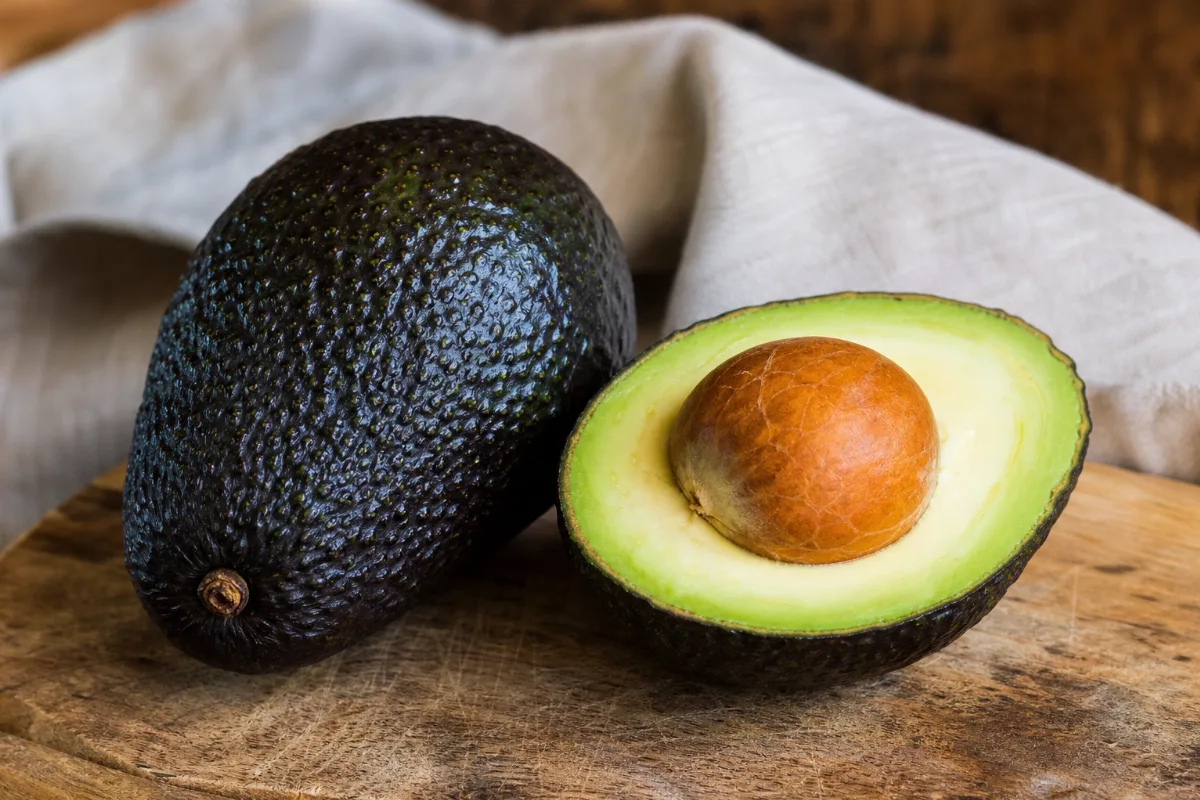
The avocado (Persea americana) is the fruit of a tree in the laurel family. The soft flesh is the part eaten.
Per 100 g of raw avocado USDA lists 160 kcal, 14.7 g of fat (most of it monounsaturated), 6.7 g of fibre and only 0.66 g of sugars, plus 485 mg of potassium and 81 micrograms of folate. One cup of cubes (150 g) provides about 240 kcal and 10 g of fibre.
What the research shows
A 2022 study of two large US groups followed for up to 30 years linked eating avocado twice a week or more with lower rates of heart disease and coronary heart disease, but not stroke. People who eat more avocado may differ in other ways, so this is not proof.
A 2024 review of nine trials found total cholesterol about 5 mg/dL lower overall and no clear LDL change, though LDL was lower in people with high cholesterol. A 2018 review found HDL up slightly and no other change. The authors grade certainty low to very low. No trial reported heart attacks or strokes.
Short trials found lower blood sugar after a meal and, over six months, higher eye pigment. Two of these trials have avocado-industry links, and these markers do not show that avocado prevents disease.
At a glance
Traditional uses history, not proof
- Eaten fresh, mashed or as guacamole
- Used as a creamy, fat-rich fruit in salads and on toast. No source read documents traditional medicinal use.
Studied for research
- Heart disease risk in people who eat more avocado, low certainty
- Blood cholesterol in trials, low certainty
- Blood sugar and artery response after a meal, very low certainty
- Eye pigment and thinking tests in older adults, very low certainty
- Body weight (no weight gain found), low certainty
Main compounds
- Monounsaturated fat (about 9.8 g per 100 g)
- Dietary fibre (about 6.7 g per 100 g)
- Potassium (about 485 mg per 100 g)
- Lutein and zeaxanthin, plant pigments found in the eye
Common forms
- Fresh whole fruit (the form the studies and nutrition figures describe)
- Frozen pulp or chunks
- Guacamole and mashed avocado (other ingredients vary)
- Avocado oil (a different product, not covered here)
Research links: NHS: Food allergy · Avocado and cardiometabolic health, meta-analysis (J Acad Nutr Diet, 2024) · Avocado and cardiovascular disease in US adults (J Am Heart Assoc, 2022) · Latex-fruit syndrome review (J Clin Med, 2024) · USDA FoodData Central: raw avocado · Research Library · Genes & Biomarkers Library
What it is and its history
- Accepted scientific name
- Persea americana
- Naming authority
- Mill. (GBIF accepted, usageKey 3034046)
- Common names
- Avocado (English); Alligator pear (English); Aguacate (Spanish)
- Family or group
- Lauraceae (laurel family).
- Classification
- Plantae > Not checked > Not checked > Laurales > Lauraceae > Persea > Persea americana
- Native range
- Not verified from a source read.
- Habitat
- Not verified.
- What it looks like
- Roots: Not verified.; Stems: Not verified.; Leaves: Not verified.; Flowers: Not verified.; Fruit: The soft flesh is the part eaten, with a large central seed (existing summary; not re-sourced).
- Cultivation
- Not verified from a source read. The USDA record is based on 86% California and 14% Florida varieties.
- Harvest and processing
- Eaten fresh, as frozen pulp or chunks, or as mashed avocado and guacamole (existing summary).
- Look-alikes and adulterants
- Name: Avocado oil; Note: A different product made from the fruit. Results for the whole fruit do not transfer to oil.
- Sustainability and conservation
- Not assessed.
Photographs
Traditional use and history history, not clinical proof
| Tradition or era | Documented use | Source |
|---|---|---|
| Not researched | No source read documents the history of avocado as a food. History is left out rather than guessed. | NOT verified (no source read) |
Traditional use shows how it was used. It does not show that it works or is safe today.
What is inside, and how it may work
What it contains and how those compounds act in cells and animals. Laboratory and animal mechanisms are not proven effects in people.
Main compounds
| Compound | Family | Where it is concentrated | Activity studied | Level of evidence |
|---|---|---|---|---|
| Monounsaturated fat | fat | Flesh 9.8 g per 100 g (USDA, calculated) | Makes up most of the fat. Not tested on its own here. 10 | Composition data |
| Dietary fibre | carbohydrate | Flesh 6.7 g per 100 g (USDA) | Provides fibre in the diet. 10 | Composition data |
| Lutein and zeaxanthin | carotenoid pigments | Flesh 271 micrograms per 100 g (USDA) | Pigments found in the eye. A 6-month trial found eye pigment rose with a daily avocado (see benefits). 10 6 | Composition data and one small trial |
Mechanisms, receptors and pathways
| Target or pathway | Gene or receptor | What was found | Level |
|---|---|---|---|
| Replacing other foods in a meal or diet | The after-meal trial replaced carbohydrate with avocado; the cohort study estimated replacing butter, margarine, egg, cheese, yogurt or processed meat. Results may depend on what avocado replaces. 5 4 | Human studies (association and one crossover trial) | |
| Lutein uptake into the eye | Blood lutein and eye pigment density rose in a small trial. Whether this protects the eye was not tested. 6 | Human, small trial |
Absorption, metabolism and elimination
- Absorption
- The 6-month trial describes avocado as a bioavailable source of lutein (background statement in the abstract).
- Distribution
- Not found.
- Metabolism
- Not found.
- Elimination
- Not found.
- Bioavailability
- Not established.
Isolated compounds versus whole extracts
All the human studies used the fruit as food. Avocado oil, seed and leaf extracts are different products and were not assessed. Results for the fruit do not carry over to them.
Nutritional composition
Per 100 g of raw avocado (USDA FoodData Central, SR Legacy): 160 kcal, 73.2 g water, 2.0 g protein, 14.7 g fat (9.8 g monounsaturated, 2.13 g saturated, 1.82 g polyunsaturated), 8.53 g carbohydrate of which only 0.66 g are sugars, and 6.7 g fibre. It also has 485 mg potassium, 81 micrograms folate (DFE), 21 micrograms vitamin K, 0.19 mg copper, 29 mg magnesium, 10 mg vitamin C and 271 micrograms lutein and zeaxanthin. For example, 1 cup of cubes (150 g) provides about 240 kcal, 22 g fat and 10 g fibre. Per-portion figures are calculated from the per-100 g values. Values vary with variety and ripeness.
3 low certainty2 very low certainty1 not enough evidence
What was looked at
The 6 benefits and uses checked for Avocado, each with how strong the evidence is. Tap one to open it.
- Heart disease risk (people who eat more avocado)Low certainty
- Blood cholesterolLow certainty
- Blood sugar and artery response after a mealVery low certainty
- Eye pigment and thinking tests (older adults)Very low certainty
- Body weightLow certainty
- Avocado oil, seed and leaf extracts and other claimsNot enough evidence
Lab markers tracked in the studies
Total cholesterolLDL cholesterolHDL cholesterolTriglyceridesBlood glucose after a mealFlow-mediated dilation (artery widening)Macular pigment densityBlood luteinBody weight
What is Avocado good for?
The main studied uses and how strong the human evidence is for each. Most results are links seen in eating habits or small changes in lab markers, not proof that avocado prevents or treats a disease.
Benefits, one by one
Each card is a research question, not a promise. Tap a goal to filter. Open a card to see the studies, doses and limits.
Heart disease risk (people who eat more avocado)
Low certaintyIn two large groups of US health professionals followed for up to 30 years, those who ate avocado twice a week or more had a lower rate of heart disease than those who never ate it. This is a link seen in eating habits. It does not prove avocado is the cause.
1 studiesFresh avocado as eaten, reported on food questionnaires.
Studies, doses and limits
What the trials found
A 2022 analysis of the Nurses' Health Study and the Health Professionals Follow-up Study followed 110,487 adults for up to 30 years using food questionnaires.
Results
Higher avocado intake (2 or more servings a week) went with 16% lower risk of cardiovascular disease and 21% lower risk of coronary heart disease. No significant link with stroke. Swapping half a serving a day of margarine, butter, egg, yogurt, cheese or processed meat for avocado went with 16% to 22% lower risk.
Effect sizes as reported
Cardiovascular disease pooled HR 0.84 (95% CI 0.75-0.95); coronary heart disease HR 0.79 (0.68-0.91); stroke not significant.
Why this rating
Observational data only. People who eat avocado often may also eat and live differently in ways the adjustments cannot fully remove.
Form and dose studied
Fresh avocado as eaten, reported on food questionnaires.
Who was studied
US adults, mostly health professionals.
Limits
Association, not cause. The abstract does not define a serving or state the funder. No trial has tested avocado for heart attacks or strokes.
Why researchers looked
Avocado is rich in unsaturated fat, fibre and potassium, so researchers asked whether eating it goes with healthier hearts.
Proposed mechanism Preliminary mechanism
Possible routes are its unsaturated fat and fibre, and what it replaces in the diet. These are ideas, not shown in this study.
A proposed mechanism does not show that the effect happens in people.
None specific to this finding.
Blood cholesterol
Low certaintyReviews of trials where people ate avocado found a small drop in total cholesterol overall, about 5 mg/dL. LDL ("bad") cholesterol did not change overall, but fell more in people who started with high cholesterol. One older review found HDL ("good") cholesterol rose a little. The authors rate the certainty as low to very low.
2 studiesWhole avocado in the diet, usually in place of another food. The resu…
Studies, doses and limits
What the trials found
A 2024 review pooled 9 randomized trials (503 people) and one cohort study. A 2018 review of 18 studies (481 people) found HDL up and no change in other fats.
Results
2024: total cholesterol fell overall; LDL, HDL and triglycerides did not differ significantly overall. In people with high cholesterol, LDL and total cholesterol were lower; in people with normal cholesterol, no difference. 2018: HDL rose but results differed a lot between studies; total cholesterol, LDL and triglycerides did not differ.
Effect sizes as reported
2024: total cholesterol -5.08 mg/dL (95% CI -9.29 to -0.87); LDL -9.4 mg/dL in the high-cholesterol subgroup (-10.84 to -7.95). 2018: HDL +2.84 mg/dL (0.18 to 5.49).
Why this rating
The authors of the 2024 review graded the certainty as low to very low. The two reviews disagree on HDL, and the high-cholesterol result is a subgroup.
Form and dose studied
Whole avocado in the diet, usually in place of another food. The result depends on what it replaced.
Who was studied
Adults, including people with high cholesterol.
Limits
Few small trials of 3 weeks or more. Marker changes only. The 2018 review found no heart attack or stroke outcomes in trials.
Why researchers looked
Avocado is fat-rich but its fat is mostly monounsaturated, so researchers tested whether it changes blood fats.
Proposed mechanism Preliminary mechanism
Possible routes are unsaturated fat and fibre replacing other foods. Not tested in these reviews.
A proposed mechanism does not show that the effect happens in people.
None specific.
Blood sugar and artery response after a meal
Very low certaintyIn one small crossover trial, 31 overweight or obese adults ate breakfasts with no avocado, half an avocado or a whole one in place of some carbohydrate. After-meal blood sugar and insulin were lower with avocado, and the authors report better artery-widening response. This was a single meal at a time, not a lasting effect.
1 studiesFresh Hass avocado flesh replacing carbohydrate in a breakfast.
Studies, doses and limits
What the trials found
A 2018 randomized crossover trial in 31 adults with 6 hours of follow-up per meal.
Results
Glucose and insulin responses were lower than with the no-avocado meal, whatever the amount. Triglyceride-rich lipoproteins were lower and larger HDL particles higher after the whole-avocado meal. Oxidized LDL and IL-6 did not differ.
Effect sizes as reported
Glucose and insulin responses p<0.0001 versus control (no confidence intervals in the abstract).
Why this rating
One short trial of markers, 31 people, with an author linked to an avocado advisory group.
Form and dose studied
Fresh Hass avocado flesh replacing carbohydrate in a breakfast.
Who was studied
Overweight or obese middle-aged adults.
Limits
Meal-by-meal responses only. Not tested in people with diabetes. Does not show that avocado prevents any disease.
Why researchers looked
Fat and fibre can slow digestion, so researchers tested what happens after a meal when avocado replaces carbohydrate.
Proposed mechanism Preliminary mechanism
The authors link the results to swapping carbohydrate for avocado in the meal. Why the artery response changed was not shown.
A proposed mechanism does not show that the effect happens in people.
None specific.
Eye pigment and thinking tests (older adults)
Very low certaintyIn a 6-month trial in 40 healthy older adults, one avocado a day was compared with one potato or a cup of chickpeas. Blood lutein rose in both groups, and eye (macular) pigment density rose only in the avocado group. Memory improved in both groups. Only sustained attention improved with avocado alone.
1 studiesOne whole avocado a day, versus potato or chickpeas.
Studies, doses and limits
What the trials found
A 2017 randomized trial of 20 people per group over 6 months.
Results
Blood lutein rose 25% with avocado and 15% with the comparison foods. Macular pigment density rose with avocado but not the comparison. Memory and spatial working memory improved in both groups. Sustained attention improved only with avocado.
Effect sizes as reported
Serum lutein +25% (avocado) vs +15% (comparison); no confidence intervals in the abstract.
Why this rating
Small trial, funded by the Hass Avocado Board, and thinking scores improved in both groups.
Form and dose studied
One whole avocado a day, versus potato or chickpeas.
Who was studied
Healthy older adults.
Limits
Eye pigment is a marker. It does not show prevention of eye disease or dementia.
Why researchers looked
Avocado contains lutein, a plant pigment found in the eye and brain, so researchers tested whether eating it raises eye pigment.
Proposed mechanism Preliminary mechanism
Lutein is stored in the eye and brain, and the authors suggest it might support thinking. This was not proven in this trial.
A proposed mechanism does not show that the effect happens in people.
None specific.
Body weight
Low certaintyTwo reviews found that eating avocado did not cause weight gain or change body weight compared with control diets. Avocado is high in calories, so this matters to many readers.
2 studiesAvocado in the diet, usually replacing other foods.
Studies, doses and limits
What the trials found
The 2024 review (9 trials) and the 2018 review (18 studies) both looked at body weight.
Results
2024: body weight and body composition were not negatively affected. 2018: no significant difference in body weight.
Effect sizes as reported
No pooled figure in either abstract.
Why this rating
Few small, short trials; weight was a secondary outcome.
Form and dose studied
Avocado in the diet, usually replacing other foods.
Who was studied
Adults.
Limits
Weight was not the main aim of the trials. Long-term weight was not studied.
Why researchers looked
Avocado is energy-dense, so researchers checked whether adding it affects weight.
Proposed mechanism Preliminary mechanism
Not studied in these reviews.
A proposed mechanism does not show that the effect happens in people.
None specific.
Avocado oil, seed and leaf extracts and other claims
Not enough evidenceClaims for avocado oil, seed or leaf extracts, skin, cancer or arthritis were not assessed here. The studies on this page are about eating the fruit. Results for the fruit do not carry over to oil or extracts.
0 studiesOil and extracts are different products.
Studies, doses and limits
What the trials found
No human trial of oil or extracts was read for this page.
Why this rating
No human evidence was read for these products.
Form and dose studied
Oil and extracts are different products.
Limits
Avocado oil has its own page.
Why researchers looked
Many products from the avocado tree are sold for health uses.
Traditional use
Not assessed.
Proposed mechanism Preliminary mechanism
Not assessed.
A proposed mechanism does not show that the effect happens in people.
Not assessed.
Connections to the rest of health
How Avocado connects to the rest of our health knowledge graph. Every link says what kind of connection it is. A safety link (for example to the liver) is a warning, not a benefit. A study that merely mentions a topic never creates a benefit link.
Explore every connection: goals, body systems, organs, symptoms, genes
A. Wellness goals
| Connected to | Kind of connection | Evidence status | Context | Studies |
|---|---|---|---|---|
| Heart Health | Potential benefit | Low certainty | Heart disease risk (people who eat more avocado): In two large groups of US health professionals followed for up to 30 years, those who ate avocado twice a week or more had a lower rate of heart disease than those who never ate it. This is a link seen in eating habits. It does not prove avocado is the cause. | 4 |
| Cholesterol Balance | Potential benefit | Low certainty | Blood cholesterol: Reviews of trials where people ate avocado found a small drop in total cholesterol overall, about 5 mg/dL. LDL ("bad") cholesterol did not change overall, but fell more in people who started with high cholesterol. One older review found HDL ("good") cholesterol rose a little. The authors rate the certainty as low to very low. | 2 3 |
| Blood Sugar Balance | Potential benefit | Very low certainty | Blood sugar and artery response after a meal: In one small crossover trial, 31 overweight or obese adults ate breakfasts with no avocado, half an avocado or a whole one in place of some carbohydrate. After-meal blood sugar and insulin were lower with avocado, and the authors report better artery-widening response. This was a single meal at a time, not a lasting effect. | 5 |
B. Body systems
| Connected to | Kind of connection | Evidence status | Context | Studies |
|---|---|---|---|---|
| Cardiovascular System | Biological association | Low certainty | Studied for: Heart disease risk (people who eat more avocado) Studied for: Blood cholesterol | 4 2 3 5 |
E. Health conditions
| Connected to | Kind of connection | Evidence status | Context | Studies |
|---|---|---|---|---|
| Latex allergy | Adverse effect or risk | Documented risk | Avocado is among the most common fruits that cause reactions in people with latex allergy (latex-fruit syndrome). Avocado is among the most common fruits that cause reactions in people with latex allergy. Preparation or compound: Avocado flesh |
1 |
I. Biomarkers
| Connected to | Kind of connection | Evidence status | Context | Studies |
|---|---|---|---|---|
| Total cholesterol | Biological association | Low certainty | Measured in trials: lowered slightly (2024 review); no clear change (2018 review). A lab change is not the same as a health benefit. | 2 3 |
| LDL cholesterol | Biological association | Low certainty | Measured in trials: no clear change overall; lower in people with high cholesterol. A lab change is not the same as a health benefit. | 2 3 |
| HDL cholesterol | Biological association | Very low certainty | Measured in trials: raised slightly in one review; no clear change in the other. A lab change is not the same as a health benefit. | 3 2 |
| Triglycerides | Biological association | Low certainty | Measured in trials: no clear change. A lab change is not the same as a health benefit. | 2 3 |
| Blood glucose after a meal | Biological association | Very low certainty | Measured in trials: lowered after the avocado meals. A lab change is not the same as a health benefit. | 5 |
| Flow-mediated dilation (artery widening) | Biological association | Very low certainty | Measured in trials: reported as improved after avocado meals. A lab change is not the same as a health benefit. | 5 |
| Macular pigment density | Biological association | Very low certainty | Measured in trials: raised in the avocado group. A lab change is not the same as a health benefit. | 6 |
| Blood lutein | Biological association | Very low certainty | Measured in trials: raised in both groups. A lab change is not the same as a health benefit. | 6 |
| Body weight | Biological association | Low certainty | Measured in trials: no clear change. A lab change is not the same as a health benefit. | 2 3 |
L. Active compounds
| Connected to | Kind of connection | Evidence status | Context | Studies |
|---|---|---|---|---|
| Monounsaturated fat | Biological association | Composition data | Makes up most of the fat. Not tested on its own here. Preparation or compound: Flesh |
10 |
| Dietary fibre | Biological association | Composition data | Provides fibre in the diet. Preparation or compound: Flesh |
10 |
| Lutein and zeaxanthin | Biological association | Composition data and one small trial | Pigments found in the eye. A 6-month trial found eye pigment rose with a daily avocado (see benefits). Preparation or compound: Flesh |
10 6 |
Each connection is stored with the ingredient, the connected record, the kind of connection, the evidence status, the supporting studies, the preparation or compound involved, and a review date (last reviewed October 26, 2026).
Evidence at a glance: what the research found for 6 outcomes
Each outcome below is one thing researchers measured. Certainty is how far the evidence can be trusted, not how well it works. The full studies are on the next tab.
The evidence
The research centre for Avocado. Every record here was checked against PubMed or the publisher's page; we never list a study we have not verified.
Evidence by outcome
Bars show how many studies we found for each outcome, not how well it works. People are added up across trials only (reviews are not added, to avoid double counting).
How we rate evidence
High certainty
Several well-run trials or reviews agree; further research is unlikely to change the picture much.
Moderate certainty
Good trials point the same way, but some doubt remains.
Low certainty
Small, short or inconsistent trials. The finding could change with better research.
Very low certainty
Very little or very weak human data. Treat as a possibility only.
Mixed findings
Trials or reviews disagree with each other.
Not enough evidence
Not enough human research to say either way.
Evidence against
Good research found no benefit, or found harm.
We take the reviewers' own risk-of-bias and GRADE statements where they exist, and otherwise judge from study size, design, consistency, directness and whether a product matches what is sold. Many publications do not make evidence high. Method note: We started from our existing avocado summary, re-read the USDA FoodData Central record, and read PubMed abstracts and the NHS and MedlinePlus pages. Only abstracts were read for studies. Items we could not verify are flagged in the research gaps.
Study library: every study we checked 10
| Study | Design | People | Product, dose, length | Result |
|---|---|---|---|---|
| Gromek 2024 Revisiting Latex-Fruit Syndrome after 30 Years of Research: A Comprehensive Literature Review and Description of Two Cases. J Clin Med · PMID 39064262 · DOI |
Literature review (PRISMA method) plus two case reports |
Not given in the abstract People allergic to natural rubber latex |
Fruit allergy linked to latex allergy (latex-fruit syndrome) fruit |
Latex-fruit syndrome appeared in a wide range of latex-allergic people (4% to 88% across studies, depending on tests, region and group size). Banana, avocado, kiwifruit and papaya were the most common fruits. Of the symptoms reported, 73% were systemic and 27% local. Prevalence 4% to 88% across studies (Not applicable) Methods, limits and fundingOutcomes: How often latex-allergic people react to fruit, which fruits, and what symptoms Limitations: Very wide range between studies. Abstract does not give an avocado-only figure. Funding and conflicts: No conflicts of interest declared. Read: abstract |
| James-Martin 2024 Avocado Consumption and Cardiometabolic Health: A Systematic Review and Meta-Analysis. J Acad Nutr Diet · PMID 36565850 · DOI |
Systematic review and meta analysis |
503 in 9 randomized trials, plus 1 cohort of 55,407 Adults who were healthy, had heart disease or were at higher risk; trials lasted 3 weeks or longer |
Diets containing avocado (the fruit) fruit Varied between trials 3 weeks or longer · vs Control diets with no or low avocado |
Small significant fall in total cholesterol overall and no significant difference in LDL, HDL or triglycerides. In people with high cholesterol, LDL and total cholesterol were lower; in people with normal cholesterol there was no difference. The authors graded certainty as low to very low. Body weight and body composition were not negatively affected. Total cholesterol -5.08 mg/dL overall; LDL -9.4 mg/dL and total cholesterol -7.54 mg/dL in high-cholesterol subgroup (Total cholesterol -9.29 to -0.87; LDL (subgroup) -10.84 to -7.95) Methods, limits and fundingOutcomes: LDL, total and HDL cholesterol, triglycerides; weight, blood pressure, blood glucose and insulin (narrative) Limitations: Few, small trials. Authors graded certainty low to very low. Results depend on what avocado replaced in the diet. The high-cholesterol result is a subgroup finding. Funding and conflicts: Not stated in the abstract. Read: abstract |
| Mahmassani 2018 Avocado consumption and risk factors for heart disease: a systematic review and meta-analysis. Am J Clin Nutr · PMID 29635493 · DOI |
Systematic review and meta analysis |
481 people in 18 eligible studies Adults; all designs except cross-sectional studies were eligible |
Avocado intake (the fruit) fruit Varied Varied · vs No avocado intake, or avocado plus monounsaturated fat versus a control |
In 7 studies, avocado intake increased HDL cholesterol, with significant differences between studies. No significant difference in total cholesterol, LDL, triglycerides, the cholesterol ratios or body weight. No difference in blood glucose, oxidized LDL, CRP or apolipoprotein B. No study reported heart attacks, stroke or other clinical heart outcomes. HDL +2.84 mg/dL (0.18 to 5.49 mg/dL) Methods, limits and fundingOutcomes: HDL, total and LDL cholesterol, triglycerides, body weight; many other markers (narrative); heart attacks and strokes Limitations: Significant heterogeneity for HDL. Marker outcomes only. The authors call for long-term trials or well-conducted prospective studies. Funding and conflicts: Not stated in the abstract (PubMed lists US government, non-NIH support). Read: abstract |
| Pacheco 2022 Avocado Consumption and Risk of Cardiovascular Disease in US Adults. J Am Heart Assoc · PMID 35352568 · DOI |
Prospective cohort study (two cohorts) |
110,487 (68,786 women, 41,701 men) US adults free of cancer, heart disease and stroke at the start, followed up to 30 years |
Usual avocado intake from food frequency questionnaires fruit Up to 30 years (1986-2016) · vs Non-consumers |
14,274 cardiovascular events (9,185 coronary heart disease, 5,290 strokes). Higher avocado intake (2 or more servings a week) went with 16% lower risk of cardiovascular disease and 21% lower risk of coronary heart disease compared with non-consumers. No significant link with stroke. Replacing half a serving a day of margarine, butter, egg, yogurt, cheese or processed meat with avocado went with 16% to 22% lower risk. Cardiovascular disease pooled HR 0.84; coronary heart disease pooled HR 0.79 (CVD 0.75-0.95; coronary heart disease 0.68-0.91) Methods, limits and fundingOutcomes: Cardiovascular disease, coronary heart disease and stroke Limitations: Observational: people who eat more avocado may differ in other ways, even after adjustment. Food questionnaires. A serving size is not defined in the abstract. Mostly health professionals in the US. Funding and conflicts: Funding not stated in the abstract (PubMed lists NIH extramural support). Read: abstract |
| Park 2018 Avocado Fruit on Postprandial Markers of Cardio-Metabolic Risk: A Randomized Controlled Dose Response Trial in Overweight and Obese Men and Women. Nutrients · PMID 30213052 · DOI |
Randomized controlled crossover trial (3 arms, 6 hour follow up) |
31 Overweight or obese middle-aged adults |
Fresh Hass avocado replacing carbohydrate in an energy-matched breakfast fruit (flesh) 0 g, 68 g (half) or 136 g (whole) avocado, one meal each One meal per visit, 6 hours of follow-up · vs Control breakfast with no avocado |
After-meal glucose and insulin responses were lower than after the control meal, and the authors report better flow-mediated dilation, independent of the amount. Triglyceride-rich lipoproteins were lower and larger HDL particles higher after the whole-avocado meal. Oxidized LDL, MCP-1 and IL-6 did not differ. Glucose and insulin responses p<0.0001 versus control (Not given in the abstract) Methods, limits and fundingOutcomes: After-meal blood glucose, insulin, flow-mediated dilation (an artery-widening test), lipoprotein particles, inflammation markers Limitations: One meal per visit, so it shows short-term responses only. 31 people. Marker outcomes. Funding and conflicts: One author is a member of Avocado Nutrition Science Advisory (avocado industry-linked). Read: abstract |
| Scott 2017 Avocado Consumption Increases Macular Pigment Density in Older Adults: A Randomized, Controlled Trial. Nutrients · PMID 28832514 · DOI |
Randomized controlled trial (6 months) |
40 (20 per group) Healthy older adults |
One fresh avocado a day fruit (flesh) One avocado a day (about 0.5 mg lutein a day, per the authors) 6 months · vs One potato or one cup of chickpeas a day (no lutein) |
Blood lutein rose 25% in the avocado group and 15% in the comparison group. Macular pigment density rose in the avocado group and not in the comparison group. Memory and spatial working memory improved in both groups. Sustained attention improved only in the avocado group. Serum lutein +25% (avocado) vs +15% (comparison) (Not given in the abstract) Methods, limits and fundingOutcomes: Blood lutein, macular pigment density (eye pigment) and thinking tests Limitations: Small trial. The comparison foods were potato or chickpeas, not a no-food control. Eye pigment is a marker, not eye disease. Thinking tests improved in both groups. Funding and conflicts: Funded by the Hass Avocado Board (avocado industry). The authors say the funder had no role in design, interpretation or writing. Read: abstract |
| s-gbif-persea-americana GBIF Backbone: Persea americana Mill. (usageKey 3034046) · Source |
Reference database n/a |
Methods, limits and fundingRead: full-text | ||
| s-medlineplus-warfarin MedlinePlus: Warfarin (drug information) · Source |
Official drug information n/a |
Methods, limits and fundingRead: full-text | ||
| s-nhs-food-allergy NHS: Food allergy · Source |
Official health guidance n/a |
Methods, limits and fundingRead: full-text | ||
| s-usda-fdc-171705 USDA FoodData Central: Avocados, raw, all commercial varieties (FDC 171705, SR Legacy) · Source |
Food composition database n/a |
Methods, limits and fundingRead: full-text |
What we do not know yet
- No trial has tested avocado for heart attacks, stroke or early death; the only such data are observational.
- The cholesterol trials are few and small, and the authors graded their certainty low to very low.
- The after-meal and eye-pigment trials are small, and two have avocado-industry links.
- Pregnancy, breastfeeding, young children, kidney disease and potassium advice were not researched.
- No source was found on avocado and warfarin specifically, or on contamination.
How new research is added
New studies are found by a saved PubMed search and placed in a review queue before the page changes.
Lab markers
What changed in blood or saliva tests during trials. A changed number is not the same as feeling or being healthier, and we give no "normal ranges".
Metabolic 4
Total cholesterol
Lowered slightly (2024 review); no clear change (2018 review) in trials
All the cholesterol carried in the blood.
Low certaintyResults and what it means
Why it was measured
A common heart-risk marker.
Statistical vs. clinical meaning
A small change. No one knows whether it changes heart outcomes.
Safety implication
None specific.
LDL cholesterol
No clear change overall; lower in people with high cholesterol in trials
The so-called bad cholesterol carried in the blood.
Low certaintyResults and what it means
Why it was measured
A main target of heart-risk care.
Statistical vs. clinical meaning
Subgroup finding. Certainty graded low to very low by the authors.
Safety implication
None specific.
HDL cholesterol
Raised slightly in one review; no clear change in the other in trials
The so-called good cholesterol carried in the blood.
Very low certaintyResults and what it means
Why it was measured
Higher levels are linked with lower heart risk in eating-habit studies.
Statistical vs. clinical meaning
The two reviews disagree and the first had large differences between studies.
Safety implication
None specific.
Triglycerides
No clear change in trials
Fats carried in the blood after meals.
Low certaintyResults and what it means
Why it was measured
A common blood-fat marker.
Statistical vs. clinical meaning
Both reviews found no clear change.
Safety implication
None specific.
Other 5
Blood glucose after a meal
Lowered after the avocado meals in trials
Blood sugar in the hours after eating.
Very low certaintyResults and what it means
Why it was measured
A short-term marker of how the body handles a meal.
Statistical vs. clinical meaning
A one-meal response. It does not show long-term blood sugar control.
Safety implication
None specific.
| Study | Result | People | Product |
|---|---|---|---|
| 5 | Glucose and insulin responses lower than after the control meal, independent of amount (p<0.0001) | 31 adults | Half or whole Hass avocado replacing carbohydrate in one breakfast |
Flow-mediated dilation (artery widening)
Reported as improved after avocado meals in trials
A test of how well an artery widens after a brief blockage of blood flow.
Very low certaintyResults and what it means
Why it was measured
A lab-style marker of blood-vessel health.
Statistical vs. clinical meaning
A one-meal marker.
Safety implication
None specific.
| Study | Result | People | Product |
|---|---|---|---|
| 5 | Authors report better flow-mediated dilation than the control meal, independent of amount (p<0.01) | 31 adults | Half or whole avocado with a breakfast |
Macular pigment density
Raised in the avocado group in trials
The amount of lutein-type pigment in the centre of the retina.
Very low certaintyResults and what it means
Why it was measured
A marker of lutein stored in the eye.
Statistical vs. clinical meaning
A marker. It does not show that avocado prevents eye disease.
Safety implication
None specific.
| Study | Result | People | Product |
|---|---|---|---|
| 6 | Rose from baseline in the avocado group (p=0.001) and not in the comparison group | 40 older adults | One avocado a day for 6 months |
Blood lutein
Raised in both groups in trials
Lutein measured in the blood.
Very low certaintyBody weight
No clear change in trials
Body weight in trials.
Low certaintySafety
What studies and official sources say about side effects, medicines and who should check first. Each point shows what kind of evidence it comes from.
Main points to know 4
- Latex allergy can go with a reaction to avocado. Some people allergic to natural rubber latex also react to certain fruits. This is called latex-fruit syndrome. A 2024 review found avocado among the most common fruits, with banana, kiwifruit and papaya. Studies gave very different rates (4% to 88% of latex-allergic people), and of the symptoms reported, 73% were systemic (beyond the mouth) and 27% local. If you have a latex allergy, ask an allergist about avocado. Systematic review 1
- A serious allergic reaction is an emergency. The NHS says to call emergency services (999 in the UK, 911 in the US) if the lips, mouth, throat or tongue suddenly swell, breathing is very fast or hard, the throat feels tight or swallowing is hard. This applies to any food, avocado included. Avocado is not named on the NHS page. Authoritative guidance 9
- Warfarin and vitamin K foods. MedlinePlus says foods with vitamin K can affect how warfarin works and advises eating consistent amounts of them week to week. USDA lists 21 micrograms of vitamin K per 100 g of raw avocado. Avocado is not named on the MedlinePlus page, and the page warns most about leafy greens and some vegetable oils. If you take warfarin, ask your prescriber how avocado fits in. Authoritative guidance 8 10
- Avocado is energy-dense and rich in potassium. USDA lists 160 kcal and 14.7 g of fat per 100 g, and 485 mg of potassium. Two reviews found no negative effect on body weight in trials. No source read gave potassium advice for kidney disease. Anyone told to limit potassium should ask their clinician. Food composition 10 2 3
Side effects 3
| Effect | How often | Severity and recovery | Evidence |
|---|---|---|---|
| Allergic reaction in people with latex allergy (latex-fruit syndrome) A review of the literature, not a trial. Of reported symptoms 73% were systemic and 27% local. | Varies from 4% to 88% of latex-allergic people across studies; no avocado-only figure in the abstract | mild to severe Varies. Severe reactions need emergency treatment. | Systematic review 1 |
| Severe allergic reaction (anaphylaxis) to any food General NHS advice on signs of a serious reaction; avocado is not named. | Not established | severe Needs emergency treatment. | Authoritative guidance 9 |
| No other side effects of eating avocado were reported in the trials read Abstracts do not list side effects, so this is not proof of safety. | Not established | none reported n/a | Absence in abstracts 2 5 6 |
Liver
No liver injury linked to eating avocado was found in the sources read. LiverTox was not checked.
How often. No frequency found.
This is a safety connection. It is not evidence that Avocado supports liver health.
Medicines and supplements 2
| With | Why it matters | Importance | Evidence | What to do |
|---|---|---|---|---|
| Warfarin (vitamin K foods) prescription | Vitamin K in food can change how warfarin works. USDA lists 21 micrograms of vitamin K per 100 g of raw avocado. | MedlinePlus advises consistent amounts of vitamin K foods week to week and does not name avocado. No case report or trial of avocado and warfarin was read. | Authoritative guidance (general vitamin K foods) Low certainty 8 10 | Ask your prescriber or pharmacist how avocado fits with your warfarin, and keep your eating pattern steady. |
| Other prescription and over-the-counter medicines prescription | No source read describes another medicine interaction with eating avocado. Avocado oil and extracts were not checked. | None found Not enough evidence | A pharmacist can check your own medicines. |
Who should check first 2
| Situation | Advice | Evidence |
|---|---|---|
| Known allergy to avocado | Avoid avocado and get an allergy assessment. For swelling of the face or throat or trouble breathing, call your local emergency number. | Authoritative guidance 9 |
| Latex allergy | Some people with latex allergy react to avocado. Ask an allergist whether it is safe for you. | Systematic review 1 |
Overdose, product quality and regulators
Summary. The sources read did not describe any harm from eating avocado flesh as a food.
Animal. Not reviewed.
Human doses studied. Trials gave avocado as food for meals up to 6 months with no safety problem noted in the abstracts read.
Overdose response. Not found.
Genotoxicity. Not reviewed.
Toxic or hazardous parts. Seed, skin and leaves were not researched for people.
Contamination of avocado (pesticides, bacteria, heavy metals) was not researched for this page.
| Body | Action | Date |
|---|---|---|
| NHS (UK) (United Kingdom) | Lists signs of a serious allergic reaction to food and when to call 999. Avocado is not named. source | Page last reviewed 20 August 2026 (read 2026-10-26) |
| MedlinePlus (US National Library of Medicine) (United States) | Advises consistent amounts of vitamin K foods with warfarin. Avocado is not named. source | Read 2026-10-26 |
When to get medical help
- Swelling of the lips, face, tongue or throat
- Trouble breathing, wheezing or a tight throat
- Feeling faint, dizzy or collapsing after eating avocado
- Spreading hives or a swollen face after eating avocado
Stop using the product and contact a clinician or emergency service. In the US, Poison Control is 1-800-222-1222.
General information only, not medical advice. Ask a clinician or pharmacist before use, especially with medicines, in pregnancy or with a health condition. See the Natural Remedy Safety guide.
Frequently asked questions
What is avocado good for?
Does avocado lower cholesterol?
A 2024 review found total cholesterol about 5 mg/dL lower overall and no clear change in LDL, though LDL was lower in people with high cholesterol. The authors graded certainty low to very low.
Does avocado raise HDL cholesterol?
Does avocado help prevent heart disease?
Does avocado affect blood sugar?
In one crossover trial of 31 overweight or obese adults, after-meal blood sugar and insulin were lower when avocado replaced some carbohydrate in a breakfast. It was a one-meal result and one author has an avocado-industry link.
Does avocado help the eyes or memory?
In a 6-month trial in 40 older adults, a daily avocado raised eye pigment density, but memory improved in both the avocado and comparison groups. The trial was funded by the Hass Avocado Board and does not show prevention of eye disease.
Will avocado make me gain weight?
What nutrients are in an avocado?
USDA lists per 100 g raw avocado: 160 kcal, 14.7 g fat, 6.7 g fibre, 485 mg potassium, 81 micrograms folate and 21 micrograms vitamin K. One cup of cubes (150 g) has about 240 kcal and 10 g of fibre.
Can people with latex allergy eat avocado?
Some people with latex allergy react to avocado (latex-fruit syndrome). Studies found rates from 4% to 88% of latex-allergic people, so ask an allergist about your own case.
When is an avocado reaction an emergency?
Sudden swelling of the lips, mouth, throat or tongue, very fast or hard breathing, or a tight throat needs emergency help. Call 911 (999 in the UK).
Is avocado safe with warfarin?
Is avocado oil the same as the fruit?
No. Every study on this page used the fruit. Avocado oil is a different product with its own page, and results for the fruit do not carry over.
Explore by health goal
Editorial transparency
- Written by
- AlternativeMed editorial team. Research compiled with AI assistance, then checked against the sources listed.
- Medical review
- None. This page has not been reviewed by a physician or pharmacist.
- First published
- 2026-10-26
- Last substantive update
- 2026-10-26
- How we research
- We started from our existing avocado summary, re-read the USDA FoodData Central record, and read PubMed abstracts and the NHS and MedlinePlus pages. Only abstracts were read for studies. Items we could not verify are flagged in the research gaps.
- How we rate evidence
- See "How we rate evidence" in the Evidence tab.
- Independence
- No product is promoted on this page. No affiliate links are shown.
Sources 10
Each source was opened and checked. Where we read only the abstract, it says so. The small numbers in the text point here.
- Gromek W, Koldej N, Switala S, et al.. Revisiting Latex-Fruit Syndrome after 30 Years of Research: A Comprehensive Literature Review and Description of Two Cases.. J Clin Med. 2024. PMID 39064262. DOI 10.3390/jcm13144222. (abstract)
- James-Martin G, Brooker PG, Hendrie GA, et al.. Avocado Consumption and Cardiometabolic Health: A Systematic Review and Meta-Analysis.. J Acad Nutr Diet. 2024. PMID 36565850. DOI 10.1016/j.jand.2022.12.008. (abstract)
- Mahmassani HA, Avendano EE, Raman G, et al.. Avocado consumption and risk factors for heart disease: a systematic review and meta-analysis.. Am J Clin Nutr. 2018. PMID 29635493. DOI 10.1093/ajcn/nqx078. (abstract)
- Pacheco LS, Li Y, Rimm EB, et al.. Avocado Consumption and Risk of Cardiovascular Disease in US Adults.. J Am Heart Assoc. 2022. PMID 35352568. DOI 10.1161/JAHA.121.024014. (abstract)
- Park E, Edirisinghe I, Burton-Freeman B. Avocado Fruit on Postprandial Markers of Cardio-Metabolic Risk: A Randomized Controlled Dose Response Trial in Overweight and Obese Men and Women.. Nutrients. 2018. PMID 30213052. DOI 10.3390/nu10091287. (abstract)
- Scott TM, Rasmussen HM, Chen O, Johnson EJ. Avocado Consumption Increases Macular Pigment Density in Older Adults: A Randomized, Controlled Trial.. Nutrients. 2017. PMID 28832514. DOI 10.3390/nu9090919. (abstract)
- . GBIF Backbone: Persea americana Mill. (usageKey 3034046). . . (full-text)
- . MedlinePlus: Warfarin (drug information). . . (full-text)
- . NHS: Food allergy. . . (full-text)
- . USDA FoodData Central: Avocados, raw, all commercial varieties (FDC 171705, SR Legacy). . . (full-text)


