Herbal Teas & Extracts · Tea
White Tea
Camellia sinensis · also called White tea, tea (minimally processed bud and leaf tea). Not the same as white tea extracts or mouthwashes.
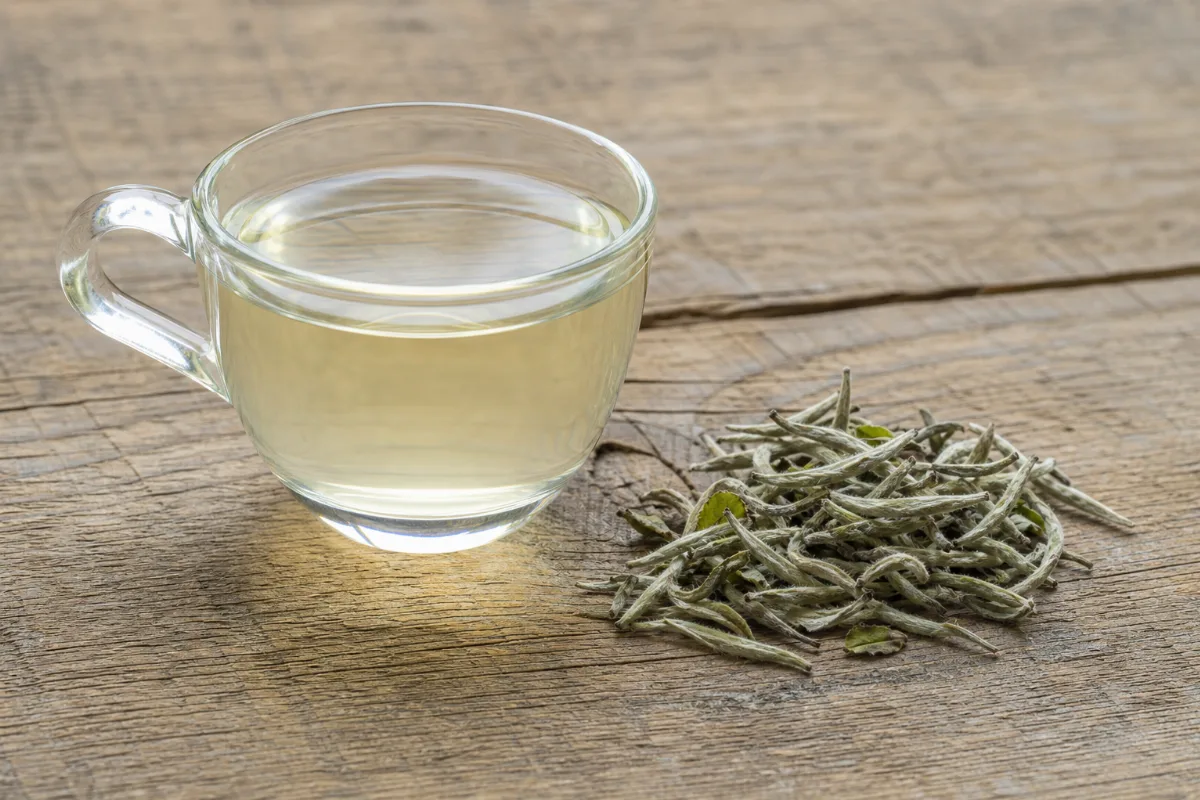
White tea is a drink made from the buds and young leaves of the tea plant, with very little processing. People drink it for general wellbeing, weight and blood sugar. Only a few small human studies exist, and they are not strong enough to show that white tea helps. The main known effect is caffeine, and measured amounts differ between labs.
General information, not medical advice. Last substantive update · Not medically reviewed. A named clinician has not signed off on this page. How this page is made
About White Tea
White tea is the drink from the buds and young leaves of the tea plant with minimal processing. Human research is thin: three small studies, none strong. No white tea safety studies were found. Caffeine is the main known concern, and published caffeine values differ. Extract capsules and mouthwashes are separate products and are not judged by tea results.
What it is
White tea comes from Camellia sinensis, a plant of the tea family (Theaceae) that GBIF accepts as a species. It is the same plant as green, black and oolong tea. White tea uses tender buds and young leaves with minimal processing. One review calls it a variety of green tea, and a chemistry study calls it the least processed form of tea.
The drink contains caffeine, catechins such as EGCG, and L-theanine. Lab studies found differences from green and black tea made from the same leaves, but no source read shows that those differences matter for health.
Tea, extract or mouthwash?
A cup of white tea is a weak water extract of the buds and leaves. White tea extracts and mouthwashes are different products, and most cell and animal studies use extracts. The human studies read used the drink. For green tea, EFSA found liver enzyme rises only with high-dose supplements, and no source read covers white tea extracts. Do not carry results from one form to another.
What the research shows
A pilot study in 32 healthy women found resting energy use rose 8.7% three hours after white tea, with no comparison drink described. In people with obesity, weight fell in all groups over 12 weeks, including controls. A 6-month trial in 49 women with type 2 diabetes reported better glucose and blood fats, but gave no numbers and has an unconfirmed registry number.
Cell experiments show white tea extract changes fat-handling genes in liver cells. This does not show the same in people. A 38-study analysis links tea drinking with lower death rates, but it is tea in general and cannot show cause. A 2015 overview said very few white tea data existed.
Caffeine, fluoride and what is in the leaf
Fluoride: a review of 88 studies found average fluoride was 0.49 mg/L in white tea, lower than green (1.37) and black (2.73). Fluoride builds up in mature leaves more than in buds, and longer brewing releases more. Fluoride matters most for young children and very heavy tea drinkers.
Pesticides: one two-year survey in Fujian, China found 25 pesticides and at least one residue in 74.8% of white tea samples. Risk to consumers was judged extremely low, but it is one region. No lead, cadmium or aluminium values for white tea were found in the sources read, so these are unknown.
At a glance
Traditional uses history, not proof
- Abiri 2023 says white tea is very popular in China and highly revered for its taste.
- NCCIH says the tea plant was first cultivated in China thousands of years ago and that tea was used for health purposes for about 3,000 years (this is about tea in general).
- A 2015 review calls white tea the rarest and least handled tea.
Studied for research
- Resting energy use, very low
- Body weight in obesity, very low
- Blood fats and inflammation markers in obesity, very low
- Blood sugar in type 2 diabetes, insufficient
- Death rates in tea drinkers (tea in general, an association), insufficient
- Cholesterol handling in liver cells (cell experiment only), insufficient
Main compounds
- Caffeine
- Catechins, including EGCG
- L-theanine
- Flavonols and other polyphenols
Common forms
- Loose leaf tea
- Tea bags
- Bottled and iced white tea
- Extracts and mouthwashes (different products, not covered by drink results)
Research links: NCCIH: Green Tea (there is no white tea page) · FDA: How much caffeine is too much · NHS: Foods to avoid in pregnancy · EFSA opinion on green tea catechins (abstract) · White tea energy use pilot study (abstract) · Fluoride in tea, scoping review (abstract) · Research Library · Genes & Biomarkers Library
What it is and its history
- Accepted scientific name
- Camellia sinensis
- Naming authority
- (L.) Kuntze
- Synonyms
- Camellia bohea (L.) Sweet; Camellia chinensis (Sims) Kuntze; Camellia cantonensis Lour.
- Common names
- White tea (English); Tea (English)
- Family or group
- Theaceae (the tea family)
- Classification
- Plantae > Ericales > Theaceae > Camellia > Camellia sinensis
- Native range
- Not checked.
- Habitat
- Not checked.
- What it looks like
- Roots: Not applicable (buds and leaves are used).; Stems: Not checked.; Leaves: Tender buds and young leaves with minimal processing (Tek 2024).; Flowers: Tea flowers were compared with white and green tea leaf in one lab study (Paiva 2021); flowers are not white tea.; Fruit: Not checked.
- Cultivation
- Not checked.
- Harvest and processing
- Made from tender buds and young leaves with minimal processing (Tek 2024). A metabolomics study profiled white tea withered for 0 to 36 hours and compared it with green and black tea from the same leaves (Dai 2017). Harvest season and withering time changed catechin and caffeine levels in Azorean samples, without a steady pattern for caffeine (Paiva 2021).
- Look-alikes and adulterants
- Name: Green tea, black tea and oolong; Note: Same plant, processed differently.; Name: White tea extract or mouthwash; Note: Concentrated or non-drink products. Their results are not carried over to the drink.
- Sustainability and conservation
- Not checked.
Photographs
Traditional use and history history, not clinical proof
| Tradition or era | Documented use | Source |
|---|---|---|
| China | Abiri 2023 says white tea is very popular in China and highly revered for its taste, and that green tea has been consumed for centuries in Morocco, Japan and China. | p37823174 |
| The tea plant in general | NCCIH says the tea plant was first cultivated in China thousands of years ago and that there is evidence of tea being used for health purposes dating back about 3,000 years. This is about tea in general, not white tea specifically. | s-nccih-green-tea |
| Today | Tenore 2015 calls white tea the rarest and least handled tea and says very few health data on it existed at that time. No older white tea history was read from a source and none is claimed. | p25601602 |
Traditional use shows how it was used. It does not show that it works or is safe today.
What is inside, and how it may work
What it contains and how those compounds act in cells and animals. Laboratory and animal mechanisms are not proven effects in people.
Main compounds
| Compound | Family | Where it is concentrated | Activity studied | Level of evidence |
|---|---|---|---|---|
| Epigallocatechin gallate (EGCG) PubChem 65064 | catechin (polyphenol) | Bud and leaf Highest of the epicatechin compounds measured in both green and white tea in one lab study, and higher in green than in white tea in those samples (Paiva 2021). Abundant in white tea extract in a cell study (Luo 2020). | Liver effects at high supplement doses (green tea, EFSA). Cell-level fat handling changes in white tea extract. Not shown in people for white tea. 22 13 11 7 | Lab |
| Caffeine PubChem 2519 | purine alkaloid | Bud and leaf 14 to 61 mg per serving across white, green and black teas in one US lab; about 5.8 mg per 200 mL for white tea in a 2025 lab; 6.2 to 27.7 mg/g dry weight across green tea, white tea and flower samples, with white tea above green tea in those samples (all measured; they disagree). | Stimulant; see Safety tab. 23 4 3 13 19 | Human data |
| L-theanine PubChem 439378 | amino acid | Leaf Measured in tea infusions: highest in black and green tea, and significantly higher than in the other types, which included white tea. A white tea value is not given in the abstract (Ayakdas 2025). | Not studied for white tea in the sources read. 24 3 | Lab |
| Flavonol and flavone glycosides, amino acids, other polyphenols | polyphenols and amino acids | Bud and leaf Content differs from green and black tea made from the same leaves, and changes with withering time (Dai 2017). Total phenolics and flavonoids were higher in green than white tea in Azorean samples (Paiva 2021). | Test-tube antioxidant activity only. Not shown to matter in people. 5 13 | Lab |
Mechanisms, receptors and pathways
| Target or pathway | Gene or receptor | What was found | Level |
|---|---|---|---|
| Heat production (hypothesis) | n/a | The pilot study authors suggest minimal processing leaves more antioxidants and bioactive substances that may raise heat production. Their tea was dosed by caffeine and no comparison drink is described, so this was not tested. 15 | Hypothesis by authors |
| Liver cell fat handling | APOB, MTTP, LDLR (in HepG2 cells) | White tea extract lowered VLDL production genes, raised LDL receptor activity and reduced triglyceride build-up in liver cells in a dish. Catechins EGCG and ECG were abundant in the extract. 11 | Cell experiment |
| Antioxidant activity | n/a | White tea showed antioxidant activity in test-tube assays. Test-tube activity does not show a benefit in people. 13 16 | Lab |
| Iron absorption | n/a | Tea polyphenols lower absorption of non-haem iron in a dose-related way in a study of black and herb teas. White tea not tested. 8 | Human (other teas) |
Absorption, metabolism and elimination
- Absorption
- Not covered in the sources read.
- Distribution
- Not covered.
- Metabolism
- Not covered for white tea.
- Elimination
- Not covered.
- Bioavailability
- Not covered.
Isolated compounds versus whole extracts
Brewed white tea, tea bags, ready-to-drink bottles and white tea extracts or mouthwashes are different products. The human studies read used brewed tea. Cell and animal studies mostly use extracts. Safety information on concentrated catechin supplements comes from green tea and should not be carried over to the drink, or to white tea extracts.
Nutritional composition
White tea is not a source of essential nutrients in the sources read. It contains caffeine, catechins, amino acids and other compounds, and tea can lower iron absorption from a meal (other teas tested).
3 very low certainty3 not enough evidence
What is White Tea good for?
The uses people ask about and how strong the human evidence is for each. White tea has very little human research, so every rating here is low or lower.
Benefits, one by one
Each card is a research question, not a promise. Tap a goal to filter. Open a card to see the studies, doses and limits.
Energy use at rest
Very low certaintyOne small pilot study in 32 healthy women found that resting energy use rose about 9% three hours after drinking white tea. It was a single session with no comparison drink described, so it is not known whether the tea, its caffeine or the passing of time caused the rise.
1 studiesBrewed white tea in a single session. Amount not stated here.
Studies, doses and limits
What the trials found
One pilot study (Tek 2024) of 32 healthy women with normal blood pressure. They had baseline measurements, then drank white tea measured out by its caffeine content, and were tested at 30, 120 and 180 minutes. Resting energy use rose 8.7% at 180 minutes (p < 0.05). Oxygen use and body temperature also rose. Blood pressure and heart rate did not change. No comparison drink is described in the abstract.
Results
Resting energy use +8.7% at 180 minutes (p < 0.05); blood pressure and heart rate unchanged.
Effect sizes as reported
About 9% rise in resting energy use for a few hours in one group of women.
Why this rating
One small pilot with no comparison drink described, one session only, healthy women only, and the tea was dosed by caffeine so caffeine cannot be ruled out.
Form and dose studied
Brewed white tea in a single session. Amount not stated here.
Who was studied
Healthy women with normal blood pressure.
Limits
No comparison drink; very short follow-up; no evidence that a short rise changes body weight.
Why researchers looked
White tea is made from buds and young leaves with little processing, and some authors suggest this leaves more bioactive compounds that could raise heat production.
Traditional use
Not described in the sources read.
Proposed mechanism Hypothesis
Hypothesis by the study authors that minimal processing leaves more compounds that raise heat production. Not tested in the study.
A proposed mechanism does not show that the effect happens in people.
White tea contains caffeine, and there are no white tea safety trials. See the Safety tab for caffeine, pregnancy, iron and medicine cautions.
Body weight and waist size in obesity
Very low certaintyA 12-week study in people with obesity found that weight, waist size and BMI fell in every group, including the group given only a diet and exercise program. So it does not show that white tea caused weight loss.
2 studiesWhite tea compared with control, orlistat and metformin. Amount not s…
Studies, doses and limits
What the trials found
In the 12-week study (Akyildiz 2024), people with obesity were put into four groups: control, orlistat, metformin or white tea. All groups got a diet and exercise program. Body weight, waist and BMI fell significantly in all groups. The abstract does not say whether the white tea group lost more than the control group. A 2015 overview said very few human data about white tea exist.
Results
Weight, waist circumference and BMI fell significantly in all four groups; no between-group difference is given in the abstract.
Effect sizes as reported
Not given for white tea versus control.
Why this rating
Weight fell in the control group too, the abstract gives no number of people, no amount of tea and no between-group comparison.
Form and dose studied
White tea compared with control, orlistat and metformin. Amount not stated in the abstract.
Who was studied
People with obesity; sex, age and numbers not given in the abstract.
Limits
Control group also lost weight, so the tea's own effect is unknown; short; no long-term follow-up.
Why researchers looked
People with obesity look for easy additions to diet and exercise, and green tea has been studied for weight, so white tea has been tried too.
Traditional use
Not described in the sources read.
Proposed mechanism Not established
No mechanism was established in the sources read.
A proposed mechanism does not show that the effect happens in people.
White tea contains caffeine, and there are no white tea safety trials. See the Safety tab for caffeine, pregnancy, iron and medicine cautions.
Blood sugar in type 2 diabetes
Not enough evidenceOne small trial of 49 women with type 2 diabetes reported lower glucose and insulin after 6 months of white tea, with or without exercise. The abstract gives no numbers or tea amount, and the trial registry number looks like a placeholder, so this is unconfirmed.
1 studiesWhite tea alone or with aerobic training. Amount not stated in the ab…
Studies, doses and limits
What the trials found
A randomised trial (Dardashti Pour 2021): 49 women with type 2 diabetes were assigned to control, white tea, aerobic training, or training plus white tea for six months. Glucose, insulin, LDL, cholesterol and triglycerides fell and HDL rose in treated groups compared with before the trial or with the diabetic control group. The authors say white tea plus training improved blood sugar, blood fats, blood pressure and peak oxygen use.
Results
Significant improvements reported; sizes not given in the abstract.
Effect sizes as reported
Not given in the abstract.
Why this rating
Small, no numbers or tea amount in the abstract, effects of exercise not separated from tea in the conclusion, and a registry number that looks like a placeholder.
Form and dose studied
White tea alone or with aerobic training. Amount not stated in the abstract.
Who was studied
49 women with type 2 diabetes.
Limits
Women only; the abstract does not separate the white-tea-only group from the exercise groups; no HbA1c result reported.
Why researchers looked
Plant compounds called flavonols in tea have been proposed to help control blood sugar.
Traditional use
Not described in the sources read.
Proposed mechanism Not established
No mechanism was established in the sources read.
A proposed mechanism does not show that the effect happens in people.
White tea contains caffeine, and there are no white tea safety trials. See the Safety tab for caffeine, pregnancy, iron and medicine cautions.
Blood fats, inflammation and hormone markers in obesity
Very low certaintyIn the same 12-week obesity study, people given white tea had lower cholesterol, LDL, triglycerides and inflammation markers and higher HDL. The abstract does not compare them with the control group, and weight fell in every group.
1 studiesWhite tea alongside diet and exercise, compared with control, orlista…
Studies, doses and limits
What the trials found
In the 12-week study (Akyildiz 2024), the white tea group had significant falls in TNF-alpha, IL-6, IL-1 beta, MMP-9, total cholesterol, LDL cholesterol and triglycerides, a rise in HDL cholesterol, and falls in leptin, ghrelin and asprosin (hunger and fat hormones). Markers of oxidative stress (MDA and 8-OHdG) fell and glutathione (GSH) rose. Glucose fell in all groups except the control.
Results
Significant changes in the white tea group; no numbers or between-group comparison in the abstract.
Effect sizes as reported
Not given.
Why this rating
Before-and-after changes in one group of a small, short study; no between-group comparison; diet and exercise program was given to everyone.
Form and dose studied
White tea alongside diet and exercise, compared with control, orlistat and metformin.
Who was studied
People with obesity.
Limits
The abstract does not tell us if the changes were larger than in the control group; sizes not given.
Why researchers looked
Obesity raises blood fats and inflammation, and tea compounds are thought to act as antioxidants.
Traditional use
Not described in the sources read.
Proposed mechanism Not established
No mechanism was established in the sources read.
A proposed mechanism does not show that the effect happens in people.
White tea contains caffeine, and there are no white tea safety trials. See the Safety tab for caffeine, pregnancy, iron and medicine cautions.
Death rates in people who drink tea (tea in general)
Not enough evidenceA pooled analysis of 38 population studies found that people who drank the most tea had about 10% lower risk of dying from any cause than people who drank the least. This is tea in general: the abstract does not say how much of it was white tea, and it cannot show cause and effect.
1 studiesTea in general; types not separated in the abstract.
Studies, doses and limits
What the trials found
A meta-analysis (Kim 2024) of 38 prospective cohort data sets (1,956,549 people): highest versus lowest tea drinking gave a risk ratio of 0.90 for death from any cause, 0.86 for heart disease death and 0.90 (not statistically significant) for cancer death. The best results were at about 2 cups a day for all-cause death, with no extra benefit beyond that.
Results
All-cause 0.90 (95% CI 0.86 to 0.95); cardiovascular 0.86 (0.79 to 0.94); cancer 0.90 (0.78 to 1.03).
Effect sizes as reported
About 10% lower risk of death from any cause, in people who drink tea in general.
Why this rating
For white tea specifically the evidence is insufficient: the abstract does not separate tea types, and population studies cannot show cause.
Form and dose studied
Tea in general; types not separated in the abstract.
Who was studied
Adults in 27 papers; countries not given in the abstract.
Limits
Observational; people who drink tea may differ in other habits; nothing is specific to white tea.
Why researchers looked
Tea drinking is common and large population studies track who lives longer.
Traditional use
Not described in the sources read.
Proposed mechanism Not established
No mechanism was established in the sources read.
A proposed mechanism does not show that the effect happens in people.
White tea contains caffeine, and there are no white tea safety trials. See the Safety tab for caffeine, pregnancy, iron and medicine cautions.
Cholesterol handling (cell experiments only)
Not enough evidenceWhite tea extract changed how liver cells in a dish handle fats and LDL cholesterol. This is a cell experiment and does not show that drinking white tea lowers cholesterol.
1 studiesWhite tea extract on HepG2 cells.
Studies, doses and limits
What the trials found
No human evidence. The study (Luo 2020) used white tea extract on cells in a dish.
Results
Cell result only; no numbers in the abstract.
Effect sizes as reported
None in people.
Why this rating
Cell experiment only; extract, not a drink; human liver cancer cell line.
Form and dose studied
White tea extract on HepG2 cells.
Who was studied
Not applicable (cells).
Limits
Does not show the same happens in the body.
Why researchers looked
Researchers wanted to see how white tea extract affects the genes liver cells use to handle fat.
Traditional use
Not described in the sources read.
Proposed mechanism Laboratory research
In HepG2 cells, white tea extract lowered genes for VLDL production and raised LDL receptor activity, with the catechins EGCG and ECG contributing. Cell-level only.
A proposed mechanism does not show that the effect happens in people.
White tea contains caffeine, and there are no white tea safety trials. See the Safety tab for caffeine, pregnancy, iron and medicine cautions.
Connections to the rest of health
How White Tea connects to the rest of our health knowledge graph. Every link says what kind of connection it is. A safety link (for example to the liver) is a warning, not a benefit. A study that merely mentions a topic never creates a benefit link.
Explore every connection: goals, body systems, organs, symptoms, genes
A. Wellness goals
| Connected to | Kind of connection | Evidence status | Context | Studies |
|---|---|---|---|---|
| Weight Management | Very low certainty | Energy use at rest: One small pilot study in 32 healthy women found that resting energy use rose about 9% three hours after drinking white tea. It was a single session with no comparison drink described, so it is not known whether the tea, its caffeine or the passing of time caused the rise. Body weight and waist size in obesity: A 12-week study in people with obesity found that weight, waist size and BMI fell in every group, including the group given only a diet and exercise program. So it does not show that white tea caused weight loss. | 15 2 16 | |
| Blood Sugar Balance | Not enough evidence | Blood sugar in type 2 diabetes: One small trial of 49 women with type 2 diabetes reported lower glucose and insulin after 6 months of white tea, with or without exercise. The abstract gives no numbers or tea amount, and the trial registry number looks like a placeholder, so this is unconfirmed. | 6 | |
| Metabolic Health | Not enough evidence | Blood sugar in type 2 diabetes: One small trial of 49 women with type 2 diabetes reported lower glucose and insulin after 6 months of white tea, with or without exercise. The abstract gives no numbers or tea amount, and the trial registry number looks like a placeholder, so this is unconfirmed. Blood fats, inflammation and hormone markers in obesity: In the same 12-week obesity study, people given white tea had lower cholesterol, LDL, triglycerides and inflammation markers and higher HDL. The abstract does not compare them with the control group, and weight fell in every group. | 6 2 | |
| Cholesterol Balance | Very low certainty | Blood fats, inflammation and hormone markers in obesity: In the same 12-week obesity study, people given white tea had lower cholesterol, LDL, triglycerides and inflammation markers and higher HDL. The abstract does not compare them with the control group, and weight fell in every group. | 2 | |
| Longevity | Not enough evidence | Death rates in people who drink tea (tea in general): A pooled analysis of 38 population studies found that people who drank the most tea had about 10% lower risk of dying from any cause than people who drank the least. This is tea in general: the abstract does not say how much of it was white tea, and it cannot show cause and effect. | 10 | |
| Heart Health | Not enough evidence | Death rates in people who drink tea (tea in general): A pooled analysis of 38 population studies found that people who drank the most tea had about 10% lower risk of dying from any cause than people who drank the least. This is tea in general: the abstract does not say how much of it was white tea, and it cannot show cause and effect. | 10 | |
| Cholesterol Balance | Not enough evidence | Cholesterol handling (cell experiments only): White tea extract changed how liver cells in a dish handle fats and LDL cholesterol. This is a cell experiment and does not show that drinking white tea lowers cholesterol. | 11 |
B. Body systems
| Connected to | Kind of connection | Evidence status | Context | Studies |
|---|---|---|---|---|
| Metabolism Weight | Biological association | Very low certainty | Studied for: Energy use at rest Studied for: Body weight and waist size in obesity | 15 2 16 |
| Blood Sugar Support | Biological association | Not enough evidence | Studied for: Blood sugar in type 2 diabetes | 6 |
| Cardiovascular System | Biological association | Not enough evidence | Studied for: Death rates in people who drink tea (tea in general) Studied for: Cholesterol handling (cell experiments only) | 10 11 |
E. Health conditions
| Connected to | Kind of connection | Evidence status | Context | Studies |
|---|---|---|---|---|
| Pregnancy | Contraindication | Low certainty | Counts toward the caffeine limit. Preparation or compound: White tea (caffeine) |
21 1 |
| Iron-deficiency anemia | Adverse effect or risk | Low certainty | Tea polyphenols lowered iron absorption in a study of other teas. Preparation or compound: Tea drinks (white tea not tested) |
8 |
I. Biomarkers
| Connected to | Kind of connection | Evidence status | Context | Studies |
|---|---|---|---|---|
| Resting energy expenditure | Biological association | Very low certainty | Measured in trials: increased. A lab change is not the same as a health benefit. | 15 |
| Body weight | Biological association | Very low certainty | Measured in trials: decreased. A lab change is not the same as a health benefit. | 2 |
| LDL cholesterol | Biological association | Very low certainty | Measured in trials: decreased. A lab change is not the same as a health benefit. | 2 6 |
| Blood glucose | Biological association | Not enough evidence | Measured in trials: decreased. A lab change is not the same as a health benefit. | 6 |
| Blood pressure | Biological association | Not enough evidence | Measured in trials: mixed. A lab change is not the same as a health benefit. | 15 6 |
J. Genes, receptors and enzymes
| Connected to | Kind of connection | Evidence status | Context | Studies |
|---|---|---|---|---|
| APOB, MTTP, LDLR | Preliminary mechanism | Cell experiment | Gene activity changed by white tea extract in liver cells in a dish; no human evidence. | 11 |
L. Active compounds
| Connected to | Kind of connection | Evidence status | Context | Studies |
|---|---|---|---|---|
| Caffeine | Adverse effect or risk | Moderate certainty | Counts toward daily caffeine; amounts differ between labs. Preparation or compound: White tea |
4 3 19 |
| Epigallocatechin gallate (EGCG) | Biological association | Lab | Liver effects at high supplement doses (green tea, EFSA). Cell-level fat handling changes in white tea extract. Not shown in people for white tea. Preparation or compound: Bud and leaf |
22 13 11 7 |
| Caffeine | Biological association | Human | Stimulant; see Safety tab. Preparation or compound: Bud and leaf |
23 4 3 13 19 |
| L-theanine | Biological association | Lab | Not studied for white tea in the sources read. Preparation or compound: Leaf |
24 3 |
| Flavonol and flavone glycosides, amino acids, other polyphenols | Biological association | Lab | Test-tube antioxidant activity only. Not shown to matter in people. Preparation or compound: Bud and leaf |
5 13 |
Each connection is stored with the ingredient, the connected record, the kind of connection, the evidence status, the supporting studies, the preparation or compound involved, and a review date (last reviewed October 25, 2026).
Evidence at a glance: what changed in 1 lab markers
Tap a number to show only those markers. Counts are markers, not people.
The evidence
The research centre for White Tea. Every record here was checked against PubMed or the publisher's page; we never list a study we have not verified.
Evidence by outcome
Bars show how many studies we found for each outcome, not how well it works. People are added up across trials only (reviews are not added, to avoid double counting).
How we rate evidence
High certainty
Several well-run trials or reviews agree; further research is unlikely to change the picture much.
Moderate certainty
Good trials point the same way, but some doubt remains.
Low certainty
Small, short or inconsistent trials. The finding could change with better research.
Very low certainty
Very little or very weak human data. Treat as a possibility only.
Mixed findings
Trials or reviews disagree with each other.
Not enough evidence
Not enough human research to say either way.
Evidence against
Good research found no benefit, or found harm.
We take the reviewers' own risk-of-bias and GRADE statements where they exist, and otherwise judge from study size, design, consistency, directness and whether a product matches what is sold. Many publications do not make evidence high. Method note: We searched PubMed and read the abstracts of about 17 papers, read the NCCIH, FDA and NHS pages, checked the plant name in GBIF and three compounds in PubChem. The IARC press release could not be re-read as text, so that line is marked unverified. Only abstracts were read for papers. Certainty ratings are the compiler's own reading. Funding was not stated for most abstracts, so industry links are not ruled out. No study is cited that we could not verify.
Study library: every study we checked 25
| Study | Design | People | Product, dose, length | Result |
|---|---|---|---|---|
| Abiri 2023 Tea's anti-obesity properties, cardiometabolic health-promoting potentials, bioactive compounds, and adverse effects: A review focusing on white and green teas Food Science & Nutrition · PMID 37823174 · DOI |
Narrative review review |
Review of white and green tea research | White and green teas and extracts n/a n/a n/a · vs n/a |
The authors call white tea a variety of green tea that is very popular in China. They say catechins are the most abundant bioactives and that tea or its extracts may have anti-inflammatory and antioxidant properties. They note possible toxic effects and say reducing tea drinking is a good idea, especially in the last trimester of pregnancy. Review; no pooled numbers in the abstract Methods, limits and fundingOutcomes: Anti-obesity and cardiometabolic potential, bioactive compounds, adverse effects Limitations: Narrative review; the abstract gives no numbers and the underlying evidence for the pregnancy advice was not read. Funding and conflicts: Authors state no competing interests Read: abstract |
| Akyildiz 2024 White Tea Consumption Alleviates Anthropometric and Metabolic Parameters in Obese Patients Medicina (Kaunas) · PMID 39459354 · DOI |
Controlled human study |
People with obesity (the abstract does not give the number of people) | White tea (Camellia sinensis) bud and young leaf Not given in the abstract 12 weeks · vs Control group, orlistat group and metformin group; all groups had a diet and exercise program |
Body weight, waist circumference and BMI fell significantly in all groups. In the white tea group, TNF-alpha, IL-6, IL-1 beta and MMP-9 fell, HDL cholesterol rose, and total cholesterol, LDL cholesterol and triglycerides fell. Leptin, ghrelin and asprosin fell. Glucose fell in all groups except the control. Oxidative stress markers MDA and 8-OHdG fell and GSH rose in the white tea group. Weight fell in every group, including the control group Methods, limits and fundingOutcomes: Weight, waist, BMI, inflammation markers, blood fats, hunger hormones, glucose, oxidative stress markers Limitations: Abstract does not give the number of people, how groups were formed, the amount of tea, or between-group comparisons; weight fell in all groups, so a white tea effect on weight is not shown; the abstract's conclusion goes further than the data it reports. Funding and conflicts: Not stated in the abstract Read: abstract |
| Ayakdas 2025 Determination of L-Theanine and Caffeine Contents in Tea Infusions with Different Fermentation Degrees and Brewing Conditions Using the Chromatographic Method Foods · PMID 40647065 · DOI |
Lab analysis lab |
Infusions of six tea types (green, white, yellow, oolong, black and Pu-erh) | Brewed tea infusions n/a n/a Brewed at two water temperatures for three steeping times · vs Other tea types and serving forms |
Caffeine was 5.8 +/- 0.7 mg per 200 mL for white tea, compared with 14 +/- 1.0 for black, 13.8 +/- 0.2 for yellow, 11 +/- 2.1 for green and 4 +/- 1.6 for oolong, and 13 +/- 2.9 for Pu-erh. White tea was lower than black and yellow tea (p < 0.001). Longer steeping raised caffeine and L-theanine in several teas. Serving method (tea bag or loose leaf) did not change green and white tea results. White tea about 5.8 mg caffeine per 200 mL in this lab Methods, limits and fundingOutcomes: Caffeine and L-theanine in infusions Limitations: One lab with the teas it bought; other studies measure different values; the abstract does not give a white tea theanine value. Funding and conflicts: Funded by a university research unit; authors declare no conflicts and say the funder had no role Read: abstract |
| Chin 2008 Caffeine content of brewed teas Journal of Analytical Toxicology · PMID 19007524 · DOI |
Lab analysis lab |
20 20 commercial tea products |
Brewed white, green and black teas, decaffeinated teas and herbal teas n/a n/a n/a · vs Different serving sizes and steep times |
White, green and black teas contained 14 to 61 mg of caffeine per serving (6 or 8 oz), with no trend by tea variety. Steep time changed the caffeine level. Decaffeinated teas had under 12 mg. No caffeine was found in herbal teas. Most brewed teas had less caffeine per serving than brewed coffee. 14 to 61 mg per serving across white, green and black teas Methods, limits and fundingOutcomes: Caffeine in brewed tea Limitations: Lab study of 20 products; white tea is not reported on its own in the abstract; results are for the products and brewing used. Funding and conflicts: Not stated in the abstract Read: abstract |
| Dai 2017 Characterization of white tea metabolome: Comparison against green and black tea by a nontargeted metabolomics approach Food Research International · PMID 28528106 · DOI |
Lab analysis lab |
White, green and black tea made from the same fresh leaves | White, green and black tea made from the same fresh leaves leaf n/a Withering times from 0 to 36 hours profiled · vs Green and black tea from the same leaves |
The authors call white tea the least processed form of tea. They found significant differences in amino acids, catechins, dimeric catechins, flavonol and flavone glycosides and aroma precursors between white tea and green and black teas made from the same leaves, and the chemicals changed with withering time. No health outcome was tested. Chemical differences by processing Methods, limits and fundingOutcomes: Chemical profile (amino acids, catechins, flavonol and flavone glycosides, aroma precursors) Limitations: Chemistry only. The abstract gives no numbers and no health result. Funding and conflicts: Not stated in the abstract Read: abstract |
| Dardashti Pour 2021 Forecast of ameliorating effect of dietary flavonol consumption in white tea with or without aerobic training on type 2 diabetes (T2D) in females Clinical Nutrition ESPEN · PMID 34620309 · DOI |
Randomized controlled trial |
49 Women with type 2 diabetes |
White tea (Camellia sinensis) bud and young leaf Not given in the abstract 6 months · vs Control, white tea, aerobic training, or aerobic training plus white tea |
Glucose, insulin, LDL, cholesterol and triglycerides were significantly reduced and HDL rose in treated groups compared with before the trial or the diabetic control group. The authors conclude white tea combined with aerobic training improves glucose, blood fats, blood pressure and fitness. Improvements reported; sizes not given in the abstract Methods, limits and fundingOutcomes: Glucose, insulin, LDL, HDL, cholesterol, triglycerides, weight, BMI, body fat, peak oxygen use, blood pressure Limitations: Small trial; amount of tea not given; no numbers in the abstract; the registry number printed in the abstract (NCT00123456) looks like a placeholder and was not checked, so treat registration as unconfirmed; the white tea group alone is not separated from the exercise groups in the conclusion. Funding and conflicts: Not stated in the abstract Registration: NCT00123456 (as printed in the abstract; looks like a placeholder, not confirmed) Read: abstract |
| EFSA ANS Panel (Younes 2018 Scientific opinion on the safety of green tea catechins EFSA Journal · PMID 32625874 · DOI |
Regulator opinion regulator |
Adults in the EU | Green tea catechins from infusions and food supplements (green tea, not white tea) leaf n/a n/a · vs n/a |
The panel judged green tea infusions prepared the traditional way generally safe at European intakes, but rare liver injury has been reported after infusions, most probably an individual reaction. Doses of 800 mg EGCG a day or more taken as a food supplement raised liver enzymes in trials compared with control. Supplement doses raised liver enzymes; infusions generally safe Methods, limits and fundingOutcomes: Liver safety of green tea catechins Limitations: About green tea catechins. The opinion does not assess white tea; white tea also contains catechins but the sources read do not carry the conclusion over. Funding and conflicts: Regulator opinion Read: abstract |
| Hurrell 1999 Inhibition of non-haem iron absorption in man by polyphenolic-containing beverages British Journal of Nutrition · PMID 10999016 |
Controlled human study |
Adults eating a bread meal with radio-labelled iron | Black tea, herb teas, coffee and cocoa (white tea was not tested) n/a n/a n/a · vs Water |
All the drinks tested lowered iron absorption in a dose-related way. Black tea cut it by 79 to 94%, and herb teas by 47 to 84%. Adding milk made little difference. The authors say this should be considered in advice on iron nutrition. Iron absorption fell by roughly half or more with the drinks tested Methods, limits and fundingOutcomes: Iron absorption from a meal Limitations: White tea was not tested, so the size of the effect for white tea is unknown. Funding and conflicts: Not stated in the abstract Read: abstract |
| Jayasingha 2025 Fluoride in tea: accumulation, dietary exposure, and future strategies for risk mitigation in food safety; a scoping review Critical Reviews in Food Science and Nutrition · PMID 40504749 · DOI |
Scoping review review |
88 88 global studies of fluoride in tea |
Tea infusions of all types n/a n/a n/a · vs n/a |
Fluoride built up in mature leaves (808 ug/g) more than stems, buds and roots. Longer brewing released more (r = 0.82). Average fluoride by type: brick tea 4.78 mg/L, black tea 2.73, green tea 1.37, white tea 0.49, herbal tea 0.17. Brick tea exceeded WHO guidelines in all age groups; black tea posed risks for children aged 4 to 8 and for adults in high-consumption regions. White tea 0.49 mg/L on average, lower than green and black Methods, limits and fundingOutcomes: Fluoride in tea and exposure Limitations: Scoping review: the studies were not quality-scored; averages hide big differences between products. Funding and conflicts: Not stated in the abstract Read: abstract |
| Kim 2024 Tea consumption and risk of all-cause, cardiovascular disease, and cancer mortality: a meta-analysis of thirty-eight prospective cohort data sets Epidemiology and Health · PMID 38938012 · DOI |
Meta analysis of cohorts |
1956549 38 prospective cohort data sets from 27 papers |
Tea in general (the abstract does not separate white tea) n/a n/a n/a · vs Highest versus lowest tea drinking |
Highest versus lowest tea drinking: all-cause death 0.90 (95% CI 0.86 to 0.95), cardiovascular death 0.86 (0.79 to 0.94), cancer death 0.90 (0.78 to 1.03, not statistically significant). The biggest drop in all-cause death was seen at about 2 cups a day, with no extra drop beyond that. Hazard ratios 0.90 (all-cause) and 0.86 (cardiovascular) (All-cause 0.86 to 0.95; CVD 0.79 to 0.94; cancer 0.78 to 1.03) Methods, limits and fundingOutcomes: All-cause, cardiovascular and cancer death Limitations: Observational: cannot show tea is the cause; the abstract does not say which tea types were drunk, so nothing here is specific to white tea. Funding and conflicts: Not stated in the abstract Read: abstract |
| Luo 2020 White tea and its active polyphenols lower cholesterol through reduction of very-low-density lipoprotein production and induction of LDLR expression Biomedicine & Pharmacotherapy · PMID 32334376 · DOI |
Cell study cells |
HepG2 human liver cancer cells in a dish | White tea extract and its catechins EGCG and ECG n/a n/a Cell experiment · vs Untreated cells |
White tea extract changed the activity of genes for fat handling in liver cells, lowered production of VLDL, increased uptake of LDL cholesterol through the LDL receptor and reduced triglyceride build-up in the cells. The catechins EGCG and ECG were abundant in the extract. Cell result only Methods, limits and fundingOutcomes: Gene activity and cell fat handling Limitations: Cell experiment only. It does not show that drinking white tea lowers cholesterol in people. Funding and conflicts: Authors declare no competing interests Read: abstract |
| Malyszek 2025 Assessment of Fluoride Intake Risk via Infusions of Commercial Leaf Teas Available in Poland Using the Target Hazard Quotient Index Approach Foods · PMID 40941060 · DOI |
Lab analysis lab |
98 98 leaf teas on the Polish market: 55 black, 27 green, 9 oolong, 7 white |
Leaf tea infusions n/a n/a n/a · vs n/a |
All fluoride risk scores stayed below the safety threshold. The highest scores were in elderly, low-weight people, particularly women drinking green tea. Black teas had the highest fluoride and acidity. No product above the risk threshold Methods, limits and fundingOutcomes: Fluoride, acidity and risk score Limitations: Only 7 white teas; the abstract gives no white tea figures. Funding and conflicts: Authors declare no conflicts of interest Read: abstract |
| Paiva 2021 Comparative Analysis of the Polyphenols, Caffeine, and Antioxidant Activities of Green Tea, White Tea, and Flowers from Azorean Camellia sinensis Varieties Affected by Different Harvested and Processing Conditions Antioxidants · PMID 33514043 · DOI |
Lab analysis lab |
Green tea, white tea and flower samples from two Azorean tea varieties | White tea, green tea and tea flowers leaf and bud; flower n/a n/a · vs Green tea and flower samples; different harvest seasons and withering times |
Catechins (EGCG, ECG, EC, EGC) were higher in green tea than white tea. Caffeine (6.2 to 27.7 mg/g, dry weight) decreased in the order white tea, then green tea, then flowers, with no steady pattern by season or withering time. Total phenolics and flavonoids were higher in green tea than white tea. Antioxidant activity was measured in test tubes. In these samples: catechins higher in green tea; caffeine higher in white tea Methods, limits and fundingOutcomes: Catechins, caffeine, total phenolics and test-tube antioxidant activity Limitations: Teas from one Azorean source; test-tube antioxidant tests do not show benefit in people. Funding and conflicts: Authors declare no conflict of interest Read: abstract |
| Taylor 1999 Probable antagonism of warfarin by green tea Annals of Pharmacotherapy · PMID 10332534 · DOI |
Case report |
1 One man on warfarin after a mechanical heart valve |
Green tea (not white tea) n/a Reported as a very large daily amount About a week before the low reading · vs n/a |
The man's INR fell from 3.79 to 1.37 about a week after he began drinking very large amounts of green tea daily, and rose to 2.55 after he stopped. The authors suggest the vitamin K in green tea may have worked against warfarin. One case Methods, limits and fundingOutcomes: Blood-thinning (INR) control Limitations: A single case report on green tea; nothing about white tea. Funding and conflicts: Not stated Read: abstract |
| Tek 2024 Acute change in resting energy expenditure and vital signs in response to white tea consumption in females: a pilot study Nutrition & Metabolism · PMID 39511670 · DOI |
Pilot human study |
32 Healthy women with normal blood pressure and usual caffeine intake under 300 mg a day |
White tea (Camellia sinensis) bud and young leaf Measured out by its caffeine content (not given here) Single drinking session, measured over 180 minutes · vs Baseline measurements before drinking; no comparison drink described in the abstract |
Resting energy use rose 8.7% at 180 minutes (p < 0.05). Oxygen use and body temperature also rose over time. Systolic and diastolic blood pressure and heart rate did not change significantly. REE +8.7% at 180 minutes Methods, limits and fundingOutcomes: Resting energy use (REE), blood pressure, heart rate, body temperature Limitations: Pilot study; one session; no comparison drink described, so the rise cannot be separated from caffeine, from the drink itself, or from time of day; healthy women only. Funding and conflicts: Not stated in the abstract Read: abstract |
| Tenore 2015 Exploring the nutraceutical potential of polyphenols from black, green and white tea infusions - an overview Current Pharmaceutical Biotechnology · PMID 25601602 · DOI |
Narrative review review |
Review of black, green and white tea polyphenols | Black, green and white tea infusions bud and leaf n/a n/a · vs n/a |
The authors say very few data about white tea are available, as it is the rarest and least handled tea. They report that white tea could show higher antioxidant capacity than green tea and lipolytic activity in vitro. Most of the metabolic-syndrome work they describe is on green and black tea. Very little white tea data Methods, limits and fundingOutcomes: Metabolic health potential of tea polyphenols Limitations: Narrative overview from 2015; not a systematic review; mostly lab and animal work. Funding and conflicts: Not stated in the abstract Read: abstract |
| Yao 2021 Occurrence of pesticides in white tea and a corresponding risk exposure assessment for the different residents in Fujian, China Journal of Food Science · PMID 34250597 · DOI |
Lab survey lab |
White tea samples from Fujian, China over 2 years | White tea n/a n/a 2 years of surveillance · vs n/a |
25 different pesticides were found and 74.8% of samples contained at least one residue. The most common was bifenthrin (61.6% of samples). Dietary risk was judged extremely low for six groups of residents; adults over 41 had relatively higher risk. Isocarbophos and triazophos were ranked medium risk. 74.8% of samples had at least one residue Methods, limits and fundingOutcomes: Pesticide residues and dietary risk Limitations: One province and two years; says nothing about a particular brand or other regions. Funding and conflicts: Funded by Fujian provincial and national agro-product safety programs Read: abstract |
| n/a 2016 IARC (WHO): Press release no. 244, coffee, mate and very hot beverages (15 June 2016) n/a · Source |
Authoritative guidance n/a |
n/a | n/a n/a n/a n/a · vs n/a |
IARC classified drinking very hot beverages as probably carcinogenic to humans (Group 2A), based on limited evidence from studies where tea or mate is drunk very hot, and said the temperature, not the drink itself, appears responsible. Methods, limits and fundingOutcomes: IARC classified drinking very hot beverages as probably carcinogenic to humans (Group 2A), based on limited evidence from studies where tea or mate is drunk very hot, and said the temperature, not the drink itself, appears responsible. Limitations: Press release PDF could not be read as plain text in this session; the statement repeats the wording recorded for green tea from an earlier read. The exact temperature figure is not quoted. Read: summary-only |
| n/a 2024 FDA: Spilling the Beans: How Much Caffeine Is Too Much? (content current as of 28 Aug 2024) n/a · Source |
Authoritative guidance n/a |
n/a | n/a n/a n/a n/a · vs n/a |
Lists green tea at 37 mg caffeine per 12 fl oz drink and black tea at 71 mg (white tea is not listed). Cites 400 mg a day as an amount not generally associated with negative effects in most adults, with wide differences in sensitivity. Lists signs of too much caffeine. Says caffeinated drinks should be avoided for children younger than 2 and that pregnant or breastfeeding people should talk to a health professional. Methods, limits and fundingOutcomes: Lists green tea at 37 mg caffeine per 12 fl oz drink and black tea at 71 mg (white tea is not listed). Cites 400 mg a day as an amount not generally associated with negative effects in most adults, with wide differences in sensitivity. Lists signs of too much caffeine. Says caffeinated drinks should be avoided for children younger than 2 and that pregnant or breastfeeding people should talk to a health professional. Limitations: Consumer guidance page, not a trial. Read in full on 2026-10-25. Read: full-text |
| n/a 2025 NCCIH (NIH): Green Tea (last updated February 2025). There is no NCCIH page for white tea. n/a · Source |
Authoritative guidance n/a |
n/a | n/a n/a n/a n/a · vs n/a |
About green tea: no safety concerns reported for the drink in adults, which does contain caffeine. Extract supplements can cause nausea, constipation, stomach discomfort and higher blood pressure, and rarely liver injury. High doses of green tea lowered blood levels of nadolol, the extract lowered atorvastatin, and a study showed an interaction with raloxifene. Caffeine passes into breast milk; high levels can cause fussiness and poor sleep in the baby, but low-to-moderate maternal intake usually has no effect. Methods, limits and fundingOutcomes: About green tea: no safety concerns reported for the drink in adults, which does contain caffeine. Extract supplements can cause nausea, constipation, stomach discomfort and higher blood pressure, and rarely liver injury. High doses of green tea lowered blood levels of nadolol, the extract lowered atorvastatin, and a study showed an interaction with raloxifene. Caffeine passes into breast milk; high levels can cause fussiness and poor sleep in the baby, but low-to-moderate maternal intake usually has no effect. Limitations: About green tea, not white tea. Page read in full on 2026-10-25. Read: full-text |
| n/a 2026 NHS (UK): Foods to avoid in pregnancy (page last reviewed 15 June 2026) n/a · Source |
Authoritative guidance n/a |
n/a | n/a n/a n/a n/a · vs n/a |
Says you should not have more than 200 mg of caffeine a day in pregnancy, estimates about 75 mg in a cup of tea such as black or green tea, and says too much caffeine has been linked to a higher chance of miscarriage and stillbirth. Methods, limits and fundingOutcomes: Says you should not have more than 200 mg of caffeine a day in pregnancy, estimates about 75 mg in a cup of tea such as black or green tea, and says too much caffeine has been linked to a higher chance of miscarriage and stillbirth. Limitations: Public-health guidance, not a trial. Read in full on 2026-10-25. The per-cup figure is an estimate and white tea is not named. Read: full-text |
| n/a 2026 PubChem: epigallocatechin gallate (CID 65064), formula C22H18O11 n/a · Source |
Database record n/a |
n/a | n/a n/a n/a n/a · vs n/a |
Compound record confirmed through the PubChem API on 2026-10-25. Methods, limits and fundingOutcomes: Compound record confirmed through the PubChem API on 2026-10-25. Limitations: Database record only. Read: full-text |
| n/a 2026 PubChem: caffeine (CID 2519), formula C8H10N4O2 n/a · Source |
Database record n/a |
n/a | n/a n/a n/a n/a · vs n/a |
Compound record confirmed through the PubChem API on 2026-10-25. Methods, limits and fundingOutcomes: Compound record confirmed through the PubChem API on 2026-10-25. Limitations: Database record only. Read: full-text |
| n/a 2026 PubChem: L-theanine (CID 439378), formula C7H14N2O3 n/a · Source |
Database record n/a |
n/a | n/a n/a n/a n/a · vs n/a |
Compound record confirmed through the PubChem API on 2026-10-25. Methods, limits and fundingOutcomes: Compound record confirmed through the PubChem API on 2026-10-25. Limitations: Database record only. Read: full-text |
| n/a 2026 GBIF Backbone Taxonomy: Camellia sinensis (L.) Kuntze (usage key 3189635), retrieved 2026-10-25 n/a · Source |
Database record n/a |
n/a | n/a n/a n/a n/a · vs n/a |
Accepted species, family Theaceae, confirmed through the GBIF API on 2026-10-25. Methods, limits and fundingOutcomes: Accepted species, family Theaceae. Limitations: Taxonomic database record. Read: full-text |
What we do not know yet
- What the evidence supports: a few small, uncontrolled or poorly described studies of energy use, weight and blood sugar; nothing strong.
- No placebo-controlled trial of white tea for any health outcome was found.
- Death-rate data are for tea in general, not white tea.
- No white tea safety, liver, allergy or interaction study was found.
- No lead, cadmium or aluminium values for white tea were read; caffeine values conflict between labs.
- The EMA, LiverTox, LactMed and the EFSA caffeine opinion were not opened for white tea.
How new research is added
New studies are found by a saved PubMed search and are placed in a review queue. A person reads each one before it changes any evidence rating or safety wording. New publications never change ratings automatically.
Lab markers
What changed in blood or saliva tests during trials. A changed number is not the same as feeling or being healthier, and we give no "normal ranges".
Metabolic 3
Body weight
Decreased in trials
Your weight on a scale.
Very low certaintyResults and what it means
Why it was measured
To see whether adding white tea to diet and exercise changes weight in people with obesity.
Statistical vs. clinical meaning
Weight fell in every group, so the fall cannot be credited to white tea.
Safety implication
None reported in the abstract.
| Study | Result | People | Product |
|---|---|---|---|
| 2 | Fell significantly in all groups, including the control group | People with obesity, 12 weeks | White tea compared with control, orlistat or metformin, all with diet and exercise |
LDL cholesterol
Decreased in trials
A blood test for the 'bad' cholesterol that carries fat in the blood.
Very low certaintyResults and what it means
Why it was measured
To see whether white tea changes blood fats in people with obesity or type 2 diabetes.
Statistical vs. clinical meaning
Two small studies report lower LDL; neither is placebo-controlled and the abstracts give no numbers.
Safety implication
None reported in the abstracts.
Blood glucose
Decreased in trials
The sugar level in the blood.
Not enough evidenceResults and what it means
Why it was measured
To see whether white tea changes blood sugar in people with type 2 diabetes.
Statistical vs. clinical meaning
One small trial with an unconfirmed registry number.
Safety implication
Anyone on diabetes medicine should not change care based on this.
| Study | Result | People | Product |
|---|---|---|---|
| 6 | Reduced in treated groups compared with before or with the diabetic control group (size not given) | 49 women with type 2 diabetes, 6 months | White tea, with or without aerobic training |
Other 2
Resting energy expenditure
Increased in trials
The energy the body uses at rest, measured by the oxygen you breathe in and the carbon dioxide you breathe out.
Very low certaintyResults and what it means
Why it was measured
To see whether white tea briefly raises the rate at which the body burns energy.
Statistical vs. clinical meaning
A short rise in one small pilot; no comparison drink described.
Safety implication
None reported in the abstract.
| Study | Result | People | Product |
|---|---|---|---|
| 15 | Rose 8.7% at 180 minutes after drinking white tea (p < 0.05) | 32 healthy women | One serving of white tea, measured out by its caffeine content |
Blood pressure
Mixed results in trials
The force of blood on artery walls, measured in two numbers.
Not enough evidenceResults and what it means
Why it was measured
To check for changes (up or down) after drinking white tea, since tea contains caffeine.
Statistical vs. clinical meaning
No change after one serving; a small trial reports a better value after months, mixed with exercise.
Safety implication
None reported.
| Study | Result | People | Product |
|---|---|---|---|
| 15 | No significant change in systolic or diastolic pressure after one serving | 32 healthy women | One serving of white tea |
| 6 | Authors report a favourable change with white tea plus aerobic training after 6 months (size not given) | 49 women with type 2 diabetes | White tea plus aerobic training |
Safety
What studies and official sources say about side effects, medicines and who should check first. Each point shows what kind of evidence it comes from.
Main points to know 3
- Caffeine is the main known effect, and white tea is not reliably low in it. White tea comes from the tea plant, so it contains caffeine. Measured amounts differ between labs: one US lab study found 14 to 61 mg per serving across white, green and black teas with no trend by variety, a 2025 lab study measured about 5.8 mg per 200 mL for white tea (lower than black, yellow and green), and an Azorean study found more caffeine per gram of dry leaf in white tea than in green tea. So claims that white tea has 'little caffeine' or 'more caffeine' cannot be relied on. The FDA says 400 mg a day from all sources is not generally linked with harm in most adults, and the NHS says not more than 200 mg a day in pregnancy. Food analysis and authoritative guidance 4 3 13 19 21
- No safety trials or reports for white tea itself were found. The three small human studies of white tea (2021 and 2024) did not report side effects in their abstracts. No case reports of liver injury, allergy or drug interactions with white tea were found in the sources read. That is a gap, not proof of safety. Gap 15 2 6
- A cup of tea is not a concentrated extract. The rare liver injury reports for tea products are about green tea extract capsules and tablets. EFSA judged green tea infusions generally safe at European intakes and found liver enzyme rises with high-dose catechin supplements. White tea also contains catechins, but no source read covers white tea extract, and results should not be carried across. Regulator opinion 7 20
Side effects 4
| Effect | How often | Severity and recovery | Evidence |
|---|---|---|---|
| Too much caffeine: faster heartbeat, jitters, poor sleep, upset stomach, headache Listed by the FDA as signs of too much caffeine from any source. | Depends on how sensitive you are and how much caffeine you take in total; no rate in the sources read | mild to moderate Reversible when caffeine is cut back | Authoritative guidance 19 |
| Lower iron absorption from a meal when tea is drunk with it A radio-iron study found black tea and herb teas cut iron absorption; white tea was not tested. | Not measured for white tea | mild; matters most if iron is already low Not stated | Human study 8 |
| Possible harm from very hot drinks to the gullet (oesophagus) IARC says it is the temperature, not the tea, that appears responsible. Limited evidence. | Not stated | serious if it occurs Not stated | Authoritative guidance 18 |
| Nausea, constipation, stomach discomfort and higher blood pressure (extract supplements) NCCIH lists these for green tea extract. This comes from green tea; no white tea study was found. | No rate in the source read | mild Not stated | Authoritative guidance 20 |
Liver
No liver injury linked to white tea was found in the sources read. For green tea, EFSA found that high-dose catechin supplements raised liver enzymes in trials and that rare liver injury has been reported after infusions, most probably an individual reaction. NCCIH says liver injury is uncommon and mostly tied to extract capsules or tablets. White tea contains catechins too, but how white tea or its extracts behave in the liver has not been studied in the sources read. 7 20
How often. No rate for white tea could be found.
Monitoring. No agency monitoring advice for white tea was read. People who have had liver problems from a supplement should ask a clinician before using any tea extract.
This is a safety connection. It is not evidence that White Tea supports liver health.
Medicines and supplements 5
| With | Why it matters | Importance | Evidence | What to do |
|---|---|---|---|---|
| Warfarin (blood thinner) prescription | The case authors suggested vitamin K in green tea could work against warfarin. Vitamin K in white tea was not measured in any source read. | One 1999 case report on green tea: the INR fell from 3.79 to 1.37 about a week after the man began drinking very large amounts of green tea daily, and rose to 2.55 after he stopped. Nothing was found about white tea. | Case report (green tea) Very low certainty 14 | If you take warfarin, tell your prescriber about any big change in how much tea you drink so your INR can be checked. |
| Nadolol (beta-blocker), atorvastatin (cholesterol medicine) and raloxifene (bone medicine) prescription | Not described in the source read. | NCCIH says high doses of green tea reduced blood levels of nadolol, green tea extract reduced blood levels of atorvastatin, and a study showed an interaction with raloxifene. None of this was tested with white tea. | Authoritative guidance (green tea) Very low certainty 20 | Ask your pharmacist before taking tea extracts with these medicines. |
| Iron from food and iron supplements nutrient | Tea polyphenols reduced absorption of non-haem iron from a meal in a dose-related way in a radio-iron study of black tea and herb teas. White tea was not tested. | Black tea cut iron absorption by 79 to 94% in that study. Whether white tea does the same is unknown. | Human study (other teas) Low certainty 8 | If your iron is low, ask a clinician about when to drink tea. |
| Other sources of caffeine (coffee, cola, energy drinks, supplements) stimulant | Caffeine from all sources adds up. | The FDA counts caffeine from all sources toward the daily amount. | Authoritative guidance Moderate certainty 19 | Count white tea with your other caffeine. |
| No white tea drug interaction study found gap | n/a | No interaction study of white tea with any medicine was found. The entries above come from green tea or other teas. | Gap Not enough evidence | If you take any medicine, ask your pharmacist. |
Who should check first 6
| Situation | Advice | Evidence |
|---|---|---|
| Pregnancy | White tea is not named as banned, but it contains caffeine and counts toward the daily limit. The NHS says not more than 200 mg of caffeine a day in pregnancy and links too much caffeine to a higher chance of miscarriage and stillbirth. A review of white and green tea suggests cutting down tea in the last trimester, though the evidence behind that line was not read. No source read covers white tea extract in pregnancy, so ask a clinician. | Authoritative guidance 21 1 20 |
| Breastfeeding | NCCIH says caffeine passes into breast milk; high intake can cause fussiness and poor sleep in the baby, but low-to-moderate intake usually has no effect. No studies of white tea extract in breastfeeding were found. | Authoritative guidance 20 |
| Infants and young children | The FDA, quoting the Dietary Guidelines, says caffeinated drinks should be avoided for children under 2. Tea can also lower iron absorption. Fluoride in tea matters most for young children. | Authoritative guidance 19 9 8 |
| Low iron or anemia | Ask a clinician. Tea drinks lowered iron absorption in a study of other teas. | Human study 8 |
| Heart rhythm problems, anxiety, trouble sleeping or high blood pressure | The FDA lists a fast heart rate, high blood pressure, anxiety, jitters and insomnia among signs of too much caffeine. Ask a clinician how much caffeine suits you. | Authoritative guidance 19 |
| Taking warfarin, nadolol, atorvastatin or raloxifene | Ask your pharmacist or prescriber before changing how much tea or extract you take. | Case report and authoritative guidance (green tea) 14 20 |
Overdose, product quality and regulators
Summary. No toxicity study of white tea in people was found. The best-known concerns for tea are caffeine and, for concentrated green tea extracts, the liver.
Animal. Rat and cell studies of white tea exist but were not read for safety.
Human doses studied. The three small white tea human studies did not report side effects in their abstracts. The FDA says toxic effects such as seizures can occur with rapid intake of around 1,200 mg of pure caffeine; this is about concentrated caffeine products, not tea.
High dose or long term signals. Not studied for white tea.
Overdose response. Not described for white tea.
Genotoxicity. Not read.
Toxic or hazardous parts. Buds and young leaves are used. No source read compared parts.
Measured contaminant data for white tea are thin. One survey found pesticide residues. Fluoride is lower in white tea than in green or black tea on average. No lead, cadmium or aluminium values for white tea were found in the sources read. That means unknown, not shown safe.
Pesticide residues. A two-year survey of white tea in Fujian, China found 25 pesticides, and 74.8% of samples had at least one residue. Bifenthrin was most common (61.6%). Dietary risk was judged extremely low for six groups of residents, with isocarbophos and triazophos ranked medium risk. One region; not a brand. 17
Fluoride. A scoping review of 88 studies gave average fluoride of 0.49 mg/L in white tea, against 1.37 for green, 2.73 for black and 4.78 for brick tea. Fluoride built up most in mature leaves, then stems and buds, and longer brewing released more. A Polish study of 98 leaf teas (7 white) found fluoride risk scores below the threshold for all, with the highest in elderly low-weight people drinking green tea. 9 12
Heavy metals. Not found for white tea in the sources read.
Supplements and extracts. White tea extracts and mouthwashes exist. No quality testing of them was found in the sources read. The FDA does not approve dietary supplements before sale (NCCIH). 20
| Body | Action | Date |
|---|---|---|
| NCCIH (NIH) (United States) | No page for white tea. The green tea page says no safety concerns have been reported for green tea as a beverage in adults, lists extract side effects, rare liver injury, medicine interactions and a caffeine caution in pregnancy. source | 2025-02 |
| FDA (United States) | Cites 400 mg of caffeine a day as an amount not generally linked with negative effects in most adults; lists green tea at 37 mg per 12 fl oz; advises avoiding caffeinated drinks for children under 2; says pregnant or breastfeeding people should talk to a health professional. White tea is not listed. source | 2024-08-28 |
| NHS (United Kingdom) | Says not more than 200 mg of caffeine a day in pregnancy and gives about 75 mg for a cup of black or green tea; links too much caffeine to a higher chance of miscarriage and stillbirth. source | 2026-06-15 |
| EFSA (European Union) | Opinion on green tea catechins: traditional green tea infusions generally safe at EU intakes; rare liver injury after infusions; high-dose EGCG supplements raised liver enzymes in trials. Does not cover white tea. source | 2018 |
When to get medical help
- Chest pain, a racing or irregular heartbeat or fainting: call emergency services.
- Yellow skin or eyes, dark urine, pale stools, strong tiredness or pain in the upper right belly while using a tea extract: stop it and get medical care now.
- Black stools, unusual bruising or bleeding if you take warfarin: contact your prescriber or emergency services.
- Very pale skin, breathlessness or marked tiredness in someone with low iron who drinks a lot of tea: see a clinician.
Stop using the product and contact a clinician or emergency service. In the US, Poison Control is 1-800-222-1222.
General information only, not medical advice. Ask a clinician or pharmacist before use, especially with medicines, in pregnancy or with a health condition. See the Natural Remedy Safety guide.
Frequently asked questions
What is white tea?
How is white tea different from green tea?
White tea is the least processed tea. In one lab study of tea from the Azores, green tea had more catechins and phenolics than white tea, while white tea had more caffeine per gram of dry leaf. A review calls white tea a variety of green tea. No source read shows that the differences matter for health.
Does white tea have less caffeine than other teas?
Not reliably. One US lab found 14 to 61 mg per serving across white, green and black teas with no trend by variety. A 2025 lab measured about 5.8 mg per 200 mL for white tea, lower than black or green. The Azorean lab found more per gram of dry leaf in white tea than in green. Amounts depend on the leaf and steeping.
Does white tea help with weight loss?
Does white tea help with blood sugar or diabetes?
One small 6-month trial of 49 women reported lower glucose and insulin, but gave no numbers and has a registry number that looks like a placeholder. The evidence is insufficient. Talk to your doctor before changing diabetes care.
Does white tea lower cholesterol or help the heart?
Do people who drink tea live longer?
A pooled analysis of 38 population studies linked the highest tea drinking with about 10% lower all-cause death. It does not separate white tea and cannot show that tea is the cause.
Is white tea full of antioxidants, and does that matter?
Is white tea safe in pregnancy, breastfeeding or for children?
It contains caffeine, which counts toward your daily limit. The NHS says not more than 200 mg a day in pregnancy. NCCIH says caffeine passes into breast milk, and low-to-moderate intake usually has no effect on the baby. The FDA says to avoid caffeinated drinks for children under 2. No source read covers white tea extracts, so ask a clinician.
Can white tea hurt the liver, and what about extracts?
No liver injury linked to white tea was found in the sources read. Rare liver injury has been reported for green tea extracts, and EFSA found liver enzyme rises with high-dose catechin supplements. White tea extracts have not been assessed, so do not assume they are the same or different. Stop any extract and get care if you have yellow skin or eyes or dark urine.
Does white tea interact with medicines or iron?
What about fluoride, pesticides and very hot tea?
Average fluoride was lower in white tea (0.49 mg/L) than in green or black tea. A survey in Fujian, China found pesticide residues in 74.8% of white tea samples, with extremely low judged risk. IARC says very hot drinks are probably carcinogenic to the oesophagus because of heat, so let a cup cool.
Explore by health goal
Weight ManagementMetabolic HealthCholesterol BalanceBlood Sugar BalanceLongevityHeart Health
Editorial transparency
- Written by
- AlternativeMed editorial team. Research compiled with AI assistance, then checked against PubMed records.
- Medical review
- None. This page has not been reviewed by a physician or pharmacist.
- First published
- 2026-10-25
- Last substantive update
- 2026-10-25
- How we research
- We searched PubMed and read the abstracts of about 17 papers, read the NCCIH, FDA and NHS pages, checked the plant name in GBIF and three compounds in PubChem. The IARC press release could not be re-read as text, so that line is marked unverified. Only abstracts were read for papers. Certainty ratings are the compiler's own reading. Funding was not stated for most abstracts, so industry links are not ruled out. No study is cited that we could not verify.
- How we rate evidence
- See "How we rate evidence" in the Evidence tab.
- Independence
- No product is promoted on this page. No affiliate links are shown. This page is information, not a recommendation to drink or take anything.
Sources 25
Each source was opened and checked. Where we read only the abstract, it says so. The small numbers in the text point here.
- Abiri B, Amini S, Hejazi M, Hosseinpanah F. Tea's anti-obesity properties, cardiometabolic health-promoting potentials, bioactive compounds, and adverse effects: A review focusing on white and green teas. Food Science & Nutrition. 2023. PMID 37823174. DOI 10.1002/fsn3.3595. (abstract)
- Akyildiz K, Yilmaz A, Avci U, Toraman MN, Yazici ZA. White Tea Consumption Alleviates Anthropometric and Metabolic Parameters in Obese Patients. Medicina (Kaunas). 2024. PMID 39459354. DOI 10.3390/medicina60101568. (abstract)
- Ayakdas G, Agagunduz D. Determination of L-Theanine and Caffeine Contents in Tea Infusions with Different Fermentation Degrees and Brewing Conditions Using the Chromatographic Method. Foods. 2025. PMID 40647065. DOI 10.3390/foods14132313. (abstract)
- Chin JM, Merves ML, Goldberger BA, Sampson-Cone A. Caffeine content of brewed teas. Journal of Analytical Toxicology. 2008. PMID 19007524. DOI 10.1093/jat/32.8.702. (abstract)
- Dai W, Xie D, Lu M, Li P. Characterization of white tea metabolome: Comparison against green and black tea by a nontargeted metabolomics approach. Food Research International. 2017. PMID 28528106. DOI 10.1016/j.foodres.2017.03.028. (abstract)
- Dardashti Pour E, Yaghobian F, Dehghan F, Azarbayjani MA. Forecast of ameliorating effect of dietary flavonol consumption in white tea with or without aerobic training on type 2 diabetes (T2D) in females. Clinical Nutrition ESPEN. 2021. PMID 34620309. DOI 10.1016/j.clnesp.2021.08.025. (abstract)
- EFSA ANS Panel (Younes M, Aggett P, Aguilar F, et al). Scientific opinion on the safety of green tea catechins. EFSA Journal. 2018. PMID 32625874. DOI 10.2903/j.efsa.2018.5239. (abstract)
- Hurrell RF, Reddy M, Cook JD. Inhibition of non-haem iron absorption in man by polyphenolic-containing beverages. British Journal of Nutrition. 1999. PMID 10999016. (abstract)
- Jayasingha H, Amarasooriya G, Rajapaksha N, Senavirathna L. Fluoride in tea: accumulation, dietary exposure, and future strategies for risk mitigation in food safety; a scoping review. Critical Reviews in Food Science and Nutrition. 2025. PMID 40504749. DOI 10.1080/10408398.2025.2516756. (abstract)
- Kim Y, Je Y. Tea consumption and risk of all-cause, cardiovascular disease, and cancer mortality: a meta-analysis of thirty-eight prospective cohort data sets. Epidemiology and Health. 2024. PMID 38938012. DOI 10.4178/epih.e2024056. (abstract)
- Luo K, Ma C, Xing S, An Y. White tea and its active polyphenols lower cholesterol through reduction of very-low-density lipoprotein production and induction of LDLR expression. Biomedicine & Pharmacotherapy. 2020. PMID 32334376. DOI 10.1016/j.biopha.2020.110146. (abstract)
- Malyszek A, Zawislak I, Kulus M, Watras A. Assessment of Fluoride Intake Risk via Infusions of Commercial Leaf Teas Available in Poland Using the Target Hazard Quotient Index Approach. Foods. 2025. PMID 40941060. DOI 10.3390/foods14172944. (abstract)
- Paiva L, Rego C, Lima E, Marcone M. Comparative Analysis of the Polyphenols, Caffeine, and Antioxidant Activities of Green Tea, White Tea, and Flowers from Azorean Camellia sinensis Varieties Affected by Different Harvested and Processing Conditions. Antioxidants. 2021. PMID 33514043. DOI 10.3390/antiox10020183. (abstract)
- Taylor JR, Wilt VM. Probable antagonism of warfarin by green tea. Annals of Pharmacotherapy. 1999. PMID 10332534. DOI 10.1345/aph.18238. (abstract)
- Tek NA, Ayten S, Govez NE, Agagunduz D. Acute change in resting energy expenditure and vital signs in response to white tea consumption in females: a pilot study. Nutrition & Metabolism. 2024. PMID 39511670. DOI 10.1186/s12986-024-00867-z. (abstract)
- Tenore GC, Daglia M, Ciampaglia R, Novellino E. Exploring the nutraceutical potential of polyphenols from black, green and white tea infusions - an overview. Current Pharmaceutical Biotechnology. 2015. PMID 25601602. DOI 10.2174/1389201016666150118133604. (abstract)
- Yao Q, Li J, Yan SA, Huang M. Occurrence of pesticides in white tea and a corresponding risk exposure assessment for the different residents in Fujian, China. Journal of Food Science. 2021. PMID 34250597. DOI 10.1111/1750-3841.15826. (abstract)
- n/a. IARC (WHO): Press release no. 244, coffee, mate and very hot beverages (15 June 2016). n/a. 2016. (summary-only)
- n/a. FDA: Spilling the Beans: How Much Caffeine Is Too Much? (content current as of 28 Aug 2024). n/a. 2024. (full-text)
- n/a. NCCIH (NIH): Green Tea (last updated February 2025). There is no NCCIH page for white tea.. n/a. 2025. (full-text)
- n/a. NHS (UK): Foods to avoid in pregnancy (page last reviewed 15 June 2026). n/a. 2026. (full-text)
- n/a. PubChem: epigallocatechin gallate (CID 65064), formula C22H18O11. n/a. 2026. (full-text)
- n/a. PubChem: caffeine (CID 2519), formula C8H10N4O2. n/a. 2026. (full-text)
- n/a. PubChem: L-theanine (CID 439378), formula C7H14N2O3. n/a. 2026. (full-text)
- n/a. GBIF Backbone Taxonomy: Camellia sinensis (L.) Kuntze (usage key 3189635), retrieved 2026-10-25. n/a. 2026. (full-text)